
LEAD ANALYST
Utkarsh Khirodkar is a Lead Market Research Analyst at MetaStat Insight, specializing in market intelligence, technology sector assessments, and competitive strategy.

Australia Vacuum Cleaner Market Size, Share, By Product Type (Upright Vacuum Cleaners, Canister Vacuum Cleaners, Stick Vacuum Cleaners, Handheld Vacuum Cleaners, Robotic Vacuum Cleaners, Wet and Dry Vacuum Cleaners, Central Vacuum Cleaners), By Power Type (Cordless, Corded), By End User (Residential, Commercial, Industrial), By Distribution Channel (Online Retail, Appliance and Electronics Stores, Specialty Stores, Hypermarkets and Supermarkets, Department Stores, Direct Sales), Industry Analysis, Growth, Trends, and Forecast, 2026-2033
Report ID
MSI-5570
Published
October, 2026
Pages
264 Pages
Format
Historical
Base year
Forecast
Forecast period
Report Details
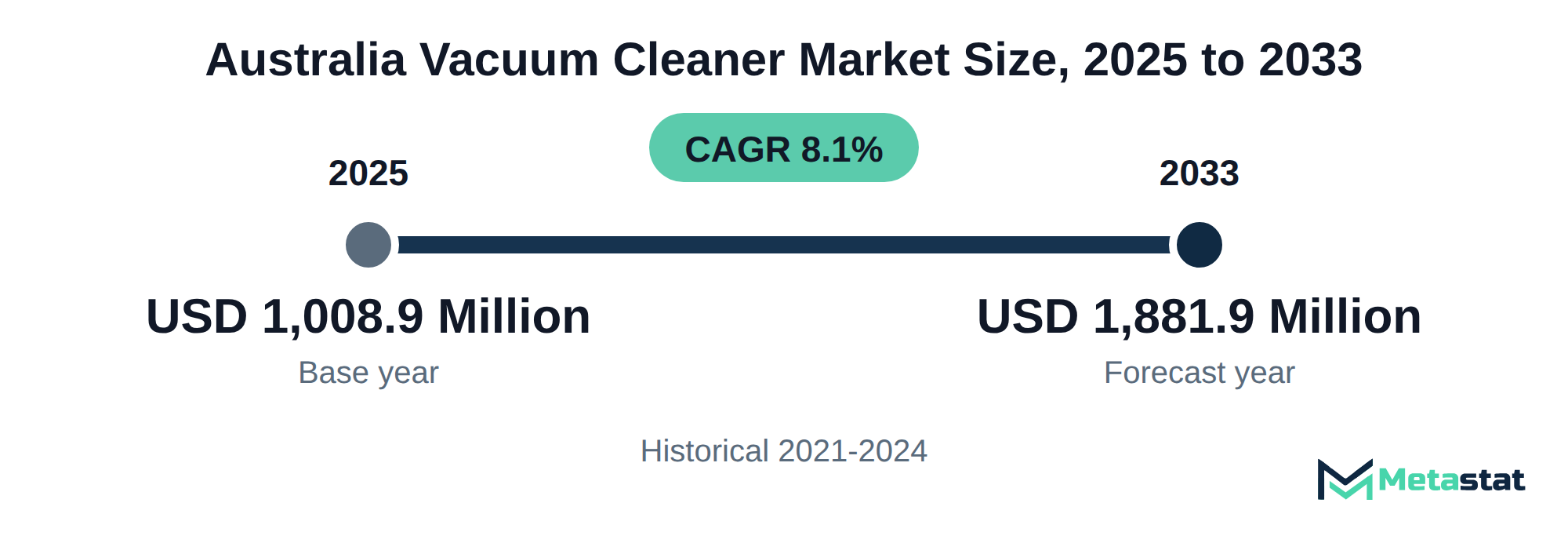
Market Valuation: Valued at $1,008.9 Million in 2025, projected to reach $1,881.9 Million by 2033 at a 8.1% CAGR.
Dominant Segment: Cordless vacuum cleaners lead the market, driven by consumer demand for convenience and flexibility in cleaning solutions. This shift reflects a growing preference for lightweight and easy-to-use models among residential users.
Geographic Lead: The online retail channel is experiencing the fastest growth, anticipated to rise from USD 402.8 million in 2026 to USD 843.6 million by 2033. This trend highlights the increasing consumer preference for convenient shopping solutions.
What's Inside: The report provides comprehensive coverage of the Australia Vacuum Cleaner market, including detailed analyses of product types, power types, end users, and distribution channels. It also includes competitive insights and market forecasts from 2026 to 2033.
Technological Advancements: Innovation in battery technology and smart features is driving the growth of cordless vacuum cleaners, enhancing their performance and user experience. This trend aligns with the demand for efficient and advanced cleaning solutions in Australian households.
Choose Your License
Australia Vacuum Cleaner Market
The Australia Vacuum Cleaner market was valued at USD 1,008.9 million in 2025 and is projected to reach USD 1,881.9 million by 2033, growing at a CAGR of 8.1% over the forecast period.
The Australia Vacuum Cleaner market covers products designed for residential, commercial, and industrial cleaning applications. Buyers invest in these products due to their effectiveness in maintaining cleanliness and hygiene, which is essential for promoting health and comfort in living and working environments. Vacuum cleaners complement household cleaning products in residential hygiene routines. The market offers various types of vacuum cleaners, including upright, canister, stick, handheld, and robotic models, each catering to different user preferences and cleaning requirements.
Growth within the market is driven by increasing consumer awareness regarding cleanliness and hygiene, along with advancements in technology that enhance vacuum cleaner performance. Among the various segments, cordless vacuum cleaners represent the largest share, reflecting a shift towards more convenient and flexible cleaning solutions. The rising demand for these products is particularly strong among residential users, who prioritize ease of use and portability in their cleaning appliances.
One significant factor contributing to market expansion is the shift towards online retail channels, which offer consumers greater accessibility and variety in purchasing options. The growing trend of e-commerce in the Australia Vacuum Cleaner market facilitates consumer purchases, allowing for a more streamlined shopping experience. Retailers invest in their online platforms to meet rising consumer preferences for convenient shopping solutions.
Investment in the Australia Vacuum Cleaner market stems from various factors, including increasing demand for efficient cleaning solutions across residential, commercial, and industrial sectors. Consumers prioritize advanced features, including powerful suction, energy efficiency, and ease of use when selecting vacuum cleaners. The shift towards cordless models reflects changing preferences, with buyers seeking convenience and versatility in their cleaning devices.
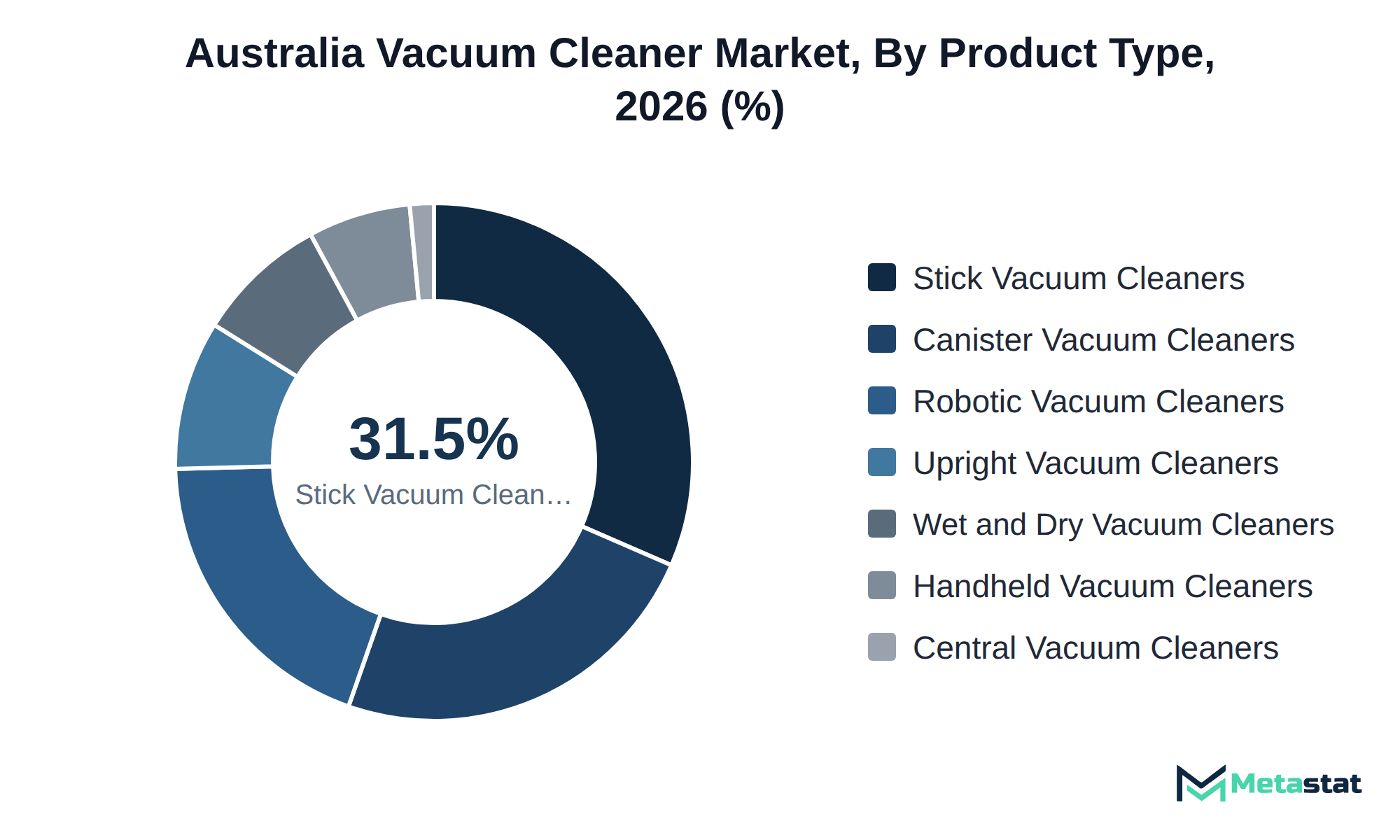
The market experiences significant growth driven by rising adoption of cordless vacuum cleaners, which provide enhanced mobility and freedom of movement. Among the product segments, stick vacuum cleaners represent the largest share, catering to the growing preference for lightweight and easy-to-store options. In terms of distribution channels, online retail stands out with the highest growth rate, reflecting the increasing trend of e-commerce in consumer electronics.
The Australia Vacuum Cleaner market benefits from a strong emphasis on innovation and technology, with manufacturers continually developing products that meet evolving consumer needs. Smart features and advanced filtration systems enhance the appeal of vacuum cleaners and sustain consumer interest.
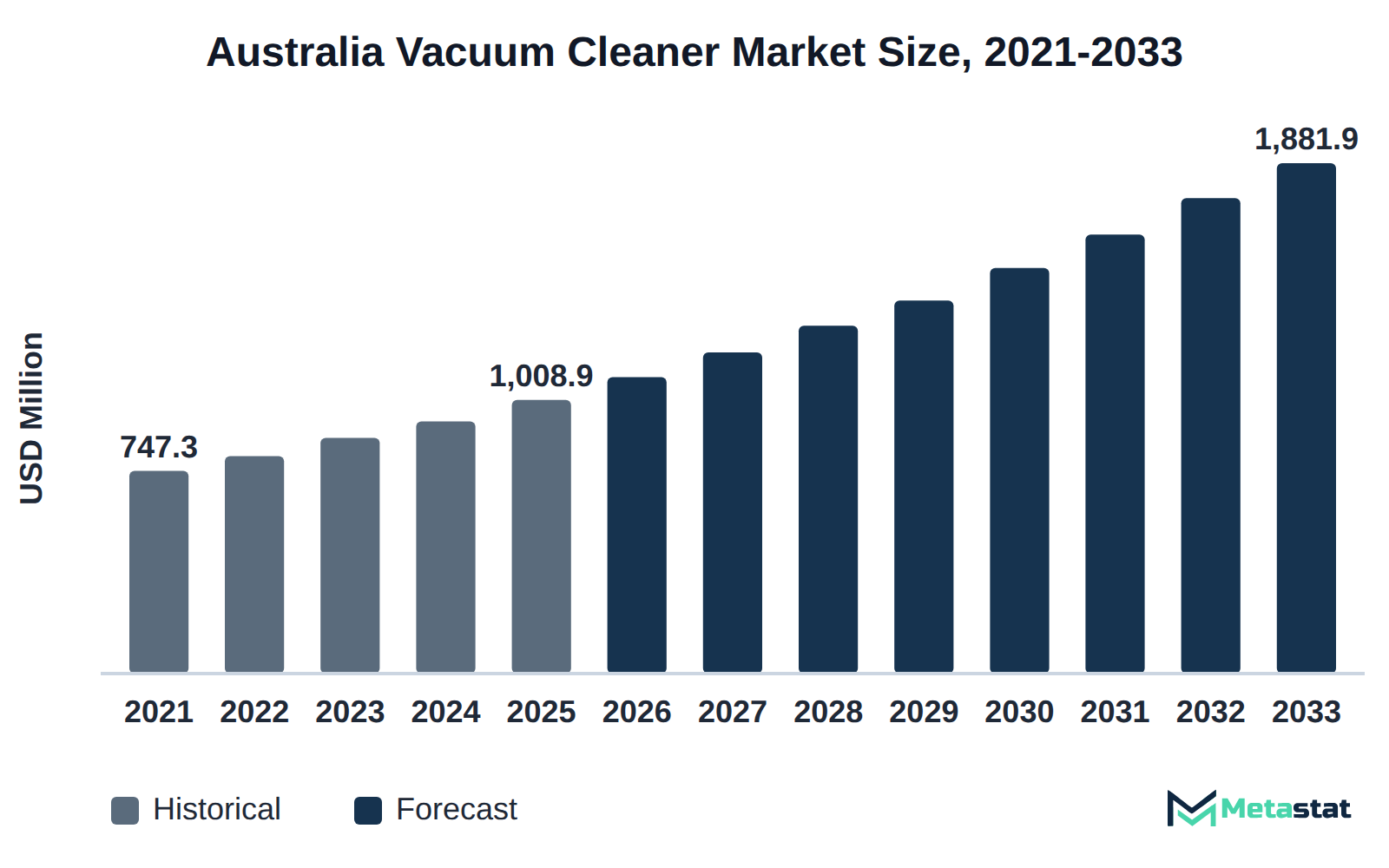
The growing adoption of cordless stick vacuums in Australian homes signifies a notable shift in cleaning technology. These vacuums, characterized by their lightweight design and convenience, increasingly replace traditional corded options. In 2026, the Australia Vacuum Cleaner market will see cordless vacuum cleaners valued at USD 716 million, projected to rise significantly to USD 1,379.2 million by 2033, reflecting a compound annual growth rate (CAGR) of 9.8%. This trend aligns with consumer preferences for mobility and ease of use, particularly in urban environments where space is limited.
The integration of replaceable batteries enhances the appeal of cordless stick vacuums. Consumers prioritize longer cleaning sessions without the need for recharging during use. Replaceable batteries improve the user experience and support sustainable practices, because owners can swap a battery instead of discarding the whole unit. The market dynamics surrounding these products position them as essential for households focused on efficiency and environmental responsibility. Rising demand for cordless models continues, with manufacturers focusing on innovation in battery technology and vacuum design likely to gain a competitive edge in the market.
The growth of the robot vacuum segment within the Australia Vacuum Cleaner market reflects an increasing consumer preference for automation in home cleaning. Data indicates that the market for robotic vacuum cleaners is on the rise, driven by advancements in technology and changing household dynamics. This segment allows consumers to maintain cleanliness with minimal effort, aligning with the modern trend of convenient home management. The introduction of self-emptying docks has further enhanced their appeal, providing a hands-free experience that attracts busy households. Robot vacuums are a household application of smart service robots, which automate routine tasks.
Pricing strategies for robotic vacuum cleaners vary widely across different brands. Consumers often encounter a spectrum of pricing, influenced by features including suction power, smart home compatibility, and battery life. The market has observed a growing trend toward subscription models or lease agreements, particularly for high-end robotic vacuums equipped with advanced features. This flexible payment structure allows consumers to access premium products without a significant upfront cost, enabling broader adoption among households that prioritize convenience and technology. The approach resembles hardware-as-a-service arrangements, in which customers pay for use of a device rather than buying it outright.
The pricing models improve accessibility and encourage competition among manufacturers, which drives innovation and improvement in product offerings. While price sensitivity shifts due to economic conditions, companies in the Australia Vacuum Cleaner market adapt their strategies to meet consumer expectations, impacting long-term growth and revenue generation.
Online sales of vacuum cleaners in Australia reflect a growing trend among residential buyers who prioritize convenience and flexibility. The online retail segment is expected to experience substantial growth, with an anticipated increase from USD 402.8 million in 2026 to USD 843.6 million by 2033, representing a compound annual growth rate of 11.1%. This shift towards online purchases caters to the demands of consumers who seek detailed product information, comparisons, and customer reviews, allowing for informed purchasing decisions.
This rise in online vacuum cleaner sales highlights a shift in consumer behavior where buyers increasingly favor the digital shopping experience over traditional brick-and-mortar stores. Because consumer preferences are changing, retailers in the Australia Vacuum Cleaner market need strong online strategies. Retailers use digital platforms to increase their visibility and reach, providing a shopping experience that meets the specific needs of today's consumers.
The commercial consequence of this trend indicates a significant opportunity for businesses to enhance their online presence. Companies that adapt to this digital shift capitalize on the growing market demand, ensuring they maintain competitiveness within the changing environment of the Australia Vacuum Cleaner market.
The increasing preference for cordless vacuum cleaners among Australian buyers stems from their convenience and ease of use. Cordless models eliminate the hassle of dealing with power cords, making them ideal for quick clean-ups and efficient maneuverability. This impressive growth indicates a shift in consumer behavior towards more versatile cleaning solutions.
Buyers often consider the trade-offs between cordless and corded vacuums. While cordless models offer mobility, corded vacuums generally provide more powerful suction and longer usage times without the need for recharging. Corded vacuum cleaners are anticipated to reach USD 502.7 million by 2033, growing at a rate of 4.2%. This slower growth rate compared to cordless models highlights the evolving preferences of Australian consumers in the Australia Vacuum Cleaner market.
Ultimately, the choice between cordless and corded vacuums influences purchasing decisions based on factors including convenience, power, and intended use. As cordless vacuums gain popularity, manufacturers continuously innovate to enhance battery life and suction power, further driving demand in the market.
Rising interest in efficient home cleaning solutions drives residential demand for vacuum cleaners. Consumers increasingly prioritize convenience and performance, prompting a shift towards more advanced technologies. Notable growth in cordless and stick vacuum segments reflects this trend, with buyers opting for lightweight and versatile models. Data indicates that the residential end user segment is projected to grow from USD 925.8 million in 2026 to USD 1,611.3 million by 2033, representing a compound annual growth rate of 8.2%. This trend stems from demographic shifts, with younger households seeking user-friendly products that enhance their cleaning experience. Enhanced marketing efforts and product innovations further support this demand, leading to increased sales volume and price stability in the market.
Innovation in battery technology significantly impacts the Australia Vacuum Cleaner market. The introduction of high-capacity lithium-ion batteries enhances the performance and runtime of cordless vacuum cleaners. This shift attracts consumers who prioritize convenience and efficiency in their cleaning routines. Advanced battery technology supports the development of lightweight and portable designs, appealing to urban dwellers with limited storage space.
Emerging features including smart connectivity have transformed user experiences. Integration with mobile applications allows users to monitor cleaning schedules and control devices remotely. Such technological advancements cater to the growing demand for smart devices and smart home solutions among Australian consumers. Enhanced features result in higher price points, enabling manufacturers to maintain profitability while justifying increased investment in research and development.
The trend toward sustainable practices further shapes the market landscape. Eco-friendly materials and energy-efficient designs align with environmentally conscious consumers. This alignment with sustainability trends attracts new customer segments, creating growth opportunities within the market.
Rising costs of vacuum cleaners present a significant challenge, particularly impacting residential and commercial buyers. Increased prices for raw materials and manufacturing processes contribute to higher retail prices, leading to slower uptake among consumers. This cost barrier results in smaller orders and delayed product replacements for households and businesses alike. Residential buyers, who prioritize budget considerations, postpone upgrading their vacuum systems, while commercial buyers delay purchasing decisions due to tighter budget constraints. This situation limits growth opportunities within the market, with potential buyers reassessing their cleaning equipment investments. Price sensitivity among buyers influences purchasing behavior, ultimately affecting overall market dynamics.
Suppliers in the Australia Vacuum Cleaner market face significant input cost pressures impacting profitability. Rising prices of raw materials and components contribute to increased production expenses, which directly affect margins. Manufacturers absorb a portion of these costs but struggle to maintain competitive pricing due to growing competition. This situation compels suppliers to explore alternative sourcing strategies, including the use of more affordable materials and optimizing production processes to enhance efficiency.
Suppliers focus on product differentiation to justify premium pricing, particularly in segments including cordless and robotic vacuum cleaners. Innovations in design and features enable these products to command higher price points, mitigating margin pressure. Suppliers that emphasize sustainability and energy efficiency in their offerings attract environmentally conscious consumers, further enhancing their market positioning. These strategies help suppliers manage fluctuating input costs while sustaining growth in a competitive environment.
The cordless vacuum cleaner segment exhibits strong potential within the Australia Vacuum Cleaner market, driven by increasing consumer preference for convenience and flexibility. An expanding focus on battery efficiency and lightweight designs enhances product appeal, targeting residential users seeking effective yet manageable cleaning solutions. Manufacturers prioritizing innovation in cordless technology align their offerings with evolving consumer expectations, resulting in increasing adoption rates. The growing trend towards wireless cleaning devices reflects a shift in household cleaning behaviors and creates investment opportunities for stakeholders. This growth trajectory positions the cordless vacuum segment as a significant contributor to the overall expansion of the market.
The Australia Vacuum Cleaner market is segmented based on Product Type, Power Type, End User, and Distribution Channel.
The Upright Vacuum Cleaners segment is valued at USD 101 million in 2026 and is projected to reach USD 136.1 million by 2033, at a CAGR of 4.4% during the forecast period. These products primarily serve residential users for effective cleaning of carpets and various surfaces. The segment experiences growth driven by increasing consumer demand for efficient cleaning appliances that simplify household chores. Compared to other segments, including cordless vacuum cleaners, which exhibit a higher growth rate with a CAGR of 9.8%, upright vacuums represent a more stable but slower-growing option. Consumers often prefer upright models for their powerful suction capabilities and larger dust capacity, appealing to households with extensive carpeting and pets. The demand within this segment reflects a steady preference for traditional cleaning methods, appealing to buyers who prioritize performance and reliability over innovative features.
Canister Vacuum Cleaners segment is estimated to reach USD 346.6 million by 2033, at a CAGR of 4.6% during the forecast period. This type of vacuum cleaner is highly favored in residential settings, known for its versatility in cleaning various surfaces, including carpets, hard floors, and upholstery. Growth in this segment is driven by increasing awareness of the benefits of thorough cleaning, leading more consumers to seek effective solutions. Compared to upright and stick vacuum segments, canister vacuums generally offer enhanced suction power and are easier to maneuver in tight spaces. While the overall market experiences rapid growth, this segment achieves steady expansion, appealing primarily to homeowners needing comprehensive cleaning capabilities. Demand for canister vacuum cleaners aligns closely with consumer preferences for efficient and effective cleaning tools.
Stick Vacuum Cleaners segment is expected to reach USD 633.6 million by 2033. These devices serve households, particularly in urban settings, where space constraints and the demand for compact cleaning solutions drive their popularity. The segment thrives due to increasing consumer preference for lightweight and versatile cleaning tools, which simplify maintenance in busy lifestyles. Compared to other product types, stick vacuums exhibit a faster growth trajectory, fueled by a compound annual growth rate (CAGR) of 9.8% among cordless models. Demand for cordless options strongly aligns with residential users, who seek convenience and maneuverability. This segment benefits from advancements in battery technology, enhancing runtime and suction power, thus differentiating it from traditional corded options that show slower growth. The Australia Vacuum Cleaner market reflects these shifts toward innovative cleaning solutions, shaping the competitive landscape.
Handheld Vacuum Cleaners segment is projected to grow at a CAGR of 7.4% during the forecast period. This segment offers compact, portable cleaning solutions, primarily for quick cleanups in residential settings. Consumers increasingly prefer these models due to their lightweight design and ease of use, making them ideal for small spaces, vehicles, and spot cleaning tasks. The demand for handheld vacuum cleaners is driven by the growing need for convenient cleaning solutions in busy households. Compared to other segments, including cordless and corded vacuum cleaners, handheld units typically involve a lower price point, attracting several budget-conscious buyers. Despite competition from more powerful models, handheld units keep a steady presence in the Australia Vacuum Cleaner market because of their portability and versatility.
Robotic vacuum cleaners represent an innovative approach to automated home cleaning. These devices gain traction among residential users seeking convenience and efficiency in their cleaning routines. Increasing adoption occurs due to advancements in technology, including improved sensors and artificial intelligence, enabling mobile robots to navigate and clean various floor types effectively. The segment distinguishes itself from other vacuum types, including upright and canister models, through its automated features, which appeal to consumers seeking time-saving solutions. The growing trend of smart homes influences the demand for robotic vacuum cleaners, integrating them with other smart devices for enhanced user experiences. This segment's focus on automation aligns with the broader market's shift towards efficient cleaning solutions, contributing to the overall growth in the Australia Vacuum Cleaners market.
Wet and Dry Vacuum Cleaners provide versatility in cleaning tasks, suitable for both liquid and solid waste. This segment caters to residential, commercial, and industrial users who require efficient solutions for various cleaning challenges, particularly in settings with mixed debris. Demand for these products rises due to the increasing focus on innovative cleaning technologies that enhance productivity and efficiency. Unlike traditional vacuum types, which often specialize in one function, Wet and Dry Vacuum Cleaners appeal to users seeking multifunctionality and adaptability. Growth is driven by demand for broader cleaning solutions, which highlights the need for equipment that handles many tasks in diverse environments. This segment stands distinct from others in the product type category, targeting specific user needs and differing in functionality and design features.
Central Vacuum Cleaners serve a permanent cleaning solution installed within a building's structure, offering convenience and efficiency for residential and commercial applications. This segment appeals to homeowners seeking advanced cleaning systems, providing a powerful option for comprehensive cleaning without the hassle of traditional vacuums. Demand for Central Vacuum Cleaners arises from growing awareness of indoor air quality and the desire for a more efficient cleaning method, often favored by users with larger homes or specific cleaning needs. Compared to other segments, including upright or stick vacuum cleaners, this segment attracts a different buyer base focused on long-term investment and higher price points. The lack of portability in Central Vacuum Cleaners differentiates them from their counterparts, presenting both a unique selling proposition and a barrier for several consumers who prioritize mobility in their cleaning tools. The market evolves steadily, driven by advancements in technology and increased consumer interest in home automation solutions.
This segment primarily serves residential users who favor lightweight, portable cleaning solutions. The increasing preference for convenience has driven demand for cordless models, distinguishing them from their corded counterparts, which typically offer lower mobility. Innovation in battery technology enhances runtime and cleaning efficiency, contributing to the segment's growth. Compared to other power types, cordless models attract younger consumers and busy households seeking flexible cleaning options. The market reflects a dynamic shift, with consumers willing to invest more in advanced cordless options that offer improved performance and ease of use.
This segment primarily serves residential, commercial, and industrial users who require reliable cleaning solutions. Demand for corded models persists due to their consistent power supply and strong suction capabilities, making them suitable for heavy-duty cleaning tasks. Unlike cordless options, which are experiencing faster growth due to increasing consumer preference for convenience, the corded segment caters to buyers prioritizing performance and runtime. The ongoing focus on cost-efficiency in households drives interest in corded vacuum cleaners, which tend to be more competitively priced compared to their cordless counterparts. This pricing advantage and the segment's reliable functionality make it a practical choice for diverse cleaning needs in the Australia vacuum cleaner market.
This segment caters primarily to households seeking reliable cleaning solutions, with consumers increasingly prioritizing convenience and efficiency. Demand for vacuum cleaners in residential settings continues to rise, influenced by technological advancements and a shift toward cordless options. Unlike commercial or industrial segments, which focus on heavy-duty performance, the residential segment emphasizes user-friendliness and versatility. Innovation in features including lightweight designs and improved battery life drives consumer preferences. The market for residential vacuum cleaners reflects a growing trend toward smart home integration, further enhancing the appeal of these products.
The commercial segment is estimated to reach USD 183.1 million by 2033, at a CAGR of 7.4% during the forecast period. This segment services businesses and institutions that require frequent and efficient cleaning solutions for maintaining hygiene and cleanliness in various environments, including offices and retail spaces. An increasing emphasis on workplace cleanliness, driven by health considerations, drives demand in this segment. Cleaning contractors serving offices and retail spaces belong to the wider commercial cleaning services industry. Unlike the residential sector, which emphasizes convenience and personal use, commercial buyers prioritize scalability and durability, influencing their purchasing decisions. The commercial segment exhibits a higher growth rate than the industrial sector due to its adaptable nature to varying cleaning requirements, highlighting the unique dynamics of the Australia Vacuum Cleaner market.
The industrial segment is expected to reach USD 87.5 million by 2033. This segment finds application in factories, warehouses, and distribution centers, focusing on efficient cleaning of large and complex environments. Demand for industrial vacuum cleaners is driven by the need for maintaining cleanliness and safety standards in workplaces. The segment exhibits a slower growth rate compared to the residential counterpart, with different purchasing dynamics. Industrial buyers prioritize durability and performance over price, leading to distinct purchasing behaviors. The industrial segment stands out due to its specific cleaning requirements, contrasting with the residential segment, which focuses on convenience and user-friendliness. In the competitive landscape, manufacturers emphasize advanced filtration systems and power efficiency to address the unique challenges faced in industrial settings.
This segment caters primarily to residential consumers seeking convenient purchasing options for vacuum cleaners, which include a variety of brands and models. The rapid growth of e-commerce platforms drives this segment, reflecting changing consumer behavior towards online shopping. Compared to traditional retail channels, Online Retail exhibits a higher growth rate, supported by increasing digital engagement and preference for delivery services. Orders placed through this channel depend on the courier, express, and parcel industry for delivery. The market benefits from the flexibility that online shopping offers, enhancing the overall consumer experience. This segment highlights a shift towards technological integration in retail, setting it apart from the slower-growing Appliance and Electronics Stores segment, which is expected to reach USD 573.4 million by 2033.
Appliance and Electronics Stores segment is estimated to reach USD 573.4 million by 2033, at a CAGR of 6.1% during the forecast period. This segment serves residential and commercial customers seeking a variety of vacuum cleaners, including upright, canister, and stick models. Factors driving growth in this segment include increasing consumer demand for convenience and the variety of products offered. In contrast to online retail, which is projected to grow at a CAGR of 11.1%, the Appliance and Electronics Stores segment experiences slower growth. This slower rate is attributed to the higher price points typically associated with in-store purchases compared to online options. The segment appeals to buyers who prefer to experience products physically before purchase, differentiating it from other distribution channels in the Australia Vacuum Cleaner market.
Specialty Stores segment is expected to reach USD 155.4 million by 2033. This segment serves customers seeking personalized service and expert advice on vacuum cleaner selection. Consumers in this segment prioritize quality and brand reputation, leading to higher average transaction values compared to other distribution channels. Demand for specialty stores increases due to a growing trend of consumers valuing in-person shopping experiences, which contrasts with the rising online retail segment projected to grow at a CAGR of 11.1%. While online channels offer convenience, specialty stores provide an opportunity for customers to test products and receive tailored recommendations from knowledgeable staff. This distinct shopping experience contributes to the segment's unique position in the market, appealing primarily to discerning buyers who prioritize expert guidance over price competitiveness.
Hypermarkets and Supermarkets segment is projected to grow at a CAGR of 5.5% during the forecast period. These supermarket and hypermarket locations provide a wide range of vacuum cleaner options for consumers, appealing to both residential and commercial buyers. The segment benefits from a growing trend toward convenience shopping, resulting in increased foot traffic and online orders. Competitive pricing and a diverse product selection differentiate this segment from others, including Online Retail, which is expanding at a higher CAGR of 11.1%. While consumers seek value for money, retailers focus on promotional strategies and product bundling to enhance sales. This segment shapes purchasing decisions by using the physical presence of stores to maximize product visibility and consumer engagement. Ongoing investment in improving shopping experiences will further influence growth in the Australia vacuum cleaner market.
Department Stores serve retail locations where consumers purchase various vacuum cleaner models, offering a hands-on experience before making a decision. This segment caters primarily to residential buyers who prefer inspecting products in person, often seeking advice from store associates. Growth in this segment is influenced by increasing consumer preference for convenience and immediate product availability. Compared to online retail, which exhibits a higher growth rate due to expanding acceptance and accessibility, Department Stores face challenges in adapting to shifting shopping behaviors. While the market overall is projected to expand, the performance of Department Stores could lag behind faster-growing segments, making it essential for retailers to enhance the in-store experience to attract customers effectively. The Australia Vacuum Cleaner market continues to evolve, reflecting changing dynamics in consumer preferences and purchasing habits.
Direct Sales channel offers a unique approach for customers to purchase vacuum cleaners directly from manufacturers or authorized representatives. This method appeals to buyers seeking personalized service and product demonstrations, enhancing the purchasing experience. Demand for this channel is driven by the increasing preference for direct engagement with brands, allowing consumers to ask questions and receive tailored recommendations. Compared to other distribution channels, Direct Sales often involves higher pricing due to the added value of personal service, distinguishing it from online retail, where lower prices attract budget-conscious consumers. The market shows a trend toward greater consumer interaction and education, supporting brand loyalty and informed decision-making.
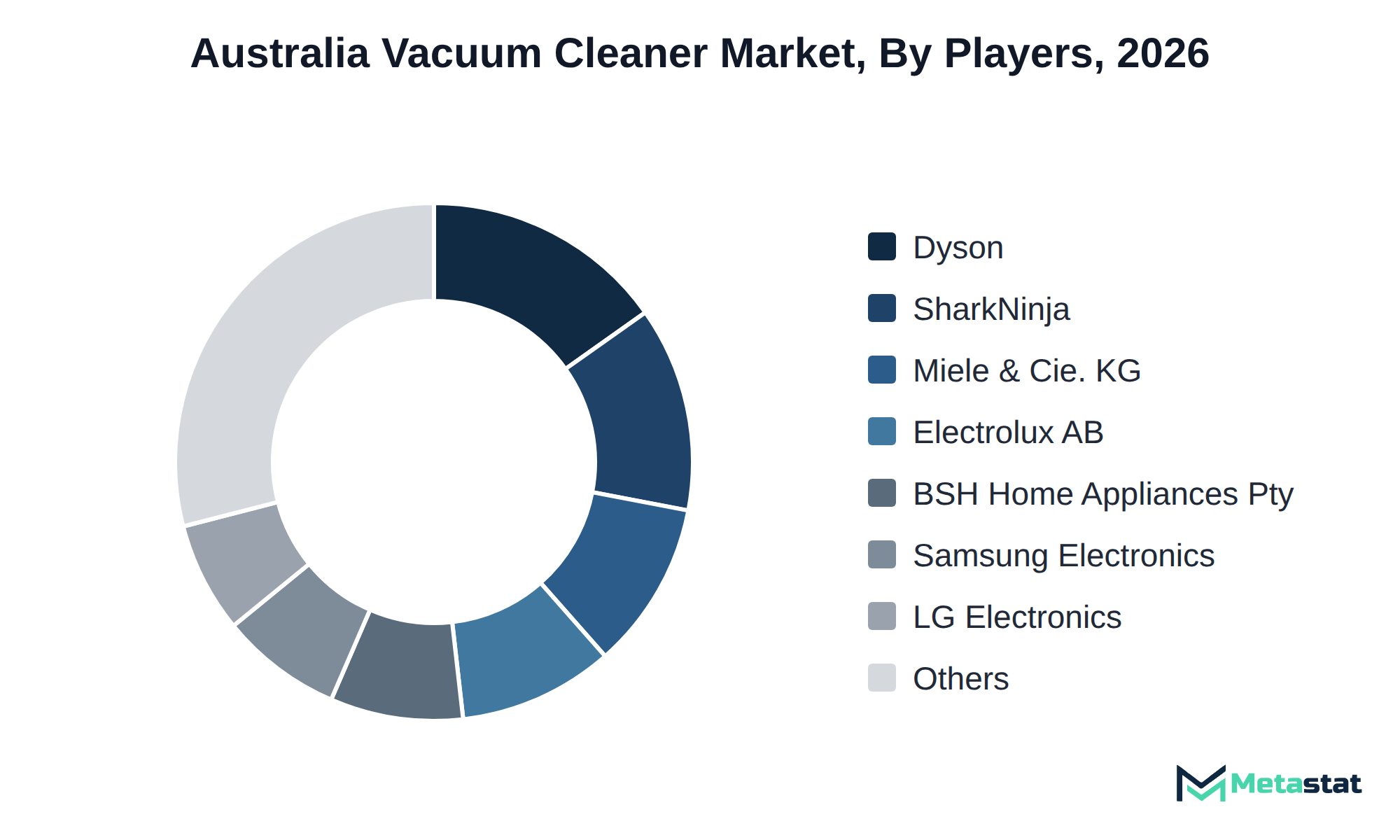
Companies in the Australia Vacuum Cleaner market adopt various strategies to differentiate their offerings. Product innovation remains central, with several manufacturers focusing on advanced features, energy efficiency, and improved suction technology. For example, Dyson emphasizes innovative designs and high-performance motors to capture consumer attention.
Pricing strategies play a significant role in competition. Brands like SharkNinja, Inc. and BISSELL Inc. focus on providing value-oriented options, appealing to cost-sensitive customers. In contrast, premium brands including Miele & Cie. KG and Electrolux AB position themselves by delivering high-quality products with superior durability and aesthetics.
Buyers in the market prioritize various factors when selecting vacuum cleaners, including performance, brand reputation, and after-sales service. A strong emphasis on customer support and warranty options influences purchasing decisions. For instance, Samsung Electronics Co., Ltd. and LG Electronics Inc. highlight robust service networks to enhance consumer confidence in their products.
The rise of online retail has transformed how consumers access product information and make purchasing choices. Companies including Dreame Technology and ECOVACS Robotics Co., Ltd. use digital platforms to engage with potential buyers and promote their offerings through marketing strategies.
Growth in the Australia Vacuum Cleaner market relies on increasing demand for cordless vacuum cleaners and the expansion of online retail channels. The cordless segment is projected to show the highest growth rate, driven by consumer preference for convenience and portability. The popularity of online retailing facilitates easier access to a wider variety of products, appealing especially to the residential end user segment.
However, the market faces challenges that could impede growth. Potential supply chain disruptions stemming from economic fluctuations hinder production and availability. Should these disruptions occur, they could negatively impact pricing and accessibility, thus restricting market growth. Ensuring stable supply chains and maintaining product availability is crucial for the Australia Vacuum Cleaner market to achieve the projected USD 1,881.9 million by 2033. The combination of these factors will determine the market's trajectory during the forecast period.
By Product Type: Upright Vacuum Cleaners, Canister Vacuum Cleaners, Stick Vacuum Cleaners, Handheld Vacuum Cleaners, Robotic Vacuum Cleaners, Wet and Dry Vacuum Cleaners, Central Vacuum Cleaners
By Power Type: Cordless, Corded
By End User: Residential, Commercial, Industrial
By Distribution Channel: Online Retail, Appliance and Electronics Stores, Specialty Stores, Hypermarkets and Supermarkets, Department Stores, Direct Sales
The report strategically identifies and profiles the key market players and analyses their core competencies in each sub-segment of the Vacuum Cleaner market.
Report Attributes | Details |
Study Period | 2021-2033 |
Base Year | 2025 |
Estimated Year | 2026 |
Forecast Period | 2026-2033 |
Historical Period | 2021-2025 |
Growth Rate | CAGR 8.1% from 2026 to 2033 |
Revenue Unit | USD million |
Segmentation | By Product Type, Power Type, End User, Distribution Channel, and Region |
Find answers to common questions about this report
The Vacuum Cleaner market size was valued at USD 1,008.9 million in 2025.
The market is projected to grow at a CAGR of 8.1% during the forecast period from 2026 to 2033.
Stick Vacuum Cleaners lead the Vacuum Cleaner market with a projected value of USD 633.6 million by 2033. This segment surpasses others in terms of anticipated revenue growth.
Rising interest in efficient home cleaning solutions drives residential demand for vacuum cleaners. Innovation in battery technology significantly impacts the market, enhancing the performance and runtime of cordless vacuum cleaners.
Rising costs of vacuum cleaners present a significant challenge, impacting residential and commercial buyers due to increased prices for raw materials and manufacturing processes. This cost barrier leads to smaller orders and delayed product replacements, limiting growth opportunities within the market.
Rising interest in efficient home cleaning solutions and advanced technologies, including high-capacity lithium-ion batteries, support adoption in the Australia Vacuum Cleaner market. The growing trend towards sustainable practices attracts environmentally conscious consumers, creating new customer segments and growth opportunities.
The Vacuum Cleaner market is estimated to reach a valuation of USD 1,881.9 million by 2033.
Key players operating in the Vacuum Cleaner market include Dyson, SharkNinja, Inc., Miele & Cie. KG, Electrolux AB, BSH Home Appliances Pty Ltd, Samsung Electronics Co., Ltd., LG Electronics Inc., and BISSELL Inc.
The cordless vacuum cleaner segment is projected to grow from USD 716 million in 2026 to USD 1,379.2 million by 2033, reflecting a compound annual growth rate of 9.8%.
The residential end user segment is expected to grow from USD 925.8 million in 2026 to USD 1,611.3 million by 2033, with a compound annual growth rate of 8.2%.
The analysts below cover Consumer Goods research at Metastat Insights.
LEAD ANALYST
Utkarsh Khirodkar is a Lead Market Research Analyst at MetaStat Insight, specializing in market intelligence, technology sector assessments, and competitive strategy.
Scaling antibody-drug conjugate manufacturing hinges on contract manufacturing availability for high-potency active ingredients. The MetaStat Insight analysis looked closely at global cleanroom slot constraints, bioconjugation batch failure rates, and supply chain redundancies between the US, Europe, and India. The supplier capability matrix proved genuinely useful for our team when mapping secondary source options across our clinical pipeline.
Floating offshore wind feasibility relies heavily on specialized installation vessel availability and port crane limits, which most broad renewable energy forecasts ignore. The report delivered a thorough analysis of dry dock capacity, mooring chain supply constraints, and raw material pricing trends for deepwater anchor installations. It served as a solid independent sanity check for our offshore project capital expenditure assumptions.
Assessing commercial microgrid software adoption requires looking past top-level installation numbers and examining utility interconnection queues. The research provided verifiable data on average permitting timelines, tariff structures, and battery storage integration costs across regional utility territories. That grounded perspective was valuable for our team when building five-year demand projections for industrial microgrid controllers.
Explore related market intelligence reports worth reading alongside this one.