
LEAD ANALYST
Utkarsh Khirodkar is a Lead Market Research Analyst at MetaStat Insight, specializing in market intelligence, technology sector assessments, and competitive strategy.

Global BFSI IT Services Market Size, Share, By Service Type (Application Development and Maintenance Services, IT Infrastructure Management Services, Systems Integration Services, IT Consulting Services, Quality Assurance and Testing Services, Cybersecurity Services, Data Engineering and Analytics Services, Others (IT Service Desk and Specialized Technical Support)), By Deployment Model (Cloud-Based, On-Premises, Hybrid), By Application (Core Banking and Lending Systems, Payments and Card Processing Systems, Insurance Policy Administration and Claims Systems, Trading and Securities Processing Systems, Wealth and Asset Management Systems, Risk Management and Regulatory Compliance Systems, Customer Engagement and Relationship Management Systems, Enterprise Back-Office Systems, Others (Fraud Detection and Financial Reporting Systems)), By End-Use Sector (Banking, Insurance, Capital Markets and Investment Services, Non-Banking Lending, Payment Services), Industry Analysis, Growth, Trends, and Forecast, 2026-2033
Report ID
MSI-5508
Published
October, 2026
Pages
282 Pages
Format
Historical
Base year
Forecast
Forecast period
Report Details
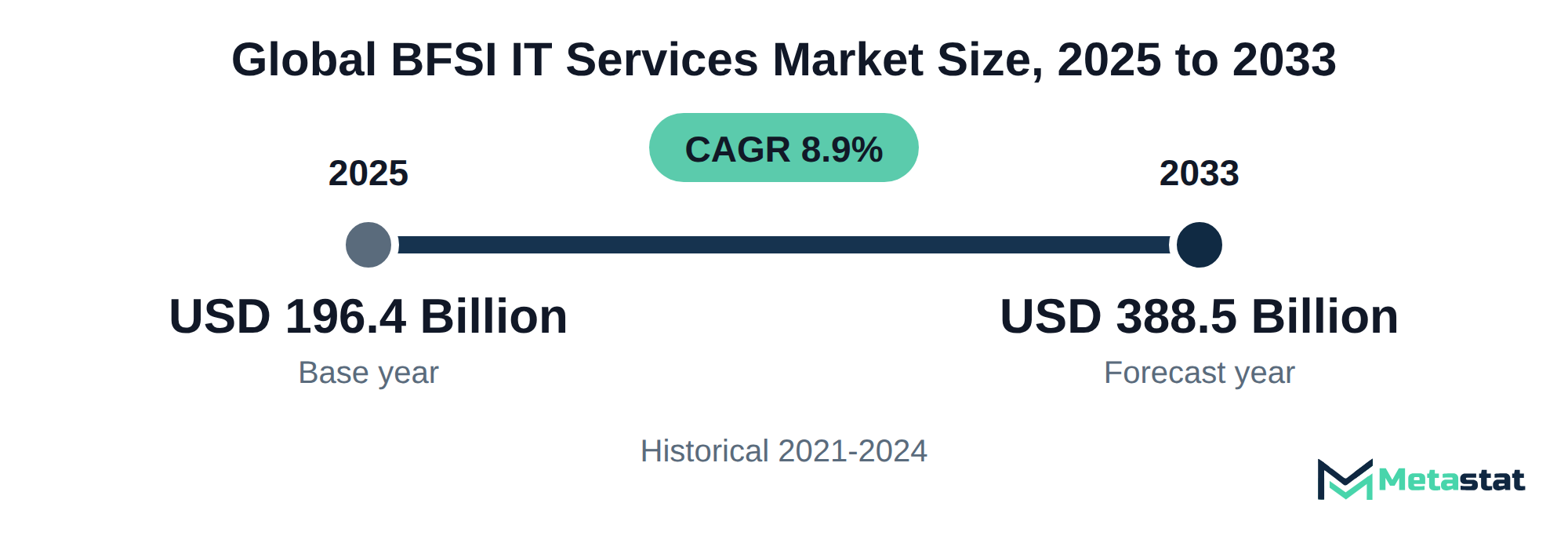
Market Valuation: Valued at $196.4 Billion in 2025, projected to reach $388.5 Billion by 2033 at a 8.9% CAGR.
Dominant Segment: Application Development and Maintenance Services lead the market, driven by the increasing demand for bespoke software solutions that cater to specific business needs.
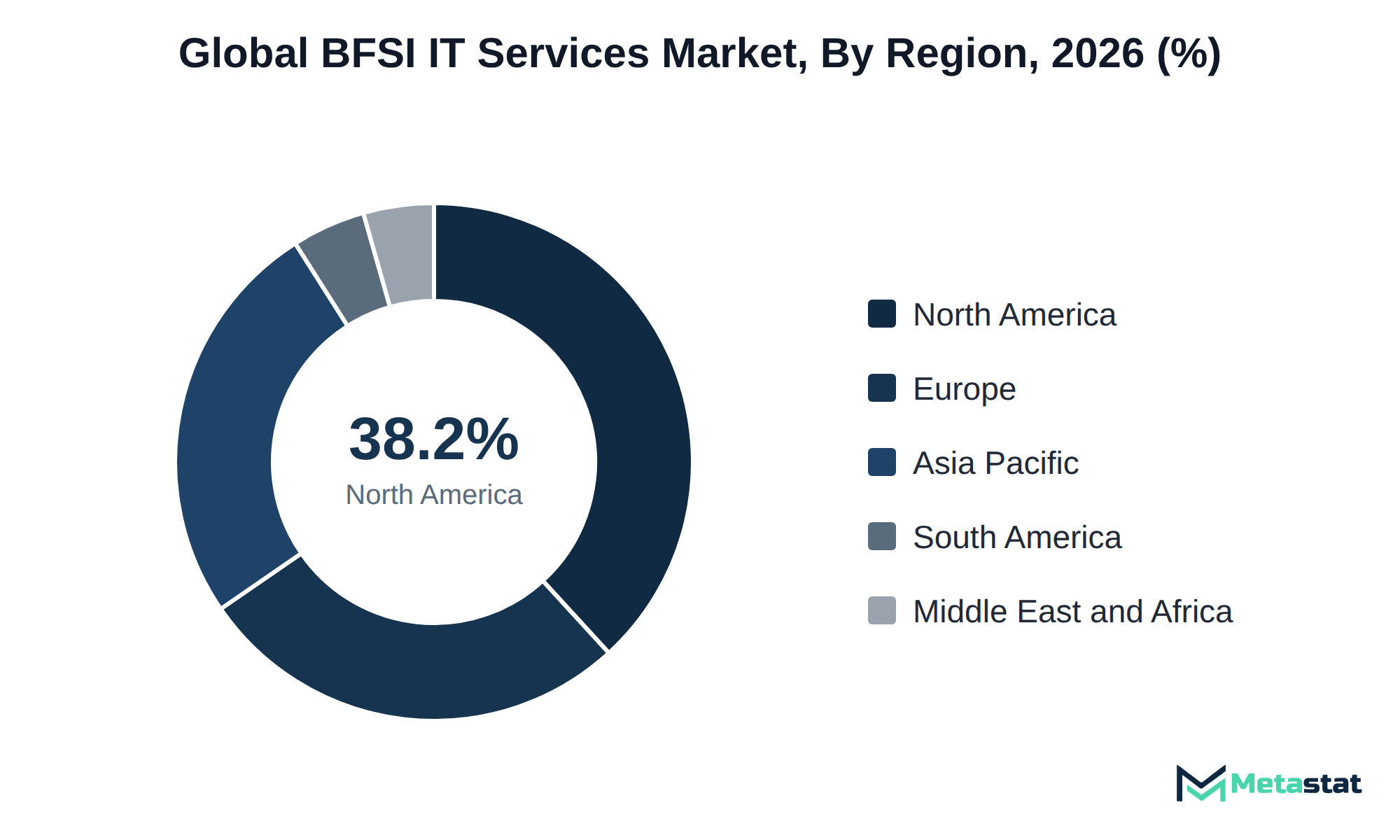
Geographic Lead: North America holds the largest market share at 38.2% in 2025, with the US expected to continue leading due to its strong emphasis on digital advancements in financial services.
What's Inside: The report provides a comprehensive analysis of the BFSI IT Services market, covering various service types, deployment models, and applications, along with competitive insights and growth forecasts through 2033.
Emerging Opportunities: Cloud-based services are poised for significant growth, driven by financial institutions' recognition of their advantages in scalability and operational efficiency.
Choose Your License
Global BFSI IT Services Market
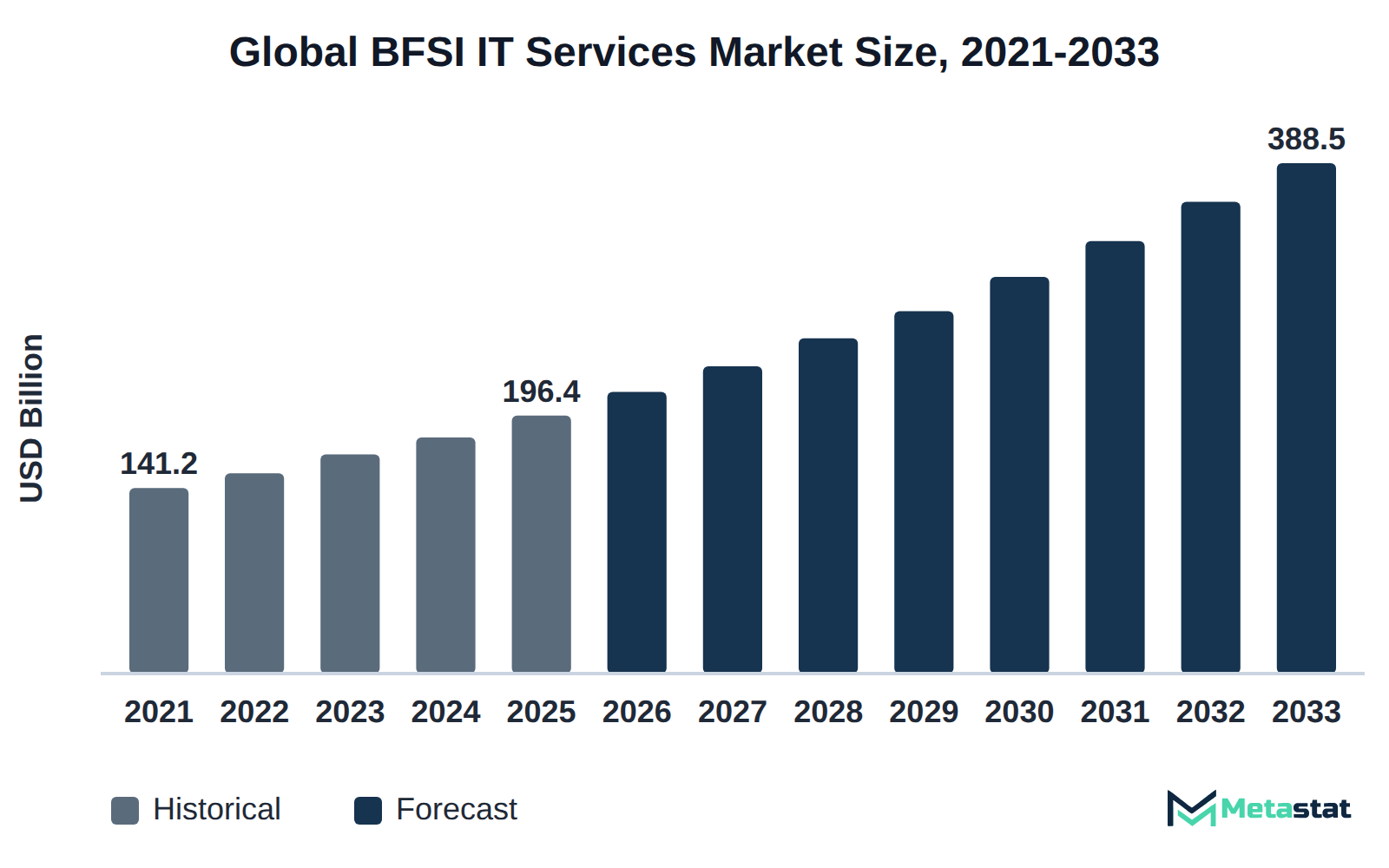
The global BFSI IT Services market was valued at USD 196.4 billion in 2025 and is projected to reach USD 388.5 billion by 2033, growing at a CAGR of 8.9% over the forecast period.
The BFSI IT Services market encompasses a variety of services tailored to meet the technology needs of the banking, financial services, and insurance sectors. Buyers invest in these services to enhance operational efficiency, ensure regulatory compliance, and improve customer engagement. The market reflects the increasing demand for digital transformation initiatives, which drive organizations to seek innovative IT solutions that streamline processes and support competitive positioning.
Growth in the market is supported by the rising adoption of cloud-based solutions, which offer scalability and flexibility. Among the various segments, Application Development and Maintenance Services contribute the most value, reflecting a significant focus on bespoke software solutions that cater to specific business requirements. North America holds 38.2% of the market in 2025, with the US leading in 2026, highlighting the region's strong emphasis on digital advancements in financial services.
Investment in cybersecurity and data analytics further fuels market expansion, driven by organizations prioritizing safeguarding sensitive information and leveraging data-driven insights for strategic decision-making. The BFSI IT Services market is projected to thrive due to these trends, facilitating enhanced service delivery and operational resilience for financial institutions.
The BFSI IT Services market includes services that improve operational efficiency and drive digital transformation across the banking, financial services, and insurance sectors. These services address critical needs including application development, IT infrastructure management, and cybersecurity, which enable organizations to maintain competitiveness and respond effectively to evolving market demands. Buyers invest in these services to improve service delivery, enhance customer experience, and comply with regulatory requirements.
Growth in the market is fueled by the increasing reliance on technology for operations and customer interactions. The largest segment, Application Development and Maintenance Services, contributes to this expansion, reflecting shifting priorities towards more agile and innovative approaches. This region's financial ecosystem and advanced technological infrastructure support sustained investment in IT services.
One primary driver of growth is the rising demand for cloud-based solutions, which facilitate scalability and flexibility in service delivery. Organizations are increasingly adopting cloud technologies to enhance their IT capabilities while optimizing costs. This trend positions the BFSI IT Services market for continued growth, with increasing investments expected across various segments and regions during the forecast period.
Core banking modernization drives significant transformation within the BFSI IT Services market. Financial institutions increasingly prioritize upgrading legacy systems to enhance operational efficiency and improve customer experience. The demand for core banking and lending systems reflects this trend, with forecasts indicating a rise from USD 51.4 billion in 2026 to USD 86.2 billion by 2033, achieving a compound annual growth rate of 7.7%. This modernization trend arises from the need for agility, real-time processing capabilities, and enhanced security features that newer technologies provide.
Financial services firms pursuing modernization focus on cloud-based deployment models, allowing for scalability and improved performance. The transition from on-premises solutions to cloud-based systems facilitates flexibility in service delivery, which is critical for adapting to evolving customer demands. The shift influences procurement strategies and impacts vendor selection, as firms seek partners with expertise in advanced technologies and integration capabilities.
Ultimately, ongoing core banking modernization reshapes procurement processes within the BFSI IT Services market, with institutions investing significantly in innovative solutions that promise better response times and enhanced user experiences. The integration of advanced systems prepares financial organizations to meet future challenges while maximizing operational efficiency.
Hybrid cloud migration significantly influences purchasing dynamics in the BFSI IT Services market. Financial institutions increasingly seek flexible and scalable IT solutions, prompting a shift toward hybrid cloud environments. This shift necessitates a transparent and competitive pricing structure. In 2026, the revenue from cloud-based deployment models is projected to reach USD 83.9 billion, with growth expected to USD 178.1 billion by 2033, reflecting a compound annual growth rate of 11.4%. Such figures illustrate the growing demand for managed IT services in a hybrid cloud context.
Contract models play a significant role in this transition. Buyers often prefer subscription-based contracts that provide predictable pricing and easier scaling while their cloud needs evolve. This model allows organizations to align their IT expenses more closely with operational requirements, reducing the financial burden associated with large upfront investments. Consequently, this pricing model enhances the attractiveness of hybrid cloud solutions within the BFSI sector, accelerating their adoption and integrating them into existing IT infrastructures.
The evolution of payment and contract structures directly supports the increasing demand for hybrid cloud solutions in the BFSI IT Services market. Flexibility and cost efficiency in managing IT services help financial institutions remain competitive as the digital environment changes.
The integration of artificial intelligence (AI) into application development significantly transforms pricing models within the BFSI IT Services market. Financial institutions increasingly adopt AI-driven solutions to enhance efficiency, automate processes, and improve customer engagement. Application development and maintenance services are projected to expand from USD 60.4 billion in 2026 to USD 103.8 billion by 2033, reflecting a compound annual growth rate (CAGR) of 8%. This increase highlights the growing reliance on innovative technologies to maintain a competitive edge.
AI integration allows service providers to offer tiered pricing models based on performance metrics, customization levels, and value-added services. Banking institutions, which represent a substantial portion of the BFSI IT Services market, seek tailored solutions in application development that address specific operational challenges. The shift towards AI-driven pricing models meets the unique demands of various banking segments and also improves profitability for technology providers. Firms specializing in BFSI IT Services adapt their offerings to align with evolving market dynamics and customer expectations.
Financial institutions prioritize several key factors when selecting BFSI IT Services providers. A key consideration involves the capability of the provider to deliver tailored solutions that address the unique needs of the institution. For example, the Banking sector anticipates significant growth in IT Services, with a projected increase from USD 102.6 billion in 2026 to USD 178 billion by 2033, reflecting an annual growth rate of 8.2%. This demand for specialized services shapes provider selection, as institutions seek partners that align IT capabilities with their operational goals.
Another important aspect in the selection process includes the deployment models offered by IT services providers. Financial institutions increasingly gravitate towards cloud solutions for their scalability and cost-efficiency, driving a preference for providers that offer this model effectively. This trend influences purchasing decisions and shapes the competitive environment within the BFSI IT Services market, compelling providers to strengthen their cloud capabilities to meet rising demand.
Financial institutions, particularly in the banking and insurance sectors, increasingly prioritize digitalization to enhance customer experiences and operational efficiency. This shift towards digital solutions results from changing consumer expectations, which require services to be faster, more accessible, and user-friendly. The high volume of interactions between consumers and digital platforms drives institutions to invest in IT services that support these enhanced capabilities. This growth indicates a strong commitment among buyers to adapt to digital transformations, resulting in increasing volumes of IT service procurement across various applications. The ongoing transition emphasizes the need for providers to develop innovative solutions that cater to these evolving demands.
Financial institutions increasingly adopt cloud solutions to enhance operational flexibility and scalability. This transition results from the demand for efficient data management and improved service delivery. Cloud-based IT services enable organizations to streamline operations, reduce overhead costs, and respond swiftly to market changes. The banking, insurance, and investment sectors benefit significantly from these capabilities, driving growth in the BFSI IT Services market.
This growth stems from the need for enhanced data security, regulatory compliance, and integration of advanced technologies. Organizations prioritize cloud solutions to facilitate digital transformation and improve customer engagement.
Competition intensifies in the BFSI IT Services market as providers develop innovative cloud offerings to meet evolving client requirements. Continuous advancements in cloud technology and the increasing focus on cybersecurity further influence procurement decisions. Investment in these areas supports enhanced service delivery, driving overall market expansion.
Price sensitivity among financial institutions presents a significant restraint within the BFSI IT Services market. Higher costs associated with advanced IT services, particularly for application development and maintenance, deter several buyers from making investments. Many institutions, especially in the banking sector, delay procurement or opt for less comprehensive solutions due to budget constraints. This cautious spending behavior leads to slower uptake of innovative services, ultimately hindering operational efficiency improvements that these IT services could provide. Financial institutions risk falling behind competitors that invest in more advanced technology solutions. The impact of price sensitivity reflects a broader challenge in the market, where potential buyers prioritize cost-effectiveness over comprehensive service offerings.
In the insurance sector, similar trends emerge, where the focus on maintaining profitability restricts the adoption of newer IT solutions. Delayed investments in critical IT infrastructure result in outdated systems, which further exacerbate inefficiencies and limit the ability to meet evolving regulatory demands. Overall, price sensitivity acts as a barrier to growth and transformation within the BFSI IT Services market.
Supplier profitability in the BFSI IT Services market faces significant challenges due to rising talent costs. A shortage of skilled professionals in key technology areas, including cybersecurity and cloud computing, increases recruitment and retention expenses. Financial institutions prioritize the need for specialized skills to support their digital transformation initiatives, escalating competition among providers for a limited talent pool. To address these challenges, suppliers implement strategies to enhance employee value propositions, including competitive compensation packages and professional development opportunities. Businesses focus on building strong employer brands to attract talent, offering remote work options, and investing in training programs to upskill existing staff. These approaches help mitigate the impact of rising talent costs while enabling suppliers to maintain service quality and meet increasing demand. A sustained emphasis on talent acquisition and retention significantly influences vendor strategies, shaping operational practices within the market.
In response to these pressures, suppliers increasingly adopt automation technologies to optimize service delivery and reduce dependency on human resources. Implementing advanced analytics and AI-driven solutions enables providers to enhance efficiency, reduce operational costs, and remain competitive. Together, these strategies allow suppliers to manage the challenges of rising talent costs while continuing to perform well in the BFSI IT Services market.
Cloud-based services offer considerable growth potential within the BFSI IT Services market. Financial institutions increasingly recognize the advantages of cloud solutions, driving demand for scalable and flexible IT infrastructure. This transition allows for enhanced operational efficiency and improved customer engagement, making it attractive for various end-use sectors, particularly banking and insurance. The shift toward cloud deployment aligns with the rising need for cost-effective solutions that support rapid digital transformation initiatives. Consequently, investments in this segment are expected to accelerate, leading to greater competition among providers and expanding service offerings tailored to client requirements.
The Global BFSI IT Services market is segmented based on Service Type, Deployment Model, Application, and End-Use Sector.
This BFSI IT Services segment covers the design, development, and maintenance of applications essential for banking and financial operations. Institutions rely on these services to ensure software reliability and responsiveness to evolving customer needs. The growth of cloud computing significantly influences this segment, with many institutions migrating to cloud-based platforms to enhance agility and responsiveness. Compared to other segments, this one encounters higher growth driven by increasing digitalization of financial services. Pricing pressures persist, with firms seeking cost-effective solutions while maintaining high-quality service delivery. The sector's distinct trajectory hinges on its ability to adapt to technological advancements and meet demands of an increasingly digital consumer base.
IT Infrastructure Management Services segment is estimated to reach USD 71.3 billion by 2033, at a CAGR of 7.7% during the forecast period. This segment focuses on managing and optimizing the IT infrastructure of financial institutions, including servers, networks, and data centers. Users include banks, insurance companies, and investment firms that require robust IT systems to support their operations. A primary driver of this segment's growth is the increasing reliance on technology for business operations, compelling institutions to invest in efficient infrastructure management solutions. This segment experiences a slower growth rate compared to other service types, including Cloud-Based services, which are projected to grow at a CAGR of 11.4%. By ensuring high availability and performance of IT systems, this segment contributes to maintaining competitive advantage and operational effectiveness in the market.
Systems Integration Services segment is expected to reach USD 54.9 billion by 2033. This segment focuses on facilitating the operation of various IT systems within financial institutions, including banks and insurance companies. Organizations apply these services to enhance operational efficiency and improve data management through the integration of multiple systems. The segment experiences significant growth driven by increasing demand for advanced data analytics and real-time processing capabilities. Compared to other service types, Systems Integration Services display moderate growth, with a projected CAGR of 7.9%, making it slower than Application Development and Maintenance Services, which has a higher growth rate of 8%. This difference highlights the specific emphasis on integrating existing systems rather than developing new applications, which leads to cost-effective solutions for financial entities seeking to modernize their infrastructure.
IT Consulting Services segment is projected to grow at a CAGR of 8.1% during the forecast period. This segment provides strategic advice to financial institutions, helping them improve operational processes and use technology effectively. Financial institutions engage these services to navigate regulatory challenges and improve their business strategies. Demand for IT Consulting Services is driven by the urgent need for digital transformation and compliance with evolving regulations. Compared to other service types, this segment experiences relatively faster growth, positioning itself as an essential element for firms seeking to innovate and remain competitive. A growing emphasis on consulting services in the BFSI IT Services market leads to increased investment in collaborative strategies to optimize IT environments.
Quality Assurance and Testing Services ensures the reliability and performance of software applications used in the banking, financial services, and insurance sectors. Institutions employ these software quality assurance services to validate software functionality, enhance security, and ensure compliance with industry standards. Demand for these services experiences growth driven by increasing regulatory requirements and the need for effective digital experiences. Financial institutions prioritize high-quality applications to maintain competitiveness and customer satisfaction. This segment differs from others, including Application Development and Maintenance Services, due to its specific focus on performance validation rather than development. Quality Assurance and Testing Services safeguard against risks and improve the reliability of digital solutions within the BFSI IT Services market.
Cybersecurity Services involve the protection of computer systems and networks from information disclosure, theft, or damage to hardware, software, or data. Financial institutions, including banks and insurance companies, rely on these services to mitigate risks associated with cyber threats and ensure compliance with regulatory standards. Increased digitalization within the banking sector drives demand for robust cybersecurity solutions, reflecting the growing need for enhanced security measures amid rising cyberattacks. Unlike other segments in the BFSI IT Services market, Cybersecurity Services typically experience higher pricing due to the specialized expertise required to implement and maintain comprehensive security frameworks. The escalating frequency and sophistication of cyber threats continues to drive investment in advanced cybersecurity measures, creating significant growth opportunities for service providers focusing on this critical area.
Data Engineering and Analytics Services focus on the collection, processing, and analysis of data, including big data analytics, to support decision-making within financial institutions. These services enable banks and insurers to use data-driven insights for better risk management, customer engagement, and operational efficiency. Demand for these services arises from the growing emphasis on digital transformation and the necessity to derive useful intelligence from vast datasets. Financial institutions increasingly prioritize these capabilities to enhance competitiveness. Unlike other segments in the service type category, including IT Infrastructure Management Services, which exhibit moderate growth, Data Engineering and Analytics Services differentiate themselves through higher demand driven by the rising need for advanced analytics solutions in the BFSI IT Services market. This segment's growth potential is driven by the continuous evolution of data technologies and the increasing sophistication of analytics tools, making it essential for organizations aiming to refine their operational strategies.
Specialized Technical Support and IT Service Desk functions encompass a range of services aimed at addressing technical issues and ensuring that IT systems function optimally. This segment serves financial institutions that require immediate assistance with hardware, software, or network problems. Demand for such support arises from increasing reliance on technology in banking and financial services, driving the necessity for prompt resolution of technical difficulties. Unlike other segments that focus on long-term projects or strategic consulting, this segment emphasizes operational stability and quick response times. The trend toward digital transformation increases the volume of service requests, further driving demand. Financial institutions prioritize these services to minimize downtime and maintain customer satisfaction, differentiating this segment from others that involve broader applications or longer implementation timelines.
This segment encompasses services hosted in the cloud, enhancing flexibility and scalability for financial institutions. Banks and insurers leverage these services to improve customer experiences and streamline operations. The growing demand for digital transformation drives this segment, reflecting the broader trend of increasing reliance on technology in financial services. Compared to other deployment models, Cloud-Based offerings exhibit a faster growth rate, with a CAGR of 11.4%, positioning them as a preferred choice among buyers seeking cost-effective solutions. Migration to cloud services aligns with the market's shift towards innovative IT solutions, presenting a significant opportunity for service providers in the BFSI IT Services market.
On-Premises segment is estimated to reach USD 76.8 billion by 2033, at a CAGR of 3.1% during the forecast period. This deployment model is used primarily by financial institutions that require control over their IT environment, ensuring compliance and security for sensitive data. The increasing focus on regulatory compliance drives demand for on-premises solutions, especially in sectors like banking and insurance that handle substantial volumes of confidential information. Unlike the cloud-based segment, which experiences a higher growth rate at a CAGR of 11.4%, the on-premises segment faces limitations in scalability compared to cloud solutions. Nevertheless, certain institutions prefer on-premises systems due to their established infrastructure and legacy applications, which contribute to sustained demand. Competition from cloud-based alternatives remains a challenge. However, the on-premises deployment model provides essential benefits for organizations prioritizing data sovereignty and stringent compliance requirements in the BFSI IT Services market.
Hybrid deployment models are expected to reach USD 133.7 billion by 2033. This model combines on-premises infrastructure with cloud services, appealing to financial institutions seeking flexibility in their IT operations. Organizations adopt hybrid solutions to balance regulatory compliance and data security with the need for scalability and cost efficiency. The demand for hybrid IT models is driven by increasing digital transformation initiatives across banking and insurance sectors, which strive for operational resilience and improved customer engagement. With a projected CAGR of 11.4%, this segment exhibits faster growth compared to other deployment models. Unlike purely cloud-based solutions, hybrid models offer a tailored approach, catering to organizations with specific regulatory or legacy system requirements, enhancing their competitive position in the BFSI IT Services market.
This segment encompasses critical functions for financial institutions, including loan processing and account management, essential for operational efficiency. Demand for advanced solutions is driven by the growing need for enhanced customer experiences and streamlined operations. Compared to other segments, including Payments and Card Processing Systems, which is projected to grow at a CAGR of 10.2%, Core Banking and Lending Systems experiences relatively slower growth. This slower trajectory reflects the established nature of core banking systems and the complexity of integrating new technologies, which influences purchasing decisions among banking institutions. Market dynamics surrounding this segment highlight ongoing investment to modernize legacy systems while maintaining robust service delivery in a competitive environment.
Payments and Card Processing Systems segment is estimated to reach USD 79 billion by 2033, at a CAGR of 10.2% during the forecast period. This segment supports financial transactions related to payments and card payment processing, primarily serving banks, payment service providers, and financial institutions. Increasing digital payment adoption drives this segment, reflecting a broader trend towards e-commerce and mobile banking. Compared to other segments, the Payments and Card Processing Systems segment exhibits faster growth due to rising demand for efficient transaction experiences, attracting significant investment. The market faces challenges related to regulatory compliance and cybersecurity threats, necessitating continued innovation and investment to ensure secure and efficient operations.
Insurance Policy Administration and Claims Systems segment is expected to reach USD 55.4 billion by 2033. This segment is used by insurance companies to manage policies, handle claims, and improve operations. Demand for these systems is driven by the growing need for automation and improved customer service in the insurance sector. The transition from traditional methods to digital solutions enhances efficiency and reduces operational costs. Compared to other applications, including Core Banking and Lending Systems, this segment exhibits moderate growth, reflecting a compound annual growth rate (CAGR) of 7.7%. Organizations prioritize investing in efficient claims processing and policy management, which are significant factors that differentiate this segment's offerings. The BFSI IT Services market continues to evolve, supporting advancements in technology and changing customer expectations.
Trading and Securities Processing Systems segment is projected to grow at a CAGR of 7.9% during the forecast period. This application caters primarily to financial institutions involved in trading, asset management, and securities transactions. Increasing demand for real-time transaction processing and enhanced regulatory compliance drives growth in this segment. The need for advanced technology to facilitate faster and more efficient trading processes influences adoption among investment banks and brokerage firms. Compared to other segments, this area focuses on high-frequency trading and requires robust systems, differentiating it from offerings like Core Banking Systems, which target broader banking operations. The market for Trading and Securities Processing Systems is anticipated to see significant advancements, positioning it as a critical area within the BFSI IT Services market.
Wealth and Asset Management Systems encompass software applications that facilitate the management of client investments and financial assets, aiding firms in optimizing their portfolios and enhancing customer service. Financial institutions deploy these systems to streamline operations, ensure regulatory compliance, and improve decision-making processes. A significant driver influencing this segment stems from the increasing demand for personalized investment services among high-net-worth individuals. This demand is driven by the need for robust technological solutions that allow wealth managers to tailor services effectively. Compared to other applications, this segment experiences a different growth trajectory, characterized by potentially higher prices due to the complexity of investments involved and the need for specialized features that support high-level financial analysis. The BFSI IT Services market is expected to evolve, reflecting changing client expectations and technological advancements.
Risk Management and Regulatory Compliance Systems focus on identifying, assessing, and mitigating risks while ensuring adherence to regulatory requirements within the financial sector. Financial institutions employ these systems to enhance their risk management frameworks and maintain compliance with evolving regulations. Increasing regulatory scrutiny drives demand for robust systems, compelling organizations to invest in RegTech solutions that effectively manage compliance risks. This segment stands out in the application classification, differing from others in its emphasis on regulatory adherence, which becomes crucial in the face of growing financial regulations. Compared to segments including Core Banking and Lending Systems, the focus on compliance leads to relatively stable pricing, ensuring accessibility for a broader range of buyers.
Customer Engagement and Relationship Management Systems facilitate interactions between financial institutions and their clients, enhancing service delivery and customer satisfaction. Financial institutions and insurance companies frequently employ these systems to streamline communication, improve client retention, and strengthen relationships. The segment experiences growth driven by increasing demand for personalized customer experiences and the need for data-driven insights to understand customer behavior. This demand supports the growing adoption of advanced technologies like artificial intelligence and machine learning for enhancing engagement strategies. Compared to other applications, this segment attracts higher investment due to its critical role in customer loyalty and competitive differentiation. The BFSI IT Services market includes this segment as a vital component of overall service delivery, emphasizing the importance of client-centric approaches in the financial sector.
Enterprise Back-Office Systems facilitate essential operational functions for financial institutions, including transaction processing, record management, and regulatory compliance. Financial services firms employ these systems to streamline internal processes, enhance efficiency, and ensure accurate data management. Demand for these systems is driven by technological advancements and the need for improved operational efficiency. Unlike other segments within the market, which focus on customer-facing applications or high-growth areas, back-office systems often exhibit steady demand patterns, appealing to institutions prioritizing reliability and operational excellence. The segment's stability contrasts with other applications, including Payments and Card Processing Systems, which experience faster growth due to shifting consumer behaviors and digital payment trends. Organizations investing in these systems prioritize long-term gains in efficiency over immediate technological trends.
Fraud Detection and Financial Reporting Systems encompass solutions designed to identify fraudulent activities and manage financial reporting processes within financial institutions. These systems serve banks, insurance companies, and investment services by ensuring compliance with regulations and safeguarding assets against fraud. Increasing regulatory scrutiny and the rising sophistication of fraud schemes drive demand in this segment. Unlike other application segments, including Core Banking and Lending Systems, this area experiences different pricing dynamics and requires specialized technology integration, often resulting in higher operational costs. The BFSI IT Services market reflects a growing emphasis on advanced analytics and machine learning techniques to enhance fraud detection and prevention capabilities, distinguishing this segment from others in terms of technological advancement and implementation complexity.
In BFSI IT Services, this segment serves various financial institutions, including commercial banks, investment banks, and credit unions. Driving forces include increasing demand for digital transformation and enhanced customer experiences, with banks implementing modern technologies to meet evolving customer expectations. Compared to other segments, banking exhibits a higher growth rate, reflecting the urgency for financial institutions to adopt innovative solutions to remain competitive. The ongoing shift towards mobile and online banking solutions significantly influences this segment, pushing banks to invest in IT services that enhance operational efficiency and security. This expansion contributes to overall growth of the BFSI IT Services market.
Insurance segment is estimated to reach USD 86.1 billion by 2033, at a CAGR of 8.6% during the forecast period. This segment focuses on providing technology solutions to insurance companies for policy administration, claims processing, and customer management. Insurers apply these services to enhance operational efficiency, improve customer experience, and ensure compliance with regulations. The demand for insurance IT services is driven by the increasing need for digitization and automation within the sector. Compared to other segments, insurance exhibits faster growth due to rising complexity of regulatory requirements and growing demand for personalized insurance products. The market's expansion reflects ongoing digital transformation in the insurance industry, highlighting the importance of innovative IT solutions in maintaining competitiveness.
Capital Markets and Investment Services segment is expected to reach USD 71.7 billion by 2033. This segment primarily serves investment firms, hedge funds, and brokerage houses, focusing on facilitating trading, investment analysis, and portfolio management. Strong growth in this area is driven by increased trading activities and the need for advanced analytics to make informed investment decisions. The segment's anticipated CAGR of 9.9% during the forecast period highlights a faster growth trajectory compared to others in the end-use sector. The trend towards automation and digital transformation in financial services influences demand, where firms seek efficiency and improved user experiences. While sectors like Banking and Insurance dominate in revenue size, Capital Markets and Investment Services emphasizes a different buyer profile, catering specifically to investment professionals seeking tailored solutions. The BFSI IT Services market benefits from the ongoing evolution in this segment, reflecting broader technological trends impacting the financial landscape.
Non-Banking Lending segment is projected to grow at a CAGR of 9.9% during the forecast period. This segment includes various financing options provided by non-bank entities, catering primarily to consumers and businesses seeking loans and credit facilities. Demand is driven by an increasing need for alternative financing solutions among individuals and small to medium-sized enterprises. Non-Banking Lending typically experiences faster growth compared to traditional banking services due to rising consumer awareness and the expansion of online lending platforms. The market encounters challenges related to regulatory compliance and competition from traditional banking institutions. With a projected value of USD 71.7 billion by 2033, this segment contributes significantly to the BFSI IT Services market, reflecting a shift toward innovative financial solutions.
Payment Services facilitate the transfer of funds between parties through various channels, ensuring secure and efficient transactions. Financial institutions, including banks and payment processors, employ these services to enhance customer experiences and streamline operations. The growth of digital payment solutions, driven by increasing consumer preference for online transactions, is expected to drive this segment forward. Regulatory changes supporting digital payment adoption further influence its evolution. Compared to other segments, Payment Services exhibit a unique trajectory influenced by advancements in technology that enable faster processing times and heightened security measures. This distinction reinforces its importance in the BFSI IT Services market.
Based on geography, the Global BFSI IT Services market is divided into North America, Europe, Asia-Pacific, South America, Middle East, and Africa.
Demand for BFSI IT Services in North America remains robust, driven primarily by the needs of major financial institutions in the United States, Canada, and Mexico. The region benefits from advanced technological infrastructure and a strong focus on innovation, which supports the adoption of cloud-based solutions. Specific regulatory requirements surrounding data security and compliance play a critical role in shaping service offerings, particularly in banking and insurance. The market is projected to reach USD 139.2 billion by the end of 2033. North America continues to lead in the deployment of IT services tailored for the financial sector. Overall growth reflects increasing investments in digital transformation initiatives across various financial services.
The BFSI IT Services market in Europe experiences significant growth driven by strong demand from banking and insurance sectors, particularly in Germany, France, and the UK. Enhanced digitalization efforts and regulatory compliance requirements drive investments in IT services across these industries. The rapid expansion of fintech solutions leads to increased demand for application development and maintenance services, particularly in Germany and the UK. Regulatory frameworks within the region, including the General Data Protection Regulation (GDPR), create a supportive environment for service providers to enhance their offerings. By 2025, Europe holds a market share of 27.2%, highlighting its critical role in the overall BFSI IT Services market trajectory. The region's emphasis on cybersecurity and data privacy creates a competitive environment where innovation and technological advancement are key to success.
Emerging technological advancements drive significant growth in the BFSI IT Services market across Asia-Pacific. Countries including China, India, and Japan contribute heavily to the demand for cloud-based solutions and cybersecurity services, reflecting a strong focus on digital transformation initiatives. The increasing adoption of mobile banking and digital payment platforms among consumers necessitates continuous innovation in financial services. Infrastructure improvements in regions like Southeast Asia enhance access to these technologies, promoting greater competition among service providers. With a market share of 25.6% in 2025, this region is poised for robust expansion, especially in application development and maintenance services. Financial institutions prioritize IT consulting services and robust cybersecurity measures to safeguard sensitive information against rising cyber threats. This heightened focus on security, paired with a growing customer base, highlights the region's important role in the global BFSI IT Services market.
The demand for BFSI IT Services in South America is driven primarily by the growing banking and insurance sectors, which prioritize digital transformation to enhance service efficiency and customer engagement. Brazil and Argentina represent key markets, with increasing investment in technology infrastructure aimed at modernizing financial operations. The implementation of innovative payment systems and digital banking services has emerged as a significant focus for financial institutions in the region, facilitating improved access to financial services for a broader audience. Organizations seek to streamline processes and comply with evolving regulatory standards, benefiting the market through a heightened emphasis on cybersecurity and data management solutions. The region's share of the global market stands at 4.6%, highlighting the importance of continued investment in BFSI IT Services to support ongoing economic development and technological advancement.
In the Middle East and Africa, the BFSI IT Services market experiences growth driven by increasing digital transformation efforts among banks and financial institutions. Countries including Saudi Arabia and the UAE focus on enhancing their financial infrastructure through various initiatives. South Africa shows rising demand for cybersecurity services due to regulatory changes aimed at protecting consumer data and ensuring compliance with international standards. The region's market share in 2025 stands at 4.4%, reflecting a growing recognition of the importance of IT services in maintaining competitiveness and efficiency. The market is expected to continue evolving, particularly as more organizations recognize the value of integrating advanced technologies into their operations.
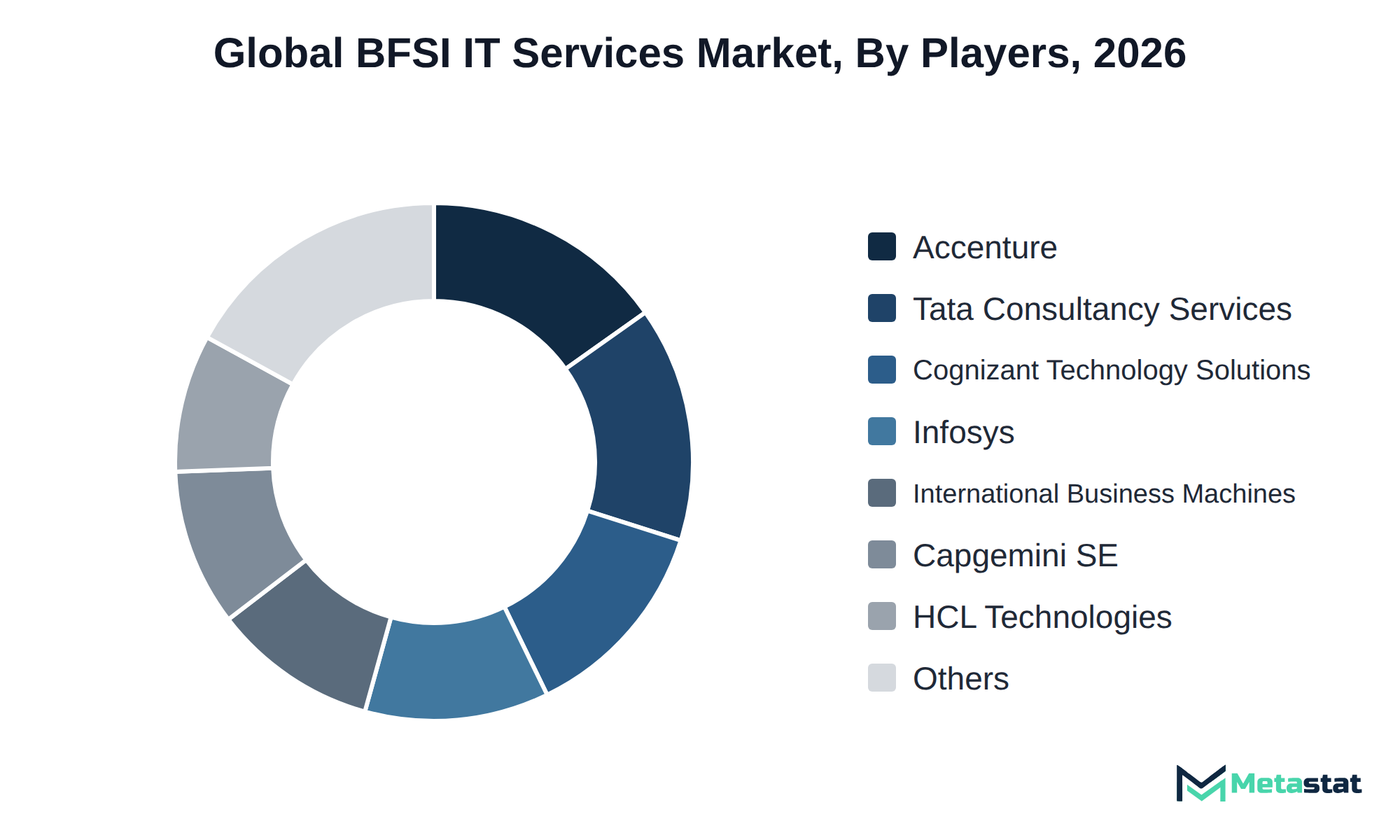
The BFSI IT Services market features intense competition among several prominent players. Companies differentiate themselves through service offerings, pricing strategies, and customized solutions tailored to specific buyer needs. Buyers prioritize factors including the ability to provide specialized services, certification levels, and the reliability of service delivery.
Tata Consultancy Services Limited focuses on comprehensive application development and maintenance services, addressing the diverse requirements of banking and finance. Accenture plc emphasizes IT consulting services, enabling clients to enhance operational efficiency and integrate advanced technologies.
Infosys Limited offers a robust portfolio of IT infrastructure management services, catering to clients seeking reliable and scalable solutions. The BFSI IT Services market continues to evolve, with players adapting their strategies to meet changing buyer demands and technological advancements.
Achieving this growth relies on several key developments. First, the transition to cloud-based services is expected to drive significant expansion in the BFSI IT Services market, with this deployment model projected to grow at an 11.4% CAGR, reaching USD 178.1 billion by 2033. This shift enhances operational efficiency and reduces costs for companies in the banking and insurance sectors. Second, increasing demand for Application Development and Maintenance Services will support market growth, moving from USD 60.4 billion in 2026 to USD 103.8 billion by 2033. This reflects the need for continuous innovation and digital transformation among financial institutions. Potential risks exist that could hinder progress. Economic uncertainties and regulatory challenges in key regions like North America and Europe slow down investments in IT services. Heightened compliance costs or fluctuating market conditions could lead to setbacks in the anticipated growth of the BFSI IT Services market, impacting the overall trajectory towards USD 388.5 billion.
By Service Type: Application Development and Maintenance Services, IT Infrastructure Management Services, Systems Integration Services, IT Consulting Services, Quality Assurance and Testing Services, Cybersecurity Services, Data Engineering and Analytics Services, Others (IT Service Desk and Specialized Technical Support)
By Deployment Model: Cloud-Based, On-Premises, Hybrid
By Application: Core Banking and Lending Systems, Payments and Card Processing Systems, Insurance Policy Administration and Claims Systems, Trading and Securities Processing Systems, Wealth and Asset Management Systems, Risk Management and Regulatory Compliance Systems, Customer Engagement and Relationship Management Systems, Enterprise Back-Office Systems, Others (Fraud Detection and Financial Reporting Systems)
By End-Use Sector: Banking, Insurance, Capital Markets and Investment Services, Non-Banking Lending, Payment Services
The report strategically identifies and profiles the key market players and analyses their core competencies in each sub-segment of the BFSI IT Services market.
Report Attributes | Details |
Study Period | 2021-2033 |
Base Year | 2025 |
Estimated Year | 2026 |
Forecast Period | 2026-2033 |
Historical Period | 2021-2025 |
Growth Rate | CAGR 8.9% from 2026 to 2033 |
Revenue Unit | USD billion |
Segmentation | By Service Type, Deployment Model, Application, End-Use Sector, and Region |
By Region | North America (By Service Type, Deployment Model, Application, End-Use Sector, and Country)
|
Europe (By Service Type, Deployment Model, Application, End-Use Sector, and Country)
| |
Asia Pacific (By Service Type, Deployment Model, Application, End-Use Sector, and Country)
| |
South America (By Service Type, Deployment Model, Application, End-Use Sector, and Country)
| |
Middle East and Africa (By Service Type, Deployment Model, Application, End-Use Sector, and Country)
|
Find answers to common questions about this report
The BFSI IT Services market size was valued at USD 196.4 billion in 2025.
The market is projected to grow at a CAGR of 8.9% during the forecast period from 2026 to 2033.
The North America BFSI IT Services market size is estimated to reach USD 139.2 billion by 2033.
Application Development and Maintenance Services leads the BFSI IT Services market, with a projected value of USD 103.8 billion by 2033. This segment's growth reflects a compound annual growth rate of 8 percent from 2026 to 2033.
Digitalization in financial institutions enhances customer experiences and operational efficiency, driven by changing consumer expectations for faster and more accessible services. The increasing adoption of cloud solutions supports operational flexibility and scalability, facilitating digital transformation initiatives.
North America holds the dominant share of the BFSI IT Services market, with a projected value of USD 139.2 billion in 2033, representing 38.2 percent of the total market. This figure significantly exceeds the shares of other regions.
Price sensitivity among financial institutions acts as a significant restraint, leading to cautious spending behavior and delayed investments in advanced IT services. Rising talent costs challenge supplier profitability, as a shortage of skilled professionals increases recruitment and retention expenses.
Financial institutions prioritize several factors that favor adoption in the BFSI IT Services market. The increasing demand for operational flexibility, efficient data management, and improved service delivery drives investments in cloud solutions. Enhanced customer engagement and the need for cost-effective solutions further support this transition.
The BFSI IT Services market is estimated to reach a valuation of USD 388.5 billion by 2033.
Key players operating in the BFSI IT Services market include Tata Consultancy Services Limited, Accenture plc, Infosys Limited, International Business Machines Corporation, Cognizant Technology Solutions Corporation, Capgemini SE, and HCL Technologies Limited.
The analysts below cover Banking & Finance research at Metastat Insights.
LEAD ANALYST
Utkarsh Khirodkar is a Lead Market Research Analyst at MetaStat Insight, specializing in market intelligence, technology sector assessments, and competitive strategy.

PRINCIPAL CONSULTANT - ENTERPRISE AI & EMERGING TECHNOLOGIES
Banking & Finance · Electronics and Semiconductor · Energy and Power · Healthcare IT · Information & Technology · Professional Services
Vijay Gunti is a Principal Consultant at MetaStat Insight, bringing over two decades of experience across enterprise digital transformation, technology strategy, and intelligent systems.
Analyzing the transition from natural gas to green hydrogen in iron ore reduction requires realistic infrastructure timelines. Meta stat insight supplied a detailed regional assessment of DRI plant conversion costs and scrap metal availability in North America and Western Europe. Their report carefully examined pellet quality specs and electrical grid access constraints without making oversimplified market assumptions. The research material served as a practical reference during internal technology roadmap discussions.
Integrating zero-trust access controls across legacy electronic health record systems involves complex compliance overhead. Team produced an analysis that clearly separated identity governance and administration tools from privileged access management platforms. Their evaluation of HIPAA and GDPR compliance features across cloud native solutions gave our architecture group clear baseline criteria. The custom data request regarding biometric authentication adoption in hospital networks was returned promptly with clear documentation.
Evaluating calorific value requirements and air permit compliance across municipal waste facilities requires localized data. Metastat Insight structured their analysis around operational throughput capacity and feedstock composition variations in Latin America and Eastern Europe. Their competitive mapping of sorting equipment vendors helped clarify technology differences between optical separators and heavy media systems. The study provided an objective baseline during our capital expenditure reviews.
Explore related market intelligence reports worth reading alongside this one.