
LEAD ANALYST
Utkarsh Khirodkar is a Lead Market Research Analyst at MetaStat Insight, specializing in market intelligence, technology sector assessments, and competitive strategy.

Global Carbon Fiber Market Size, Share, By Raw Material (PAN Based Carbon Fiber, Pitch Based Carbon Fiber, Rayon Carbon Fiber), By Fiber Type (Virgin Carbon Fiber, Recycled Carbon Fiber), By Tow Size (Small Tow, Large Tow), By Application (Aerospace and Defense, Wind Energy, Automotive, Sports and Leisure, Construction and Infrastructure, Oil and Gas, Electrical and Electronics, Marine, Medical Devices, Others), Industry Analysis, Growth, Trends, and Forecast, 2026-2033
Report ID
MSI-3589
Published
October, 2026
Pages
291 Pages
Format
Historical
Base year
Forecast
Forecast period
Report Details
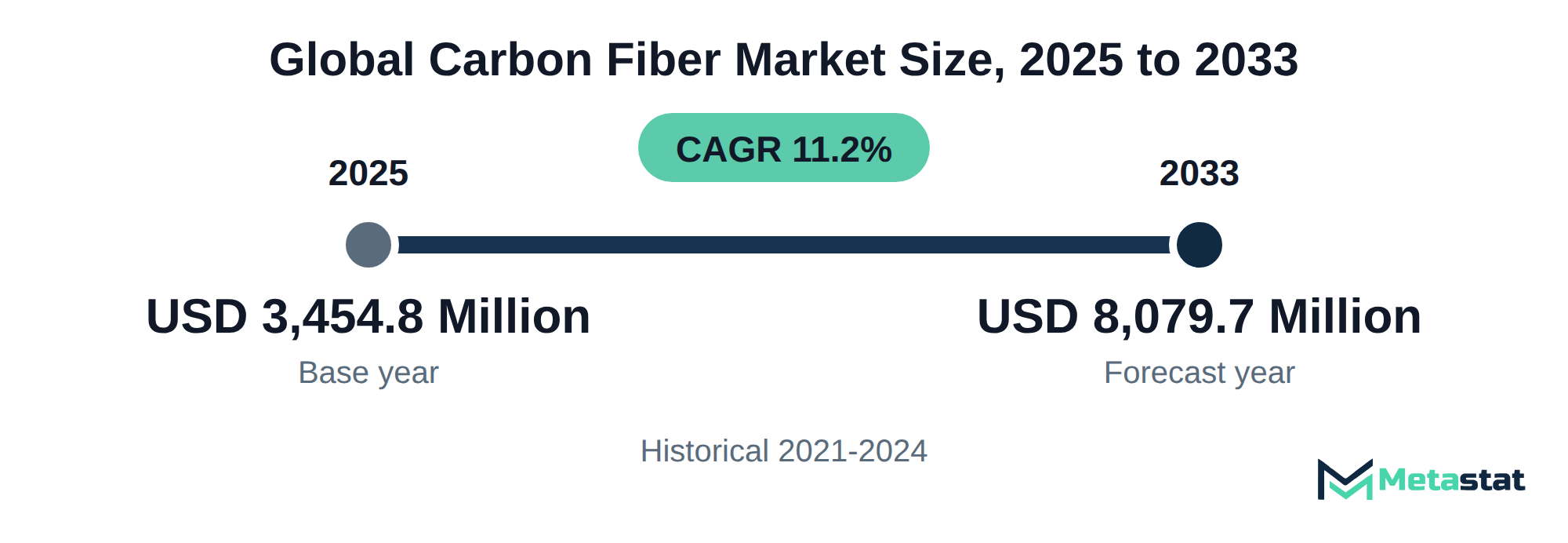
Market Valuation: Valued at $3,454.8 Million in 2025, projected to reach $8,079.7 Million by 2033 at a 11.2% CAGR.
Dominant Segment: The Aerospace and Defense segment leads the market, driven by stringent material requirements and high-value contracts, projecting a growth from USD 1,693.2 million in 2026 to USD 3,406.4 million by 2033.
Geographic Lead: North America is the leading region, holding 29.0% of the market in 2025, with the US expected to maintain its dominance in 2026, supported by advancements in aerospace and defense technologies.
What's Inside: The report offers a comprehensive analysis of the carbon fiber market, covering competitive landscapes, detailed segmentations by raw material and application, and forecasts for 2026-2033.
Emerging Trends: The increasing adoption of recycled carbon fiber in the automotive sector is notable, with a projected market value of USD 660.9 million by 2033, reflecting a strong shift towards sustainability.
Technological Advancements: Innovations in manufacturing technologies, such as automated fiber placement, are enhancing production efficiency and reducing costs, attracting buyers from various sectors.
Choose Your License
Global Carbon Fiber Market
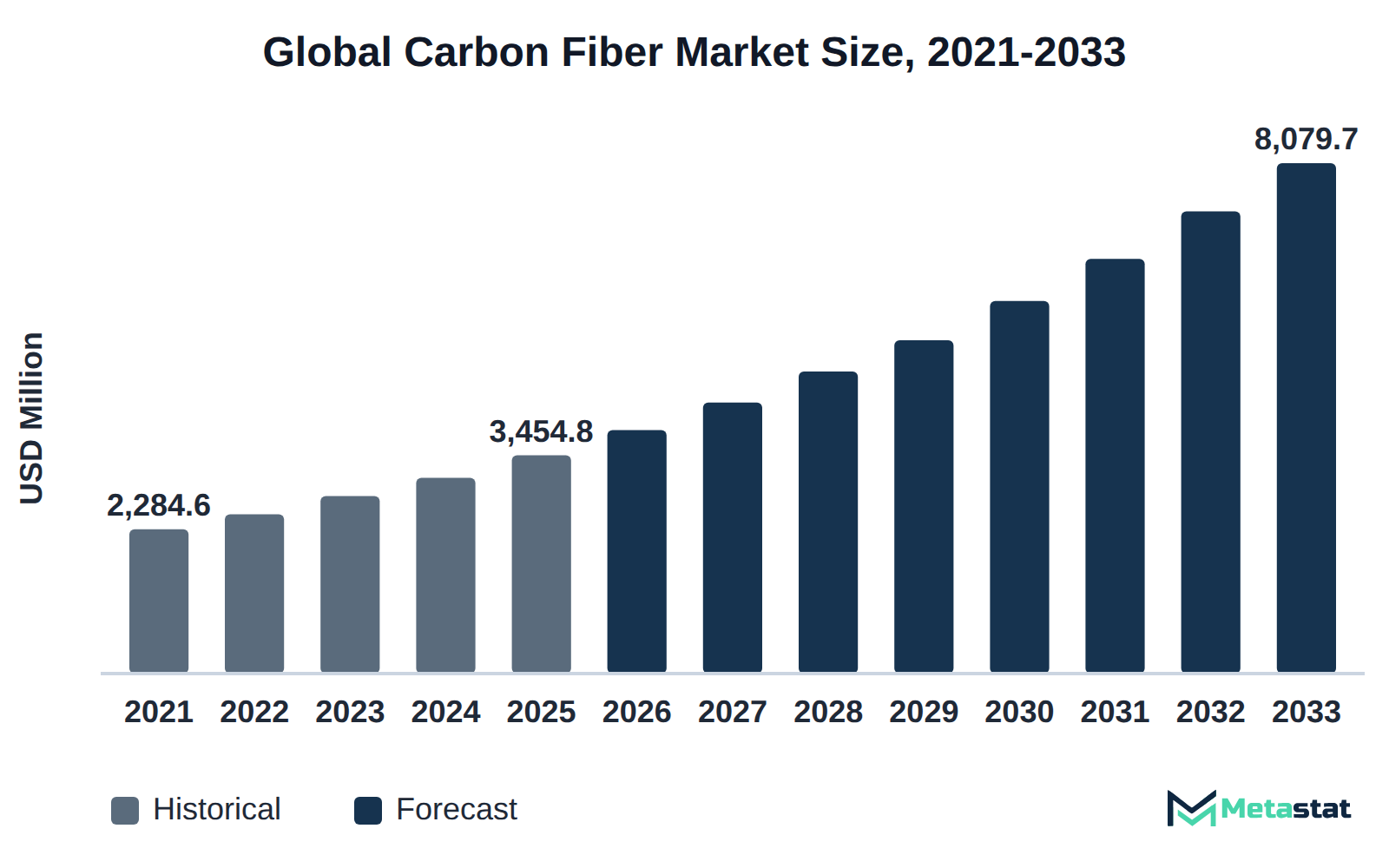
The global Carbon Fiber market was valued at USD 3,454.8 million in 2025 and is projected to reach USD 8,079.7 million by 2033, growing at a CAGR of 11.2% over the forecast period.
The Carbon Fiber market encompasses the production and distribution of various types of carbon fiber used across multiple industries. Buyers invest in carbon fiber due to its superior strength-to-weight ratio, durability, and resistance to corrosion, which enhances the performance and longevity of products in applications including aerospace, automotive, and wind energy. These characteristics contribute to the increasing adoption of carbon fiber, driving significant expenditures among manufacturers and end-users alike.
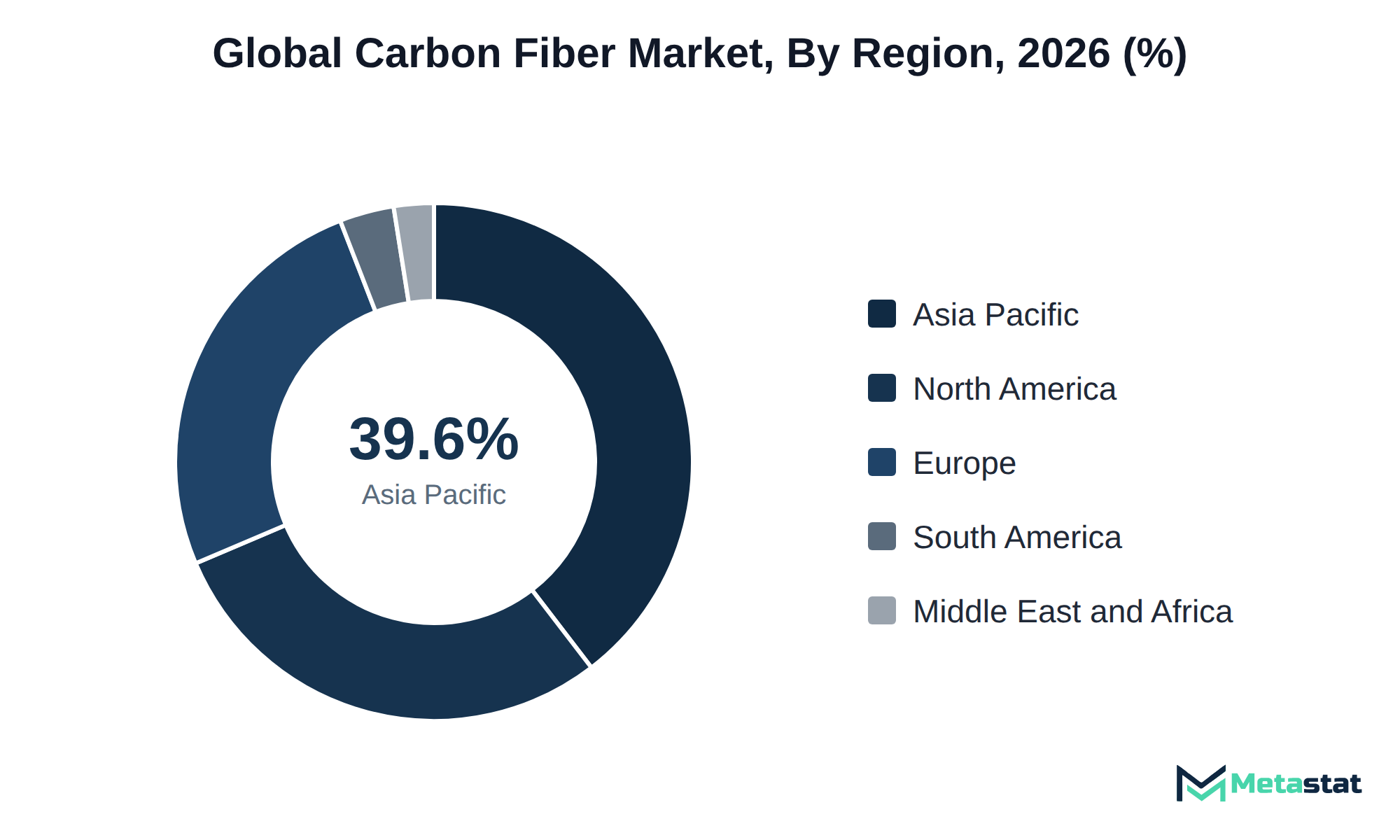
Growth in the market is fueled by rising demand from the aerospace and defense sector, which represents the largest share of market value. North America holds 29.0% of the market in 2025, with the US leading in 2026. The Asia Pacific region follows closely, accounting for 39.6% of the market, driven by rapid industrialization and an increasing focus on lightweight materials in manufacturing processes.
Investments in renewable energy, particularly in wind energy applications, further support market expansion. The emphasis on sustainable energy solutions creates strong demand for materials like carbon fiber, which offer enhanced performance and efficiency. The market is projected to evolve significantly over the forecast period, reflecting changing technologies and consumer preferences.
The Carbon Fiber market serves industries requiring high-performance materials for applications including aerospace, automotive, and wind energy. Buyers invest in carbon fiber due to its lightweight properties, high strength, and resistance to corrosion, which enhance product performance and reduce operational costs. These attributes drive significant demand, especially where weight reduction matters for efficiency and performance, particularly in aerospace and defense applications.
Growth in the market is propelled by the increasing adoption of carbon fiber in various sectors, particularly in North America, where it holds 29.0% of the market in 2025, with the US leading in 2026. The Virgin Carbon Fiber segment represents the largest value, reflecting its widespread use in high-end applications. The expansion of renewable energy initiatives, particularly in wind energy, supports a strong upward trajectory for carbon fiber utilization in sustainable technologies.
Investments in research and development of new carbon fiber applications continue to reveal potential in emerging markets. The increasing focus on sustainability drives the need for recycled carbon fiber, enhancing its market presence. This evolution reflects a broader trend towards integrating advanced materials that contribute to environmental goals while meeting high-performance standards across industries.
Aerospace manufacturers demand stringent qualification requirements for materials used in their projects. High-performance carbon fiber has emerged as a critical material in this sector, driven by its strong strength-to-weight ratio and resistance to environmental factors. In the Carbon Fiber market, the aerospace and defense application segment is projected to expand from USD 1,693.2 million in 2026 to USD 3,406.4 million by 2033, reflecting a compound annual growth rate of 10.5%. This growth signifies increasing reliance on advanced materials such as aerospace composites while aerospace technology progresses.
Manufacturers aiming to supply high-performance carbon fiber adhere to these rigorous criteria to compete effectively. Factors including specific tensile strength, chemical resistance, and thermal stability dictate the material's acceptance in aerospace applications. Suppliers investing in advanced manufacturing processes and quality assurance systems improve their competitive stance by meeting these necessary qualifications. The heightened focus on performance and safety requirements drives demand for innovative carbon fiber solutions tailored to the aerospace sector.
Large-Tow Carbon Fiber is essential in the construction of wind turbine spar caps, directly impacting the efficiency and performance of wind energy systems. Buyers within the carbon fiber market emphasize the importance of pricing structures and contract models when procuring these materials. The market for Large-Tow Carbon Fiber is projected to reach USD 2,079.7 million by 2033, reflecting a compound annual growth rate (CAGR) of 13%.
Buyers engage in long-term contracts with suppliers to secure stable pricing and ensure consistent supply, given the increasing demand for wind energy solutions. This approach allows buyers to mitigate risks associated with price volatility while building strong relationships with suppliers. Bulk purchasing agreements often result in reduced costs per unit, enhancing operational efficiencies for manufacturers. Strategic partnerships between carbon fiber producers and wind energy developers promote innovation and drive down costs.
As the market for Large-Tow Carbon Fiber evolves, pricing strategies and contract models strongly influence buyers' purchasing decisions and directly shape market dynamics and overall growth. The integration of this carbon fiber into wind turbine spar caps highlights the material's importance in advancing sustainable energy solutions, thereby enhancing the competitiveness of buyers in the renewable energy sector.
The increasing focus on sustainability within the automotive sector emphasizes the significance of recycled carbon fiber in production processes. By 2033, recycled carbon fiber is anticipated to reach a market value of USD 660.9 million, driven by a compound annual growth rate of 15.9%. This trend reflects a broader shift in automotive manufacturing, where companies prioritize environmentally friendly materials to meet regulatory demands and consumer preferences.
Automakers recognize the economic advantages of incorporating recycled carbon fiber into vehicle manufacturing. This material reduces dependency on virgin carbon fiber, which entails higher production costs due to extraction and processing. The growing emphasis on sustainability aligns with consumer expectations for eco-conscious products, thus enhancing brand loyalty and market competitiveness. This evolution in the automotive supply chain highlights the emerging role of recycled carbon fiber as a cost-effective and sustainable alternative within the carbon fiber market.
PAN-based carbon fiber provides advantages over pitch-based alternatives, particularly in terms of performance and market demand. The projected value of PAN-based carbon fiber is expected to grow from USD 3,707.9 million in 2026 to USD 7,811.4 million by 2033, reflecting a compound annual growth rate (CAGR) of 11.2%. This growth is driven by increasing applications in industries including aerospace, automotive, and wind energy, where lightweight materials with high strength are crucial.
In contrast, pitch-based carbon fiber, while valuable, exhibits a slower growth trajectory with a projected value of USD 228.7 million by 2033. This disparity highlights the preference for PAN-based solutions in high-performance applications. The superior properties of PAN-based carbon fiber, including better tensile strength and modulus, contribute significantly to its demand in sectors focusing on advanced materials.
The commercial implications of this preference are substantial. Buyers in the carbon fiber market prioritize performance and reliability, leading to increased investments in PAN-based materials. Industries requiring rigorous standards for mechanical performance favor PAN-based carbon fiber over pitch-based alternatives, ensuring continued market expansion.
Aerospace manufacturers increasingly prioritize lightweight, high-strength materials to enhance fuel efficiency and performance. This heightened demand results from the need for improved aircraft designs and reduced operational costs. Expanding use of carbon fiber in this sector supports innovation, driving investment in advanced materials. The move towards more efficient air travel directly influences volume and pricing dynamics within the market.
In parallel, the shift towards sustainable aviation initiatives increases interest in carbon fiber solutions. Manufacturers pursuing eco-friendly strategies acknowledge the benefits of incorporating carbon fiber, resulting in increased production and procurement. The alignment of market offerings with aerospace advancements enables significant growth opportunities during the forecast period.
The introduction of advanced manufacturing technologies significantly impacts the Carbon Fiber market. Innovations including automated fiber placement and precision weaving enhance production efficiency and reduce waste during manufacturing processes. These technologies streamline operations, allowing producers to lower costs and improve output quality. Greater efficiency attracts buyers from the aerospace, automotive, and wind energy sectors, where performance and reliability remain critical factors in material selection.
Improved manufacturing methods facilitate the development of specialized carbon fiber products tailored for specific applications. This customization addresses the diverse needs of various industries, reinforcing the market's competitive edge. By offering high-performance materials at competitive prices, advancements in manufacturing technologies position the market for continued growth through 2033.
High production costs associated with Carbon Fiber significantly influence buyer decisions, particularly among industries including automotive and construction. Price fluctuations create challenges for manufacturers, leading to slower adoption rates and smaller order volumes. The automotive sector experiences pressure to balance performance requirements with cost constraints, resulting in delays in material replacement and project timelines. In construction, budget-restricted projects prioritize alternative materials over carbon fiber, further hindering market penetration. Together, these factors restrict the growth potential of the market and require suppliers to develop strategies that address pricing challenges.
Increasing input costs pose significant challenges for suppliers within the Carbon Fiber market. Rising prices of raw materials, particularly polyacrylonitrile (PAN) and resin systems, directly affect production expenses. These costs create margin pressure that limits profitability, compelling suppliers to reassess pricing strategies and operational efficiencies.
To respond effectively, suppliers have implemented various strategies aimed at maintaining competitiveness. Several have explored vertical integration to gain greater control over raw material sourcing, thereby stabilizing costs. Others have invested in process optimization technologies to enhance production efficiency, reducing the overall cost per unit. Collaboration with research institutions has enabled innovation in alternative materials, providing cost-effective solutions while meeting quality standards.
The collective shift towards these adaptive measures reflects a proactive approach to counteract rising input costs. This strategic pivot allows suppliers to position themselves more favorably in the market while aiming to sustain growth and address emerging demand across various applications.
Rapid expansion of recycled carbon fiber presents a significant opportunity in the automotive sector. This segment is projected to achieve a compound annual growth rate of 15.9% through 2033, reflecting heightened demand for sustainable materials in vehicle production. The shift toward environmentally friendly manufacturing aligns with consumer preferences for greener alternatives, prompting automotive manufacturers to explore recyclable options. The integration of recycled carbon fibers enhances performance and addresses cost challenges associated with virgin materials. This trend positions the market for substantial growth, particularly in regions with strong recycling initiatives and technological advancements in fiber recovery processes such as CFRP recycling. Stakeholders focusing on recycled carbon fiber are likely to capture market share and drive innovation, ultimately contributing to a more sustainable automotive industry.
The Global Carbon Fiber market is segmented based on Raw Material, Fiber Type, Tow Size, and Application.
This type of carbon fiber finds extensive application in aerospace, automotive, and industrial sectors, where lightweight and high-strength materials are crucial for performance. The growing demand for lightweight components that enhance fuel efficiency significantly drives this segment. Compared to other raw material segments, PAN Based Carbon Fiber exhibits a faster growth rate, supported by its strong positioning in high-performance applications, unlike the slower-growing Pitch Based Carbon Fiber. The focus on advanced manufacturing processes and technologies further distinguishes this segment, enhancing its adoption across various industries seeking to optimize product performance and reduce weight.
Pitch Based Carbon Fiber segment is estimated to reach USD 228.7 million by 2033, at a CAGR of 9.5% during the forecast period. This type of carbon fiber finds applications in specialized sectors, including aerospace and industrial manufacturing, where its unique properties suit specific requirements. The growing demand for lightweight materials in high-performance applications drives this segment, particularly among aerospace manufacturers who require components with superior mechanical properties. Compared to other segments, including PAN-based carbon fiber, the growth of pitch-based carbon fiber is relatively slower due to its more niche applications and higher production costs. However, the increasing focus on energy-efficient technologies within industrial processes supports its adoption, providing opportunities for market expansion. The combination of targeted demand and limited competition positions the segment uniquely, highlighting its potential within the broader market.
Rayon Carbon Fiber segment is expected to reach USD 39.6 million by 2033. This type of carbon fiber finds applications in industries requiring lightweight and resilient materials, including aerospace and automotive sectors. Demand for Rayon Carbon Fiber is influenced by the growing need for sustainable materials and a shift toward more eco-friendly production processes. Despite its lower growth rate compared to PAN-based carbon fiber, which has a CAGR of 11.2%, Rayon Carbon Fiber appeals to specific buyers focusing on cost-effectiveness and environmental impact. The segment's unique positioning reflects a growing trend toward alternative raw materials, catering to customers prioritizing sustainability. In contrast to other carbon fiber segments, Rayon exhibits a relatively slower growth trajectory, making it distinct within the market.
Virgin Carbon Fiber segment is valued at USD 3,616.3 million in 2026 and is projected to reach USD 7,418.8 million by 2033, at a CAGR of 10.8% during the forecast period. This segment finds application in highly demanding sectors, including aerospace, automotive, and sporting goods, where superior strength-to-weight ratios and corrosion resistance are critical. The increasing adoption of Virgin Carbon Fiber is driven by the need for lightweight materials that enhance performance and energy efficiency in various applications. Compared to other fiber types, including recycled carbon fiber, Virgin Carbon Fiber experiences a relatively slower growth rate but commands a higher price point due to its superior mechanical properties. This positioning attracts several buyers willing to invest in premium materials to meet stringent performance standards across industries, particularly in the aerospace sector, which emphasizes material integrity and reliability.
This segment finds applications in areas including automotive, aerospace, and consumer goods, where the emphasis on sustainability drives its adoption. Environmental regulations and the growing demand for eco-friendly materials contribute to the heightened interest in recycled carbon fiber among manufacturers. Compared to other fiber types, recycled carbon fiber exhibits a faster growth trajectory, reflecting a significant shift towards circular economy practices. Its pricing structure differs, often presenting a lower cost compared to virgin carbon fiber, thus appealing to several cost-sensitive buyers. The combination of regulatory support and consumer demand for sustainable products fuels the growth of this segment, marking it a crucial component of the market.
Small Tow segment is valued at USD 2,969.2 million in 2026 and is projected to reach USD 6,000 million by 2033, at a CAGR of 10.6% during the forecast period. This segment serves various applications, particularly in aerospace, automotive, and wind energy, where lightweight and strong materials are essential. The demand for Small Tow is driven by the increasing need for efficient energy use and performance enhancement in these industries. Compared to Large Tow, this segment experiences a slower growth trajectory, influenced by specific buyer preferences and application requirements, leading to a distinct pricing structure. The focus on performance optimization and material efficiency in the market highlights the significance of Small Tow in meeting industry standards.
This segment is primarily applied in applications requiring high-performance composites, including aerospace, automotive, and industrial sectors. Demand for Large Tow carbon fiber finds impetus from the increasing need for lightweight materials that enhance fuel efficiency and reduce emissions across various industries. Compared to smaller tow sizes, the Large Tow segment offers improved cost efficiencies in production, facilitating larger-scale applications. The segment's anticipated growth surpasses that of smaller tow options, driven by advancements in manufacturing processes that prioritize efficiency and performance. By 2033, demand for Large Tow is projected to reflect broader market trends, indicating strong expansion in key sectors including aerospace and automotive.
This segment primarily serves manufacturers in the aviation and military sectors, where lightweight and high-strength materials are critical for aircraft and defense applications. The growing focus on enhancing fuel efficiency and performance significantly drives demand. Compared to other segments, Aerospace and Defense experiences strong growth due to high-value contracts and the stringent requirements for material certification, making it less price-sensitive than sectors including automotive. The segment's projected CAGR of 10.5% surpasses that of several other applications, reflecting increased investment in advanced aerospace technologies and defense capabilities. Continued emphasis on innovation and efficiency within these industries contributes to the overall expansion of the market.
Wind Energy segment is estimated to reach USD 1,594.9 million by 2033, at a CAGR of 12.4% during the forecast period. This segment primarily serves the renewable energy sector, particularly in the manufacturing of wind turbine components including blades and nacelles. The increasing demand for sustainable energy solutions drives the growth of this segment, with wind energy developers and manufacturers seeking lightweight and durable materials to enhance performance and efficiency. The Wind Energy segment exhibits a higher growth rate than the Automotive segment, which faces different market dynamics. The emphasis on reducing carbon footprints increases the demand for carbon fiber in wind energy applications, highlighting its importance for future energy solutions.
Automotive applications are projected to reach USD 1,153.8 million by 2033. This sub-segment focuses on lightweight and high-strength materials in the production of vehicles. Automakers prioritize automotive carbon fiber components for their ability to enhance fuel efficiency and overall performance. The demand for electric and hybrid vehicles drives manufacturers toward advanced materials that reduce weight while maintaining structural integrity. Unlike aerospace and defense applications, the automotive segment exhibits slower growth, largely influenced by cost pressures and the need for large-scale production. The segment also faces heightened competition from traditional materials like steel and aluminum, which remain more cost-effective for several applications. The market is expected to experience solid growth, driven by increasing investments in electric vehicle technologies and lightweighting trends.
Sports and Leisure segment is projected to grow at a CAGR of 8.7% during the forecast period. This segment finds application in products including high-performance sports goods, apparel, and leisure items, appealing to both amateur and professional users. The increasing demand for lightweight and high-strength materials fuels growth, particularly among athletes and fitness enthusiasts prioritizing performance. This segment differs from others in its group, experiencing slower growth compared to aerospace and defense applications, which benefit from a CAGR of 10.5%. Adoption barriers include the relatively high cost of carbon fiber products, influencing purchasing decisions among casual consumers. The Carbon Fiber market’s focus on enhancing product performance and durability positions the Sports and Leisure segment as an attractive option for manufacturers striving to meet evolving consumer needs.
Construction and Infrastructure involves the use of carbon fiber for reinforcement and enhancement of structural integrity in various building projects. This segment primarily serves construction companies and civil engineering firms, focusing on applications including bridges, buildings, and roads. Demand for carbon fiber in this area is driven by the increasing emphasis on durable and lightweight materials that improve overall structural performance. Compared to other applications, the Construction and Infrastructure segment typically experiences slower growth, reflecting the maturity of construction industries and the gradual adoption of advanced materials. Regulatory pressures regarding sustainability and the push for energy-efficient buildings further influence demand, offering a pathway for innovation and product development. However, the segment faces challenges related to the high costs of carbon fiber compared to traditional materials, which impacts its widespread use in large-scale projects. The Carbon Fiber market continues to evolve with these dynamics shaping its future trajectory.
Oil and Gas applications employ carbon fiber for various components and structures, supporting the industry's demand for lightweight and durable materials. This industry uses carbon fiber in pipelines, drilling equipment, and other structures where strength and reduced weight are critical. Growth within this segment is influenced by the increasing emphasis on reducing operational costs and enhancing efficiency in oil and gas exploration and production activities. Compared to other segments, Oil and Gas experiences slower growth due to high costs associated with carbon fiber production and competition from alternative materials. However, the ongoing push for more efficient extraction methods and renewable energy integration drives steady demand for advanced materials. This segment has unique buyer dynamics, focusing on specialized applications that differentiate it from broader market trends.
Carbon fiber is essential in electrical and electronics applications, primarily for its lightweight and durable properties. Manufacturers in this sector use carbon fiber for high-performance components including circuit boards, connectors, and housings, focusing on enhancing electrical efficiency and thermal management. Increasing demand for lightweight electronics, driven by advancements in technology, is driving growth in this segment. This market segment often experiences faster growth compared to other applications, including automotive, due to aggressive innovation cycles and rising consumer expectations for advanced electronic devices. While cost considerations influence adoption, the unique performance characteristics of carbon fiber attract electronics manufacturers seeking competitive advantages. The market remains dynamic, reflecting broader trends in technology and consumer electronics, ensuring ongoing relevance in the carbon fiber market.
Marine applications employ carbon fiber for constructing lightweight and durable components, particularly in ship and boat building, including vessels and recreational boats. Manufacturers in this segment focus on enhancing fuel efficiency and performance, catering to both commercial and leisure markets. The shift toward sustainable and eco-friendly materials drives demand, with marine builders increasingly adopting carbon fiber to reduce overall weight and improve efficiency. Growth in this sector aligns with broader trends in maritime innovation, but the pace differs from other applications due to unique regulatory considerations related to safety and environmental impact. This segment's performance reflects specific buyer requirements, differentiating it from other areas including aerospace and automotive where adoption rates and growth trajectories vary significantly.
Medical devices encompass a range of applications that use carbon fiber for its lightweight and strong properties. This segment serves healthcare professionals and manufacturers who require advanced materials for surgical instruments, prosthetics, and diagnostic equipment. Growth in the medical devices segment is driven by increasing demand for innovative healthcare solutions and ongoing advancements in minimally invasive procedures. Emerging technologies enhance product performance, leading to higher adoption rates. Unlike other segments, the medical devices category experiences slower growth due to stringent regulations and the need for extensive testing and certification processes. These factors contribute to a unique pricing structure, impacting manufacturers differently compared to those in faster-growing segments of the Carbon Fiber market, including aerospace and automotive applications. Overall, the medical devices segment advances healthcare technology while facing challenges distinct from other areas in the market.
This sub-segment encompasses applications in rail transportation and industrial machinery, using carbon fiber for various components and structures. Manufacturers in these industries seek lightweight materials that enhance efficiency and performance. Demand for carbon fiber in rail transportation is propelled by a push for better fuel efficiency and reduced emissions. In industrial machinery, the focus lies on reducing weight without compromising strength, aligning with trends driven by automation and advanced manufacturing processes. Compared to other segments, this sub-segment experiences slower growth due to higher material costs and competition from alternative materials. Several buyers prioritize cost-effectiveness, influencing purchasing decisions in this area. The Carbon Fiber market adapts to these needs, prompting innovations in material development and applications.
Based on geography, the Global Carbon Fiber market is divided into North America, Europe, Asia-Pacific, South America, Middle East, and Africa.
Projected growth in the United States, Canada, and Mexico significantly influences the North American carbon fiber market trajectory. Industries including aerospace and defense, along with automotive, drive demand for lightweight and durable materials, enhancing fuel efficiency and performance. North America holds a 29% share of the global market in 2025. Technological advancements and increased investments in renewable energy projects further stimulate the market. North America is projected to reach USD 2,218.7 million by the end of 2033. The rising need for high-performance materials across various applications reflects the market's robust potential, reinforcing its critical role in industrial innovation.
Demand in the Carbon Fiber market in Europe is driven by several key industries, including aerospace and automotive sectors. Strong investments in renewable energy projects, particularly wind energy, enhance growth potential within the region. Countries including Germany, France, and the UK focus on innovation and sustainability, creating opportunities for carbon fiber applications. The European market captures 25.5% of the global market in 2025, reflecting strong growth during the forecast period. Regulations promoting lightweight materials in vehicle manufacturing and stringent environmental standards further increase demand for carbon fiber solutions. The market is anticipated to experience continued expansion, supported by advancements in recycling technologies and increasing applications across various sectors.
Asia-Pacific emerges as a significant player in the Carbon Fiber market, driven by strong demand from industries including aerospace, automotive, and wind energy. Countries including China and India lead the way in carbon fiber consumption due to rapid industrialization and technological advancements. The region benefits from strong manufacturing capabilities and an expanding infrastructure that facilitates production and distribution. Increasing investments in renewable energy sources, particularly wind energy, further enhance the market's appeal. By 2025, Asia-Pacific accounts for 39.6% of the global market share, reflecting its role in shaping future trends. In this dynamic environment, the market is expected to experience substantial growth, supporting various sectors with high-performance materials.
In South America, the Carbon Fiber market reflects distinct demands driven primarily by the automotive and construction sectors. Brazil and Argentina lead the way, with a growing focus on lightweight materials for vehicle manufacturing and infrastructure projects. The region has experienced a significant increase in construction activities, resulting in heightened demand for materials that enhance structural integrity and reduce weight. With a market share of 3.4% in 2025, South America presents opportunities for suppliers to engage in these key industries. Investment in renewable energy and efforts to improve infrastructure further contribute to market growth. The focus on sustainability in manufacturing processes aligns with the increasing adoption of carbon fiber in various applications, supporting overall market expansion.
Growth in the Carbon Fiber market within the Middle East and Africa is supported by demand in industries including aerospace and automotive. The region's market share stood at 2.5% in 2025, indicating a developing interest in lightweight materials. Countries like Saudi Arabia and the UAE focus on advancing their aerospace capabilities, which drives investment in carbon fiber technologies. In South Africa, increased emphasis on renewable energy projects stimulates interest in carbon fiber applications, particularly in wind energy. The market faces challenges due to limited local manufacturing capabilities, requiring reliance on imports to meet growing demand. Overall, investment in infrastructure and advancements in technology will influence the trajectory of the market in the region.
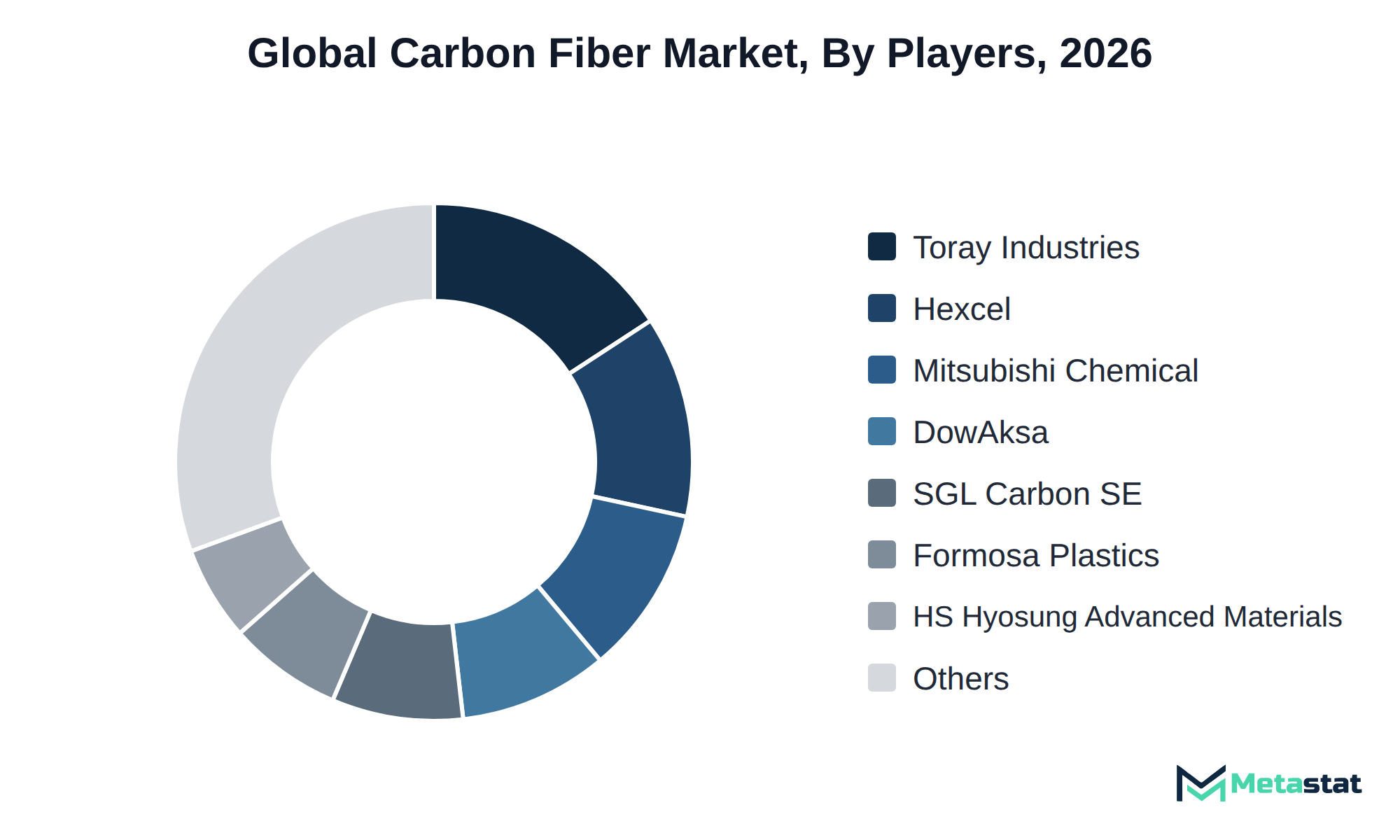
Competition in the Carbon Fiber market involves a diverse range of players, each focusing on distinct aspects to meet buyer preferences. Key factors driving purchasing decisions include price, certification, customization, customer service, and supplier ecosystem. Buyers prioritize these elements based on their specific applications and operational requirements.
Companies including Toray Industries, Inc. and Mitsubishi Chemical Group Corporation emphasize innovation and product performance, positioning themselves in high-performance applications including aerospace and defense. DowAksa and Teijin Limited focus on sustainability, offering recycled carbon fiber options to meet growing environmental demands. Formosa Plastics Corporation and Hexcel Corporation maintain a competitive edge through extensive product portfolios that cater to various industries, including automotive and wind energy.
Achieving this growth in the carbon fiber market requires several developments. First, an increase in the adoption of Virgin Carbon Fiber, driven by rising demand in the aerospace and defense sector, will support expansion. Second, the Wind Energy application is expected to experience growth, with an anticipated market size of USD 1,594.9 million by 2033, influenced by the global shift towards renewable energy sources. A significant risk that could impede progress lies in the volatility of raw material prices, particularly for PAN Based Carbon Fiber, where price fluctuations could affect profitability and adoption rates across various segments. The overall success of the Carbon Fiber market depends on these developments and the ability to manage such challenges.
By Tow Size: Small Tow, Large Tow
By Application: Aerospace and Defense, Wind Energy, Automotive, Sports and Leisure, Construction and Infrastructure, Oil and Gas, Electrical and Electronics, Marine, Medical Devices, Others (Rail Transportation, Industrial Machinery)
The report strategically identifies and profiles the key market players and analyses their core competencies in each sub-segment of the Carbon Fiber market.
|
Report Attributes |
Details |
|
Study Period |
2021-2033 |
|
Base Year |
2025 |
|
Estimated Year |
2026 |
|
Forecast Period |
2026-2033 |
|
Historical Period |
2021-2025 |
|
Growth Rate |
CAGR 11.2% from 2026 to 2033 |
|
Revenue Unit |
USD million |
|
Segmentation |
By Raw Material, Fiber Type, Tow Size, Application, and Region |
|
By Region |
North America (By Raw Material, Fiber Type, Tow Size, Application, and Country)
|
|
Europe (By Raw Material, Fiber Type, Tow Size, Application, and Country)
|
|
|
Asia Pacific (By Raw Material, Fiber Type, Tow Size, Application, and Country)
|
|
|
South America (By Raw Material, Fiber Type, Tow Size, Application, and Country)
|
|
|
Middle East and Africa (By Raw Material, Fiber Type, Tow Size, Application, and Country)
|
Find answers to common questions about this report
The Carbon Fiber market size was valued at USD 3,454.8 million in 2025.
The market is projected to grow at a CAGR of 11.2% during the forecast period from 2026 to 2033.
The North America Carbon Fiber market size is estimated to reach USD 2,218.7 million by 2033.
Virgin Carbon Fiber leads the Carbon Fiber market with a projected value of USD 7,418.8 million by 2033, significantly surpassing other segments. This segment's growth reflects a compound annual growth rate of 10.8%.
The heightened demand for lightweight, high-strength materials in aerospace manufacturing drives growth in the Carbon Fiber market. the rapid expansion of recycled carbon fiber in the automotive sector presents a significant opportunity for market advancement.
High production costs associated with carbon fiber significantly influence buyer decisions, particularly among industries including automotive and construction. Rising input costs, especially for raw materials like polyacrylonitrile and resin systems, create margin pressure that limits profitability for suppliers.
The rapid expansion of recycled carbon fiber in the automotive sector supports adoption by addressing cost challenges and aligning with consumer preferences for sustainable materials. This trend is expected to drive significant growth, particularly in regions with strong recycling initiatives and advancements in fiber recovery technologies.
The Carbon Fiber market is estimated to reach a valuation of USD 8,079.7 million by 2033.
Key players operating in the Carbon Fiber market include Toray Industries, Inc., DowAksa, Formosa Plastics Corporation, Hexcel Corporation, Mitsubishi Chemical Group Corporation, HS Hyosung Advanced Materials Corporation, and Teijin Limited.
The recycled carbon fiber segment is projected to achieve a compound annual growth rate of 15.9 percent through 2033, reflecting heightened demand for sustainable materials in vehicle production.
The analysts below cover Chemicals and Materials research at Metastat Insights.
LEAD ANALYST
Utkarsh Khirodkar is a Lead Market Research Analyst at MetaStat Insight, specializing in market intelligence, technology sector assessments, and competitive strategy.

INDUSTRY CONSULTANT - CHEMICALS & ADVANCED MATERIALS
Chemicals and Materials · Machinery & Equipment · Packaging
Amit Gadhekar Consultant for Chemicals and Materials at MetaStat Insight, directing sector-specific intelligence, research, and strategic consulting across global chemical and processing markets.
Ambulatory surgical centers have very different purchasing cycles for robotic-assisted surgery platforms than major hospital networks. The MetaStat Insight study focused squarely on capital expenditure depreciation, procedural reimbursement pathways, and surgeon training overhead. That operational clarity made it much simpler to validate multi-year procedure growth forecasts against actual ambulatory center adoption patterns.
When planning edge sensor rollouts across refinery environments, generic IoT reports typically miss the harsh-environment certification bottlenecks. MetaStat Insight gave an objective evaluation of ATEX and Class 1 Division 2 hardware availability, along with realistic five-year maintenance cycle cost projections. The comparison of wireless mesh versus private cellular backhaul helped our team pressure-test network reliability models for remote processing facilities.
In the biological seed treatment space, registration timelines vary drastically between the European Union, Brazil, and North America. The MetaStat Insight research handled these cross-border regulatory barriers with genuine nuance, mapping commercialization pathways alongside historical field adoption rates. The segmentation between microbial strains and biochemical active ingredients was particularly well structured.
Explore related market intelligence reports worth reading alongside this one.
Starting from
$2950