
LEAD ANALYST
Utkarsh Khirodkar is a Lead Market Research Analyst at MetaStat Insight, specializing in market intelligence, technology sector assessments, and competitive strategy.

Global Cranio Maxillofacial Fixation Device Market Size, Share, By Device Type (Plate-and-Screw Fixation Systems, Cranial Flap Clamps and Closure Devices, Maxillomandibular Fixation Systems, Mesh Fixation Systems, Standalone Fixation Screws and Bone Anchors and Others), By Material (Titanium and Titanium Alloys, Bioabsorbable Polymers, PEEK and PEKK, Stainless Steel and Others), By Application (Trauma Fixation, Reconstructive Surgery, Orthognathic Surgery, Cranial Closure and Cranioplasty and Others), By End User (Hospitals, Ambulatory Surgical Centers, Oral and Maxillofacial Surgery Clinics and Specialty Dental Centers), Industry Analysis, Growth, Trends, and Forecast, 2026-2033
Report ID
MSI-5305
Published
September, 2026
Pages
277 Pages
Format
Historical
Base year
Forecast
Forecast period
Report Details
Market Valuation: Valued at $2,239.6 Million in 2025, projected to reach $3,210.4 Million by 2033 at a 4.6% CAGR.
Dominant Segment: Plate-and-Screw Fixation Systems lead the market, driven by the increasing incidence of craniofacial trauma and the growing geriatric population requiring surgical intervention.
Geographic Lead: The market is experiencing significant growth in regions modernizing healthcare infrastructure, enhancing surgical capabilities, and improving access to advanced fixation solutions.
What's Inside: The report provides a comprehensive analysis of market dynamics, including competitive coverage, segment performance by device type and material, and forecasts extending to 2033.
Emerging Trends: Technological advancements, particularly in 3D printing and digital surgical planning, are reshaping cranio maxillofacial fixation procedures, enhancing customization and surgical accuracy.
Choose Your License
Global Cranio Maxillofacial Fixation Device Market
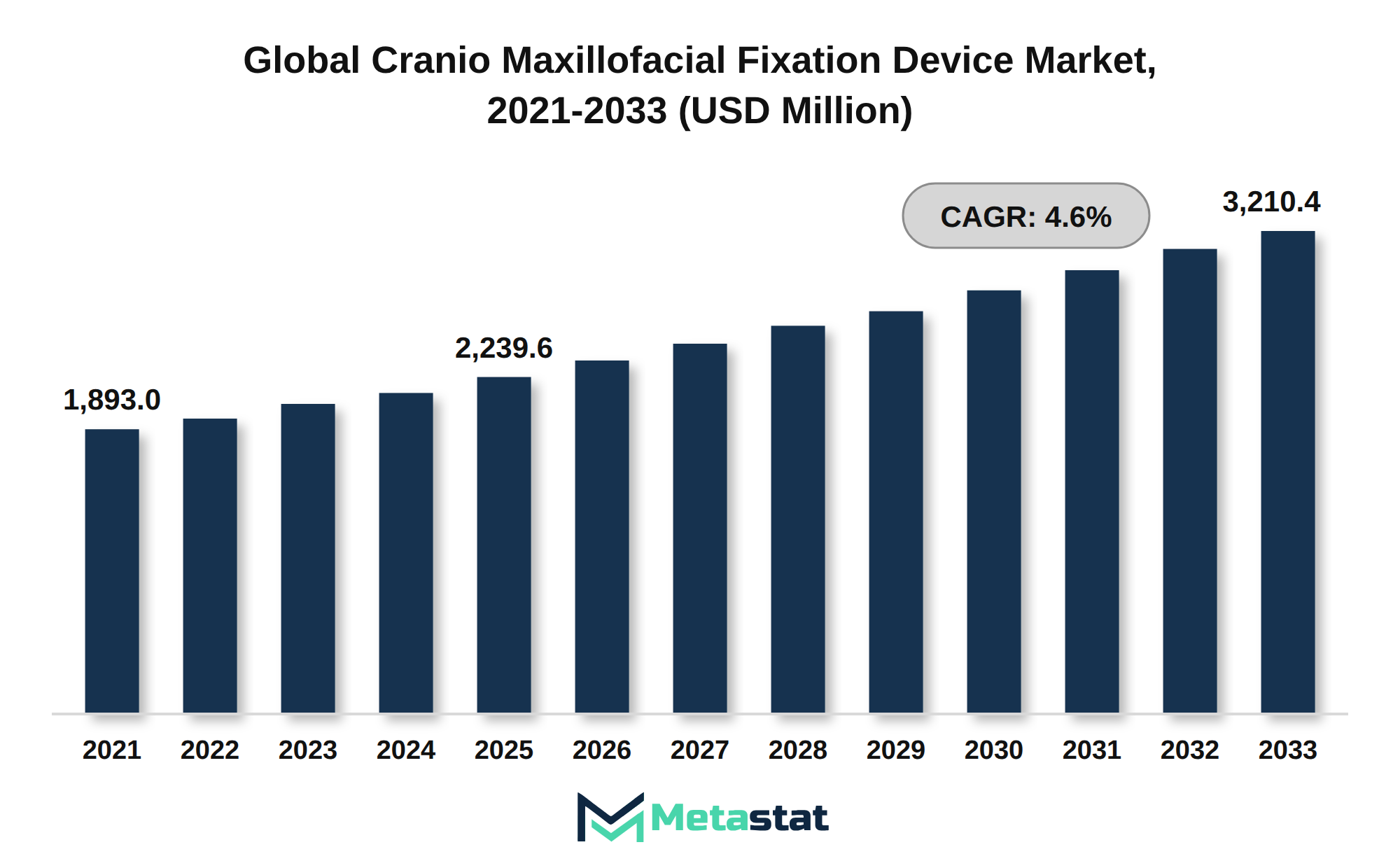
The global Cranio Maxillofacial Fixation Device market was valued at USD 2,239.6 million in 2025 and is projected to reach USD 3,210.4 million by 2033, growing at a CAGR of 4.6% over the forecast period.
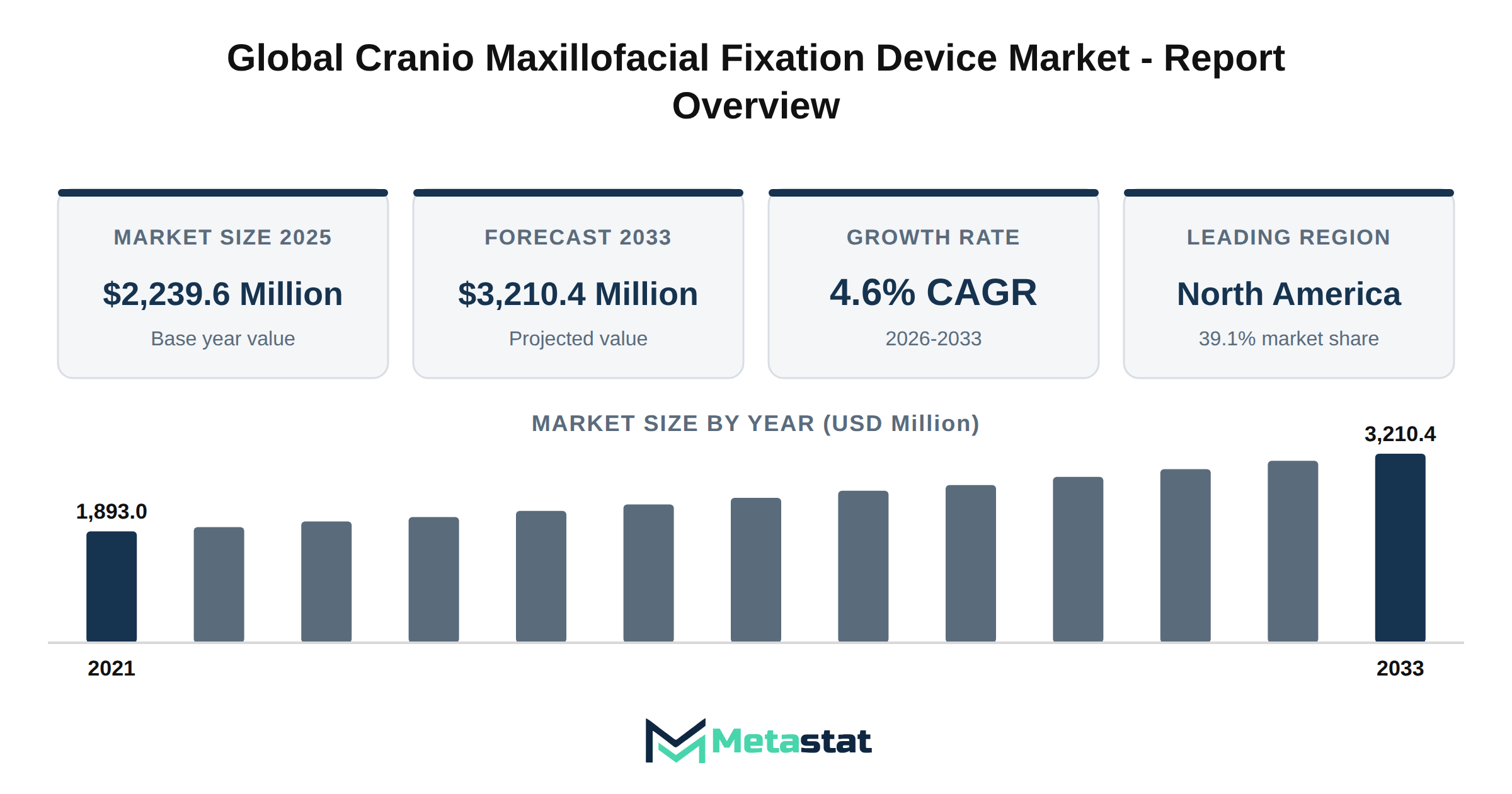
The Cranio Maxillofacial Fixation Device market reached a value of USD 2,239.6 million in 2025, reflecting a steady growth trajectory from USD 1,893 million in 2021. Forecasts indicate the market will expand to USD 3,210.4 million by 2033, demonstrating a compound annual growth rate (CAGR) of 4.6 percent during the forecast period from 2026 to 2033.
Rising facial trauma cases significantly impact the demand for cranio maxillofacial fixation devices. Increased incidents of accidents and sports-related injuries contribute to this trend, prompting healthcare providers to seek advanced fixation solutions. The growing prevalence of these injuries creates a robust market environment.
Titanium plate and screw systems dominate cranio maxillofacial fixation procedures, primarily due to their strength, biocompatibility, and established track record in surgical applications. The reliability of these materials enhances their adoption across various surgical procedures, reinforcing their leading position in the market.
Bioabsorbable fixation systems are gaining clinical adoption, driven by the demand for materials that do not require removal after healing. These systems offer advantages including reduced patient discomfort and decreased surgical time. The ongoing research and development efforts in this area contribute to the growing acceptance of bioabsorbable materials in surgical settings.
Innovations in PEEK and PEKK materials expand craniofacial reconstruction options, providing lightweight and durable alternatives for fixation devices. These materials offer high strength and resistance to chemicals, making them suitable for various surgical applications. The adoption of these advanced materials supports the market's growth.
Patient-specific cranio maxillofacial fixation implants transform surgical planning by enhancing customization for individual anatomical needs. This personalized approach improves surgical outcomes and patient satisfaction, encouraging surgeons to adopt tailored solutions in their practices. The market demonstrates a positive response to these innovations.
Advancements in 3D printing technology facilitate the creation of custom cranio maxillofacial fixation devices, enabling precise replication of patient anatomy. This technology enhances surgical accuracy and efficiency, driving further interest in personalized fixation solutions. The integration of 3D printing into surgical workflows supports the market's expansion.
Digital surgical planning reshapes cranio maxillofacial fixation procedures by allowing for detailed preoperative assessments and simulations. This technology enhances accuracy in surgical execution and improves overall patient outcomes. The increasing reliance on digital solutions within healthcare contributes to market growth.
Minimally invasive techniques influence cranio maxillofacial fixation device innovation, driven by surgeons' desire to reduce recovery times and improve patient comfort. These techniques promote less tissue trauma and quicker healing, encouraging a shift towards advanced fixation solutions that align with modern surgical practices.
The demand for orthognathic surgery supports cranio maxillofacial fixation market expansion, driven by increasing awareness of facial aesthetics and functional corrections. This growing interest in orthognathic procedures encourages the development of specialized fixation devices tailored for these applications.
Cranial closure and cranioplasty applications drive fixation device use, emphasizing the need for reliable solutions in neurosurgical procedures. The increasing number of surgeries related to cranial defects highlights the importance of advanced fixation technologies in supporting patient recovery.
Maxillomandibular fixation systems advance facial trauma management by providing essential support during healing. The integration of these systems into treatment protocols enhances recovery outcomes for patients suffering from complex facial injuries.
Innovation in cranio maxillofacial fixation devices continues to progress within pediatric craniofacial surgery. Tailored solutions address the unique anatomical considerations of pediatric patients, ensuring that these young individuals receive appropriate care and support during surgical interventions.
Hospitals remain the primary end users of cranio maxillofacial fixation devices, with a significant portion of procedures conducted within these settings. The increasing volume of surgeries in hospitals emphasizes the ongoing demand for advanced fixation solutions.
The Cranio Maxillofacial Fixation Device market experiences significant growth driven by the rising incidence of facial trauma cases. Increased awareness and advancements in surgical techniques contribute to this trend, compelling healthcare providers to adopt innovative fixation solutions. Enhanced patient outcomes and recovery times further support this demand, positioning the market for sustained expansion.
Titanium plate and screw systems dominate cranio maxillofacial fixation procedures due to their strength and biocompatibility. The versatility of titanium alloys in various surgical applications encourages their continued preference among surgeons. These systems offer reliable solutions for complex craniofacial reconstructions, reinforcing their market presence.
Bioabsorbable CMF fixation systems gain traction in clinical settings, aligning with the growing focus on minimizing postoperative complications. These materials, designed to gradually dissolve, eliminate the need for secondary surgeries, appealing to both surgeons and patients. The trend highlights a shift towards more sustainable and patient-friendly fixation options.
PEEK and PEKK materials expand the range of options available for craniofacial reconstruction. Their unique properties, including strength and radiolucency, enhance surgical planning and outcomes. The incorporation of these advanced materials reflects an ongoing commitment to improving the efficacy and safety of cranio maxillofacial procedures.
Patient-specific CMF fixation implants transform surgical planning processes. Customization enhances surgical precision and improves fit, resulting in better clinical outcomes. This trend indicates a growing shift towards personalized medicine within the cranio maxillofacial domain, driving demand for tailored solutions.
3D printing technology advances custom cranio maxillofacial fixation devices, enabling the creation of complex geometries that traditional methods cannot achieve. This innovative approach allows for rapid prototyping and production, improving operational efficiency and reducing lead times. The integration of 3D printing signifies a significant evolution in device manufacturing and design.
Digital surgical planning reshapes CMF fixation procedures by offering comprehensive preoperative guidance. Enhanced visualization and simulation capabilities facilitate more informed decision-making during surgeries. This technological advancement streamlines processes and enhances overall surgical performance, contributing positively to the market's growth.
Minimally invasive techniques influence innovation in CMF fixation devices, promoting reduced patient recovery times and minimizing surgical trauma. The adoption of these techniques aligns with the healthcare industry's shift towards less invasive procedures, driving demand for products that support such practices. Enhanced patient satisfaction emerges because a crucial factor in shaping market trends.
Orthognathic surgery demand supports cranio maxillofacial fixation market expansion due to the increasing prevalence of orthodontic conditions. Enhanced awareness of treatment options and advancements in surgical techniques drive patient interest and provider adoption, ultimately expanding market reach.
Cranial closure and cranioplasty applications drive fixation device use, particularly in trauma and reconstructive surgery. The necessity for effective fixation solutions in these critical procedures emphasizes the importance of innovation and quality within the market.
Maxillomandibular fixation systems advance facial trauma management by providing stable fixation during healing. These systems address the complexities of facial injuries, ensuring optimal recovery outcomes for patients. Their significance in trauma care reinforces their role in the cranio maxillofacial fixation market.
Innovation in CMF fixation devices for pediatric craniofacial surgery highlights a commitment to addressing unique anatomical challenges. Specialized solutions cater to the needs of younger patients, encouraging improved surgical outcomes and long-term success rates.
Hospitals remain the primary end users of CMF fixation devices, leveraging advanced technologies to enhance patient care. Investments in surgical infrastructure and training contribute to the continued reliance on these institutions for cranio maxillofacial procedures.
Ambulatory surgical centers expand CMF fixation procedure volumes, reflecting a shift towards outpatient care models. The convenience and efficiency of these centers appeal to both patients and providers, supporting market growth.
Competitive innovation among leading CMF fixation device manufacturers shapes the market. Ongoing research and development efforts focus on enhancing product offerings and addressing evolving clinical needs, ensuring sustained competitiveness.
Strategic partnerships and acquisitions play a significant role in shaping the cranio maxillofacial fixation market. Collaborations among industry players enhance product portfolios and distribution capabilities, encouraging growth and market penetration.
North America leads the adoption of advanced CMF fixation technologies, driven by robust healthcare infrastructure and high surgical volumes. The region's commitment to innovation positions it at the leading edge of market development.
The Asia Pacific region emerges because a high-growth CMF fixation device market, characterized by increasing healthcare investments and rising demand for advanced surgical solutions. This growth trajectory highlights the region's potential to contribute significantly to global market dynamics.
Supply chain and medical grade titanium availability impact CMF fixation device production. Efficient sourcing and logistics are critical to maintaining a steady supply of high-quality materials, directly influencing manufacturing capabilities and market performance.
Biocompatible and resorbable materials shape next-generation CMF fixation systems, aligning with trends toward improved patient safety and reduced postoperative complications. The integration of these advanced materials signifies a progressive shift in device design and functionality.
Personalized craniofacial implants create new growth opportunities, catering to the increasing demand for tailored solutions in surgical planning. This trend indicates a broader movement toward customization within the cranio maxillofacial fixation market.
Future growth prospects for the cranio maxillofacial fixation device market appear robust, driven by ongoing technological advancements, increasing surgical volumes, and a heightened focus on patient-centered solutions. Continued innovation and adaptation to emerging trends will define the market's trajectory.
The Cranio Maxillofacial Fixation Device market experiences growth driven by advancements in technological integration within the healthcare sector. Automation, artificial intelligence, and software adoption contribute to increased surgical precision and improved patient outcomes. These technologies enable surgeons to apply advanced imaging systems, enhancing preoperative planning and intraoperative execution. Enhanced precision reduces the risk of complications, attracting healthcare facilities to adopt the latest cranio maxillofacial fixation solutions.
Healthcare providers invest in automated systems that streamline surgical workflows, resulting in significant improvements in operational productivity and cost efficiency. Automation of routine tasks allows surgical teams to focus on high-value activities, thus optimizing labor efficiency. The integration of digital tools and AI solutions further supports this shift by providing real-time data analytics and predictive insights, which enhance decision-making during surgeries.
Market expansion aligns with evolving consumer behaviors centered around the demand for safe and effective surgical interventions. While aging populations increase, the necessity for specialized surgical procedures grows, prompting healthcare facilities to upgrade their technological capabilities. This transformation creates competitive advantages, positioning existing players favorably within the market by adapting to changing surgical practices.
Overall, the integration of technology within cranio maxillofacial procedures drives the demand for innovative fixation devices, promoting further advancements in surgical techniques and patient care. Enhanced operational efficiencies resulting from these technological advancements contribute to the market's sustained growth trajectory, establishing a solid foundation for future development.
The Cranio Maxillofacial Fixation Device market faces challenges stemming from stringent regulatory compliance requirements. These requirements lead to extended approval timelines for new products, impacting manufacturers and delaying market entry for innovative devices. Companies incur significant costs in navigating the complex regulatory landscape, diverting resources from research and development activities. Compliance with evolving safety standards and quality benchmarks necessitates substantial investment, limiting budget allocations for other growth initiatives.
The intricacies of regulatory frameworks create barriers for smaller firms seeking to enter the market. These firms struggle to meet compliance standards, hampering competition and innovation within the market. The cumulative effect of these compliance hurdles results in slower product rollout, ultimately affecting the overall adoption of cranio maxillofacial fixation devices.
Macroeconomic pressures add another layer of complexity. Economic uncertainties influence capital availability, slowing investments in new technologies and expanding surgical capabilities. This environment challenges the financial stability of companies operating in the market, leading to caution in strategic decision-making. Constrained growth occurs because firms prioritize immediate operational stability over long-term expansion strategies.
The Cranio Maxillofacial Fixation Device market encounters challenges stemming from geopolitical fragmentation and trade deficits that disrupt supply chains and increase costs. Trade tensions among countries contribute to tariff friction, complicating the procurement of essential components. Manufacturers face rising input costs while navigating complex international regulations, which affects pricing structures and profit margins.
Volatility in feedstock and component availability results from geopolitical tensions, impacting production schedules and material sourcing. The market experiences significant pressure owing to heightened costs and delayed shipments, leading to operational inefficiencies. This instability creates barriers to consistent supply, restricting market growth potential.
Technological disruptions present additional challenges, necessitating complex research and development integrations. Companies investing in advanced technologies encounter interoperability friction, complicating the integration of new and existing systems. This friction results in slower adoption rates for innovative solutions, critical for enhancing surgical outcomes in the Cranio Maxillofacial Fixation Device market.
The tightening global regulatory standards contribute to compliance overhead, increasing the burden on manufacturers to meet evolving legal liabilities. This environment forces companies to allocate resources to compliance initiatives rather than innovation. The market experiences slower advancements in technology and product offerings, impacting competitiveness.
Workforce skill gaps and automation displacements further challenge the market. The need for specialized skills in advanced technologies is growing, but the availability of trained professionals does not keep pace with demand. This skill gap complicates recruitment and retention efforts, hindering operational effectiveness and innovation in the Cranio Maxillofacial Fixation Device market.
The Cranio Maxillofacial Fixation Device market benefits from evolving digital procurement trends that reshape purchasing behaviors and supply chain dynamics. Increasing adoption of digital solutions enhances procurement efficiencies, allowing healthcare providers to streamline their purchasing processes and negotiate better terms with suppliers. This transformation creates opportunities for vendors to deliver advanced products while optimizing delivery timelines and reducing costs.
Healthcare institutions increasingly leverage e-procurement platforms, facilitating quicker access to innovative devices and materials. This shift supports the integration of real-time data analytics, improving decision-making capabilities and procurement strategies. Enhanced visibility into inventory levels and product availability drives improved operational performance, which aligns with the broader trend of operational yield maximization in healthcare.
The emergence of online marketplaces increases competition among suppliers in the Cranio Maxillofacial Fixation Device market. This competition stimulates product innovation and encourages collaborations between manufacturers and technology providers, leading to the development of next-generation devices. Such collaborations enhance product features and performance, driving further adoption across various healthcare sectors.
Digital procurement trends facilitate strategic consolidation among vendors, which strengthens overall market positioning and encourages innovation. By utilizing digital platforms, companies align their offerings with evolving customer needs, facilitating market penetration and growth. The Cranio Maxillofacial Fixation Device market stands poised for further expansion driven by digital strategies that transform procurement practices and improve supply chain localization.
The Global Cranio Maxillofacial Fixation Device market is segmented based on Device Type, Material, Application, and End User.
Valued at USD 1,078.6 million in 2026, the Plate-and-Screw Fixation Systems segment is projected to reach USD 1,416.4 million by 2033, exhibiting a CAGR of 4% during the forecast period. The demand for these devices is driven by the increasing incidence of craniofacial trauma and the growing geriatric population, leading to a higher prevalence of conditions requiring surgical intervention. Advancements in surgical techniques and the introduction of innovative materials enhance product offerings in this segment.
Technological maturation contributes to expanding this segment. The integration of new materials, including bioabsorbable polymers, improves patient outcomes and reduces the need for removal surgeries, further driving adoption rates. Regulatory compliance and certifications influence market dynamics, because manufacturers work to meet stringent safety and efficacy standards, ensuring high-quality products are available in the market.
End-use dynamics highlight a strong preference for hospitals and surgical centers, where several craniofacial procedures occur. The increasing preference for minimally invasive surgeries among healthcare providers generates a shift towards more advanced fixation systems that offer better stability and ease of use. Price volatility and margin pressures associated with raw materials impact operational strategies. Suppliers seek efficient sourcing and production practices to maintain competitiveness.
Market players continuously analyze strategic opportunity windows to enhance their market positions. Innovations in design and functionality lead to new product launches, enabling companies to capture unmet needs within the cranio maxillofacial fixation device market. Overall, the Plate-and-Screw Fixation Systems segment remains a vital component of the cranio maxillofacial fixation device market, with steady growth anticipated through 2033.
Cranial Flap Clamps and Closure Devices play a critical role in the cranio maxillofacial fixation device market, particularly given their application in various surgical procedures. This segment is projected to reach USD 546.1 million by 2033, at a CAGR of 3.7% during the forecast period. Factors driving demand include the increasing prevalence of craniofacial trauma and the rise in reconstructive surgeries resulting from accidents and congenital anomalies. The shift towards minimally invasive surgical techniques enhances the adoption of these devices. Innovations in materials and design, including bioabsorbable polymers, contribute to product evolution and improved patient outcomes.
Regulatory compliance standards significantly impact the market, because manufacturers strive to meet stringent safety and effectiveness requirements. The continuous advancement of technologies facilitates next-generation upgrades, promoting the adoption of cranial flap clamps and closure devices in hospitals and surgical centers. Pricing volatility, influenced by raw material sourcing and manufacturing costs, presents challenges for market players. Strategic opportunity windows arise because healthcare providers seek to enhance surgical precision and efficiency. Overall, the cranio maxillofacial fixation device market reflects a resilient and evolving segment poised for growth.
Growth in the Maxillomandibular Fixation Systems segment reflects an increasing demand for effective treatment options in jaw-related surgical procedures. Factors driving this demand include the rise in oral and maxillofacial surgeries, alongside advancements in surgical techniques and materials. The segment is projected to reach USD 477.1 million by 2033.
Technological maturation influences this market segment, with innovations leading to the development of more efficient fixation systems. These advancements enhance surgical outcomes and improve patient recovery times. This boosts adoption rates among healthcare providers. End-user dynamics indicate that hospitals and specialized surgical centers are the primary consumers, prioritizing products that enhance surgical efficiency and patient safety.
Regulatory compliance standards influence market growth, owing to manufacturers navigating the complexities of safety and efficacy certifications for their products. Compliance with these standards ensures market entry and enhances consumer confidence, supporting the overall expansion of the Cranio Maxillofacial Fixation Device market. Pricing volatility remains a consideration for suppliers, since raw material sourcing and manufacturing costs fluctuate, impacting profit margins.
Strategic opportunities arise from the ongoing demand for improved surgical solutions. Investments in research and development efforts focus on creating next-generation fixation systems that offer enhanced performance and reliability. This commitment to innovation aligns with the market's overall trajectory, emphasizing the importance of product evolution in meeting evolving healthcare needs.
Technological advancements in materials and manufacturing processes drive interest in Mesh Fixation Systems. This segment addresses specific needs in cranio maxillofacial procedures, facilitating better patient outcomes with enhanced biocompatibility and strength. The growing prevalence of facial trauma cases and reconstructive surgeries significantly influences demand for these systems, providing opportunities for expansion within the market.
Mesh Fixation Systems segment is projected to grow at a CAGR of 5.5% during the forecast period. Regulatory compliance and certification standards play crucial roles in shaping the landscape, ensuring that products meet safety and efficacy requirements. The evolution of product offerings, including next-generation upgrades, enhances operational efficiency and effectiveness in surgical applications.
End-user dynamics, particularly in hospitals and surgical centers, reflect an increasing preference for innovative fixation solutions. Cost structures related to these devices require careful consideration, owing to pricing volatility and margin pressures impacting both suppliers and healthcare providers. Strategic opportunity windows arising from industry shifts emphasize the need for adaptable supply chain resilience and robust raw material sourcing to mitigate potential disruptions.
While the Cranio Maxillofacial Fixation Device market evolves, Mesh Fixation Systems will continue to play a vital role in addressing the challenges faced by healthcare providers. The segment's response to the demand for reliable, effective solutions positions it well for ongoing growth and development.
Standalone Fixation Screws and Bone Anchors represent a vital component within the Cranio Maxillofacial Fixation Device market. Increased demand for minimally invasive surgical procedures drives adoption, owing to these products offering precise and efficient fixation solutions. Technological advancements enhance the design and functionality of these devices, leading to improved performance in surgical settings. The integration of innovative materials and manufacturing techniques contributes to product evolution, increasing acceptance among healthcare providers.
End-user dynamics play a significant role in shaping the demand for Standalone Fixation Screws and Bone Anchors. Hospitals and surgical centers increasingly prefer these devices due to their effectiveness in trauma and reconstructive surgeries. Regulatory compliance standards and certifications ensure that products meet safety and quality benchmarks, further influencing purchasing decisions. The growing emphasis on patient safety and recovery times increases the need for reliable fixation solutions within the market.
Cost structures surrounding Standalone Fixation Screws and Bone Anchors are influenced by raw material sourcing and production processes. Pricing volatility remains a consideration, particularly with fluctuations in the costs of key materials. Strategic opportunity windows emerge because manufacturers aim to enhance supply chain resilience and address potential vulnerabilities in logistics. Overall, the segment serves because a critical element of the Cranio Maxillofacial Fixation Device market, reflecting ongoing developments in technology and surgical practices.
Strong demand for auxiliary fixation components stems from advancements in surgical procedures and techniques. Innovations in minimally invasive surgeries increase the necessity for high-performance materials and components that support effective trauma fixation. The growing preference for custom solutions and patient-specific applications drives manufacturers to enhance product offerings in the Cranio Maxillofacial Fixation Device market. Adapting to evolving regulatory standards ensures safety and efficacy, building confidence among healthcare providers and patients.
Increasing collaborations between manufacturers and healthcare institutions facilitate the introduction of new technologies and improve access to advanced fixation solutions. The focus on streamlining surgical processes leads to heightened demand for high-quality wires and auxiliary fixation components. This trend reflects a broader shift towards enhancing surgical efficiency and patient outcomes, emphasizing the importance of innovation in product development.
Challenges related to raw material sourcing and pricing volatility impact overall market dynamics. Manufacturers face pressure to balance cost-effectiveness with quality, which requires strategic sourcing and robust supply chain management. Navigating these complexities becomes crucial for firms aiming to maintain competitiveness within the Cranio Maxillofacial Fixation Device market.
Titanium and Titanium Alloys segment is valued at USD 1,421.2 million in 2026 and is projected to reach USD 1,824.8 million by 2033, at a CAGR of 3.6% during the forecast period. Increased preference for lightweight yet strong materials in surgical applications drives demand for titanium-based products in the Cranio Maxillofacial Fixation Device market. This material offers enhanced biocompatibility and corrosion resistance, essential for long-term patient outcomes. Technological maturation in manufacturing processes further enhances the properties of titanium and its alloys, promoting their adoption across various surgical applications.
Investment in research and development supports the evolution of next-generation titanium products, featuring improved mechanical properties and surface coatings that enhance integration with bone tissue. Regulatory compliance and certification standards emphasize the importance of using high-quality materials in cranio maxillofacial applications, thereby supporting market growth. The segment benefits from a well-established supply chain, enabling consistent procurement of raw materials, which contributes to production stability.
Cost structures associated with titanium and titanium alloys demonstrate resilience, although fluctuations in raw material pricing impact margins. Despite potential substitution risks from alternative materials, including bioabsorbable polymers, titanium maintains a strong position due to its proven performance and reliability. The segment exhibits significant strategic opportunity windows, especially in regions with increasing investments in healthcare infrastructure and surgical capabilities.
Growing interest in Bioabsorbable Polymers stems from their favorable properties in medical applications, particularly in cranio maxillofacial procedures. This segment is estimated to reach USD 601.3 million by 2033, at a CAGR of 6.1% during the forecast period. The increasing focus on patient safety and comfort drives demand for materials that safely break down in the body over time, reducing the need for secondary surgeries. The segment's expansion relies on advancements in polymer technology, leading to improved mechanical properties and absorption rates.
In addition, regulatory compliance standards influence market dynamics, requiring manufacturers to adhere to stringent guidelines for bioabsorbable materials. These regulations promote innovations that enhance product safety, driving competition among key players in the market. The growing preference for minimally invasive procedures further supports the adoption of bioabsorbable options, aligning with trends in patient care that prioritize quicker recovery times and reduced postoperative complications.
Investment in research and development remains essential for suppliers focusing on Bioabsorbable Polymers, driven by emerging technologies and material improvements that shape market offerings. Strategic collaborations with healthcare institutions facilitate clinical trials that validate the efficacy of new products, strengthening market positions. Overall, the Bioabsorbable Polymers segment exemplifies a strong growth trajectory within the cranio maxillofacial fixation device market, supported by ongoing technological advancements and shifting consumer preferences.
Growth in the PEEK and PEKK segment reflects strong demand for advanced biomaterials in cranio maxillofacial applications. Increasing awareness of the benefits of these materials, including their biocompatibility and mechanical properties, drives adoption among healthcare providers. Regulatory compliance standards for materials used in medical devices influence product development, focusing on certifications that ensure safety and efficacy. Continuous innovations in manufacturing processes enhance the performance characteristics of PEEK and PEKK products, supporting their expansion within the market.
Valued at USD 371.1 million by 2033, the PEEK and PEKK segment benefits from ongoing investments in research and development. The segment's growth trajectory is supported by a persistent shift towards minimally invasive surgical techniques, which rely on lightweight and durable fixation devices. End-user demand for these materials in various applications, including trauma fixation and reconstructive surgery, is expected to increase, further strengthening the position of PEEK and PEKK in the cranio maxillofacial fixation device market.
Growing applications of Stainless Steel in the Cranio Maxillofacial Fixation Device market stem from its strength, durability, and resistance to corrosion. This material represents a reliable option for various surgical procedures, including trauma fixation and reconstructive surgery. Stainless Steel's cost-effectiveness contributes to its widespread adoption among healthcare providers, allowing for a balance between performance and affordability.
In 2026, the segment is projected to gain traction, with a growth rate of 2.3% during the forecast period. This growth reflects increasing surgical procedures across hospitals and surgical centers, where the material's favorable properties support effective patient outcomes. Market dynamics emphasize the importance of regulatory compliance, ensuring that Stainless Steel products meet stringent quality and safety standards.
Investments in research and development drive innovations within the segment, leading to enhancements in product design and functionality. Healthcare facilities aim to improve surgical outcomes, and the demand for advanced fixation devices continues to rise. Overall, the segment's expansion aligns with the broader trends in the Cranio Maxillofacial Fixation Device market, highlighting a robust outlook for Stainless Steel applications.
Growing interest in magnesium-based materials and composite biomaterials enhances the evolution of the Cranio Maxillofacial Fixation Device market. These materials provide lightweight and strong alternatives to traditional options, addressing key demands in surgical applications. The adoption of these materials aligns with ongoing trends toward improved patient outcomes and faster recovery times, which are essential in modern surgical practices.
Advancements in material sciences support the development of innovative fixation devices that enhance the effectiveness of surgical procedures. The incorporation of magnesium-based materials allows for better integration with biological tissues and reduces complications associated with foreign body responses. This integration contributes to increased interest among surgeons and healthcare providers in these advanced materials, further driving market growth.
Strategic opportunities exist for manufacturers to invest in research and development focused on enhancing the properties of these materials. Regulatory compliance regarding biocompatibility and safety standards remains a critical aspect influencing product development in this segment. With increasing healthcare investments and rising surgical procedures globally, the potential for growth in the market presents compelling prospects for industry players.
Valued at USD 854.1 million in 2026, the Trauma Fixation segment is projected to reach USD 1,120.7 million by 2033, achieving a CAGR of 4% during the forecast period. Demand for trauma fixation devices arises from increasing cases of facial trauma, often linked to road accidents, sports injuries, and violent incidents. The rise in surgical procedures addressing these injuries boosts the overall growth of the Cranio Maxillofacial Fixation Device market.
Technological maturation in fixation devices enhances performance and efficacy, attracting both providers and patients. Continuous advancements in material science lead to the development of innovative solutions, including bioabsorbable materials, which reduce the need for secondary surgeries. The segment's expansion is supported by effective regulatory compliance standards, ensuring the safety and effectiveness of devices in trauma cases.
Competitive dynamics influence the Trauma Fixation segment, with key players focusing on strategic partnerships and continuous product evolution to maintain market presence. The growing emphasis on minimizing recovery times and improving treatment outcomes drives innovation and investment in next-generation upgrades. End-use dynamics show significant adoption in hospitals and ambulatory surgical centers, highlighting the critical role trauma fixation plays in immediate and reconstructive surgical interventions.
Overall, the Trauma Fixation segment benefits from a combination of technological advancements, regulatory support, and increasing demand for effective surgical solutions.
Demand for reconstructive surgery within the Cranio Maxillofacial Fixation Device market stems from an increase in facial trauma cases and congenital deformities. The segment is projected to reach USD 863 million by 2033, at a CAGR of 5% during the forecast period. Technological advancements in biomaterials and surgical techniques enhance the effectiveness of reconstructive procedures, leading to improved patient outcomes and increasing adoption rates among healthcare providers.
Regulatory compliance standards and certifications play a crucial role in shaping product offerings and market dynamics. Manufacturers focus on innovations that align with these standards, catering to the evolving needs of surgeons and patients. The segment's growth reflects a strategic opportunity for companies to invest in next-generation upgrades and product evolution tailored to the specifics of reconstructive surgeries.
End-use dynamics indicate a shift towards minimally invasive procedures, which further drive market expansion. Ambulatory surgical centers and hospitals increasingly prioritize efficiency and patient recovery times, influencing their choice of fixation devices. The market continues to evolve with the introduction of enhanced fixation solutions, ultimately supporting the segment's upward trajectory.
Significant advancements in surgical techniques and an increase in the prevalence of facial deformities drive the demand for products in orthognathic surgery. This segment focuses on corrective jaw surgery aimed at improving patients' functionality and aesthetics. Rising awareness about oral health and facial aesthetics contributes to market growth. Technological maturation in cranio maxillofacial fixation devices enhances surgical outcomes and reduces recovery times, appealing to both medical professionals and patients.
Increasing investments in healthcare infrastructure and a growing number of surgical procedures support the expansion of the orthognathic surgery segment. Adoption of innovative materials and designs in fixation devices boosts their effectiveness and patient outcomes. Regulatory compliance standards and certifications influence product acceptance among healthcare providers, ensuring safety and efficacy. The orthognathic surgery segment is projected to reach USD 654 million by 2033.
Shifts in end-user dynamics, particularly among hospitals and specialized surgical centers, indicate robust demand for advanced products. These facilities prioritize acquiring the latest fixation devices to offer improved surgical solutions. The market experiences a steady focus on cost structures, pricing volatility, and margin pressures, further shaping purchasing decisions. Strategic opportunity windows arise for suppliers to innovate and expand their offerings in the cranio maxillofacial fixation device market.
Growth in the Cranial Closure and Cranioplasty segment aligns with an increasing prevalence of neurological disorders and traumatic injuries, contributing to heightened demand for effective cranial fixation solutions. The segment is projected to grow at a CAGR of 3.6% during the forecast period. Technological advancements in biocompatible materials enhance product offerings, allowing for improved integration with human tissue and reduced surgical complications. Innovations including bioabsorbable polymers provide significant advantages over traditional materials, reducing the need for secondary surgeries to remove implants.
Increased investment in healthcare infrastructure and surgical capabilities within hospitals fuels adoption of cranial fixation devices. Physicians recognize the benefits of advanced fixation techniques in ensuring patient safety and favorable outcomes. Regulatory compliance with safety and efficacy standards underpins market confidence, driving demand among end users. This segment of the Cranio Maxillofacial Fixation Device market benefits from strategic partnerships and collaborations among key industry participants focusing on product development and market penetration.
Healthcare providers face challenges related to pricing volatility and cost pressures, influencing procurement strategies for cranial closure devices. Manufacturers explore supply chain resilience and raw material sourcing to mitigate risks associated with production delays. Through ongoing innovation and attention to market dynamics, the cranial closure and cranioplasty segment stands poised for sustained growth, contributing significantly to the overall expansion of the market.
Increasing focus on temporomandibular joint surgery and cranial reconstruction drives growth in the segment of Others (Temporomandibular Joint Surgery, Cranial Reconstruction & Cranioplasty). Enhanced surgical techniques and innovative devices contribute to improved patient outcomes, attracting attention from healthcare providers and patients. The rising prevalence of conditions requiring these procedures boosts demand, prompting advancements in device functionality and material selection within the Cranio Maxillofacial Fixation Device market.
Regulatory compliance standards influence product development and market dynamics. Manufacturers actively pursue certifications to ensure devices meet safety and efficacy requirements, enhancing marketability. While the segment evolves, strategic opportunity windows arise for companies innovating in materials and designs tailored for specific applications, supporting expansion within the market.
Shifts in consumption patterns toward minimally invasive procedures reflect changing preferences among healthcare providers and patients. The ability to offer efficient, effective solutions aligns with modern surgical priorities, marking an important trend for the segment. Providers adopting next-generation upgrades in device technology strengthen competitive positions within the Cranio Maxillofacial Fixation Device market.
Valued at USD 1,356.6 million in 2026, the Hospitals segment is projected to reach USD 1,771.5 million by 2033, at a CAGR of 3.9% during the forecast period. Increasing surgical procedures in hospitals, driven by a rising incidence of craniofacial trauma and congenital deformities, support market expansion. Advances in surgical techniques and technology contribute to the growing adoption of cranio maxillofacial fixation devices. Enhanced product quality and performance significantly influence purchasing decisions among healthcare providers.
Hospitals face various challenges related to cost structures and regulatory compliance, impacting pricing strategies and margin pressures. Competitive dynamics in the Cranio Maxillofacial Fixation Device market necessitate continuous investment in research and development to innovate and meet evolving patient needs. Increased focus on improving surgical outcomes creates opportunities for the introduction of next-generation devices and product enhancements.
Investment in hospitals facilitates the incorporation of advanced fixation devices, aligning with healthcare trends toward improved surgical efficiency and patient safety. Demand for high-quality fixation devices in hospitals highlights the importance of maintaining a resilient supply chain and reliable raw material sourcing. Consequently, strategic opportunities exist for key players to explore partnerships and collaborations that strengthen their market position.
Ambulatory Surgical Centers represent a growing segment within the Cranio Maxillofacial Fixation Device market, estimated to reach USD 655.2 million by 2033, at a CAGR of 5.9% during the forecast period. This growth results from increasing patient preferences for outpatient care, combined with advancements in surgical procedures that enhance recovery times and reduce hospital stays. The shift towards less invasive techniques enhances the appeal of Ambulatory Surgical Centers, prompting healthcare providers to invest in cranio maxillofacial fixation devices tailored for these environments.
Technological maturation serves because a significant factor in this segment's expansion, with next-generation upgrades in fixation devices improving their efficacy and safety. Innovations in materials, including bioabsorbable polymers and titanium alloys, contribute to evolving product offerings that address clinical needs in ambulatory settings. Regulatory compliance and certification standards play a crucial role in shaping the market, because providers seek reliable devices that adhere to stringent safety protocols.
Pricing volatility and margin pressures remain critical considerations for Ambulatory Surgical Centers, impacting purchasing decisions for cranio maxillofacial fixation devices. Effective cost structures help mitigate these pressures, enabling centers to offer competitive pricing while ensuring high-quality care. Strategic opportunity windows arise from the increasing prevalence of oral and maxillofacial surgeries performed in outpatient settings, highlighting the importance of adapting product portfolios to meet evolving consumer demands.
Overall, the Ambulatory Surgical Centers segment within the Cranio Maxillofacial Fixation Device market reflects a dynamic intersection of technological advancement, regulatory requirements, and market demand, positioning it for sustained growth through the next decade.
Oral and Maxillofacial Surgery Clinics show a significant upward trend within the Cranio Maxillofacial Fixation Device market, with an expected value of USD 541.6 million by 2033. This growth stems from a rising number of patients requiring surgical interventions for facial trauma and reconstructive procedures. Demand is influenced by advancements in surgical techniques, which enhance operational efficiencies and improve patient outcomes.
Factors driving adoption include increasing awareness of treatment options and innovations in fixation devices that improve surgical precision. The expansion of this segment aligns with broader trends in healthcare, where enhanced service delivery in specialized clinics improves patient care standards. While technology evolves, next-generation fixation devices featuring improved materials and designs contribute to appealing offerings in the market.
A growing emphasis on regulatory compliance and certifications supports segment growth, ensuring that surgical practices adhere to safety standards. This focus on quality reinforces the reliability of treatments available in oral and maxillofacial surgical settings. Strategic opportunities arise from these regulatory factors, enabling clinics to differentiate themselves through superior treatment offerings.
Pricing volatility and margin pressures remain considerations for clinics operating in this space. Providers navigate these challenges while ensuring competitive pricing strategies that do not compromise quality. A resilient supply chain and effective raw material sourcing will be critical to maintaining operational efficiencies amid potential disruptions.
The segment will continue to evolve, driven by consumption shifts towards minimally invasive procedures and the integration of disruptive alternatives. Ongoing capital investment in research and development remains vital for sustaining growth and innovation in the oral and maxillofacial surgery segment of the Cranio Maxillofacial Fixation Device market.
Specialty Dental Centers represent a niche yet significant segment in the Cranio Maxillofacial Fixation Device market. This segment is projected to grow at a CAGR of 3.7% during the forecast period. The increasing prevalence of dental and oral issues, alongside heightened awareness of cosmetic and reconstructive procedures, drives demand for cranio maxillofacial fixation devices within these centers. Specialty Dental Centers focus on providing tailored treatment options, which enhances the acceptance of advanced fixation devices.
Enhanced surgical techniques and improvements in device materials contribute to market expansion. Innovations in fixation systems, including bioabsorbable options, cater to the evolving needs of dental surgeons and patients. Regulatory compliance and certifications for new products encourage investment in advanced technologies, enabling Specialty Dental Centers to offer comprehensive care.
Integration of next-generation upgrades in cranio maxillofacial fixation devices leads to optimized surgical outcomes. The focus on patient-centric treatment approaches within these centers aligns with a broader trend toward minimally invasive procedures in the market. Specialty Dental Centers are expected to capitalize on these shifts, contributing to overall growth and evolution in the cranio maxillofacial fixation device sector.
Based on geography, the Global Cranio Maxillofacial Fixation Device market is divided into North America, Europe, Asia-Pacific, South America, Middle East, and Africa.
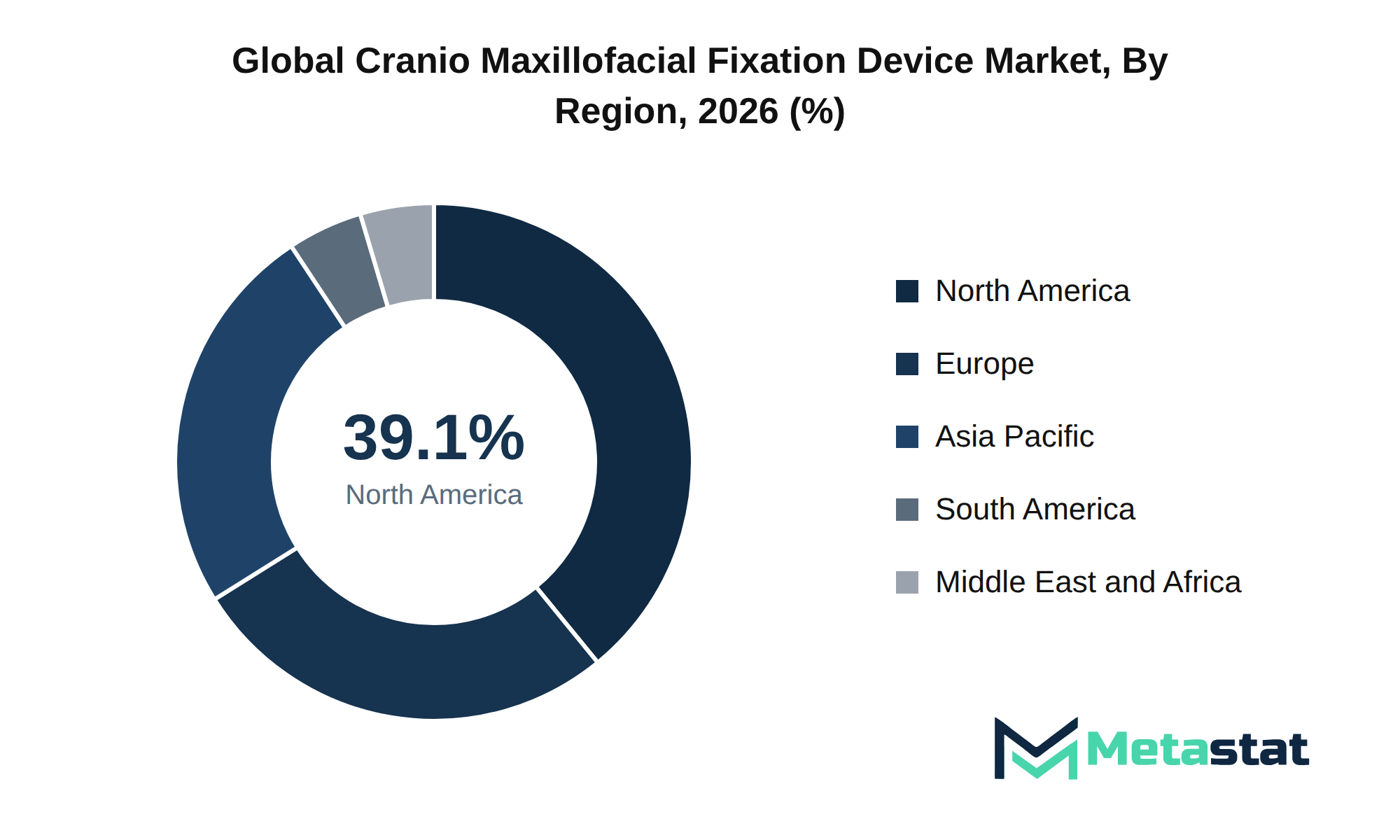
North America stands because a significant player in the Cranio Maxillofacial Fixation Device market, accounting for 39.1% of the global market share in 2025. Factors contributing to this strong position include advancements in healthcare infrastructure, a high prevalence of facial trauma cases, and increasing investments in medical technology. The population's growing awareness of surgical procedures and the availability of skilled healthcare professionals in the region drive demand for these devices.
The market is set to expand at a CAGR of 4.6% within the forecast period, reaching a market size of USD 1,182.7 million by the end of 2033. The region's established healthcare system supports rapid adoption of innovative products, particularly within hospitals and ambulatory surgical centers. Increasing numbers of surgical procedures, coupled with a focus on advanced treatment options, ensure sustained growth in the market.
Regulatory compliance influences the market landscape in North America. Stringent quality standards and safety regulations ensure that only high-quality devices reach healthcare facilities, thus influencing purchasing decisions. Vendors operating in this region benefit from established supply chains and localized manufacturing capabilities, facilitating quicker response times to market demands.
The competitive environment features several key players, including Stryker Corporation, Johnson & Johnson MedTech, and Zimmer Biomet. These companies engage in strategic partnerships and mergers to enhance their product offerings and expand market reach. Such dynamics encourage continuous innovation, contributing to the overall growth of the Cranio Maxillofacial Fixation Device market in North America.
The Cranio Maxillofacial Fixation Device market in Europe accounts for 27.00% in 2025. The presence of advanced healthcare infrastructure, coupled with a growing emphasis on reconstructive and trauma surgeries, enhances market dynamics across the region. Countries including Germany, France, UK, Italy, and Spain display strong demand driven by the increasing incidence of facial trauma and congenital disorders, leading to rising investments in medical technologies.
Germany remains a prominent player, with its focus on high-quality healthcare solutions and advanced surgical techniques. France and the UK experience similar trends, characterized by robust healthcare frameworks that support surgical innovations. Spain and Italy witness rising patient awareness regarding cosmetic and reconstructive procedures, contributing to the market's expansion. Russia shows potential growth due to increasing healthcare investments and improving access to advanced medical technologies.
Market participants emphasize localized manufacturing and supply chain regionalization, leading to efficient procurement strategies tailored to the specific needs of various European markets. Collaboration among domestic market participants, regulatory compliance, and strategic partnerships drive competitive advantages, positioning companies to capitalize on the growing demand within the Cranio Maxillofacial Fixation Device market.
The Asia-Pacific region accounts for 24.6% of the Cranio Maxillofacial Fixation Device market in 2025. Rapid urbanization and improving healthcare infrastructure in countries including China, Japan, and India enhance market potential. Increasing incidences of trauma and the rising demand for reconstructive surgeries contribute to market growth.
Emerging market front-runners, including South Korea and the Southeast Asian nations, pursue advanced surgical techniques, driving adoption rates. A growing focus on localized manufacturing and supply chain regionalization supports the industry's expansion in Asia-Pacific. Investment in healthcare facilities and modern technologies creates an environment conducive to high-value replacement cycles within the market.
Regional competitive dynamics display a market marked by domestic market participants, including Stryker Corporation and Johnson & Johnson MedTech (DePuy Synthes). These entities actively consolidate their presence through strategic partnerships and collaborations, enhancing their market position. Cultural nuances and regional B2B buying behaviors influence procurement decisions, ensuring alignment with local healthcare practices.
Strengthened by foreign direct investment flows and supportive government policies, the region presents a promising growth trajectory. The continuous development of infrastructure and energy grid resiliency contributes to a more robust market foundation. Overall, Asia-Pacific reflects a diverse and evolving Cranio Maxillofacial Fixation Device market characterized by dynamic growth opportunities.
In South America, the Cranio Maxillofacial Fixation Device market captures a share of 4.7% of the global market in 2025. Brazil and Argentina lead the region in demand for cranio maxillofacial fixation devices, driven by a growing emphasis on trauma and reconstructive surgeries. Increased healthcare expenditures and improvements in surgical infrastructure contribute to market expansion, providing greater access to advanced medical technologies.
Regulatory frameworks in the region support the adoption of innovative surgical devices, while localized manufacturing initiatives improve supply chain efficiency. Emerging players within the market enhance competitive dynamics, positioning themselves strategically to meet regional healthcare demands. Continued investments in healthcare infrastructure and rising awareness of surgical options further drive market growth.
The Cranio Maxillofacial Fixation Device market in the Middle East and Africa is characterized by a growing demand driven by increasing healthcare investments and expanding surgical infrastructure in the region. Countries including Saudi Arabia and the UAE are making significant strides in modernizing their healthcare systems, leading to improved access to advanced surgical technologies. The growing prevalence of trauma cases and the need for reconstructive surgeries contribute to market expansion.
The region's market share stands at 4.6% in 2025, indicating a steady presence in the global landscape. Emerging local players and increased foreign direct investment highlight the competitive dynamics within the market. Local compliance mandates and regulatory frameworks are shaping procurement strategies, encouraging the adoption of advanced cranio maxillofacial fixation devices across healthcare facilities.
Investment in localized manufacturing is on the rise, which supports supply chain regionalization and reduces reliance on imports. Cultural nuances in healthcare practices influence buyer behaviors, affecting procurement processes. The market's growth trajectory benefits from high-value replacement cycles and an increasing emphasis on trauma and reconstructive applications, positioning the Middle East and Africa because a noteworthy contributor to the global Cranio Maxillofacial Fixation Device market.
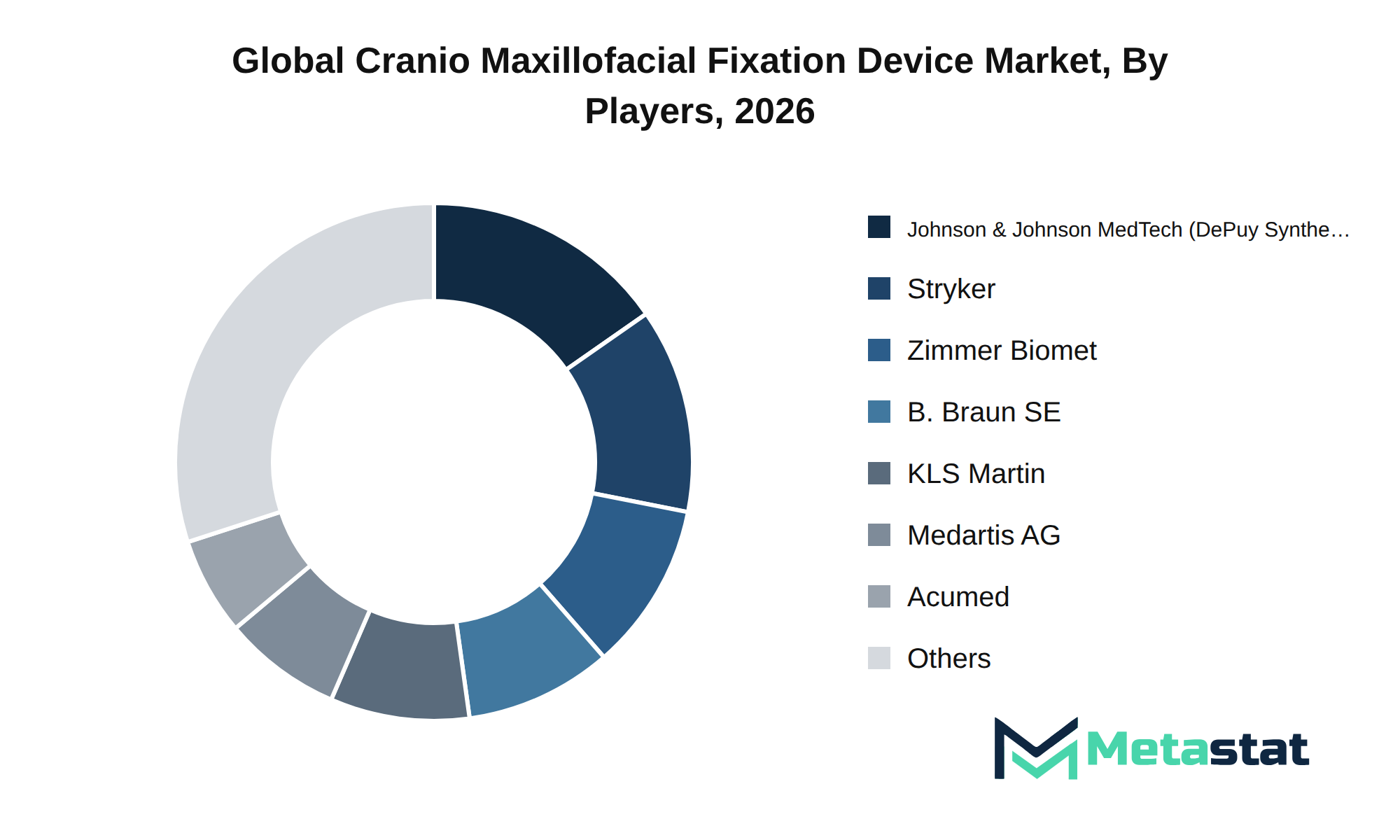
The Cranio Maxillofacial Fixation Device market experiences significant activity in terms of mergers, acquisitions, and strategic consolidation. Industry players pursue partnerships and joint ventures to enhance product offerings and expand market reach. Stryker Corporation and Johnson & Johnson MedTech (DePuy Synthes) focus on leveraging extensive research and development capabilities to differentiate products. This strategic positioning enables them to maintain a competitive edge while addressing diverse customer needs.
Pricing architectures and commercial models contribute to market dynamics, influencing buyer decisions and brand loyalty. Companies including Zimmer Biomet and KLS Martin Group emphasize customer retention strategies and brand equity to build long-lasting relationships with healthcare providers. Supply chain dominance and procurement leverage remain critical for firms like Medartis AG and Acumed LLC, impacting operational efficiency and cost management.
Intellectual property portfolios and patent landscapes play a crucial role in maintaining technological defensibility. Companies invest heavily in R&D to develop proprietary technologies that create barriers to entry for new entrants. With a growing focus on innovation, firms including Jeil Medical Corporation and Global D SASU are well positioned to address future competitive challenges in the Cranio Maxillofacial Fixation Device market.
Market size is forecast to rise from USD 2,239.6 million in 2025 to over USD 3,210.4 million by 2033. The base case projects growth from USD 2,239.6 million in 2025 to USD 3,210.4 million by 2033 at a 4.6% CAGR. Bull cases expect accelerated demand driven by advancements in next-generation technologies and increasing investment in research and development. This scenario anticipates robust adoption of innovative cranio maxillofacial fixation device solutions by healthcare providers, leading to higher overall market revenues.
Conversely, bear cases outline potential challenges, including economic downturns and regulatory hurdles that impede growth. Market participants face difficulties navigating compliance timelines and adapting to evolving trade corridors, which influence supply chain dynamics. Addressing these challenges requires strategic capital allocation, focusing on emerging white-space opportunities and unmet enterprise needs within the cranio maxillofacial fixation device market.
Overall, future growth hinges on effective navigation of macroeconomic elements, product life-cycle management, and proactive engagement with regulatory frameworks. Stakeholders remain vigilant to capitalize on high-growth pockets and evolving market demands.
The report strategically identifies and profiles the key market players and analyses their core competencies in each sub-segment of the Cranio Maxillofacial Fixation Device market.
Report Attributes | Details |
Study Period | 2021-2033 |
Base Year | 2025 |
Estimated Year | 2026 |
Forecast Period | 2026-2033 |
Historical Period | 2021-2025 |
Growth Rate | CAGR 4.6% from 2026 to 2033 |
Revenue Unit | USD million |
Segmentation | By Device Type, Material, Application, End User, and Region |
By Region | North America (By Device Type, Material, Application, End User, and Country)
|
Europe (By Device Type, Material, Application, End User, and Country)
| |
Asia Pacific (By Device Type, Material, Application, End User, and Country)
| |
South America (By Device Type, Material, Application, End User, and Country)
| |
Middle East and Africa (By Device Type, Material, Application, End User, and Country)
|
Find answers to common questions about this report
The Cranio Maxillofacial Fixation Device market size was valued at USD 2,239.6 million in 2025, according to the Metastat Insights study.
The Cranio Maxillofacial Fixation Device market is projected to grow at a CAGR of 4.6% during the forecast period from 2026 to 2033.
The North America Cranio Maxillofacial Fixation Device market size is estimated to reach USD 1,182.7 million by 2033.
The Plate-and-Screw Fixation Systems segment leads the Cranio Maxillofacial Fixation Device market, with a projected value of USD 1,416.4 million by 2033. This segment's growth reflects its significant share compared to other device types.
Key drivers for the Cranio Maxillofacial Fixation Device market include government initiatives and public-private partnerships that enhance funding for healthcare upgrades, alongside technological advancements that improve surgical precision and patient outcomes. the aging population and the increasing prevalence of trauma and reconstructive surgeries contribute to heightened demand for effective fixation devices.
North America holds the dominant share of the Cranio Maxillofacial Fixation Device market, with a value of USD 1,182.7 million projected for 2033, representing 39.1 percent of the total market.
The Cranio Maxillofacial Fixation Device market faces challenges from stringent regulatory compliance requirements, which result in extended approval timelines for new products and significant costs for manufacturers. Macroeconomic pressures, including economic uncertainties and geopolitical tensions, further complicate investments and disrupt supply chains, ultimately constraining market growth potential.
The Cranio Maxillofacial Fixation Device market is estimated to reach a valuation of USD 3,210.4 million by 2033.
Key players operating in the Cranio Maxillofacial Fixation Device market include Stryker Corporation, Johnson & Johnson MedTech (DePuy Synthes), Zimmer Biomet, KLS Martin Group, Medartis AG, Acumed LLC, and Jeil Medical Corporation.
The Cranio Maxillofacial Fixation Device market is projected to grow at a compound annual growth rate (CAGR) of 4.6% from 2026 to 2033.
The analysts below cover Medical Devices research at Metastat Insights.
LEAD ANALYST
Utkarsh Khirodkar is a Lead Market Research Analyst at MetaStat Insight, specializing in market intelligence, technology sector assessments, and competitive strategy.

LEAD PRINCIPAL ANALYST, PHARMA AND HEALTHCARE
Food and Beverages · Healthcare · Healthcare IT · Medical Devices
Ajay Devgire is the Lead Healthcare Analyst at MetaStat Insight, leading strategic research and market intelligence initiatives across the global healthcare domain.

SENIOR RESEARCH ANALYST
Biotechnology · Food and Beverages · Medical Devices · Packaging
Snehal Pasalkar is a Research Analyst at MetaStat Insight, operating at the intersection of life sciences research, competitive strategy, and market intelligence.
When planning edge sensor rollouts across refinery environments, generic IoT reports typically miss the harsh-environment certification bottlenecks. MetaStat Insight gave an objective evaluation of ATEX and Class 1 Division 2 hardware availability, along with realistic five-year maintenance cycle cost projections. The comparison of wireless mesh versus private cellular backhaul helped our team pressure-test network reliability models for remote processing facilities.
In the biological seed treatment space, registration timelines vary drastically between the European Union, Brazil, and North America. The MetaStat Insight research handled these cross-border regulatory barriers with genuine nuance, mapping commercialization pathways alongside historical field adoption rates. The segmentation between microbial strains and biochemical active ingredients was particularly well structured.
Our team was tracking whether regional recycling infrastructure could realistically absorb the growing volume of lithium iron phosphate batteries over the next decade. The report did a solid job separating announced hydrometallurgical plant capacity from active, permitted operational throughput. That distinction made the feedstock availability projections and regional recovery rate models far more credible than standard commercial overviews.
Explore related market intelligence reports worth reading alongside this one.