
LEAD ANALYST
Utkarsh Khirodkar is a Lead Market Research Analyst at MetaStat Insight, specializing in market intelligence, technology sector assessments, and competitive strategy.

Global Design Services Market Size, Share, By Service Type (Interior Design, Graphic Design, Industrial Design, Fashion Design, Others), By Delivery Model (Design Agencies and Studios, Multidisciplinary Architecture and Engineering Firms, Freelance Designers and Independent Professionals, Online Design Platforms and Marketplaces), By Application (Commercial, Residential, Industrial, Others), By End User (Enterprises, Individuals, Government and Public-Sector Organizations, Others), Industry Analysis, Growth, Trends, and Forecast, 2026-2033
Report ID
MSI-5523
Published
October, 2026
Pages
288 Pages
Format
Historical
Base year
Forecast
Forecast period
Report Details
Market Valuation: Valued at $106.1 Billion in 2025, projected to reach $197.9 Billion by 2033 at a 8.1% CAGR.
Dominant Segment: Interior design leads the market, driven by a growing preference for personalized and immersive spaces that enhance user experience.
Geographic Lead: North America holds the largest market share, with the US projected to lead in 2026, supported by a strong economy and high demand for design services across various sectors.
What's Inside: The report provides a comprehensive analysis of market dynamics, competitive landscape, and detailed forecasts for various segments and delivery models within the Design Services market.
Emerging Trends: The integration of generative AI in design workflows is set to enhance creativity and efficiency, with a projected growth rate of 7.5% for design agencies utilizing these technologies.
Subscription Services Growth: The interior design segment is expected to grow from USD 39.8 billion in 2026 to USD 69.6 billion by 2033, reflecting a rising preference for subscription-based design offerings.
Choose Your License
Global Design Services Market
The global Design Services market was valued at USD 106.1 billion in 2025 and is projected to reach USD 197.9 billion by 2033, growing at a CAGR of 8.1% over the forecast period.
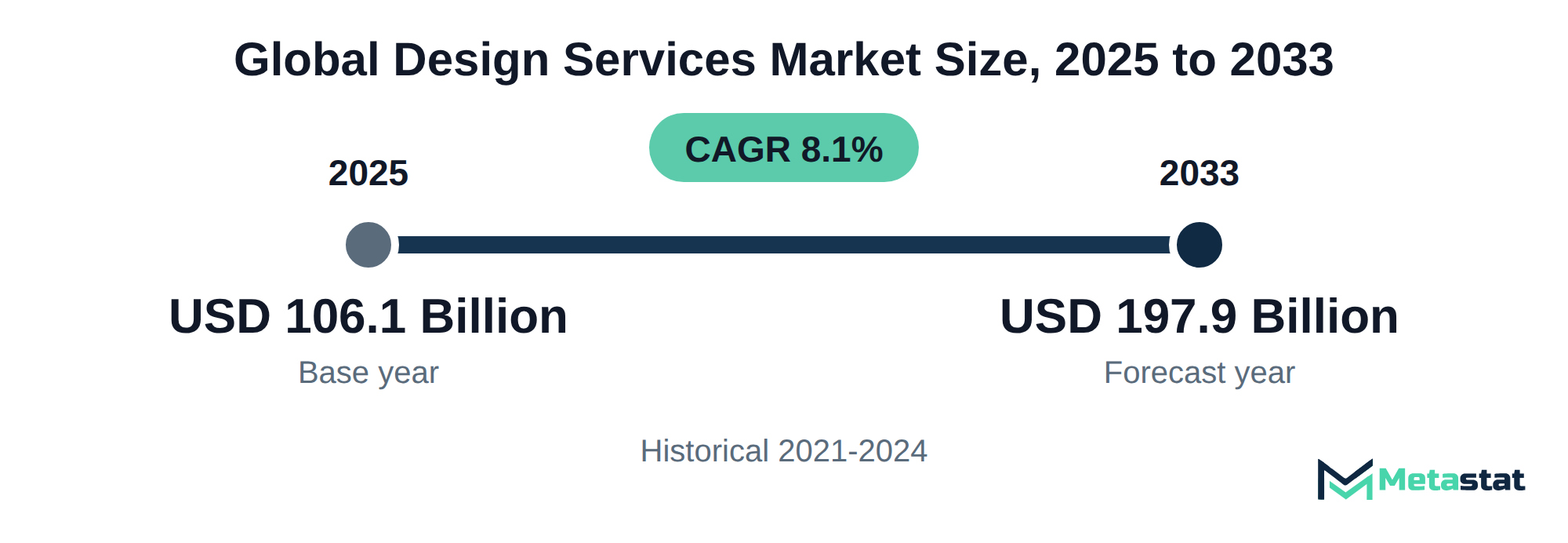
The Design Services market encompasses a wide range of creative services, including interior, graphic, industrial, and fashion design. Buyers invest in these services to enhance brand identity, improve functionality, and create visually appealing environments. The demand for high-quality design services stems from various industries, including retail, hospitality, and residential sectors, where aesthetic appeal and innovative solutions are critical for competitive advantage.
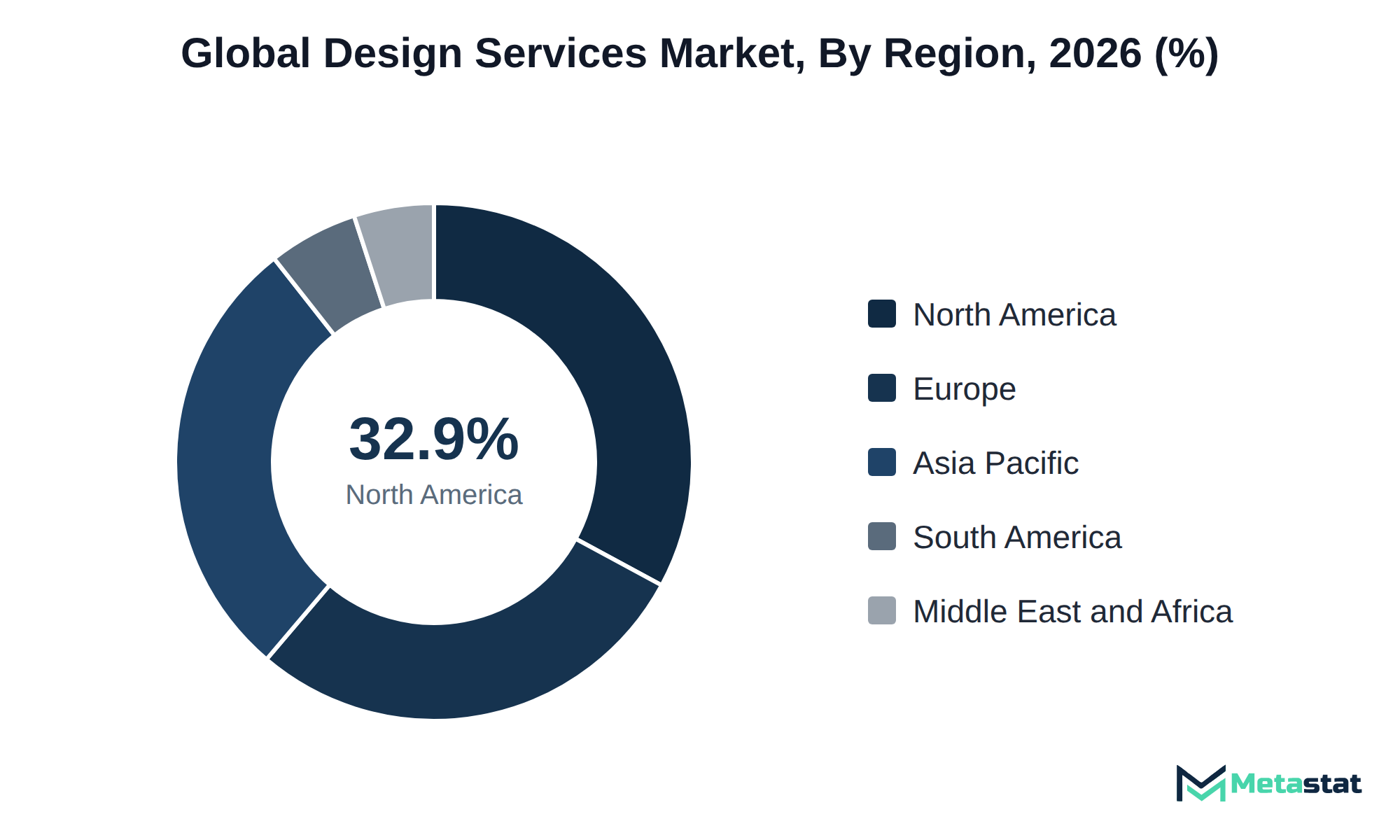
Growth in the market is driven by increasing consumer expectations for design quality and innovation. In particular, interior design represents the segment with the highest value, reflecting a trend toward personalized and immersive spaces. North America holds 32.9% of the market in 2025, with the US leading in 2026. This region benefits from a strong economy and robust demand for design services across various sectors, including commercial and residential applications.
Technological advancements further stimulate market growth, enabling designers to create more efficient and effective solutions. The integration of digital tools and online platforms enhances accessibility and streamlines the design process, attracting a diverse range of clients. The market is projected to continue expanding, driven by evolving consumer preferences and a commitment to innovative design.
The Design Services market includes various segments that cater to diverse consumer needs, enabling organizations and individuals to enhance their brand identity, product appeal, and overall aesthetics. Buyers invest in these services to achieve creative solutions that improve their projects, whether in commercial, residential, or public sectors. The growing emphasis on unique and engaging designs drives expenditures across different industries, leading to increased demand for specialized design services.
Growth in the market is fueled by rising consumer expectations for customized and innovative design solutions. The interior design segment represents the largest share, reflecting a strong demand for personalized spaces that connect with users. This region's substantial market presence is influenced by a robust economy and a strong focus on architectural and design excellence.
Ongoing advancements in technology and the proliferation of online design platforms contribute significantly to market expansion. These platforms streamline access to design services, enabling more individuals and businesses to engage with creative professionals. The increasing integration of design in various sectors, including retail and hospitality, enhances the relevance and necessity of the Design Services market in shaping consumer experiences.
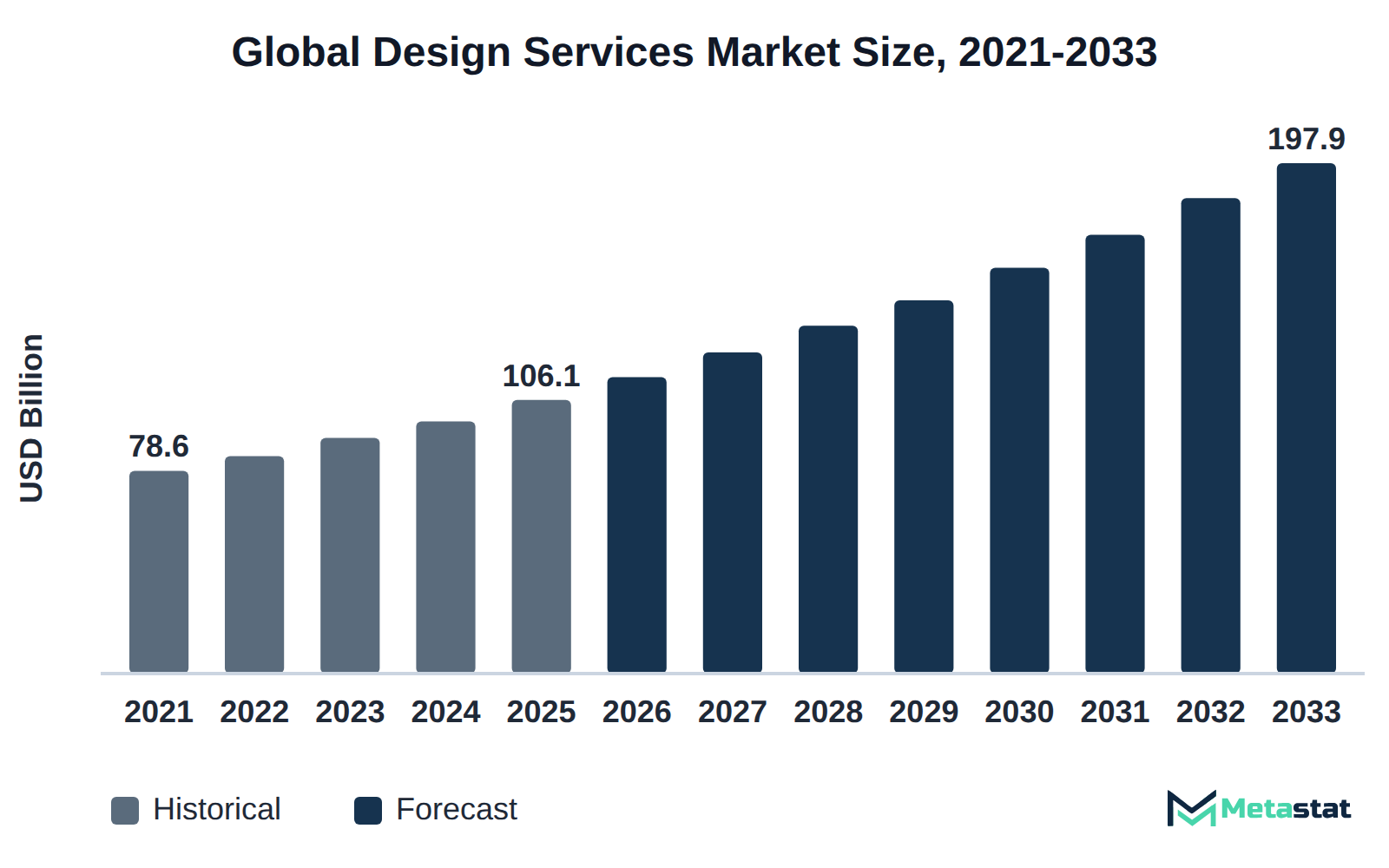
Generative AI integration significantly transforms graphic and industrial design workflows, enhancing creativity and efficiency. By leveraging advanced algorithms, designers generate innovative concepts and streamline repetitive tasks, resulting in improved productivity. The application of generative AI technologies in design agencies and studios is projected to expand, with a growth rate of 7.5% through 2033, reflecting an increasing reliance on these tools within the Design Services market.
Design agencies and studios apply generative AI to create unique visual identities and optimize product development processes. This technology enables designers to explore a wider range of creative options, creating a more dynamic and responsive design environment. The growing preference for bespoke solutions among enterprises drives demand for advanced design capabilities, positioning generative AI as a crucial asset in meeting these expectations.
The integration of generative AI into workflows not only enhances design quality but aids in cost reduction by minimizing manual labor and expediting project timelines. This development encourages investment in AI-driven design tools, ultimately shaping the competitive landscape of the market. Firms that adopt these technologies strengthen their offerings and improve their market positioning.
Subscription design services play a crucial role in how enterprises procure design solutions. These services operate under different pricing models, affecting budget management and project flexibility. Enterprises increasingly adopt subscription-based models to streamline access to design services, allowing them to scale their engagements based on current needs without long-term financial commitments.
In the design services market, the segment of interior design is projected to experience growth from USD 39.8 billion in 2026 to USD 69.6 billion by 2033, reflecting a compound annual growth rate of 8.3%. This growth illustrates a rising preference for subscription-based offerings, where clients select service tiers that align with project demands. Understanding these trends in pricing and contract structures is essential for enterprises looking to enhance their design capabilities efficiently.
The transition to subscription models significantly impacts cash flow and operational flexibility, allowing enterprises to allocate resources dynamically. Such strategies encourage design service providers to offer tailored solutions, ensuring clients receive the most value from their investments while building long-term relationships. Engaging with subscription design services presents distinct advantages within the evolving landscape of the design services market.
The rising focus on sustainability significantly influences the demand for sustainable interior design within the Design Services market. Growing awareness of environmental issues drives businesses to pursue eco-friendly alternatives in their renovation projects.
Enterprises increasingly seek sustainable design solutions that incorporate recyclable materials, energy-efficient lighting, and sustainable sourcing practices. This shift aligns with corporate social responsibility goals and enhances brand reputation. The commercial sector, in particular, prioritizes sustainability in renovations to meet consumer expectations and regulatory standards. Designers and architects face heightened demand for innovative, sustainable practices that align with contemporary environmental standards.
Investing in sustainable interior design not only supports environmental initiatives but leads to long-term cost savings through energy efficiency and improved resource management. This development emphasizes the critical role of sustainability in driving the future of the Design Services market.
Design agencies, freelancers, and online platforms present distinct cost structures and delivery models that influence buyer decisions in the Design Services market. Design agencies and studios accounted for a value of USD 51.8 billion in 2026, with projections indicating an increase to USD 85.6 billion by 2033, reflecting a compound annual growth rate (CAGR) of 7.5%. This growth is attributed to their comprehensive service offerings, which include branding, product design, and architecture, appealing to enterprises seeking a cohesive design narrative.
Freelance designers exhibit competitive pricing strategies, often undercutting traditional design agencies. Their ability to operate with lower overhead costs allows them to provide specialized services at reduced rates. The market anticipates freelance design services to reach a value of USD 44.9 billion by 2033. The flexibility and personalized approach they offer attract individual clients and small businesses looking for tailored solutions. This shift toward freelancers meets the increasing demand for cost-effective design solutions within the market.
Online design platforms leverage technology to provide streamlined services that disrupt conventional delivery models. These platforms benefit from lower operational costs and offer competitive pricing structures. The market for online design platforms is witnessing significant growth, with a CAGR of 12.6%, driven by the convenience and accessibility they offer to a wide range of end users. This surge in demand indicates a shift toward digital solutions, compelling traditional agencies to adapt or enhance their service delivery methods.
The growing emphasis on aesthetic appeal and functionality within residential and commercial spaces drives heightened demand for interior design services. Enterprises and individuals increasingly seek professional design solutions to create inviting environments that reflect their brand or personal style. A shift toward personalized spaces, enhanced by social media influence, encourages clients to invest in tailored design experiences. This increase signifies a strong preference for custom interiors, resulting in higher spending in the market.
This trend demonstrates evolving consumer behavior where buyers prioritize unique design elements over standard solutions, leading to a surge in projects that require specialized expertise and creativity. While demand for these customized services continues to rise, competition among design firms intensifies, driving innovation and quality within the industry.
Emergence of advanced design tools significantly influences the market landscape. Enhanced software solutions streamline creative processes, enabling designers to produce high-quality work more efficiently. The shift toward cloud-based platforms facilitates collaboration among design teams, allowing for real-time feedback and faster project delivery. This technological evolution attracts enterprises seeking to optimize design workflows and reduce time-to-market for new products. Increased accessibility to powerful design tools lowers barriers for freelancers and small agencies, encouraging innovation and creativity across various segments. While the Design Services market embraces these technologies, competition intensifies, prompting service providers to adopt innovative solutions to differentiate themselves. The result is an overall growth in demand for design services, driven by both improved capabilities and the ability to meet client expectations effectively.
Freelance designers and independent professionals leverage these advancements to enhance their offerings and capture a larger share of the market. The market is projected to experience continued growth, fueled by ongoing investment in design technology and the increasing reliance on digital solutions in various applications.
Increasing costs associated with design services create a barrier for enterprises and individuals seeking to invest in these solutions. The financial strain from rising prices leads to slower adoption and smaller order sizes, particularly among small businesses and startups that require cost-effective options. Design services encompass a variety of creative disciplines, and the broad price range contributes to hesitance in allocating budget toward higher-priced offerings. Buyers often postpone projects or downscale their requirements, limiting the growth potential of the market. The challenges of budgeting for design initiatives become evident, resulting in delays in implementation and adoption. This trend particularly affects the residential and small commercial sectors, where price sensitivity is heightened. The growing emphasis on aesthetic appeal and functionality in these segments presses buyers to balance quality and affordability, influencing purchasing decisions in the design landscape.
Challenges in acquiring and retaining qualified talent significantly impact profitability within the market. Increased demand for specialized skills raises recruitment costs, which directly affects the operational margins of design service providers. Firms invest in training and development programs to enhance employee skills, ensuring that teams remain competitive and innovative. However, the financial burden of attracting top talent results in higher service fees, impacting client budgets and purchasing decisions. Companies are adapting by implementing flexible work arrangements and enhancing employee value propositions to attract a diverse talent pool. The competition for skilled professionals intensifies, leading organizations to adopt more strategic hiring practices, including partnerships with educational institutions. This shift addresses the immediate skills gap and strengthens the overall talent pipeline for the future. Consequently, these pressures highlight the necessity for efficient talent management strategies to maintain competitiveness within the design services market.
Rapid growth in online design platforms presents a significant opportunity within the market. The increasing shift toward digital solutions, particularly following the pandemic, has driven demand for accessible design services. These platforms cater to diverse user needs, providing cost-effective and scalable options for various design applications. Forecasts indicate a compound annual growth rate of 12.6% for this delivery model, highlighting its potential for expansion. Enterprises and individuals seeking efficient and flexible design solutions identify online design platforms as a key enabler in addressing these demands. The growing emphasis on user-friendly interfaces and collaborative features enhances the appeal of these platforms, making them crucial in the evolving design landscape. This trend indicates a shift toward more democratized design services, allowing a wider audience to engage with professional design capabilities.
The Global Design Services market is segmented based on Service Type, Delivery Model, Application, and End User.
This segment serves residential and commercial clients seeking to enhance aesthetic appeal and functionality in their spaces. Increasing investment in real estate, along with a growing preference for personalized living environments, fuels demand for interior design services. Compared to other segments, including Graphic Design with a CAGR of 6.9%, Interior Design experiences significant growth due to its direct impact on consumer experience and satisfaction. With the rise of luxury and bespoke interior solutions, buyers seek unique designs that reflect their individual style and brand identity. This segment's performance highlights its importance in creating environments that connect with end users, making it a vital part of the overall Design Services market.
Graphic Design segment is estimated to reach USD 46.5 billion by 2033, at a CAGR of 6.9% during the forecast period. This segment consists of visual communication services that enhance brand identity and convey messages through various media, including print, digital, and interactive platforms. Enterprises and organizations in need of branding, marketing materials, and product packaging typically employ these services. Growth in this segment is driven by increasing demand for digital marketing initiatives and the proliferation of social media platforms, which necessitate high-quality graphic content. Compared to other service types, Graphic Design exhibits slower growth relative to Interior Design, which has a CAGR of 8.3%. This difference is attributed to its established nature and the varying pace of adaptation to new design technologies among clients.
Industrial Design segment is expected to reach USD 43.3 billion by 2033. This segment focuses on designing products intended for manufacturing, emphasizing aesthetics, functionality, and user experience. Manufacturers, technology firms, and consumer goods companies use these services to create innovative products that meet market demands. The growth of this segment is driven by increasing demand for unique and user-friendly products, which influences design trends across various sectors. With a projected CAGR of 7.3%, this segment experiences steady growth, although it lags behind Interior Design, which has a CAGR of 8.3%. This difference highlights the varied pace of innovation and client spending across design services. Buyers in this segment prioritize quality and usability, affecting pricing strategies and competition among providers.
Fashion Design segment is projected to grow at a CAGR of 6.1% during the forecast period. This segment caters to the fashion industry, providing design solutions for apparel, accessories, and footwear, primarily serving fashion brands and retail companies aiming to establish their identity and appeal. The expansion of e-commerce and social media significantly influences this segment, with brands increasingly seeking to differentiate themselves and attract consumers through innovative designs. Compared to other segments, Fashion Design experiences slower growth due to fierce competition and rapid changes in consumer preferences, which require continuous adaptation in design strategies. Despite this, the potential for collaborations with influencers and the rise of sustainable fashion initiatives create opportunities for growth that differentiate it from faster-growing segments, including Interior Design.
Design services within the Others segment encompass various specialized fields, including architectural design, product design, and UX/UI design. These services cater to enterprises seeking to improve user experience and product functionality. The rapid evolution of technology significantly drives innovation in this segment, allowing for more efficient design processes. In particular, the increasing reliance on digital platforms raises the demand for UX/UI design services, reflecting changing consumer behaviors and preferences. This segment distinguishes itself from others in the market through a heightened focus on technological integration and user-centric approaches, appealing to a diverse clientele ranging from startups to established enterprises. By prioritizing functionality and aesthetics, this segment enhances engagement and satisfaction among end-users.
This segment focuses on delivering creative solutions for various clients, including enterprises seeking innovative branding and individuals looking for personalized design services. A key driving force behind this segment is the increasing demand for visually appealing and functional designs in commercial and residential spaces. Compared to other segments, Design Agencies and Studios show a steady growth rate, supported by their ability to adapt to client needs and market trends. This adaptability enables agencies to differentiate their offerings, resulting in higher pricing compared to freelance designers or online platforms. The rise of digital tools continues to influence service delivery, enhancing collaboration and efficiency within the segment.
Multidisciplinary Architecture and Engineering Firms segment is estimated to reach USD 45.9 billion by 2033, at a CAGR of 7.3% during the forecast period. This segment serves enterprises and individuals seeking comprehensive design and engineering solutions for a variety of projects, including commercial buildings, residential developments, and infrastructure. The integration of architecture and engineering in one service streamlines project delivery, appealing to clients who prioritize efficiency. Demand is driven by the increasing complexity of design projects, which often require interdisciplinary collaboration. Compared to other delivery models, this segment exhibits moderate growth, positioned between Freelance Designers and Design Agencies, which experience higher growth rates. The capability to address various client needs through a unified approach enhances its appeal, positioning this segment effectively within the competitive landscape of the Design Services market.
The Freelance Designers and Independent Professionals segment is expected to reach USD 44.9 billion by 2033. This segment serves various needs including graphic design, branding, and digital content creation, primarily for individuals and small businesses. The flexibility and cost-effectiveness of hiring freelancers drives demand, particularly among startups and entrepreneurs who seek tailored design solutions without the commitment of full-time hires. Unlike Design Agencies and Studios, which are projected to grow at a CAGR of 7.5%, the freelance segment exhibits a slower growth trajectory. However, the rise of digital marketplaces simplifies access to freelance talent, enhancing visibility and competition while impacting pricing dynamics. This accessibility encourages innovation while allowing clients to engage with design professionals who offer specialized skills at various price points, contributing to the evolving landscape of the market.
Online Design Platforms and Marketplaces segment is projected to grow at a CAGR of 12.6% during the forecast period. This segment facilitates the connection between designers and clients, allowing for a streamlined process in sourcing design services. Enterprises and individuals access these platforms to obtain a diverse range of design offerings, including graphic and interior design. The rapid adoption of digital technologies supports growth in this sector, with users benefiting from convenience and a wider selection. This segment outpaces others in terms of growth, reflecting a shift towards online solutions in design procurement. While traditional models, including Design Agencies and Studios, require more extensive engagement processes, online platforms provide flexibility and speed. Demand for these services is driven by ongoing digital transformation across various industries seeking efficient design solutions.
Commercial applications valued at USD 53.1 billion in 2026 are projected to reach USD 93.5 billion by 2033, at a CAGR of 8.4% during the forecast period. This segment serves businesses and organizations requiring design services to enhance their operational spaces and brand identities. A notable driver for growth involves the increasing demand for aesthetically appealing and functional designs in commercial environments, particularly in retail and office settings. Differentiating this segment from others is its robust expansion rate, which surpasses that of Residential, Industrial, and Others, reflecting the growing investment in business infrastructure and branding. Ongoing advancements in design technologies further support this momentum, enabling more customized solutions tailored to specific commercial needs. The market's focus on innovation and quality contributes to its competitive nature, encouraging firms to explore new creative avenues.
Residential segment is estimated to reach USD 51.7 billion by 2033, at a CAGR of 7% during the forecast period. This segment caters to individuals and families seeking personalized living spaces that reflect their tastes and preferences. Increased disposable income and a growing focus on home aesthetics drive demand, influencing homeowners to invest in professional design services. Compared to other segments, the Residential segment exhibits a moderate growth rate, stemming from consumer trends prioritizing comfort and functionality in home design. Urbanization accelerates, driving the demand for innovative and space-efficient designs, propelling growth in this area. The market continues to expand, emphasizing the importance of tailored solutions for residential applications.
Industrial application is expected to reach USD 37.2 billion by 2033. This segment serves various industries, including manufacturing, construction, and transportation, which rely on effective design solutions to optimize processes and enhance efficiency. Demand for industrial design is primarily driven by advancements in technology and the need for innovative, sustainable products. Compared to other applications, the industrial segment demonstrates a slower growth trajectory. While the commercial segment experiences a CAGR of 8.4%, the industrial segment's growth is influenced by regulatory standards and the emphasis on operational efficiency. Enterprises in this segment continually seek to improve product functionality and performance, resulting in unique design requirements that distinguish it from the other segments in the Design Services market.
Others (Institutional, Public Infrastructure and Cultural Applications) segment is projected to grow at a CAGR of 8.8% during the forecast period. This segment serves various sectors including educational institutions, governmental agencies, and cultural organizations, focusing on the design of facilities that support public functions and cultural heritage. Demand for these services is driven by increasing investment in public infrastructure projects and a growing emphasis on cultural initiatives. This segment generally experiences a slower growth rate compared to others, including Commercial applications, which are projected to grow at a CAGR of 8.4%. The unique nature of institutional and public projects often involves longer timelines and complex regulatory frameworks, influencing competitive dynamics within the Design Services market.
Enterprises segment is valued at USD 74.5 billion in 2026 and is projected to reach USD 131 billion by 2033, at a CAGR of 8.4% during the forecast period. This segment focuses on providing design services to large organizations that require tailored solutions to enhance their branding and operational efficiency. Enterprises increasingly invest in design services to drive innovation and improve user experience, resulting in heightened demand for effective design. The segment benefits from a growing emphasis on digital transformation across industries, propelling its growth. Compared to other segments, the Enterprises segment exhibits a higher growth rate, with a CAGR of 8.4%, reflecting its strategic importance for businesses seeking competitive advantages. In contrast, segments including Individuals show slower growth, driven by differing purchasing power and service needs. The market demonstrates a robust appetite for comprehensive design solutions that meet the unique demands of enterprise clients.
Individuals segment is estimated to reach USD 44.5 billion by 2033, at a CAGR of 6.9% during the forecast period. This segment primarily serves consumers seeking personalized design services for various needs, including home décor, personal branding, and custom artwork. The demand is driven by a growing interest in unique and tailored solutions among individuals, influenced by trends in social media and e-commerce. Compared to other segments, this group represents a slower growth trajectory, reflecting a more price-sensitive consumer base in contrast to enterprises, which typically invest more substantially in design services. The distinct characteristics of this segment highlight the diverse applications and target audiences within the broader Design Services market, emphasizing its unique position and future potential.
The Government and Public-Sector Organizations segment is expected to reach USD 17.4 billion by 2033. This segment primarily serves governmental departments and public institutions that require design services for various initiatives, including infrastructure projects and public facilities. Demand is driven by increased government spending on public infrastructure and urban development projects, reflecting a commitment to enhance community services. In comparison to other segments, growth in this segment is slower, focusing on tailored solutions that cater to regulatory requirements. The unique purchasing processes and budget constraints in public-sector projects differentiate this segment from others, including Enterprises, which demonstrate a faster growth trajectory. Investment in sustainable design practices, along with the need for compliance with environmental regulations, influences project planning and execution. Overall, the Government and Public-Sector Organizations segment presents distinct characteristics within the Design Services market.
Segment Others (Nonprofit and Cultural Organizations) is projected to grow at a CAGR of 9.1% during the forecast period. This segment focuses on providing design services tailored for nonprofit entities and cultural organizations, including museums, community centers, and charities. These organizations often require unique design solutions that reflect their mission and values while effectively engaging their audiences. Increased funding for cultural initiatives and heightened awareness of social issues drive demand for specialized design services in this sector. Compared to other segments, this category exhibits a faster growth rate, reflecting a growing recognition of the importance of design in enhancing community engagement and cultural expression. Design services in this segment often command lower prices than commercial applications due to budget constraints typical of nonprofits, but they offer significant value in promoting visibility and outreach efforts for these organizations. The market continues to evolve, addressing the specific needs of this diverse group of end users.
Based on geography, the Global Design Services market is divided into North America, Europe, Asia-Pacific, South America, Middle East, and Africa.
North America stands out in the Design Services market, projected to reach USD 61 billion by the end of 2033. The region accounts for 32.9% of the global market share in 2025, driven by strong demand from commercial enterprises, particularly those in the technology and retail sectors. The presence of numerous design agencies and studios facilitates innovation and competitiveness. Extensive infrastructure investments in urban development provide a solid foundation for growth in design services. Countries including the United States, Canada, and Mexico contribute significantly to the regional market dynamics, with a notable emphasis on interior design services. The combination of robust economic activity and increasing consumer preferences for aesthetic and functional spaces underpins the upward trajectory of this market segment.
Growth within the Design Services market in Europe primarily derives from sectors including commercial and residential construction, where design aesthetics play a crucial role in attracting clients. Countries like Germany, France, and the UK exhibit significant investment in innovative design projects, driven by urban development and infrastructure upgrades. Increased awareness of sustainable design practices leads to heightened demand for environmentally friendly solutions, creating opportunities for designers specializing in this niche. The market faces challenges related to regulatory compliance, particularly regarding energy efficiency standards that affect project timelines and costs. With a market share of 28.3% in 2025, Europe remains an important region, illustrating strong potential for expansion through emerging trends in digital design platforms and technologies.
The Asia-Pacific region represents a significant portion of the Design Services market, accounting for 28.2% of the global share in 2025. Rapid urbanization and industrialization in countries including China and India drive demand for design services, particularly in commercial and residential applications. The growing middle-class population in these nations further contributes to increased consumer spending on design-related projects. Infrastructure development initiatives in South Korea and Australia play a vital role in shaping market dynamics. Emerging online design platforms are gaining traction, allowing freelance designers to reach a broader audience and enhance service delivery. The region's diverse cultural heritage influences design preferences, creating unique trends that appeal to local consumers.
The Design Services market in South America reflects a growing interest in design, driven primarily by the commercial and residential sectors. Brazil and Argentina stand out as key contributors, with investments in infrastructure and urban development driving demand for interior and graphic design services. Increasing urbanization and a rising middle class contribute to the need for aesthetically pleasing environments, enhancing the attractiveness of commercial spaces and residential areas. The market share for this region is projected at 5.6% in 2025, indicating a solid presence in the global landscape. Players in this region focus on tailoring their services to meet the unique cultural and functional requirements of local clients, positioning themselves for future growth within the market. The rise of online design platforms enhances accessibility, allowing several consumers to engage with design services effectively.
Growth in the Design Services market within the Middle East and Africa primarily originates from increasing demand in sectors including commercial and residential construction, where design quality significantly impacts project success. The region's infrastructure development programs, particularly in Saudi Arabia and the UAE, drive investment in design services, enhancing both public and private sector projects. South Africa's creative industries contribute to a dynamic market for design, reflecting a growing appreciation for innovative solutions. With a projected market share of 5.0% in 2025, the region is set to play an increasingly important role in influencing global design trends. Local design agencies and multidisciplinary firms actively seek collaborations that strengthen their service offerings, positioning them competitively within the evolving market.
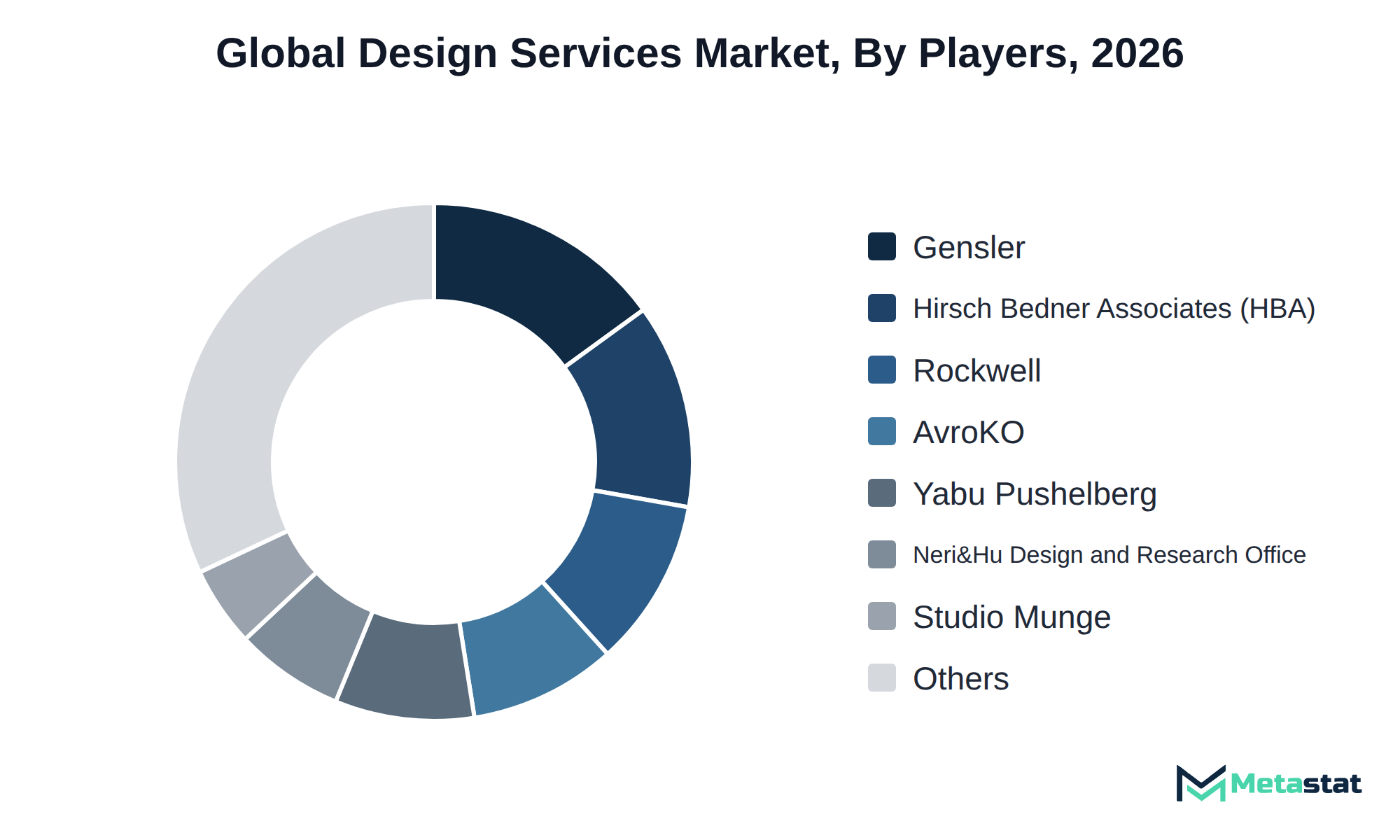
The Design Services market features a diverse range of companies competing across various segments. Players differentiate themselves through service type, delivery model, and application, influencing buyer decisions based on factors including price, customization, and service quality. Design agencies and studios focus on delivering tailored solutions, while multidisciplinary architecture and engineering firms provide comprehensive design services that integrate multiple disciplines. Freelance designers and independent professionals offer flexibility and a personal touch, catering to individual client needs.
Companies including Gensler and Perkins&Will emphasize large-scale commercial projects, enhancing their portfolios with a mix of innovative designs and sustainable practices. In the field of interior design, AvroKO and Hirsch Bedner Associates (HBA) target the hospitality sector, providing unique and memorable experiences through their design concepts. The competitive environment encourages firms to leverage their strengths and adapt to evolving market trends, ensuring relevance in a rapidly changing environment.
Achieving this growth requires a combination of key developments. This segment's growth will be driven by rising demand for residential and commercial spaces that emphasize aesthetics and functionality.
Second, the increasing adoption of online design platforms and marketplaces presents a significant opportunity for the Design Services market. These platforms, expected to grow at a CAGR of 12.6%, enhance accessibility and streamline the design process for users across various segments. The growth of the commercial application segment, anticipated to expand from USD 53.1 billion in 2026 to USD 93.5 billion by 2033, signals strong demand from enterprises investing in design services.
Risks exist that could impede this growth trajectory. Economic fluctuations or supply chain disruptions could hinder investment in design services, particularly impacting the residential segment. The market's future outlook hinges on these developments and the ability to mitigate associated risks.
By Service Type: Interior Design, Graphic Design, Industrial Design, Fashion Design, Others (Architectural Design, Product Design, UX/UI Design)
By Delivery Model: Design Agencies and Studios, Multidisciplinary Architecture and Engineering Firms, Freelance Designers and Independent Professionals, Online Design Platforms and Marketplaces
By Application: Commercial, Residential, Industrial, Others (Institutional, Public Infrastructure and Cultural Applications)
By End User: Enterprises, Individuals, Government and Public-Sector Organizations, Others (Nonprofit and Cultural Organizations)
The report strategically identifies and profiles the key market players and analyses their core competencies in each sub-segment of the Design Services market.
Report Attributes | Details |
Study Period | 2021-2033 |
Base Year | 2025 |
Estimated Year | 2026 |
Forecast Period | 2026-2033 |
Historical Period | 2021-2025 |
Growth Rate | CAGR 8.1% from 2026 to 2033 |
Revenue Unit | USD billion |
Segmentation | By Service Type, Delivery Model, Application, End User, and Region |
By Region | North America (By Service Type, Delivery Model, Application, End User, and Country)
|
Europe (By Service Type, Delivery Model, Application, End User, and Country)
| |
Asia Pacific (By Service Type, Delivery Model, Application, End User, and Country)
| |
South America (By Service Type, Delivery Model, Application, End User, and Country)
| |
Middle East and Africa (By Service Type, Delivery Model, Application, End User, and Country)
|
Find answers to common questions about this report
The Design Services market size was valued at USD 106.1 billion in 2025.
The market is projected to grow at a CAGR of 8.1% during the forecast period from 2026 to 2033.
The North America Design Services market size is estimated to reach USD 61 billion by 2033.
Interior Design leads the Design Services market with a projected value of USD 69.6 billion by 2033, based on its growth trajectory compared to other segments.
The growing emphasis on aesthetic appeal and functionality within residential and commercial spaces drives heightened demand for interior design services. Increased accessibility to powerful design tools lowers barriers for freelancers and small agencies, encouraging innovation and creativity across various segments.
North America holds the dominant share of the Design Services market, with a value of USD 61 billion projected for 2033, representing 32.9 percent of the total market. This region leads in market share compared to Europe and Asia Pacific, which follow closely behind.
Increasing costs associated with design services create a barrier for enterprises and individuals seeking to invest in these solutions. Challenges in acquiring and retaining qualified talent significantly impact profitability within the market.
Rapid growth in online design platforms presents a significant opportunity for adoption within the industry. The increasing shift toward digital solutions, driven by the pandemic, caters to diverse user needs and provides cost-effective, scalable options for various design applications.
The Design Services market is estimated to reach a valuation of USD 197.9 billion by 2033.
Key players operating in the Design Services market include AvroKO, Gensler, Hirsch Bedner Associates (HBA), Yabu Pushelberg, Neri&Hu Design and Research Office, Perkins&Will, AECOM, and Landor.
The analysts below cover Professional Services research at Metastat Insights.
LEAD ANALYST
Utkarsh Khirodkar is a Lead Market Research Analyst at MetaStat Insight, specializing in market intelligence, technology sector assessments, and competitive strategy.

PRINCIPAL CONSULTANT - ENTERPRISE AI & EMERGING TECHNOLOGIES
Banking & Finance · Electronics and Semiconductor · Energy and Power · Healthcare IT · Information & Technology · Professional Services
Vijay Gunti is a Principal Consultant at MetaStat Insight, bringing over two decades of experience across enterprise digital transformation, technology strategy, and intelligent systems.

PRINCIPAL CONSULTANT - QUALITY SYSTEMS & COMPLIANCE
Electronics and Semiconductor · Machinery & Equipment · Professional Services
Omkar Phadtare is an Industry Consultant at MetaStat Insight, specializing in quality systems, regulatory compliance, and standards benchmarking to drive data-driven market intelligence and strategic industry research.

LEAD CONSULTANT - COMMUNICATION, TELECOM, AND IT
Electronics and Semiconductor · Information & Technology · Machinery & Equipment · Professional Services
Ravindra Sathe Consultants for Communication, Telecom, and IT at MetaStat Insight. He leads the firm's industry research initiatives across telecommunications infrastructure, digital connectivity, enterprise networking, and emerging information technology domains.
Evaluating calorific value requirements and air permit compliance across municipal waste facilities requires localized data. Metastat Insight structured their analysis around operational throughput capacity and feedstock composition variations in Latin America and Eastern Europe. Their competitive mapping of sorting equipment vendors helped clarify technology differences between optical separators and heavy media systems. The study provided an objective baseline during our capital expenditure reviews.
Decarbonizing industrial thermal processes hinges on refrigerant regulations and compressor efficiency limits. Metastat Insights delivered a thorough market analysis that evaluated natural refrigerants like CO2 and hydrocarbons against synthetic low-GWP alternatives. The breakdown of utility incentives and grid capacity constraints across key European manufacturing hubs offered valuable perspective. The follow-up conversation with their sector analysts addressed our specific questions on mechanical vapor recompression systems efficiently.
Assessing 200mm wafer transition schedules and substrate supply bottlenecks requires precise technical intelligence. MetaStat Insight supplied an actionable breakdown comparing planar and trench MOSFET architectures across automotive and industrial drive markets. The regional capacity estimates for Asia-Pacific foundries helped clarify lead-time uncertainties during our strategic planning session. When we needed additional clarification on high-purity raw material sourcing, their analyst team responded with helpful context within twenty-four hours.
Explore related market intelligence reports worth reading alongside this one.