
LEAD ANALYST
Utkarsh Khirodkar is a Lead Market Research Analyst at MetaStat Insight, specializing in market intelligence, technology sector assessments, and competitive strategy.

Europe Non-Performing Loan Portfolio Transactions Market Size, Share, By Loan Type (Unsecured Consumer Loans, Residential Mortgage Loans, Corporate and SME Loans, Other Secured Retail Loans), By Transaction Structure (Bilateral Portfolio Sales, Competitive Portfolio Auctions, Forward-Flow Agreements, NPL Securitizations), By Seller Type (Commercial and Retail Banks, Consumer Finance Lenders, Credit Card Issuers, Specialist Debt Investors and Servicers), By Region (Germany, France, United Kingdom, Italy, Spain, Russia, Rest of Europe), Industry Analysis, Growth, Trends, and Forecast, 2026-2033
Report ID
MSI-5681
Published
November, 2026
Pages
304 Pages
Format
Historical
Base year
Forecast
Forecast period
Report Details
Market Valuation: Valued at $202.6 Billion in 2025, projected to reach $366.8 Billion by 2033 at a 7.7% CAGR.
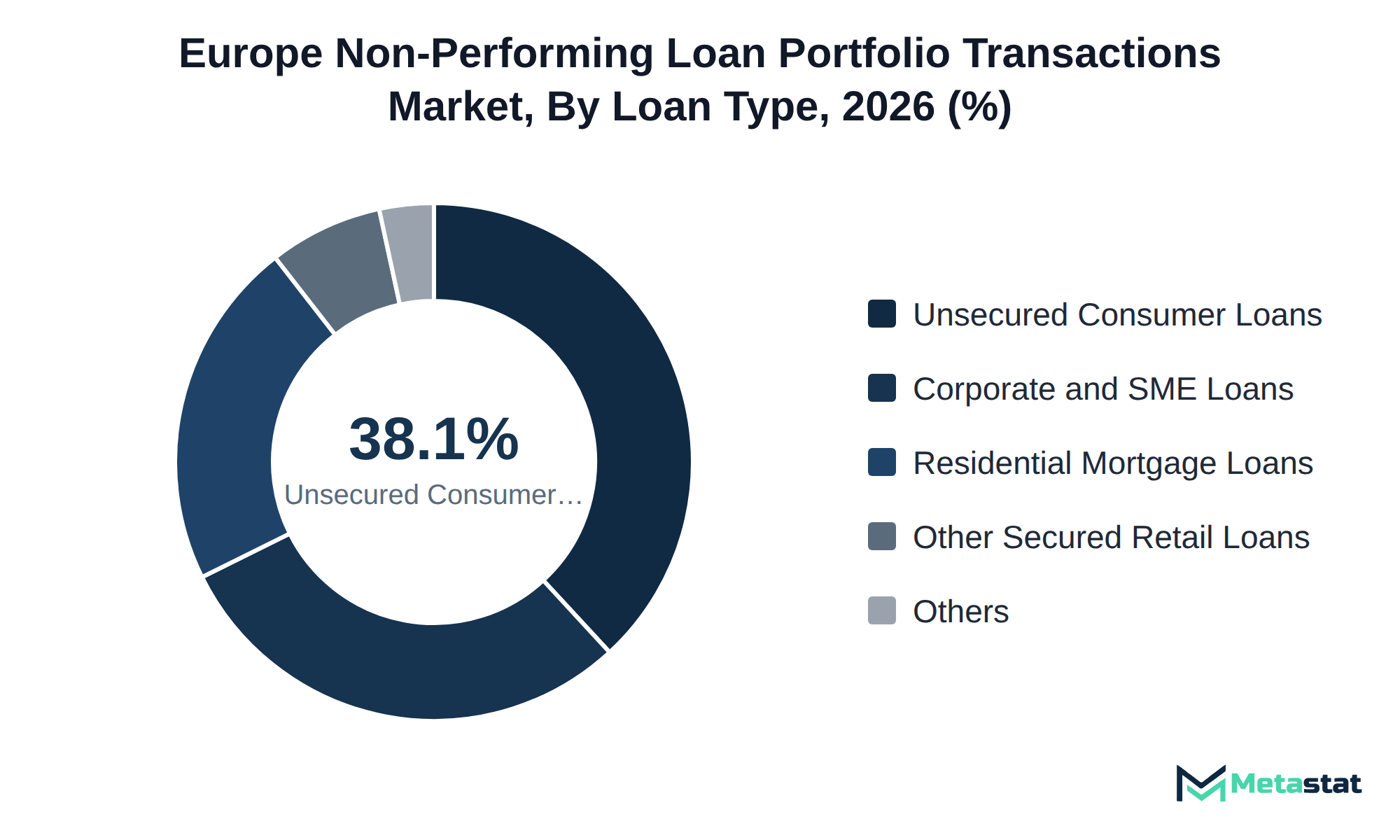
Dominant Segment: The unsecured consumer loans segment leads the market, driven by increasing consumer debt levels and demand for flexible financing options.
Geographic Lead: Germany is the leading region, supported by a robust banking infrastructure and proactive asset management strategies.
What's Inside: The report includes detailed analyses of market dynamics, competitive coverage, and forecasts from 2026 to 2033, focusing on various loan types and transaction structures.
Emerging Trends: There is a notable shift towards recurring forward-flow sales, reflecting lenders' strategies to manage risk more efficiently through structured sales.
Buyer Dynamics: Consumer finance lenders are increasingly active in the market, responding to rising consumer debt and seeking to expand their portfolios.
Choose Your License
Europe Non-Performing Loan Portfolio Transactions Market
The Europe Non-Performing Loan Portfolio Transactions market was valued at USD 202.6 billion in 2025 and is projected to reach USD 366.8 billion by 2033, growing at a CAGR of 7.7% over the forecast period.
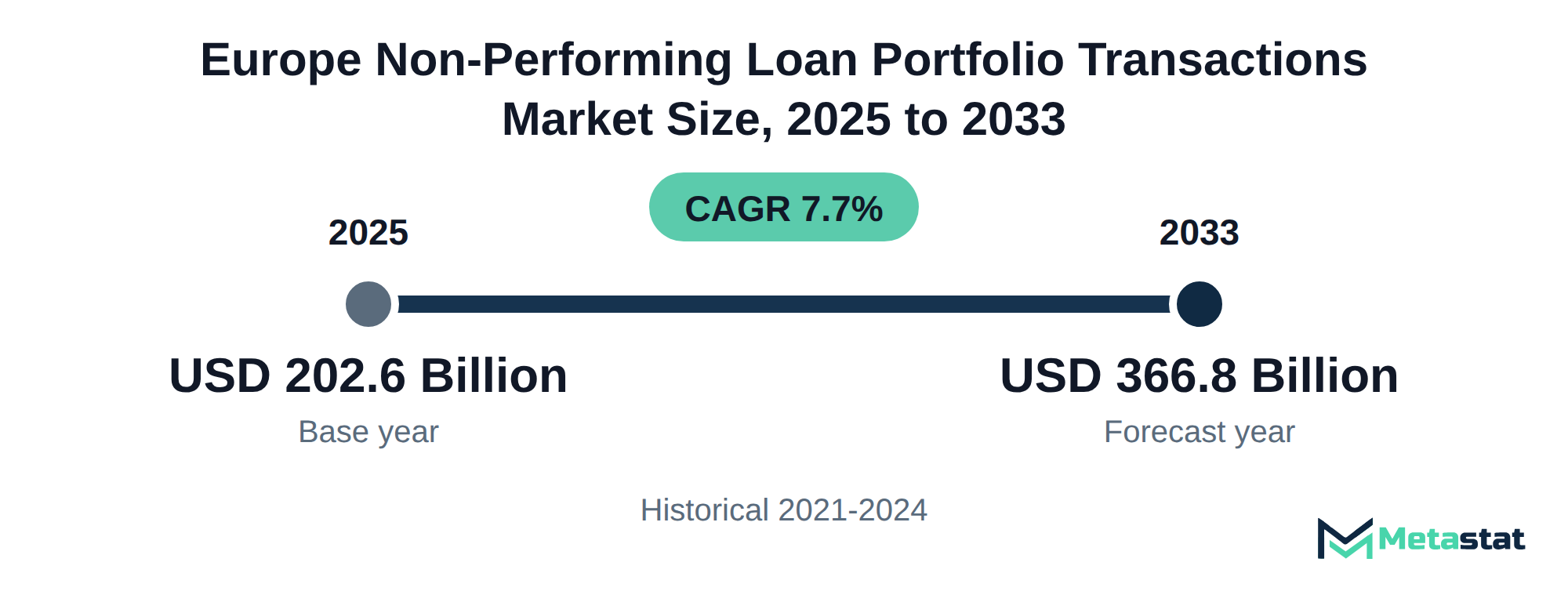
The Europe Non-Performing Loan Portfolio Transactions market encompasses the buying and selling of non-performing loans, typically characterized by defaults or missed payments. Buyers, including banks and investment firms, engage in this market to recover losses and improve their financial positions. The increasing focus on asset recovery drives investments in this sector, with firms seeking to optimize their portfolios and manage risk effectively.
Growth in the market is primarily fueled by rising levels of non-performing loans across Europe, prompting financial institutions to pursue portfolio transactions. The unsecured consumer loans segment represents the largest value within the market, reflecting significant demand driven by changing borrower behavior and economic conditions. Germany stands out as the region with the largest share, supported by established banking infrastructure and a proactive approach to managing distressed assets.
With a compound annual growth rate of 7.7% projected during the forecast period, the market reflects an environment of increasing transactions. The focus on effective debt recovery strategies and optimized asset management is essential for stakeholders, enhancing competition among sellers and driving innovation in transaction structures. A notable growth driver stems from the evolving regulatory landscape, which encourages institutions to adapt their approaches to non-performing loans.
The Europe Non-Performing Loan Portfolio Transactions market encompasses various loan types, transaction structures, and seller types, catering to diverse buyer needs. Buyers invest in this market to manage risk, optimize portfolios, and recover capital from non-performing assets. Growth in demand stems from financial institutions and investors seeking to enhance their balance sheets while navigating evolving regulatory environments.
Unsecured consumer loans represent the highest-value segment in the market, driven by increasing consumer debt levels and strong demand for risk-adjusted returns. Germany leads the market regionally, supported by strong economic fundamentals and a well-established banking sector. Banks offloading non-performing loans strengthen their financial positions, leading to enhanced lending capabilities and overall market growth.
Growth in the market reflects a trend toward more sophisticated transaction structures, including bilateral portfolio sales and competitive portfolio auctions. These structures allow for efficient pricing and faster transactions, benefiting both buyers and sellers. The continuous evolution of the market encourages stakeholders to adapt strategies to capitalize on emerging opportunities in the non-performing loan landscape.
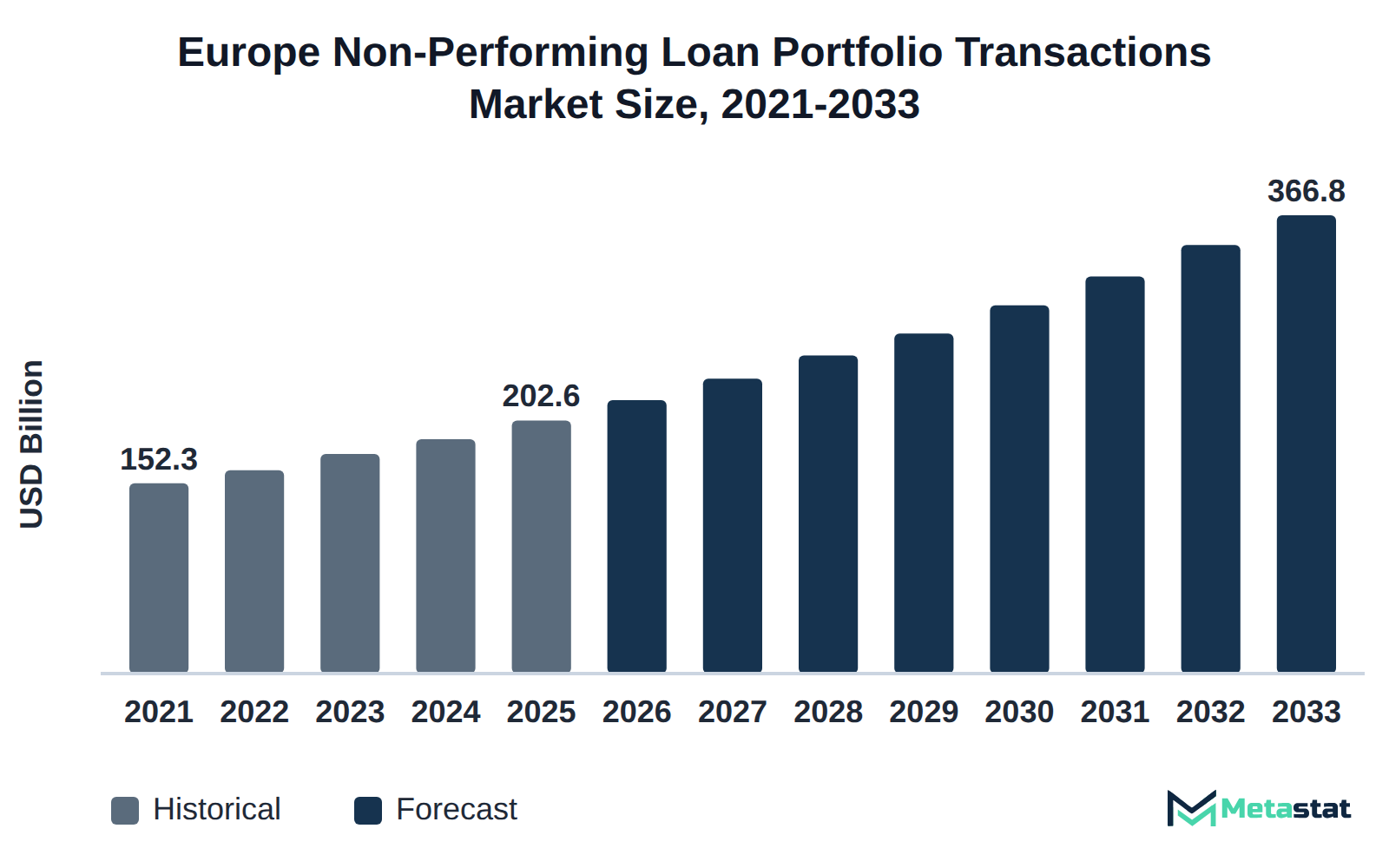
The Europe Non-Performing Loan Portfolio Transactions market has seen a notable transition towards recurring forward-flow sales, driven by the increasing prevalence of unsecured consumer credit. This segment is projected to grow from USD 84.8 billion in 2026 to USD 158.2 billion by 2033, representing a compound annual growth rate (CAGR) of 9.3%. Such growth reflects a shift in lender strategies, where financial institutions seek to offload risk more efficiently through structured sales rather than traditional one-off transactions.
Forward-flow agreements facilitate a steady stream of loan sales, allowing lenders to manage their portfolios proactively. This method improves liquidity and flexibility, which matters most in periods of economic uncertainty. Traditional methods of selling non-performing loans involve lengthy negotiations and time-consuming processes, which hinder timely risk management. By adopting forward-flow agreements, lenders streamline operations and mitigate potential losses associated with rising defaults.
This market dynamic accommodates the growing demand for unsecured consumer loans and positions financial institutions to adapt to changing economic conditions. Recurring sales help lenders maintain healthier balance sheets and build a more resilient financial system. While the market continues to evolve, the strategic adoption of forward-flow sales serves as a key differentiator in the competitive landscape of Europe Non-Performing Loan Portfolio Transactions.
Pricing mechanisms for Non-Performing Loan (NPL) portfolios strongly influence the ultimate return on investment for buyers. A significant aspect of this pricing hinges on loan-level recovery forecasts, which inform the expected cash flows from the underlying assets. A well-calibrated approach to recovery forecasts enhances profitability for investors.
In the context of transaction structures, bilateral portfolio sales stand out, with an expected increase from USD 90 billion in 2026 to USD 144.7 billion by 2033, achieving a compound annual growth rate of 7%. This trend indicates that buyers are increasingly favoring negotiated sales over auction methods, allowing for tailored pricing based on individual loan characteristics and recovery expectations. Consequently, effective loan-level recovery assessments significantly influence pricing strategies, ensuring that investors achieve optimal returns in a competitive market.
The evolving credit servicing rules significantly influence the economics for buyers in the Europe Non-Performing Loan Portfolio Transactions market. These regulations push buyers to adapt their strategies for managing non-performing loans, particularly for Commercial and Retail Banks. By 2033, this buyer segment is expected to reach USD 239 billion, reflecting a compound annual growth rate (CAGR) of 6.9% from 2026. This growth highlights the necessity for banks to implement effective credit servicing practices that align with regulatory frameworks.
The adjustments in prudential capital treatment further change this dynamic. Stricter capital requirements necessitate that banks maintain higher capital reserves against non-performing loans, thereby reducing their available capital for other investments. As a result, banks focus on acquiring portfolios that offer a favorable risk-return profile. Banks increasingly seek to purchase unsecured consumer loans and residential mortgage loans, which are projected to grow at CAGRs of 9.3% and 6% respectively, by 2033. This focus reflects banks' need to optimize their portfolios within regulatory constraints, which shapes the competitive landscape.
Banks in Europe are increasingly evaluating the merits of bilateral NPL sales versus portfolio auctions when disposing of non-performing loans. A significant factor influencing this choice involves the size and type of the loan portfolio. For instance, bilateral portfolio sales are anticipated to grow from USD 0.090 billion in 2026 to USD 0.1447 billion by 2033, reflecting a compound annual growth rate (CAGR) of 7%. This growth indicates a trend where banks prefer direct negotiations, allowing for tailored transactions that align with their specific portfolio characteristics.
Conversely, competitive portfolio auctions present unique advantages, particularly for larger or more diverse loan portfolios. The expected value of these auctions reaches USD 0.0966 billion by 2033, with a CAGR of 6%. Such auctions encourage competitive bidding, often resulting in higher prices for sellers. The choice between these two strategies affects banks' operational efficiency and capital recovery rates. While the market for Europe Non-Performing Loan Portfolio Transactions evolves, banks assess these dynamics to optimize their asset disposal strategies effectively.
Consumer finance lenders represent a significant buyer group in the market. A notable shift in their purchasing behavior stems from rising levels of consumer debt, driving increased demand for unsecured consumer loans. This surge reflects changing economic conditions and heightened reliance on credit among consumers, influencing lenders to expand their portfolios. The increase in demand for these loans leads to enhanced competition among lenders, resulting in higher pricing for loan portfolios. Increased buyer demand for unsecured loans highlights the evolving financial landscape and the strategic importance of acquiring non-performing loan portfolios to maintain market relevance.
The adoption of NPL securitizations drives growth within the market by transforming non-performing loans into tradable securities. This mechanism enhances liquidity for financial institutions, allowing them to manage their balance sheets more effectively. The ability to bundle various loan types into securities enables wider investment opportunities, attracting interest from both institutional and retail investors. Enhanced investor appetite results from improved pricing transparency and risk assessment processes that accompany securitization efforts.
Commercial and retail banks benefit significantly from this trend, offloading risks associated with non-performing loans while maintaining a focus on core lending activities. The growth of securitizations leads to increased capital availability for lenders, enabling further lending activities. Market participants explore innovative securitization structures that cater to evolving investor preferences. This shift supports the expansion of the Europe Non-Performing Loan Portfolio Transactions market in response to changing economic conditions.
Price sensitivity among buyers presents a significant restraint in the Europe Non-Performing Loan Portfolio Transactions market. Commercial and retail banks, a major buyer group, experience pressure to maintain profitability, which often leads to a focus on acquiring portfolios at discounted prices. This emphasis on cost containment results in slower adoption of new transactions and leads to smaller order sizes, impacting overall market liquidity. Consumer finance lenders face similar constraints, where discount expectations hinder their ability to engage in larger transactions, despite opportunities for growth in portfolio acquisitions. The reliance on significant price reductions restricts the potential for higher-value deals, ultimately affecting the market's growth trajectory. Balancing buyer demands for discounts with sellers' expectations for fair valuations continues to challenge the dynamics of the market.
Rising servicing costs present a considerable challenge within the Europe Non-Performing Loan Portfolio Transactions market. Suppliers face increased operational expenses related to managing non-performing loans, driven by higher staffing costs, technology investment, and compliance with evolving regulatory demands. This financial strain impacts profit margins and necessitates strategic adjustments in operations. In response, several suppliers pursue operational efficiencies by investing in advanced analytics and intelligent automation tools to streamline workflows and reduce labor costs. Forming partnerships with technology firms creates opportunities to enhance service delivery while controlling expenses. Competitive pressure compels suppliers to optimize their service offerings, ensuring they remain attractive to buyers in a cost-sensitive market. Suppliers keep adapting to maintain profitability despite pricing pressures.
The segment of unsecured consumer loans presents a significant opportunity within the Europe Non-Performing Loan Portfolio Transactions market. Increasing demand for flexible financing options among consumers drives this growth. Financial institutions focusing on acquiring non-performing unsecured loans position themselves strategically to meet this demand, enhancing their portfolios while contributing to overall market expansion. The shift towards unsecured consumer loans offers a unique avenue for investors and lenders looking to capitalize on the evolving dynamics of the market. Addressing the requirements of borrowers while enabling institutions to manage risk effectively supports sustainable growth within the sector.
The Europe Non-Performing Loan Portfolio Transactions market is segmented based on Loan Type, Transaction Structure, Seller Type, and Region.
This segment caters to individuals seeking credit for personal expenses, often without the backing of collateral. Demand for unsecured consumer loans arises from factors including increasing consumer spending and rising debt levels, which drive borrowers to seek additional financial support. This segment experiences faster growth compared to others in the Loan Type category, including Residential Mortgage Loans and Corporate and SME Loans, which exhibit CAGRs of 6% and lower. The nature of unsecured loans, characterized by higher risk and higher interest rates, differentiates this segment further, appealing to a broader range of consumer finance lenders looking to capture market opportunities. These dynamics present a unique landscape in the Europe Non-Performing Loan Portfolio Transactions market.
Residential Mortgage Loans segment is estimated to reach USD 70.7 billion by 2033, at a CAGR of 6% during the forecast period. This segment primarily serves individuals and families seeking housing finance, offering opportunities for buyers including commercial banks and specialist debt investors. The demand for residential mortgages is driven largely by the stability of the housing market, which influences buyer confidence and investment. Compared to other loan types, this segment experiences relatively slower growth, evidenced by its CAGR, contrasting with the faster expanding Unsecured Consumer Loans segment, which has a CAGR of 9.3%. The unique characteristics of residential mortgages often lead to different pricing structures and buyer profiles, further distinguishing this segment from other segments in the market.
The Corporate and SME Loans segment is expected to reach USD 99.2 billion by 2033. This segment primarily serves small and medium-sized enterprises, along with larger corporations, seeking debt financing solutions during challenging financial periods. A significant driver for this segment stems from the ongoing economic recovery across Europe, prompting increased demand for liquidity among businesses. Stability in the employment market influences the willingness of financial institutions to offer loans, thereby affecting transaction volumes. Compared to other segments, including Unsecured Consumer Loans, which experiences a higher growth rate of 9.3%, the Corporate and SME Loans segment maintains a steady growth trajectory, reflecting a CAGR of 6% until 2033. This difference results from varied buyer profiles and distinct risk assessments associated with corporate lending, affecting pricing dynamics in the Europe Non-Performing Loan Portfolio Transactions market.
Other Secured Retail Loans segment is projected to grow at a CAGR of 7.6% during the forecast period. This segment includes loans secured by tangible assets, typically used by consumers in need of financial assistance for retail purchases. Lenders, including commercial banks and specialized finance companies, acquire these portfolios to diversify their offerings and mitigate risk. Demand for Other Secured Retail Loans reflects a growing consumer preference for secured credit products, which offer lower interest rates compared to unsecured loans. Compared to the Unsecured Consumer Loans segment, which is projected to grow at a CAGR of 9.3%, Other Secured Retail Loans exhibit steadier growth yet still attract significant buyer interest due to their risk-adjusted returns. The Europe Non-Performing Loan Portfolio Transactions market demonstrates that the nuanced needs of retail borrowers fuel continued demand for this segment.
Other secured retail loans encompass a range of non-performing loans that do not fall into the primary classifications of unsecured consumer loans, residential mortgage loans, or corporate and SME loans. This category is adopted by various financial institutions, including banks and specialty finance companies, focusing on diversifying their portfolios to include different types of secured debts. The segment encounters growth driven by increasing demand for diversified lending options, reflecting the evolving landscape of consumer borrowing behaviors. Compared to other loan types, this segment experiences slower growth, influenced by tighter lending criteria and heightened regulatory scrutiny affecting borrower eligibility. These factors, alongside competition from other types of secured loans, contribute to its distinct position within the broader Europe Non-Performing Loan Portfolio Transactions market.
This segment facilitates the transfer of non-performing loans between financial institutions, primarily involving commercial and retail banks looking to offload distressed assets. The growth of this segment is influenced by increasing pressure on banks to manage balance sheets effectively and improve capital ratios. Compared to other transaction structures, including Competitive Portfolio Auctions, Bilateral Portfolio Sales experiences a steadier growth trajectory. While Competitive Portfolio Auctions are driven by market competitiveness and higher risk appetites, Bilateral Portfolio Sales offers a more direct and controlled process, appealing to banks prioritizing risk management strategies. This differentiation contributes to the segment's stable expansion within the market for Europe Non-Performing Loan Portfolio Transactions.
Competitive Portfolio Auctions segment is estimated to reach USD 96.6 billion by 2033, at a CAGR of 6% during the forecast period. This structure facilitates the sale of non-performing loan portfolios through a competitive bidding process, attracting various investors including financial institutions and asset management firms. Growth in this segment is driven by the increasing need for banks to offload non-performing assets to improve balance sheets. Unlike other transaction structures, including Bilateral Portfolio Sales, this segment operates under a more transparent pricing mechanism, appealing to buyers seeking competitive valuations. While other segments experience faster growth rates, Competitive Portfolio Auctions provide a unique opportunity for entities aiming to acquire diverse portfolios efficiently. The market adapts to changing economic conditions, influencing bidding strategies and competitive dynamics.
Forward-Flow Agreements segment is expected to reach USD 70.4 billion by 2033. This structure allows sellers to transfer non-performing loans to buyers on a continuous basis, appealing to various financial institutions seeking to manage their loan portfolios. Commercial and retail banks, alongside consumer finance lenders, frequently adopt this method due to its flexibility in managing cash flows. Growth in this segment is primarily driven by the increasing need for banks to offload non-performing assets while maintaining liquidity. Compared to other transaction structures, Forward-Flow Agreements exhibit a moderate growth rate, influenced by regulatory changes and evolving market dynamics. The segment's anticipated CAGR of 7.9% reflects its strategic importance in the Europe Non-Performing Loan Portfolio Transactions market, differing from others including Competitive Portfolio Auctions, which have a lower growth rate of 6%. This dynamic indicates a shift in buyer preferences toward more adaptable transaction arrangements.
NPL securitizations are projected to grow at a CAGR of 7.9% during the forecast period. These financial instruments facilitate the conversion of non-performing loans into tradable securities, attracting various market participants, including banks and investment firms. The segment benefits from increasing interest in risk diversification and portfolio management, particularly among commercial and retail banks, which are expected to value this segment at USD 70.4 billion by 2033. Factors influencing growth within this sector include the ongoing push for innovative financing solutions and the rising acceptance of structured finance products. Compared to bilateral portfolio sales and competitive portfolio auctions, NPL securitizations differentiate themselves by offering a more regulated and potentially lucrative avenue for investors, appealing to those focused on maximizing their returns in the evolving market.
Others under Transaction Structure includes a variety of non-standard approaches to NPL transactions. This segment is used by diverse entities seeking alternative methods for managing non-performing loans, including investors and financial institutions exploring unique investment strategies. The focus on innovative transaction structures drives interest in this sub-segment, enabling participants to optimize returns on distressed assets. Factors including regulatory changes and the evolving landscape of buyer preferences significantly influence this segment. Compared to other transaction structures, this sub-segment experiences slower growth, driven by competition against more established methods like Bilateral Portfolio Sales and Competitive Portfolio Auctions, which present clearer paths for transaction execution. This dynamic reflects the ongoing evolution in the Europe Non-Performing Loan Portfolio Transactions market, where traditional and innovative approaches coexist, catering to varied investor strategies.
The Commercial and Retail Banks segment is valued at USD 150.1 billion in 2026 and is projected to reach USD 239 billion by 2033, at a CAGR of 6.9% during the forecast period. This segment primarily includes banks that deal with various non-performing loans, facilitating transactions that allow for the restructuring or sale of these assets. Banks operate in this space to manage risk and enhance liquidity. Regulatory pressures and evolving financial landscapes drive demand for efficient portfolio management solutions. Compared to other segments, this segment exhibits slower growth, influenced by regulatory constraints that affect pricing and transaction structures. In contrast, consumer finance lenders demonstrate a higher growth potential with an expected CAGR of 10.1%. The emphasis on risk management strategies in commercial and retail banks significantly shapes their operations within the Europe Non-Performing Loan Portfolio Transactions market.
Consumer Finance Lenders segment is estimated to reach USD 68.4 billion by 2033, at a CAGR of 10.1% during the forecast period. This segment includes entities providing personal loans and credit solutions to consumers, facilitating consumer access to credit. A growing demand for alternative lending options drives this segment, particularly among individuals seeking to manage financial pressures or unexpected expenses. This sub-segment displays a faster growth trajectory compared to others, reflecting a distinct market dynamic. While other segments, including Corporate and SME Loans, focus on business financing, consumer finance lenders cater directly to individual borrowers. This differentiation highlights the increasing consumer reliance on personal loans, enhancing the overall growth potential within the Europe Non-Performing Loan Portfolio Transactions market.
Credit Card Issuers segment is expected to reach USD 32.4 billion by 2033. This segment primarily involves the sale of non-performing credit card debts, used by financial institutions and credit issuers to manage their risk exposure. Driving factors include the increasing number of delinquent accounts and the necessity for issuers to liquidate these assets to maintain cash flow. The Credit Card Issuers segment shows a higher growth rate than other seller types, with a projected CAGR of 10.1%, signaling strong demand in the market. This growth results from a unique market position, where credit card issuers frequently engage in the sale of portfolios to specialized investors, enabling them to recover funds more efficiently than traditional lenders. The dynamics surrounding this segment contribute significantly to the overall performance of the Europe Non-Performing Loan Portfolio Transactions market.
Specialist Debt Investors and Servicers segment is projected to grow at a CAGR of 6% during the forecast period. This segment typically involves purchasing non-performing loans from financial institutions and managing them for recovery. Investors and servicers in this field focus on maximizing returns through the restructuring of these loans. Demand for this segment is driven by the increasing volume of non-performing loans in the European market, resulting from economic fluctuations and rising default rates among borrowers. Compared to other seller types, including Consumer Finance Lenders, which are expected to grow at a CAGR of 10.1%, Specialist Debt Investors and Servicers experience slower growth. The distinctive approach of these entities toward enhancing loan recoveries sets them apart, emphasizing their role in the Europe Non-Performing Loan Portfolio Transactions market.
This segment encompasses a diverse array of non-performing loans offered by various entities outside the principal categories of banks and finance lenders. These sellers include specialized asset management firms and non-bank financial institutions, which manage and dispose of distressed assets. Increasing pressure on traditional financial institutions to offload non-performing assets drives these sellers to enter the market. Several external factors contribute to the development of this segment, including regulatory changes and evolving market dynamics that push institutions to seek alternatives for liquidation. Compared to other categories, this segment experiences slower growth rates, as it often deals with niche products and specialized buyers who require tailored solutions for their portfolios. This distinct positioning influences pricing strategies, making it an area of interest within the Europe Non-Performing Loan Portfolio Transactions market.
Germany segment is valued at USD 30.4 billion in 2026 and is projected to reach USD 53.4 billion by 2033, at a CAGR of 8.4% during the forecast period. This segment primarily consists of non-performing loans originating from various financial institutions, including banks. It attracts significant interest from commercial and retail banks, driven by their desire to offload distressed assets while improving financial health. Growth in this segment is driven by increasing pressure on banks to reduce non-performing assets amid changing regulatory landscapes and economic fluctuations. This segment distinguishes itself with a higher growth rate compared to related segments like residential mortgage loans, which expand at a CAGR of 6%. The market offers unique opportunities for specialized investors and servicers focused on managing and liquidating non-performing loans. Growth in the market emphasizes the need for effective strategies and partnerships to navigate complexities associated with these transactions.
France is estimated to reach USD 45.8 billion by 2033, at a CAGR of 8.9% during the forecast period. This segment primarily involves transactions related to non-performing loans, which financial institutions use to manage and mitigate risk. Key players in this segment include commercial banks and specialized financial institutions that seek to offload distressed assets. Corporate credit in the country is covered in more detail in the France corporate syndicated loan market. Significant growth in this segment is attributed to increasing economic pressures leading to higher default rates among borrowers. Compared to other segments, including residential mortgage loans, this segment exhibits a faster growth trajectory, supported by heightened activity in the market. Demand for efficient asset management and recovery strategies continues to drive the sector, creating robust opportunities for investment and transaction activities.
United Kingdom segment is expected to reach USD 58.8 billion by 2033. This segment focuses on transactions involving non-performing loans primarily held by financial institutions, including banks and specialized lenders. Various types of buyers engage in these transactions to manage and offload underperforming assets, enhancing their balance sheets. The segment's growth is driven by robust demand for efficient asset management strategies, reflecting an increasing trend among financial institutions to streamline operations. This segment differentiates itself from other regions through its higher anticipated growth rate of 8.4% CAGR, outperforming segments in other countries. The UK market's unique regulatory environment and pricing strategies further influence its standing, creating distinct dynamics compared to other areas within the Europe Non-Performing Loan Portfolio Transactions market.
This segment encompasses non-performing loans primarily comprised of residential mortgage loans and consumer loans, appealing to various investors including banks and financial institutions. Demand for these loans is influenced by the economic environment, particularly fluctuations in housing prices and employment rates, which affect borrowers' repayment capabilities. Italian financial institutions face growing pressure to address their non-performing loan ratios, driving the movement of these portfolios into secondary markets. Compared to other regions, Italy's NPL transactions involve slower growth, reflecting a more cautious recovery in the housing market and regulatory landscape. The market reflects these dynamics, with Italy contributing to overall growth while navigating its unique challenges.
Spain encompasses a dynamic portion of the Europe Non-Performing Loan Portfolio Transactions market. This segment primarily engages banks and financial institutions that manage distressed assets, focusing on the acquisition and resolution of non-performing loans. Demand is driven by increased stress in the lending environment due to economic fluctuations, prompting lenders to offload these assets to maintain liquidity. This segment exhibits distinct characteristics compared to others, with unique buyer profiles that include domestic banks seeking to enhance their balance sheets. The nuanced regulatory landscape in Spain influences transaction structures, often favoring bilateral agreements over auctions, leading to different pricing dynamics. Strong competition among local investors seeking opportunities in distressed debt fuels market activity, positioning Spain as a significant player in the overall European landscape for non-performing loans.
Russia's involvement in the Europe Non-Performing Loan Portfolio Transactions market focuses on acquiring and managing non-performing loans from various financial institutions. This segment serves commercial banks seeking to offload distressed assets, providing liquidity and improving balance sheet performance. The dynamics of the market are influenced by regulatory changes and economic conditions, which affect the volume of non-performing loans in circulation. Compared to other regions, the Russian segment faces unique challenges, including geopolitical factors impacting investment and transaction activities. These distinct circumstances create a different operational landscape, influencing how transactions are structured and executed compared to neighboring markets. In the context of the Europe Non-Performing Loan Portfolio Transactions market, stakeholder engagement and regulatory compliance play significant roles in shaping market movements.
This sub-segment includes a variety of non-performing loans originating from different countries within Europe that are not specifically categorized under major markets like Germany, France, or the United Kingdom. Entities engaging in this segment typically comprise regional banks, local financial institutions, and specialty finance companies seeking to acquire distressed assets at competitive prices. Demand in this area is influenced by economic fluctuations and regulatory changes affecting loan performance across borders, leading to varying recovery rates. The structure of the transactions in the Rest of Europe exhibits slower growth compared to more prominent markets due to a blend of lower transaction volumes and less developed financial infrastructures. This contrasts with segments including Commercial and Retail Banks, which experience significant activity driven by higher asset volumes and established practices. The Europe Non-Performing Loan Portfolio Transactions market reflects a diverse and evolving landscape, where regional dynamics shape opportunities and challenges.
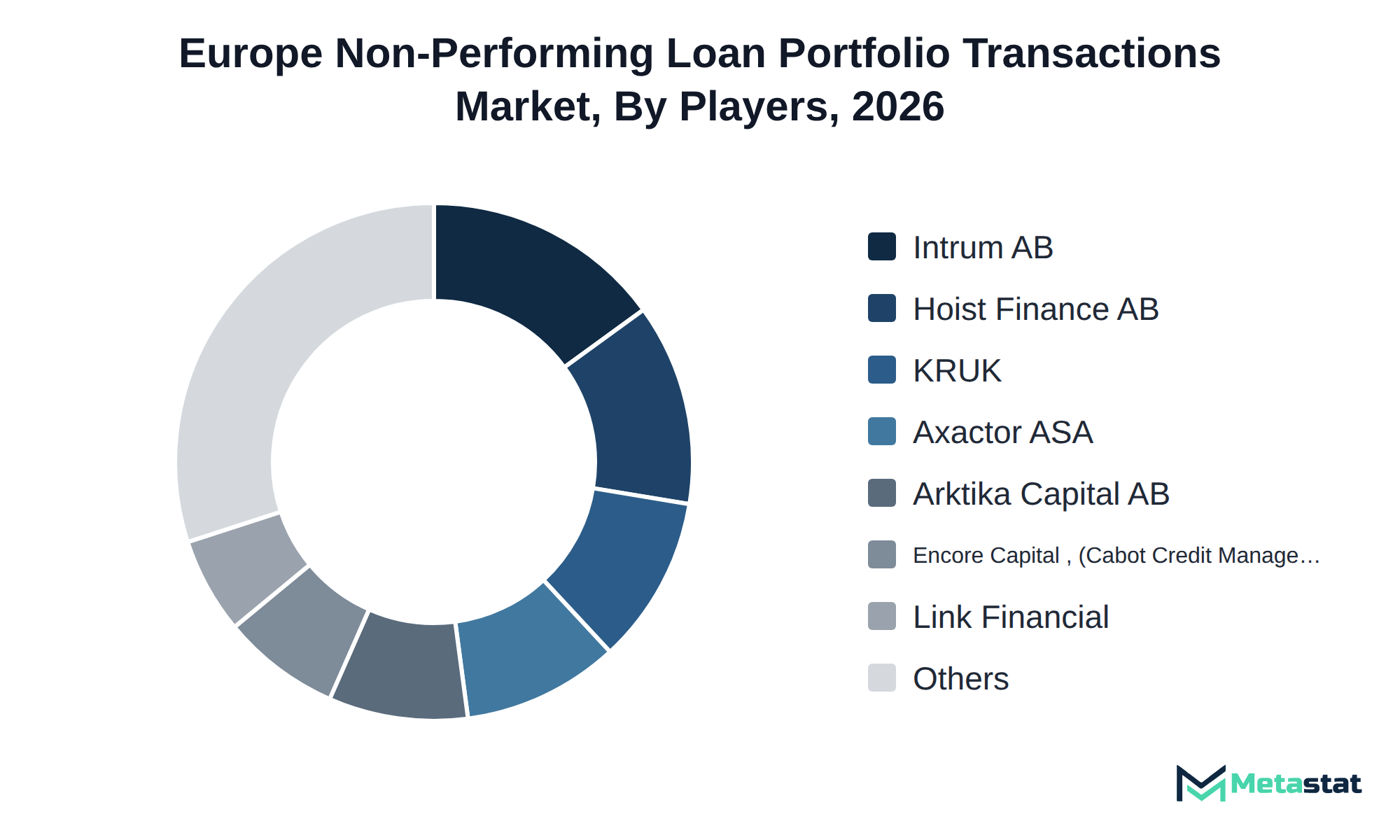
Companies in the Europe Non-Performing Loan Portfolio Transactions market adopt various strategies to differentiate themselves. Key factors influencing buyer decisions include pricing, customization, service quality, and ecosystem integration.
Competition segments into different structures, including bilateral portfolio sales and competitive portfolio auctions. Commercial and retail banks, including Arktika Capital AB and Hoist Finance AB, focus on large-scale portfolio transactions. Specialist debt investors and servicers, including KRUK S.A. and Encore Capital Group, Inc. (Cabot Credit Management), emphasize niche segments and tailored solutions to meet specific buyer needs.
Companies draw on distinct strengths to enhance their market position. For example, Intrum AB prioritizes customer-oriented service approaches, while Axactor ASA innovates in technology-driven debt recovery solutions. These strategic focuses enable companies to capture diverse segments of the market, responding to evolving buyer preferences and strengthening long-term demand.
Reaching USD 366.8 billion by 2033 requires significant advancements in the Europe Non-Performing Loan Portfolio Transactions market, particularly in unsecured consumer loans and bilateral portfolio sales. The primary risk that could impede this growth involves potential regulatory changes impacting transaction structures, particularly in key markets including Germany and France. Specifically, Germany's expected growth of its non-performing loan segment from USD 30.4 billion in 2026 to USD 53.4 billion by 2033 poses a significant opportunity and challenge, reflecting a CAGR of 8.4%. Any regulatory hurdles in these regions could slow down momentum, affecting overall market expansion.
By Loan Type: Unsecured Consumer Loans, Residential Mortgage Loans, Corporate and SME Loans, Other Secured Retail Loans, Others
By Transaction Structure: Bilateral Portfolio Sales, Competitive Portfolio Auctions, Forward-Flow Agreements, NPL Securitizations, Others
By Seller Type: Commercial and Retail Banks, Consumer Finance Lenders, Credit Card Issuers, Specialist Debt Investors and Servicers, Others
By Region: Germany, France, United Kingdom, Italy, Spain, Russia, Rest of Europe
The report strategically identifies and profiles the key market players and analyses their core competencies in each sub-segment of the Non-Performing Loan Portfolio Transactions market.
Report Attributes | Details |
Study Period | 2021-2033 |
Base Year | 2025 |
Estimated Year | 2026 |
Forecast Period | 2026-2033 |
Historical Period | 2021-2025 |
Growth Rate | CAGR 7.7% from 2026 to 2033 |
Revenue Unit | USD billion |
Segmentation | By Loan Type, Transaction Structure, Seller Type, Region, and Region |
Find answers to common questions about this report
The Non-Performing Loan Portfolio Transactions market size was valued at USD 202.6 billion in 2025.
The market is projected to grow at a CAGR of 7.7% during the forecast period from 2026 to 2033.
Unsecured Consumer Loans lead the Non-Performing Loan Portfolio Transactions market with a projected value of USD 158.2 billion by 2033, reflecting the highest growth rate among the segments.
Rising levels of consumer debt drive increased demand for unsecured consumer loans, influencing lenders to expand their portfolios. The adoption of NPL securitizations enhances liquidity for financial institutions, allowing them to manage their balance sheets more effectively.
Price sensitivity among buyers presents a significant restraint in the market, as commercial and retail banks focus on acquiring portfolios at discounted prices, which slows the adoption of new transactions. Rising servicing costs represent a considerable challenge, impacting profit margins and necessitating strategic adjustments in operations for suppliers managing non-performing loans.
Increasing demand for flexible financing options among consumers drives adoption in the unsecured consumer loans segment, projected to reach USD 158.2 billion by 2033. Financial institutions focusing on acquiring non-performing unsecured loans enhance their portfolios, supporting overall market expansion.
The Non-Performing Loan Portfolio Transactions market is estimated to reach a valuation of USD 366.8 billion by 2033.
Key players operating in the Non-Performing Loan Portfolio Transactions market include Arktika Capital AB, Hoist Finance AB, Intrum AB, KRUK S.A., Axactor ASA, B2 Impact ASA, and Arrow Global Group.
Unsecured consumer loans are projected to grow from USD 84.8 billion in 2026 to USD 158.2 billion by 2033, reflecting a compound annual growth rate of 9.3 percent.
Commercial and retail banks represent a significant seller type, with projections indicating growth from USD 150.1 billion in 2026 to USD 239 billion by 2033, a compound annual growth rate of 6.9 percent.
The analysts below cover Banking & Finance research at Metastat Insights.
LEAD ANALYST
Utkarsh Khirodkar is a Lead Market Research Analyst at MetaStat Insight, specializing in market intelligence, technology sector assessments, and competitive strategy.

PRINCIPAL CONSULTANT - ENTERPRISE AI & EMERGING TECHNOLOGIES
Banking & Finance · Electronics and Semiconductor · Energy and Power · Healthcare IT · Information & Technology · Professional Services
Vijay Gunti is a Principal Consultant at MetaStat Insight, bringing over two decades of experience across enterprise digital transformation, technology strategy, and intelligent systems.
Assessing commercial microgrid software adoption requires looking past top-level installation numbers and examining utility interconnection queues. The research provided verifiable data on average permitting timelines, tariff structures, and battery storage integration costs across regional utility territories. That grounded perspective was valuable for our team when building five-year demand projections for industrial microgrid controllers.
Ambulatory surgical centers have very different purchasing cycles for robotic-assisted surgery platforms than major hospital networks. The MetaStat Insight study focused squarely on capital expenditure depreciation, procedural reimbursement pathways, and surgeon training overhead. That operational clarity made it much simpler to validate multi-year procedure growth forecasts against actual ambulatory center adoption patterns.
When planning edge sensor rollouts across refinery environments, generic IoT reports typically miss the harsh-environment certification bottlenecks. MetaStat Insight gave an objective evaluation of ATEX and Class 1 Division 2 hardware availability, along with realistic five-year maintenance cycle cost projections. The comparison of wireless mesh versus private cellular backhaul helped our team pressure-test network reliability models for remote processing facilities.
Explore related market intelligence reports worth reading alongside this one.