
LEAD ANALYST
Utkarsh Khirodkar is a Lead Market Research Analyst at MetaStat Insight, specializing in market intelligence, technology sector assessments, and competitive strategy.

GCC Adult Diaper Market Size, Share, By Product Type (Tape-On Adult Diapers, Pull-Up Adult Diapers, Belted Adult Diapers, Reusable Adult Diapers and Others), By End User (Home Care, Hospitals and Medical Centers, Nursing Homes and Long-Term Care Facilities and Rehabilitation and Assisted Living Centers), By Distribution Channel (Pharmacies and Drugstores, Supermarkets and Hypermarkets, Online Retail and E-Commerce, Medical Supply Stores, Institutional and Direct Procurement and Others), By Region (Saudi Arabia, United Arab Emirates, Kuwait, Qatar and Oman), Industry Analysis, Growth, Trends, and Forecast, 2026-2033
Report ID
MSI-5553
Published
October, 2026
Pages
280 Pages
Format
Historical
Base year
Forecast
Forecast period
Report Details
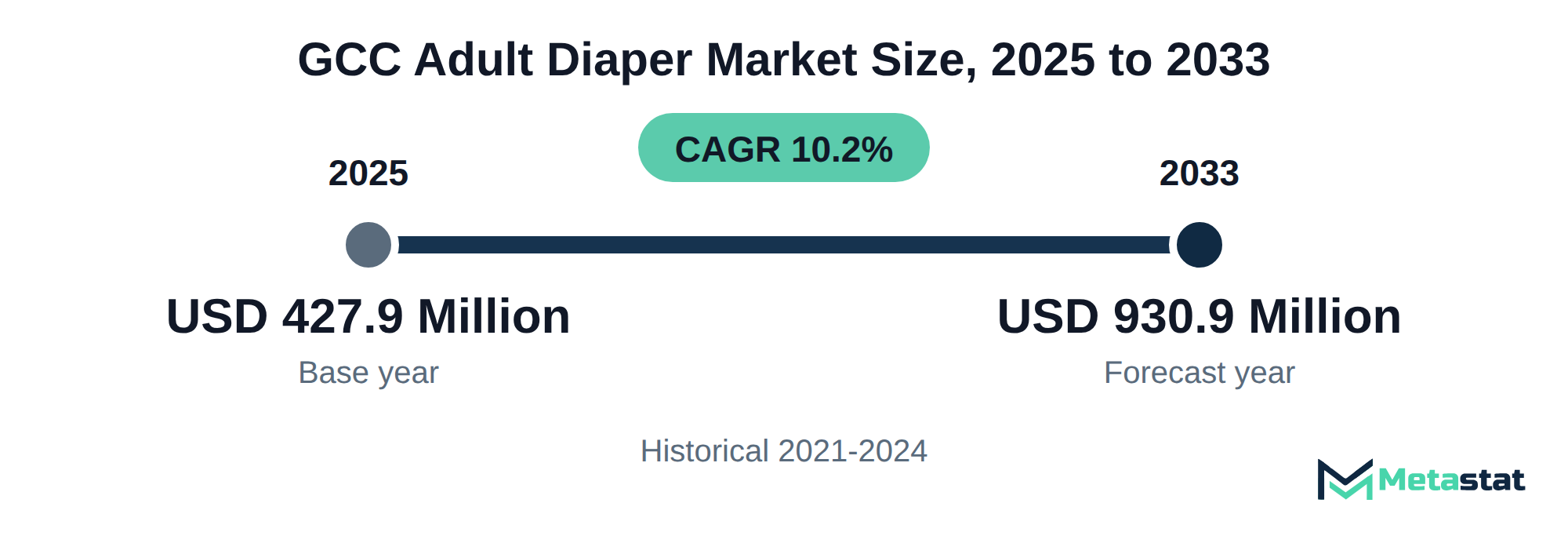
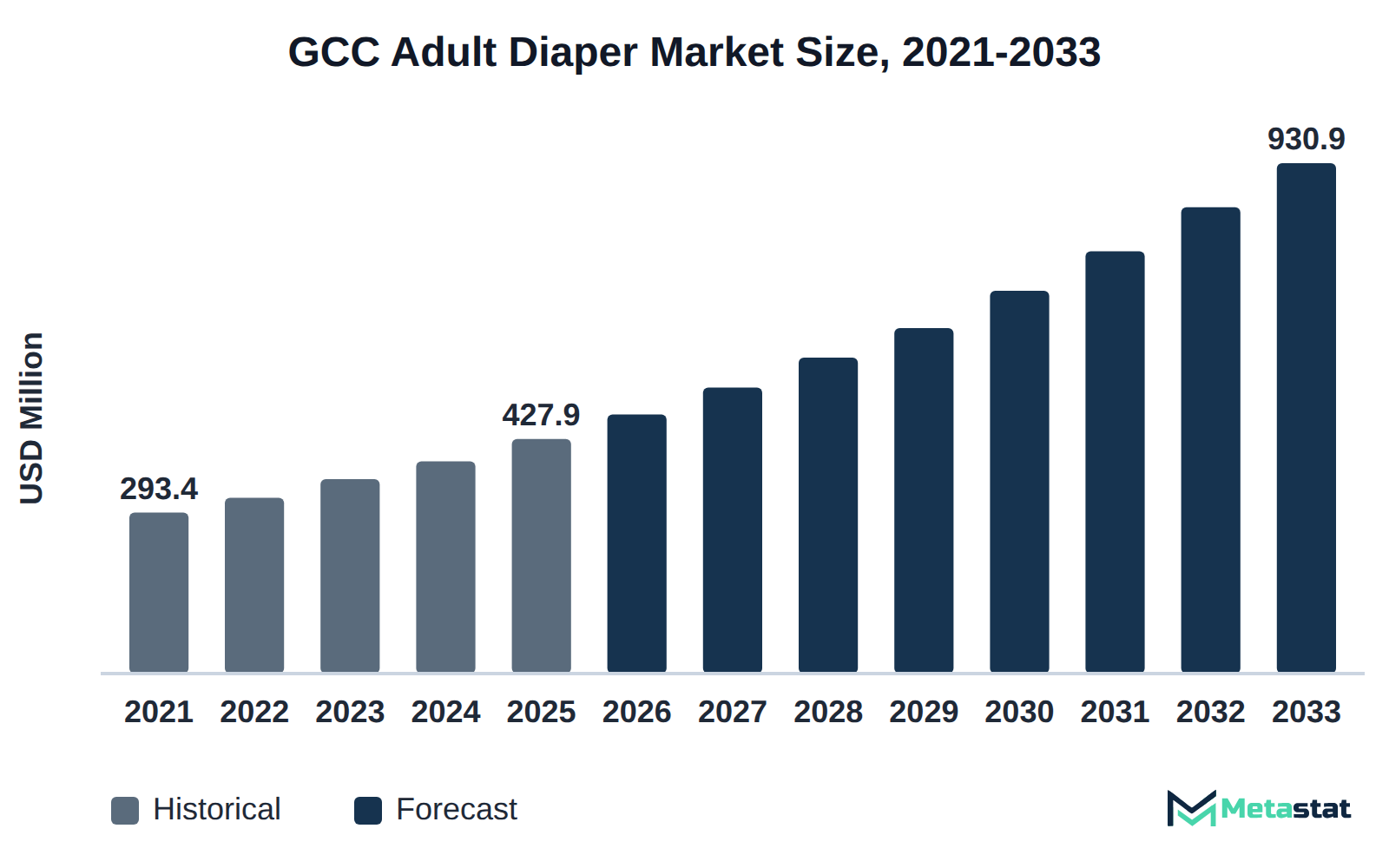
Market Valuation: Valued at $427.9 Million in 2025, projected to reach $930.9 Million by 2033 at a 10.2% CAGR.
Dominant Segment: The pull-up adult diapers segment leads the market, driven by increasing consumer preference for convenience and discreet options, projected to reach USD 406.3 million by 2033.
Geographic Lead: Saudi Arabia holds the largest market share, fueled by a growing aging population and significant investments in healthcare infrastructure.
What's Inside: The report provides a comprehensive analysis of the GCC Adult Diaper market, including competitive coverage, segmentation by product type, end user, and distribution channel, along with forecasts through 2033.
E-Commerce Expansion: The online retail and e-commerce channel is set to grow significantly, reaching USD 231.5 million by 2033, reflecting changing consumer purchasing preferences towards convenience and anonymity.
Healthcare Infrastructure Impact: The expansion of healthcare facilities in Saudi Arabia and the UAE is driving demand for institutional adult diapers, as these facilities seek to enhance patient comfort and care.
Choose Your License
GCC Adult Diaper Market
The GCC Adult Diaper market was valued at USD 427.9 million in 2025 and is projected to reach USD 930.9 million by 2033, growing at a CAGR of 10.2% over the forecast period.
The GCC Adult Diaper market covers products designed to provide comfort and hygiene for adults with varying needs. Buyers invest in these products primarily to enhance the quality of life for individuals facing mobility challenges, incontinence issues, or those requiring long-term care. The market includes various product types, including tape-on, pull-up, belted, and reusable adult diapers, each catering to different user preferences and requirements. Demand from elderly users also connects these products to the wider senior care product industry.
Several factors support market growth, and rising awareness of personal hygiene and comfort is a significant driver. The pull-up adult diapers segment is projected to experience the highest value growth, reflecting a shift towards more convenient and discreet options for consumers. Saudi Arabia stands out as the region with the largest market share, driven by an increasing aging population and changing lifestyles.
Innovations in product design and materials contribute to the expansion of the market. Manufacturers focus on enhancing absorbency, comfort, and skin-friendliness, which appeals to both caregivers and end-users alike. The continuous development of e-commerce platforms provides additional accessibility, allowing consumers to purchase these products with ease, thereby supporting market growth.
The GCC Adult Diaper market addresses the increasing demand for effective incontinence solutions among various demographics. Buyers invest in these products to enhance comfort, maintain hygiene, and improve quality of life, particularly for elderly individuals and those with medical conditions. The market serves a wide audience, including home care settings, hospitals, and long-term care facilities, reflecting the growing recognition of adult incontinence as a significant health issue. Clinical products for managing the same condition are tracked within the incontinence devices industry.
The rising elderly population and increased awareness of incontinence-related needs drive growth. Among the product segments, Pull-Up Adult Diapers (Disposable Pants) holds the largest value share, catering to consumers seeking discreet and convenient options. Saudi Arabia holds the largest market share in the GCC region, highlighting the nation's focus on healthcare improvements and increased spending on personal care products.
Ongoing innovations in product design and materials contribute to market expansion, with manufacturers focusing on comfort, absorbency, and skin-friendliness. These advancements attract consumers, leading to higher adoption rates of adult diapers. Demographic shifts and evolving consumer preferences continue to drive significant growth in the GCC Adult Diaper market.
The GCC Adult Diaper market experiences a significant shift towards the adoption of pull-up adult diapers, driven by their ease of use and improved comfort. Forecasted growth highlights that the pull-up adult diapers segment is set to reach USD 406.3 million by 2033, reflecting a compound annual growth rate of 13.2%. This product type caters particularly well to the aging population and individuals with mobility challenges, enhancing their independence and lifestyle.
The rising preference for high-absorbency incontinence products further supports this trend, with consumers seeking reliable solutions that ensure comfort and dignity. Increasing awareness of incontinence issues and the benefits of advanced materials strengthens demand for these products. The market is expected to continue expanding, driven by innovations in technology that improve product performance and user experience.
This shift towards pull-up adult diapers and high-absorbency options addresses the growing needs of end users and presents commercial opportunities for manufacturers and retailers. Enhanced product offerings lead to increased market penetration and ultimately drive revenue growth in the GCC Adult Diaper market.
The surge in e-commerce has transformed purchasing behaviors within the GCC Adult Diaper market. In 2023, the online retail and e-commerce distribution channel is projected to account for a significant portion of sales, with an anticipated value of USD 231.5 million by 2033. This shift towards digital platforms results from increasing consumer comfort with online transactions, driven by convenience and accessibility.
Consumers increasingly prefer the anonymity and ease of purchasing adult diapers online, facilitating access to a broader range of products. E-commerce platforms provide detailed product information, reviews, and competitive pricing, enabling buyers to make informed decisions. This trend highlights a transition away from traditional purchasing methods, including pharmacies and supermarkets, with the latter projected to reach USD 202.6 million by 2033.
The growth of online sales enhances accessibility for consumers and prompts manufacturers to adopt innovative pricing and contract models. Competitive pricing strategies emerge as online retailers vie for market share, impacting profit margins across the supply chain. Brands that succeed online strengthen their market position and drive overall growth in the adult diaper segment.
The expansion of healthcare infrastructure in Saudi Arabia and the United Arab Emirates significantly influences the demand for institutional adult diapers in the GCC Adult Diaper market. This growth results from governmental investments in healthcare facilities, creating a need for enhanced patient care equipment, including adult diapers.
In Saudi Arabia, the market for adult diapers is projected to reach USD 462.1 million by 2033, reflecting a compound annual growth rate (CAGR) of 10.5% from 2026. The increased number of hospitals and medical centers requires these products to ensure patient comfort and hygiene, particularly for the elderly and those with disabilities. The growing trend toward home-based care services drives demand for adult diapers, with caregivers seeking effective solutions for in-home patient management.
Healthcare facilities prioritize durable and high-quality adult diapers to enhance patient outcomes and operational efficiency. Consequently, suppliers face opportunities to expand their product offerings, catering specifically to hospitals and long-term care facilities that require reliable and comfortable solutions. A focus on institutional needs positions companies for sustained growth within the market.
The increasing number of aging individuals significantly impacts demand for adult diapers in GCC countries. Projections indicate that the home care segment is expected to reach USD 571.8 million by 2033, demonstrating a compound annual growth rate of 10.8%. This growth results from a rise in the elderly population requiring daily assistance, particularly in home healthcare settings. Demand from aged care providers is closely tied to this demographic change.
Healthcare providers and families prioritize comfort and dignity for elderly individuals, leading to heightened interest in adult diapers designed for home use. Home care services focus on enhancing the quality of life for seniors, and the right products facilitate this objective. The shift toward home healthcare services aligns with changing cultural attitudes, where families increasingly assume caregiving responsibilities.
In the GCC Adult Diaper market, demand for tailored solutions that address the specific needs of elderly users directly influences manufacturers and suppliers. Companies focusing on comfort, absorbency, and ease of use capture a larger share of this growing market segment. This trend emphasizes the need for innovative products that enhance the experience for both caregivers and users, ensuring sustained growth in the coming years.
The aging population significantly influences spending patterns among consumers in the GCC. Increased life expectancy leads to a higher number of elderly individuals who often require incontinence products, driving demand among home care providers and families. This demographic shift results in larger volumes purchased, reflecting a growing awareness of the need for comfort and hygiene in daily living. In 2025, the market is projected to reach USD 427.9 million, with significant anticipated growth due to these factors. The GCC Adult Diaper market is set to expand while home care becomes increasingly vital, leading to heightened demand for versatile products that cater to the needs of older adults.
An increase in disposable income allows families to prioritize spending on high-quality adult diapers. This trend highlights a shift in consumer behavior, where buyers focus on products that enhance quality of life for aging individuals. The market is expected to experience a compound annual growth rate of 10.2%, indicating growth potential.
Technological advancements in adult diaper design significantly enhance product effectiveness, contributing to growth in the GCC Adult Diaper market. Innovations including improved absorbency materials and skin-friendly fabrics address consumer preferences for comfort and hygiene. Non-woven airlaid products for hygiene are a related material category in the value chain. The integration of features like odor control and leak protection improves the overall user experience, particularly among aging populations and individuals with specific health conditions.
Manufacturers focus on developing superior product lines to meet the increasing demand for high-quality incontinence solutions. The shift towards more discreet and user-friendly designs enhances appeal among various consumer segments. The competitive landscape drives continuous improvements, leading to greater differentiation among products. Consumers benefit from a wider selection of adult diapers tailored to their specific needs.
The emphasis on sustainability is gaining traction, with suppliers exploring eco-friendly materials and production methods. This shift attracts environmentally-conscious consumers and positions companies strategically for future growth in this evolving market. Innovations in product features significantly influence adoption rates and support market expansion through 2033.
Price sensitivity among consumers presents a notable restraint in the GCC Adult Diaper market. Home care segments, particularly those seeking disposable options, often experience delayed purchases due to high product costs. The financial burden associated with frequent replacement of adult diapers influences consumer choices, leading to lower order volumes and slower adoption of premium products. In nursing homes and long-term care facilities, budget constraints restrict procurement processes, resulting in smaller orders and a preference for lower-cost alternatives. This pattern impacts suppliers, who face challenges in justifying price increases or introducing innovative products. The market's growth trajectory is affected by these pricing dynamics, influencing overall demand and the competitive landscape. Addressing these cost concerns through targeted pricing strategies or value propositions could stimulate market activity and enhance consumer confidence in purchasing decisions.
Soaring input costs represent a significant challenge for suppliers delivering products in the GCC Adult Diaper market. Factors including increasing prices for raw materials and transportation contribute to rising operational expenditures. Manufacturers often find it difficult to absorb these costs fully, leading to tighter profit margins. To address this issue, suppliers implement various strategies, including optimizing production processes and using economies of scale. These tactics enable manufacturers to mitigate the impact of rising costs and maintain competitiveness in the market. Several suppliers explore alternative materials that offer cost savings without compromising product quality. This shift toward more cost-effective solutions aligns with consumer demand for affordable products, further influencing purchasing decisions throughout the market.
The significant growth of pull-up adult diapers, projected to reach USD 406.3 million by 2033, highlights an emerging opportunity within the GCC Adult Diaper market. Increasing preference for discreet and user-friendly incontinence solutions among consumers drives this demand, particularly among home care end users. This trend reflects a broader shift in consumer behavior, prioritizing convenience and comfort in product selection. Growing acceptance of pull-up designs aligns with evolving lifestyles and personal care standards, allowing for greater adoption across various demographics.
Home care facilities and individual consumers are the primary drivers of this demand. Enhanced product features, including improved absorbency and ease of use, contribute to heightened consumer confidence in these products. With a compound annual growth rate (CAGR) of 13.2% for this segment, manufacturers focusing on pull-up adult diapers stand to capture substantial market share and expand their offerings effectively. The market exhibits potential for innovation within this segment, emphasizing the importance of addressing consumer needs through targeted product development.
The GCC Adult Diaper market is segmented based on Product Type, End User, Distribution Channel, and Region.
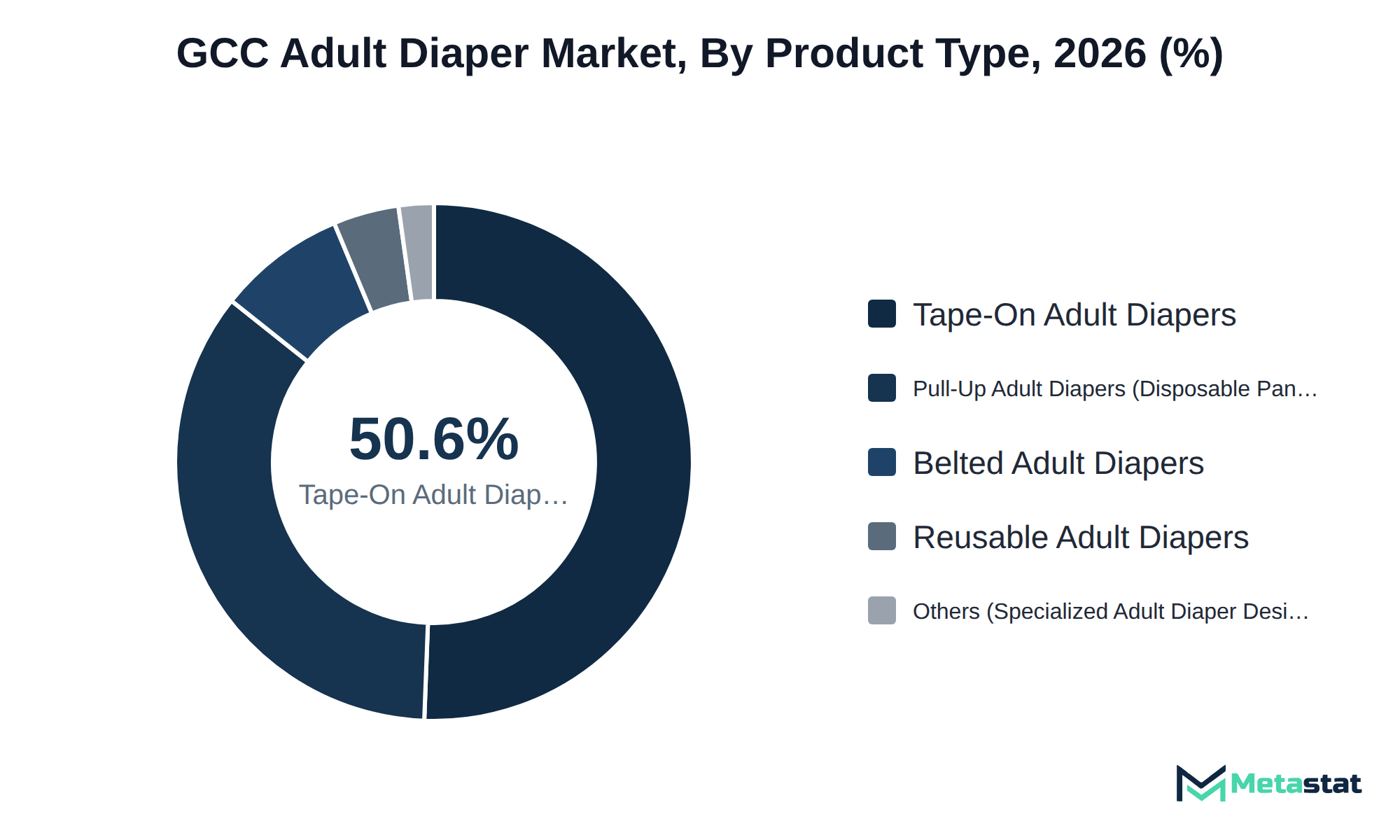
Tape-On Adult Diapers segment is valued at USD 235.6 million in 2026 and is projected to reach USD 402.9 million by 2033, at a CAGR of 8% during the forecast period. This segment primarily serves individuals who require reliable incontinence solutions, including those in home care settings. Demand for Tape-On Adult Diapers is driven by increasing awareness of hygiene and comfort among users, particularly among elderly populations. Compared to other segments, including Pull-Up Adult Diapers, this segment experiences slower growth, attributed to varying consumer preferences and the specific needs of end users. The market's focus on improving product design and functionality further contributes to its competitive landscape, ensuring that Tape-On Adult Diapers remain a vital choice for consumers seeking dependable incontinence products.
This product type primarily serves adults who require convenience and discretion while managing incontinence. Increasingly, home care settings and assisted living facilities adopt these products due to their ease of use and comfort. Growth in this segment is driven by rising awareness of hygiene and improved standards of living, particularly among aging populations. Demand for pull-up adult diapers surpasses other segments due to their user-friendly design and favorable pricing. Compared to Tape-On Adult Diapers, which exhibit a slower growth rate of 8%, the pull-up segment’s higher CAGR highlights its growing importance in the GCC Adult Diaper market. The market experiences continuous innovation, enhancing product comfort and effectiveness, further increasing adoption rates.
Belted Adult Diapers segment is expected to reach USD 62.5 million by 2033. These products serve individuals requiring additional support and protection against incontinence, commonly used in nursing homes, long-term care facilities, and for home care. Demand for this segment is driven by the growing aging population and the increasing prevalence of chronic health conditions leading to incontinence. The segment experiences slower growth compared to pull-up adult diapers, which are projected to grow at a CAGR of 13.2%. While belted adult diapers provide a viable solution for users, their adoption remains limited compared to alternatives due to specific design preferences and user comfort. This distinction highlights different buyer dynamics, with several consumers favoring the convenience and ease of pull-up options. The GCC Adult Diaper market reflects diverse consumer preferences based on functionality and comfort, influencing purchasing decisions across various segments.
Reusable Adult Diapers are projected to grow at a CAGR of 7.4% during the forecast period. This segment primarily serves individuals with long-term incontinence needs, providing a sustainable alternative to disposable options. Home care settings and medical facilities utilize these products due to their cost-effectiveness and reduced environmental impact. The increasing emphasis on sustainability drives demand for reusable options, appealing to environmentally conscious buyers. Compared to other product types, reusable adult diapers typically feature a lower price point over the long term, although initial purchase costs are higher than those of disposable alternatives. This segment differs from tape-on and pull-up adult diapers, which experience faster growth rates, highlighting a shift in consumer preferences within the GCC Adult Diaper market. Healthcare systems are evolving, and the adoption of reusable products is expected to expand, driven by a combination of consumer awareness and institutional support. Reusable products also create a need for laundering, which connects this segment to medical laundry services.
Specialized adult diaper designs cater to unique needs, focusing on comfort and functionality for users requiring specific features. These products serve various demographics, including individuals with mobility challenges or particular medical conditions. One demand driver for this segment involves the rising awareness of personalized care solutions among caregivers and health professionals. This trend highlights the importance of tailored products that meet individual requirements. Unlike other product types, including pull-up or tape-on diapers, specialized designs attract a niche market, leading to slower growth rates. Their pricing strategy typically reflects the added value of unique features, impacting overall market dynamics. The GCC Adult Diaper market experiences a nuanced evolution as specialized adult diaper designs gain attention for their ability to address specific consumer needs.
This segment primarily serves individuals requiring assistance with incontinence management, predominantly elderly consumers and those with specific medical conditions. The rising prevalence of chronic illnesses and an aging population significantly drive demand for home care solutions. Compared to other segments, including Hospitals and Medical Centers, Home Care demonstrates a higher growth rate due to the increasing shift towards at-home care solutions. The segment benefits from the growing acceptance of incontinence products among caregivers and family members, further propelling its expansion. While the market evolves, Home Care continues to differentiate itself through personalized care solutions that cater to individual needs.
Hospitals and Medical Centers segment is estimated to reach USD 212.6 million by 2033, at a CAGR of 9% during the forecast period. This segment serves healthcare facilities that require reliable and effective solutions for incontinence management among patients. Increased patient admissions and a heightened focus on quality care drive demand for adult diapers in hospitals and medical centers. This segment experiences steady growth, driven by the need for hygienic and comfortable products that enhance patient dignity. Compared to other segments, including Home Care, which is expected to grow at a CAGR of 10.8%, the Hospitals and Medical Centers segment exhibits a slower growth trajectory. However, consistent demand for medical supplies in these facilities ensures a stable market presence, supporting overall growth in the GCC Adult Diaper market.
Nursing Homes and Long-Term Care Facilities segment is expected to reach USD 94.7 million by 2033. This segment primarily serves elderly individuals who require ongoing assistance and care, ensuring comfort and hygiene for residents with limited mobility or incontinence issues. Factors driving growth in this segment include rising demand for quality care in such facilities and increasing focus on patient-centered services. Unlike other segments, this one experiences steady expansion, primarily due to the growing population of elderly individuals requiring specialized care, which differs from the faster-growing home care segment, projected to reach USD 571.8 million by 2033 at a CAGR of 10.8%. Investments in training staff and improving facility standards contribute to operational costs in this segment, impacting overall pricing dynamics in the market.
The Rehabilitation and Assisted Living Centers segment is projected to grow at a CAGR of 11% during the forecast period. This segment focuses on providing care for individuals who require supervision and assistance due to various health conditions. These centers use adult diapers to enhance the comfort and hygiene of residents, facilitating easier care. Rehabilitation settings also form part of the wider post-acute care pathway. The growth of this segment is primarily driven by an increasing elderly population requiring specialized care. Compared to other segments, this segment shows faster growth, with a projected value reaching USD 94.7 million by 2033. The demand for high-quality and comfortable products distinguishes this segment from others, where price sensitivity limits growth. In the GCC Adult Diaper market, advancements in product design that enhance comfort and fit specifically cater to the needs of residents in these facilities.
Pharmacies and Drugstores segment is valued at USD 147.4 million in 2026 and is projected to reach USD 262 million by 2033, at a CAGR of 8.6% during the forecast period. This channel serves consumers seeking convenient access to adult diapers, particularly those prioritizing immediate purchases. The increasing awareness of adult incontinence among the population drives demand in this segment, supported by the growing number of retail outlets. Compared to other distribution channels, pharmacies and drugstores exhibit slower growth than online retail and e-commerce, which is projected to reach USD 231.5 million by 2033. The emphasis on in-store consultations and immediate availability distinguishes this channel from others, effectively catering to consumers who prefer personal assistance while purchasing. The market benefits from the need for readily accessible products, ensuring a steady flow of consumers requiring adult diapers for various needs.
Supermarkets and Hypermarkets segment is estimated to reach USD 202.6 million by 2033, at a CAGR of 8.4% during the forecast period. This segment primarily serves consumers seeking convenience in purchasing adult diapers, often providing a wide range of products under one roof. The increasing preference for one-stop shopping drives foot traffic, enabling consumers to access various options from multiple brands. The growth rate in this segment is slower than that of Pull-Up Adult Diapers, which are expanding at a CAGR of 13.2%. A key factor influencing this segment is the growing health awareness among consumers, which strengthens demand for quality products. The market features competition among various retail channels, yet Supermarkets and Hypermarkets remain favored due to their accessibility. This segment serves a critical function in the GCC Adult Diaper market by catering to diverse consumer preferences while ensuring availability and convenience.
The Online Retail and E-Commerce segment is expected to reach USD 231.5 million by 2033. This segment facilitates convenient purchasing options for consumers, particularly those in need of adult diapers for personal care. Increasing digital penetration and a shift towards online shopping drive growth in this segment, appealing to various buyer groups, including caregivers and individuals seeking discreet purchasing methods. The segment exhibits a notable growth trajectory, distinct from traditional retail channels, with a higher projected CAGR of 8.6% compared to pharmacies and drugstores. The emphasis on convenience and accessibility positions this sub-segment favorably in the GCC Adult Diaper market, reflecting evolving consumer preferences for online purchasing experiences.
The Medical Supply Stores segment is projected to grow at a CAGR of 7.6% during the forecast period. This segment serves patients and healthcare providers seeking specialized products that enhance comfort and hygiene. The rising prevalence of chronic illnesses and an aging population drive demand for adult diapers through these retail channels. Compared to other segments, Medical Supply Stores typically offer a more focused selection of high-quality products, appealing to a specific customer base that prioritizes functionality and reliability. In contrast, Pharmacies and Drugstores cater to a broader market with varying price points and selections, impacting their growth trajectories. Therefore, the differentiated focus of Medical Supply Stores contributes to its unique positioning within the GCC Adult Diaper market.
Institutional and Direct Procurement focuses on supplying adult diapers directly to institutions, including hospitals, nursing homes, and rehabilitation centers. This segment ensures that these facilities have the necessary products for their patients and residents. Demand for these products is influenced by the increasing prevalence of chronic illnesses and the aging population requiring long-term care. Unlike retail-focused segments, this sub-segment highlights bulk purchasing and long-term contracts, which often result in different pricing structures. Institutional buyers often manage these purchases within wider healthcare supply chain management processes. The market for institutional procurement typically exhibits steady demand, influenced by healthcare regulations and institutional budgets. This segment operates under unique dynamics compared to retail channels, emphasizing consistency and reliability in supply, which impacts overall demand in the GCC Adult Diaper market.
Specialized retailers serve a distinct role in the distribution of adult diapers, catering to niche markets and specific consumer needs. These retailers focus on personalized service and product variety, appealing to customers seeking specialized solutions not available through larger channels. Demand is driven by increasing awareness of adult incontinence products and growing preference for tailored options among users. This segment differs from others, including online retail and pharmacies, by prioritizing customer interaction and specialized knowledge, often resulting in higher prices for these products. Specialized retailers enhance access to unique features and premium options that are not widely available in more conventional distribution channels. Their influence in the GCC Adult Diaper market reflects a shift toward personalized healthcare solutions, aligning with consumer preferences for tailored and effective product offerings.
This segment serves various users, primarily involving elderly individuals and individuals with disabilities requiring assistance. Growing awareness regarding hygiene and comfort drives demand, particularly in home care settings and healthcare facilities. The increasing aging population in Saudi Arabia significantly influences market growth. This segment's growth rate reflects robust consumer demand, with a CAGR of 10.5%, highlighting its importance in the GCC Adult Diaper market. Strong investment in healthcare infrastructure further supports expansion, facilitating access to essential products and services for end-users.
United Arab Emirates segment is estimated to reach USD 246.5 million by 2033, at a CAGR of 10.8% during the forecast period. This segment includes various types of adult diapers primarily in home care settings, hospitals, and rehabilitation centers. The increasing aging population and rising awareness about personal hygiene significantly drive growth in this segment. Demand for innovative and comfortable products positions this segment for strong expansion compared to others in the region. The growth rate of 10.8% aligns closely with the overall market trajectory, indicating strong consumer acceptance and a shift toward higher-quality disposable options. Consequently, product differentiation and brand loyalty are critical factors influencing purchasing decisions.
Kuwait segment is expected to reach USD 82.9 million by 2033. This segment serves the elderly population, patients with mobility challenges, and individuals requiring in-home care. The growing elderly population in Kuwait significantly influences market growth. Factors including rising disposable income and changes in consumer attitudes toward incontinence products support adoption. Compared to other segments, the growth rate in Kuwait is moderate, with unique consumer preferences dictating product selection. The GCC Adult Diaper market experiences varied growth based on regional demographics, with Kuwait showing a distinct pattern driven by health trends and cultural factors. The emphasis on product quality and comfort highlights the increasing importance of consumer satisfaction in this segment.
Qatar is projected to grow at a CAGR of 9% during the forecast period. The segment primarily serves individuals requiring assistance with personal care, including the elderly and those with disabilities. Increasing awareness of hygiene and comfort drives demand for adult diapers in this region, particularly within home care settings. The segment distinguishes itself through its growth potential, supported by rising healthcare expenditures and a growing aging population. Comparatively, other segments including Home Care exhibit a higher growth rate of 10.8%. The shift toward more convenient and comfortable solutions contributes to greater adoption rates, enhancing overall demand in the GCC Adult Diaper market.
Oman is a distinct market for adult diapers, characterized by unique consumer requirements and healthcare dynamics. This segment finds applications primarily in home care settings, hospitals, and long-term care facilities. The increasing elderly population drives demand for adult diapers, emphasizing comfort and hygiene. Significant growth within the segment reflects rising awareness of personal care needs, alongside improved healthcare facilities that enhance accessibility to these products. Unlike other regions, Oman presents a slower growth trajectory, attributed to varying levels of healthcare infrastructure and purchasing power among consumers. Buyers in this market prioritize affordability and availability, influencing purchasing patterns and brand preferences. The GCC Adult Diaper market evolves in response to these local factors, making Oman a critical study in understanding regional market trends.
Bahrain's adult diaper segment serves individuals requiring discreet and reliable incontinence solutions. This segment caters to various consumer groups, including elderly individuals and those with medical conditions, emphasizing comfort and ease of use. The increasing prevalence of age-related health issues and awareness surrounding incontinence drive demand for this segment. Bahrain's market remains distinct within the GCC Adult Diaper market due to its smaller size, leading to different pricing strategies compared to larger markets like Saudi Arabia and the United Arab Emirates. The focus on localized healthcare needs and tailored products enhances adoption, positioning this segment uniquely against others in its group.
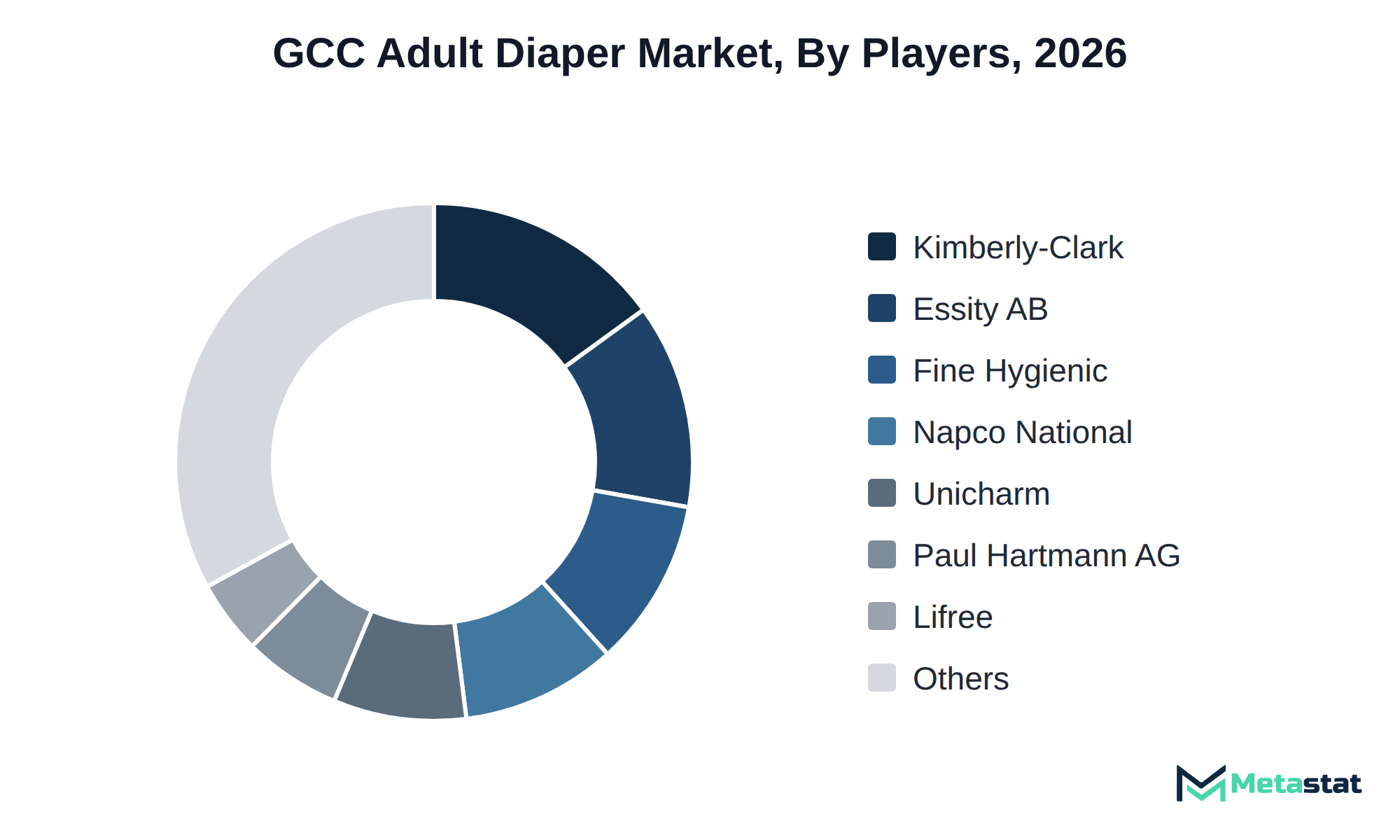
The GCC Adult Diaper market features a diverse competitive landscape, with companies employing various strategies to capture market share. Key factors influencing buyers include price, product certification, customization, and overall service quality. Companies often tailor their offerings to meet the specific demands of different end users, including home care, hospitals, and nursing facilities.
Napco National focuses on delivering a range of adult diaper products, while Fine Hygienic Holding emphasizes high-quality materials and sustainability in its offerings. Kimberly-Clark Corporation stands out with its commitment to innovation and strong branding, appealing to consumers seeking reliable and effective solutions. Regional players like Lifree and CooshCare prioritize localized product features and customer service, enhancing their appeal to specific market segments.
Essity AB and Unicharm Corporation use their extensive distribution channels to reach a broader audience, ensuring product availability across retail and online platforms. Paul Hartmann AG and Sanita target niche markets, providing specialized adult diaper solutions that cater to unique end-user needs. This competitive dynamic drives growth within the GCC Adult Diaper market, with companies adapting to evolving consumer preferences and regulatory standards.
Reaching USD 930.9 million by 2033 depends on several key developments within the GCC Adult Diaper market. Significant growth in the Home Care segment is expected, driven by an increasing aging population and rising awareness of incontinence issues. This segment's expansion is projected to accelerate, aiming for USD 571.8 million by 2033. In the Product Type category, the Pull-Up Adult Diapers segment is anticipated to experience rapid growth at a CAGR of 13.2%, reaching USD 406.3 million by 2033. The market relies on increased penetration of online retail and e-commerce channels, providing consumers with greater access to products.
Potential risks could hinder this growth trajectory. Economic fluctuations or shifts in consumer preferences impact the overall demand for adult diapers, particularly in regions like Saudi Arabia and the United Arab Emirates, which hold substantial market shares. Addressing these challenges is necessary for the GCC Adult Diaper market to realize its forecasted potential.
By Product Type: Tape-On Adult Diapers, Pull-Up Adult Diapers (Disposable Pants), Belted Adult Diapers, Reusable Adult Diapers, Others (Specialized Adult Diaper Designs)
By End User: Home Care, Hospitals and Medical Centers, Nursing Homes and Long-Term Care Facilities, Rehabilitation and Assisted Living Centers
By Distribution Channel: Pharmacies and Drugstores, Supermarkets and Hypermarkets, Online Retail and E-Commerce, Medical Supply Stores, Institutional and Direct Procurement, Others (Specialized Retailers)
By Region: Saudi Arabia, United Arab Emirates, Kuwait, Qatar, Oman, Bahrain
The report strategically identifies and profiles the key market players and analyses their core competencies in each sub-segment of the Adult Diaper market.
Report Attributes | Details |
Study Period | 2021-2033 |
Base Year | 2025 |
Estimated Year | 2026 |
Forecast Period | 2026-2033 |
Historical Period | 2021-2025 |
Growth Rate | CAGR 10.2% from 2026 to 2033 |
Revenue Unit | USD million |
Segmentation | By Product Type, End User, Distribution Channel, Region, and Region |
Find answers to common questions about this report
The Adult Diaper market size was valued at USD 427.9 million in 2025.
The market is projected to grow at a CAGR of 10.2% during the forecast period from 2026 to 2033.
Tape-On Adult Diapers lead the market with a projected value of USD 402.9 million by 2033. This segment's growth reflects a compound annual growth rate of 8 percent during the forecast period.
Key drivers for the GCC Adult Diaper market include the aging population, which increases demand for incontinence products, and technological advancements in product design that enhance effectiveness. These factors contribute to a projected market growth rate of 10.2% through 2033.
Price sensitivity among consumers restrains growth in the Adult Diaper market, with high product costs leading to delayed purchases and lower order volumes. Soaring input costs challenge suppliers, affecting profit margins and complicating efforts to maintain competitiveness.
Several factors favor adoption in the GCC Adult Diaper market. The aging population drives demand for incontinence products, while increased disposable income allows families to prioritize high-quality options. Technological advancements in product design enhance comfort and effectiveness, further supporting consumer acceptance and adoption.
The Adult Diaper market is estimated to reach a valuation of USD 930.9 million by 2033.
Key players operating in the Adult Diaper market include Napco National, Fine Hygienic Holding, Essity AB, Kimberly-Clark Corporation, Unicharm Corporation, Paul Hartmann AG, Lifree, and Nahdi.
The pull-up adult diaper segment is projected to reach USD 406.3 million by 2033, reflecting a growing preference for discreet and user-friendly incontinence solutions.
The home care segment exhibits the highest growth, expected to expand from USD 279.3 million in 2026 to USD 571.8 million by 2033, driven by increasing demand for incontinence products.
The analysts below cover Medical Devices research at Metastat Insights.
LEAD ANALYST
Utkarsh Khirodkar is a Lead Market Research Analyst at MetaStat Insight, specializing in market intelligence, technology sector assessments, and competitive strategy.

LEAD PRINCIPAL ANALYST, PHARMA AND HEALTHCARE
Food and Beverages · Healthcare · Healthcare IT · Medical Devices
Ajay Devgire is the Lead Healthcare Analyst at MetaStat Insight, leading strategic research and market intelligence initiatives across the global healthcare domain.

SENIOR RESEARCH ANALYST
Biotechnology · Food and Beverages · Medical Devices · Packaging
Snehal Pasalkar is a Research Analyst at MetaStat Insight, operating at the intersection of life sciences research, competitive strategy, and market intelligence.
When planning edge sensor rollouts across refinery environments, generic IoT reports typically miss the harsh-environment certification bottlenecks. MetaStat Insight gave an objective evaluation of ATEX and Class 1 Division 2 hardware availability, along with realistic five-year maintenance cycle cost projections. The comparison of wireless mesh versus private cellular backhaul helped our team pressure-test network reliability models for remote processing facilities.
In the biological seed treatment space, registration timelines vary drastically between the European Union, Brazil, and North America. The MetaStat Insight research handled these cross-border regulatory barriers with genuine nuance, mapping commercialization pathways alongside historical field adoption rates. The segmentation between microbial strains and biochemical active ingredients was particularly well structured.
Our team was tracking whether regional recycling infrastructure could realistically absorb the growing volume of lithium iron phosphate batteries over the next decade. The report did a solid job separating announced hydrometallurgical plant capacity from active, permitted operational throughput. That distinction made the feedstock availability projections and regional recovery rate models far more credible than standard commercial overviews.
Explore related market intelligence reports worth reading alongside this one.