
LEAD ANALYST
Utkarsh Khirodkar is a Lead Market Research Analyst at MetaStat Insight, specializing in market intelligence, technology sector assessments, and competitive strategy.

Global High Voltage Power Supply Market Size, Share, By Product Type (DC High Voltage Power Supplies, AC High Voltage Power Supplies, Pulsed High Voltage Power Supplies), By Output Voltage (Up to 10 kV, Above 10 kV to 50 kV, Above 50 kV to 100 kV, Above 100 kV to 200 kV, Above 200 kV), By Application (Electrostatic Precipitation, X-Ray Generation, Electron and Ion Beam Processing, Plasma Generation and Processing, Analytical Instrumentation and Detector Biasing, Electrostatic Charging and Separation, Capacitor Charging, Dielectric and Insulation Testing, Others (Electrospinning, Electrophoresis, High-Voltage Device Biasing)), By End-Use Industry (Industrial Manufacturing, Semiconductor and Electronics, Healthcare and Medical Equipment, Environmental Protection and Pollution Control, Research and Academic Institutions, Aerospace and Defense, Energy and Power Generation, Analytical Instrumentation and Laboratory Equipment, Others (Specialized OEMs and Emerging Applications)), Industry Analysis, Growth, Trends, and Forecast, 2026-2033
Report ID
MSI-5549
Published
October, 2026
Pages
301 Pages
Format
Historical
Base year
Forecast
Forecast period
Report Details
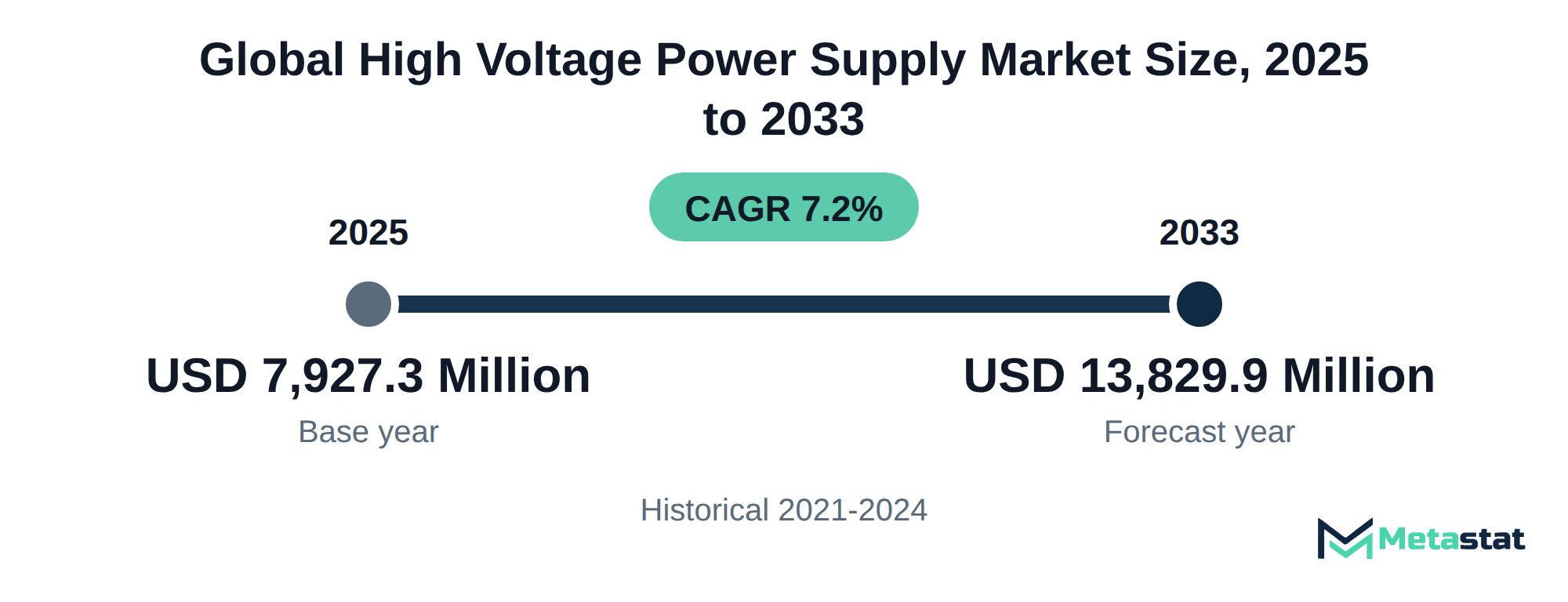
Market Valuation: Valued at $7,927.3 Million in 2025, projected to reach $13,829.9 Million by 2033 at a 7.2% CAGR.
Dominant Segment: DC high voltage power supplies lead the market, driven by their essential role in semiconductor fabrication and industrial manufacturing, where precision and reliability are paramount.
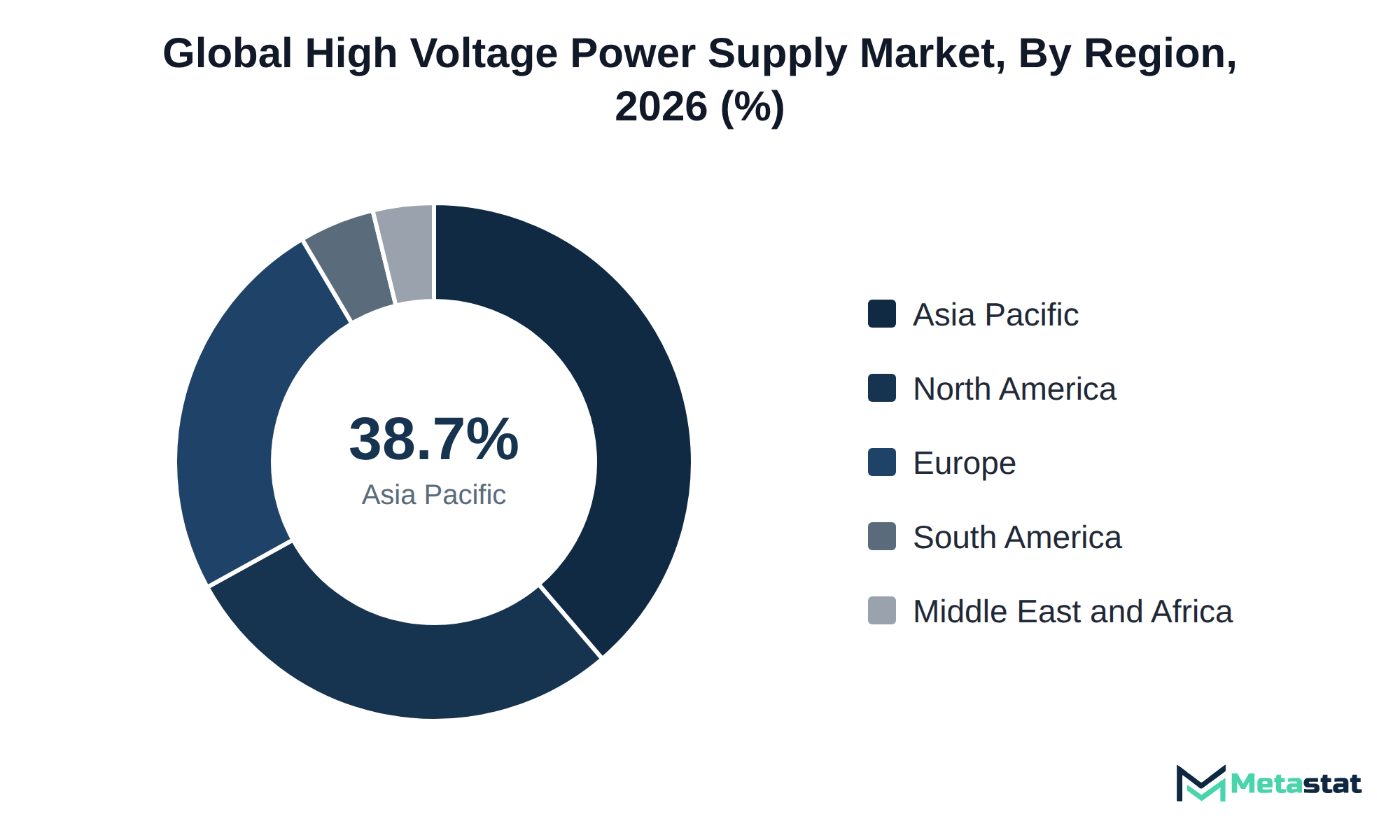
Geographic Lead: Asia Pacific is the fastest-growing region, capturing 38.7% of the market in 2025, fueled by robust industrial growth and technological advancements.
What's Inside: The report includes comprehensive competitive analysis, detailed segmentation by product type and application, and forecasts covering the market from 2026 to 2033.
Emerging Technologies: Technological advancements in high voltage power supplies enhance efficiency and performance, particularly in industrial manufacturing and semiconductor applications, driving overall market growth.
Market Dynamics: Demographic shifts and increasing healthcare demands are leading to heightened usage rates of high voltage power supplies, particularly in medical applications.
Choose Your License
Global High Voltage Power Supply Market
The global High Voltage Power Supply market was valued at USD 7,927.3 million in 2025 and is projected to reach USD 13,829.9 million by 2033, growing at a CAGR of 7.2% over the forecast period.
The High Voltage Power Supply market encompasses a variety of products designed to deliver high voltage power across multiple applications and industries. Buyers invest in these power supplies to ensure efficient operation in fields including industrial manufacturing, semiconductor production, and healthcare. Reliable energy solutions drive spending, particularly in sectors where precision and performance are critical to operational success.
Growth in the market is fueled by increasing demand for DC high voltage power supplies, which is projected to capture the largest share of market value. North America holds 28.2% of the market in 2025, with the US leading in 2026. In comparison, Asia Pacific commands a 38.7% share, reflecting strong industrial growth and technological advancements in the region.
One primary growth driver is the rising adoption of high voltage power supplies in electrostatic precipitation applications, which support environmental protection and pollution control. This increased focus on sustainability, alongside advancements in technology, supports the overall expansion of the market and enhances its appeal to various industries.
The market includes various applications across industries, emphasizing sectors including industrial manufacturing and semiconductor production. Buyers invest in high voltage power supplies due to the need for precise power delivery in processes including X-ray generation and plasma processing. These applications drive demand, reflecting the importance of reliable high voltage solutions for modern technological advancements.
Growth in the High Voltage Power Supply market is driven by increasing adoption in emerging technologies, particularly in the semiconductor and electronics sector. The segment for DC high voltage power supplies stands out with significant value, projected to expand from 2026 to 2033. North America holds 28.2% of the market in 2025, with the US leading in 2026, indicating strong regional demand driven by technological innovation and manufacturing capabilities.
Investment in high voltage power supplies supports advancements in various applications, including electrostatic precipitation and environmental protection efforts. The focus on energy efficiency and reduced environmental impact among manufacturers strengthens market growth. The market expansion reflects broader trends toward sustainable practices across different end-use industries.
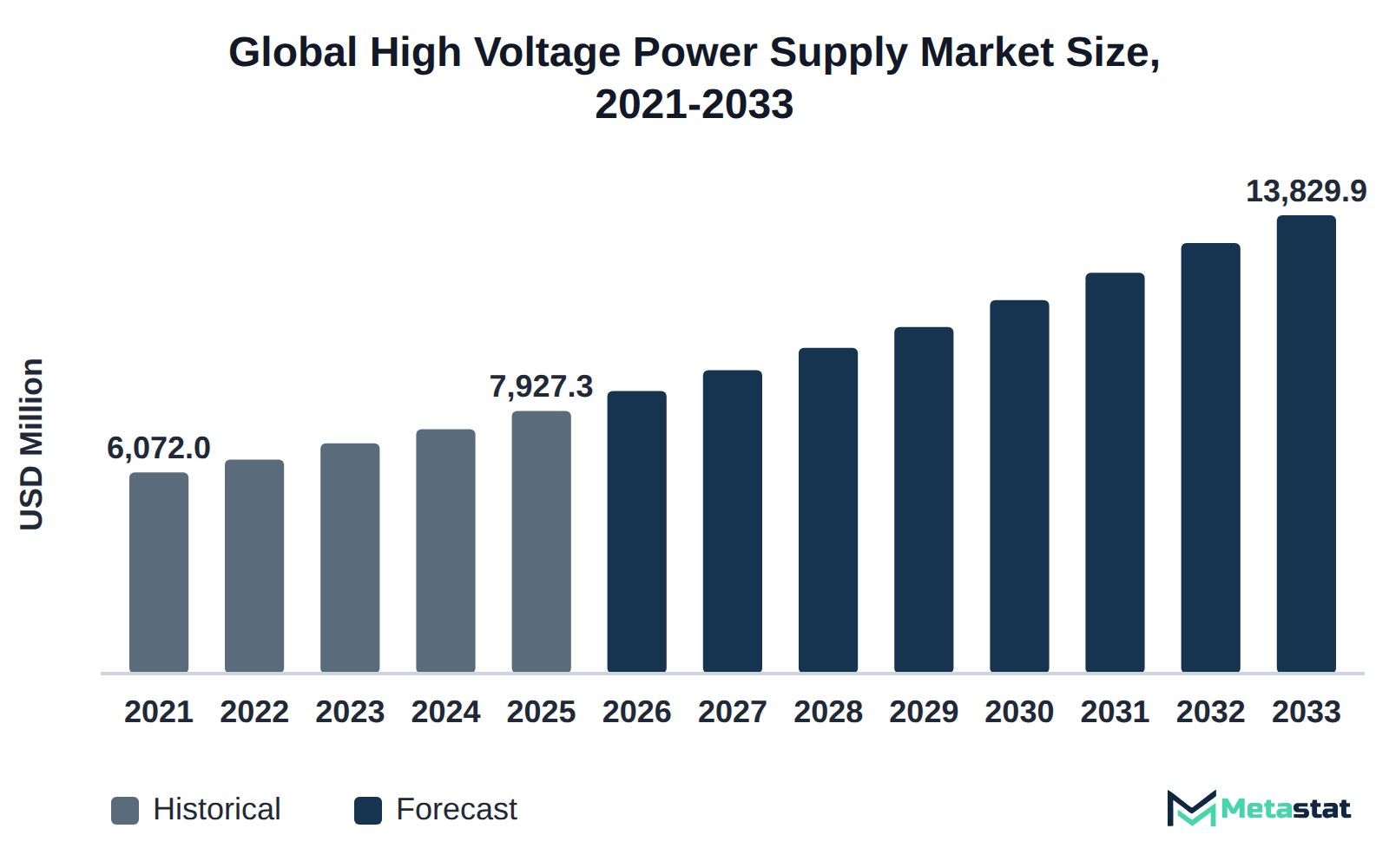
The semiconductor fabrication sector demands precise and reliable High Voltage Power Supplies, particularly for processes including ion implantation and photolithography. These processes require high-frequency stability and voltage regulation to contribute to the production of microchips with smaller geometries. In the market, DC High Voltage Power Supplies will experience strong growth, with a projected value increase from USD 5,813.2 million in 2026 to USD 9,302 million by 2033, reflecting a compound annual growth rate (CAGR) of 6.9%. This demand arises from the increasing complexity of semiconductor devices, necessitating advanced power supply solutions that provide consistent performance.
The electron beam processing industry employs specialized high voltage power supplies for applications in material processing, including surface treatment and additive manufacturing. The market for Electron and Ion Beam Processing expects substantial contributions, reaching a projected value of USD 1,876.7 million by 2033. Growth in this segment is driven by technological advancements that enhance precision and efficiency in manufacturing processes. Consequently, suppliers with solutions tailored for these applications capture significant market share. They benefit from the growing need for higher voltage and output stability in semiconductor and electron beam technologies.
Compact high voltage power supplies represent a critical component in medical X-ray equipment, driven by the increasing demand for precise and reliable imaging. Stable power delivery to the X-ray tube is central to this application. The market for these supplies is expected to experience significant growth, particularly within the healthcare sector. In 2033, the X-Ray Generation segment is projected to reach USD 3,583.3 million, reflecting strong investment in advanced medical technology.
Buyers in the high voltage power supply market typically engage in contract models that establish long-term relationships with suppliers. Pricing structures often include options for upfront payment or lease agreements, allowing healthcare facilities to manage expenditures while ensuring access to essential technology. Several suppliers present tiered pricing models that reflect volume purchases, incentivizing larger orders while accommodating varying budgets within healthcare institutions. Such arrangements enable cost management for hospitals and clinics, allowing them to allocate resources effectively toward operational needs.
Ultimately, the purchasing strategies employed by buyers significantly influence supplier dynamics in the market. Long-term contracts create stability and predictability, establishing an environment where suppliers invest in enhancing their offerings. This focus on innovation supports advancements in compact high voltage power supplies, helping medical X-ray equipment meet evolving clinical demands.
Switch-mode power supplies exhibit increasing adoption in electrostatic precipitators, particularly within the industrial manufacturing sector. This application benefits from the efficiency and flexibility of switch-mode technology, enabling manufacturers to optimize energy consumption. In 2026, the value for electrostatic precipitation applications in the High Voltage Power Supply market reaches USD 1,880.8 million, with projections indicating growth to USD 2,882.1 million by 2033.
The adoption of switch-mode power supplies aligns with the need for enhanced performance in pollution control processes. Electrostatic precipitators, which are crucial for reducing particulate emissions, demand stable and efficient voltage sources. The shift towards switch-mode technology supports operational efficiency, driving down energy costs while improving the effectiveness of emission control systems. Companies investing in such technologies position themselves to meet stricter environmental regulations and customer expectations.
Power supply selection therefore affects compliance and operational efficiency. By investing in switch-mode power supplies, manufacturers improve their competitive edge, ensuring sustainability and reliability in their processes. The expansion of the High Voltage Power Supply market in this application area reflects the industry's commitment to innovation and environmental stewardship.
Output voltage is a key parameter when selecting high voltage power supplies, and it shapes performance across applications. For instance, power supplies designed for electrostatic precipitation typically require voltages up to 10 kV, with projected market values reaching USD 2,882.1 million by 2033, growing at a CAGR of 6.3% from 2026. This specific output voltage range aligns with the operational demands of industries including industrial manufacturing, where precise voltage is essential for effective operation.
Ripple and stability significantly impact the buying decision for high voltage power supplies. High ripple levels introduce noise into sensitive applications, leading to performance degradation. Stability of the output voltage ensures consistent performance and reliability, particularly in sectors like semiconductor and electronics, which are projected to reach a market value of USD 3,583.3 million by 2033 with a CAGR of 7.4%. Ensuring low ripple and high stability enhances the operational efficiency of equipment, ultimately resulting in lower downtime and maintenance costs.
Optimal output voltage, minimal ripple, and high stability together shape how effectively high voltage power supply systems perform across applications. Understanding these factors is vital for buyers in making informed decisions that align with their operational requirements, driving growth within the market.
Growing acceptance of high voltage power supplies in the healthcare sector reflects demographic shifts and rising patient populations. Increasing healthcare demands drive facilities to invest in advanced medical equipment, resulting in heightened usage of high voltage power supplies. These supplies support applications including X-ray generation and electron beam processing, integral to modern diagnostic practices. The semiconductor and electronics industries contribute to this trend by adopting high voltage power supplies for production processes, further driving demand. This growth is driven by the need for reliable and efficient power solutions across various applications, significantly impacting overall market dynamics.
Technological advancements within high voltage power supplies significantly improve efficiency and performance. Innovations in power conversion techniques, including advanced switch-mode designs, reduce energy losses during operation. This transition influences various sectors requiring reliable and efficient power sources, particularly in industrial manufacturing and semiconductor applications. Enhanced efficiency leads to lower operational costs and improved system reliability, making products more attractive to end-users. The impact of these technologies encourages greater adoption of high voltage power supplies across diverse applications, driving overall market growth.
In addition, the integration of smart technologies and automation within high voltage systems ensures better monitoring and control capabilities. These features increase operational flexibility, allowing users to adapt to varying demands quickly. The adoption of high voltage power supplies across critical industries continues to rise, further contributing to the expanding market. The focus on innovation aligns with growing demands for improved energy management and sustainability, making advanced technologies a vital component of future developments in the high voltage power supply market.
Price volatility poses a significant challenge for the High Voltage Power Supply market, particularly impacting smaller enterprises and emerging companies. The high initial investment required for high voltage power supplies often results in delayed purchases and smaller order volumes, driven by uncertainty regarding budget allocations. This constraint becomes more pronounced in sectors including industrial manufacturing and healthcare, where financial resources are limited and operational budgets are tightly controlled. The need for maintenance and support further complicates the decision-making process, leading to slower adoption rates. Buyers in these industries increasingly seek affordable alternatives or postpone upgrades, which affects overall market growth. Consequently, ongoing price fluctuations directly influence purchasing dynamics and investment strategies within the market.
Suppliers in the High Voltage Power Supply market face significant challenges related to rising input costs, particularly in raw materials and components. Increased demand for advanced technology drives prices higher, impacting profit margins across the industry. Suppliers respond by optimizing their sourcing strategies, seeking long-term contracts with raw material providers, and investing in efficiency-enhancing technologies. These strategies aim to mitigate cost increases while maintaining product quality and reliability. Suppliers explore vertical integration opportunities to gain better control over material costs and improve their competitive positioning. The effectiveness of these strategies influences overall market profitability and shapes supplier dynamics, especially for smaller enterprises struggling with price pressures. Maintaining competitive pricing in such a challenging environment requires continuous innovation and adaptation to market changes.
Plasma generation presents significant growth potential within the High Voltage Power Supply market, driven by increasing applications in various industries. This sector is experiencing a compound annual growth rate (CAGR) of 8.7%, indicating strong demand for high voltage power supplies tailored for plasma processing applications. The ability to create and control plasma efficiently supports advancements in fields including materials science and semiconductor manufacturing, where precision and reliability are crucial. RF power supply for semiconductor equipment is a related power category for plasma-based process tools. Suppliers focusing on this segment benefit from increasing investment in research and development, with companies aiming to enhance their capabilities in plasma technology. Growth in this segment aligns with broader trends surrounding environmental protection and pollution control, where plasma technologies play an important role in treating waste and emissions. Addressing this opportunity in plasma generation strengthens market presence and drives innovation across multiple applications, ultimately contributing to overall market expansion.
The Global High Voltage Power Supply market is segmented based on Product Type, Output Voltage, Application, and End-Use Industry.
This segment finds applications in various industries, particularly in semiconductor fabrication and industrial manufacturing, where high precision and reliability are critical. The growing demand for energy-efficient solutions significantly influences this segment, driving advancements in technology and design. Compared to AC High Voltage Power Supplies, which anticipate a slightly slower growth rate of 6.3%, DC High Voltage Power Supplies benefit from broader usage in applications that require stable and consistent voltage levels. Consequently, this segment attracts investments aimed at enhancing performance and operational efficiency across diverse applications.
AC High Voltage Power Supplies segment is estimated to reach USD 2,405 million by 2033, at a CAGR of 6.3% during the forecast period. These supplies are primarily used in various applications, including X-ray generation and plasma processing, catering to industries including healthcare and semiconductor manufacturing. The growing demand for imaging technology and precise processing techniques drives the adoption of this segment. In comparison to other types, AC Power Supplies experience moderate growth, influenced by advancements in technology and the increasing complexity of applications requiring high voltage. This segment exhibits a slightly lower growth rate than the DC High Voltage Power Supplies segment, which demonstrates a CAGR of 6.9%. The focus on improving efficiency and reducing operational costs continues to shape the competitive dynamics among manufacturers, positioning AC High Voltage Power Supplies as a significant player in the market.
Pulsed High Voltage Power Supplies are projected to reach USD 2,122.9 million by 2033. These power supplies are primarily used in applications requiring high-speed energy delivery, including electron beam processing and X-ray generation. Industries including semiconductor manufacturing and healthcare rely on this technology for precision and efficiency. Demand for these units increases due to the growing need for advanced material processing techniques and non-destructive testing methodologies. The segment's growth rate, with a CAGR of 8.7%, outpaces several other categories within the product type segment, particularly AC High Voltage Power Supplies, which exhibit a CAGR of 6.3%. This growth trajectory signifies an ongoing shift toward more efficient and versatile high voltage solutions, reinforcing their critical role in supporting innovations across multiple sectors.
Valued at USD 2,737.5 million in 2026, this segment is projected to reach USD 4,267.9 million by 2033, at a CAGR of 6.5% during the forecast period. High voltage power supplies with output voltages up to 10 kV are widely used in applications including electrostatic precipitation and ion beam processing. The industrial manufacturing and semiconductor sectors predominantly use these power supplies due to their ability to deliver reliable and precise high voltage output. Demand in this segment benefits from increasing industrial automation and technological advancements, making high voltage power supplies more efficient. Compared to other segments, this category exhibits slightly faster growth than AC high voltage power supplies, which are projected to grow at a CAGR of 6.3%. Consistent demand for reliable equipment drives investment in this segment and sustains its importance in the market.
The Above 10 kV to 50 kV segment is estimated to reach USD 4,168.3 million by 2033, at a CAGR of 7% during the forecast period. This voltage range finds application primarily in industrial manufacturing and semiconductor sectors, where high voltage power is essential for processes like plasma generation and ion implantation. Demand is driven by the increasing sophistication of electronic devices and the need for efficient manufacturing systems. Compared to other segments, this range exhibits a balanced growth rate, distinguishing itself with a strong focus on precision and reliability. Ongoing advancements in technology push suppliers to innovate, resulting in enhanced product performance. Such developments support competitive pricing structures, benefiting end-users across various applications. This segment's growth trajectory reflects a broader trend within the market, aligning with the demand for higher efficiency and performance in industrial processes.
The Above 50 kV to 100 kV segment is expected to reach USD 2,941.6 million by 2033. This segment finds application in several high-demand areas, including industrial manufacturing and semiconductor processing, where precise voltage control is critical. The growth in this segment is driven primarily by the expanding semiconductor and electronics industry, which relies on high voltage supplies for advanced manufacturing processes. With a CAGR of 7.0%, this segment exhibits stronger growth potential compared to others in the output voltage category. The unique requirements of applications including electron beam processing differentiate it from the Up to 10 kV and Above 10 kV to 50 kV segments, which exhibit lower price points and different technological needs. Industries continue to advance, and demand for high voltage solutions in this range is expected to increase, aligning with broader trends in high voltage power supply adoption across the market.
Above 100 kV to 200 kV segment is projected to grow at a CAGR of 7.9% during the forecast period. This voltage range finds application in high-power industrial processes, including particle accelerators and certain medical equipment. Increasing demand for advanced applications drives growth within this segment, particularly from sectors like aerospace and defense, which require high-performance equipment. Unlike lower voltage segments, this range typically commands higher prices, appealing to buyers prioritizing performance over cost. The segment's growth reflects demand for precision and reliability in high-stakes environments, differentiating it from segments with lower CAGRs, including those under 10 kV. Investments in technology enhancements are crucial for companies operating in this segment, aligning with trends in the High Voltage Power Supply market toward higher output capabilities.
Output voltage above 200 kV serves critical applications in utilities and high-power industries, addressing needs in electricity transmission and specialized manufacturing processes. This segment finds use in sectors including energy and power generation, where precise control and high voltage levels are essential for efficient operation. Demand in this area is driven by increasing investments in renewable energy infrastructure and advancements in high voltage technology that enhance performance and reliability. Compared to other output voltage segments, this segment experiences distinct buyer dynamics, typically involving larger enterprises that require dependable systems for specific applications, distinguishing it from segments including below 10 kV. The growth trajectory reflects a focus on long-term infrastructure projects, highlighting strategic planning by key industry players in the market.
Electrostatic precipitation employs high voltage power supplies primarily for air pollution control and is critical in industries including industrial manufacturing and environmental protection. Adoption is driven by stringent regulations on emissions and the need for cleaner air solutions. Compared to other applications, this segment experiences steady growth due to increasing environmental awareness and regulatory pressures. Electrostatic precipitation differs from other applications by focusing on reducing particulate matter and improving air quality, which attracts investment from both public and private sectors in the pursuit of sustainability. The market emphasizes the importance of reliable and efficient power supplies to maintain optimal performance in electrostatic precipitators, leading to strong demand for specialized high voltage solutions.
X-Ray Generation segment is estimated to reach USD 3,583.3 million by 2033, at a CAGR of 7.4% during the forecast period. This segment serves critical applications in medical imaging, industrial inspection, and security scanning, primarily by healthcare facilities, research laboratories, and security agencies. Demand within this segment is driven by advancements in imaging technologies and increasing investments in healthcare infrastructure. Compared to other segments, X-Ray Generation shows a higher growth trajectory, fueled by the rising need for enhanced diagnostic capabilities. The market's expansion is influenced by the integration of innovative technologies, which support more efficient and precise imaging solutions, thereby attracting a broader range of buyers. Other segments including Electrostatic Precipitation and Electron and Ion Beam Processing experience slower growth, with their applications often aligning with more specialized and niche markets.
Electron and Ion Beam Processing segment is expected to reach USD 1,876.7 million by 2033. This segment is significant in various applications, particularly in semiconductor manufacturing and materials science, where high precision and controlled energy are essential. Demand from the semiconductor and electronics industry drives growth due to the increasing need for advanced manufacturing techniques. The segment reflects a CAGR of 7.4%, indicating stronger growth compared to other applications. Factors influencing this segment include technological innovations that enhance performance and a growing focus on efficiency in production processes. These advancements differentiate Electron and Ion Beam Processing from segments like Electrostatic Precipitation, which reflects a lower growth rate of 6.3%. The market continues to adapt to evolving industry requirements, creating opportunities for investment and expansion.
Valued at USD 2,122.9 million by 2033, the Plasma Generation and Processing segment is projected to grow at a CAGR of 8.7% during the forecast period. This segment finds application primarily in industries focused on advanced manufacturing processes, including semiconductor production, where precise control of plasma is essential for etching and deposition techniques. Strong demand for efficient plasma systems drives investment, particularly from manufacturers aiming to enhance production capabilities. Compared to other applications, including X-Ray Generation, this segment exhibits a faster growth trajectory, reflecting the increasing importance of plasma technology in diverse sectors. Continued innovations in plasma generation techniques support this shift, offering improved efficiency and operational benefits. These factors contribute significantly to the ongoing evolution of the High Voltage Power Supply market, positioning plasma generation as a key area of expansion.
Analytical Instrumentation and Detector Biasing involves specialized high voltage power supplies used in various scientific and industrial applications. This segment supports critical functions in research laboratories and medical diagnostics, catering to sectors including semiconductor manufacturing and analytical testing. Growth in this segment is driven primarily by advancements in technology, leading to increased demand for precise measurement tools and enhanced detection methods. Industry players focus on innovation and product differentiation to stand out, resulting in a competitive landscape where suppliers aim to provide high-quality, reliable power supplies. This segment typically commands higher price points compared to others, reflecting the specialized nature of the applications involved. The market is anticipated to see strong demand in the coming years, supported by ongoing investments in research and development across multiple industries.
Electrostatic Charging and Separation involves specialized applications in various industries, employing high voltage power supplies to manage the charging and separation of particles. This process finds application in sectors including industrial manufacturing, particularly in processes like air pollution control and material processing. Demand for this segment is driven by the increasing need for efficient particle charging technologies that enhance separation effectiveness. The market experiences benefits from technological advancements resulting in improved efficiency and reduced operational costs. Compared to other applications, Electrostatic Charging and Separation experiences slower growth, reflecting the specialized nature of its use cases, which limits broader market adoption. The high voltage power supply market encompasses a range of applications, but the distinct requirements of charging and separation highlight the niche role this segment plays in specific industrial settings.
Capacitor charging involves supplying electrical energy to capacitors, facilitating various applications in electronic devices and power systems. This process is essential for industries including telecommunications, automotive, and consumer electronics, where capacitors support energy storage and stability. The demand for capacitor charging systems is driven by the increasing need for efficient energy management solutions and the growth of high-frequency power electronics. Unlike other applications, capacitor charging typically experiences steady growth, reflecting advancements in capacitor technology and integration into modern electronic systems. This segment differs from others in its pricing dynamics, featuring competitive pricing due to widespread usage and established technologies. The market adapts to evolving industry standards, ensuring the availability of reliable and efficient capacitor charging solutions for diverse applications.
Dielectric and Insulation Testing involves applying high voltage power to assess the integrity of materials and components. This application is essential in various industries, including electrical manufacturing and electronics, where ensuring the safety and reliability of insulation materials and electrical insulators is critical. Demand for this application rises due to increasing safety regulations and the need for quality assurance in production processes. The adoption of advanced technologies in dielectric testing has streamlined procedures, enhancing efficiency in testing. Compared to other applications, Dielectric and Insulation Testing experiences slower growth due to the specialized nature of the equipment and the requirement for skilled technicians, impacting overall adoption rates. The High Voltage Power Supply market supports this segment through innovations aimed at improving testing accuracy and reducing downtime.
This segment encompasses specialized applications including electrospinning, electrophoresis, and high-voltage device biasing. These applications find use in various industries including healthcare, materials science, and biotechnology, serving to enhance processes that require precise high-voltage conditions. Demand is driven by continuous advancements in technology, enabling more efficient and effective applications across multiple fields, including advanced manufacturing and medical research. Unlike other segments, this sub-segment often faces unique challenges related to the precise control of voltage and current, leading to higher operational costs. For instance, high-voltage device biasing significantly improves the performance of electronic devices, creating a distinct buyer profile that demands specialized solutions tailored to specific needs. Overall, the growth trajectory of this segment reflects broader trends within the High Voltage Power Supply market, highlighting its importance in supporting innovative applications.
The industrial manufacturing sector employs high voltage power supplies for various applications, including material processing, machinery operation, and quality control. High voltage units sit within the wider industrial power supply category used across manufacturing operations. Significant demand arises from the need for precision and high efficiency in manufacturing processes. Growth in this segment remains steady due to advancements in industrial automation and the expansion of production capacities among manufacturers. Compared to other segments, industrial manufacturing exhibits moderate growth. The semiconductor and electronics sector, for instance, is projected to grow faster at a CAGR of 7.4%. The high voltage power supply market benefits from the increasing complexity and sophistication of manufacturing technology, driving investments in high voltage power solutions to enhance operational efficiency and product quality. This segment is expected to contribute significantly to the overall market expansion as manufacturers seek to optimize their processes and maintain competitive advantages.
The Semiconductor and Electronics segment focuses on high voltage power supplies used in applications including semiconductor manufacturing, electronic component testing, and various electronic devices. Factors driving this segment include increasing demand for advanced electronic devices and the growing need for efficient power management solutions in manufacturing processes. This segment distinguishes itself from others by its rapid growth rate compared to those in industrial manufacturing, which has a lower projected CAGR of 6.3%. The Semiconductor and Electronics segment typically commands higher price points due to the sophisticated technologies involved, reflecting the specialized requirements of its buyers. The market remains competitive, with continuous advancements in technology enhancing performance capabilities.
The Healthcare and Medical Equipment segment is expected to reach USD 1,876.7 million by 2033. This segment encompasses various applications in medical imaging equipment, diagnostics, and therapeutic devices, serving hospitals and healthcare facilities. The increasing demand for advanced medical technologies drives the adoption of high voltage power supplies in this segment, ensuring precise and reliable performance. Growth in this area is supported by ongoing advancements in healthcare technologies and rising investments in medical infrastructure. Compared to other end-use industries, the Healthcare and Medical Equipment segment experiences faster growth, evidenced by its projected CAGR of 7.4%. This growth reflects a strong emphasis on improving patient care and outcomes through enhanced medical equipment performance. The market supports these developments, highlighting the critical role of high voltage power supplies in enabling innovative healthcare solutions.
Environmental Protection and Pollution Control segment is projected to grow at a CAGR of 8.7% during the forecast period. This segment focuses on applications aimed at reducing environmental impact and ensuring compliance with pollution control regulations, attracting interest from industries including waste management and renewable energy. Increasing regulatory pressure and heightened public awareness surrounding environmental issues drive demand for high voltage power supplies tailored for these applications. This segment typically features higher growth compared to others, driven by the expanding global emphasis on sustainability and emission reduction. Valued at USD 1,876.7 million by 2033, the segment is expected to play a vital role in advancing technologies that contribute to cleaner production processes and efficient waste management. The High Voltage Power Supply market benefits from these trends, with significant investments anticipated in related technologies and infrastructure.
Research and Academic Institutions use specialized high voltage power supplies for various applications, including fundamental research, advanced scientific experiments, and technology development. This segment serves universities, laboratories, and research facilities focused on groundbreaking studies in physics, engineering, and biotechnology. Demand is influenced by the increasing emphasis on innovative research and development, driving the need for high precision equipment. Compared to other segments, this area has unique requirements in terms of customization and quality assurance, resulting in higher prices for tailored solutions. The distinct nature of projects in research and academia contributes to a differentiated buyer profile, focusing on specialized needs rather than broader industrial applications. The market shows strong growth potential, driven by advancements in technology and a continuous push for innovative solutions across various fields.
Aerospace and Defense applications employ high voltage power supplies for various critical functions, including defense radar systems, avionics testing, and communications. Industries involved in this sub-segment include defense contractors and aerospace manufacturers, who rely on precision and reliability in their operations. Demand for high voltage power supplies in this sector experiences growth driven by advancements in military technology and increasing investments in aerospace infrastructure. The integration of innovative technologies within the Aerospace and Defense segment allows for enhanced performance and efficiency, distinguishing it from other sub-segments. Unlike the Semiconductor and Electronics segment, which is projected to grow at a CAGR of 7.4%, this industry faces unique regulatory challenges impacting its development. These factors contribute to a dynamic environment for the high voltage power supply market, emphasizing the need for robust solutions tailored to the stringent demands of aerospace and defense applications.
Energy and Power Generation involves supplying high voltage power solutions for various applications within the energy sector. This segment serves energy producers, utility companies, and renewable energy providers, facilitating critical operations including power generation, distribution, and management. Demand for efficient and reliable power supply systems drives growth in this area, especially with the increasing focus on renewable energy sources. Regulatory frameworks promoting sustainability further enhance demand, placing pressure on manufacturers to innovate and improve efficiency. Compared to other segments in the End-Use Industry category, this segment experiences unique challenges, including the need for advanced technologies that handle higher voltage levels and demands, leading to potentially higher costs for consumers. The Energy and Power Generation segment is essential in the High Voltage Power Supply market, supporting the foundational infrastructure of modern energy systems.
This sub-segment pertains to specialized applications in analytical instrumentation and laboratory equipment. These high voltage power supplies support various scientific applications, including advanced measurements and detector biasing. Key users include research institutions, laboratories, and companies focusing on precise instrumentation. An increase in demand for sophisticated analytical equipment drives growth, reflecting a shift toward more accurate and efficient analysis in multiple sectors. This sub-segment differs from others due to its focus on high precision and performance, contrasting with broader applications including industrial manufacturing, which typically involve higher production volumes and lower cost structures. Ongoing advancements in technology continue to enhance the capabilities and applications of these power supplies, influencing the trajectory of the market.
This sub-segment encompasses specialized applications catering to original equipment manufacturers (OEMs) and emerging technologies. Such applications involve high voltage power supplies used in various innovative fields, including electrospinning and specialized research equipment. These systems serve highly specific needs and are tailored for niche markets, differentiating them from other segments characterized by broader applications. Growth in this segment is driven by advancements in technology, prompting greater demand for specialized solutions. The increasing focus on innovation in sectors including electronics and renewable energy stimulates interest in high voltage power supplies across various emerging applications. Companies supplying these tailored solutions focus on customization, positioning themselves differently compared to traditional power supply providers that cater to more established industries. This dynamic creates an environment of competition and innovation, contributing to the overall evolution of the market.
Based on geography, the Global High Voltage Power Supply market is divided into North America, Europe, Asia-Pacific, South America, Middle East, and Africa.
Demand within the High Voltage Power Supply market in North America derives primarily from the industrial manufacturing and semiconductor sectors. The increasing adoption of advanced manufacturing technologies, coupled with a surge in the semiconductor industry, drives significant investment in high voltage power solutions. North America is expected to experience substantial growth by the end of 2033, capturing a significant share of the global market in 2025. Regulatory frameworks emphasizing energy efficiency and environmental standards further incentivize industries to invest in high voltage systems. The United States, Canada, and Mexico contribute substantially to this growth, fueled by a robust infrastructure supporting these applications.
Demand for high voltage power supplies in Europe stems from the presence of advanced industrial manufacturing and semiconductor sectors. Countries including Germany and France exhibit significant investments in automation and technology, driving the need for reliable power solutions. Regulatory standards concerning energy efficiency and emissions control further influence purchasing decisions, compelling manufacturers to adopt high voltage systems. Europe's market share is projected at 24.5% in 2025, indicating a strong position within global dynamics. Innovation in power supply technologies, particularly in the healthcare sector, enhances operational capabilities and promotes growth. The increasing focus on environmental protection aligns with advancements in pollution control technologies, supporting market expansion in this region.
Asia-Pacific accounts for 38.7% of the global market in 2025. Demand in this region stems from various industries, including semiconductor manufacturing and healthcare, which drive the adoption of high voltage power supplies for advanced applications. Countries including China and India experience rapid industrial growth, resulting in increased investments in manufacturing technologies that require reliable power supply solutions. Japan stands out with its focus on high-precision equipment, further fueling the need for specialized power supply systems. Infrastructure development initiatives across Southeast Asia enhance the capability of local industries to integrate advanced technologies. The market anticipates steady growth due to rising demand for electric vehicles and renewable energy solutions, leading to a projected increase in market value through 2033.
Brazil and Argentina lead demand for high voltage power supplies in South America, driven by growth in the industrial manufacturing and healthcare sectors. Investments in infrastructure development and energy efficiency initiatives support this trend, focusing on reducing operational costs. The market in this region accounted for 4.7% of the global share in 2025, reflecting increasing adoption of advanced technologies across various industries. Regulatory support for environmental standards further supports demand, particularly in applications including electrostatic precipitation and pollution control. By 2033, the market is projected to continue its upward trajectory, driven by increasing investments in energy and power generation projects.
In the Middle East and Africa, demand for the High Voltage Power Supply market finds strong support from industrial manufacturing and healthcare sectors. Countries including Saudi Arabia and the UAE focus on infrastructure development, driving the need for efficient high voltage solutions. South Africa's investment in renewable energy projects further enhances demand for advanced power supply technology. The market shows growth potential fueled by regional initiatives aimed at improving energy efficiency and sustainability. Ongoing development of urban infrastructure projects in the region contributes to an increasing requirement for high voltage power supplies, particularly in large-scale applications.
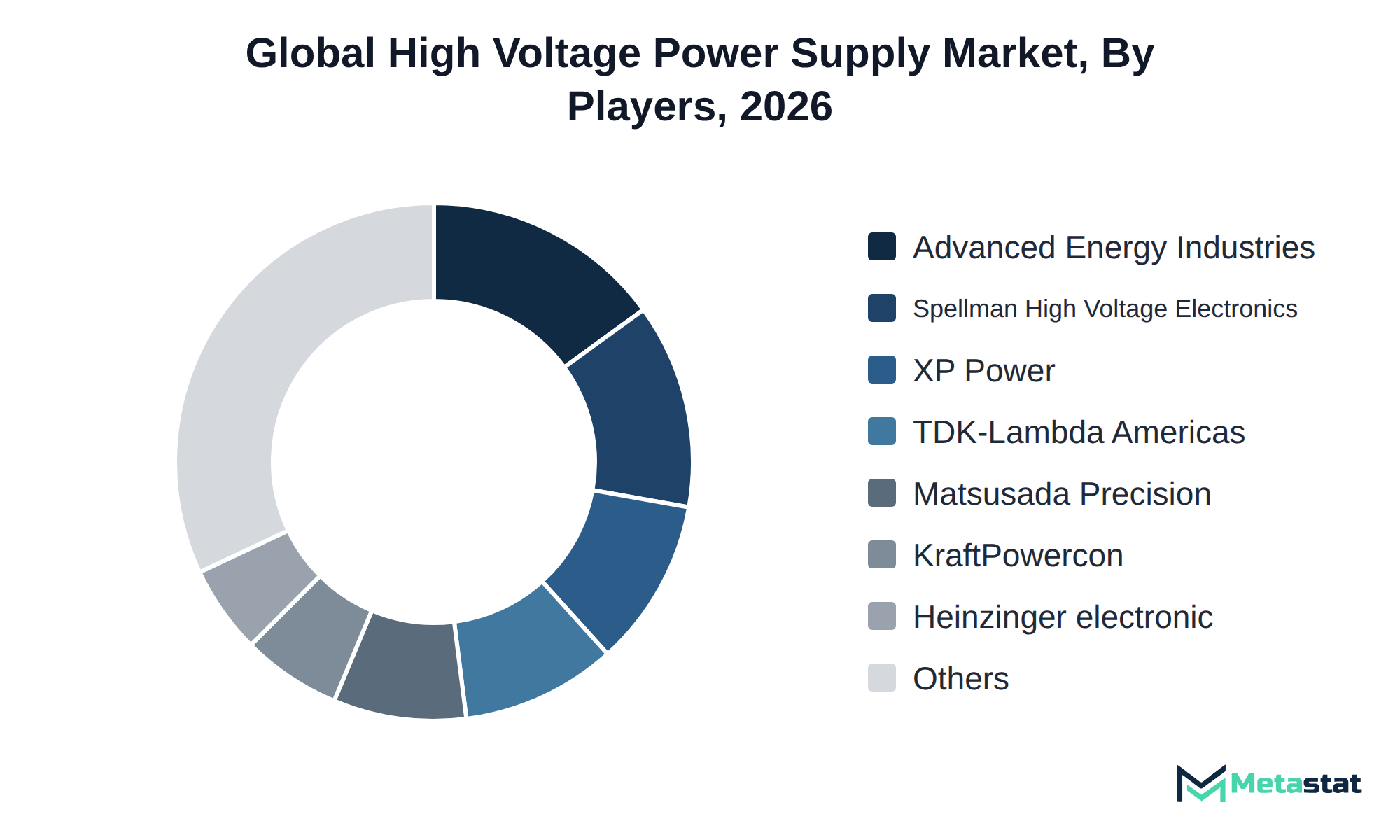
Companies in the High Voltage Power Supply market compete primarily on the basis of product type, customization, and service quality. The market includes various product segments including DC High Voltage Power Supplies, AC High Voltage Power Supplies, and Pulsed High Voltage Power Supplies, each appealing to different user needs. Buyers evaluate options based on price, certification, and the ability to customize solutions to fit specific applications.
Spellman High Voltage Electronics Corporation focuses on delivering high-performance DC power supplies, addressing the growing needs of industrial manufacturing and semiconductor applications. Advanced Energy Industries, Inc. specializes in offering a diverse range of power solutions, ensuring flexibility and reliability across various sectors. TDK-Lambda Americas Inc. emphasizes quality and certification, appealing to buyers requiring compliance with stringent industry standards.
Achieving this growth relies on several key developments within the market. First, the increasing demand for DC High Voltage Power Supplies, driven by their applications in industrial manufacturing and semiconductor industries, will support revenue expansion. This segment is projected to experience a CAGR of 6.9%, indicating strong adoption across sectors prioritizing efficiency and reliability.
Second, advancements in applications including X-Ray Generation, which holds significant importance within healthcare and medical equipment, will further enhance market potential. The segment is anticipated to achieve a CAGR of 7.4%, reflecting the ongoing integration of high voltage systems in critical healthcare technologies.
However, risks including supply chain disruptions and fluctuations in raw material prices could hinder market growth. Addressing these challenges requires strategic management from suppliers, particularly in regions like Asia Pacific, where a significant market share exists. Optimizing supply chains and mitigating price volatility will be essential for the market to realize its full potential by 2033.
By Application: Electrostatic Precipitation, X-Ray Generation, Electron and Ion Beam Processing, Plasma Generation and Processing, Analytical Instrumentation and Detector Biasing, Electrostatic Charging and Separation, Capacitor Charging, Dielectric and Insulation Testing, Others (Electrospinning, Electrophoresis, High-Voltage Device Biasing)
By End-Use Industry: Industrial Manufacturing, Semiconductor and Electronics, Healthcare and Medical Equipment, Environmental Protection and Pollution Control, Research and Academic Institutions, Aerospace and Defense, Energy and Power Generation, Analytical Instrumentation and Laboratory Equipment, Others (Specialized OEMs and Emerging Applications)
The report strategically identifies and profiles the key market players and analyses their core competencies in each sub-segment of the High Voltage Power Supply market.
Report Attributes | Details |
Study Period | 2021-2033 |
Base Year | 2025 |
Estimated Year | 2026 |
Forecast Period | 2026-2033 |
Historical Period | 2021-2025 |
Growth Rate | CAGR 7.2% from 2026 to 2033 |
Revenue Unit | USD million |
Segmentation | By Product Type, Output Voltage, Application, End-Use Industry, and Region |
By Region | North America (By Product Type, Output Voltage, Application, End-Use Industry, and Country)
|
Europe (By Product Type, Output Voltage, Application, End-Use Industry, and Country)
| |
Asia Pacific (By Product Type, Output Voltage, Application, End-Use Industry, and Country)
| |
South America (By Product Type, Output Voltage, Application, End-Use Industry, and Country)
| |
Middle East and Africa (By Product Type, Output Voltage, Application, End-Use Industry, and Country)
|
Find answers to common questions about this report
The High Voltage Power Supply market size was valued at USD 7,927.3 million in 2025.
The market is projected to grow at a CAGR of 7.2% during the forecast period from 2026 to 2033.
The North America High Voltage Power Supply market size is estimated to reach USD 3,753.4 million by 2033.
DC High Voltage Power Supplies lead the market with a projected value of USD 9,302 million by 2033, based on the highest forecast figure among the product type segments.
Key drivers for the High Voltage Power Supply market include rising healthcare demands, leading to increased investment in advanced medical equipment, and significant growth in plasma generation applications across various industries. The market is projected to reach USD 13,829.9 million by 2033, reflecting an annual growth rate of 7.2%.
Price volatility poses a significant challenge, impacting smaller enterprises and emerging companies due to high initial investments and budget uncertainties. The need for maintenance and support complicates decision-making, leading to slower adoption rates.
The integration of smart technologies and automation within high voltage systems enhances monitoring and control capabilities, increasing operational flexibility. Advancements in plasma generation applications indicate strong demand, particularly in materials science and semiconductor manufacturing, driving adoption in the industry.
The High Voltage Power Supply market is estimated to reach a valuation of USD 13,829.9 million by 2033.
Key players operating in the High Voltage Power Supply market include Spellman High Voltage Electronics Corporation, XP Power Limited, Advanced Energy Industries, Inc., Matsusada Precision Inc., iseg Spezialelektronik GmbH, and TDK-Lambda Americas Inc.
The High Voltage Power Supply market is projected to grow at a compound annual growth rate (CAGR) of 7.2% from 2026 to 2033.
The analysts below cover Energy and Power research at Metastat Insights.
LEAD ANALYST
Utkarsh Khirodkar is a Lead Market Research Analyst at MetaStat Insight, specializing in market intelligence, technology sector assessments, and competitive strategy.

PRINCIPAL CONSULTANT - ENTERPRISE AI & EMERGING TECHNOLOGIES
Banking & Finance · Electronics and Semiconductor · Energy and Power · Healthcare IT · Information & Technology · Professional Services
Vijay Gunti is a Principal Consultant at MetaStat Insight, bringing over two decades of experience across enterprise digital transformation, technology strategy, and intelligent systems.

ENERGY & INFRASTRUCTURE INDUSTRY CONSULTANT
Automotive and Transportation · Electronics and Semiconductor · Energy and Power · Machinery & Equipment
Saurabh Vasant Ganvir consults for Energy & Infrastructure Industry at MetaStat Insight, specializing in renewable energy, solar EPC, and electric vehicle (EV) infrastructure markets.
Enterprise zero-trust network rollouts are often slowed down by multi-cloud transit latency and proprietary hardware retirement schedules. This study provided realistic total cost of ownership models comparing cloud-delivered security edge solutions against traditional hardware refreshes. The analysis of contract renewal lengths and software maintenance fees gave us clear visibility into enterprise replacement cycles over the next three to five years.
Scaling antibody-drug conjugate manufacturing hinges on contract manufacturing availability for high-potency active ingredients. The MetaStat Insight analysis looked closely at global cleanroom slot constraints, bioconjugation batch failure rates, and supply chain redundancies between the US, Europe, and India. The supplier capability matrix proved genuinely useful for our team when mapping secondary source options across our clinical pipeline.
Floating offshore wind feasibility relies heavily on specialized installation vessel availability and port crane limits, which most broad renewable energy forecasts ignore. The report delivered a thorough analysis of dry dock capacity, mooring chain supply constraints, and raw material pricing trends for deepwater anchor installations. It served as a solid independent sanity check for our offshore project capital expenditure assumptions.
Explore related market intelligence reports worth reading alongside this one.