
LEAD ANALYST
Utkarsh Khirodkar is a Lead Market Research Analyst at MetaStat Insight, specializing in market intelligence, technology sector assessments, and competitive strategy.

Global Light Truck Tire Market Size, Share, By Vehicle Type (Pickup Trucks, Light Commercial Vans, Sport Utility Vehicles, Chassis Cab and Other Light Trucks), By Demand Channel (Original Equipment and Replacement), By Tire Type (Highway-Terrain Tires, All-Terrain Tires, Mud-Terrain Tires, Winter Tires, All-Season Tires and Commercial Specialty Tires), By Rim Diameter (Below 16 Inches, 16 to 18 Inches and Above 18 Inches), Industry Analysis, Growth, Trends, and Forecast, 2026-2033
Report ID
MSI-5715
Published
November, 2026
Pages
254 Pages
Format
Historical
Base year
Forecast
Forecast period
Report Details
Market Valuation: Valued at $24.8 Billion in 2025, projected to reach $35.7 Billion by 2033 at a 4.6% CAGR.
Dominant Segment: The pickup trucks segment leads the market, driven by rising consumer preferences for versatile vehicles that perform well in various conditions. This segment is projected to grow from USD 12.1 billion in 2026 to USD 16.8 billion by 2033.
Geographic Lead: North America is the leading region, holding 30.9% of the market in 2025, with the U.S. expected to maintain its dominance in 2026. This growth is supported by the strong demand for light trucks and an established automotive infrastructure.
What's Inside: The report provides a comprehensive analysis of the Light Truck Tire market, including competitive coverage, detailed segmentations by vehicle type, demand channel, tire type, and rim diameter, along with forecasts extending to 2033.
Replacement Demand Reshapes Market: The replacement segment is projected to reach USD 26.2 billion by 2033, reflecting a growing trend as aging light trucks increase the need for new tires to maintain performance and safety.
Technological Innovations: Advancements in tire technology are enhancing performance, with a focus on durability and fuel efficiency, appealing to consumers and fleet operators seeking high-quality tire solutions.
Choose Your License
Global Light Truck Tire Market
The global Light Truck Tire market was valued at USD 24.8 billion in 2025 and is projected to reach USD 35.7 billion by 2033, growing at a CAGR of 4.6% over the forecast period.

The Light Truck Tire market encompasses the production and sale of tires specifically designed for light trucks, including pickup trucks, light commercial vans, and sport utility vehicles. Buyers invest in these tires primarily due to the increasing demand for reliable and durable transportation options. Factors including the growth in e-commerce and the expansion of logistics networks contribute significantly to this demand, prompting consumers to seek high-quality tire solutions that enhance vehicle performance and safety.
The market experiences growth driven by the rising popularity of pickup trucks, which represent the largest segment in terms of value. The demand for these vehicles continues to surge, fueled by their versatility and adaptability for both personal and commercial use. North America holds 30.9% of the market in 2025, with the US leading in 2026. This regional dominance makes North America central to the overall tire market.
In addition to the strong pickup truck segment, the growing trend of vehicle customization supports market expansion. Consumers increasingly seek specialized tire types to enhance functionality and aesthetics, further driving sales. The Light Truck Tire market is projected to benefit from these trends, leading to sustained investment and innovation within the sector.
The Light Truck Tire market addresses the demand for specialized tires tailored for light trucks, which include vehicles like pickup trucks, light commercial vans, and sport utility vehicles. The increasing reliance on these vehicles for both personal and commercial use drives significant spending in the market. Buyers seek durable, high-performance tires that enhance vehicle safety and fuel efficiency, reflecting a broader trend toward optimizing operational costs and ensuring reliable transportation.
Growth in the market is influenced by various factors, with the replacement segment exhibiting the highest demand. Among the vehicle types, pickup trucks represent the largest share, driven by consumer preferences for versatile and capable vehicles that handle diverse driving conditions. This region's established automotive infrastructure and strong demand for light trucks contribute significantly to overall market growth.
Technological advancements in tire manufacturing, focusing on sustainability and performance enhancements, support market expansion. Innovations including eco-friendly materials and improved tread designs attract environmentally conscious consumers and fleet operators. These developments meet evolving consumer expectations and position the market for sustained growth in the coming years.
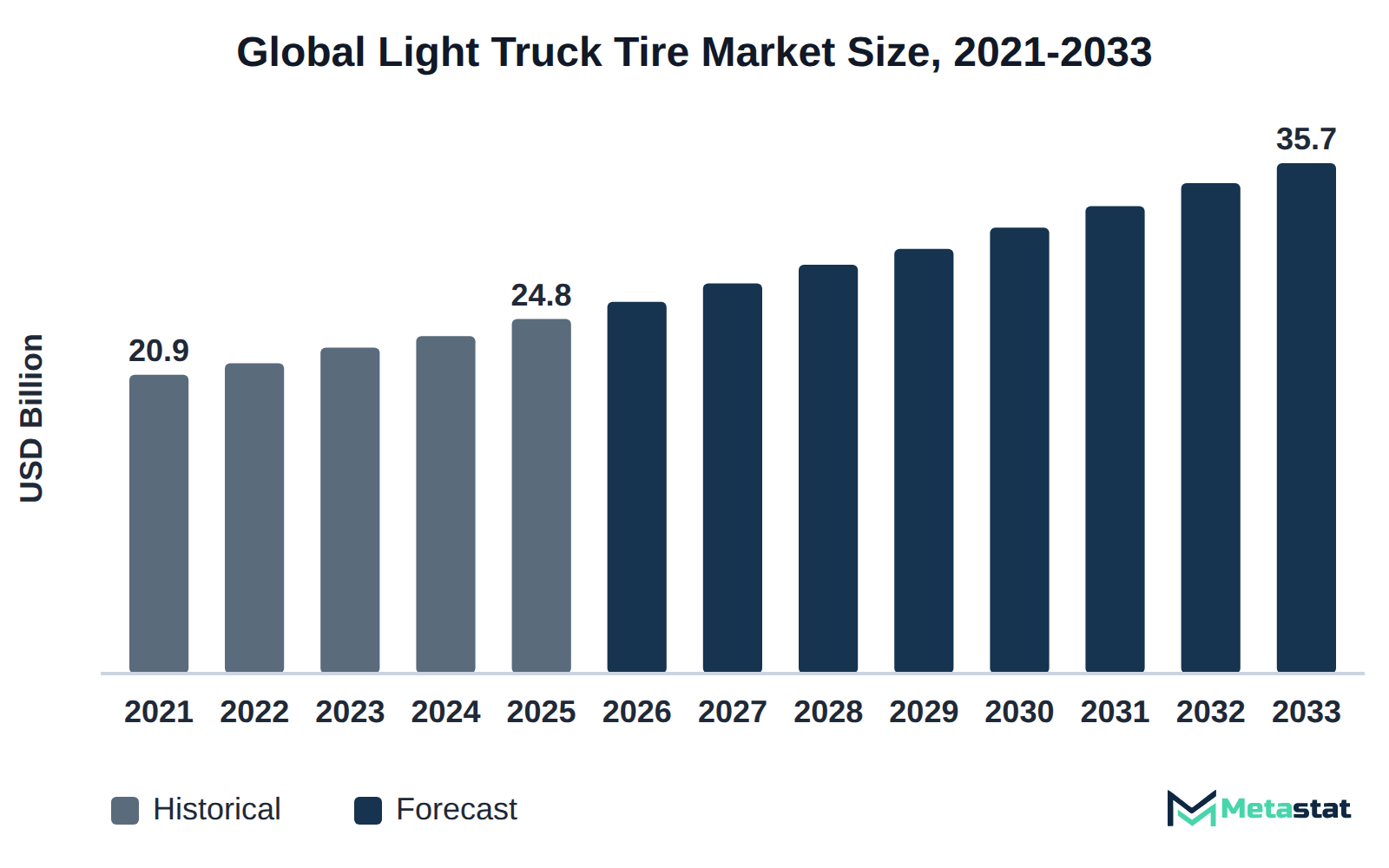
The shift towards replacement demand significantly influences the composition of the light truck tire market. Replacement tires account for a substantial portion of overall tire sales, projected to reach USD 26.2 billion by 2033. This transition arises from the increasing age of light trucks in operation, resulting in heightened demand for new tires to maintain vehicle performance, safety, and efficiency.
Technological advancements in tire manufacturing have led to the development of specialized options, including highway-terrain and all-terrain tires, which cater to diverse driving conditions and vehicle types. Highway-terrain tires, for instance, are expected to see an increase in demand, with values projected to grow from USD 10.4 billion in 2026 to USD 13.8 billion by 2033. This increase reflects a broader trend toward enhancing vehicle traction and comfort on highways.
Fleets adapt to these innovations, and operators face opportunities to improve operational efficiency and reduce maintenance costs. The evolution of tire technology supports the overall performance of light trucks, facilitating better fuel efficiency and driver safety. This trend reshapes tire purchasing strategies and strengthens competitive positioning within the market.
The growing preference for all-terrain tires and larger rim diameters significantly influences purchasing behaviors within the Light Truck Tire market. Evidence from the market indicates that all-terrain tires are projected to reach a value of USD 9.6 billion by 2033, driven by their versatility and capability to perform well in diverse conditions. This shift towards higher-value tire types reflects a broader trend where consumers prioritize performance and safety, impacting purchasing decisions.
Pricing strategies shape these purchasing dynamics. Buyers exhibit a willingness to pay a premium for all-terrain and larger-rim tires, recognizing their enhanced capabilities. Consequently, manufacturers and retailers adopt tiered pricing models, offering a range of products to cater to different consumer segments. This strategy increases overall sales and raises the average transaction value, boosting revenue for suppliers. The market evolves to accommodate these preferences, positioning companies to meet growing demand for high-performance tires.
Fitments for pickup trucks and light commercial vans significantly shape product development within the Light Truck Tire market. From 2026 to 2033, the segment for pickup trucks is projected to grow from USD 12.1 billion to USD 16.8 billion, reflecting a compound annual growth rate (CAGR) of 4.8%. This growth stems from rising consumer preference for pickup trucks, driven by their versatility and performance capabilities in both urban and off-road settings.
The demand for light commercial vans continues to expand, with projections indicating a market value of USD 9.4 billion by 2033. This increase is fueled by the growing e-commerce sector, requiring efficient transportation solutions for last-mile delivery. Tire manufacturers prioritize innovation in tire technology to enhance performance, durability, and efficiency for these vehicle types, ensuring that they meet the specific requirements of businesses relying on light trucks for their operations.
Manufacturers now focus on developing tires for pickup truck and commercial van users. This strategic direction is expected to lead to increased market share and profitability for manufacturers who align their product offerings with the changing preferences of consumers and businesses within the market.
Purchases in the Original Equipment Manufacturer (OEM) segment for light truck tires are increasing steadily due to rising demand from automotive manufacturers. By 2033, OEM purchases are projected to reach USD 9.4 billion, growing from USD 7 billion in 2026, reflecting a compound annual growth rate (CAGR) of 4.3%. This growth is driven by the expansion of the light truck segment and the need for manufacturers to equip new vehicles with high-quality tires that ensure safety and performance. Consequently, manufacturers benefit from a competitive edge by offering vehicles that meet higher standards for reliability and efficiency, enhancing customer loyalty.
In contrast, the replacement tire market is experiencing significant growth, with revenue expected to reach USD 26.2 billion by 2033. This segment demonstrates a CAGR of 4.7%, indicating strong consumer demand for replacement tires in light trucks. Factors including increased vehicle ownership, aging vehicles requiring new tires, and the necessity for improved performance contribute to the rising replacement purchases. The competitive nature of the replacement market encourages suppliers to innovate and enhance product offerings, leading to improved customer satisfaction and market penetration in the light truck tire market.
The growing popularity of pickup trucks significantly influences purchasing decisions within the market. Consumers increasingly favor these vehicles for both personal and commercial use, driven by enhanced utility and versatility. This shift leads to a replacement cycle that requires new tires matching the performance needs of modern pickups. Buyers prioritize tire durability and performance, resulting in increased demand for high-quality light truck tires tailored specifically for this vehicle type. Changing consumer preferences and rising sales volumes affect both pricing and overall growth.
This focus on pickup trucks enhances opportunities for manufacturers to innovate and meet evolving consumer demands.
Advancements in tire technology significantly improve performance characteristics across various vehicle types. Enhanced tread designs and advanced rubber compounds contribute to increased durability and traction, appealing to consumers who prioritize safety and longevity. Manufacturers focus on incorporating specialized materials that reduce rolling resistance, thereby enhancing fuel efficiency, which aligns with the growing demand for sustainable transportation solutions.
These innovations have a notable impact on the Light Truck Tire market, since tire performance directly influences consumer purchasing behavior. The emphasis on high-performance tires caters to the needs of commercial fleets and individual buyers seeking reliability under various driving conditions. Investment in research and development enables tire manufacturers to offer products that meet and exceed consumer expectations, building brand loyalty and encouraging repeat purchases.
As technology continues to evolve, the market is expected to experience a shift towards smart tire solutions featuring sensors that monitor tire health and performance in real-time. This capability enhances overall vehicle safety and reduces the likelihood of tire-related incidents.
Price sensitivity significantly limits consumer adoption of light truck tires, particularly among buyers of light commercial vans and sport utility vehicles. Increased manufacturing costs, driven by rising raw material prices, result in higher retail prices for tires. In response, buyers postpone replacement purchases or opt for lower-cost alternatives, impacting overall market growth. This trend particularly affects the replacement demand channel, where price sensitivity leads to smaller order sizes. Delayed purchasing decisions result in reduced sales volumes for suppliers. The light truck tire market experiences slower growth in segments heavily influenced by price competition, where consumers prioritize cost over brand or performance features. Consequently, manufacturers face challenges in maintaining revenue growth while price sensitivity shapes demand. This environment compels companies to explore cost-reduction strategies without compromising product quality, intensifying competitive pressures in the market.
Raw material costs for the Light Truck Tire market have seen significant fluctuations in recent years, impacting overall profitability. Rising prices for key inputs including rubber, steel, and oil influence production expenses, affecting margin stability for manufacturers. The ongoing volatility in raw material prices forces suppliers to adopt strategic sourcing methods, enabling them to mitigate costs while maintaining production quality. Enhanced supplier partnerships and diversified sourcing strategies emerge as common responses to stabilize costs in an unpredictable market. Several manufacturers invest in innovative materials and technologies that offer performance improvements, aligning with shifts in consumer preference toward higher-quality tires. These strategies facilitate a balance between retaining competitive pricing and ensuring product excellence, ultimately supporting growth in market share.
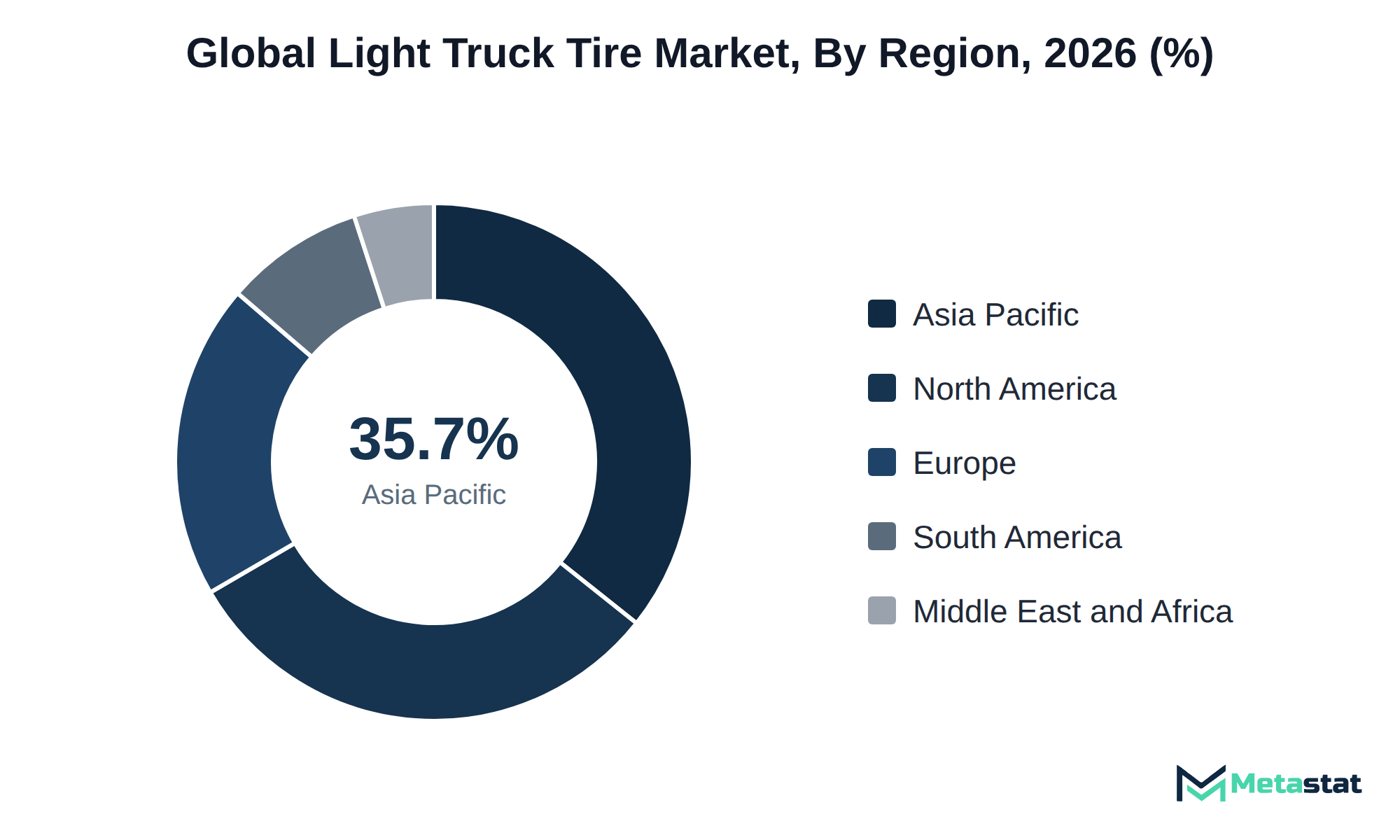
The Asia Pacific region presents a significant growth opportunity for the light truck tire market, driven by increasing vehicle ownership and urbanization trends. This region is projected to capture 35.7% of the market share and presents a robust compound annual growth rate of 4.6% from 2026 to 2033. The rising demand for pickup trucks and light commercial vans, alongside a growing middle class with higher disposable income, supports this growth. Addressing this demand with high-quality, durable tires tailored to local driving conditions enhances market penetration. Manufacturers focusing on improving tire performance and durability in this region are likely to experience increased sales and a stronger competitive position.
The Global Light Truck Tire market is segmented based on Vehicle Type, Demand Channel, Tire Type, and Rim Diameter.
This segment is primarily used by consumers and businesses requiring versatile vehicles for transportation and cargo. Demand for pickup trucks is driven by increasing popularity, particularly among recreational users and contractors needing reliable utility vehicles. The growth rate for this segment outpaces that of light commercial vans, which are projected to grow at a CAGR of 4.7%. This distinction highlights the preference for larger, more capable vehicles among buyers. The pickup trucks segment benefits from advancements in tire technology, enhancing performance and safety features, a factor that appeals to consumers seeking both functionality and comfort. The market is expected to grow through innovative tire solutions tailored to this vehicle type.
Light Commercial Vans segment is estimated to reach USD 9.4 billion by 2033, at a CAGR of 4.7% during the forecast period. This segment primarily serves businesses that use light commercial vans for goods transportation, delivery services, and trades, significantly impacting logistics and service industries. Demand growth originates from the increasing reliance on e-commerce and the need for efficient last-mile delivery solutions. In contrast to other segments, this sub-segment reflects steadier growth, driven by buyers who prioritize durability and efficiency over high performance. Unlike the Pickup Truck segment, which exhibits a faster growth rate at a CAGR of 4.8%, Light Commercial Vans show a more stable demand profile, driven by utilitarian needs rather than recreational usage. Pricing strategies for tires in this segment focus on long-term durability and cost-effectiveness, appealing to fleet operators seeking value in their purchases.
Sport Utility Vehicles segment is expected to reach USD 8 billion by 2033. This segment includes vehicles designed for both on-road and off-road capabilities, catering to consumers seeking versatility and performance. Popular among families and outdoor enthusiasts, this segment experiences growth driven by increasing consumer preferences for multifunctional vehicles. Compared to other segments, sport utility vehicles demonstrate a relatively stronger demand, supported by a rising trend toward recreational activities and lifestyle changes. While the growth rate for sport utility vehicles is notable, it remains slower than the pickup truck segment, which is projected to grow at a CAGR of 4.8%. The demand for sport utility vehicle tires reflects the ongoing shift toward larger, more versatile vehicles in the automotive landscape, impacting purchasing decisions within the market.
Chassis Cab and Other Light Trucks segment is projected to grow at a CAGR of 4% during the forecast period. This segment encompasses vehicles designed for heavy-duty tasks, often used in commercial applications including delivery services and construction. Demand for these vehicles arises from businesses requiring reliable transportation for goods and services. Key factors influencing this segment include the rising trend of urbanization, which drives the need for efficient logistics solutions. This segment exhibits slower growth compared to others, including Pickup Trucks, which are experiencing a CAGR of 4.8%. The focus on utility and durability sets this segment apart, appealing to businesses prioritizing functionality over personal preferences, resulting in distinct purchasing patterns and pricing strategies in the market.
This segment primarily serves vehicle manufacturers, supplying light truck tires designed for new vehicles. Demand arises from the automotive manufacturing sector, which increasingly prioritizes high-quality, durable tires to enhance vehicle performance and safety. A notable driver of this segment's growth includes the rising production of light trucks, especially pickup trucks and light commercial vans, which differ from the replacement segment that focuses on aftermarket needs. The Original Equipment segment exhibits a slower growth rate compared to the Replacement segment's CAGR of 4.7%, reflecting the established nature of OEM supply chains against the dynamic aftermarket landscape. Evolving regulations on tire safety and performance standards further influence tire specifications in this segment, promoting advancements in tire technology and quality.
Replacement segment is estimated to reach USD 26.2 billion by 2033, at a CAGR of 4.7% during the forecast period. This segment serves the ongoing demand for tire replacement in light trucks, primarily catering to fleet operators and individual vehicle owners. The primary driver for this segment stems from the increasing usage of light trucks in various applications, necessitating regular tire changes due to wear and tear. Maintenance practices among commercial fleet management teams emphasize the importance of ensuring optimal tire performance, driving consistent demand for replacement tires. Compared to the original equipment segment, which is projected to grow at a CAGR of 4.3%, the replacement segment experiences slightly faster growth. This trend reflects a broader consumer inclination toward vehicle maintenance and safety, which makes this segment central to the overall Light Truck Tire market.
These tires serve as a critical component in providing a balance between on-road comfort and off-road capability, making them popular among consumers who require versatile vehicles for various terrains. The segment attracts buyers, including individual consumers and fleet operators, who prioritize durability and performance across diverse road conditions. The growing demand for SUVs and light trucks significantly drives this segment, while advancements in tire technology enhance performance features. Compared to other tire types, Highway-Terrain Tires exhibit a moderate growth rate, influenced by stable pricing and consumer preferences shifting toward multi-functional tires. This segment's performance directly impacts the broader Light Truck Tire market, reflecting trends in vehicle usage and consumer behavior.
All-Terrain Tires segment is estimated to reach USD 9.6 billion by 2033, at a CAGR of 5.8% during the forecast period. This segment serves vehicle owners who require versatility in tire performance across varying terrains, providing utility for both recreational and utility-oriented applications. The increasing trend toward outdoor activities drives demand for all-terrain tires, appealing to a diverse consumer base that values adaptability. Unlike other tire types, this segment experiences faster growth, supported by a CAGR of 5.8%, compared to Highway-Terrain Tires, which have a CAGR of 4.1%. The preference for all-terrain tires creates upward pricing pressure, differentiating it from segments focused solely on highway use. Ongoing innovation in tire technology enhances the performance and durability of all-terrain options, further strengthening their position in the Light Truck Tire market.
The Mud-Terrain Tires segment is expected to reach USD 3.8 billion by 2033. This tire type is specifically designed for vehicles that frequently encounter rugged, off-road conditions, making them ideal for off-road enthusiasts and recreational vehicle users. The demand for Mud-Terrain Tires has increased due to growing interest in outdoor activities and the need for vehicles that handle challenging terrains. Compared to other tire types, Mud-Terrain Tires typically exhibit a higher price point, reflecting their specialized design and construction. The segment experiences a CAGR of 5.8%, indicating stronger growth compared to other tire types in the market. Consumers purchasing Mud-Terrain Tires prioritize performance and durability, distinguishing them from buyers of other tire types who focus on all-around usability or cost-effectiveness. This segment's unique features contribute to its differentiated position within the broader Light Truck Tire market.
Winter Tires segment is projected to grow at a CAGR of 4.2% during the forecast period. These tires are specifically designed for optimal performance in cold and snowy conditions, offering improved traction and safety for light truck users in adverse weather. Typically, consumers in regions with harsh winters, including those engaging in outdoor recreational activities, favor this tire type. Demand for Winter Tires is driven by increasing awareness of safety benefits among consumers and the growing prevalence of severe winter weather events. This segment differentiates itself from others, including All-Terrain and Highway-Terrain Tires, due to its specialized design, leading to higher prices for Winter Tires. The market for Winter Tires reflects a commitment to enhancing driving safety and performance under challenging conditions, ensuring consistent demand among consumers prioritizing vehicle safety during winter months.
All-Season Tires provide versatile performance for light trucks, serving drivers who require dependable handling across various weather conditions and terrains. This tire type attracts consumers seeking a balance between performance and affordability. Demand for All-Season Tires is expected to grow steadily, fueled by increasing consumer preference for multi-functional vehicles that adapt to changing conditions. Vehicle owners prioritizing cost-effectiveness contribute to this segment's appeal, with these tires typically offering lower long-term ownership costs compared to specialized tire types. This segment experiences moderate growth, distinguishing itself from more specialized tire segments, which often face higher demand or price points. Although competition exists, the All-Season Tires segment successfully caters to diverse buyer needs by offering reliable alternatives for both urban and rural driving environments, enhancing the overall attractiveness of the Light Truck Tire market.
Commercial specialty tires cater to specific applications, often serving niche markets that require unique performance characteristics. These tires find usage in various industries, including agricultural machinery, construction, and delivery services, where specialized capabilities are essential. Demand for this segment is driven by the increasing need for efficient and durable tires capable of handling specific terrains and loads. The commercial specialty tire segment differs from other tire types regarding pricing and target customers, typically appealing to businesses that prioritize performance over cost. This focus on specialized performance often results in higher price points compared to standard tires. The market is expected to expand, reflecting ongoing trends in logistical and operational efficiencies across industries.
Valued at USD 7 billion in 2026, the Below 16 Inches segment is projected to reach USD 8.8 billion by 2033, at a CAGR of 3.4% during the forecast period. This segment primarily serves customers seeking tires for smaller vehicles, including compact trucks and utility vehicles, where maneuverability and cost-effectiveness are crucial. Demand for this segment is driven by the increasing preference for smaller vehicles in urban environments where parking space is limited. Compared to other segments, including those with larger rim diameters, the Below 16 Inches segment experiences slower growth but remains vital due to its affordability and suitability for light-duty applications. The focus on economical choices for everyday transportation is expected to sustain interest in this segment, even while the overall market expands.
Segment 16 to 18 Inches is estimated to reach USD 17.1 billion by 2033, at a CAGR of 4.7% during the forecast period. This segment caters to vehicles requiring a specific rim size, commonly found in various models of light trucks. Typically, owners of pickup trucks and light commercial vans select tires from this segment, benefiting from enhanced handling and stability. The growth of this segment stems from increasing consumer demand for mid-range vehicles that offer a balance of performance and cost. Compared to other rim diameter segments, 16 to 18 Inches experiences steady expansion, with a slightly higher price point reflecting demand for quality and durability. This segment's strong performance reflects broader trends in vehicle customization and an overall increase in light truck usage within the market.
Above 18 Inches segment is projected to reach USD 9.8 billion by 2033. This segment primarily caters to larger light trucks that require enhanced performance and durability, commonly used by commercial fleets and off-road enthusiasts. Growth in this segment is driven by increasing demand for vehicles that offer improved capabilities on rugged terrains, leading to higher adoption rates among buyers seeking off-road functionality. Compared to other rim diameter segments, this category experiences slower growth, influenced by the higher price point associated with larger tires, which often limits its market penetration. The anticipated CAGR for this segment falls behind other rim diameter categories, reflecting a nuanced market dynamic where specialized applications dictate demand.
Based on geography, the Global Light Truck Tire market is divided into North America, Europe, Asia-Pacific, South America, Middle East, and Africa.
Demand in North America for the Light Truck Tire market stems primarily from the popularity of pickup trucks and light commercial vans. The region benefits from a robust automotive industry, supported by a strong consumer preference for versatile vehicles that fulfill both utility and recreational needs. North America accounted for 30.9% of the global market share in 2025, reflecting its significant role in tire consumption.
By the end of 2033, the market is projected to reach USD 10.6 billion. This growth results from increasing sales of both original equipment and replacement tires, driven by the ongoing expansion of the light truck segment. Infrastructure investments in the United States, Canada, and Mexico further enhance the availability and accessibility of light truck tires, supporting overall market growth.
The European market for light truck tires experiences notable demand driven by a robust automotive sector and increasing adoption of light commercial vehicles. Countries including Germany and France contribute significantly to this growth due to their strong manufacturing bases and high vehicle ownership rates. Spain and Italy show rising investments in infrastructure, enhancing the distribution channels for tire manufacturers. The market benefits from stringent regulations focused on environmental standards, pushing buyers toward more efficient tire options. In 2025, the share of this market is projected at 19.7%, with a growing emphasis on sustainable production methods. The market is expected to expand further, driven by rising consumer preferences for performance and safety in light truck tires.
In Asia Pacific, the Light Truck Tire market experiences significant growth driven by rising demand from the transportation and logistics sectors. Countries including China and India contribute significantly to this trend, supported by expanding urbanization and infrastructure development. The increasing adoption of light trucks for commercial purposes enhances market penetration. Favorable government policies aiming to stimulate automotive manufacturing and infrastructure investments enhance the region's potential. With a market share of 35.7% in 2025, this region reflects a strong position within the global landscape. The forecast indicates an increase in tire sales, particularly in the pickup truck and light commercial van segments, aligning with the region's economic growth and consumer preferences.
The Light Truck Tire market in South America reflects unique demand dynamics, primarily influenced by the growing automotive sector in Brazil and Argentina. Increased consumer preference for light commercial vehicles and pickup trucks drives significant tire replacement needs. Infrastructure developments in urban areas enhance accessibility, facilitating market growth. Brazil, the largest economy in the region, contributes substantially to market expansion, while Argentina shows increasing demand for light truck tires driven by growing logistics and transportation sectors. With a market share of 8.7% in 2025, the region exhibits potential for ongoing growth, largely fueled by rising disposable incomes and a shift toward online retail channels for tire purchasing. These elements position South America as an emerging area within the global Light Truck Tire market.
Regional demand for light truck tires in the Middle East and Africa primarily arises from the growing automotive sector, with significant contributions from countries like Saudi Arabia, the UAE, and South Africa. Strong infrastructure development, particularly in urban areas, supports the expansion of light commercial vehicles. The market faces unique challenges, including varying regulatory landscapes and economic conditions that affect tire pricing and availability. With a market share of 5.00% in 2025, the region is expected to experience growth driven by increasing investment in transportation infrastructure and rising consumer preferences for light trucks. The light truck tire market in this region is projected to evolve, reflecting ongoing trends in vehicle usage and consumer demand.
The competitive environment in the Light Truck Tire market features a diverse range of manufacturers and suppliers, with companies targeting various segments based on product type and consumer demand. Key categories include manufacturers focused on original equipment and those concentrating on replacement tires, which significantly influence buyer preferences.
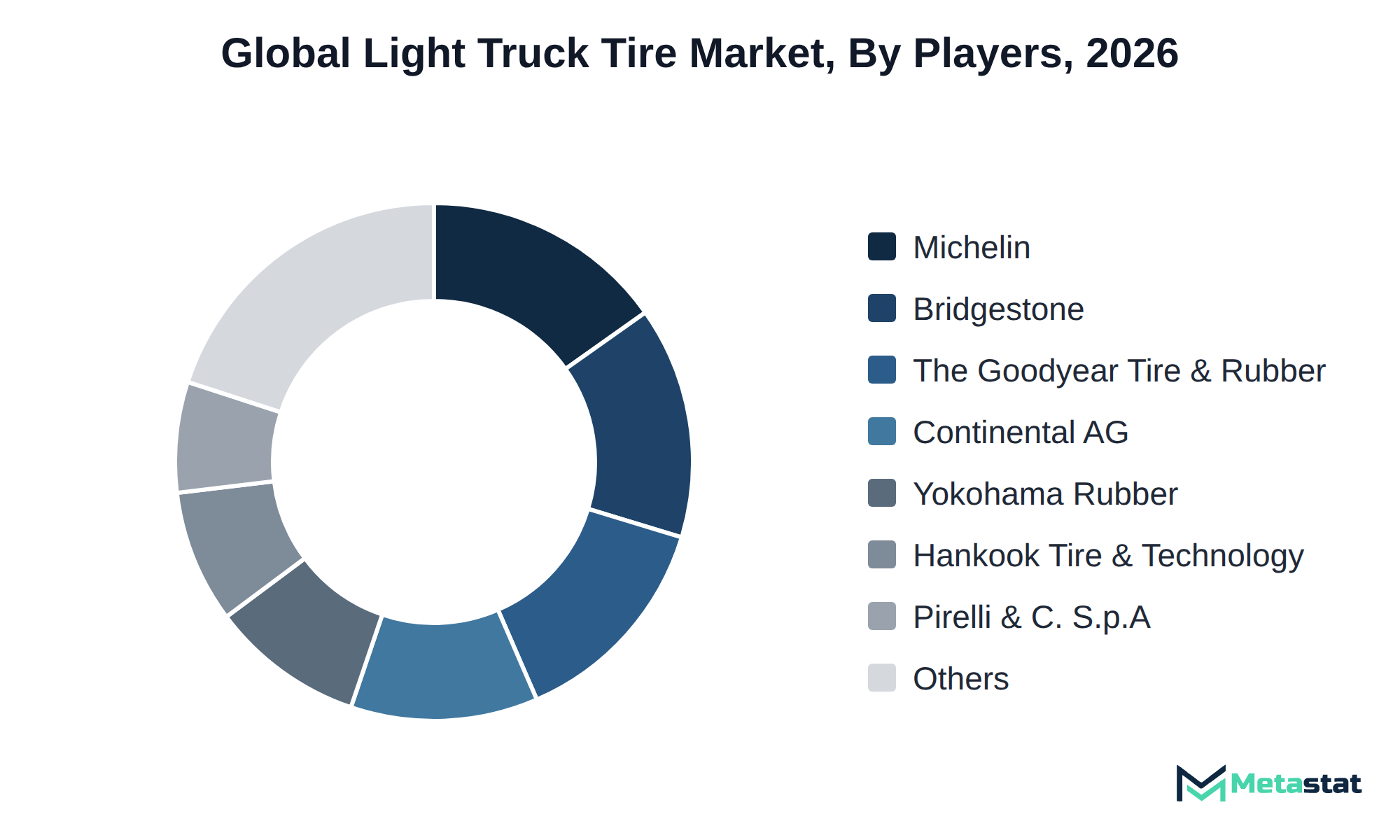
Price, certification, customization, and service quality emerge as critical factors driving buyer decisions. Brands including Michelin Group emphasize high-performance tires and innovative technology, while Bridgestone Corporation focuses on sustainability and eco-friendly tire solutions. The Goodyear Tire & Rubber Company highlights durability and performance in its offerings, catering to the rigorous demands of light truck applications.
Several players, including Continental AG and Yokohama Rubber Co., Ltd., prioritize product diversity, addressing varying consumer needs within the market. Companies like Pirelli & C. S.p.A. and Hankook Tire & Technology Co., Ltd. appeal to buyers through specialized tire types, enhancing their competitive positions with unique selling propositions. Companies continually adapt to capture consumer attention and stay relevant.
Achieving this growth depends on several developments within the market. First, the demand for light truck tires in the pickup truck segment will drive significant revenue. Second, the replacement demand channel will contribute substantially, projected to reach USD 26.2 billion by 2033, supported by a 4.7% CAGR. Lastly, the Asia Pacific region, accounting for 35.7% of the market share, significantly contributes to propelling growth due to rising vehicle ownership and increased logistics activities. However, market growth faces risks, particularly from fluctuations in raw material prices, which could challenge manufacturers' profitability. Adverse economic conditions affect consumer spending on light trucks, leading to reduced tire replacement rates. Navigating these challenges will be essential for the light truck tire market to achieve its full potential by 2033.
By Vehicle Type: Pickup Trucks, Light Commercial Vans, Sport Utility Vehicles, Chassis Cab and Other Light Trucks
By Demand Channel: Original Equipment, Replacement
By Tire Type: Highway-Terrain Tires, All-Terrain Tires, Mud-Terrain Tires, Winter Tires, All-Season Tires, Others (Commercial Specialty Tires)
The report strategically identifies and profiles the key market players and analyses their core competencies in each sub-segment of the Light Truck Tire market.
Report Attributes | Details |
Study Period | 2021-2033 |
Base Year | 2025 |
Estimated Year | 2026 |
Forecast Period | 2026-2033 |
Historical Period | 2021-2025 |
Growth Rate | CAGR 4.6% from 2026 to 2033 |
Revenue Unit | USD billion |
Segmentation | By Vehicle Type, Demand Channel, Tire Type, Rim Diameter, and Region |
By Region | North America (By Vehicle Type, Demand Channel, Tire Type, Rim Diameter, and Country)
|
Europe (By Vehicle Type, Demand Channel, Tire Type, Rim Diameter, and Country)
| |
Asia Pacific (By Vehicle Type, Demand Channel, Tire Type, Rim Diameter, and Country)
| |
South America (By Vehicle Type, Demand Channel, Tire Type, Rim Diameter, and Country)
| |
Middle East and Africa (By Vehicle Type, Demand Channel, Tire Type, Rim Diameter, and Country)
|
Find answers to common questions about this report
The Light Truck Tire market size was valued at USD 24.8 billion in 2025.
The market is projected to grow at a CAGR of 4.6% during the forecast period from 2026 to 2033.
The North America Light Truck Tire market size is estimated to reach USD 10.6 billion by 2033.
Pickup Trucks lead the Light Truck Tire market with a projected value of USD 16.8 billion by 2033. This segment shows the highest growth rate among vehicle types, with a CAGR of 4.8%.
The growing popularity of pickup trucks significantly influences purchasing decisions, driven by enhanced utility and versatility. Advancements in tire technology improve performance characteristics, appealing to consumers who prioritize safety and longevity.
Price sensitivity significantly limits consumer adoption, particularly among buyers of light commercial vans and sport utility vehicles. Increased manufacturing costs, driven by rising raw material prices, result in higher retail prices for tires, impacting overall market growth.
The growing popularity of pickup trucks enhances demand for high-quality light truck tires, driven by consumers' preferences for durability and performance. advancements in tire technology that improve safety and fuel efficiency align with the evolving consumer expectations, further supporting market adoption.
The Light Truck Tire market is estimated to reach a valuation of USD 35.7 billion by 2033.
Key players operating in the Light Truck Tire market include Michelin Group, Bridgestone Corporation, The Goodyear Tire & Rubber Company, Continental AG, Yokohama Rubber Co., Ltd., Pirelli & C. S.p.A., and Hankook Tire & Technology Co., Ltd.
The pickup truck tire segment is projected to grow from USD 12.1 billion in 2026 to USD 16.8 billion by 2033, reflecting a compound annual growth rate of 4.8%.
The analysts below cover Automotive and Transportation research at Metastat Insights.
LEAD ANALYST
Utkarsh Khirodkar is a Lead Market Research Analyst at MetaStat Insight, specializing in market intelligence, technology sector assessments, and competitive strategy.

ENERGY & INFRASTRUCTURE INDUSTRY CONSULTANT
Automotive and Transportation · Electronics and Semiconductor · Energy and Power · Machinery & Equipment
Saurabh Vasant Ganvir consults for Energy & Infrastructure Industry at MetaStat Insight, specializing in renewable energy, solar EPC, and electric vehicle (EV) infrastructure markets.
Evaluating sensor fusion reliability across harsh operating environments can be tricky without field-validated data. The study on agricultural autonomous guidance systems clearly separated stereo vision setups from automotive-grade solid-state LiDAR. We appreciated the regional infrastructure analysis, specifically around RTK network density across North America and South America. During our follow-up consultation, the MetaStat Insight team walked through tier-two perception software partnerships, giving our engineering leads a practical basis for vendor shortlisting.
Analyzing the transition from natural gas to green hydrogen in iron ore reduction requires realistic infrastructure timelines. Meta stat insight supplied a detailed regional assessment of DRI plant conversion costs and scrap metal availability in North America and Western Europe. Their report carefully examined pellet quality specs and electrical grid access constraints without making oversimplified market assumptions. The research material served as a practical reference during internal technology roadmap discussions.
Integrating zero-trust access controls across legacy electronic health record systems involves complex compliance overhead. Team produced an analysis that clearly separated identity governance and administration tools from privileged access management platforms. Their evaluation of HIPAA and GDPR compliance features across cloud native solutions gave our architecture group clear baseline criteria. The custom data request regarding biometric authentication adoption in hospital networks was returned promptly with clear documentation.
Explore related market intelligence reports worth reading alongside this one.
Starting from
$2950