
LEAD ANALYST
Utkarsh Khirodkar is a Lead Market Research Analyst at MetaStat Insight, specializing in market intelligence, technology sector assessments, and competitive strategy.

Global MEMS Acoustic Camera Market Size, Share, By Product Type (Handheld Acoustic Cameras, Portable Acoustic Cameras, Fixed-Mount Acoustic Cameras, Array-Based Acoustic Imaging Systems and Others), By Measurement Range (Short-Range Acoustic Cameras (Below 50 cm), Medium-Range Acoustic Cameras (50-100 cm) and Long-Range Acoustic Cameras (Above 100 cm)), By Application (Noise Source Localization, Leak Detection, Partial Discharge Detection, Predictive Maintenance, Noise, Vibration and Harshness (NVH) Testing, Environmental Noise Monitoring, Quality Control and Product Testing and Others), By End-Use Industry (Automotive and Transportation, Aerospace and Defense, Manufacturing and Industrial Machinery, Energy and Power Generation, Oil and Gas, Electronics and Semiconductor, Building and Construction, Utilities and Infrastructure and Others), Industry Analysis, Growth, Trends, and Forecast, 2026-2033
Report ID
MSI-5699
Published
November, 2026
Pages
301 Pages
Format
Historical
Base year
Forecast
Forecast period
Report Details
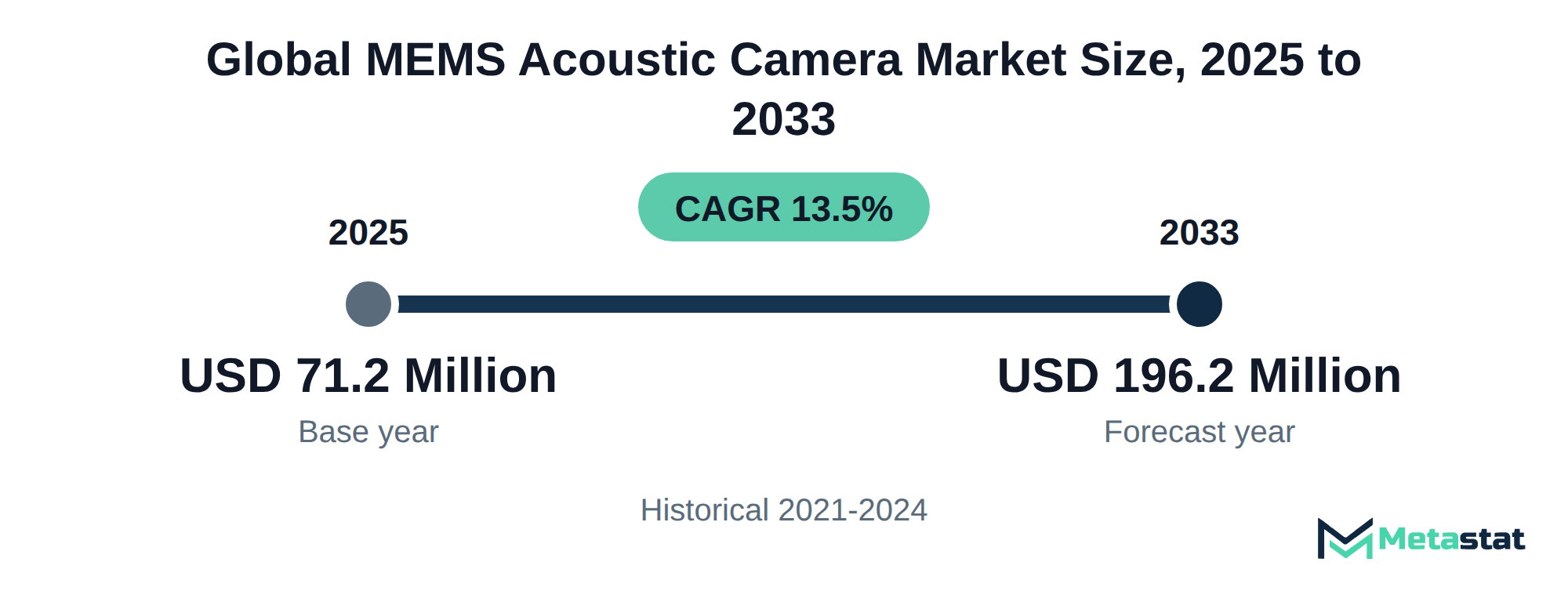
Market Valuation: Valued at $71.2 Million in 2025, projected to reach $196.2 Million by 2033 at a 13.5% CAGR.
Dominant Segment: The Portable Acoustic Cameras segment leads the market, driven by their versatility and adoption across industries for effective noise analysis and leak detection.
Geographic Lead: North America is the leading region, accounting for 34.0% of the market in 2025, bolstered by a strong industrial base and a focus on technological innovation.
What's Inside: This report provides comprehensive coverage of the MEMS Acoustic Camera market, including detailed analyses of product types, applications, and end-use industries, along with forecasts through 2033.
Growth Drivers: Key growth drivers include increasing regulatory pressures for noise and leak detection, advancements in acoustic imaging technology, and the rising demand for predictive maintenance solutions.
Emerging Trends: The market is witnessing a shift towards handheld and portable devices, reflecting a growing preference for mobility and ease of use in various applications.
Choose Your License
Global MEMS Acoustic Camera Market
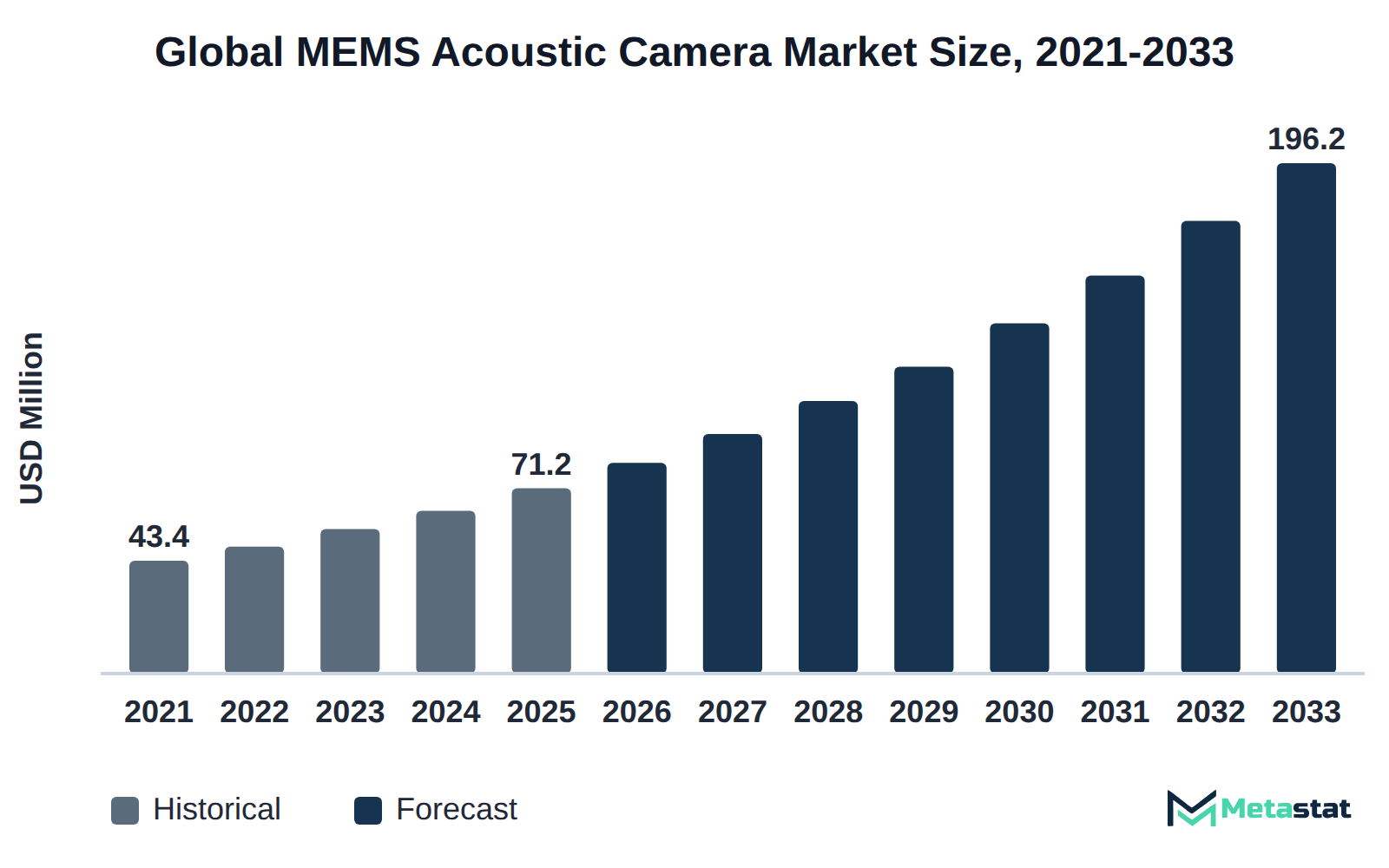
The global MEMS Acoustic Camera market was valued at USD 71.2 million in 2025 and is projected to reach USD 196.2 million by 2033, growing at a CAGR of 13.5% over the forecast period.
The MEMS Acoustic Camera market covers acoustic imaging technologies that enhance performance across applications. Buyers invest in these solutions to improve precision in processes including noise source localization, leak detection, and predictive maintenance. The increasing demand for accurate and efficient diagnostic tools drives spending among industries including automotive, aerospace, and manufacturing.
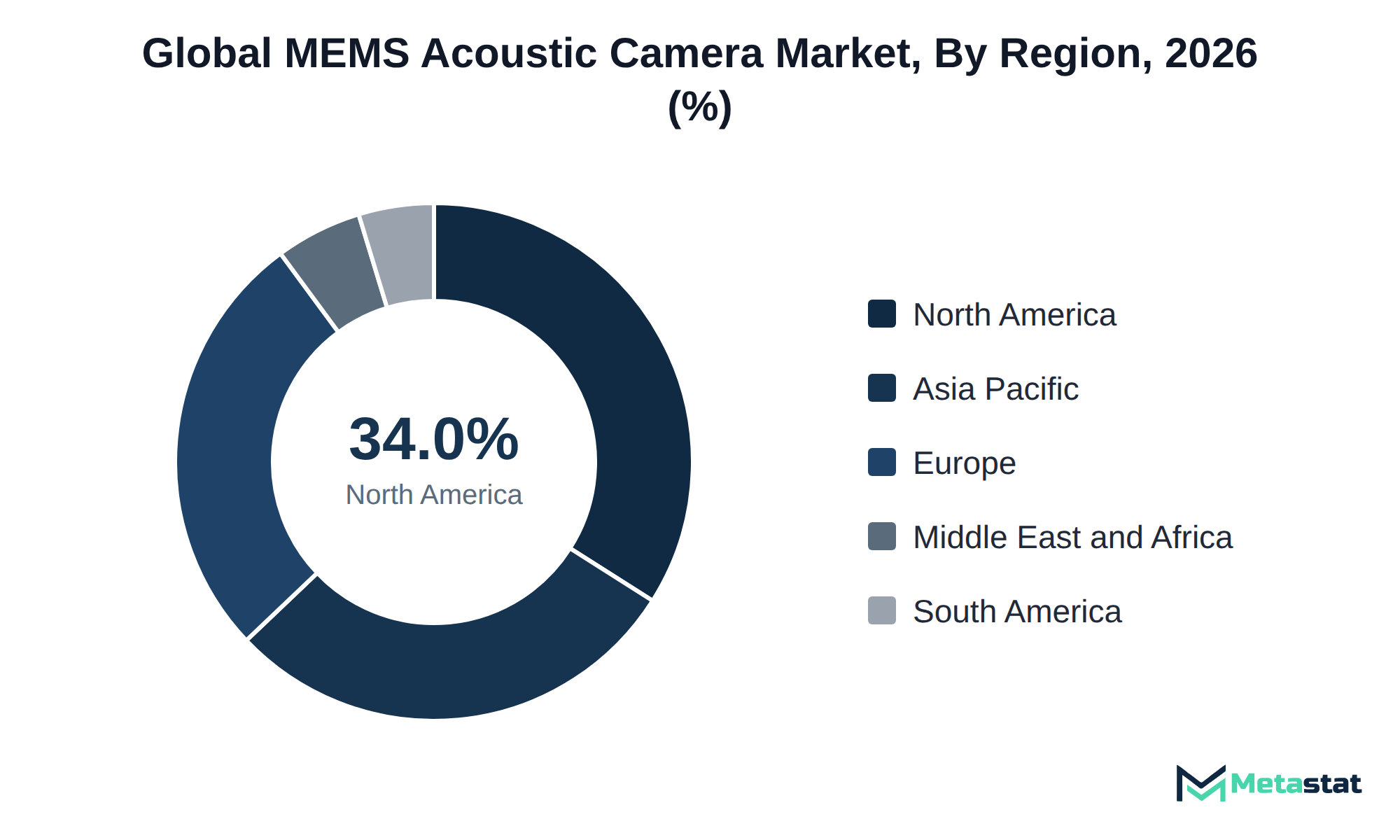
Growth in the market stems from advancements in technology and rising awareness of the benefits offered by acoustic cameras. Portable Acoustic Cameras represent the segment with the highest value, reflecting significant adoption among users seeking flexibility and efficiency. North America holds 34.0% of the market in 2025, with the US leading in 2026. This region benefits from a strong industrial base and a focus on innovation, positioning it favorably for continued expansion.
One main growth driver involves the escalating need for effective noise and leak detection solutions, particularly within the manufacturing sector. Industries strive for greater operational efficiency and compliance with environmental regulations, driving demand for MEMS Acoustic Cameras. This environment gives market players room to improve their offerings and capture emerging trends.
The MEMS Acoustic Camera market encompasses a range of acoustic imaging solutions designed to identify and analyze sound sources, leaks, and defects across various industries. Buyers invest in these technologies to enhance operational efficiency, improve product quality, and ensure safety compliance. Growth in demand reflects a shift toward advanced monitoring systems in sectors including automotive, manufacturing, and energy, where precision and reliability are crucial.
The handheld acoustic cameras segment generates the most revenue, driven by their versatility and ease of use in applications including noise source localization and predictive maintenance. The medium-range acoustic cameras segment displays significant growth due to expanding applications in industrial settings.
Key growth factors include increasing regulatory pressures for noise control and safety, which prompt industries to adopt more advanced acoustic monitoring solutions. The trend toward automation and smart technologies shapes the market's trajectory, as companies seek to integrate these systems into their operations. The ongoing development of portable and array-based imaging systems further supports the demand for innovative acoustic solutions.
MEMS microphone array technology significantly enhances the capabilities of acoustic imaging in the MEMS Acoustic Camera market. This technology allows for precise sound localization and superior audio quality, essential for applications including noise source localization and leak detection. The integration of microphone arrays enables devices to capture more detailed acoustic data, leading to better resolution in imaging.
The revenue from noise source localization is projected to increase from USD 16.1 million in 2026 to USD 35.8 million by 2033, reflecting a compound annual growth rate of 12.1%. This growth indicates rising demand for high-resolution imaging solutions across various industries, including automotive and aerospace, where accurate sound detection is critical for safety and efficiency.
The advancement of MEMS microphone arrays influences product development, encouraging manufacturers to invest in research and engineering to enhance acoustic imaging systems. This technology shift improves product offerings and positions companies competitively, and firms that adopt advanced MEMS technologies gain a significant advantage in delivering high-quality solutions to end users.
The MEMS Acoustic Camera market increasingly favors flexible pricing models, enabling buyers to tailor their investments to specific operational needs. In the context of applications including leak detection and predictive maintenance, the pricing structures often take the form of subscription-based models or one-time purchases, depending on the buyer's preference for equipment ownership versus access to the latest technology. Market data indicates that leak detection applications are projected to reach a value of USD 36.8 million by 2033, reflecting growing demand for effective monitoring solutions.
Buyers frequently choose between outright purchases of portable acoustic cameras and subscription services offering regular upgrades and support. This flexibility helps companies match financial commitments to operational requirements and address maintenance needs. In competitive industries including manufacturing and industrial machinery, investment in acoustic camera technology that supports predictive maintenance is essential for minimizing downtime and optimizing operational efficiency. Thus, the evolution of pricing strategies in the MEMS Acoustic Camera market significantly influences buyer decisions and overall market growth.
Demand for specialized imaging applications in the MEMS Acoustic Camera market grows significantly due to the increasing focus on automotive noise, vibration, and harshness (NVH) testing and partial discharge detection. In 2026, the market for noise source localization, a crucial application for NVH testing, is expected to reach USD 16.1 million, demonstrating a compound annual growth rate (CAGR) of 12.1% through 2033. This growth aligns with the automotive industry's stringent requirements for noise reduction and efficiency, compelling manufacturers to adopt advanced imaging technologies.
Partial discharge detection, essential for maintaining the reliability of electrical equipment, benefits from similar advancements in MEMS Acoustic Camera technology. This application is projected to achieve a significant market presence, with innovative imaging systems enhancing the precision of diagnostics. The automotive sector, alongside aerospace and defense, presents unique challenges requiring specialized acoustic imaging solutions. The emphasis on reducing operational costs while maintaining performance standards drives investments in these technologies, leading to accelerated adoption of MEMS Acoustic Cameras in various applications.
Overall, the specialized needs of the automotive industry create opportunities for MEMS Acoustic Camera manufacturers. By addressing the demands for enhanced accuracy in noise detection and partial discharge diagnostics, suppliers strengthen their market positions and cater to the evolving requirements of clients in these sectors.
MEMS acoustic cameras transform industrial noise localization and equipment diagnostics. The technology enables precise identification of noise sources in various industrial settings, enhancing operational efficiency. In the automotive and transportation sector, demand for these cameras is projected to grow from USD 17.8 million in 2026 to USD 40.1 million by 2033, reflecting a compound annual growth rate (CAGR) of 12.3%. This growth stems from the need for accurate diagnostics, preventing equipment failure and reducing maintenance costs.
These cameras provide superior accuracy in detecting sound anomalies, supporting predictive maintenance strategies. Industries face increasing pressure to minimize downtime, and the value of noise source localization becomes evident. For instance, the application of MEMS acoustic cameras in leak detection is projected to reach USD 36.8 million by 2033 with a CAGR of 14.5%. This significant increase highlights the demand for reliable diagnostics that identify potential issues before they escalate, ensuring continuous operation and reducing repair costs.
Growing interest in noise source localization drives significant investments from automotive and transportation firms. The shift towards electric vehicles and stringent noise regulations influences manufacturers to adopt advanced acoustic technologies for enhanced performance and compliance. The ability to precisely identify noise sources supports improved product quality and customer satisfaction. While vehicles become quieter, the demand for effective noise detection solutions rises, leading to increased sales in the MEMS Acoustic Camera market. This rising spending marks an important phase in noise management, encouraging further investment in the market.
Advances in acoustic imaging technology expand the capabilities available to industries. Innovations in sensor design and data processing drive improvements in resolution and accuracy, allowing MEMS acoustic cameras to deliver superior performance in applications including noise source localization and leak detection. These advancements prompt wider adoption among sectors focused on predictive maintenance and environmental monitoring.
Key players in the MEMS Acoustic Camera market invest in research and development to create systems that provide higher fidelity imaging and real-time data analysis. Enhanced functionalities contribute to greater operational efficiency, reducing downtime while improving safety and compliance within industrial environments. The proliferation of these advanced systems defines competitive dynamics, pushing suppliers to differentiate through technological superiority. Ongoing innovation in the MEMS acoustic camera segment supports increasing demand, reinforcing growth trajectories across various end-use applications.
Increasing production and operational costs hinder the adoption of MEMS Acoustic Cameras among key buyer segments, including automotive and manufacturing industries. Escalating expenses related to raw materials and technology integration drive up the overall investment required for new systems. This financial pressure results in smaller order sizes and delayed replacements, particularly for companies hesitant to allocate significant budgets for advanced acoustic imaging solutions. The limited availability of cost-effective options restricts market penetration, forcing buyers to reconsider their timelines for equipment upgrades. Such constraints lead to a slower pace of innovation within the market, impacting organizations reliant on timely investments for competitive advantage. Ultimately, these rising costs shape the purchasing strategies of potential customers, influencing their decision-making processes and altering their engagement levels with the market.
Suppliers in the MEMS Acoustic Camera market encounter significant challenges related to rising input costs, which directly affect profit margins. Increased prices for essential components and raw materials create financial strain, compelling suppliers to reassess their pricing strategies. Escalating costs of production materials, including advanced sensors and microelectronic components, necessitate a careful balance between maintaining competitive pricing and ensuring profitability. Several suppliers have responded by optimizing their supply chains, seeking alternative sourcing options, and investing in research and development to cultivate innovative solutions that reduce dependency on expensive materials. Such strategies enhance the overall efficiency of production processes while addressing the cost pressures that impact market dynamics. Input costs continue to rise, and suppliers' ability to adapt their strategies will play a crucial role in sustaining their market presence and meeting the demands of diverse industries relying on advanced acoustic imaging technologies.
Handheld acoustic cameras represent a significant growth opportunity within the MEMS Acoustic Camera market, driven by their increasing adoption across various sectors. Strong demand originates from the automotive and transportation industries, where such devices enhance noise source localization and diagnostic capabilities. With a projected compound annual growth rate (CAGR) of 12.1% from 2026 to 2033, the market for handheld devices is expected to expand from USD 24.8 million in 2026 to USD 55.2 million by 2033. This growth is fueled by advancements in technology that improve usability and functionality, making these cameras more appealing to end-users. The ability to quickly identify and address noise-related issues enhances operational efficiency, ultimately resulting in cost savings for manufacturers and service providers. While the market continues to evolve, handheld acoustic cameras are expected to capture an increasing share of investments, reflecting a broader trend toward portable solutions in noise detection applications.
The Global MEMS Acoustic Camera market is segmented based on Product Type, Measurement Range, Application, and End-Use Industry.
These cameras serve critical roles in applications including noise source localization and leak detection, primarily employed by industries including automotive, manufacturing, and energy. The growing demand for portable and user-friendly solutions drives this segment, enabling technicians to conduct on-site assessments efficiently. The segment experiences rapid growth compared to fixed-mount and portable acoustic cameras, driven by the need for enhanced mobility and ease of use. Handheld Acoustic Cameras often carry lower price points than array-based imaging systems, making them accessible for a broader range of users. This segment's expansion reflects the increasing focus on real-time diagnostics and maintenance activities across various sectors, ultimately influencing investment strategies within the market.
Portable Acoustic Cameras segment is estimated to reach USD 54.7 million by 2033, at a CAGR of 13.2% during the forecast period. These devices find extensive application in industries that require precise noise analysis and leak detection, particularly in automotive, energy, and industrial sectors. Key buyers include engineers and maintenance professionals who use these cameras for tasks including predictive maintenance and environmental noise monitoring. Demand for Portable Acoustic Cameras is driven by the increasing need for effective noise management and asset protection. This segment experiences faster growth compared to Fixed-Mount Acoustic Cameras, driven by its versatility and ease of use in various environments. In contrast to Handheld Acoustic Cameras, which serve different applications, Portable Acoustic Cameras offer a balance of portability and functionality, making them attractive for on-site inspections and diagnostics.
Fixed-Mount Acoustic Cameras segment is expected to reach USD 29.3 million by 2033. This segment typically serves industries requiring permanent installation for ongoing monitoring and diagnostics, including manufacturing and power generation. Demand for these cameras derives from their effectiveness in continuous operation, allowing for real-time acoustic analysis. Growth in sectors like manufacturing has increased their importance, differentiating them from other product types, which have lower prices or are more portable. For instance, the Handheld Acoustic Cameras segment exhibits a CAGR of 12.1%, while Fixed-Mount Acoustic Cameras focus on stability and long-term usage instead of versatile mobility. The market reflects a growing trend toward integrated solutions that enhance operational efficiency and safety, highlighting the strategic value of Fixed-Mount Acoustic Cameras in critical applications.
Array-Based Acoustic Imaging Systems segment is projected to grow at a CAGR of 15.9% during the forecast period. This technology excels in capturing detailed acoustic images, enabling precise sound source localization and leak detection. Industries including aerospace and defense adopt these systems for their ability to enhance operational efficiency and safety. The growing emphasis on predictive maintenance drives demand for these advanced imaging solutions, allowing for early identification of issues before escalation. This segment differentiates itself from others in the product type category through its higher anticipated growth rate and specialized applications. The increased complexity and cost of array-based systems often lead to a preference among buyers seeking high-resolution imaging capabilities, driving revenues upward.
Others (Specialized Acoustic Imaging Systems) encompass unique acoustic solutions tailored for specific applications in various industries. These systems find application in advanced research, aerospace testing, and specialized engineering assessments. Demand for these systems grows, driven by increasing complexity in testing environments and the need for precision in acoustic analysis. Unlike other product types, this sub-segment attracts buyers seeking specialized capabilities that standard models do not offer. The focus on creating tailored solutions often results in higher price points compared to standard handheld or portable models. This segment differs from the broader market by attracting niche applications that require advanced technological features, thereby fostering unique partnerships with industry leaders in sectors including aerospace and defense.
The Short-Range Acoustic Cameras (Below 50 cm) segment is valued at USD 30.3 million in 2026 and is projected to reach USD 67 million by 2033, at a CAGR of 12% during the forecast period. These cameras are primarily used for noise source localization and leak detection in various sectors, including automotive, industrial, and aerospace applications. The demand for precise, close-range acoustic measurement solutions drives market growth, with industries seeking enhanced diagnostic capabilities. Compared to other measurement ranges, this segment demonstrates a slower growth rate, influenced by specific buyer preferences for versatility and accessibility in tight spaces. The growth of electric vehicles and the focus on reducing noise pollution increase the need for short-range acoustic cameras, ensuring significant investment in this area. The market continues to evolve, reflecting advancements in technology and applications tailored for short-distance acoustic analysis.
Medium-Range Acoustic Cameras (50-100 cm) segment is estimated to reach USD 72 million by 2033, at a CAGR of 13.5% during the forecast period. This segment finds application in various industries, catering to users focused on tasks including noise source localization and predictive maintenance. Driving factors include rising demand for efficient monitoring solutions that enhance operational efficiency. Compared to other segments, the Medium-Range Acoustic Cameras exhibit significant growth potential, positioned between Short-Range Acoustic Cameras, which focus on closer ranges, and Long-Range Acoustic Cameras, which cater to broader distances. The competitive landscape of the market creates opportunities for innovation in this segment, allowing manufacturers to develop advanced features that meet evolving user needs. Enhanced capabilities in medium-range detection facilitate wider adoption in sectors including automotive and manufacturing, where precision and reliability are critical for operational success.
Long-Range Acoustic Cameras (Above 100 cm) segment is expected to reach USD 57.1 million by 2033. These cameras find application in industries requiring precise monitoring over extended distances, including aerospace and defense, energy, and utilities. The demand for enhanced diagnostic capabilities influences growth in this segment, driven by the increased need for effective monitoring solutions for industrial equipment and infrastructure. Compared to other measurement range segments, Long-Range Acoustic Cameras demonstrate a unique advantage in covering more extensive areas, supporting their specific role in applications like environmental monitoring and infrastructure assessments. The segment's growth rate aligns with a projected CAGR of 12.1%, highlighting its increasing importance in the MEMS Acoustic Camera market. Continuous advancements in acoustic imaging technology further enhance the segment's appeal, establishing a competitive edge in the broader market context.
This application focuses on identifying and diagnosing noise sources in various environments, including industrial and automotive settings. Engineers and maintenance professionals apply this technology to enhance operational efficiency and reduce noise pollution. The increasing demand for environmental compliance and safety regulations drives significant growth in this segment, distinguishing it from others including Leak Detection and Predictive Maintenance. While the overall market experiences robust expansion, the Noise Source Localization segment stands out with its consistent growth trajectory, supported by advancements in acoustic imaging technologies that enhance detection capabilities.
This application focuses on identifying leaks in various systems, making it essential for industries including oil and gas, manufacturing, and utilities. Companies increasingly require effective leak detection solutions to minimize operational disruptions and manage safety risks. The rising emphasis on compliance with environmental regulations further increases demand for advanced leak detection technologies. Compared to other applications like Noise Source Localization, which experiences a lower growth rate of 12.1%, Leak Detection demonstrates a higher CAGR, highlighting its critical role in operational efficiency and safety compliance. The market for this application sees strong competition driven by various technological advancements that enhance accuracy and efficiency in leak detection processes.
Partial Discharge Detection segment is expected to reach USD 31.1 million by 2033. This application focuses on identifying partial discharges in electrical insulation systems, a critical task for utilities and industries reliant on high-voltage equipment. Growing awareness of the importance of maintaining equipment integrity drives investments from sectors including energy and manufacturing. The segment experiences growth due to the increasing emphasis on predictive maintenance strategies, which help prevent system failures. Compared to other applications, this segment shows a distinct growth trajectory with a CAGR of 15.1%, reflecting a higher rate relative to other segments in the market. Investment in advanced detection technologies enhances this growth, enabling improved reliability and safety in high-voltage operations.
Predictive Maintenance segment is projected to grow at a CAGR of 15.1% during the forecast period. This segment focuses on monitoring equipment conditions to prevent failures, widely applied in industries including manufacturing, automotive, and energy. Key players actively leverage MEMS Acoustic Cameras for real-time diagnostics, enhancing operational efficiency and reducing downtime. The growing emphasis on maintenance efficiency drives demand, particularly in sectors with high equipment dependency. Compared to other applications, Predictive Maintenance demonstrates a faster growth trajectory, outperforming segments including Noise Source Localization, which grows at a CAGR of 12.1%. Increasing integration of smart technologies in machinery supports this segment's expansion, allowing for advanced monitoring capabilities that set it apart in the market.
Noise, Vibration and Harshness (NVH) Testing involves assessing and mitigating unwanted noise, vibrations, and harshness in various applications. This segment finds extensive use in the automotive and aerospace industries, where manufacturers focus on ensuring optimal performance and passenger comfort. Demand arises from stringent regulations and consumer expectations for quieter and more efficient vehicles. The NVH Testing segment distinguishes itself from others through its specialized applications and higher complexity in measurement, which leads to increased costs. This segment faces unique challenges, including the need for advanced technologies to achieve precise measurements and the growing demand for environmental sustainability, influencing product development and adoption rates. Understanding these dynamics shapes strategies across the market.
Environmental noise monitoring focuses on assessing and managing sound levels in various environments, aiming to mitigate negative impacts on health and well-being. This application is employed by municipalities, environmental agencies, and industries sensitive to noise pollution, including construction and transportation. Increased awareness of the effects of noise pollution on public health drives demand for effective monitoring solutions. Regulatory frameworks requiring compliance with noise standards further support this segment's growth, distinguishing it from other applications in the MEMS Acoustic Camera market. In contrast to predictive maintenance, which sees a faster growth rate, environmental noise monitoring appeals to a broader audience of regulatory bodies and community planners, often resulting in different pricing structures and user requirements.
Quality Control and Product Testing focuses on ensuring that products meet specified standards and requirements throughout the manufacturing process. This segment serves various industries, including automotive, electronics, and aerospace, which rely on precise measurements and testing to maintain product quality. Increased emphasis on quality assurance and regulatory compliance drives growth in this segment, prompting companies to adopt advanced testing technologies. Unlike other applications that focus on maintenance or detection, Quality Control and Product Testing targets the validation of product specifications before market release. This segment demands specialized equipment capable of providing detailed analysis under controlled conditions, often at higher price points than other applications. The market for MEMS Acoustic Cameras is expected to expand, supported by the need for more efficient and reliable testing methods, enhancing overall product quality and performance.
Research applications encompass specialized uses in aerospace acoustic testing and other scientific investigations. This segment serves engineers and researchers who require precise acoustic imaging for development and analysis. Demand for advanced acoustic solutions in aerospace testing and research is driven by the need for enhanced accuracy and efficiency in data collection. Unlike traditional applications, this segment often involves higher-priced, specialized equipment tailored for intricate assessments. The competitive landscape includes players dedicated to innovation and sustainability in technology, contributing to the overall evolution of the MEMS Acoustic Camera market. Research initiatives expand, and the potential for new applications in various sectors further increases the importance of this segment.
This segment enhances vehicle safety and performance through acoustic imaging solutions. Industries including automotive manufacturing and transportation leverage MEMS acoustic cameras for applications including noise source localization and predictive maintenance. Growing demand for quieter vehicles and effective maintenance strategies drives this segment's expansion. Compared to other segments, the Automotive and Transportation segment experiences a higher growth rate, supported by the increasing focus on reducing noise pollution and optimizing vehicle operations. The need for compliance with stringent automotive regulations further drives investment in these technologies, contributing to the overall growth of the MEMS Acoustic Camera market.
Aerospace and Defense segment is estimated to reach USD 29.2 million by 2033, at a CAGR of 14.9% during the forecast period. This segment plays a critical role in applications including aircraft maintenance, structural health monitoring, and military equipment diagnostics. Aerospace and defense organizations primarily employ MEMS acoustic cameras for their ability to detect and localize noise sources, which is essential for ensuring operational efficiency and safety. The growth of this segment is driven by increasing demand for advanced monitoring solutions that enhance safety and reduce operational costs. Compared to other segments, the Aerospace and Defense segment displays a higher CAGR, indicating robust expansion potential fueled by technological advancements and regulatory requirements for safety and compliance. In contrast, segments including manufacturing and industrial machinery experience slower growth due to market maturity. Investment in innovative solutions within the Aerospace and Defense segment supports its competitive edge and ongoing development.
Manufacturing and Industrial Machinery segment is expected to reach USD 44.6 million by 2033. This segment serves industries including manufacturing and processing, focusing on equipment maintenance and efficiency improvements. Key drivers include rising demand for advanced monitoring technologies that enhance operational reliability and minimize downtime. The transition toward automated and smart manufacturing solutions accelerates adoption of MEMS Acoustic Cameras in this segment. Unlike the Automotive and Transportation segment, which has a projected CAGR of 12.3%, the Manufacturing and Industrial Machinery segment exhibits a stronger revenue growth trajectory driven by ongoing industrial advancements and increased investments in production technologies. Technological innovations enable cost-effective monitoring solutions, attracting investments and expanding reach across various industrial applications.
The Energy and Power Generation segment is projected to grow at a CAGR of 14.4% during the forecast period. This segment serves critical applications related to monitoring and maintaining energy systems, attracting utility companies and energy providers focused on enhancing operational efficiency and safety. Increasing regulatory emphasis on energy efficiency and environmental sustainability drives investment in advanced monitoring technologies. Unlike other segments, the Energy and Power Generation segment shows significant growth potential due to its application in essential infrastructure, making it a priority for businesses investing in maintenance technologies. The market offers unique pricing dynamics influenced by the specialized requirements of energy providers, ensuring that solutions are tailored to meet specific operational needs.
Oil and Gas operations employ various acoustic imaging technologies for applications including pipeline inspection, leak detection, and equipment maintenance. Companies in this sector seek solutions that enhance safety and operational efficiency in challenging environments. Demand in this segment is driven by the growing emphasis on environmental compliance and safety regulations, which pushes companies to adopt advanced monitoring solutions. Compared to other segments, the Oil and Gas sub-segment faces unique challenges, including complex regulatory requirements and the need for rugged, reliable equipment capable of withstanding harsh conditions. The market presents opportunities for innovation, focusing on developing technologies that provide real-time data and analytics to support critical decision-making processes.
Electronics and Semiconductor applications employ MEMS Acoustic Cameras to enhance product testing, quality control, and noise detection. Industries use these cameras for precise monitoring of electronic components, ensuring compliance with stringent performance standards. The demand for advanced acoustic imaging technologies in this sector derives from increasing complexity in electronic devices and the necessity for effective noise control processes. Companies engaged in electronics manufacturing prioritize high-quality acoustic solutions due to their impact on operational efficiency and product reliability. Compared to other segments, the electronics and semiconductor segment experiences distinct growth dynamics driven by rapid technological advancements and heightened regulatory compliance. This segment stands out within the market by focusing more on specialized testing applications, distinguishing itself from broader uses in industries including automotive and aerospace, which cover a wider range of applications.
Building and Construction involves the application of MEMS Acoustic Cameras for acoustic imaging in various construction projects, focusing on assessing noise levels, sound insulation, and identifying structural issues. Professionals in architecture, civil engineering, and construction management employ these cameras to enhance safety and ensure compliance with regulatory standards. Key drivers for this segment include the growing emphasis on noise pollution control and the increasing need for effective monitoring of construction activities. The segment distinguishes itself through its unique applications and requirements compared to other sectors, including Automotive and Transportation, which emphasize performance metrics over regulatory compliance. The market benefits from innovations in technology that improve the accuracy and effectiveness of acoustic measurements, leading to enhanced operational efficiency for stakeholders in the construction industry.
Utilities and Infrastructure focuses on essential services and facilities that support society's functioning, including water supply, waste management, and energy distribution. Entities including municipal organizations and private utility companies use acoustic cameras to enhance monitoring, maintenance, and operational efficiency. The segment experiences growth driven by increasing investments in smart grid technology and the need for efficient leak detection in water systems. This demand for innovative solutions contrasts with other segments, highlighting a unique emphasis on regulatory compliance and infrastructure resilience, which influences investment priorities. The segment's distinct applications in monitoring and preventive maintenance differentiate it from others by prioritizing operational continuity and risk reduction over product development timelines. The MEMS Acoustic Camera market continues to evolve, with technology advancements supporting adoption across utilities and infrastructure sectors.
This segment encompasses specialized applications in healthcare, research, and education sectors. Healthcare institutions employ MEMS Acoustic Cameras for diagnostic purposes, including identifying abnormalities in equipment and monitoring sound levels in clinical environments. Research entities leverage these cameras for experimental purposes, particularly in acoustic studies and environmental assessments. Current advancements in non-invasive diagnostic methods and growing environmental awareness drive the adoption of these technologies in healthcare and research applications. Compared to other segments, this category experiences slower growth due to higher costs associated with specialized equipment and the need for precise calibration. Nonetheless, diverse applications in education, research, and healthcare sectors highlight its significance, making it a valuable component of the MEMS Acoustic Camera market.
Based on geography, the Global MEMS Acoustic Camera market is divided into North America, Europe, Asia-Pacific, South America, Middle East, and Africa.
Driving factors in North America include strong demand from industries including automotive and transportation, aerospace and defense, and manufacturing. The increasing emphasis on noise reduction and equipment efficiency influences the adoption of MEMS Acoustic Cameras. North America is projected to reach USD 62.5 million by the end of 2033, reflecting an important market share of 34.00% in 2025. Countries including the United States, Canada, and Mexico contribute significantly to this growth, supported by investments in high-tech infrastructure. Companies in these regions prioritize advanced diagnostic tools for applications including leak detection and predictive maintenance, driving further adoption in the market. The focus on new solutions improves operational efficiency across sectors.
Demand within the MEMS Acoustic Camera market in Europe stems primarily from the manufacturing and industrial machinery sectors, alongside aerospace and defense applications. Significant investments in infrastructure and technology upgrades contribute to the market's growth. Countries including Germany and the UK emphasize advancements in manufacturing processes to improve efficiency, resulting in increased adoption of acoustic imaging technologies. The increasing focus on environmental regulations further drives demand for leak detection and noise monitoring applications, enhancing product testing and quality control across various industries. By 2025, Europe is expected to account for 27.0% of the global market share, reflecting strong regional engagement in adopting advanced acoustic solutions.
The Asia-Pacific region exhibits significant growth potential within the MEMS Acoustic Camera market, driven by increasing demand in automotive, aerospace, and manufacturing sectors. Countries including China, Japan, and India lead in adopting advanced technologies for applications including noise source localization and leak detection. The region's focus on developing smart cities and enhancing industrial automation creates a conducive environment for market expansion. Increased investments in infrastructure projects, particularly in India and Southeast Asia, facilitate the adoption of acoustic imaging systems. Asia-Pacific holds a substantial market share, reflecting a robust interest in enhancing operational efficiencies. Sustainable practices and regulatory pressures further encourage industries to implement acoustic solutions, ultimately influencing growth trajectories in the market.
Growth in the MEMS Acoustic Camera market in South America is driven by increasing demand from the automotive and manufacturing sectors, particularly in Brazil and Argentina. The focus on noise reduction and efficient maintenance contributes to this trend. Infrastructure developments, coupled with advancements in acoustic imaging technologies, enhance the market's potential in the region. The market share for South America is estimated at 4.7% in 2025, indicating a growing recognition of the value provided by these technologies. The region's unique environmental conditions pose specific challenges that are addressed through tailored applications of MEMS Acoustic Cameras. Consequently, the market expands as industries prioritize innovative solutions for noise and leak detection.
In the Middle East and Africa, demand for the MEMS Acoustic Camera market finds strong support from the energy and power generation sector. This region benefits from significant investments in infrastructure, prompting industries to adopt advanced acoustic imaging technologies for applications including leak detection and predictive maintenance. Countries like Saudi Arabia and the UAE demonstrate increasing focus on enhancing energy efficiency, further driving interest in these technologies. South Africa's growing industrial base contributes to the market's expansion. By 2025, the region's share of the global MEMS Acoustic Camera market reaches 5.4%, with growth driven by advancements in manufacturing and maintenance practices across various sectors.
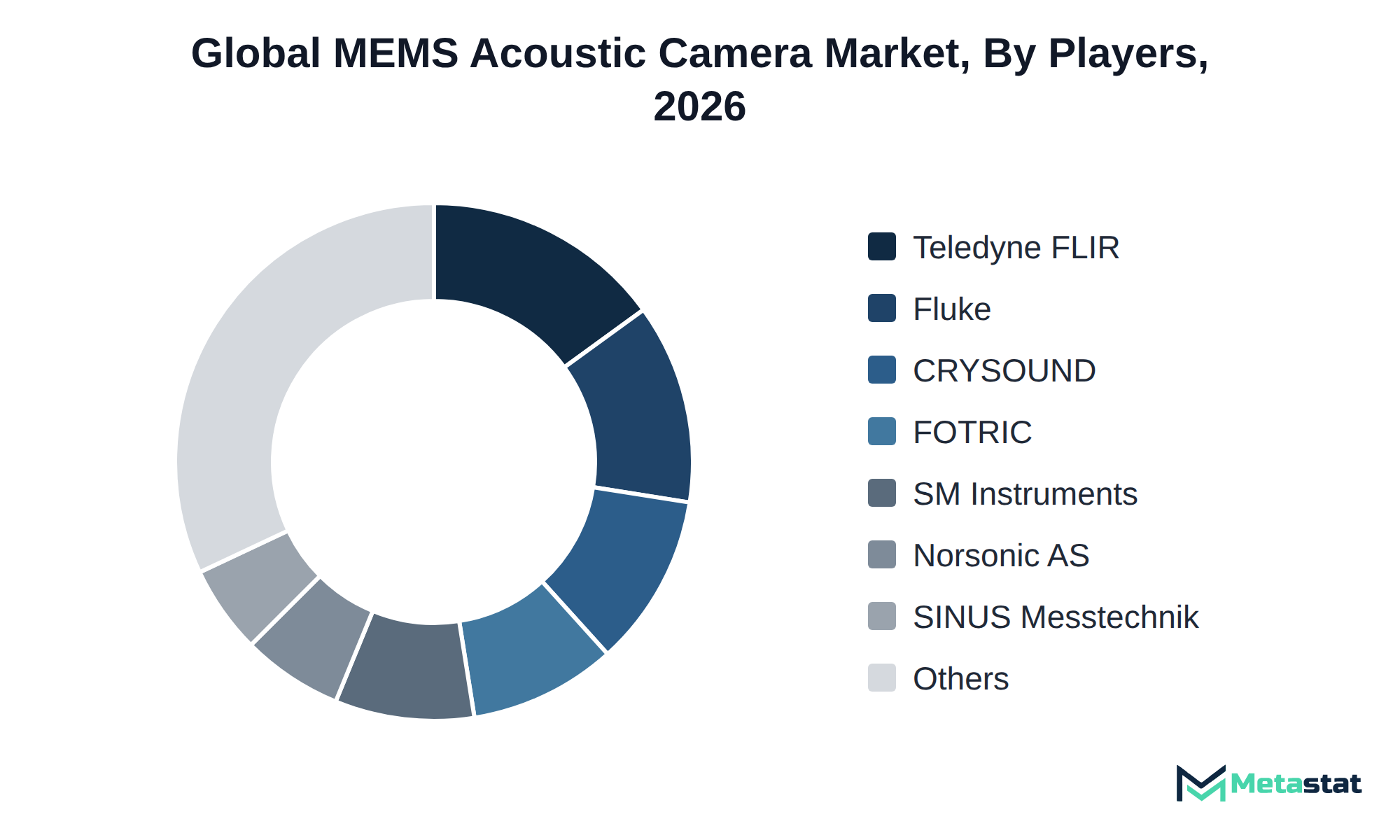
Companies in the MEMS Acoustic Camera market adopt various strategies to differentiate their offerings. The product types available include handheld, portable, fixed-mount acoustic cameras, and array-based acoustic imaging systems. These segments cater to diverse applications including noise source localization, leak detection, and predictive maintenance.
Buyers prioritize factors including price, certification, customization, and service quality when selecting products. Teledyne FLIR LLC focuses on delivering high-performance handheld and portable acoustic cameras, emphasizing user-friendly designs. Fluke Corporation is recognized for its comprehensive service offerings, ensuring customer satisfaction through robust support. CRYSOUND emphasizes advanced technology integration within its products, appealing to buyers seeking innovative solutions. These approaches shape competitive dynamics in the market.
This growth depends on several developments across specific segments. First, the demand for handheld acoustic cameras is anticipated to drive market expansion, with an expected increase from USD 24.8 million in 2026 to USD 55.2 million by 2033, reflecting a CAGR of 12.1%. In the application segment, leak detection will play a crucial role, with projections indicating growth to USD 36.8 million by 2033 at a CAGR of 14.5%. Expansion in the aerospace and defense industry, where the market is projected to reach USD 29.2 million by 2033, signifies another key growth area with a CAGR of 14.9%. However, the market faces risks that could hinder growth. Supply chain challenges and fluctuations in component pricing impact the adoption of MEMS acoustic cameras. Addressing these constraints will be essential to achieving the projected market size of USD 196.2 million by 2033.
By Application: Noise Source Localization, Leak Detection, Partial Discharge Detection, Predictive Maintenance, Noise, Vibration and Harshness (NVH) Testing, Environmental Noise Monitoring, Quality Control and Product Testing, Others (Aerospace Acoustic Testing, Research Applications)
By End-Use Industry: Automotive and Transportation, Aerospace and Defense, Manufacturing and Industrial Machinery, Energy and Power Generation, Oil and Gas, Electronics and Semiconductor, Building and Construction, Utilities and Infrastructure, Others (Healthcare, Research and Education)
The report strategically identifies and profiles the key market players and analyses their core competencies in each sub-segment of the MEMS Acoustic Camera market.
Report Attributes | Details |
Study Period | 2021-2033 |
Base Year | 2025 |
Estimated Year | 2026 |
Forecast Period | 2026-2033 |
Historical Period | 2021-2025 |
Growth Rate | CAGR 13.5% from 2026 to 2033 |
Revenue Unit | USD million |
Segmentation | By Product Type, Measurement Range, Application, End-Use Industry, and Region |
By Region | North America (By Product Type, Measurement Range, Application, End-Use Industry, and Country)
|
Europe (By Product Type, Measurement Range, Application, End-Use Industry, and Country)
| |
Asia Pacific (By Product Type, Measurement Range, Application, End-Use Industry, and Country)
| |
South America (By Product Type, Measurement Range, Application, End-Use Industry, and Country)
| |
Middle East and Africa (By Product Type, Measurement Range, Application, End-Use Industry, and Country)
|
Find answers to common questions about this report
The MEMS Acoustic Camera market size was valued at USD 71.2 million in 2025.
The market is projected to grow at a CAGR of 13.5% during the forecast period from 2026 to 2033.
The North America MEMS Acoustic Camera market size is estimated to reach USD 62.5 million by 2033.
The leading segment in the MEMS Acoustic Camera market is Portable Acoustic Cameras, with a projected value of USD 54.7 million by 2033. This segment demonstrates the highest growth potential compared to other product types.
Growing interest in noise source localization drives significant investments from automotive and transportation firms. Handheld acoustic cameras represent a significant growth opportunity due to their increasing adoption across various sectors, enhancing noise source localization and diagnostic capabilities.
North America holds the dominant share of the MEMS Acoustic Camera market, with a value of USD 62.5 million projected for 2033, representing 34 percent of the total market. This region surpasses others in market share, indicating strong demand and adoption.
Factors favoring adoption in the MEMS Acoustic Camera industry include advancements in technology that enhance usability and functionality, leading to improved operational efficiency. The increasing demand for effective noise source localization in sectors including automotive and transportation supports this trend, driving investments in these advanced acoustic solutions.
The MEMS Acoustic Camera market is estimated to reach a valuation of USD 196.2 million by 2033.
Key players operating in the MEMS Acoustic Camera market include Teledyne FLIR LLC, Fluke Corporation, CRYSOUND, FOTRIC Inc., SM Instruments, CAE Software und Systems GmbH, Norsonic AS, and SINUS Messtechnik.
The market for handheld acoustic cameras is expected to expand from USD 24.8 million in 2026 to USD 55.2 million by 2033, reflecting a compound annual growth rate of 12.1 percent.
The analysts below cover Electronics and Semiconductor research at Metastat Insights.
LEAD ANALYST
Utkarsh Khirodkar is a Lead Market Research Analyst at MetaStat Insight, specializing in market intelligence, technology sector assessments, and competitive strategy.

PRINCIPAL CONSULTANT - ENTERPRISE AI & EMERGING TECHNOLOGIES
Banking & Finance · Electronics and Semiconductor · Energy and Power · Healthcare IT · Information & Technology · Professional Services
Vijay Gunti is a Principal Consultant at MetaStat Insight, bringing over two decades of experience across enterprise digital transformation, technology strategy, and intelligent systems.

PRINCIPAL CONSULTANT - QUALITY SYSTEMS & COMPLIANCE
Electronics and Semiconductor · Machinery & Equipment · Professional Services
Omkar Phadtare is an Industry Consultant at MetaStat Insight, specializing in quality systems, regulatory compliance, and standards benchmarking to drive data-driven market intelligence and strategic industry research.

ENERGY & INFRASTRUCTURE INDUSTRY CONSULTANT
Automotive and Transportation · Electronics and Semiconductor · Energy and Power · Machinery & Equipment
Saurabh Vasant Ganvir consults for Energy & Infrastructure Industry at MetaStat Insight, specializing in renewable energy, solar EPC, and electric vehicle (EV) infrastructure markets.

LEAD CONSULTANT - COMMUNICATION, TELECOM, AND IT
Electronics and Semiconductor · Information & Technology · Machinery & Equipment · Professional Services
Ravindra Sathe Consultants for Communication, Telecom, and IT at MetaStat Insight. He leads the firm's industry research initiatives across telecommunications infrastructure, digital connectivity, enterprise networking, and emerging information technology domains.
Replacing petrochemical surfactants with bio-based alternatives requires realistic timelines on industrial precision fermentation scaling. The market research broke down commercialization timelines, feedstock sugar price sensitivities, and regional cosmetic ingredient regulatory approvals in Europe and East Asia. That supplier readiness mapping gave our formulations team reliable context when comparing renewable chemical sourcing roadmaps.
Tracking ceramic matrix composite adoption in high-bypass aero engines requires strict attention to material qualification cycles and FAA airworthiness testing milestones. The MetaStat Insight team provided a detailed timeline of silicon carbide fiber manufacturing capacity and commercial foundry lead times. Having clear visibility into upstream thermal barrier coating supply helped us stress-test our long-term component procurement strategy.
Transitioning ultra-class mining haul trucks to alternative power requires concrete data on remote hydrogen refueling infrastructure economics. The report evaluated megawatt-scale electrolyzer installation expenses, onsite storage safety mandates, and heavy-duty fuel cell stack degradation under continuous duty cycles. That technical rigor helped our engineers benchmark realistic total operating cost horizons for off-highway fleet decarbonization.
Explore related market intelligence reports worth reading alongside this one.