
LEAD ANALYST
Utkarsh Khirodkar is a Lead Market Research Analyst at MetaStat Insight, specializing in market intelligence, technology sector assessments, and competitive strategy.

Global MICE Market Size, Share, By Event Type (Meetings, Incentive Travel, Conferences and Congresses, Exhibitions), By Service Type (Accommodation, Transportation, Venue Rental, Food and Beverage Catering, Event Planning and Management, Event Technology and Audiovisual Services), By Organizer Type (Corporate Organizations, Professional and Trade Associations, Government and Public Sector), By Event Size (Below 50 Attendees, 50-149 Attendees, 150-249 Attendees, 250-499 Attendees, 500-999 Attendees, 1,000-1,999 Attendees, 2,000 Attendees and Above), Industry Analysis, Growth, Trends, and Forecast, 2026-2033
Report ID
MSI-5588
Published
October, 2026
Pages
275 Pages
Format
Historical
Base year
Forecast
Forecast period
Report Details
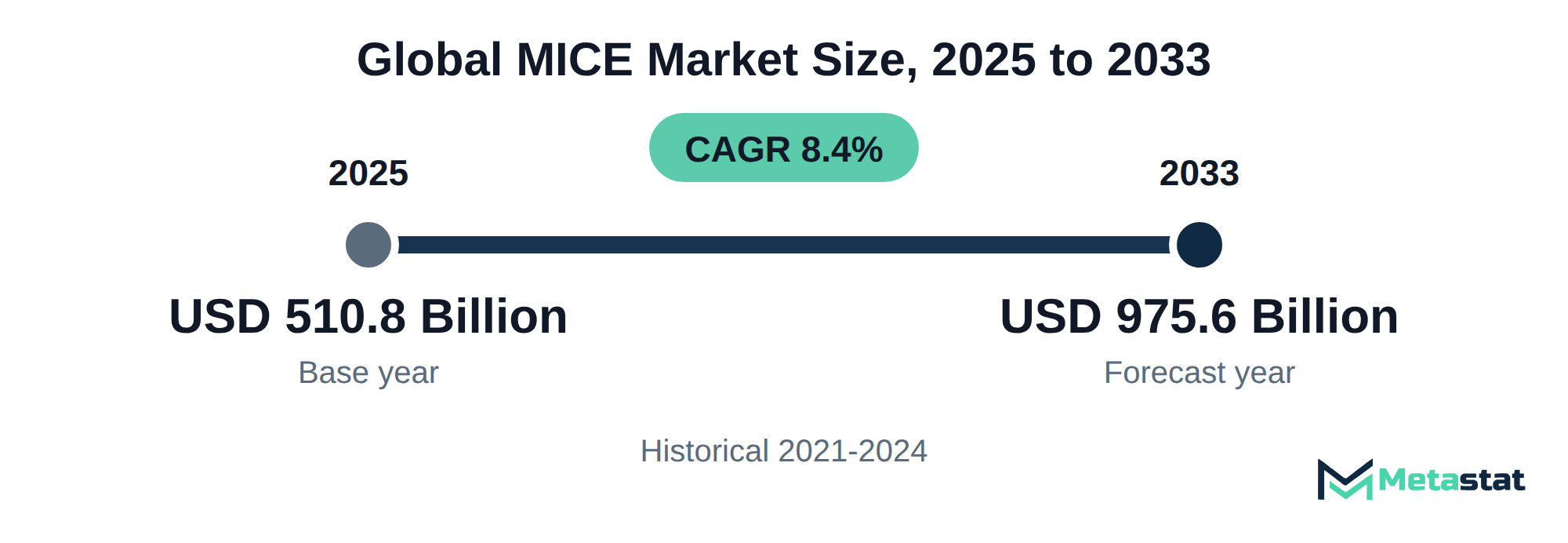
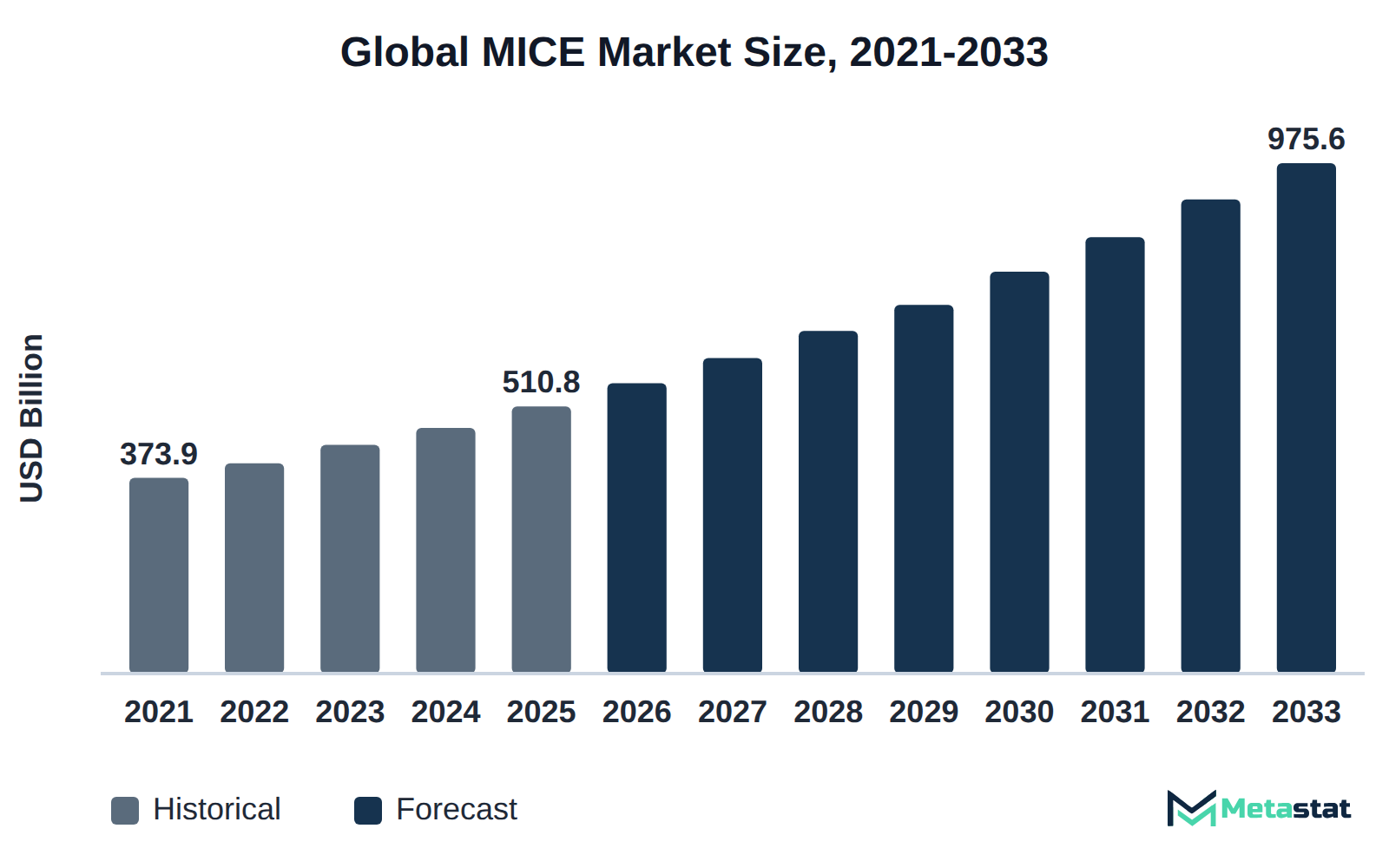
Market Valuation: Valued at $510.8 Billion in 2025, projected to reach $975.6 Billion by 2033 at a 8.4% CAGR.
Dominant Segment: The meetings segment leads the MICE market, valued at USD 211.7 billion in 2026, driven by the rising demand for professional gatherings that enhance collaboration and innovation.
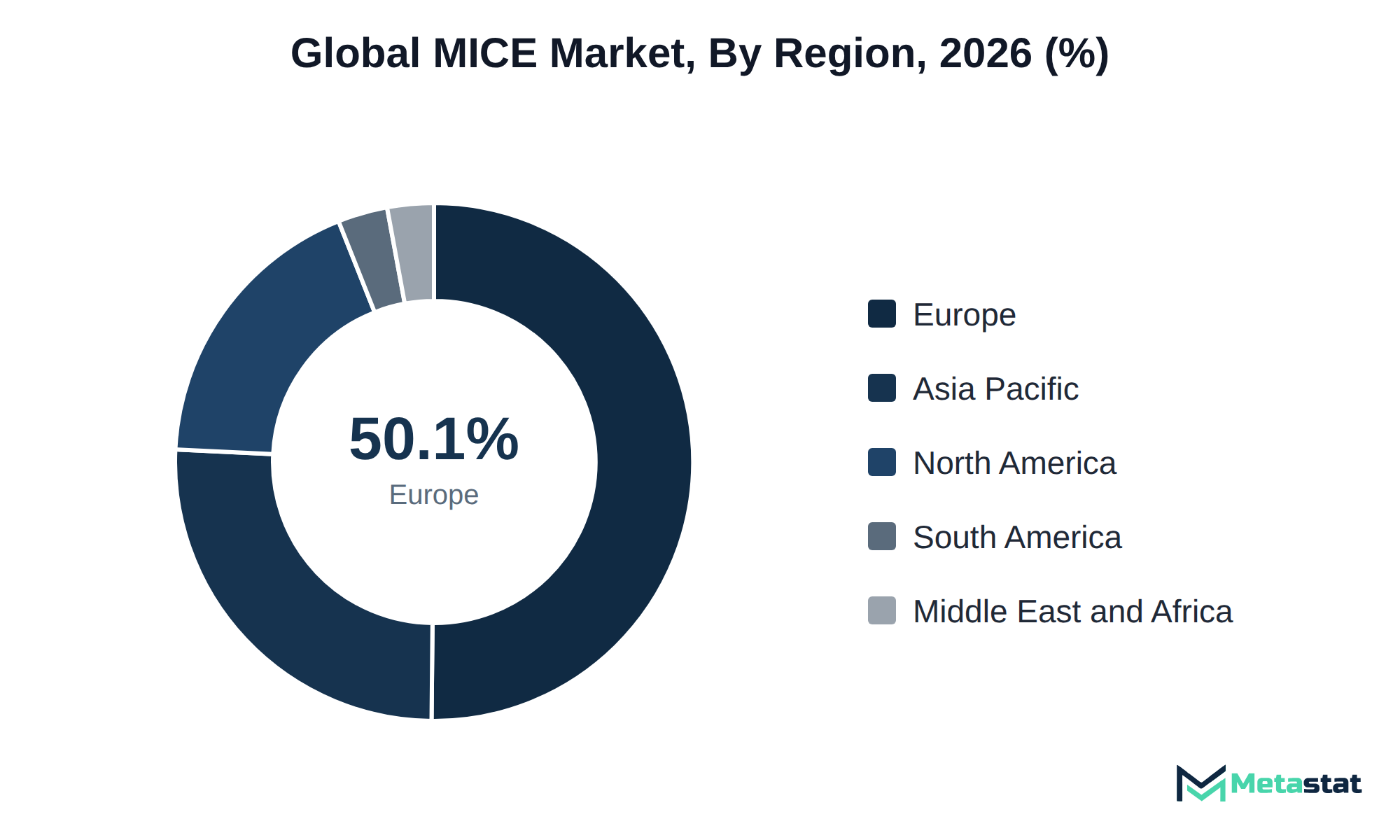
Geographic Lead: Europe holds the largest market share at 50.1% in 2025, recognized as a hub for international conferences and events, while North America, particularly the US, is expected to show significant growth.
What's Inside: The report provides a comprehensive analysis of the MICE market, including competitive coverage, detailed segment breakdowns by event type, service type, and organizer type, along with forecasts extending to 2033.
Incentive Travel Growth: The incentive travel segment is projected to grow at a CAGR of 10.1% through 2033, reflecting a strategic shift towards experiential rewards that enhance employee engagement and retention.
Rising Corporate Spending: Corporate organizations are expected to drive significant spending in the MICE market, with a valuation reaching USD 473.8 billion by 2033, emphasizing the importance of in-person events for business interactions.
Choose Your License
Global MICE Market
The global MICE market was valued at USD 510.8 billion in 2025 and is projected to reach USD 975.6 billion by 2033, growing at a CAGR of 8.4% over the forecast period.
The MICE market covers services and activities that enable meetings, incentives, conferences, and exhibitions. Buyers invest in these services to enhance networking opportunities, promote brand visibility, and drive employee engagement. Spending in this market reflects growing recognition that face-to-face interactions and experiential events build business relationships and support organizational objectives.
The MICE market is growing mainly because of an increasing emphasis on corporate events and the need for effective communication strategies among businesses. The meetings segment holds the largest value within the MICE market, supported by rising demand for professional gatherings that enhance collaboration and innovation. Europe stands out with the largest market share, accounting for 50.1% in 2025, highlighting its significance as a hub for international conferences and events.
North America holds 18.2% of the market in 2025, with the US leading in 2026. The expanding global economy fuels investments in the MICE sector, leading to an increase in the frequency and scale of events organized by various sectors, including corporate, government, and non-profit organizations. This shift presents substantial growth opportunities for the MICE market.
The MICE market includes various segments that cater to the increasing demand for business events and experiences. Buyers invest in this market to enhance brand visibility, build relationships, and drive employee engagement through organized gatherings. Corporate organizations, professional associations, and government entities primarily seek these services, focusing on maximizing the impact of their events on stakeholders and participants.
Growth in the market is primarily driven by the rising demand for meetings, particularly in North America, where corporate organizations significantly invest in event management. Meetings represent the largest segment, with a notable increase in spending projected over the coming years. European countries contribute a significant share, reflecting a robust environment for business activities and networking opportunities.
Investment in incentive travel has gained traction as organizations strive to motivate employees and reward high performance. This segment's growth aligns with the increasing emphasis on employee satisfaction and retention strategies. Competition continues to evolve as providers offer new solutions that improve the overall event experience.
Experiential incentive travel has emerged as a critical tool for corporate reward programs, reflecting significant shifts in employee engagement strategies. The MICE market, particularly in the incentive travel segment, is projected to reach USD 189.8 billion by 2033, driven by organizations seeking to enhance employee motivation and retention. This growth highlights the increasing recognition of experiential rewards over traditional monetary bonuses, creating deeper connections among employees.
Technological advancements, including virtual reality and augmented reality, enhance experiential offerings. These technologies create immersive experiences that engage participants and increase the perceived value of incentive programs. For instance, companies use these innovations to design customized travel experiences that let employees explore new destinations while taking part in team-building activities. This transformation in incentive travel aligns with the broader trend of prioritizing employee experience, which influences retention and productivity.
Consequently, organizations investing in experiential incentive travel expect improved employee satisfaction and loyalty. Enhanced engagement through these innovative programs creates a motivated workforce, which translates to increased productivity and overall organizational performance. Companies that build experiential travel into corporate reward systems are better placed to compete in the MICE market.
Secondary MICE destinations increasingly focus on enhancing connectivity, venue capacity, and delegate costs to attract business events. These destinations often present competitive pricing models that appeal to corporate organizations. For instance, the MICE market sees corporate organizations with a projected revenue of USD 473.8 billion by 2033. This significant figure illustrates the growing investment corporate buyers allocate towards events, emphasizing the importance of pricing strategies.
Price sensitivity among buyers drives secondary destinations to adopt flexible contract models, including tiered pricing or discounts for bulk bookings. These strategies enable destinations to cater to various budget levels while maintaining competitiveness against larger cities. Secondary destinations draw on their unique venues and local attractions, often providing exclusive packages that include accommodation and transportation to create a strong value proposition.
Delegate costs play a significant role in decision-making processes within the MICE market. Buyers increasingly evaluate total costs, including travel, accommodation, and venue expenses when selecting locations. Secondary destinations often present lower overall costs compared to primary cities, thereby enhancing their attractiveness to clients. The evolution of the MICE market towards these cost-effective solutions reflects an industry shift, with organizations prioritizing value without compromising quality.
Secondary destinations that negotiate favorable terms and promote complete packages stand to gain significant market share. The combination of strategic pricing models and enhanced delegate experiences positions these destinations as viable alternatives in a competitive environment.
Corporate organizations increasingly prioritize integrated congress logistics and low-carbon event procurement when selecting agencies. This shift arises from a growing commitment to sustainability and the desire for streamlined processes that enhance operational efficiency. In the MICE market, the importance of these factors has become evident, particularly as corporate organizations seek to align their events with broader corporate social responsibility goals.
In 2026, corporate organizations engage significantly in the MICE market, with a valuation reaching USD 275.3 billion. This figure underlines the substantial financial impact these organizations have on the market, driving demand for agencies that offer comprehensive solutions. The focus on low-carbon event procurement reflects a strategic decision to reduce environmental footprints while maintaining high-quality event experiences. Carbon footprint management practices give organizers a way to measure and reduce these impacts.
Agencies that successfully integrate event logistics with sustainability initiatives position themselves favorably within this competitive landscape. This approach attracts clients dedicated to environmental stewardship and aligns with evolving regulatory frameworks that emphasize carbon reduction. Consequently, agencies that adapt to these emerging needs enhance their competitive edge and increase their market share within the rapidly transforming MICE market.
Choosing a MICE partner involves evaluating several critical factors that influence the effectiveness of international meetings and incentive travel. A significant aspect includes assessing the partner's experience and expertise in organizing events similar in scale and complexity to the buyer's requirements. Companies prioritize partners with proven track records in handling various event types, including meetings, conferences, and exhibitions.
In the MICE market, corporate organizations represent a substantial segment, expected to grow from USD 275.3 billion in 2026 to USD 473.8 billion by 2033, reflecting a compound annual growth rate (CAGR) of 8.1%. This substantial growth highlights the importance of selecting the right partner to optimize financial and operational outcomes. Factors including the partner's ability to provide effective logistics, negotiate competitive vendor contracts, and manage on-site operations significantly impact the overall success of an event.
The final selection often hinges on the partner's ability to tailor services to meet specific client needs while demonstrating flexibility in response to changing circumstances. A strong network of suppliers and venues strengthens a partner's capability to deliver high-quality experiences, which drives client satisfaction and repeat business.
Corporate organizations drive spending on events due to a strategic shift towards enhancing employee engagement through experiential meetings and incentives. This transformation leads to increased participation in events aimed at improving team cohesion and motivation. The growth reflects a broader trend where organizations recognize the importance of in-person interactions, especially during a post-pandemic recovery phase. According to market forecasts, accommodation services within the MICE market are set to grow from USD 149.9 billion in 2026 to USD 252 billion by 2033, indicating a significant rise in demand for event-related services. Such developments contribute to an overall increase in the volume of business events, impacting pricing structures and service offerings across the market.
The shift towards experiential learning and engagement strategies treats corporate events as integral components of organizational culture rather than logistical necessities. This transformation creates a growth trajectory for the market, driving demand for diverse service offerings and expanding opportunities for suppliers across various sectors.
Advancements in digital technology drive enhanced engagement at events within the MICE market. Virtual and hybrid event formats leverage technology to expand reach, allowing organizers to connect with larger audiences beyond geographical boundaries. Cloud video conferencing platforms often support virtual and hybrid sessions of this kind. This shift towards digital solutions aligns with evolving attendee preferences for flexibility and accessibility, increasing participation rates. Integration of interactive tools including live polling, chat features, and virtual reality experiences improves the overall event experience. Attendees expect personalized interactions, prompting organizers to adopt data analytics and customer relationship management systems that refine event planning and execution. The growing reliance on these technologies reduces operational costs and enriches the attendee experience, leading to higher satisfaction and retention rates. Consequently, the market is anticipated to experience significant growth driven by these digital enhancements, compelling stakeholders to invest in innovative solutions that meet changing demands. This transformation positions organizers to differentiate themselves in a competitive environment while maximizing the value generated from each event.
Insufficient infrastructure restricts event accessibility, particularly in emerging markets. Inadequate transportation networks and limited venue options hinder the ability of corporate organizations to host large-scale events. This limitation results in slower uptake of services and smaller orders from buyers seeking to engage in the MICE market. Delays in establishing adequate venues or transportation systems negatively impact event planning timelines, leading to postponed events or smaller attendee numbers. Infrastructure development lags behind demand, creating challenges for organizations in executing successful events, ultimately constraining growth opportunities within the market. Investment in infrastructure improvement remains critical to enhance event accessibility and attract more buyers. The ongoing need for better facilities and services drives market participants to seek regions with existing capabilities, further emphasizing the impact of infrastructure on market dynamics.
Rising operational costs pose a significant challenge for suppliers within the MICE market. Increasing expenses related to talent acquisition and retention pressure profit margins. Many organizations face heightened competition for skilled professionals, driving up wages and impacting overall service delivery. This situation has prompted suppliers to refine their operational strategies, focusing on efficiency and streamlined processes to maintain profitability.
Efforts to mitigate costs include using technology and automation, which improve efficiency and reduce reliance on labor. Suppliers explore strategic partnerships to share resources and minimize expenses associated with service delivery. These initiatives allow companies to remain competitive while navigating the challenges presented by rising costs. Maintaining quality and client satisfaction during this transition proves vital for long-term success in the MICE market.
Incentive travel represents a significant growth opportunity within the MICE market, with a projected compound annual growth rate (CAGR) of 10.1% through 2033. This segment focuses on motivating employees through experiential travel rewards, enhancing employee engagement and retention. Corporate organizations increasingly allocate funds toward incentive travel programs, reflecting a strategic shift in their approach to human resource management. Businesses aim to increase loyalty and productivity, driving demand for unique and memorable travel experiences. Regions with under-penetrated markets, including South America, present substantial opportunities for growth. The market stands to benefit from a combination of rising disposable incomes and a growing interest in experiential rewards among the workforce. Addressing the needs of this segment through tailored travel solutions is essential for capturing market share and driving overall revenue growth.
The Global MICE market is segmented based on Event Type, Service Type, Organizer Type, and Event Size.
The meetings segment is valued at USD 211.7 billion in 2026 and is projected to reach USD 355.2 billion by 2033, at a CAGR of 7.7% during the forecast period. This segment serves various organizational purposes, including corporate strategy sessions, team-building activities, and stakeholder engagement events. Corporate organizations frequently drive demand for meetings due to the focus on enhancing collaboration and knowledge sharing. The segment stands out with a lower growth rate compared to incentive travel, which has a CAGR of 10.1%. While meetings remain crucial for business operations, fluctuations in venue costs and logistical complexities present barriers to expansion. The market experiences robust traction, driven by the need for businesses to build relationships and network effectively.
The Incentive Travel segment is estimated to reach USD 189.8 billion by 2033, at a CAGR of 10.1% during the forecast period. This segment serves to reward and motivate employees through travel experiences, often used by corporate organizations to acknowledge performance and enhance morale. Growth within this segment is driven primarily by the increasing emphasis on employee engagement and retention strategies. Corporate organizations that aim to strengthen their workforce play a significant role in the demand for incentive travel. Unlike other event types, the Incentive Travel segment experiences faster growth compared to traditional meetings and conferences. This expansion reflects a shift in corporate culture that prioritizes experiential rewards over monetary bonuses, creating a more engaged workforce. The market presents unique dynamics that distinguish it from other segments, with the focus on personalized experiences continuing to gain traction among consumers, creating substantial opportunities for growth.
Conferences and Congresses segment is expected to reach USD 236.8 billion by 2033. This segment provides a platform for organizations to gather, share knowledge, and network among industry peers. Corporate organizations, professional associations, and governments hold conferences and congresses for various purposes, including education, networking, and industry advocacy. Executive B2B conferences and curated business events are a closely related format within this space. Industry growth is driven by increasing globalization, prompting organizations to connect across borders. With a compound annual growth rate (CAGR) of 8.0%, this segment experiences steady expansion compared to other event types. A notable distinction is that conferences and congresses often command higher pricing due to their specialized nature, attracting a different buyer profile focused on professional development and networking opportunities. The market anticipates ongoing investment in technology and innovative formats to enhance attendee engagement, influencing demand dynamics in the coming years.
The exhibitions segment is projected to grow at a CAGR of 8.7% during the forecast period. This segment is significant in presenting products and services, attracting a diverse audience of buyers, suppliers, and industry stakeholders. Businesses use exhibitions to promote brand visibility and build relationships with potential clients. The growth of this segment is propelled by increasing investments in trade shows and events aimed at driving customer engagement. Compared to other segments, exhibitions attract a broader range of attendees, contributing to their steady growth trajectory. The unique opportunity for companies to connect directly with consumers and gain immediate feedback differentiates this segment. This makes exhibition attendance a key strategy for businesses aiming to enhance market reach and build customer loyalty.
Accommodation segment is valued at USD 149.9 billion in 2026 and is projected to reach USD 252 billion by 2033, at a CAGR of 7.7% during the forecast period. This segment is a fundamental component for hosting meetings, conferences, and events, catering to corporate clients, associations, and government entities seeking suitable lodging for attendees. The increasing demand for business travel and events drives growth within this segment. The trend towards experiential travel influences accommodation choices, emphasizing unique and memorable experiences. Compared to other service types, including food and beverage catering, which experiences a CAGR of 8%, accommodation growth remains moderate. The strategic focus on cost efficiency and enhanced guest experiences distinguishes accommodation from other segments, positioning it as a critical element of the overall MICE market.
Transportation segment is estimated to reach USD 179.2 billion by 2033, at a CAGR of 7.7% during the forecast period. This segment serves various travel needs for business events, including flights, car rentals, and other forms of transit, used by corporate organizations and event planners. Rising demand for efficient travel experiences significantly influences growth within this segment, driven by increased business travel activity and a focus on ensuring timely arrivals for participants. Compared to other service segments, transportation experiences steady demand growth, with a CAGR that aligns with broader market trends. Unlike accommodation and venue rental, which have different price sensitivities and competitive dynamics, transportation remains integral to ensuring the smooth execution of events, enhancing overall attendee satisfaction and logistical efficiency.
Venue Rental is projected to reach USD 158.8 billion by 2033. This segment encompasses the leasing of spaces designed to host various events, including conferences, exhibitions, and corporate meetings. Venue Rental services primarily attract corporate organizations, professional associations, and governmental entities, all seeking suitable locations for their events. The sector experiences growth driven by an increase in corporate events and a focus on venue quality and amenities. Differentiation arises from its relatively stable pricing compared to other service types. While the Accommodation segment is projected to reach USD 252 billion by 2033, the Venue Rental segment maintains substantial demand. The MICE market benefits from the growing trend of in-person events, which fuels the need for diverse venue options to accommodate varying attendee sizes and preferences.
Food and Beverage Catering segment is projected to grow at a CAGR of 8% during the forecast period. This segment supports various events, providing catering services that enhance attendee experiences through quality food and drink options. Corporate organizations and trade associations leverage this service to create memorable event atmospheres, improving engagement among participants. A key driver for growth involves the increasing emphasis on culinary experiences, with clients seeking to improve the overall appeal of their events. Compared to other service types, Food and Beverage Catering experiences consistent demand but typically sees slower growth than the Transportation segment, which is anticipated to grow at a CAGR of 7.7%. The focus on unique culinary offerings differentiates this segment, reflecting changing consumer preferences in the MICE market.
Event Planning and Management includes organizing and coordinating all aspects of events, ensuring effective execution from concept to completion. Corporate organizations, professional associations, and government entities engage these services to host various gatherings, including meetings, conferences, and trade shows. A notable force driving demand arises from the increasing emphasis on creating engaging and memorable experiences, further fueled by advancements in technology that enhance participation. This sub-segment differentiates itself from others in the service type category through its focus on personalized services and detailed logistics, often commanding higher prices due to its complexity and the expertise required. Unlike other service types, Event Planning and Management emphasizes a tailored approach, catering to unique client needs, which influences its position and growth trajectory in the MICE market. The market's overall expansion supports increased investments in event planning solutions, aligning with the strategic goals of enhancing organizational visibility and stakeholder engagement.
Event Technology and Audiovisual Services focuses on delivering innovative solutions for enhancing the overall event experience. This segment serves various industries, including corporate organizations and associations, which rely on technology to engage attendees, manage logistics, and ensure effective presentations. Demand for advanced professional audio-visual services is driven by ongoing technological advancements and increasing expectations for immersive experiences at events. Compared to other service types, this segment stands out due to its reliance on evolving technology and higher operational costs associated with high-quality equipment and services. The ability to integrate advanced audiovisual solutions into events often distinguishes top-tier suppliers, impacting competition in the market. The MICE market continues to evolve, highlighting the importance of this segment in shaping memorable events.
This sub-segment encompasses interpretation, security, and on-site staffing services critical for successful event execution. Event organizers engage these services to ensure effective communication and safety, enhancing participant experience. Demand for interpretation and related language services reflects the increasing globalization of events, necessitating multilingual support for diverse attendees. Security solutions, driven by rising concerns regarding safety at large gatherings, are essential for managing risks and ensuring compliance with regulatory standards. This sub-segment differentiates itself from others through specialized requirements, focusing on high-quality personnel and tailored solutions for unique event needs. Compared to more standardized service types, this segment typically incurs higher costs due to the expertise required. The MICE market relies on these essential services to facilitate effective and secure interactions, highlighting the importance of professional support in diverse event environments.
This segment serves a vital function by facilitating corporate meetings, training sessions, and incentive travel, focusing on enhancing workforce productivity and engagement. Companies within this category leverage these events to strengthen relationships, boost morale, and reward employees. Increasing investments in employee engagement initiatives drive growth in this segment, differentiating it from others in the market. Corporate Organizations exhibit a higher growth rate compared to Professional and Trade Associations, which are projected to achieve a CAGR of 8%. The demand for tailored experiences and innovative event solutions fuels expansion, highlighting the significance of effective event management in achieving corporate objectives.
The Professional and Trade Associations segment is estimated to reach USD 285.9 billion by 2033, at a CAGR of 8% during the forecast period. This segment encompasses various organizations that focus on specific professions, industries, or trades, facilitating networking, education, and resources for their members. Key buyers include industry professionals and organizations seeking to enhance knowledge and collaboration. Demand in this segment is influenced by the growing emphasis on professional development and the increasing need for members to connect and collaborate. Compared to other segments, this sub-segment exhibits a steady growth rate, driven by continuous membership expansion and the necessity for ongoing training and certification. The Professional and Trade Associations segment highlights a unique position in the market, focusing on specialized audiences who prioritize educational and networking opportunities over more generalized event formats.
Government and Public Sector segment is expected to reach USD 141.8 billion by 2033. This segment serves various public entities, including government agencies and non-profit organizations, facilitating events including public meetings, training sessions, and stakeholder engagement activities. The primary demand driver for this segment stems from increased government initiatives focused on transparency and community engagement, leading to a rise in organized events. Compared to other organizer types, this segment experiences slower growth, with a projected compound annual growth rate (CAGR) of 8.0%, reflecting a more cautious approach to spending. While Corporate Organizations prioritize large-scale meetings and incentive travel, the Government and Public Sector emphasizes compliance and public accountability, creating distinct operational needs in the MICE market.
Projected to grow at a CAGR of 8.9% during the forecast period, this segment includes charities, foundations, and non-association NGOs. These organizations engage MICE events primarily for fundraising, awareness building, and community engagement. With increasing focus on social responsibility, these entities frequently organize events to connect with stakeholders and gather support for their causes. Compared to other organizer types, this segment experiences slower growth due to reliance on donor funding and economic conditions affecting philanthropy. The overall financial landscape influences these organizations' capacity to invest in event-related services. The projected revenue for this segment highlights its importance while differentiating it from corporate organizations that typically enjoy more stable funding streams and growth rates. The MICE market continues to evolve, providing essential opportunities for various sectors, including non-profit entities.
The Below 50 Attendees segment is valued at USD 44.1 billion in 2026 and is projected to reach USD 79.9 billion by 2033, at a CAGR of 8.9% during the forecast period. This segment primarily caters to small gatherings, often organized by corporate entities for internal meetings, training sessions, or small-scale events. The growing emphasis on personalized experiences drives demand for intimate gatherings, reflecting a shift from larger events to smaller, focused interactions. Compared to other segments, the Below 50 Attendees segment demonstrates a higher growth rate, supported by increasing corporate investment in team-building activities. The relatively lower costs associated with organizing smaller events contribute to its attractiveness for various organizations. Overall, this segment plays an essential role in the MICE market by facilitating targeted engagement and enabling closer connections among participants.
The 50-149 Attendees segment is estimated to reach USD 252 billion by 2033, at a CAGR of 9.2% during the forecast period. This segment primarily serves corporate events, training sessions, and workshops, catering to organizations looking to enhance employee engagement and networking opportunities. The growing emphasis on team-building and professional development drives demand for events in this range. Compared to larger segments, this category experiences faster growth due to its appeal among small and medium enterprises seeking cost-effective solutions. This segment's focus on personalized experiences differentiates it from larger events, which prioritize scale over intimate interactions. The increasing importance of hybrid and virtual formats, along with the rise of remote work, influences the dynamics of this segment, ensuring it remains relevant and adaptive in the evolving MICE market.
Segment 150-249 Attendees is expected to reach USD 246.9 billion by 2033. This segment typically caters to corporate and professional gatherings, where networking and collaboration are vital. Demand for events within this category has increased due to organizations seeking to engage their workforce and build relationships among peers. The growth rate for this segment is robust, with a projected CAGR of 8.9%, distinguishing it from others in the group. Compared to smaller events, the 150-249 attendees category offers enhanced opportunities for interaction and deeper discussions, driving its appeal. Investment in high-quality venues and services remains crucial to meet expectations for these moderately sized events, creating a competitive environment that shapes market dynamics.
Segment 250-499 Attendees is projected to grow at a CAGR of 7.8% during the forecast period. This segment caters to mid-sized events, including corporate meetings, conferences, and social gatherings, typically organized by corporate organizations and associations. Factors driving growth in this segment include increasing demand for larger in-person gatherings, which often require more extensive planning and resources compared to smaller events. Corporate organizations frequently engage this segment for networking and strategic discussions, while professional associations host events that promote community engagement and knowledge sharing. In comparison to other event size segments, including Below 50 Attendees, which exhibits slower growth, the 250-499 Attendees segment benefits from a more significant investment in venue and service types, thereby creating a higher overall revenue potential. This growth reflects a broader trend in the market, where the need for hybrid and larger events becomes more pronounced.
Events with 500-999 attendees represent a unique scale within the MICE market, appealing to corporate and professional organizations seeking engagement and networking opportunities without the vastness of larger events. This segment serves various purposes, including corporate retreats, product launches, and training sessions, emphasizing personalized interaction and deeper engagement among attendees. Demand for this sub-segment is supported by the increasing trend toward hybrid events, where both in-person and virtual attendees participate, optimizing reach and engagement. Growth in this segment is distinct from smaller-sized events, driven by a higher willingness to invest in venue quality and experience enhancements. While the 500-999 attendees category is positioned for substantial activity, it remains slower in growth compared to the 50-149 attendees segment, which benefits from the increasing number of small and intimate gatherings. The MICE market reflects evolving preferences for tailored experiences that create connections among professionals in various industries.
Events accommodating 1,000 to 1,999 attendees serve diverse purposes, including corporate conferences, trade shows, and large-scale incentive events. Such gatherings require substantial planning and coordination, often engaging professional event organizers and technology providers to ensure immersive experiences. This segment attracts corporate clients seeking to make significant impacts through larger gatherings, thus driving demand for sophisticated venues and comprehensive service offerings. Factors influencing this segment primarily include an increase in corporate budgets for events and a growing emphasis on experiential marketing, which encourages companies to invest in memorable attendee experiences. Compared to smaller segments, events of this size entail higher costs and more elaborate logistics, differentiating them in both pricing and execution complexity. The MICE market adapts to these evolving demands, reflecting the importance of tailored solutions in achieving organizational objectives.
Events accommodating 2,000 attendees and above attract corporate and organizational gatherings, trade shows, and large international conferences. This segment serves high-profile engagements requiring extensive planning and logistical coordination. A significant driver for this segment includes the increasing globalization of businesses, where companies seek to host large-scale events to enhance brand visibility and create networking opportunities. The scale of these events typically incurs higher costs than smaller segments, reflecting the substantial services and amenities required to facilitate such large gatherings. Compared to segments with 1,000 to 1,999 attendees, this sub-segment experiences unique challenges, including stricter venue regulations and higher operational complexities. These dynamics play an important role in shaping the growth trajectory of the MICE market, particularly in regions focusing on business tourism and international collaboration.
Based on geography, the Global MICE market is divided into North America, Europe, Asia-Pacific, South America, Middle East, and Africa.
Demand for the MICE market in North America derives primarily from corporate organizations and professional associations, driving significant growth in meetings and conferences. Infrastructure investments in venues and transportation enhance the region's capacity to host large-scale events, while the increasing prevalence of hybrid formats broadens accessibility for attendees. In 2025, North America holds an 18.2% share of the global market, set to expand to USD 172.6 billion by the end of 2033. This growth reflects strong interest in incentive travel and conferences, with corporate organizations expected to lead expenditure in the sector. Countries including the United States, Canada, and Mexico contribute to a dynamic MICE ecosystem that adapts to evolving industry trends and demands.
Europe commands a share of the global MICE market, accounting for 50.1% in 2025. Key drivers of demand include a robust corporate sector, with organizations in Germany, France, and the UK frequently hosting meetings and conferences. The region's advanced infrastructure facilitates travel and accommodations, enhancing event experiences. Incentive travel and exhibitions gain traction, particularly in Italy and Spain, where local governments support initiatives to attract international events. The MICE landscape is characterized by a diverse range of buyer groups, from corporate organizations to professional associations, emphasizing the importance of tailored solutions. Growth within the market reflects increasing investments in event technologies and services, supporting the region's position as a leading destination for MICE activities.
The region exhibits strong growth potential, driven by increasing investment in the corporate sector and rising demand for incentive travel experiences. Countries including China, Japan, and India see substantial participation from corporate organizations, fueling demand for meetings and events. A well-developed infrastructure in major urban centers facilitates the organization of large-scale conferences and exhibitions. Favorable government policies supporting business tourism enhance the attractiveness of the region within the MICE market. Southeast Asia and Australia emerge as key destinations for international events, contributing to the overall expansion of the market. The region's projected market share of 25.6% in 2025 highlights its significance in the global MICE market. Key players in this region continue to adapt their strategies to meet the evolving needs of clients, ensuring a dynamic and competitive environment.
In South America, the MICE market experiences growth driven by countries including Brazil and Argentina. Key industries include corporate organizations, which influence demand through their need for meetings and incentive travel. Improvements in infrastructure in these regions enhance the overall event experience. The market accounts for 3.1% of the global share in 2025, highlighting its significance in the broader context. Investment in local venues and services supports the development of various event types, including conferences and exhibitions. This growth trajectory reflects increasing interest in hosting international events, positioning South America as a competitive player in the MICE market.
The MICE market in the Middle East and Africa demonstrates unique characteristics. Demand is driven primarily by corporate organizations, particularly in Saudi Arabia and the UAE, where significant investments in infrastructure support the growth of events. High-profile conferences and exhibitions have gained prominence, attracting international participation. The region's focus on diversifying economies creates opportunities in incentive travel. South Africa contributes to the market through a strong tourism sector, enhancing appeal for meetings and events. This region, holding a market share of 2.9% in 2025, is expected to expand further due to progress in infrastructure developments.
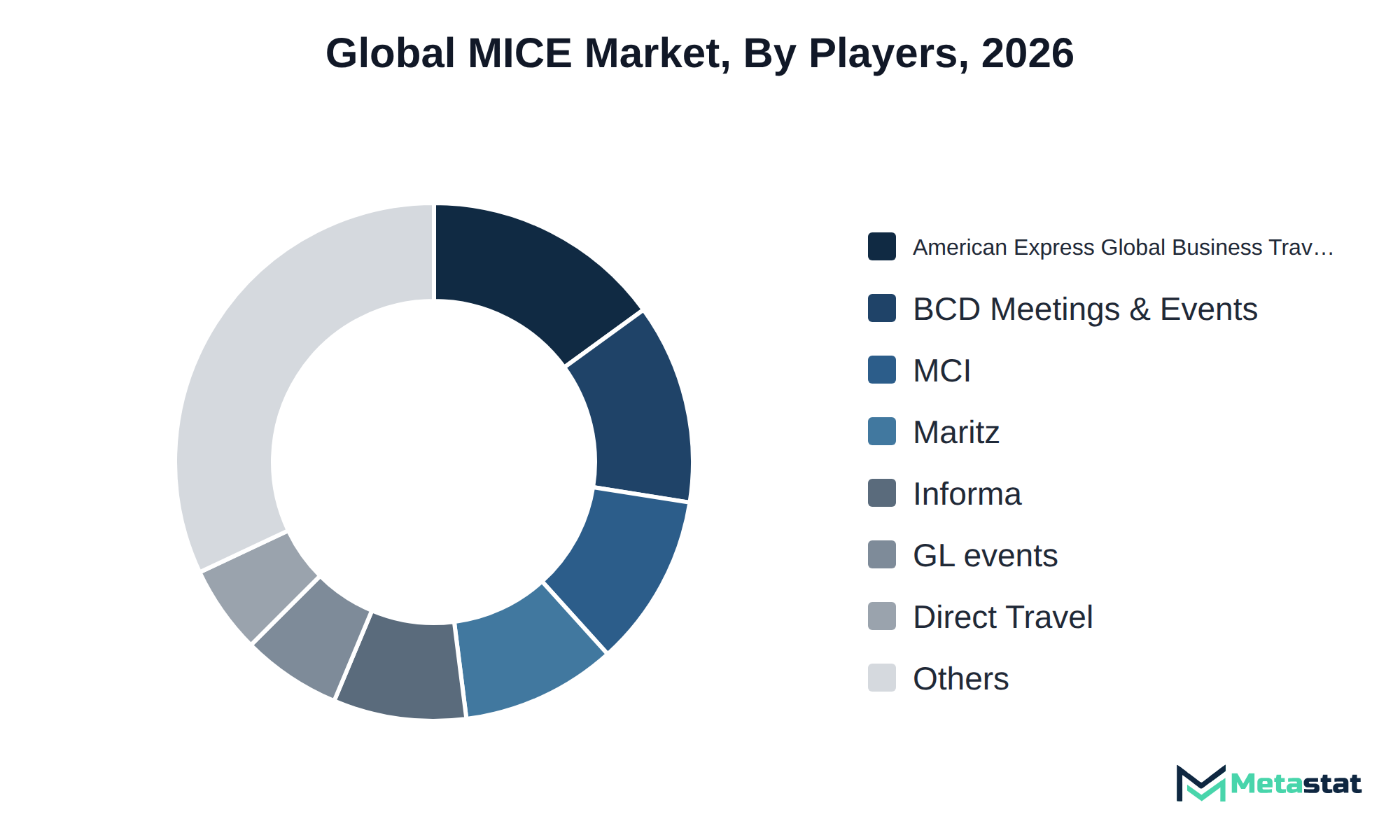
Competitive dynamics in the MICE market demonstrate distinct groupings based on service type and organizer type. Major companies include American Express Global Business Travel, BCD Meetings & Events, and Maritz, which focus on corporate organizations, professional associations, and incentive travel. Each organization emphasizes distinct service offerings, including accommodation, transportation, and venue rental, catering to the diverse needs of clients.
Buyers prioritize factors including price, customization, and service quality when selecting providers in the market. Companies like Direct Travel, Inc. and FCM Meetings & Events focus on delivering tailored experiences, while Informa PLC and RX concentrate on large-scale events and exhibitions. The competitive environment encourages firms to enhance their service offerings, ensuring comprehensive solutions for clients across various segments.
Achieving this target requires several key developments across the MICE market. First, significant growth in incentive travel, projected to reach USD 189.8 billion by 2033 at a CAGR of 10.1%, will drive increased demand from corporate clients seeking to reward employees. Second, the meetings segment, anticipated to expand from USD 211.7 billion in 2026 to USD 355.2 billion in 2033, will support overall market growth while companies prioritize face-to-face interactions. Third, the Asia Pacific region, contributing 25.6% of the market share, plays a critical role in boosting global revenues, particularly by enhancing infrastructure and accessibility for international events.
Potential risks including economic downturns could hinder growth, leading to reduced corporate spending on events and travel. Volatility in global markets prompts organizations to scale back on large gatherings or opt for virtual alternatives. The success of the MICE market hinges on addressing these challenges while capitalizing on the growing demand for in-person engagement and collaboration.
By Event Type: Meetings, Incentive Travel, Conferences and Congresses, Exhibitions
By Service Type: Accommodation, Transportation, Venue Rental, Food and Beverage Catering, Event Planning and Management, Event Technology and Audiovisual Services, Others (Interpretation, Security, On-site Staffing)
By Organizer Type: Corporate Organizations, Professional and Trade Associations, Government and Public Sector, Others (Charities, Foundations, Non-association NGOs)
By Event Size: Below 50 Attendees, 50-149 Attendees, 150-249 Attendees, 250-499 Attendees, 500-999 Attendees, 1,000-1,999 Attendees, 2,000 Attendees and Above
The report strategically identifies and profiles the key market players and analyses their core competencies in each sub-segment of the MICE market.
Report Attributes | Details |
Study Period | 2021-2033 |
Base Year | 2025 |
Estimated Year | 2026 |
Forecast Period | 2026-2033 |
Historical Period | 2021-2025 |
Growth Rate | CAGR 8.4% from 2026 to 2033 |
Revenue Unit | USD billion |
Segmentation | By Event Type, Service Type, Organizer Type, Event Size, and Region |
By Region | North America (By Event Type, Service Type, Organizer Type, Event Size, and Country)
|
Europe (By Event Type, Service Type, Organizer Type, Event Size, and Country)
| |
Asia Pacific (By Event Type, Service Type, Organizer Type, Event Size, and Country)
| |
South America (By Event Type, Service Type, Organizer Type, Event Size, and Country)
| |
Middle East and Africa (By Event Type, Service Type, Organizer Type, Event Size, and Country)
|
Find answers to common questions about this report
The MICE market size was valued at USD 510.8 billion in 2025.
The market is projected to grow at a CAGR of 8.4% during the forecast period from 2026 to 2033.
The North America MICE market size is estimated to reach USD 172.6 billion by 2033.
Incentive Travel leads the MICE market with a projected value of USD 189.8 billion by 2033. This segment demonstrates the highest growth potential compared to others in the market.
Europe holds the dominant share of the MICE market, accounting for 50.1 percent. This figure reflects its significant position compared to other regions.
Several factors favor adoption in the MICE industry, including the projected growth of incentive travel at a CAGR of 10.1 percent through 2033. Corporate organizations increasingly invest in experiential travel rewards to enhance employee engagement and retention, particularly in regions with under-penetrated markets like South America.
The MICE market is estimated to reach a valuation of USD 975.6 billion by 2033.
Key players operating in the MICE market include American Express Global Business Travel, BCD Meetings & Events, Maritz, Direct Travel, Inc., FCM Meetings & Events, and MCI Group.
Incentive travel is projected to grow at a compound annual growth rate (CAGR) of 10.1 percent through 2033, reflecting increased corporate investment in experiential travel rewards.
Insufficient infrastructure restricts event accessibility, particularly in emerging markets, hindering the ability to host large-scale events and impacting overall market growth.
The analysts below cover Professional Services research at Metastat Insights.
LEAD ANALYST
Utkarsh Khirodkar is a Lead Market Research Analyst at MetaStat Insight, specializing in market intelligence, technology sector assessments, and competitive strategy.

PRINCIPAL CONSULTANT - ENTERPRISE AI & EMERGING TECHNOLOGIES
Banking & Finance · Electronics and Semiconductor · Energy and Power · Healthcare IT · Information & Technology · Professional Services
Vijay Gunti is a Principal Consultant at MetaStat Insight, bringing over two decades of experience across enterprise digital transformation, technology strategy, and intelligent systems.

PRINCIPAL CONSULTANT - QUALITY SYSTEMS & COMPLIANCE
Electronics and Semiconductor · Machinery & Equipment · Professional Services
Omkar Phadtare is an Industry Consultant at MetaStat Insight, specializing in quality systems, regulatory compliance, and standards benchmarking to drive data-driven market intelligence and strategic industry research.

LEAD CONSULTANT - COMMUNICATION, TELECOM, AND IT
Electronics and Semiconductor · Information & Technology · Machinery & Equipment · Professional Services
Ravindra Sathe Consultants for Communication, Telecom, and IT at MetaStat Insight. He leads the firm's industry research initiatives across telecommunications infrastructure, digital connectivity, enterprise networking, and emerging information technology domains.
Transitioning ultra-class mining haul trucks to alternative power requires concrete data on remote hydrogen refueling infrastructure economics. The report evaluated megawatt-scale electrolyzer installation expenses, onsite storage safety mandates, and heavy-duty fuel cell stack degradation under continuous duty cycles. That technical rigor helped our engineers benchmark realistic total operating cost horizons for off-highway fleet decarbonization.
Enterprise zero-trust network rollouts are often slowed down by multi-cloud transit latency and proprietary hardware retirement schedules. This study provided realistic total cost of ownership models comparing cloud-delivered security edge solutions against traditional hardware refreshes. The analysis of contract renewal lengths and software maintenance fees gave us clear visibility into enterprise replacement cycles over the next three to five years.
Scaling antibody-drug conjugate manufacturing hinges on contract manufacturing availability for high-potency active ingredients. The MetaStat Insight analysis looked closely at global cleanroom slot constraints, bioconjugation batch failure rates, and supply chain redundancies between the US, Europe, and India. The supplier capability matrix proved genuinely useful for our team when mapping secondary source options across our clinical pipeline.
Explore related market intelligence reports worth reading alongside this one.
Starting from
$2950