
LEAD ANALYST
Utkarsh Khirodkar is a Lead Market Research Analyst at MetaStat Insight, specializing in market intelligence, technology sector assessments, and competitive strategy.

Mobile TV Market Size, Share, By Content Type (Video-on-Demand, Online Video, and Live Streaming), By Technology (IPTV, OTT, Satellite, and Others), By Distribution Channel (Free to Air Service and Pay TV Service), By Applications (Commercial and Personal), Industry Analysis, Growth, Trends, and Forecast, 2026-2033
Report ID
MSI-4629
Published
April, 2026
Pages
236 Pages
Format
Report Details
Choose Your License
Mobile TV Market
The Global Mobile TV market size was valued at USD 15.7 billion in 2025 and projected to grow at a CAGR of 10.1% during the forecast period, reaching USD 33.9 billion by 2033.
Global Mobile TV market valued at USD 15.7 billion in 2025, growing at a CAGR of 10.1% through 2033, with potential to exceed USD 33.9 billion.
North America held 21.4% of the global Mobile TV market in 2025, with the United States accounting for the largest regional share.
The Video-on-Demand segment accounted for a 39.5% market share in 2025.
Key trends driving growth include rising consumption of video-on-the-go supported by high-speed 4G/5G expansion and affordable data plans, along with Increased integration of OTT apps, live sports streaming, and premium digital content partnerships across mobile platforms.
Opportunities include accelerated adoption of 5G multicast and edge-optimized streaming, enabling richer Mobile TV experiences across global markets.
Key insight: The Global Mobile TV market is gaining momentum owing to rising handheld media consumption, network upgrades, device convergence, and evolving content delivery economics.
The Global Mobile TV market within the media and telecommunications industry is expected to expand far beyond linear content delivery and scheduled broadcasting models. It will play an increasingly significant role as a behavioral interface rather than merely serving as a viewing channel, where screen-based consumption will merge with real-time choice structures, contextual intelligence, and area-conscious content material orchestration. Mobile TV systems will no longer be the most effective way to distribute programming but will feature as adaptive layers embedded inside smartphones, wearables, connected vehicles, and public display infrastructure.
Over the coming years, content architecture will shift toward session-based viewing as opposed to software-based viewing, in which narrative codecs will be modular, responsive, and interruptible by design. The Global Mobile TV market will support formats built for short attention spans, allowing broadcasters and content owners to deliver content that adjusts in duration, resolution, and interactivity based on individual motion, community situations, and ambient context. Rights management systems will also evolve, with dynamic licensing models aligning playback permissions with geography, time sensitivity, and concurrent user density.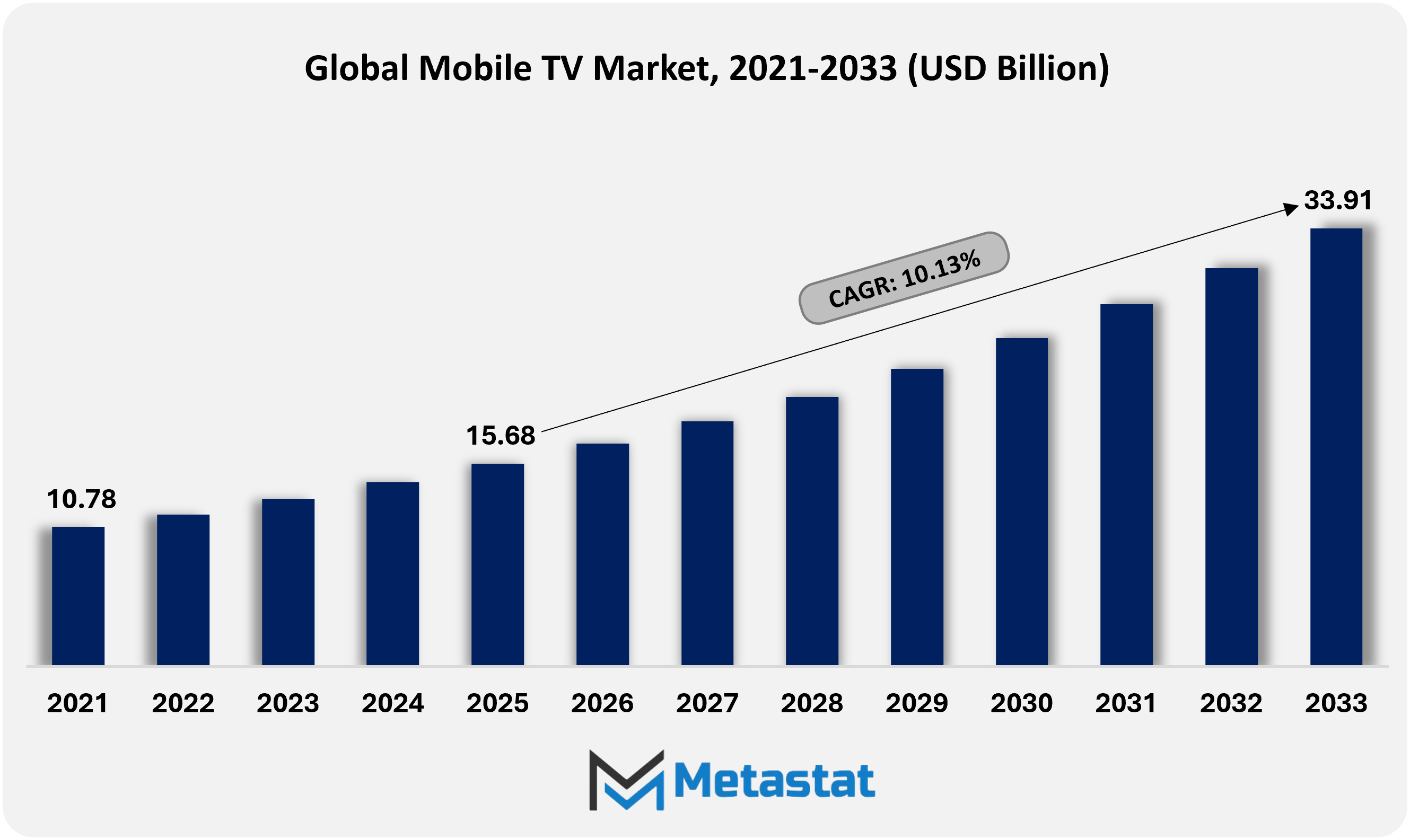
Rising consumption of video-on-the-go supported by high-speed 4G/5G expansion and affordable data plans.
Rising consumption of video-on-the-go supported by high-speed 4G/5G expansion and affordable data plans will continue shaping target market behavior. Wider smartphone penetration and improved network coverage encourage continuous viewing during travel and work hours. The Global Mobile TV market gains momentum via constant connectivity improvements and competitive pricing models.
Increased integration of OTT apps, live sports streaming, and premium digital content partnerships across mobile platforms
Increased integration of OTT apps, live sports streaming, and premium digital content partnerships across mobile platforms will redefine content access patterns. Exclusive publicizes and interactive capabilities entice numerous viewer segments. Mobile ecosystems increasingly position TV-style experiences within handheld devices, encouraging longer engagement cycles and strengthening monetization capacity across digital entertainment networks.
Limited bandwidth capacity and network congestion reducing viewing quality during peak periods
Limited bandwidth capacity and network congestion reducing viewing quality during peak periods will continue to be a structural situation. Urban density and simultaneous data demand places pressure on network infrastructure performance. Viewing interruptions weaken person's pride, influencing retention costs. Network optimization investments remain essential to balance traffic loads and keep proper streaming consistency.
Higher content licensing and platform development costs restricting profitability for service providers
Higher content licensing and platform development costs restricting profitability for service providers will challenge financial sustainability. Premium rights acquisition and continuous technology improvements increase operational expenditure. Smaller market participants face entry barriers, even as established gamers come across margin strain, developing a competitive environment requiring careful value control and long-time period strategic planning.
Accelerated adoption of 5G multicast and edge-optimized streaming enabling richer mobile TV experiences across global markets
Accelerated adoption of 5G multicast and edge-optimized streaming, enabling richer mobile TV reviews across worldwide markets, will unlock new growth avenues. Reduced latency and green spectrum usage aid massive-scale live viewing. The Global Mobile TV market stands poised for immersive formats, real-time interaction, and scalable distribution formats pushed with the aid of next-generation infrastructure.
The Global Mobile TV market is segmented by Content Type, Technology, Distribution Channel, Application, and Region.
Video-on-Demand segment is estimated at USD 6.8 billion in 2026 and is projected to reach USD 13.8 billion by 2033, at a CAGR of 10.7% during the forecast period.
The Video-on-Demand segment in the Global Mobile TV market will expand through flexible viewing models driven by time-shifted consumption habits. Audiences will favor content libraries offering lengthy-form amusement, local programming, and adaptive pricing. Platform investment will focus on advice structures, compression efficiency, and bandwidth optimization to beautify uninterrupted cellular viewing experiences.
Online Video segment is estimated at USD 5.9 billion in 2026 and is projected to reach USD 9.8 billion by 2033, at a CAGR of 7.6% during the forecast period.
Online video services will be shaped by short-form formats optimized for handheld screens. Growth will align with social media integration, author-pushed ecosystems, and fast content refresh cycles. Monetization techniques will expand through hybrid advertising models and branded collaborations, positioning online video as a dynamic engagement channel within cellular television services.
Live Streaming segment is estimated at USD 4.6 billion in 2026 and is projected to reach USD 10.3 billion by 2033, at a CAGR of 12.3% during the forecast period.
Live streaming will strengthen real-time audience participation throughout sports activities, news, and interactive occasions. Technological advancements will guide reduced latency and higher mobile balance. Content proprietors will emphasize one-of-a-kind live access and target audience analytics, allowing stay broadcasting to remain a central engagement driving force in cellular-centric leisure shipping models.
IPTV segment is projected to reach USD 7 billion by 2033, at a CAGR of 8.5% during the forecast period.
IPTV technology will retain relevance through controlled networks, delivering consistent quality and managed distribution. Telecom operators will expand bundled services, integrating Mobile TV access. Future deployments will prioritize network reliability and service personalization, enabling IPTV frameworks to conform smoothly to mobile utilization patterns without compromising streaming performance.
OTT segment is projected to reach USD 22.1 billion by 2033, at a CAGR of 12.1% during the forecast period.
OTT platforms will continue reshaping Mobile TV consumption through software-based delivery independent of traditional infrastructure. Service growth will rely upon scalable cloud architectures and content localization. Competitive differentiation will emerge via user interface simplicity, adaptive streaming protocols, and strategic partnerships, assisting seamless mobile access.
Satellite segment is projected to reach USD 2.2 billion by 2033, at a CAGR of 2.1% during the forecast period.
Satellite-based Mobile TV services will serve connectivity-confined regions by means of allowing wide-area coverage. Technological refinement will improve signal efficiency and tool compatibility. Strategic use cases will encompass far-flung broadcasting and emergency communication, assisting broader inclusion within mobile television ecosystems beyond dense city markets.
Others segment is projected to reach USD 2.6 billion by 2033, at a CAGR of 8.9% during the forecast period.
Emerging technology will supplement installed delivery methods through experimental transmission fashions and hybrid frameworks. Innovation will raise awareness on price reduction, energy performance, and tool integration. Such developments will support diversified access routes while helping future adaptability across evolving cell enjoyment infrastructures.
Free to Air Service segment is projected to reach USD 15.1 billion by 2033.
Free-to-air services will expand audience reach through ad-supported content delivery models. Accessibility without subscription obstacles will entice mass viewership segments. Broadcasters will invest in cell-optimized scheduling and localized programming, allowing sustainable revenue generation through advertising without restricting consumer access.
Pay TV Service segment is projected to reach USD 18.8 billion by 2033.
Pay TV services will emphasize premium experiences through exclusive programming and enhanced viewing features. Subscription-based access will aid funding in high-priced content material and advanced capabilities. Personalization equipment and bundled offerings will support purchaser retention in aggressive cellular tv environments.
Commercial segment is projected to grow at a CAGR of 7.8% during the forecast period.
Commercial applications will leverage mobile television systems for targeted advertising and brand storytelling. Businesses will adopt interactive codecs, assisting real-time engagement and measurable consequences. Integration with data analytics will refine marketing campaign precision, positioning cellular tv as a strategic channel for virtual marketing evolution.
Personal segment is projected to grow at a CAGR of 11% during the forecast period.
Personal applications will prioritize individualized entertainment consumption tailored to user preferences and daily routines. Mobile tv usage will align with life-style mobility and on-demand get right of entry to expectations. Continuous interface enhancements and adaptive content material delivery will enhance pride across numerous customer demographics.
Based on geography, the Global Mobile TV market is divided into North America, Europe, Asia-Pacific, South America, and Middle East & Africa.
North America Mobile TV Market is set to expand at a CAGR of 10.1% within the forecast period, reaching a market size (TAM) of USD 6.2 billion by the end of 2033.
North America is witnessing rising Mobile TV adoption owing to high 5G penetration and strong demand for live sports streaming on handheld devices.
In North America, Mobile TV market growth gains momentum from premium content partnerships among broadcasters, telecom operators, and OTT platforms.
Asia-Pacific presents significant opportunities for the Global Mobile TV market through increasing cell phone user bases and inexpensive data plans across emerging economies.
Within the Asia Pacific, the Global Mobile TV panorama benefits from growing interest in regional language content and mobile-first entertainment consumption.
Across the Middle East, Africa, and South America, the Global Mobile TV market progresses through slow digital infrastructure enlargement, rising mobile internet access, and growing desire for on-the-go video consumption in urban populations.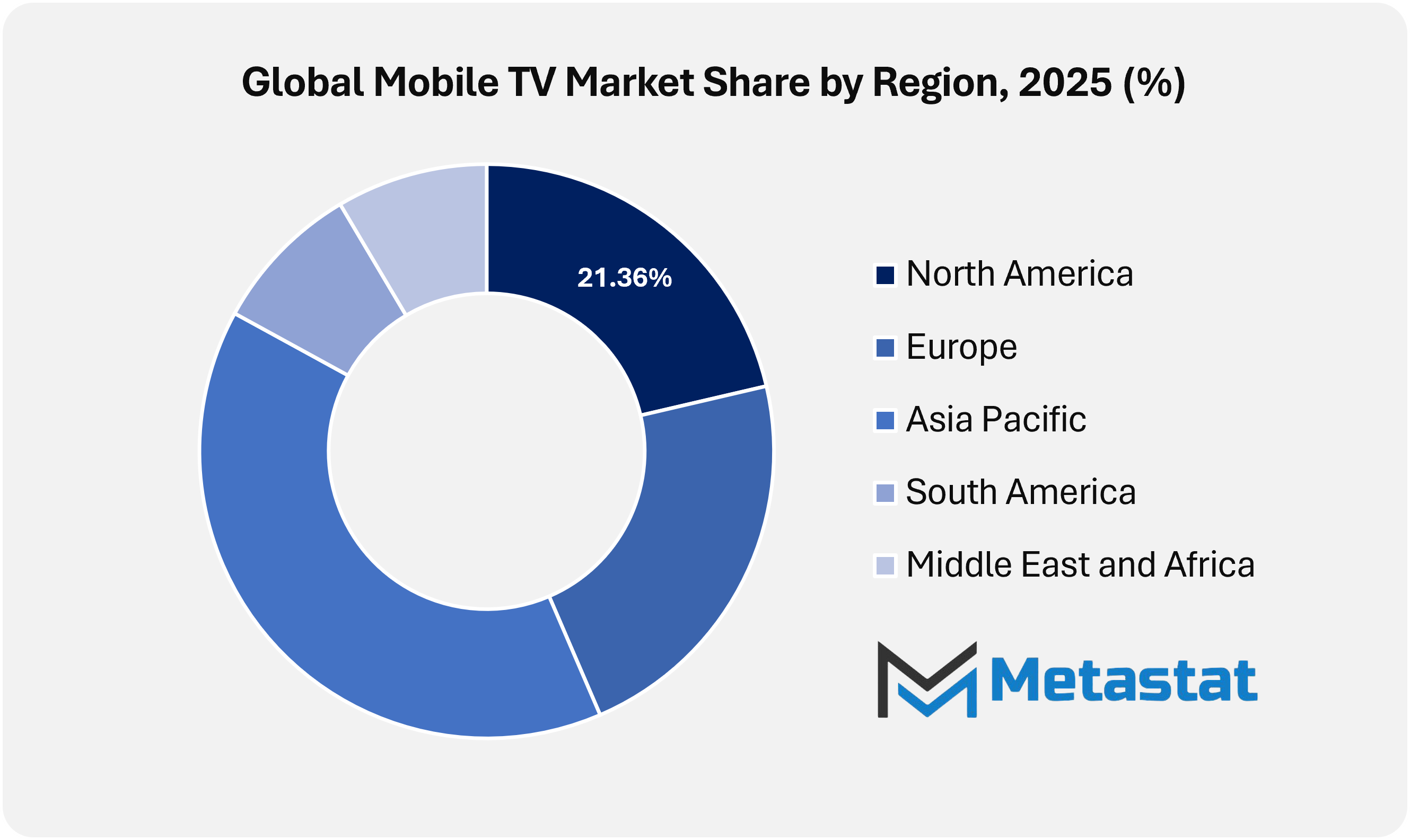
The Global Mobile TV marketplace continues to gain steady attention as viewing habits shift closer to monitors that suit into regular existence. Audiences now count on live tv, on-demand content, and interactive formats to work smoothly on smartphones and tablets. This exchange in conduct has encouraged telecom operators, broadcasters, and virtual structures to rethink how video is introduced. Network power, data affordability, and tool compatibility will shape how cell TV grows throughout regions, particularly in areas where cellular internet is the primary means of access for enjoyment.
In North America, agencies that include AT&T Inc., Verizon Communications Inc., Comcast Corporation, Charter Communications, Inc., Cox Communications, Inc., United States Cellular Corporation, Consolidated Communications Holdings, Inc., Altice USA, Inc., Rogers Communications Inc., and TELUS Corporation play a major role in integrating mobile TV with current broadband and wi-fi services. These competitors focus on improving the streaming experience and bundling content with data plans to hold customers engaged. Their strategies frequently join conventional television fashions with app-based viewing, growing flexible options for customers who decide to watch content on the move.
Across Europe, companies such as Vodafone Group Plc, Telefónica S.A., Deutsche Telekom AG, Orange S.A., Swisscom AG, KPN N.V., Telia Company AB, Telecom Italia S.P.A. (TIM), Proximus Group, Telenet Group Holding N.V., Iliad S.A., Altice France S.A. (SFR), Virgin Media O2 UK Limited, and Sky Group Limited retain to reinforce mobile TV through partnerships and localized content material. These companies focus on regional preferences, language diversity, and flexible subscription models. Their presence helps strike a balance between live broadcasting and streaming offerings tailored for mobile-first users.
In Asia-Pacific and different rapidly growing markets, operators along with Bharti Airtel Limited, Tata Play Limited, Asianet Satellite Communications Ltd., Singapore Telecommunications Limited (Singtel), StarHub Ltd., Rakuten Group, Inc., Tencent Holdings Ltd., and MultiChoice Group Limited display how mobile TV adapts to large user volumes and varied price sensitivities. These companies frequently integrate telecom offerings with sturdy virtual structures, making mobile TV more available to wider audiences. Innovation in information utilization and app-based viewing will continue to be vital to growth in those regions.
Market size is forecast to rise from USD 15.7 billion in 2025 to over USD 33.9 billion by 2033.
The Global Mobile TV market is expected to increasingly integrate with creator-led distribution ecosystems, where independent producers will launch serialized live content without traditional network backing. Regulatory frameworks will adapt to these hybrid models, balancing spectrum usage, content accountability, and user privacy, while redefining what mobile broadcasting will represent in a screen-saturated digital society.
This research report categorizes the Mobile TV market based on key segments and regions, forecasts revenue growth, and analyses trends in each submarket. The report analyses the key growth drivers, opportunities, and challenges influencing the Mobile TV market. Recent market developments and competitive strategies such as expansion, product launch, partnership, merger, and acquisition have been included to draw the competitive landscape in the market.
The report strategically identifies and profiles the key market players and analyses their core competencies in each sub-segment of the Mobile TV market.
|
Report Attributes |
Details |
|
Study Period |
2021-2033 |
|
Base Year |
2025 |
|
Estimated Year |
2026 |
|
Forecast Period |
2026-2033 |
|
Historical Period |
2021-2025 |
|
Growth Rate |
CAGR 10.1% from 2026 to 2033 |
|
Revenue Unit |
USD billion |
|
Segmentation |
By Content Type, Technology, Distribution Channel, Applications, and Region |
|
By Region |
North America (By Content Type, Technology, Distribution Channel, Applications, and Country)
|
|
Europe (By Content Type, Technology, Distribution Channel, Applications, and Country)
|
|
|
Asia Pacific (By Content Type, Technology, Distribution Channel, Applications, and Country)
|
|
|
South America (By Content Type, Technology, Distribution Channel, Applications, and Country)
|
|
|
Middle East and Africa (By Content Type, Technology, Distribution Channel, Applications, and Country)
|
Find answers to common questions about this report
Top players operating in the Mobile TV industry include AT&T Inc., Charter Communications, Inc., Comcast Corporation, Consolidated Communications Holdings, Inc., Cox Communications, Inc., United States Cellular Corporation, and Verizon Communications Inc.
Global Mobile TV market is estimated to reach USD 33.9 billion by 2033.
Limited bandwidth capacity and network congestion reducing viewing quality during peak periods will hamper market growth within the forecast period.
North America region dominates the market.
The Metastat Insights study shows that the Global Mobile TV market size was USD 15.7 billion in 2025.
The Global Mobile TV market is likely to grow at a CAGR of 10.1% over the forecast period (2026-2033).
The Metastat Insights analysis shows that the North America Mobile TV market size is estimated to be USD 6.2 billion by 2033.
The Online Video is the leading type segment in the Global market.
Rising consumption of video-on-the-go supported by high-speed 4G/5G expansion and affordable data plans and Increased integration of OTT apps, live sports streaming, and premium digital content partnerships across mobile platforms are key driving factors, boosting the market.
The analysts below cover Information & Technology research at Metastat Insights.
LEAD ANALYST
Utkarsh Khirodkar is a Lead Market Research Analyst at MetaStat Insight, specializing in market intelligence, technology sector assessments, and competitive strategy.

PRINCIPAL CONSULTANT - ENTERPRISE AI & EMERGING TECHNOLOGIES
Banking & Finance · Electronics and Semiconductor · Energy and Power · Healthcare IT · Information & Technology · Professional Services
Vijay Gunti is a Principal Consultant at MetaStat Insight, bringing over two decades of experience across enterprise digital transformation, technology strategy, and intelligent systems.

LEAD CONSULTANT - COMMUNICATION, TELECOM, AND IT
Electronics and Semiconductor · Information & Technology · Machinery & Equipment · Professional Services
Ravindra Sathe Consultants for Communication, Telecom, and IT at MetaStat Insight. He leads the firm's industry research initiatives across telecommunications infrastructure, digital connectivity, enterprise networking, and emerging information technology domains.
Decarbonizing industrial thermal processes hinges on refrigerant regulations and compressor efficiency limits. Metastat Insights delivered a thorough market analysis that evaluated natural refrigerants like CO2 and hydrocarbons against synthetic low-GWP alternatives. The breakdown of utility incentives and grid capacity constraints across key European manufacturing hubs offered valuable perspective. The follow-up conversation with their sector analysts addressed our specific questions on mechanical vapor recompression systems efficiently.
Assessing 200mm wafer transition schedules and substrate supply bottlenecks requires precise technical intelligence. MetaStat Insight supplied an actionable breakdown comparing planar and trench MOSFET architectures across automotive and industrial drive markets. The regional capacity estimates for Asia-Pacific foundries helped clarify lead-time uncertainties during our strategic planning session. When we needed additional clarification on high-purity raw material sourcing, their analyst team responded with helpful context within twenty-four hours.
Tracking maintenance cycle demand for secondary flight display units and terrain collision avoidance systems across regional jet fleets involves complex aftermarket dynamics. MetaStat Insight provided practical analysis separating airline retrofit programs from OEM forward-fit production schedules in North America and Southeast Asia. The supplier matrix highlighted component obsolescence timelines without resorting to vague generalizations. The dataset served as a dependable reference during our annual program review meetings.
Explore related market intelligence reports worth reading alongside this one.
Starting from
$2950