
LEAD ANALYST
Utkarsh Khirodkar is a Lead Market Research Analyst at MetaStat Insight, specializing in market intelligence, technology sector assessments, and competitive strategy.

Movable Pool Floors Market Size, Share, By Type (Hydraulic Movable Pool Floors, Mechanical Movable Pool Floors, Pneumatic Movable Pool Floors, and Others), By Material (Stainless Steel, Aluminum, Composite Materials, and Others), By Mechanism (Fully Automated, Semi-Automated, and Manual), By Application (Residential, Commercial, Public Pools, Hotels, Resorts, Rehabilitation Centers, and Others), Industry Analysis, Growth, Trends, and Forecast, 2026-2033
Report ID
MSI-4735
Published
May, 2026
Pages
314 Pages
Format
Report Details
Choose Your License
Movable Pool Floors Market
Global Movable Pool Floors market size is valued at USD 1,469.3 million in 2025 and projected to grow at a CAGR of 9.6% during the forecast period, reaching USD 3,057.3 million by 2033.
North America accounted for 32.2% of the market in 2025, with the U.S. leading regional demand.
The Hydraulic Movable Pool Floors segment accounted for 59.1% of the global market in 2025.
Key trends driving growth: Space optimization and multi-program scheduling in a single pool basin, along with safety, accessibility, and inclusive aquatics across age and mobility groups.
Key opportunities include premium residential, hospitality, and wellness retrofits that integrate smart controls and multi-use deck conversion.
Key insight: Rising demand for multi-functional aquatic infrastructure is accelerating growth in the Global Movable Pool Floors Market.
The Global Movable Pool Floors market is expanding beyond conventional swimming facilities and competitive sports venues into broader aquatic infrastructure applications. Over the coming years, demand will rise from architects and urban planners seeking adaptive environments where water depth can be adjusted to transform a single space into multiple functional zones. Luxury residential projects will increasingly integrate movable pool floor systems to convert pools into event platforms, wellness decks, or leisure spaces, enabling property owners to maximize spatial utility without expanding structural footprints.
Hospitality developments will continue to adopt these systems to enhance guest experiences through convertible poolside settings that transition from daytime leisure areas to evening event spaces. In rehabilitation centers and senior living communities, adjustable-depth technology will support customized hydrotherapy programs, allowing practitioners to fine-tune water levels for patient safety and therapeutic precision. Educational institutions will install these systems in multipurpose sports complexes where shallow training sessions and deep-water instruction can take place within the same basin without structural modifications.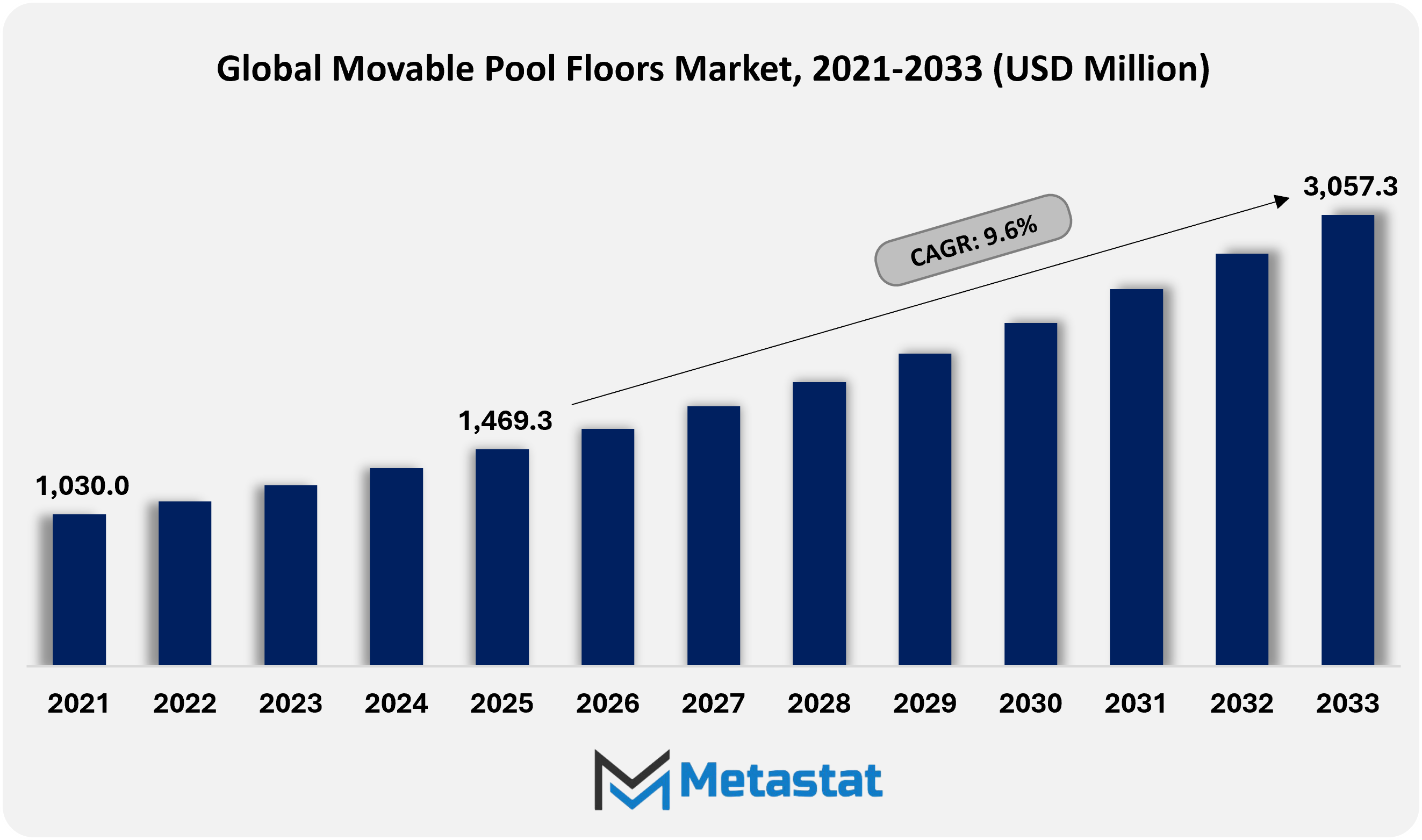
Space optimization and multi-program scheduling in a single pool basin.
Urban infrastructure planning is increasingly prioritizing adaptive design, encouraging facilities to extract greater utility from limited square footage. Adjustable pool floor systems support synchronized scheduling of swim training, rehabilitation sessions, competitive practice, and community activities within one basin. Efficient depth variation improves operational turnover, enhances booking density, and supports revenue generation across educational institutions, sports complexes, and municipal facilities.
Safety, accessibility, and inclusive aquatics across age and mobility groups
Regulatory emphasis on inclusive design is expanding installation across public and private aquatic venues. Variable floor elevation creates controlled shallow zones for children, older adults, and individuals with limited mobility, supporting safer entry and exit. Compliance with accessibility standards is increasing demand across rehabilitation centers and therapy facilities, reinforcing the long-term growth outlook for the Global Movable Pool Floors market.
High capital cost and structural integration complexity in new-build and retrofit projects
Project feasibility assessments reflect high capital allocation requirements associated with hydraulic platforms, stainless steel assemblies, and precision engineering. Structural reinforcement needs during retrofits increase technical oversight, extend approval cycles, and lengthen procurement timelines. Budget sensitivity in public infrastructure spending can limit short-term adoption despite ongoing technological advancement in the Global Movable Pool Floors market.
Maintenance intensity, inspection requirements, and risk controls tied to moving structures in water
Operational continuity depends on routine inspection of mechanical drives, lifting columns, waterproof seals, and control panels. Compliance audits require documented safety protocols and periodic structural testing to prevent mechanical failure. Skilled technical servicing increases lifecycle expenditure, influencing procurement decisions among facility operators evaluating long-term reliability.
Premium residential, hospitality, and wellness retrofits integrating smart controls and multi-use deck conversion
Luxury property developers are integrating adjustable pool systems with digital control platforms that enable seamless transformation between swimming areas and flat event decks. Boutique hotels, private villas, and wellness resorts are adopting programmable depth settings to enhance experiential design. Smart automation combined with architectural aesthetics is creating premium positioning opportunities across the Movable Pool Floors market and supporting differentiated value creation in high-income segments.
The Global Movable Pool Floors market is classified based on Type, Material, Mechanism, and Application.
Hydraulic Movable Pool Floors segment is valued at USD 951.1 million in 2026 and is projected to reach USD 1,700.5 million by 2033, at a CAGR of 8.7% during the forecast period.
Hydraulic systems will witness higher adoption owing to their strong lifting capacity and stable vertical movement. Future installations in premium aquatic facilities will focus on silent operation, precise depth control, and long-term durability. Advanced pressure regulation technology will enhance safety standards and reduce operational interruptions across diverse environments.
Mechanical Movable Pool Floors segment is valued at USD 524 million in 2026 and is projected to reach USD 1,089 million by 2033, at a CAGR of 11% during the forecast period.
Mechanical solutions are gaining attention among facilities seeking structured engineering systems with predictable maintenance cycles. Gear-driven and screw-based systems provide controlled adjustment suitable for mid-sized swimming pools. Ongoing improvements in load distribution design are strengthening reliability while maintaining cost efficiency for institutional buyers.
Pneumatic Movable Pool Floors segment is valued at USD 83.7 million in 2026 and is projected to reach USD 169.1 million by 2033, at a CAGR of 10.6% during the forecast period.
Pneumatic configurations will progress through improved air compression systems that support smooth elevation adjustment. Lightweight structural integration is encouraging adoption in multipurpose aquatic spaces. Energy-efficient air management units help reduce consumption levels while maintaining performance stability across dynamic usage schedules.
Others segment is valued at USD 49.9 million in 2026 and is projected to reach USD 98.7 million by 2033, at a CAGR of 10.2% during the forecast period.
Other technologies include hybrid lifting models and emerging smart-adjustment platforms. Future development will emphasize modular frameworks that enable flexible retrofitting. Research investment will support customized depth transformation systems tailored for specialized sports training and adaptive aquatic applications.
Stainless Steel segment is projected to reach USD 1,484 million by 2033, at a CAGR of 8% during the forecast period.
Stainless steel structures will remain preferred owing to their corrosion resistance and high structural integrity. Marine-grade alloys improve longevity in chlorinated environments. Enhanced welding precision and protective finishing support long operational life cycles in demanding commercial installations.
Aluminum segment is projected to reach USD 558 million by 2033, at a CAGR of 8.5% during the forecast period.
Aluminum components are gaining momentum owing to their lightweight properties and ease of fabrication. Improved coating technologies strengthen resistance to chemical exposure. Structural reinforcement techniques allow aluminum frameworks to meet higher load-bearing requirements without significantly increasing overall system weight.
Composite Materials segment is projected to reach USD 778.7 million by 2033, at a CAGR of 14% during the forecast period.
Composite materials are projected to expand through innovation in fiber reinforcement and polymer blending. High strength-to-weight ratios enable efficient depth transformation while reducing maintenance requirements. Ongoing advancements also support sustainable manufacturing practices aligned with green building objectives.
Others segment is projected to reach USD 236.6 million by 2033, at a CAGR of 10.6% during the forecast period.
Other material categories include engineered plastics and mixed-alloy structures. Material technology research is improving durability, thermal stability, and slip-resistant surfaces. Product development is focused on balancing cost control with long-term operational resilience.
Fully Automated segment is projected to reach USD 1,832.2 million by 2033.
Fully automated systems will dominate high-end installations through integrated sensors and programmable control panels. Smart monitoring enables precise adjustment aligned with scheduled activities. Remote diagnostics and predictive maintenance capabilities reduce downtime while improving facility management efficiency.
Semi-Automated segment is projected to reach USD 1,056.6 million by 2033.
Semi-automated mechanisms offer balanced control through assisted lifting supported by manual oversight. Cost-sensitive institutions benefit from simplified control interfaces. Engineering refinements are strengthening safety locks and operational safeguards to ensure stable performance.
Manual segment is projected to reach USD 168.5 million by 2033.
Manual configurations serve smaller facilities requiring limited depth adjustment. Mechanical leverage systems provide basic adjustability without complex electronics. Future developments will focus on ergonomic handling and reinforced structural components to ensure safe operation.
Residential segment is projected to grow at a CAGR of 10% during the forecast period.
Residential adoption is increasing owing to the growing need for space optimization in private properties. Adjustable depth features enable multifunctional outdoor designs. Integration with smart home systems enhances convenience while supporting child safety and aesthetic flexibility.
Commercial segment is projected to grow at a CAGR of 8.4% during the forecast period.
Commercial establishments are using adjustable floors to maximize utilization rates. Fitness centers and training academies benefit from rapid depth transformation aligned with varied programming schedules. Investment in automated solutions is improving user experience and operational productivity.
Public Pools segment is projected to grow at a CAGR of 9% during the forecast period.
Public pool infrastructure is incorporating adjustable systems to support inclusive aquatic access. Municipal initiatives are prioritizing safety compliance and durability. Public funding programs are also encouraging modernization of aging facilities through adaptable depth control systems.
Hotels & Resorts segment is projected to grow at a CAGR of 11% during the forecast period.
Hotels and resorts are implementing adjustable systems to enhance luxury appeal. Event-based pool transformation supports greater leisure and entertainment flexibility. Design-focused engineering aligns functionality with architectural aesthetics, improving guest engagement and premium positioning.
Rehabilitation Centers segment is projected to grow at a CAGR of 10.8% during the forecast period.
Rehabilitation centers are adopting variable-depth systems to support hydrotherapy treatment protocols. Controlled immersion levels help patient recovery programs. Technological advancements are ensuring smooth transitions that meet medical safety and therapeutic precision requirements.
Others segment is projected to grow at a CAGR of 7.4% during the forecast period.
Other applications include sports complexes and educational institutions. Adaptive engineering enables tailored depth settings for competitive training and instructional sessions. Long-term planning will support integration into multipurpose aquatic developments globally.
Based on geography, the Global Movable Pool Floors market is divided into North America, Europe, Asia-Pacific, South America, Middle East, and Africa.
North America Movable Pool Floors Market is set to expand at a CAGR of 9.6% within the forecast period, reaching a market size (TAM) of USD 879.0 million by the end of 2033.
In North America, rising investments in luxury residential projects and premium hospitality infrastructure are driving demand in the Movable Pool Floors market.
In Europe, the Movable Pool Floors market is gaining momentum owing to increasing upgrades in premium hospitality properties, modernization of municipal aquatic infrastructure, and stronger focus on accessibility-led pool design.
In Asia-Pacific, rapid urban development and increasing construction of high-end hotels are creating substantial opportunities in the Movable Pool Floors market.
Across South America and the Middle East & Africa, expanding tourism infrastructure, premium real estate developments, and modernization of leisure facilities are supporting steady demand in the Movable Pool Floors market.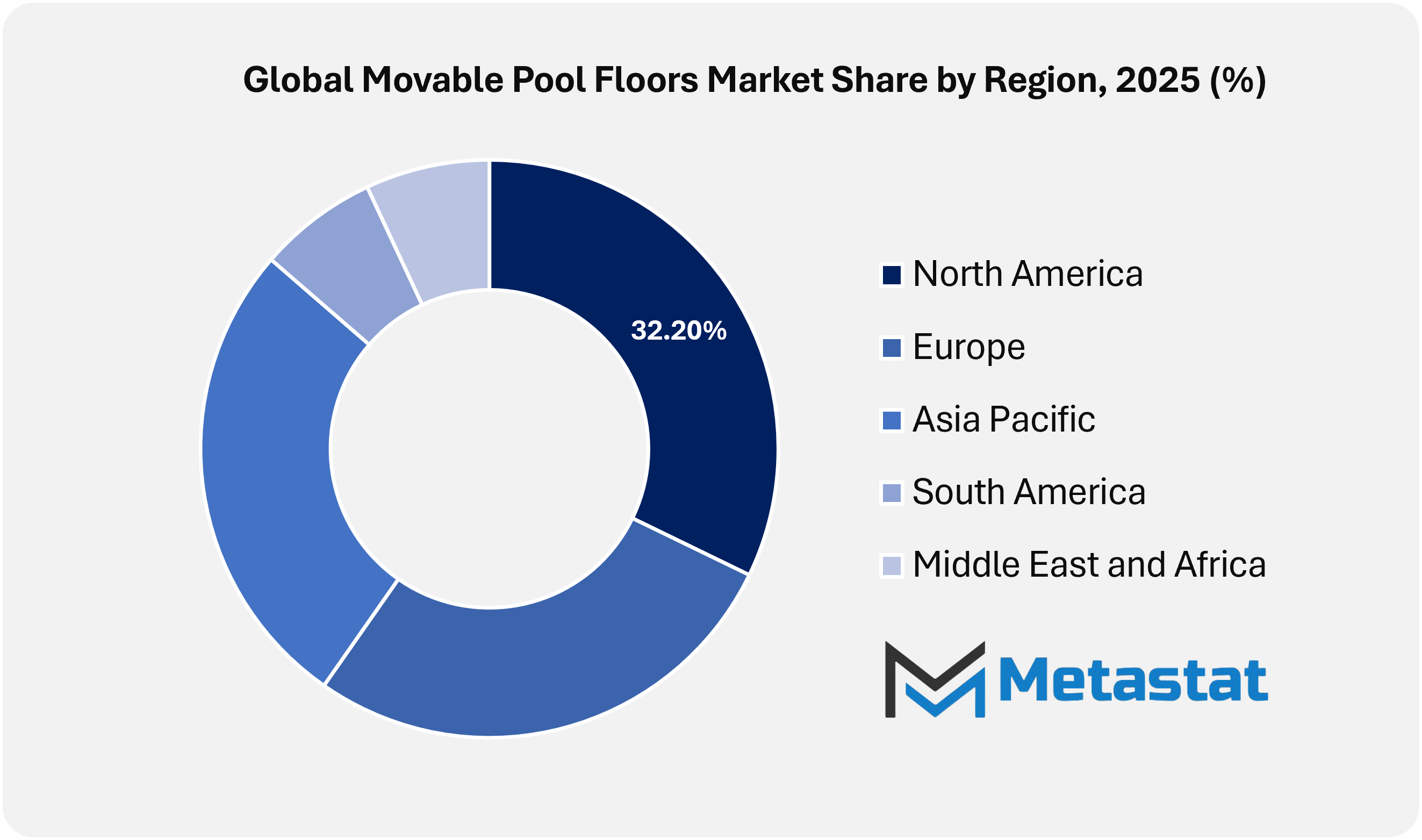
The Global Movable Pool Floors market is gaining attention as property owners increasingly look for ways to optimize space utilization without compromising safety, functionality, or design appeal. Movable pool floor systems allow pool depth to be adjusted and, in some cases, enable the entire pool surface to be converted into a flat deck area. Such flexibility is supporting adoption across resorts, wellness centers, educational institutions, sports complexes, and premium residential properties that require multipurpose aquatic spaces. Rising emphasis on safety, accessibility, and efficient space planning will support market expansion over the coming years.
Demand is anticipated to remain strong in urban locations where land availability is limited and property costs are high. Builders and architects are increasingly integrating movable pool floor systems during the early design phase of luxury residential and commercial developments. Rehabilitation centers and therapy facilities are also emerging as important adopters, supported by the accessibility advantages of adjustable-depth pools for elderly users and individuals with limited mobility. Advancements in hydraulic and mechanical lifting systems are improving reliability, operational smoothness, and energy efficiency, further strengthening market adoption.
Competition in the Global Movable Pool Floors market includes a mix of specialized engineering companies and pool technology providers. Key players include Variopool B.V., TwinScape Group Ltd., AquaFloors (Imaginox Group), Aqualift Industrie, EWAC Medical B.V., Aquatic Development Group Inc., Fluidra, S.A., ISI S.R.L. (ISI Pools), Firma Mazur Sp. z o.o., Tieleman B.V., VarioGroup, Crescend’Eau, ELEVATE (Elevate Fond Mobile), Amphibia, Depatech S.R.L., Holland Aqua Sight B.V., MINGAQUA, AfW Wassertechnologie GmbH & Co. KG, Guncast Swimming Pools Ltd., Wrightfield Pools Ltd., Inducon B.V., Barr + Wray Ltd., Tanby Pools Limited, AGOR Engineering Enterprises Ltd., Technics & Applications (T&A), Poolconcept Spain S.L., Carropools NV, Centro Italia S.R.L., S.R.Smith, LLC, and Akvo Spiralift. Market participants compete on engineering quality, customization capability, installation expertise, product reliability, and after-sales support.
Strategic partnerships with architects, construction firms, and hospitality developers will play a major role in expanding market reach. Companies offering tailored solutions, strong safety certifications, and long-term maintenance support will strengthen customer confidence and improve competitive positioning. Sustainability is also becoming an important differentiator, with manufacturers focusing on materials and system designs that help reduce water evaporation and heat loss. Increased interest in luxury amenities and smart building solutions will reinforce the role of movable pool floors across both commercial and residential projects globally.
Market size is forecast to rise from USD 1,469.3 million in 2025 to over USD 3,057.3 million by 2033.
Beyond leisure and healthcare, commercial real estate developers are incorporating movable floor technology into mixed-use complexes where aquatic spaces can support community events, art installations, and corporate gatherings. Marine research centers and defense training facilities will also adopt adjustable-depth solutions to simulate varied underwater conditions in controlled environments. Smart building ecosystems will integrate these systems with automation platforms, enabling synchronized lighting, temperature control, and floor positioning through centralized digital interfaces. As urban land constraints intensify, adaptive aquatic engineering will reshape how water-based environments are designed, turning pools into flexible architectural assets rather than single-purpose installations.
This research report categorizes the Movable Pool Floors market based on key segments and regions, forecasts revenue growth, and analyses trends in each submarket. The report analyses the key growth drivers, opportunities, and challenges influencing the Movable Pool Floors market. Recent market developments and competitive strategies such as expansion, product launch, partnership, merger, and acquisition have been included to draw the competitive landscape in the market.
The report strategically identifies and profiles the key market players and analyses their core competencies in each sub-segment of the Movable Pool Floors market.
|
Report Attributes |
Details |
|
Study Period |
2021-2033 |
|
Base Year |
2025 |
|
Estimated Year |
2026 |
|
Forecast Period |
2026-2033 |
|
Historical Period |
2021-2025 |
|
Growth Rate |
CAGR 9.6% from 2026 to 2033 |
|
Revenue Unit |
USD million |
|
Sales Volume Unit |
Thousand Units |
|
Segmentation |
By Type, Material, Mechanism, Application, and Region |
|
By Region |
North America (By Type, Material, Mechanism, Application, and Country)
|
|
Europe (By Type, Material, Mechanism, Application, and Country)
|
|
|
Asia Pacific (By Type, Material, Mechanism, Application, and Country)
|
|
|
South America (By Type, Material, Mechanism, Application, and Country)
|
|
|
Middle East and Africa (By Type, Material, Mechanism, Application, and Country)
|
Find answers to common questions about this report
Top players operating in the Movable Pool Floors industry include Variopool B.V., TwinScape Group Ltd., AquaFloors (Imaginox Group), Aqualift Industrie, EWAC Medical B.V., Aquatic Development Group Inc., and Fluidra, S.A.
Global Movable Pool Floors market is estimated to reach USD 3,057.3 million by 2033.
The Global Movable Pool Floors market is expected to grow at a CAGR of 9.6% over the forecast period (2026-2033).
High capital cost and structural integration complexity in new-build and retrofit projects will hamper the market growth within the forecast period.
North America region dominates the market.
Space optimization and multi-program scheduling in a single pool basin, along with safety, accessibility, and inclusive aquatics across age and mobility groups are key driving factors, boosting the market.
The Hydraulic Movable Pool Floors is the leading type segment in the Global market.
The Metastat Insights analysis shows that the North America Movable Pool Floors market size is estimated to be USD 879.0 million by 2033.
The Metastat Insights study shows that the Global Movable Pool Floors market size was USD 1,469.3 million in 2025.
The analysts below cover Consumer Goods research at Metastat Insights.
LEAD ANALYST
Utkarsh Khirodkar is a Lead Market Research Analyst at MetaStat Insight, specializing in market intelligence, technology sector assessments, and competitive strategy.
Most industry reports on warehouse automation bundle autonomous mobile robots and fixed conveyor installations into the same top-level numbers, which complicates advisory work. This study split the market cleanly by payload tiers, navigation technology, and fleet management software layers. The regional forecast for Western Europe gave our team defensible adoption benchmarks when evaluating capital allocation for logistics clients, saving us days of secondary data scrubbing.
Analyzing the transition from natural gas to green hydrogen in iron ore reduction requires realistic infrastructure timelines. Meta stat insight supplied a detailed regional assessment of DRI plant conversion costs and scrap metal availability in North America and Western Europe. Their report carefully examined pellet quality specs and electrical grid access constraints without making oversimplified market assumptions. The research material served as a practical reference during internal technology roadmap discussions.
Integrating zero-trust access controls across legacy electronic health record systems involves complex compliance overhead. Team produced an analysis that clearly separated identity governance and administration tools from privileged access management platforms. Their evaluation of HIPAA and GDPR compliance features across cloud native solutions gave our architecture group clear baseline criteria. The custom data request regarding biometric authentication adoption in hospital networks was returned promptly with clear documentation.
Explore related market intelligence reports worth reading alongside this one.