
LEAD ANALYST
Utkarsh Khirodkar is a Lead Market Research Analyst at MetaStat Insight, specializing in market intelligence, technology sector assessments, and competitive strategy.

Global Nickel Superalloy Market Size, Share, By Alloy Grade Family (Alloy 718 and 706 Family, Alloy 625 Family, Waspaloy and René Wrought Grades, Nimonic and Udimet Grades, Cast Turbine Alloy Grades), By Product Form (Bars, Rods and Billets, Sheet, Plate and Strip, Near-Net-Shape Castings, Near-Net-Shape Forgings and Rolled Rings, Powders, Wire and Tubular Products), By End-Use Industry (Aerospace and Defense, Power Generation, Oil and Gas, Chemical Processing, Automotive), By First Buyer Type (Original Equipment Manufacturers, Component Manufacturers and Contract Processors, Stocking Distributors and Service Centers), Industry Analysis, Growth, Trends, and Forecast, 2026-2033
Report ID
MSI-2442
Published
November, 2026
Pages
300 Pages
Format
Historical
Base year
Forecast
Forecast period
Report Details
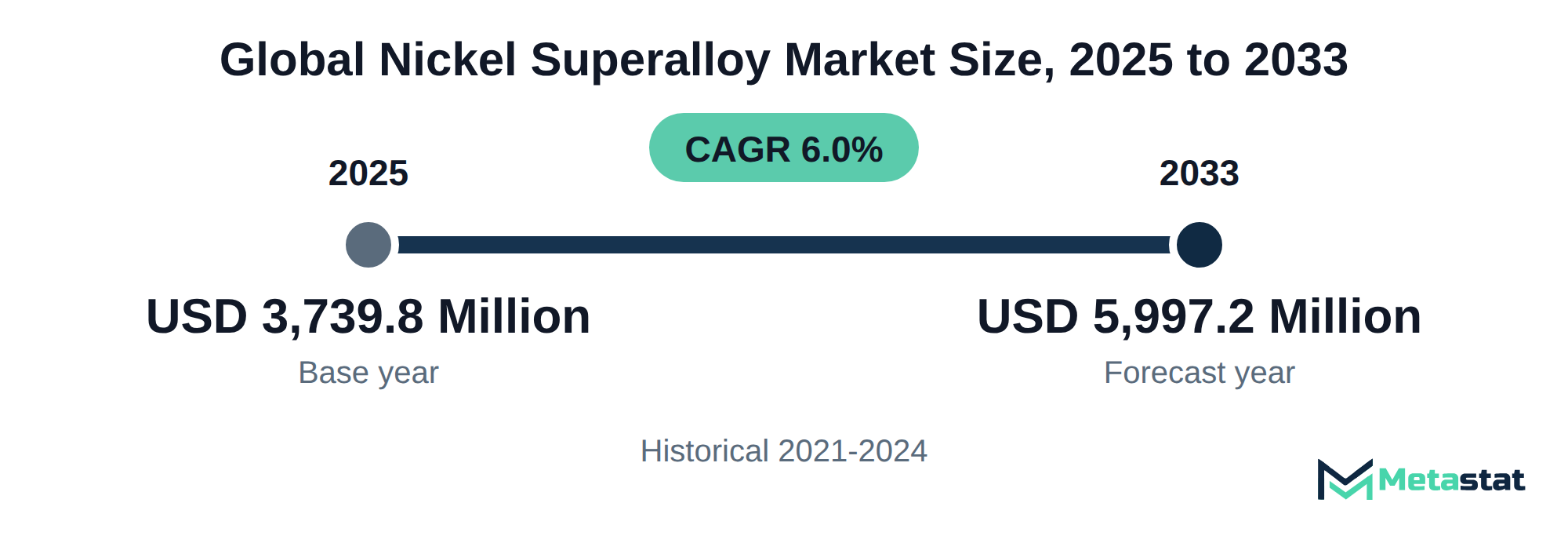
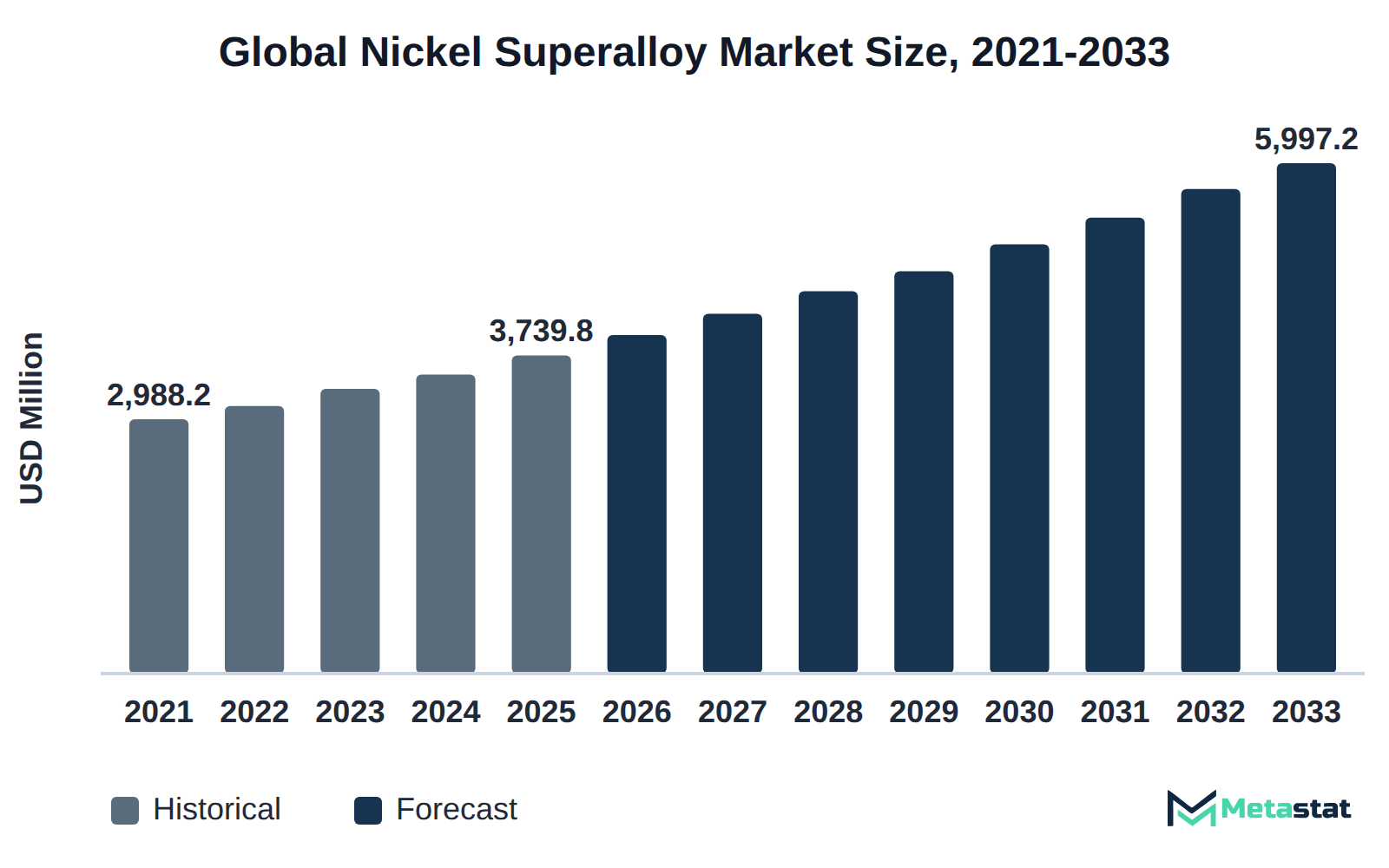
Market Valuation: Valued at $3,739.8 Million in 2025, projected to reach $5,997.2 Million by 2033 at a 6.0% CAGR.
Dominant Segment: The Alloy 718 and 706 Family leads the market, driven by its superior mechanical properties and demand in aerospace and defense applications.
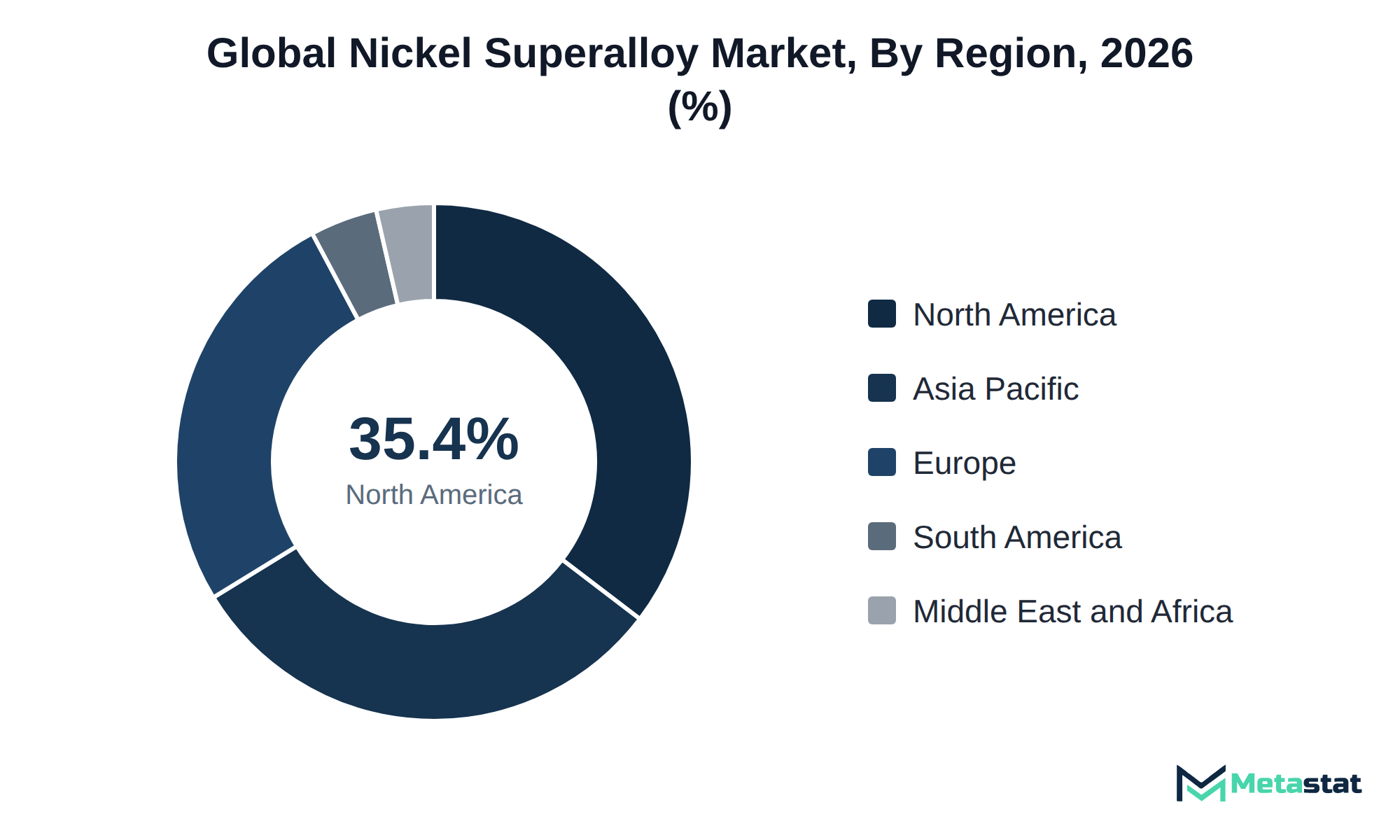
Geographic Lead: North America is the leading region, holding 35.4% of the market in 2025, primarily due to its robust aerospace industry and technological advancements.
What's Inside: The report provides a comprehensive analysis of market dynamics, competitive landscape, and detailed forecasts from 2026 to 2033, covering various alloy families and product forms.
Growth Drivers: Increasing investments in aerospace and defense technologies are fueling demand for nickel superalloys, particularly for applications requiring high performance under extreme conditions.
End-Use Insights: The aerospace and defense sector is projected to generate significant revenue, illustrating the critical role of nickel superalloys in advanced aircraft and military applications.
Choose Your License
Global Nickel Superalloy Market
The global Nickel Superalloy market was valued at USD 3,739.8 million in 2025 and is projected to reach USD 5,997.2 million by 2033, growing at a CAGR of 6.0% over the forecast period.
The Nickel Superalloy market consists of high-performance alloys primarily used in demanding applications, particularly in the aerospace and defense sectors. Buyers invest in these materials due to their high resistance to extreme temperatures and mechanical stress, which enhances the durability and efficiency of components in critical environments. These properties drive demand across several industries, with significant adoption among original equipment manufacturers and component manufacturers.
Growth in the market is driven by increasing investment in aerospace and defense technologies, which require reliable materials for advanced aircraft and military applications. The Alloy 718 and 706 Family segment represents the largest share of market value, reflecting the demand for high-performance solutions in these sectors. North America holds 35.4% of the market in 2025, with the US leading in 2026. The region's established aerospace industry drives demand for nickel superalloys and supports a strong growth trajectory.
Continued advancements in manufacturing processes and material science contribute to the market's expansion. The need for improved efficiency in power generation and oil and gas extraction further influences demand for nickel superalloys. As industries seek better performance and reliability, the market is expected to grow steadily through the forecast period.
The Nickel Superalloy market encompasses various high-performance alloys critical for applications in aerospace, power generation, and oil and gas industries. Buyers invest in these alloys because they withstand extreme conditions while maintaining structural integrity. The need for lightweight and durable components in aerospace and defense applications drives substantial expenditures in advanced alloys that offer superior performance and reliability.
Growth in the market stems from increasing investments in aerospace and defense, with the aerospace and defense segment exhibiting the highest value among end-use industries. This region benefits from significant technological advancements and a robust manufacturing base, which drives innovation and supports the adoption of high-performance materials.
In terms of market dynamics, the Alloy 718 and 706 Family stands out, demonstrating strong growth potential through a compound annual growth rate of 5.5%. This alloy family caters to critical applications, particularly in the aerospace sector, where stringent performance requirements dictate purchasing decisions. Ongoing advancements in manufacturing processes further enhance the market's competitive landscape.
The demand for Nickel-Based Superalloys in commercial aircraft engines is driven by the increasing focus on fuel efficiency and performance optimization in aviation. Commercial aircraft manufacturers prioritize materials that withstand high temperatures and stress, making Nickel Superalloys essential for turbine components. In 2026, the Aerospace and Defense sector is projected to generate USD 2,872.2 million, illustrating the significant need for advanced materials in this industry.
The growth in passenger air travel and the need for more efficient engines contribute to the rising demand for these superalloys. The structural integrity and heat resistance provided by Nickel Superalloys enable engine designs to operate at higher temperatures, leading to improved engine efficiency and reduced emissions. This technology shift reflects a broader industry move toward sustainable aviation practices that affects the entire market.
With the Aerospace and Defense sector expected to reach USD 4,368.9 million by 2033, manufacturers that use Nickel Superalloys are well positioned against competitors. This focus on advanced aerospace materials enhances aircraft performance and significantly impacts cost efficiency, driving long-term growth in the Nickel Superalloy market.
Negotiating pricing and contract models in the Nickel Superalloy market plays a critical role in procurement strategies for industrial gas turbine hot sections. Original Equipment Manufacturers (OEMs) engage in long-term contracts to secure stable supply chains and mitigate fluctuations in raw material prices. The forecast for the Aerospace and Defense segment indicates a significant growth trajectory, with values projected to reach USD 4,368.9 million by 2033.
Pricing structures typically involve fixed pricing for multi-year agreements or variable pricing linked to market indices, which influences purchasing decisions. Buyers prioritize contracts that ensure reliable delivery schedules and quality assurance, enhancing operational efficiency. OEMs and component manufacturers analyze supplier capabilities and their ability to meet specific technical requirements, affecting cost structures and overall procurement strategies.
As demand for high-performance materials rises, competitive pricing and favorable contract terms become essential for holding market position. Close alignment between buyers and suppliers encourages collaboration that benefits both parties and supports market stability and growth.
Qualification of nickel-based superalloy powders represents a critical consideration for original equipment manufacturers in the Nickel Superalloy market. These manufacturers require materials that exhibit superior mechanical properties to ensure reliability and performance in demanding applications, particularly within aerospace and defense sectors. The projected growth of this segment highlights an increasing focus on additive manufacturing techniques. For instance, the aerospace and defense industry's market value is expected to rise from USD 2,872.2 million in 2026 to USD 4,368.9 million by 2033, reflecting a compound annual growth rate of 6.2% during this period.
Successful qualification of powders for additive manufacturing involves rigorous aerospace materials testing and certification processes to meet stringent industry standards. This qualification ensures that the materials deliver consistency and performance in production environments. The impact of these processes influences the supply chain, requiring manufacturers to invest in advanced technologies and quality assurance measures. Rising demand for high-performance components in niche applications, including turbine engines and aircraft structures, creates significant opportunities for suppliers of nickel-based superalloy powders. The ability to supply qualified materials remains essential to competitive advantage.
Nickel-based superalloys demonstrate strong performance in high-temperature applications, particularly in the aerospace and defense sectors. These superalloys maintain structural integrity under extreme thermal stress, which is critical for components including turbine blades and combustion chambers. This demand reflects the growing need for materials that operate at high temperatures without failure.
This growth signifies an expanding market for high-performance alloys that withstand high temperatures and harsh environments. Such capabilities support manufacturers in developing reliable, efficient engines and systems that improve overall performance and safety.
Investing in nickel-based superalloys yields commercial advantages for manufacturers, enabling them to meet stringent regulatory requirements while enhancing product lifespan and performance. These advantages increase demand for superalloys as industries seek to innovate and reduce operational downtime.
The aerospace and defense sectors experience significant growth, leading to heightened demand for high-performance materials. Original equipment manufacturers (OEMs) expand production capabilities to meet the rising number of aircraft deliveries. This shift reflects a broader trend of increasing air travel, creating a pressing need for durable and efficient components. Buyers prioritize Nickel Superalloy market products that offer enhanced performance and reliability in critical applications. The aerospace and defense end-use industry is expected to achieve a compound annual growth rate (CAGR) of 6.2% through 2033, indicating strong growth in spending. This demand surge prompts suppliers to increase production capacity and innovate, ensuring alignment with industry requirements. Investment in advanced manufacturing technologies is essential for meeting the evolving needs of this sector, driving volume growth and influencing pricing dynamics across the market.
Advancements in production techniques support cost efficiency in the Nickel Superalloy market. Enhanced manufacturing processes, including precision casting and advanced welding methods, reduce material waste and labor requirements. This reduction in operational expenses allows suppliers to offer competitive pricing, attracting more buyers, particularly in aerospace and defense applications. Suppliers maintain high-performance standards while pursuing cost-effective solutions. Greater affordability encourages wider adoption of nickel superalloys across various end-use industries, including power generation and oil and gas.
Investments in automation and digital technologies streamline production workflows and improve output consistency. This operational efficiency boosts supplier margins while ensuring timely delivery to clients, strengthening supplier-buyer relationships. Competitive pricing driven by these advancements is expected to support the growth trajectory of the market through the forecast period. A continued focus on cost-effective solutions positions suppliers well in a market increasingly defined by performance and affordability.
High costs associated with Nickel Superalloys restrict adoption among original equipment manufacturers. Budget constraints among many buyers result in slower uptake of these materials. Increased production costs drive several manufacturers to seek alternative materials or delay investment in new technologies. Affected segments include the aerospace and defense industries, where cost pressures hinder the replacement of older components with advanced superalloys. The financial burden of sourcing high-performance materials impacts overall project budgets and timelines. Competitive pressures in these sectors further exacerbate the challenge, leading to smaller orders and reduced investments in new projects. The market faces significant hurdles in overcoming these pricing challenges, influencing growth trajectories and demand levels.
Compliance costs present a significant challenge for suppliers within the market. Regulatory requirements associated with material sourcing, environmental impact, and production standards drive these expenses upward. Suppliers frequently absorb these costs, impacting profit margins and pricing strategies. This scenario prompts suppliers to seek operational efficiencies through technology investments and process optimizations. By adopting advanced manufacturing technologies and refining supply chain practices, suppliers enhance their competitiveness while managing overheads. Partnerships with material providers mitigate costs related to sourcing and compliance management. Strategic collaborations enable suppliers to leverage shared resources and knowledge, ultimately boosting their capacity to address compliance challenges. Such initiatives promote resilience against rising costs and support sustainable growth in the Nickel Superalloy market.
The Original Equipment Manufacturers (OEMs) sector stands out as a significant growth opportunity within the market, particularly in response to expanding aerospace production. The segment related to OEMs is projected to grow from USD 1,113.9 million in 2026 to USD 1,749.4 million by 2033, reflecting a compound annual growth rate (CAGR) of 6.7%. This increase is driven by heightened demand for advanced materials that enhance performance and fuel efficiency in aviation applications. The growing emphasis on lightweight, high-strength materials in the aerospace industry encourages OEMs to adopt nickel superalloys, further expanding their application in aircraft engines and components. Innovation in manufacturing processes facilitates the development of these superalloys, ensuring they meet the rigorous standards required in aerospace. The growth of this buyer group contributes to a favorable outlook for the Nickel Superalloy market, positioning it for strong expansion in the coming years.
The Global Nickel Superalloy market is segmented based on Alloy Grade Family, Product Form, End-Use Industry, and First Buyer Type.
Alloy 718 and 706 Family segment is valued at USD 1,410 million in 2026 and is projected to reach USD 2,047.4 million by 2033, at a CAGR of 5.5% during the forecast period. This family of alloys is primarily applied in high-temperature applications, particularly in the aerospace and defense industries, where reliability and performance are critical. Demand for these alloys is driven by increasing requirements for fuel efficiency and enhanced operational capabilities in aircraft and turbine engines. Compared to other segments within the Alloy Grade Family, the Alloy 718 and 706 Family exhibits a stronger growth trajectory due to superior mechanical properties and higher price point, appealing to original equipment manufacturers and component manufacturers. The segment's anticipated growth reflects ongoing advancements in aerospace technology that necessitate high-performance materials. This combination of factors positions the segment favorably in the Nickel Superalloy market.
Alloy 625 Family is estimated to reach USD 762.8 million by 2033, at a CAGR of 5.2% during the forecast period. This alloy grade finds extensive use in applications including aerospace and chemical processing due to its excellent high-temperature strength and corrosion resistance. The segment serves a diverse set of buyers, including original equipment manufacturers and component manufacturers focusing on high-performance materials. Growth in this segment is driven by increasing demand for durable components that withstand extreme conditions, particularly in the aerospace sector. Comparatively, the Alloy 625 Family exhibits a slower growth rate than the Alloy 718 and 706 Family, which demonstrate a CAGR of 5.5%. This distinction highlights a trend where buyers prioritize specific alloy grades based on application requirements and performance characteristics, influencing market dynamics.
Waspaloy and René Wrought Grades segment is expected to reach USD 532 million by 2033. This segment serves critical roles in aerospace and defense applications, where components require strong performance and temperature resistance. Original Equipment Manufacturers (OEMs) use these alloys for turbine engines and other high-performance parts. Demand drivers include the increasing focus on high-performance materials driven by advancements in manufacturing technologies. Compared to other segments within the Alloy Grade Family, this segment presents a unique growth trajectory, influenced by specific industry requirements. The anticipated compound annual growth rate (CAGR) for this segment stands at 4.9%, making it a slower growth option relative to other families, including the Alloy 718 and 706 Family, which is expected to grow at a CAGR of 5.5%. Overall, the market reflects significant changes, enhancing opportunities for suppliers focused on specialized applications.
Nimonic and Udimet Grades segment is projected to grow at a CAGR of 4.9% during the forecast period. This segment primarily serves the aerospace and defense sectors, where high-temperature resistance and strength are critical. Original Equipment Manufacturers (OEMs) and component manufacturers use Nimonic and Udimet alloys for their capabilities in harsh environments. Growth in this segment is driven by increasing demand for advanced materials in high-performance applications. Compared to other alloy grades, this segment exhibits slower growth, reflecting its specialized applications and pricing dynamics. The market remains competitive, with Nimonic and Udimet Grades catering to specific manufacturing requirements that differentiate them from broader offerings, supporting their niche positioning in the Nickel Superalloy market.
Cast Turbine Alloy Grades represent a critical category of high-performance alloys designed for use in turbine engines and related components. These alloys exhibit superior resistance to high-temperature deformation and oxidation, making them essential in applications within the aerospace and power generation sectors. Demand for this segment is driven primarily by the increasing need for efficiency and reliability in turbine technologies. Original Equipment Manufacturers rely on these alloys for their ability to withstand extreme operating conditions, distinguishing this segment from others in the Alloy Grade Family, including Alloy 625 Family, which focuses more on high-strength applications. The pricing structure for Cast Turbine Alloy Grades typically aligns with their specialized attributes, contributing to higher perceived value compared to other segments. This unique positioning supports steady demand growth in the market, aligning with broader trends toward enhanced performance in critical industries.
This sub-segment includes Alloy 230, Alloy 617, Alloy 282, and Alloy X, which serve specialized applications in demanding environments. These alloys find extensive use in industries including aerospace, chemical processing, and power generation, where high performance and reliability are essential. Demand for these materials stems from the increasing need for components that withstand extreme temperatures and corrosive conditions. Unlike other alloy families, this sub-segment supports niche applications, making it less prominent in overall market discussions. The unique properties of these alloys, including strong oxidation resistance and strength at high temperatures, differentiate them from other segments including the Alloy 718 and 706 Family, which exhibit broader adoption across various sectors.
Bars, Rods and Billets segment is valued at USD 1,275.7 million in 2026 and is projected to reach USD 1,807.6 million by 2033, at a CAGR of 5.1% during the forecast period. This segment serves crucial roles in the aerospace and defense industries, where high-performance materials are essential for components requiring superior mechanical properties. Driving factors for this segment include increasing demand for lightweight and durable materials, particularly in aerospace applications, which directly influences the segment's growth trajectory. Compared to other product forms, including Near-Net-Shape Castings, which have a higher projected value at USD 1,457.9 million by 2033, Bars, Rods and Billets experience a steadier growth rate. Buyers within the aerospace sector prioritize these forms due to their ease of handling and processing in manufacturing, making them a preferred choice for various applications.
Sheet, Plate and Strip segment is estimated to reach USD 886.4 million by 2033, at a CAGR of 5% during the forecast period. This segment finds extensive application in industries including aerospace, automotive, and power generation, where high-strength materials are essential for structural integrity and performance. Demand for this segment is driven by increased aerospace production and ongoing advancements in manufacturing processes that enhance material properties. Compared to other product forms, including Bars, Rods and Billets, which are projected to grow at a CAGR of 5.1%, the Sheet, Plate and Strip segment exhibits strong growth characteristics and caters to a diverse range of specifications and standards. The competitive pricing of this segment makes it attractive to original equipment manufacturers seeking reliable solutions in their supply chains. Buyers prioritize quality and performance, further supporting the segment's expansion in the market.
Near-Net-Shape Castings segment is expected to reach USD 1,457.9 million by 2033. This product form is primarily applied in industries requiring complex shapes and reduced material waste, including aerospace and defense. Original Equipment Manufacturers (OEMs) and component manufacturers rely on near-net-shape castings for their ability to streamline production and minimize machining costs. The segment experiences growth driven by increasing demand for high-performance components that meet stringent quality and efficiency standards. Compared to other product forms, including Bars, Rods and Billets, which grow at a CAGR of 5.1%, near-net-shape castings provide a competitive edge through lower labor costs and faster production cycles, appealing to buyers focused on lean manufacturing processes. The market benefits from technological advancements that enhance casting precision and reduce lead times, positioning near-net-shape castings as a preferred choice for critical applications.
Near-Net-Shape Forgings and Rolled Rings segment is projected to grow at a CAGR of 6.6% during the forecast period. This segment primarily serves the aerospace and defense sectors, which require components that meet stringent performance and safety standards. Demand for these components is driven by increasing focus on lightweight materials that do not compromise strength or durability. Compared to other product forms including Near-Net-Shape Castings, this segment differentiates itself by addressing specific manufacturing requirements, leading to more precise geometries and reduced waste during production. The market for this segment is influenced by technological advancements in manufacturing processes, enabling suppliers to offer higher-quality products at competitive prices. Adoption of Near-Net-Shape Forgings and Rolled Rings is expected to reflect the growing demands of the aerospace and defense industries.
Powders consist of finely divided metal particles designed for a variety of specialized applications. These materials play critical roles in industries including aerospace, automotive, and energy, where high-performance characteristics are essential. The demand for powders is driven primarily by advancements in additive manufacturing technologies, allowing for more efficient material usage and complex geometries that traditional manufacturing cannot achieve. Unlike other product forms, powders are particularly sought after by original equipment manufacturers and component manufacturers leveraging them in innovative production processes. This segment presents unique opportunities for growth, with industries increasingly adopting additive manufacturing techniques, positioning powders as a vital component in the evolving Nickel Superalloy market.
Wire and Tubular Products include specialized forms of nickel superalloys designed for applications requiring high strength and corrosion resistance. These products serve industries including aerospace and power generation, where reliability and performance are critical. Demand within this segment is driven by technological advancements in manufacturing processes and increasing requirements for lightweight materials. Unlike other product forms, Wire and Tubular Products feature unique specifications that cater to niche applications, often resulting in higher prices due to their specialized nature. The market experiences steady demand for these products, reflecting ongoing growth in industries prioritizing high-performance materials. This segment stands apart from Bars, Rods and Billets, and Sheet, Plate and Strip, which are used in more general applications, highlighting the diverse needs within the market.
This sector primarily serves manufacturers involved in aircraft and defense systems, requiring high-performance materials that ensure safety and reliability in critical applications. Rising global defense spending and increasing demand for advanced aerospace technology drive the growth of this segment. Compared to other segments, Aerospace and Defense experiences faster growth, with its CAGR of 6.2%, reflecting its strategic importance in industries focused on innovation and technology advancement. In contrast, segments including Oil and Gas and Chemical Processing show lower growth rates, impacted by fluctuating commodity prices and regulatory challenges. Overall, the Aerospace and Defense sector significantly influences the Nickel Superalloy market through its unique requirements and expansion potential.
Power Generation segment is estimated to reach USD 805.4 million by 2033, at a CAGR of 6.9% during the forecast period. This segment supplies critical materials used in turbines and power generation equipment, catering primarily to energy producers and OEMs. Rising global energy demands and the transition towards cleaner energy technologies drive growth in this sector. The increasing need for efficient and durable materials creates a significant opportunity for nickel superalloys, especially those that withstand high temperatures and corrosion in energy generation environments. Compared to other segments, the power generation segment exhibits a distinct growth trajectory, reflected in its higher CAGR of 6.9%, positioning it favorably against other applications in the Nickel Superalloy market.
The Oil and Gas segment is expected to reach USD 277.7 million by 2033. This segment serves the oil and gas industry, providing materials for drilling, extraction, and refining processes. Original Equipment Manufacturers (OEMs) and Component Manufacturers rely on nickel superalloys for their high strength and resistance to extreme temperatures and corrosion. Strong demand for energy, driven by global economic recovery and energy transition initiatives, fuels growth in this segment. The Oil and Gas segment is projected to grow at a slower rate compared to Aerospace and Defense, which has a CAGR of 6.2%. Robust requirements in the energy sector highlight the significance of high-performance materials, setting this segment apart in terms of its specific applications and buyer dynamics within the Nickel Superalloy market.
The Chemical Processing segment is projected to grow at a CAGR of 4.5% during the forecast period. This segment plays a critical role in industries that involve processing chemicals for various applications, including pharmaceuticals, petrochemicals, and food production. Key players including chemical manufacturers and processing plants use nickel superalloys for their high resistance to corrosion and thermal stability, which are essential in harsh processing environments. Increased regulatory pressure for safer and more efficient processing technologies drives demand in this segment. The Chemical Processing segment experiences slower growth compared to others due to the specific requirements and standards of the chemical industry, influencing the choice of materials used. In contrast to segments like Aerospace and Defense, which have a higher projected CAGR, the Chemical Processing segment remains vital for its unique applications.
The Automotive segment serves various applications, focusing on the manufacturing of components that require high strength and durability. This segment attracts Original Equipment Manufacturers (OEMs) and component manufacturers that prioritize materials capable of withstanding demanding operational environments. Growth in electric vehicle production drives demand for lightweight, high-performance materials, influencing the uptake of nickel superalloys. In contrast to segments including Aerospace and Defense, which experience higher valuations and growth rates, the Automotive sector faces competitive pressures from alternative materials that offer lower costs. The segment's growth reflects ongoing advancements in automotive technology, particularly in electric and hybrid vehicles, which require enhanced performance characteristics to meet evolving consumer expectations.
This sub-segment encompasses specialized applications including marine environments, industrial furnaces, and research equipment. Industries employ nickel superalloys in these demanding scenarios due to their ability to withstand extreme temperatures and corrosive conditions. Demand for these materials primarily stems from the aerospace and defense sector, which requires high-performance components that endure challenging operational environments. This segment differs from others in the market, particularly in terms of its niche applications and the specialized nature of its buyers. While most segments experience broader industrial use, this sub-segment focuses on specific, high-value applications. The need for advanced materials in innovative research and development drives growth, establishing it as a unique area within the overall scope of the Nickel Superalloy market.
This segment primarily serves industries requiring high-performance components, including aerospace, defense, and power generation. The demand for superalloys within this segment arises from their critical applications in manufacturing turbines, engines, and other high-stress components. Growth is driven by increasing investments in advanced manufacturing technologies and the expansion of the aerospace sector. In comparison to other segments, this segment exhibits a higher growth rate, highlighting its significance in the overall market. The specialized requirements and rigorous standards associated with Original Equipment Manufacturers distinguish it from other buyers, including stocking distributors and service centers, which focus on broader applications.
Component Manufacturers and Contract Processors segment is estimated to reach USD 3,681.7 million by 2033, at a CAGR of 6.1% during the forecast period. This segment serves industries that rely on high-performance materials for the production of components, primarily in sectors including aerospace, power generation, and oil and gas. Increased demand for specialized components with advanced properties drives growth, reflecting the broader trends in the Nickel Superalloy market. Strong competition among manufacturers pushes innovation, focusing on enhancing material performance and reducing costs. Compared to Original Equipment Manufacturers, which show a CAGR of 6.7%, this segment experiences slightly lower growth. However, steady demand presents significant opportunities for revenue expansion, particularly in applications requiring superior material properties.
Stocking Distributors and Service Centers segment is expected to reach USD 566.1 million by 2033. This segment primarily supplies nickel superalloys to various industries, including aerospace and defense, for components that require high performance and reliability. A significant factor driving growth in this segment is the increasing demand for just-in-time delivery and maintenance of stock levels, which allows manufacturers to respond quickly to market needs. Compared to Original Equipment Manufacturers and Component Manufacturers, Stocking Distributors and Service Centers experience a slightly different growth trajectory, reflected in a more stable demand pattern rather than fluctuations tied to specific projects. These distributors play a vital role in ensuring the availability of nickel superalloys, contributing to the overall efficiency and effectiveness of the supply chain in the Nickel Superalloy market.
Based on geography, the Global Nickel Superalloy market is divided into North America, Europe, Asia-Pacific, South America, Middle East, and Africa.
Demand for the Nickel Superalloy market in North America is driven primarily by the aerospace and defense industries. Original equipment manufacturers and component manufacturers stand out as key buyer groups, actively seeking high-performance materials for advanced applications. The region's significant investment in aerospace infrastructure reinforces this trend, ensuring the availability of advanced technologies. North America is projected to reach USD 2,051.6 million by the end of 2033, reflecting strong growth within the sector. The market accounted for 35.4% of the global share in 2025, highlighting its critical role in the overall industry. Increasing collaboration between manufacturers and end-users further enhances the competitive environment, promoting innovation and efficiency.
Germany, France, the UK, Italy, Spain, and Russia play significant roles in the Nickel Superalloy market, driven by their strong aerospace and defense industries. Demand in these countries benefits from high levels of innovation and advanced manufacturing capabilities. Regulatory frameworks in Europe emphasize environmental sustainability, influencing the production and use of superalloys in various applications. This regulatory environment encourages investment in advanced technologies, enhancing demand for nickel superalloy products. By 2025, Europe is projected to account for 26.00% of the global market, reflecting the region's strong market position. Opportunities for growth within the European market arise from the ongoing expansion of power generation and chemical processing sectors, which require high-performance materials.
The Asia-Pacific region accounts for 30.9% of the global Nickel Superalloy market in 2025. Countries including China and India exhibit strong demand driven by expanding aerospace and defense industries that prioritize high-performance materials. The presence of advanced manufacturing facilities in South Korea enhances production capacity for superalloys, ensuring that local needs are met efficiently. Initiatives focused on renewable energy in Australia stimulate growth in power generation applications, improving the overall market outlook. Regional manufacturers are positioned to benefit from ongoing infrastructure projects that highlight the importance of superalloys in high-stress applications. Investment in research and development in Southeast Asia supports innovation, particularly in the production of specialized alloy grades tailored for unique industrial requirements. The combination of these factors contributes significantly to the anticipated expansion of the market through the forecast period.
The Nickel Superalloy market in South America experiences growth primarily driven by the aerospace and defense industries. Brazil and Argentina serve as key players, with increasing investments in military modernization and commercial aviation. The region's infrastructure challenges, particularly in transportation and manufacturing capabilities, influence production costs. Despite these challenges, the market is expected to grow, reaching a share of 4.2% of the global market by 2025. Specific buyer groups, including Original Equipment Manufacturers and Component Manufacturers, focus on high-performance materials due to rising demands for efficiency and durability in applications. Continuous advancements in manufacturing technologies play a crucial role in enhancing the competitiveness of producers within this region.
In the Middle East and Africa, demand for the Nickel Superalloy market reflects the region's growing industrial landscape. Saudi Arabia and the UAE continue to invest heavily in aerospace and defense sectors, driving the need for advanced materials in these industries. South Africa's robust mining sector relies on high-performance alloys for equipment manufacturing, contributing to market demand. The region accounts for 3.6% of the global market share in 2025. Infrastructure projects in Saudi Arabia, including Vision 2030, further enhance the demand for nickel superalloys, supporting various industrial applications. Ongoing investments in energy projects across the Gulf states enhance growth prospects in the market. The region's focus on high-tech industries and infrastructure development positions it for future advancements in nickel superalloy applications.
Competition in the Nickel Superalloy market involves various strategic approaches among key players. Companies segment primarily by product offerings, focusing on different alloy grades, product forms, and end-use industries.
Buyers prioritize factors including price, certification, customization, and service when selecting suppliers. Original Equipment Manufacturers often seek high-quality materials that meet stringent specifications, driving demand for certified products.
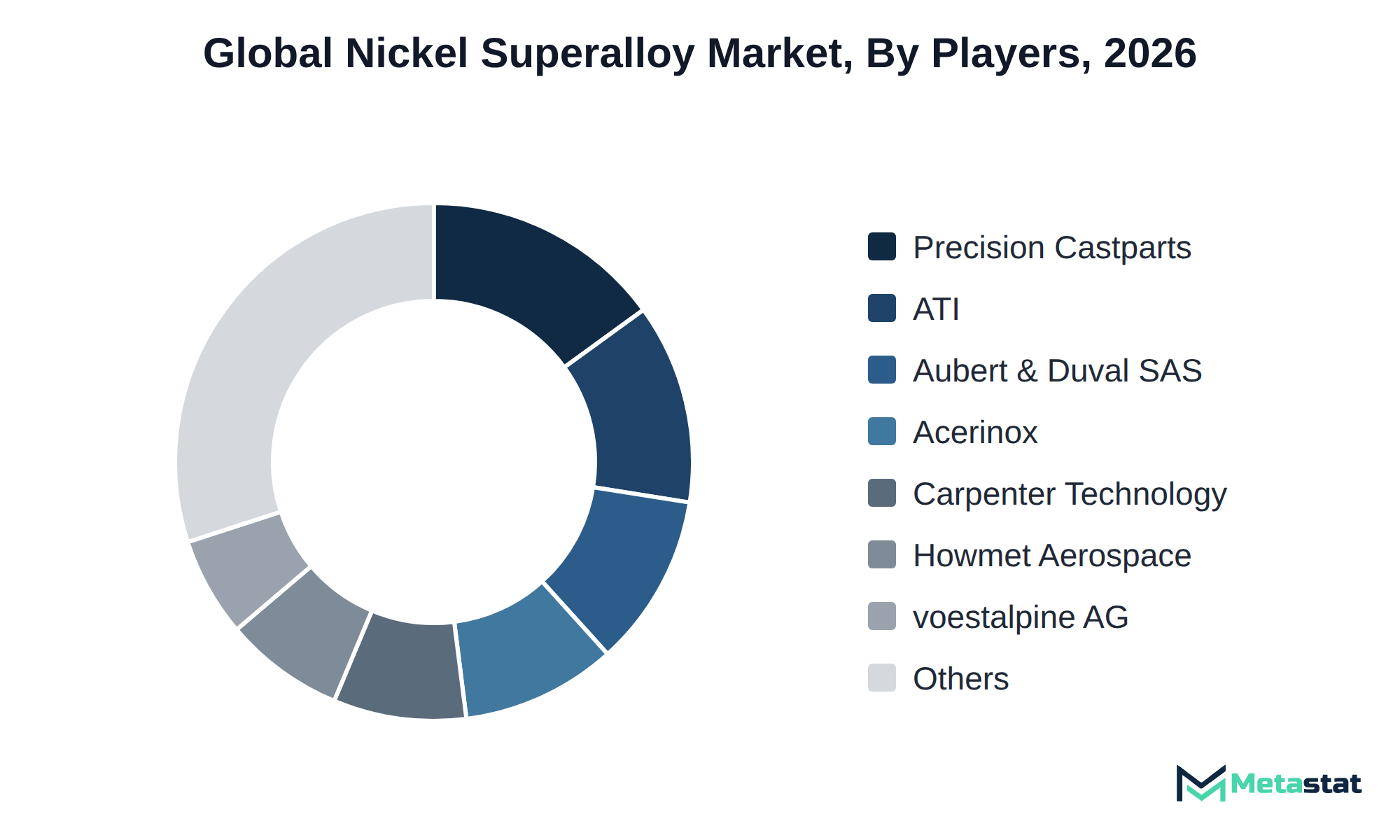
ATI Inc. emphasizes its extensive portfolio of nickel superalloys, particularly for aerospace applications, while Howmet Aerospace Inc. focuses on advanced manufacturing techniques and innovation in superalloy production. Precision Castparts Corp. positions itself on providing tailored solutions for complex requirements in the aerospace and defense sectors.
Companies differentiate themselves through unique capabilities and specialization. For instance, Carpenter Technology Corporation is recognized for its custom solutions, catering to diverse applications across multiple industries. In contrast, voestalpine AG stands out with its comprehensive production capabilities, serving both the aerospace and power generation sectors.
The market continues to evolve while players invest in R&D, aiming to enhance product performance and meet the growing demands of various end-use industries. This competition drives innovation and gives customers improved material options and solutions.
Achieving this growth depends on several key developments. The expansion of the aerospace and defense sector will drive significant demand for high-performance Nickel Superalloys, especially within the Alloy 718 and 706 Family, which is projected to increase from USD 1,410 million in 2026 to USD 2,047.4 million by 2033 at a CAGR of 5.5%. The power generation industry is expected to contribute to growth, with demand for superalloys positioned to enhance energy efficiency and durability in various applications. However, regional supply chain disruptions pose a risk that could impede market growth. For instance, companies operating in Asia Pacific face challenges due to fluctuating raw material costs and geopolitical tensions, which slow down the procurement process and ultimately affect the market's potential. Reaching the forecast figure will depend on a stable supply landscape and strong demand from key industries.
By Alloy Grade Family: Alloy 718 and 706 Family, Alloy 625 Family, Waspaloy and René Wrought Grades, Nimonic and Udimet Grades, Cast Turbine Alloy Grades, Others (Alloy 230, Alloy 617, Alloy 282, Alloy X)
By Product Form: Bars, Rods and Billets, Sheet, Plate and Strip, Near-Net-Shape Castings, Near-Net-Shape Forgings and Rolled Rings, Powders, Wire and Tubular Products
By End-Use Industry: Aerospace and Defense, Power Generation, Oil and Gas, Chemical Processing, Automotive, Others (Marine, Industrial Furnaces, Research Equipment)
By First Buyer Type: Original Equipment Manufacturers, Component Manufacturers and Contract Processors, Stocking Distributors and Service Centers
The report strategically identifies and profiles the key market players and analyses their core competencies in each sub-segment of the Nickel Superalloy market.
|
Report Attributes |
Details |
|
Study Period |
2021-2033 |
|
Base Year |
2025 |
|
Estimated Year |
2026 |
|
Forecast Period |
2026-2033 |
|
Historical Period |
2021-2025 |
|
Growth Rate |
CAGR 6.0% from 2026 to 2033 |
|
Revenue Unit |
USD million |
|
Segmentation |
By Alloy Grade Family, Product Form, End-Use Industry, First Buyer Type, and Region |
|
By Region |
North America (By Alloy Grade Family, Product Form, End-Use Industry, First Buyer Type, and Country)
|
|
Europe (By Alloy Grade Family, Product Form, End-Use Industry, First Buyer Type, and Country)
|
|
|
Asia Pacific (By Alloy Grade Family, Product Form, End-Use Industry, First Buyer Type, and Country)
|
|
|
South America (By Alloy Grade Family, Product Form, End-Use Industry, First Buyer Type, and Country)
|
|
|
Middle East and Africa (By Alloy Grade Family, Product Form, End-Use Industry, First Buyer Type, and Country)
|
Find answers to common questions about this report
The Nickel Superalloy market size was valued at USD 3,739.8 million in 2025.
The market is projected to grow at a CAGR of 6.0% during the forecast period from 2026 to 2033.
The North America Nickel Superalloy market size is estimated to reach USD 2,051.6 million by 2033.
The Aerospace and Defense segment leads the Nickel Superalloy market with a value of USD 4,368.9 million in 2033. This segment's growth reflects a compound annual growth rate of 6.2 percent from 2026 to 2033.
Key drivers for the Nickel Superalloy market include heightened demand from the aerospace and defense sectors, driven by expanding production capabilities among original equipment manufacturers. Competitive pricing and advancements in manufacturing technologies enhance affordability and operational efficiency, promoting wider adoption across various end-use industries.
North America holds the dominant share of the Nickel Superalloy market, accounting for 35.4 percent of the total market share. This region is expected to reach USD 2,051.6 million by 2033.
High costs associated with Nickel Superalloys restrict adoption among original equipment manufacturers, leading to slower uptake of these materials. Compliance costs related to regulatory requirements further challenge suppliers, impacting profit margins and pricing strategies.
Factors favoring adoption in the Nickel Superalloy industry include the increasing demand for advanced materials that enhance performance and fuel efficiency in aviation applications. The emphasis on lightweight, high-strength materials drives Original Equipment Manufacturers (OEMs) to adopt nickel superalloys, expanding their use in aircraft engines and components.
The Nickel Superalloy market is estimated to reach a valuation of USD 5,997.2 million by 2033.
Key players operating in the Nickel Superalloy market include ATI Inc., Precision Castparts Corp., Carpenter Technology Corporation, Howmet Aerospace Inc., voestalpine AG, Sandvik AB, and Alloy Wire International Ltd.
The analysts below cover Aerospace and Defense research at Metastat Insights.
LEAD ANALYST
Utkarsh Khirodkar is a Lead Market Research Analyst at MetaStat Insight, specializing in market intelligence, technology sector assessments, and competitive strategy.
Assessing commercial microgrid software adoption requires looking past top-level installation numbers and examining utility interconnection queues. The research provided verifiable data on average permitting timelines, tariff structures, and battery storage integration costs across regional utility territories. That grounded perspective was valuable for our team when building five-year demand projections for industrial microgrid controllers.
Ambulatory surgical centers have very different purchasing cycles for robotic-assisted surgery platforms than major hospital networks. The MetaStat Insight study focused squarely on capital expenditure depreciation, procedural reimbursement pathways, and surgeon training overhead. That operational clarity made it much simpler to validate multi-year procedure growth forecasts against actual ambulatory center adoption patterns.
When planning edge sensor rollouts across refinery environments, generic IoT reports typically miss the harsh-environment certification bottlenecks. MetaStat Insight gave an objective evaluation of ATEX and Class 1 Division 2 hardware availability, along with realistic five-year maintenance cycle cost projections. The comparison of wireless mesh versus private cellular backhaul helped our team pressure-test network reliability models for remote processing facilities.
Explore related market intelligence reports worth reading alongside this one.
Starting from
$2950