
LEAD ANALYST
Utkarsh Khirodkar is a Lead Market Research Analyst at MetaStat Insight, specializing in market intelligence, technology sector assessments, and competitive strategy.

Global Single Cell Protein Market Size, Share, By Microbial Source (Algae, Yeast, Fungi, Bacteria), By Product Form (Dry Protein Products, Wet Protein Products), By Application (Food and Beverages, Dietary Supplements, Aquaculture Feed, Poultry Feed, Swine Feed, Ruminant Feed, Pet Food, Others), Industry Analysis, Growth, Trends, and Forecast, 2026-2033
Report ID
MSI-5580
Published
October, 2026
Pages
280 Pages
Format
Historical
Base year
Forecast
Forecast period
Report Details
Market Valuation: Valued at $12.3 Billion in 2025, projected to reach $24.5 Billion by 2033 at a 9.0% CAGR.
Dominant Segment: Yeast is the leading segment in the Single Cell Protein market, driven by its versatility and significant nutritional benefits, contributing substantially to market revenue.
Geographic Lead: North America is projected to hold 28.4% of the market in 2025, with the US anticipated to lead in 2026, reflecting strong demand for innovative protein solutions.
What's Inside: The report provides comprehensive competitive coverage, detailed analyses of market dynamics, and forecasts extending through 2033, focusing on various microbial sources and applications.
Market Opportunity in Dietary Supplement: The dietary supplements segment is expected to grow at a CAGR of 8.2% through 2033, driven by increasing consumer awareness of health and wellness.
Aquaculture Feed Growth: The aquaculture feed segment is projected to reach USD 5.5 billion by 2033, highlighting the shift towards sustainable protein sources amid rising regulatory scrutiny.
Choose Your License
Global Single Cell Protein Market
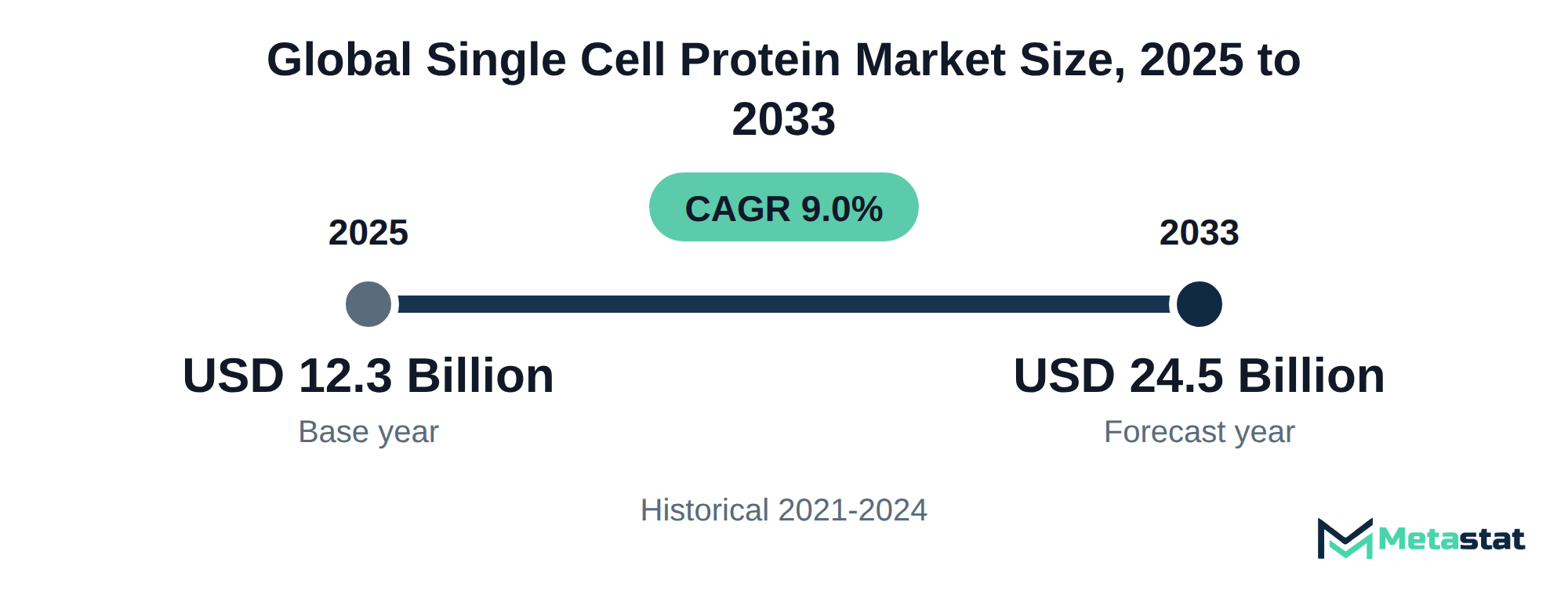
The global Single Cell Protein market was valued at USD 12.3 billion in 2025 and is projected to reach USD 24.5 billion by 2033, growing at a CAGR of 9.0% over the forecast period.
The Single Cell Protein market covers products derived from microbial sources, which serve as a sustainable alternative to traditional protein sources. Buyers invest in these products due to the growing demand for protein-rich food and feed solutions, driven by increasing population and dietary shifts toward plant-based options. This market includes various applications including food and beverages, dietary supplements, and animal feed, catering to diverse consumer needs and preferences.
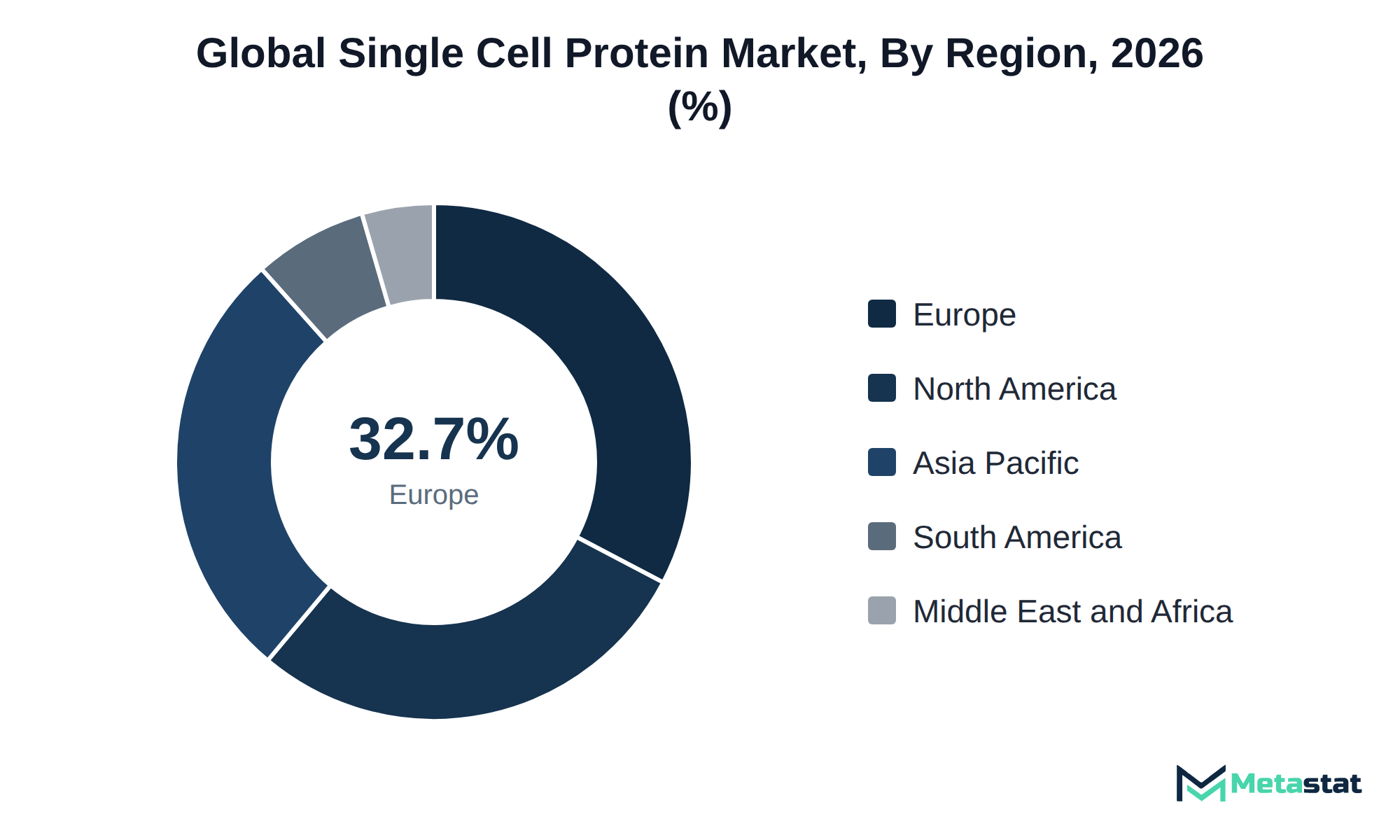
The growth of the market is primarily supported by rising consumer awareness regarding health and nutrition, leading to higher demand for alternative protein sources. Among the different segments, yeast represents the most valuable category, contributing significantly to market revenue. North America holds 28.4% of the market in 2025, with the US leading in 2026. Europe follows closely behind with a share of 32.7%, highlighting a competitive environment across regions.
Key growth drivers include increasing adoption of single cell protein in aquaculture feed, where its nutritional profile enhances fish farming efficiency. The Asia Pacific region, accounting for 27.3% of the market, reflects strong potential for expansion due to its vast population and dietary preferences. This environment favors innovation and investment in the Single Cell Protein market.
The Single Cell Protein market addresses the growing demand for sustainable protein sources, appealing to a diverse range of buyers, including food manufacturers, dietary supplement companies, and aquaculture producers. Buyers invest in these products due to the increasing need for alternative protein sources that align with health and environmental considerations. The ability of single cell proteins to provide high-quality nutrition while minimizing environmental impact drives significant spending across various sectors.
Growth in the market is driven by rising consumer awareness of health benefits associated with single cell proteins, which enhances their appeal in food and beverage applications. Yeast, representing the highest value segment, contributes significantly to this growth, offering versatility and functional benefits in various products. North America holds 28.4% of the market in 2025, with the US leading in 2026, reflecting strong demand in this region for innovative protein solutions.
Emerging markets in Asia Pacific contribute to the expansion of the market, propelled by increasing protein consumption trends and dietary shifts. The adoption of single cell proteins in aquaculture feed and dietary supplements demonstrates the versatility and potential of these products to cater to evolving consumer preferences. Continued investment in research and development improves the market's prospects and supports new solutions for diverse applications.
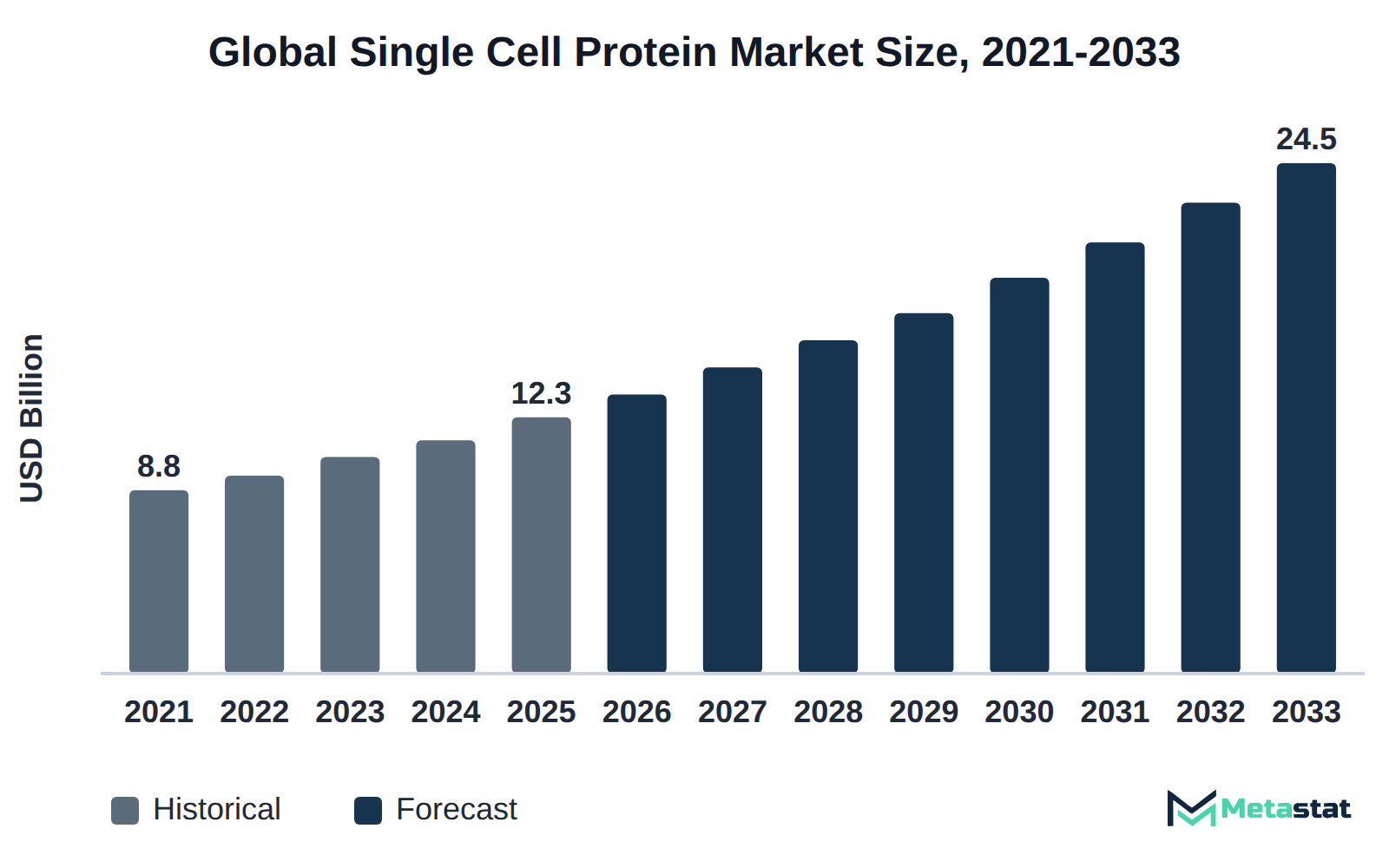
The integration of gas fermentation technology into the Single Cell Protein market significantly enhances production efficiency and cost-effectiveness. This method of using gases including carbon dioxide and hydrogen as substrates allows for a more sustainable approach to protein production, particularly in the context of rising global protein demand. The overall market value is projected to reach USD 24.5 billion by 2033, indicating strong growth potential driven by innovative production methods.
Gas fermentation results in lower raw material costs and reduced environmental impact, benefiting producers seeking to optimize operational expenses. Specific applications, including the production of microbial protein from methane, illustrate the diverse possibilities within the market. The alignment of gas fermentation processes with sustainability goals positions companies favorably in a competitive landscape increasingly focused on eco-friendly practices. This advancement supports market expansion and attracts investment in production technologies.
The transition to microbial sources in aquafeed formulation reflects a significant trend within the Single Cell Protein market. This shift is driven by increasing regulatory scrutiny surrounding the sustainability of fishmeal sourcing, prompting producers to seek alternative protein sources that align with environmental standards. By 2033, the aquaculture feed segment is expected to reach a value of USD 5.5 billion, demonstrating the growing investment in microbial protein as a viable alternative.
Pricing structures for these alternative proteins vary significantly, with several suppliers offering flexible contract models that accommodate the evolving needs of aquafeed producers. Buyers engage in long-term contracts to ensure stable pricing and supply, particularly in a market where fluctuations in conventional fishmeal costs disrupt operational budgets. This financial strategy enhances procurement efficiency and guarantees access to consistent quality protein.
The adoption of microbial protein in aquaculture feed has broader commercial implications, including the potential for decreased dependency on wild fish stocks. Investing in sustainable protein sources secures supply chains and contributes to more environmentally friendly aquaculture practices. This shift within the market signals a growing recognition of ecological responsibility and economic opportunity.
Increasing consumer interest in high-protein foods drives demand for yeast protein and mycoprotein in the Single Cell Protein market. This trend aligns with the growing awareness of health and nutrition, particularly among fitness enthusiasts and individuals seeking to improve their dietary protein intake. In 2025, the market for yeast protein is projected to reach USD 9.5 billion, reflecting a growth trajectory fueled by its versatility and nutritional benefits.
Yeast protein offers a complete amino acid profile, making it an attractive option for manufacturers targeting health-conscious consumers. Its adoption in meat alternatives and protein-enriched snacks highlights a significant shift towards plant-based dietary choices. The increasing incorporation of yeast protein in various applications, including food and beverages, aligns with a market CAGR of 8.0% projected through 2033. This expansion enhances product portfolios for companies aiming to meet diverse consumer preferences.
The focus on mycoprotein further complements this trend, with its unique texture and ability to mimic meat products. While consumers seek sustainable protein sources, mycoprotein adoption contributes to the market's growth, offering a compelling alternative for both food manufacturers and consumers. Surging demand for high-protein foods creates commercial opportunities for stakeholders and underlines the importance of yeast protein and mycoprotein in contemporary diets.
Single Cell Proteins (SCP) present a competitive alternative to traditional protein sources including soy and fishmeal. Cost analysis indicates that dry protein products from SCP are projected to reach USD 20.4 billion by 2033, demonstrating strong growth potential. In comparison, the cost-effectiveness of soy and fishmeal fluctuates due to factors including supply chain disruptions and environmental regulations. These dynamics influence market prices, making SCP an increasingly attractive option.
In terms of digestibility, Single Cell Proteins often surpass soy and fishmeal. Scientific studies confirm that the protein digestibility-corrected amino acid score (PDCAAS) for SCP typically exceeds that of soy, which is recognized for lower digestibility in certain applications. This characteristic enhances the appeal of SCP for industries focused on high-quality feed, including aquaculture, where digestibility is essential for nutritional efficiency.
The emergence of Single Cell Proteins as a sustainable and digestible protein source aligns with the growing demand for alternative protein solutions in the market. Firms investing in SCP technology position themselves favorably amid shifting consumer preferences and regulatory pressures surrounding traditional animal-based protein sources.
Growing health and environmental awareness among consumers drives demand for alternative protein sources, particularly in the food and beverage sector. This shift in preference results in increased purchases from food manufacturers seeking sustainable ingredients. The trend towards plant-based and environmentally friendly diets influences purchasing decisions, prompting manufacturers to incorporate single cell protein into their product lines. Consequently, the market anticipates significant growth in both volume and pricing, especially in the food and beverages application segment, which is projected to reach USD 6.9 billion by 2033 from USD 3.5 billion in 2026. This strong demand signals a shift towards more sustainable food production, reflecting consumer values that prioritize environmental impact.
Growing adoption of single cell protein in dietary supplements complements this trend, enhancing overall market performance. The increasing recognition of microbial sources among manufacturers further supports this transition. These alternatives offer a competitive edge in meeting consumer expectations.
Advancements in microbial fermentation technologies significantly reduce production costs for alternative protein sources. Innovations in bioprocessing and increased efficiency in fermentation processes enhance the economic viability of microbial protein production, enabling suppliers to maintain competitive pricing. Rising demand for alternative protein fuels investments in these technological improvements, attracting stakeholders keen on cost-effective solutions.
Food manufacturers and feed producers represent key buyer groups benefiting from these cost reductions. Lower production costs allow these buyers to offer competitively priced products, increasing their market share while fulfilling consumer demand for sustainable options. This shift accelerates the growth of the Single Cell Protein market, with affordability driving adoption rates.
Improved fermentation techniques enhance yield rates, leading to higher output levels and further driving down costs. With a focus on efficiency, suppliers optimize resource utilization, resulting in a more sustainable production model. Such advancements position the market favorably for future growth, aligning with global demands for sustainable and affordable protein sources.
High sensitivity to price among buyers significantly constrains adoption within the Single Cell Protein market. Food manufacturers and dietary supplement producers face budget limitations that influence their purchasing decisions. These buyers exhibit caution when considering the integration of single cell proteins into their products, leading to slower market uptake. The presence of affordable alternatives, including soy and whey protein, complicates the decision-making process. Limited awareness of the advantages offered by single cell proteins, coupled with existing budgetary constraints, contributes to smaller order sizes and delayed product development timelines. Price fluctuations in raw material sourcing introduce additional uncertainty, hampering investment decisions. Effective strategies are needed to promote the benefits of single cell proteins while addressing buyer cost concerns, which ultimately affect market growth.
Rising input costs for raw materials present a significant challenge for suppliers within the market. Fluctuations in prices for feedstock and energy lead to increased production expenses, impacting profit margins across various product lines. Suppliers respond to these challenges by implementing more efficient production techniques and exploring alternative, lower-cost raw materials. Strategic investments in technology and automation enhance output efficiency, allowing producers to mitigate cost increases. Forming partnerships with raw material suppliers facilitates better pricing agreements, contributing to overall cost control. These strategies enable market players to maintain competitive pricing while navigating fluctuating input costs. Managing input expenses effectively is necessary for sustaining growth in the Single Cell Protein market.
Increasing consumer awareness of health and wellness presents a significant opportunity within the dietary supplements segment. This area is projected to achieve a CAGR of 8.2% through 2033, reflecting a strong growth trajectory. The demand for Single Cell Protein in dietary supplements aligns with the shift toward natural, plant-based sources of nutrition, appealing particularly to health-conscious consumers. The expansion of this market segment is supported by the rising popularity of vegan food and vegetarian diets, which fuels interest in alternative protein sources. Growth in this segment addresses consumer preferences while enhancing the overall market's sustainability profile, positioning it favorably against traditional protein sources. The potential for innovation in product formulations drives this opportunity, enabling suppliers to create diverse offerings tailored to specific health benefits. Overall, the dietary supplements segment stands out as a key growth area within the broader Single Cell Protein market.
The Global Single Cell Protein market is segmented based on Microbial Source, Product Form, and Application.
Algae segment is valued at USD 3.4 billion in 2026 and is projected to reach USD 5.8 billion by 2033, at a CAGR of 8.1% during the forecast period. This segment finds applications primarily in food and beverage formulations, dietary supplements, and aquaculture feed, catering to health-conscious consumers and the growing aquaculture industry. Demand for algae is driven by the increasing shift towards plant-based proteins and the need for sustainable solutions in food production. Compared to yeast, which has a CAGR of 8%, algae's growth rate reflects an emerging preference among consumers for natural and eco-friendly protein sources. Algae offers distinct advantages, including high protein content, essential amino acids, and bioactive compounds, positioning it as a favorable option within the market. Ongoing research and development in algae processing and extraction technologies further enhance its appeal for various applications.
Yeast segment is estimated to reach USD 9.5 billion by 2033, at a CAGR of 8% during the forecast period. This segment serves various applications, particularly in food and beverages, where it enhances nutritional content and flavor. Food manufacturers and dietary supplement producers are significant users, driven by increasing consumer demand for plant-based proteins. Competitive pricing and the advent of innovative fermentation techniques support growth in this area, distinguishing it from segments including algae and fungi, which exhibit different growth rates. Yeast posts a CAGR of 8%, reflecting consistent demand compared to the slower growth observed in the fungal segment. The greater affordability of yeast relative to other protein sources strengthens its position in the market, appealing to price-sensitive buyers while satisfying the ongoing trend for healthier food options.
Fungi-based single cell protein finds application primarily in food and beverage production, serving manufacturers focused on enhancing nutritional profiles with alternative protein sources. Growth in this area is driven by increasing consumer interest in nutrient-rich diets and the health benefits associated with fungi-based proteins. Compared to other microbial sources, including yeast, fungi exhibits a slower growth trajectory, with a CAGR of 8.2%, reflecting different production methodologies and consumer acceptance levels. Price sensitivity among buyers significantly influences purchasing decisions, positioning fungi protein as a competitive option for specific applications within the market, particularly in dietary supplements and alternative food products.
Bacteria segment is projected to grow at a CAGR of 12.1% during the forecast period. Utilization of bacteria for protein production targets various applications, including animal feed and dietary supplements, appealing to manufacturers seeking sustainable protein sources. Increasing demand for efficient protein alternatives drives this segment, particularly in aquaculture and livestock sectors. Bacteria provide a cost-effective solution due to their rapid growth rates and high protein yields, distinguishing them from other microbial sources. The segment's dynamic growth contrasts with slower growth rates observed in fungi and algae, highlighting its competitive advantages. This differentiation enhances its appeal among buyers focused on cost-effectiveness and sustainability, contributing to stronger adoption rates in specific market segments.
Dry Protein Products segment is valued at USD 11.3 billion in 2026 and is projected to reach USD 20.4 billion by 2033, at a CAGR of 8.7% during the forecast period. This segment serves various applications, including food and beverages, where protein enrichment is essential. Key drivers of growth involve increasing consumer demand for protein-rich diets, particularly in health-conscious demographics. Compared to Wet Protein Products, Dry Protein Products generally offer a higher price point due to their concentrated form and longer shelf life. The segment attracts food manufacturers and dietary supplement producers aiming to enhance product nutritional profiles. This focus on health and wellness fuels investment in product innovation and marketing strategies to capture emerging consumer trends. Adoption of Dry Protein Products continues to expand, supported by technological advancements in production methods that enhance nutritional value while maintaining cost efficiency.
Wet Protein Products segment is estimated to reach USD 4.1 billion by 2033, at a CAGR of 10.2% during the forecast period. These products find application primarily in the food and beverage industries, dietary supplements, and aquaculture, catering to health-conscious consumers and specific dietary needs. Growing demand for high-quality protein sources drives this segment, with buyers increasingly seeking alternatives to traditional sources. The significant growth rate distinguishes Wet Protein Products from Dry Protein Products, which exhibit a CAGR of 8.7%. The increasing focus on sustainable and environmentally friendly food production enhances the appeal of wet protein products to manufacturers. The strong performance of this segment reflects changing dietary preferences and an expanding market for protein-rich offerings.
Single cell protein enhances nutritional profiles in various food products, appealing to health-conscious consumers and manufacturers seeking sustainable ingredients. The growing trend of plant-based diets significantly drives demand within this segment, reflecting a shift towards alternative protein sources. Compared to other segments, Food and Beverages exhibits faster growth, influenced by increasing consumer preferences for protein-rich, sustainable food options. The segment differentiates itself with higher price sensitivity from buyers, requiring manufacturers to maintain competitive pricing strategies while balancing quality and sustainability in product offerings. Such dynamics emphasize the importance of strategic positioning in the Single Cell Protein market to capture evolving consumer demands.
Dietary Supplements segment is estimated to reach USD 3.3 billion by 2033, at a CAGR of 8.2% during the forecast period. This segment finds application among health-conscious consumers seeking to enhance their nutritional intake through functional products. Growing awareness regarding health and wellness significantly drives demand for protein-rich dietary supplements, prompting manufacturers to explore innovative formulations. The segment differentiates itself from others in the market through its strong growth potential, coupled with a higher price point due to the specialized nature of these products. Compared to other applications, the Dietary Supplements segment experiences faster growth, supported by an increasing trend of preventive healthcare practices. Demand for these products aligns with the rising emphasis on wellness, driving growth across various consumer demographics.
This segment serves the aquaculture industry, providing essential nutrition for fish and other aquatic animals. Rising demand for sustainable and high-quality feed solutions drives significant interest from aquaculture producers, who seek alternatives to traditional sources like fishmeal. The segment distinguishes itself with a robust projected CAGR of 10.1%, reflecting a strong growth trajectory compared to other segments. Factors influencing this market include increasing regulatory pressure for sustainable sourcing practices and the need for enhanced feed efficiency. Growing awareness of environmental impacts and the quest for alternative protein sources significantly shape the landscape of aquaculture feed. Sustainable aquaculture practices gain traction, and demand for Single Cell Protein in this application is set to strengthen, driving further investment and innovation in the market.
Poultry Feed segment is projected to grow at a CAGR of 7.3% during the forecast period. This application primarily supplies protein-rich feed for poultry farming, which is essential for enhancing growth rates and overall health of the birds. Key drivers influencing this segment include rising global meat consumption and the increasing necessity for sustainable feed alternatives among poultry producers. Unlike other applications in the Single Cell Protein market, Poultry Feed focuses on providing a cost-effective protein source, making it attractive to farmers aiming to improve feed efficiency while managing expenses. The expected growth reflects increasing demand for poultry products, pushing farmers to seek innovative feed solutions.
Swine Feed supports livestock nutrition, focusing primarily on enhancing growth and overall health in pigs. This segment caters to farmers and feed manufacturers aiming for improved feed efficiency and animal well-being. Demand within this segment is driven by rising global pork consumption, with producers increasingly seeking sustainable and high-quality feed ingredients. Unlike other segments in the application category, Swine Feed faces unique challenges in balancing cost-effectiveness with nutritional value, which influences purchasing decisions among buyers. This segment experiences steady growth driven by trends in animal husbandry and regulatory standards that promote animal welfare. Investments in research and development for innovative feed formulations play a significant role in shaping the competitive landscape. Evolving dietary requirements of livestock highlight the importance of tailored feed solutions, setting this segment apart from others in the market.
Ruminant feed encompasses the use of single cell protein specifically designed for livestock, including cattle and sheep. This application caters to farmers and feed manufacturers aiming to enhance animal nutrition and productivity. Demand in this segment derives from the increasing focus on sustainable livestock production methods, alongside a drive for higher protein content in animal feed. The market shows a distinct difference in growth potential compared to other applications including aquaculture and dietary supplements. Ruminant feed necessitates a careful balance of protein formulation and cost management, influencing production decisions. Innovations in microbial fermentation technologies continue to support efficiency and quality, positioning this segment as a vital component of livestock nutrition while contributing to environmental sustainability.
Pet Food addresses the growing demand for high-quality, protein-rich diets, contributing to the nutrition and health of companion animals. Pet food manufacturers incorporate single cell protein to enhance the nutritional profile of their products, catering to health-conscious pet owners seeking premium options for their animals. This segment experiences growth driven by the increasing trend of pet humanization, with owners treating their pets more like family members and demanding superior ingredients. While the market has various applications, Pet Food differentiates itself through its focus on providing targeted nutritional benefits, appealing to a specific buyer group concerned with the well-being of their pets. This segment's growth trajectory does not match the rapid expansion observed in other applications, yet its steady demand reflects the ongoing commitment to pet health within the market.
This sub-segment includes applications for equine feed and rabbit feed, targeting specific nutritional needs for these distinct animal groups. The focus on equine and rabbit feed emphasizes the requirement for high-quality protein sources to support health and growth in these animals. Increasing demand from pet owners and equestrian enterprises drives interest in premium feed products, reflecting rising awareness of animal nutrition. While this segment does not grow rapidly like more mainstream applications including aquaculture or poultry feed, its targeted approach differentiates it, appealing to niche markets seeking specialized nutrition. The unique formulation requirements for equine and rabbit diets, coupled with the growing trend of pet humanization, indicate a solid foundation for steady demand within the Single Cell Protein market. Producers explore innovative sourcing and processing techniques to enhance product appeal and meet specific buyer needs.
Segment valued at USD 13.4 billion in 2026 and projected to reach USD 24.5 billion by 2033, at a CAGR of 9% during the forecast period. This segment targets various applications, serving industries including pet food, aquaculture, and livestock nutrition, focusing on enhancing overall health and growth efficiency. Demand is expected to rise due to increasing awareness of sustainable protein sources, influencing buyers to seek alternatives to traditional protein sources. Compared to other segments, this category shows a balanced growth trajectory, driven by diverse applications. Its growth rate positions it competitively against dietary supplements and food and beverages, where higher price sensitivity exists. The evolution of production technologies underpins this segment's potential, offering opportunities for both innovation and cost reduction. Investment in research and development will support ongoing advancements, enhancing the segment's appeal to a broader range of customers within the Single Cell Protein market.
Based on geography, the Global Single Cell Protein market is divided into North America, Europe, Asia-Pacific, South America, Middle East, and Africa.
Projecting a value of USD 6.9 billion by the end of 2033, North America is a key player in the Single Cell Protein market. Key driving forces include the growing food and beverages industry, where demand for sustainable protein sources is increasing. The United States, Canada, and Mexico lead in adopting these products, reflecting strong consumer preference for protein-rich diets. A supportive regulatory framework encourages innovation in production technologies, enhancing market growth. The region's established infrastructure facilitates the distribution of these protein sources, ensuring accessibility to various industries. North America holds a 28.4% share of the global market in 2025, highlighting its importance within the overall market.
Europe accounted for 32.7% of the Single Cell Protein market in 2025. The region's diverse food and beverage industries drive demand, particularly in Germany, France, and the UK, where there is a strong emphasis on sustainable protein sources. Regulatory frameworks promoting sustainable agricultural practices enhance growth opportunities and drive innovation in protein production methods. The increasing consumer awareness regarding health and nutrition further influences purchasing decisions. Infrastructure for research and development within Europe supports advancements in microbial technology, facilitating the emergence of new products. Investment in aquaculture and dietary supplements indicates a robust market landscape, with growing interest in high-quality protein alternatives that align with environmental sustainability goals.
The Asia-Pacific region commands a share of the Single Cell Protein market, accounting for 27.3% in 2025. Strong demand arises from various industries, particularly food and beverages, dietary supplements, and aquaculture feed. Countries including China and India drive growth through increasing consumer awareness of sustainable protein sources. The presence of a large population and a growing middle class in these countries generates a substantial market for protein-rich products. The rising trend toward plant-based diets influences the market, leading to higher adoption rates among consumers. Regional infrastructure development and innovative production methods enhance efficiency in the supply chain. Investment in biotechnology and fermentation technologies supports the expansion of production capacity, contributing to the overall market growth in Asia-Pacific.
South America represents 7.1% of the global Single Cell Protein market in 2025. Brazil and Argentina drive significant demand, largely due to the growing need for sustainable protein sources in food production and animal feed. The region experiences increasing investment in aquaculture and poultry sectors, which increases the demand for protein-rich ingredients. Local producers focus on leveraging available natural resources, specifically algae and yeast, to meet the nutritional needs of both human and animal consumption. Infrastructure development in the food supply chain supports enhanced distribution efficiency, contributing to the market's growth potential. The unique agricultural landscape, characterized by diverse climates and ecosystems, offers opportunities for localized production strategies within the Single Cell Protein market.
The Middle East and Africa exhibit a growing interest in the Single Cell Protein market, driven by increasing demand for protein alternatives in food production and animal feed. Countries including Saudi Arabia and the UAE focus on diversifying food sources and enhancing sustainability in agricultural practices. South Africa's expanding aquaculture and poultry sectors highlight the region's evolving needs for high-quality protein inputs. With a market share of 4.5% in 2025, the region faces unique challenges related to infrastructure and investment in biotechnological advancements. The need for innovative solutions in food security aligns with global trends, enhancing the market's attractiveness to investors and stakeholders. By 2033, the market's growth potential is projected to contribute significantly to the regional economy.
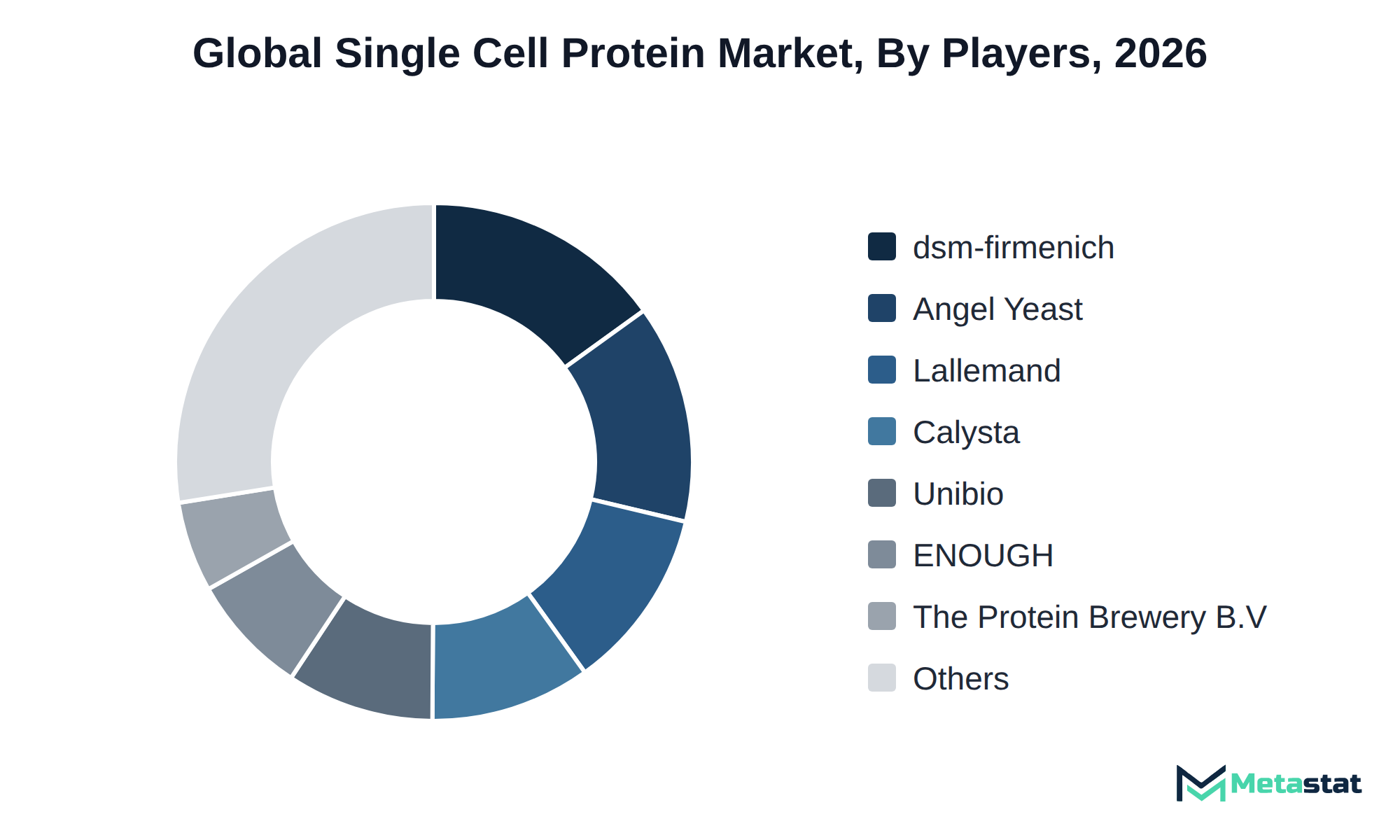
Companies in the Single Cell Protein market adopt various strategies to differentiate their offerings. Focus areas include product form, application, and microbial source. For example, Angel Yeast Co., Ltd. emphasizes yeast-based proteins, promoting their nutritional value for food and beverage applications. In contrast, Calysta, Inc. concentrates on microbial fermentation processes to produce proteins, catering to aquaculture feed markets.
Buyers in the market prioritize factors including price, customization, and certification. Companies like dsm-firmenich focus on providing certified products that meet specific dietary supplement standards, appealing to health-conscious consumers. String Bio Private Limited offers tailored solutions for various agricultural applications, enhancing its competitive edge through customization.
Achieving this growth requires several critical developments. The increasing adoption of single cell protein in food and beverages is expected to drive demand significantly, with this segment projected to expand from USD 3.5 billion in 2026 to USD 6.9 billion by 2033 at a CAGR of 10.1%. Growth in dry protein products, anticipated to grow from USD 11.3 billion in 2026 to USD 20.4 billion by 2033, reinforces the market's expansion trajectory. However, a key risk that could impede this growth involves fluctuating raw material costs, which adversely impact production expenses and pricing structures across various regions. North America, contributing to a significant market share of 28.4%, faces unique challenges related to regulatory changes that affect adoption rates. Overall, the market for single cell protein stands in a position to capitalize on evolving consumer preferences and industry developments, provided that potential risks are effectively managed.
By Microbial Source: Algae, Yeast, Fungi, Bacteria
By Application: Food and Beverages, Dietary Supplements, Aquaculture Feed, Poultry Feed, Swine Feed, Ruminant Feed, Pet Food, Others (Equine Feed, Rabbit Feed), By
The report strategically identifies and profiles the key market players and analyses their core competencies in each sub-segment of the Single Cell Protein market.
Report Attributes | Details |
Study Period | 2021-2033 |
Base Year | 2025 |
Estimated Year | 2026 |
Forecast Period | 2026-2033 |
Historical Period | 2021-2025 |
Growth Rate | CAGR 9.0% from 2026 to 2033 |
Revenue Unit | USD billion |
Segmentation | By Microbial Source, Product Form, Application, and Region |
By Region | North America (By Microbial Source, Product Form, Application, and Country)
|
Europe (By Microbial Source, Product Form, Application, and Country)
| |
Asia Pacific (By Microbial Source, Product Form, Application, and Country)
| |
South America (By Microbial Source, Product Form, Application, and Country)
| |
Middle East and Africa (By Microbial Source, Product Form, Application, and Country)
|
Find answers to common questions about this report
The Single Cell Protein market size was valued at USD 12.3 billion in 2025.
The market is projected to grow at a CAGR of 9.0% during the forecast period from 2026 to 2033.
The North America Single Cell Protein market size is estimated to reach USD 6.9 billion by 2033.
The leading segment in the Single Cell Protein market is Yeast, with a projected value of USD 9.5 billion by 2033. This segment surpasses others based on its anticipated revenue growth.
Growing health and environmental awareness among consumers drives demand for alternative protein sources, particularly in the food and beverage sector. Increasing consumer awareness of health and wellness presents a significant opportunity within the dietary supplements segment, projected to achieve a CAGR of 8.2% through 2033.
Europe holds the dominant share of the Single Cell Protein market, accounting for 32.7 percent of the total market. This surpasses the shares of North America and Asia Pacific, which hold 28.4 percent and 27.3 percent, respectively.
High sensitivity to price among buyers significantly restrains Single Cell Protein market growth, driven by budget limitations that influence purchasing decisions. Rising input costs for raw materials present challenges, leading to increased production expenses and impacting profit margins across various product lines.
Increasing consumer awareness of health and wellness significantly supports adoption in the dietary supplements segment, projected to achieve a CAGR of 8.2% through 2033. This growth reflects a shift towards natural, plant-based nutrition, appealing to health-conscious consumers and enhancing the market's sustainability profile.
The Single Cell Protein market is estimated to reach a valuation of USD 24.5 billion by 2033.
Key players operating in the Single Cell Protein market include Angel Yeast Co., Ltd., dsm-firmenich, Lallemand Inc., Calysta, Inc., Unibio, Enifer, ENOUGH, and The Protein Brewery B.V.
The analysts below cover Food and Beverages research at Metastat Insights.
LEAD ANALYST
Utkarsh Khirodkar is a Lead Market Research Analyst at MetaStat Insight, specializing in market intelligence, technology sector assessments, and competitive strategy.

LEAD PRINCIPAL ANALYST, PHARMA AND HEALTHCARE
Food and Beverages · Healthcare · Healthcare IT · Medical Devices
Ajay Devgire is the Lead Healthcare Analyst at MetaStat Insight, leading strategic research and market intelligence initiatives across the global healthcare domain.

SENIOR RESEARCH ANALYST
Biotechnology · Food and Beverages · Medical Devices · Packaging
Snehal Pasalkar is a Research Analyst at MetaStat Insight, operating at the intersection of life sciences research, competitive strategy, and market intelligence.
Integrating zero-trust access controls across legacy electronic health record systems involves complex compliance overhead. Team produced an analysis that clearly separated identity governance and administration tools from privileged access management platforms. Their evaluation of HIPAA and GDPR compliance features across cloud native solutions gave our architecture group clear baseline criteria. The custom data request regarding biometric authentication adoption in hospital networks was returned promptly with clear documentation.
Evaluating calorific value requirements and air permit compliance across municipal waste facilities requires localized data. Metastat Insight structured their analysis around operational throughput capacity and feedstock composition variations in Latin America and Eastern Europe. Their competitive mapping of sorting equipment vendors helped clarify technology differences between optical separators and heavy media systems. The study provided an objective baseline during our capital expenditure reviews.
Decarbonizing industrial thermal processes hinges on refrigerant regulations and compressor efficiency limits. Metastat Insights delivered a thorough market analysis that evaluated natural refrigerants like CO2 and hydrocarbons against synthetic low-GWP alternatives. The breakdown of utility incentives and grid capacity constraints across key European manufacturing hubs offered valuable perspective. The follow-up conversation with their sector analysts addressed our specific questions on mechanical vapor recompression systems efficiently.
Explore related market intelligence reports worth reading alongside this one.