
LEAD ANALYST
Utkarsh Khirodkar is a Lead Market Research Analyst at MetaStat Insight, specializing in market intelligence, technology sector assessments, and competitive strategy.

Spain Vacant Property Security Market Size, Share, By Solution Type (Intrusion Alarm and Detection Systems, CCTV and Video Surveillance Systems, Physical Security Barriers and Access Control, Fire and Environmental Detection Systems, Remote Monitoring and Alarm Verification Services, On-Site Guarding Services, Others (Mobile Patrol, Keyholding and Alarm Response Services)), By Property Type (Vacant Residential Properties, Vacant Commercial Properties, Repossessed and Foreclosed Properties, Unsold Housing and Completed Developments, Stalled and Under-Construction Developments, Vacant Second Homes and Holiday Properties, Vacant Industrial and Warehouse Properties, Others (Vacant Public Buildings, Institutional Properties)), By Deployment Model (On-Site Physical Security, Remote Electronic Monitoring, Integrated Physical and Electronic Security, Self-Monitored Security Systems, Temporary and Rapid-Deployment Security), By End User (Private Property Owners, Corporate Property Owners and Investment Funds, Banks and Other Financial Institutions, Real Estate Developers, Construction and Renovation Contractors, Property Managers and Real Estate Agencies, Security Service Providers, Public Authorities and Housing Agencies), Industry Analysis, Growth, Trends, and Forecast, 2026-2033
Report ID
MSI-5485
Published
October, 2026
Pages
282 Pages
Format
Historical
Base year
Forecast
Forecast period
Report Details
Market Valuation: Valued at $131.9 Million in 2025, projected to reach $230.1 Million by 2033 at a 7.2% CAGR.
Dominant Segment: CCTV and video surveillance systems lead the Spain Vacant Property Security market, driven by their critical role in real-time monitoring and enhanced security capabilities.
Geographic Lead: Urban areas in Spain are experiencing the fastest growth in vacant property security investments, largely due to rising property crime rates and the increasing number of vacant properties.
What's Inside: The report provides a comprehensive analysis of market segmentation by solution type, property type, deployment model, and end user, along with detailed competitive coverage and forecasts from 2026 to 2033.
Rising Adoption of Remote Monitoring: The market is witnessing a notable shift towards remote monitoring and AI-enabled video surveillance, with the segment projected to reach USD 67.7 million by 2033, reflecting an increasing focus on innovative security solutions.
Investment in Vacant Residential Propert: Investment in security for vacant residential properties is projected to grow from USD 32.7 million in 2026 to USD 48.7 million by 2033, highlighting the urgent need for enhanced protection in this vulnerable asset class.
Choose Your License
Spain Vacant Property Security Market
The Spain Vacant Property Security market was valued at USD 131.9 million in 2025 and is projected to reach USD 230.1 million by 2033, growing at a CAGR of 7.2% over the forecast period.
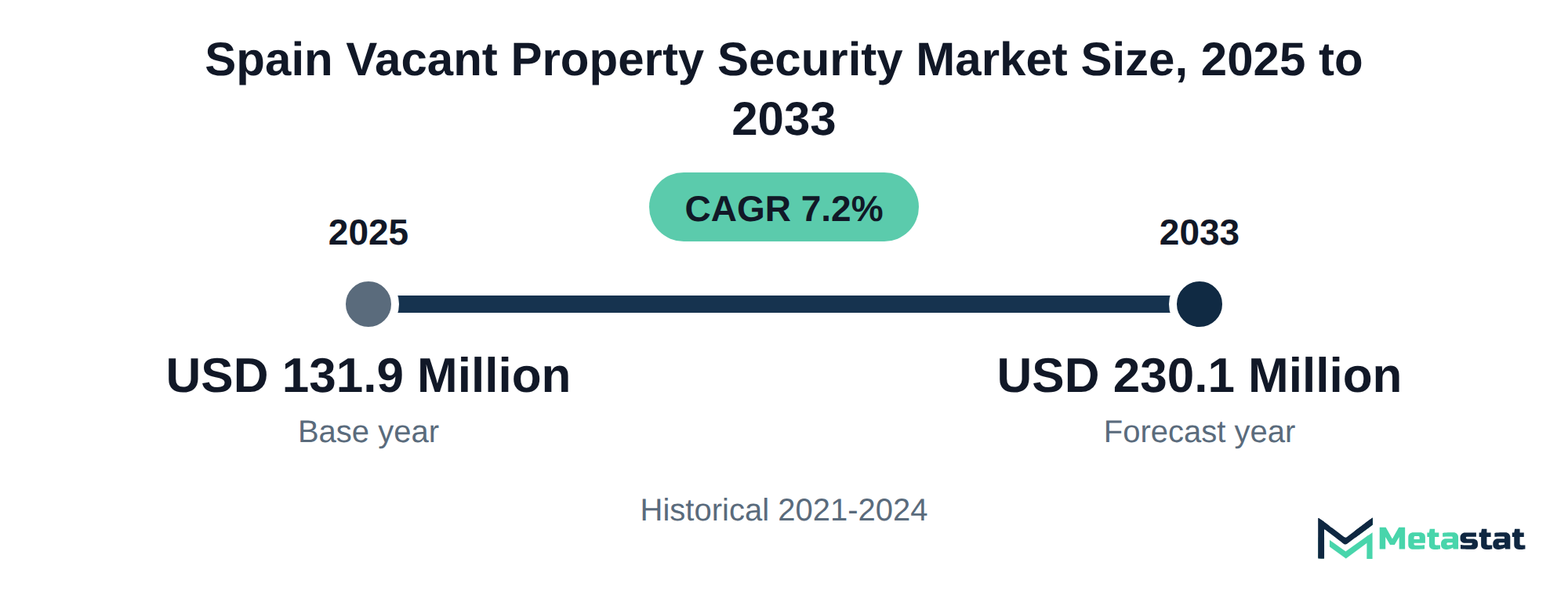
The Spain Vacant Property Security market encompasses a range of solutions aimed at protecting unoccupied properties, including residential and commercial spaces. Buyers invest in these security measures to mitigate risks associated with property theft, vandalism, and deterioration. The demand for effective security solutions arises from the increasing number of vacant properties, driven by economic fluctuations and changing housing dynamics. Property owners recognize the importance of safeguarding their investments and maintaining property value, prompting them to seek advanced security technologies.
Growth in the market stems from the rising adoption of CCTV and video surveillance systems, which represent the largest segment by value. This technology provides enhanced security capabilities, allowing for real-time monitoring and response. The market is projected to benefit from ongoing advancements in security technology, encouraging property owners to invest in integrated security solutions that offer improved protection and peace of mind.
Among the various property types, vacant residential properties exhibit strong demand, reflecting the need for security in areas with high vacancy rates. The market anticipates significant growth, supported by the increasing focus on property management and security investments. Urbanization continues to evolve, and the significance of effective property security solutions becomes more pronounced, influencing buying decisions across diverse property sectors.
Investment in vacant property security solutions stems from increasing risks associated with unoccupied properties. Property owners, including private individuals and corporate entities, seek to mitigate losses due to vandalism, theft, and deterioration. Effective security measures protect assets and enhance property value, driving demand in the market.
The growing need for enhanced security protocols contributes significantly to market expansion. Among the various segments, CCTV and video surveillance systems represent the largest share, reflecting their critical role in safeguarding vacant properties. Adoption of advanced technologies aligns with rising security concerns, particularly in urban areas where vacant properties are prevalent.
Market growth is primarily driven by heightened awareness regarding property security. Corporate property owners and investment funds increasingly prioritize securing unoccupied assets to protect their investments. Various stakeholders, including banks and real estate developers, recognize the importance of safeguarding vacant properties.
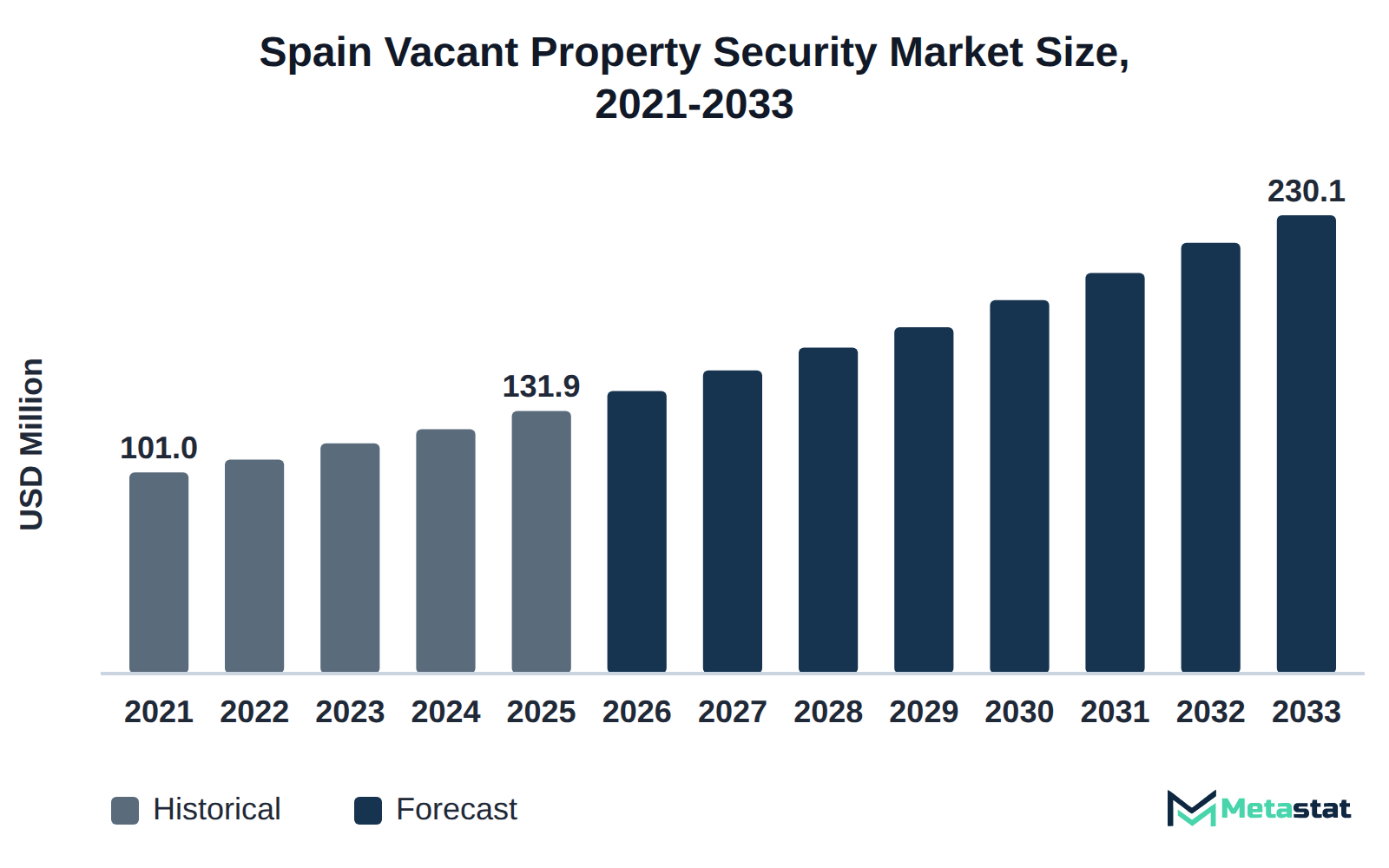
The Spain Vacant Property Security market experiences a notable shift towards the adoption of remote monitoring and AI-enabled video surveillance solutions. This transformation reflects a growing recognition of the benefits provided by these technologies in securing vacant properties. By 2033, the segment for remote electronic monitoring is projected to reach USD 67.7 million, reflecting a compound annual growth rate (CAGR) of 8.9%. This growth highlights the increasing focus on innovative security measures that enhance real-time monitoring capabilities.
The integration of artificial intelligence into video surveillance systems enhances situational awareness and improves response times to potential threats. The ability to analyze footage in real time allows property owners to address security incidents proactively. This proactive approach significantly reduces risks associated with vacant properties, which are often targets for vandalism and theft.
Remote monitoring solutions facilitate a scalable approach to property security, enabling property owners to manage multiple locations from a centralized platform. This efficiency leads to cost savings in security operations and strengthens the overall security posture for vacant properties. The growing adoption of these technologies positions stakeholders for improved operational efficiency in property management within the Spain Vacant Property Security market.
In Spain, the increasing prevalence of squatting and property damage has significantly heightened the demand for temporary security solutions. This trend arises from the challenges faced by property owners in safeguarding their vacant properties against unauthorized occupants and vandalism. This upward trajectory highlights the necessity for effective security measures, particularly temporary solutions that address immediate threats.
Buyers increasingly prefer flexible contract models tailored to specific needs, including short-term agreements for seasonal properties or rapid deployment of monitoring services in response to urgent threats. The market for remote electronic monitoring is expected to reach USD 67.7 million by 2033, demonstrating a trend toward cost-effective surveillance options. This shift indicates a growing recognition among property owners that investing in temporary security solutions mitigates risks and reduces potential long-term losses associated with property damage and legal disputes arising from squatting incidents.
Investment in security solutions for vacant residential buildings, repossessed assets, and stalled developments has gained significant traction in the Spain Vacant Property Security market. Private property owners increasingly seek robust security measures to protect their investments from vandalism and theft. For instance, the segment of vacant residential properties is projected to grow from USD 32.7 million in 2026 to USD 48.7 million by 2033, reflecting a compound annual growth rate of 5.8%. This growth highlights the urgent need for enhanced security in these vulnerable assets.
The distinct needs of private property owners center around safeguarding their properties during periods of vacancy. These owners often face increased risks including unauthorized access and property damage. Investment in intrusion alarm and detection systems, which is expected to rise from USD 33.1 million in 2026 to USD 57.2 million by 2033, represents a proactive approach to mitigate these risks. The demand for advanced monitoring solutions further emphasizes the commitment of property owners to secure their assets effectively.
In light of these dynamics, the Spain Vacant Property Security market is well-positioned for growth. Investors and property owners prioritizing security enhancements not only protect their assets but enhance their overall market value. Consequently, the focus on improving security frameworks will likely shape investment strategies in this sector for years to come.
Integrated alarm systems significantly enhance the security of vacant properties in Spain, offering a robust solution to property owners concerned about theft and vandalism. These systems integrate various technologies, including intrusion alarms, CCTV, and environmental detection, creating a comprehensive security network. The adoption of CCTV and video surveillance systems is projected to reach USD 49.2 million by 2033, reflecting increasing reliance on advanced monitoring technologies.
Rapid-deployment security solutions provide immediate protection for properties experiencing heightened risk, especially in urban areas. These services include on-site guard deployments and mobile patrols that quickly respond to security breaches. The deployment of on-site physical security is expected to increase from USD 42.3 million in 2026 to USD 54.3 million by 2033, highlighting a growing trend among property owners who prioritize immediate and effective responses to security threats.
Integrating these systems leads to enhanced operational efficiency and lowered property and casualty insurance costs for property owners. By investing in advanced security solutions, buyers within the Spain Vacant Property Security market safeguard their assets more effectively, ensuring peace of mind and potentially higher property values. This transformation in security infrastructure positions buyers to manage an increasingly complex environment of vacant property management.
Investment in vacant property security solutions increases due to a noteworthy shift in buyer interest toward residential and commercial properties. Private property owners, influenced by rising property values and a competitive real estate market, seek effective security systems to protect their investments. This growing trend results in heightened demand for solutions that ensure property safety and deter potential threats. The CAGR for vacant residential properties demonstrates this shift, with an expected growth rate of 5.8% from 2026 to 2033. Enhanced security measures across the Spain Vacant Property Security market reflect this evolving landscape, leading to increased investments and advancements in technology. Buyers prioritize comprehensive protection strategies, contributing to increased market volumes.
The market for vacant property security solutions experiences sustained demand as corporate property owners and investment funds active in real estate investment management prioritize security to protect their assets. The anticipated growth in this buyer segment highlights the importance of effective security measures, alleviating concerns regarding asset safety and ensuring profitability in property investments.
Advancements in security technology significantly enhance offerings in the Spain Vacant Property Security market. Innovations in video surveillance, powered by artificial intelligence, enable more efficient monitoring and proactive threat detection. The integration of smart sensors and automated alarm systems improves response times to potential security breaches, adding value for property owners. Increasing usage of remote monitoring solutions allows property owners to oversee their assets from anywhere, creating a more flexible management approach. This technological shift supports growth in the market, driven by property owners seeking effective methods to protect unoccupied properties.
The demand for integrated systems, which combine physical and electronic security, continues to rise. These solutions provide comprehensive coverage against various risks, appealing to both private and corporate property owners. Enhanced features, including real-time alerts and remote access capabilities, strengthen the appeal of these systems. Emerging technologies drive investment in security solutions and attract new participants to the market, reflecting the evolving nature of property security in Spain.
Price sensitivity remains a significant constraint for private property owners investing in vacant property security solutions. High costs associated with advanced security systems, particularly for remote electronic monitoring and integrated physical security, restrict the willingness of buyers to commit to comprehensive protection measures. The substantial initial investment required for effective solutions leads to slower uptake and smaller orders among potential customers. Many owners prioritize immediate cost savings over long-term security benefits, causing hesitation in adopting necessary security technologies. In economic downturns, tighter budgets further exacerbate this issue, pushing buyers to delay replacements or opt for lower-cost alternatives. In the Spain Vacant Property Security market, this price sensitivity hinders overall growth potential and reduces market resilience, impacting the ability of suppliers to expand their offerings and invest in innovative solutions.
Increasing operational costs pose a substantial challenge for suppliers in the Spain Vacant Property Security market. Expenses related to talent acquisition and retention, alongside rising material costs, exert pressure on profit margins. Suppliers face the necessity of balancing competitive pricing with the ongoing need for high-quality service delivery. Many firms respond by investing in employee training programs and enhancing operational efficiencies to streamline processes. Several suppliers explore strategic partnerships and collaborations to share resources and reduce costs. The shift toward integrated solutions that combine various security measures presents an opportunity for suppliers to differentiate their offerings while managing expenses. Suppliers focusing on innovation and technology integration improve service quality and extend their market reach, aiding in navigating the challenges posed by rising operational costs.
Investment in vacant commercial properties presents a significant opportunity within the Spain Vacant Property Security market. This segment is projected to reach USD 37.1 million by 2033, reflecting a compound annual growth rate (CAGR) of 6.7% during the forecast period. The increasing emphasis on securing unoccupied commercial spaces, driven by rising theft and vandalism rates, stimulates demand for advanced security solutions. Many corporate property owners recognize the importance of protecting their assets, leading to greater adoption of integrated security systems, including CCTV and remote monitoring capabilities. Investment funds and corporate property owners actively seek innovative solutions to mitigate risks associated with vacant commercial properties. Focusing on this segment allows suppliers to capture a growing share of the market, addressing the specific security needs of commercial assets. Effectively addressing these needs enhances market penetration and creates long-term growth opportunities.
The Spain Vacant Property Security market is segmented based on Solution Type, Property Type, Deployment Model, and End User.
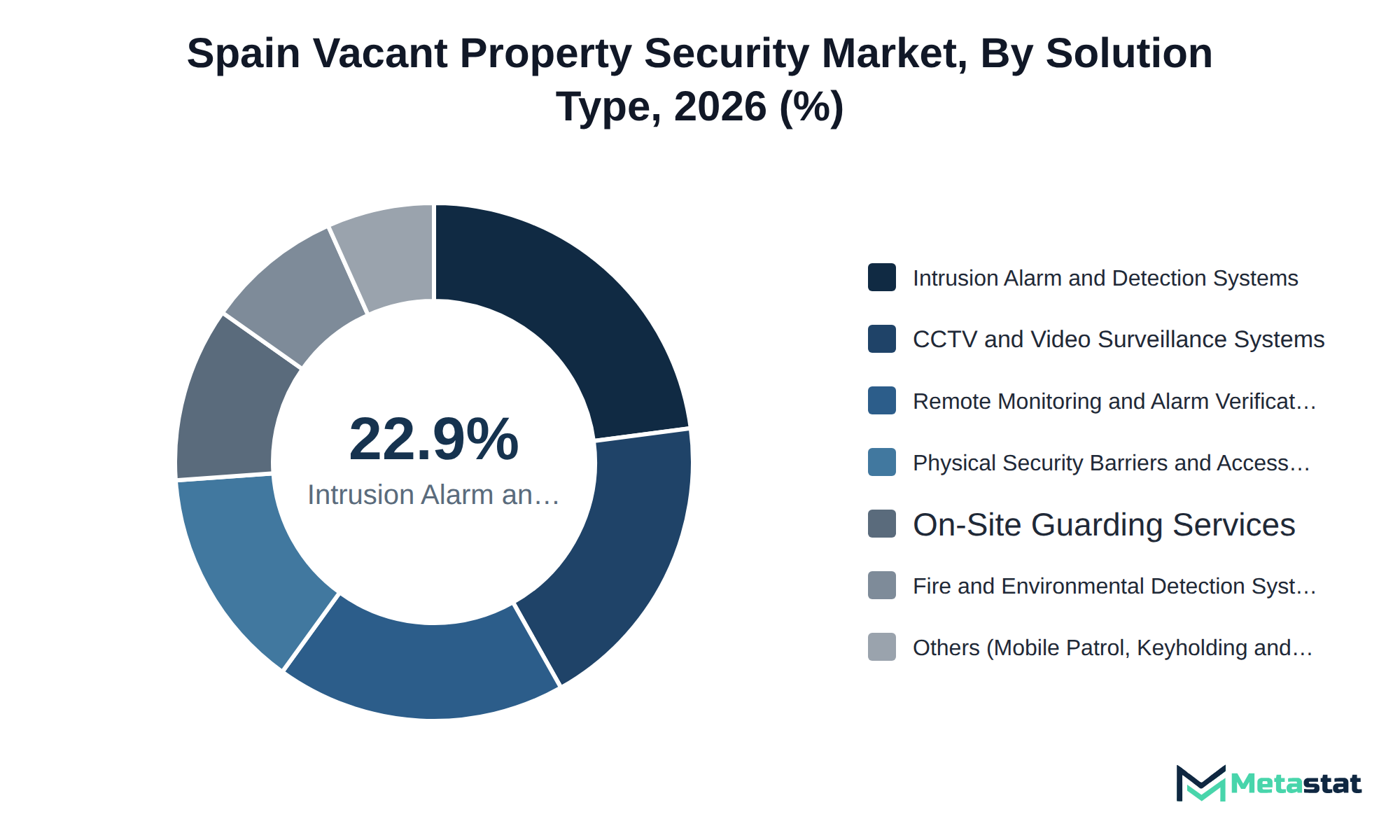
This segment focuses on providing technological solutions to detect unauthorized access or intrusions in vacant properties, ensuring safety and security. Private property owners, corporate entities, and banks employ these systems to safeguard unused assets from potential threats. Demand for intrusion alarm systems is driven by the increasing incidence of property crimes and the need for enhanced security. Compared to other segments, including CCTV and Video Surveillance Systems, which shows a higher growth rate of 8.8%, the Intrusion Alarm and Detection Systems segment exhibits steady growth due to its specific applications in immediate threat detection rather than continuous surveillance.
CCTV and Video Surveillance Systems segment is estimated to reach USD 49.2 million by 2033, at a CAGR of 8.8% during the forecast period. This segment includes advanced surveillance technologies that enable monitoring and recording of vacant properties, providing crucial oversight for property owners. Primarily used by private property owners and corporate investment funds, CCTV systems enhance safety and deter unauthorized access. The growing emphasis on securing these properties in urban areas drives demand for these systems. Compared to other segments, including Intrusion Alarm and Detection Systems, the CCTV segment experiences faster growth due to increasing reliance on visual monitoring and technological advancements. Several buyers favor CCTV systems due to their ability to deliver real-time footage and remote access features, which differentiate them in terms of functionality and market appeal.
Physical Security Barriers and Access Control segment is expected to reach USD 26.3 million by 2033. This segment encompasses solutions designed to secure access points and restrict unauthorized entry in vacant properties. Private property owners, particularly those managing repossessed or foreclosed properties, rely on these systems to mitigate risks associated with vandalism and theft. The increasing need for enhanced security measures drives demand for these solutions, particularly in urban areas where property crime rates are higher. Compared to other solution types, this segment experiences slower growth due to higher upfront costs associated with physical security installations. Investment in physical barriers and access control typically reflects a long-term commitment to property security, deterring immediate adoption in favor of more flexible, lower-cost security solutions. A steady increase in adoption rates is anticipated while property owners seek to balance costs with robust security needs.
Fire and Environmental Detection Systems segment is projected to grow at a CAGR of 8.3% during the forecast period. This segment focuses on identifying fires and environmental hazards within vacant properties through tools such as fire alarm systems, ensuring the safety of unoccupied spaces. Property owners, real estate developers, and security service providers use these systems, aligning with a broader trend of increasing awareness surrounding safety and compliance standards. The rising emphasis on fire safety legislation strengthens demand for these solutions, while differing from other segments in the market due to its specific focus on detecting environmental threats rather than physical security measures. In comparison to CCTV and Video Surveillance Systems, which anticipate growth at a CAGR of 8.8%, the Fire and Environmental Detection Systems segment offers distinct functionalities and price points that cater to unique buyer needs within the Spain Vacant Property Security market.
Remote Monitoring and Alarm Verification Services encompass advanced technology solutions designed to monitor vacant properties and respond to security alerts in real time. This segment serves property owners requiring assurance against unauthorized access and incidents occurring in unoccupied spaces. Key drivers for this segment include the increasing demand for enhanced property safeguarding measures and the rising sophistication of security technologies enabling remote oversight. Compared to other segments, this area experiences faster growth due to its appeal among private and corporate property owners prioritizing proactive security measures. The market shows heightened interest in this segment, driven by the need for comprehensive protection strategies addressing the evolving landscape of security threats.
On-site guarding services involve the physical presence of security personnel to monitor and protect vacant properties. This service is primarily used by private property owners, banks, and corporate property owners seeking to deter vandalism and unauthorized access. The need for immediate and visible security solutions drives demand for on-site guarding services, particularly in areas with high risks of property damage. Compared to other security solutions like remote monitoring, on-site services often involve higher operational costs due to personnel expenses. The market shows a preference for integrating various security strategies, with on-site guarding complementing technology-driven solutions to enhance overall property protection. In this context, on-site guarding delivers a unique value proposition, addressing specific security concerns that technology alone cannot satisfy, particularly for high-stakes properties requiring constant vigilance.
Mobile patrol, keyholding, and alarm response services involve flexible security measures that address urgent protection needs for vacant properties. These services appeal to various users, including private property owners and corporate entities, who seek rapid response to security breaches. Increased awareness of property vulnerabilities drives demand for immediate, on-the-ground security solutions, distinguishing this segment from technology-driven solutions including CCTV systems. While other segments experience strong growth rates, the market dynamics surrounding mobile patrol and alarm response services indicate steady but slower expansion, influenced by the unique operational challenges these services entail. Ongoing concern for property safety and the increasing incidence of criminal activity further increase interest in these services, ensuring their continued relevance in the Spain Vacant Property Security market.
This segment serves private property owners, who seek effective security solutions to protect their unoccupied homes from vandalism, theft, and squatting. The segment experiences growth driven by heightened awareness of security risks associated with vacant properties. Compared to other property types, this segment has a slower growth rate, reflecting the distinct needs of residential property owners versus corporate or commercial property owners. The market for vacant residential properties emphasizes the necessity for tailored security solutions, with buyers prioritizing safeguarding family homes, while commercial segments focus on larger-scale asset protection. Demand for innovative security technologies aligns with ongoing trends in the Spain Vacant Property Security market, ensuring property owners implement robust measures to maintain safety and value.
This segment primarily serves corporate property owners, investment funds, and real estate developers, focusing on security solutions to deter vandalism and theft. The increasing number of vacant properties in the commercial real estate sector due to economic fluctuations drives demand for effective security measures. Compared to other property types, this segment experiences a steadier growth rate, supported by the necessity of maintaining property value in an unstable market. The rising trend of remote electronic monitoring systems, which provide real-time surveillance, differentiates this segment from vacant residential properties that rely more on physical security. The Spain Vacant Property Security market evolves with advancements in technology and growing awareness around property protection.
Repossessed and Foreclosed Properties segment is expected to reach USD 23.7 million by 2033. This segment includes properties that have reverted to the lender due to non-payment, often requiring immediate security measures to prevent vandalism and unauthorized access. Banks and other financial institutions manage these properties, necessitating effective security solutions to maintain their value. Demand for security in this segment is driven by the increasing number of foreclosures, reflecting economic conditions and financial distress. With a CAGR of 5.8% during the forecast period, this segment shows slower growth compared to Vacant Commercial Properties, which has a CAGR of 6.7%. The focus on repossessed properties involves more specialized security solutions tailored to protect assets during the transition back to marketability. The distinct needs of banks and financial institutions differentiate this segment from others that cater to private property owners or commercial investments, requiring targeted approaches to security. The Spain Vacant Property Security market reflects this nuanced demand for specialized solutions tailored to repossessed properties.
Unsold Housing and Completed Developments segment is projected to grow at a CAGR of 8% during the forecast period. This segment primarily involves properties that remain unsold despite completion, attracting interest from real estate developers, banks, and private property owners. The rising number of such properties generates increased demand for security solutions to mitigate risks associated with vandalism and theft. One significant driver for growth in this segment stems from ongoing urbanization trends, pushing developers to ensure their assets remain protected. This segment differentiates itself from others in the Property Type category by focusing on newly constructed but unsold properties, reflecting a dynamic that contrasts with repossessed or foreclosed properties that require different security solutions. The average value for this segment aligns with the market's trajectory, balancing security needs and financial considerations.
Stalled and Under-Construction Developments involve properties that are not completed or halted during the construction process. These properties face unique security challenges, prompting property developers and investors to invest in security solutions to deter vandalism and theft. Demand for security services in this segment reflects a growing concern among stakeholders about the potential risks associated with unfinished properties. One notable driver impacting this segment stems from increasing urbanization and the subsequent rise in construction activities. This segment differs from others due to its specific focus on properties that are in transition, highlighting the unique needs of property owners compared to more stable segments, including occupied residential or commercial properties. The market addresses the need for tailored security solutions that effectively mitigate risks during construction and renovation phases.
Vacant second homes and holiday properties represent a unique segment requiring tailored security solutions. This segment typically involves properties not occupied year-round, making them vulnerable to theft and vandalism. Owners of these properties, including private individuals and investment entities, prioritize security systems to protect their investments and ensure peace of mind during periods of vacancy. Demand in this segment is driven by rising concerns over property crime, especially in tourist-frequented areas. Competition among service providers offers security technologies that are adaptable to various property types, distinguishing this segment from others focused on more permanent residences. Compared to vacant residential properties, the security needs for second homes reflect a higher emphasis on remote monitoring capabilities, aligning with the transient nature of their use. The Spain Vacant Property Security market addresses these specific needs through a comprehensive range of services and solutions tailored for this property type.
Vacant Industrial and Warehouse Properties encompass spaces within the industrial and logistics real estate sector that are designated for industrial use or storage and currently lack tenants. This segment primarily serves owners of such properties, including real estate developers and investment firms focused on maximizing asset value. Rising concerns regarding theft and vandalism drive demand for enhanced security measures in this sector. Unlike residential or commercial properties, industrial properties often experience slower occupancy rates, leading property owners to invest more in security features to protect their investments. With advancements in technology, solutions including remote monitoring systems and integrated security services have become appealing, differentiating this segment from others that rely on traditional security measures. The Spain Vacant Property Security market reflects this shift, highlighting the importance of securing these types of properties to mitigate risks associated with vacancy.
This sub-segment includes vacant public buildings and institutional properties, which require tailored security solutions. These properties are often susceptible to vandalism and unauthorized access, prompting property managers and government bodies to seek effective security measures. Demand for security solutions in this segment is driven by the increasing focus on public safety and the protection of taxpayer-funded assets. Unlike other property types, which focus on residential or commercial needs, this sub-segment emphasizes regulatory compliance and public accountability. Higher scrutiny of public properties results in more stringent security requirements, reflecting a distinct market dynamic. In the Spain Vacant Property Security market, this sub-segment stands out with unique challenges and demands compared to other categories.
On-Site Physical Security segment is valued at USD 42.3 million in 2026 and is projected to reach USD 54.3 million by 2033, at a CAGR of 3.6% during the forecast period. This model involves the deployment of security personnel on-site to monitor and safeguard vacant properties, providing a physical presence that deters potential threats. Primarily employed by private property owners and corporate property owners, the segment attracts demand driven by an increasing need for immediate response to security incidents. Compared to remote electronic monitoring, which is expected to grow at a CAGR of 8.9%, On-Site Physical Security experiences slower growth linked to higher operational costs associated with personnel deployment. Investment in this segment reflects a commitment to maintaining a proactive security posture, addressing vulnerabilities that existing technologies cannot fully mitigate. Demand for such services contributes to overall market expansion, highlighting the importance of comprehensive security strategies in the Spain Vacant Property Security market.
This segment involves advanced surveillance solutions that employ technology to monitor vacant properties and respond to potential security threats. Property owners, particularly private individuals and corporate entities, frequently adopt these systems to enhance security in unoccupied spaces. A significant driving force behind this segment’s growth stems from increasing concerns about property safety, driving demand for effective monitoring solutions. Compared to on-site physical security, which expands at a slower CAGR of 3.6%, remote electronic monitoring offers a more cost-effective alternative, attracting a broader base of users seeking reliable security measures. The Spain Vacant Property Security market reflects a growing preference for integrated technology solutions that address the diverse needs of property owners.
Integrated Physical and Electronic Security segment is expected to reach USD 57.1 million by 2033. This segment combines traditional physical security products with advanced electronic systems, providing comprehensive protection for vacant properties. Private property owners, corporate property owners, and investment funds primarily engage this segment to enhance security and mitigate risks associated with vacant properties. Increasing concerns over property vandalism and theft drive the demand for integrated solutions. Compared to other segments, including Remote Electronic Monitoring, this segment experiences a slightly slower growth rate, with a CAGR of 8.9% expected during the forecast period. The emphasis on technology integration offers a distinct advantage, making this segment appealing for property owners seeking robust security solutions. Property owners prioritize safety and security, positioning the integrated physical and electronic security segment as a vital component in the Spain Vacant Property Security market.
Self-Monitored Security Systems segment is projected to grow at a CAGR of 5.5% during the forecast period. This segment allows property owners to oversee their vacant properties using technology-driven solutions without relying on outside monitoring services. Typically used by private property owners and small-scale investors, these systems provide a cost-effective alternative to traditional security measures. Demand for this segment is driven by the increasing emphasis on budget-friendly security options, particularly among individuals managing smaller portfolios. Compared to remote electronic monitoring, which is expected to achieve a CAGR of 8.9%, self-monitored solutions represent a slower growth trajectory. However, the lower initial investment required for these systems attracts a diverse range of buyers, contributing to steady adoption in the Spain Vacant Property Security market.
Temporary and Rapid-Deployment Security involves security solutions designed for immediate and flexible implementation in response to urgent property protection needs. This segment caters to various clients, including property owners facing unexpected security threats or those managing properties in transition. The increasing necessity for prompt security measures drives demand, particularly in urban areas experiencing fluctuations in property occupancy and safety concerns. This sub-segment differentiates itself from others through its adaptability and speed of deployment, offering solutions that are established without lengthy planning processes, thereby attracting clients requiring quick responses to security challenges. In the context of the Spain Vacant Property Security market, the presence of multiple service providers allows for competitive pricing and innovation in service offerings, ultimately enhancing the attractiveness of temporary and rapid-deployment solutions for property stakeholders.
Private Property Owners segment is valued at USD 27 million in 2026 and is projected to reach USD 39.4 million by 2033, at a CAGR of 5.6% during the forecast period. This segment focuses on individual property owners who require security solutions for their vacant properties to prevent vandalism, squatting, and other security threats. The increasing incidence of property crimes drives demand for enhanced security measures among private owners. Compared to other segments, this category experiences slower growth due to the more fragmented nature of its buyer base, primarily consisting of individual investors rather than corporate entities. This characteristic distinguishes it from Corporate Property Owners and Investment Funds, which are projected to grow at a CAGR of 8.7% during the same period. The Spain Vacant Property Security market reflects this trend, emphasizing the diverse needs of various end users in the security sector.
Corporate Property Owners and Investment Funds segment is estimated to reach USD 42.5 million by 2033, at a CAGR of 8.7% during the forecast period. This segment includes large entities managing commercial properties, including office buildings, retail spaces, and industrial facilities. These owners often seek advanced security solutions to mitigate risks associated with vacancy, theft, and vandalism. Increased investment in security technologies, driven by heightened concerns over property safety, drives growth. Compared to other segments, this segment experiences faster growth due to the growing importance of asset protection among corporate stakeholders. Enhanced surveillance systems and integrated security solutions cater specifically to the needs of corporate property owners, which differ from the needs of private property owners. With a projected CAGR of 8.7%, this segment highlights a significant demand trend within the market for vacant property security in Spain.
Banks and Other Financial Institutions segment is expected to reach USD 26.1 million by 2033. This segment includes financial entities that manage and secure vacant properties, including repossessed assets. Demand arises from the need for heightened security measures to protect these assets from vandalism and theft. Banks and financial institutions face challenges related to regulatory compliance and risk management, which influences their investment in security solutions. Compared to other segments, this one typically experiences slower growth due to the cautious nature of financial institutions regarding expenditures on security, with a CAGR of 8.7% anticipated. The evolving environment of property management and the increasing rate of foreclosures contribute to rising demand for tailored security services. The Spain Vacant Property Security market reflects these dynamics as institutions seek reliable solutions to mitigate risks associated with vacant properties.
Real Estate Developers segment is projected to grow at a CAGR of 8.7% during the forecast period. This segment focuses on securing vacant properties that are awaiting sale or further development. Real estate developers employ various security measures to protect these assets from potential vandalism or unauthorized access. The increasing emphasis on safeguarding investment properties drives demand within this segment. Unlike the Private Property Owners segment, which expands at a CAGR of 5.6%, this segment experiences a faster growth rate due to the larger scale of projects and the higher financial stakes involved. The need for enhanced security solutions in commercial property development continues to drive adoption among real estate developers, establishing a unique position in the Spain Vacant Property Security market.
Construction and Renovation Contractors focus on properties undergoing construction or renovation, requiring security solutions to protect against theft and vandalism. This segment frequently engages with security providers to safeguard sites from potential risks during transitional phases. Rising construction activity increases demand for security solutions tailored to protect valuable materials and equipment, driving contractors to invest in robust security measures. However, budget constraints pose challenges, influencing security investments and decisions. Compared to other segments, including Private Property Owners, this segment's growth reflects a distinct set of operational needs, emphasizing site security during construction rather than long-term property management. The Spain Vacant Property Security market recognizes the unique requirements of Construction and Renovation Contractors, ensuring that appropriate measures are in place to mitigate risks during property development.
Property Managers and Real Estate Agencies focus on managing and marketing vacant properties for clients, including private owners and corporate entities. These agencies employ security services to ensure property safety and deter criminal activity, which in turn protects their reputation and investment. The rise in vacant and unsold properties in Spain drives demand for enhanced security solutions, with agencies seeking reliable systems to safeguard their assets. This segment benefits from technological advancements in security, including integrated monitoring systems, which streamline property oversight. Compared to other end-user segments, pricing sensitivity varies, with agencies prioritizing cost-effective solutions to remain competitive. The need for comprehensive security measures continues to influence the market, reflecting broader trends within the Spain Vacant Property Security market.
Security Service Providers deliver essential solutions for the protection of vacant properties. This segment caters to various clients, including corporate property owners and private individuals, requiring tailored services to manage risks associated with vacant spaces. A significant force driving this segment involves increasing concerns about property theft and vandalism, which escalates demand for effective security measures. Compared to other segments, this sub-segment experiences a different pricing structure, often reflecting the specialized nature of services offered. While several segments focus on physical security equipment, Security Service Providers emphasize the integration of technology and personnel for comprehensive safety management. The market continues to adapt to evolving threats, reinforcing the importance of robust security strategies in the Spain Vacant Property Security market.
Public Authorities and Housing Agencies engage in the management and regulation of vacant properties, focusing on ensuring safety and security in residential and commercial areas. Their role involves implementing security measures to prevent vandalism, squatting, and other illegal activities. Demand for security solutions in this segment is driven by heightened concerns regarding property safety and community welfare. This segment differs from others due to its emphasis on compliance with local regulations and public safety standards, resulting in slower growth compared to corporate buyers seeking immediate financial returns. The focus on public safety and community impact positions Public Authorities and Housing Agencies uniquely within the Spain Vacant Property Security market, requiring solutions that secure properties and enhance community relations.
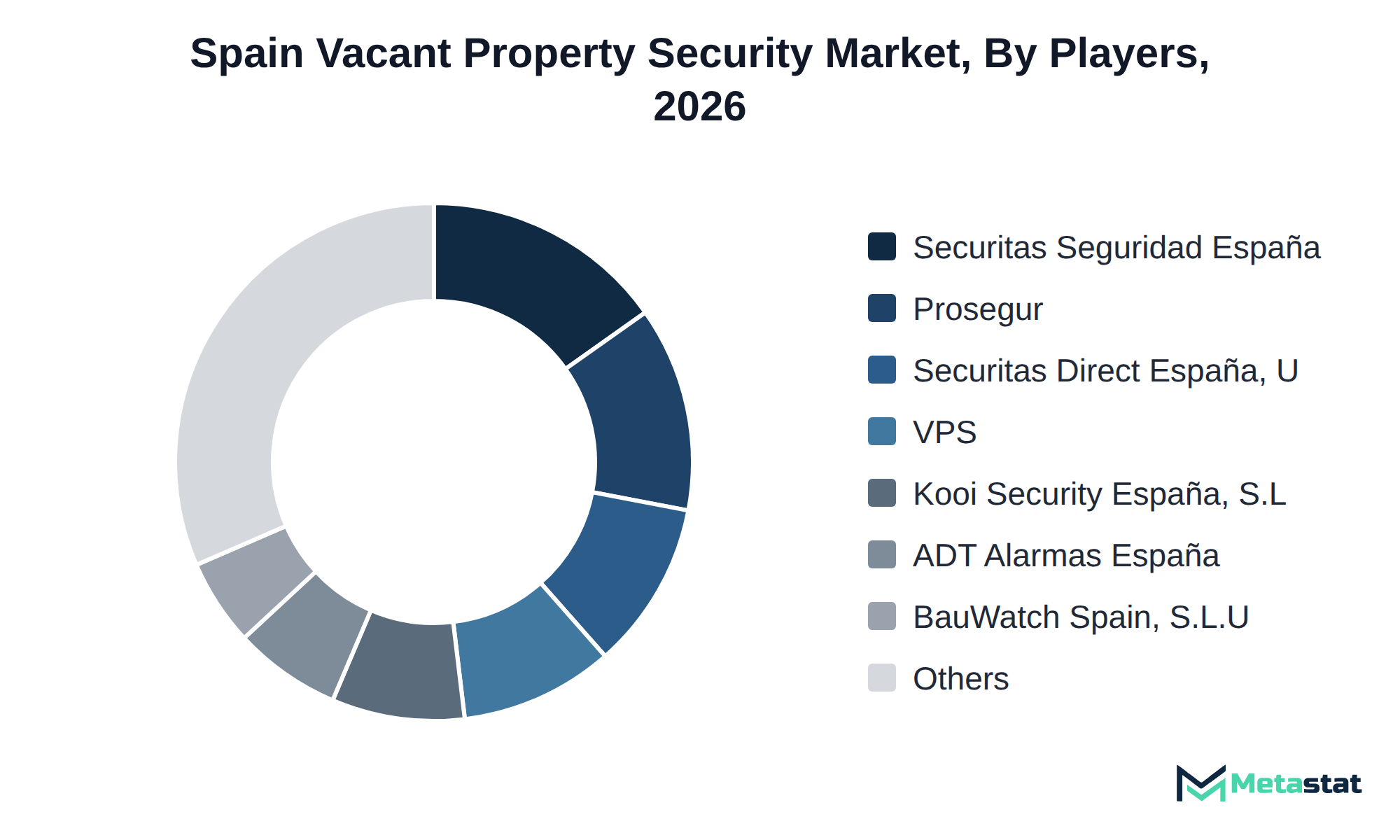
The Spain Vacant Property Security market consists of various companies focusing on different aspects of security solutions. Key players including VPS Group and Securitas Seguridad España prioritize comprehensive security systems that integrate advanced technology, including CCTV and video surveillance systems, to enhance safety measures for vacant properties. Meanwhile, Kooi Security España, S.L. emphasizes physical security barriers, providing customized solutions tailored to specific property types.
Providers in the market often attract buyers based on factors including pricing, service quality, and customization options. For instance, ADT Alarmas España focuses on affordability, attracting private property owners seeking cost-effective security solutions. In contrast, Securitas Direct España, S.A.U. positions itself as a premium provider, targeting corporate property owners and investment funds through advanced technological offerings and superior customer service.
This growth relies on several developments within the Spain Vacant Property Security market. Enhanced security measures for vacant residential and commercial properties contribute to this trend, particularly for property owners seeking to protect their investments against vandalism and unauthorized access.
Another driving factor involves the rising adoption of remote electronic monitoring solutions, which is expected to account for USD 67.7 million by 2033 with an anticipated CAGR of 8.9%. This approach offers property owners a cost-effective and efficient means of securing their assets without the need for constant on-site personnel.
However, potential risks could hinder market growth. Economic downturns, leading to increased vacancies and financial constraints for property owners, could limit investment in security solutions. Addressing these challenges will be essential for the market to achieve its forecasted expansion.
By Solution Type: Intrusion Alarm and Detection Systems, CCTV and Video Surveillance Systems, Physical Security Barriers and Access Control, Fire and Environmental Detection Systems, Remote Monitoring and Alarm Verification Services, On-Site Guarding Services, Others (Mobile Patrol, Keyholding and Alarm Response Services)
By Property Type: Vacant Residential Properties, Vacant Commercial Properties, Repossessed and Foreclosed Properties, Unsold Housing and Completed Developments, Stalled and Under-Construction Developments, Vacant Second Homes and Holiday Properties, Vacant Industrial and Warehouse Properties, Others (Vacant Public Buildings, Institutional Properties)
By Deployment Model: On-Site Physical Security, Remote Electronic Monitoring, Integrated Physical and Electronic Security, Self-Monitored Security Systems, Temporary and Rapid-Deployment Security
By End User: Private Property Owners, Corporate Property Owners and Investment Funds, Banks and Other Financial Institutions, Real Estate Developers, Construction and Renovation Contractors, Property Managers and Real Estate Agencies, Security Service Providers, Public Authorities and Housing Agencies
The report strategically identifies and profiles the key market players and analyses their core competencies in each sub-segment of the Vacant Property Security market.
Report Attributes | Details |
Study Period | 2021-2033 |
Base Year | 2025 |
Estimated Year | 2026 |
Forecast Period | 2026-2033 |
Historical Period | 2021-2025 |
Growth Rate | CAGR 7.2% from 2026 to 2033 |
Revenue Unit | USD million |
Segmentation | By Solution Type, Property Type, Deployment Model, End User, and Region |
Find answers to common questions about this report
The Vacant Property Security market size was valued at USD 131.9 million in 2025.
The market is projected to grow at a CAGR of 7.2% during the forecast period from 2026 to 2033.
CCTV and Video Surveillance Systems lead the Vacant Property Security market, with a projected value of USD 49.2 million by 2033. This segment surpasses others in terms of anticipated revenue growth.
Investment in vacant property security solutions increases due to a shift in buyer interest toward residential and commercial properties. Enhanced security measures reflect this evolving landscape, leading to increased investments and advancements in technology.
Price sensitivity remains a significant constraint, as high costs associated with advanced security systems restrict buyers' willingness to invest in comprehensive protection measures. Increasing operational costs for suppliers, including talent acquisition and material expenses, challenge profit margins and hinder growth potential in the market.
Investment in vacant commercial properties drives adoption in the Spain Vacant Property Security market, with a projected growth to USD 37.1 million by 2033, reflecting a CAGR of 6.7%. Rising theft and vandalism rates prompt corporate property owners to seek advanced integrated security solutions, enhancing market penetration and creating long-term growth opportunities.
The Vacant Property Security market is estimated to reach a valuation of USD 230.1 million by 2033.
Key players operating in the Vacant Property Security market include VPS Group, Kooi Security España, S.L., Securitas Seguridad España, Securitas Direct España, S.A.U., BauWatch Spain, S.L.U., ADT Alarmas España, and Prosegur.
The market for vacant residential properties is projected to reach USD 48.7 million by 2033, with a compound annual growth rate (CAGR) of 5.8 percent from 2026 to 2033.
Remote electronic monitoring exhibits the highest growth, projected to reach USD 67.7 million by 2033, reflecting a compound annual growth rate (CAGR) of 8.9 percent.
The analysts below cover Professional Services research at Metastat Insights.
LEAD ANALYST
Utkarsh Khirodkar is a Lead Market Research Analyst at MetaStat Insight, specializing in market intelligence, technology sector assessments, and competitive strategy.

PRINCIPAL CONSULTANT - ENTERPRISE AI & EMERGING TECHNOLOGIES
Banking & Finance · Electronics and Semiconductor · Energy and Power · Healthcare IT · Information & Technology · Professional Services
Vijay Gunti is a Principal Consultant at MetaStat Insight, bringing over two decades of experience across enterprise digital transformation, technology strategy, and intelligent systems.

PRINCIPAL CONSULTANT - QUALITY SYSTEMS & COMPLIANCE
Electronics and Semiconductor · Machinery & Equipment · Professional Services
Omkar Phadtare is an Industry Consultant at MetaStat Insight, specializing in quality systems, regulatory compliance, and standards benchmarking to drive data-driven market intelligence and strategic industry research.

LEAD CONSULTANT - COMMUNICATION, TELECOM, AND IT
Electronics and Semiconductor · Information & Technology · Machinery & Equipment · Professional Services
Ravindra Sathe Consultants for Communication, Telecom, and IT at MetaStat Insight. He leads the firm's industry research initiatives across telecommunications infrastructure, digital connectivity, enterprise networking, and emerging information technology domains.
Our team was tracking whether regional recycling infrastructure could realistically absorb the growing volume of lithium iron phosphate batteries over the next decade. The report did a solid job separating announced hydrometallurgical plant capacity from active, permitted operational throughput. That distinction made the feedstock availability projections and regional recovery rate models far more credible than standard commercial overviews.
Tracking capacity expansion in single-use bioprocessing requires dependable data on raw material availability and cleanroom-grade polymer supply chains. The competitive landscape chapter gave a grounded evaluation of secondary component suppliers across North America and Asia-Pacific rather than simply reprinting press releases. Having that level of supplier benchmarking helped clarify dual-sourcing considerations for our clinical pipeline planning.
When evaluating distributed energy resource management systems, standard research summaries tend to gloss over the operational differences between front-of-the-meter utility deployments and behind-the-meter industrial sites. The MetaStat Insight report addressed those distinctions directly, especially regarding software interoperability standards and grid interconnection backlogs. The five-year market sizing across regional transmission organizations provided actionable context for our grid modernization strategy.
Explore related market intelligence reports worth reading alongside this one.
Starting from
$2950