
LEAD ANALYST
Utkarsh Khirodkar is a Lead Market Research Analyst at MetaStat Insight, specializing in market intelligence, technology sector assessments, and competitive strategy.

Global Specialty Fats and Oils Market Size, Share, By Product Type (Specialty Oils and Specialty Fats), By Raw Material Source (Palm and Palm Kernel, Coconut, Soybean, Rapeseed and Canola, Sunflower, Shea and Other Exotic Tree Seeds, Olive), By Application (Confectionery, Bakery, Dairy and Dairy Alternatives, Snacks and Savoury Prepared Foods, Infant Nutrition and Dietary Supplements, Cosmetics and Personal Care, Pharmaceuticals), By Physical Form (Liquid, Semi-Solid, Solid and Powder), Industry Analysis, Growth, Trends, and Forecast, 2026-2033
Report ID
MSI-5610
Published
October, 2026
Pages
301 Pages
Format
Historical
Base year
Forecast
Forecast period
Report Details
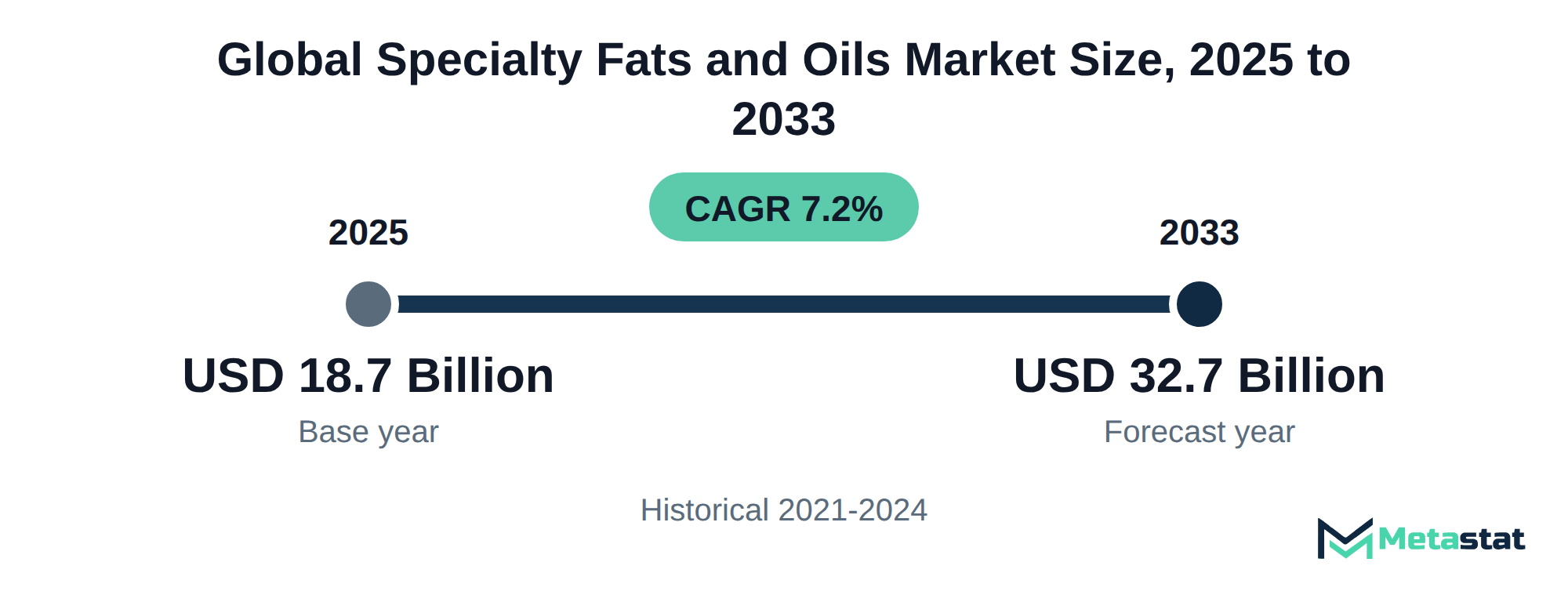
Market Valuation: Valued at $18.7 Billion in 2025, projected to reach $32.7 Billion by 2033 at a 7.2% CAGR.
Dominant Segment: The specialty oils segment leads the market, driven by increasing consumer preferences for healthier and more specialized ingredients. This segment is projected to grow from USD 14.3 billion in 2026 to USD 22.6 billion by 2033.
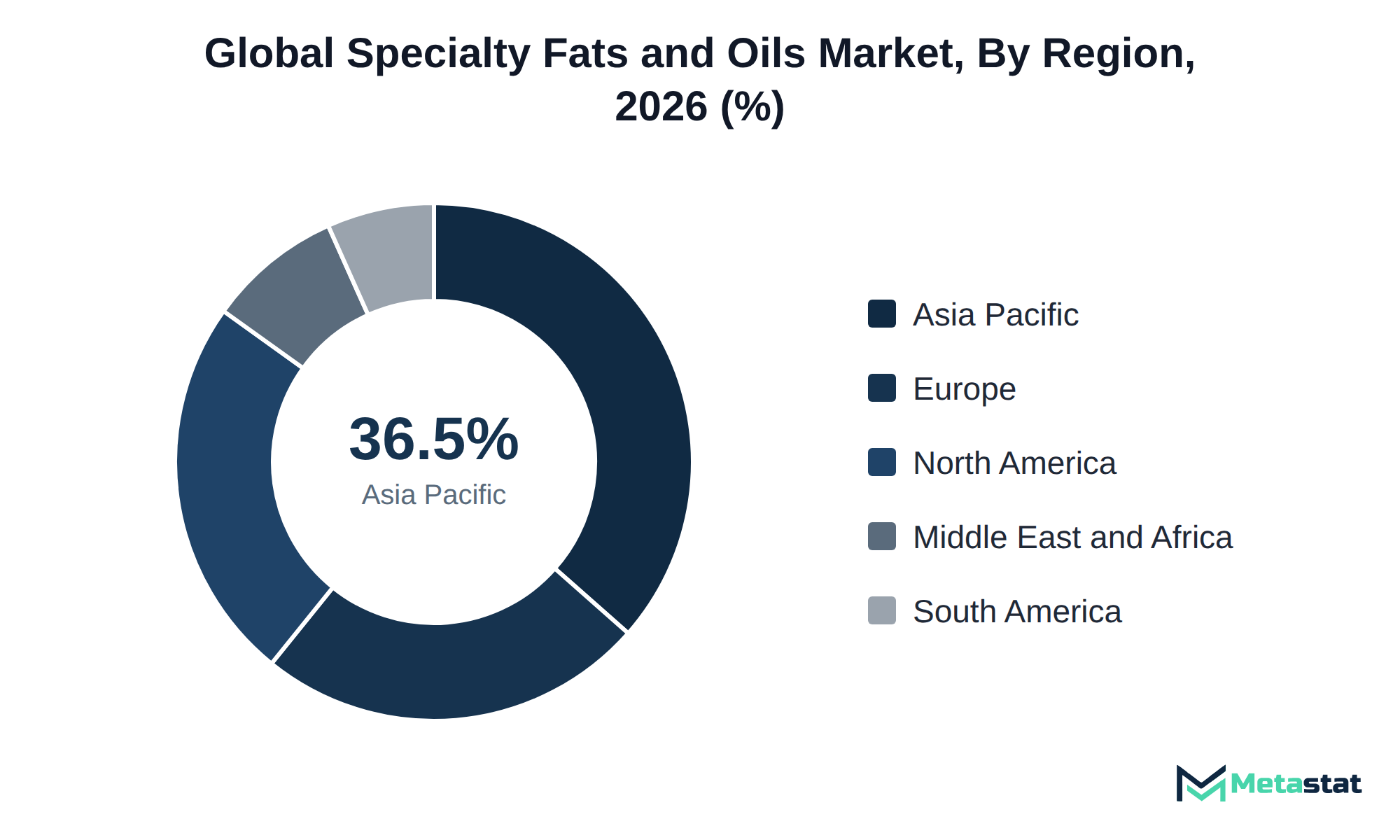
Geographic Lead: Asia Pacific holds the largest market share at 36.5%, with rapid growth attributed to robust food manufacturing and rising disposable incomes in countries like China and India.
What's Inside: The report provides comprehensive competitive coverage, detailed analyses of market dynamics, and forecasts through 2033, focusing on key segments such as specialty oils and fats.
Increasing Health Consciousness: Health-conscious consumers are driving demand for specialty fats and oils, particularly in the confectionery and bakery sectors, where a shift towards healthier alternatives is evident.
Cost-effective Raw Materials: The market benefits from the rise of cost-effective raw materials, particularly palm and palm kernel oils, which help manufacturers optimize production costs while maintaining product quality.
Choose Your License
Global Specialty Fats and Oils Market
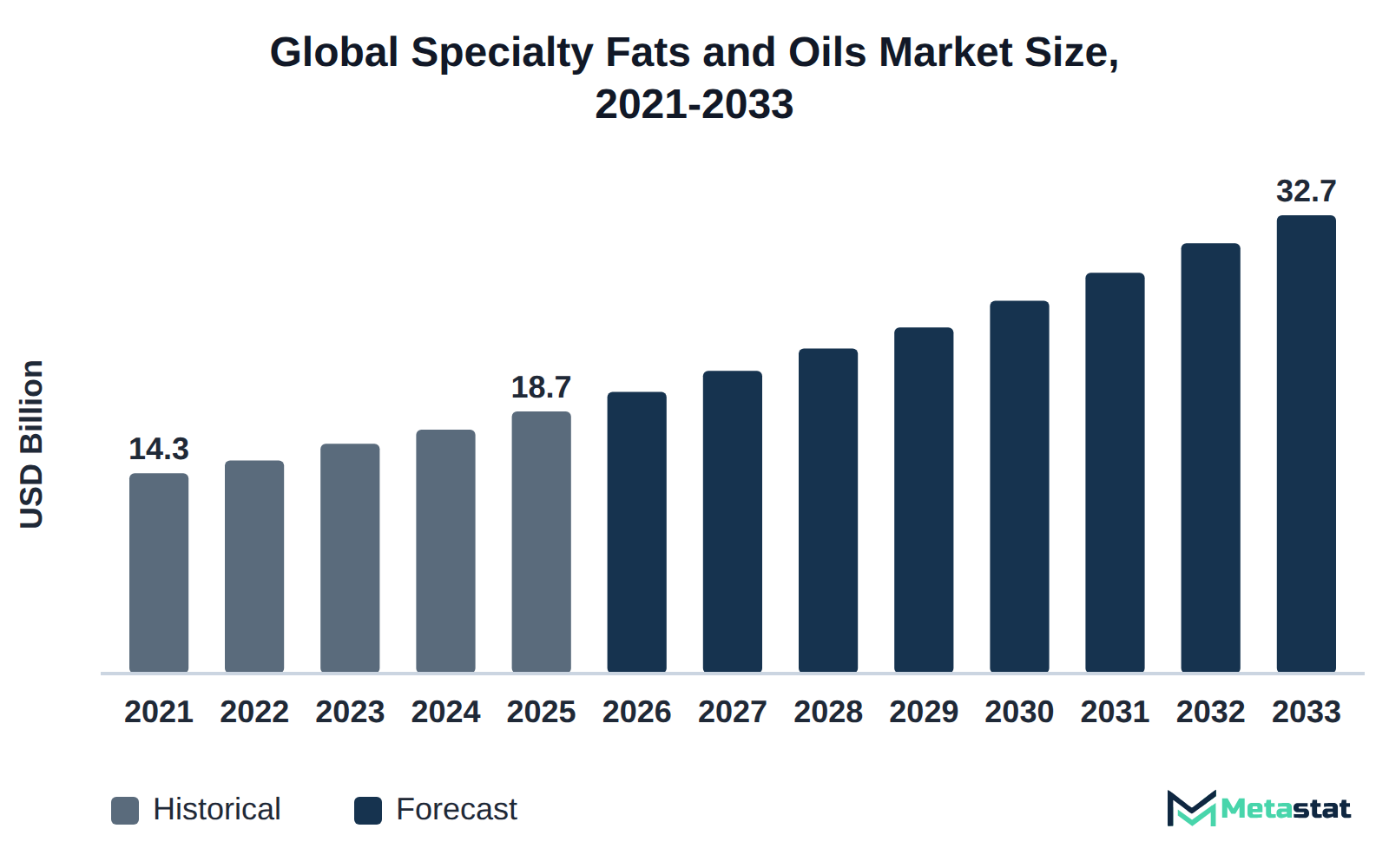
The global Specialty Fats and Oils market was valued at USD 18.7 billion in 2025 and is projected to reach USD 32.7 billion by 2033, growing at a CAGR of 7.2% over the forecast period.
The Specialty Fats and Oils market encompasses a diverse range of products in various applications, including confectionery, bakery, and dairy alternatives. Buyers invest in specialty fats and oils to enhance product quality, improve texture, and extend shelf life. The increasing demand for healthier and cleaner label ingredients drives spending, reflecting consumer preferences for transparency and quality in food products.
Growth within the market is propelled by several factors, particularly the rising demand for specialty oils, which account for the largest share of market value. North America holds 24.1% of the market in 2025, with the US leading in 2026. The Asia Pacific region follows closely, holding 36.5% of the market share, benefiting from strong food manufacturing and growing consumer interest in diverse culinary applications.
One significant growth driver includes the increasing popularity of plant-based products, leading to higher adoption of specialty fats and oils derived from sustainable sources. This trend aligns with the shift towards healthier lifestyles and dietary preferences, prompting manufacturers to explore innovative formulations that meet consumer expectations while preserving product integrity.
The Specialty Fats and Oils market addresses the growing demand for specialized ingredients in food production and other industries. Buyers invest in these products to enhance sensory attributes, improve product stability, and cater to specific dietary needs. The range of applications, including confectionery and bakery, drives significant spending among manufacturers aiming to differentiate their offerings in a competitive landscape.
Growth in the market is primarily fueled by increasing consumer preferences for healthier and more diverse food options. Specialty Oils represent the segment with the highest value, reflecting a trend towards plant-based and functional ingredients. In terms of regional performance, Asia Pacific holds the largest market share at 36.5%, driven by expanding food industries and rising disposable incomes in countries including China and India.
In 2025, North America accounts for 24.1% of the market, with the US expected to maintain a leading position in 2026. Demand for specialty fats, particularly in the bakery and confectionery sectors, contributes significantly to market expansion. Innovations in raw material sourcing enhance product offerings, enabling suppliers to meet evolving consumer expectations and regulatory standards.
Enzymatic interesterification represents a significant advancement in the production of trans-fat-free bakery fats, enabling manufacturers to achieve precise melting profiles. This technology aligns with consumer preferences for healthier options, eliminating trans fats without sacrificing quality. The Specialty Fats and Oils market evolves with a focus on formulations that meet regulatory standards while enhancing sensory attributes.
The segment of specialty fats is expected to reach USD 10.2 billion by 2033, reflecting a compound annual growth rate of 8.3%. This growth indicates strong market demand for healthier fat alternatives that do not compromise on texture or flavor in baked goods. The implementation of enzymatic interesterification allows for tailored melting behaviors suitable for various applications, addressing diverse consumer needs.
Companies in this market increasingly prioritize innovation to maintain competitive advantages. By adopting enzymatic interesterification, manufacturers improve their product offerings, catering to health-conscious consumers while enhancing their market position. The ability to produce specialized bakery fats with precise qualities supports growth opportunities in the Specialty Fats and Oils market.
The introduction of cocoa butter equivalents (CBEs) significantly alters the purchasing and pricing strategies within the Specialty Fats and Oils market, particularly for chocolate manufacturers. With rising demand for cost-effective substitutes, CBEs enable manufacturers to reformulate products while maintaining desired sensory properties.
The pricing models for CBEs often incorporate a formula that reflects raw material costs, production processes, and market competition. For instance, specialty fats derived from palm and palm kernel show a compound annual growth rate of 6.4% from 2026 to 2033. This growth informs procurement strategies, compelling manufacturers to negotiate long-term contracts for stability in pricing. Shifts in pricing and contract agreements affect chocolate producers' profit margins and product pricing.
Cocoa bean prices fluctuate due to global supply chain challenges, and the strategic use of CBEs presents an opportunity for manufacturers to optimize costs and enhance product offerings. The potential for premium pricing on reformulated chocolate products, supported by CBEs, enhances margins while catering to consumer preferences for quality. Consequently, ingredient innovation in the Specialty Fats and Oils market now drives purchasing decisions and reshapes economic models for chocolate manufacturers.
Increasing pressure for transparency in sourcing has transformed procurement practices for specialty fats and oils, particularly in the palm and shea sectors. This demand for traceability is primarily driven by consumer awareness of sustainability issues linked to palm oil production, prompting brands to seek responsibly sourced ingredients. In 2025, the specialty fats and oils market value reached USD 18.7 billion, illustrating the market's significance in food and personal care industries.
Procurement teams prioritize suppliers demonstrating adherence to sustainability certifications and traceability standards. For instance, palm and palm kernel oils, projected to expand from USD 7.4 billion in 2026 to USD 11.5 billion by 2033, increasingly require documentation of sustainable sourcing practices. Buyers in the confectionery application segment, where demand is anticipated to grow from USD 5.8 billion in 2026 to USD 9.7 billion in 2033, actively seek suppliers who provide proof of ethical sourcing. This shift influences sourcing strategies, supplier relationships, and ultimately shapes product innovation.
Specialty frying oils must balance oxidative stability, nutrition, and cost. Demand for oils with superior oxidative stability is driven by the need to maintain product quality and extend shelf life, particularly in frying applications. Specialty oils, including those derived from palm and palm kernel, are projected to rise from USD 7.4 billion in 2026 to USD 11.5 billion by 2033. This reflects a compound annual growth rate (CAGR) of 6.4%. This trend indicates that buyers increasingly prioritize oils that withstand high temperatures without degrading, thereby ensuring the nutritional integrity of fried foods. In commercial deep fat fryers, oils are exposed to sustained high temperatures, which is why oxidative stability weighs heavily in purchasing decisions.
In addition to oxidative stability, nutritional profiles of specialty frying oils significantly impact purchasing decisions. Oils high in healthy fats, including those from coconut, are projected to reach USD 4.2 billion by 2033 with a CAGR of 7.8%, appealing to health-conscious consumers. The alignment of nutritional benefits with cost considerations becomes crucial for manufacturers looking to meet market demand while managing expenses. Thus, careful selection of specialty frying oils supports compliance with health trends and cost-effective production, which strengthens supplier positions in the Specialty Fats and Oils market.
Health-conscious consumers increasingly prioritize nutrition, influencing food manufacturers to reformulate products. This shift manifests in higher demand for specialty fats and oils that meet dietary preferences, particularly among younger demographics emphasizing clean label ingredients and functional benefits. The confectionery and bakery sectors experience notable growth in specialty fats usage, driven by the need for healthier alternatives. Demand in the confectionery application is projected to rise from USD 5.8 billion in 2026 to USD 9.7 billion by 2033, reflecting a compound annual growth rate of 7.6%. This trend compels producers to innovate, enhancing product formulations that appeal to health-conscious buyers, ultimately leading to increased market revenues. A shift in purchasing habits toward specialty fats is reshaping the market, creating opportunities for competitive differentiation through health-focused product offerings.
The increasing popularity of plant-based diets drives specialty fats adoption.
The rise in cost-effective raw material sourcing contributes significantly to market dynamics. Ingredients including palm and palm kernel oils remain popular due to their affordability and versatility in various applications. Manufacturers and formulators optimize production costs while enhancing product quality through this trend. Suppliers focusing on cost efficiency appeal to food and beverage companies, particularly in segments like confectionery and bakery, where margins often constrain pricing strategies. Innovations in sourcing methods, including sustainable practices, improve the overall market value proposition, addressing consumer concerns regarding sustainability. The Specialty Fats and Oils market thus experiences a dual benefit: reduced ingredient costs without compromising quality or functionality. Operational efficiencies gained through this focus on economical sourcing drive growth opportunities for manufacturers. The ongoing demand for specialty fats aligns with evolving consumer preferences, pushing suppliers to adopt practices that enhance both cost-effectiveness and product appeal.
Increasing prices for essential raw materials limit the ability of manufacturers to maintain competitive pricing in the Specialty Fats and Oils market. Buyers, particularly those in the confectionery and bakery sectors, face challenges in sourcing affordable ingredients, resulting in smaller order volumes and delayed production schedules. Rising costs reflect a cautious approach to procurement, leading to slower uptake of new specialty fats and oils applications. Producers work to maintain margins while navigating these price fluctuations, which hinder investment in innovation and expansion. Constraints on budgets compel buyers to prioritize cost-effective options, subsequently affecting overall market growth and adoption rates.
Increasing supply chain disruptions challenge profitability within the market. Factors including geopolitical tensions, climate change, and unpredictable weather patterns contribute to instability in sourcing and transportation of raw materials. Suppliers face rising costs for logistics, which directly impacts operational margins. In response, manufacturers invest in localized sourcing strategies and alternative supply chains to mitigate risks. These approaches enhance resilience while striving to maintain product quality. Suppliers explore partnerships with local producers to ensure a steady supply of ingredients, reducing dependency on global supply chains. This shift supports operational efficiency and aligns with consumer demand for traceability and sustainability in the Specialty Fats and Oils market. Consequently, suppliers adapt to remain competitive despite these supply chain uncertainties.
Specialty fats show high growth potential, driven by increasing demand for tailored solutions in food applications, particularly in bakery and confectionery products. Food manufacturers seek ingredients that enhance the quality and shelf life of their offerings, which specialty fats uniquely address. Rising consumer preferences for indulgent and premium products further support uptake in this segment, with manufacturers adapting to evolving market trends. The enhanced functionalities provided by specialty fats lead to improved product performance, presenting opportunities for companies that focus on innovation within this space. The ability to cater to specific dietary needs, including reduced trans fats, positions this segment favorably in a competitive landscape, creating avenues for revenue expansion and increased market penetration.
Growth in the specialty fats segment contributes positively to the overall dynamics of the market, presenting an attractive opportunity for stakeholders and investors. Strategic investments in product development and marketing will give firms access to this segment and help them meet the demands of a diverse consumer base seeking high-quality specialty fats.
The Global Specialty Fats and Oils market is segmented based on Product Type, Raw Material Source, Application, and Physical Form.
Specialty Oils segment is valued at USD 14.3 billion in 2026 and is projected to reach USD 22.6 billion by 2033, at a CAGR of 6.7% during the forecast period. These oils find extensive application across food industries, particularly in confectionery and bakery products, where they enhance texture and flavor. The demand for specialty oils is driven by consumer preferences for healthier and more specialized ingredients, with manufacturers striving to reformulate products to meet these evolving tastes. Compared to specialty fats, this segment experiences slower growth, making it essential for producers to focus on innovative formulations to maintain market competitiveness. Rising costs of raw materials challenge profit margins, impacting manufacturers' pricing strategies. Overall, the emphasis on quality and health attributes supports the ongoing expansion of the Specialty Oils segment in the market.
Specialty fats find extensive use in various food applications, particularly in confectionery and bakery products, where they enhance texture and mouthfeel. Increasing consumer preference for healthier options drives demand for specialty fats that offer reduced trans fats and improved nutritional profiles. This segment experiences faster growth compared to specialty oils, attributed to its higher application in health-oriented products. The growing focus on clean-label ingredients further supports this trend, with manufacturers seeking to attract health-conscious consumers. Specialty fats differ from other segments by emphasizing functionality and performance in formulations, which influences purchasing decisions among food manufacturers. The market continues to evolve, reflecting changing dietary preferences and technological advancements in fat production.
Palm and palm kernel oils primarily serve the food industry, particularly in the production of confectionery, bakery items, and dairy alternatives. The growing demand for sustainable and health-conscious products drives the adoption of palm and palm kernel oils. Compared to other raw material sources, including coconut and soybean, this segment experiences a moderate growth rate, with the latter achieving a CAGR of 7.8%. Price stability and availability of palm and palm kernel oils contribute to its competitive standing, appealing to buyers seeking reliable supply chains and cost-effective solutions in the specialty fats and oils market.
Primarily used in food applications, coconut serves as a critical ingredient in confectionery, dairy alternatives, and snacks, appealing to health-conscious consumers. Demand for coconut is driven by its perceived health benefits and versatility, differentiating it from other raw material sources. The segment exhibits higher growth relative to several alternatives, including soybean and rapeseed, which attract buyers primarily due to cost efficiency. Increasing awareness about the nutritional advantages of coconut, including medium-chain triglycerides, drives its adoption across various consumer markets. This segment's competitive edge lies in its unique properties that enhance the sensory attributes of food products, reinforcing its presence in the Specialty Fats and Oils market.
The soybean segment is expected to reach USD 3.3 billion by 2033. This raw material source plays a significant role in producing specialty fats and oils used in various applications, including food production and dietary supplements. Key buyers include food manufacturers focusing on health-conscious products and companies producing alternative nutritional solutions. Demand is driven by the increasing preference for plant-based ingredients, aligning with the growing trend of providing healthier food options. The soybean segment exhibits a moderate growth rate compared to other raw material sources, influenced by competition from palm and palm kernel. That segment is projected to reach USD 11.5 billion by 2033 at a CAGR of 6.4%. The soybean segment's unique positioning, coupled with its emphasis on sustainability, strengthens its appeal in the market.
Rapeseed and Canola is projected to grow at a CAGR of 7.4% during the forecast period. Often used in cooking oils and food products, this sub-segment appeals to food manufacturers seeking healthier alternatives and versatile cooking applications. Increasing consumer awareness regarding health benefits drives demand, with rapeseed and canola oils offering lower saturated fat content compared to alternatives. The growth of the rapeseed and canola segment stands out due to its competitive pricing and robust agricultural yield, distinguishing it from other raw material sources including coconut and soybean. Pricing pressures in the broader market affect manufacturers' ability to source these materials efficiently. Ongoing advancements in agricultural practices and processing technologies enhance the appeal of rapeseed and canola, ensuring consistent supply and quality. This evolution reflects shifts in consumer preferences and industry needs.
Sunflower is a vital raw material in the production of specialty fats and oils. This ingredient finds applications in various sectors, including food production, cosmetics, and pharmaceuticals, where its unique properties enhance product quality and consumer appeal. A growing emphasis on healthier and more sustainable food options drives demand for sunflower-based products, particularly among food manufacturers focusing on clean-label offerings. The sunflower segment experiences slower growth than other raw material sources, including coconut, which has a higher CAGR. Pricing dynamics and supply chain factors play critical roles in shaping this segment, with fluctuations in sunflower oil prices impacting production costs and market competitiveness. Buyers of sunflower products prioritize quality and sourcing practices, distinguishing this segment from those reliant on palm and palm kernel, which face scrutiny over sustainability practices.
Shea and Other Exotic Tree Seeds comprise a unique sub-segment within the raw material sources for specialty fats and oils. These materials fulfill vital functions in various applications, including confectionery and dairy products, where their rich texture and flavor enhance product appeal. The growing consumer preference for natural and plant-based ingredients significantly influences demand for this segment. The increasing emphasis on sustainable sourcing further impacts the segment, with companies seeking to align with consumer expectations for ethical production practices. Compared to other raw material sources, Shea and Other Exotic Tree Seeds experience slower growth due to limited supply availability and higher production costs associated with harvesting. This segment attracts premium pricing, reflecting its specialized nature within the broader market and catering to niche consumer needs in premium food products.
Olive serves a significant role within the raw material sources in production processes. The ingredient is commonly employed in culinary applications, cosmetics, and dietary supplements, attracting health-conscious consumers with its beneficial properties. Demand for olive-based products is driven by trends favoring natural and organic ingredients, particularly among manufacturers focused on health and wellness. This segment differs from others within the raw material sources by appealing primarily to premium markets, where consumers prioritize quality and origin over cost. The market for olive products experiences a slower growth trajectory compared to segments like palm and palm kernel, reflecting its niche position and the higher price point associated with quality olive oils. The unique attributes of olives, including their flavor profile and health benefits, contribute to their distinct appeal among buyers in the market.
Alternative sources of fats and oils include corn, rice bran, marine, and microbial oils. These raw materials serve various applications, particularly in the food industry, cosmetics, and pharmaceuticals. Demand for this segment stems from the growing interest in natural and healthier alternatives to traditional oils. The versatility of these ingredients attracts manufacturers seeking to innovate and meet consumer preferences for clean-label products. Within the raw material sources, this segment differs in price stability and availability compared to others, including palm or coconut oils, which experience fluctuations due to market dynamics. The Specialty Fats and Oils market evolves, driven by trends toward sustainability and the quest for diverse ingredient sourcing.
In confectionery, specialty fats and oils serve various applications, particularly in the production of chocolates, candies, and other sweet treats, attracting manufacturers focused on enhancing flavor and texture. The push for clean-label ingredients and healthier formulations drives innovation, influencing product development among confectionery producers. Compared to other segments, this one stands out due to its higher growth rate, fueled by shifting consumer preferences toward indulgent yet healthier options. In contrast, the bakery segment, with a CAGR of 6.6%, reflects slower growth, highlighting the distinct dynamics at play within the market.
Bakery applications within the Specialty Fats and Oils market are estimated to reach USD 7 billion by 2033, at a CAGR of 6.6% during the forecast period. This segment serves various stakeholders, including industrial bakers and artisanal producers, by enhancing texture, flavor, and shelf life in baked goods. A key driver in this segment involves growing demand for convenience and diverse baked products among consumers, prompting manufacturers to innovate formulations with specialty fats. Compared to other segments, bakery applications experience steady growth rates, reflecting a robust consumer base focused on quality and variety. The segment's growth trajectory highlights its resilience amid fluctuating raw material costs, positioning it favorably against other applications in the market.
The Dairy and Dairy Alternatives segment is expected to reach USD 4.7 billion by 2033. This segment serves various applications, particularly in producing dairy products and plant-based alternatives, appealing to health-conscious consumers and those with dietary restrictions. Increasing consumer preference for lactose-free and plant-based options drives demand within this segment. The growing trend of veganism and vegetarianism further influences adoption rates. Compared to other segments, Dairy and Dairy Alternatives experiences moderate growth, with a projected CAGR of 4.7% from 2026 to 2033. This growth rate contrasts with the higher CAGR of 7.6% seen in the Confectionery segment. The market reflects shifting consumer habits and a rising demand for sustainable food options.
Snacks and Savoury Prepared Foods segment is projected to grow at a CAGR of 5.7% during the forecast period. This segment serves a variety of applications in the food industry, primarily for manufacturers focused on snack products and ready-to-eat meals. Health-conscious trends among consumers drive the demand for ingredients that enhance flavor and texture while aligning with nutritional needs. Unlike other segments, this sub-segment benefits from innovations in product formulation that cater to the growing desire for savory snacks. A competitive landscape influences pricing, with suppliers exploring cost-effective sourcing to attract price-sensitive consumers. The increasing popularity of snacking and convenience foods supports the momentum of this segment, contributing to its projected growth in the market.
Infant nutrition and dietary supplements focus on providing essential nutrients to infants, ensuring healthy growth and development. This segment serves parents and caregivers who seek high-quality products to support the dietary needs of young children. Increasing awareness of nutrition's impact on child development drives demand within this segment. Manufacturers continually innovate to enhance product formulations, appealing to health-conscious consumers. This segment differs from others due to a heightened emphasis on safety and nutritional standards, making it critical for producers to adhere to strict regulations. The market benefits from rising birth rates in certain regions, further supporting growth opportunities. Compared to other applications, including bakery and confectionery, infant nutrition displays a more stable demand profile, resulting in unique market dynamics.
Cosmetics and Personal Care applications employ specialty fats and oils for formulation stability, moisture retention, and sensory benefits. Manufacturers in this segment include personal care brands and cosmetics manufacturing firms that require high-quality ingredients for creams, lotions, and emulsions. Increasing consumer awareness regarding ingredient quality drives demand for specialty fats and oils, while the trend toward natural and organic products influences purchasing decisions. This segment differs from others primarily due to its focus on premium formulations, resulting in higher price points compared to segments including Bakery or Snacks. Regulatory pressures surrounding cosmetic ingredients enhance the need for transparency and quality assurance in sourcing, impacting overall market dynamics.
Pharmaceutical applications employ specialty fats and oils primarily for drug formulation, delivery systems, and excipients in various medicinal products. These formulations cater to pharmaceutical companies focusing on enhancing bioavailability and stability of active ingredients. The rising demand for innovative drug delivery mechanisms drives growth in this segment, influenced by advancements in pharmaceutical technologies. Specialty fats and oils are used in the formulation of sustained-release and targeted drug delivery systems, which differ significantly from other applications that focus more on food and nutrition. Compared to segments including confectionery and bakery, growth in pharmaceuticals is driven by specialized needs, reflecting unique buyer requirements in the market. Overall, the pharmaceutical segment contributes to the dynamic nature of the specialty fats and oils market.
Animal Nutrition and Technical Uses encompass a diverse range of applications that employ specialty fats and oils, particularly in the livestock and pet food industries. This segment serves manufacturers focused on enhancing the nutritional profiles of animal feed, catering to the increasing demand for quality animal nutrition. The primary driving force behind growth in this segment arises from rising awareness of animal health and nutrition, prompting producers to seek high-quality ingredients. Regulatory standards concerning animal feed quality further influence this segment, compelling suppliers to enhance their offerings. Compared to other application segments, this area experiences slower growth due to stringent regulations and specific buyer requirements, positioning it distinctly within the Specialty Fats and Oils market.
Liquid segment is valued at USD 13.7 billion in 2026 and is projected to reach USD 21.3 billion by 2033, at a CAGR of 6.5% during the forecast period. This form is predominantly used in food production, catering to sectors like confectionery, dairy, and sauces, where fluid consistency and mixing capabilities are essential. The growth of this segment is driven by rising demand for convenient, ready-to-use food products, enhancing the appeal of liquid specialty fats and oils to manufacturers. Compared to semi-solid and solid segments, the liquid category demonstrates a more significant growth trajectory, influenced by consumer preferences for versatile and easy-to-use ingredients. The market sees liquid formulations attracting significant interest due to their applications across various food and beverage categories.
Semi-Solid segment is estimated to reach USD 7.1 billion by 2033, at a CAGR of 7.9% during the forecast period. This form is primarily used in the confectionery and bakery industries, where texture and stability play crucial roles in product formulation. Rising demand for premium and innovative products in these sectors fuels growth, with manufacturers focusing on enhancing product quality and sensory attributes. Compared to other forms, the Semi-Solid segment offers distinct advantages in applications requiring specific melting profiles and stability at various temperatures. While the Liquid segment shows a robust CAGR of 6.5%, the Semi-Solid segment's higher growth rate emphasizes its increasing importance in the market. This shift aligns with consumer preferences for more versatile and functional ingredients across diverse applications, enhancing the segment's competitive positioning.
Solid is expected to reach USD 2.7 billion by 2033. This form finds application in various sectors, including confectionery, bakery, and snacks. Manufacturers appreciate solid fats for their stability and texture, which contribute to product quality. The solid segment distinguishes itself through a comparatively lower growth rate, influenced by changing consumer preferences toward healthier and more versatile options. Pressure for reformulation drives the demand for alternatives, compelling producers to adapt their offerings. This segment experiences slower growth than the liquid form, which benefits from a CAGR of 6.5% compared to solid's focus on traditional formulations. The Specialty Fats and Oils market continues to evolve, with solid products maintaining quality across multiple applications.
Powder is projected to grow at a CAGR of 11.5% during the forecast period. This physical form is applied in applications including infant nutrition and dietary supplements, providing essential nutrients in a convenient format. The demand for powder is driven by increasing consumer preferences for health-focused products, particularly in nutrition-related sectors. In comparison to other physical forms, including liquid and semi-solid, powder offers unique advantages, including longer shelf life and ease of incorporation into various formulations. This segment's rapid growth reflects a shift toward convenience and health benefits, distinguishing it from the slower-growing segments in the Specialty Fats and Oils market. The market continues to adapt to consumer trends, enhancing product offerings to meet evolving demands.
Based on geography, the Global Specialty Fats and Oils market is divided into North America, Europe, Asia-Pacific, South America, Middle East, and Africa.
North America demonstrates significant growth potential in the Specialty Fats and Oils market, driven primarily by the food and beverage sectors. The increasing demand for innovative and convenient food products in the United States, Canada, and Mexico contributes to this expansion. The market is projected to reach USD 7.7 billion by the end of 2033, reflecting a strong compound annual growth rate (CAGR). A focus on health-conscious formulations and clean-label products influences purchasing decisions among manufacturers and consumers alike. The region's robust infrastructure supports efficient distribution channels, enhancing market accessibility for specialty fats and oils. North America remains a key player, positioning itself for sustained growth in the coming years.
In Europe, significant demand arises from the confectionery and bakery industries, which rely on specialty fats and oils to enhance product quality and flavor. Regulations advocating for healthier formulations drive manufacturers to explore innovative fat alternatives. Countries including Germany and France have established robust food safety standards, influencing production methodologies. The market benefits from a strong emphasis on sustainability, with many companies committing to environmentally friendly sourcing and processing practices. In 2025, Europe holds a 24.3% share of the global market, reflecting its substantial role in driving trends towards specialized fatty products. The growth trajectory in this region is expected to support increased consumer awareness regarding food quality and health, positioning the market for further expansion.
Significant growth in the Specialty Fats and Oils market stems from increasing demand across various applications in Asia-Pacific, particularly in confectionery and bakery products. Rising consumer preference for convenience foods and innovative flavors drives this demand. Countries like China and India exhibit strong growth potential, supported by expanding middle-class populations and increasing disposable incomes. The region's market share reached 36.5% in 2025, reflecting its important role in global production. Investment in processing technologies enhances operational efficiencies, further contributing to market expansion. Infrastructure improvements facilitate better distribution channels, assisting producers in meeting rising consumer needs. Robust demand for specialty fats and oils in dairy alternatives and snack applications highlights evolving dietary preferences in Asia-Pacific, creating opportunities for market players.
South America holds a 6.7% share of the global Specialty Fats and Oils market in 2025. Brazil and Argentina drive demand within the region, focusing on applications in confectionery and bakery products. Growing consumer interest in health-oriented snacks and the rise of local food manufacturers further support this demand. Infrastructure investments in food processing and distribution enhance market accessibility, contributing to growth potential. The market benefits from a favorable regulatory environment that encourages investment in the specialty fats and oils sector, aligning with global food safety standards. These factors position South America as an emerging region within the global specialty fats and oils market.
In the Middle East and Africa, the market experiences unique dynamics driven by increasing demand for specialty fats and oils in various food applications, particularly in the confectionery and bakery sectors. Countries including Saudi Arabia and the UAE exhibit a growing consumer preference for high-quality food products, enhancing market potential. South Africa contributes significantly to this demand, with its diverse culinary traditions influencing the uptake of specialty fats and oils. The region's share of the global market stood at 8.4% in 2025, reflecting its emerging role in the specialty fats and oils market. Investment in food processing infrastructure plays a critical role in supporting this growth, facilitating improved production capabilities and access to advanced food technologies.
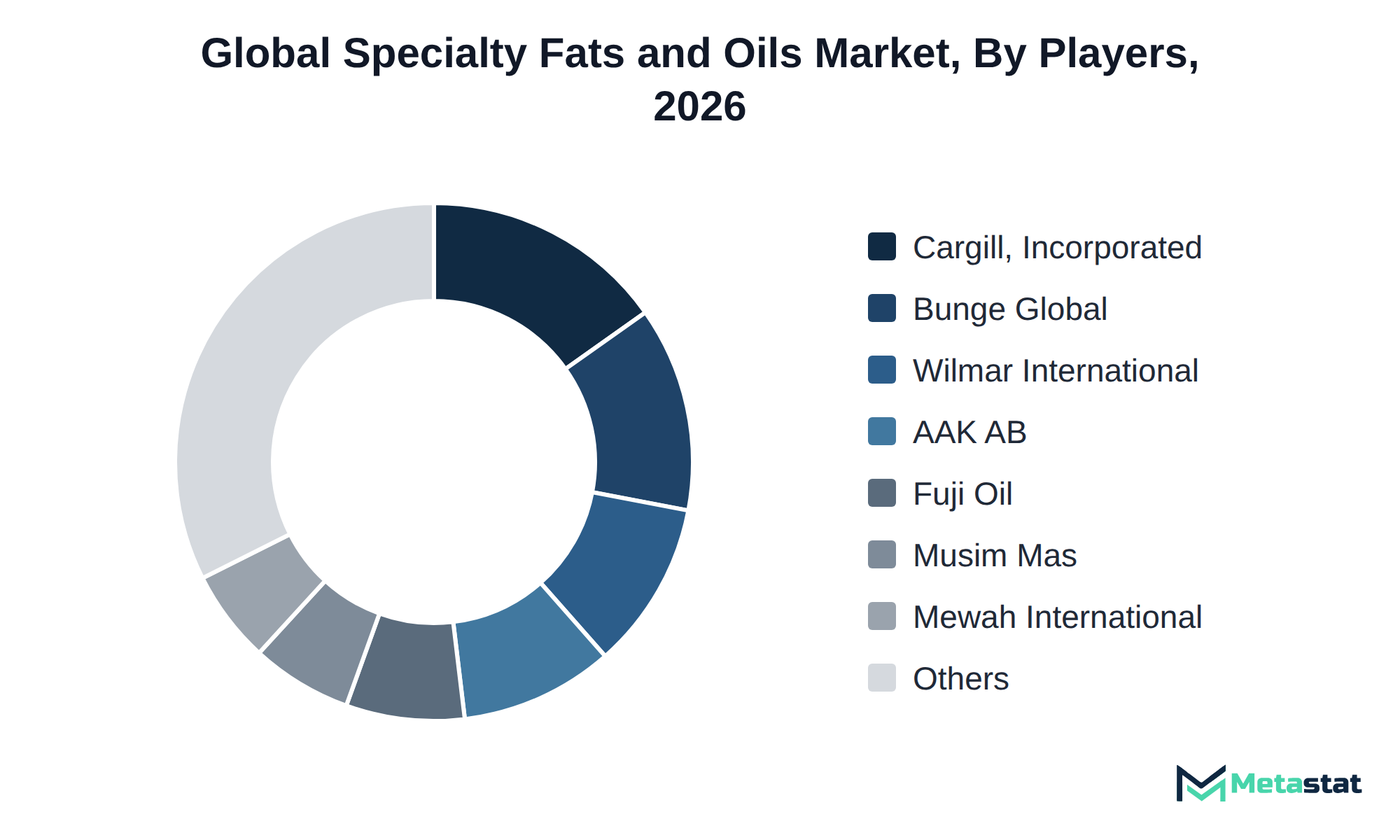
Competition in the Specialty Fats and Oils market divides along several lines, including product type, raw material source, application, and physical form. Buyers select suppliers based on factors including price, certification, customization, and service quality, influencing overall purchasing decisions.
AAK AB emphasizes specialty oils and fats derived from sustainable sources, appealing to environmentally conscious consumers. Cargill, Incorporated focuses on innovation in the production of specialty fats, ensuring they meet diverse customer needs across various applications. Wilmar International Limited offers a broad portfolio of palm and palm kernel-based products, catering to regional and global markets while ensuring competitive pricing.
This growth relies on several key developments within the Specialty Fats and Oils market. First, the increasing demand for specialty oils, particularly in the confectionery and bakery segments, contributes to a projected compound annual growth rate (CAGR) of 6.7% from 2026 to 2033. Second, expanding applications in dairy and dairy alternatives fueled by consumer trends toward healthier options will support broader market growth. The Asia Pacific region, with its 36.5% market share, stands out as a significant driver due to rising purchasing power and changing dietary preferences. Risks exist that could hinder this growth trajectory. Fluctuations in raw material prices, especially for palm and palm kernel oil, represent a considerable risk. These price changes impact operational costs for manufacturers, potentially slowing expansion efforts. Addressing these challenges will be essential for the market to achieve forecasts of USD 32.7 billion by 2033.
By Product Type: Specialty Oils, Specialty Fats
By Raw Material Source: Palm and Palm Kernel, Coconut, Soybean, Rapeseed and Canola, Sunflower, Shea and Other Exotic Tree Seeds, Olive, Others (Corn, Rice Bran, Marine and Microbial Oils)
By Application: Confectionery, Bakery, Dairy and Dairy Alternatives, Snacks and Savoury Prepared Foods, Infant Nutrition and Dietary Supplements, Cosmetics and Personal Care, Pharmaceuticals, Others (Animal Nutrition and Technical Uses)
By Physical Form: Liquid, Semi-Solid, Solid, Powder
The report strategically identifies and profiles the key market players and analyses their core competencies in each sub-segment of the Specialty Fats and Oils market.
Report Attributes | Details |
Study Period | 2021-2033 |
Base Year | 2025 |
Estimated Year | 2026 |
Forecast Period | 2026-2033 |
Historical Period | 2021-2025 |
Growth Rate | CAGR 7.2% from 2026 to 2033 |
Revenue Unit | USD billion |
Segmentation | By Product Type, Raw Material Source, Application, Physical Form, and Region |
By Region | North America (By Product Type, Raw Material Source, Application, Physical Form, and Country)
|
Europe (By Product Type, Raw Material Source, Application, Physical Form, and Country)
| |
Asia Pacific (By Product Type, Raw Material Source, Application, Physical Form, and Country)
| |
South America (By Product Type, Raw Material Source, Application, Physical Form, and Country)
| |
Middle East and Africa (By Product Type, Raw Material Source, Application, Physical Form, and Country)
|
Find answers to common questions about this report
The Specialty Fats and Oils market size was valued at USD 18.7 billion in 2025.
The market is projected to grow at a CAGR of 7.2% during the forecast period from 2026 to 2033.
The North America Specialty Fats and Oils market size is estimated to reach USD 7.7 billion by 2033.
Specialty Oils leads the Specialty Fats and Oils market with a projected value of USD 22.6 billion in 2033, compared to Specialty Fats, which is expected to reach USD 10.2 billion in the same year.
Health-conscious consumers increasingly prioritize nutrition, driving demand for specialty fats and oils that meet dietary preferences. The rising popularity of plant-based diets further supports the adoption of these products in various applications.
Asia Pacific holds the dominant share of the Specialty Fats and Oils market, accounting for 36.5 percent. This figure reflects the region's significant contribution compared to others.
The increasing popularity of plant-based diets and the demand for tailored solutions in food applications favor adoption in the Specialty Fats and Oils market. innovations in sourcing methods, including sustainable practices, enhance the market value proposition by addressing consumer concerns regarding sustainability.
The Specialty Fats and Oils market is estimated to reach a valuation of USD 32.7 billion by 2033.
Key players operating in the Specialty Fats and Oils market include AAK AB, Bunge Global SA, Cargill, Incorporated, Wilmar International Limited, Fuji Oil Co., Ltd., and Archer-Daniels-Midland Company.
The specialty fats segment is projected to reach USD 10.2 billion by 2033, reflecting a compound annual growth rate of 8.3 percent. This growth is driven by rising demand for tailored solutions in food applications.
The analysts below cover Food and Beverages research at Metastat Insights.
LEAD ANALYST
Utkarsh Khirodkar is a Lead Market Research Analyst at MetaStat Insight, specializing in market intelligence, technology sector assessments, and competitive strategy.

LEAD PRINCIPAL ANALYST, PHARMA AND HEALTHCARE
Food and Beverages · Healthcare · Healthcare IT · Medical Devices
Ajay Devgire is the Lead Healthcare Analyst at MetaStat Insight, leading strategic research and market intelligence initiatives across the global healthcare domain.

SENIOR RESEARCH ANALYST
Biotechnology · Food and Beverages · Medical Devices · Packaging
Snehal Pasalkar is a Research Analyst at MetaStat Insight, operating at the intersection of life sciences research, competitive strategy, and market intelligence.
Analyzing the transition from natural gas to green hydrogen in iron ore reduction requires realistic infrastructure timelines. Meta stat insight supplied a detailed regional assessment of DRI plant conversion costs and scrap metal availability in North America and Western Europe. Their report carefully examined pellet quality specs and electrical grid access constraints without making oversimplified market assumptions. The research material served as a practical reference during internal technology roadmap discussions.
Integrating zero-trust access controls across legacy electronic health record systems involves complex compliance overhead. Team produced an analysis that clearly separated identity governance and administration tools from privileged access management platforms. Their evaluation of HIPAA and GDPR compliance features across cloud native solutions gave our architecture group clear baseline criteria. The custom data request regarding biometric authentication adoption in hospital networks was returned promptly with clear documentation.
Evaluating calorific value requirements and air permit compliance across municipal waste facilities requires localized data. Metastat Insight structured their analysis around operational throughput capacity and feedstock composition variations in Latin America and Eastern Europe. Their competitive mapping of sorting equipment vendors helped clarify technology differences between optical separators and heavy media systems. The study provided an objective baseline during our capital expenditure reviews.
Explore related market intelligence reports worth reading alongside this one.