
LEAD ANALYST
Utkarsh Khirodkar is a Lead Market Research Analyst at MetaStat Insight, specializing in market intelligence, technology sector assessments, and competitive strategy.

Global Supply Side Platform (SSP) Market Size, Share, By Deployment Type (Cloud-Based SSP and On-Premise SSP), By Ad Format (Display Advertising, Video Advertising, Mobile Advertising and Programmatic Advertising), By Organization Size (Small and Medium-Sized Businesses (SMBs) and Large Enterprises), By End-Users (Retail & E-commerce, Media & Entertainment, Education, Travel & Tourism and Others (BFSI, Healthcare, IT & Telecom, Automotive, Real Estate)), Industry Analysis, Growth, Trends, and Forecast, 2026-2033
Report ID
MSI-5607
Published
October, 2026
Pages
278 Pages
Format
Historical
Base year
Forecast
Forecast period
Report Details
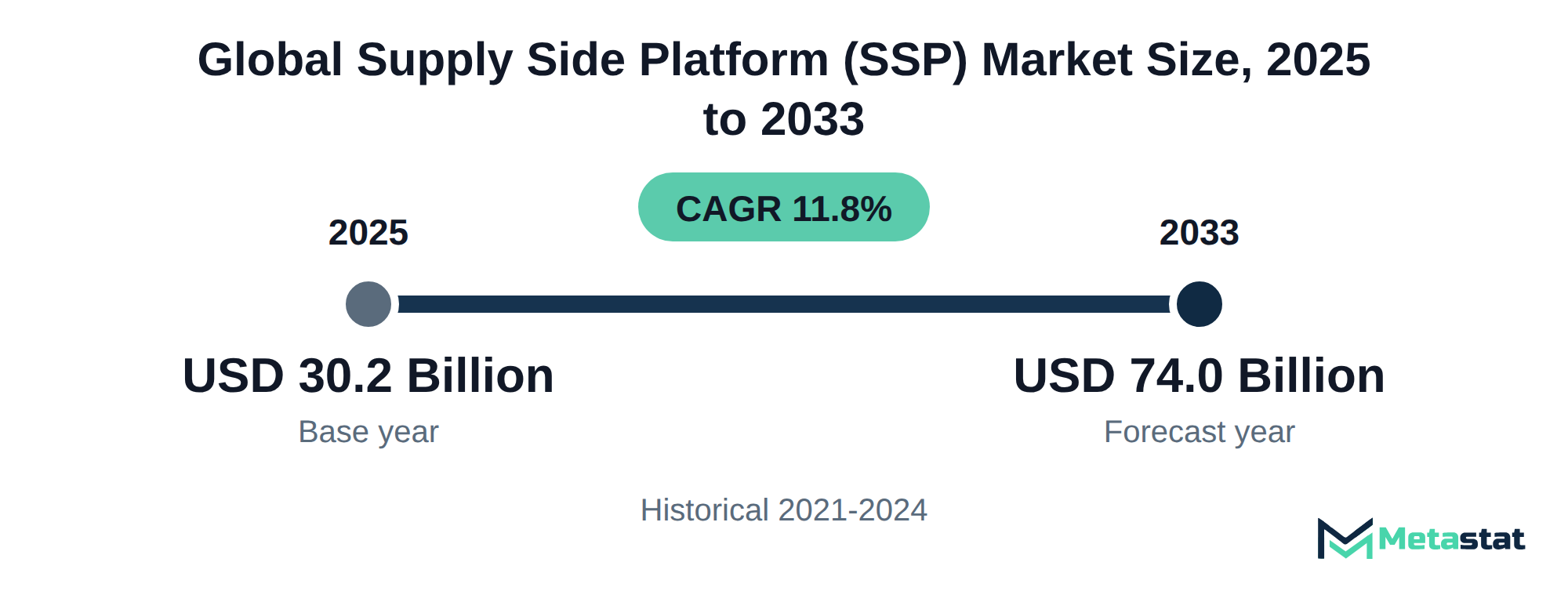
Market Valuation: Valued at $30.2 Billion in 2025, projected to reach $74 Billion by 2033 at a 11.8% CAGR.
Dominant Segment: The Cloud-Based SSP segment leads the market, driven by its scalability and advanced features that appeal to advertisers seeking efficient solutions.
Geographic Lead: Asia Pacific holds the largest market share at 44.8% in 2025, fueled by increasing digital advertising investments and technological advancements in the region.
What's Inside: The report includes a detailed analysis of market dynamics, competitive landscape, and forecasts from 2026 to 2033, covering various segments and deployment types.
Emerging Trends: The rise of programmatic advertising and the adoption of first-party data are reshaping strategies, enhancing targeting capabilities and overall market growth.
Investment Opportunities: Retail and e-commerce are projected to drive significant spending in SSP solutions, with curated deals enhancing ad placement effectiveness.
Choose Your License
Global Supply Side Platform (SSP) Market
The global Supply Side Platform (SSP) market was valued at USD 30.2 billion in 2025 and is projected to reach USD 74 billion by 2033, growing at a CAGR of 11.8% over the forecast period.
The Supply Side Platform (SSP) market encompasses platforms that facilitate the selling of advertising space programmatically. Buyers invest in these platforms to enhance the efficiency of their advertising inventory, enabling better monetization strategies and improved targeting capabilities. The increasing reliance on digital marketing and programmatic advertising techniques significantly drives spending in this sector, reflecting the broader shift towards data-driven advertising solutions.
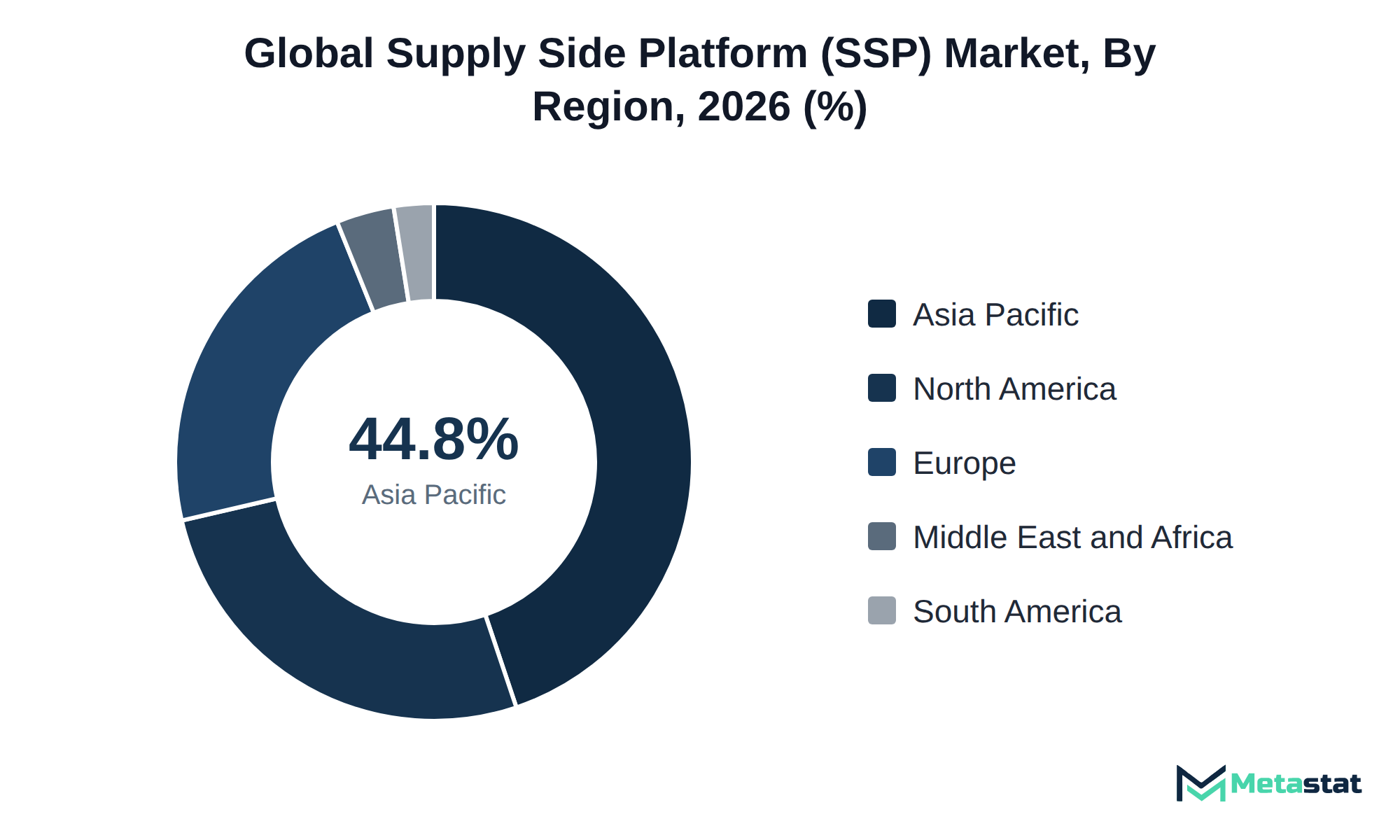
Growth in the market is propelled by the rising demand for programmatic advertising, which streamlines the ad buying process for advertisers and publishers. The Cloud-Based SSP segment is projected to capture the highest market value, driven by its scalability and advanced features. In terms of regional shares, Asia Pacific holds the largest portion, accounting for 44.8% of the market in 2025. North America holds 26.5% of the market in 2025, with the US leading in 2026.
Investments in innovative advertising technologies and the increasing adoption of mobile advertising further support growth. The need for enhanced targeting and analytics capabilities fuels demand for SSP solutions across various industries, including retail and e-commerce, media and entertainment, and education. Organizations seek to optimize their advertising strategies, positioning the market for substantial expansion.
The Supply Side Platform (SSP) market represents critical infrastructure for advertisers and publishers, facilitating the automated sale and purchasing of ad inventory through programmatic channels. Buyers invest in this market to optimize their advertising strategies, enhance reach, and improve operational efficiency. The increasing shift toward digital advertising and the growing reliance on data-driven decision-making drive spending in this sector.
Rising demand for programmatic advertising fuels growth in the SSP market, with cloud-based SSPs representing the highest-value segment. Meanwhile, the Asia Pacific region captures the largest share, accounting for 44.8% of the market. This geographical distribution reflects varying levels of digital advertising maturity and infrastructure across regions.
Investments in technology and innovation significantly influence market expansion, driven by organizations seeking to utilize advanced analytics and machine learning to enhance targeting capabilities. The increasing adoption of mobile and video advertising formats further supports growth, enabling advertisers to engage consumers more effectively across diverse platforms. While the digital landscape evolves, the demand for sophisticated SSP solutions will likely continue to rise.
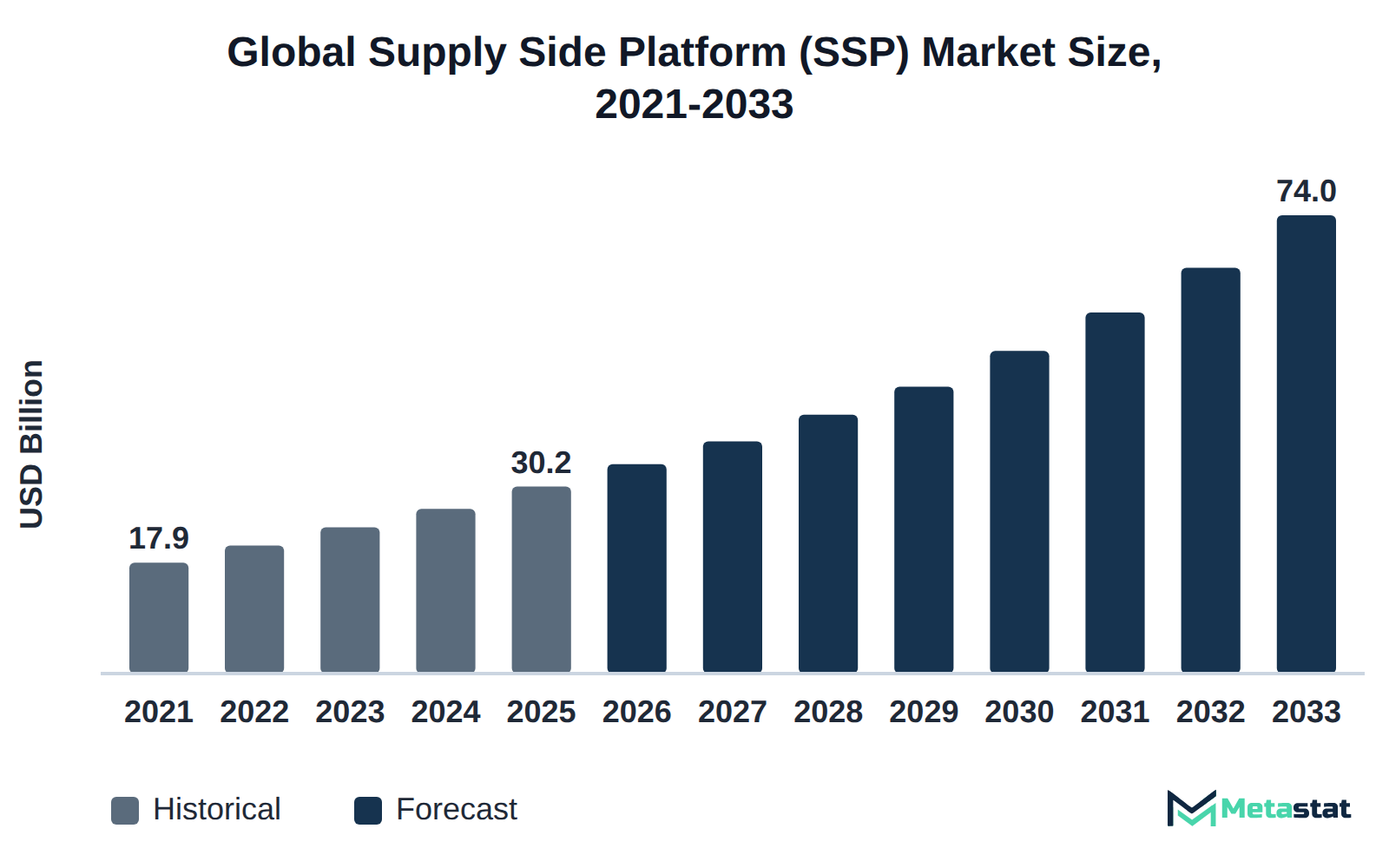
The rise of connected TV (CTV) ad pods and live streaming transforms monetization strategies within the Supply Side Platform (SSP) market. CTV ad pods enable advertisers to deliver targeted ads during streaming content, creating an efficient model for engaging audiences. In 2025, the SSP market value reached USD 30.2 billion, reflecting a growing interest among advertisers in adopting these technologies to reach viewers in an increasingly fragmented media landscape. Audience measurement systems help advertisers assess reach across these fragmented viewing environments.
Live streaming, characterized by real-time content delivery, enhances viewer engagement and opens new revenue streams for content providers. Advertisers benefit from increased viewer retention during live events, leading to higher ad completion rates. The SSP market anticipates significant growth in CTV advertising revenues, driven by the adoption of programmatic advertising strategies. Over the forecast period, the CTV segment is projected to expand, contributing to the overall increase in the market's value.
This technological shift in the SSP market changes how advertisers connect with consumers and also influences content creators and media companies. By integrating CTV ad pods and live streaming into their strategies, stakeholders maximize ad revenue and enhance viewer experiences, strengthening their competitive positioning in the evolving digital advertising ecosystem.
The increasing importance of first-party data and contextual signals significantly enhances publisher addressability in the Supply Side Platform (SSP) market. Publishers use these data types to optimize ad placements, which improves targeting and raises engagement rates. The market was valued at USD 30.2 billion in 2025, reflecting the growing reliance on data-driven strategies for ad effectiveness.
Contract models in this sector often adopt a performance-based pricing structure, where charges align with measurable outcomes including clicks or conversions. This model incentivizes advertisers to invest more substantially in campaigns, knowing that payment correlates directly with results. Cloud-based SSP solutions continue to gain ground, with growth anticipated from USD 23.6 billion in 2026 to USD 53.2 billion by 2033. This trend shows a shifting preference toward scalable, data-rich environments that enhance addressability.
Effective utilization of first-party data strengthens relationships between publishers and advertisers, ultimately generating higher revenue streams. Competition intensifies within the market, and the ability to analyze and apply contextual signals becomes a crucial differentiator for businesses seeking to optimize their advertising efforts.
Retail and e-commerce businesses increasingly seek curated deals within the Supply Side Platform (SSP) market, allowing them to secure premium ad placements and better inventory management. This trend aligns with the anticipated growth of retail and e-commerce spending on SSPs, projected to reach USD 25.2 billion by 2033, reflecting a compound annual growth rate (CAGR) of 12.0% from 2026.
Investments in curated deals enhance advertisers' ability to connect with targeted audiences, improving overall campaign effectiveness. Enhanced transparency and improved supply-path optimization techniques significantly lower costs associated with ad buying, making it more attractive for retailers to invest in SSP solutions. These curated deals create relationships between buyers and publishers, enabling retailers to access unique inventory while ensuring more efficient ad spend.
This focus on curated deals ultimately drives competitive differentiation in the retail and e-commerce sectors. Firms using these curated deal opportunities in the SSP market are expected to improve growth, capitalizing on higher engagement rates and improved return on investment (ROI) in advertising efforts.
Publishers increasingly prioritize transparency in fees and higher yield when selecting a Supply Side Platform (SSP). Deployment type is a significant factor in this decision. Cloud-based SSPs, for instance, are projected to grow from USD 23.6 billion in 2026 to USD 53.2 billion by 2033, reflecting a compound annual growth rate (CAGR) of 12.3%. This trend demonstrates a clear shift toward cloud solutions, driven by their ability to offer scalability and flexibility, crucial for managing diverse advertising formats and maximizing revenue.
When evaluating SSPs, publishers often consider the ad formats supported by the platform. Display advertising, for example, is anticipated to expand significantly, increasing from USD 13 billion in 2026 to USD 27.3 billion in 2033, at a CAGR of 11.2%. Such growth indicates that platforms using effective display advertising strategies give publishers greater value. The ability to optimize yield through advanced analytics and targeting functionalities reinforces the preference for specific SSPs among publishers seeking to improve profitability.
The selection of an SSP is influenced by organizational size as well. Small and medium-sized businesses (SMBs) are expected to experience a considerable increase in their adoption of SSPs, rising from USD 18.8 billion in 2026 to USD 42.3 billion by 2033, reflecting a CAGR of 12.3%. These businesses typically require cost-effective solutions that enable them to compete with larger enterprises in the digital advertising space. A transparent fee structure, combined with the right features, positions certain SSPs as more attractive options for SMBs aiming to maximize advertising yield.
Retail and e-commerce businesses increasingly adopt programmatic advertising strategies, driven by the need for more efficient ad spending and enhanced targeting capabilities. The shift toward automated ad buying allows these sectors to optimize their marketing budgets, achieving higher return on investment. With digital ad spending projected to rise significantly, businesses see a clear incentive to invest in platforms that facilitate such transactions. In the Supply Side Platform (SSP) market, this transition is evident, resulting in a surge in demand for programmatic solutions. By 2033, the value of programmatic advertising is expected to exceed USD 19.3 billion, highlighting its importance in the digital advertising ecosystem. This growing adoption directly affects overall market growth as businesses use technology to improve advertising outcomes.
Technological advancements in video advertising drive growth in the Supply Side Platform (SSP) market. Publishers use high-quality video content to attract more viewers, which increases engagement and potential ad revenue. Enhanced viewing experiences, including interactive ads and high-definition formats, contribute to better viewer retention, prompting advertisers to invest more in video ad formats. Creative management platforms help advertisers adapt interactive and high-definition creatives across these formats. Brands prioritize video due to its effectiveness in storytelling and audience engagement, leading to a shift in advertising budgets toward video channels.
North America and Asia Pacific exhibit substantial growth in video advertising spend, reflecting strong demand from advertisers seeking broader reach and impact. The ability to deliver targeted video ads in real-time enhances campaign effectiveness, further encouraging adoption among advertisers. Consequently, the SSP market experiences increased competition, as platforms strive to offer superior video solutions and cater to evolving consumer preferences. The rising popularity of video advertising also drives significant revenue growth.
Price sensitivity poses a significant barrier to adoption among small and medium-sized businesses (SMBs) in the Supply Side Platform (SSP) market. Many SMBs operate on tighter budgets, making them cautious about investing in new technologies that involve ongoing costs. This affects their purchasing decisions, leading to slower uptake of SSP solutions compared to larger enterprises that possess more financial flexibility. Higher costs associated with advanced features and functionalities further exacerbate this restraint, resulting in smaller order sizes from these buyers.
The preference for cost-effective solutions influences how SMBs approach the market, often causing delays in replacing outdated systems. This hesitation impacts the overall growth trajectory of the market, with a lack of rapid adoption among SMBs stifling innovation and competitive dynamics within the industry. Addressing these cost concerns is essential for improving market penetration and promoting a more diverse user base, ultimately enhancing competition and innovation across various segments.
Rising input costs present a significant challenge for suppliers in the Supply Side Platform (SSP) market, impacting profitability and operational sustainability. Fluctuations in talent and technology expenses contribute to pressure on margins, compelling suppliers to reassess cost structures. Strategic adjustments include investing in automation and optimizing operational efficiencies to offset rising expenses. Several suppliers diversify service offerings to capture new revenue streams, enhancing overall value propositions. Maintaining competitive pricing without sacrificing service quality remains critical in this evolving environment. This approach safeguards current client relationships and attracts new business, supporting growth in a challenging market.
Suppliers implementing these strategies experience shifts in operational models, emphasizing scalability and adaptability. Sustaining profitability amid increasing costs shapes competitive dynamics, where innovation and value delivery play crucial roles in attracting clients. As supply chain economics and client demands shift, strategic agility remains important for suppliers.
The cloud-based SSP segment shows significant growth potential in the Supply Side Platform (SSP) market, with a projected compound annual growth rate (CAGR) of 12.3%. This growth reflects a shift toward more scalable and flexible advertising solutions, appealing especially to small and medium-sized businesses (SMBs) seeking to optimize their advertising efforts without substantial upfront costs. Increased accessibility to cloud services has facilitated wider adoption among organizations focusing on efficiency and scalability in their operations.
Investment in cloud-based systems offers operational advantages, including reduced infrastructure costs and improved data integration capabilities. Real-time analytics support better decision-making for advertisers and improve campaign performance.
Growing preference for cloud-based solutions gives SSP providers an opportunity to serve a broad client base and apply technological advances that streamline ad management.
The Global Supply Side Platform (SSP) market is segmented based on Deployment Type, Ad Format, Organization Size, and End-Users.
The Cloud-Based SSP segment provides a scalable solution for publishers and advertisers looking to optimize their digital ad inventory efficiently. Retail and e-commerce businesses heavily rely on Cloud-Based SSPs to enhance their programmatic advertising efforts, driven by increasing demand for real-time data analytics and targeted advertising strategies. The growth of this segment differentiates it from On-Premise SSPs, which exhibit a slower CAGR of 10.7%. The cloud-based approach offers lower operational costs and improved flexibility, making it an attractive option for small and medium-sized businesses (SMBs) striving for competitive advantage in the evolving market. Adoption of cloud technologies further supports this segment, facilitating smoother integration of advanced advertising technologies.
The On-Premise SSP segment is estimated to reach USD 20.9 billion by 2033, at a CAGR of 10.7% during the forecast period. This segment caters to large enterprises seeking to maintain control over their advertising operations and data management. The demand for On-Premise SSP solutions arises from the desire for enhanced security and customization, particularly in industries with stringent data protection standards. Unlike cloud-based solutions, which grow at a faster CAGR of 12.3%, the On-Premise SSP segment shows a more measured growth trajectory. Clients in this segment prioritize robust security and compliance features over scalability, influencing their choice of platform. This differentiation positions On-Premise SSP to serve specific market needs effectively, supporting growth among businesses focused on protecting sensitive data and optimizing ad operations.
Primarily used by retailers and e-commerce businesses, this segment enhances visibility and engagement through targeted ad placements. Increasing digital content consumption fuels demand for display advertising, driving businesses to invest in programmatic solutions. This segment experiences higher growth compared to others within the Ad Format category, attributed to its expansive reach and effectiveness in capturing consumer attention. While mobile and video advertising show promise, display advertising distinguishes itself through its established user base and lower entry barriers for advertisers, making it an attractive option for several organization sizes. The ongoing transition towards automated ad buying continues to influence the dynamics of this segment, ensuring robust participation from diverse industry players.
Video Advertising segment is estimated to reach USD 19.3 billion by 2033, at a CAGR of 12.5% during the forecast period. This segment focuses on delivering advertisements through video content across various platforms, attracting advertisers aiming to engage audiences with rich media. Companies in the media and entertainment sectors heavily employ video advertising to enhance brand visibility and drive engagement. Growth in this segment is propelled by increasing consumer preference for video content, particularly on mobile devices and social media. Unlike other ad formats, including Display Advertising, which has a CAGR of 11.2%, video advertising's higher growth rate reflects its effectiveness in capturing consumer attention and encouraging interaction. The market for video advertising is characterized by advancements in technology that optimize ad delivery and enhance viewer experience, reinforcing its position as a preferred choice among advertisers.
The Mobile Advertising segment is expected to reach USD 15.9 billion by 2033. This segment finds widespread use among publishers and advertisers aiming to target consumers on mobile devices, leveraging mobile traffic for better engagement. Key drivers include increasing consumption of mobile content and growing emphasis on personalized advertising strategies. Compared to other sub-segments, including Display Advertising, this segment exhibits a distinct growth trajectory, driven by higher user interaction rates and mobile adoption. The compound annual growth rate (CAGR) for Mobile Advertising aligns with broader trends in digital advertising, reflecting a competitive environment where advertisers seek innovative mobile strategies to enhance reach. Such dynamics underline the segment's importance within the Supply Side Platform (SSP) market, demonstrating how mobile-first strategies reshape advertising practices and spending patterns across various industries.
Programmatic Advertising segment is projected to grow at a CAGR of 12.1% during the forecast period. This segment focuses on the automated buying and selling of digital ad inventory, enhancing efficiency and targeting precision for advertisers. Businesses in retail and e-commerce leverage programmatic advertising to optimize ad spending and improve reach. Increased demand for data-driven advertising fuels growth in this segment, driven by the necessity for higher return on investment in marketing campaigns. In comparison to other advertising formats, programmatic advertising experiences faster growth, supported by technological advancements and a shift toward data-centric strategies. The anticipated value of this segment reflects its significance to the market, positioning it as a key player in the overall dynamics of the advertising ecosystem.
These businesses employ supply side platforms primarily to optimize their advertising strategies and improve targeting capabilities. The rising adoption of programmatic advertising drives growth in this segment, driven by increasing demand for cost-effective advertising solutions tailored to specific audiences. This segment exhibits a faster growth rate compared to larger enterprises, which do not experience the same rapid adoption due to existing infrastructure and established processes. SMBs often seek affordable and flexible SSP solutions to enhance their market presence while minimizing operational costs. This distinct positioning within the market highlights the unique requirements and opportunities available for small and medium-sized businesses in leveraging supply side platforms.
The Large Enterprises segment is estimated to reach USD 31.7 billion by 2033, at a CAGR of 11.2% during the forecast period. This segment primarily serves large corporations seeking advanced supply side platform solutions to optimize their advertising strategies. Larger firms use these platforms to enhance their visibility and maximize revenue through enhanced targeting and data management capabilities. Demand for sophisticated analytics and improved ad performance drives growth in this segment. Growth remains strong, reflecting an increasing focus on data-driven advertising strategies that differentiate it from the Small and Medium-Sized Businesses (SMBs) segment, which exhibits a CAGR of 12.3%. Large enterprises prioritize complex solutions that adapt to their scale, while SMBs face different operational challenges that affect their adoption timelines. Consequently, the growth trajectory of the Large Enterprises segment aligns with ongoing digital transformation efforts in the market.
The Retail & E-commerce segment is valued at USD 11.4 billion in 2026 and is projected to reach USD 25.2 billion by 2033, at a CAGR of 12% during the forecast period. This segment serves retail and e-commerce businesses looking to enhance their advertising effectiveness through programmatic strategies. Growing demand for targeted advertising and improved return on investment drives this segment, particularly as companies seek to leverage data analytics for consumer insights. In contrast to other segments, including Media & Entertainment, which has a projected CAGR of 12.6%, the Retail & E-commerce segment experiences a slightly lower growth rate. This difference highlights the unique dynamics influencing each sector, where retail focuses on immediate sales and customer engagement, resulting in distinct advertising strategies tailored to operational needs. The Supply Side Platform (SSP) market benefits from this trend, with evolving technologies enabling more streamlined advertising processes.
Media & Entertainment segment is estimated to reach USD 20.8 billion by 2033, at a CAGR of 12.6% during the forecast period. This segment supports content producers and distributors in maximizing advertising revenue through programmatic strategies. Increased consumption of digital media fuels demand for advanced advertising solutions. Growing user engagement with streaming platforms and multimedia content creates opportunities for SSPs tailored to this sector. Compared to other segments, this one exhibits faster growth, driven by the need for targeted advertising and real-time analytics. The media landscape's evolution requires advertisers to adapt swiftly, enhancing the attractiveness of solutions within the Supply Side Platform (SSP) market. Enhanced targeting capabilities and data-driven insights create a competitive edge for businesses operating in the Media & Entertainment sector.
The Education segment is expected to reach USD 6.3 billion by 2033. This segment primarily caters to educational institutions seeking effective platforms for advertising resources and services. Key demand drivers include the increasing shift towards digital learning and the rising adoption of e-learning solutions, influencing educational institutions' advertising strategies. Unlike other segments, the Education segment experiences slower growth, with a compound annual growth rate (CAGR) of 10.6%. This relatively moderate pace contrasts with the faster growth seen in segments like Retail & E-commerce, which benefits from more extensive digital transformation initiatives. Investment in targeted advertising approaches tailored to educational contexts further enhances demand. The market is characterized by unique buyer requirements, including the need for specialized content delivery that connects with students and educators.
The Travel & Tourism segment is projected to grow at a CAGR of 10.6% during the forecast period. This segment engages in advertising strategies targeted at travelers, tourism boards, and hospitality providers, focusing on increased visibility and customer engagement. Demand for personalized travel experiences drives growth, pushing businesses to adopt advanced SSP solutions for effective customer targeting. Unlike the Retail & E-commerce segment, which experiences a higher projected growth rate of 12% CAGR, the Travel & Tourism segment exhibits significant potential due to evolving consumer preferences and increased competition among service providers. The ability to utilize data for improved marketing strategies encourages adoption across various players in the tourism ecosystem, impacting overall market dynamics. This sub-segment emphasizes the importance of tailored advertising and effective resource allocation to enhance return on investment and drive conversions.
The Others segment includes sectors including BFSI, Healthcare, IT & Telecom, Automotive, and Real Estate, which employ Supply Side Platforms (SSP) for streamlining advertising and enhancing revenue. These industries leverage SSPs to optimize inventory management and improve the targeting of advertisements to specific audiences. A key driver for this segment is the increasing demand for digital marketing technology solutions driven by businesses transitioning towards more data-driven strategies. This shift is evident in the growing emphasis on personalized advertising across various sectors, which necessitates advanced platforms capable of handling complex data analytics. Compared to other sub-segments, this category experiences slower growth due to the traditional nature of several sectors like BFSI and Healthcare, where adoption rates for new technologies typically lag. However, digital transformation continues to permeate these industries, creating significant opportunities for integration and innovation, which supports the overall expansion of the market.
Based on geography, the Global Supply Side Platform (SSP) market is divided into North America, Europe, Asia-Pacific, South America, Middle East, and Africa.
Demand for Supply Side Platforms (SSP) in North America is influenced by the increasing number of digital advertising campaigns across various sectors. The growth of the retail and e-commerce industries drives significant investment in advertising technology, enhancing the efficiency of ad placements. By 2033, North America is projected to reach USD 18.7 billion in market value. This region accounts for 26.5% of the global market share in 2025, highlighting its importance in the SSP ecosystem. The United States, Canada, and Mexico represent key markets, with the United States being a major contributor to overall growth. Enhanced infrastructure and the adoption of advanced technologies further support market expansion, ensuring a competitive environment for advertisers and publishers.
The European demand for the Supply Side Platform (SSP) market reflects strong engagement from key industries, including media and retail. Digital advertising initiatives gain traction due to the increasing focus on data-driven marketing strategies, prompting businesses to enhance their digital presence. Countries including Germany and the UK stand out with substantial advertising budgets, driving growth in the sector. Regulatory frameworks supporting digital advertising and privacy, particularly in the EU, impact operational strategies for companies. The market share of Europe is projected at 22.5% in 2025, indicating robust participation in the global landscape. Investment in programmatic advertising technology further boosts efficiency and revenue potential for enterprises within the region. Various businesses leverage SSP to optimize ad placements and maximize revenue streams, ensuring competitiveness in a rapidly changing digital economy.
The Asia-Pacific region holds a prominent position in the Supply Side Platform (SSP) market, accounting for 44.8% of the global market share in 2025. Rapid digitalization and increasing internet penetration drive demand for advertising technologies among various industries including retail and e-commerce, media and entertainment, and education. Countries like China and India demonstrate significant growth in online advertising expenditures, reflecting a shift toward programmatic and digital advertising formats. The presence of numerous tech-savvy consumers in South Korea and Japan further fuels this demand, with businesses seeking innovative solutions to enhance their advertising strategies. Infrastructure improvements, particularly in mobile connectivity, create conducive conditions for SSP adoption, enabling businesses to leverage real-time data and optimize ad placements efficiently. This dynamic environment positions the Asia-Pacific region for substantial growth in the coming years.
In South America, the Supply Side Platform (SSP) market experiences unique demand drivers, with retail and e-commerce serving as significant contributors. Brazil and Argentina represent the primary markets, influenced by a growing digital advertising landscape and increasing internet penetration. The market faces challenges including limited infrastructure development, which hinders expansion efforts in the region. Investment in technology and digital platforms remains essential for companies seeking to leverage SSP capabilities effectively. The region's share of the global market is projected to be 2.5% in 2025, reflecting its potential for growth and engagement within the broader context. Enhanced competition among local players alongside global firms further stimulates market evolution.
The market in the Middle East and Africa experiences unique dynamics due to varying digital advertising adoption rates across countries including Saudi Arabia, UAE, and South Africa. Companies increasingly focus on enhancing their online presence, prompting demand for efficient advertising solutions. High mobile penetration rates in the region drive the need for innovative digital marketing tactics. Evolving regulatory frameworks support advancements in technology and data privacy, impacting how businesses engage with advertising platforms. By 2025, the region is expected to account for 3.6% of the global market share. The Supply Side Platform (SSP) market operates in a landscape shaped by regional growth opportunities and rising competition.
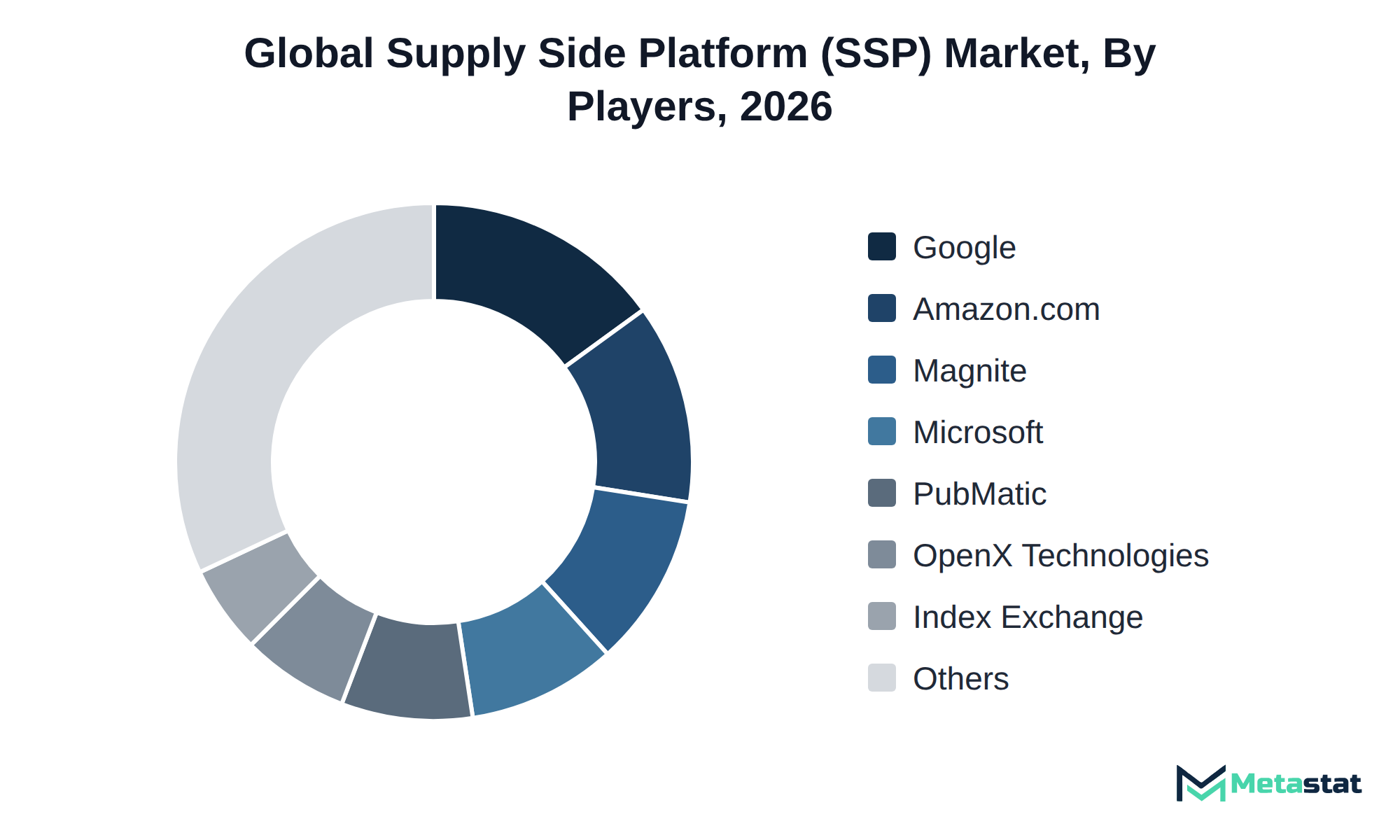
Competition within the Supply Side Platform (SSP) market primarily revolves around the deployment type, ad format, and organization size. Companies differentiate themselves by offering tailored solutions that meet the specific needs of diverse buyer groups, including Small and Medium-Sized Businesses (SMBs) and large enterprises. Factors influencing buyer choices include pricing strategies, service quality, and the breadth of integrated ecosystem capabilities.
Cloud-based SSPs, exemplified by companies like Google LLC and Amazon.com, Inc., focus on scalability and accessibility, appealing to organizations seeking flexible deployment options. In contrast, on-premise SSPs often cater to enterprises prioritizing data control and customization, with firms like Magnite, Inc. and Microsoft Corporation offering robust solutions in this segment.
Companies including PubMatic, Inc. and OpenX Technologies Inc. emphasize specific ad formats, including display and video advertising, to attract advertisers targeting distinct audience segments. Programmatic advertising continues to rise in popularity, and firms like Index Exchange Inc. and Criteo S.A. adapt their offerings to enhance automation and efficiency in ad transactions.
This growth hinges on several key developments within the Supply Side Platform (SSP) market. First, an increase in demand for cloud-based solutions, projected to expand from USD 23.6 billion in 2026 to USD 53.2 billion by 2033, will drive overall market growth. Second, the rise in programmatic advertising, anticipated to enhance adoption across various sectors, will further contribute to revenue increases. Conversely, a primary risk affecting this forecast is potential regulatory changes in key regions, particularly North America and Europe, which could restrict advertising practices. Such regulations impact the growth trajectory of the market, hindering the progress necessary to reach the projected USD 74 billion. Maintaining a favorable regulatory environment will be crucial for ensuring sustained expansion of the market.
By Deployment Type: Cloud-Based SSP, On-Premise SSP
By Ad Format: Display Advertising, Video Advertising, Mobile Advertising, Programmatic Advertising
By Organization Size: Small and Medium-Sized Businesses (SMBs), Large Enterprises
By End-Users: Retail & E-commerce, Media & Entertainment, Education, Travel & Tourism, Others (BFSI, Healthcare, IT & Telecom, Automotive, Real Estate)
The report strategically identifies and profiles the key market players and analyses their core competencies in each sub-segment of the Supply Side Platform (SSP) market.
|
Report Attributes |
Details |
|
Study Period |
2021-2033 |
|
Base Year |
2025 |
|
Estimated Year |
2026 |
|
Forecast Period |
2026-2033 |
|
Historical Period |
2021-2025 |
|
Growth Rate |
CAGR 11.8% from 2026 to 2033 |
|
Revenue Unit |
USD billion |
|
Segmentation |
By Deployment Type, Ad Format, Organization Size, End-Users, and Region |
|
By Region |
North America (By Deployment Type, Ad Format, Organization Size, End-Users, and Country)
|
|
Europe (By Deployment Type, Ad Format, Organization Size, End-Users, and Country)
|
|
|
Asia Pacific (By Deployment Type, Ad Format, Organization Size, End-Users, and Country)
|
|
|
South America (By Deployment Type, Ad Format, Organization Size, End-Users, and Country)
|
|
|
Middle East and Africa (By Deployment Type, Ad Format, Organization Size, End-Users, and Country)
|
Find answers to common questions about this report
The Supply Side Platform (SSP) market size was valued at USD 30.2 billion in 2025.
The market is projected to grow at a CAGR of 11.8% during the forecast period from 2026 to 2033.
The North America Supply Side Platform (SSP) market size is estimated to reach USD 18.7 billion by 2033.
Cloud-Based SSP leads the market with a value of USD 53.2 billion in 2033, surpassing On-Premise SSP.
Key drivers for the Supply Side Platform (SSP) market include the increasing adoption of programmatic advertising strategies by retail and e-commerce businesses, which seek efficient ad spending and enhanced targeting capabilities. The cloud-based segment shows significant growth potential, appealing to small and medium-sized businesses seeking scalable and flexible advertising solutions.
Price sensitivity poses a significant barrier to adoption among small and medium-sized businesses, leading to slower uptake of SSP solutions. Rising input costs challenge suppliers' profitability and operational sustainability, compelling them to reassess cost structures.
Rising demand for programmatic advertising strategies among retail and e-commerce businesses drives adoption, as these sectors seek efficient ad spending and enhanced targeting capabilities. the growing preference for cloud-based solutions offers accessible and scalable options, appealing to small and medium-sized businesses looking to optimize their advertising efforts.
The Supply Side Platform (SSP) market is estimated to reach a valuation of USD 74 billion by 2033.
Key players operating in the Supply Side Platform (SSP) market include Google LLC, Amazon.com, Inc., Magnite, Inc., Microsoft Corporation, OpenX Technologies Inc., PubMatic, Inc., and Index Exchange Inc.
The video advertising segment is projected to reach USD 19.3 billion by 2033, reflecting a compound annual growth rate (CAGR) of 12.5%.
The analysts below cover Information & Technology research at Metastat Insights.
LEAD ANALYST
Utkarsh Khirodkar is a Lead Market Research Analyst at MetaStat Insight, specializing in market intelligence, technology sector assessments, and competitive strategy.

PRINCIPAL CONSULTANT - ENTERPRISE AI & EMERGING TECHNOLOGIES
Banking & Finance · Electronics and Semiconductor · Energy and Power · Healthcare IT · Information & Technology · Professional Services
Vijay Gunti is a Principal Consultant at MetaStat Insight, bringing over two decades of experience across enterprise digital transformation, technology strategy, and intelligent systems.

LEAD CONSULTANT - COMMUNICATION, TELECOM, AND IT
Electronics and Semiconductor · Information & Technology · Machinery & Equipment · Professional Services
Ravindra Sathe Consultants for Communication, Telecom, and IT at MetaStat Insight. He leads the firm's industry research initiatives across telecommunications infrastructure, digital connectivity, enterprise networking, and emerging information technology domains.
Most industry reports on warehouse automation bundle autonomous mobile robots and fixed conveyor installations into the same top-level numbers, which complicates advisory work. This study split the market cleanly by payload tiers, navigation technology, and fleet management software layers. The regional forecast for Western Europe gave our team defensible adoption benchmarks when evaluating capital allocation for logistics clients, saving us days of secondary data scrubbing.
Standard industry briefs frequently blur the operational distinctions between isobaric pressure exchangers and centrifugal turbines. In this study, MetaStat Insight categorized mega-scale desalination tenders across the GCC and Mediterranean basins by membrane replacement frequencies and salinity tolerances. Their primary research helped us evaluate local content requirements in Saudi Arabia and the UAE without relying on marketing literature. We found the segment-level equipment replacement estimates grounded and well-reasoned throughout.
The technical breakdown of ISO 20022 migration readiness across correspondent banking corridors was remarkably thorough. Rather than treating cross-border corporate payments as a single block, the report drew a useful distinction between multilateral netting platforms and domestic instant payment rails across ASEAN economies. MetaStat Insight highlighted regulatory constraints on foreign exchange liquidity management that many publications gloss over. The research material offered practical clarity for our platform development roadmap.
Explore related market intelligence reports worth reading alongside this one.