
LEAD ANALYST
Utkarsh Khirodkar is a Lead Market Research Analyst at MetaStat Insight, specializing in market intelligence, technology sector assessments, and competitive strategy.

Global Traffic Sensor Market Size, Share, By Sensor Type (Inductive Loop Sensors, Piezoelectric Sensors, Radar Sensors, Image and Video Sensors, Magnetic Sensors, Infrared and Thermal Sensors, LiDAR Sensors, Bending Plate Sensors and Others), By Mounting Position (In-Roadway Sensors, Overhead Sensors and Roadside Sensors), By Deployment Type (Permanent Installations and Portable and Temporary Installations), By Application (Traffic Counting, Classification and Flow Monitoring, Traffic Signal Actuation and Adaptive Control, Weigh-in-Motion, Automated Tolling, Incident Detection and Road Safety Monitoring and Speed Measurement and Driver Feedback), Industry Analysis, Growth, Trends, and Forecast, 2026-2033
Report ID
MSI-5582
Published
October, 2026
Pages
284 Pages
Format
Historical
Base year
Forecast
Forecast period
Report Details
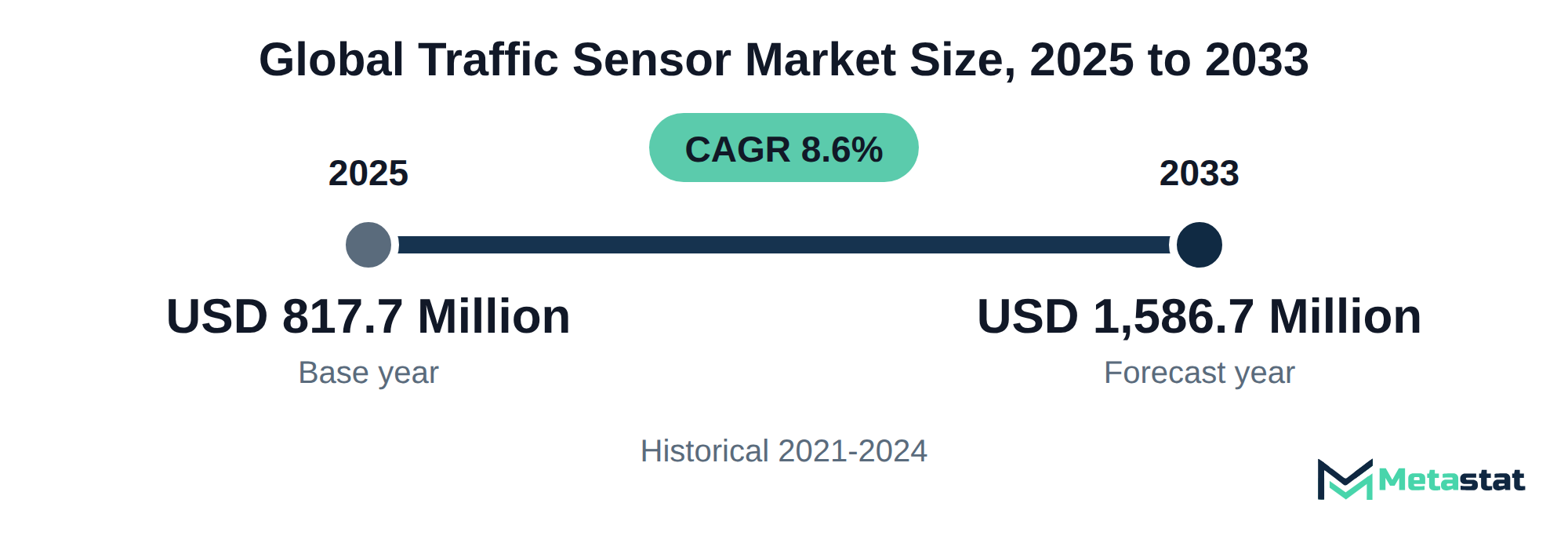
Market Valuation: Valued at $817.7 Million in 2025, projected to reach $1,586.7 Million by 2033 at a 8.6% CAGR.
Dominant Segment: Inductive Loop Sensors lead the market, driven by their reliability in vehicle detection and classification, essential for traffic counting and signal control.
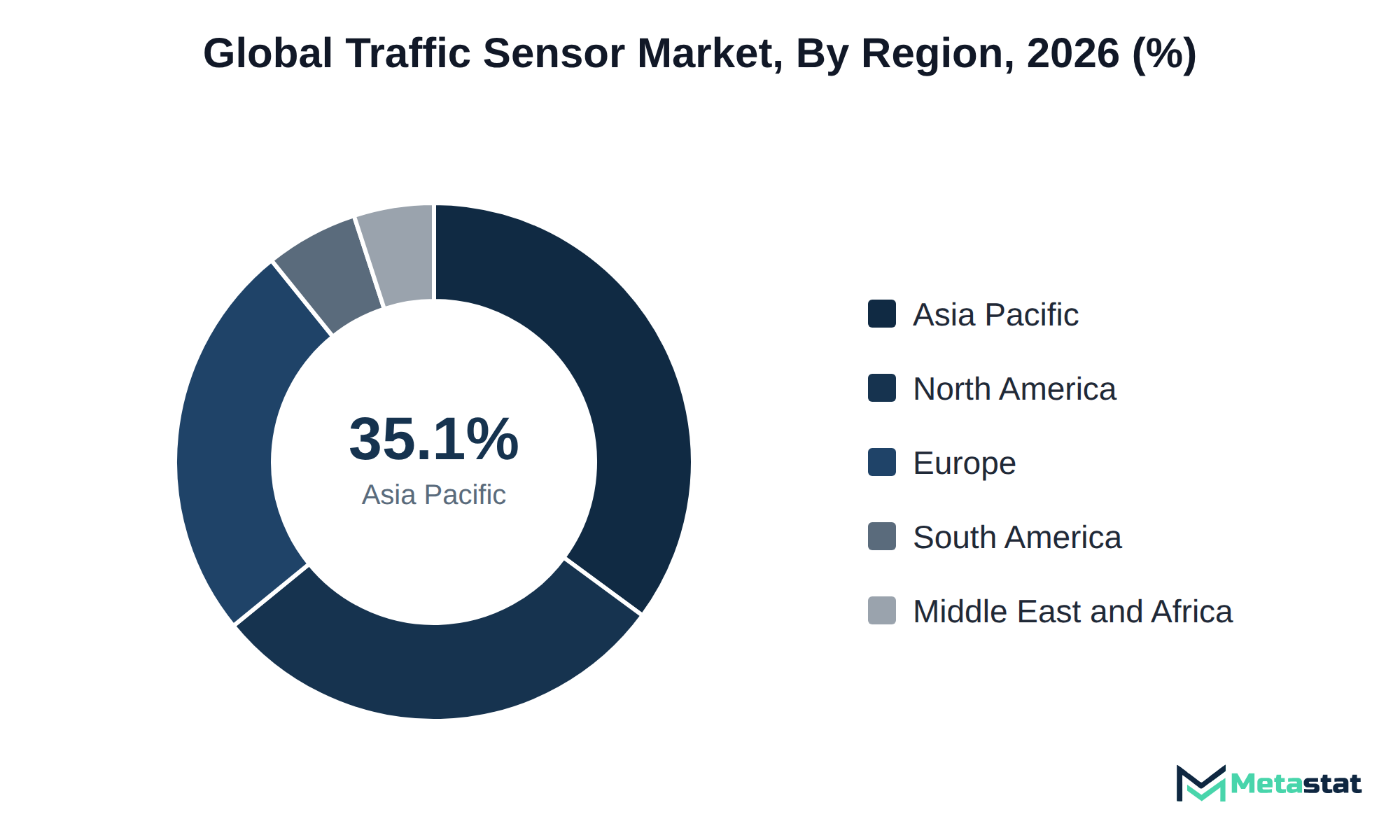
Geographic Lead: North America is the leading region, accounting for 29.0% of the market in 2025, with the US driving growth through smart city initiatives and advanced infrastructure.
What's Inside: The report provides comprehensive coverage of market dynamics, competitive landscape, and detailed forecasts from 2026 to 2033 across various segments and applications.
Technological Advancements: Innovations in sensor technologies, particularly in radar and video systems, enhance detection accuracy and real-time data processing, meeting the demand for smarter traffic management solutions.
Market Dynamics: Increasing urbanization and traffic congestion are key drivers of market growth, pushing municipalities to invest in advanced traffic monitoring systems for improved safety and efficiency.
Choose Your License
Global Traffic Sensor Market
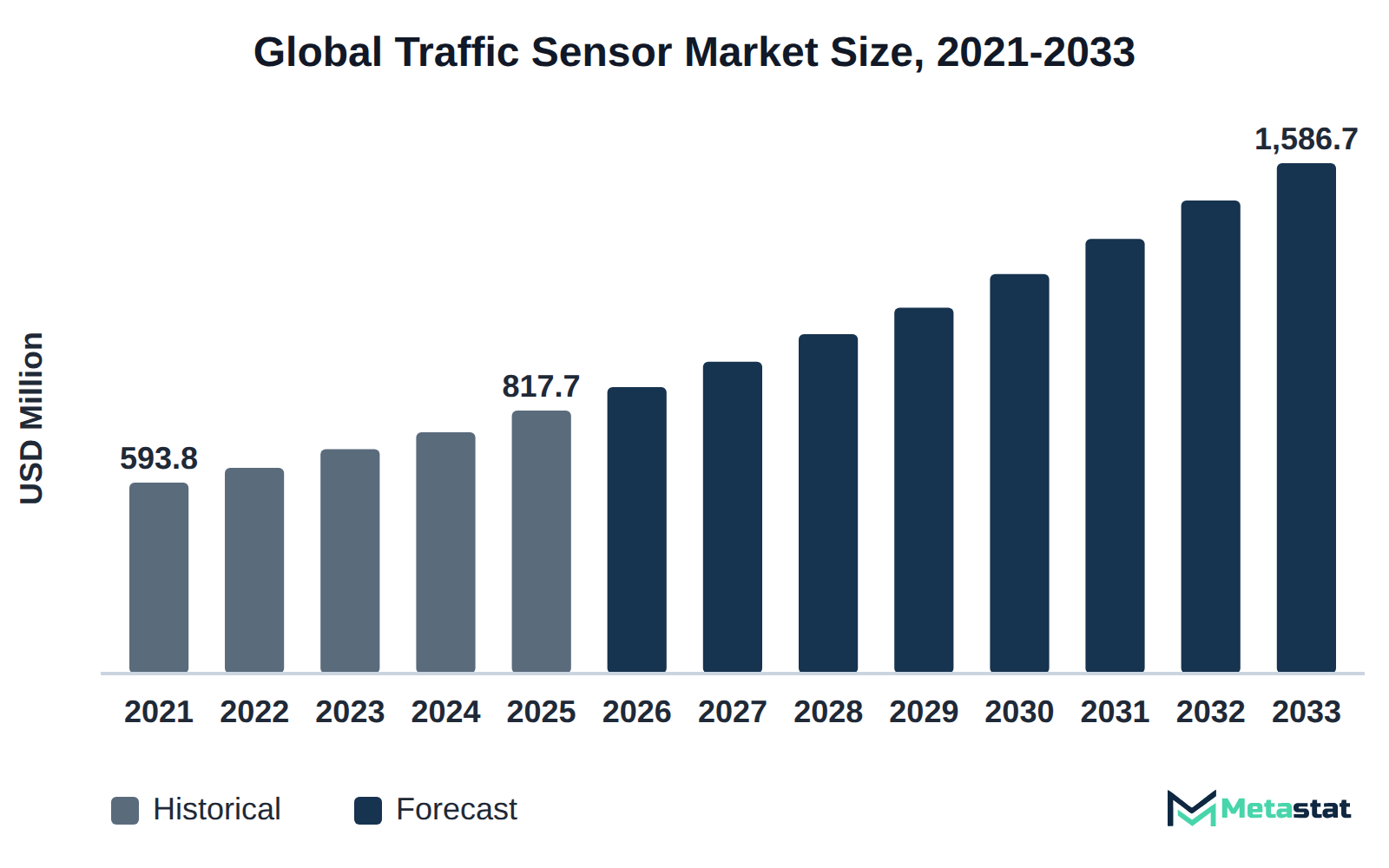
The global Traffic Sensor market was valued at USD 817.7 million in 2025 and is projected to reach USD 1,586.7 million by 2033, growing at a CAGR of 8.6% over the forecast period.
The Traffic Sensor market encompasses various devices and technologies designed to monitor and manage traffic flow, ensuring efficient transportation systems. Buyers invest in these solutions to enhance road safety, optimize traffic management, and improve overall transportation efficiency. Key stakeholders include government agencies, transportation authorities, and private sector organizations that rely on accurate data for decision-making and infrastructure planning.
Growth in the market is driven by increasing urbanization and the necessity for intelligent transportation systems. The most significant segment by value is Inductive Loop Sensors, which provide reliable vehicle detection and classification. North America holds 29.0% of the market in 2025, with the US leading in 2026. This region's advanced infrastructure and investment in smart city initiatives contribute to its dominance.
The demand for advanced traffic management solutions reflects the rising need for real-time data to enhance road safety and reduce congestion. Government initiatives aimed at improving public safety and the increasing adoption of smart transportation technologies further support market expansion. The Traffic Sensor market is projected for substantial growth while stakeholders continue to prioritize efficient traffic management solutions.
The Traffic Sensor market features a diverse range of technologies applied across various sectors, including transportation and urban planning. Buyers invest in these solutions to enhance traffic management, improve safety, and optimize resource allocation. The need for efficient traffic flow and effective monitoring systems has prompted significant expenditure in this domain, particularly from government agencies and private enterprises focused on infrastructure development.
Growth within the market is driven by advancements in sensor technologies and increasing investments in smart city initiatives. The segment of inductive loop sensors represents the highest value, reflecting their widespread adoption for traffic counting and flow monitoring applications. This region’s extensive road networks and focus on modernization further contribute to the overall expansion.
One primary driver supporting market growth is the rising emphasis on adaptive traffic control systems, which enhance congestion management through real-time data analysis. The market seeks innovative solutions that improve traffic signal actuation and responsive infrastructure. Such technologies support efforts to reduce travel times and improve overall road safety, reinforcing the significance of continued investment in traffic monitoring solutions.
The integration of radar and video technologies significantly enhances detection capabilities at adaptive intersections within the Traffic Sensor market. This technological shift supports improved traffic management and safety by providing accurate data regarding vehicle movement and pedestrian activity. Using these systems, cities achieve more efficient traffic signal actuation and adaptive control.
In 2033, the market is projected to reach USD 340 million for traffic signal actuation and adaptive control applications, demonstrating growing demand for technologies that optimize traffic flow. The combination of radar sensors and video analytics allows for real-time data processing, ensuring a rapid response to changing traffic conditions. This integrated approach leads to lower congestion levels and improved safety for all road users, addressing critical challenges faced by urban planners and traffic management agencies.
Such advancements create opportunities for suppliers to offer innovative solutions that meet the evolving needs of smart cities. By investing in radar and video fusion technologies, stakeholders position themselves favorably in a competitive environment, ultimately contributing to long-term growth within the market.
The integration of portable traffic sensors into smart work zones enhances traffic management by providing real-time queue warnings. These sensors detect traffic flow and congestion levels, delivering timely alerts to drivers and helping to prevent accidents in busy areas. Such alerts can be displayed to drivers on smart variable message signs. In 2025, the market for portable and temporary installations of traffic sensors is expected to reach USD 736.5 million, reflecting a growing emphasis on adaptable solutions in urban infrastructure. This segment is projected to experience a compound annual growth rate (CAGR) of 12.1% through 2033, indicating increasing demand for portable options.
Purchasing models for portable traffic sensors often include leasing agreements and direct sales, providing flexibility for various projects. Buyers in the traffic sensor market typically evaluate cost-effectiveness and long-term benefits when selecting these sensors for temporary applications. Factors influencing contracts include installation costs, duration of use, and maintenance services. Projects evolve, and clients prefer arrangements that allow for easy upgrades or replacements without substantial additional investments. This dynamic enhances the attractiveness of portable solutions, particularly in environments where adaptability to changing traffic conditions is crucial.
Investment in these technologies improves road safety and optimizes traffic management processes, which leads to operational efficiencies. Consequently, organizations adopting portable sensors expect reduced overall costs related to traffic delays and accidents. This strategic approach to purchasing reinforces the importance of innovative solutions within the traffic sensor market.
Piezosensors and LiDAR technology serve distinct needs within the tolling and freight sectors. Piezometric sensors excel in accurate vehicle classification and weight measurement, which makes them well suited to automated tolling solutions. In 2026, the segment for piezoelectric sensors is anticipated to reach USD 224.8 million, demonstrating a growth trajectory driven by increased adoption for efficient toll collection. These sensors effectively capture vehicle weight while in motion, facilitating dynamic toll rates based on vehicle type and load.
On the other hand, LiDAR systems have become central to precise spatial awareness in freight operations. Their ability to deliver high-resolution data aids in monitoring traffic flow and assessing road conditions. With the global trend towards smart logistics and freight systems, LiDAR adoption in the Traffic Sensor market is expected to expand significantly. Logistics companies seek to enhance operational efficiency, and the integration of LiDAR technology supports real-time data analytics, optimizing routing and reducing delays.
The distinct functionalities of piezoelectric and LiDAR sensors highlight the varying requirements of the tolling and freight markets. Each technology fulfills specific operational needs, influencing purchasing decisions and shaping future investments. Understanding these differences helps stakeholders align their strategies in the Traffic Sensor market.
Effective traffic management in temporary work zones and permanent roads relies on the selection of appropriate traffic sensors. In-Roadway Sensors emerge as a superior choice for these applications due to their ability to provide accurate and real-time data on vehicle flow and speed. By 2033, the demand for In-Roadway Sensors is projected to reach USD 755.8 million, reflecting a compound annual growth rate (CAGR) of 7.2% from 2026. This growth highlights their relevance in enhancing safety and operational efficiency in dynamic traffic environments.
The deployment of In-Roadway Sensors in temporary work zones facilitates improved traffic monitoring and management, minimizing disruption and enhancing road safety. For permanent roads, these sensors provide critical data that informs traffic signal actuation and adaptive control systems, ultimately leading to optimized traffic flow. Overall, the increasing adoption of In-Roadway Sensors in both temporary and permanent settings contributes significantly to the market, driving advancements in smart transportation solutions.
Increasing traffic congestion in urban areas compels municipalities and transportation agencies to invest in more effective traffic management solutions. A shift towards smart city initiatives emphasizes the need for enhanced traffic monitoring systems that provide real-time data. The continuous increase in vehicle usage, coupled with rising urban populations, drives spending on traffic sensors, aiming to alleviate congestion and improve safety. More cities are implementing advanced technologies, including video and radar sensors, to optimize traffic flow, enhance signal control, and reduce travel delays. This transition supports a broader trend towards intelligent transportation systems that leverage data for improved decision-making and operational efficiency.
Innovation in sensor technology significantly influences the Traffic Sensor market by improving performance and reliability. Developments in radar, image, and video sensors enhance detection accuracy and data processing efficiency, meeting rising demand for real-time traffic information. These advancements attract municipalities and private sector investors, driven by the need for sophisticated solutions to manage increasing traffic volumes effectively. Enhanced sensor capabilities contribute to better traffic monitoring and control, supporting urban planning initiatives and infrastructure improvements.
The incorporation of advanced algorithms and artificial intelligence facilitates big data analytics on large traffic datasets, allowing for more refined traffic flow analysis. This technological evolution positions the market favorably for growth, with increasing adoption of smart city initiatives and integrated transportation systems. Investment in advanced sensor technologies is expected to benefit urban mobility and sustainability over the long term, and it encourages continuous innovation in a competitive landscape.
High costs associated with traffic sensor technologies restrict market adoption among municipalities and transportation agencies. The expense of acquiring and implementing advanced sensors, including installation and maintenance, results in slower uptake and smaller orders. Budget constraints often lead to delayed replacement cycles for outdated equipment, impacting overall operational efficiency. Smaller agencies with limited financial resources experience more significant challenges, affecting their ability to invest in modern solutions. Increased competition from alternative traffic management approaches, including infrastructure upgrades and manual monitoring, further exacerbates the situation. Consequently, these financial barriers hinder growth in the market for traffic sensors, limiting the potential for widespread implementation and innovation.
Suppliers in the Traffic Sensor market face significant challenges related to input costs, which directly impact profitability. Rising prices for raw materials, including electronic components and specialized sensor materials, create financial pressures on manufacturers. Increased competition for these limited resources contributes to inflated costs, forcing suppliers to balance quality with affordability.
In response, many manufacturers pursue strategic partnerships with material suppliers to secure favorable pricing and stable supply chains. Several companies invest in advanced manufacturing techniques to enhance efficiency and reduce waste, thereby mitigating cost impacts. Suppliers increasingly focus on research and development to create more cost-effective products, allowing them to maintain competitive pricing while improving margins in a challenging economic landscape.
Traffic counting, classification, and flow monitoring represent a significant growth opportunity within the market, driven by increasing demand for data analytics in urban planning. This application segment is projected to expand from USD 399.3 million in 2026 to USD 668.5 million by 2033, reflecting a compound annual growth rate (CAGR) of 7.6%. Urban planners and transportation agencies increasingly rely on accurate traffic data to optimize infrastructure and improve traffic management strategies. The integration of advanced sensors that accurately measure vehicle volume and classification enhances capabilities in managing urban traffic. Investment in these technologies aligns with long-term goals of efficient city planning, enhanced road safety, and reduced congestion. Offering solutions tailored to the specific needs of traffic counting creates opportunities for suppliers aiming to capitalize on the growing demand. The adoption of innovative traffic counting solutions supports the overall expansion of the market, ultimately leading to improved urban mobility and efficiency.
The Global Traffic Sensor market is segmented based on Sensor Type, Mounting Position, Deployment Type, and Application.
Inductive Loop Sensors segment is valued at USD 322.9 million in 2026 and is projected to reach USD 498.2 million by 2033, at a CAGR of 6.4% during the forecast period. This technology works as an inductive loop vehicle detector, sensing the presence of vehicles through electromagnetic fields created by loops of wire embedded in the roadway. Primarily used for traffic counting and signal control, Inductive Loop Sensors are favored by transportation agencies and municipalities aiming for enhanced traffic flow management. The demand for this segment experiences growth driven by increasing adoption of smart traffic management systems. Unlike other sensor types, Inductive Loop Sensors offer a lower cost option compared to advanced technologies like radar and video sensors, which experience higher growth rates due to their advanced capabilities. Steady demand for Inductive Loop Sensors reflects their role in foundational traffic monitoring applications.
Piezoelectric Sensors segment is estimated to reach USD 224.8 million by 2033, at a CAGR of 7.3% during the forecast period. These sensors measure vehicle weight and classify vehicles based on their axle loads, widely used in tolling applications and road traffic management. Strong demand for accurate traffic data drives growth, particularly from government and transportation agencies focused on enhancing traffic regulation and monitoring systems. This segment's growth rate surpasses that of Inductive Loop Sensors, which experience a CAGR of 6.4%, reflecting an increasing preference for piezoelectric technology due to its effectiveness in diverse environments. The technology's ability to operate under various conditions without requiring significant infrastructure changes supports its adoption, differentiating it from other sensor types in the market.
Radar Sensors segment is expected to reach USD 297 million by 2033. These sensors employ radar technology to detect the presence and speed of vehicles, contributing to applications including traffic monitoring and enforcement. Primarily used by transportation agencies and smart city planners, radar sensors enable real-time data collection, enhancing traffic management solutions. Demand for this segment is driven by the increasing need for accurate vehicle detection in various traffic scenarios. This segment's growth is supported by advancements in radar capabilities, which improve detection accuracy and reliability. Compared to other sensor types, radar sensors exhibit a higher growth rate, evident from their anticipated development trajectory and strategic importance in modern traffic management solutions. Their application in adaptive control systems differentiates them from other sensor technologies, addressing evolving demands in the Traffic Sensor market.
Image and Video Sensors segment is projected to grow at a CAGR of 10.6% during the forecast period. These sensors capture real-time visual data to monitor traffic conditions, enabling applications including traffic flow analysis, incident detection, and enforcement of traffic regulations. Municipalities and transportation agencies use this technology to optimize traffic management and ensure safety on roadways. Continuous advancements in image processing algorithms and machine learning, particularly AI in computer vision, significantly enhance the capabilities of these sensors, leading to improved accuracy in vehicle detection and classification. This segment's growth outpaces others due to increasing urbanization and the rising demand for smart city solutions. In contrast to traditional sensors, Image and Video Sensors offer higher functionality and versatility, attracting a broader range of buyers looking to implement comprehensive traffic management systems. The anticipated rise in demand for integrated traffic solutions drives investment in this segment, supporting its expansion in the market.
Within the Traffic Sensor market, Magnetic Sensors detect the presence and movement of vehicles through magnetic fields and support traffic monitoring and management. These sensors are employed by municipalities, transportation agencies, and infrastructure developers to enhance traffic flow and safety. The demand for Magnetic Sensors is driven by their effectiveness in various applications, including traffic counting and vehicle classification. Unlike Inductive Loop Sensors, which are widely used but face higher installation costs, Magnetic Sensors often offer lower installation complexity and are deployed in diverse environments. This flexibility positions magnetic sensors as a practical choice for agencies seeking cost-effective solutions, particularly in regions where road disruptions from traditional sensors pose challenges. Competition among sensor types in the market illustrates distinct preferences among buyers, influencing overall adoption rates and technological advancements.
Infrared and thermal sensors employ advanced technology to detect heat signatures, making them effective for various traffic management applications. These sensors find uses particularly in incident detection, road safety monitoring, and adaptive traffic control systems, appealing to municipalities and transportation agencies focused on enhancing roadway safety and traffic flow efficiency. Demand for infrared and thermal sensors rises due to their ability to operate effectively in low-light and adverse weather conditions, providing reliable data for traffic management. Competition in this segment is influenced by the need for high accuracy and quick response times, often leading to higher pricing compared to other sensor types. Factors including technological advancements and integration with smart city initiatives drive the adoption of these sensors, allowing for improved traffic monitoring solutions. Buyers increasingly seek solutions that meet both performance and cost expectations, shaping the direction of development within the market.
LiDAR Sensors employ light detection and ranging technology for precise distance measurement, making them effective in various traffic monitoring applications. These sensors find extensive use in smart city initiatives and advanced traffic management systems, serving municipalities and transportation agencies focused on enhancing road safety and efficiency. The demand for LiDAR Sensors is driven by the growing need for accurate data to support autonomous vehicle technologies and traffic flow optimization. Compared to other sensor types, LiDAR Sensors typically offer higher accuracy, which distinguishes them in performance. However, they often come with higher price points, which affects adoption rates among budget-constrained municipalities. This combination of advanced capabilities and pricing dynamics influences the growth trajectory of LiDAR Sensors in the Traffic Sensor market.
Bending Plate Sensors feature a unique design to detect vehicle presence and classify traffic flow efficiently. This technology finds application in various settings, including highways and urban roads, where accurate data collection is essential for traffic management. Transportation agencies and municipalities benefit from advanced data analytics provided by these sensors, enabling better decision-making regarding infrastructure and flow management. Market demand for Bending Plate Sensors experiences upward movement due to increasing emphasis on data-driven traffic solutions. Compared to other sensor types, Bending Plate Sensors occupy a distinct niche, focusing on precision in vehicle measurement rather than broader detection capabilities. This specialization affects pricing dynamics and attracts different buyer groups, particularly those prioritizing accuracy over cost.
Pneumatic tube, acoustic, and ultrasonic sensors are critical components for traffic measurement and monitoring. They primarily serve traffic management agencies, municipalities, and logistics companies that require accurate data for decision-making. Demand for these sensors is driven by an increasing focus on road safety and efficiency in traffic flow management. Unlike other sensor types, this segment benefits from a lower cost structure, making it an attractive option for budget-conscious buyers. However, competition from more advanced sensor technologies poses a challenge, with buyers preferring solutions offering greater accuracy and reliability. This segment differentiates itself by providing essential monitoring solutions where traditional sensors lack effectiveness. The continuous evolution of sensor technologies ensures that these sensors remain relevant, catering to specific needs in various applications.
In-Roadway Sensors support traffic monitoring and management, particularly in urban environments where they provide real-time data on vehicle flow and occupancy. Municipalities and transportation agencies employ these sensors to enhance traffic efficiency and safety. The segment's growth is driven by increasing urbanization and the ongoing demand for smart city initiatives that promote sustainable transportation solutions. Compared to other mounting positions, including Overhead Sensors, In-Roadway Sensors experience a slower growth trajectory due to higher installation costs and the complexity of road infrastructure integration. However, these sensors offer unique advantages in terms of accuracy and direct data collection from the roadway.
Overhead Sensors segment is estimated to reach USD 326.2 million by 2033, at a CAGR of 9.6% during the forecast period. Overhead Sensors monitor traffic flow, enabling municipalities and transportation agencies to optimize traffic management systems. Demand for Overhead Sensors is driven by the increasing focus on intelligent transportation systems aimed at enhancing road safety and efficiency. Compared to In-Roadway Sensors, which are projected to grow at a CAGR of 7.2%, Overhead Sensors exhibit a faster growth trajectory, appealing to buyers seeking advanced solutions. The technology behind Overhead Sensors allows for real-time data collection and analysis, supporting decision-making processes in urban planning and traffic regulation. This segment's expansion contributes significantly to the overall growth of the market.
Roadside Sensors segment is expected to reach USD 504.7 million by 2033. This segment comprises sensors mounted along roadways to monitor traffic flow and vehicle classification, primarily used by transportation agencies and municipalities for effective traffic management. The growing focus on real-time traffic data analytics and improving road safety drives demand for these sensors. In contrast to In-Roadway and Overhead Sensors, which have projected CAGRs of 7.2% and 9.6% respectively, Roadside Sensors show a distinct market positioning as a lower-cost option for traffic monitoring solutions. This segment's value is reinforced by its ability to provide essential data for urban planning and traffic signal optimization, influencing overall performance in the market.
Permanent Installations segment is valued at USD 736.5 million in 2026 and is projected to reach USD 1,244.1 million by 2033, at a CAGR of 7.8% during the forecast period. This segment primarily involves the installation of traffic sensors that remain fixed in place to monitor vehicle flow, classify traffic, and facilitate data collection for urban planners and traffic management authorities. The growing emphasis on intelligent transportation systems drives demand for permanent installations, with cities seeking to enhance traffic efficiency and safety. Compared to Portable and Temporary Installations, which exhibit a CAGR of 12.1%, Permanent Installations provide a stable solution with lower operational disruptions. However, upfront costs associated with installation and maintenance act as a barrier to adoption for several municipalities, influencing procurement decisions in the market.
Portable and Temporary Installations segment is estimated to reach USD 342.6 million by 2033, at a CAGR of 12.1% during the forecast period. This segment serves various applications, including short-term traffic studies and event management, appealing to municipalities and transportation agencies seeking flexible traffic monitoring solutions. Increasing demands for real-time traffic data, particularly during peak events or construction projects, drive growth in this segment. The segment's rapid expansion contrasts with Permanent Installations, which typically exhibit slower growth. The higher installation flexibility and lower upfront costs in Portable and Temporary Installations attract budget-conscious buyers, enhancing its appeal. While Permanent Installations provide long-term data collection benefits, the market's shifting focus toward agile monitoring solutions supports the rapid development of Portable and Temporary Installations.
Traffic Counting, Classification and Flow Monitoring segment is valued at USD 399.3 million in 2026 and is projected to reach USD 668.5 million by 2033, at a CAGR of 7.6% during the forecast period. This segment serves to gather and analyze data on vehicular movement, aiding urban planners, traffic authorities, and logistics companies in optimizing traffic flow and improving road safety. The increased focus on data-driven decision making in urban environments drives demand for advanced traffic monitoring solutions. Unlike other segments, this segment experiences significant growth due to the rising emphasis on smart city initiatives and infrastructure enhancements. The market benefits from technological advancements that enhance data accuracy and integration capabilities, contributing to its projected expansion compared to slower-growing segments including Automated Tolling.
Traffic Signal Actuation and Adaptive Control segment is estimated to reach USD 340 million by 2033, at a CAGR of 9.4% during the forecast period. This segment optimizes traffic flow and reduces congestion at intersections, primarily used by municipal traffic management authorities and transportation agencies. Increasing urbanization and the subsequent rise in vehicle numbers drive demand for enhanced traffic signal systems. This segment distinguishes itself through its focus on adaptive control technologies, allowing for real-time adjustments based on traffic conditions, unlike other applications that involve fixed algorithms. The growth rate of 9.4% surpasses other segments, reflecting the heightened priority placed on intelligent transportation solutions in the evolving traffic landscape. The emphasis on adaptive control in the traffic sensor market aligns with broader trends toward smart city infrastructure and enhances overall traffic management efficiency.
Weigh-in-Motion segment is expected to reach USD 186.3 million by 2033. This technology enables accurate measurement of vehicle weight while in motion, commonly used for monitoring and managing freight and tolls. Transportation authorities and logistics companies engage with this segment to enhance traffic flow and enforce regulations regarding weight limits. The segment experiences growth driven by increasing freight volumes and stringent regulations on vehicle weights. Compared to other segments, Weigh-in-Motion displays a distinctive price point and application focus, appealing to specific buyer groups within the industry. The segment's CAGR reflects ongoing investment in technology and infrastructure to support these growing needs.
Automated Tolling segment is projected to grow at a CAGR of 8% during the forecast period. This segment enables efficient electronic toll collection, allowing vehicles to pass without manual transactions. Government agencies and private toll operators implement this technology to enhance traffic flow and reduce congestion at toll plazas. Increasing concerns over traffic management and the demand for efficient payment solutions drive growth in this segment. Compared to other applications, Automated Tolling experiences steady demand due to its crucial role in improving transportation infrastructure. The segment offers a distinct value proposition by reducing operational costs associated with manual toll collection methods, positioning itself as an essential technology in the Traffic Sensor market.
Incident Detection and Road Safety Monitoring focuses on identifying and responding to traffic incidents in real-time, enhancing overall road safety. This segment is essential for various stakeholders, including city planners, traffic management centers, and law enforcement agencies. Increased urbanization and the growing number of vehicles on the road drive demand for effective incident detection solutions. The capability to monitor traffic conditions and respond swiftly to incidents significantly impacts traffic flow and safety, particularly in densely populated areas. Timely incident detection also supports emergency response systems that depend on early notification. Compared to other applications, this segment benefits from advancements in sensor technology, enabling improved accuracy and faster response times. Such technological improvements differentiate it from segments with slower growth rates, ensuring a notable position within the Traffic Sensor market.
Speed Measurement and Driver Feedback focuses on monitoring vehicle speeds and providing real-time feedback to drivers. This application primarily benefits traffic management authorities and municipalities that aim to enhance road safety and improve compliance with speed limits. Increasing concerns regarding road safety drive demand for effective speed monitoring systems, particularly in urban areas where traffic congestion is prevalent. This segment distinguishes itself from others by emphasizing real-time driver engagement and feedback, which contributes to its unique role within the Traffic Sensor market. Unlike Traffic Counting and Classification, which focuses on data aggregation, Speed Measurement and Driver Feedback prioritizes immediate behavioral modification among drivers. This segment's development reflects a growing trend toward integrating technology in road safety measures, resulting in tailored solutions that address both compliance and safety challenges.
Based on geography, the Global Traffic Sensor market is divided into North America, Europe, Asia-Pacific, South America, Middle East, and Africa.
Demand for traffic management solutions drives growth in the Traffic Sensor market within North America. The United States, Canada, and Mexico play significant roles in this demand, fueled by the increasing adoption of smart city initiatives and infrastructure improvements. Regulatory support for advanced traffic management systems enhances market conditions, leading to greater investment in sensor technologies. The integration of sensors into existing road networks supports efficient traffic monitoring and management, improving overall road safety. North America is projected to reach USD 441.3 million by the end of 2033, constituting 29.0% of the global market share in 2025. The focus on innovative traffic solutions positions the region well for sustained growth in the coming years.
Growth in the Traffic Sensor market within Europe is driven by significant investments in smart infrastructure and urban mobility initiatives. Countries including Germany and France prioritize traffic management solutions to enhance road safety and efficiency. The increasing adoption of advanced traffic monitoring systems supports this trend, particularly in urban areas. Regulatory frameworks promoting sustainable transportation contribute to the market's expansion. With a share of 25.1% of the global market anticipated in 2025, the region positions itself as a key player. Innovation in sensor technology, especially in image and video sensors, aligns with the heightened focus on smart city developments. The market responds to demand from public authorities and private enterprises aiming to improve traffic flow and reduce congestion.
Asia-Pacific holds 35.1% of the global Traffic Sensor market in 2025. Countries like China and India drive demand through rapid urbanization and infrastructure development, with investments in smart city initiatives enhancing traffic management systems. The focus on road safety and efficient traffic flow encourages the adoption of advanced sensor technologies. In South Korea, government initiatives aimed at improving traffic monitoring through intelligent transport systems further support market growth. The rising need for real-time data analytics in urban areas drives demand for sophisticated monitoring solutions. The region is expected to experience continued technological advancements, leading to enhanced performance and functionality of traffic sensors.
Demand for traffic management solutions significantly influences the market in South America, particularly within Brazil and Argentina. Investment in smart city projects, focusing on enhancing urban mobility, drives the adoption of advanced traffic monitoring technologies. The increasing vehicle population, coupled with a growing urgency for efficient traffic management systems, supports market growth. Infrastructural challenges, including inadequate road networks, necessitate robust traffic sensor systems to optimize flow and reduce congestion. With a market share of 5.8% in 2025, South America reflects a significant opportunity for suppliers aiming to penetrate this developing market. The emphasis on data-driven decision-making in traffic management enhances the demand for innovative traffic sensor solutions across the region.
The market in the Middle East and Africa is shaped by increasing demand for advanced traffic management systems. Countries like Saudi Arabia and the UAE invest heavily in smart city initiatives, which support infrastructure development that enables the adoption of innovative traffic monitoring solutions. South Africa enhances its traffic management capabilities, driven by urbanization and growing vehicle populations. The region's market share stands at 5.0% in 2025, reflecting a commitment to improving road safety and efficiency. Regulatory frameworks promote the integration of intelligent transport systems, aligning with global trends toward urban mobility. The Traffic Sensor market is projected to grow as these nations prioritize investments in technology and infrastructure.
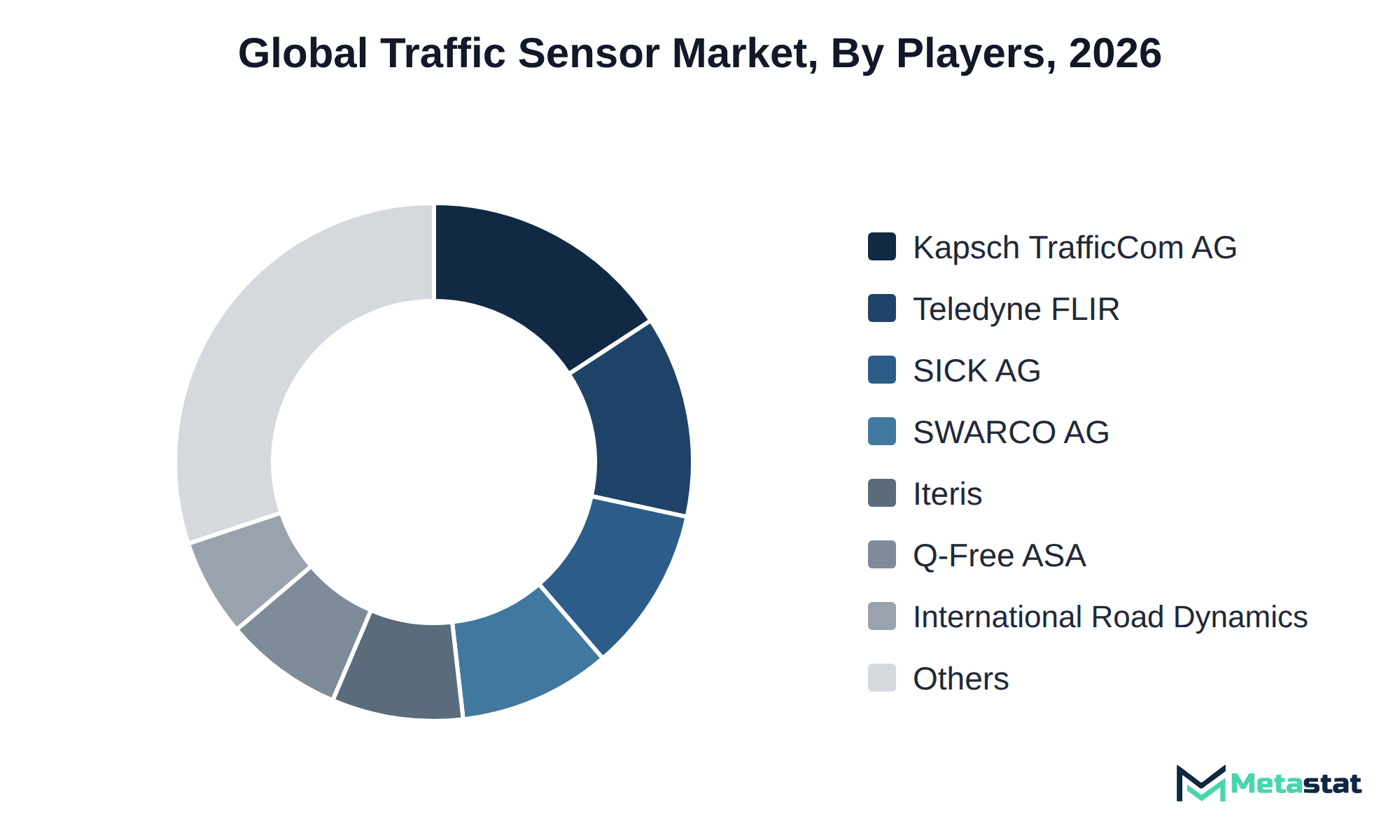
Competition within the Traffic Sensor market features a diverse array of players, each focusing on distinct segments and offering varying levels of service, customization, and technology. Buyers often choose products based on criteria including price, certification, customization options, and service quality, which significantly impact purchasing decisions.
Kapsch TrafficCom AG emphasizes integrated systems and solutions, catering to clients seeking comprehensive traffic management. Meanwhile, Iteris, Inc. prioritizes advanced data analytics and software solutions, appealing to buyers focused on intelligent traffic solutions. SWARCO AG stands out with its commitment to innovative technologies for traffic control and data management, attracting customers seeking effective solutions.
Companies including Teledyne FLIR LLC and Q-Free ASA use advanced sensor technologies to meet diverse customer needs in traffic monitoring and management. Teledyne FLIR LLC predominantly focuses on thermal imaging sensors, while Q-Free ASA specializes in solutions for tolling and traffic data collection. This variety within the market enables buyers to select products that align with specific operational requirements.
Achievement of this forecast relies on several key developments. Firstly, the increasing adoption of In-Roadway Sensors for traffic counting, classification, and flow monitoring will drive demand in North America, contributing significantly to revenue growth. Secondly, advancements in portable and temporary installations, particularly in emerging markets across Asia Pacific, are anticipated to enhance operational flexibility and expand the customer base. This segment is projected to experience a notable CAGR of 12.1%. Conversely, challenges in regulatory approval processes and budget constraints in various regions could impede market expansion. The Traffic Sensor market faces potential slowdowns if stakeholders encounter delays in the implementation of innovative traffic management solutions. Addressing these challenges will be crucial for realizing the anticipated market growth and achieving the forecasted revenue figures.
By Sensor Type: Inductive Loop Sensors, Piezoelectric Sensors, Radar Sensors, Image and Video Sensors, Magnetic Sensors, Infrared and Thermal Sensors, LiDAR Sensors, Bending Plate Sensors, Others (Pneumatic Tube, Acoustic and Ultrasonic Sensors)
By Mounting Position: In-Roadway Sensors, Overhead Sensors, Roadside Sensors
By Deployment Type: Permanent Installations, Portable and Temporary Installations
By Application: Traffic Counting, Classification and Flow Monitoring, Traffic Signal Actuation and Adaptive Control, Weigh-in-Motion, Automated Tolling, Incident Detection and Road Safety Monitoring, Speed Measurement and Driver Feedback
The report strategically identifies and profiles the key market players and analyses their core competencies in each sub-segment of the Traffic Sensor market.
Report Attributes | Details |
Study Period | 2021-2033 |
Base Year | 2025 |
Estimated Year | 2026 |
Forecast Period | 2026-2033 |
Historical Period | 2021-2025 |
Growth Rate | CAGR 8.6% from 2026 to 2033 |
Revenue Unit | USD million |
Segmentation | By Sensor Type, Mounting Position, Deployment Type, Application, and Region |
By Region | North America (By Sensor Type, Mounting Position, Deployment Type, Application, and Country)
|
Europe (By Sensor Type, Mounting Position, Deployment Type, Application, and Country)
| |
Asia Pacific (By Sensor Type, Mounting Position, Deployment Type, Application, and Country)
| |
South America (By Sensor Type, Mounting Position, Deployment Type, Application, and Country)
| |
Middle East and Africa (By Sensor Type, Mounting Position, Deployment Type, Application, and Country)
|
Find answers to common questions about this report
The Traffic Sensor market size was valued at USD 817.7 million in 2025.
The market is projected to grow at a CAGR of 8.6% during the forecast period from 2026 to 2033.
The North America Traffic Sensor market size is estimated to reach USD 441.3 million by 2033.
Inductive Loop Sensors lead the Traffic Sensor market with a projected value of USD 498.2 million by 2033, reflecting the highest demand among the sensor types. This segment demonstrates a compound annual growth rate of 6.4 percent during the forecast period.
Increasing traffic congestion in urban areas compels municipalities and transportation agencies to invest in more effective traffic management solutions. The continuous increase in vehicle usage, coupled with rising urban populations, drives spending on traffic sensors, aiming to alleviate congestion and improve safety.
North America holds the dominant share of the Traffic Sensor market, accounting for 29 percent. This region's significant share reflects its strong demand and investment in traffic management solutions.
High costs associated with traffic sensor technologies restrict market adoption among municipalities and transportation agencies. The expense of acquiring and implementing advanced sensors results in slower uptake and smaller orders, particularly affecting smaller agencies with limited financial resources.
Several factors favor adoption in the Traffic Sensor industry. Increasing traffic congestion in urban areas drives municipalities and transportation agencies to invest in advanced traffic management solutions. The shift towards smart city initiatives emphasizes the need for enhanced traffic monitoring systems that provide real-time data, facilitating improved decision-making and operational efficiency.
The Traffic Sensor market is estimated to reach a valuation of USD 1,586.7 million by 2033.
Key players operating in the Traffic Sensor market include Kapsch TrafficCom AG, SWARCO AG, Teledyne FLIR LLC, Iteris, Inc., Q-Free ASA, and TransCore, LP.
The analysts below cover Automotive and Transportation research at Metastat Insights.
LEAD ANALYST
Utkarsh Khirodkar is a Lead Market Research Analyst at MetaStat Insight, specializing in market intelligence, technology sector assessments, and competitive strategy.

ENERGY & INFRASTRUCTURE INDUSTRY CONSULTANT
Automotive and Transportation · Electronics and Semiconductor · Energy and Power · Machinery & Equipment
Saurabh Vasant Ganvir consults for Energy & Infrastructure Industry at MetaStat Insight, specializing in renewable energy, solar EPC, and electric vehicle (EV) infrastructure markets.
Assessing 200mm wafer transition schedules and substrate supply bottlenecks requires precise technical intelligence. MetaStat Insight supplied an actionable breakdown comparing planar and trench MOSFET architectures across automotive and industrial drive markets. The regional capacity estimates for Asia-Pacific foundries helped clarify lead-time uncertainties during our strategic planning session. When we needed additional clarification on high-purity raw material sourcing, their analyst team responded with helpful context within twenty-four hours.
Tracking maintenance cycle demand for secondary flight display units and terrain collision avoidance systems across regional jet fleets involves complex aftermarket dynamics. MetaStat Insight provided practical analysis separating airline retrofit programs from OEM forward-fit production schedules in North America and Southeast Asia. The supplier matrix highlighted component obsolescence timelines without resorting to vague generalizations. The dataset served as a dependable reference during our annual program review meetings.
Evaluating secondary resin quality across post-consumer packaging streams requires reliable technical segmentation. MetaStat Insight delivered an objective assessment that distinguished between extrusion-grade flake pricing and optical sorting throughput limitations across Western Europe. The competitive positioning breakdown for licensed depolymerization technology providers answered several questions during our feedstock feasibility audit. Their team clarified regional trade restrictions on mixed plastic scrap quickly when our team submitted follow-up requests.
Explore related market intelligence reports worth reading alongside this one.
Starting from
$2950