
LEAD ANALYST
Utkarsh Khirodkar is a Lead Market Research Analyst at MetaStat Insight, specializing in market intelligence, technology sector assessments, and competitive strategy.

Global Twin Spindle CNC Machine Market Size, Share, By Machine Type (Fixed-Headstock CNC Turning Centers, Sliding-Headstock CNC Turning Centers, CNC Machining Centers, CNC Routers), By Spindle Orientation (Horizontal, Vertical, Others), By Workpiece Loading Method (Manual Loading, Bar Feeding, Gantry Loading, Articulated Robot Loading, Pallet or Shuttle Loading), By End-Use Industry (Automotive, Industrial Machinery, Aerospace and Defense, Medical Devices, Electrical and Electronics, Energy), Industry Analysis, Growth, Trends, and Forecast, 2026-2033
Report ID
MSI-5565
Published
October, 2026
Pages
296 Pages
Format
Historical
Base year
Forecast
Forecast period
Report Details
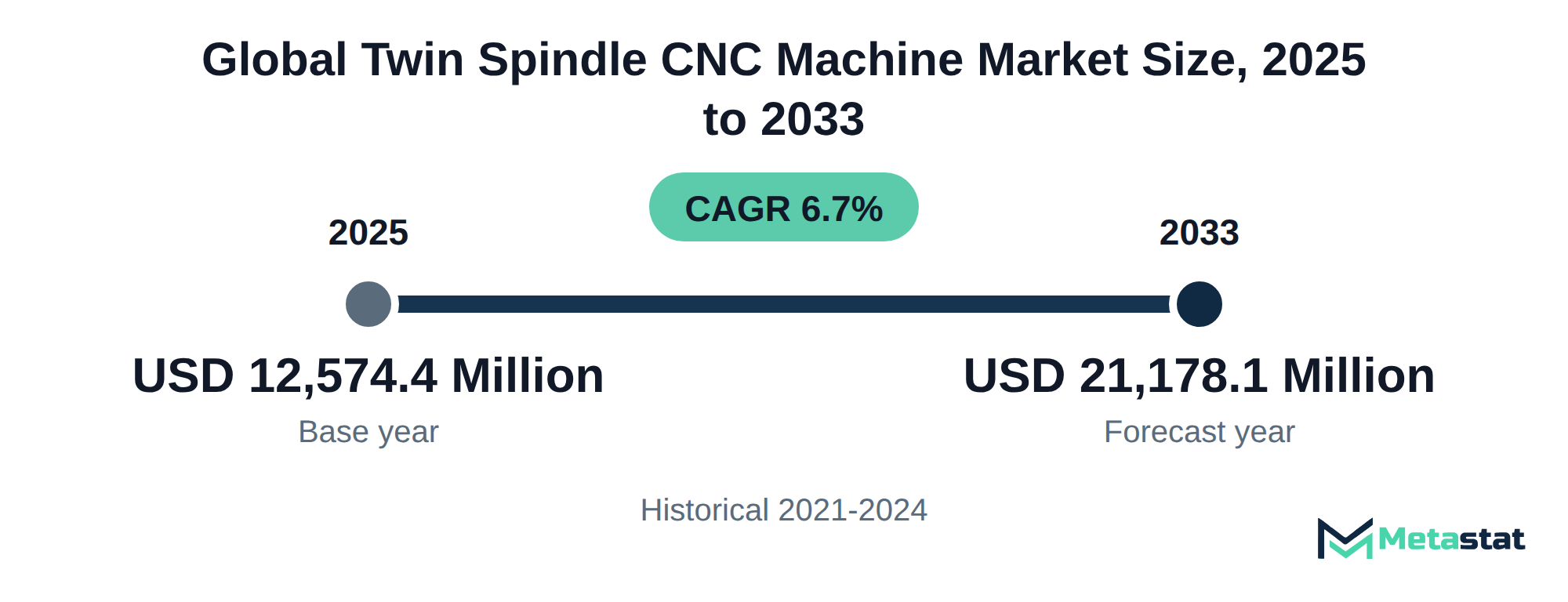
Market Valuation: Valued at $12,574.4 Million in 2025, projected to reach $21,178.1 Million by 2033 at a 6.7% CAGR.
Dominant Segment: The Fixed-Headstock CNC Turning Centers segment leads the market, driven by the need for high precision in producing intricate components essential for industries like automotive and aerospace.
Geographic Lead: Asia Pacific holds the largest market share at 42.1%, fueled by robust industrial activities and a significant base of manufacturers seeking to enhance production capabilities.
What's Inside: The report includes comprehensive competitive coverage, detailed analyses of market dynamics, and forecasts extending from 2026 to 2033, providing insights into growth trends and segment performance.
High Growth in Articulated Robot Loading: The Articulated Robot Loading segment shows a strong CAGR of 9%, indicating increasing adoption in manufacturing sectors focused on enhancing automation and efficiency.
Price Sensitivity Limits Demand Growth: Price sensitivity among small to medium-sized manufacturers affects the adoption of Twin Spindle CNC Machines, leading to slower uptake and smaller order sizes.
Choose Your License
Global Twin Spindle CNC Machine Market
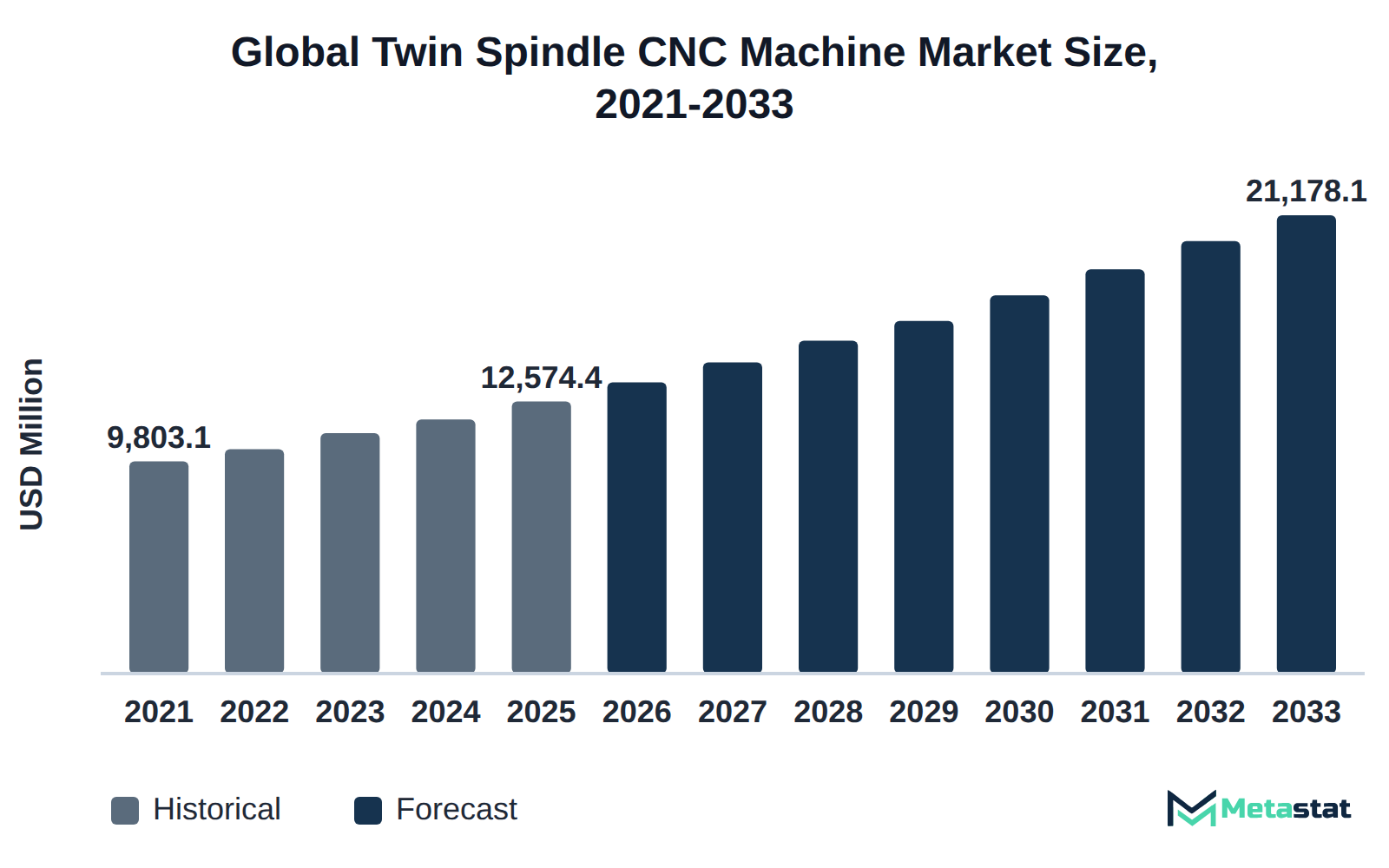
The global Twin Spindle CNC Machine market was valued at USD 12,574.4 million in 2025 and is projected to reach USD 21,178.1 million by 2033, growing at a CAGR of 6.7% over the forecast period.
The Twin Spindle CNC Machine market encompasses various advanced machining technologies that enhance productivity and precision in manufacturing processes. Buyers invest in these machines to improve operational efficiency, reduce lead times, and ensure high-quality outputs. The need for complex parts across industries, including automotive and aerospace, drives demand for reliable, high-performance equipment, making these machines essential for modern manufacturing environments.
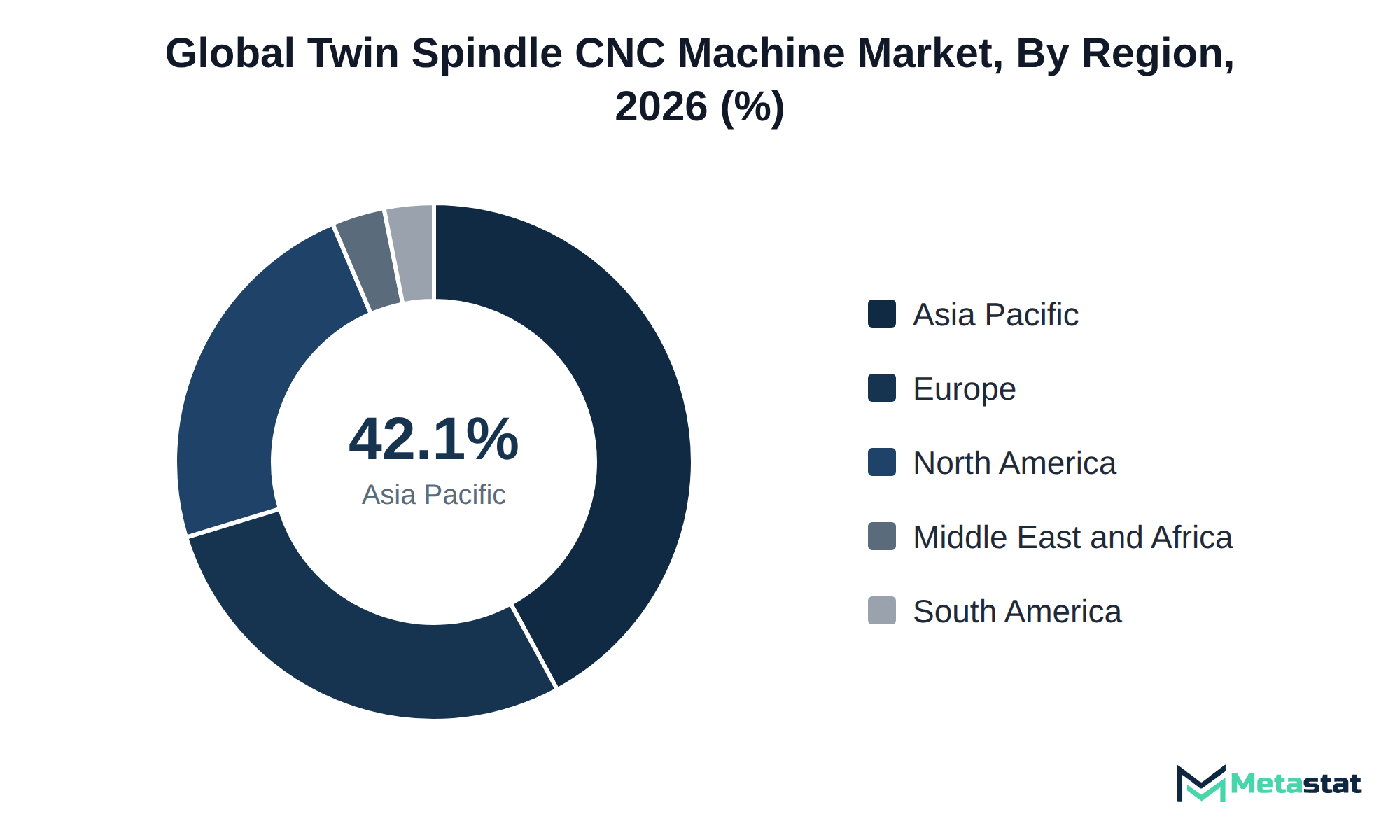
Growth factors in the market include technological advancements and increased automation in production lines. The segment of Fixed-Headstock CNC Turning Centers emerges as the primary contributor, reflecting strong demand driven by the need for high precision in producing intricate components. North America holds 23.3% of the market in 2025, with the US leading in 2026. In comparison, Europe and Asia Pacific follow closely, with shares of 28.2% and 42.1%, respectively.
Investments in smart manufacturing and Industry 4.0 initiatives significantly influence growth trajectories. Companies increasingly adopt CNC machines equipped with advanced features including IoT connectivity and AI-driven analytics, enhancing operational capabilities. This trend drives innovation and creates competitive advantages for manufacturers.
The Twin Spindle CNC Machine market addresses the increasing demand for high-precision manufacturing solutions across various industries. Buyers invest in these machines to enhance operational efficiency and reduce production costs, thereby improving overall competitiveness. The automotive sector ranks as the largest end-use industry, significantly influencing spending patterns due to its requirements for high-volume production and precision components.
Growth in the market is driven by advancements in machining technology and an increasing focus on automation. The segment of Fixed-Headstock CNC Turning Centers holds the most value, reflecting a strong preference for this type of equipment among manufacturers. Asia Pacific leads the regional share with 42.1%, influenced by strong industrial activities and a large base of manufacturers seeking to upgrade their production capabilities. The market in North America is projected to hold a significant share in 2025, with the US contributing notably to this growth.
Continuous innovation and integration of smart technologies are expected to advance the market. Optimizing production processes and reducing errors remains a vital concern for manufacturers. This focus on efficiency aligns with the growing trend of digital transformation within manufacturing, enhancing the appeal of the Twin Spindle CNC Machine market.
Opposed and parallel twin spindle CNC machines facilitate complete part machining through simultaneous operations on a workpiece, enhancing productivity and precision. This design allows for multiple processes to occur at once, reducing cycle time and increasing throughput. The Twin Spindle CNC Machine market shows a significant emphasis on these machines, particularly in sectors including automotive and aerospace, where efficiency and precision are critical.
For instance, the automotive sector, projected to reach USD 8,526.3 million by 2033, serves as a primary user of these advanced machining technologies. The increasing complexity of automotive components necessitates efficient machining solutions capable of meeting tight tolerances. The growing adoption of opposed and parallel configurations results from their ability to perform simultaneous operations, including turning and milling, on a single machine setup.
This technological shift drives operational cost reductions for manufacturers by minimizing setup times and labor costs associated with multi-machine operations. As companies in the market adopt these advanced machines, the focus on efficiency and productivity intensifies, leading to greater competitiveness in manufacturing. Enhanced capabilities position these machines as essential tools for manufacturers seeking to improve overall operational efficiency.
Gantry and robotic loading systems enhance the efficiency of unattended twin spindle CNC production, significantly lowering operational costs. In the twin spindle CNC machine market, the adoption of automated loading methods, including gantry loading and articulated robot loading, transitions manufacturing to a more streamlined process. The segment of articulated robot loading exhibits a compound annual growth rate (CAGR) of 9%, reflecting the increasing preference for automation in production environments. This growth indicates strong market demand for advanced loading solutions that improve workflow efficiency.
Manufacturers prioritize cost efficiency when purchasing twin spindle CNC machines. Pricing models typically include upfront capital expenditures alongside ongoing service and maintenance agreements. Buyers frequently negotiate contracts that incorporate maintenance packages to ensure optimal machine performance over time. This approach provides manufacturers with a predictable budgeting framework while safeguarding investments in machinery.
The integration of gantry and robotic loading systems within the twin spindle CNC machine market leads to enhanced productivity and reduced labor costs. These advancements enable manufacturers to remain competitive while meeting rising production demands. The transition towards automated solutions supports sustainable growth and raises the importance of strategic purchasing decisions.
Demand for precision Twin Spindle CNC machining significantly increases in the electric vehicle (EV) powertrain and medical components sectors. These industries require high-accuracy parts that enhance performance and reliability. In the market, automotive applications, particularly EV powertrains, show a projected value growth from USD 5,682.5 million in 2026 to USD 8,526.3 million by 2033, reflecting a compound annual growth rate (CAGR) of 6.0%. This expansion emphasizes the critical need for advanced machining capabilities that Twin Spindle CNC machines provide.
Medical device manufacturing has emerged as another strong buyer group, with heightened demand for components that meet stringent regulatory standards. The ability to produce intricate designs with precision directly affects product quality and compliance, which are vital in this field. Market dynamics signal a strong opportunity for manufacturers specializing in Twin Spindle CNC machines, as these tools support the efficient production of complex components. Enhanced operational efficiency translates to improved profitability for firms engaging in these high-demand sectors, strengthening their competitive position in the market.
Payback for a Twin Spindle CNC Machine hinges on several factors, including operational efficiency and cost savings. In the context of machine type, Fixed-Headstock CNC Turning Centers hold significant potential for driving returns. This segment is projected to generate revenue increasing from USD 7,005 million in 2026 to USD 10,781.8 million by 2033, reflecting a compound annual growth rate (CAGR) of 6.4%. This growth indicates increasing adoption of this machine type among manufacturers seeking enhanced productivity.
Operational savings arise from the dual spindles that allow simultaneous machining processes, effectively reducing cycle times and labor costs. Manufacturers operating in the automotive sector increasingly implement twin spindle technology to meet production demands while maintaining quality and precision. The automotive end-use industry is anticipated to rise from USD 5,682.5 million in 2026 to USD 8,526.3 million in 2033, reflecting the growing reliance on efficient machinery.
Investing in a Twin Spindle CNC Machine thus translates into tangible operational gains, enhancing competitiveness within the market. The overall trend towards automation and efficiency positions these machines as vital assets for businesses aiming for sustainable growth and profitability.
The automotive industry drives significant investment in new technologies, reflecting a shift towards advanced machining solutions. Manufacturers increasingly prioritize Twin Spindle CNC Machines due to their ability to enhance production efficiency and precision. This trend results from a heightened focus on meeting stringent quality standards and achieving faster turnaround times in vehicle production. The market anticipates overall demand growth, particularly as automotive companies seek to streamline their processes and reduce operational costs. The strong performance of the automotive industry influences the market positively, encouraging suppliers to expand their offerings to meet this rising demand.
Growing investments in electric vehicle production further support this trend. Automakers invest heavily in advanced manufacturing processes to meet the evolving needs of consumers and regulatory requirements. The increasing adoption of Twin Spindle CNC Machines aligns with these objectives, facilitating the production of high-quality automotive components, which ultimately strengthens market growth.
Integration of advanced automation systems reduces manual intervention, leading to increased operational efficiency. The growing trend towards automation stems from the need for consistent quality and high output rates in manufacturing processes. Industries including automotive and aerospace increasingly adopt automated solutions to streamline production lines and reduce lead times.
The adoption of smart manufacturing practices, including the Internet of Things (IoT) and artificial intelligence (AI), facilitates real-time monitoring and data analytics. This technological shift enables manufacturers to optimize resource allocation and minimize downtime, ultimately lowering operational costs. Suppliers using these technologies position themselves competitively in the market, meeting the demands of industries prioritizing efficiency and precision.
While these automation technologies continue to advance, the Twin Spindle CNC Machine market experiences significant growth opportunities. Enhanced automation capabilities equip manufacturers to respond better to changing market demands, supporting the expansion of operations across various sectors.
Price sensitivity significantly affects the adoption of twin spindle CNC machines, particularly among small to medium-sized manufacturers. These businesses operate with limited budgets, which restricts their capacity to invest in advanced machinery, resulting in slower uptake and smaller orders. The cost of these machines represents a key barrier, especially when alternatives including single spindle machines offer lower initial investments with adequate performance for certain applications. Price volatility in raw materials further compounds these challenges, leading to hesitation in equipment replacement cycles. The market experiences delayed investments as manufacturers analyze their return on investment and explore financing options. Consequently, this price constraint shapes the competitive landscape, driving firms to seek cost-effective solutions or defer technology upgrades that enhance productivity and efficiency.
Suppliers face increasing material costs, which impact profitability in the Twin Spindle CNC Machine market. Raw materials, particularly high-quality alloys and precision components, have experienced significant price hikes, resulting in squeezed margins for manufacturers. In response, suppliers adopt strategies including vertical integration and sourcing alternatives to mitigate costs. These practices enhance supply chain control and reduce dependence on volatile material prices. Several manufacturers invest in advanced production technologies that streamline processes and optimize resource usage, thereby offsetting financial pressures. The shift towards lower-cost materials, while maintaining quality standards, emphasizes the importance of innovation in design and manufacturing techniques. Suppliers that successfully navigate these challenges maintain or improve their market positioning while rising input costs ultimately strengthen market growth and resilience in the face of economic fluctuations.
Articulated robot loading systems in the Twin Spindle CNC Machine market present a significant opportunity for growth. This segment shows a high compound annual growth rate (CAGR) of 9%, indicating strong interest and potential for adoption in various manufacturing sectors. Articulated robots enhance automation capabilities, enabling high flexibility and efficiency in machining processes. Industries, particularly automotive and medical devices, increasingly seek solutions that streamline productivity while maintaining precision.
The anticipated increase in automated processes correlates with rising demand for advanced manufacturing technologies. Consequently, investments in articulated robot loading systems improve operational efficiency and reduce labor costs for manufacturers. The market is poised for growth, driven by the need for innovative solutions that address labor shortages and improve competitiveness in a changing environment.
The Global Twin Spindle CNC Machine market is segmented based on Machine Type, Spindle Orientation, Workpiece Loading Method, and End-Use Industry.
This segment primarily serves industries requiring high-precision machining, including automotive and aerospace. Increasing demand for efficiency in manufacturing processes drives growth in this segment, reflecting a trend toward automation and improved production capabilities. Compared to Sliding-Headstock CNC Turning Centers, which expect a higher CAGR of 7.2%, Fixed-Headstock machines grow at a more moderate pace. The unique design of Fixed-Headstock machines provides stability for larger workpieces, appealing to manufacturers focused on durability and performance. This distinct advantage positions Fixed-Headstock CNC Turning Centers as essential tools for businesses emphasizing reliability in their production lines, particularly in sectors with stringent quality requirements.
Sliding-Headstock CNC Turning Centers segment is estimated to reach USD 3,053.9 million by 2033, at a CAGR of 7.2% during the forecast period. This segment specializes in high-precision, efficient machining of complex geometries, primarily applied in industries including automotive and aerospace. Key drivers include growing demand for high-speed production capabilities and the need for enhanced flexibility in manufacturing processes. Compared to Fixed-Headstock CNC Turning Centers, this segment shows a higher growth rate due to its ability to handle intricate designs and reduce cycle times. Increased adoption of automated manufacturing systems further supports this segment's expansion, particularly among manufacturers focusing on high-volume production. The unique capabilities of Sliding-Headstock CNC Turning Centers differentiate them from other machine types, positioning them favorably in the competitive landscape of the Twin Spindle CNC Machine market.
CNC Machining Centers segment is expected to reach USD 6,889.2 million by 2033. This segment primarily serves industries requiring high-precision and versatile machining capabilities, including aerospace, automotive, and industrial machinery production. Demand for CNC machining centers reflects the growing need for complex part manufacturing and customization, driven by advancements in technology. The segment experiences a compound annual growth rate (CAGR) of 6.4%, positioning it as a moderate growth category compared to other machine types. In contrast, Sliding-Headstock CNC Turning Centers show a faster CAGR of 7.2%, attracting different buyer profiles focused on high-speed production and reduced cycle times. Cost efficiency and operational reliability are crucial factors influencing buyer decisions in the CNC Machining Centers segment, propelling its expansion within the broader Twin Spindle CNC Machine market.
The CNC Routers segment is projected to grow at a CAGR of 5.6% during the forecast period. This segment is widely used in industries including woodworking, signage, and plastics for precise cutting, engraving, and milling. Demand for CNC routers primarily stems from manufacturers focused on customization and rapid prototyping. The adoption of advanced materials and the increasing complexity of designs contribute to growth in this area. Compared to other machine types, CNC Routers exhibit slower growth, reflecting a more mature market stage, while Fixed-Headstock and Sliding-Headstock CNC Turning Centers experience higher projected CAGRs of 6.4% and 7.2%, respectively. The CNC Routers segment's unique applications in less conventional materials differentiate it from others, attracting specific buyers seeking versatility in machining capabilities. In the overall market, CNC Routers meet the varied needs of the woodworking, signage, and plastics industries.
Horizontal spindle orientation is valued at USD 8,437.8 million in 2026 and is projected to reach USD 13,524.4 million by 2033, at a CAGR of 7% during the forecast period. This orientation is widely used in industries requiring high precision and efficient machining processes, including automotive and aerospace. The growth of this segment is driven by increasing demand for automation and productivity enhancements, particularly in high-volume manufacturing settings. Compared to other spindle orientations, including vertical, horizontal models typically accommodate larger workpieces and enable quicker setups. Competitive pricing associated with horizontal machines attracts a broader range of buyers, including mid-sized manufacturers. Overall, rising focus on operational efficiency within the market supports the expansion of horizontal spindle machines.
Vertical spindle orientation is estimated to reach USD 6,783.4 million by 2033, at a CAGR of 5.9% during the forecast period. This orientation is commonly employed in applications requiring precision and efficiency, particularly in industries including aerospace and medical devices. Growth is driven by advancements in technology, allowing for enhanced machining capabilities. Vertical spindle machines differ from other segments due to their specific application focus and precision requirements, resulting in a more specialized buyer base. In contrast to horizontal spindle machines, the vertical segment experiences slower growth compared to the sliding-headstock segment, which is projected to grow at a CAGR of 7.2%. Vertical machines typically cater to higher precision tasks, making them essential for manufacturers who prioritize accuracy in complex components.
USD 870.4 million is the forecast value for the Others (Mixed-Orientation, Swivelling-Head) segment by 2033. This segment finds widespread application in industries where flexibility in machining processes is essential, including aerospace and medical device manufacturing. The increasing demand for advanced machining capabilities drives growth in this segment, enabling manufacturers to handle diverse workpiece geometries. Higher growth potential characterizes this segment with a CAGR of 9%, surpassing other spindle orientations like vertical, which has a CAGR of 5.9%. This differentiation results from the segment’s ability to accommodate complex designs and varying materials, appealing to a broader range of buyers seeking high versatility in machining solutions. The segment reflects a notable shift in manufacturing strategies, emphasizing adaptability and precision.
Manual Loading segment is valued at USD 2,888.1 million in 2026 and is projected to reach USD 3,845.9 million by 2033, at a CAGR of 4.2% during the forecast period. This segment is essential in industries that require human intervention for loading workpieces into CNC machines. Manufacturers in sectors including automotive and industrial machinery apply this approach to ensure precise handling of components. The growth of this segment is driven by consistent demand for skilled labor and the flexibility manual loading offers, particularly for small-batch production runs. Compared to automated loading methods, Manual Loading presents slower growth due to rising automation trends, but it remains essential for applications where automation is not feasible. This segment's growth rate of 4.2% contrasts with the higher growth rates of other loading methods, including Bar Feeding, which reaches a CAGR of 7.2% during the same period.
Bar Feeding segment is estimated to reach USD 8,644.9 million by 2033, at a CAGR of 7.2% during the forecast period. This method facilitates the continuous feeding of bars into the CNC machine, primarily serving manufacturers in the automotive and industrial machinery sectors. Demand for Bar Feeding systems stems from the requirement for high-volume production and enhanced efficiency, driving investments in automated loading solutions. Compared to other loading methods, Bar Feeding demonstrates a higher growth rate, driven by increasing adoption of automation technologies. The segment's appeal lies in its ability to streamline operations, reduce labor costs, and minimize material waste, positioning it as a preferred choice among manufacturers seeking to optimize production processes. The market shows strong potential for expansion due to growing emphasis on efficient manufacturing practices.
Gantry Loading segment is expected to reach USD 4,284.3 million by 2033. This loading method provides an efficient approach to workpiece handling, primarily in industries requiring high-volume production capabilities. Manufacturers in the automotive and industrial machinery sectors prefer Gantry Loading for its ability to facilitate automation and speed up production lines. The anticipated growth in this segment reflects a CAGR of 5.9% during the forecast period. Adoption of Gantry Loading aligns with the increasing focus on operational efficiency and reduced labor costs. Compared to other loading methods, including Manual Loading, which exhibits lower growth potential at a CAGR of 4.2%, Gantry Loading offers distinct advantages in production speed and material handling capacity. Continuous advancements in automation technology further drive the demand for this loading method, positioning it favorably within the market.
Articulated Robot Loading segment is projected to grow at a CAGR of 9% during the forecast period. This loading method primarily serves manufacturers seeking to enhance efficiency and precision in their production processes, particularly in sectors including automotive and industrial machinery. The increasing demand for automation drives investment in articulated robots, allowing for faster production cycles and reduced labor costs. This segment stands out with its higher growth rate compared to others in the workpiece loading category, including Manual Loading, which grows at a CAGR of 4.2%. Articulated Robot Loading enables manufacturers to optimize operations while addressing challenges related to labor shortages and the need for enhanced productivity. The market for articulated robot loading systems develops further due to advancements in industrial robotics and integration with CNC machines.
Pallet or Shuttle Loading involves systems designed to automate the process of loading workpieces into CNC machines, enhancing efficiency in machining operations. This loading method is particularly relevant in industries requiring high-volume production, including automotive and industrial machinery, where consistent and rapid processing of materials is critical. Demand for this segment is driven by the increasing automation and efficiency in manufacturing processes, reflecting a broader trend towards smart manufacturing solutions. Compared to other loading methods, Pallet or Shuttle Loading offers advantages in terms of speed and reduced labor costs, but it requires significant upfront investment. This investment often limits adoption among smaller manufacturers, contrasting with manual and bar feeding methods that remain more accessible. The ongoing shift towards automation in the Twin Spindle CNC Machine market continues to shape the dynamics of this segment, positioning it favorably for future growth.
This sub-segment covers Rotary Transfer Loading, which uses systems that automate the loading of workpieces into CNC machines. Often employed in high-volume production environments, these systems enhance productivity and precision by reducing manual intervention. Industries including automotive and industrial machinery frequently adopt rotary transfer loading systems to achieve rapid cycle times and consistent output. Demand for this sub-segment grows due to the increasing need for automation in manufacturing processes. Compared to other loading methods, rotary transfer loading systems typically command higher prices due to their advanced technology and efficiency benefits. The market for Twin Spindle CNC Machines experiences heightened interest in automation solutions, particularly within this sub-segment, reflecting ongoing trends driven by Industry 4.0 and smart manufacturing.
The automotive segment is valued at USD 5682.5 million in 2026 and is projected to reach USD 8526.3 million by 2033, at a CAGR of 6% during the forecast period. This segment primarily serves automotive manufacturers requiring precision components for vehicles, including engines, transmissions, and other essential systems. A significant driver for growth stems from increasing automotive production and the demand for high-quality, durable parts. This segment exhibits a strong growth rate, differing from others including Industrial Machinery, which has a projected value of USD 4527.9 million by 2033 at a CAGR of 6.1%. The automotive sector faces specific challenges, including fluctuating material costs affecting overall pricing strategies and impacting profitability across the market. Such dynamics contribute to shaping investment decisions and manufacturing strategies within the automotive industry.
Industrial Machinery segment is estimated to reach USD 4,527.9 million by 2033, at a CAGR of 6.1% during the forecast period. This segment finds application in various manufacturing processes, particularly in producing components and machinery parts for industries including construction, energy, and transportation. The demand for advanced machinery, driven by technological advancements and the need for increased efficiency, significantly influences this segment. Compared to other segments, including Automotive, which has a projected CAGR of 6.0% during the same period, Industrial Machinery shows slightly slower growth but offers stable demand from manufacturers seeking precision and reliability. Factors including rising labor costs and the push for automation further drive the adoption of Twin Spindle CNC Machines in this sector. This creates a competitive landscape where companies strive to integrate innovative solutions for cost-effectiveness and enhanced production capabilities.
Aerospace and Defense segment is expected to reach USD 2,734.1 million by 2033. This segment serves the specialized requirements of manufacturers involved in producing aircraft components and defense systems. The demand for advanced machining capabilities, driven by the industry's focus on precision and compliance with stringent safety regulations, supports growth. In comparison to other segments, Aerospace and Defense reflects slower growth patterns due to the higher complexity and longer lead times associated with product development. A CAGR of 6.1% is projected for this segment, indicating steady progress, while the competitive pricing strategies of other segments create a distinct market dynamic. The increasing emphasis on lightweight materials and innovative designs contributes to driving investment in advanced machining technologies, further enhancing the segment's position within the market.
USD 2,734.1 million is the forecast value for the Medical Devices segment by 2033. This segment serves various healthcare applications, including surgical instruments, diagnostic equipment, and prosthetics, primarily used by medical device manufacturers. Growth in this segment is driven by increasing investments in healthcare technology and the demand for advanced medical devices, which require precision machining capabilities. Medical devices show a higher growth rate compared to other segments, projected at a CAGR of 8.5% during the forecast period. The need for innovation in medical technology pushes manufacturers to adopt advanced machining processes, resulting in higher demand for twin spindle CNC machines. This segment exhibits unique characteristics, including stricter regulatory requirements and a focus on quality and precision, distinguishing it from other segments in this market.
The Electrical and Electronics segment focuses on applications tailored for precision manufacturing, including components for consumer electronics and electrical devices. Manufacturers within this segment employ Twin Spindle CNC Machines to achieve high accuracy and efficiency in producing complex geometric shapes and fine details. A strong demand driver stems from the increasing push for automation and advanced manufacturing techniques, enhancing production rates and quality. This segment differs from others, including Automotive and Industrial Machinery, due to its emphasis on smaller, intricate parts rather than larger assemblies, which influences purchasing decisions and technology requirements. Buyers in this sector prioritize precision and reliability, fueling a competitive landscape that supports innovation and promotes investments in new technologies. The growth trajectory aligns with broader trends in the market as the sector adapts to consumer demands and technological advancements.
Energy applications in the Twin Spindle CNC Machine market serve industries focused on renewable resources, power generation, and energy efficiency. This segment primarily caters to manufacturers involved in creating components for power plants and renewable energy systems. Demand is driven by the increasing push for sustainable energy solutions and the requirement for high-precision machining in energy infrastructure projects. The segment distinguishes itself from others through its emphasis on advanced technology and specific regulatory requirements. Compared to automotive and industrial machinery, the energy segment experiences slower growth due to high initial investment in energy-efficient technology and fluctuating regulatory environments. Innovative machining processes are essential for manufacturers aiming to meet stringent quality standards in this sector.
This sub-segment covers applications in the furniture, jewellery, and consumer products industries. Businesses in these sectors employ twin spindle CNC machines for their precision machining capabilities, ensuring high-quality output in crafting intricate designs and components. Increasing consumer demand for customized and unique products drives growth in this area. The rising trend of personalized items in jewellery significantly influences adoption rates. Compared to other segments, including automotive or industrial machinery, this sub-segment experiences slower growth due to the smaller scale of operations typically associated with furniture and jewellery manufacturers. However, the emphasis on precision and customization within the segment creates steady demand for advanced machining solutions. The market continues to evolve in response to changing consumer preferences, enhancing opportunities for companies serving the furniture, jewellery, and consumer products sectors.
Based on geography, the Global Twin Spindle CNC Machine market is divided into North America, Europe, Asia-Pacific, South America, Middle East, and Africa.
North America demonstrates significant growth potential within the Twin Spindle CNC Machine market, driven primarily by the automotive and industrial machinery sectors. An emphasis on technological advancement and manufacturing efficiency drives demand from these industries. The region benefits from a robust infrastructure, particularly in the United States, which supports rapid adoption of advanced machining technologies. North America is projected to reach USD 4,697.3 million by the end of 2033, highlighting its importance in the global market. The anticipated growth reflects ongoing investments in automation and precision manufacturing processes across key sectors in this region.
Europe accounted for 28.2% of the Twin Spindle CNC Machine market in 2025. The strong automotive and industrial machinery sectors drive demand within this region. Countries like Germany and Italy feature advanced manufacturing capabilities, creating a robust environment for high-precision machining applications. Regulatory frameworks focused on sustainability and efficiency enhancements further influence manufacturing practices. The adoption of innovative technologies in CNC machining supports operational improvements and cost efficiencies. An increasing emphasis on aerospace and defense industries further enhances market potential, with rising investments in advanced manufacturing processes. The region's unique combination of skilled labor and technological advancements positions it favorably for continued growth through the forecast period, particularly in the automotive segment, where demand for precision components remains high.
Asia-Pacific accounted for 42.1% of the global Twin Spindle CNC Machine market in 2025. The region's demand is primarily driven by industries including automotive, aerospace, and medical devices, where precision and efficiency in manufacturing processes are essential. Countries like China and India contribute heavily to this demand, with strong investments in industrial automation and advanced manufacturing technologies. Infrastructure improvements and government initiatives focused on enhancing manufacturing capabilities further support the market's growth. The presence of major machine tool manufacturers in South Korea and Japan adds to the competitive landscape, ensuring a diverse range of offerings tailored to various end-use industries. The region's rapid industrialization and increasing adoption of automation technologies position it for substantial growth through the forecast period, with robust demand expected to continue.
In South America, the Twin Spindle CNC Machine market experiences unique demand driven by the automotive and industrial machinery sectors, particularly in Brazil and Argentina. The region's share of the global market stands at 3.1%, reflecting its growing importance. Infrastructure investments in manufacturing capabilities contribute to enhanced production efficiencies, supporting market growth. The need for advanced machining technologies in various industries increases demand for these machines. Projects aimed at modernizing manufacturing facilities further encourage the adoption of Twin Spindle CNC Machines. The market benefits from a focus on local manufacturing, leading to increased competitiveness and improved production standards.
In the Middle East and Africa, the Twin Spindle CNC Machine market draws demand primarily from the automotive and industrial machinery sectors. The region's market exhibits a unique characteristic with a share of 3.3% of the global market in 2025. A growing focus on enhancing manufacturing capabilities, particularly in Saudi Arabia and the UAE, drives investment in advanced machining technologies. Rising infrastructural developments aimed at boosting local production and reducing reliance on imports further support this trend. South Africa significantly influences the market, focusing on precision manufacturing and machinery upgrades. Various initiatives aimed at modernizing the manufacturing sector continue to influence demand. The combination of these factors positions the market for continued expansion throughout the forecast period.
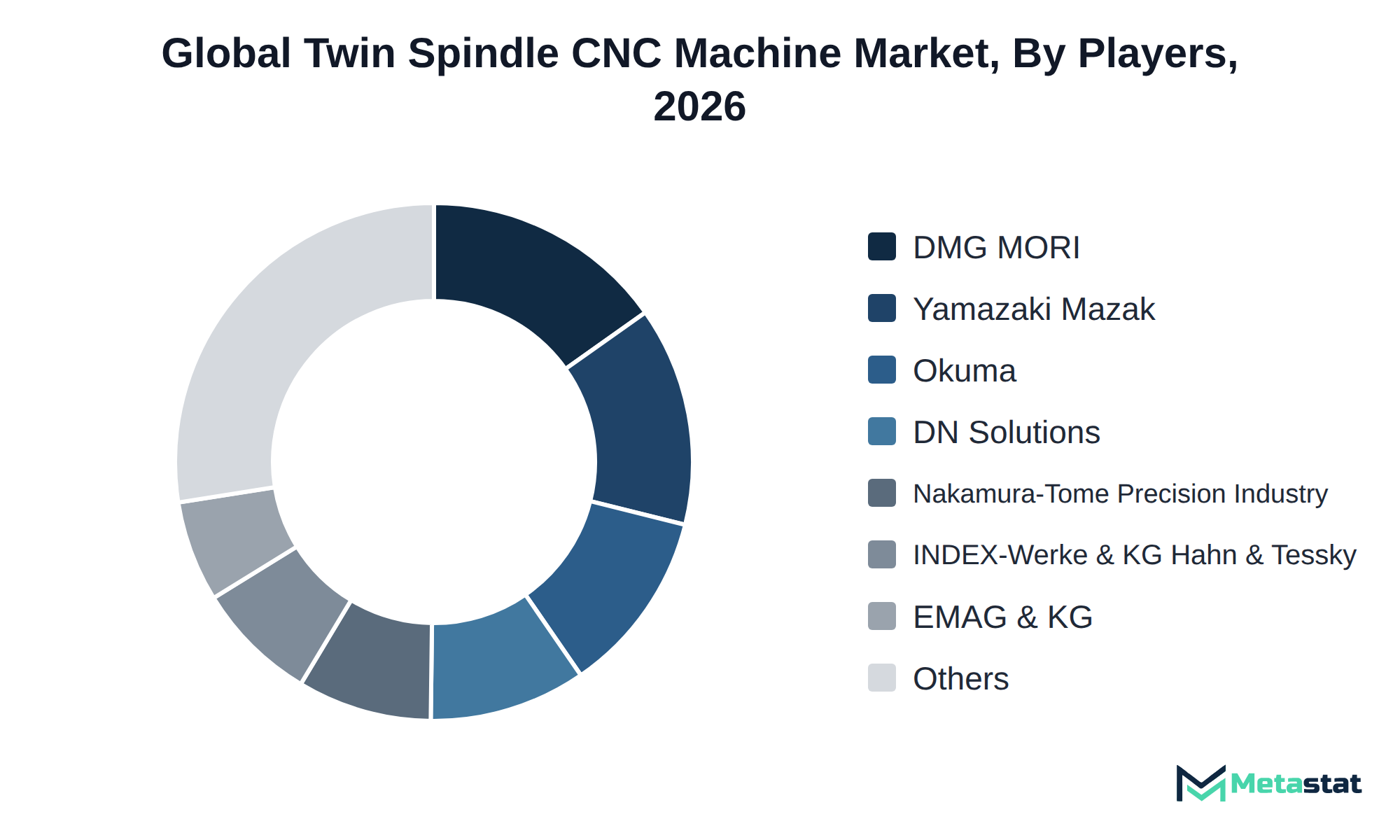
Companies in the Twin Spindle CNC Machine market employ diverse strategies to differentiate themselves. Several focus on the quality of their machines and the precision they offer, appealing to sectors including aerospace and medical devices that prioritize reliability. Others emphasize customization options and service levels, attracting buyers seeking tailored solutions that meet specific production needs.
Buyers in the market prioritize various factors, including price, certification, and after-sales support. For instance, DMG MORI Co., Ltd. emphasizes service excellence, ensuring customer satisfaction through robust support networks. In contrast, companies like Yamazaki Mazak Corporation focus on providing advanced technological features and automation capabilities, catering to buyers seeking high efficiency in production processes. Northwood Machine Manufacturing Company targets cost-effective solutions, appealing to several price-sensitive segments within the market.
Twin Spindle CNC Machine market growth relies on several developments across key segments. First, the increase in demand for Fixed-Headstock CNC Turning Centers, driven by the automotive industry, is expected to support a significant portion of this market expansion. The automotive sector aims to enhance production efficiency and precision, leading to rising investments in advanced machining technologies. Second, the rising adoption of Bar Feeding workpiece loading methods in regions including Asia Pacific will facilitate higher production rates, reflecting positively on the overall market growth. However, the main risk that could impede this trajectory includes potential disruptions in the supply chain, particularly in critical regions like Europe. Such disruptions delay production schedules and increase operational costs, adversely affecting investment decisions in the Twin Spindle CNC Machine market.
By Spindle Orientation: Horizontal, Vertical, Others (Mixed-Orientation, Swivelling-Head)
By Workpiece Loading Method: Manual Loading, Bar Feeding, Gantry Loading, Articulated Robot Loading, Pallet or Shuttle Loading, Others (Rotary Transfer Loading)
By End-Use Industry: Automotive, Industrial Machinery, Aerospace and Defense, Medical Devices, Electrical and Electronics, Energy, Others (Furniture, Jewellery, Consumer Products)
The report strategically identifies and profiles the key market players and analyses their core competencies in each sub-segment of the Twin Spindle CNC Machine market.
Report Attributes | Details |
Study Period | 2021-2033 |
Base Year | 2025 |
Estimated Year | 2026 |
Forecast Period | 2026-2033 |
Historical Period | 2021-2025 |
Growth Rate | CAGR 6.7% from 2026 to 2033 |
Revenue Unit | USD million |
Segmentation | By Machine Type, Spindle Orientation, Workpiece Loading Method, End-Use Industry, and Region |
By Region | North America (By Machine Type, Spindle Orientation, Workpiece Loading Method, End-Use Industry, and Country)
|
Europe (By Machine Type, Spindle Orientation, Workpiece Loading Method, End-Use Industry, and Country)
| |
Asia Pacific (By Machine Type, Spindle Orientation, Workpiece Loading Method, End-Use Industry, and Country)
| |
South America (By Machine Type, Spindle Orientation, Workpiece Loading Method, End-Use Industry, and Country)
| |
Middle East and Africa (By Machine Type, Spindle Orientation, Workpiece Loading Method, End-Use Industry, and Country)
|
Find answers to common questions about this report
The Twin Spindle CNC Machine market size was valued at USD 12,574.4 million in 2025.
The market is projected to grow at a CAGR of 6.7% during the forecast period from 2026 to 2033.
The North America Twin Spindle CNC Machine market size is estimated to reach USD 4,697.3 million by 2033.
Fixed-Headstock CNC Turning Centers lead the Twin Spindle CNC Machine market with a projected value of USD 10,781.8 million by 2033, based on its significant share compared to other segments.
Key drivers for the Twin Spindle CNC Machine market include significant investments in the automotive industry, which prioritize advanced machining solutions to enhance production efficiency and precision. growing demand for electric vehicle production further fuels the need for these machines, supporting overall market growth.
Price sensitivity significantly affects adoption, particularly among small to medium-sized manufacturers with limited budgets. These businesses often face challenges due to the high cost of twin spindle CNC machines and price volatility in raw materials, leading to delayed investments and technology upgrades.
The increasing adoption of articulated robot loading systems enhances automation capabilities, driving efficiency and flexibility in machining processes. This trend aligns with the demand for advanced manufacturing technologies, particularly in the automotive and medical device sectors, addressing labor shortages and improving competitiveness.
The Twin Spindle CNC Machine market is estimated to reach a valuation of USD 21,178.1 million by 2033.
Key players operating in the Twin Spindle CNC Machine market include DMG MORI Co., Ltd., Yamazaki Mazak Corporation, Okuma Corporation, DN Solutions Co., Ltd., Nakamura-Tome Precision Industry Co., Ltd., and Haas Automation, Inc.
The Twin Spindle CNC Machine market is expected to grow at a compound annual growth rate (CAGR) of 6.7% from 2026 to 2033.
The analysts below cover Machinery & Equipment research at Metastat Insights.
LEAD ANALYST
Utkarsh Khirodkar is a Lead Market Research Analyst at MetaStat Insight, specializing in market intelligence, technology sector assessments, and competitive strategy.

INDUSTRY CONSULTANT - CHEMICALS & ADVANCED MATERIALS
Chemicals and Materials · Machinery & Equipment · Packaging
Amit Gadhekar Consultant for Chemicals and Materials at MetaStat Insight, directing sector-specific intelligence, research, and strategic consulting across global chemical and processing markets.

PRINCIPAL CONSULTANT - QUALITY SYSTEMS & COMPLIANCE
Electronics and Semiconductor · Machinery & Equipment · Professional Services
Omkar Phadtare is an Industry Consultant at MetaStat Insight, specializing in quality systems, regulatory compliance, and standards benchmarking to drive data-driven market intelligence and strategic industry research.

ENERGY & INFRASTRUCTURE INDUSTRY CONSULTANT
Automotive and Transportation · Electronics and Semiconductor · Energy and Power · Machinery & Equipment
Saurabh Vasant Ganvir consults for Energy & Infrastructure Industry at MetaStat Insight, specializing in renewable energy, solar EPC, and electric vehicle (EV) infrastructure markets.

LEAD CONSULTANT - COMMUNICATION, TELECOM, AND IT
Electronics and Semiconductor · Information & Technology · Machinery & Equipment · Professional Services
Ravindra Sathe Consultants for Communication, Telecom, and IT at MetaStat Insight. He leads the firm's industry research initiatives across telecommunications infrastructure, digital connectivity, enterprise networking, and emerging information technology domains.
Evaluating sovereign cloud deployments for core banking platforms demands a clear view of data residency regulations and migration exit strategies. MetaStat Insight delivered an exhaustive review of regional latency tolerances, mainframe decommission milestones, and third-party vendor concentration risk. The regulatory compliance mapping across European and Asian financial jurisdictions gave our team a dependable baseline for multi-cloud infrastructure discussions.
Replacing petrochemical surfactants with bio-based alternatives requires realistic timelines on industrial precision fermentation scaling. The market research broke down commercialization timelines, feedstock sugar price sensitivities, and regional cosmetic ingredient regulatory approvals in Europe and East Asia. That supplier readiness mapping gave our formulations team reliable context when comparing renewable chemical sourcing roadmaps.
Tracking ceramic matrix composite adoption in high-bypass aero engines requires strict attention to material qualification cycles and FAA airworthiness testing milestones. The MetaStat Insight team provided a detailed timeline of silicon carbide fiber manufacturing capacity and commercial foundry lead times. Having clear visibility into upstream thermal barrier coating supply helped us stress-test our long-term component procurement strategy.
Explore related market intelligence reports worth reading alongside this one.
Starting from
$2950