
LEAD ANALYST
Utkarsh Khirodkar is a Lead Market Research Analyst at MetaStat Insight, specializing in market intelligence, technology sector assessments, and competitive strategy.

U.S. Packaged Guacamole Market Size, Share, By Product Type (Traditional/Classic Guacamole, Spicy Guacamole and Specialty/Flavored Guacamole), By Storage Type (Refrigerated Guacamole, Frozen Guacamole and Shelf-Stable Guacamole), By Packaging Type (Tubs and Trays, Single-Serve Cups, Squeezable Pouches and Bulk Foodservice Packs), By Distribution Channel (Supermarkets and Hypermarkets, Warehouse Clubs, Convenience Stores and Online Retail), Industry Analysis, Growth, Trends, and Forecast, 2026-2033
Report ID
MSI-5494
Published
October, 2026
Pages
307 Pages
Format
Historical
Base year
Forecast
Forecast period
Report Details
Market Valuation: Valued at $895.7 Million in 2025, projected to reach $1,838.4 Million by 2033 at a 9.4% CAGR.
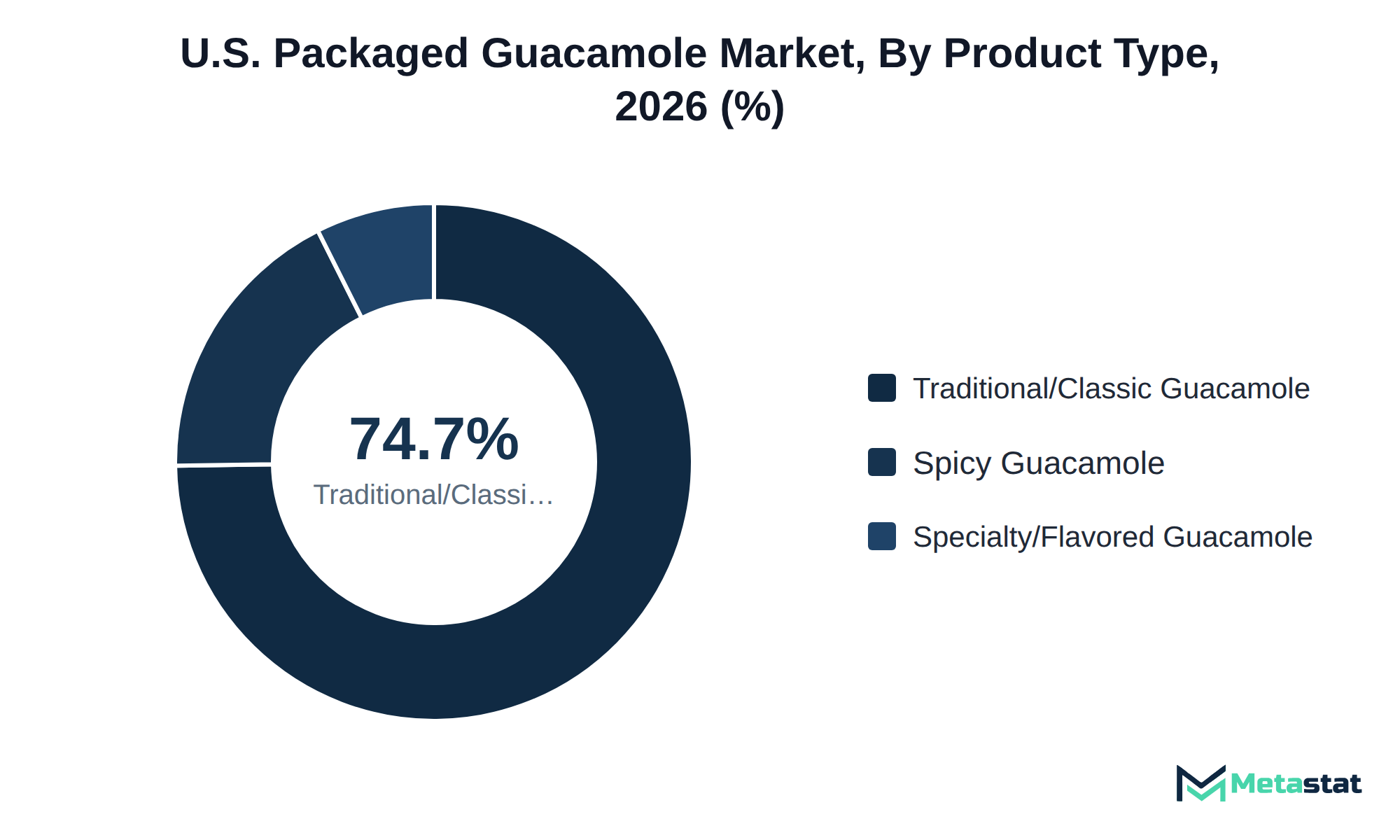
Dominant Segment: Traditional/Classic Guacamole leads the market, driven by consumer preference for authentic flavors and familiarity in snacks.
Geographic Lead: North America dominates the U.S. Packaged Guacamole market, benefiting from a well-established distribution network and strong consumer awareness of health benefits.
What's Inside: The report includes comprehensive analyses of product types, storage methods, packaging options, and distribution channels, along with competitive coverage and market forecasts.
Emerging Opportunities: Spicy guacamole is projected to grow at a CAGR of 10.5%, reflecting increasing consumer interest in bold flavors and adventurous culinary experiences.
Innovative Packaging Solutions: Single-serve cups and squeezable pouches are transforming consumption patterns, with single-serve cups expected to grow at a CAGR of 11.9%, catering to on-the-go lifestyles.
Choose Your License
U.S. Packaged Guacamole Market
The U.S. Packaged Guacamole market was valued at USD 895.7 million in 2025 and is projected to reach USD 1,838.4 million by 2033, growing at a CAGR of 9.4% over the forecast period.
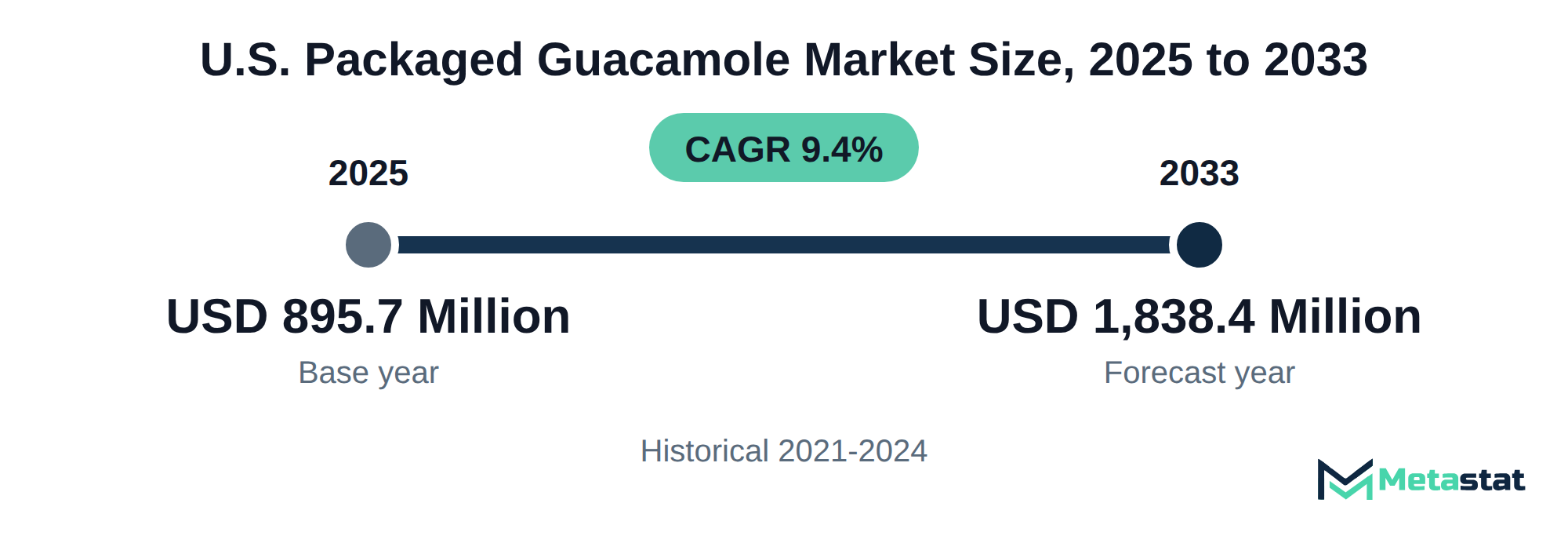
The U.S. Packaged Guacamole market encompasses a variety of product offerings, including traditional, spicy, and specialty options, catering to diverse consumer preferences. Buyers invest in packaged guacamole primarily due to its convenience, flavor variety, and the growing trend of healthy snacking. This market serves both retail and foodservice sectors, with significant interest from supermarkets and online retail channels, reflecting changing consumer purchasing behaviors.
Growth in the market is driven by increasing consumer demand for ready-to-eat snacks, coupled with the rising popularity of Mexican cuisine, including Mexican fast casual restaurants, in the United States. Among the different product types, traditional guacamole commands the largest market share, appealing to a broad consumer base. North America holds the largest regional share, benefiting from a well-established distribution network and strong consumer awareness of guacamole and its health benefits.
The market continues to expand at a compound annual growth rate of 9.4% through the forecast period. Rising health consciousness among consumers supports demand for natural and organic ingredients in packaged guacamole. Manufacturers innovate and offer products that align with health-oriented consumer choices.
The U.S. Packaged Guacamole market includes various product types, storage methods, packaging options, and distribution channels. Buyers invest in this market due to the increasing popularity of guacamole, driven by health trends and the demand for convenient meal options. The primary buyer groups consist of supermarkets, foodservice operators, and health-conscious consumers, each seeking quality and flavorful offerings that align with their culinary preferences.
Traditional/Classic Guacamole represents the segment with the most value within the market, reflecting consumer preferences for authentic flavors. The market experiences significant growth, driven by the rising demand for refrigerated guacamole, which guarantees freshness and quality. This segment's appeal stems from consumers' inclination towards healthy eating and the ongoing popularity of Mexican cuisine.
North America dominates the market, accounting for the largest share compared to other regions. The region's diverse culinary landscape and consumer willingness to experiment with flavors contribute to this trend. The focus on innovative flavors and premium ingredients positions the U.S. Packaged Guacamole market for growth, driven by evolving tastes and a growing desire for ready-to-eat options.
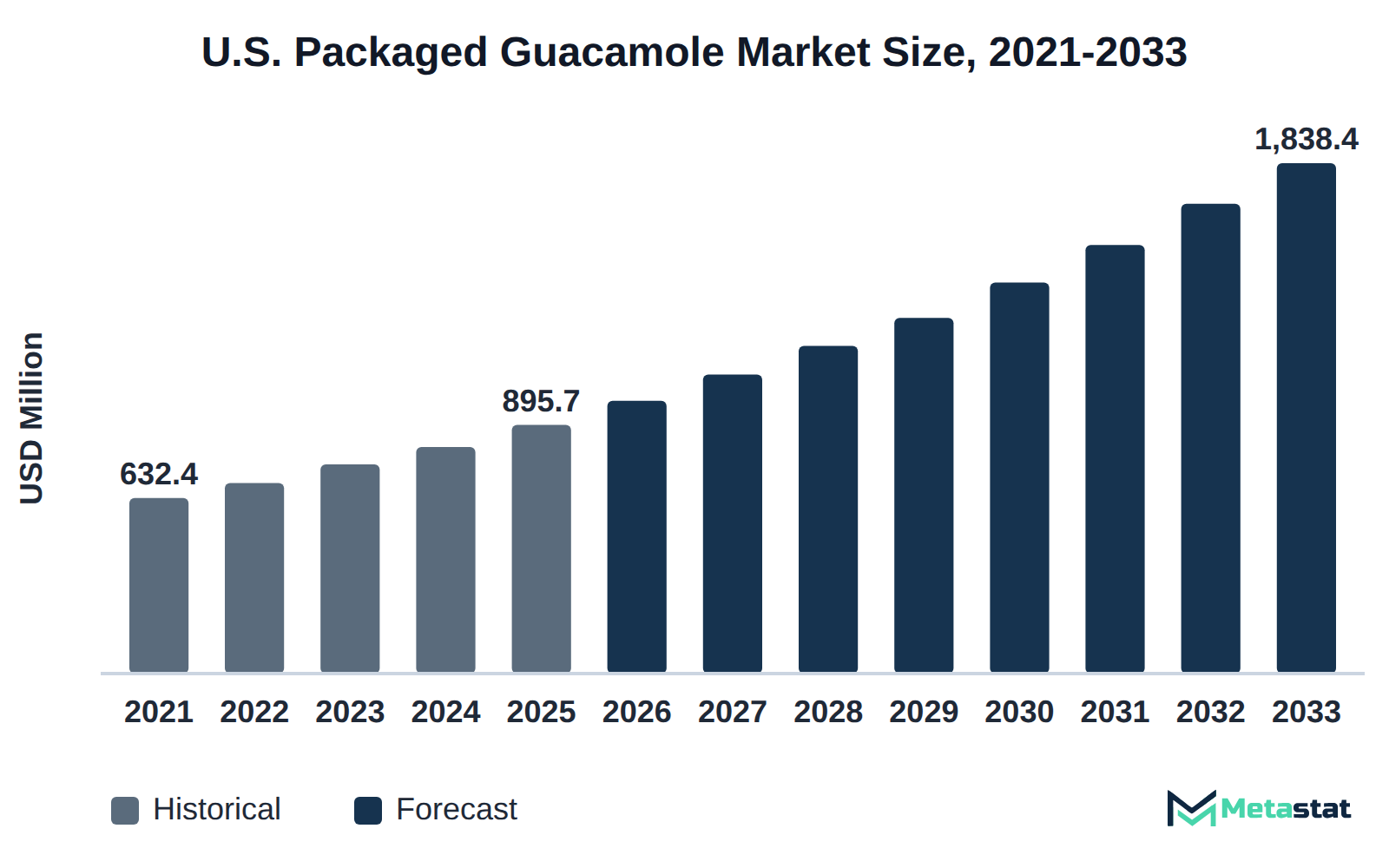
Rising consumer preference for fresh, clean-label products drives significant demand for refrigerated guacamole. This segment is projected to grow from USD 797.7 million in 2026 to USD 1,453.1 million by 2033, reflecting an annual growth rate of 8.9%. Consumers increasingly prioritize transparency in food sourcing and ingredient quality, favoring products without artificial preservatives or additives. This shift aligns with broader trends in the U.S. Packaged Guacamole market, where health-conscious purchasing decisions shape consumer behavior.
Retailers recognize the importance of offering clean-label refrigerated guacamole to capture and retain this growing segment of health-oriented buyers. Enhanced product formulations that emphasize natural ingredients and minimal processing appeal to customers seeking nutritious alternatives. The focus on fresh ingredients not only boosts product appeal but enhances brand loyalty among consumers scrutinizing food choices.
While the market evolves, companies that adapt to these preferences by innovating in product development capitalize on emerging opportunities. The commitment to clean-label standards represents a competitive advantage in the U.S. Packaged Guacamole market, positioning brands favorably within an expanding consumer base that values quality and transparency in food purchases.
Single-serve cups and squeezable pouches significantly influence purchasing behaviors in the U.S. Packaged Guacamole market. The convenience offered by these packaging types aligns with the growing demand for on-the-go meal options. Buyers increasingly prefer products that provide easy portion control and reduce waste, particularly in busy lifestyles. The forecast indicates that single-serve cups are projected to reach a value of USD 380.2 million by 2033, reflecting a compound annual growth rate of 11.9%. This growth highlights the shift towards more personalized and convenient packaging solutions.
The pricing strategies associated with single-serve cups and squeezable pouches often include premium pricing due to the added convenience factor. Several manufacturers employ tiered pricing models based on the product's features and packaging, allowing them to target both budget-conscious consumers and those willing to pay a premium for convenience. This pricing structure supports increased margins and incentivizes retailers to stock these products prominently. Ultimately, the rise of single-serve packaging in the market strengthens competition among brands and drives innovation in packaging solutions, enhancing consumer satisfaction and loyalty.
Private-label products have gained traction within the U.S. Packaged Guacamole market, driven by retailers' strategies to enhance their offerings and cater to cost-conscious consumers. This growth aligns with the increasing presence of private-label brands in supermarkets and warehouse clubs, where consumers often seek value without compromising quality. The focus on private-label guacamole allows retailers to differentiate their selection and strengthen customer loyalty.
Foodservice demand for packaged guacamole has shifted significantly, reflecting changes in consumer eating habits and preferences for convenience. The rise of quick-service restaurants (QSRs) and casual dining establishments has led to increased utilization of ready-to-use guacamole products. The trend enhances operational efficiency in the foodservice sector, enabling establishments to offer high-quality avocado-based options without the labor associated with traditional preparation methods.
This expansion offers significant opportunities for private-label brands and foodservice providers to capture a larger share of the market while responding to evolving consumer demands for quality and convenience.
The rising popularity of spicy and specialty-flavored guacamole products reflects changing consumer preferences for more adventurous and bold flavors. In the U.S. Packaged Guacamole market, spicy guacamole is expected to reach USD 355.2 million by 2033, with a compound annual growth rate (CAGR) of 10.5%. This trend aligns with broader consumer behavior, where individuals increasingly seek unique and diverse culinary experiences.
Factors contributing to this trend include the influence of social media and the growing interest in global cuisines. Consumers actively share their food experiences online, prompting brands to innovate and create new flavor profiles that cater to this demand. Specialty-flavored guacamole, while not projected to have a specific dollar value by 2033, enhances product variety and attracts a wider customer base. This diversification allows retailers to capture interest from health-conscious consumers seeking alternatives to traditional options.
While the market expands, brands introducing new spicy and specialty-flavored guacamole products benefit from increased consumer attention and potential revenue growth. The shift towards these unique flavors indicates a significant opportunity for businesses to differentiate themselves in a competitive environment, driving overall market expansion.
Increasing health consciousness among consumers drives notable growth in the U.S. Packaged Guacamole market. Many buyers, particularly health-focused individuals and millennials, prioritize nutritious and convenient food options. This demographic shift influences purchasing patterns, with consumers opting for products that align with their dietary preferences. The market experiences heightened demand for guacamole that serves as a healthier alternative to traditional dips and spreads. The traditional/classic guacamole segment is projected to reach USD 1,289.5 million by 2033, reflecting an annual growth rate of 8.5%. Buyers increasingly select guacamole for its natural ingredients and associated health benefits, further contributing to its rising popularity. Overall, this trend enhances market revenue potential and encourages product innovation within the packaged guacamole sector.
Advancements in packaging technology and packaging machinery significantly enhance the market's appeal by improving product shelf life and convenience. The introduction of innovative packaging solutions, including single-serve cups and squeezable pouches, encourages consumer engagement through ease of use and portion control, driving increased sales. These formats cater to on-the-go lifestyles, attracting busy consumers seeking quick meal options and snacks. The rising trend of e-commerce, coupled with the demand for ready-to-eat products, further drives the adoption of these packaging innovations. Manufacturers focusing on sustainable materials and designs align with changing consumer preferences, promoting eco-friendly choices. This shift toward innovative packaging solutions not only meets consumer demands but creates competitive differentiation among suppliers. The U.S. Packaged Guacamole market benefits from these developments, facilitating wider distribution across various retail channels, including supermarkets and online platforms. Enhanced packaging capabilities contribute to the overall growth trajectory of the market, reflecting an evolving environment that prioritizes convenience and sustainability.
Price sensitivity among consumers significantly impacts the U.S. Packaged Guacamole market, particularly in the traditional and classic segment. Many buyers, including households and foodservice operators, exhibit reluctance to pay a premium for packaged guacamole compared to fresh alternatives or homemade options. This reluctance results in slower uptake and smaller orders, particularly among budget-conscious consumers. The increasing availability of lower-priced substitutes in both retail and foodservice settings exacerbates this issue, leading to delayed replacement cycles for loyal customers. Price fluctuations driven by supply chain challenges deter potential buyers from making long-term commitments. The combined effect of these factors creates a barrier to growth and wider adoption, affecting overall market expansion and revenue generation potential.
Rising input costs impact profitability, affecting suppliers in the U.S. Packaged Guacamole market. Fluctuations in raw material prices, particularly avocados and other key ingredients for avocado-based products, increase operational expenses. These cost increases result in reduced margins, prompting suppliers to seek ways to maintain competitiveness while ensuring product quality. In response, companies are adopting strategies including vertical integration, which allows for better control over sourcing and pricing of raw materials. Suppliers are exploring alternative sourcing options and improving supply chain efficiency to mitigate these cost pressures. This strategic shift aims to offset rising expenses while maintaining product affordability for consumers. The urgency to adapt to these cost challenges shapes market dynamics and influences competitive positioning among suppliers. Continuous innovation in manufacturing processes remains essential for firms striving to navigate the complexities of input cost pressures and sustain growth in the evolving market.
Spicy guacamole represents a notable growth opportunity within the U.S. Packaged Guacamole market. The segment is projected to achieve a compound annual growth rate (CAGR) of 10.5% through 2033, highlighting increasing consumer interest in bold flavors. This heightened demand results from evolving culinary preferences, particularly among younger demographics who seek diverse and adventurous tastes. The trend supports product innovation, encouraging manufacturers to develop unique spicy variants that cater to this expanding consumer base.
Meeting this demand requires strategic product development and effective marketing approaches. Companies focusing on this segment capitalize on the growing interest in spicy guacamole, potentially leading to increased market share and revenue. Emphasizing bold flavors and unique ingredients is likely to enhance brand loyalty among consumers, supporting sustained growth in this high-potential market segment.
The U.S. Packaged Guacamole market is segmented based on Product Type, Storage Type, Packaging Type, and Distribution Channel.
This segment primarily serves consumers who enjoy classic flavors in snacks and meals, appealing to households and foodservice providers. Growing consumer preference for traditional options influences demand, particularly among those seeking familiar tastes in their culinary experiences. Compared to Spicy Guacamole, which experiences a higher CAGR of 10.5%, Traditional/Classic Guacamole shows steady growth reflecting its established market position. While the segment offers competitive pricing appealing to budget-conscious consumers, fluctuations in input costs impact profitability for suppliers. The emphasis on quality ingredients and authentic flavors continues to differentiate this segment from emerging specialty options, reinforcing its presence in the U.S. Packaged Guacamole market.
This product typically appeals to consumers seeking bold flavors in their meals, often enhancing dishes including tacos, burritos, and nachos. The growing popularity of spicy food among millennials and Gen Z contributes to demand growth in this segment. Unlike traditional varieties, spicy guacamole differentiates itself through unique flavor profiles and heat levels, attracting a distinct consumer group. The rising trend of flavor exploration in culinary practices drives this segment's expansion, positioning it for higher growth rates compared to traditional varieties. This consumer inclination towards adventurous flavors enhances the potential for spicy guacamole products in the U.S. Packaged Guacamole market.
Specialty/Flavored Guacamole segment is expected to reach USD 193.8 million by 2033. This segment appeals to consumers seeking unique taste experiences, featuring innovative flavors that differentiate it from traditional guacamole. Catering to adventurous eaters, this segment sees adoption among food enthusiasts, restaurants, and caterers looking to enhance their menus. The rising trend of flavor experimentation drives growth, with consumers increasingly seeking bold and diverse tastes in their culinary choices. Specialty/Flavored Guacamole exhibits a higher growth rate compared to Traditional/Classic Guacamole, anticipated to expand at a CAGR of 10.5%, reflecting stronger interest in novel options. This segment faces less price sensitivity compared to its traditional counterpart, positioning it for significant success in the U.S. Packaged Guacamole market, where innovation and variety significantly influence purchasing decisions.
This segment serves consumers seeking fresh, high-quality options, typically used in home meal preparation, parties, and snacking occasions. The rising demand for fresh products, driven by health-conscious consumers, supports growth specifically in this segment. In comparison to other storage types, refrigerated guacamole has a relatively higher price point due to its short shelf life and need for cold storage, appealing to buyers prioritizing quality over cost. The growth rate of refrigerated guacamole is slightly slower than that of frozen guacamole, which is projected to achieve a CAGR of 10.5%. The U.S. Packaged Guacamole market reflects these dynamics, highlighting diverse preferences and purchasing decisions among consumers.
Frozen Guacamole is estimated to reach USD 331.7 million by 2033, at a CAGR of 10.5% during the forecast period. This segment appeals to consumers seeking convenient meal solutions and snack options, particularly among busy families and young professionals. The rising demand for convenient food products drives growth in this segment, owing to easy preparation for various dishes, including dips and spreads. Frozen Guacamole distinguishes itself by its higher growth rate compared to other storage types, including shelf-stable alternatives, which experience slower growth. The flavor and quality of Frozen Guacamole often match those of fresh options, attracting consumers who prioritize taste while maintaining convenience. This segment is crucial for capturing health-conscious consumers who prefer frozen options for their longer shelf life and convenience.
Shelf-Stable Guacamole segment is expected to reach USD 53.7 million by 2033. This segment caters to consumers seeking long-lasting options that require no refrigeration, making it popular among busy households and those prioritizing convenience. Demand for shelf-stable options gains momentum due to their extended shelf life and ease of storage, appealing particularly to retail buyers and on-the-go consumers. In contrast to Refrigerated Guacamole, which grows at a CAGR of 8.9%, the shelf-stable variety has a slower growth trajectory. The primary force influencing this segment is increasing consumer interest in versatile, ready-to-eat products that align with modern lifestyles. While the market for shelf-stable guacamole offers a unique value proposition, it experiences competition from other storage types that provide fresher alternatives. Differentiating price points affect buyer preferences, with shelf-stable options typically priced lower than their refrigerated counterparts, contributing to their attractiveness in the U.S. Packaged Guacamole market.
Tubs and Trays segment is valued at USD 533.1 million in 2026 and is projected to reach USD 905.2 million by 2033, at a CAGR of 7.9% during the forecast period. This packaging type primarily appeals to consumers seeking convenience and portion control, frequently used in both retail and foodservice settings. The increasing demand for ready-to-eat meals and snacks drives growth in this segment, with consumers prioritizing ease of use and quick meal solutions. Compared to Single-Serve Cups, Tubs and Trays provide larger quantities, catering to families and social gatherings, while Single-Serve Cups focus on individual portions. This distinction results in Tubs and Trays experiencing a slower growth rate relative to Single-Serve Cups, which show a projected CAGR of 11.9%. The market anticipates continued innovation in packaging design to enhance the consumer experience and maintain a competitive advantage among different packaging types.
This format caters to consumers seeking convenient, portable snacking options, appealing especially to busy professionals and parents. The rapid growth of this segment reflects shifting eating habits, where single-serve products offer practicality and portion control. Demand stems from the increasing preference for convenient foods among health-conscious consumers, driving manufacturers to innovate and enhance flavors and quality. Compared to Tubs and Trays, which are projected to grow at a CAGR of 7.9%, Single-Serve Cups exhibit faster growth due to alignment with on-the-go lifestyles. The U.S. Packaged Guacamole market experiences heightened competition as brands expand offerings, leveraging this trend to capture market share.
Squeezable Pouches segment is expected to reach USD 172.3 million by 2033. This packaging type caters to consumers seeking convenience and portion control, particularly in on-the-go scenarios. The segment appeals to busy professionals and families who value quick meal solutions and easy storage. A significant driver for growth in this segment arises from the increasing demand for single-serving options, reflected in its anticipated CAGR of 11.9%. Compared to other packaging types, including Tubs and Trays, which have a CAGR of 7.9%, Squeezable Pouches demonstrate faster growth due to their versatility and portability. In addition, the rising popularity of guacamole in foodservice applications further fuels demand, with operators seeking efficient ways to serve customers without compromising quality. The market continues to evolve, prioritizing consumer preferences for convenience and freshness.
Bulk Foodservice Packs generate significant value in the U.S. Packaged Guacamole market, projected to grow at a CAGR of 8.3% during the forecast period. These packs serve primarily foodservice establishments, including restaurants and catering services, which rely on bulk options to meet high-volume demand. Growth in this segment is driven by the increasing popularity of avocados and guacamole, versatile menu items. Advancements in logistics improve the availability of bulk products, enhancing operational efficiency for foodservice operators. Compared to other packaging types, Bulk Foodservice Packs typically offer a lower price point per unit, making them an attractive choice for cost-conscious buyers. This segment's expansion is supported by rising consumer preferences for fresh ingredients in foodservice offerings, positioning it favorably against more retail-focused packaging options in the market.
Packaging options including jars and specialty packaging cater to consumers seeking unique and convenient guacamole choices. This segment appeals primarily to health-conscious individuals and gourmet food enthusiasts who prefer artisanal or specialty products. The growing trend of home cooking and entertaining boosts demand for these premium offerings, with consumers willing to pay a higher price for quality and uniqueness. Compared to traditional packaging options, jars and specialty packaging often command a premium due to their perceived higher value and artisan appeal. This segment captures niche market interests, allowing brands to differentiate themselves through quality and innovative flavors. The market emphasizes the need for diverse packaging solutions that align with consumer preferences and lifestyles.
Supermarkets and Hypermarkets segment is valued at USD 439.4 million in 2026 and is projected to reach USD 757.1 million by 2033, at a CAGR of 8.1% during the forecast period. This segment serves consumers seeking convenient access to packaged guacamole, available in various flavors and styles. Increasing consumer preferences for health-oriented snacks drive demand in this segment. Compared to other segments, Supermarkets and Hypermarkets experience steady growth due to their wide reach and established distribution networks. They provide an affordable and varied selection of guacamole products, appealing to budget-conscious shoppers. In contrast, other distribution channels, including Online Retail, display higher growth rates due to the rise in e-commerce. However, the supermarket channel benefits from impulse purchases, which augment sales significantly within the U.S. Packaged Guacamole market.
Warehouse Clubs segment is estimated to reach USD 262.7 million by 2033, at a CAGR of 9.8% during the forecast period. This segment typically caters to bulk consumers and businesses looking for cost-effective purchasing options. The growing trend of bulk buying, driven by price sensitivity among consumers, fuels demand for guacamole in such settings. Compared to other distribution channels, Warehouse Clubs exhibit higher growth potential, attracting customers who prefer to buy in larger quantities at competitive prices. This segment's growth contrasts with supermarkets and hypermarkets, which grow at a CAGR of 8.1%. The market for packaged guacamole thrives in this competitive environment, meeting the needs of diverse consumer preferences.
Convenience Stores segment is expected to reach USD 92.5 million by 2033. This segment typically serves consumers seeking quick snack options or meal components, primarily targeting individuals in need of convenience and speed. The growth of this segment is driven by the increasing trend of on-the-go dining, appealing to busy professionals and families. Compared to other distribution channels, the Convenience Stores segment experiences a slower growth rate due to the limited variety of guacamole products available. Convenience-focused buyers often look for ready-to-eat solutions, distinguishing this segment from supermarkets and hypermarkets, which offer a broader range encompassing bulk options and specialty items. In the context of the U.S. Packaged Guacamole market, the segment's projected growth reflects the ongoing shift towards convenience in consumer purchasing behavior.
Online Retail segment is projected to grow at a CAGR of 16.8% during the forecast period. This segment serves consumers seeking convenience and accessibility in purchasing packaged guacamole. Increased online shopping trends and improved delivery services are driving this growth, with consumers prioritizing ease and speed when acquiring food items. Compared to other distribution channels, Online Retail typically features a broader selection and competitive pricing, appealing to tech-savvy buyers. The shift toward e-commerce has led to higher adoption rates, particularly among younger demographics that favor online shopping. U.S. Packaged Guacamole market dynamics reflect these changing consumer behaviors, highlighting the significance of this distribution channel in facilitating access to diverse guacamole options.
Foodservice and Institutional Distribution serves restaurants, catering businesses, and institutional food providers that require reliable and convenient access to packaged guacamole. Increased consumer interest in healthy and fresh ingredients drives demand for this segment, influencing foodservice operators to incorporate guacamole into their menu offerings. This segment prioritizes product quality and consistency, focusing on larger packaging sizes to meet the needs of high-volume consumption scenarios. Compared to other distribution channels, this segment does not experience the same level of growth, primarily due to competitive pricing pressures faced by foodservice providers. The U.S. Packaged Guacamole market reflects a growing appetite for high-quality guacamole options in institutional settings, aligning with broader trends toward healthier menu options.
This segment consists of specialty food stores and independent grocers, which serve niche markets focused on unique and high-quality products. These outlets appeal to consumers seeking gourmet and artisanal options, often providing a curated selection of packaged guacamole varieties. The demand for such offerings drives growth, reflecting increasing consumer preferences for specialty products that align with health and wellness trends. This segment typically attracts discerning buyers who prioritize quality and unique flavors, differentiating it from larger retail chains that offer more mainstream options. The market benefits from trends emphasizing local sourcing and organic ingredients, enhancing its appeal among health-conscious consumers. Unlike segments with wider distribution, specialty food stores often experience a slower growth rate due to their limited scope and focus on higher-priced items tailored for specific consumer preferences.
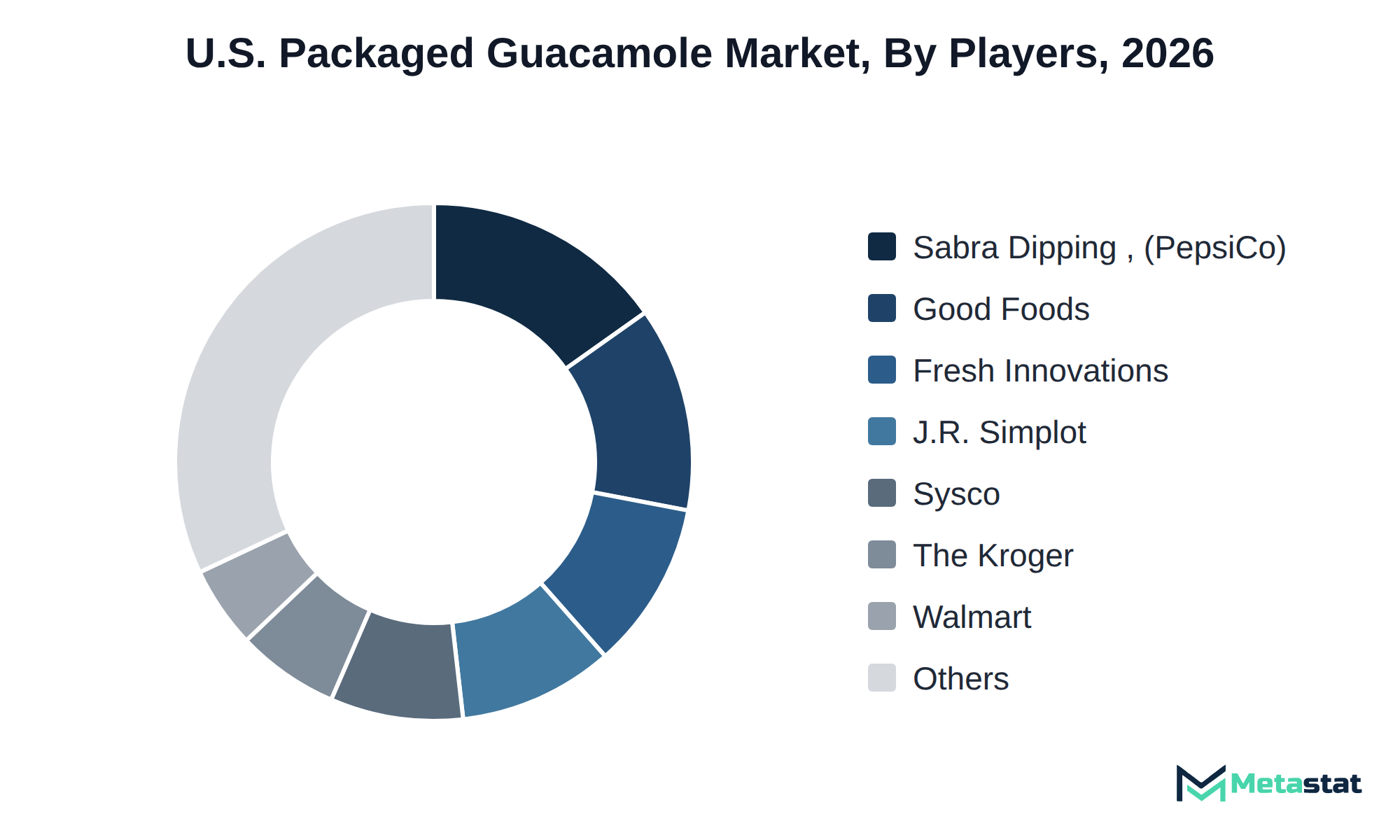
Competition in the U.S. Packaged Guacamole market involves various strategies among key players. Companies differentiate through product offerings, price points, and distribution channels. Traditional and innovative flavor profiles drive consumer preference, while packaging formats cater to diverse shopper needs. Supermarkets and hypermarkets dominate distribution, providing significant reach for brands.
Good Foods Group, LLC emphasizes freshness and quality in its product range, positioning itself as a premium option. Sabra Dipping Company, LLC (PepsiCo) leverages brand recognition and extensive distribution networks to enhance accessibility. J.R. Simplot Company engages in value-driven offerings, appealing to bulk buyers and foodservice operators.
The market expansion depends on several key developments, particularly within the traditional/classic guacamole and spicy guacamole segments. The refrigerated storage type is crucial, aiming for a rise to USD 1,453.1 million by 2033 at a CAGR of 8.9%, driven by heightened interest in fresh, ready-to-eat products among consumers. A potential risk involves economic fluctuations impacting disposable income, which could slow down the overall demand for premium packaged products. The U.S. Packaged Guacamole market is positioned for significant growth if these conditions materialize effectively.
By Product Type: Traditional/Classic Guacamole, Spicy Guacamole, Specialty/Flavored Guacamole
By Storage Type: Refrigerated Guacamole, Frozen Guacamole, Shelf-Stable Guacamole
By Packaging Type: Tubs and Trays, Single-Serve Cups, Squeezable Pouches, Bulk Foodservice Packs, Others (Jars, Specialty Packaging)
By Distribution Channel: Supermarkets and Hypermarkets, Warehouse Clubs, Convenience Stores, Online Retail, Foodservice and Institutional Distribution, Others (Specialty Food Stores, Independent Grocers)
The report strategically identifies and profiles the key market players and analyses their core competencies in each sub-segment of the Packaged Guacamole market.
|
Report Attributes |
Details |
|
Study Period |
2021-2033 |
|
Base Year |
2025 |
|
Estimated Year |
2026 |
|
Forecast Period |
2026-2033 |
|
Historical Period |
2021-2025 |
|
Growth Rate |
CAGR 9.4% from 2026 to 2033 |
|
Revenue Unit |
USD million |
|
Segmentation |
By Product Type, Storage Type, Packaging Type, Distribution Channel, and Region |
Find answers to common questions about this report
The Packaged Guacamole market size was valued at USD 895.7 million in 2025.
The market is projected to grow at a CAGR of 9.4% during the forecast period from 2026 to 2033.
Traditional/Classic Guacamole leads the Packaged Guacamole market with a projected value of USD 1,289.5 million by 2033. This segment outpaces others in growth and revenue potential.
Key drivers for the U.S. Packaged Guacamole market include increasing health consciousness among consumers and the rising trend of e-commerce. The demand for ready-to-eat products further supports the adoption of innovative packaging solutions, enhancing market growth.
Price sensitivity among consumers significantly impacts market growth, as many buyers exhibit reluctance to pay a premium for packaged guacamole compared to fresh alternatives. Rising input costs affect profitability, leading suppliers to seek ways to maintain competitiveness while ensuring product quality.
Increasing health consciousness among consumers and the demand for convenient, nutritious food options favor adoption in the U.S. Packaged Guacamole market. The growth of innovative packaging solutions, including single-serve cups, enhances product appeal and accessibility, driving consumer engagement and sales.
The Packaged Guacamole market is estimated to reach a valuation of USD 1,838.4 million by 2033.
Key players operating in the Packaged Guacamole market include Good Foods Group, LLC, Fresh Innovations, LLC, Sabra Dipping Company, LLC (PepsiCo), J.R. Simplot Company, Westfalia Fruit, Sysco Corporation, and US Foods Holding Corp.
The spicy guacamole segment is projected to achieve a compound annual growth rate (CAGR) of 10.5% through 2033, indicating increasing consumer interest in bold flavors.
Frozen guacamole is projected to reach USD 331.7 million by 2033, reflecting a strong growth rate of 10.5%.
The analysts below cover Food and Beverages research at Metastat Insights.
LEAD ANALYST
Utkarsh Khirodkar is a Lead Market Research Analyst at MetaStat Insight, specializing in market intelligence, technology sector assessments, and competitive strategy.

LEAD PRINCIPAL ANALYST, PHARMA AND HEALTHCARE
Food and Beverages · Healthcare · Healthcare IT · Medical Devices
Ajay Devgire is the Lead Healthcare Analyst at MetaStat Insight, leading strategic research and market intelligence initiatives across the global healthcare domain.

SENIOR RESEARCH ANALYST
Biotechnology · Food and Beverages · Medical Devices · Packaging
Snehal Pasalkar is a Research Analyst at MetaStat Insight, operating at the intersection of life sciences research, competitive strategy, and market intelligence.
Tracking maintenance cycle demand for secondary flight display units and terrain collision avoidance systems across regional jet fleets involves complex aftermarket dynamics. MetaStat Insight provided practical analysis separating airline retrofit programs from OEM forward-fit production schedules in North America and Southeast Asia. The supplier matrix highlighted component obsolescence timelines without resorting to vague generalizations. The dataset served as a dependable reference during our annual program review meetings.
Evaluating secondary resin quality across post-consumer packaging streams requires reliable technical segmentation. MetaStat Insight delivered an objective assessment that distinguished between extrusion-grade flake pricing and optical sorting throughput limitations across Western Europe. The competitive positioning breakdown for licensed depolymerization technology providers answered several questions during our feedstock feasibility audit. Their team clarified regional trade restrictions on mixed plastic scrap quickly when our team submitted follow-up requests.
Evaluating sovereign cloud deployments for core banking platforms demands a clear view of data residency regulations and migration exit strategies. MetaStat Insight delivered an exhaustive review of regional latency tolerances, mainframe decommission milestones, and third-party vendor concentration risk. The regulatory compliance mapping across European and Asian financial jurisdictions gave our team a dependable baseline for multi-cloud infrastructure discussions.
Explore related market intelligence reports worth reading alongside this one.