
LEAD ANALYST
Utkarsh Khirodkar is a Lead Market Research Analyst at MetaStat Insight, specializing in market intelligence, technology sector assessments, and competitive strategy.

Women's Western Wear Market Size, Share, By Product Type (Dresses, Tops, Bottoms, Outerwear, and Others), By Material Type (Cotton, Denim, Polyester, and Others), By Age Group (Teenagers, Adults, and Seniors), By Distribution Channel (Online Stores, Supermarkets, Hypermarkets, Specialty Stores, and Others), Industry Analysis, Growth, Trends, and Forecast, 2026-2033
Report ID
MSI-4630
Published
April, 2026
Pages
321 Pages
Format
Report Details
Choose Your License
Women's Western Wear Market
The Global Women's Western Wear market size was valued at USD 39.3 billion in 2025 and projected to grow at a CAGR of 6.2% during the forecast period, reaching USD 63.5 billion by 2033.
North America accounted for 25.4% of the global market in 2025, with the U.S. leading the regional market.
The Dresses segment accounted for a 20.3% market share in 2025.
Key trends driving growth: Rising influence of fast fashion, social media, and global trend diffusion expanding adoption of Western-style apparel, Increased participation of women in the workforce accelerating demand for versatile formal and casual wear
Opportunities include growing preference for sustainable, premium, and digitally personalized western wear collections across major markets
Key insight: Fashion-forward urban consumers and digital retail influence continue reshaping demand patterns across the Global Women's Western Wear Market.
The Global Women's Western Wear Market is evolving beyond traditional apparel categories, shaped by cultural influence, digital identity, and changing consumption patterns. Women's western wear is increasingly defined not only by silhouettes or seasonal collections, but also by how consumers express identity across physical and digital environments. Clothing choices are increasingly serving as expressions of individuality, social positioning, and lifestyle rather than adherence to rigid fashion norms.
Design strategies are shifting toward modular and versatile styling, allowing garments to transition across work, leisure, and social settings. Western wear labels will test with pass-genre aesthetics wherein tailoring meets casual consolation, blurring differences between formal and ordinary apparel. Fabric innovation will emphasize sturdiness, sensory comfort, and flexibility, helping wardrobes designed for repeated reinterpretation as opposed to short-lived traits.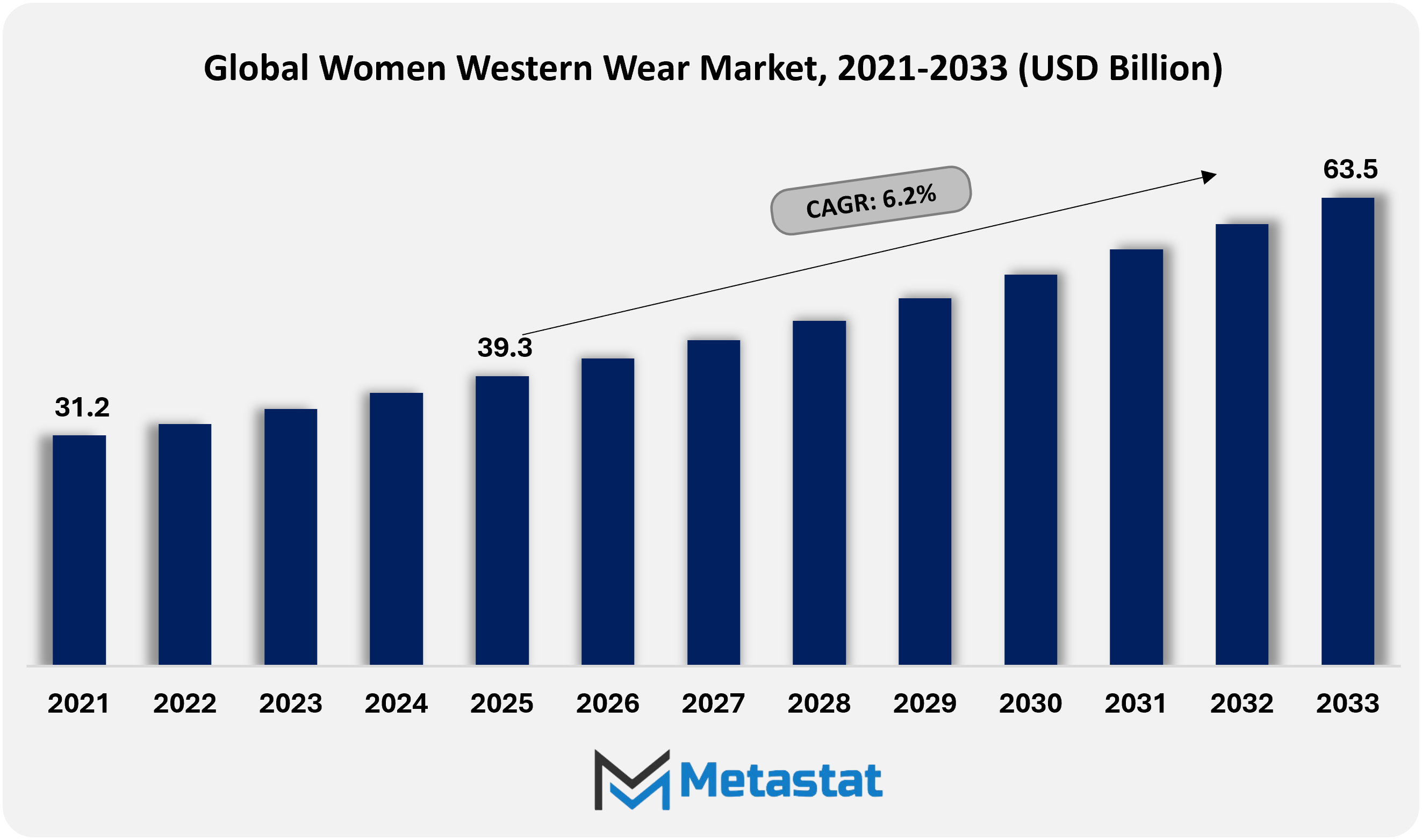
Rising influence of fast fashion, social media, and global trend diffusion expanding adoption of Western-style apparel.
The Global Women's Western Wear Market is gaining momentum owing to the rapid expansion of fast fashion, digital platforms, and cross-border trend visibility. Social media publicity will shorten trend adoption cycles even as worldwide fashion weeks affect purchasing behavior. Influencer advertising, and speedy design replication will assist broader acceptance throughout city and semi-city purchaser segments.
Increased participation of women in the workforce accelerating demand for versatile formal and casual wear
Increasing workforce participation among women is stimulating steady demand for adaptable wardrobes. Office environments, hybrid work fashions, and expert mobility will inspire purchases, helping each formal and relaxed setting. The Global Women's Western Wear Market will benefit from designs aligned with comfort, presentation value, and prolonged everyday usability.
High competition from unorganized retail and low-cost fashion imports compressing margins
The presence of unorganized retailers and low-cost imports is intensifying price competition across branded players. Local vendors will attract fee-touchy customers via competitive pricing techniques. Margin stability will face constraints at the same time as logo differentiation, pleasant assurance, and distribution manage would require sustained funding within the Global Women's Western Wear Market.
Rapidly changing fashion cycles creating inventory and forecasting challenges for brands
Frequent style transitions will complicate the call for forecasting and inventory planning. Shortened product life cycles will increase unsold stock dangers and operational inefficiencies. Brands operating in the Global Women's Western Wear Market will want adaptive supply chains, responsive design procedures, and data-driven forecasting models to preserve balance.
Growing preference for sustainable, premium, and digitally personalized western wear collections across major markets
Rising consumer interest in ethical sourcing and environmental responsibility is creating premium positioning opportunities. Digitally enabled personalization will make stronger logo engagement and retention. Sustainable fabric, obvious manufacturing practices, and tailored online experiences will guide long-time period expansion in the Global Women's Western Wear Market.
The Global Women's Western Wear Market is segmented by Product Type, Material Type, Age Group, and Distribution Channel.
Dresses segment is estimated at USD 8.5 billion in 2026 and is projected to reach USD 13.4 billion by 2033, at a CAGR of 6.8% during the forecast period.
Dresses will gain prominence through versatile silhouettes suited for paintings, social gatherings, and travel. Designers will emphasize consultation-led tailoring, seasonal adaptability, and delicate aesthetics. Innovation throughout cuts, lengths, and patterns will support wider attractiveness, while sustainability-targeted production strategies will give a boost to lengthy-time period relevance within the Global Women's Western Wear Market.
Tops segment is estimated at USD 12.6 billion in 2026 and is projected to reach USD 18.1 billion by 2033, at a CAGR of 5.3% during the forecast period.
Tops will maintain steady demand owing to their styling versatility across formal and casual settings. Future collections will spotlight breathable fabrics, minimal detailing, and adaptive suits aligned with present-day exercises. Color experimentation and cloth blending will raise regular put-on attraction, helping continuous consumption cycles pushed by changing style choices.
Bottoms segment is estimated at USD 12.1 billion in 2026 and is projected to reach USD 20 billion by 2033, at a CAGR of 7.4% during the forecast period.
Bottoms will witness consistent expansion supported by the rising choice for structured yet snug garb. Trousers, skirts, and denims will benefit from improved cloth engineering and inclusive sizing. Design emphasis will be on mobility and sturdiness, positioning bottoms as practical cloth cabinet essentials for city and semi-city purchasers.
Outerwear segment is estimated at USD 5 billion in 2026 and is projected to reach USD 6.7 billion by 2033, at a CAGR of 4.4% during the forecast period.
Outerwear will develop layered fashion suitable across climates and occasions. Jackets, coats, and blazers will adopt lightweight materials and delicate silhouettes. Functional layout combined with aesthetic detailing will beautify cost notion, encouraging seasonal purchases and top rate positioning within modern fashion portfolios.
Others segment is estimated at USD 3.5 billion in 2026 and is projected to reach USD 5.3 billion by 2033, at a CAGR of 6.1% during the forecast period.
Other clothing categories will serve niche necessities, consisting of event wear and experimental styles. Limited-edition designs and hybrid codecs will attract style-forward shoppers. Customization and locally influenced designs will support differentiation, contributing incremental growth through specialized consumer engagement strategies.
Cotton segment is projected to reach USD 20.4 billion by 2033, at a CAGR of 4.7% during the forecast period.
Cotton will hold sturdy desire owing to comfort, breathability, and skin compatibility. Future sourcing practices will emphasize fine consistency and accountable cultivation. Cotton-based western wear will align with regular utilization desires, reinforcing demand across climates and income agencies even as supporting lengthy-term cloth stability.
Denim segment is projected to reach USD 15.7 billion by 2033, at a CAGR of 7.4% during the forecast period.
Denim will maintain transformation via lighter textures and modern finishes. Innovation in stretch technology and sustainable dyeing will beautify wearability. Denim packages across attire, tops, and bottoms will increase utilization situations, ensuring sustained relevance in informal and semi-formal fashion picks.
Polyester segment is projected to reach USD 20.8 billion by 2033, at a CAGR of 7% during the forecast period.
Polyester will enjoy sustained utilization driven by durability, affordability, and design flexibility. Advancements in material softness and moisture management will improve comfort and belief. Polyester blends will help mass manufacturing performance, allowing brands to satisfy extent-driven call for without compromising visible appeal.
Others segment is projected to reach USD 6.6 billion by 2033, at a CAGR of 6.2% during the forecast period.
Other substances, which include blends and distinctive fabrics, will guide experimentation and top-class offerings. Focusing on performance attributes, which include wrinkle resistance and thermal regulation, will boost adoption. Material diversification will allow manufacturers to respond quickly to emerging styles and weather-driven necessities.
Teenagers segment is projected to reach USD 16.5 billion by 2033.
Teenagers will influence trend cycles through social publicity and fast-changing possibilities. Demand will center on expressive designs, on hand pricing, and seasonal updates. Brands focused on teenage customers will prioritize digital engagement and fast product refresh cycles to hold relevance.
Adults segment is projected to reach USD 40.5 billion by 2033.
Adults will constitute the largest consumer base owing to purchasing power and lifestyle-pushed desires. Preference will prefer flexible clothing appropriate for expert and social environments. Quality, in shape precision, and emblem agree with will guide buying choices, assisting regular market expansion.
Seniors segment is projected to reach USD 6.5 billion by 2033.
Seniors will show increasing engagement driven with the aid of comfort-centered designs and stepped forward fashion accessibility. Apparel emphasizing ease of movement and conventional styling will advantage traction. Inclusive design techniques will cope with evolving way of life expectations, encouraging steady participation across age segments.
Online Stores segment is projected to grow at a CAGR of 11.4% during the forecast period.
Online stores will accelerate growth via convenience, wider assortment visibility, and personalised hints. Digital structures will combine digital trials and records-based merchandising. Expansion of logistics networks will increase reach, support higher conversion prices and repeat shopping behaviour.
Supermarkets/Hypermarkets segment is projected to grow at a CAGR of 4.6% during the forecast period.
Supermarkets and hypermarkets will guide quantity income through competitive pricing and physical accessibility. Private labels and seasonal collections will entice fee-conscious buyers. Strategic in-store presentation will beautify impulse purchases, reinforcing offline retail importance.
Specialty Stores segment is projected to grow at a CAGR of 3.6% during the forecast period.
Specialty stores will make a stronger emblem identity through curated collections and customized service. Focus on experiential retail and expert assistance will increase customer self-assurance. Exclusive designs and restricted releases will support top-rate positioning within organized retail frameworks.
Others segment is projected to grow at a CAGR of 6.2% during the forecast period.
Other channels, such as brand outlets and pop-up formats, will permit focused market penetration. Short-term installations and nearby showcases will construct brand visibility. Flexible distribution methods will guide experimentation and localized call for seize within the Global Women's Western Wear Market.
Based on geography, the Global Women's Western Wear Market is segmented into North America, Europe, Asia Pacific, South America, and the Middle East and Africa.
North America Women's Western Wear Market is set to expand at a CAGR of 6.2% within the forecast period, reaching a market size (TAM) of USD 14.6 billion by the end of 2033.
North America drives the Global Women's Western Wear Market via top rate logo penetration and sturdy call for seasonal style refreshes among urban customers.
North America supports marketplace momentum via excessive discretionary spending and rapid adoption of digitally promoted western garb traits.
Asia Pacific presents a growth opportunity for the Global Women's Western Wear Market via growing style awareness among younger working women and expanding retail footprints.
Asia Pacific gives sturdy upside capacity driven by growing social media having an impact on western styling alternatives and border-style exposure.
Across the Middle East, Africa, and South America, the Global Women's Western Wear Market gains sluggish traction from urban way of life shifts, enhancing retail access, and developing the popularity of Western fashion in metropolitan hubs.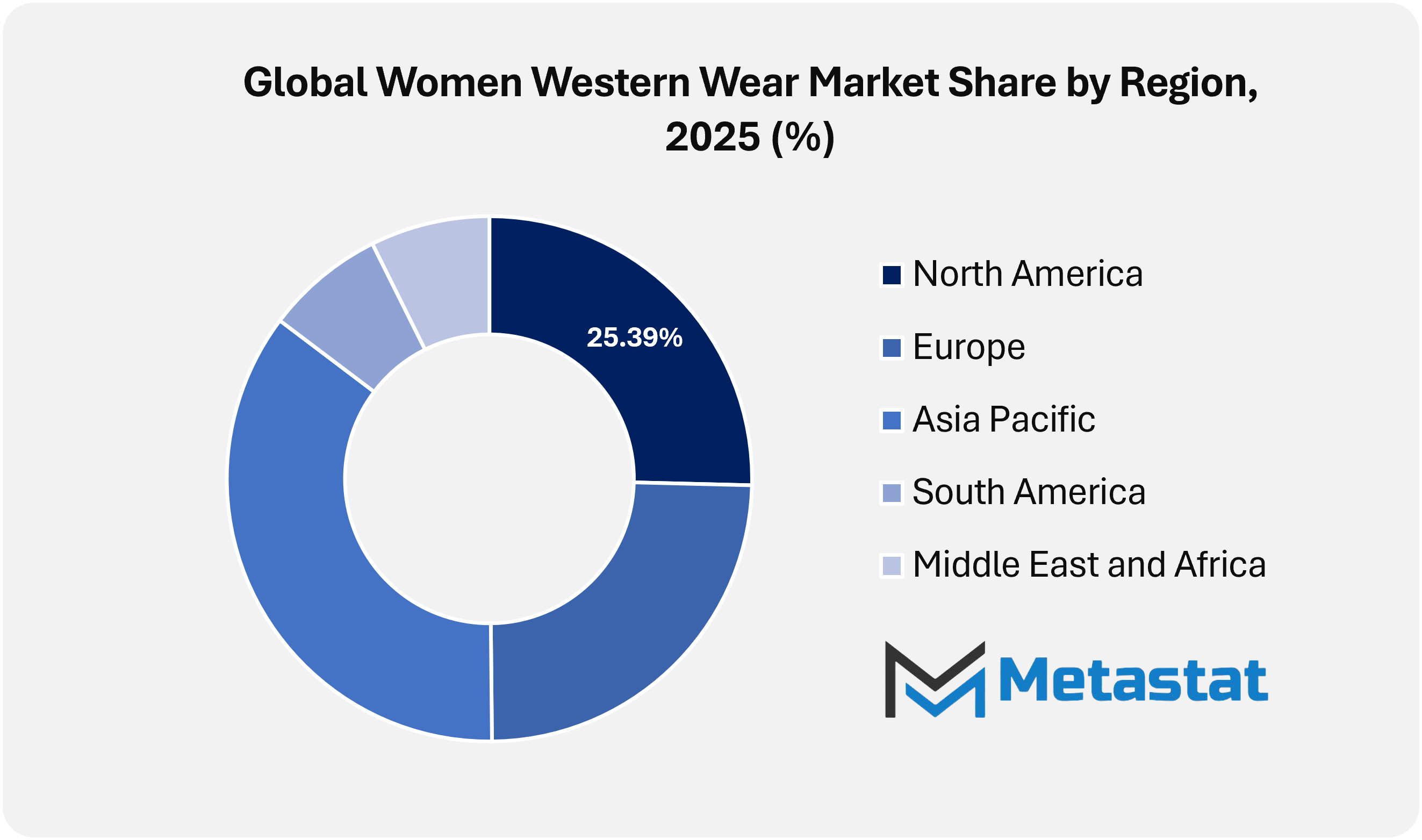
The global Women's Western Wear marketplace continues to grow through a strong blend of fashion recognition, social media publicity, and converting lifestyle alternatives amongst ladies across regions. Clothing stimulated via western silhouettes has moved past occasional put on and entered everyday wardrobes, office areas, and casual outings. Consumers increasingly seek comfort paired with style, which is supporting steady demand across age groups. The upward thrust of online purchasing and short access to worldwide developments has also reshaped shopping behavior, allowing brands to reach customers a long way past physical stores.
Fast fashion and top-rate labels play one-of-a-kind but related roles within the marketplace. Brands such as Zara, H&M, UNIQLO, SHEIN, Mango, Primark, Gap, Old Navy, Banana Republic, and Athleta are raising awareness on accessibility, trend pace, and pricing flexibility. At the same time, labels like COS, ARKET, & Other Stories, Monki, Massimo Dutti, and Oysho cater to consumers seeking refined designs and higher material quality. This stability between affordability and increased style will continue to shape purchaser loyalty and purchasing styles.
A broad mix of competitors is intensifying competition and sustaining innovation across casualwear, denim, formalwear, and athleisure. Brands such as Bershka, Pull&Bear, Stradivarius, Lefties, Vero Moda, ONLY, VILA, Sinsay, Mohito, ASOS, boohoo, PrettyLittleThing, Nasty Gal, Karen Millen, Coast, and Oasis replicate the market’s focus on children-driven style and virtual-first techniques. Alongside them, American Eagle Outfitters, Aerie, Abercrombie & Fitch, Hollister, Levi’s, Calvin Klein, Tommy Hilfiger, and Ralph Lauren carry strong emblem historical past, constant fits, and lengthy-time period accept as true with among consumers.
Looking ahead, the market will benefit from rising interest in inclusive sizing, sustainable fabrics, and bendy styling alternatives that move without problems between work and entertainment. With global exposure increasing through digital platforms and cross-border retail, the Women's Western Wear Market will remain dynamic, competitive, and closely tied to how modern women express comfort and confidence through apparel.
Market size is forecast to rise from USD 39.3 billion in 2025 to over USD 63.5 billion by 2033.
The Global Women's Western Wear Market will position itself as a reflection of evolving self-expression, where apparel functions not as a static product category but as a dynamic interface between individuality, technology, and modern living.
Report Coverage
This research report categorizes the Women's Western Wear market based on key segments and regions, forecasts revenue growth, and analyses trends in each submarket. The report analyses the key growth drivers, opportunities, and challenges influencing the Women's Western Wear market. Recent market developments and competitive strategies such as expansion, product launch, partnership, merger, and acquisition have been included to draw the competitive landscape in the market.
The report strategically identifies and profiles the key market players and analyses their core competencies in each sub-segment of the Women's Western Wear market.
|
Report Attributes |
Details |
|
Study Period |
2021-2033 |
|
Base Year |
2025 |
|
Estimated Year |
2026 |
|
Forecast Period |
2026-2033 |
|
Historical Period |
2021-2025 |
|
Growth Rate |
CAGR 6.2% from 2026 to 2033 |
|
Revenue Unit |
USD billion |
|
Sales Volume Unit |
Thousand Units |
|
Segmentation |
By Product Type, Material Type, Age Group, Distribution Channel, and Region |
|
By Region |
North America (By Product Type, Material Type, Age Group, Distribution Channel, and Country)
|
|
Europe (By Product Type, Material Type, Age Group, Distribution Channel, and Country)
|
|
|
Asia Pacific (By Product Type, Material Type, Age Group, Distribution Channel, and Country)
|
|
|
South America (By Product Type, Material Type, Age Group, Distribution Channel, and Country)
|
|
|
Middle East and Africa (By Product Type, Material Type, Age Group, Distribution Channel, and Country)
|
WHAT REPORT PROVIDES
Find answers to common questions about this report
High competition from unorganized retail and low-cost fashion imports with compressing margins will hamper market growth within the forecast period.
Rising influence of fast fashion, social media, and global trend diffusion expanding adoption of Western-style apparel and Increased participation of women in the workforce accelerating demand for versatile formal and casual wear are key driving factors, boosting the market.
Global Women's Western Wear market is estimated to reach USD 63.5 billion by 2033.
Top players operating in the Women's Western Wear industry include Zara, H&M, UNIQLO, SHEIN, Mango, Primark, and Gap.
Tops are the leading type of segment in the Global market.
The Global Women's Western Wear market is likely to grow at a CAGR of 6.2% over the forecast period (2026-2033).
The Metastat Insights study shows that the Global Women's Western Wear market size was USD 39.3 billion in 2025.
The Metastat Insights analysis shows that the North America Women's Western Wear market size is estimated to be USD 14.6 billion by 2033.
Asia Pacific region dominates the market.
The analysts below cover Consumer Goods research at Metastat Insights.
LEAD ANALYST
Utkarsh Khirodkar is a Lead Market Research Analyst at MetaStat Insight, specializing in market intelligence, technology sector assessments, and competitive strategy.
Assessing 200mm wafer transition schedules and substrate supply bottlenecks requires precise technical intelligence. MetaStat Insight supplied an actionable breakdown comparing planar and trench MOSFET architectures across automotive and industrial drive markets. The regional capacity estimates for Asia-Pacific foundries helped clarify lead-time uncertainties during our strategic planning session. When we needed additional clarification on high-purity raw material sourcing, their analyst team responded with helpful context within twenty-four hours.
Tracking maintenance cycle demand for secondary flight display units and terrain collision avoidance systems across regional jet fleets involves complex aftermarket dynamics. MetaStat Insight provided practical analysis separating airline retrofit programs from OEM forward-fit production schedules in North America and Southeast Asia. The supplier matrix highlighted component obsolescence timelines without resorting to vague generalizations. The dataset served as a dependable reference during our annual program review meetings.
Evaluating secondary resin quality across post-consumer packaging streams requires reliable technical segmentation. MetaStat Insight delivered an objective assessment that distinguished between extrusion-grade flake pricing and optical sorting throughput limitations across Western Europe. The competitive positioning breakdown for licensed depolymerization technology providers answered several questions during our feedstock feasibility audit. Their team clarified regional trade restrictions on mixed plastic scrap quickly when our team submitted follow-up requests.
Explore related market intelligence reports worth reading alongside this one.