
LEAD ANALYST
Utkarsh Khirodkar is a Lead Market Research Analyst at MetaStat Insight, specializing in market intelligence, technology sector assessments, and competitive strategy.

Global Activated Carbon Recycling and Reactivation Service Market Size, Share, By Service Type (Reactivation and Regeneration Processing, Spent Carbon Recovery and Reconditioning, Collection, Changeout and Logistics, Testing and Quality Certification), By Carbon Form (Granular Activated Carbon, Extruded and Pelletized Activated Carbon), By Application (Drinking Water Purification, Wastewater and Groundwater Treatment, Air and Gas Purification, Process Liquid Purification and Decolorization, Precious Metal Recovery), By End-Use Industry (Municipal Water and Wastewater Utilities, Chemicals and Petrochemicals, Food and Beverages, Pharmaceuticals and Biotechnology, Oil and Gas, Mining and Metallurgy, Industrial Manufacturing, Waste Management and Remediation), Industry Analysis, Growth, Trends, and Forecast, 2026-2033
Report ID
MSI-2650
Published
October, 2026
Pages
294 Pages
Format
Historical
Base year
Forecast
Forecast period
Report Details
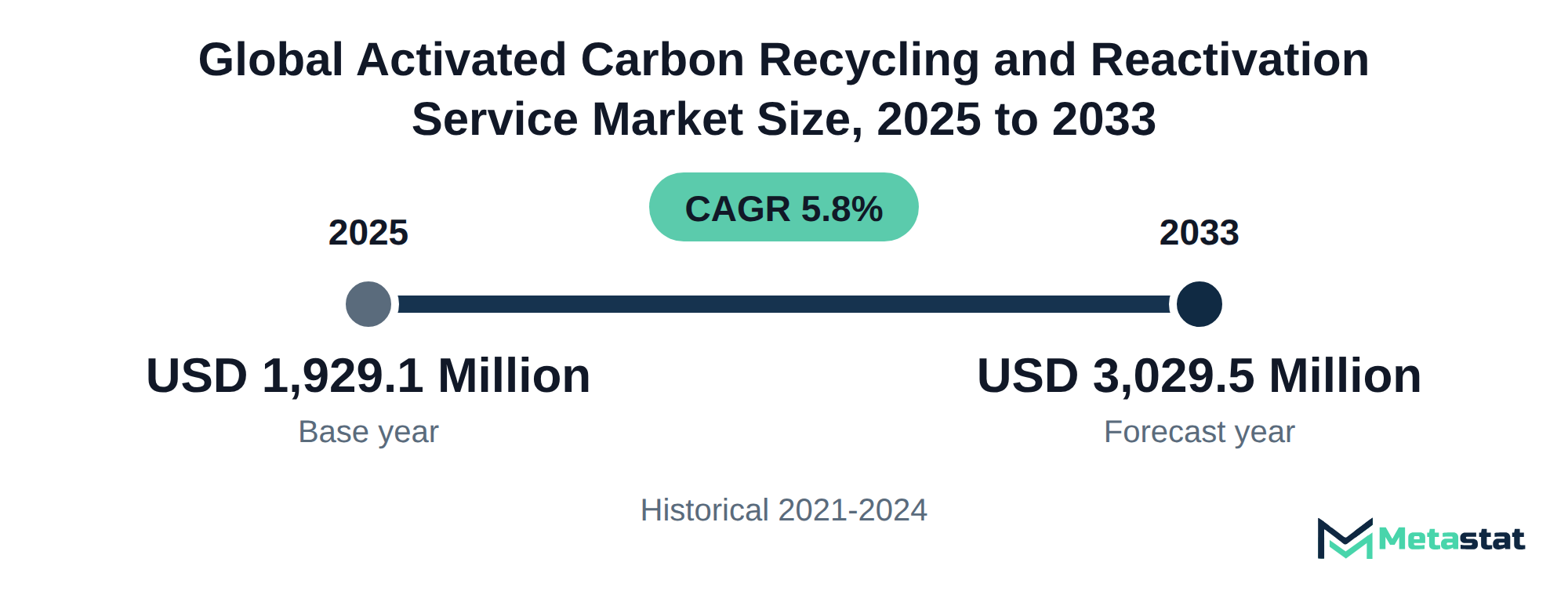
Market Valuation: Valued at $1,929.1 Million in 2025, projected to reach $3,029.5 Million by 2033 at a 5.8% CAGR.
Dominant Segment: Reactivation and Regeneration Processing leads the market, driven by its critical role in restoring activated carbon efficiency for applications such as water purification.
Geographic Lead: North America is projected to dominate the market, holding 46.4% in 2025, with the US leading due to its advanced industrial infrastructure and stringent environmental regulations.
What's Inside: The report provides a comprehensive analysis of market dynamics, competitive landscape, and detailed forecasts from 2026 to 2033, covering various service types, carbon forms, and applications.
Emerging Opportunities: The drinking water purification segment is set for significant growth, driven by regulatory pressures and public health concerns, making it a key focus for service providers.
Technological Advancements: Innovations in reactivation technology are enhancing operational efficiency and recovery rates, attracting industries focused on sustainability and resource optimization.
Choose Your License
Global Activated Carbon Recycling and Reactivation Service Market
The global Activated Carbon Recycling and Reactivation Service market was valued at USD 1,929.1 million in 2025 and is projected to reach USD 3,029.5 million by 2033, growing at a CAGR of 5.8% over the forecast period.
The Activated Carbon Recycling and Reactivation Service market encompasses various processes and technologies aimed at regenerating and recycling activated carbon, which is critical for applications in air and water purification. Buyers invest in these services primarily to enhance sustainability efforts, reduce operational costs, and comply with environmental regulations. The market serves multiple end-use industries, including municipal water utilities, chemicals, and pharmaceuticals, which rely on effective carbon solutions to maintain quality and efficiency in their operations.
Growth in the market is fueled by increasing environmental awareness and regulatory pressures that drive the adoption of sustainable practices. The segment focusing on Reactivation and Regeneration Processing holds the largest value, reflecting its significance in restoring the efficiency of activated carbon. North America holds 46.4% of the market in 2025, with the US leading in 2026. This region's dominance is attributed to its advanced industrial infrastructure and stringent environmental standards that stimulate demand for effective recycling solutions.
The demand for activated carbon services expands due to advancements in technology that enhance the efficiency of reactivation processes. Innovations in testing and quality certification provide assurance to buyers regarding the performance of reactivated carbon. Industries seek reliable and cost-effective solutions, and the Activated Carbon Recycling and Reactivation Service market is projected to see sustained growth, driven by a commitment to environmental responsibility and efficient operations.
The Activated Carbon Recycling and Reactivation Service market serves industries focused on maintaining environmental standards and efficiency in resource use. Buyers invest in these services to enhance the lifespan of activated carbon, ensuring compliance with regulatory requirements. This market addresses the growing demand for sustainable practices, particularly within water treatment, air purification, and waste management sectors.
Growth in the market is driven by an increasing emphasis on sustainability and environmental protection across various industries. The reactivation and regeneration processing segment holds the most value, reflecting strong interest in maximizing the utility of activated carbon. This region's focus on advanced water treatment solutions and stringent environmental regulations significantly boosts demand.
The market experiences notable advancements in technology, driving innovation and efficiency in reactivation processes. The rising awareness of environmental issues compels industries to seek effective solutions for carbon management. These factors support a positive outlook for the activated carbon reactivation sector and encourage further investment and expansion.
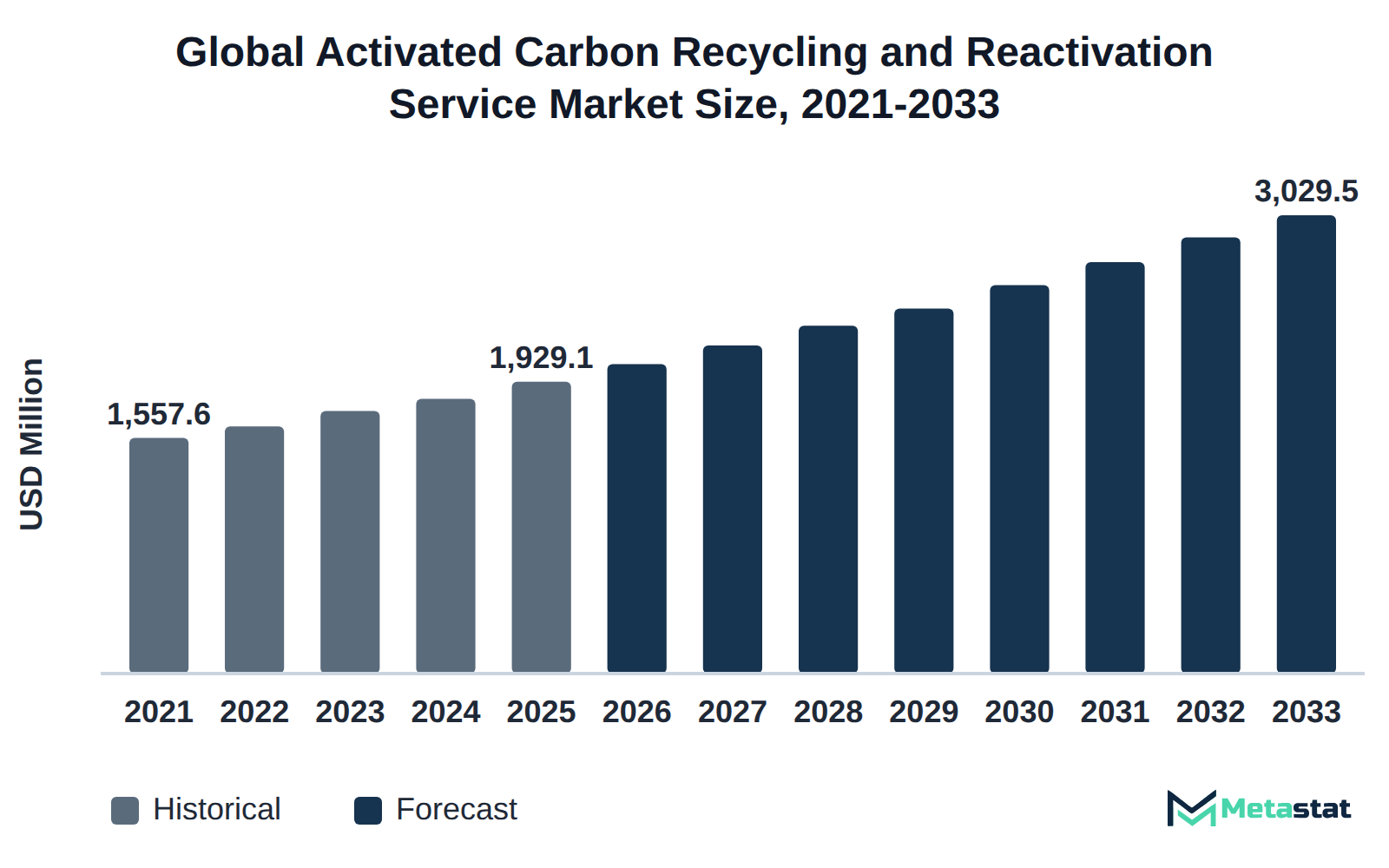
The acceptance of PFAS-laden carbon is a critical consideration within the Activated Carbon Recycling and Reactivation Service market. Regulations surrounding the disposal and treatment of PFAS (per- and polyfluoroalkyl substances) have intensified, prompting service providers to enhance their operational protocols. For instance, reactivation and regeneration processing, projected to grow from USD 1,447.4 million in 2026 to USD 2,171.5 million by 2033, reflects an increased focus on efficient handling and processing of contaminated carbon materials.
Furnace conditions play a significant role in the reactivation of PFAS-laden carbon. Specific temperatures and oxygen levels align with environmental regulations to ensure effective destruction of PFAS, which are notoriously resistant to degradation. The operational adjustments required to meet these standards increase costs but position companies to capture a growing segment of the market that prioritizes compliance and environmental responsibility.
Chain-of-custody requirements become essential in ensuring traceability throughout the recycling process. Proper documentation and monitoring mitigate risks associated with PFAS contamination, strengthening client trust and market reputation. Companies that implement strict chain-of-custody practices strengthen their competitive position and build long-term partnerships with industries that prioritize sustainability and compliance.
Purchasing arrangements for activated carbon reactivation services vary significantly, impacting cost and operational efficiency. Buyers engage in dedicated-batch contracts, ensuring specific quantities of carbon are reactivated for a premium price, which typically includes guarantees for carbon loss, purity, and return. This approach provides greater control over the quality of reactivated carbon, leading to enhanced performance in applications including municipal water purification.
Pooled reactivation contracts, on the other hand, allow multiple buyers to share resources, resulting in reduced costs per unit for each participant. This model presents an opportunity for several smaller players to access high-quality reactivation services without incurring the full expenses associated with dedicated-batch processing. However, pooling leads to variability in carbon quality and potential challenges in tracking individual contributions. Buyers in the activated carbon reactivation market weigh which contract model fits their operational goals and budget constraints, which shapes purchasing decisions and market dynamics.
The specific reactivation capacity of carbon processing facilities influences operational efficiency in the Activated Carbon Recycling and Reactivation Service market. Regional variations in reactivation capacity affect logistics and overall cost structures. North America holds a projected value of USD 1,309 million by 2033. The higher reactivation capacity in this region allows for more efficient processing of spent carbon, reducing the overall costs associated with haulage and reactivation.
Long haul distances inflate expenses related to transportation and logistics. Buyers focusing on reactivation and regeneration processing consider facility locations relative to operational sites. Regions with concentrated reactivation facilities, including North America, provide advantages in terms of reduced transportation costs and shorter turnaround times, enhancing the overall economics of carbon reuse. While demand for reactivated carbon grows, optimizing reactivation operations becomes critical for buyers aiming to reduce costs and increase sustainability in their processes.
Activated carbon reactivation offers a cost-effective solution compared to virgin carbon replacement when operating conditions support the regeneration of spent carbon. The Activated Carbon Recycling and Reactivation Service market reflects a growing trend towards reactivation. The projected value of reactivation and regeneration processing supports this trend, rising from USD 1,447.4 million in 2026 to USD 2,171.5 million by 2033, a compound annual growth rate of 6%. This growth indicates an increasing recognition of the economic benefits associated with reactivation.
For industries including municipal water and wastewater utilities, reactivation reduces operational costs significantly while maintaining effective filtration performance in water and wastewater treatment systems. By regenerating spent carbon instead of purchasing new, companies save on material expenses, which becomes crucial in budget-sensitive sectors. The market dynamics demonstrate that the ability to recover and reuse activated carbon enhances sustainability and drives profitability through reduced procurement costs. Thus, organizations in high-consumption sectors benefit from adopting activated carbon reactivation practices.
Growing pressure to meet environmental targets drives heightened investment in reactivation services. Municipal water and wastewater utilities lead this trend, motivated by the need to improve water purification processes while managing costs. This shift results in increased demand for activated carbon recycling and reactivation services, directly impacting service volume and pricing structures. The drinking water purification application demonstrates a strong growth trajectory, with demand projected to expand at a CAGR of 6.8% from USD 637.7 million in 2026 to USD 1,008.2 million by 2033. The activated carbon recycling and reactivation service market stands to benefit from these trends, capturing the attention of buyers focused on sustainable solutions.
Advancements in carbon reactivation technology enhance the efficiency and effectiveness of the Activated Carbon Recycling and Reactivation Service market. Innovative processes, including thermal and chemical methods, improve recovery rates and reduce operational costs. These developments attract utilities and industrial sectors seeking to optimize resource use while minimizing waste. Enhanced reactivation techniques ensure the regeneration of activated carbon meets stringent performance standards, addressing concerns related to environmental compliance. This focus on technological improvements strengthens operational capabilities and expands the market's appeal to a broader range of industries. The integration of process automation and instrumentation, including real-time monitoring, further supports precision in reactivation processes, boosting overall productivity. These technological advancements drive increased investment in reactivation facilities, reflecting a commitment to sustainable practices and resource conservation. In turn, this trend creates competitive dynamics within the market, enabling suppliers to differentiate their offerings and capture larger shares.
High operational costs significantly affect the adoption of activated carbon recycling and reactivation services. Industries reliant on these services, including municipal water and wastewater utilities, face challenges related to rising energy prices and maintenance expenses. These costs lead to slower uptake of reactivation processes and smaller order quantities, with companies evaluating budgets and return on investment. The financial burden of maintaining equipment, coupled with the necessity for skilled labor, results in delayed replacement of spent carbon. Reactivation facilities can contain equipment upkeep costs through predictive maintenance programs. Increased scrutiny on operational efficiency drives companies to seek cost-effective solutions. However, high service fees hinder expansion within the activated carbon recycling and reactivation service market. Consequently, businesses prioritize alternative methods or suppliers, impacting market dynamics and growth potential.
Talent costs present a significant challenge for suppliers within the Activated Carbon Recycling and Reactivation Service market. Recruiting and retaining skilled personnel capable of managing complex reactivation processes incurs substantial expenses, particularly in regions with high competition for specialized labor. This situation results in increased operational costs, which directly impacts profit margins for service providers.
To address rising talent costs, several suppliers are investing in training programs aimed at enhancing employee skill levels and operational efficiency. Several companies are exploring automation and advanced technologies to reduce dependency on labor-intensive processes, thus mitigating overall costs. This strategic focus on talent development and technological integration supports long-term sustainability and competitiveness within the market.
Significant growth in the drinking water purification segment offers a compelling opportunity within the Activated Carbon Recycling and Reactivation Service market. Demand for effective water and wastewater treatment technology arises from increasing regulatory pressures and public health concerns surrounding water quality. The heightened focus on ensuring safe drinking water drives investment in advanced reactivation processes, benefiting both service providers and consumers.
The need for sustainable reactivation solutions in water purification applications enhances the viability of businesses specializing in activated carbon services. Suppliers that provide high-quality reactivation services align well with the rising expectations of municipal utilities and other stakeholders seeking effective water treatment options. By addressing these specific needs, companies secure a strong foothold in this rapidly growing market segment.
The Global Activated Carbon Recycling and Reactivation Service market is segmented based on Service Type, Carbon Form, Application, and End-Use Industry.
Reactivation and regeneration processing restores the functionality of spent activated carbon, which is primarily used in applications including water purification and air filtration. Municipal water and wastewater utilities represent a significant user group, driven by stringent regulatory requirements and the quest for sustainable practices. The segment differentiates itself with a higher growth rate compared to other service types, including the Spent Carbon Recovery and Reconditioning segment, which holds a CAGR of 4.5%. Factors including advancements in reactivation technology enhance operational efficiency, while the focus on environmental sustainability supports greater adoption and demand in the market. Overall, the segment’s strategic importance in maintaining quality standards aligns with the growing emphasis on eco-friendly practices.
Spent Carbon Recovery and Reconditioning segment is estimated to reach USD 194.2 million by 2033, at a CAGR of 4.5% during the forecast period. This segment focuses on the reclamation and processing of spent activated carbon, which often occurs in industries including municipal water treatment, chemicals, and pharmaceuticals. The shift towards sustainable practices increases demand for recovery services, driven by regulations that encourage recycling and resource conservation. Compared to other service types, this segment experiences slower growth, reflected in its CAGR of 4.5%, contrasting with the 6% growth forecasted for Reactivation and Regeneration Processing. The emphasis on cost reduction and environmental compliance differentiates this segment, appealing to industries prioritizing sustainability while managing operational costs.
The Collection, Changeout and Logistics segment is expected to reach USD 540.2 million by 2033. This segment involves the management and transportation of spent activated carbon, ensuring timely changeouts and logistical support for various industries, including municipal water treatment and wastewater management. Strong demand arises from the increasing focus on sustainable practices and regulatory compliance, driving investments in effective carbon management solutions. The segment features a slower growth rate compared to Reactivation and Regeneration Processing, which has a CAGR of 6%. The unique operational needs and distinct buyer profiles in this segment differentiate it from others, particularly as companies prioritize efficient collection and changeout processes to adhere to environmental standards. The market increasingly prioritizes innovation in logistics and tracking systems to enhance operational efficiency.
The Testing and Quality Certification segment is projected to grow at a CAGR of 6.6% during the forecast period. This segment focuses on evaluating and certifying the quality of reactivated carbon products, ensuring they meet industry standards and regulations. This work draws on environmental testing methods to confirm that regenerated carbon meets purification requirements. Municipal water and wastewater utilities, among other industries, require reliable testing to validate the effectiveness of activated carbon in purification processes. Demand for stringent quality assurance drives the growth of this segment, distinguishing it from others due to its emphasis on compliance and safety. The focus on regulatory alignment and quality control results in higher operational costs, impacting overall pricing strategies in the segment. Compared to the Reactivation and Regeneration Processing segment, which has a faster growth rate, Testing and Quality Certification addresses specific compliance needs, making it a critical, albeit slower-growing, component of the market.
Granular Activated Carbon segment is valued at USD 1,650.1 million in 2026 and is projected to reach USD 2,468.4 million by 2033, at a CAGR of 5.9% during the forecast period. This type of activated carbon is widely used for applications including water purification, air filtration, and industrial processes, attracting buyers in sectors including municipal utilities and manufacturing. Increasing demand for effective drinking water purification drives growth within this segment, with a notable CAGR of 6.8% expected in the associated application area. In contrast to other carbon forms, this segment exhibits a more significant growth trajectory, reflecting its critical role in environmental sustainability and health standards. The market's focus on granular activated carbon highlights its effectiveness and efficiency compared to alternatives, which reflect slower growth or different pricing dynamics.
Extruded and Pelletized Activated Carbon segment is estimated to reach USD 515.9 million by 2033, at a CAGR of 4.9% during the forecast period. This form of activated carbon finds extensive use in applications including air and gas purification, where its unique shape enhances flow and adsorption efficiency. The primary customers include industries focused on environmental compliance, including food and beverages and pharmaceuticals that require stringent quality control measures. Key factors driving growth in this segment include increasing regulations on air quality and rising demand for sustainable solutions. Compared to Granular Activated Carbon, which has a CAGR of 5.9%, this segment exhibits a slower growth rate, reflecting its narrower range of applications and specific industry requirements. Competitive pricing of alternative carbon forms contributes to the unique positioning of this segment in the market.
USD 45.1 million is the projected market valuation for Others (Spherical and Fibrous Carbon) by 2033. This segment primarily serves industries requiring specialized filtration solutions, particularly in applications where unique shapes enhance adsorption properties. Users include sectors focused on air and gas purification, where these unique carbon forms provide effective treatment solutions. The growth of this segment is influenced by increasing demand for advanced filtration solutions, driven by regulatory pressures for cleaner air and water. Compared to other segments, this one experiences slower growth, reflecting a more niche market with a specific buyer base. Other segments, including Granular Activated Carbon, benefit from broader applications and higher growth rates, with a CAGR of 5.9% projected during the same period. The activated carbon recycling and reactivation service market continues to support diverse applications across multiple industries.
The drinking water purification segment serves municipalities and private water treatment facilities aiming to ensure safe drinking water through advanced filtration processes. Increasing regulatory demands for clean water and rising public health awareness drive segment growth. Compared to other applications, the drinking water purification segment exhibits a higher growth rate, reflecting the critical need for accessible drinking water solutions. Regulatory frameworks enforcing stringent water quality standards create a favorable environment for investment, which supports the market. The focus on environmental sustainability further increases interest in reactivation services, reinforcing the segment's importance in the broader Activated Carbon Recycling and Reactivation Service market.
Wastewater and Groundwater Treatment segment is estimated to reach USD 791.9 million by 2033, at a CAGR of 6.6% during the forecast period. This segment serves crucial roles in municipal and industrial applications, focusing on the purification of contaminated water sources to ensure safety and compliance with environmental regulations. Increasing regulations regarding water quality and wastewater management drive demand for effective treatment solutions. The segment benefits from the growing emphasis on sustainability and resource recovery, distinguishing it from other segments within the market. Compared to other applications, it experiences a faster growth rate due to heightened environmental awareness and investment in upgrading aging infrastructure. This positioning allows the segment to attract significant interest from utilities and industrial sectors seeking to enhance operational efficiency and environmental compliance.
The Air and Gas Purification segment is expected to reach USD 583.8 million by 2033. This segment focuses on removing contaminants and pollutants from atmospheric air and gases, widely employed by industries including manufacturing, pharmaceuticals, and food processing. Growth in this segment is driven by increasing regulations on air quality and rising awareness of environmental sustainability among consumers. Industrial operators often use emission monitoring systems to demonstrate compliance with air quality regulations. Unlike other segments, Air and Gas Purification experiences a higher growth rate, with a projected CAGR of 6.6%, reflecting an urgent demand for cleaner air solutions. The need for advanced filtration technologies and systems, coupled with pressure to adhere to stringent emissions standards, highlights the segment's unique position within the Activated Carbon Recycling and Reactivation Service market. Enhanced reactivation methods for spent carbon are vital for meeting the evolving requirements of this application, ensuring effective and sustainable air purification processes.
Process Liquid Purification and Decolorization segment is projected to grow at a CAGR of 3.8% during the forecast period. This segment focuses on the treatment of liquids, targeting the removal of impurities to ensure compliance with environmental standards and enhance product quality. Primarily employed by industries dealing with chemical processing, pharmaceuticals, and food production, this segment stands distinct due to its specific application in high-purity scenarios. The increasing regulatory emphasis on environmental compliance drives demand for advanced purification solutions, influencing growth. Compared to other applications, including Drinking Water Purification, which is anticipated to grow at a CAGR of 6.8%, Process Liquid Purification and Decolorization exhibits slower growth, reflecting the specialized nature of its applications and market needs. The market continues to evolve, responding to environmental regulations that necessitate effective liquid treatment technologies.
Precious Metal Recovery involves the extraction of valuable metals from spent activated carbon. Industries including mining, electronics, and recycling facilities engage this service to recover precious metals, driven by economic incentives and sustainability goals. The increasing value of precious metals significantly impacts this segment, leading to heightened demand for efficient recovery solutions. Unlike other segments, Precious Metal Recovery focuses on higher-value outputs, attracting specialized buyers willing to invest in advanced reactivation services. Technological advancements in recovery methods are emerging, presenting opportunities for growth within the market, particularly in regions with strong mining activities.
Catalyst Support Regeneration involves the reactivation of used catalysts, facilitating their reuse in various industrial processes. This application is particularly relevant to manufacturers in the chemical and petrochemical industries, where catalyst efficiency directly impacts production costs and product quality. The segment experiences growth driven by increasing emphasis on sustainability and cost-effectiveness in industrial operations. Companies prioritize processes that minimize waste and maximize resource utilization, thus enhancing demand for catalyst regeneration services. Unlike other applications, this segment encounters unique challenges, including stringent regulatory requirements and the need for specialized technology to ensure optimal regeneration results. Such factors contribute to a distinct market dynamic, positioning the segment differently from others in terms of service delivery and pricing strategies. The Activated Carbon Recycling and Reactivation Service market evolves, reflecting these diverse needs and challenges in catalyst management.
Municipal Water and Wastewater Utilities segment is valued at USD 738.7 million in 2026 and is projected to reach USD 1,156.4 million by 2033, at a CAGR of 6.6% during the forecast period. This segment serves municipal authorities and water treatment facilities that require effective solutions for water purification and wastewater management. The increasing focus on water quality and environmental regulations drives demand in this sector. The segment distinguishes itself from others by its relatively high growth rate compared to segments including Chemicals and Petrochemicals, which has a CAGR of 5%. Compliance with regulations regarding water treatment processes and rising public awareness surrounding water safety stimulate investment in reactivation and recycling services. Such dynamics position this sub-segment as a critical driver in the overall Activated Carbon Recycling and Reactivation Service market.
Chemicals and Petrochemicals segment is estimated to reach USD 521.4 million by 2033, at a CAGR of 5% during the forecast period. This segment primarily serves industries involved in producing chemicals and petrochemical products, using activated carbon for processes including purification and decolorization. Demand for activated carbon within this segment is driven by stringent environmental regulations that require enhanced treatment of waste and emissions. Compared to other segments, including Municipal Water and Wastewater Utilities, which shows a higher growth rate at a CAGR of 6.6%, the Chemicals and Petrochemicals segment exhibits steadier growth. The need for sustainable practices further stimulates investments in activated carbon recycling and reactivation services, positioning the market favorably for continued expansion.
The Food and Beverages segment is expected to reach USD 347.2 million by 2033. This segment primarily serves manufacturers in the food and beverage industry, focusing on ensuring product quality and safety through effective purification processes. Key drivers include increasing demand for high-quality food and beverage products and stringent regulatory requirements for safety standards. Compared to other segments, this area experiences slower growth, reflected in a compound annual growth rate (CAGR) of 6.6%. The segment's specific focus on purification techniques differentiates it from others, including Water and Wastewater Treatment, which has a higher growth rate. The Activated Carbon Recycling and Reactivation Service market is expected to see sustained interest from these manufacturers seeking innovative solutions to meet evolving consumer preferences and regulatory frameworks.
USD 347.2 million is the projected market valuation for the Pharmaceuticals and Biotechnology segment by 2033. This segment serves various applications in drug development, production, and quality control within the pharmaceutical industry. Demand for activated carbon in this segment is driven by stringent regulatory requirements regarding drug purity and safety, influencing manufacturers to invest in high-quality carbon solutions. Compared to other segments, this segment experiences steady growth, projected at a CAGR of 6.6% during the forecast period. The specialized nature of the pharmaceuticals market necessitates higher-grade activated carbon, differentiating it from sectors including food and beverages, which prioritize cost-effectiveness over stringent regulatory compliance. The Activated Carbon Recycling and Reactivation Service market benefits from this focused demand, supporting growth and investment opportunities.
Oil and Gas involves the extraction, refining, and distribution of petroleum and natural gas. Companies in this sector use activated carbon for various applications, including air and gas purification and the removal of impurities during refining processes. The segment experiences strong demand driven by increasing focus on environmental regulations, which necessitate cleaner production processes. Volatility in crude oil prices creates a challenge, impacting operational costs and investment decisions in this sector. Compared to other segments, this one often experiences slower growth due to high capital expenditures and regulatory requirements. Growth dynamics in the Activated Carbon Recycling and Reactivation Service market highlight the significance of this sector, reflecting its unique position in driving demand for activated carbon solutions.
Mining and Metallurgy encompasses the extraction and processing of minerals and metals in mining process plants, employing activated carbon for various applications including gold recovery and ore extraction. Industries involved in this segment include mining companies and metallurgy plants that rely on activated carbon for its efficiency in adsorption processes and chemical reactions. Demand for activated carbon in this segment is driven by increasing needs for sustainable and efficient techniques in mineral recovery. This sub-segment differentiates itself from others by focusing on specialized applications, leading to unique buyer requirements and potentially higher price points for tailored solutions. The emphasis on environmental regulations and sustainable practices increases the importance of activated carbon, positioning the Activated Carbon Recycling and Reactivation Service market to accommodate these industry needs.
The Industrial Manufacturing sector employs activated carbon for various applications, including air and gas purification, solvent recovery, and chemical processing. This segment serves industries focused on optimizing their manufacturing processes while minimizing environmental impact. Demand is driven by increased regulatory scrutiny on emissions and waste management practices. Companies in this sector actively seek technologies that enhance operational efficiency while adhering to stricter environmental regulations. Compared to other segments, the growth rate in Industrial Manufacturing differs due to higher capital investments required for advanced reactivation technologies. This segment faces specific challenges, including fluctuating prices for activated carbon and stringent compliance standards, which affect adoption rates. An increase in sustainability initiatives across industries further influences the demand for activated carbon solutions, positioning the market to adapt to evolving environmental priorities.
Waste Management and Remediation involves the processing and recovery of materials from waste streams, focusing on minimizing environmental impact. This segment serves municipal and industrial clients who handle hazardous waste, ensuring compliance with environmental regulations. Key factors driving growth include increasing awareness of sustainability and stringent regulatory frameworks. Demand for effective waste management solutions intensifies due to rising waste generation globally. Unlike other segments, this area experiences distinct challenges related to varying local regulations and the complexity of waste types, impacting pricing and service delivery. Other segments, including Municipal Water and Wastewater Utilities, focus more directly on treatment processes rather than waste recovery, reflecting differing priorities and operational approaches. The Activated Carbon Recycling and Reactivation Service market adapts to evolving environmental pressures, positioning this segment as crucial for responsible waste management practices.
Valued for its application in sectors like energy and electronics, this sub-segment focuses on the recovery and reconditioning of activated carbon used in power generation and electronic manufacturing processes. Industries including power generation use activated carbon for air pollution control and to enhance efficiency in energy production. The demand for sustainable practices in these sectors drives interest in reactivation services, highlighting the need for efficient waste management and resource recovery. Unlike other segments, the power generation and electronics focus on specific applications that require tailored solutions, differentiating it from broader uses in municipal water and chemical industries. This segment responds to regulatory pressures for environmental compliance and the pursuit of cost-effective operational practices, influencing how stakeholders invest in activated carbon recycling and reactivation services. The Activated Carbon Recycling and Reactivation Service market recognizes the significance of this sub-segment in addressing sustainability challenges across diverse industrial applications.
Based on geography, the Global Activated Carbon Recycling and Reactivation Service market is divided into North America, Europe, Asia-Pacific, South America, Middle East, and Africa.
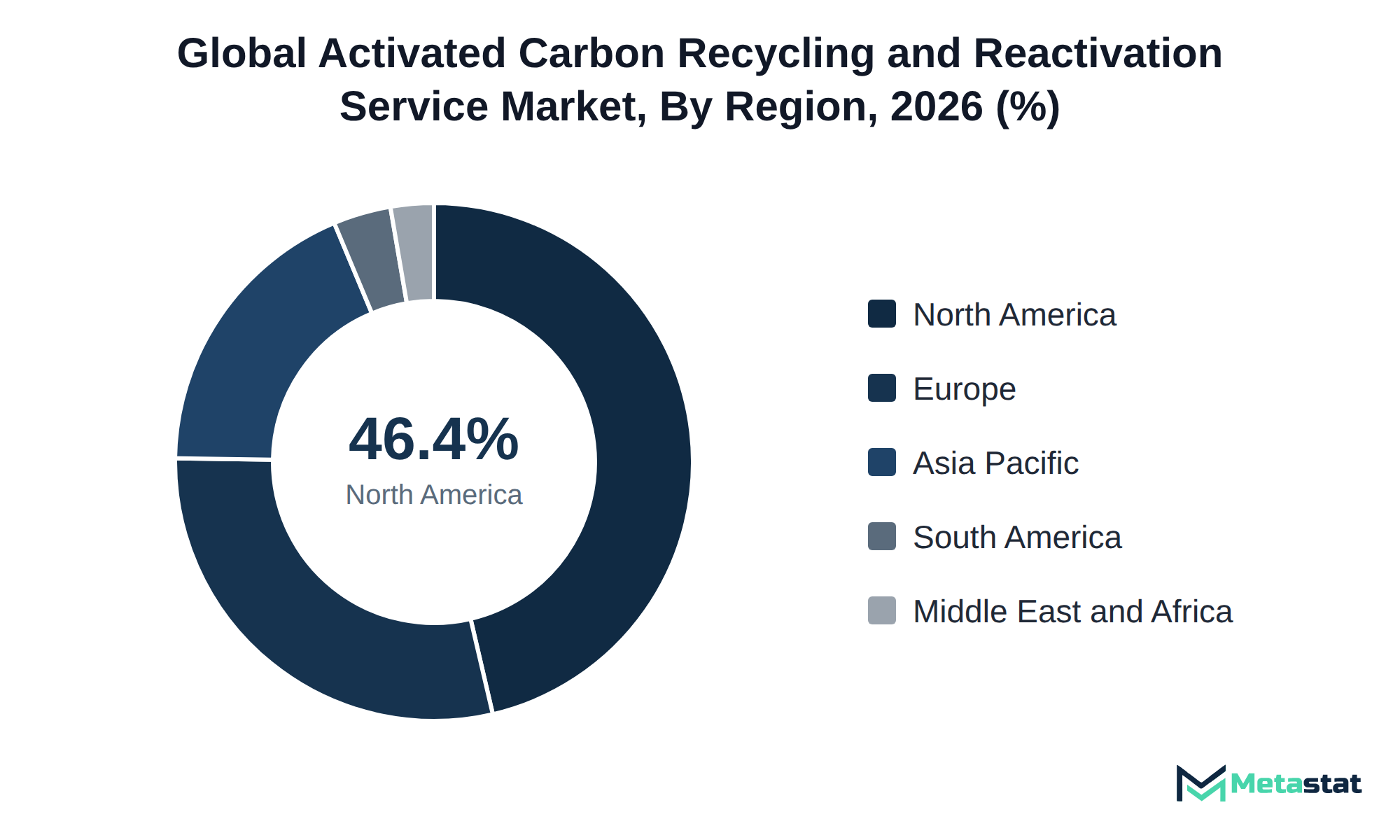
North America stands out in the Activated Carbon Recycling and Reactivation Service market, with a projected value of USD 1,309 million by the end of 2033. The region represents 46.4% of the global market share in 2025, driven primarily by demand from municipal water and wastewater utilities. Regulatory frameworks focused on water quality and environmental sustainability further stimulate growth in activated carbon applications. The presence of advanced infrastructure across the United States, Canada, and Mexico supports efficient service delivery and enhances operational capabilities for industry players. Key buyer groups within these countries prioritize reactivation and regeneration processing, highlighting the market's significance in maintaining water quality standards and supporting environmental initiatives.
The European market for Activated Carbon Recycling and Reactivation Service expands due to strong demand from municipal water and wastewater utilities. Countries including Germany, France, the UK, and Italy feature extensive infrastructure investments aimed at enhancing water treatment capabilities, which directly boosts the requirement for activated carbon solutions. Regulatory frameworks focused on environmental protection and water quality improvement drive the adoption of these services across the region. The market share for Europe is projected at 28.9% in 2025, reflecting a growth trajectory fueled by increased awareness and commitment to sustainable practices. The market is anticipated to achieve a significant valuation by 2033, indicating ongoing investment in carbon reactivation technologies.
Strong growth in the Activated Carbon Recycling and Reactivation Service market in the Asia-Pacific region stems from increasing demand in sectors including municipal water and wastewater utilities, drinking water purification, and wastewater and groundwater treatment. Countries like China and India invest significantly in infrastructure development and environmental regulations, driving the need for effective water treatment solutions. The market share in Asia-Pacific reached 18.5% in 2025, reflecting the region's growing emphasis on sustainability and resource recovery. Japan's advancements in technology and Australia’s stringent environmental policies further support the market's expansion. Southeast Asia's emerging economies increasingly adopt activated carbon solutions, contributing to overall growth. By 2033, the market is projected to reinforce its position as a critical component in environmental management strategies across the region.
Brazil and Argentina drive growth in the Activated Carbon Recycling and Reactivation Service market, fueled by increasing investments in water treatment and environmental compliance. The necessity for effective wastewater management supports rising demand from municipal utilities. Infrastructure improvements in both countries enhance access to reactivation services, enabling better recovery of spent carbon. With a projected market share of 3.6% in 2025, South America’s contribution to the overall market reflects a developing focus on sustainability in various industries. The growing importance of clean water initiatives and regulatory pressures emphasize the market potential within the region.
The market in the Middle East and Africa focuses primarily on demand from municipal water and wastewater utilities, which require effective solutions for water purification and treatment. Investment in infrastructure projects enhances access to clean water, driving the adoption of activated carbon technologies. The region features a share of 2.7% in the global Activated Carbon Recycling and Reactivation Service market in 2025. Countries including Saudi Arabia and the UAE prioritize water management strategies to address water scarcity issues, leading to increased demand for water treatment solutions. South Africa's regulatory frameworks support the use of activated carbon for environmental compliance in various industries, further supporting the market's growth potential. The trend toward sustainable practices in water treatment is expected to generate opportunities in the reactivation and regeneration processing segment.
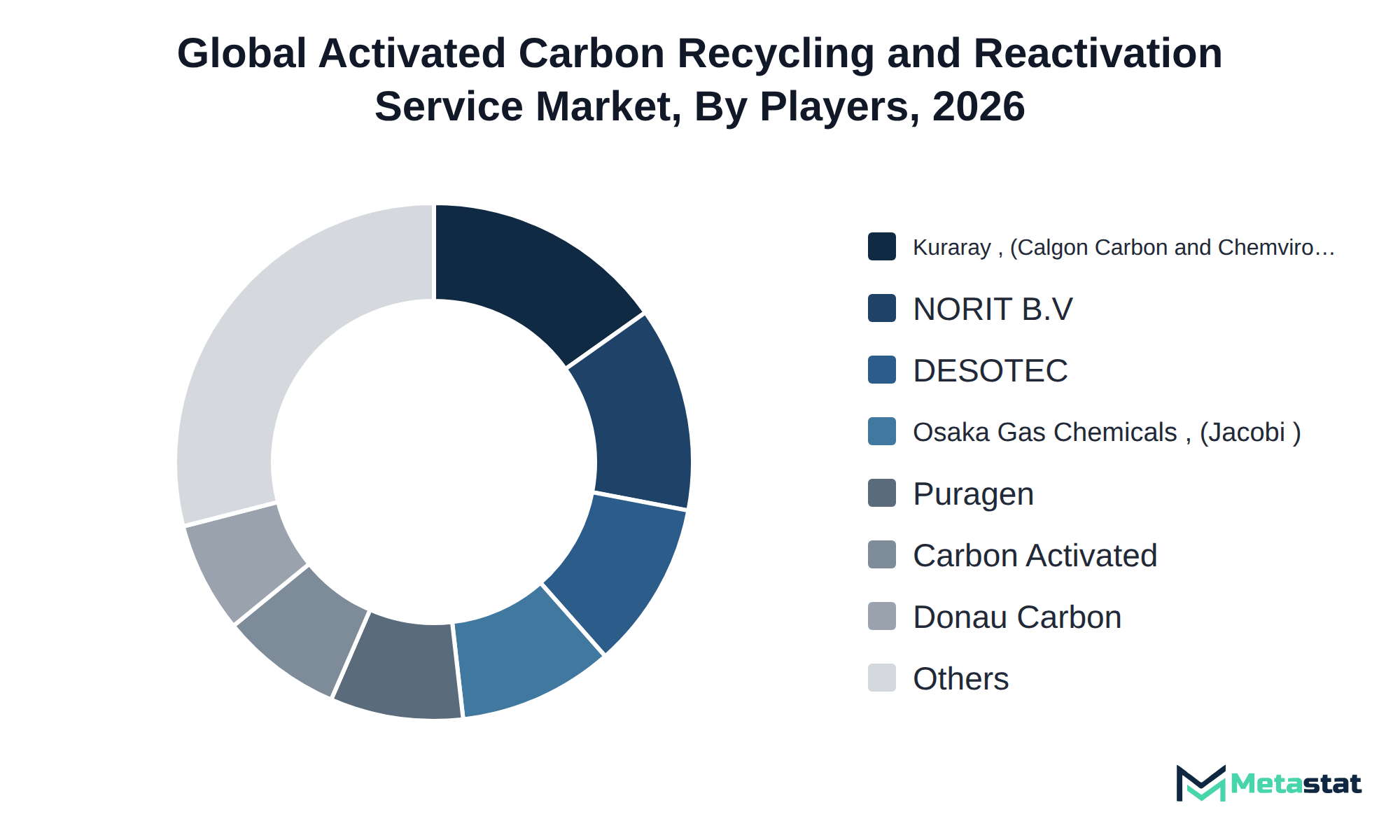
The Activated Carbon Recycling and Reactivation Service market exhibits a diverse competitive landscape where companies differentiate based on service offerings and specialization. Key segments include reactivation and regeneration processing, spent carbon recovery and reconditioning, and testing and quality certification. Players including Kuraray Co., Ltd. (Calgon Carbon and Chemviron) focus on reactivation and regeneration and use advanced technologies to optimize recovery processes. Other companies, including DESOTEC N.V. and NORIT B.V., emphasize quality certification and regulatory compliance, addressing growing buyer concerns regarding standards and certifications.
Buyers in the market prioritize factors including price, quality assurance, customization, and overall service efficiency when selecting providers. Companies including Osaka Gas Chemicals Co., Ltd. (Jacobi Group) and Puragen stand out for their tailored solutions that meet specific customer needs in various industries, including drinking water purification and wastewater treatment. This strategic focus on customization enhances their competitive positioning within the market.
The projected growth of the Activated Carbon Recycling and Reactivation Service market relies on several key developments. Strong demand in the municipal water and wastewater utilities sector underpins expectations for a significant increase in reactivation and regeneration processing services, projected to expand from USD 1,447.4 million in 2026 to USD 2,171.5 million by 2033. Conversely, a potential slowdown in growth stems from fluctuations in raw material prices, which could impact operational costs across various segments, particularly for spent carbon recovery and reconditioning services. The European market, comprising countries including Germany and France, faces challenges in sourcing quality activated carbon, which could hinder its ability to capitalize on projected growth opportunities. Addressing these risks will be essential for the market to reach expectations set for 2033.
By Service Type: Reactivation and Regeneration Processing, Spent Carbon Recovery and Reconditioning, Collection, Changeout and Logistics, Testing and Quality Certification
By Carbon Form: Granular Activated Carbon, Extruded and Pelletized Activated Carbon, Others (Spherical and Fibrous Carbon)
By Application: Drinking Water Purification, Wastewater and Groundwater Treatment, Air and Gas Purification, Process Liquid Purification and Decolorization, Precious Metal Recovery, Others (Catalyst Support Regeneration)
By End-Use Industry: Municipal Water and Wastewater Utilities, Chemicals and Petrochemicals, Food and Beverages, Pharmaceuticals and Biotechnology, Oil and Gas, Mining and Metallurgy, Industrial Manufacturing, Waste Management and Remediation, Others (Power Generation and Electronics)
The report strategically identifies and profiles the key market players and analyses their core competencies in each sub-segment of the Activated Carbon Recycling and Reactivation Service market.
|
Report Attributes |
Details |
|
Study Period |
2021-2033 |
|
Base Year |
2025 |
|
Estimated Year |
2026 |
|
Forecast Period |
2026-2033 |
|
Historical Period |
2021-2025 |
|
Growth Rate |
CAGR 5.8% from 2026 to 2033 |
|
Revenue Unit |
USD million |
|
Segmentation |
By Service Type, Carbon Form, Application, End-Use Industry, and Region |
|
By Region |
North America (By Service Type, Carbon Form, Application, End-Use Industry, and Country)
|
|
Europe (By Service Type, Carbon Form, Application, End-Use Industry, and Country)
|
|
|
Asia Pacific (By Service Type, Carbon Form, Application, End-Use Industry, and Country)
|
|
|
South America (By Service Type, Carbon Form, Application, End-Use Industry, and Country)
|
|
|
Middle East and Africa (By Service Type, Carbon Form, Application, End-Use Industry, and Country)
|
Find answers to common questions about this report
The Activated Carbon Recycling and Reactivation Service market size was valued at USD 1,929.1 million in 2025.
The market is projected to grow at a CAGR of 5.8% during the forecast period from 2026 to 2033.
The North America Activated Carbon Recycling and Reactivation Service market size is estimated to reach USD 1,309 million by 2033.
Reactivation and Regeneration Processing leads the Activated Carbon Recycling and Reactivation Service market with a value of USD 1,447.4 million in 2026. This segment shows the highest growth potential, reaching USD 2,171.5 million by 2033, reflecting a compound annual growth rate of 6%.
Growing pressure to meet environmental targets drives heightened investment in reactivation services, particularly among municipal water and wastewater utilities. Significant growth in the drinking water purification segment offers a compelling opportunity, with demand projected to expand at a CAGR of 6.8% from USD 637.7 million in 2026 to USD 1,008.2 million by 2033.
North America holds the dominant share of the Activated Carbon Recycling and Reactivation Service market, with a value of USD 1,309 million projected for 2033, representing 46.4 percent of the total market.
High operational costs significantly affect the adoption of these services. Rising energy prices and maintenance expenses lead to slower uptake of reactivation processes, as companies evaluate their budgets and return on investment.
Factors favoring adoption in the Activated Carbon Recycling and Reactivation Service market include significant growth in the drinking water purification segment, driven by increasing regulatory pressures and public health concerns regarding water quality. This emphasis on effective water treatment solutions encourages investment in advanced reactivation processes, benefiting service providers and consumers.
The Activated Carbon Recycling and Reactivation Service market is estimated to reach a valuation of USD 3,029.5 million by 2033.
Key players operating in the Activated Carbon Recycling and Reactivation Service industry include Kuraray Co., Ltd. (Calgon Carbon and Chemviron), DESOTEC N.V., NORIT B.V., Osaka Gas Chemicals Co., Ltd. (Jacobi Group), Puragen, and Carbon Activated Corporation.
The analysts below cover Chemicals and Materials research at Metastat Insights.
LEAD ANALYST
Utkarsh Khirodkar is a Lead Market Research Analyst at MetaStat Insight, specializing in market intelligence, technology sector assessments, and competitive strategy.

INDUSTRY CONSULTANT - CHEMICALS & ADVANCED MATERIALS
Chemicals and Materials · Machinery & Equipment · Packaging
Amit Gadhekar Consultant for Chemicals and Materials at MetaStat Insight, directing sector-specific intelligence, research, and strategic consulting across global chemical and processing markets.
Assessing commercial microgrid software adoption requires looking past top-level installation numbers and examining utility interconnection queues. The research provided verifiable data on average permitting timelines, tariff structures, and battery storage integration costs across regional utility territories. That grounded perspective was valuable for our team when building five-year demand projections for industrial microgrid controllers.
Ambulatory surgical centers have very different purchasing cycles for robotic-assisted surgery platforms than major hospital networks. The MetaStat Insight study focused squarely on capital expenditure depreciation, procedural reimbursement pathways, and surgeon training overhead. That operational clarity made it much simpler to validate multi-year procedure growth forecasts against actual ambulatory center adoption patterns.
When planning edge sensor rollouts across refinery environments, generic IoT reports typically miss the harsh-environment certification bottlenecks. MetaStat Insight gave an objective evaluation of ATEX and Class 1 Division 2 hardware availability, along with realistic five-year maintenance cycle cost projections. The comparison of wireless mesh versus private cellular backhaul helped our team pressure-test network reliability models for remote processing facilities.
Explore related market intelligence reports worth reading alongside this one.