
LEAD ANALYST
Utkarsh Khirodkar is a Lead Market Research Analyst at MetaStat Insight, specializing in market intelligence, technology sector assessments, and competitive strategy.

Global AR Waveguide in Military Market Size, Share, By Waveguide Technology (Diffractive Waveguides, Reflective and Geometric Waveguides, Holographic Waveguides, Polarized Waveguides), By Product Type (Waveguide Optical Engines and Displays, Waveguide AR Head-Mounted Displays and Smart Glasses, Helmet-Mounted and Goggle-Mounted Display Modules, Waveguide Heads-up Displays, Waveguide Components and Couplers), By Application (Dismounted Soldier Situational Awareness, Ground Vehicle Crew Visualization, Military Aviation and Flight Operations, Target Acquisition and Weapon Sighting, Training and Simulation, Intelligence, Surveillance, and Reconnaissance), By Platform (Land, Airborne, Naval, Unmanned Systems), Industry Analysis, Growth, Trends, and Forecast, 2026-2033
Report ID
MSI-2456
Published
November, 2026
Pages
251 Pages
Format
Historical
Base year
Forecast
Forecast period
Report Details
Market Valuation: Valued at $461.9 Million in 2025, projected to reach $1,324 Million by 2033 at a 14.0% CAGR.
Dominant Segment: Waveguide Optical Engines and Displays lead the market, driven by their critical role in enhancing situational awareness for military personnel.
Geographic Lead: North America is the leading region, holding 40.2% of the market in 2025, primarily due to significant investments in defense technology and innovative solutions.
What's Inside: The report provides comprehensive competitive coverage, detailed analyses of market dynamics, and forecasts through 2033.
High Demand for Diffractive Waveguides: Diffractive waveguides are experiencing rapid growth, projected to reach USD 568.4 million by 2033, due to their superior optical performance and adaptability.
Choose Your License
Global AR Waveguide in Military Market
The global AR Waveguide in Military market was valued at USD 461.9 million in 2025 and is projected to reach USD 1,324.0 million by 2033, growing at a CAGR of 14.0% over the forecast period.
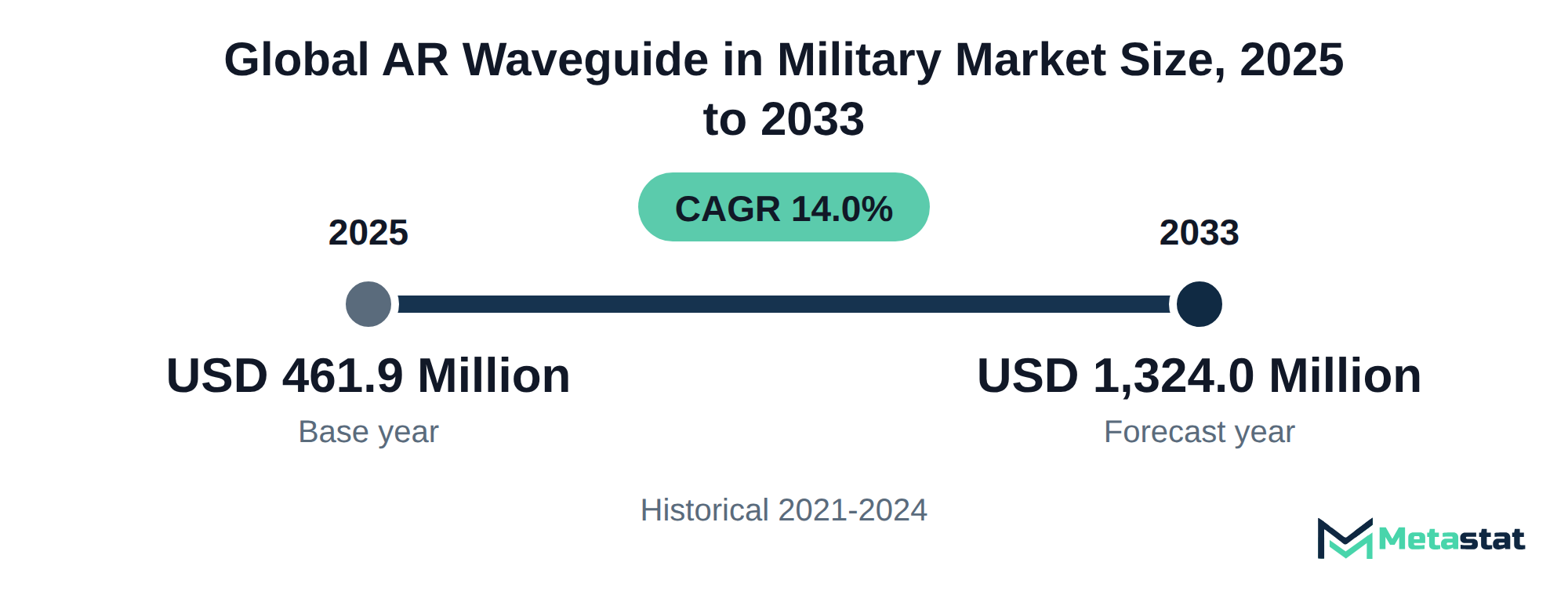
The AR Waveguide in Military market encompasses advanced optical technologies that enhance situational awareness and operational effectiveness for military users. Investment in this market arises from the necessity for improved tactical communication, navigation, and targeting capabilities. Military forces increasingly deploy augmented reality solutions to ensure real-time data access, facilitating informed decision-making on the battlefield.
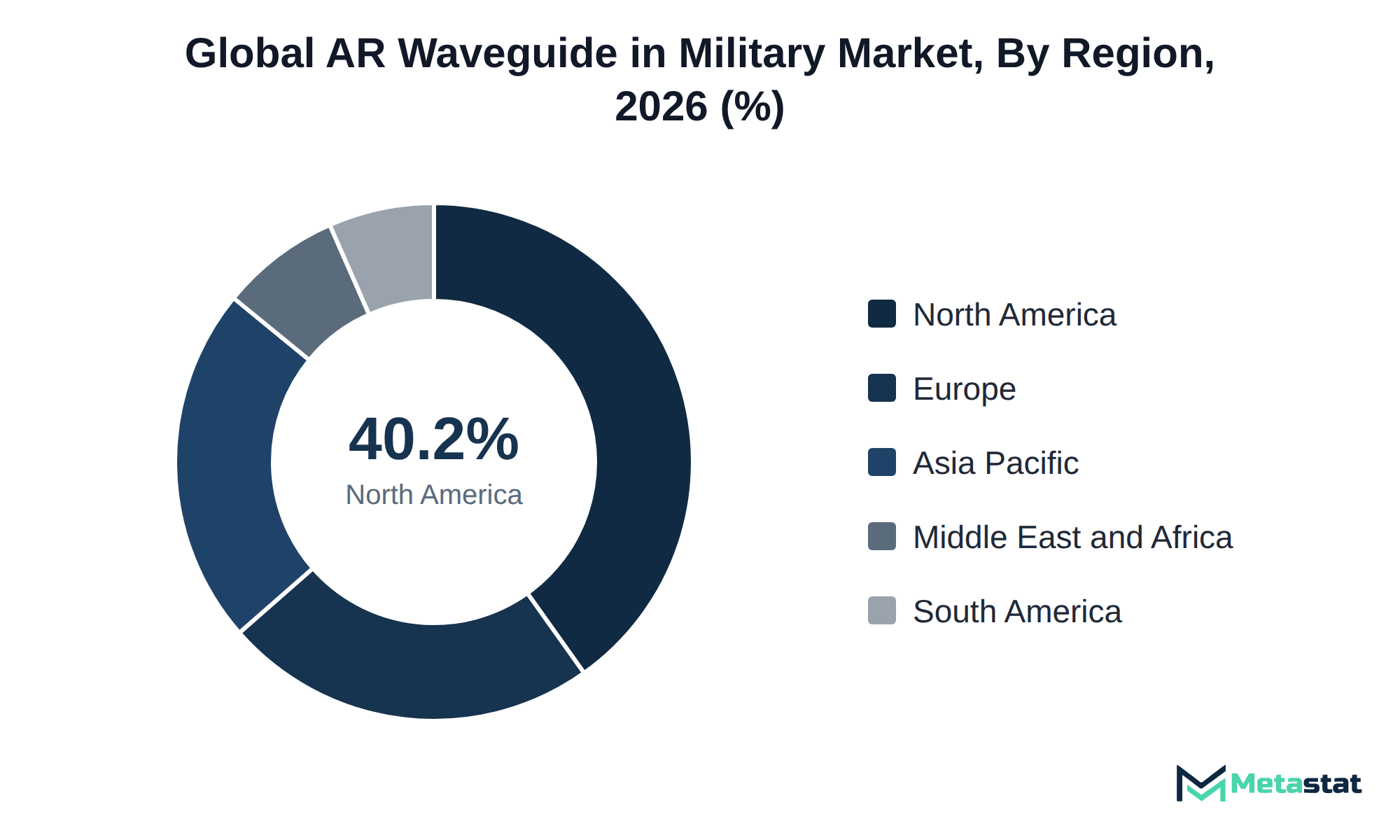
Growth in the market is driven by the rising demand for enhanced visualization systems in military applications. Among the various segments, Waveguide Optical Engines and Displays represent the highest value, reflecting the critical role these technologies play in modern military operations. North America holds 40.2% of the market in 2025, with the US leading in 2026. This dominance results from significant investments in defense technology and the ongoing development of innovative solutions.
Technological advancements in waveguide materials and manufacturing processes support market expansion. The increasing trend toward digital transformation in military operations fuels further adoption of augmented reality tools. Buyers across defense sectors prioritize solutions that deliver superior performance, reliability, and integration with existing systems, propelling growth in the market.
The AR Waveguide in Military market includes a variety of waveguide technologies and applications that enhance the capabilities of military operations. Buyers invest in these technologies to improve situational awareness, increase operational efficiency, and support training and simulation efforts. Demand stems from the continuous pursuit of advanced solutions that provide a tactical edge in various environments.
Growth in the market is primarily driven by the adoption of diffractive waveguides, which represent the segment with the highest value. Regional investment in defense technologies and modernization initiatives significantly influences market dynamics and generates strong demand for innovative AR solutions.
The AR Waveguide in Military market experiences accelerated expansion due to the rising emphasis on advanced visualization systems for military applications. Increased military spending, particularly in North America, contributes to the growth trajectory, while the demand for sophisticated situational awareness tools continues to shape the market.
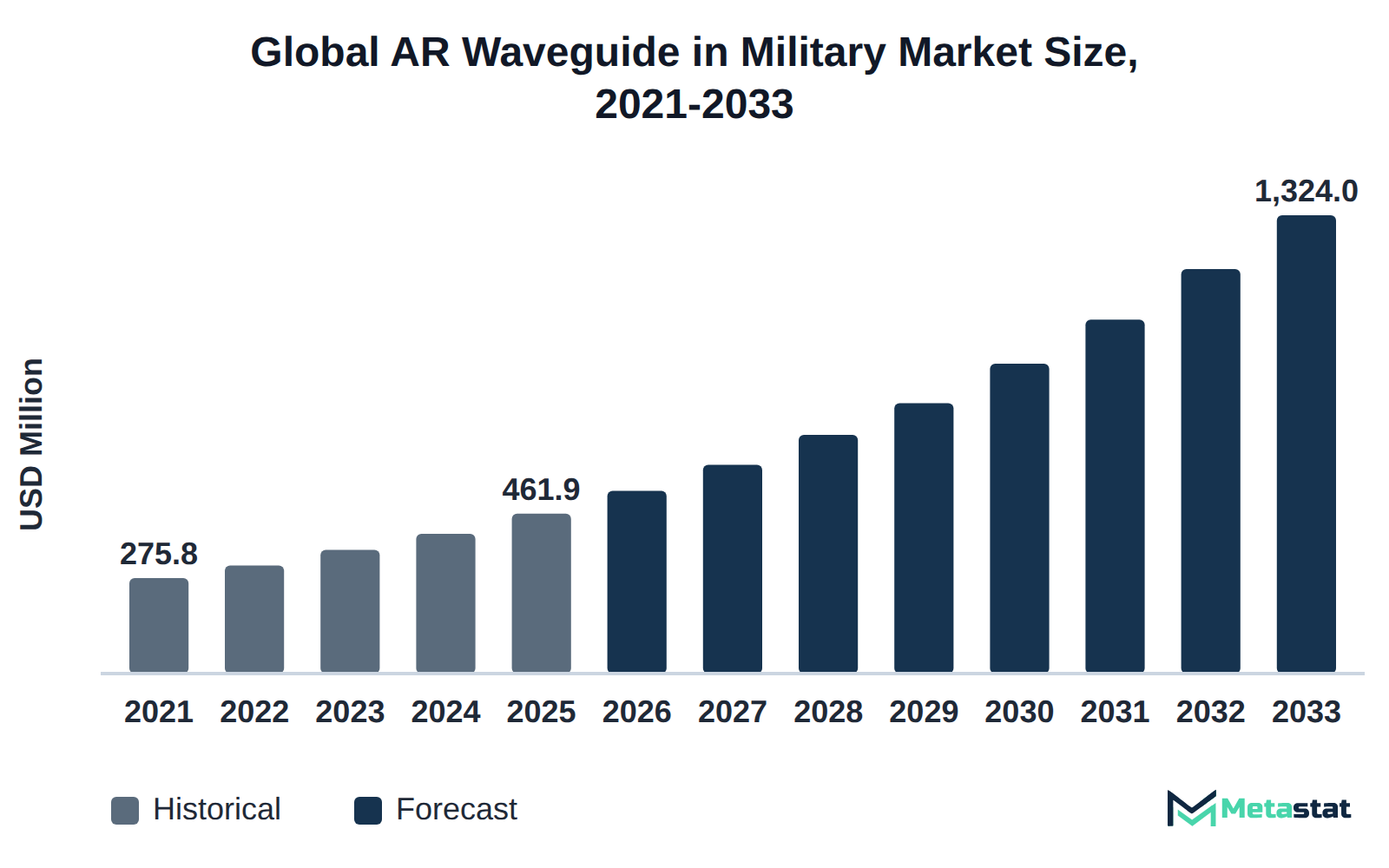
Waveguide optics are transforming soldier-borne augmented reality (AR) displays by enhancing functionality and situational awareness. The technology relies on diffractive waveguides, which are projected to grow from USD 208.3 million in 2026 to USD 568.4 million by 2033, reflecting a compound annual growth rate (CAGR) of 15.4%. This innovation allows for lightweight, compact designs that seamlessly integrate into existing portable military equipment, improving operational efficiency.
The AR Waveguide in Military market benefits significantly from advancements in holographic waveguides, enabling soldiers to access critical information in real-time without obstructing their vision. These displays support enhanced navigation and target acquisition, crucial in high-stakes environments. The projected growth in the market reflects increasing demand for sophisticated AR technologies within military applications, with a notable focus on improving dismounted soldier situational awareness.
While the integration of waveguide optics continues, manufacturers are driven to develop more efficient, scalable solutions that address the unique challenges faced by military personnel. Companies investing in this technology position themselves to capture a larger market share, contributing to the overall growth of the AR Waveguide in Military market.
The demand for rugged AR optics in military helmet and cockpit displays stems from the necessity for enhanced situational awareness and operational effectiveness. The AR Waveguide in Military market experiences significant interest in helmet-mounted displays and goggle-mounted modules, which are critical for providing real-time information to personnel. The projected value for helmet-mounted and goggle-mounted display modules is USD 302.1 million by 2033, highlighting growth potential within this segment.
Pricing models for these advanced technologies often include fixed-price contracts and multi-year agreements, enabling military buyers to secure essential equipment while managing budget constraints. Suppliers typically offer tiered pricing structures based on volume, which incentivizes larger purchases while establishing long-term relationships with military organizations. Given the substantial investments associated with these technologies, buyers favor contract models that provide warranty and support services, ensuring readiness and operational continuity.
The strategic approach to purchasing influences total cost of ownership and operational readiness, emphasizing the significance of selecting reliable suppliers in the AR Waveguide in Military market. Adopting comprehensive procurement strategies leads to improved performance and reduced lifecycle costs, aligning with military objectives of efficiency and effectiveness on the battlefield.
Dismounted soldiers require advanced situational awareness tools for effective operations, driving demand for diffractive, reflective, and holographic waveguides in military applications. These technologies enhance visualization by providing real-time data overlays, significantly improving decision-making capabilities in the field.
The growing emphasis on situational awareness among defense forces calls for innovative solutions that integrate with existing systems. Diffractive waveguides, which excel in creating lightweight and compact optical systems, cater specifically to this need. Their ability to deliver high-quality images in challenging environments enhances operational effectiveness for ground troops.
Reflective and holographic waveguides play important roles in military visualization applications, offering unique features that address specific challenges in the field. While the AR Waveguide in Military market evolves, these technologies enable defense organizations to implement more efficient training, improve combat readiness, and enhance overall mission success rates.
Diffractive waveguides significantly enhance military mission systems by providing advanced display capabilities. The application of diffractive waveguides in head-mounted displays provides soldiers with real-time information, crucial for situational awareness during operations.
Reflective and geometric waveguides play an essential role in military applications. By delivering high-quality imagery in diverse environments, this technology supports various platforms, including airborne and land-based systems. The projected market value for reflective and geometric waveguides is expected to reach USD 342.6 million by 2033, contributing to enhanced operational capabilities.
The AR Waveguide in Military market is expected to experience substantial growth driven by the increasing adoption of these technologies. Military forces worldwide seek to improve mission efficiency. Demand for innovative solutions, including diffractive and reflective waveguides, continues to rise and supports better decision-making in critical scenarios.
Increased military investment in advanced technologies drives significant demand for AR Waveguide in Military applications. Armed forces prioritize enhanced situational awareness for personnel, leading to an uptick in orders for optical systems that deliver real-time data and visuals. This shift in focus reflects a broader strategy to improve operational readiness and effectiveness on the battlefield. The monetary value of this segment is projected to reach USD 528.2 million in 2026, demonstrating a strong growth trajectory. Such investments support the acquisition of new equipment and technologies, promoting greater competition among suppliers. Expanding military budgets and growing demand for innovative solutions strengthen the market.
Technological advancements in waveguide systems propel the AR Waveguide in Military market forward. The introduction of diffractive and holographic waveguides enhances image quality and reduces form factor, enabling more compact and efficient designs. Military applications benefit from these innovations, resulting in superior situational awareness and operational capabilities for personnel. Increasing demand for lightweight and rugged systems improves soldier mobility and reduces fatigue during prolonged operations. These technologies evolve, and integration with emerging platforms including unmanned systems and advanced vehicle displays presents new opportunities for military enhancement. The overall shift towards high-performance waveguide solutions addresses operational challenges while supporting strategic military objectives. This growth trajectory in technological innovation reflects the military's commitment to maintaining a competitive edge through advanced optical systems. The market is anticipated to continue expanding, driven by ongoing investments in research and development focused on waveguide technologies.
High costs associated with AR waveguide technologies impose a significant restraint on procurement decisions among military buyers. Budget constraints often lead to delays in the acquisition of advanced optical systems. Military organizations prioritize cost-effective solutions to stretch limited budgets, thus reducing orders for high-value AR waveguide applications. This price sensitivity results in a slower uptake of innovative technologies, limiting investments in next-generation capabilities. Consequently, the market experiences challenges in achieving rapid growth, particularly in segments where alternatives exist at lower price points. Smaller military units face heightened scrutiny regarding expenditure, leading to further delays in adopting AR waveguide technologies. Overall, military organizations take a cautious approach to integrating advanced systems into operations.
Suppliers face significant pressure from rising input costs related to the production of AR waveguide technologies. Fluctuations in material prices, particularly components involved in waveguide optics, directly impact profit margins and operational sustainability. These increased costs affect pricing strategies, leading suppliers to reconsider their sourcing and manufacturing processes to maintain competitive pricing in the AR Waveguide in Military market.
To manage these challenges, suppliers invest in more efficient manufacturing technologies and explore alternative materials that offer cost advantages without compromising quality. Several firms form strategic partnerships to streamline their supply chains and reduce dependency on single-source suppliers, impacting overall operational efficiency. This proactive approach aims to mitigate cost pressures while ensuring a reliable supply of components for military applications.
Adopting these strategies enables suppliers to enhance their competitive positioning within the market while adapting to the evolving demands of military procurement and operational requirements. Ensuring cost-effectiveness in product offerings remains crucial for sustained growth in the AR Waveguide in Military market.
Diffractive waveguides represent a significant growth area within the AR Waveguide in Military market, driven by their capacity to enhance soldier situational awareness and visualization capabilities. Military applications require effective integration of advanced technologies into soldier-borne systems, positioning diffractive waveguides as critical components in enhancing operational effectiveness. The demand for improved situational awareness tools among dismounted soldiers leads to increased investments in diffractive waveguide technology, directly influencing procurement decisions across military divisions. The market's growth trajectory reflects an expanding commitment to innovative solutions aimed at strengthening defense capabilities.
The Global AR Waveguide in Military market is segmented based on Waveguide Technology, Product Type, Application, and Platform.
Diffractive waveguides serve critical functions in military applications, primarily enhancing situational awareness for dismounted soldiers and ground vehicle crews. The strong growth in this segment is driven by increasing reliance on advanced technologies for effective decision-making in combat scenarios. Unlike other waveguide technologies including reflective or holographic waveguides, diffractive waveguides display a faster growth trajectory due to superior optical performance and adaptability in various military settings. With a CAGR of 15.4%, this segment differentiates itself by offering unique capabilities that address specific operational demands, making it a vital area of investment for military buyers seeking to enhance operational effectiveness.
Reflective and Geometric Waveguides segment is estimated to reach USD 342.6 million by 2033, at a CAGR of 12.3% during the forecast period. These waveguides enhance visibility and situational awareness for military personnel through advanced optical displays, primarily in combat scenarios and technical training. Military applications including aircraft cockpit displays and ground vehicle systems benefit from this technology, making it essential for modern operations. The demand for these waveguides is strengthened by the increasing focus on enhancing operational effectiveness, particularly in complex environments. Compared to other waveguide technologies, Reflective and Geometric Waveguides experience significant growth, though at a slightly slower rate than Diffractive Waveguides, which show a CAGR of 15.4%. The balance between effectiveness and cost continues to influence procurement decisions, positioning this segment as a crucial contributor to advancements in the market.
The Holographic Waveguides segment is expected to reach USD 287.8 million by 2033. This technology serves military applications including training and situational awareness, providing enhanced visualization capabilities for soldiers. The segment experiences growth driven by increasing demand for advanced display systems that offer clearer images and superior integration with augmented reality features. Holographic Waveguides stand out due to their capability to project images directly into the user's field of view, unlike other technologies including diffractive waveguides, which exhibit a CAGR of 15.4%. The unique advantages of holographic systems attract defense organizations seeking to enhance operational efficiency. Buyers include military agencies focusing on modernization efforts, which further supports ongoing investment in this segment. Overall, the Holographic Waveguides segment reflects a vital component of the AR Waveguide in Military market, expanding in response to evolving technological requirements.
Polarized Waveguides segment is projected to grow at a CAGR of 10.6% during the forecast period. This technology enhances visual clarity and functionality for military applications, particularly in displays mounted on helmets and goggles. Military personnel employ these waveguides for improved situational awareness in various operational environments. The increased demand for lightweight and durable equipment drives this segment, differentiating it from others in the waveguide technology group. Unlike diffractive waveguides, which are anticipated to grow faster at a CAGR of 15.4%, polarized waveguides provide unique advantages in glare reduction, catering specifically to combat scenarios. The overall market continues to shift toward solutions that enhance performance under diverse conditions, promoting further investment in this area.
Freeform and Hybrid Waveguides provide innovative designs to offer flexible solutions for augmented reality applications. These technologies find use in various military contexts, enhancing situational awareness for dismounted soldiers and vehicle crews. Demand for this segment is driven by the need for lightweight and adaptable systems that integrate with existing military gear. The customization potential of Freeform and Hybrid Waveguides differentiates them from traditional waveguides, allowing for unique configurations that cater to specific operational requirements. While other waveguide segments display strong growth, the flexibility offered by Freeform and Hybrid Waveguides positions them uniquely in the market, appealing to military buyers seeking tailored solutions that optimize performance and usability.
Waveguide Optical Engines and Displays segment is valued at USD 149.6 million in 2026 and is projected to reach USD 356.3 million by 2033, at a CAGR of 13.2% during the forecast period. These components serve critical roles in enhancing situational awareness for military personnel operating in diverse environments. Dismounted soldiers rely on these advanced optical engines and displays for real-time data integration during missions. Significant growth stems from increasing demand for high-performance displays that improve operational effectiveness. Differentiating this segment from others, Waveguide Optical Engines and Displays exhibit a strong growth rate relative to other product types in the market, driven by technological advancements and the ongoing evolution of military applications. The adoption of these systems facilitates superior visualization and data accessibility, which are essential for modern military operations.
Waveguide AR Head-Mounted Displays and Smart Glasses segment is estimated to reach USD 314.7 million by 2033, at a CAGR of 13.7% during the forecast period. This segment provides critical situational awareness for dismounted soldiers and enhances operational capabilities through real-time data visualization. Primary users include military personnel engaged in combat and training environments, where rapid access to information significantly improves decision-making. Increasing demand for lightweight and compact solutions drives adoption, alongside advancements in display technologies that enhance user experience. Compared to the Waveguide Optical Engines and Displays segment, this segment exhibits a faster growth rate, driven by its application versatility across various military platforms. The market's focus on AR technologies continues to expand, positioning the Waveguide AR Head-Mounted Displays and Smart Glasses segment as a vital contributor to advancements in the AR Waveguide in Military market.
Helmet-Mounted and Goggle-Mounted Display Modules segment is expected to reach USD 302.1 million by 2033. These modules serve critical functions in enhancing situational awareness for military personnel during operations. Primarily used by dismounted soldiers and vehicle crews, this segment benefits from advancements in optics and electronic display technologies. Key growth drivers include a strong focus on improving soldier effectiveness and operational safety through enhanced visualization systems. Compared to other product types in the market, this segment experiences significant growth, demonstrated by its competitive CAGR and increasing adoption rates. The demand for effective integration with various military platforms further influences purchasing decisions, ensuring these modules remain a priority for military investment. Increasing requirements for advanced situational awareness tools support the market expansion.
Waveguide Heads-up Displays segment is projected to grow at a CAGR of 15.2% during the forecast period. This segment provides critical information directly in the line of sight, enhancing situational awareness for military personnel. Primarily used by dismounted soldiers and vehicle crews, these displays facilitate real-time data integration, which is essential for mission success. Increased demand stems from the need for robust, lightweight, and reliable technologies that support operational effectiveness in diverse environments. Compared to other product types, including Waveguide Optical Engines and Displays, this segment experiences a faster growth rate due to its immediate applicability in various military applications, including target acquisition and command support. Military forces increasingly emphasize technology integration, and the adoption of Waveguide Heads-up Displays continues to strengthen, contributing significantly to the overall growth of the market.
Waveguide Components and Couplers play a vital role in the AR Waveguide in Military market. These components facilitate the integration and functionality of waveguide systems, serving military applications including situational awareness and visualization in various platforms. Military personnel employ these components to enhance operational capabilities and improve decision-making processes. Increased demand for higher-performance systems drives innovation in this segment, leading to advancements in designs and functionalities. Compared to other product types, Waveguide Components and Couplers experience slower growth, reflecting the complexities involved in their integration into existing systems. The different requirements for precision and compatibility with various military platforms contribute to this trend, influencing procurement cycles and product development strategies. The market recognizes the potential of these components to improve overall system performance as military technology advances.
Evaluation kits and accessories support the development and testing of AR waveguide technologies in military applications. This sub-segment caters to developers and military personnel seeking to assess and enhance the capabilities of existing systems. Increased focus on integrating augmented reality solutions into training and operational environments drives demand for these kits, providing essential tools for simulation and real-world application testing. Unlike other product types, this segment faces unique challenges related to the customization and adaptability of solutions. The demand for tailored evaluation kits aligns with specific military requirements, leading to differentiated buyer engagement compared to other segments. In the AR Waveguide in Military market, innovation and technological advancements shape this segment's trajectory, making it integral to the future of military operations and training.
Dismounted Soldier Situational Awareness segment is valued at USD 154.6 million in 2026 and is projected to reach USD 358.5 million by 2033, at a CAGR of 12.8% during the forecast period. This segment focuses on enhancing the operational capabilities of soldiers through augmented reality solutions, allowing for improved situational awareness during missions. Primary users include ground forces who rely on real-time data to make informed decisions in the field. Growth in this segment is driven by increasing military demands for advanced technology that provides critical information directly to soldiers. Compared to other segments, Dismounted Soldier Situational Awareness exhibits a solid growth trajectory, supported by the ongoing integration of augmented reality systems into military operations. This differentiates it from applications including Military Aviation and Flight Operations, which have slower projected growth rates.
Ground Vehicle Crew Visualization segment is estimated to reach USD 290.2 million by 2033, at a CAGR of 13.6% during the forecast period. This segment primarily assists military operators in effectively monitoring and analyzing battlefield conditions from ground vehicles. The demand for enhanced situational awareness in combat scenarios drives the growth of this segment, with military personnel increasingly relying on advanced visualization technologies to improve decision-making and operational efficiency. Compared to other segments, Ground Vehicle Crew Visualization experiences faster growth due to the rising adoption of augmented reality systems in military land operations, which enhance the capabilities of personnel in various tactical environments. This segment focuses on crew members who require real-time data integration to optimize their performance, ultimately leading to improved mission outcomes within the AR Waveguide in Military market.
Military Aviation and Flight Operations segment is expected to reach USD 262.9 million by 2033. This segment focuses on enhancing situational awareness and operational efficiency for military aviators through advanced augmented reality technologies. The primary users include military personnel operating aircraft, helicopters, and unmanned aerial vehicles. Demand for this segment is driven by the increasing emphasis on advanced training and real-time operational data during flight missions. Compared to other applications in the market, this segment exhibits a moderate growth rate, with a compound annual growth rate (CAGR) reflecting the critical nature of aviation technologies in military operations. The ongoing integration of AR systems into training programs further fuels demand, establishing a competitive landscape among suppliers aiming to deliver innovative solutions tailored to aviation requirements.
The Target Acquisition and Weapon Sighting segment is projected to grow at a CAGR of 15.2% during the forecast period. This segment focuses on enhancing precision targeting capabilities for military applications. Primarily used by defense forces, it facilitates accurate weapon deployment and situational awareness during operations. Growth in this segment is driven by increasing demand for advanced targeting solutions in military engagements. Compared to other segments, including Dismounted Soldier Situational Awareness, this segment exhibits faster growth due to the rising importance of accurate targeting technologies in modern warfare. In 2033, this segment is expected to contribute significantly to the overall AR Waveguide in Military market, aligning with the need for enhanced operational efficiency and effectiveness in military missions.
Training and Simulation uses augmented reality technologies to improve military training through interactive and immersive environments. This application is critical for military personnel, offering realistic scenarios that improve situational awareness and decision-making skills during operations. Indoor shooting simulators address a related training need through scenario-based practice. Demand for this segment is driven by the increasing need for effective training solutions that reduce costs associated with traditional training methods. Compared to other applications like Dismounted Soldier Situational Awareness or Target Acquisition, Training and Simulation focuses on training personnel rather than direct operational support. This distinction allows for potentially different pricing strategies, reflecting the unique value provided through enhanced training methodologies. In the AR Waveguide in Military market, the emphasis on simulation technologies significantly impacts the overall growth and adoption of augmented reality solutions, positioning this segment as a vital component in military preparedness.
Intelligence, Surveillance, and Reconnaissance focuses on integrating augmented reality technology to enhance situational awareness and operational efficiency for military personnel. This application primarily serves defense forces, including ground troops and air units, who rely on accurate and real-time data for mission success. Demand is driven by the increasing need for advanced surveillance capabilities to improve decision-making and tactical responses. The segment distinguishes itself from others by its specialized use cases and the critical role it plays in operational effectiveness, highlighting a higher value placed on real-time information compared to other applications. The growing complexity of modern warfare creates an imperative for superior intelligence solutions, reinforcing the need for ongoing investment in AR solutions. The AR Waveguide in Military market continues to evolve, with this application segment being crucial for adapting to the dynamic requirements of military operations.
This segment focuses on Maintenance and Command Support, an area critical for military operations. Military personnel use this application to enhance situational awareness and operational efficiency. Demand for enhanced command and control capabilities drives adoption, highlighting the growing importance of real-time data access on the battlefield. Compared to other applications, this segment experiences slower growth while competing with faster-developing use cases like Dismounted Soldier Situational Awareness and Ground Vehicle Crew Visualization. Although it operates at a different pace, the need for effective maintenance solutions remains vital for military readiness and effectiveness. In the AR Waveguide in Military market, integrating advanced technologies into maintenance activities enhances operational capabilities and supports overall mission success.
Land segment is valued at USD 194.7 million in 2026 and is projected to reach USD 456.9 million by 2033, at a CAGR of 13% during the forecast period. This segment primarily serves military applications by providing crucial situational awareness and operational support to ground forces. The demand for advanced visualization technologies in military operations drives growth in this segment, with increasing investments in modernization and enhanced capabilities for ground troops. Differentiating itself from other segments, the land platform segment experiences consistent demand from armed forces focused on improving reconnaissance and combat effectiveness. While the land segment demonstrates significant growth potential, it operates in a competitive environment where innovations in waveguide technology influence operational effectiveness and cost efficiency. The ongoing pursuit of advanced solutions by military forces highlights the significance of this segment in the broader AR Waveguide in Military market.
Airborne segment is estimated to reach USD 434.8 million by 2033, at a CAGR of 15.7% during the forecast period. This segment caters to military aviation applications, where augmented reality enhances situational awareness and navigation for pilots and crew members. Demand for advanced visualization technologies drives growth, particularly as defense agencies prioritize improving operational efficiency and safety. The higher growth rate of 15.7% distinguishes this segment from others, including Land, which grows at a CAGR of 13%. Innovations in waveguide technology and increased investments in defense modernization further stimulate adoption. The AR Waveguide in Military market reflects strong potential for expansion in the airborne application. Rapid advancements in display technologies and hardware capabilities directly influence the competitive landscape, as military agencies seek advanced solutions.
The Naval segment is expected to reach USD 172.4 million by 2033. Primarily used by naval forces, this segment enhances situational awareness and operational efficiency through advanced augmented reality technologies. The demand for innovative solutions in naval operations drives growth, with an increasing focus on integrating these technologies into existing systems. Differentiation from other segments occurs due to specific applications in maritime environments, which often require specialized adaptations. The Naval segment exhibits a unique growth trajectory, reflecting increasing investments in naval modernization. With a CAGR of 15.7%, this segment expands faster than land applications, highlighting its strategic importance in the AR Waveguide in Military market.
Unmanned Systems segment is projected to grow at a CAGR of 15.7% during the forecast period. This segment enhances operational capabilities for surveillance, reconnaissance, and combat through military applications involving drones and other unmanned platforms. Demand for advanced technologies in unmanned systems drives the growth of this segment, particularly from defense forces seeking improved situational awareness and tactical advantage. Compared to other segments, Unmanned Systems demonstrates rapid growth and increasing investment, reflecting an industry shift towards automation and remote operations. With an expected value of USD 172.4 million by 2033, this segment highlights the market's commitment to integrating augmented reality solutions into unmanned technologies, addressing evolving needs in military operations.
This segment focuses on operations in joint military efforts and space applications. Utilization of advanced augmented reality technologies in these contexts enhances strategic capabilities and situational awareness among armed forces. Government and defense contractors primarily drive demand through investments aimed at improving joint operations and interoperability between branches of the military. Innovations in waveguide technology contribute to the effectiveness of these applications, leading to better integration of systems across platforms. Compared to other segments, this area experiences distinct operational requirements that lead to unique product development, influencing pricing strategies and market dynamics. Adoption of these technologies aligns with broader military objectives, ensuring the sector retains relevance and importance in future defense strategies. Such advancements within the AR Waveguide in Military market facilitate effective communication and coordination, enhancing joint operation capabilities for military personnel.
Based on geography, the Global AR Waveguide in Military market is divided into North America, Europe, Asia-Pacific, South America, Middle East, and Africa.
Demand for augmented reality technologies thrives in North America, driven by significant military investment in modernizing equipment and enhancing operational capabilities. The focus on integrating AR waveguide technology into various applications, including Dismounted Soldier Situational Awareness and Military Aviation, reflects a commitment to improving tactical efficiency. Specific programs aimed at enhancing situational awareness for ground forces highlight the region's strategic approach. With a projected market value of USD 500.6 million by the end of 2033, North America holds a 40.2% share of the global market in 2025. The AR Waveguide in Military market will benefit from continued advancements and funding in military technology, reinforcing the importance of this segment in overall defense strategies.
Europe contributes significantly to the AR Waveguide in Military market, with a share of 23.4% in 2025. Countries including Germany, France, and the UK drive demand through their strong defense manufacturing sectors and ongoing modernization programs. A strong focus on advanced military technologies and the integration of augmented reality into training and operational systems enhances situational awareness and decision-making capabilities for military personnel. Investment in military aviation and ground vehicles further stimulates the need for innovative waveguide solutions. Increasing defense budgets across the region create opportunities for growth in applications like military aviation and target acquisition. The market in Europe is anticipated to evolve with the integration of advanced waveguide technologies, which continue to meet the specific requirements of various military platforms.
The increasing focus on military modernization in Asia-Pacific drives significant growth in the AR Waveguide in Military market. Countries including China and India invest heavily in advanced technologies to enhance their military capabilities, leading to higher demand for augmented reality solutions. Japan's emphasis on integrating innovative defense technologies supports market expansion. South Korea's strong defense sector contributes to the uptake of AR waveguides, especially in situational awareness applications. The region accounts for 22.4% of the global market share in 2025, reflecting robust interest in enhancing operational efficiency through advanced technologies. Southeast Asia is emerging as a key market, with various nations exploring AR waveguides to increase their defense readiness and capabilities. Investment in these technologies aligns with regional defense strategies aimed at improving situational awareness and operational effectiveness.
In South America, the AR Waveguide in Military market experiences growth driven by military modernization efforts, particularly in Brazil and Argentina. Incremental increases in defense budgets in these countries support investment in advanced technologies. A focus on enhancing situational awareness and operational efficiency drives demand for augmented reality applications among military personnel. Ongoing initiatives to improve tactical operations highlight the significance of this region within the AR Waveguide in Military market.
The AR Waveguide in Military market experiences notable growth potential in the Middle East and Africa, driven by increasing military spending and investments in advanced technologies. Countries including Saudi Arabia and the UAE actively pursue modernization initiatives, emphasizing the integration of augmented reality systems into military operations. South Africa's defense procurement strategies highlight a commitment to enhancing operational capabilities through innovative technologies. The region's share of the global market reached 7.5% in 2025, reflecting growing recognition of the strategic advantages that augmented reality solutions provide in training and situational awareness. This expansion aligns with broader defense objectives, focusing on increased efficiency and effectiveness in military operations.
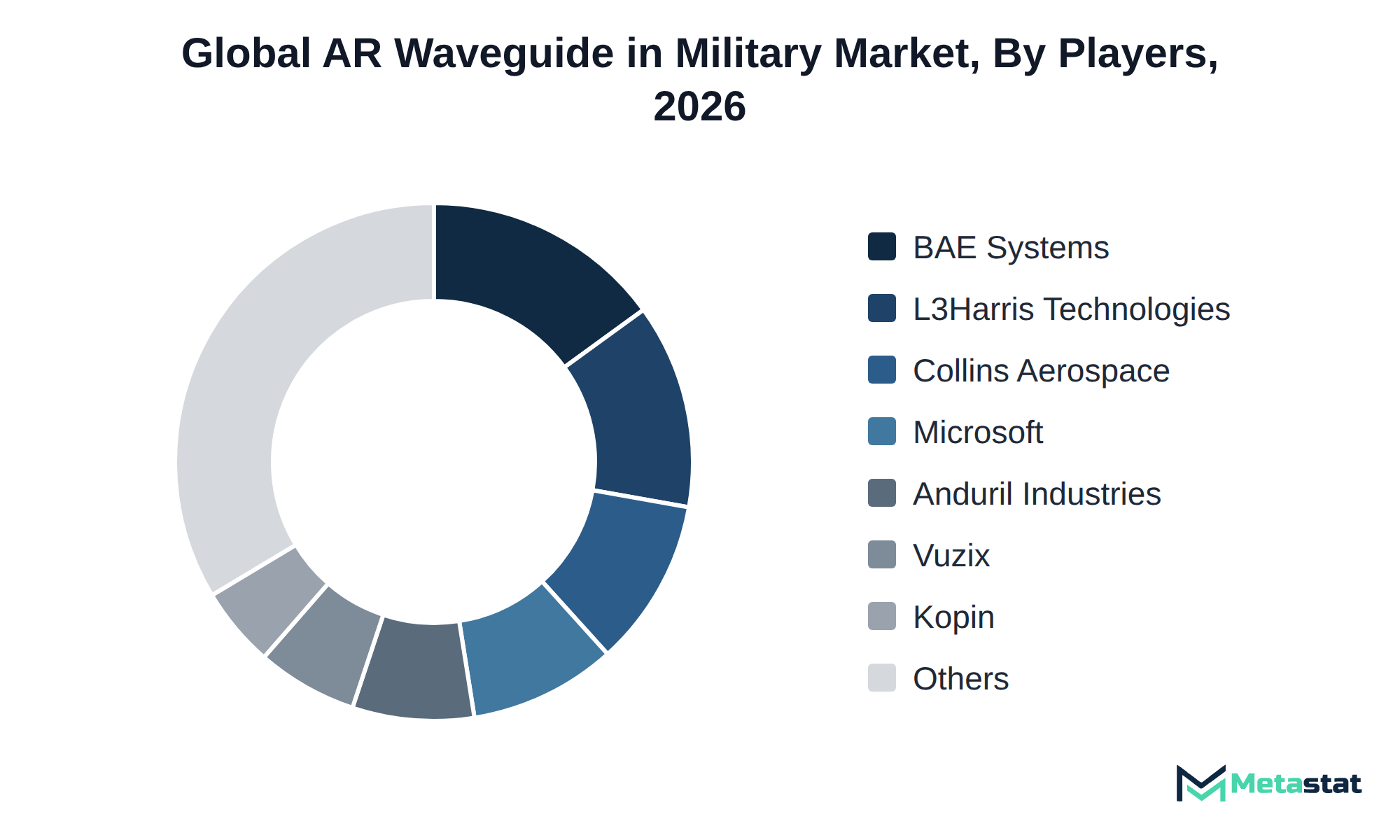
The AR Waveguide in Military market demonstrates a competitive environment characterized by various strategic behaviors among key players. Companies differentiate themselves through product offerings, technological advancements, and focused applications to meet specific buyer needs.
Buyers prioritize factors including price, certification, customization, and service when choosing suppliers. For instance, companies like Vuzix Corporation and Microsoft focus on developing advanced waveguide optical engines and displays, aiming to enhance situational awareness for military applications. L3Harris Technologies emphasizes innovative solutions in military aviation and flight operations, providing tailored products to meet the demands of its customers.
Companies like BAE Systems and Lockheed Martin invest in research and development to advance the capabilities of waveguides, ensuring alignment with emerging military technologies. This focus on technological innovation allows firms to adapt to the evolving needs of the market, positioning them favorably in competitive bidding scenarios.
The AR Waveguide in Military market is forecast to rise from USD 461.9 million in 2025 to over USD 1,324 million by 2033. This growth relies on several key developments, including advancements in Diffractive Waveguides, projected to reach USD 568.4 million by 2033 at a CAGR of 15.4%. The increasing demand for Waveguide AR Head-Mounted Displays and Smart Glasses contributes significantly to the market's expansion, with projections of USD 314.7 million by 2033. Regional factors, including North America's anticipated revenue reaching USD 500.6 million in 2033, support this positive trajectory.
Potential risks could impede progress. Supply chain disruptions or technological limitations hinder production capabilities and delay advancements in waveguide technology. Successfully navigating these challenges will be crucial for the AR Waveguide in Military market to achieve its forecasted growth. Addressing these obstacles and adopting emerging technologies will determine how quickly the market develops during the forecast period.
By Waveguide Technology: Diffractive Waveguides, Reflective and Geometric Waveguides, Holographic Waveguides, Polarized Waveguides, Others (Freeform and Hybrid Waveguides)
By Product Type: Waveguide Optical Engines and Displays, Waveguide AR Head-Mounted Displays and Smart Glasses, Helmet-Mounted and Goggle-Mounted Display Modules, Waveguide Heads-up Displays, Waveguide Components and Couplers, Others (Evaluation Kits and Accessories)
By Application: Dismounted Soldier Situational Awareness, Ground Vehicle Crew Visualization, Military Aviation and Flight Operations, Target Acquisition and Weapon Sighting, Training and Simulation, Intelligence, Surveillance, and Reconnaissance, Others (Maintenance and Command Support)
By Platform: Land, Airborne, Naval, Unmanned Systems, Others (Space and Joint Operations)
The report strategically identifies and profiles the key market players and analyses their core competencies in each sub-segment of the AR Waveguide in Military market.
|
Report Attributes |
Details |
|
Study Period |
2021-2033 |
|
Base Year |
2025 |
|
Estimated Year |
2026 |
|
Forecast Period |
2026-2033 |
|
Historical Period |
2021-2025 |
|
Growth Rate |
CAGR 14.0% from 2026 to 2033 |
|
Revenue Unit |
USD million |
|
Segmentation |
By Waveguide Technology, Product Type, Application, Platform, and Region |
|
By Region |
North America (By Waveguide Technology, Product Type, Application, Platform, and Country)
|
|
Europe (By Waveguide Technology, Product Type, Application, Platform, and Country)
|
|
|
Asia Pacific (By Waveguide Technology, Product Type, Application, Platform, and Country)
|
|
|
South America (By Waveguide Technology, Product Type, Application, Platform, and Country)
|
|
|
Middle East and Africa (By Waveguide Technology, Product Type, Application, Platform, and Country)
|
Find answers to common questions about this report
The AR Waveguide in Military market size was valued at USD 461.9 million in 2025.
The market is projected to grow at a CAGR of 14.0% during the forecast period from 2026 to 2033.
The North America AR Waveguide in Military market size is estimated to reach USD 500.6 million by 2033.
The leading segment in the AR Waveguide in Military market is Diffractive Waveguides, with a projected value of USD 568.4 million by 2033. This segment exhibits the highest compound annual growth rate (CAGR) of 15.4 percent among the waveguide technology categories.
Increased military investment in advanced technologies drives significant demand for AR Waveguide applications. Technological advancements in waveguide systems enhance image quality and reduce form factor, enabling more compact and efficient designs.
North America holds the dominant share of the AR Waveguide in Military market, accounting for 40.2 percent in 2025. This region's significant share reflects its advanced military technology investments and demand for augmented reality solutions.
High costs associated with AR waveguide technologies impose significant restraints on procurement decisions among military buyers. Budget constraints often lead to delays in the acquisition of advanced optical systems, resulting in a cautious approach toward the integration of innovative technologies within military operations.
Technological advancements in waveguide systems are favoring adoption by enhancing image quality and enabling more compact designs. The integration of these innovations into military applications improves situational awareness and operational capabilities, driving demand for AR Waveguide technologies.
The AR Waveguide in Military market is estimated to reach a valuation of USD 1,324 million by 2033.
Key players operating in the AR Waveguide in Military market include Lumus, Vuzix Corporation, BAE Systems, Collins Aerospace, L3Harris Technologies, Microsoft Corporation, Lockheed Martin Corporation, and Thales.
The analysts below cover Aerospace and Defense research at Metastat Insights.
LEAD ANALYST
Utkarsh Khirodkar is a Lead Market Research Analyst at MetaStat Insight, specializing in market intelligence, technology sector assessments, and competitive strategy.
When evaluating distributed energy resource management systems, standard research summaries tend to gloss over the operational differences between front-of-the-meter utility deployments and behind-the-meter industrial sites. The MetaStat Insight report addressed those distinctions directly, especially regarding software interoperability standards and grid interconnection backlogs. The five-year market sizing across regional transmission organizations provided actionable context for our grid modernization strategy.
Most industry reports on warehouse automation bundle autonomous mobile robots and fixed conveyor installations into the same top-level numbers, which complicates advisory work. This study split the market cleanly by payload tiers, navigation technology, and fleet management software layers. The regional forecast for Western Europe gave our team defensible adoption benchmarks when evaluating capital allocation for logistics clients, saving us days of secondary data scrubbing.
Standard industry briefs frequently blur the operational distinctions between isobaric pressure exchangers and centrifugal turbines. In this study, MetaStat Insight categorized mega-scale desalination tenders across the GCC and Mediterranean basins by membrane replacement frequencies and salinity tolerances. Their primary research helped us evaluate local content requirements in Saudi Arabia and the UAE without relying on marketing literature. We found the segment-level equipment replacement estimates grounded and well-reasoned throughout.
Explore related market intelligence reports worth reading alongside this one.