
LEAD ANALYST
Utkarsh Khirodkar is a Lead Market Research Analyst at MetaStat Insight, specializing in market intelligence, technology sector assessments, and competitive strategy.

Global Drone Software Market Size, Share, By Software Function (Flight Control and Navigation, Mapping, Image Processing and Analytics, Mission Planning and Fleet Management, Airspace Management and Compliance), By Deployment Model (Onboard and Ground-Based), By Software Architecture (Open Source and Closed Source), By End-Use Industry (Agriculture and Forestry, Construction, Surveying and Mining, Energy and Utilities, Defense and Government, Logistics and Transportation, Media and Entertainment), Industry Analysis, Growth, Trends, and Forecast, 2026-2033
Report ID
MSI-5825
Published
November, 2026
Pages
275 Pages
Format
Historical
Base year
Forecast
Forecast period
Report Details
Market Valuation: Valued at $10.5 Billion in 2025, projected to reach $39.9 Billion by 2033 at a 18.1% CAGR.
Dominant Segment: The Mapping, Image Processing and Analytics segment leads the market, projected to reach USD 16.2 billion by 2033, driven by the increasing demand for detailed visual information across industries.
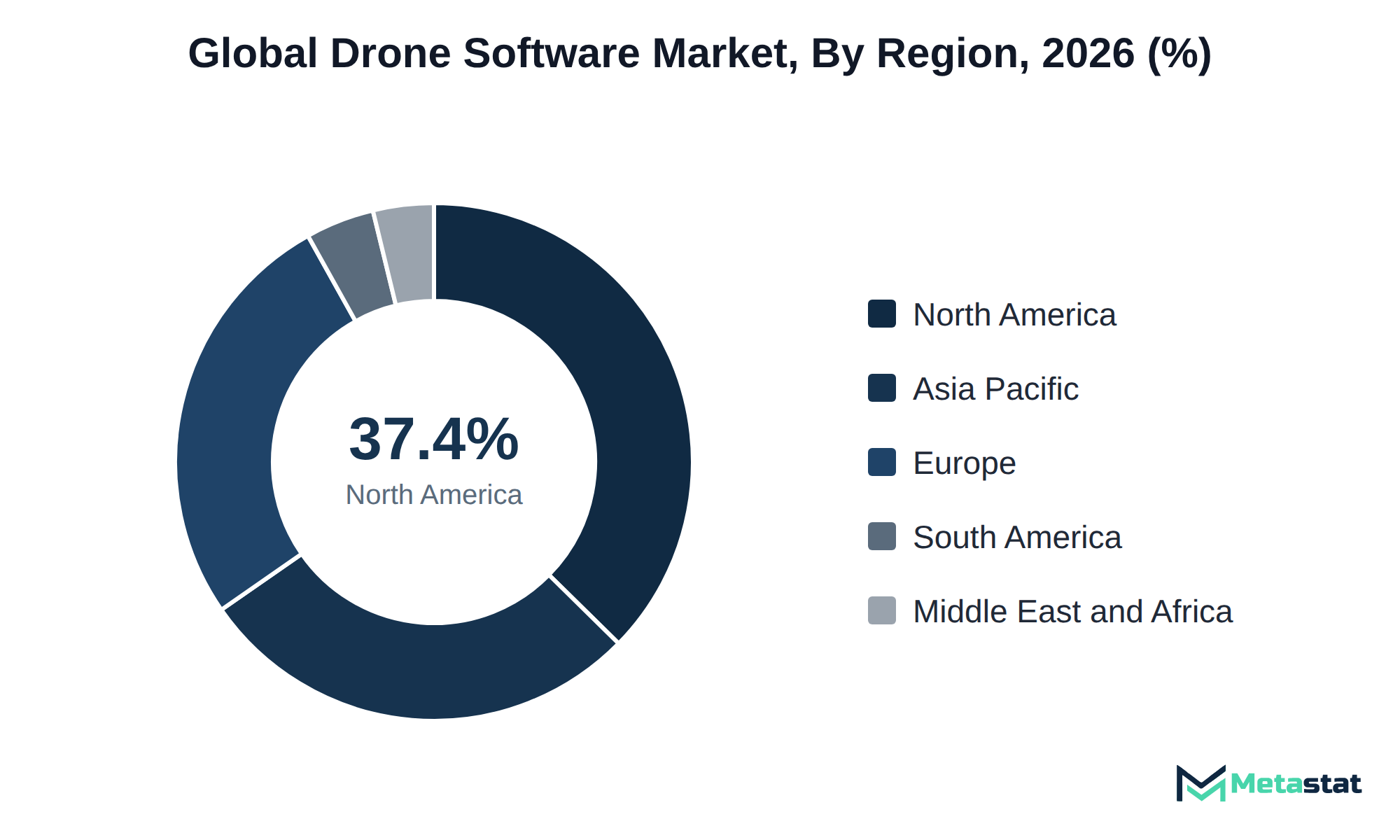
Geographic Lead: North America is the leading region, holding 37.4% of the market in 2025, primarily due to significant investments in technology and supportive regulatory frameworks.
What's Inside: The report provides comprehensive coverage of market dynamics, competitive analysis, and detailed forecasts for various segments, including software functions and deployment models.
Emerging Opportunities: The Airspace Management and Compliance segment is experiencing rapid growth, with a projected CAGR of 21.9%, reflecting the rising complexity of air traffic and regulatory requirements.
Choose Your License
Global Drone Software Market
The global Drone Software market was valued at USD 10.5 billion in 2025 and is projected to reach USD 39.9 billion by 2033, growing at a CAGR of 18.1% over the forecast period.
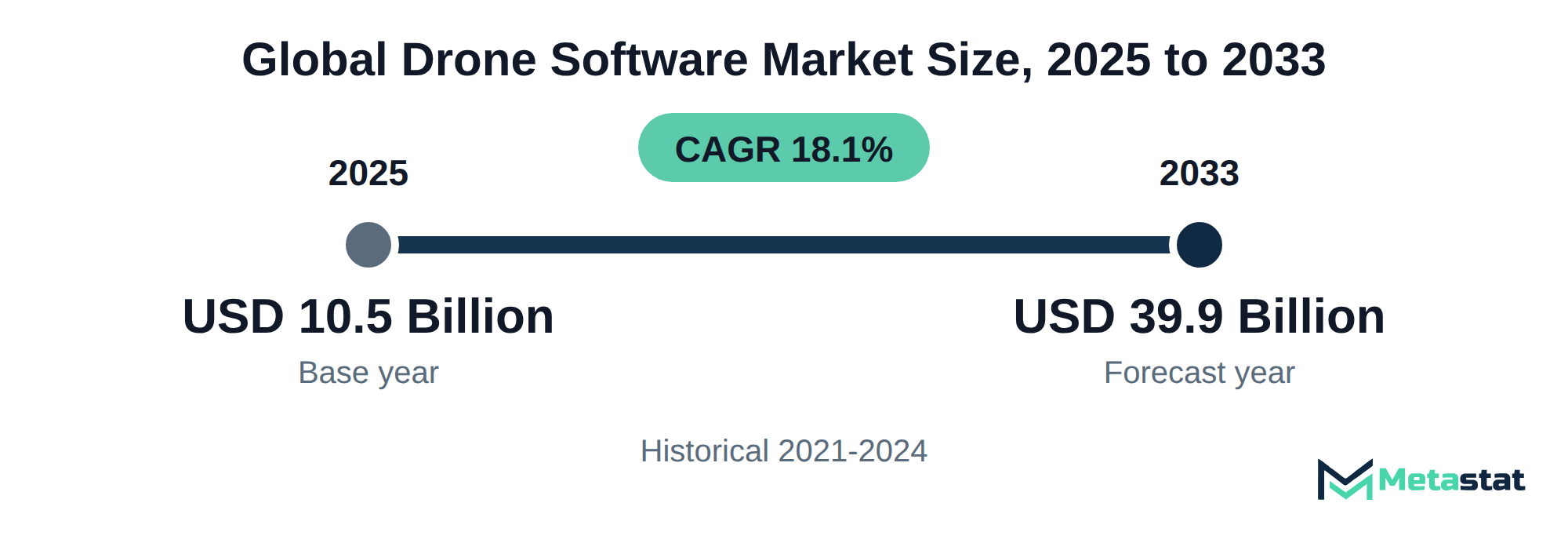
The Drone Software market covers applications that improve the functionality and efficiency of drone operations. Buyers invest in this market primarily to improve operational efficiency, strengthen safety measures, and use advanced analytics for decision-making. Adoption is widespread across various sectors, including agriculture, construction, and defense, where organizations seek to optimize workflows and reduce costs through the use of drone technology.
Drone Software market growth is propelled by increasing demand for advanced drone capabilities, particularly in mapping, image processing, and analytics. This segment is projected to exhibit substantial growth, reflecting the rising importance of data-driven insights across industries. North America holds 37.4% of the market in 2025, with the US leading in 2026. The region's strong investment in technology and infrastructure supports significant market expansion.
One primary growth driver within the market is the ongoing development of regulatory frameworks that support drone operations in various industries. These regulations facilitate the integration of drone technology into existing workflows, enabling broader adoption and driving innovation. Streamlined compliance processes let organizations focus on using drone capabilities to improve productivity and achieve strategic objectives.
The Drone Software market features solutions that integrate advanced technologies, enhancing operational capabilities across various sectors. Buyers invest in this market to optimize processes, improve data collection, and facilitate real-time analytics. Demand in industries including agriculture, construction, and defense is driven by enhanced operational efficiency, which translates into significant cost savings and productivity gains.
Growth in the market is fueled by the increasing adoption of drone technology for applications like mapping, image processing, and analytics. Among the software functions, Mapping, Image Processing and Analytics shows substantial value and is expected to reach USD 16.2 billion by 2033. North America holds 37.4% of the market in 2025, with the US leading in 2026, reflecting a strong inclination towards technological advancements and regulatory support in the region.
The significant rise in demand for advanced airspace management and compliance solutions contributes to the overall expansion of the market. This segment, driven by regulatory requirements and safety measures, attracts investment from various stakeholders. Enhanced functionalities in software architecture, particularly in closed-source applications, support the market's growth trajectory.
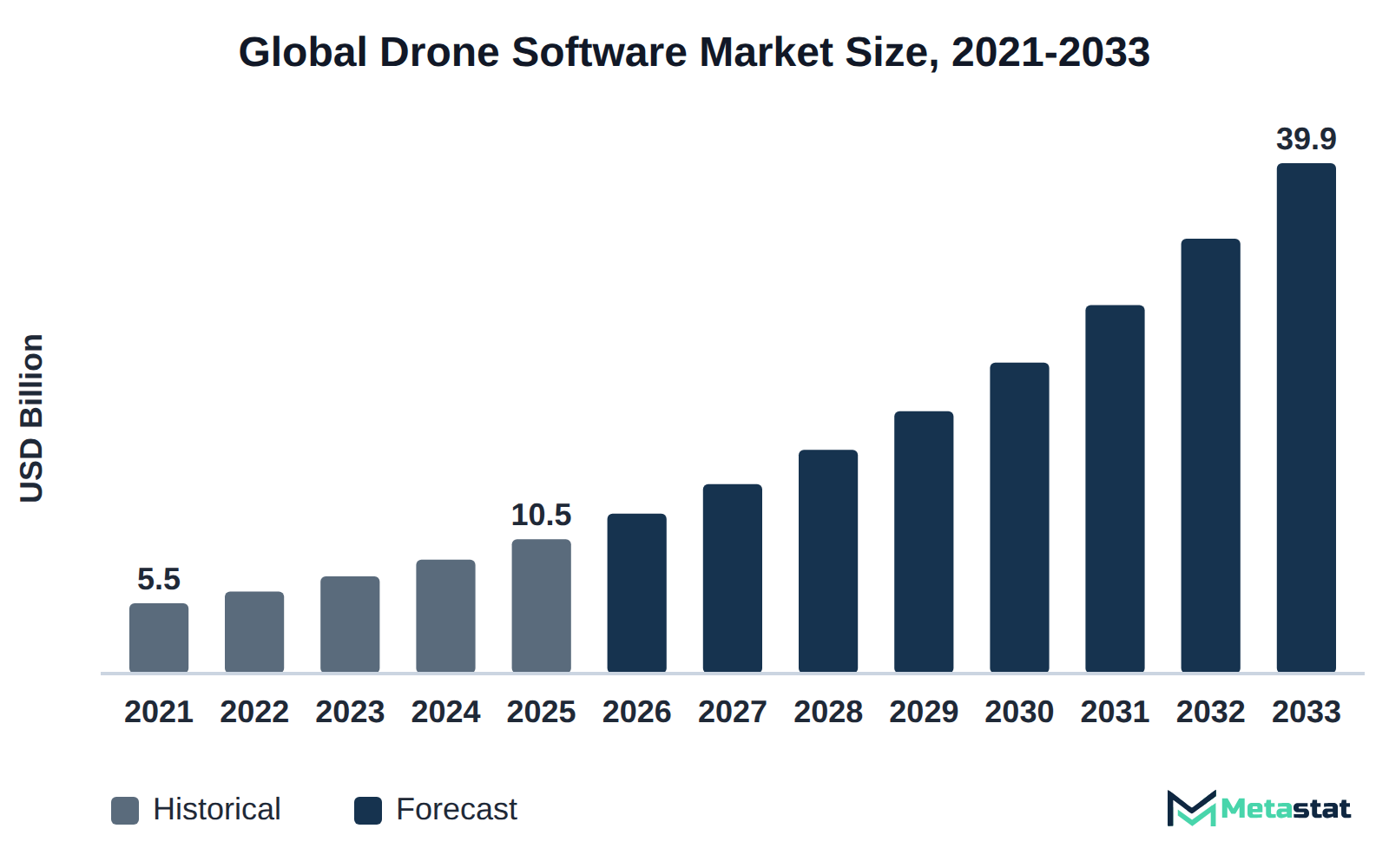
Drone software for infrastructure inspection and for 3D mapping and modeling has gained significant traction due to advancements in technologies that enhance data accuracy and operational efficiency. The segment pertaining to mapping, image processing, and analytics is projected to generate a value of USD 16.2 billion by 2033, reflecting a compound annual growth rate of 17.4%. This growth is driven by the increasing demand for detailed visual information that supports effective decision-making in various industries, including construction and energy.
The integration of artificial intelligence (AI) and machine learning (ML) into drone software significantly improves the capabilities for infrastructure inspection and 3D mapping. AI algorithms analyze large data sets collected during drone flights, enabling quicker identification of structural defects and areas requiring maintenance. These capabilities reduce operational costs while enhancing safety outcomes, appealing to industries focused on infrastructure management. Image-based defect identification is also closely related to AI in computer vision.
In the drone software market, rising demand for high-resolution aerial imagery and real-time analytics reshapes how organizations manage infrastructure assets. Companies invested in this technology experience enhanced project outcomes, leading to increased adoption among sectors including defense, government, and utilities. Ongoing advances make drone software a core tool for organizations that want to improve operational efficiency and resource management.
Effective multisite fleet management in the Drone Software market relies on strategic pricing and contract models. Buyers frequently engage in subscription-based pricing, which enables predictable budgeting and ensures access to updates and customer support. Such pricing structures support scalability and adaptability, essential for organizations managing multiple fleets across various sites. Fleet management software supports the scheduling, task allocation, and fleet utilization that these multisite operations require.
Contractual agreements in the Drone Software market often involve tiered pricing, reflecting the number of drones managed and the specific features used. This approach allows buyers to customize their service package according to operational needs. For instance, organizations scaling their drone fleets negotiate terms that provide discounts based on volume or long-term commitment. These tailored contracts enhance market competitiveness and strengthen long-term relationships between providers and clients.
Various deployment models influence purchasing decisions. Onboard software, with a projected value of USD 21 billion by 2033, requires different pricing strategies compared to ground-based solutions. Buyers assessing deployment models prefer options that offer flexibility, allowing them to adapt to changing operational requirements without incurring significant costs. This dynamic in pricing and contracts supports the growth and adoption of drone software solutions across diverse industries.
Compliance with airspace regulations presents significant challenges for operators of commercial drone services. Drone software for airspace management helps users work within complex regulatory environments while ensuring flight authorization. Adoption of such software is driven by the increasing necessity for adherence to safety protocols and legal stipulations in various regions.
In the Drone Software market, airspace management and compliance functionalities are projected to experience a compound annual growth rate (CAGR) of 21.9%. This growth reflects heightened awareness regarding safety and operational requirements in the drone industry. Regulatory bodies increasingly mandate compliance checks, creating a pressing need for reliable software that integrates real-time data and provides efficient authorization processes.
Firms in the defense and government sectors particularly benefit from advanced airspace management solutions. These organizations face strict compliance measures while conducting drone operations, necessitating technologies that provide reliable oversight and navigation capabilities. Investing in effective software enhances operational efficiency and minimizes risks associated with non-compliance, contributing to overall market growth.
Drone software supports emergency response efforts. Its applications enhance situational awareness, streamline operations, and improve decision-making during crises. The increasing integration of advanced software functions, including flight control and navigation, facilitates rapid deployment of drones in emergency scenarios. For instance, the market for flight control and navigation software is projected to expand from USD 3.4 billion in 2026 to USD 9.9 billion by 2033, reflecting a compound annual growth rate of 16.7%. This significant growth illustrates the rising demand for sophisticated drone capabilities in emergency management.
In emergency situations, accurate and timely information is essential. Drone software enables real-time mapping, image processing, and analytics, providing first responders with crucial data to assess environments and plan effective responses. The expected value for mapping, image processing, and analytics software is USD 16.2 billion by 2033, highlighting its importance in the market. This capability enhances operational efficiency and supports safety for personnel involved in emergency response.
By adopting drone software, organizations strengthen their emergency response systems and strategies, leading to improved outcomes and resource optimization. The integration of drones into emergency management frameworks contributes to faster response times and better coordination among various stakeholders.
The rise in drone adoption across various industries significantly influences spending on related software solutions. Industries including agriculture, construction, and energy increasingly employ drones for applications including monitoring, mapping, and inspection. This shift toward drone technology enhances operational efficiency and data accuracy, prompting buyers to invest more heavily in specialized software. The demand from agricultural and forestry sectors, projected to grow from USD 3.9 billion in 2026 to USD 12.3 billion by 2033, illustrates the increased focus on drone applications. The resulting demand surge positively impacts the overall market, leading to higher software sales volumes and prices.
Continued advancements in drone technology, coupled with the need for sophisticated software to support diverse applications, further accelerates this growth trend. While more organizations recognize the value of integrating drone software into their operations, competition among software providers strengthens, driving innovation and improved features across the market.
Technological advancements in data analytics significantly influence the effectiveness of drone operations. Enhanced data processing capabilities allow for real-time analysis of aerial data, improving decision-making across multiple sectors, including agriculture and construction. This shift toward data-driven approaches reflects a broader trend of integrating artificial intelligence and machine learning into software solutions. Demand for sophisticated analytical tools stems from the desire for increased operational efficiency and accuracy in project outcomes. Companies in the Drone Software market respond by developing solutions that provide detailed insights and support more informed strategic decisions. This evolution gives businesses that use these technologies a competitive advantage. Enhanced data analytics contribute to higher investment levels in drone software solutions, driving continued growth in the market. With increasing recognition of the value derived from precise data interpretation, adoption of advanced analytics is projected to accelerate across industries.
Price sensitivity among potential buyers restricts expansion within the Drone Software market. High initial costs associated with advanced software solutions create barriers for small and medium enterprises, resulting in slower adoption rates. Buyers in sectors including Agriculture and Forestry exhibit caution, leading to smaller orders and delayed software implementations. This restraint becomes particularly evident when considering the competitiveness of alternative technologies and solutions that offer lower-cost options. Budget constraints influence decision-making processes, prompting buyers to prioritize essential functionalities over premium software features. Consequently, these factors contribute to a more cautious market environment, impacting overall growth potential and limiting the penetration of innovative software solutions in key industries.
Price sensitivity also shapes buyer behavior and purchase decisions as technology continues to advance.
The Drone Software market faces significant talent acquisition challenges that hinder profitability. Skilled personnel in software development, data analysis, and system integration command high salaries, leading to increased labor costs for companies. Efforts to attract top talent intensify competition among firms, resulting in high wage expectations. In response, suppliers invest in training programs and partnerships with educational institutions to cultivate a skilled workforce. Several companies explore automation and advanced technologies to streamline operations and reduce reliance on manual labor. Adopting these strategies allows firms to improve their service offerings while controlling costs. The ongoing pressure on talent resources influences overall margins, prompting a strategic focus on efficiency and competitive positioning within the market.
Airspace Management and Compliance represents a significant growth opportunity within the Drone Software market, driven by the rising complexity of air traffic and regulatory requirements. This segment is experiencing a compound annual growth rate (CAGR) of 21.9%, indicating strong demand for software solutions that facilitate flight operations while ensuring compliance with evolving regulations. The increasing need for efficient airspace management systems appeals to buyers in industries including defense, logistics, and public safety, who require effective integration of drone operations into existing air traffic management frameworks. Advancements in technology enhance the ability of operators to navigate complex airspace environments, leading to improved safety and operational efficiency. Addressing this need through specialized software solutions positions companies to capture a growing share of the market, ultimately driving revenue growth and expanding the overall market.
The Global Drone Software market is segmented based on Software Function, Deployment Model, Software Architecture, and End-Use Industry.
This segment encompasses software solutions that facilitate the control and navigation of drones, primarily used by industries including agriculture, construction, and defense. The growing demand for autonomous flight capabilities drives investment in this segment, enhancing operational efficiency and safety. Compared to other segments, including Mapping, Image Processing and Analytics, which experiences a CAGR of 17.4%, Flight Control and Navigation shows solid growth but at a slightly slower rate. The emphasis on regulatory compliance and safety standards further influences the segment, creating a unique set of requirements that software developers address. In contrast to the broader trends in the market, this segment's focus on precise control and navigation capabilities distinguishes it from others, shaping its development in response to user needs and technological advancements.
This segment delivers solutions for analyzing and interpreting data collected by drones, facilitating applications in various sectors including agriculture, construction, and environmental monitoring. Users include surveyors, farmers, and urban planners who require precise data for decision-making. The increasing demand for high-resolution mapping and analytics drives this segment's growth. Compared to other segments, including Flight Control and Navigation, this segment shows a higher growth rate, reflecting broader adoption of advanced data processing technologies. The focus on enhancing predictive analytics and real-time data processing differentiates this offering, positioning it as a crucial tool in sectors requiring enhanced operational efficiency and data accuracy. The market reflects a strong commitment to innovation, with stakeholders prioritizing investments in mapping and analytics capabilities.
Mission Planning and Fleet Management segment is expected to reach USD 9.5 billion by 2033. This segment focuses on optimizing drone operations through efficient scheduling, task allocation, and fleet utilization, making it crucial for industries including logistics and agriculture. Companies use this software to improve operational efficiency and reduce the costs of manual management. Growing demand for automated solutions and advancements in connectivity and data processing drive the segment's growth. With a compound annual growth rate (CAGR) of 17.7%, this segment exhibits a faster growth trajectory than other software functions, reflecting its appeal among buyers seeking high-efficiency solutions. A distinctive factor is its application across varied sectors, differentiating it from others like Mapping, Image Processing and Analytics, which operate at a different pace. The emphasis on optimizing fleet management enhances its role in improving productivity across industries while meeting evolving market demands.
Airspace Management and Compliance segment is projected to grow at a CAGR of 21.9% during the forecast period. This segment focuses on ensuring drones operate within safe and regulated airspace, primarily catering to government bodies, commercial operators, and private enterprises. The increasing complexity of air traffic due to growing drone usage drives demand for robust management solutions. Regulatory compliance remains a critical factor influencing this segment, with operators integrating advanced software to adhere to guidelines. Compared to other software functions, including Mission Planning and Fleet Management, which is expected to reach USD 9.5 billion by 2033, Airspace Management and Compliance offers higher growth potential while emphasizing safety and regulatory adherence. This focus on compliance differentiates it from other segments that prioritize efficiency and operational management without the same regulatory pressures.
Others (Simulation and Training) encompasses software solutions tailored for training operators and simulating various flight scenarios. This sub-segment finds usage among flight schools, military organizations, and corporate training programs, aiming to enhance pilot skills and operational readiness. Demand for these solutions stems from the increasing emphasis on safety and efficiency in drone operations. The segment's growth is driven by advancements in virtual reality and augmented reality technologies, which enhance the realism of training environments. Compared to other segments, this category experiences slower growth due to the specialized nature of its applications and higher investment costs, appealing primarily to institutional buyers rather than individual consumers. The focus on training and simulation distinctly positions this sub-segment, differentiating it from operational software including mapping or fleet management.
Onboard deployment is valued at USD 7.1 billion in 2026 and is projected to reach USD 21 billion by 2033, at a CAGR of 16.7% during the forecast period. This deployment model involves integrating software directly into the drone hardware, enhancing performance for various applications. Industries including agriculture, defense, and logistics employ onboard software for real-time data processing and operational efficiency. The growing demand for autonomous drone operations drives this segment, with businesses seeking to optimize workflows and reduce human involvement. Compared to ground-based models, onboard solutions offer faster processing times due to immediate data analysis onboard the drone. This efficiency allows for timely decision-making, particularly in critical missions that require quick responses. The increasing sophistication of onboard systems supports advancements in flight control, navigation, and mission planning, differentiating this segment from other segments in the market.
Ground-Based segment is estimated to reach USD 18.9 billion by 2033, at a CAGR of 19.8% during the forecast period. This segment provides critical functionalities for drone operations, particularly in environments where direct human control enhances safety and efficiency. Key users include agriculture specialists and construction managers who leverage ground-based solutions for precision tasks, including crop monitoring and site surveying. Increasing demand for these applications drives growth, reflecting a shift toward automation in traditionally manual processes. Compared to the Onboard segment, which focuses on real-time processing onboard the drone, Ground-Based software solutions offer different deployment advantages, including enhanced computational power and user control, leading to robust outcomes and improved data analysis capabilities. The market responds to the growing complexity of operations required in various industries, creating a strong impetus for investment in ground-based drone software.
Open Source software architecture is valued at USD 7 billion in 2026 and is projected to reach USD 19.6 billion by 2033, at a CAGR of 16% during the forecast period. This architecture supports various applications, including agriculture, logistics, and media, where customizable solutions enhance operational efficiency. Demand grows due to the flexibility and community-driven innovation characteristic of open source solutions. This segment benefits from lower entry costs compared to closed source alternatives, allowing a broader range of users, including startups and academic institutions, to adopt drone technology. The growth rate of 16% positions it as a strong option within the architecture group, although it does not match the projected 20.4% CAGR of closed source solutions. The distinct advantages of open source create a specific buyer profile focused on cost-effective and adaptable software solutions, influencing overall market dynamics.
Closed Source segment is estimated to reach USD 20.3 billion by 2033, at a CAGR of 20.4% during the forecast period. This segment typically includes proprietary software solutions designed for various applications, including flight control, data analytics, and mission planning. Industries including defense, energy, and construction leverage Closed Source software for its reliability and support services. Growth in this segment is supported by increasing demand for enhanced security features and specialized support, which differ from the Open Source segment that features more flexible development options. Closed Source software attracts higher pricing due to its proprietary nature, appealing to organizations requiring robust, well-supported systems. The demand for Closed Source solutions is expected to accelerate, resulting in significant market growth opportunities during the forecast timeline.
Agriculture and Forestry segment is valued at USD 3.9 billion in 2026 and is projected to reach USD 12.3 billion by 2033, at a CAGR of 17.7% during the forecast period. This segment serves farmers, forestry professionals, and agricultural businesses, providing tools for precision agriculture, crop monitoring, and resource management. Increasing demand for enhanced crop yields and efficient resource allocation drives growth in this sector. Technological advancements in drone capabilities significantly improve data collection and analysis, enhancing operational efficiency. This segment differs from others in its higher growth rate, driven by a strong focus on sustainability and innovation in agricultural practices. The market is anticipated to expand further as more stakeholders recognize the value of drone solutions in optimizing agricultural outputs and reducing environmental impact.
Construction, Surveying and Mining segment is estimated to reach USD 8.1 billion by 2033, at a CAGR of 17.7% during the forecast period. This segment focuses on providing software solutions tailored for construction management, surveying operations, and mining activities, extensively used by construction firms, surveyors, and mining companies. The increasing demand for precision in project execution and enhanced operational efficiency drives growth in this segment. Compared to other segments, including Agriculture and Forestry, which has a CAGR of 17.7%, the Construction, Surveying and Mining segment has a similar growth rate but emphasizes technology adaptations that enhance site monitoring and data accuracy. The growing trend toward integrating drone technology in project workflows enables firms to optimize resources and reduce operational costs, reinforcing the need for innovative software solutions in the market.
The Energy and Utilities segment is expected to reach USD 5.3 billion by 2033. This segment serves industries involved in power generation, water management, and utilities optimization. Increased focus on infrastructure maintenance and environmental compliance drives demand for drone software within this sector. Utilities companies employ drone technology for real-time monitoring, asset inspection, and data collection, enhancing operational efficiency. With a CAGR of 17.7%, this segment exhibits strong growth compared to others in the market, benefiting from continuous technological advancements and regulatory pressures aimed at improving operational safety. Significant cost reductions achieved through the implementation of drone solutions further incentivize investment in this area, positioning it uniquely within the broader scope of the Drone Software market.
Defense and Government segment is projected to grow at a CAGR of 17.7% during the forecast period. This segment provides critical software solutions for surveillance, reconnaissance, and mission planning by government agencies and defense contractors. Increased investment in advanced technologies for national security and military applications drives demand in this area. Several agencies focus on integrating drone capabilities for efficient operations, distinguishing this segment from others in terms of urgency and regulatory requirements. Compared to segments including Agriculture and Forestry, which primarily emphasize productivity enhancements, the Defense and Government segment prioritizes security and tactical advantages, reflecting higher stakes in its operational context. The market exhibits strong growth potential due to rising geopolitical tensions, necessitating advanced surveillance and reconnaissance capabilities.
Logistics and transportation encompass software solutions designed for efficient cargo movement, route optimization, and delivery scheduling. This segment serves various stakeholders, including logistics providers, freight companies, and e-commerce businesses, enhancing operational efficiency and customer satisfaction. Demand for innovative logistics solutions stems from the growing need for faster delivery times and cost reduction in supply chains. Emerging technologies, including automated drones and real-time tracking, drive advancements in this segment. Compared to other segments, logistics and transportation typically experience different buyer dynamics, focusing on operational performance rather than direct consumer engagement. The evolving demands of e-commerce and the push for sustainable logistics practices position the segment favorably for future growth, contributing significantly to the overall expansion of the Drone Software market.
Media and Entertainment involves the use of drone technology for capturing aerial footage, enhancing storytelling, and creating immersive experiences in film and broadcast. Professionals in this sector, including filmmakers, content creators, and event organizers, leverage drone software to improve production quality and reduce operational costs. Demand for innovative content drives growth in this segment, supported by advancements in camera technology and improved software capabilities. Unique to this sub-segment, the focus on high-quality imagery and real-time data processing distinguishes it from other end-use industries. Drone software improves creativity and efficiency, enabling professionals to produce high-quality content while streamlining workflows.
Others (Insurance, Education and Research) encompasses software solutions tailored for various applications, including risk assessment and educational training. Insurance companies employ drone technology for property inspections, loss assessments, and claims processing, while educational institutions engage drones for research purposes and training programs. This segment experiences growth driven by increasing demand for efficient risk management practices within the insurance industry and a growing focus on integrating technology into educational curricula. Differentiating this segment from others is its appeal to niche markets, resulting in unique software functionalities compared to broader applications in farming or construction. The market benefits from technological advancements that enhance data collection and analysis capabilities, positioning it as a critical component of the overall Drone Software market.
Based on geography, the Global Drone Software market is divided into North America, Europe, Asia-Pacific, South America, Middle East, and Africa.
Demand in North America for the drone software market is driven by the increasing adoption of advanced technologies among industries including agriculture, construction, and energy. The growing emphasis on precision agriculture and efficient construction practices stimulates the development and implementation of drone solutions. North America is projected to reach USD 13.9 billion by the end of 2033, reflecting a significant market share of 37.4% in 2025. The regulatory environment supports innovation, with various initiatives encouraging the use of drones for inspections, monitoring, and data collection. Countries including the United States, Canada, and Mexico play a key role in shaping market trends and driving demand, with each country investing in infrastructure improvements to facilitate drone operations. This expansion supports advancements in software capabilities and integration across sectors.
The European market for drone software demonstrates significant growth driven by industries including agriculture, construction, and defense. Countries including Germany and France lead in technological advancements, focusing on regulatory compliance and safety standards. The presence of major software developers encourages innovation within the market. Initiatives aimed at integrating drone technology into existing infrastructure enhance operational efficiencies. By 2025, Europe is projected to hold a market share of 26.6%, reflecting strong demand across various sectors. The emphasis on smart agriculture solutions in Spain and advanced construction methodologies in Italy aligns with the growing adoption of drone software. This region is poised for further expansion, driven by increased investment in research and development.
Rapid advancements in drone technology drive the growth of the Drone Software market within Asia-Pacific. Countries including China and India invest significantly in agriculture, leveraging drone software for precision farming and monitoring crop health. Japan's focus on disaster management and recovery enhances the demand for drone solutions in various sectors, including logistics and infrastructure. The high-speed internet infrastructure in South Korea supports the deployment of advanced drone applications, while Australia emphasizes environmental monitoring through drone technology. The market in this region represents 28.0% of the global share in 2025, reflecting strong regional adoption and expansion potential for drone software solutions.
South America presents unique characteristics within the Drone Software market, driven primarily by industries including agriculture and construction. Brazil and Argentina stand out due to their vast agricultural landscapes, driving demand for advanced drone solutions for crop monitoring and precision agriculture. Infrastructure limitations impact software deployment, influencing the selection of ground-based models. Regulatory frameworks in these countries increasingly support drone utilization for agricultural and construction applications, helping to streamline compliance processes. The region's market share is estimated at 4.3% in 2025, indicating potential for growth in various sectors. The rising focus on technological adoption will enhance opportunities, contributing to the overall expansion of the market.
The Middle East and Africa region represents a niche yet evolving segment within the Drone Software market, primarily driven by industries including agriculture, construction, and energy. Increased investment in smart agriculture and modern construction techniques fuels demand for advanced drone software solutions. Saudi Arabia and the UAE actively enhance infrastructure, supporting automation and data-driven decision-making in various sectors. South Africa's growing focus on renewable energy sources further contributes to the market's expansion, emphasizing the role of drones in monitoring and maintenance. Regulatory frameworks promoting drone use in commercial applications strengthen the market position, reflecting a strategic shift toward digital transformation. The market share for this region highlights its potential for growth in the coming years.
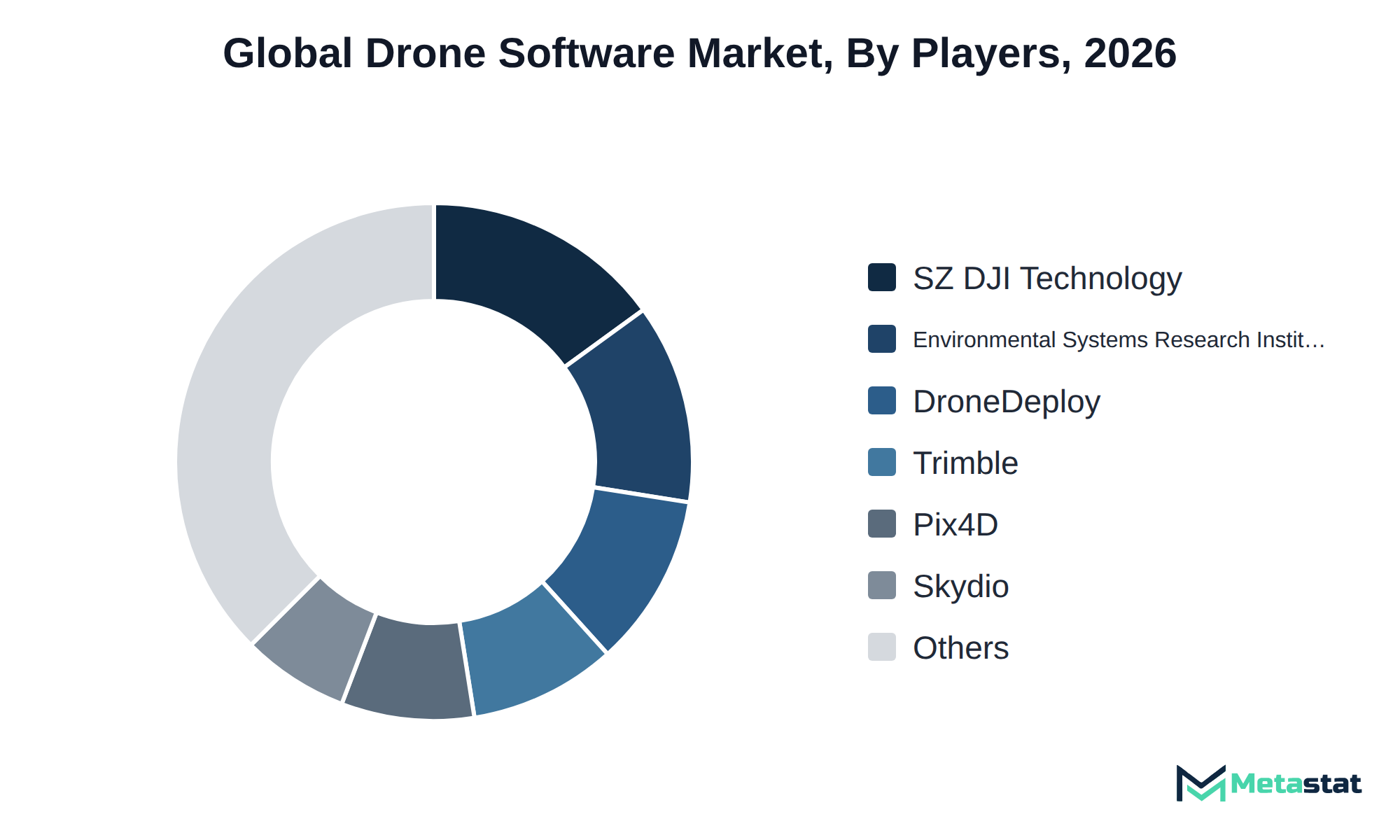
The Drone Software market features diverse competitive strategies among key players. Companies differentiate themselves through various factors, including pricing, certification, customization, service offerings, and ecosystem integration. Major segments within the market include flight control and navigation, mapping and analytics, and mission planning and fleet management. Each company approaches these areas with a distinct focus.
SZ DJI Technology Co., Ltd. concentrates on advanced flight control solutions, providing high-quality products aimed at both commercial and consumer markets. DroneDeploy, Inc. specializes in mapping and analytics, offering comprehensive software that supports various industries, including construction and agriculture. Meanwhile, Pix4D SA emphasizes image processing and analytics, delivering innovative solutions tailored for the surveying and agriculture sectors. This competitive environment encourages continuous improvement and innovation across the Drone Software market.
Drone Software market growth relies on several key developments. The Flight Control and Navigation segment requires significant advancements in automation technology to improve operational efficiency and safety, driving adoption across various industries. Meanwhile, the Ground-Based deployment model is expected to see increasing investment in infrastructure, which will enhance capabilities in sectors including construction, surveying, and mining. The Closed Source software architecture is projected to gain traction due to rising demand for security and reliability, particularly in defense and government applications.
However, challenges exist that could impede market progress. Economic fluctuations and regulatory hurdles restrict investments, particularly affecting emerging regions like South America and the Middle East and Africa, where infrastructure development is critical. If these obstacles are effectively managed, the Drone Software market is likely to reach its forecasted value by 2033, benefiting from expanding applications and technological innovations.
By Software Function: Flight Control and Navigation, Mapping, Image Processing and Analytics, Mission Planning and Fleet Management, Airspace Management and Compliance, Others (Simulation and Training)
By Deployment Model: Onboard, Ground-Based
By Software Architecture: Open Source, Closed Source
By End-Use Industry: Agriculture and Forestry, Construction, Surveying and Mining, Energy and Utilities, Defense and Government, Logistics and Transportation, Media and Entertainment, Others (Insurance, Education and Research)
The report strategically identifies and profiles the key market players and analyses their core competencies in each sub-segment of the Drone Software market.
Report Attributes | Details |
Study Period | 2021-2033 |
Base Year | 2025 |
Estimated Year | 2026 |
Forecast Period | 2026-2033 |
Historical Period | 2021-2025 |
Growth Rate | CAGR 18.1% from 2026 to 2033 |
Revenue Unit | USD billion |
Segmentation | By Software Function, Deployment Model, Software Architecture, End-Use Industry, and Region |
By Region | North America (By Software Function, Deployment Model, Software Architecture, End-Use Industry, and Country)
|
Europe (By Software Function, Deployment Model, Software Architecture, End-Use Industry, and Country)
| |
Asia Pacific (By Software Function, Deployment Model, Software Architecture, End-Use Industry, and Country)
| |
South America (By Software Function, Deployment Model, Software Architecture, End-Use Industry, and Country)
| |
Middle East and Africa (By Software Function, Deployment Model, Software Architecture, End-Use Industry, and Country)
|
Find answers to common questions about this report
The Drone Software market size was valued at USD 10.5 billion in 2025.
The market is projected to grow at a CAGR of 18.1% during the forecast period from 2026 to 2033.
The North America Drone Software market size is estimated to reach USD 13.9 billion by 2033.
Mapping, Image Processing and Analytics leads the Drone Software market with a projected value of USD 16.2 billion by 2033. This segment surpasses others in terms of revenue potential.
The rise in drone adoption across industries enhances operational efficiency and data accuracy, leading to increased investment in specialized software. Airspace Management and Compliance presents a significant growth opportunity, driven by the need for efficient systems that ensure compliance with evolving regulations.
North America holds the dominant share of the Drone Software market, with a projected value of USD 13.9 billion in 2033, representing 37.4 percent of the total market. This figure surpasses the shares of other regions, including Europe and Asia Pacific.
Price sensitivity among potential buyers restricts expansion within the market. High initial costs associated with advanced software solutions create barriers for small and medium enterprises, resulting in slower adoption rates.
The rising complexity of air traffic and regulatory requirements significantly favors adoption within the Drone Software market. This trend creates a strong demand for software solutions that facilitate efficient airspace management and ensure compliance, appealing to industries including defense, logistics, and public safety.
The Drone Software market is estimated to reach a valuation of USD 39.9 billion by 2033.
Key players operating in the Drone Software market include SZ DJI Technology Co., Ltd., DroneDeploy, Inc., Pix4D SA, Environmental Systems Research Institute, Inc. (Esri), Skydio, Inc., Trimble Inc., and Parrot SA.
The analysts below cover Aerospace and Defense research at Metastat Insights.
LEAD ANALYST
Utkarsh Khirodkar is a Lead Market Research Analyst at MetaStat Insight, specializing in market intelligence, technology sector assessments, and competitive strategy.
Our group needed clearer visibility into out-of-autoclave processing timelines for high-temperature thermoplastic composites. MetaStat Insight delivered an objective assessment that contrasted automated fiber placement scrap rates with traditional thermoset prepreg layup cycles. The supplier landscape mapped out primary resin suppliers and tape slitting capacity across France, Germany, and Japan with solid technical accuracy. Their analyst handled our questions on precursor supply risks during an unscheduled inquiry call, providing clear, unembellished context.
Evaluating sensor fusion reliability across harsh operating environments can be tricky without field-validated data. The study on agricultural autonomous guidance systems clearly separated stereo vision setups from automotive-grade solid-state LiDAR. We appreciated the regional infrastructure analysis, specifically around RTK network density across North America and South America. During our follow-up consultation, the MetaStat Insight team walked through tier-two perception software partnerships, giving our engineering leads a practical basis for vendor shortlisting.
Analyzing the transition from natural gas to green hydrogen in iron ore reduction requires realistic infrastructure timelines. Meta stat insight supplied a detailed regional assessment of DRI plant conversion costs and scrap metal availability in North America and Western Europe. Their report carefully examined pellet quality specs and electrical grid access constraints without making oversimplified market assumptions. The research material served as a practical reference during internal technology roadmap discussions.
Explore related market intelligence reports worth reading alongside this one.
Starting from
$2950