
LEAD ANALYST
Utkarsh Khirodkar is a Lead Market Research Analyst at MetaStat Insight, specializing in market intelligence, technology sector assessments, and competitive strategy.

Global Architectural Lighting Market Size, Share, By Light Source (LED, Fluorescent, High-Intensity Discharge, Incandescent and Halogen, Others), By Lighting Function (Ambient Lighting, Accent Lighting and Task Lighting), By Installation Location (Indoor and Outdoor), By End Use (Commercial, Residential, Industrial and Public), Industry Analysis, Growth, Trends, and Forecast, 2026-2033
Report ID
MSI-5538
Published
October, 2026
Pages
292 Pages
Format
Historical
Base year
Forecast
Forecast period
Report Details
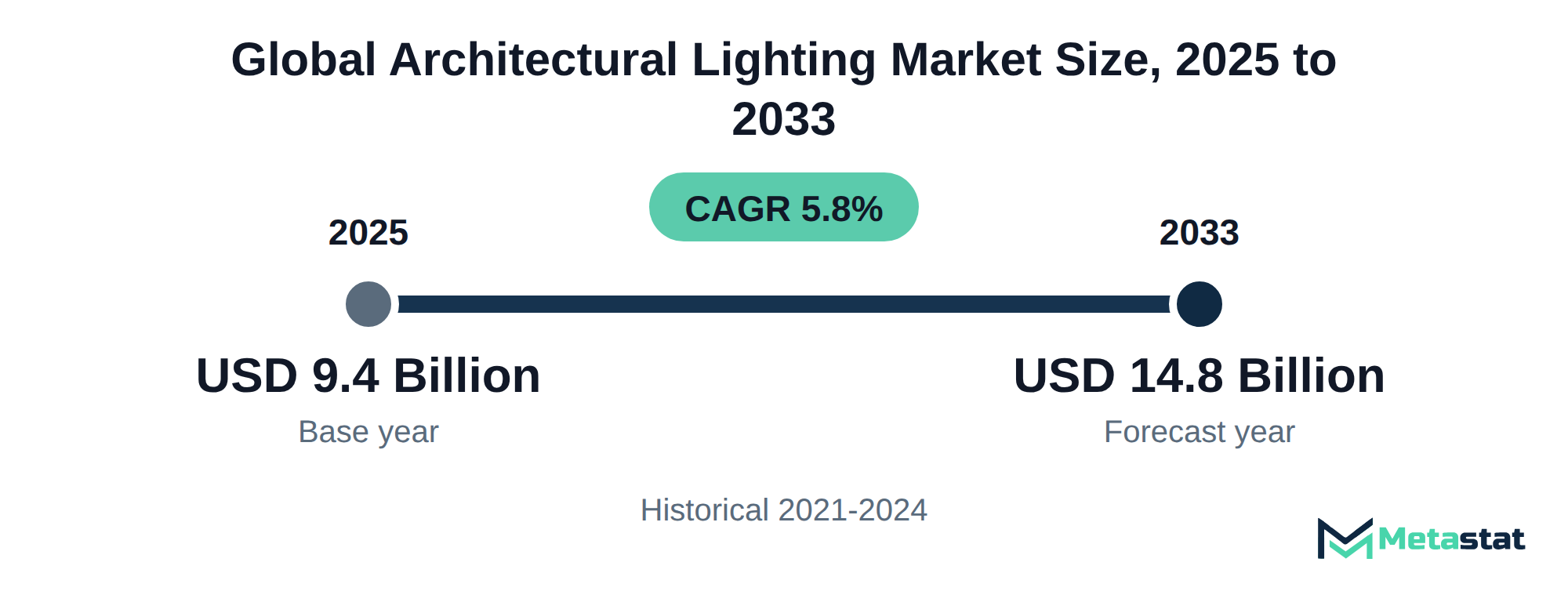
Market Valuation: Valued at $9.4 Billion in 2025, projected to reach $14.8 Billion by 2033 at a 5.8% CAGR.
Dominant Segment: The LED segment leads the market, driven by its energy efficiency and growing adoption in various applications. This segment is projected to grow from USD 7.4 billion in 2026 to USD 12.7 billion by 2033, reflecting a CAGR of 7.9%.
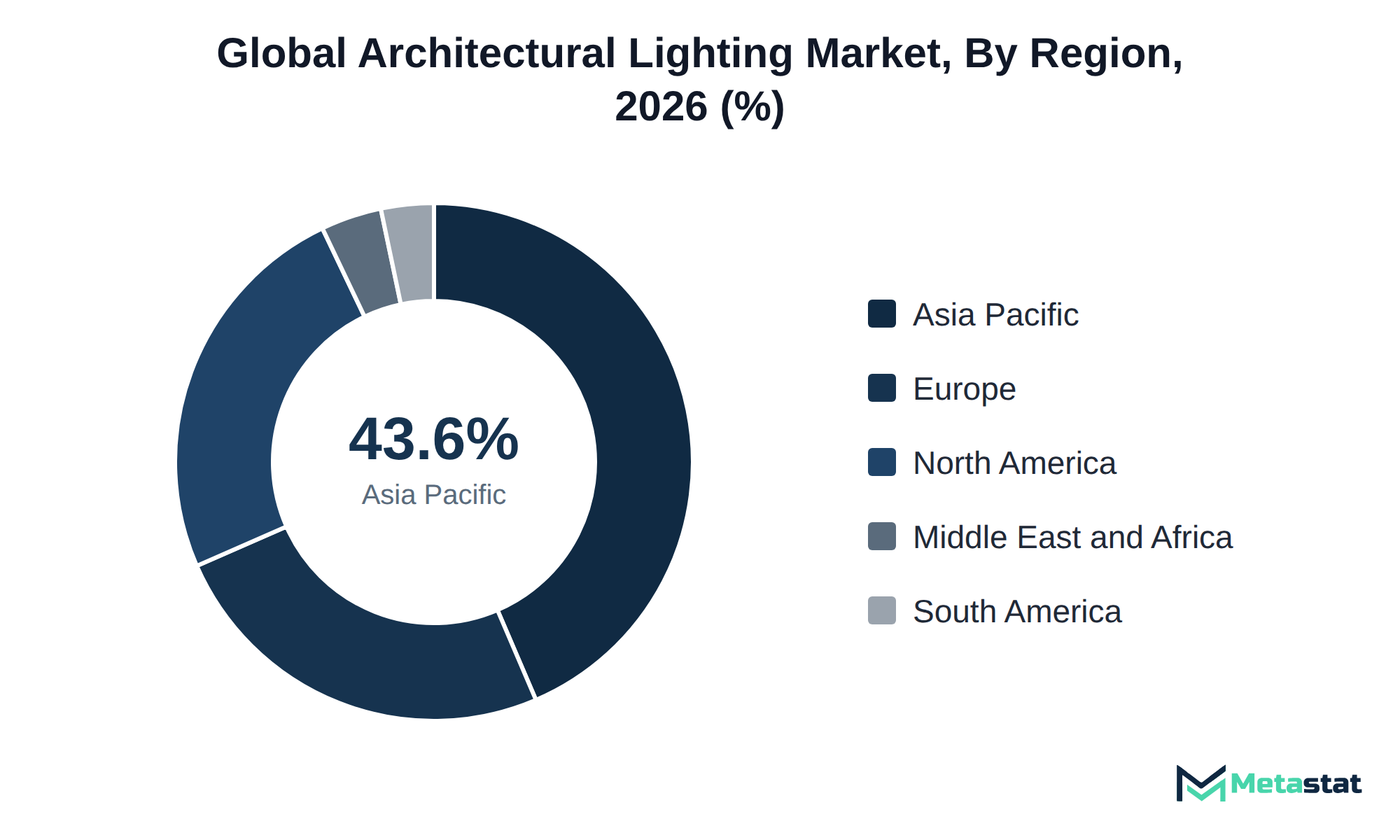
Geographic Lead: The Asia Pacific region captures the largest market share at 43.6% in 2025, fueled by rapid urbanization and infrastructure development. North America follows, with the US expected to lead in 2026, supported by government initiatives promoting energy-efficient lighting.
What's Inside: The report provides a comprehensive analysis of the architectural lighting market, including competitive coverage, market segmentation by light source, function, installation location, and end use. It also includes forecasts from 2026 to 2033, highlighting key trends and growth drivers.
Emerging Trends: There is a significant shift towards low-glare LED downlights and tunable white specifications in commercial interiors, enhancing visual comfort and adaptability. This trend reflects the increasing demand for innovative and energy-efficient lighting solutions.
Market Challenges: Price sensitivity among buyers limits engagement, particularly in commercial and residential sectors, as rising costs deter investment in advanced lighting systems. Additionally, increasing material costs pressure profit margins for suppliers.
Choose Your License
Global Architectural Lighting Market
The global Architectural Lighting market was valued at USD 9.4 billion in 2025 and is projected to reach USD 14.8 billion by 2033, growing at a CAGR of 5.8% over the forecast period.
The Architectural Lighting market encompasses a variety of lighting solutions designed for aesthetic and functional purposes in buildings and structures. Buyers invest in architectural lighting to enhance the ambiance of spaces, improve visibility, and increase energy efficiency. The market serves diverse applications, including residential, commercial, and industrial environments, where lighting quality impacts both utility and design. The integration of advanced technologies, including LED lighting, influences purchasing decisions, driven by the need for sustainable and cost-effective solutions.
Growth in the market is propelled by rising urbanization, increasing construction activities, and a growing emphasis on energy-efficient solutions. The LED segment stands out, representing the largest value among light sources, reflecting the shift towards more sustainable lighting options. In terms of regional performance, the Asia Pacific region leads, capturing 43.6% of the market share in 2025. This dominance arises from rapid infrastructure development and a high demand for innovative lighting solutions in emerging economies.
North America holds 24.5% of the market in 2025, with the US leading in 2026. Factors including government initiatives promoting energy-efficient lighting and advancements in smart lighting technology drive market dynamics. The architectural lighting sector is expected to witness continuous expansion, supported by increasing investments in building renovations and the growing importance of aesthetic design in architectural projects.
The Architectural Lighting market includes multiple segments that cater to various applications and consumer needs. Buyers invest in these solutions to enhance aesthetics, improve energy efficiency, and meet regulatory standards. The market serves diverse sectors, including commercial, residential, industrial, and public segments, driving demand for innovative lighting solutions that fulfill specific requirements, including energy savings and design flexibility.
Growth in the market is significantly supported by the increasing adoption of LED technology, which offers superior energy efficiency compared to traditional lighting sources. LED lighting dominates the Light Source segment, reflecting a shift towards sustainable solutions. The Asia Pacific region holds the largest market share, accounting for 43.6% in 2025, driven by rapid urbanization and infrastructure development. The US is projected to lead the North American market in 2026, contributing to the region's overall share of 24.5% in 2025.
Technological advancements and rising consumer awareness regarding energy-efficient lighting solutions continue to drive market expansion. The increasing emphasis on smart lighting systems enhances user experience, promoting higher spending in the Architectural Lighting market. Manufacturers focus on developing innovative products that integrate seamlessly into smart home systems while providing both aesthetic appeal and functionality.
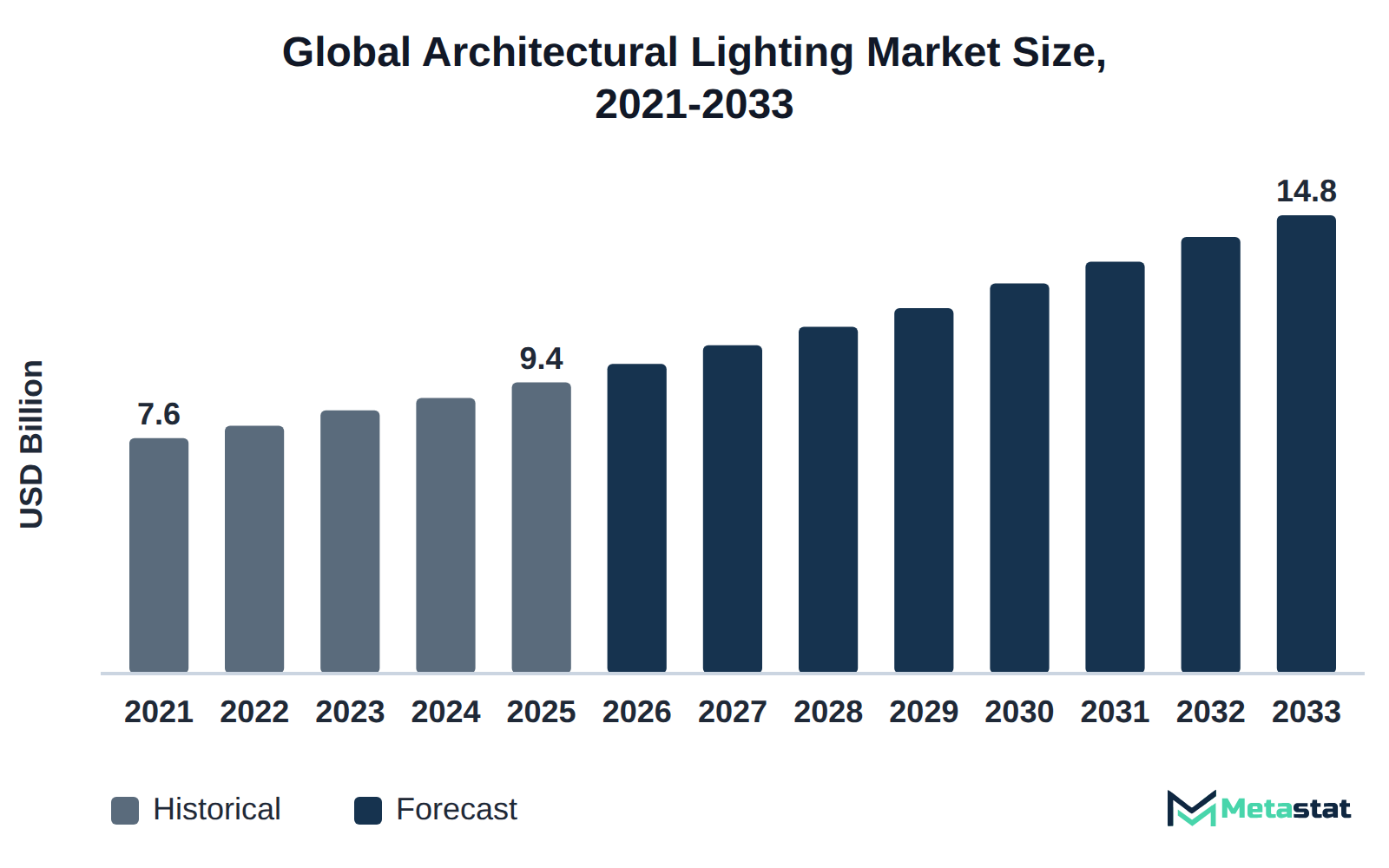
The adoption of low-glare LED downlights in commercial interiors reflects a significant shift towards enhancing visual comfort in workplace environments. These lighting solutions minimize glare, improving overall illumination quality while promoting productivity among occupants. While the trend towards energy-efficient lighting continues, the Architectural Lighting market experiences an increasing preference for LED technologies, which accounted for USD 7.4 billion in value in 2026, with projections indicating growth to USD 12.7 billion by 2033, driven by a CAGR of 7.9%.
Tunable white specification, another emerging trend, allows users to adjust the color temperature of LED fixtures, facilitating adaptability to various tasks and times of day. This flexibility in lighting design aligns with the growing emphasis on creating versatile spaces in commercial settings. Companies investing in these technologies experience operational benefits, including reduced energy consumption and enhanced occupant satisfaction. The incorporation of low-glare and tunable white LED downlights contributes to a more appealing and functional workspace, ultimately influencing tenant retention and attracting new clients within the market.
Pricing strategies for RGBW façade lighting and precision optics significantly influence purchasing decisions in the Architectural Lighting market. Factors including project size, complexity, and customization requirements dictate pricing models, which often include fixed pricing, cost-plus contracts, and performance-based agreements. Fixed pricing provides clarity for buyers, while cost-plus contracts offer flexibility for projects with uncertain specifications.
For example, in the current market, LED lighting sources, including RGBW configurations, are set to grow from USD 7.4 billion in 2026 to USD 12.7 billion by 2033, reflecting a compound annual growth rate of 7.9%. This growth highlights the increasing adoption of advanced lighting technologies, pushing buyers to seek competitive pricing structures that align with their project budgets and timelines. Buyers negotiate terms that accommodate ongoing maintenance and operational costs, securing long-term value.
The growing demand for innovative lighting solutions in landmark buildings emphasizes the importance of transparent pricing models. Buyers benefit from understanding the total cost of ownership, which encompasses initial investments, installation expenses, and potential energy savings over time. This strategic approach to pricing enhances project feasibility and strengthens relationships between suppliers and customers in the market.
Modular linear lighting offers distinct advantages in renovation projects, particularly for buyers focusing on flexibility and efficiency. This type of lighting system enables easy adjustments to fit various space configurations, enhancing its appeal in environments where adaptability is essential. The Architectural Lighting market increasingly reflects this trend, driven by rising demand for innovative lighting solutions.
The expected growth in the market is driven by a significant shift toward retrofit compatibility, with modular systems designed to integrate seamlessly with existing infrastructure. The anticipated CAGR of 7.9% for LED light sources from 2026 to 2033 highlights a clear preference among buyers for energy-efficient options that support sustainable design. This growing inclination toward LED technology aligns with the increasing focus on reducing operational costs and energy consumption in renovation initiatives.
Ultimately, the integration of modular linear lighting in renovation projects translates to enhanced operational efficiency and reduced downtime during installations. This compatibility meets the evolving needs of buyers and positions the market competitively, creating a favorable environment for investment and adoption of advanced lighting solutions.
Choosing the appropriate lighting source is crucial for buyers in the architectural lighting market. This significant growth highlights the increasing preference for energy-efficient and long-lasting solutions in various applications.
In contrast, traditional sources including fluorescent and incandescent lighting face declining demand, with fluorescent projected to reach only USD 0.9 billion and high-intensity discharge at USD 0.6 billion by 2033. Buyers should assess energy consumption, lifespan, and maintenance costs associated with different lighting sources to ensure alignment with project requirements.
The shift towards LED technology not only enhances energy efficiency but contributes to reduced operational costs over time. Adopting LED systems influences overall project budgets significantly, making it imperative for buyers to prioritize this comparison when selecting architectural lighting solutions.
Commercial buyers increasingly prioritize energy efficiency in their lighting solutions, driven by rising energy costs and sustainability initiatives. This shift influences their purchasing decisions, leading to an uptick in demand for energy-efficient products, particularly LED lighting. The Architectural Lighting market reflects this trend, with LED products projected to achieve a compound annual growth rate of 7.9% from 2026 to 2033. This growth enhances overall market revenue and encourages manufacturers to innovate further in energy-saving technologies. Buyers seek to reduce operational costs and comply with environmental standards, and the adoption of architectural lighting solutions with improved efficiency is expected to expand. The trend signals a robust transformation in the market environment, resulting in competitive pricing and greater availability of advanced lighting options.
Innovations in LED technology significantly contribute to the growth of the Architectural Lighting market. Enhanced performance characteristics, including increased lumen output and improved color rendering, attract commercial and industrial buyers seeking effective lighting solutions. The introduction of smart lighting systems that integrate with building automation technology strengthens the appeal of LED products by enabling energy management and remote control functionalities. Enhanced longevity and lower maintenance costs further optimize operational efficiency for end users.
The market experiences increased competition among suppliers who invest in research and development to deliver advanced lighting solutions. This technological evolution drives down prices while improving the overall quality and capabilities of the products. The growth trajectory for LEDs reflects a compound annual growth rate of 7.9% from 2026 to 2033, highlighting their dominance in the market. Buyers benefit from the transition to energy-efficient lighting, aligning sustainability objectives with economic incentives.
The rising costs associated with architectural lighting solutions impact buyer engagement, particularly among commercial and residential sectors. Higher prices create a barrier for smaller businesses and individual homeowners, leading to slower uptake of advanced lighting systems. Many buyers delay purchases or opt for lower-cost alternatives, affecting overall market demand. This trend results in smaller orders or extended replacement cycles, limiting the revenue potential for suppliers. Buyers often seek cost-effective substitutes that lack advanced features found in premium models, which hinders the adoption of innovative lighting technologies. Overall, price sensitivity remains a significant factor that constrains growth within the architectural lighting market, influencing purchasing decisions and market dynamics.
Increasing material costs create significant challenges for suppliers in the Architectural Lighting market. The escalation of raw material prices, particularly for components in LED lighting, strains profit margins and influences pricing strategies. Suppliers respond by optimizing supply chains and exploring alternative materials to mitigate cost impacts. Several companies invest in technological innovations that enhance production efficiency, thereby offsetting higher input costs. This pursuit of cost-effective solutions allows businesses to maintain competitiveness while adapting to market pressures.
The Architectural Lighting market continues to experience fluctuations in demand. Suppliers focus on enhancing value propositions to secure client loyalty despite rising costs. This strategic approach supports sustainable growth and encourages long-term relationships with buyers. The ongoing adjustment to market dynamics highlights the resilience and adaptability of suppliers within the sector.
The Architectural Lighting market experiences significant growth within the LED segment, driven by increasing demand for energy-efficient and long-lasting lighting options. This growth arises from heightened awareness of sustainability and energy-saving initiatives among commercial and residential buyers, prompting a shift toward LED solutions, which offer superior efficiency and reduced operational costs.
Regions with strong infrastructure development, including Asia Pacific, exhibit the highest potential for LED adoption. Buyers in this region seek advanced lighting technologies that minimize environmental impact while enhancing aesthetic appeal. The increasing penetration of LED systems in various applications, including architectural spaces, highlights opportunities for manufacturers to innovate and diversify their product offerings to meet evolving consumer preferences.
The Global Architectural Lighting market is segmented based on Light Source, Lighting Function, Installation Location, and End Use.
This segment serves various applications, primarily in residential, commercial, and industrial settings, where energy efficiency and extended lifespan are critical factors for decision-making. The increasing emphasis on sustainable practices within the construction and design industries further fuels demand for LED solutions. Compared to other light sources, LED stands out with faster growth rates; for example, fluorescent lighting, projected to reach USD 0.9 billion by 2033, exhibits a slower growth trajectory. Buyers gravitate towards LED options due to their cost-effectiveness over time, despite potentially higher initial investments, which distinguishes this segment from traditional lighting technologies.
Fluorescent lighting is expected to reach USD 0.9 billion by 2033, at a CAGR of -3.7% during the forecast period. This segment serves various applications, particularly in commercial and institutional settings where consistent lighting is essential. Demand for fluorescent solutions is declining due to the increasing adoption of energy-efficient alternatives including LED lighting. Environmental regulations aimed at reducing energy consumption further influence this shift. Compared to the LED segment, which exhibits a robust CAGR of 7.9%, fluorescent lighting faces challenges with lower growth rates. This segment remains appealing for budget-sensitive projects, yet it lags behind in innovation and adaptability, impacting its competitiveness within the market.
High-Intensity Discharge segment is expected to reach USD 0.6 billion by 2033. This lighting source type provides bright and intense illumination, commonly used in outdoor applications including street lighting and stadiums. The transition towards energy-efficient solutions drives demand for alternatives, challenging the High-Intensity Discharge segment's growth. Buyers in commercial and industrial sectors often favor LED solutions due to longer lifespans and reduced energy consumption, creating competitive pressure. With a slower growth rate compared to LED lighting, which has a CAGR of 7.9%, High-Intensity Discharge solutions face increasing scrutiny from buyers prioritizing sustainability. While High-Intensity Discharge offers specific advantages in certain applications, limitations in energy efficiency and rising costs hinder its market position against more modern alternatives.
Incandescent and Halogen segment is projected to grow at a CAGR of -0.9% during the forecast period. This segment typically serves in residential and commercial lighting applications, providing warm and inviting illumination. Consumers often prefer incandescent and halogen lighting for their aesthetic qualities, especially in settings where ambiance is significant. Declining energy efficiency compared to newer technologies like LED presents a challenge, causing buyers to shift toward more sustainable options. The segment's projected decline contrasts with the growth seen in LED lighting, which is valued at USD 7.4 billion in 2026 and is projected to reach USD 12.7 billion by 2033. Energy efficiency regulations tighten, leading to decreased demand for incandescent and halogen lighting, reflecting broader trends in the market that favor more efficient light sources.
Neon and xenon lighting solutions serve specialized aesthetic and functional purposes, often used in decorative applications including signage, architectural features, and artistic displays. These solutions are typically favored by designers and architects looking to create visually striking environments. Demand for this segment is driven by trends in architectural design that emphasize unique lighting effects and customization. Compared to more dominant light sources like LED, neon and xenon options face challenges related to energy efficiency and longevity, impacting their market presence. While the market prioritizes energy-efficient alternatives, the distinctive visual qualities of neon and xenon maintain appeal among specific buyer segments seeking unique and expressive lighting solutions. The Architectural Lighting market continues to evolve, balancing innovation with the enduring allure of traditional lighting methods.
Ambient Lighting segment is valued at USD 5.2 billion in 2026 and is projected to reach USD 7.3 billion by 2033, at a CAGR of 4.9% during the forecast period. This segment provides general illumination in residential, commercial, and public spaces, enhancing visibility and overall comfort. Rising demand for energy-efficient lighting solutions drives commercial buyers to seek ambient lighting options that improve aesthetic appeal while reducing operational costs. The segment differs from others including Accent and Task Lighting, which target specific functions and show varying growth rates; for instance, Accent Lighting shows a higher CAGR of 7.3%. The combination of technological advancements in LED lighting and a shift towards sustainable practices increases the significance of Ambient Lighting, ensuring its central role in contemporary architectural designs.
Accent Lighting is estimated to reach USD 5.7 billion by 2033, at a CAGR of 7.3% during the forecast period. This lighting function finds application in enhancing visual interest and creating focal points in both residential and commercial environments. Designers and architects highlight accent lighting to showcase artwork, architectural features, and other key elements, driving demand from sectors including hospitality, retail, and residential design. The segment experiences growth driven by increasing investment in interior design and renovations, with buyers seeking unique lighting solutions that enhance ambiance. Compared to other lighting functions, accent lighting displays a faster growth rate, reflecting a notable shift toward personalized and aesthetically-driven lighting solutions. The prioritization of visually appealing environments contributes to the broader growth of the Architectural Lighting market.
Task Lighting segment is expected to reach USD 1.9 billion by 2033. This segment focuses on providing localized illumination for specific tasks, enhancing visibility and reducing eye strain, particularly for workspaces, study areas, and hobby stations. Predominantly used in commercial settings, including offices and retail spaces, Task Lighting addresses the critical requirement for efficiency and productivity in environments where focused lighting is essential. Innovations in lighting technology drive demand for this segment, with a notable emphasis on LED solutions enhancing energy efficiency and lifespan. Task Lighting experiences a Compound Annual Growth Rate (CAGR) of 3.4%, slower compared to other segments like Accent Lighting, which has a CAGR of 7.3%. This reflects varying buyer preferences and applications across the Lighting Function segments, highlighting the distinct positioning of Task Lighting in the broader Architectural Lighting market.
Indoor lighting solutions are valued at USD 7.6 billion in 2026 and are projected to reach USD 11 billion by 2033, at a CAGR of 5.4% during the forecast period. This segment serves various applications in commercial and residential settings, providing essential illumination for workspaces, living areas, and public institutions. Growth in this segment is driven by increasing demand for energy-efficient solutions that enhance aesthetic appeal while reducing energy costs. Compared to the Outdoor segment, which offers a higher growth rate of 7% CAGR, Indoor lighting experiences steady growth due to its established market presence. Advancements in LED technology further enhance the efficiency and longevity of indoor lighting options, positioning this segment favorably in terms of cost-effectiveness over the forecast period. The Architectural Lighting market continues to evolve, catering to diverse consumer needs and preferences.
Outdoor lighting solutions are expected to reach USD 3.8 billion by 2033, at a CAGR of 7% during the forecast period. This segment primarily serves urban planners, landscape architects, and commercial property developers who require reliable and energy-efficient lighting for outdoor spaces. Increased urbanization and a heightened focus on public safety drive substantial growth in this segment. Compared to other segments, outdoor lighting experiences faster growth due to its necessity in enhancing security and aesthetics in public areas. The transition towards LED solutions in outdoor applications fuels demand, aligning with global sustainability goals. The market's emphasis on innovative outdoor lighting systems continues to shape adoption patterns, distinguishing this segment from others in terms of growth trajectory and technological advancements.
Commercial segment is valued at USD 5.1 billion in 2026 and is projected to reach USD 7.8 billion by 2033, at a CAGR of 6.1% during the forecast period. This segment primarily serves retail, office, and hospitality sectors, focusing on creating functional and aesthetically pleasing environments. Demand for advanced lighting solutions aligns with business objectives including enhancing customer experience and improving employee productivity. Key factors driving this segment include the increasing emphasis on energy-efficient solutions and the adoption of smart lighting technologies. Compared to other segments, this category demonstrates a higher growth rate, driven by businesses seeking to reduce operational costs and improve sustainability. The market reflects a noticeable shift towards LED technology, which offers longer lifespans and lower energy consumption, ensuring competitive advantages for businesses that adopt these solutions.
The residential segment is estimated to reach USD 4 billion by 2033, at a CAGR of 5.2% during the forecast period. This segment primarily serves homeowners and renters seeking effective lighting solutions for living spaces, enhancing both functionality and aesthetics. Key factors propelling this segment include a growing emphasis on energy efficiency and advancements in LED technology, which provide long-lasting and cost-effective options. Compared to other segments, the residential segment experiences a moderate growth rate, reflecting steady demand among consumers for improved lighting solutions. In contrast, the commercial segment exhibits a higher growth rate, influenced by substantial investments in energy-efficient technologies. Overall, the residential segment remains vital in driving the overall expansion of the market.
The industrial segment is expected to reach USD 1.3 billion by 2033. This segment serves various manufacturing sectors, including automotive, textiles, and food processing, where efficient and reliable lighting enhances productivity and safety. Growing emphasis on workplace safety and energy efficiency fuels demand for advanced lighting solutions tailored for industrial environments. Technological advancements, particularly in LED lighting, drive improvements in energy consumption and maintenance costs, positioning this segment for steady growth. Compared to other segments, the industrial lighting segment experiences a moderate growth rate, supported by a compound annual growth rate (CAGR) of 5.0%, slower than the commercial segment's 6.1% CAGR. Market dynamics are influenced by the ongoing shift towards automated and smart lighting systems, streamlining operational efficiency while addressing regulatory demands for energy-efficient solutions.
Public and Institutional segment is projected to grow at a CAGR of 6.5% during the forecast period. This segment encompasses lighting solutions designed for government, educational, healthcare, and cultural facilities, catering to diverse needs from functional lighting to aesthetic enhancements. Key drivers include investments in infrastructure development and increasing focus on energy-efficient lighting, pushing demand for advanced systems. Public institutions often seek durability and efficiency, distinguishing this segment from others that prioritize cost or aesthetic appeal. The projected growth rate of 6.5% highlights a more robust expansion compared to other segments, including Residential, which is expected to reach USD 4 billion by 2033 with a CAGR of 5.2% during the same period. Adoption of modern lighting solutions aligns with sustainability goals, enhancing public perception and operational efficiency.
Based on geography, the Global Architectural Lighting market is divided into North America, Europe, Asia-Pacific, South America, Middle East, and Africa.
Demand in North America for the Architectural Lighting market focuses significantly on the commercial and industrial sectors. Growing investments in infrastructure development and renovations of existing buildings drive the demand for advanced lighting solutions. Regulatory support for energy-efficient lighting technologies enhances the market, encouraging the adoption of LED lighting systems. The anticipated market value is projected to reach USD 3.4 billion by the end of 2033, reflecting a strong growth trajectory. The region accounts for 24.5% of the global market in 2025, demonstrating its vital contribution to the overall architectural lighting landscape. Countries including the United States, Canada, and Mexico actively participate in expanding demand through various initiatives aimed at enhancing energy efficiency and sustainability.
The European region holds a significant position in the Architectural Lighting market, with a 24.9% share in 2025. Demand arises from various sectors, particularly commercial spaces and residential projects, driven by advancements in energy-efficient lighting technologies. Countries like Germany, France, and the UK emphasize the integration of sustainable practices within architectural designs, enhancing the appeal of modern lighting solutions. The region benefits from strong infrastructure, including smart city initiatives that promote the adoption of innovative lighting systems. Regulatory frameworks favor the shift towards LED technologies, enhancing market growth potential. By 2033, the market is projected to continue growing, supporting the ongoing evolution of architectural standards and lighting design across Europe.
Asia Pacific holds 43.6% of the global market for Architectural Lighting in 2025. This region experiences robust demand driven by rapid urbanization and infrastructure development, particularly in countries like China, India, and South Korea. The growing adoption of energy-efficient lighting solutions, especially LEDs, reflects increased regulatory focus on sustainability. Governments prioritize initiatives that encourage the use of advanced lighting technologies in commercial and residential sectors. The rising disposable income among consumers in Australia and Southeast Asia supports the transition to modern lighting systems. Overall, these factors contribute to a positive outlook for the market, with sustained growth anticipated through 2033.
In South America, the Architectural Lighting market experiences growth driven by the commercial and residential sectors. Brazil and Argentina represent the key markets, with demand in Brazil influenced by ongoing urbanization and infrastructure development. The increasing focus on energy-efficient solutions supports the adoption of advanced lighting technologies. Regulatory initiatives aimed at enhancing energy efficiency in buildings shape market dynamics. With a market share of 3.3% in 2025, the region's growth trajectory aligns with global trends, emphasizing the need for innovative lighting solutions that cater to both aesthetic and functional requirements. The market's evolution reflects a broader shift toward sustainability and energy conservation.
The Middle East and Africa region represents a smaller segment of the Architectural Lighting market. Growing urbanization and infrastructure development in countries including Saudi Arabia and the UAE drive demand, particularly in commercial and public sectors. Significant investments in smart city initiatives further enhance the need for advanced lighting solutions. In South Africa, a focus on energy efficiency and sustainability influences buyers' preferences toward LED technology. The ongoing development of new commercial and residential projects in the region offers additional opportunities for market expansion. Regulations surrounding energy consumption and environmental standards encourage the adoption of innovative and efficient lighting technologies, contributing to the market growth.
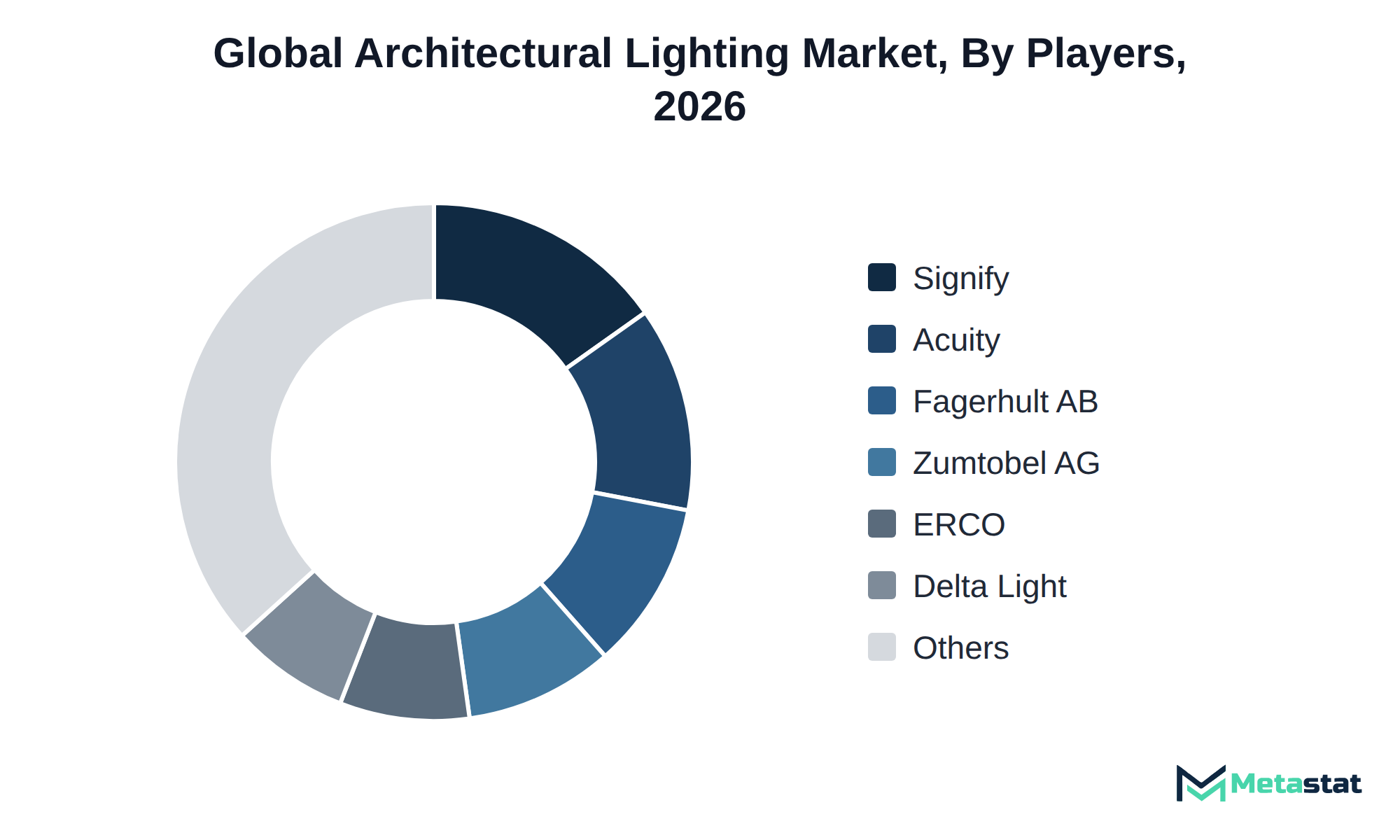
Competition in the Architectural Lighting market revolves around factors including pricing, customization, and certification. Companies emphasize diverse product offerings and feature sets to cater to varied buyer preferences. Signify N.V. focuses on innovative LED solutions, enhancing energy efficiency while addressing aesthetic needs.
Acuity Inc. targets the commercial segment with advanced lighting control systems, ensuring optimal performance and energy savings. ERCO GmbH specializes in accent lighting, promoting design flexibility for high-end applications. This strategic division allows companies to attract distinct buyer groups while driving growth in the market.
Many companies leverage their respective ecosystems to provide comprehensive solutions, improving customer engagement and satisfaction. Zumtobel Group AG emphasizes integrated lighting solutions that meet specific client requirements, enhancing user experience and operational efficiency. In contrast, Legrand S.A. prioritizes smart and connected lighting technologies, appealing to tech-savvy consumers seeking modernized living spaces.
With evolving customer demands, companies like Delta Light N.V. and Flos S.p.A. have shifted towards customization and design-oriented products, ensuring relevance within the competitive environment. This strategic focus on innovation and adaptability enhances their positions within the Architectural Lighting market.
This growth relies on several key developments within the market. This segment captures attention due to enhanced energy efficiency and longevity compared to traditional lighting options. Second, the rise in the commercial end-use sector is expected to drive growth, with revenues expected to increase from USD 5.1 billion in 2026 to USD 7.8 billion by 2033, supported by investments in modern infrastructure and smart buildings. However, risks exist that could impede this growth trajectory. Economic fluctuations or stringent regulations in certain regions challenge investment activities, particularly in North America, where the market value is expected to reach USD 3.4 billion by 2033. These factors will play a significant role in determining whether the market reaches its forecasted value of over USD 14.8 billion by 2033.
By Light Source: LED, Fluorescent, High-Intensity Discharge, Incandescent and Halogen, Others (Neon, Xenon)
By Lighting Function: Ambient Lighting, Accent Lighting, Task Lighting
By Installation Location: Indoor, Outdoor
By End Use: Commercial, Residential, Industrial, Public and Institutional
The report strategically identifies and profiles the key market players and analyses their core competencies in each sub-segment of the Architectural Lighting market.
Report Attributes | Details |
Study Period | 2021-2033 |
Base Year | 2025 |
Estimated Year | 2026 |
Forecast Period | 2026-2033 |
Historical Period | 2021-2025 |
Growth Rate | CAGR 5.8% from 2026 to 2033 |
Revenue Unit | USD billion |
Segmentation | By Light Source, Lighting Function, Installation Location, End Use, and Region |
By Region | North America (By Light Source, Lighting Function, Installation Location, End Use, and Country)
|
Europe (By Light Source, Lighting Function, Installation Location, End Use, and Country)
| |
Asia Pacific (By Light Source, Lighting Function, Installation Location, End Use, and Country)
| |
South America (By Light Source, Lighting Function, Installation Location, End Use, and Country)
| |
Middle East and Africa (By Light Source, Lighting Function, Installation Location, End Use, and Country)
|
Find answers to common questions about this report
The Architectural Lighting market size was valued at USD 9.4 billion in 2025.
The market is projected to grow at a CAGR of 5.8% during the forecast period from 2026 to 2033.
The North America Architectural Lighting market size is estimated to reach USD 3.4 billion by 2033.
The LED segment leads the Architectural Lighting market with a projected value of USD 12.7 billion in 2033, reflecting its significant growth compared to other light source segments.
Rising energy costs and sustainability initiatives drive demand for energy-efficient lighting solutions. Increasing awareness of operational cost reduction and environmental compliance among buyers further supports the shift towards LED products.
Rising costs associated with architectural lighting solutions create a barrier for smaller businesses and individual homeowners, leading to slower uptake of advanced lighting systems. Increasing material costs challenge suppliers, straining profit margins and influencing pricing strategies.
Increasing demand for energy-efficient LED solutions favors adoption in the Architectural Lighting market. This trend reflects heightened awareness of sustainability and the desire for advanced technologies that reduce operational costs while enhancing aesthetic appeal. Regions with strong infrastructure development, particularly Asia Pacific, exhibit significant potential for further adoption.
The Architectural Lighting market is estimated to reach a valuation of USD 14.8 billion by 2033.
Key players operating in the Architectural Lighting market include Signify N.V., Acuity Inc., Fagerhult Group AB, Zumtobel Group AG, ERCO GmbH, Delta Light N.V., and Flos S.p.A.
The LED segment is projected to expand from USD 7.4 billion in 2026 to USD 12.7 billion by 2033, reflecting a compound annual growth rate of 7.9%.
The analysts below cover Electronics and Semiconductor research at Metastat Insights.
LEAD ANALYST
Utkarsh Khirodkar is a Lead Market Research Analyst at MetaStat Insight, specializing in market intelligence, technology sector assessments, and competitive strategy.

PRINCIPAL CONSULTANT - ENTERPRISE AI & EMERGING TECHNOLOGIES
Banking & Finance · Electronics and Semiconductor · Energy and Power · Healthcare IT · Information & Technology · Professional Services
Vijay Gunti is a Principal Consultant at MetaStat Insight, bringing over two decades of experience across enterprise digital transformation, technology strategy, and intelligent systems.

PRINCIPAL CONSULTANT - QUALITY SYSTEMS & COMPLIANCE
Electronics and Semiconductor · Machinery & Equipment · Professional Services
Omkar Phadtare is an Industry Consultant at MetaStat Insight, specializing in quality systems, regulatory compliance, and standards benchmarking to drive data-driven market intelligence and strategic industry research.

ENERGY & INFRASTRUCTURE INDUSTRY CONSULTANT
Automotive and Transportation · Electronics and Semiconductor · Energy and Power · Machinery & Equipment
Saurabh Vasant Ganvir consults for Energy & Infrastructure Industry at MetaStat Insight, specializing in renewable energy, solar EPC, and electric vehicle (EV) infrastructure markets.

LEAD CONSULTANT - COMMUNICATION, TELECOM, AND IT
Electronics and Semiconductor · Information & Technology · Machinery & Equipment · Professional Services
Ravindra Sathe Consultants for Communication, Telecom, and IT at MetaStat Insight. He leads the firm's industry research initiatives across telecommunications infrastructure, digital connectivity, enterprise networking, and emerging information technology domains.
Tracking capacity expansion in single-use bioprocessing requires dependable data on raw material availability and cleanroom-grade polymer supply chains. The competitive landscape chapter gave a grounded evaluation of secondary component suppliers across North America and Asia-Pacific rather than simply reprinting press releases. Having that level of supplier benchmarking helped clarify dual-sourcing considerations for our clinical pipeline planning.
When evaluating distributed energy resource management systems, standard research summaries tend to gloss over the operational differences between front-of-the-meter utility deployments and behind-the-meter industrial sites. The MetaStat Insight report addressed those distinctions directly, especially regarding software interoperability standards and grid interconnection backlogs. The five-year market sizing across regional transmission organizations provided actionable context for our grid modernization strategy.
Most industry reports on warehouse automation bundle autonomous mobile robots and fixed conveyor installations into the same top-level numbers, which complicates advisory work. This study split the market cleanly by payload tiers, navigation technology, and fleet management software layers. The regional forecast for Western Europe gave our team defensible adoption benchmarks when evaluating capital allocation for logistics clients, saving us days of secondary data scrubbing.
Explore related market intelligence reports worth reading alongside this one.
Starting from
$2950