
LEAD ANALYST
Utkarsh Khirodkar is a Lead Market Research Analyst at MetaStat Insight, specializing in market intelligence, technology sector assessments, and competitive strategy.

Global Audiobook Market Size, Share, By Genre (Fiction and Nonfiction), By Business Model (Individual Title Purchases, Subscription Access, Institutional Licensing and Advertising-Supported Access), By Target Audience (Adults and Children and Young Adults), By Primary Listening Device (Smartphones, Computers and Tablets, Smart Speakers, In-Car Systems and Others), Industry Analysis, Growth, Trends, and Forecast, 2026-2033
Report ID
MSI-5621
Published
October, 2026
Pages
296 Pages
Format
Historical
Base year
Forecast
Forecast period
Report Details
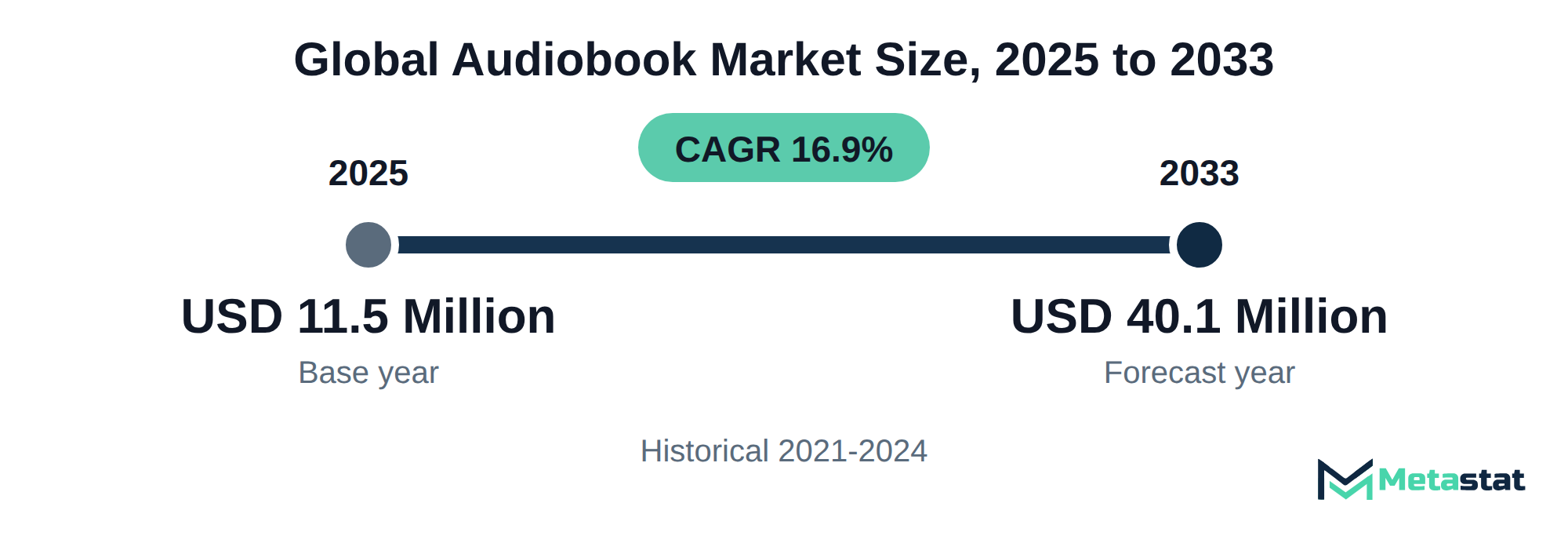
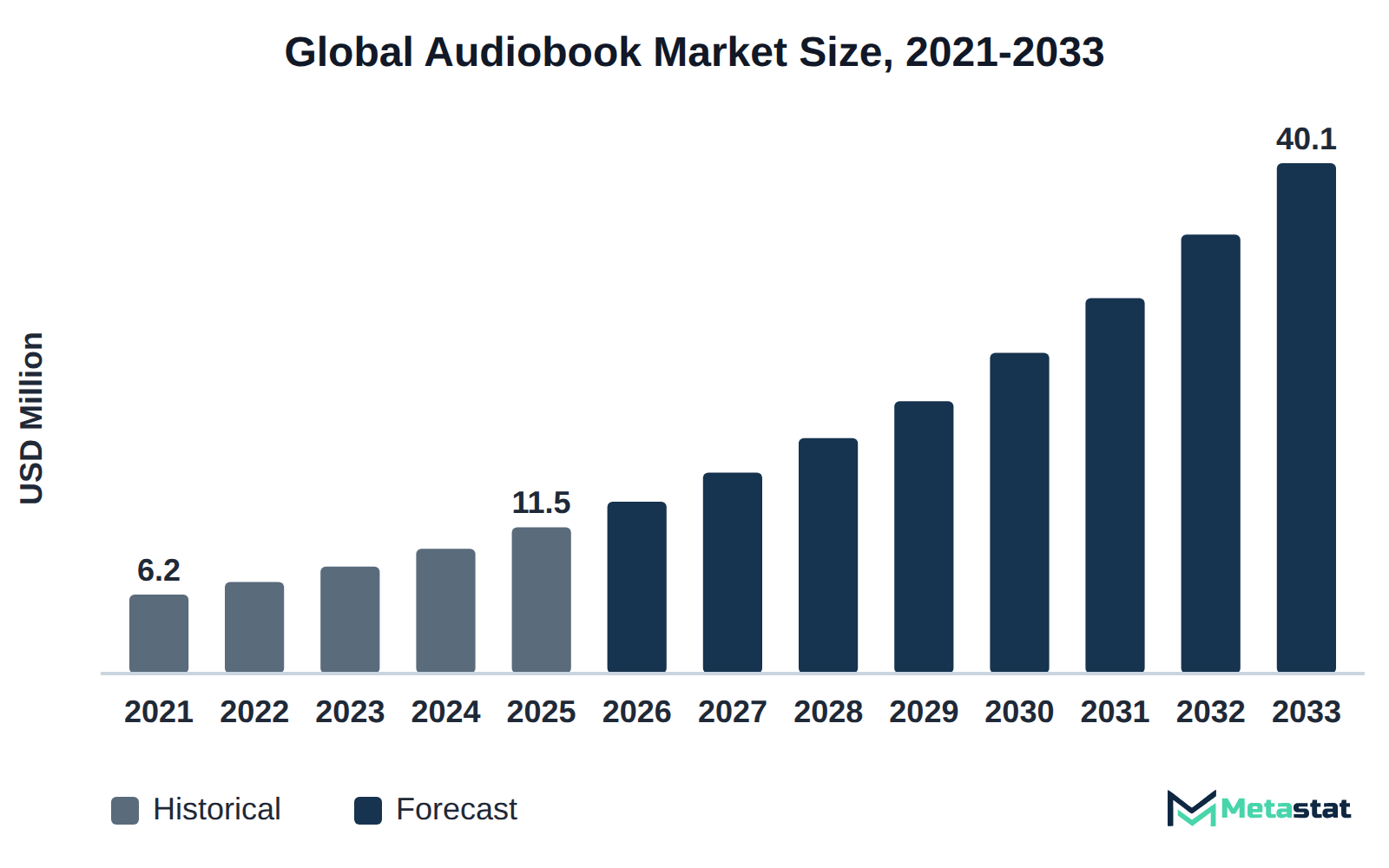
Market Valuation: Valued at $11.5 Million in 2025, projected to reach $40.1 Million by 2033 at a 16.9% CAGR.
Dominant Segment: Fiction leads the audiobook market, driven by consumer demand for immersive storytelling experiences. This segment is projected to grow significantly, reflecting the popularity of narrative-driven content.
Geographic Lead: North America is the leading region in the audiobook market, with the US expected to maintain its dominance due to a robust digital content distribution infrastructure and high disposable incomes.
What's Inside: The report provides comprehensive coverage of market dynamics, competitive analysis, and forecasts through 2033, detailing segments by genre, business model, target audience, and primary listening device.
Growing Demand for Subscription Access: Subscription access is rapidly gaining traction, projected to reach USD 21.2 million by 2033, as consumers increasingly favor flexible and cost-effective audiobook options.
Smartphone Adoption Accelerates Consumpt: The rise in smartphone usage is significantly enhancing audiobook consumption, allowing users to easily integrate audiobooks into their daily routines.
Choose Your License
Global Audiobook Market
The global Audiobook market was valued at USD 11.5 million in 2025 and is projected to reach USD 40.1 million by 2033, growing at a CAGR of 16.9% over the forecast period.
The audiobook market covers audio recordings that give listeners access to literature and educational content. Buyers invest in this market due to the convenience and accessibility audiobooks offer, allowing for consumption during commutes, workouts, or leisure time. The growth of smartphones and streaming services has significantly contributed to the increased adoption of audiobooks across various demographics, including adults and children.
Fiction emerges as the segment with the most value, reflecting the diverse interests of consumers. North America holds 41.9% of the market in 2025, with the US leading in 2026. This region's strong share is driven by a well-established infrastructure for digital content distribution, high disposable incomes, and a growing preference for consumption on-the-go. The increasing prevalence of subscription-based models enhances access to a vast library of titles, further fueling market expansion.
One main growth driver includes rising demand for subscription access, which offers consumers a more cost-effective way to enjoy a variety of audiobooks. The shift toward digital consumption continues to reshape the market, attracting new listeners and encouraging existing consumers to explore different genres. This trend reinforces the audiobook market's position within the broader media and entertainment landscape.
Investments in the audiobook market reflect a growing demand for convenient and accessible audio content. Consumers increasingly prioritize the flexibility of listening to books while engaging in various activities, including commuting or exercising. This shift in consumer behavior drives purchases among adults seeking entertainment and educational content, leading to significant market growth.
Fiction represents the segment with the highest value, demonstrating strong appeal among listeners. This dominance results from a well-established distribution network and a high level of consumer engagement with audiobooks, positioning the region favorably compared to others.
Rapid advancements in technology significantly influence growth within the market. Enhanced smartphone capabilities and the proliferation of streaming services contribute to increased accessibility. These factors match changing consumer preferences and support continued expansion of the audiobook market.
The emergence of subscription models in the audiobook market has transformed consumer engagement and purchasing behavior. Subscription services often offer credits that allow customers to obtain audiobooks at a reduced rate, enhancing customer loyalty and increasing overall sales. Subscription access is projected to reach USD 21.2 million by 2033, reflecting a compound annual growth rate (CAGR) of 20.4%. This dynamic indicates a strong shift in how consumers interact with audiobooks, favoring flexibility and accessibility.
Listening-hour limits tied to subscriptions contribute to customer value in the market. These limits incentivize consumers to optimize their audiobook consumption, ensuring that they use their subscriptions effectively. Such restrictions drive engagement and encourage users to explore more varied content, which builds a stronger listening culture. The combination of credits and listening-hour limits cultivates a more engaged audience, which in turn supports revenue growth for providers.
Bundled audio services, where users receive additional content including podcasts or related media within their subscription, further enhance customer value. This strategy attracts new subscribers and retains existing users by enriching their overall experience. Consequently, businesses that effectively implement these subscription models and value-added services position themselves for sustained growth and competitive advantage.
The audiobook market in Europe features diverse purchasing behaviors influenced by pricing strategies and contract models. Buyers often prefer subscription access due to cost efficiency, with this business model projected to generate USD 21.2 million by 2033. Subscription services offer consumers a wide selection of titles and flexible listening options, appealing to both individual users and families.
Individual title purchases remain popular among those seeking specific content, with revenue expected to reach USD 15.9 million by 2033. This model supports customers who desire ownership of particular audiobooks without ongoing commitments. Understanding these preferences allows publishers to tailor their offerings and pricing structures effectively.
Local-language fiction has gained traction in European markets, significantly impacting consumer purchasing decisions. Buyers increasingly seek content in their native languages, prompting book publishers to adapt their catalogs to meet this demand. English-language audiobooks remain a significant segment, appealing to a broader audience, including non-native speakers eager to improve their language skills.
Evolving purchasing patterns in the audiobook market require publishers to adopt varied pricing strategies and flexible contract models. By offering diverse options, they enhance customer satisfaction and drive revenue growth.
Human narration significantly enhances the listener experience in the audiobook market, appealing to audiences seeking authenticity and emotional engagement. High-quality narration creates an immersive environment that printed text often cannot achieve. For instance, adults represent a key target audience, with projected revenues increasing from USD 10.6 million in 2026 to USD 30.7 million by 2033, a CAGR of 16.5%. This growth indicates a strong preference for audiobooks narrated by skilled voice actors, with listeners connecting with stories conveyed through human voices.
The ability to seamlessly transition from print to audio format caters to diverse consumer needs, especially among busy adults who prefer flexibility in content consumption. This adaptation enables users to switch effortlessly between reading a physical book and listening to its audiobook counterpart, enhancing accessibility. While the audiobook market evolves, companies prioritizing human narration alongside innovative print-to-audio features capture greater market share and build deeper connections with their audience, driving sustained growth.
In the Audiobook market, customers in America and Europe increasingly prioritize subscription access over individual title purchases. By 2033, subscription access is projected to reach USD 21.2 million, reflecting a significant shift in consumer preferences. This trend indicates a growing demand for flexible and cost-effective listening options, appealing to a broader audience.
Factors influencing audiobook pricing choices include the genre of content and target audience. Fiction genres are expected to generate revenue ranging from USD 8.5 million in 2026 to USD 25 million by 2033, driven by adult listeners seeking immersive storytelling experiences. The commercial consequence of this trend lies in the potential for publishers to tailor their offerings, enhancing market penetration and revenue opportunities.
The target audience significantly impacts purchasing decisions in the market. This demographic shift indicates publishers use targeted marketing strategies to maximize engagement and sales.
Adult consumers increasingly prefer subscription models, resulting in significant growth in the audiobook market. This demographic shift reflects a broader trend toward access over ownership, with listeners valuing the ability to explore a wide variety of titles through a flat fee. Subscription access enables users to enjoy diverse content without the financial burden of purchasing individual titles. The expected value of subscription access is projected to reach USD 21.2 million by 2033, reflecting its rapid adoption. While demand for audiobooks continues to rise, consumers benefit from enhanced flexibility and access to a larger selection of titles, influencing market dynamics and competition.
This shift supports overall market growth, driving investment in content creation and technology to meet listener preferences. With subscription access becoming a dominant purchasing model, the market experiences accelerated expansion driven by changing consumer behaviors. Increased competition among providers for content and customer loyalty further enhances the attractiveness of subscription services in the evolving audiobook market.
Smartphone ownership significantly influences audiobook consumption patterns. Widespread access to mobile technology enables users to engage with audio content during daily activities, including commuting and exercising. This trend is driven by the convenience that smartphones offer, allowing easy integration of audiobooks into users' lifestyles. The growing reliance on mobile devices for entertainment contributes to an expanding user base, enhancing overall market growth.
Consumers, particularly younger demographics, gravitate towards smartphones for their ability to provide easy access to various audiobook platforms. This shift towards mobile-centric consumption patterns highlights the strategic importance for content providers to optimize their offerings for smartphone accessibility. Improving user interfaces and app functionality increases user engagement and retention.
Global audiobook market expansion receives strong support from rising smartphone adoption, which creates a culture of on-the-go listening. The resulting demand for mobile-friendly audiobook solutions creates opportunities for innovative content delivery methods, further driving market growth. Increased smartphone use changes how audiences interact with audio content and supports further market growth.
High prices for audiobooks create significant barriers for several buyer segments, particularly among price-sensitive consumers. This dynamic results in slower uptake of audiobook services, especially in regions with emerging markets where disposable income remains limited. While premium offerings attract dedicated listeners, the broader audience opts for alternatives, including free content or lower-cost media. The higher costs associated with certain business models, including subscription access, impact purchase decisions, hindering overall market penetration. Consequently, delayed adoption and smaller order volumes from this demographic restrict potential growth within the audiobook market. Addressing pricing challenges is critical to opening opportunities in underserved segments and improving overall acceptance of audiobooks.
Suppliers in the audiobook market face significant margin pressure driven by increased competition and evolving consumer expectations. The proliferation of subscription models has raised the stakes, compelling providers to maintain competitive pricing while sustaining quality and breadth of offerings. Consequently, suppliers reduce operational costs through strategic partnerships and optimization of production processes. Many have begun to leverage technology for content creation and distribution, aiming to enhance efficiency without compromising quality.
While this approach allows suppliers to remain agile, it often results in reduced profit margins. Increased reliance on digital platforms further intensifies this situation, with content creators and publishers grappling with rising distribution costs. Suppliers implement innovative marketing strategies to differentiate their offerings and appeal to niche audiences, thereby seeking to maintain revenue streams. The evolving landscape demands continuous adaptation, with companies exploring new genres and diverse content formats to engage listeners effectively.
Advertising-supported access presents a significant growth opportunity within the audiobook market. This business model shows a compound annual growth rate (CAGR) of 28.5%, indicating a shift toward monetization strategies that rely on advertising as a key revenue stream. Advertisers seek to engage audiences through captivating audio content, particularly targeting younger demographics who increasingly consume media through digital platforms. By providing free access in exchange for advertisements, suppliers capture a broader listener base, enhancing user engagement while generating revenue. This approach aligns with the growing trend of ad-supported content consumption, enabling audiobooks to reach consumers previously deterred by subscription fees. The rise of this model suggests potential for increased market penetration, diversifying revenue streams for content providers and creating a competitive landscape that drives innovation. This trend reflects ongoing changes in consumer behavior and preferences toward flexible and cost-effective audio content, leading to greater variety and accessibility in the market.
The Global Audiobook market is segmented based on Genre, Business Model, Target Audience, and Primary Listening Device.
The Fiction segment is valued at USD 8.5 million in 2026 and is projected to reach USD 25 million by 2033, at a CAGR of 16.6% during the forecast period. This segment serves a broad audience, including adults and young adults, who seek immersive storytelling experiences. Increasing engagement with digital content drives demand, particularly among younger demographics that prefer fiction in audio format. This segment differentiates itself from nonfiction by offering a more substantial growth rate, reflecting a dynamic shift toward narrative-driven content consumption. The rise of subscription models enhances accessibility, allowing listeners to explore diverse genres without the burden of high per-title costs. In contrast, nonfiction growth reflects a steadier trajectory, focusing on educational and informative content. The interest in fiction audiobooks illustrates a significant trend within the audiobook market, emphasizing the cultural shift toward multimedia storytelling.
The nonfiction segment is estimated to reach USD 15.1 million by 2033, at a CAGR of 17.4% during the forecast period. This category includes audiobooks focused on factual content, educational material, and self-help literature, attracting a diverse audience, including students and professionals seeking knowledge enhancement. The rising trend of e-learning and self-education drives demand for nonfiction audiobooks, particularly among adults aiming to acquire new skills. With a higher CAGR than fiction's 16.6%, nonfiction audiobooks reflect a growing preference for learning and personal development through audio formats. Consumers' shift toward subscription models further fuels this segment's expansion as they seek broader access to various titles without incurring the costs of individual purchases. The market's focus on nonfiction aligns with the educational needs of listeners, distinguishing it from other genres with different consumption patterns and price points.
Individual Title Purchases segment is valued at USD 6.9 million in 2026 and is projected to reach USD 15.9 million by 2033, at a CAGR of 12.7% during the forecast period. This segment allows consumers to engage directly with specific titles, appealing to those who prefer ownership over subscription models. Adults represent a significant portion of the audience, drawn to the flexibility and variety offered by this model. Factors influencing this segment include consumer preference for standalone purchases versus subscription options and the growing availability of diverse content. Compared to other segments, including Subscription Access, which has a higher CAGR of 20.4%, Individual Title Purchases experiences slower growth, reflecting shifting consumer habits toward subscription models. The appeal of owning distinct titles remains strong among certain demographics, ensuring continued relevance within the evolving landscape of the audiobook market.
This model provides consumers with unlimited access to a variety of audiobooks for a fixed monthly fee, appealing primarily to avid readers and learners. Demand for subscription access is driven by the increasing preference for flexibility and cost-effectiveness regarding audiobook consumption. Compared to Individual Title Purchases, which are projected to grow at a CAGR of 12.7%, the Subscription Access model shows a significantly faster growth trajectory. While Individual Title Purchases typically attract casual listeners, Subscription Access caters to a broader audience, including those seeking extensive collections and diverse genres. This growing segment reflects an audiobook market in which convenience and value shape consumer choices.
Institutional Licensing segment is expected to reach USD 2.6 million by 2033. This segment primarily serves educational institutions, libraries, and organizations requiring access to audiobooks for learning and training purposes. A notable force influencing growth in this segment involves increasing investment in digital resources by educational institutions, driven by a desire for enhanced learning experiences. Institutional Licensing typically exhibits slower growth compared to other business models, reflecting the specific procurement processes and budget allocations of educational entities. With a projected CAGR of 0% during the forecast period, this segment's growth lags behind the more dynamic Subscription Access segment, which is expected to reach USD 21.2 million by 2033. Such trends highlight the distinct nature of purchasing behaviors in this segment compared to other models within the market.
Advertising-Supported Access segment is projected to grow at a CAGR of 28.5% during the forecast period. This segment enables listeners to access audiobooks without upfront costs, appealing primarily to budget-conscious consumers seeking entertainment. The rise of free or low-cost models, supported by digital advertising revenue, drives this segment's growth, aligning with trends in digital content consumption. Advertisers benefit from reaching engaged audiences while users enjoy audiobooks at no cost, which increases market penetration. Compared to other business models like Subscription Access, which targets a different audience with higher price points and steady revenue streams, Advertising-Supported Access offers a faster growth trajectory, attracting diverse user demographics seeking affordability. This intersection of advertising and audiobooks creates an additional avenue for expansion in the market.
Adults engage with audiobooks primarily for entertainment, education, and self-improvement, making this demographic a significant consumer base. Factors including increasing smartphone penetration and the growing preference for subscription models drive this segment. Adults differentiate themselves from other target audiences, including children and young adults, by demonstrating a higher willingness to invest in premium content. This segment's growth is attributed to increasing demand for diverse genres and formats, aligning with adult preferences for convenience and accessibility in listening experiences. The market evolves, responding to these shifting consumer behaviors and expectations.
The Children and Young Adults segment is estimated to reach USD 9.4 million by 2033, at a CAGR of 18.4% during the forecast period. This segment caters primarily to younger audiences, including children and teenagers, who seek engaging stories and educational content through audiobooks. The rising popularity of audiobooks among this demographic reflects a significant shift in how younger listeners consume literature, driven by the increasing accessibility of digital devices. This segment grows faster than others, propelled by an expanding interest in educational materials and storytelling formats. The transition towards digital education and entertainment creates a unique demand for audiobooks tailored to children and young adults, enhancing their appeal in the market. This trend differs from adult segments, which focus more on genres including fiction and nonfiction, indicating distinct consumption patterns and preferences among age groups.
Smartphones segment is valued at USD 6.1 million in 2026 and is projected to reach USD 18.5 million by 2033, at a CAGR of 17.2% during the forecast period. This segment caters to a broad audience, including adults and young listeners, who prefer the convenience of accessing audiobooks through portable devices. An increase in smartphone penetration and improvements in mobile internet connectivity drive growth, making audiobooks more accessible to users. Unlike other segments, including Computers and Tablets, this segment experiences faster growth due to the widespread use of smartphones as primary listening devices. Enhanced user experiences, including personalized recommendations and integration with music and podcast applications, further distinguish this segment, positioning it as a key part of consumption in the audiobook market.
The Computers and Tablets segment is estimated to reach USD 7.3 million by 2033, at a CAGR of 13.3% during the forecast period. This segment attracts users seeking a versatile reading experience, encompassing both adults and younger audiences. Increased availability of audiobook platforms on computers and tablets drives this demand, enabling easy access to a wide range of titles. Compared to other segments, the growth trajectory of Computers and Tablets is slower than that of Smartphones, which is projected to reach USD 18.5 million by 2033 with a CAGR of 17.2%. Price sensitivity in this segment influences user choices, with consumers weighing the convenience of using existing devices against investing in dedicated listening tools. The market experiences a unique dynamic where technological advancements enhance user engagement, differentiating it from other segments reliant on mobile devices.
Smart Speakers segment is expected to reach USD 7.2 million by 2033. This segment serves users who prefer hands-free listening experiences, making audiobooks accessible in daily routines, including cooking or commuting. Demand for Smart Speakers is driven by the growing integration of voice-activated technology in households, enhancing user engagement. This segment experiences a faster growth trajectory compared to other primary listening devices, with a notable CAGR of 19.5%. In particular, consumers prioritize convenience and ease of access, which differentiates this segment from traditional devices like computers and tablets. With significant advancements in smart home technology, the audiobook market benefits from increased adoption of these smart devices, leading to higher consumer engagement and revenue potential. The Smart Speakers segment exemplifies how technological innovation influences consumer preferences and drives market growth.
In-Car Systems segment is projected to grow at a CAGR of 19.5% during the forecast period. This segment caters primarily to drivers and passengers seeking an enriched audio experience while on the road. Increased integration of advanced infotainment systems in vehicles drives demand for audiobooks during commutes and long journeys. The growing trend of hands-free technology enhances accessibility, attracting consumers who prefer audio content over traditional reading. Compared to other segments, In-Car Systems experience faster growth, reflecting a shift in consumer preferences toward mobile, flexible forms of media consumption. The rising adoption of smart vehicles further supports this segment's expansion, establishing a clear distinction in growth dynamics from other primary listening devices.
Wearables and dedicated audio players represent a unique sub-segment within the audiobook market, appealing particularly to consumers seeking portable and versatile listening options. This segment finds usage among tech-savvy individuals and audiophiles who prioritize hands-free experiences or convenience in accessing titles while on the move. A notable driver influencing this sub-segment includes advancements in technology, which improve audio quality and battery life in these devices. In contrast to other segments, including smartphones, wearables and dedicated audio players often deliver a higher-quality listening experience while attracting a narrower audience. The segment's distinct offerings position it differently in terms of pricing and consumer preference compared to broader categories like smartphones or computers and tablets. Enhanced audio capabilities and user-friendly interfaces create opportunities for growth, generating ongoing interest in this technology.
Based on geography, the Global Audiobook market is divided into North America, Europe, Asia-Pacific, South America, Middle East, and Africa.
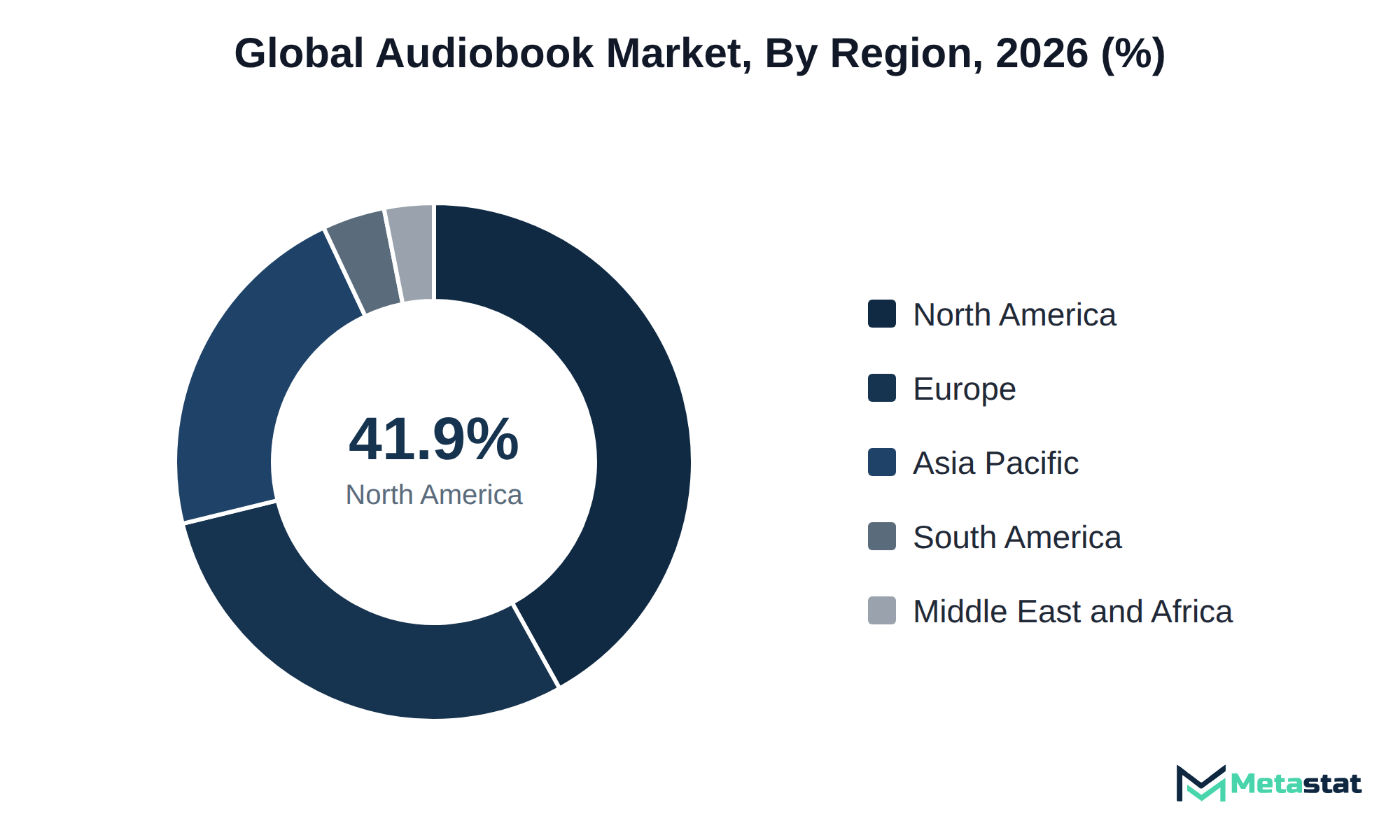
Demand for audiobooks in North America stems from a growing interest in digital media consumption, particularly among younger demographics. The United States, Canada, and Mexico exhibit strong engagement in the audiobook market, driven by an increasing preference for convenient and portable content delivery. The subscription model has gained traction, allowing consumers to access a wide range of titles on-demand, appealing to both adults and children. North America is projected to reach USD 15.5 million by the end of 2033, representing 41.9% of the global market in 2025. This region benefits from well-developed digital infrastructure and high smartphone penetration, facilitating easy access to audiobook platforms. Consumers prioritize flexibility in their listening habits, further driving growth in the market.
In Europe, the audiobook market shows strong potential, driven primarily by consumer preferences in countries including Germany, France, and the UK. Rising adoption of subscription services highlights a shift towards more accessible content, with younger audiences increasingly drawn to audiobook formats. Regulatory support in digital media distribution enhances market growth while encouraging innovation among local publishers. The region's distinct cultural landscape influences genre popularity, with fiction performing well among listeners. By 2025, Europe will account for 29.2% of the global market share, reflecting its significance in the overall growth trajectory of the audiobook market. Demand within the region is expected to continue expanding, supported by robust technological infrastructure and increasing smartphone penetration.
The growing popularity of audiobooks in Asia-Pacific significantly influences the market's expansion. Countries including China and India exhibit increasing consumer interest driven by a rising middle class and enhanced digital literacy. The prevalence of smartphones facilitates access to audiobook content, leading to higher consumption rates among young adults and busy professionals seeking convenient entertainment options. Subscription models, particularly appealing due to competitive pricing and diverse content offerings, support market growth. Australia and South Korea demonstrate strong engagement with audiobook platforms, contributing to the region's overall market share of 21.8% in 2025. Local publishers and content creators enhance the appeal of the audiobook market in this diverse region.
In South America, the audiobook market attracts interest due to increasing digital literacy and smartphone penetration. Brazil and Argentina serve as primary drivers, with consumers seeking diverse entertainment options that audiobooks provide. The cultural affinity for storytelling in these regions enhances demand, particularly among young adults and children. Infrastructure improvements, particularly in internet access, contribute to greater audiobook accessibility and support growth. While the market continues to expand, it is projected to capture a share of 3.9% in 2025. This trend reflects a broader shift toward digital content consumption across various demographics.
Demand for audiobooks in the Middle East and Africa stems from a growing interest among consumers in digital content, particularly within urban areas. Saudi Arabia and the UAE implement initiatives aimed at enhancing digital literacy and access to technology, supporting increased audiobook adoption. South Africa, with its diverse population and multilingual environment, presents unique opportunities for targeted content creation that appeals to various demographics. The market share for this region stands at 3.1% in 2025, reflecting emerging trends in consumer behavior and technology adoption specific to the area. Strategic partnerships with local publishers and platforms enhance the reach and availability of audiobooks across the region, contributing to overall growth in the audiobook market.
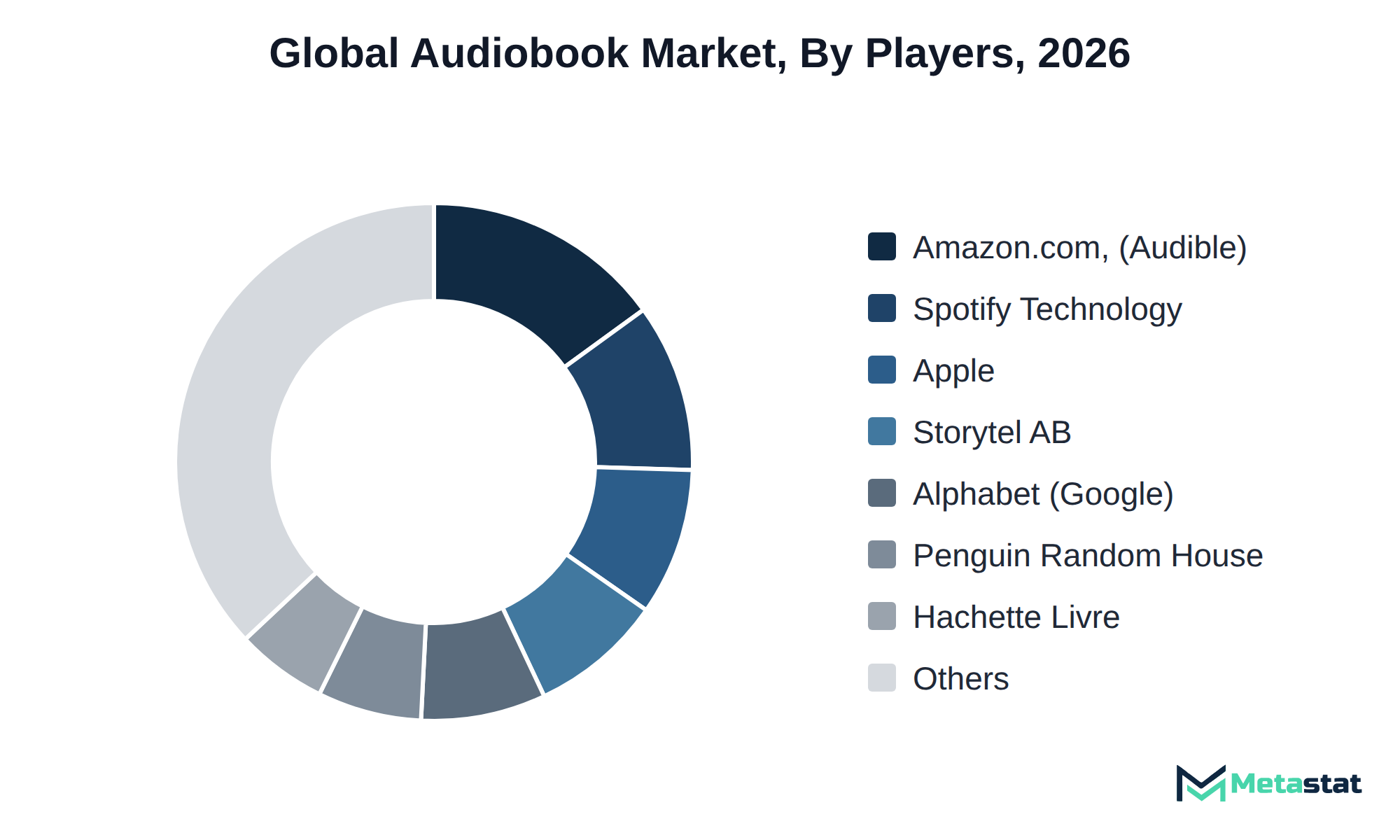
The audiobook market features varied competitive strategies among key players. Companies differentiate themselves through various business models, including individual title purchases, subscription access, and advertising-supported access. Subscription access has become a significant focus, driven by its rapid growth rate of 20.4%. Players including Amazon.com, Inc. (Audible) and Storytel AB prioritize this model, attracting users through extensive content libraries and user-friendly interfaces.
Buying decisions hinge on factors including price, content variety, and accessibility. Players like Spotify Technology S.A. use their existing music streaming ecosystems to provide integrated audiobook services, enhancing user engagement. In contrast, publishers like Penguin Random House LLC emphasize content quality and unique offerings to attract niche audiences. This competitive environment encourages innovation and diverse options for consumers in the audiobook market.
Growth in the audiobook market depends on several developments. Strong adoption of subscription access models is expected to drive revenue significantly, particularly within the adult audience segment, where demand is projected to reach USD 30.7 million by 2033. The fiction genre will contribute strongly, with revenues anticipated to increase from USD 8.5 million in 2026 to USD 25 million by 2033. However, potential risks include competition from free content sources and changes in consumer preferences, which limit growth. North America, representing 41.9% of market share, significantly influences overall expansion, and any regional shifts in listening preferences could impact the market.
By Genre: Fiction, Nonfiction
By Business Model: Individual Title Purchases, Subscription Access, Institutional Licensing, Advertising-Supported Access
By Target Audience: Adults, Children and Young Adults
By Primary Listening Device: Smartphones, Computers and Tablets, Smart Speakers, In-Car Systems, Others (Wearables, Dedicated Audio Players)
The report strategically identifies and profiles the key market players and analyses their core competencies in each sub-segment of the Audiobook market.
Report Attributes | Details |
Study Period | 2021-2033 |
Base Year | 2025 |
Estimated Year | 2026 |
Forecast Period | 2026-2033 |
Historical Period | 2021-2025 |
Growth Rate | CAGR 16.9% from 2026 to 2033 |
Revenue Unit | USD million |
Segmentation | By Genre, Business Model, Target Audience, Primary Listening Device, and Region |
By Region | North America (By Genre, Business Model, Target Audience, Primary Listening Device, and Country)
|
Europe (By Genre, Business Model, Target Audience, Primary Listening Device, and Country)
| |
Asia Pacific (By Genre, Business Model, Target Audience, Primary Listening Device, and Country)
| |
South America (By Genre, Business Model, Target Audience, Primary Listening Device, and Country)
| |
Middle East and Africa (By Genre, Business Model, Target Audience, Primary Listening Device, and Country)
|
Find answers to common questions about this report
The Audiobook market size was valued at USD 11.5 million in 2025.
The market is projected to grow at a CAGR of 16.9% during the forecast period from 2026 to 2033.
The North America Audiobook market size is estimated to reach USD 15.5 million by 2033.
Fiction leads the Audiobook market with a projected value of USD 25 million by 2033, surpassing other segments in growth potential. This segment exhibits a compound annual growth rate (CAGR) of 16.6%.
Subscription models are driving significant growth in the audiobook market, reflecting a trend toward access over ownership. Increased smartphone adoption enhances user engagement and expands the audience for audiobooks, facilitating on-the-go listening.
North America holds the dominant share of the Audiobook market, accounting for 41.9 percent in 2025. This region is projected to generate USD 15.5 million by 2033.
High prices for audiobooks create significant barriers for several buyer segments, particularly among price-sensitive consumers. increased competition and evolving consumer expectations exert margin pressure on suppliers, hindering overall market penetration.
Increased smartphone adoption significantly enhances audiobook consumption by facilitating easy access to diverse content during daily activities. the rise of advertising-supported access offers a flexible and cost-effective option, attracting a broader audience and promoting market penetration.
The Audiobook market is estimated to reach a valuation of USD 40.1 million by 2033.
Key players operating in the Audiobook market include Amazon.com, Inc. (Audible), Storytel AB, Spotify Technology S.A., Apple Inc., Alphabet Inc. (Google), and Rakuten Group, Inc. (Kobo).
The analysts below cover Consumer Goods research at Metastat Insights.
LEAD ANALYST
Utkarsh Khirodkar is a Lead Market Research Analyst at MetaStat Insight, specializing in market intelligence, technology sector assessments, and competitive strategy.
When planning edge sensor rollouts across refinery environments, generic IoT reports typically miss the harsh-environment certification bottlenecks. MetaStat Insight gave an objective evaluation of ATEX and Class 1 Division 2 hardware availability, along with realistic five-year maintenance cycle cost projections. The comparison of wireless mesh versus private cellular backhaul helped our team pressure-test network reliability models for remote processing facilities.
In the biological seed treatment space, registration timelines vary drastically between the European Union, Brazil, and North America. The MetaStat Insight research handled these cross-border regulatory barriers with genuine nuance, mapping commercialization pathways alongside historical field adoption rates. The segmentation between microbial strains and biochemical active ingredients was particularly well structured.
Our team was tracking whether regional recycling infrastructure could realistically absorb the growing volume of lithium iron phosphate batteries over the next decade. The report did a solid job separating announced hydrometallurgical plant capacity from active, permitted operational throughput. That distinction made the feedstock availability projections and regional recovery rate models far more credible than standard commercial overviews.
Explore related market intelligence reports worth reading alongside this one.