
LEAD ANALYST
Utkarsh Khirodkar is a Lead Market Research Analyst at MetaStat Insight, specializing in market intelligence, technology sector assessments, and competitive strategy.

Global Automotive Frequency Dependent Dampers Market Size, Share, By Damper Control Technology (Passive Frequency-Selective, Solenoid-Controlled Semi-Active, Magnetorheological, Active Hydraulic or Electromechanical), By Vehicle Type (Passenger Cars, Light Commercial Vehicles, Heavy Commercial Vehicles), By Vehicle Powertrain (Internal Combustion Engine, Hybrid and Plug-in Hybrid Electric, Battery Electric, Fuel Cell Electric), By Sales Channel (Original Equipment and Aftermarket Replacement and Upgrades), Industry Analysis, Growth, Trends, and Forecast, 2026-2033
Report ID
MSI-5541
Published
October, 2026
Pages
250 Pages
Format
Historical
Base year
Forecast
Forecast period
Report Details
Market Valuation: Valued at $1,600.1 Million in 2025, projected to reach $2,984.6 Million by 2033 at a 8.1% CAGR.
Dominant Segment: Passenger Cars lead the Automotive Frequency Dependent Dampers market, driven by increasing consumer demand for enhanced driving experiences and comfort. This segment is projected to grow significantly, reflecting a strong focus on performance and safety.
Geographic Lead: North America is expected to maintain a leading position in the market, with the US showing the highest growth due to its robust automotive manufacturing base and consumer preference for advanced vehicle features.
What's Inside: The report provides comprehensive coverage of the competitive landscape, detailed analyses of market segments, and forecasts extending to 2033, ensuring valuable insights for stakeholders.
Growth in Solenoid-Controlled Dampers: The solenoid-controlled semi-active dampers segment is projected to exhibit a CAGR of 9.6%, highlighting the demand for advanced damping solutions that enhance vehicle performance and comfort.
Market Challenge: Input Cost Pressures: Rising input costs for raw materials pose a challenge for manufacturers, impacting profitability and the adoption of advanced damping technologies in the Automotive Frequency Dependent Dampers market.
Choose Your License
Global Automotive Frequency Dependent Dampers Market
The global Automotive Frequency Dependent Dampers market was valued at USD 1,600.1 million in 2025 and is projected to reach USD 2,984.6 million by 2033, growing at a CAGR of 8.1% over the forecast period.
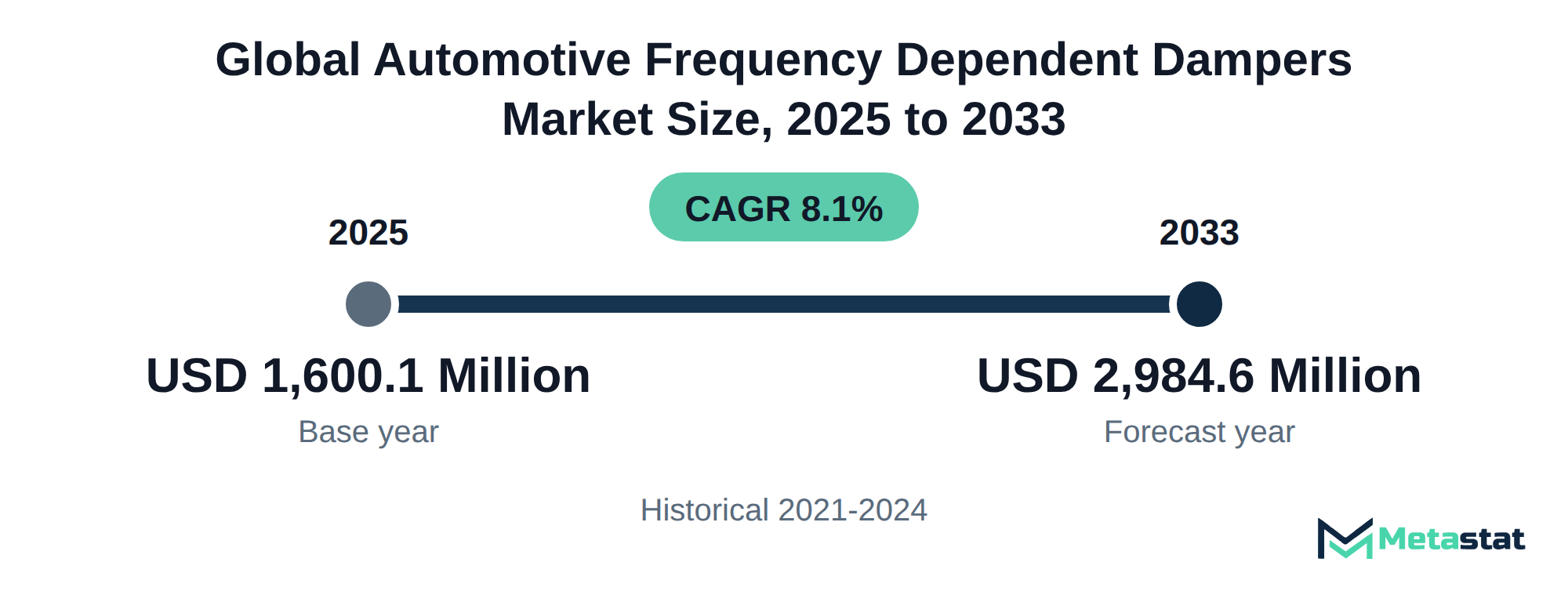
The Automotive Frequency Dependent Dampers market encompasses various technologies designed to enhance vehicle performance through improved damping characteristics. Buyers invest in these systems primarily to achieve better ride comfort, handling, and overall vehicle dynamics. Factors driving this expenditure include increasing consumer expectations for enhanced driving experiences and the ongoing shift towards advanced automotive technologies that support higher efficiency and safety standards.
Significant growth within the market derives from rising demand for passenger cars, which account for the highest value segment. North America holds 27.6% of the market in 2025, with the US leading in 2026. This region's strong automotive manufacturing base and consumer preference for advanced vehicle features contribute to its leading position. The increase in electric vehicle adoption creates further opportunities for the integration of advanced damper technologies.
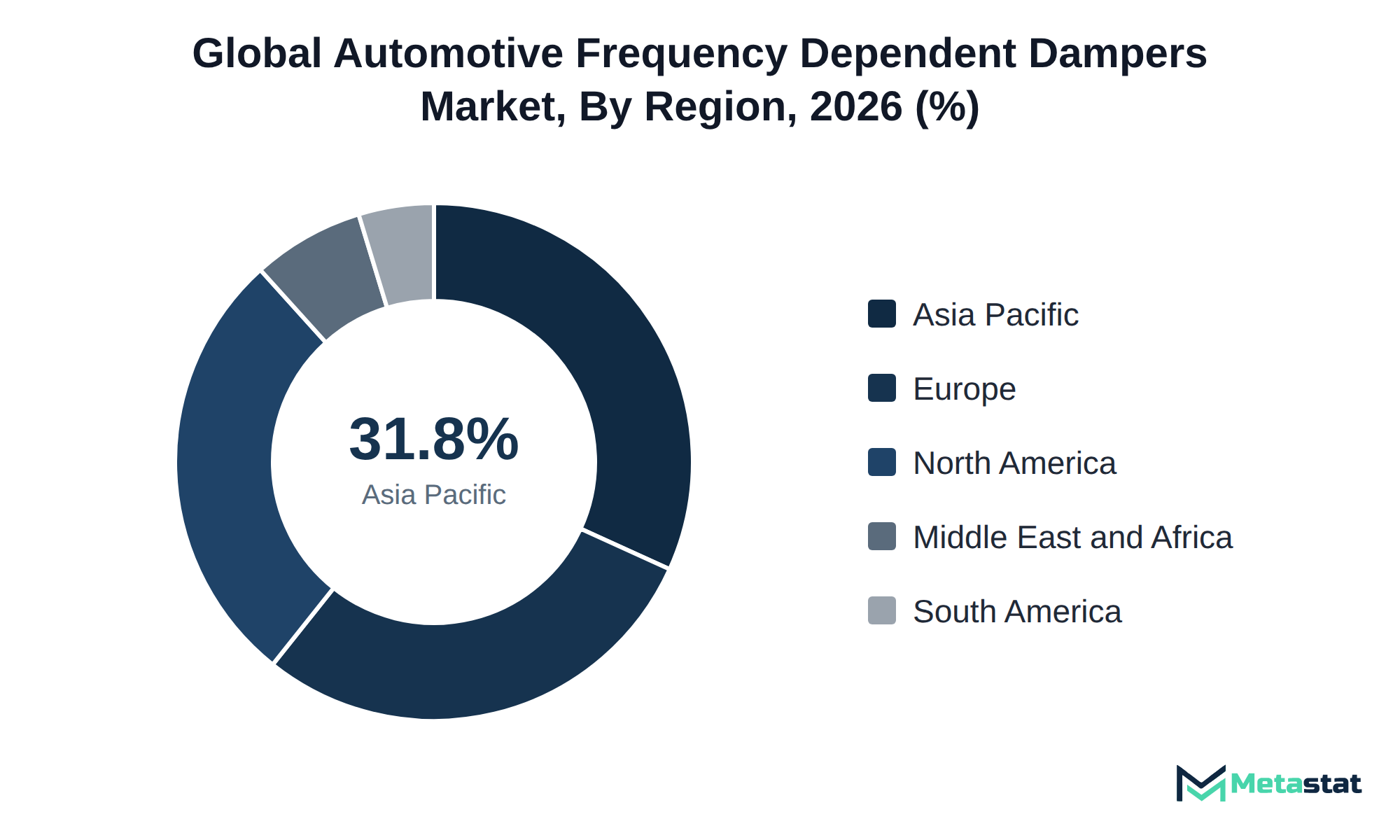
Growing emphasis on vehicle safety and comfort is expanding the market. In the competitive landscape, Asia Pacific represents the largest share at 31.8%, driven by its extensive automotive production and sales activities. Asia Pacific's focus on innovation and technology favors future growth as consumer preferences and regulatory requirements change.
The Automotive Frequency Dependent Dampers market covers technologies that improve vehicle stability and comfort by managing vibrations and shocks. Buyers invest in these dampers to enhance ride quality, vehicle handling, and overall safety. The growing emphasis on passenger comfort and vehicle performance significantly influences spending patterns in this market.
Growth in the market is driven by the increasing demand for advanced suspension systems across various vehicle types. Passenger Cars represent the segment with the most value, projected to show substantial growth over the forecast period. North America holds 27.6% of the market in 2025, with the US leading in 2026, reflecting strong consumer preferences for high-performance vehicles equipped with sophisticated damping solutions.
The rising adoption of hybrid and electric vehicles further supports market expansion, driven by the unique weight distributions and driving dynamics of these vehicles, which often require enhanced damping systems. Damper technology is expected to advance significantly, particularly in solenoid-controlled semi-active systems, which adapt better to changing road conditions.
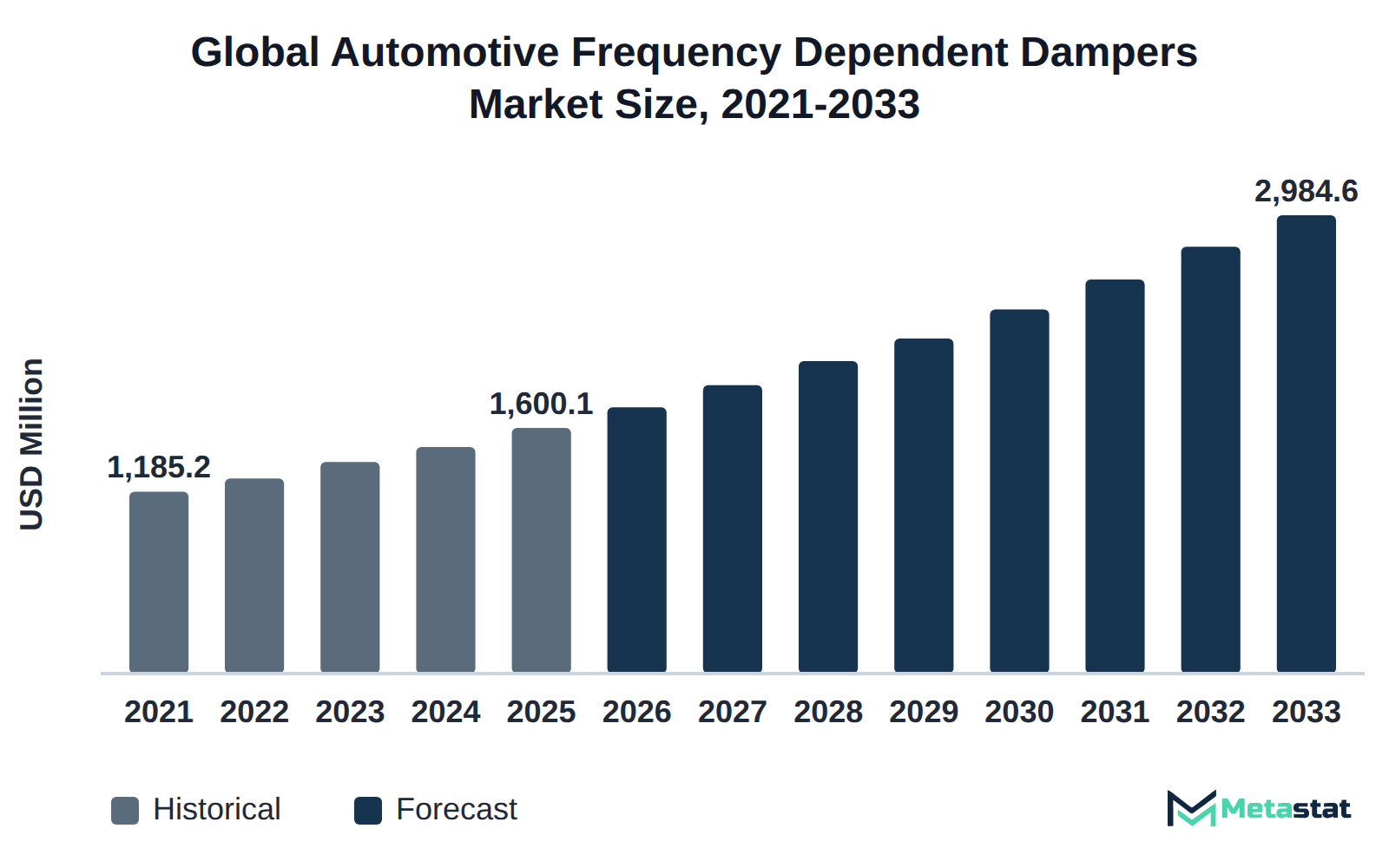
Frequency-selective valves enhance vehicle performance, specifically in comfort and handling. These valves adjust damping characteristics based on frequency, allowing for improved isolation of high-frequency disturbances that impact ride quality. The Solenoid-Controlled Semi-Active segment of the Automotive Frequency Dependent Dampers market reflects this advancement. It is projected to reach USD 1,163.1 million by 2033 at a compound annual growth rate (CAGR) of 9.6%. This growth highlights the demand for advanced damping solutions that cater to consumer preferences for comfort and driving experience.
The integration of frequency-selective valves enables manufacturers to offer vehicles that adapt to various driving conditions, enhancing vehicle stability during both high-speed maneuvers and everyday driving. Optimizing damping performance based on frequency improves passenger comfort and contributes to overall handling characteristics. Automotive manufacturers increasingly invest in these technologies, facilitating more competitive offerings in the market. This trend positions frequency-selective valves as a significant factor in the ongoing evolution of suspension systems in the automotive industry.
Pricing strategies for semi-active and magnetorheological systems, particularly in electric vehicles, reflect the complexity of automotive technology procurement. Buyers in the Automotive Frequency Dependent Dampers market engage in negotiations that consider both the initial investment and long-term operational efficiency. With a projected value of USD 952.7 million for battery electric vehicle suspensions by 2033, the focus on advanced damping technologies highlights the growing significance of these systems.
The purchasing process involves a combination of fixed price contracts and performance-based pricing models. Fixed price contracts provide buyers with budget certainty, while performance-based models align supplier incentives with vehicle performance outcomes. This approach establishes longer-term partnerships, enhancing the buyer's ability to adapt to evolving technological standards and consumer demands.
Given the anticipated growth in the market, driven by a compound annual growth rate (CAGR) of 9.7% for hybrid and plug-in hybrid electric vehicles, manufacturers prioritize flexible contract structures. Such structures facilitate ongoing collaboration and innovation, ensuring that both parties benefit from advancements in suspension technology. The strategic alignment of pricing models with product performance supports sustained market expansion and increased adoption of semi-active and magnetorheological systems.
OEMs increasingly prioritize the integration of frequency-responsive dampers in new vehicle designs to enhance performance and ride comfort. The Automotive Frequency Dependent Dampers market experiences substantial growth, driven by rising demand for advanced suspension systems that improve vehicle dynamics. This trend aligns with the projected market value of USD 2,984.6 million by 2033, highlighting the importance of these dampers in modern automotive engineering.
Passenger cars represent a significant segment within this market, with an expected value increase from USD 1,318.6 million in 2026 to USD 2,219.3 million by 2033, reflecting a compound annual growth rate of 7.7%. This growth results from OEMs recognizing the benefits of frequency-responsive systems that adapt to varying road conditions, enhancing both safety and comfort for consumers.
The aftermarket segment expands, with an anticipated value of USD 918.1 million by 2033 for replacement and upgrade purposes. This trend indicates growing consumer interest in improving vehicle performance post-purchase, allowing for customization according to individual preferences. Manufacturers that develop high-quality, reliable damper solutions gain a competitive edge.
Frequency-dependent dampers enhance ride comfort while maintaining optimal body control in vehicles. These dampers adjust their response based on the frequency of road inputs, allowing for a smooth ride during low-frequency disturbances, including potholes, while ensuring stability during high-frequency inputs, like abrupt cornering. In the Automotive Frequency Dependent Dampers market, the preference for solenoid-controlled semi-active dampers indicates a growing trend towards integrating advanced technologies to achieve this balance.
This technology meets the demands of consumers who prioritize both comfort and performance. The ability to adjust damping characteristics in real-time according to driving conditions enhances vehicle dynamics, contributing to a safer and more enjoyable driving experience. Car manufacturers increasingly adopt frequency-dependent technologies, and the market is expected to experience sustained growth, supported by consumer awareness and preferences for advanced vehicle systems.
Passenger vehicle manufacturers drive increased spending on Automotive Frequency Dependent Dampers due to evolving consumer preferences and heightened competition in the automotive sector. The shift toward electric and hybrid vehicles, combined with an emphasis on ride comfort and vehicle stability, prompts manufacturers to seek advanced damping solutions that enhance performance. This trend highlights the importance of innovative damping technologies in attracting consumers who prioritize comfort and safety features in their vehicles. Market expansion matches consumer expectations for improved driving experiences.
Increased adoption of frequency-dependent dampers in light commercial and specialty road vehicles contributes to broader market growth. Manufacturers recognize the opportunity to differentiate their offerings, leading to enhanced investment in damping technologies.
Technological advancements in solenoid-controlled dampers drive significant growth within the Automotive Frequency Dependent Dampers market. These dampers adjust damping characteristics in real-time based on driving conditions, improving vehicle handling and ride comfort. The integration of solenoid technology into suspension systems allows for adaptive responses to changes in road surfaces, contributing to an overall better driving experience. Such adaptive responses rely on electronic control, a function handled by the automotive ECU.
Increasing consumer expectations for enhanced vehicle stability and comfort drive manufacturers to invest in these sophisticated damping systems. The market experiences heightened competition as firms strive to innovate and deliver products that meet these evolving demands. Solenoid-controlled dampers become more widely adopted, facilitating better control of vehicle dynamics, positively impacting both performance and safety.
These technological enhancements support market growth as the automotive industry shifts toward more advanced and responsive suspension systems. The continued emphasis on improving vehicle performance ensures that solenoid-controlled dampers remain central to innovation in the automotive sector.
Price sensitivity significantly impacts the adoption of Automotive Frequency Dependent Dampers, particularly among light commercial vehicle manufacturers. Rising costs associated with advanced dampers, driven by technological complexity and production requirements, lead to slower uptake in this segment. With limited budgets, manufacturers often defer investments in premium damping technologies, opting for lower-cost alternatives that do not provide the same performance benefits. This trend results in smaller orders for premium dampers, indicating a hesitance to integrate these systems into new vehicle designs. The overall growth of the market faces constraints, limiting potential revenue increases during the forecast period.
Input cost pressures present a significant challenge for suppliers within the Automotive Frequency Dependent Dampers market. Rising prices for raw materials, including metals and polymers, directly impact production expenses, creating margin pressures that hinder profitability. Suppliers face increasing competition from alternative damping technologies, which forces them to balance cost control while maintaining quality and performance standards. In response, several manufacturers are investing in more efficient production processes and exploring vertical integration to mitigate costs associated with sourcing raw materials.
Several companies prioritize research and development to innovate new materials that offer enhanced performance at lower costs. This strategic focus aims to streamline production, reducing reliance on volatile supply chains. By enhancing operational efficiencies and collaborating with suppliers for better pricing agreements, firms work toward stabilizing costs while meeting the growing demand for advanced damping solutions in the automotive sector.
Rapid expansion in the Automotive Frequency Dependent Dampers market is evident within the solenoid-controlled semi-active dampers segment. This segment exhibits a notable compound annual growth rate (CAGR) of 9.6%, indicating strong demand driven by advancements in automotive technology and increasing performance expectations from consumers. Vehicle manufacturers prioritize integrating these dampers to enhance comfort, safety, and driving dynamics. The rising popularity of electric and hybrid vehicles further drives this growth, with manufacturers seeking solutions for improved suspension systems. By 2033, the segment is projected to reach USD 1,163.1 million, reflecting the growing adoption of innovative technologies. The alignment of improved damping performance and vehicle stability with consumer preferences positions solenoid-controlled dampers as a key area of opportunity within the market.
The Global Automotive Frequency Dependent Dampers market is segmented based on Damper Control Technology, Vehicle Type, Vehicle Powertrain, and Sales Channel.
Passive Frequency-Selective segment is valued at USD 695.8 million in 2026 and is projected to reach USD 1,069.1 million by 2033, at a CAGR of 6.3% during the forecast period. This technology primarily enhances ride comfort and vehicle stability by effectively managing vibrations at specific frequencies. The segment serves automotive manufacturers who prioritize high-performance suspension systems, particularly in passenger cars. Demand for this segment is driven by increasing focus on vehicle comfort and handling. Compared to solenoid-controlled semi-active systems, which exhibit a CAGR of 9.6%, the Passive Frequency-Selective segment demonstrates slower growth. However, it offers a cost-effective solution for manufacturers aiming to enhance performance without the added expenses associated with more complex technologies. The integration of these dampers in new vehicle designs reflects the growing commitment to improving driving experiences, positioning the segment favorably within the market.
This technology is primarily applied in passenger cars and light commercial vehicles to enhance ride quality and handling dynamics through adaptive damping characteristics. The increasing demand for improved vehicle performance and comfort drives growth in this segment, particularly with consumers prioritizing enhanced driving experiences. Passive Frequency-Selective dampers are projected to grow at a CAGR of 6.3%, while Solenoid-Controlled Semi-Active dampers grow faster due to their advanced capabilities and increasing adoption in modern vehicle designs. The focus on hybrid and electric vehicle platforms further boosts demand, with manufacturers seeking to integrate more sophisticated damping solutions to meet evolving consumer expectations and regulatory standards.
Magnetorheological segment is expected to reach USD 433.4 million by 2033. This technology serves various applications in vehicles, particularly in enhancing ride comfort and stability by adjusting damping properties in real-time. The automotive industry increasingly adopts magnetorheological dampers due to their ability to respond quickly to changing road conditions, making them suitable for high-performance vehicles and luxury passenger cars. Growth in this segment derives from rising demand for advanced suspension systems that improve vehicle dynamics. With a compound annual growth rate (CAGR) of 14.8%, magnetorheological dampers outpace other sub-segments in the Damper Control Technology category, including Passive Frequency-Selective and Active Hydraulic or Electromechanical systems. The premium pricing of magnetorheological dampers reflects their advanced technology, attracting automotive manufacturers focused on delivering superior performance in the market.
Active Hydraulic or Electromechanical dampers are projected to grow at a CAGR of 7.4% during the forecast period. This segment finds use primarily in high-performance vehicles, where precise control over suspension characteristics enhances handling and ride quality. Demand for these dampers arises from manufacturers focusing on improving vehicle dynamics and comfort, particularly in luxury and performance-oriented models. The segment stands out due to its advanced technology that allows for real-time adjustments based on driving conditions, differentiating it from passive systems. In contrast to the Passive Frequency-Selective segment, which is valued at USD 695.8 million in 2026, the Active Hydraulic or Electromechanical segment offers higher performance at higher price points. The integration of these dampers aligns with the broader trend of enhancing vehicle performance, reflecting an industry shift towards more sophisticated suspension solutions.
This segment includes vehicles designed primarily for the personal transport of passengers, often prioritizing comfort and handling. Increased consumer demand for enhanced driving experiences drives growth in this segment, particularly in regions with expanding middle-class populations. Passenger Cars differ from Light Commercial Vehicles and Heavy Commercial Vehicles, which cater to commercial applications. The Passenger Cars segment represents a more substantial market size compared to others, reflecting higher consumer spending on personal vehicles. Recent technological advancements enable improved damper performance, enhancing vehicle dynamics and safety attributes, thus further supporting market expansion. The market's focus on integrating advanced dampers aligns with broader automotive trends toward improved efficiency and ride quality.
Light Commercial Vehicles segment is estimated to reach USD 532.4 million by 2033, at a CAGR of 9.2% during the forecast period. This segment focuses on vehicles designed for transporting goods and services, favored by businesses in logistics and courier, express, and parcel delivery. Increasing demand for more efficient and reliable transportation solutions drives growth in this segment, particularly in urban areas where delivery services expand. Compared to other vehicle types, Light Commercial Vehicles experience faster growth, reflecting a shift towards e-commerce and local delivery services. This segment faces less price sensitivity than passenger cars, allowing for higher investment in advanced damping technologies, which enhance vehicle stability and comfort. Manufacturers prioritize the integration of frequency-dependent dampers to improve ride quality, directly impacting business operations and customer satisfaction.
Heavy Commercial Vehicles segment is expected to reach USD 187.7 million by 2033. This segment targets large-scale transport operations, focusing on vehicles designed for extensive freight movement. Demand for enhanced load support and comfort drives growth in this category, primarily influenced by rising logistical requirements. Compared to other segments, Heavy Commercial Vehicles exhibit slower growth due to the more limited market size and specific buyer needs. While the Passenger Cars segment experiences a CAGR of 7.7%, Heavy Commercial Vehicles display a lower growth trajectory. Investments in durable and efficient damping technologies will improve the overall performance of heavy vehicles, ensuring compliance with evolving industry standards and regulations. The Automotive Frequency Dependent Dampers market is expected to see a shift towards advanced damping solutions that align with the demands of this segment.
USD 187.7 million is projected for the Others (Specialty Road Vehicles) segment, which is set to grow at a CAGR of 9.6% during the forecast period. This segment caters to specialized vehicles used for diverse applications, including emergency services, construction, and off-road activities. The increasing demand for customized solutions in niche markets drives growth for this segment, particularly among manufacturers focused on unique capabilities. Unlike traditional passenger or commercial vehicles, specialty road vehicles often require advanced damping technologies to enhance stability and performance in challenging conditions. The growth trajectory of this segment reflects a distinct market focus and a higher willingness to invest in innovative dampers that ensure optimal vehicle handling and safety.
The Internal Combustion Engine segment is valued at USD 899.3 million in 2026 and is projected to reach USD 1,081.6 million by 2033, at a CAGR of 2.7% during the forecast period. This segment serves primarily traditional vehicles, appealing to manufacturers focused on maintaining combustion engine technology while enhancing performance and ride quality. The gradual shift towards sustainable powertrains drives a slower growth trajectory compared to other segments, reflecting challenges presented by evolving regulations and consumer preferences. In contrast to segments like Hybrid and Plug-in Hybrid Electric, which experience a CAGR of 9.7%, the Internal Combustion Engine segment remains significant but faces increasing pressure from advancements in electrification. This dynamic influences pricing strategies, with manufacturers seeking competitive advantages while navigating the transition to more eco-friendly alternatives. The Automotive Frequency Dependent Dampers market reflects these developments while adapting to changing buyer demands and regulatory landscapes.
Hybrid and Plug-in Hybrid Electric segment is estimated to reach USD 884.3 million by 2033, at a CAGR of 9.7% during the forecast period. This segment primarily serves the growing market for environmentally friendly vehicles, appealing to manufacturers aiming to enhance fuel efficiency and reduce emissions. Increasing regulations focused on lowering carbon footprints significantly enhance demand for hybrid and plug-in hybrid electric vehicles. Compared to other segments, this one features a stronger growth trajectory, driven by technological innovations that improve hybrid systems' performance and efficiency. The market experiences heightened interest from consumers seeking sustainable options, leading to a notable impact on the automotive landscape. This sub-segment's anticipated growth outpaces that of internal combustion engine vehicles, which face greater constraints due to stricter emission regulations and shifting consumer preferences toward greener technologies.
Battery Electric segment is expected to reach USD 952.7 million by 2033. This segment is primarily found in electric vehicles, appealing to manufacturers focused on sustainability and environmental impact. The increasing demand for eco-friendly transportation options drives growth in this sector, especially within urban areas where emissions regulations tighten. With a projected CAGR of 14.8%, this segment outpaces others in the Vehicle Powertrain category, reflecting a strong transition toward electrification in the automotive industry. The adoption of advanced battery technologies enhances performance and efficiency, positioning this segment distinctly against traditional powertrains. Investments in charging infrastructure for electric vehicles, including DC fast charging, further support this segment's expansion. Competition among vehicle manufacturers intensifies, leading to innovative developments in frequency dependent dampers tailored for electric vehicles, ensuring improved ride quality and handling.
Fuel Cell Electric segment is projected to grow at a CAGR of 14.8% during the forecast period. This segment caters to manufacturers of fuel cell vehicles, which are increasingly adopted due to their low emissions and high efficiency. The rising demand for sustainable transportation solutions drives this growth, with global regulatory frameworks favoring cleaner technologies. Compared to other powertrain segments, this category experiences faster growth attributed to heightened environmental awareness among consumers and industries. However, the higher initial costs associated with fuel cell technology pose a challenge, affecting adoption rates for several buyers. Looking ahead, increasing investment in hydrogen infrastructure will enhance the segment's potential, supporting further penetration in the Automotive Frequency Dependent Dampers market.
Original Equipment segment is valued at USD 1,247.2 million in 2026 and is projected to reach USD 2,066.5 million by 2033, at a CAGR of 7.5% during the forecast period. This segment includes dampers used in vehicles during the manufacturing process, primarily by automotive manufacturers. Demand for this segment intensifies due to increasing vehicle production rates and a shift toward enhanced vehicle performance and comfort. Compared to aftermarket segments, Original Equipment typically experiences slower growth due to longer product development cycles and stringent quality standards set by vehicle manufacturers. The Original Equipment segment capitalizes on advancements in damper technology, reflecting a rising trend toward integrating semi-active and active damping solutions, which enhance vehicle dynamics and safety. This trend contrasts with the aftermarket segment, which focuses more on cost-effective replacements and upgrades.
The Aftermarket Replacement and Upgrades segment is estimated to reach USD 918.1 million by 2033, at a CAGR of 9.5% during the forecast period. This segment focuses on providing replacement dampers for vehicles that require upgrades or maintenance after their initial sale. Vehicle owners and repair shops often seek these products to enhance vehicle performance or restore functionality. The increased demand for automotive aftermarket parts stems from the growing vehicle population and the need for regular maintenance. Unlike the Original Equipment segment, which primarily targets new vehicle production, the aftermarket segment experiences faster growth rates, reflecting a CAGR of 9.5%. This growth is supported by ongoing technological advancements in damper design and performance, leading to improved customer satisfaction and driveability. The Automotive Frequency Dependent Dampers market benefits significantly from this trend, with consumers prioritizing quality and performance in vehicle upgrades.
Based on geography, the Global Automotive Frequency Dependent Dampers market is divided into North America, Europe, Asia-Pacific, South America, Middle East, and Africa.
Demand for Automotive Frequency Dependent Dampers in North America is driven by the region's strong automotive manufacturing base and increasing focus on vehicle performance and comfort. The presence of major manufacturers in the United States, Canada, and Mexico influences the growth trajectory. Investment in infrastructure improvements and advancements in vehicle technology support this market, with regulatory frameworks emphasizing safety and emissions standards enhancing demand. By the end of 2033, North America is projected to reach USD 767.3 million, accounting for 27.6% of the global market share in 2025. This growth reflects a rising trend towards incorporating advanced damping technologies in various vehicle types and a commitment to enhancing driving experiences.
Europe accounts for 28.9% of the global Automotive Frequency Dependent Dampers market in 2025. The automotive sector in this region, particularly in Germany, France, and the UK, drives demand through a strong focus on vehicle performance and safety enhancements. Regulatory frameworks emphasizing sustainability and emissions reduction contribute to the growth of advanced damping technologies, particularly in countries like Germany and France. The demand for lightweight materials and enhanced driving comfort supports further adoption of innovative damper solutions. Key players in the region collaborate on advanced technologies to improve vehicle dynamics, and their research and development investments drive market expansion.
The Asia Pacific region holds a projected share of 31.8% of the Automotive Frequency Dependent Dampers market in 2025. Demand primarily arises from the automotive manufacturing industry, particularly in countries like China, India, and Japan, where increasing production rates drive the adoption of advanced damping technologies. The region benefits from strong automotive production infrastructure, alongside a growing emphasis on safety and performance standards. Advancements in electric vehicle technologies have heightened the demand for specialized dampers that enhance ride quality and handling. Regions including Southeast Asia experience a surge in light commercial vehicles, further propelling market growth. The anticipated expansion of manufacturing capabilities in these countries will likely create a competitive environment, encouraging innovation and investment in new damping solutions.
The Automotive Frequency Dependent Dampers market in South America presents unique dynamics influenced by the automotive sectors in Brazil and Argentina. Demand stems from the increasing need for vehicle stability and comfort, driven by rising consumer expectations and economic growth in these countries. The market benefits from growing investments in infrastructure, which enhance the automotive supply chain and manufacturing capabilities. Regulatory frameworks promoting vehicle safety standards further stimulate the adoption of advanced damper technologies. In 2025, South America is expected to account for 4.7% of the global market share, highlighting its emerging role in the automotive landscape. The market is positioned for growth, supported by the region's focus on modernizing its automotive fleet and improving overall vehicle performance.
In the Middle East and Africa, the Automotive Frequency Dependent Dampers market reflects a growing interest driven primarily by the automotive sector's expansion. Saudi Arabia and the UAE experience significant investments in infrastructure, which support the development of modern automotive technologies. Rising consumer demand for higher vehicle performance and comfort influences purchasing decisions across various vehicle types. South Africa's automotive manufacturing efforts focus on improving vehicle quality, aligning with global trends. The region is projected to capture a market share of 7.0% in 2025, indicating potential for growth in the coming years. These factors collectively position the market for continued development and investment opportunities.
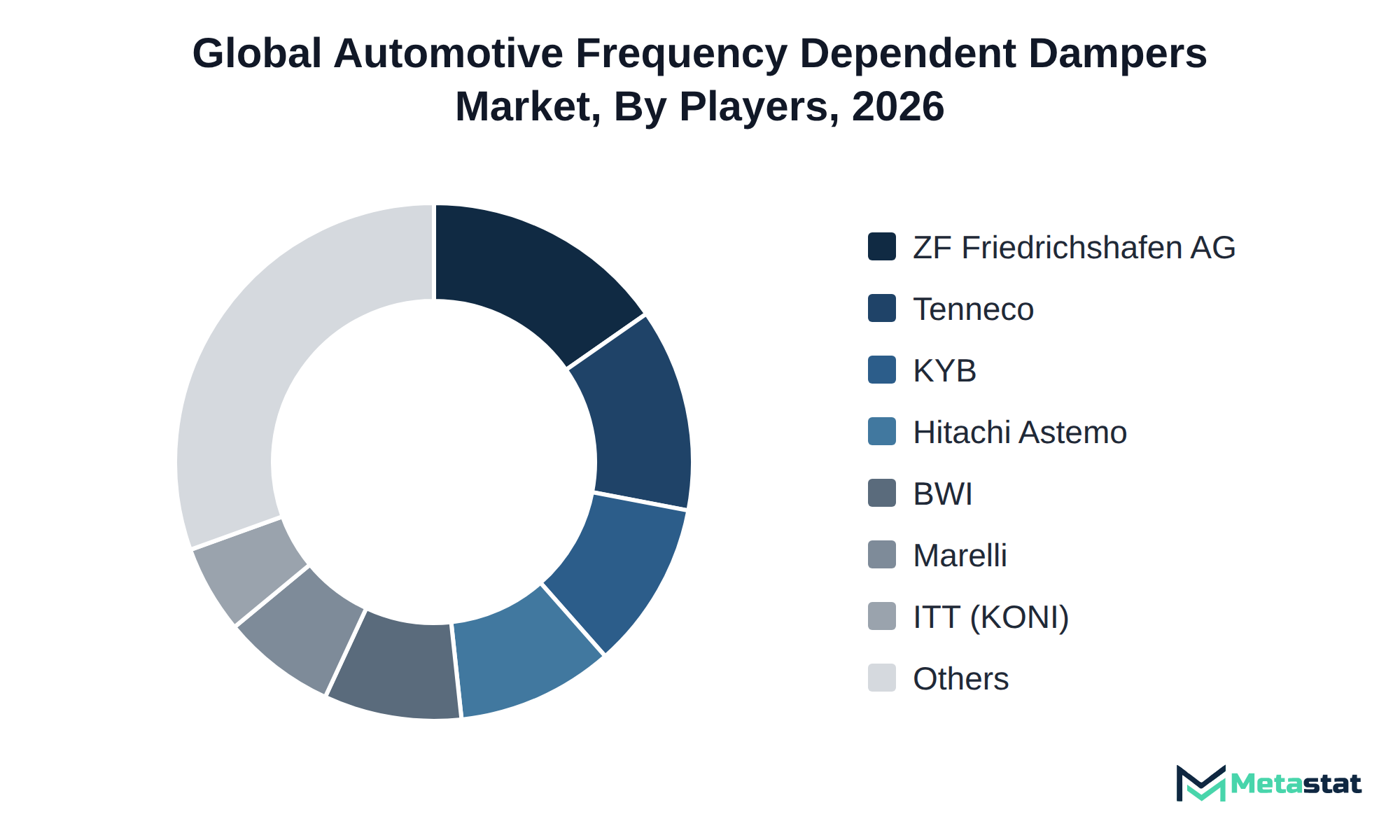
Competition within the Automotive Frequency Dependent Dampers market divides primarily by product technology and target vehicle type. Key segments include passive frequency-selective dampers, solenoid-controlled semi-active dampers, and magnetorheological dampers, each appealing to different buyer needs. Buyers prioritize factors including price, customization, and service quality when selecting dampers for their vehicles.
KYB Corporation and Tenneco Inc. focus on advanced damper technologies, highlighting their capabilities in solenoid-controlled semi-active and magnetorheological dampers, which enhance vehicle performance and comfort. ZF Friedrichshafen AG and ITT Inc. (KONI) emphasize a balance between cost-effectiveness and innovation, targeting the passenger car segment primarily. Marelli and Hitachi Astemo, Ltd. contribute through tailored solutions for light commercial and heavy commercial vehicles, addressing specific market demands within the automotive sector. BWI Group brings expertise in offering aftermarket replacements and upgrades, addressing the growing need for enhanced vehicle handling and stability.
This growth relies on several key developments within the Automotive Frequency Dependent Dampers market. The adoption of solenoid-controlled semi-active dampers is expected to drive significant revenue, with a projected value of USD 1,163.1 million by 2033. The market for hybrid and plug-in hybrid electric vehicles is projected to increase, reaching USD 884.3 million by 2033, supported by rising environmental regulations and consumer preferences for sustainable options. However, risks exist that could impede growth. Economic fluctuations affecting consumer purchasing power, particularly in regions like North America, could restrict demand. The combined influence of these developments and risks will determine the trajectory of the market, impacting overall investment and innovation in the sector.
By Damper Control Technology: Passive Frequency-Selective, Solenoid-Controlled Semi-Active, Magnetorheological, Active Hydraulic or Electromechanical
By Vehicle Type: Passenger Cars, Light Commercial Vehicles, Heavy Commercial Vehicles, Others (Specialty Road Vehicles)
By Vehicle Powertrain: Internal Combustion Engine, Hybrid and Plug-in Hybrid Electric, Battery Electric, Fuel Cell Electric
By Sales Channel: Original Equipment, Aftermarket Replacement and Upgrades
The report strategically identifies and profiles the key market players and analyses their core competencies in each sub-segment of the Automotive Frequency Dependent Dampers market.
Report Attributes | Details |
Study Period | 2021-2033 |
Base Year | 2025 |
Estimated Year | 2026 |
Forecast Period | 2026-2033 |
Historical Period | 2021-2025 |
Growth Rate | CAGR 8.1% from 2026 to 2033 |
Revenue Unit | USD million |
Segmentation | By Damper Control Technology, Vehicle Type, Vehicle Powertrain, Sales Channel, and Region |
By Region | North America (By Damper Control Technology, Vehicle Type, Vehicle Powertrain, Sales Channel, and Country)
|
Europe (By Damper Control Technology, Vehicle Type, Vehicle Powertrain, Sales Channel, and Country)
| |
Asia Pacific (By Damper Control Technology, Vehicle Type, Vehicle Powertrain, Sales Channel, and Country)
| |
South America (By Damper Control Technology, Vehicle Type, Vehicle Powertrain, Sales Channel, and Country)
| |
Middle East and Africa (By Damper Control Technology, Vehicle Type, Vehicle Powertrain, Sales Channel, and Country)
|
Find answers to common questions about this report
The Automotive Frequency Dependent Dampers market size was valued at USD 1,600.1 million in 2025.
The market is projected to grow at a CAGR of 8.1% during the forecast period from 2026 to 2033.
The North America Automotive Frequency Dependent Dampers market size is estimated to reach USD 767.3 million by 2033.
The leading segment in the Automotive Frequency Dependent Dampers market is Solenoid-Controlled Semi-Active, with a projected value of USD 1,163.1 million by 2033. This segment surpasses others in terms of growth potential and revenue generation.
Increased spending by passenger vehicle manufacturers is driven by evolving consumer preferences and heightened competition in the automotive sector. Technological advancements in solenoid-controlled dampers facilitate better vehicle handling and ride comfort, further supporting market growth.
Price sensitivity significantly impacts adoption, particularly among light commercial vehicle manufacturers, leading to slower uptake of advanced dampers. Input cost pressures from rising prices of raw materials create margin challenges for suppliers, hindering profitability and limiting potential revenue increases.
Technological advancements in solenoid-controlled dampers favor adoption by enhancing vehicle handling and ride comfort through real-time adjustments based on driving conditions. the growing emphasis on improved vehicle stability and comfort drives manufacturers to invest in these sophisticated damping systems, aligning with consumer expectations for superior driving experiences.
The Automotive Frequency Dependent Dampers market is estimated to reach a valuation of USD 2,984.6 million by 2033.
Key players operating in the Automotive Frequency Dependent Dampers market include KYB Corporation, Tenneco Inc., ZF Friedrichshafen AG, ITT Inc. (KONI), Marelli, Hitachi Astemo, Ltd., and BWI Group.
The solenoid-controlled semi-active dampers segment is projected to reach USD 1,163.1 million by 2033, reflecting a compound annual growth rate of 9.6%. This growth is driven by advancements in automotive technology and increasing performance expectations from consumers.
The analysts below cover Automotive and Transportation research at Metastat Insights.
LEAD ANALYST
Utkarsh Khirodkar is a Lead Market Research Analyst at MetaStat Insight, specializing in market intelligence, technology sector assessments, and competitive strategy.

ENERGY & INFRASTRUCTURE INDUSTRY CONSULTANT
Automotive and Transportation · Electronics and Semiconductor · Energy and Power · Machinery & Equipment
Saurabh Vasant Ganvir consults for Energy & Infrastructure Industry at MetaStat Insight, specializing in renewable energy, solar EPC, and electric vehicle (EV) infrastructure markets.
Decarbonizing industrial thermal processes hinges on refrigerant regulations and compressor efficiency limits. Metastat Insights delivered a thorough market analysis that evaluated natural refrigerants like CO2 and hydrocarbons against synthetic low-GWP alternatives. The breakdown of utility incentives and grid capacity constraints across key European manufacturing hubs offered valuable perspective. The follow-up conversation with their sector analysts addressed our specific questions on mechanical vapor recompression systems efficiently.
Assessing 200mm wafer transition schedules and substrate supply bottlenecks requires precise technical intelligence. MetaStat Insight supplied an actionable breakdown comparing planar and trench MOSFET architectures across automotive and industrial drive markets. The regional capacity estimates for Asia-Pacific foundries helped clarify lead-time uncertainties during our strategic planning session. When we needed additional clarification on high-purity raw material sourcing, their analyst team responded with helpful context within twenty-four hours.
Tracking maintenance cycle demand for secondary flight display units and terrain collision avoidance systems across regional jet fleets involves complex aftermarket dynamics. MetaStat Insight provided practical analysis separating airline retrofit programs from OEM forward-fit production schedules in North America and Southeast Asia. The supplier matrix highlighted component obsolescence timelines without resorting to vague generalizations. The dataset served as a dependable reference during our annual program review meetings.
Explore related market intelligence reports worth reading alongside this one.
Starting from
$2950