
LEAD ANALYST
Utkarsh Khirodkar is a Lead Market Research Analyst at MetaStat Insight, specializing in market intelligence, technology sector assessments, and competitive strategy.

Global B2B Courier Express Parcels Market Size, Share, By Service Type (Express Parcel Delivery, Standard Parcel Delivery, Same-Day Courier Services, Time-Definite Courier Services, Specialized Courier Services), By Delivery Destination (Domestic, International), By Shipment Weight (Heavy Weight Shipments, Light Weight Shipments, Medium Weight Shipments), By End-Use Industry (Manufacturing and Industrial, Retail and Wholesale Distribution, Healthcare and Pharmaceuticals, Banking, Financial Services and Insurance, IT and Telecommunications, Automotive and Automotive Components, Electronics and Semiconductors, Professional and Business Services, Aerospace and Defense, Others (Education, Government, Energy and Utilities)), Industry Analysis, Growth, Trends, and Forecast, 2026-2033
Report ID
MSI-5487
Published
October, 2026
Pages
292 Pages
Format
Historical
Base year
Forecast
Forecast period
Report Details
Market Valuation: Valued at $320.5 Billion in 2025, projected to reach $629.4 Billion by 2033 at a 8.8% CAGR.
Dominant Segment: Express parcel delivery leads the B2B Courier Express Parcels market, driven by the increasing demand for rapid shipping solutions, particularly in e-commerce and healthcare sectors.
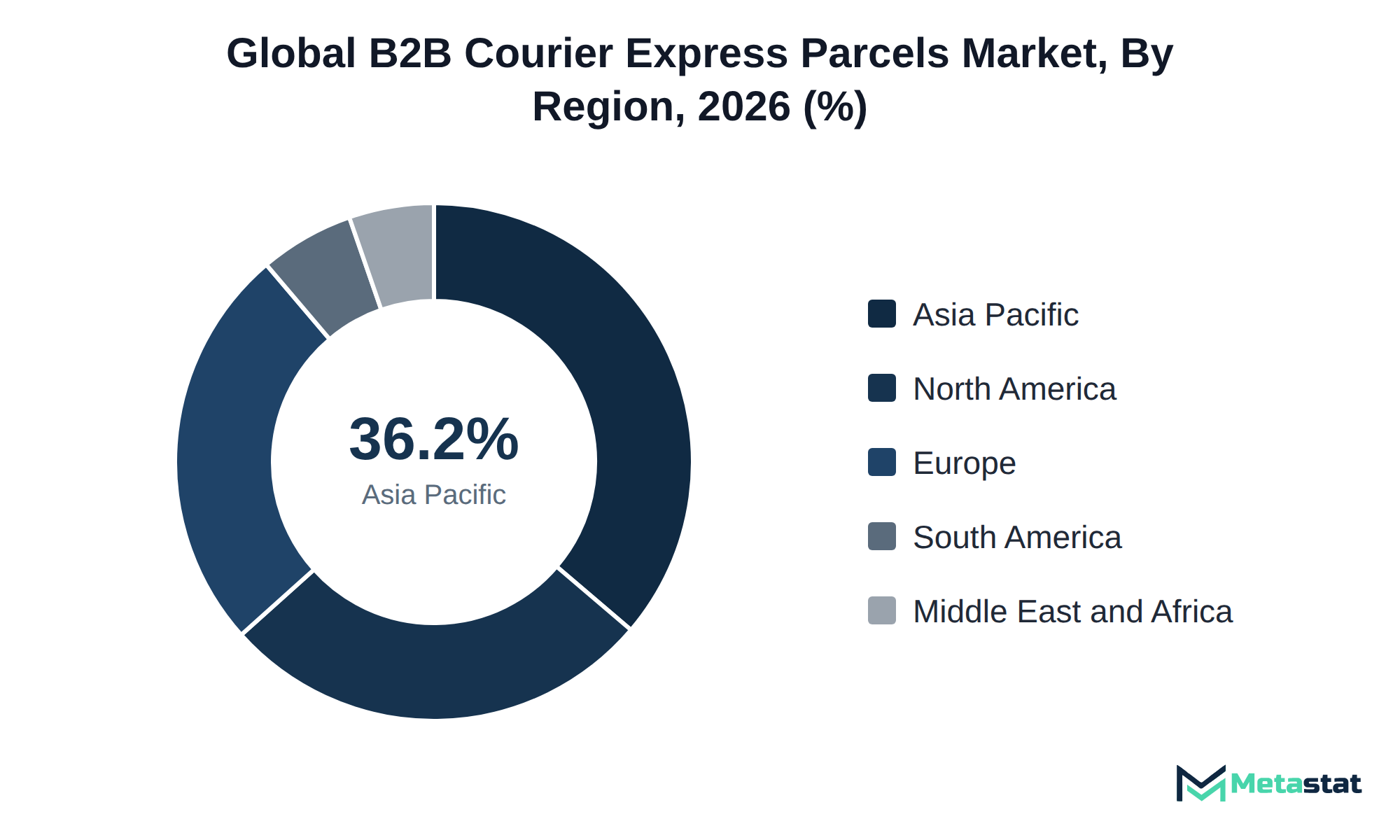
Geographic Lead: Asia Pacific is the fastest-growing region, capturing 36.2% of the market share in 2025, fueled by its robust e-commerce growth and increasing logistics demands.
What's Inside: The report provides a comprehensive analysis of market dynamics, competitive landscape, and detailed forecasts from 2026 to 2033, covering various service types, delivery destinations, and end-use industries.
Rising Demand for Same-Day Services: Same-Day Courier Services are projected to grow significantly, reaching USD 70.9 billion by 2033, reflecting the urgent need for timely deliveries in competitive industries.
Sustainable Packaging Solutions: The report highlights a growing focus on sustainable packaging, driven by consumer demand for eco-friendly practices, which is reshaping operational strategies in the courier sector.
Choose Your License
Global B2B Courier Express Parcels Market
The global B2B Courier Express Parcels market was valued at USD 320.5 billion in 2025 and is projected to reach USD 629.4 billion by 2033, growing at a CAGR of 8.8% over the forecast period.
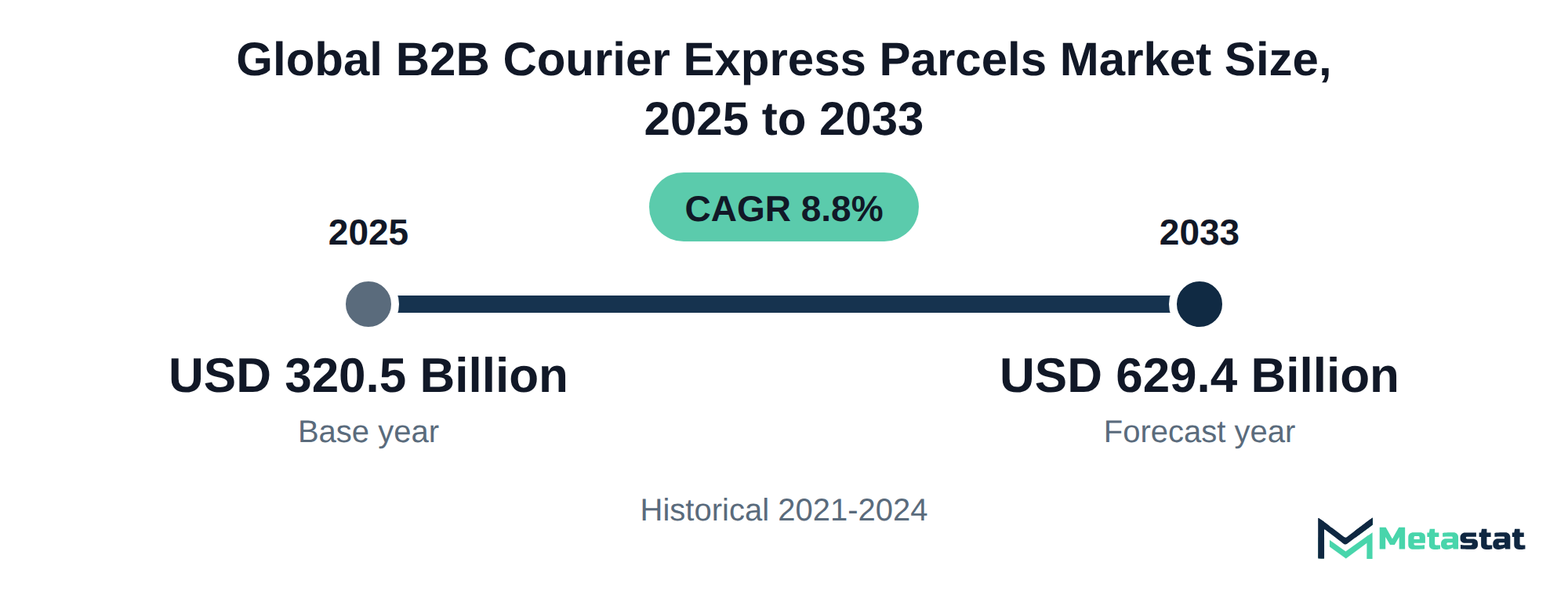
The B2B Courier Express Parcels market encompasses various services that facilitate the swift delivery of goods between businesses. Buyers invest in these services primarily to enhance their supply chain efficiency and meet consumer expectations for timely delivery. This demand is particularly driven by the expansion of e-commerce and the increasing need for businesses to provide reliable logistics solutions.
The growth of the market is fueled by several factors, with the rising demand for express parcel delivery standing out as a key driver. In terms of value, express parcel delivery represents the most significant segment within the market. North America holds 27.1% of the market in 2025, with the US leading in 2026. In comparison, the Asia Pacific region captures a 36.2% share, reflecting its rapidly growing e-commerce sector.
Businesses continue to prioritize speed and reliability in their logistics operations, and investments in the B2B Courier Express Parcels market are expected to rise. The increasing reliance on technology and digital solutions further enhances operational efficiency and customer satisfaction, driving growth across various segments. The projected compound annual growth rate of 8.8% reflects the ongoing shift towards expedited delivery services and the adaptation to changing consumer behaviors.
The B2B Courier Express Parcels market includes a wide range of services that address the growing demand for reliable and timely delivery solutions. Buyers invest in these services to enhance their operational efficiency, improve customer satisfaction, and remain competitive in a dynamic business environment. The diverse offerings within the market cater to various shipment needs, from express deliveries to standard parcel options, allowing businesses to select the most suitable service type for their requirements.
Growth in the market is driven by several factors, with the increasing trend of e-commerce being a significant contributor. The express parcel delivery segment represents the largest share of the market, reflecting the rising consumer expectations for quick and reliable shipping options. In comparison, Asia Pacific commands a substantial position, accounting for 36.2% of the market, indicating a robust demand for courier services across various industries in this region.
Businesses seek to streamline their supply chains and improve service levels, resulting in rising investment in courier services. Enhanced logistics capabilities and technological advancements in tracking and delivery systems play a crucial role in supporting the expansion of the market. Overall, the B2B Courier Express Parcels market is poised for sustained growth, driven by evolving buyer needs and increasing reliance on efficient delivery solutions.
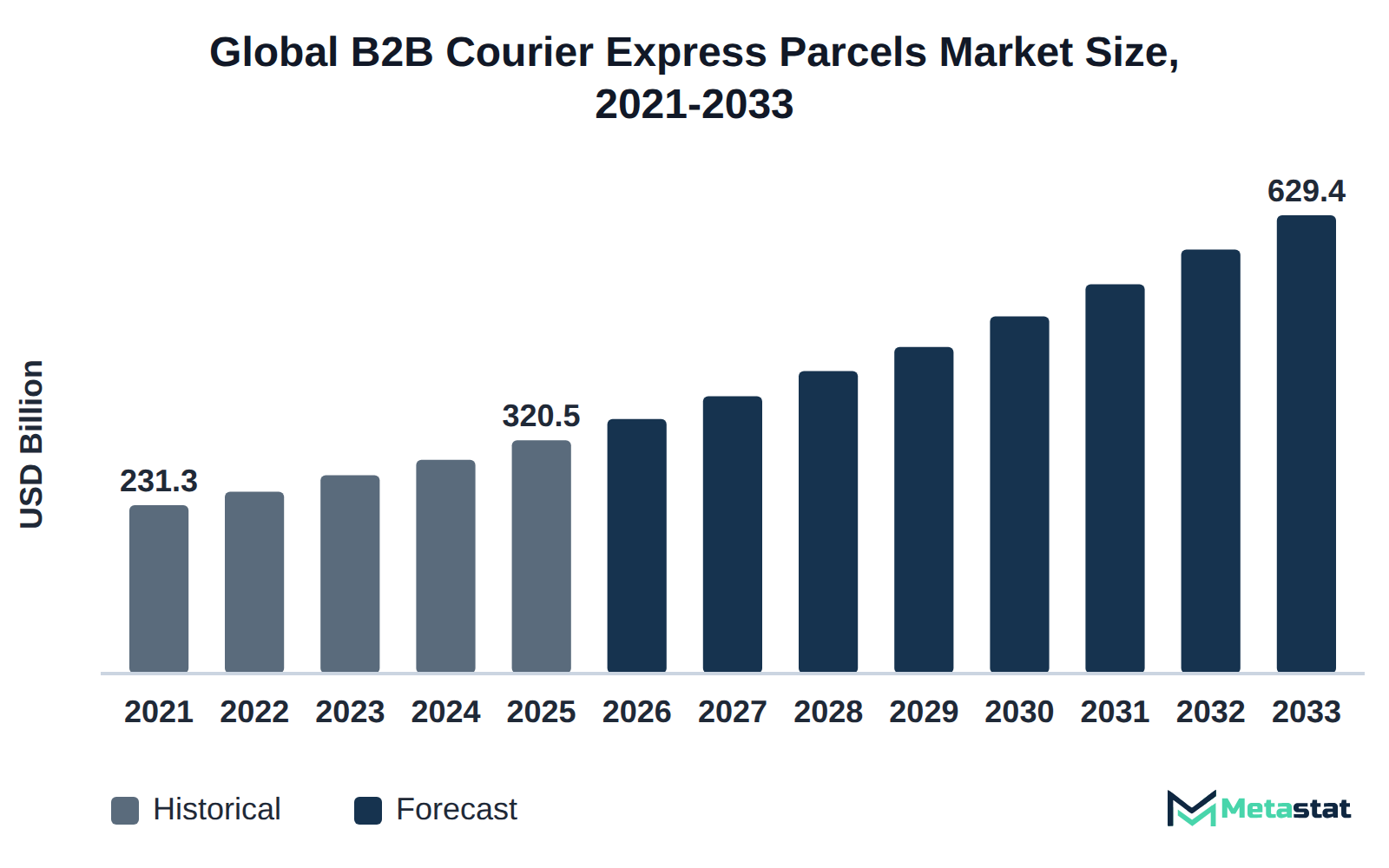
Rising demand for same-day and time-definite B2B parcel delivery services significantly influences the B2B Courier Express Parcels market. This demand stems from the necessity for businesses to enhance operational efficiency and customer satisfaction by ensuring timely deliveries. A specific segment illustrating this trend is Same-Day Courier Services, which is projected to reach USD 70.9 billion by 2033. This figure reflects a growing reliance on rapid delivery options, particularly among industries including retail and healthcare, where timely distribution is critical.
Companies increasingly invest in advanced logistics technologies and strategic partnerships to optimize their same-day and time-definite offerings. Innovations in real-time package tracking and route optimization contribute to improved delivery windows and operational transparency. With the B2B Courier Express Parcels market expanding at a compound annual growth rate (CAGR) of 8.8% from 2025 to 2033, businesses that successfully adapt to these delivery trends position themselves to capture greater market share and enhance customer loyalty.
Rapid advancements in AI-powered route optimization and automation significantly transform purchasing and payment models in the B2B Courier Express Parcels market. Modern smart logistics solutions enable logistics companies to streamline operations, enhancing efficiency and reducing delivery times. The adoption of AI technologies supports dynamic pricing strategies, allowing service providers to adjust rates driven by real-time demand and operational costs.
For instance, the segment of express parcel delivery shows a projected growth from USD 140.1 billion in 2026 to USD 240.7 billion by 2033, reflecting an increase of 8.0% CAGR. This growth supports the integration of technology that automates route planning and pricing adjustments, providing clients with competitive rates and improved service levels. Businesses purchasing courier services increasingly seek flexible contract models that align with these technological advancements, often favoring subscription-based arrangements or pay-per-use models that optimize costs based on fluctuating shipment volumes.
These evolving pricing structures not only enhance customer satisfaction but improve cash flow for logistics providers. Adopting AI-driven systems aids in forecasting demand more accurately, allowing companies to minimize operational costs while maximizing profitability within the competitive landscape of the market.
Rapid growth in cross-border e-commerce significantly influences international B2B shipments, driving demand in the B2B Courier Express Parcels market. The market's expansion is evident with international shipments projected to reach USD 168.8 billion by 2033, supported by a compound annual growth rate (CAGR) of 10.3%. This substantial growth aligns with increasing global trade dynamics and businesses' need for faster, reliable shipping solutions to meet customer expectations.
Industries involved in cross-border transactions, particularly retail and wholesale distribution, face unique logistical challenges. These sectors require precise timing and tracking capabilities to maintain competitive advantage. The shift to online purchasing behavior among consumers increases the urgency for efficient parcel delivery services. For instance, retail and wholesale distribution in the B2B Courier Express Parcels market is expected to reach USD 135.8 billion by 2033, with a CAGR of 9.8%.
In response to these evolving needs, courier services are enhancing technological capabilities, ensuring real-time tracking, and optimizing their delivery networks. This strategic focus strengthens relationships between suppliers and buyers, leading to improved customer satisfaction and retention. By addressing these specific requirements, businesses in the market position themselves for substantial growth opportunities, contributing to the overall expansion of the B2B Courier Express Parcels market.
Delivery speed, pricing models, and shipment visibility are important factors influencing enterprise courier procurement decisions. The B2B Courier Express Parcels market has seen a growing emphasis on speed, with express parcel delivery projected to reach USD 240.7 billion by 2033, indicating an 8% compound annual growth rate (CAGR) from 2026. Businesses increasingly prioritize rapid delivery to enhance customer satisfaction and maintain competitiveness.
Pricing models play a significant role in shaping procurement strategies. Enterprises evaluate different pricing structures to optimize costs while ensuring timely deliveries. The market's diverse offerings, including time-definite courier services, appeal to organizations seeking reliable options. Competitive pricing becomes essential for attracting clients, prompting suppliers to refine their models and offer tailored solutions.
Shipment visibility is another critical consideration. Organizations emphasize real-time tracking and transparency throughout the delivery process. Enhanced visibility reduces uncertainties, allowing enterprises to manage logistics efficiently. The market's growth highlights the increasing demand for services that offer robust tracking capabilities, reflecting a shift toward data-driven decision-making. In this evolving landscape, maintaining a competitive edge necessitates investment in technology and processes that facilitate rapid delivery, cost-effectiveness, and shipment visibility.
Growing preferences for domestic deliveries drive significant spending among businesses, particularly in the retail and wholesale distribution sectors. The surge in e-commerce and the need for faster fulfillment services push companies to invest more in reliable delivery solutions. This shift reflects an ongoing transformation in consumer expectations, with businesses aiming to enhance customer satisfaction through improved logistics efficiency. Consequently, the demand for domestic parcel delivery is expected to reach USD 460.6 billion by 2033, marking a compound annual growth rate of 8.2% from 2026. Such growth in demand for domestic services contributes to the overall expansion of the B2B Courier Express Parcels market.
Increased focus on sustainable packaging solutions significantly impacts the B2B Courier Express Parcels market. Businesses prioritize environmentally friendly materials and practices, responding to consumer demand for sustainability. Packaging suppliers innovate and offer biodegradable, recyclable, and reusable green packaging options, enhancing their competitive edge in the market. Stronger environmental regulations and corporate social responsibility initiatives further accelerate this shift, prompting firms to adopt sustainable solutions across their supply chains.
The manufacturing and retail sectors display heightened interest in these packaging innovations, recognizing the potential for cost savings and improved brand reputation. The transition to sustainable packaging solutions not only reduces disposal costs but aligns with customer expectations for eco-conscious practices. Businesses adopting these solutions create growth opportunities for logistics providers that prioritize sustainable offerings. This growing emphasis on sustainability shapes future market dynamics, promoting the adoption of eco-friendly practices and technologies within the industry.
Rising fuel costs exert pressure on operational expenses within the B2B Courier Express Parcels market. Courier companies face increased delivery charges, which in turn affect pricing strategies across various buyer segments. Businesses focused on cost efficiency, particularly in manufacturing and industrial sectors, experience slower uptake of parcel delivery services due to higher prices. Smaller orders emerge in response to inflated shipping costs, limiting the volume of goods transported. This trend leads to a shift toward alternative logistics options or postponement of shipment schedules, further restricting demand within the market. Buyers prioritize budget considerations, making them more cautious in their procurement decisions, influencing the overall growth trajectory of the B2B Courier Express Parcels market.
Compliance costs present a significant challenge for suppliers within the B2B Courier Express Parcels market. Stricter regulations surrounding safety, environmental impact, and labor practices drive up operational expenses, affecting overall profitability. Suppliers invest in advanced compliance systems and training programs to meet these requirements, diverting resources from other critical areas including technology and capacity expansion.
Many suppliers explore partnerships with compliance experts to streamline processes and reduce the burden of regulatory adherence. Investing in RegTech solutions that automate compliance reporting enhances efficiency and minimizes errors. Such approaches address compliance challenges and improve customer trust and satisfaction, contributing to a stronger competitive position in the market.
The increasing complexity of compliance requirements necessitates ongoing adaptation and strategic planning. Suppliers that effectively manage these costs sustain their market share and navigate profit pressures more successfully.
International B2B shipments exhibit significant growth potential, evidenced by a compound annual growth rate (CAGR) of 10.3% projected through 2033. This expansion results from increased globalization and rising demand for faster delivery options across borders, particularly among e-commerce businesses seeking to reach diverse markets. The market benefits from growing preferences for streamlined shipping processes and improved logistics technologies that ensure efficiency and reliability in international deliveries. Companies prioritizing international services capture a larger share of the market, benefiting from higher revenue potential associated with these shipments. The segment addressing international delivery challenges opens avenues for investment and innovation, shaping the competitive dynamics within the market. Increased focus on international shipments aligns with broader trends influencing global trade, creating an advantageous environment for businesses operating in this segment.
The Global B2B Courier Express Parcels market is segmented based on Service Type, Delivery Destination, Shipment Weight, and End-Use Industry.
This segment primarily serves businesses requiring fast and reliable delivery of goods, often for e-commerce orders, urgent shipments, or time-sensitive materials. The increasing demand for rapid delivery solutions within industries including retail and healthcare drives growth in this area. Competitive pricing and enhanced service offerings contribute to its appeal, distinguishing it from Standard Parcel Delivery, which grows at a lower CAGR of 7.4%. The focus on customer satisfaction and efficient logistics reinforces the segment's importance in the B2B Courier Express Parcels market, ensuring businesses meet their delivery promises.
Standard Parcel Delivery segment is estimated to reach USD 208.4 billion by 2033, at a CAGR of 7.4% during the forecast period. This segment caters to businesses that require reliable and cost-effective shipping solutions for non-urgent packages. Retail and wholesale distribution, manufacturing, and healthcare frequently use this service due to its affordability and efficiency. The segment experiences growth driven by increasing demand for economical shipping options, especially in domestic markets. It differs from the Express Parcel Delivery segment, which offers faster services at a higher price point. With a focus on cost-effectiveness, this segment appeals to businesses that prioritize budget management while ensuring timely delivery. The market sees a growing trend toward standard parcel services for everyday shipping needs, enhancing overall logistics operations.
This segment provides rapid delivery of goods, catering primarily to businesses requiring immediate logistics solutions. Key users include retailers, healthcare providers, and technology firms that rely on swift shipping to maintain operational efficiency. The escalating demand for instant services drives growth, with a compound annual growth rate (CAGR) of 11.4%. This segment distinguishes itself with higher delivery speeds compared to Standard Parcel Delivery, which has a CAGR of 7.4%. Same-Day Courier Services often command premium pricing due to their urgency and specialized handling requirements. Investment in technology and infrastructure enhances service reliability and customer satisfaction, further supporting this segment's expansion. The market reflects a trend where businesses prioritize timely deliveries, driven by competitive pressures and customer expectations, making Same-Day Courier Services a vital component of the logistics landscape.
Time-Definite Courier Services segment is projected to grow at a CAGR of 11.4% during the forecast period. This service type focuses on guaranteeing delivery within a specified timeframe, catering to industries including e-commerce, manufacturing, and healthcare that require timely logistics solutions. Companies using time-definite services benefit from enhanced operational efficiency and improved customer satisfaction, leading to repeat business and brand loyalty. The growing emphasis on rapid delivery options drives demand, particularly in sectors where delivery speed is critical. This segment differentiates itself from others in the market through its faster growth rate and premium pricing, reflecting the specialized nature of its offerings. With a value expected to reach significant levels, the segment addresses urgent delivery needs that other traditional services do not adequately fulfill.
Specialized Courier Services involve tailored delivery solutions catering to specific customer requirements, including temperature-sensitive or high-value shipments. Temperature-sensitive healthcare shipments often depend on healthcare cold chain logistics to maintain product integrity. Industries including healthcare, pharmaceuticals, and luxury goods frequently seek these services, prioritizing reliable and secure transport options. Factors driving this segment include rising demand for customized delivery solutions and stringent regulatory requirements, particularly in the healthcare sector, where compliance with safety standards is essential. Compared to other segments, Specialized Courier Services attract higher price points due to their niche focus and additional handling requirements, distinguishing them from more general delivery offerings. The unique complexities of these services contribute to their specialized market positioning.
Valued at USD 264.8 billion in 2026, the Domestic segment is projected to reach USD 460.6 billion by 2033, at a CAGR of 8.2% during the forecast period. This segment serves businesses requiring timely and reliable deliveries within their own country, catering primarily to sectors including retail and wholesale distribution, manufacturing, and healthcare. Increasing demand for swift domestic deliveries significantly influences growth, driven by rising consumer expectations for fast service. Compared to other segments, Domestic growth outpaces Standard Parcel Delivery, which anticipates a CAGR of 7.4%. Domestic shipments typically involve lower shipping costs than international deliveries, making them more accessible for several buyers. The market continues adapting to evolving requirements, enhancing operational efficiency and service reliability to capture emerging opportunities.
This segment serves businesses looking to transport goods across borders, enabling access to global markets and enhancing supply chain efficiency. Strong demand arises from increasing globalization and expanding e-commerce activities, which drive the need for reliable international shipping solutions. International shipments typically involve higher complexities compared to domestic deliveries, reflected in the faster growth rate of this segment compared to the Domestic segment, which shows a CAGR of 8.2%. Businesses involved in retail, healthcare, and manufacturing particularly benefit from international courier services. The ability to meet varying regulatory requirements and customs processes poses challenges that companies address through investments in technology and partnerships with specialized logistics providers and customs brokerage services. The market for international shipments continues to expand, highlighting its significance in the B2B Courier Express Parcels market.
Heavy Weight Shipments segment is valued at USD 65.7 billion in 2026 and is projected to reach USD 124.8 billion by 2033, at a CAGR of 9.6% during the forecast period. This segment caters to industries requiring the transportation of bulky goods, including manufacturing and industrial sectors. Factors driven by increasing e-commerce activities and demand for timely deliveries significantly influence this segment. Heavy Weight Shipments often experience a faster growth trajectory compared to light-weight options, driven by the growing need for efficient logistics solutions in industries dealing with large inventory volumes. Unlike lighter segments, this category targets a niche clientele focused on bulk transactions, thereby commanding higher service rates that reflect the specialized handling and transportation required for heavier parcels. The increasing emphasis on logistics efficiency within the B2B Courier Express Parcels market highlights the importance of this segment in the broader context.
Light Weight Shipments segment is estimated to reach USD 303.8 billion by 2033, at a CAGR of 9.2% during the forecast period. This segment primarily serves industries including retail, e-commerce, and healthcare, where smaller packages frequently require efficient delivery solutions. The growth of online shopping drives demand for light weight shipments, with businesses prioritizing quick delivery of less bulky items. Unlike heavy weight shipments, which grow at a CAGR of 9.6%, light weight shipments attract a different customer base focused on speed and convenience. Competitive pricing and enhancements in delivery technology significantly support the expansion of this segment, influencing purchasing decisions among businesses within the B2B Courier Express Parcels market. This differentiation reflects the diverse needs of clients and the varying operational strategies employed across shipment weight categories in the market.
The Medium Weight Shipments segment is expected to reach USD 200.8 billion by 2033. This segment caters to a variety of industries, including manufacturing and e-commerce, which require reliable delivery of moderately sized packages. Increasing reliance on online shopping drives demand for these services, particularly among businesses seeking efficient logistics solutions. The segment distinguishes itself with a compound annual growth rate (CAGR) of 9.2%, placing it ahead of Heavy Weight Shipments, which demonstrates slower growth. Medium Weight Shipments present a cost-effective option compared to Express Parcel Delivery, attracting businesses focused on balancing price and speed. The ongoing shift toward digital platforms increases the need for streamlined delivery systems, reinforcing the segment's important role in the B2B Courier Express Parcels market. Rising customer expectations for timely deliveries further drive growth in this area, highlighting a significant trend among consumers and businesses alike.
Valued at USD 73.7 billion in 2026, this segment is projected to reach USD 124.2 billion by 2033, at a CAGR of 7.8% during the forecast period. This segment serves industries requiring reliable and timely deliveries of components, supplies, and finished products, heavily relied upon by manufacturing and industrial sectors. Strong demand for just-in-time inventory systems significantly influences growth in this segment, with businesses aiming to optimize their supply chains and reduce holding costs. Unlike the retail and wholesale distribution segment, which is anticipated to grow at a faster rate of 9.8%, the manufacturing and industrial segment experiences moderate growth due to the established nature of its operations and delivery requirements. Factors including the implementation of advanced technologies and automation in logistics processes enhance efficiency but involve substantial initial investments, impacting short-term growth. The B2B Courier Express Parcels market reflects a diverse landscape driven by varied industrial needs and operational strategies.
This segment caters to businesses involved in selling goods directly to consumers or other businesses, facilitating timely deliveries to meet customer expectations. Increased consumer demand for quick access to products influences growth in this segment, prompting retailers to optimize their delivery logistics. Compared to other segments, this segment exhibits a higher growth rate, driven by the rising trend of e-commerce and the need for efficient supply chain management. The competitive environment encourages innovation in delivery solutions, enabling players to enhance their service offerings. This focus on rapid delivery options positions the Retail and Wholesale Distribution segment as a crucial component of the B2B Courier Express Parcels market.
The Healthcare and Pharmaceuticals segment is expected to reach USD 68.1 billion by 2033. This segment serves various healthcare providers, pharmaceutical companies, and medical suppliers requiring efficient delivery of medical supplies, equipment, and pharmaceuticals as part of pharmaceutical logistics operations. Increasing demand for timely and safe delivery of critical medical items drives growth in this segment, reflecting the importance of quick response times in healthcare. Unlike other segments, the Healthcare and Pharmaceuticals segment exhibits a relatively faster growth rate due to the rising reliance on e-commerce for medical supplies, demonstrating a CAGR of 9.8% during the forecast period. The necessity for compliance with stringent regulatory standards and maintaining the integrity of sensitive shipments adds a layer of complexity, distinguishing it from other segments that do not face similar regulatory scrutiny. The market continues to evolve, focusing on enhancing delivery mechanisms to support healthcare operations.
Valued at USD 68.1 billion by 2033, the Banking, Financial Services and Insurance segment is projected to grow at a CAGR of 7.2% during the forecast period. This segment primarily serves financial institutions, including banks and insurance companies, that require reliable and timely delivery of sensitive documents and parcels. Increasing regulatory requirements drive demand for secure courier services, ensuring compliance with legal standards. The segment distinguishes itself from others due to its focus on high-security transactions, often incurring higher costs compared to general courier services. The growth rate remains moderate in relation to other segments, while the specific needs of this industry shape its demand dynamics, positioning it as a critical component of the overall market.
This segment serves key players in the IT and Telecommunications industry by providing essential courier services tailored to their specific needs. Companies within this sector rely on timely and efficient parcel delivery solutions to maintain operational efficiency and support their logistics chains. Demand for advanced delivery options drives growth in this segment, influenced largely by increased technological advancements and the rising need for quick distribution of critical components. The IT and Telecommunications industry experiences faster growth due to constant innovation and competitive pressures, emphasizing the importance of swift delivery. This distinguishes it from segments including Manufacturing and Industrial, which encounter different dynamics and growth trajectories. The increasing complexity of supply chains in technology sectors intensifies the demand for reliable courier services, further impacting the overall B2B Courier Express Parcels market.
This segment focuses on delivering automotive products and components, providing essential logistics for the automotive sector. Key players, including manufacturers and suppliers, rely on efficient courier services to transport parts and products for assembly and distribution. Growing demand for rapid delivery solutions drives this segment, with companies seeking to minimize downtime and streamline production processes. The automotive industry prioritizes timely access to components, emphasizing the importance of reliable courier services.
Compared to other segments in the B2B Courier Express Parcels market, this segment experiences unique challenges related to fluctuating demand, influenced by automotive market trends and production schedules. The need for specialized handling and compliance with regulations further differentiates this segment from others, reflecting the intricate nature of automotive logistics. Demand for these services aligns with broader industry growth, creating opportunities for expansion within the market.
Electronics and Semiconductors involves the delivery of components and devices essential for various technological applications. Key customers include manufacturers, suppliers, and retailers within the electronics sector, demanding timely deliveries to maintain production schedules and meet consumer needs. Rapid advancements in technology and increasing consumer electronics sales drive demand within this segment. This sector experiences a faster growth trajectory compared to others due to high-value shipments and stringent delivery timelines, necessitating reliable courier services. The market is characterized by a focus on precision and speed, distinguishing it from segments including Retail and Wholesale Distribution, which prioritize volume over expedited delivery. Companies specializing in electronics logistics implement advanced tracking systems and specialized handling processes to cater to the unique needs of this segment.
This segment serves professionals and businesses requiring efficient delivery of documents and packages. Industries including consulting, law, and marketing frequently depend on courier services for time-sensitive materials and client communications. Demand in this segment arises from the growing emphasis on rapid communication and the need for reliable logistics solutions. Increasing reliance on digital services drives the demand for physical deliveries, with companies seeking to maintain strong customer relationships and operational efficiency. Compared to other segments, this one experiences steady growth due to the specific requirements of its clientele, contributing to a differentiated service offering. While segments including Retail and Wholesale Distribution experience faster growth, the Professional and Business Services segment maintains a unique position driven by specialized needs and clientele in the B2B Courier Express Parcels market.
This segment encompasses the delivery of parcels specific to the Aerospace and Defense industry, serving a critical role in the timely transport of aerospace parts and materials necessary for various projects. Key clients include manufacturers, suppliers, and service providers within the aerospace sector, which requires precise and reliable delivery services. Demand for expedited shipping solutions drives growth in this sector, alongside advancements in technologies that enhance tracking and security measures for sensitive deliveries. Compared to other segments within the market, Aerospace and Defense exhibits a unique pricing structure, necessitating higher costs due to the specialized nature of the products being transported and the strict regulations governing their shipment. The focus on security and compliance in this segment distinguishes it from others, influencing delivery choices and partnerships forged with reliable courier service providers.
This segment encompasses various industries, including education, government, energy, and utilities, which rely on courier services for the timely delivery of essential documents, materials, and equipment. Institutions including schools, government agencies, and energy companies employ these services to manage logistics efficiently. Demand for these courier services stems from increasing operational requirements for speed and reliability, particularly in government operations and energy projects that necessitate precise timing. This segment experiences relatively stable growth compared to others, focusing on reliability and compliance with regulatory standards, which distinguishes it from more dynamic segments like retail and wholesale distribution. The specific requirements of these industries drive the need for tailored solutions that accommodate regulatory and operational demands, impacting service pricing and delivery options within the market.
Based on geography, the Global B2B Courier Express Parcels market is divided into North America, Europe, Asia-Pacific, South America, Middle East, and Africa.
Projected growth in North America highlights a strong demand for B2B Courier Express Parcels market services, driven by industries including retail and healthcare. The region's established logistics infrastructure supports efficient delivery networks, enhancing service availability across the United States, Canada, and Mexico. Regulatory frameworks focusing on domestic shipping efficiency further contribute to market expansion. The market is projected to reach USD 152.2 billion by the end of 2033, reflecting a robust CAGR. Significant investment in technology and automation enables companies to adapt to the evolving needs of their clients, ensuring competitiveness in the B2B Courier Express Parcels market.
Europe represents a significant portion of the global B2B Courier Express Parcels market, accounting for 25.4% in 2025. Key drivers of demand include the robust retail and wholesale distribution industry, necessitating efficient delivery solutions driven by increased e-commerce activities. The region's advanced logistics infrastructure supports timely parcel delivery, while stringent regulations promote adherence to high service standards. Countries including Germany and France play leading roles in driving innovation and competition within the European courier, express and parcel sector, enhancing service offerings in the market. Technological advancements further streamline operations, allowing for better tracking and management of shipments. This dynamic environment contributes to growth in both the express and standard parcel delivery segments, positioning Europe as a crucial hub in the overall market.
Asia-Pacific stands out in the B2B Courier Express Parcels market, driven by the rapid growth of e-commerce and increasing demand for efficient logistics solutions across several industries. Major markets in the region include China, India, and Japan, where expanding urban populations and rising disposable incomes fuel demand for parcel delivery services. Domestic delivery services show significant growth, with a projected value of USD 460.6 billion by 2033, highlighting the increasing reliance on timely deliveries for businesses and consumers. The region's share of the global market reached 36.2% in 2025, reflecting its importance within the industry. Regulatory advancements and infrastructure improvements enhance the operational capabilities of courier services. The emergence of technology-driven solutions in logistics continues to shape the market landscape, promoting efficiency and competitiveness among service providers.
The demand for the B2B Courier Express Parcels market in South America centers on countries like Brazil and Argentina, where e-commerce growth significantly influences parcel delivery needs. Infrastructure improvements in logistics and transportation, particularly in urban areas, enhance delivery efficiency and accessibility. The market in this region represents 5.9% of the global share in 2025, driven by increasing consumer demand for rapid service and reliable logistics solutions. Industries including retail and wholesale distribution, along with healthcare, play crucial roles in shaping market dynamics. The expansion of these sectors promotes investment in courier services, leading to enhanced operational capabilities and growth opportunities.
Demand in the Middle East and Africa for the B2B Courier Express Parcels market reflects a growing reliance on efficient logistics solutions across various sectors. Key industries driving this demand include retail, healthcare, and e-commerce, where timely deliveries play a vital role in customer satisfaction and business operations. Countries like Saudi Arabia and the UAE continue to invest in infrastructure improvements, enhancing connectivity and supporting the growth of courier services. The region's share of the global market reached 5.3% in 2025, indicating its developing significance. South Africa's emerging e-commerce sector further contributes to the expansion of the market, increasing competition among service providers. This growth trajectory signifies increasing investments and advancements within the logistics ecosystem.
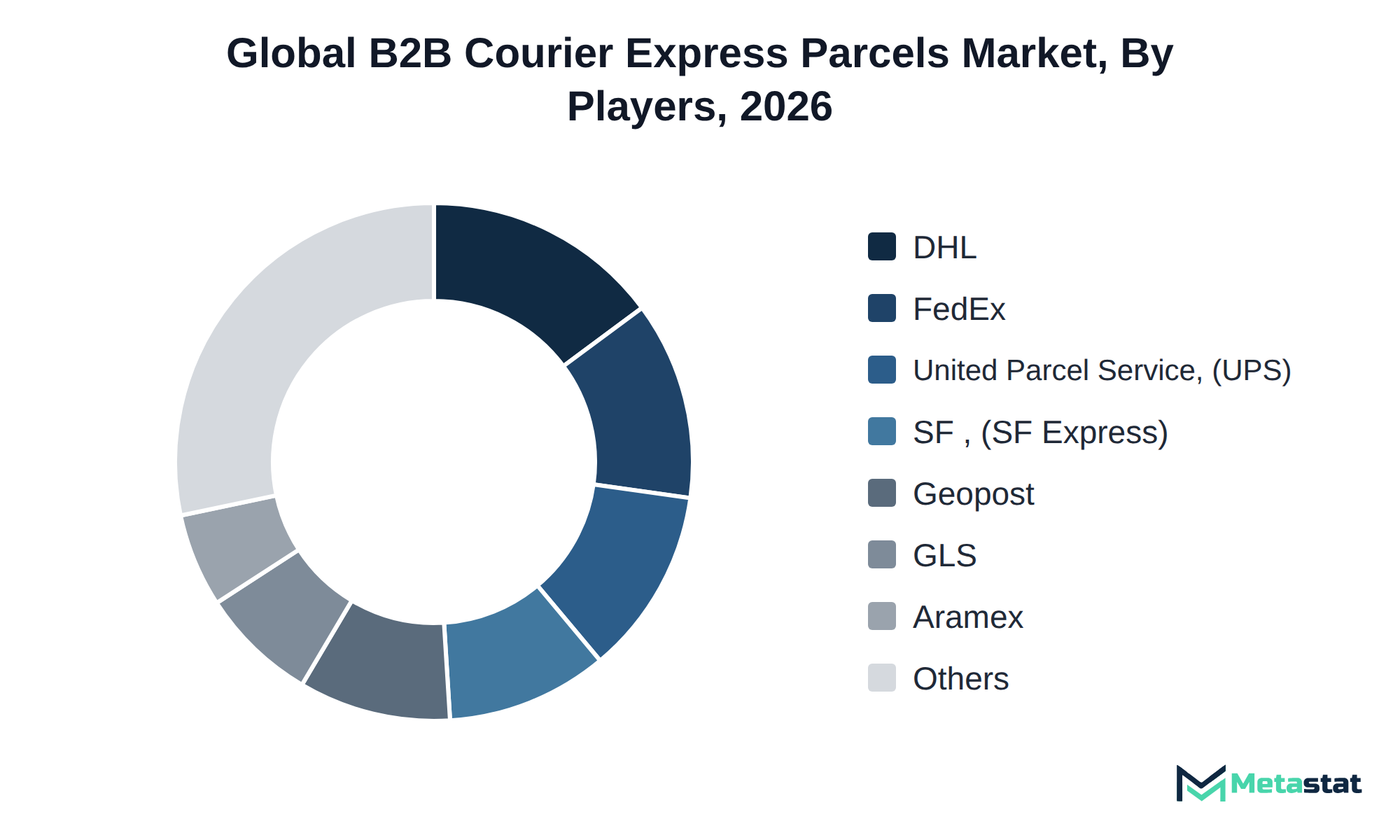
The B2B Courier Express Parcels market features diverse competitive strategies among key players. Companies differentiate themselves through service types, pricing, and customer engagement. For instance, DHL Group focuses on express parcel delivery, offering a wide range of tailored solutions to meet urgent delivery needs. FedEx Corporation emphasizes its extensive logistics network, which supports both domestic and international shipments with a strong emphasis on reliability.
Buyers in this market prioritize factors including service quality, pricing, and customization options when selecting a provider. United Parcel Service, Inc. (UPS) leverages its established brand reputation to attract customers seeking dependable shipping options. Meanwhile, SF Holding Co., Ltd. (SF Express) concentrates on enhancing its service portfolio to cater to specific regional demands, thereby strengthening its competitive edge. Such strategic behaviors define the competitive landscape, influencing how companies operate within the market.
Achieving this growth relies on several key developments within the B2B Courier Express Parcels market. A significant increase in demand for express parcel delivery services, driven by the e-commerce sector, is essential. This segment is projected to expand from USD 140.1 billion in 2026 to USD 240.7 billion by 2033, highlighting the important role e-commerce plays in market dynamics. Growth in domestic delivery services, expected to increase from USD 264.8 billion in 2026 to USD 460.6 billion by 2033, supports the overall market expansion. However, potential risks include economic downturns that could hinder consumer spending and logistics efficiency. Such challenges impact the growth trajectory, particularly in regions where the market is heavily reliant on domestic demand, including North America and Europe. The interaction of these factors will ultimately determine whether the B2B Courier Express Parcels market reaches its projected value by 2033.
By Service Type: Express Parcel Delivery, Standard Parcel Delivery, Same-Day Courier Services, Time-Definite Courier Services, Specialized Courier Services
By Delivery Destination: Domestic, International
By Shipment Weight: Heavy Weight Shipments, Light Weight Shipments, Medium Weight Shipments
By End-Use Industry: Manufacturing and Industrial, Retail and Wholesale Distribution, Healthcare and Pharmaceuticals, Banking, Financial Services and Insurance, IT and Telecommunications, Automotive and Automotive Components, Electronics and Semiconductors, Professional and Business Services, Aerospace and Defense, Others (Education, Government, Energy and Utilities)
The report strategically identifies and profiles the key market players and analyses their core competencies in each sub-segment of the B2B Courier Express Parcels market.
Report Attributes | Details |
Study Period | 2021-2033 |
Base Year | 2025 |
Estimated Year | 2026 |
Forecast Period | 2026-2033 |
Historical Period | 2021-2025 |
Growth Rate | CAGR 8.8% from 2026 to 2033 |
Revenue Unit | USD billion |
Segmentation | By Service Type, Delivery Destination, Shipment Weight, End-Use Industry, and Region |
By Region | North America (By Service Type, Delivery Destination, Shipment Weight, End-Use Industry, and Country)
|
Europe (By Service Type, Delivery Destination, Shipment Weight, End-Use Industry, and Country)
| |
Asia Pacific (By Service Type, Delivery Destination, Shipment Weight, End-Use Industry, and Country)
| |
South America (By Service Type, Delivery Destination, Shipment Weight, End-Use Industry, and Country)
| |
Middle East and Africa (By Service Type, Delivery Destination, Shipment Weight, End-Use Industry, and Country)
|
Find answers to common questions about this report
The B2B Courier Express Parcels market size was valued at USD 320.5 billion in 2025.
The market is projected to grow at a CAGR of 8.8% during the forecast period from 2026 to 2033.
The North America B2B Courier Express Parcels market size is estimated to reach USD 152.2 billion by 2033.
Express Parcel Delivery leads the B2B Courier Express Parcels market with a value of USD 140.1 billion in 2026, reflecting its significant demand compared to other service types.
Key drivers for the B2B Courier Express Parcels market include growing preferences for domestic deliveries, particularly in the retail and wholesale distribution sectors, and increased focus on sustainable packaging solutions. These factors significantly influence spending and operational strategies among businesses, contributing to market expansion.
The B2B Courier Express Parcels market is estimated to reach a valuation of USD 629.4 billion by 2033.
Key players operating in the B2B Courier Express Parcels market include DHL Group, FedEx Corporation, United Parcel Service, Inc. (UPS), SF Holding Co., Ltd. (SF Express), Geopost, GLS Group, and Aramex.
The demand for domestic parcel delivery is anticipated to reach USD 460.6 billion by 2033, reflecting a compound annual growth rate of 8.2% from 2026.
Suppliers encounter significant compliance costs due to stricter regulations on safety, environmental impact, and labor practices, affecting overall profitability.
International B2B shipments exhibit a projected compound annual growth rate of 10.3% through 2033, driven by increased globalization and demand for faster delivery options.
The analysts below cover Automotive and Transportation research at Metastat Insights.
LEAD ANALYST
Utkarsh Khirodkar is a Lead Market Research Analyst at MetaStat Insight, specializing in market intelligence, technology sector assessments, and competitive strategy.

ENERGY & INFRASTRUCTURE INDUSTRY CONSULTANT
Automotive and Transportation · Electronics and Semiconductor · Energy and Power · Machinery & Equipment
Saurabh Vasant Ganvir consults for Energy & Infrastructure Industry at MetaStat Insight, specializing in renewable energy, solar EPC, and electric vehicle (EV) infrastructure markets.
When evaluating distributed energy resource management systems, standard research summaries tend to gloss over the operational differences between front-of-the-meter utility deployments and behind-the-meter industrial sites. The MetaStat Insight report addressed those distinctions directly, especially regarding software interoperability standards and grid interconnection backlogs. The five-year market sizing across regional transmission organizations provided actionable context for our grid modernization strategy.
Most industry reports on warehouse automation bundle autonomous mobile robots and fixed conveyor installations into the same top-level numbers, which complicates advisory work. This study split the market cleanly by payload tiers, navigation technology, and fleet management software layers. The regional forecast for Western Europe gave our team defensible adoption benchmarks when evaluating capital allocation for logistics clients, saving us days of secondary data scrubbing.
Analyzing the transition from natural gas to green hydrogen in iron ore reduction requires realistic infrastructure timelines. Meta stat insight supplied a detailed regional assessment of DRI plant conversion costs and scrap metal availability in North America and Western Europe. Their report carefully examined pellet quality specs and electrical grid access constraints without making oversimplified market assumptions. The research material served as a practical reference during internal technology roadmap discussions.
Explore related market intelligence reports worth reading alongside this one.