
LEAD ANALYST
Utkarsh Khirodkar is a Lead Market Research Analyst at MetaStat Insight, specializing in market intelligence, technology sector assessments, and competitive strategy.

Global Chocolate Market Size, Share, By Chocolate Type (Milk Chocolate, Dark Chocolate, White Chocolate and Others), By Product Form (Bars and Tablets, Pralines, Truffles and Other Bite-Sized Chocolates, Chocolate-Coated Confections, Moulded Chocolate Figures and Hollow Shapes, Chocolate Chips, Drops and Buttons, Bulk Chocolate Blocks, Bulk Liquid Chocolate and Others), By Ingredient Type (Dairy-Based and Plant-Based), By Distribution Channel (Supermarkets and Hypermarkets, Convenience Stores, Specialty Chocolate Stores, Online Retail, Department Stores and General Retail and Foodservice and Institutional Sales), Industry Analysis, Growth, Trends, and Forecast, 2026-2033
Report ID
MSI-5498
Published
October, 2026
Pages
269 Pages
Format
Historical
Base year
Forecast
Forecast period
Report Details
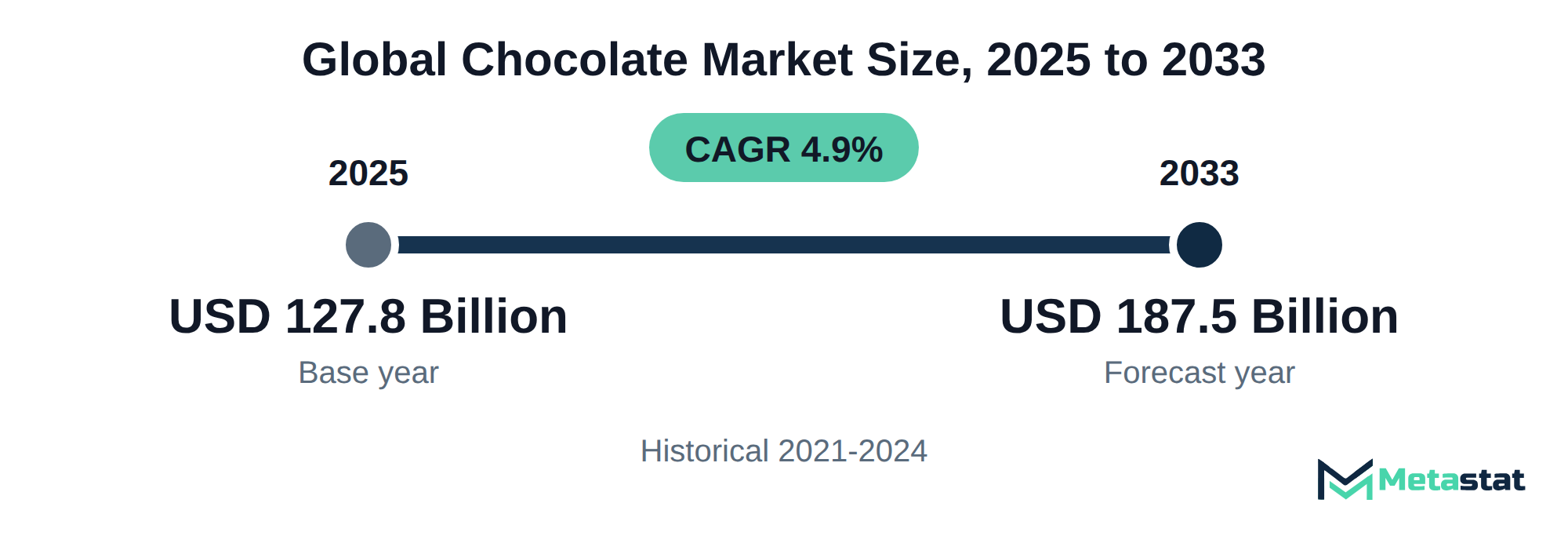
Market Valuation: Valued at $127.8 Billion in 2025, projected to reach $187.5 Billion by 2033 at a 4.9% CAGR.
Dominant Segment: Dark chocolate is the leading segment, projected to reach USD 74.5 billion by 2033, driven by increasing consumer demand for healthier indulgence options and its perceived health benefits.
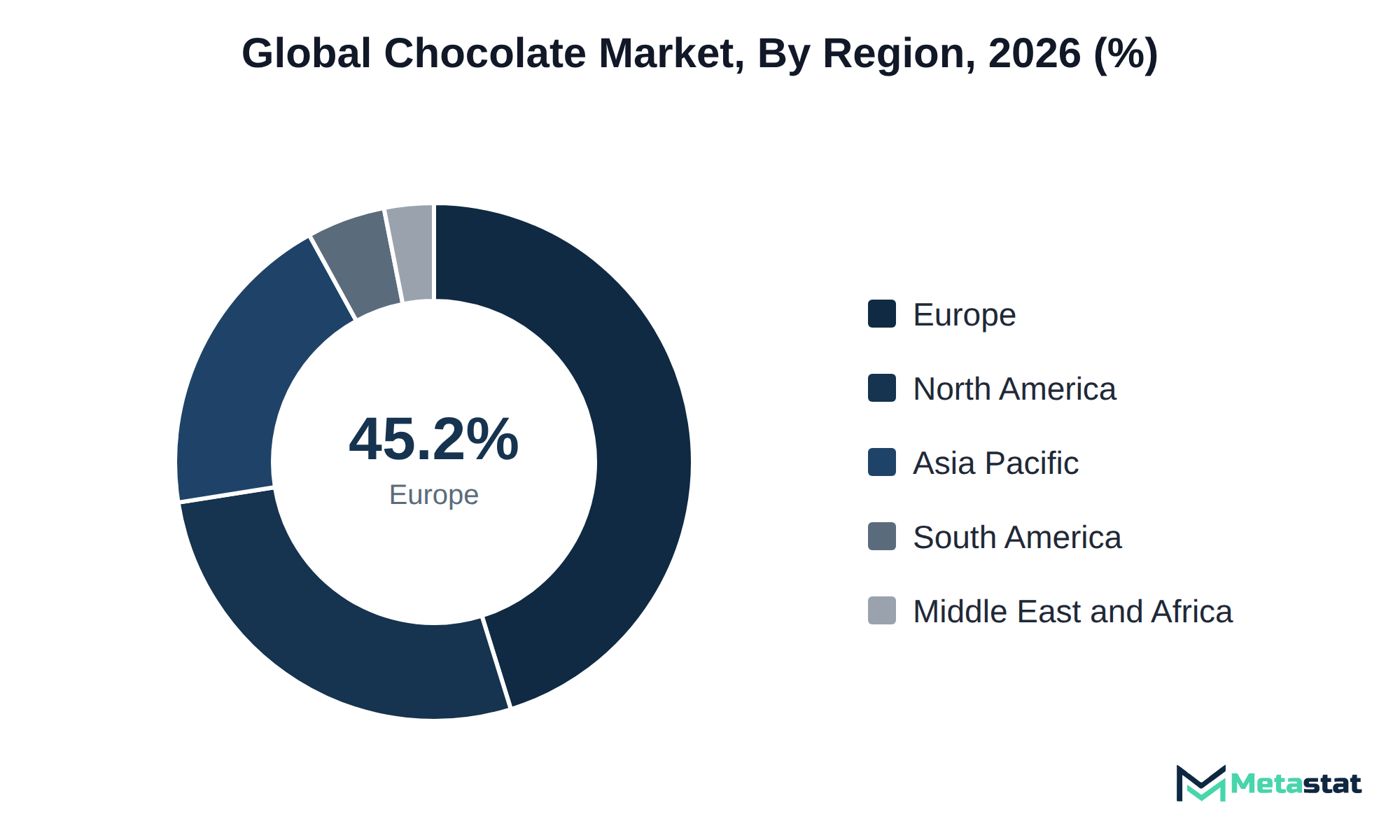
Geographic Lead: Europe dominates the chocolate market with a 45.2% share in 2025, fueled by a strong chocolate culture and high consumer spending on premium products.
What's Inside: The report provides comprehensive competitive coverage, detailed analyses of market dynamics, and forecasts extending from 2026 to 2033, ensuring a thorough understanding of market trends.
Emerging Trends: The market is witnessing a surge in plant-based chocolate formulations, expected to reach USD 48.2 billion by 2033, reflecting a shift towards healthier and environmentally conscious consumer choices.
Innovative Distribution Channels: Online retail is projected to grow at a CAGR of 9.4%, highlighting the increasing consumer preference for the convenience of e-commerce in accessing diverse chocolate products.
Choose Your License
Global Chocolate Market
The global Chocolate market was valued at USD 127.8 billion in 2025 and is projected to reach USD 187.5 billion by 2033, growing at a CAGR of 4.9% over the forecast period.
The Chocolate market encompasses a wide variety of products, including milk chocolate, dark chocolate, and white chocolate, alongside various forms including bars, tablets, and pralines. Buyers invest in chocolate for its diverse applications across confectionery, baking, and gifting sectors, driven by consumer preferences for indulgence and quality. The market's growth is supported by strong demand for premium and artisanal products, with consumers seeking unique experiences in their purchases.
Growth in the market is propelled by the rising preference for dark chocolate, which has gained significant traction among health-conscious consumers. North America holds 27.3% of the market in 2025, with the US leading in 2026. Europe represents the largest regional share at 45.2%, highlighting the region's established chocolate culture and strong consumer spending on high-quality products.
The market anticipates continued expansion, driven by innovation in product offerings and the increasing trend towards sustainable and ethically sourced ingredients. The growing popularity of online retail channels enhances accessibility, allowing consumers to explore a wider range of chocolate products. This evolving landscape positions the market for growth over the forecast period.
The Chocolate market caters to a diverse range of consumer preferences, with buyers seeking indulgence, comfort, and enjoyment in their purchases. This growing interest in premium and artisanal chocolates, alongside evolving tastes, drives spending across various demographics. Key buyers include retail consumers, foodservice operators, and confectionery manufacturers, influenced by trends in health, sustainability, and flavor innovation.
Significant growth in the market stems from increasing demand for dark chocolate, known for its health benefits and rich flavor profile. Dark chocolate captures a growing share of consumer spending, reflecting a shift toward healthier indulgences. Europe follows closely, representing the largest share of the market, driven by established consumer preferences and strong purchasing power.
The Chocolate market benefits from the rising trend of online retail, which expands access to a variety of products and enhances consumer convenience. This distribution channel grows significantly, driven by the increasing popularity of e-commerce platforms. The evolving landscape of consumer behavior and preferences ensures that the market remains dynamic and responsive to changing demands.
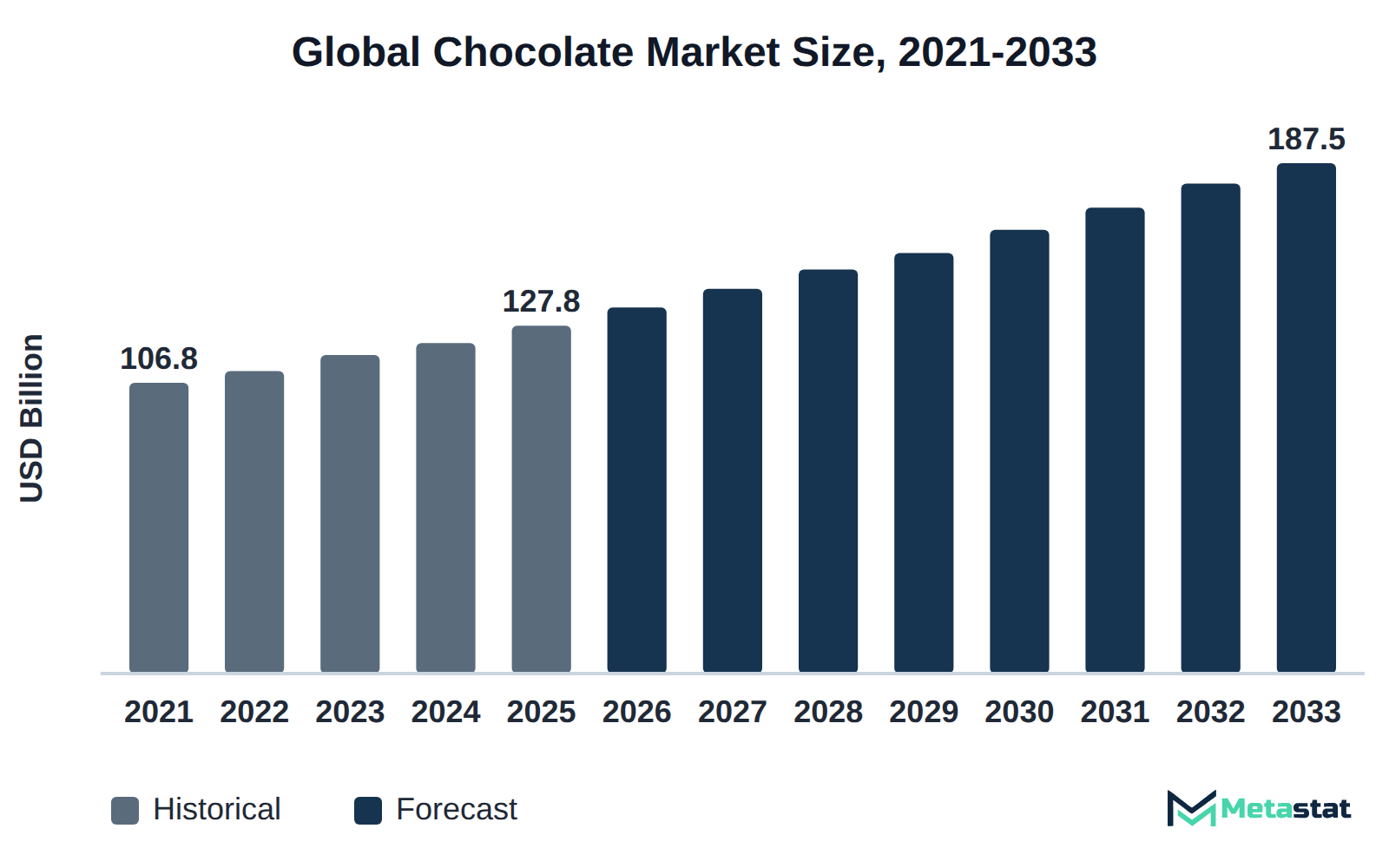
Cocoa price volatility significantly influences chocolate pricing strategies in the market. Fluctuations in cocoa bean prices, driven by supply chain disruptions and changing weather patterns, impact the overall cost structure of chocolate production. For example, the market reached a base value of USD 127.8 billion in 2025, indicating a strong foundation. However, the projected growth to USD 187.5 billion by 2033 suggests that chocolate manufacturers adapt their pricing strategies to maintain profitability while facing rising input costs.
In response to cocoa price volatility, manufacturers increasingly implement innovative pricing mechanisms to shield themselves from sudden cost increases. Strategies including dynamic pricing and forward contracts allow companies to lock in prices and mitigate risks associated with fluctuating cocoa costs. For instance, the chocolate segment focusing on dark chocolate is projected to reach a value of USD 74.5 billion by 2033, reflecting rising consumer demand for premium products. This shift encourages manufacturers to enhance pricing flexibility and develop more resilient supply chains, ultimately supporting sustainable growth in the market.
Dark chocolate products are experiencing significant growth, driven by increasing consumer interest in high-cocoa offerings. Demand for dark chocolate is expected to reach USD 74.5 billion by 2033, reflecting a compound annual growth rate (CAGR) of 6.1%. This growth has prompted suppliers to innovate not only in product formulation but in pricing and purchasing models.
In the chocolate market, buyers seek flexibility in payment options to accommodate varying budget constraints and inventory management needs. Preferred purchasing methods include bulk contracts, direct retail purchasing, and subscription services, which provide consumers with regular deliveries of their favorite dark chocolate products. The emergence of subscription models offers a consistent revenue stream for suppliers while ensuring customer retention.
Contract terms vary, with several agreements featuring tiered pricing based on volume purchases or seasonal promotions. This approach incentivizes buyers to commit to larger orders, further driving sales for suppliers. Diversification of payment models enhances accessibility and convenience for consumers, ultimately supporting sustained growth in the market.
The demand for plant-based chocolate formulations has surged, driven by increasing consumer awareness of health and environmental issues. The market for plant-based ingredients in chocolate is expected to reach USD 48.2 billion by 2033. This significant growth reflects the shift toward healthier options, prompting manufacturers to innovate and create dairy replacements that appeal to both vegans and lactose-intolerant consumers.
In the Chocolate market, plant-based chocolate not only serves as a healthier alternative but caters to a diverse array of consumer preferences. Ingredients including coconut cream and plant-based milks such as almond milk and oat milk are increasingly used to create rich and satisfying chocolate experiences without the use of traditional dairy. This change in formulation connects with health-conscious buyers seeking indulgent treats without compromising dietary restrictions.
The rise of plant-based chocolate formulations presents lucrative opportunities for brands looking to differentiate themselves. By investing in research and development of new dairy alternatives, companies capture a growing market segment that values ethical consumption and sustainability. This focus positions them favorably in a competitive environment, enhancing revenue potential and market share.
Single-origin chocolate products significantly influence consumer buying decisions by offering unique flavor profiles and transparency in sourcing. This trend aligns with the growing preference for high-quality ingredients among consumers, reflecting a strong inclination towards chocolates that highlight origin-specific characteristics. The demand for single-origin chocolate is evident in the market, where this category contributes to the overall diversity and richness of chocolate offerings.
The single-origin chocolate segment is projected to reach USD 22.7 billion by 2033, contributing to the broader chocolate market's expansion. This growth indicates robust consumer interest, driven by the appeal of artisanal craftsmanship and the story behind each product. Factors including distinct taste profiles and ethical sourcing practices enhance customer loyalty and willingness to pay premium prices. This trend positions single-origin chocolates as a critical category within the overall chocolate market.
Growing health-conscious behaviors among consumers have led to increased spending on chocolate products that provide perceived health benefits. Buyers, particularly millennials and Gen Z, seek indulgent options that align with their wellness goals, including dark chocolate and plant-based formulations. This demographic shift encourages manufacturers to innovate and offer products that contain lower sugar levels and higher cocoa content, in line with demand for reduced sugar food and beverages. The market experiences an influx of these healthier alternatives, driving volume growth and influencing price dynamics. The demand for dark chocolate is projected to reach USD 74.5 billion by 2033, highlighting strong consumer preference for products that combine indulgence with health benefits.
Preference for premium offerings over standard products supports the overall expansion of the market, prompting companies to invest in research and development. This focus on health-focused products increases competition among industry players, leading to a variety of options available for health-conscious consumers.
Premium ingredients in the Chocolate market drive a wave of innovation, enhancing product differentiation and appealing to discerning consumers. Factors including the rising trend of artisanal and craft chocolate products contribute to this shift, attracting consumers who seek authentic and high-quality experiences. Ingredient innovation, including the introduction of exotic flavors and sustainable sourcing practices, strengthens brand loyalty among consumers willing to pay a premium for unique offerings. Suppliers prioritize the integration of premium and sustainable ingredients to meet growing demands for ethical consumption, reflecting a broader industry trend toward transparency and quality. Suppliers who adapt to these preferences experience increased market share and revenue growth, allowing the market to expand. This focus on premium ingredients heightens competition among existing players and encourages new entrants to establish niche segments within the overall market.
Price sensitivity among consumers significantly restricts demand in the Chocolate market. Rising production costs, driven by fluctuating cocoa prices and supply chain challenges, have resulted in increased retail prices, making premium and specialty products less accessible to price-conscious buyers. This limitation affects various segments, particularly among budget-conscious consumers who favor affordable options. While prices rise, consumer behavior shifts toward smaller orders or delayed purchases, impacting overall sales volume. Increased competition from alternative snacks and desserts intensifies the pressure on chocolate manufacturers to maintain competitive pricing. Consequently, this environment hampers market expansion and growth potential, leading to a cautious approach among consumers regarding their chocolate purchases.
Suppliers within the market face significant challenges related to escalating input costs, particularly for cocoa, dairy products such as milk, and other essential ingredients. Increases in global demand, along with supply chain disruptions, have led to heightened prices for raw materials. Suppliers respond by investing in cost-efficient sourcing strategies and exploring alternative ingredient options to mitigate financial strain. Strategic partnerships with local farmers and producers assist in securing stable supply and favorable pricing, ultimately supporting profitability. Innovations in production methods enhance efficiency, reducing the overall cost of goods sold. The market continues to experience dynamic shifts driven by these challenges, influencing supplier strategies and consumer pricing. Long-term sustainability initiatives and transparent sourcing practices are vital for maintaining consumer trust and competitiveness within the Chocolate market.
Rapid growth in online retail channels presents significant opportunity within the market. The shift towards e-commerce stems from changing consumer behaviors, with buyers increasingly favoring the convenience of online shopping. This trend aligns with the projected 9.4% CAGR for the online retail distribution channel, indicating robust expansion through 2033. Brands focusing on enhancing their digital presence and optimizing online sales strategies benefit greatly from this trend. The Chocolate market experiences heightened demand for diverse product offerings available online, catering to a wide range of consumer preferences.
The online retail segment facilitates access to various chocolate types, including premium and artisanal options, which attract a broad audience. With the ongoing digital transformation, companies that invest in e-commerce capabilities enhance their market reach and capitalize on emerging consumer trends. This strategic focus leads to increased sales and strengthens brand loyalty in a competitive environment.
The Global Chocolate market is segmented based on Chocolate Type, Product Form, Ingredient Type, and Distribution Channel.
Milk Chocolate segment is valued at USD 69.4 billion in 2026 and is projected to reach USD 91.3 billion by 2033, at a CAGR of 4% during the forecast period. This segment appeals strongly to consumers seeking indulgent experiences and comfort, primarily applied in confectionery products, snacks, and desserts. Demand for milk chocolate is driven by a combination of taste preferences and the availability of diverse product formulations. Compared to other chocolate types, including dark and white chocolate, milk chocolate maintains a steady growth trajectory, with a lower CAGR than dark chocolate, which stands at 6.1%. This slower growth reflects a mature consumer base, though continued innovations in flavors and formulations support its ongoing popularity. The segment distinguishes itself through its widespread appeal and versatility, catering to a broad audience across various distribution channels, including supermarkets and specialty stores.
This segment attracts health-conscious consumers and gourmet buyers seeking high-cocoa content products that offer rich flavors and potential health benefits. Demand for dark chocolate is driven by rising interest in healthier indulgence options, with many consumers gravitating toward products perceived to provide antioxidant properties. Compared to milk chocolate, which has a CAGR of 4%, dark chocolate exhibits stronger growth due to its appeal among niche markets that prioritize quality and health. The segment's higher price point reflects its premium positioning, setting it apart from other chocolate types. With a focus on sustainable sourcing and unique flavor profiles, dark chocolate continues to gain traction, contributing to the overall expansion of the market.
The white chocolate segment is expected to reach USD 18.1 billion by 2033. Characterized by its creamy texture and sweet flavor, white chocolate appeals to a broad audience, particularly among those seeking alternatives to traditional chocolate varieties. This segment finds use in various confections, baked goods, and gourmet recipes, attracting buyers who prefer its unique taste profile. The growth in this segment is driven by increasing consumer interest in diverse chocolate options, with a CAGR of 4.1% anticipated through 2033. Unlike dark and milk chocolate, which cater to more health-conscious consumers due to their cocoa content, white chocolate offers a sweeter, milder flavor, drawing in those who prioritize indulgence. This distinction contributes to a slower growth rate compared to dark chocolate, which is projected to achieve a CAGR of 6.1%, highlighting the diverse preferences that shape the chocolate market.
Others (Ruby Chocolate, Mixed Chocolate Types) segment is projected to grow at a CAGR of 7.8% during the forecast period. This segment appeals to consumers seeking novel flavors and unique chocolate experiences, often used in gourmet products and specialty confections. The increasing interest in distinct offerings drives demand among younger consumers and adventurous eaters. In contrast to more established segments like milk and dark chocolate, this segment exhibits higher growth potential, with consumers willing to pay premium prices for innovative and artisanal products. The trend toward exploring exotic ingredients and flavor combinations enhances its attractiveness. The market for Others (Ruby Chocolate, Mixed Chocolate Types) stands out due to its emphasis on creativity and uniqueness, setting it apart from traditional chocolate segments that focus more on established flavors and forms.
Bars and Tablets segment is valued at USD 47 billion in 2026 and is projected to reach USD 62.4 billion by 2033, at a CAGR of 4.1% during the forecast period. This segment primarily serves consumers seeking convenience and indulgence through easy-to-consume chocolate forms. Increasing demand for on-the-go snacks drives growth, particularly among busy professionals and families. The segment's steady growth contrasts with specialty chocolates, which see faster expansion due to premium positioning and unique flavors. Bars and Tablets maintain cost-effective pricing, appealing to budget-conscious consumers. The market observes significant competition from both established brands and emerging players, each striving to innovate while maintaining quality and appealing packaging to attract buyers.
Pralines, Truffles and Other Bite-Sized Chocolates segment is estimated to reach USD 47.2 billion by 2033, at a CAGR of 5.6% during the forecast period. This segment is popular among consumers seeking indulgent treats for special occasions or everyday enjoyment. The rise in gifting trends, particularly during holidays and celebrations, boosts demand for these products, including truffle chocolate, appealing to a diverse consumer base. Compared to other segments, the bite-sized offerings show faster growth due to their convenience and variety, responding effectively to consumer preferences for smaller, high-quality chocolates. The increasing emphasis on premium and artisanal products enhances their market appeal, supporting their distinct position compared to larger formats like bars and tablets. The segment's growth reflects evolving consumer behavior, favoring experiences over mere consumption, contributing to its robust expansion in the market.
Chocolate-Coated Confections segment is expected to reach USD 29.9 billion by 2033. This product form appeals to a broad consumer base seeking indulgent treats and snack options. The segment thrives on impulse purchases in settings including convenience stores and supermarkets, where consumers often seek quick, satisfying snacks. Ongoing shifts toward healthier ingredients in other segments present challenges for chocolate-coated options, yet the demand for convenience continues to support growth. With a projected CAGR of 3.9%, this segment experiences slower growth compared to others, like Pralines, Truffles and Other Bite-Sized Chocolates, which has a CAGR of 5.6%. Price sensitivity influences consumer choices, impacting the premium pricing of chocolate-coated products while alternative options emerge in the market. The Chocolate market evolves, reflecting consumer preferences for both indulgence and health-conscious decisions.
Moulded Chocolate Figures and Hollow Shapes segment is projected to grow at a CAGR of 3.9% during the forecast period. These products, appealing to both children and adults, serve various occasions including celebrations, holidays, and gifting. The segment stands out with its unique designs and playful forms, differentiating it from traditional chocolate offerings. Factors influencing this segment include increasing consumer interest in novelty items and gifting trends. While the segment experiences slower growth compared to others like Pralines, Truffles, and Other Bite-Sized Chocolates, which has a CAGR of 5.6%, it maintains steady demand due to its visual appeal and emotional connection. The market focus on innovation in design and flavors further enhances the attractiveness of moulded chocolate figures, catering to diverse consumer preferences while contributing to overall growth in the Chocolate market.
Chocolate chips, drops and buttons serve critical roles in baking and dessert applications, appealing to both home cooks and professional chefs. These ingredients contribute to a variety of products, including cookies, cakes, and confections, enhancing flavor and texture. Increased interest in convenient and versatile baking options stimulates demand for these products, particularly among consumers seeking to replicate bakery-quality goods at home. The rapid growth trajectory of the online retail channel facilitates wider accessibility, allowing consumers to purchase these ingredients more readily. Compared to other forms, including bars and tablets, chocolate chips generally offer lower price points, attracting budget-conscious buyers while experiencing steady growth due to their multifunctional uses in baking and cooking. The market experiences consistent innovations in flavor profiles and ingredient quality, reflecting shifting consumer preferences for gourmet and premium options. This dynamic continues to shape the competitive landscape, impacting overall demand in the chocolate market.
Bulk chocolate blocks serve essential ingredients in various applications, including baking and confectionery production. Manufacturers and foodservice providers use these blocks for their versatility and cost-effectiveness. The segment experiences growth driven by rising demand for large-scale chocolate production, particularly among artisanal chocolatiers and commercial bakeries. While other segments including bars and tablets attract consumers directly, bulk chocolate blocks cater to businesses that focus on manufacturing finished products. The price point of bulk chocolate blocks tends to be lower compared to premium chocolate variants, making them attractive for companies seeking to manage production costs effectively. This differentiation in usage and pricing contributes to the distinct positioning of bulk chocolate blocks within the chocolate market.
Bulk Liquid Chocolate serves numerous applications, primarily in the food service and industrial sectors. This segment finds extensive use in creating desserts, confections, and baked goods, catering to manufacturers and chefs who demand high-quality chocolate for their products. The rising trend of convenience foods drives demand, owing to culinary professionals seeking liquid chocolate for its ease of use and versatility. Compared to other forms, including Bars and Tablets or Pralines, Bulk Liquid Chocolate typically commands a different pricing structure, often reflecting the volume used in production rather than the per-unit cost seen in retail. While segments like Dark Chocolate exhibit faster growth due to health trends, Bulk Liquid Chocolate maintains steady growth, driven by its essential role in large-scale food production and innovation in culinary applications. The market continues evolving, with suppliers focusing on quality and sourcing transparency to meet the increasing expectations of buyers.
Chocolate flakes, curls, and shavings serve as versatile ingredients in various culinary applications, including desserts, baked goods, and confections. Pastry chefs and confectionery manufacturers often use these products for decoration and flavor enhancement. Consumer preferences for visually appealing and texturally diverse desserts drive demand for these ingredients. The market experiences influence from trends promoting innovative dessert presentations and the incorporation of unique textures in products. Compared to other product forms, including bars and tablets, which experience strong growth, these ingredients do not see the same rapid expansion due to their niche application. However, their unique characteristics and specific usage in gourmet and artisanal products afford them a distinctive position in the market, catering to high-end consumer segments that prioritize quality and presentation.
Dairy-Based segment is valued at USD 85.9 billion in 2026 and is projected to reach USD 116.5 billion by 2033, at a CAGR of 4.5% during the forecast period. This segment finds extensive use in the production of various chocolate products, appealing to consumers seeking rich flavor profiles and creamy textures. Growing health consciousness among consumers drives the demand for dairy-based chocolate, particularly in regions with high disposable income. Compared to other ingredient types, including Plant-Based, Dairy-Based chocolate experiences slower growth, reflecting its established presence in the market, while Plant-Based alternatives show a CAGR of 5.9%. Dairy-based chocolate tends to command higher prices due to the premium associated with its ingredients. This segment's dynamics contribute significantly to the overall trends and shifts in the Chocolate market.
Plant-Based segment is estimated to reach USD 48.2 billion by 2033, at a CAGR of 5.9% during the forecast period. This segment caters to consumers seeking healthier or sustainable alternatives to traditional chocolate options. Rising awareness regarding health benefits, environmental concerns, and dietary preferences drives demand for plant-based chocolate products, appealing to both health-conscious individuals and those following vegan diets. With an increasing focus on clean label products, the segment distinguishes itself from others in its group due to its growth rate and the unique preferences of its buyer demographic. The plant-based segment experiences significant growth compared to Dairy-Based products, which have a CAGR of 4.5%. This dynamic reflects a shift in consumer attitudes towards plant-based ingredients and their incorporation into the chocolate market.
This segment features chocolate sourced from a single location, often highlighting unique flavor profiles and origins, appealing to connoisseurs and specialty chocolate buyers. Increasing consumer interest in high-quality, artisanal products drives demand for single-origin chocolates. This trend contrasts with mass-produced varieties, where price sensitivity prevails. Single-origin chocolates typically command premium pricing due to their limited availability and the narrative associated with their sourcing. The segment's growth trajectory aligns with the broader shift toward sustainable and ethical sourcing practices, enhancing its appeal to environmentally conscious consumers. In the Chocolate market, the differentiation of single-origin products further supports overall market expansion.
Supermarkets and Hypermarkets segment is valued at USD 61.6 billion in 2026 and is projected to reach USD 80.9 billion by 2033, at a CAGR of 4% during the forecast period. This segment serves a diverse customer base including families, individuals, and foodservice operators seeking convenient access to chocolate products. Demand is driven by the increasing preference for convenient shopping experiences and the growing popularity of chocolate as a snack option. This segment distinguishes itself from others in the distribution category, including specialty chocolate stores, through its larger scale and wider product selection. The growth rate remains slower compared to online retail, which benefits from rising e-commerce trends and a CAGR of 9.4%. The chocolate market continues to evolve with consumers showing a preference for premium and innovative chocolate offerings, further supporting the segment's performance amid changing consumer preferences.
Convenience Stores segment is estimated to reach USD 36.8 billion by 2033, at a CAGR of 3.8% during the forecast period. This segment serves consumers seeking quick and accessible purchasing options for chocolate products, catering primarily to on-the-go buyers and impulse shoppers. The growing trend of convenience shopping drives demand, owing to busy lifestyles prompting consumers to seek out easily accessible products. Convenience Stores typically offer a more limited selection compared to supermarkets and hypermarkets, which allows for faster turnover and immediate gratification for consumers. The growth rate of this segment is slower than other channels like online retail, which displays a robust CAGR of 9.4%. Nevertheless, the convenience factor positions this segment favorably in the broader Chocolate market, capturing a unique buyer demographic focused on immediate needs rather than extensive product variety.
Specialty Chocolate Stores segment is expected to reach USD 22.1 billion by 2033. This segment caters to consumers looking for high-quality, artisanal chocolate products. Buyers include chocolate enthusiasts, gift buyers, and those seeking unique flavor profiles or premium ingredients. Demand for specialty chocolates is driven by a growing interest in gourmet and handcrafted products, reflecting shifting consumer preferences towards premium offerings. This segment exhibits stronger growth potential than conventional chocolate retail channels, with an anticipated CAGR of 5.6% during the forecast period. Compared to supermarkets and hypermarkets, which are projected to grow at a CAGR of 4%, specialty stores provide a more curated shopping experience, enhancing customer engagement and loyalty. The market for specialty chocolate stores thrives on increasing consumer investment in high-quality confectionery and unique experiences.
The Online Retail segment is projected to grow at a CAGR of 9.4% during the forecast period. This channel serves consumers seeking convenient access to a variety of chocolate products, ranging from bars to specialty items. The increasing trend of online shopping, driven by the growing penetration of smartphones and improved internet access, facilitates easier purchasing for customers. This segment differentiates itself from physical retail channels by offering a broader selection of products and the convenience of home delivery, appealing particularly to younger demographics. The Online Retail segment's growth trajectory outpaces traditional retail channels, highlighting a shift in consumer behavior toward digital purchasing solutions. This advancement represents a significant opportunity for brands to engage with consumers directly, enhancing brand loyalty and driving sales in the competitive chocolate market.
Department Stores and General Retail serve essential venues for consumers seeking a variety of chocolate products. This channel attracts customers ranging from casual shoppers to gourmet enthusiasts, reinforcing the demand for diverse offerings. The growth of impulse purchasing within department stores drives sales, with shoppers drawn to visually appealing displays. Competitive pricing and promotions enhance consumer interest, especially during seasonal peaks.
While department stores offer a broad selection, they often differ from specialty chocolate stores, which provide premium and artisanal products. This distinction influences buyer preferences, with department stores appealing to a wider audience seeking convenience and value rather than exclusivity. The demand for chocolate products in this segment reflects broader trends within the market, where consumers increasingly prioritize accessibility and variety in their purchasing decisions.
Foodservice and Institutional Sales focuses on supplying chocolate products to restaurants, cafes, hotels, and catering services. These buyers use chocolate for desserts, confections, and various culinary applications. Demand in this segment experiences growth driven by the increasing trend toward gourmet dining and the rising popularity of chocolate-based desserts. This segment differs from traditional retail channels due to its emphasis on bulk purchases and customized offerings, appealing primarily to commercial buyers rather than individual consumers. Pricing strategies in this channel often reflect the higher volumes and specific service requirements. The chocolate market benefits from the demand for premium and artisanal chocolate products in foodservice, aligning with evolving consumer preferences for high-quality ingredients and unique flavor profiles.
Based on geography, the Global Chocolate market is divided into North America, Europe, Asia-Pacific, South America, Middle East, and Africa.
In North America, consumer interest in premium and specialized chocolate products drives market growth. The United States, Canada, and Mexico exhibit a rising preference for dark and artisanal chocolates, particularly among health-conscious consumers. North America holds a 27.3% share of the global market in 2025, reflecting growing demand for innovative flavors and sustainable sourcing. The projected market value for this region is USD 49 billion by the end of 2033. Increased online retail channels further support market expansion, enabling consumers to access a wider variety of chocolate products. The Chocolate market in this region demonstrates resilience amid fluctuating economic conditions, underpinned by strong retail infrastructure and evolving consumer preferences.
The European market for chocolate holds a share of 45.2% of the global market in 2025. Within this region, Germany, France, the UK, Italy, and Spain contribute to demand, driven by a robust consumer preference for premium and artisanal chocolate products. The rising trend of health-conscious consumption influences the demand for dark and plant-based chocolates, appealing to various buyer groups. Infrastructure developments in retail, particularly in online channels, enhance accessibility for consumers seeking diverse chocolate options. In addition, the increasing focus on sustainable sourcing practices among manufacturers highlights a shift towards ethical consumption, aligning with growing consumer awareness. These dynamics position the chocolate market in Europe for steady growth through the forecast period, with an anticipated market value of USD 187.5 billion by 2033.
The Asia-Pacific region demonstrates significant potential within the chocolate market, driven by a growing middle class and increasing disposable incomes. Countries like China, Japan, and India exhibit rising demand for premium chocolate products, influenced by changing consumer preferences towards indulgence and gifting. Infrastructure improvements and expanding distribution networks further enhance market access, particularly in urban areas. The region's share of the global chocolate market stands at 19.5% in 2025, highlighting its importance in overall market dynamics. Online retail channels experience strong growth, reflecting a shift in shopping behavior post-pandemic. Specialty chocolate stores gain traction among consumers seeking unique and high-quality selections, contributing to the overall expansion of the market.
Brazil and Argentina represent significant markets within the chocolate landscape, contributing to the overall demand due to their diverse consumer preferences. The popularity of premium chocolate products continues to rise, driven by changing consumer habits focusing on quality and unique flavors. Local manufacturers and international brands increasingly target health-conscious consumers, emphasizing the use of natural ingredients and sustainable sourcing practices. With a share of 4.9% of the global market in 2025, the chocolate market in South America demonstrates considerable growth potential. Infrastructure improvements and increasing investment in distribution channels enhance access to a broader range of products, further stimulating market development. Innovative marketing strategies tailored to local tastes and preferences play a crucial role in capturing consumer interest. The growing trend toward online retail creates additional avenues for market expansion, allowing consumers to explore a wider variety of offerings.
The Middle East and Africa present a distinct environment for the chocolate market, characterized by a growing demand for premium products. Rising disposable incomes and evolving consumer preferences influence purchasing behavior, particularly in urban areas. Saudi Arabia and the UAE demonstrate a strong preference for luxury chocolate brands, driven by a young, affluent population. South Africa's diverse consumer base creates opportunities for chocolate manufacturers to cater to varying tastes and preferences. The market is expected to grow, fueled by increasing interest in health-conscious options, leading to higher demand for dark and plant-based chocolates. This shift towards premium and specialized products signifies a significant phase for the market in the region, accounting for 3.1% of the global market in 2025.
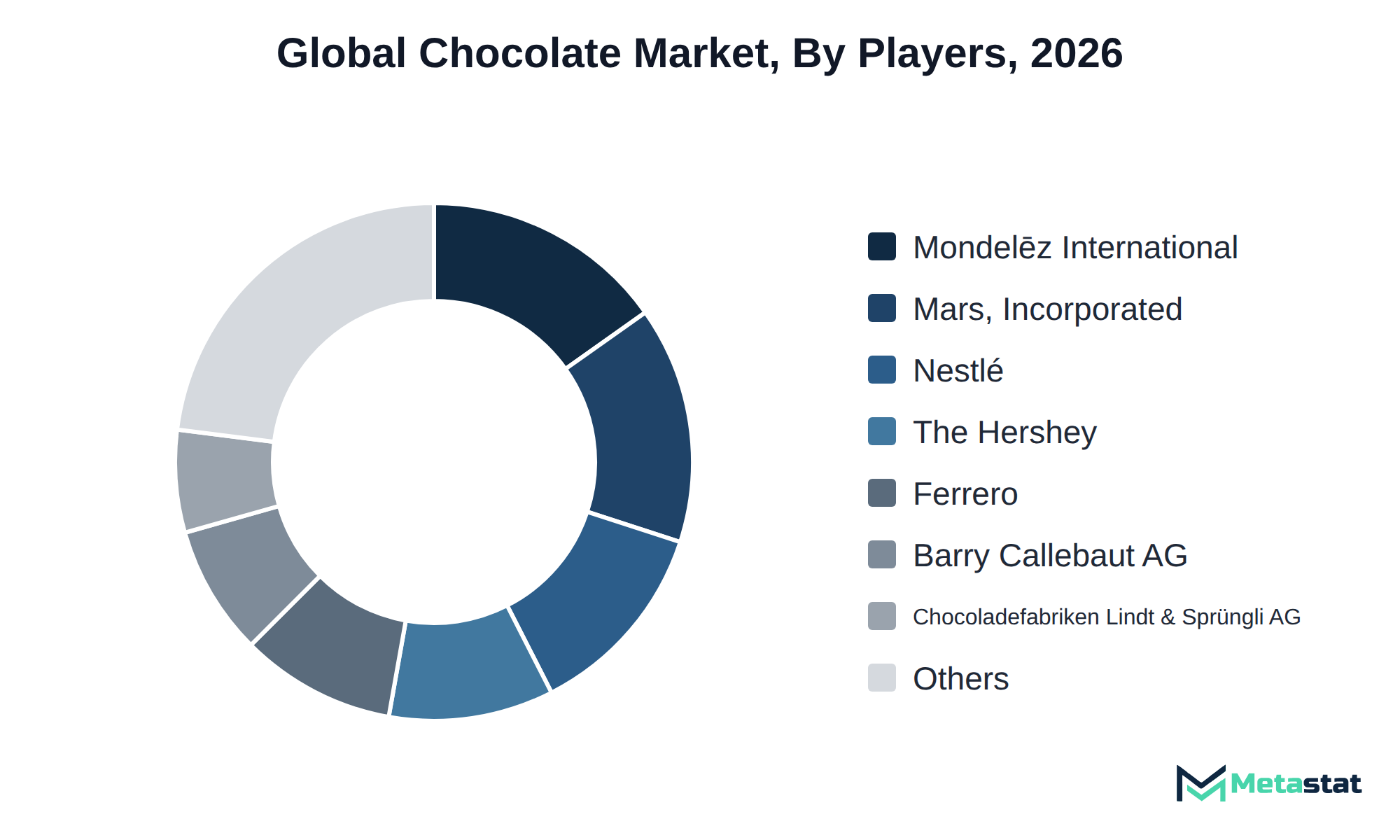
The Chocolate market features diverse companies that adopt various strategies based on product specialization and target demographics. Segmentation occurs primarily through product offerings including chocolate types, product forms, and ingredient types. For instance, Mars, Incorporated and Mondelēz International, Inc. operate in milk chocolate and bars, while Ferrero Group emphasizes pralines and bite-sized chocolates. Companies differentiate based on unique formulations, flavor profiles, and packaging innovation.
Buyers prioritize certification, customization, and service when selecting chocolate products. Companies including Chocoladefabriken Lindt & Sprüngli AG focus on premium quality and ethical sourcing, appealing to health-conscious consumers. Barry Callebaut AG emphasizes ingredients facilitating the production of artisanal chocolate, serving both industrial and specialty markets. This competitive dynamic drives innovation and product development within the market.
This growth relies on several key developments. First, increasing demand for dark chocolate, projected to reach USD 74.5 billion by 2033, will significantly contribute to market expansion. This trend aligns with a growing consumer preference for healthier options and premium products. Second, the online retail distribution channel is expected to experience a CAGR of 9.4%, enhancing accessibility and convenience for consumers. This shift in purchasing behavior supports overall growth in the Chocolate market. However, potential supply chain disruptions and rising raw material costs pose significant risks that could hinder market progression. Addressing these issues will be crucial for achieving the anticipated market size.
By Chocolate Type: Milk Chocolate, Dark Chocolate, White Chocolate, Others (Ruby Chocolate, Mixed Chocolate Types)
By Product Form: Bars and Tablets, Pralines, Truffles and Other Bite-Sized Chocolates, Chocolate-Coated Confections, Moulded Chocolate Figures and Hollow Shapes, Chocolate Chips, Drops and Buttons, Bulk Chocolate Blocks, Bulk Liquid Chocolate, Others (Chocolate Flakes, Curls and Shavings)
By Ingredient Type: Dairy-Based, Plant-Based, Single-Origin
By Distribution Channel: Supermarkets and Hypermarkets, Convenience Stores, Specialty Chocolate Stores, Online Retail, Department Stores and General Retail, Foodservice and Institutional Sales
The report strategically identifies and profiles the key market players and analyses their core competencies in each sub-segment of the Chocolate market.
Report Attributes | Details |
Study Period | 2021-2033 |
Base Year | 2025 |
Estimated Year | 2026 |
Forecast Period | 2026-2033 |
Historical Period | 2021-2025 |
Growth Rate | CAGR 4.9% from 2026 to 2033 |
Revenue Unit | USD billion |
Segmentation | By Chocolate Type, Product Form, Ingredient Type, Distribution Channel, and Region |
By Region | North America (By Chocolate Type, Product Form, Ingredient Type, Distribution Channel, and Country)
|
Europe (By Chocolate Type, Product Form, Ingredient Type, Distribution Channel, and Country)
| |
Asia Pacific (By Chocolate Type, Product Form, Ingredient Type, Distribution Channel, and Country)
| |
South America (By Chocolate Type, Product Form, Ingredient Type, Distribution Channel, and Country)
| |
Middle East and Africa (By Chocolate Type, Product Form, Ingredient Type, Distribution Channel, and Country)
|
Find answers to common questions about this report
The Chocolate market size was valued at USD 127.8 billion in 2025.
The market is projected to grow at a CAGR of 4.9% during the forecast period from 2026 to 2033.
The North America Chocolate market size is estimated to reach USD 49 billion by 2033.
Milk Chocolate leads the Chocolate market with a value of USD 69.4 billion in 2026. This segment represents the largest share compared to other chocolate types.
Growing health-conscious behaviors among consumers drive increased spending on chocolate products that provide perceived health benefits. Rapid growth in online retail channels presents significant opportunity as consumers favor the convenience of online shopping, leading to robust expansion through 2033.
Europe holds the dominant share of the Chocolate market, accounting for 45.2 percent in 2025. This figure significantly surpasses the shares of other regions.
Price sensitivity among consumers restricts Chocolate market growth. Rising production costs, driven by fluctuating cocoa prices and supply chain challenges, increase retail prices, making premium products less accessible to price-conscious buyers.
Rapid growth in online retail channels presents significant opportunities for the Chocolate market, driven by changing consumer behaviors favoring convenience. Brands that enhance their digital presence and optimize online sales strategies are positioned to benefit from this trend, leading to increased sales and brand loyalty.
The Chocolate market is estimated to reach a valuation of USD 187.5 billion by 2033.
Key players operating in the Chocolate market include Mars, Incorporated, Mondelēz International, Inc., Ferrero Group, Nestlé S.A., The Hershey Company, Chocoladefabriken Lindt & Sprüngli AG, and Ghirardelli Chocolate Company.
The analysts below cover Food and Beverages research at Metastat Insights.
LEAD ANALYST
Utkarsh Khirodkar is a Lead Market Research Analyst at MetaStat Insight, specializing in market intelligence, technology sector assessments, and competitive strategy.

LEAD PRINCIPAL ANALYST, PHARMA AND HEALTHCARE
Food and Beverages · Healthcare · Healthcare IT · Medical Devices
Ajay Devgire is the Lead Healthcare Analyst at MetaStat Insight, leading strategic research and market intelligence initiatives across the global healthcare domain.

SENIOR RESEARCH ANALYST
Biotechnology · Food and Beverages · Medical Devices · Packaging
Snehal Pasalkar is a Research Analyst at MetaStat Insight, operating at the intersection of life sciences research, competitive strategy, and market intelligence.
Tracking ceramic matrix composite adoption in high-bypass aero engines requires strict attention to material qualification cycles and FAA airworthiness testing milestones. The MetaStat Insight team provided a detailed timeline of silicon carbide fiber manufacturing capacity and commercial foundry lead times. Having clear visibility into upstream thermal barrier coating supply helped us stress-test our long-term component procurement strategy.
Transitioning ultra-class mining haul trucks to alternative power requires concrete data on remote hydrogen refueling infrastructure economics. The report evaluated megawatt-scale electrolyzer installation expenses, onsite storage safety mandates, and heavy-duty fuel cell stack degradation under continuous duty cycles. That technical rigor helped our engineers benchmark realistic total operating cost horizons for off-highway fleet decarbonization.
Enterprise zero-trust network rollouts are often slowed down by multi-cloud transit latency and proprietary hardware retirement schedules. This study provided realistic total cost of ownership models comparing cloud-delivered security edge solutions against traditional hardware refreshes. The analysis of contract renewal lengths and software maintenance fees gave us clear visibility into enterprise replacement cycles over the next three to five years.
Explore related market intelligence reports worth reading alongside this one.