
LEAD ANALYST
Utkarsh Khirodkar is a Lead Market Research Analyst at MetaStat Insight, specializing in market intelligence, technology sector assessments, and competitive strategy.

Global CNC Machine Tools Market Size, Share, By Machine Type (Metal Cutting Machines and Metal Forming Machines), By Axis Configuration (Three-Axis Machines, Four-Axis Machines, Five-Axis and Multi-Axis Machines), By End-Use Industry (Automotive, Aerospace and Defense, General Machinery, Precision Engineering, Electrical and Electronics, Medical Devices), By Sales Channel (Direct Sales, Distributors and Dealers, System Integrators and Automation Partners), Industry Analysis, Growth, Trends, and Forecast, 2026-2033
Report ID
MSI-5720
Published
November, 2026
Pages
263 Pages
Format
Historical
Base year
Forecast
Forecast period
Report Details
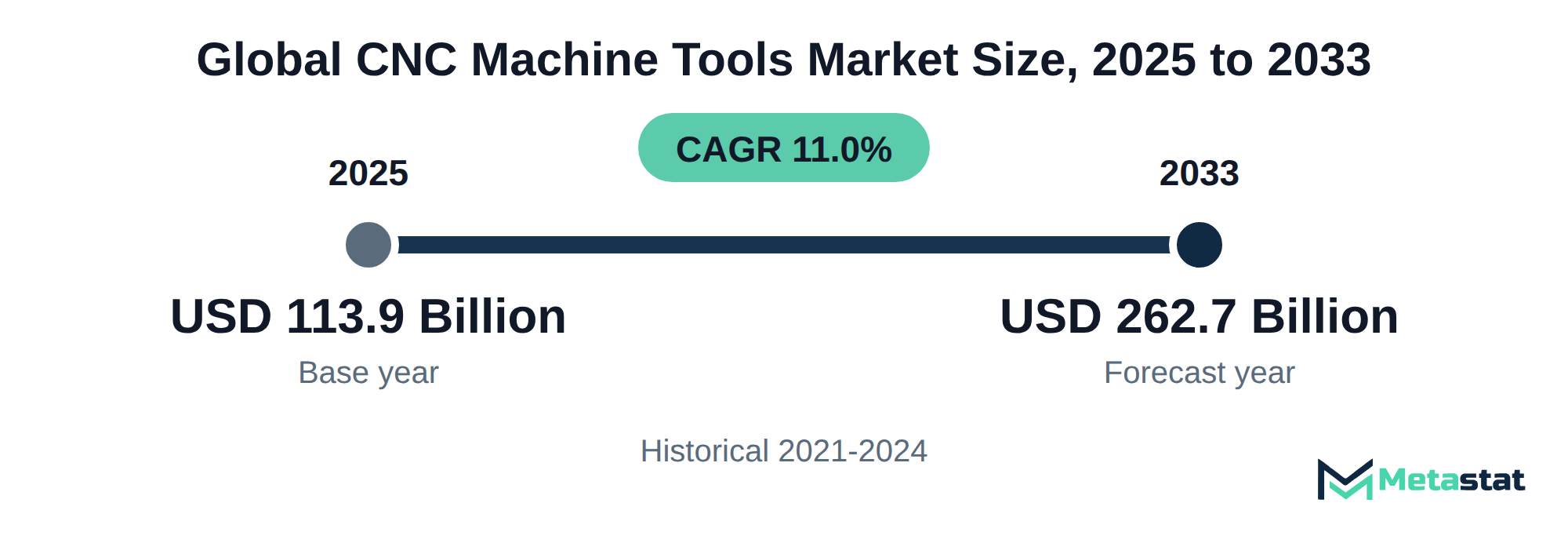
Market Valuation: Valued at $113.9 Billion in 2025, projected to reach $262.7 Billion by 2033 at a 11.0% CAGR.
Dominant Segment: Metal Cutting Machines lead the market, driven by their essential role in manufacturing processes and increasing demand for high-precision components.
Geographic Lead: The Asia Pacific region dominates the market, accounting for 55.7% of the share, supported by strong manufacturing bases in countries like China and Japan.
What's Inside: The report provides a comprehensive analysis of the CNC Machine Tools market, covering competitive landscape, segment breakdowns by machine type, axis configuration, and end-use industry, along with detailed growth forecasts.
Investment Trends: Significant investments are observed in metal-cutting CNC machines across the automotive, aerospace, and precision engineering sectors, reflecting a shift towards advanced manufacturing technologies.
Technological Advancements: The integration of digital controls and robotics is reshaping purchasing decisions, emphasizing the need for automation and efficiency in manufacturing processes.
Choose Your License
Global CNC Machine Tools Market
The global CNC Machine Tools market was valued at USD 113.9 billion in 2025 and is projected to reach USD 262.7 billion by 2033, growing at a CAGR of 11.0% over the forecast period.
The CNC Machine Tools market covers machines that cut, shape, and form materials, primarily metal, to produce precise components across industries. Buyers invest in these tools to enhance manufacturing efficiency, improve product quality, and reduce production costs. The increasing demand for automation and high-precision manufacturing drives significant interest in advanced CNC technologies, making them essential for sectors including automotive and aerospace.
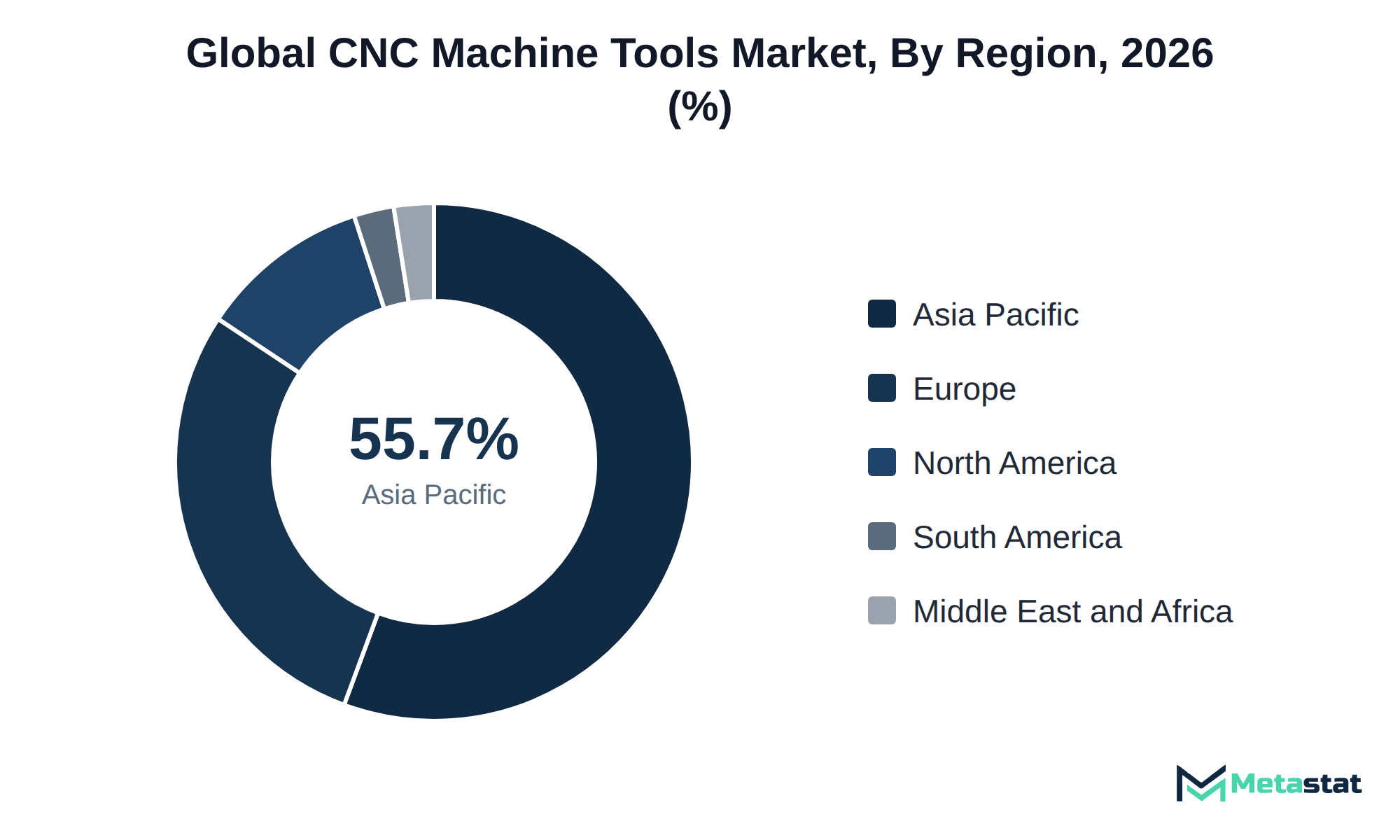
Growth in the market is fueled by technological advancements and rising industrial automation. Among the segments, Metal Cutting Machines represent the largest value, reflecting their importance in manufacturing. Geographically, the Asia Pacific region commands the largest share, accounting for 55.7% of the market, driven by strong manufacturing bases in countries like China and Japan. North America holds 10.7% of the market in 2025, with the US leading in 2026.
The increasing complexity of engineering designs and demand for precision parts necessitate advanced CNC Machine Tools. The automotive sector, in particular, exhibits substantial growth potential, with an anticipated rise in the adoption of CNC technologies to meet evolving manufacturing standards. This trend shows how the market supports production capacity across industries.
The CNC Machine Tools market includes advanced machinery that enhances the manufacturing sector. Buyers invest in these tools to improve precision, efficiency, and productivity in producing intricate components for various applications. This investment is driven by the increasing demand for high-quality products, particularly in sectors including automotive, aerospace, and general machinery, where precision manufacturing is essential.
Growth in the market is fueled by several factors, including technological advancements and the rising need for automation in manufacturing processes. Among the segments, Metal Cutting Machines represent the largest share, with significant contributions to overall market revenue. The Asia Pacific region dominates the market, accounting for 55.7% of the total share, reflecting the robust industrial base and high manufacturing output in countries like China and Japan.
The ongoing transition towards Industry 4.0 and smart manufacturing practices accelerates market expansion. Manufacturers increasingly emphasize adopting CNC technology to remain competitive in the global landscape, driving demand for innovative machine tools tailored to meet evolving industry standards.
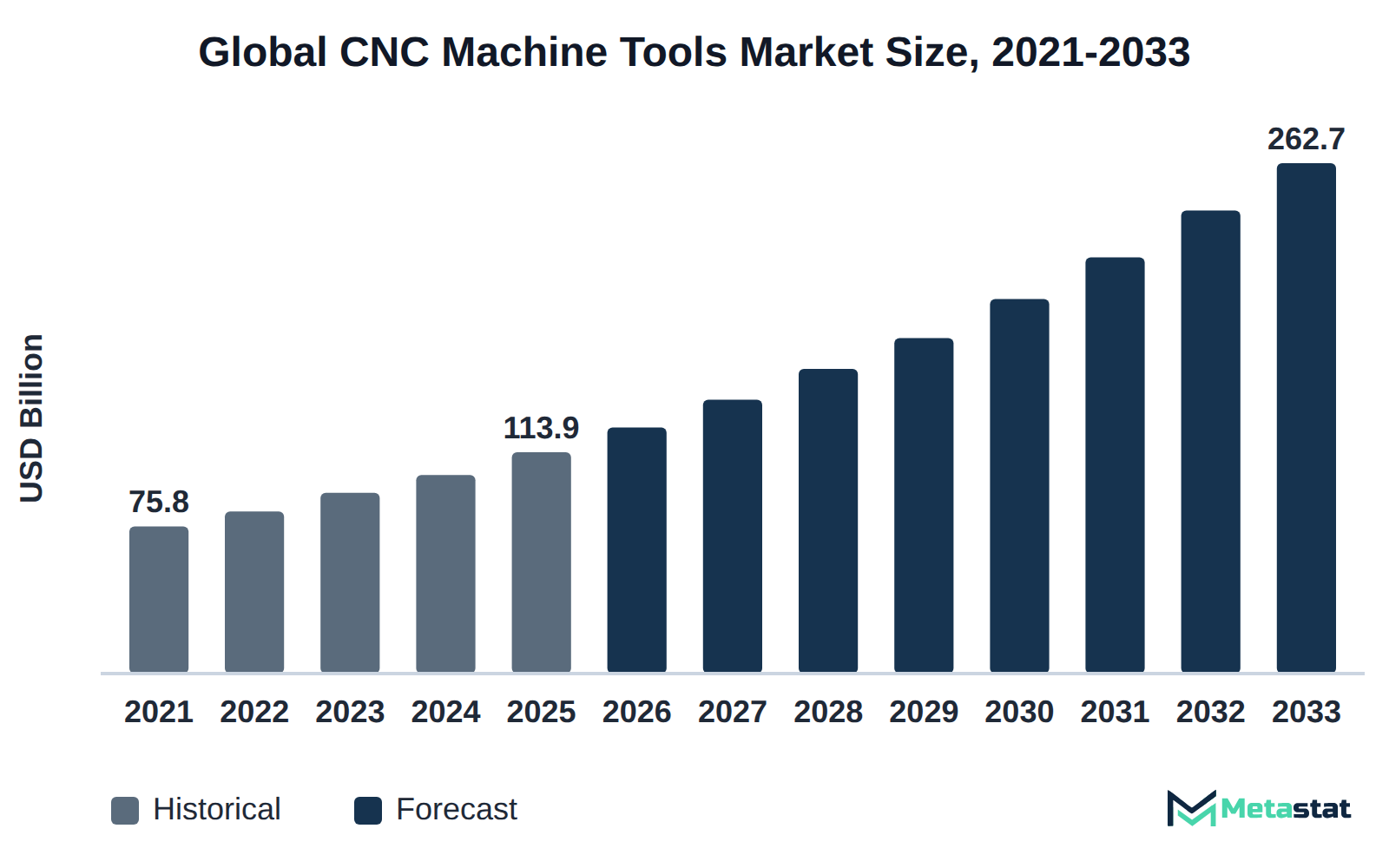
The CNC Machine Tools market is shifting toward five-axis machining and automated manufacturing cells. This shift responds to increasing demand for precision and efficiency in machining processes. Five-axis machines allow for complex geometries and reduce the need for multiple setups, streamlining production workflows. These machines drive growth within the market, particularly as manufacturers seek to enhance productivity while maintaining high-quality standards.
In 2026, the five-axis and multi-axis machines segment is projected to reach a value of USD 101.3 billion by 2033. This figure highlights the growing importance of advanced machining technologies within the industry. Manufacturers in sectors including aerospace, automotive, and precision engineering increasingly adopt these machines to meet stringent tolerance requirements and improve production rates.
Integrating automated cells further improves the value of five-axis machines, raising manufacturing efficiency. This technology reduces labor costs and minimizes human error, which gives manufacturers a competitive edge. Companies that invest in these advanced capabilities position themselves favorably to capture a greater share of the market, ultimately enhancing their operational margins and market presence.
Investment in metal-cutting CNC machines within the automotive, aerospace, and precision engineering sectors reflects a significant trend towards advanced manufacturing processes. While these industries increasingly adopt CNC technology, the demand for metal cutting machines is expected to reach USD 209.2 billion by 2033, growing at a compound annual growth rate of 11.2% from 2026. This growth shows how central CNC machine tools are to production efficiency and precision.
Buyers typically engage in direct sales contracts when acquiring metal-cutting CNC machines. This approach allows for tailored solutions that meet specific manufacturing needs, ensuring optimal performance and return on investment. The pricing structure for these contracts often involves initial capital expenditures combined with ongoing maintenance and support services, which help to mitigate risks associated with machine downtime and operational inefficiencies. Expectations for strong after-sales service influence many buyers' purchasing decisions, and established manufacturers offer full support packages.
The CNC Machine Tools market continues to evolve as manufacturers innovate and refine their offerings. As production demands rise, investment in advanced CNC machinery has become necessary to stay competitive. Companies that prioritize these investments benefit from enhanced operational capabilities, leading to improved market positioning and revenue growth.
The automotive industry in Asia Pacific significantly influences the demand for CNC Machine Tools. This region accounts for 55.7% of the global CNC Machine Tools market share, which shows its central role in manufacturing capacity. By 2033, the value of CNC Machine Tools in the automotive segment is projected to reach USD 96 billion, with a compound annual growth rate (CAGR) of 10.5% from 2026. This growth is driven by increasing production volumes and technological advancements in automotive manufacturing, where precision and efficiency are critical.
Manufacturers in Asia Pacific prioritize advanced CNC technologies to enhance productivity and meet stringent quality standards. The automotive sector's continual push for innovation drives investment in advanced CNC Machine Tools, enabling companies to produce complex components with high precision. This trend intensifies competition, pushing manufacturers to adopt advanced CNC technologies to stay competitive. Consequently, sustained growth in the automotive industry reflects a broader trend of increasing CNC Machine Tool adoption across various sectors within the region, reinforcing Asia Pacific's dominance in the market.
The integration of digital controls and industrial robotics significantly influences purchasing decisions within the CNC Machine Tools market. Companies increasingly prioritize automation and advanced technology during procurement, driven by the need for efficiency and precision in manufacturing. In 2026, the value of Metal Cutting Machines, which often feature digital controls, is projected to reach USD 99.7 billion, indicating robust demand for equipment that minimizes human intervention and maximizes production output.
This shift towards automation impacts various end-use industries, particularly automotive and aerospace, where high precision is essential. The demand for automation allows manufacturers to achieve consistent quality while reducing operational costs. Consequently, firms that invest in CNC Machine Tools with advanced digital technology and robotics strengthen their competitive position.
The automotive sector shows a notable increase in production, which drives demand for CNC Machine Tools. This growth stems from a shift toward more advanced manufacturing processes that require high precision and efficiency. Manufacturers seek to enhance productivity while reducing operational costs. Investments in metal-cutting CNC machines are rising significantly within this industry. The CNC Machine Tools market is projected to reach USD 96.0 billion by 2033, reflecting a compound annual growth rate (CAGR) of 10.5% over the forecast period. Enhanced capabilities offered by CNC machines support automotive manufacturers in meeting the increasing demand for high-quality, precision-engineered components. Consequently, this segment experiences substantial volume growth, reinforcing the significance of CNC technologies in modern automotive production.
Investment in metal forming machines within the aerospace and defense industry remains robust, driven by a need for lightweight materials and complex geometries. The aerospace sector's ongoing innovations necessitate advanced CNC solutions to meet stringent quality standards and performance requirements.
Rapid advancements in automation and artificial intelligence significantly influence the CNC Machine Tools market. Enhanced machine capabilities, including improved precision and speed, result from these technological developments, attracting manufacturers seeking increased efficiency. Industries including aerospace and automotive prioritize high-precision components, driving demand for advanced CNC systems that ensure tighter tolerances and superior surface finishes. The integration of smart technologies facilitates real-time monitoring and adaptive control, optimizing machining processes and reducing waste. This trend appeals to manufacturers aiming for sustainability and cost-effectiveness, ultimately driving investments in modern CNC machinery. The market is projected to experience growth, supported by continuous innovation in machine design and functionality. Demand for CNC Machine Tools is expected to expand in tandem with these technological shifts, positioning the market for substantial growth over the forecast period.
High prices for CNC machine tools restrict adoption among small and medium-sized enterprises (SMEs) in various sectors. Significant initial investment requirements deter these buyers from upgrading existing equipment or expanding production capabilities. The cost associated with advanced features and technologies intensifies this reluctance, particularly among companies with tight budgets. Consequently, these firms delay replacement cycles or postpone new purchases, leading to slower growth in market demand. The CNC Machine Tools market experiences pressure from these SMEs, which often opt for less expensive alternatives or defer capital expenditure entirely. This trend hinders overall advancements in manufacturing processes and reduces competitiveness within the market.
Rising material costs challenge suppliers in the CNC Machine Tools market, leading to tighter margins. Manufacturers face increased expenses for components and raw materials needed in production. This situation creates pressure throughout the supply chain, affecting pricing strategies and profitability. Suppliers respond by streamlining operations to improve efficiency and reduce waste, enabling them to maintain competitive pricing. Many companies invest in advanced technologies that optimize production processes, allowing for better resource management while offsetting rising costs. Focusing on automation and efficiency enhancements, suppliers position themselves to navigate these challenges effectively. The ongoing demand for precision machinery across various industries emphasizes the need for sustained innovation in production methodologies. Addressing cost pressures remains critical for maintaining supplier viability and ensuring continued growth in the market.
The segment of metal forming machines within the CNC Machine Tools market presents significant growth potential, driven by increasing demand from industries including automotive and aerospace. A projected CAGR of 10.3% through 2033 highlights the expanding opportunities in this category, with a market value reaching USD 53.6 billion by that year. Buyers in these sectors prioritize advanced manufacturing techniques that enhance precision and efficiency, which metal forming machines deliver effectively. The rising complexity of components in various applications necessitates investments in sophisticated machinery, leading suppliers to innovate and enhance their offerings. This demand shift directly impacts market dynamics, increasing competition among manufacturers and raising overall market value.
Investment in metal forming technologies aligns with trends toward automation and precision engineering, further supporting growth projections for the sector. Companies focusing on this segment benefit from a unique opportunity to capture the evolving needs of end-users seeking reliable, high-performance solutions. Enhanced capabilities in metal forming machinery strengthen the competitive positioning of firms involved, promoting ongoing advancements in the CNC Machine Tools market overall.
The Global CNC Machine Tools market is segmented based on Machine Type, Axis Configuration, End-Use Industry, and Sales Channel.
This segment primarily focuses on precision machining of metals to create components for various industries including automotive, aerospace, and general machinery. The growth of this segment is largely driven by increasing demand for high-precision parts and lightweight materials in manufacturing processes. Compared to other segments, Metal Cutting Machines exhibit a higher growth rate, reflecting ongoing advancements in cutting technologies and automation. The segment benefits from rising adoption of digital controls and robotics, which enhance operational efficiency. Anticipated growth in automotive production and aerospace manufacturing further supports the expansion of this segment, reinforcing its importance within the broader CNC Machine Tools market.
Metal Forming Machines segment is estimated to reach USD 53.6 billion by 2033, at a CAGR of 10.3% during the forecast period. This segment primarily focuses on reshaping metal materials through processes including bending, punching, and stamping. Industries including automotive and aerospace use these machines to produce components that require precision and durability. Increasing production rates within the automotive sector drive significant demand for this segment, while ongoing advancements in materials technology enhance the capabilities of metal forming machines. When compared to metal cutting machines, which show a CAGR of 11.2%, the growth trajectory of metal forming machines appears slightly slower. However, the segment remains vital for manufacturing industries, particularly those producing large quantities of parts with complex geometries.
The Three-Axis Machines segment is valued at USD 48.9 billion in 2026 and is projected to reach USD 88.6 billion by 2033, at a CAGR of 8.9% during the forecast period. These machines serve critical functions in various manufacturing processes, primarily employed by industries requiring precision and efficiency. Key buyers include the automotive and aerospace sectors, where the need for high-quality components drives demand. The segment's growth is supported by ongoing advancements in automation technologies, enhancing operational efficiency and reducing production times. Compared to other configurations, including Four-Axis and Five-Axis machines, Three-Axis Machines experience slower growth due to emerging preferences for machines offering greater flexibility and complexity at competitive prices. This differentiation reflects the evolving landscape of the CNC Machine Tools market, influencing procurement strategies across multiple sectors.
The Four-Axis Machines segment is estimated to reach USD 58.3 billion by 2033, at a CAGR of 10.6% during the forecast period. This segment plays an important role in precision engineering, allowing for intricate machining tasks that require multi-directional cutting. Industries including aerospace and automotive rely on Four-Axis Machines for producing complex components efficiently. The increasing demand for precision and high-quality parts drives growth in this segment, supported by technological advancements in machine capabilities. Compared to Three-Axis Machines, Four-Axis Machines offer enhanced functionality while experiencing slightly slower growth. The combination of higher capabilities and a focus on specialized applications attracts buyers seeking advanced solutions in manufacturing, ensuring solid demand through the forecast period. The emphasis on quality and precision continues to define the competitive landscape, providing opportunities for growth in high-value applications.
This segment is essential in precision engineering and manufacturing, primarily for industries requiring complex geometries, including aerospace and automotive. The demand for these machines is driven by the increasing complexity of components that require higher precision and flexibility. In contrast to Three-Axis Machines, which experience a projected CAGR of 8.9%, the Five-Axis and Multi-Axis Machines segment shows stronger growth, driven by advancements in manufacturing technology and the push for more integrated solutions. This differentiation in growth rates highlights the importance of technological innovation, which supports the adoption of more advanced machining capabilities in various sectors. Users prioritize Five-Axis and Multi-Axis Machines for their ability to perform multiple operations in a single setup, significantly reducing production time and enhancing precision.
Special-purpose CNC machines fulfill unique manufacturing requirements by providing tailored capabilities for specific applications across various industries. This segment is projected to grow at a CAGR of 11.1% during the forecast period. Commonly used in sectors including automotive, aerospace, and medical devices, these machines enhance production efficiency and precision. Factors driving this segment include the ongoing shift towards automation and the increasing demand for customized manufacturing solutions. Compared to other segments within the axis configuration category, special-purpose machines often command higher prices due to their specialized functionalities. The rise in demand reflects a broader industry trend towards advanced, highly efficient production processes that cater to specific manufacturing needs, ensuring that the market evolves in response to technological advancements.
Manufacturers in the automotive sector employ CNC machine tools for precision machining, which is vital for producing complex components with tight tolerances. The continuous push for innovation and improved efficiency within automotive production drives substantial investments in advanced machining technologies. Increased vehicle production and the shift towards electric vehicles further stimulate demand for sophisticated CNC systems. This segment outpaces others within the market, reflecting faster growth compared to general machinery and metal forming segments, which show lower CAGRs. The automotive industry's focus on automation and enhanced production capabilities highlights its distinct position, characterized by higher demand for precision engineering and technology integration compared to other manufacturing sectors.
Aerospace and Defense segment is estimated to reach USD 36.2 billion by 2033, at a CAGR of 12.3% during the forecast period. This segment plays a critical role in aerospace parts manufacturing, including components for aircraft, missiles, and defense systems. High precision and quality standards are crucial for these applications, driving demand primarily from government contracts and private defense contractors. Growth in this segment is propelled by increasing global defense expenditures and the push for modernization of aerospace equipment. Compared to other segments, Aerospace and Defense exhibits a faster growth trajectory, driven by its high-value contracts and the need for advanced technology solutions in manufacturing. The segment stands out with higher price points due to the specialized nature of the machinery required, differentiating it from other end-use industries in the overall CNC Machine Tools market.
General Machinery segment is expected to reach USD 46.9 billion by 2033. This segment serves various industries, including manufacturing and construction, by producing components including gears, industrial fasteners, and structural parts. Demand is driven by increasing automation and the push for efficiency across sectors. Unlike the automotive and aerospace segments, which experience faster growth, General Machinery exhibits steadier expansion due to its reliance on multiple industries with varying growth rates. While the CAGR for this segment is not specified, it aligns with broader trends in the manufacturing sector. Efficiency improvements and technological advancements in production processes further stimulate interest in CNC machine tools tailored for general machinery applications. The segment's growth reflects manufacturers' ongoing commitment to enhancing productivity and product quality in an increasingly competitive environment for the CNC Machine Tools market.
Precision Engineering segment is projected to grow at a CAGR of 12.1% during the forecast period. This segment involves the production of highly specialized components and tools, primarily serving industries requiring tight tolerances and superior finishing. Key buyers include aerospace manufacturers and advanced medical device companies, both of which demand precision machining to ensure product reliability and performance. The rising complexity of engineering designs drives demand for advanced CNC Machine Tools tailored for precision engineering applications. This segment experiences faster growth compared to others, driven by increasing investments in high-technology sectors. Demand for innovative solutions in precision engineering reflects the ongoing push for efficiency and accuracy, distinguishing it from other segments that experience moderate growth rates.
The electrical and electronics segment consists of precision tools used for manufacturing components in devices including smartphones, computers, and household appliances. Key players in this sector include manufacturers of printed circuit boards, semiconductors, and various electronic assemblies, relying on CNC machine tools for accuracy and efficiency in production. Growing demand for smaller, more intricate electronic components drives this segment, reflecting advancements in technology and consumer electronics. Competitive pricing and technological innovation characterize this segment, differentiating it from others in the CNC machine tools market. The push for miniaturization in electronics creates a need for higher precision manufacturing, influencing adoption rates and overall market dynamics.
Medical devices encompass a range of products designed to support healthcare delivery, including surgical instruments, diagnostic equipment, and therapeutic devices. Manufacturers in this segment focus on precision engineering, ensuring reliability and safety in critical applications. Growth in the medical devices segment is driven by increasing healthcare spending and advancements in technology, which drive innovations in product design and functionality. This segment differs from others, exhibiting higher price sensitivity and distinct regulatory requirements that affect adoption timelines. While the demand for customized medical solutions rises, manufacturers invest in CNC machine tools tailored for high-precision tasks. The market presents a unique environment, with a diverse buyer base that includes hospitals, clinics, and medical device manufacturers, each seeking tools that enhance efficiency and ensure stringent quality standards.
This sub-segment encompasses machine tools in the energy, rail, and marine sectors. These tools support applications including manufacturing components for trains, ships, and energy production equipment. Demand in this segment arises from increasing investments in infrastructure development and the need for advanced manufacturing capabilities. The energy sector, particularly renewable energy, drives a significant portion of demand as companies focus on producing efficient and sustainable systems. Compared to other segments, this area experiences slower growth, influenced by longer project timelines and higher initial capital costs. However, technological advancements are expected to gradually enhance adoption rates, enabling manufacturers to meet evolving industry standards.
Direct Sales segment is valued at USD 73.4 billion in 2026 and is projected to reach USD 146.8 billion by 2033, at a CAGR of 10.4% during the forecast period. This sales channel is crucial for manufacturers who prefer a direct relationship with buyers, enabling tailored solutions and immediate customer service. Industries including automotive and aerospace frequently engage in direct sales for the procurement of CNC machinery, ensuring that specifications align with production needs. Growth in this segment is driven by rising demand for customized machinery solutions among various buyers. With a higher CAGR compared to other segments, it reflects a shift toward more personalized purchasing experiences, contrasting with distributors and dealers who typically offer standardized products. By focusing on direct engagements, suppliers enhance customer satisfaction and loyalty, contributing to market expansion.
Distributors and Dealers segment is estimated to reach USD 83.1 billion by 2033, at a CAGR of 11.7% during the forecast period. This segment connects manufacturers and end-users, facilitating the distribution of CNC Machine Tools through various channels. Several industries, including automotive and aerospace, rely on this segment for accessing advanced machinery and technology. Compared to other sales channels, Distributors and Dealers offer broader access to a range of products and services, resulting in higher customer engagement. The expected growth rate of 11.7% highlights its significance, particularly in a landscape where direct sales do not offer similar reach or flexibility in service delivery.
System Integrators and Automation Partners segment is expected to reach USD 26 billion by 2033. This sub-segment includes businesses that provide integrated solutions for CNC machine tools, combining hardware and industrial automation software to enhance operational efficiency. Manufacturers in industries including automotive and aerospace rely on these partners for streamlined processes and automation. Increased demand for efficiency drives growth within this segment, highlighting its importance in supporting advanced manufacturing practices. Compared to other sales channels, this segment shows a distinct focus on automation technology, which contributes to its growth trajectory. With a CAGR of 8.6%, growth in this segment is anticipated to continue while industries seek advanced solutions to meet rising production demands. System Integrators and Automation Partners differ from traditional sales channels by emphasizing specialized solutions tailored to unique operational requirements.
Segment valued at USD 26 billion, Others (Online and Rental Channels) is projected to grow at a CAGR of 8.6% during the forecast period. This segment features platforms that facilitate online transactions and rental services for CNC machine tools, catering primarily to small and medium-sized enterprises seeking flexible purchasing options. Increased adoption of e-commerce strategies by manufacturers drives this segment's growth. Businesses access a broader range of products without the financial burden of ownership, making it attractive for companies seeking cost-effective solutions. Compared to Direct Sales, which is estimated to reach USD 146.8 billion by 2033, the Others (Online and Rental Channels) segment reflects slower growth but offers distinct advantages in accessibility and reduced upfront costs, appealing to a diverse customer base in the CNC machine tools market.
Based on geography, the Global CNC Machine Tools market is divided into North America, Europe, Asia-Pacific, South America, Middle East, and Africa.
In North America, the CNC Machine Tools market is driven by robust demand from the automotive and aerospace sectors. The presence of advanced manufacturing facilities in the United States and Canada supports high levels of production, promoting the adoption of these technologies. With a projected value of USD 28.6 billion by the end of 2033, the region holds a share of 10.7% of the global market in 2025. Technological advancements and improvements in manufacturing processes have established a competitive edge in this region. Various programs that raise industry standards and promote innovation support continued growth in the CNC Machine Tools market. The unique characteristics of the North American market, including its focus on precision engineering and automation, further strengthen its position in the global landscape.
Demand for CNC Machine Tools in Europe is driven primarily by key industries including automotive and aerospace, which require advanced machining capabilities to enhance precision and efficiency. Germany, France, and the UK stand out due to their strong manufacturing bases and ongoing investments in automation technology. The region benefits from robust infrastructure and skilled labor, which support the operation of complex machine tools. Valued at 28.7% of the global share in 2025, the market is expected to experience significant growth driven by rising demand for innovative solutions. The European market focuses on integrating smart technologies and sustainable practices to maintain competitiveness in global supply chains.
Asia Pacific represents the largest share of the CNC Machine Tools market, accounting for 55.7% in 2025. Countries including China, Japan, and India drive demand through expanding manufacturing sectors, particularly in automotive and aerospace industries. Investments in advanced manufacturing technologies contribute to growth, highlighting a focus on automation and precision engineering. Infrastructure development, especially in China, enhances production capabilities, increasing competitiveness in the global market. The adoption of CNC technologies allows manufacturers to improve efficiency and precision, aligning with the regional trend toward smart manufacturing practices. Market participants in Southeast Asia and Australia increasingly use these trends to improve operations, pointing to a strong outlook for the CNC Machine Tools market in this region.
Brazil and Argentina drive demand within the CNC Machine Tools market, with key sectors including automotive and general machinery emerging as significant contributors. The market benefits from ongoing technological advancements, with local manufacturers focusing on enhancing production capabilities to cater to increasing demands. Investment in infrastructure remains vital, particularly in Brazil, where government initiatives aim to modernize manufacturing processes, creating opportunities for growth. The market share for South America is projected at 2.5% in 2025. Efforts to improve operational efficiency among manufacturers are expected to enhance competitive positions within the region, facilitating further adoption of advanced CNC technologies.
Growth in the CNC Machine Tools market within the Middle East and Africa is driven by industrial demands from countries including Saudi Arabia, UAE, and South Africa. Significant investment in infrastructure and advancing manufacturing capabilities supports this growth. The expanding automotive and aerospace sectors in these countries require precise machining technologies to enhance production efficiency. Local manufacturers increasingly adopt advanced manufacturing processes, reflecting a broader trend toward modernization. The market share for this region is expected to reach 2.5% by 2025, indicating a growing recognition of the importance of CNC technology. Enhanced production capabilities are expected to lead to greater competitiveness on a global scale.
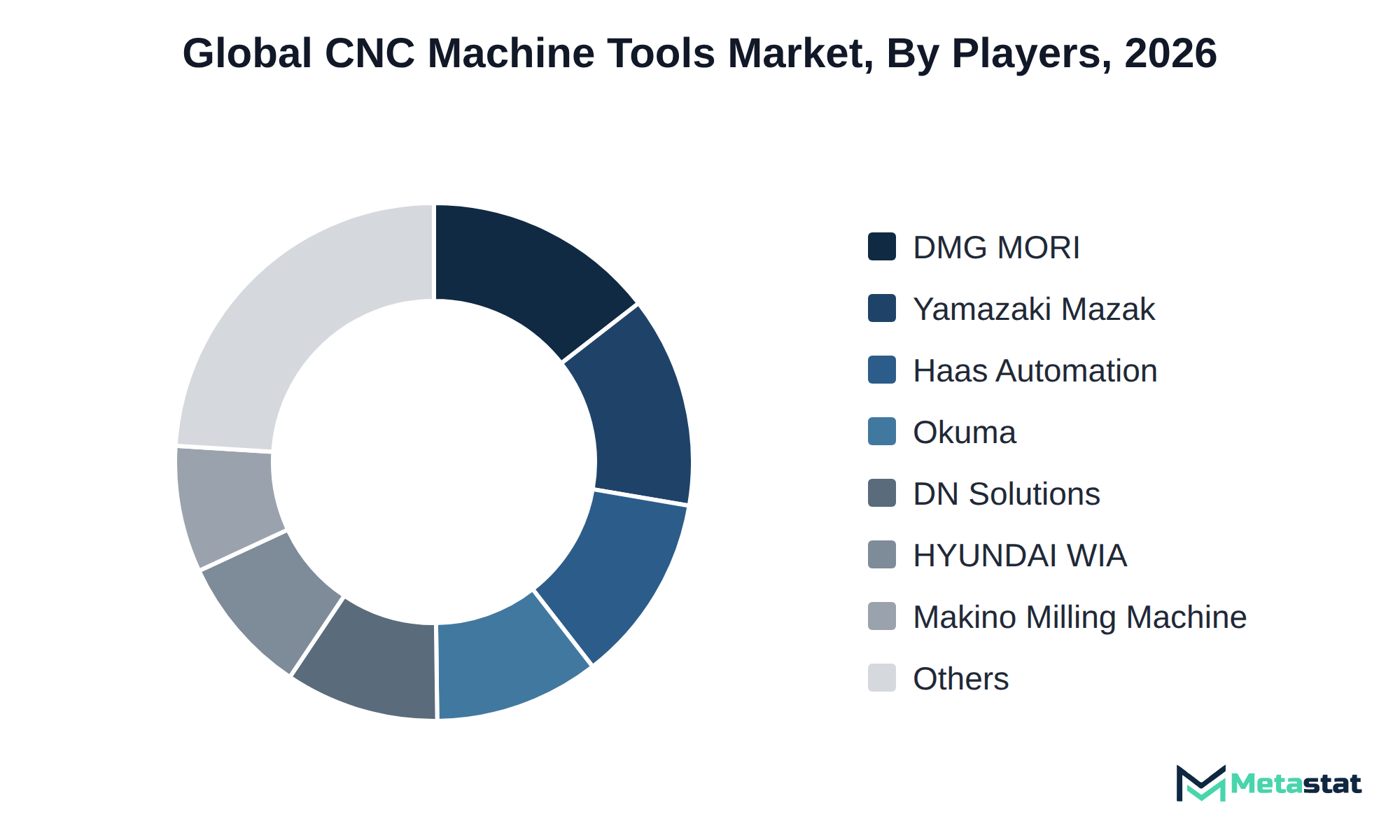
The CNC Machine Tools market features a diverse range of companies competing on various strategic fronts. Key factors influencing buyer decisions include price, service quality, certification, customization, and the broader ecosystem of products and services offered. Companies differentiate themselves by providing tailored solutions that meet specific industry needs, highlighting strengths in technology and support.
DMG MORI Co., Ltd. and Yamazaki Mazak Corporation focus on advanced metal cutting technologies, aiming to enhance productivity and precision in manufacturing processes. Haas Automation, Inc. prioritizes affordability and accessibility, catering to smaller enterprises requiring reliable machine tools. Okuma Corporation emphasizes service and support, ensuring clients receive comprehensive training and assistance, which reinforces customer loyalty in a competitive environment.
To achieve this substantial growth, several key developments require attention. First, the demand for metal cutting machines is projected to drive the market, particularly within the automotive sector. Adoption of advanced manufacturing techniques and automation enhances productivity and precision in this industry. Secondly, expansion in the aerospace and defense industries, driven by the need for high-performance components, supports growth in CNC Machine Tools. The increasing complexity of parts necessitates the use of five-axis and multi-axis machines, which contribute to higher market value. A significant risk lies in the potential for economic downturns, which could lead to reduced investments in manufacturing technologies, particularly in regions like North America and Europe. Economic uncertainties impact buyer confidence, slowing the uptake of CNC technologies. Continuous investment in research and development remains essential for suppliers to maintain competitiveness and respond to evolving customer needs. Overall, growth in sectors requiring precision engineering is vital for the CNC Machine Tools market to reach its forecasted value.
By Axis Configuration: Three-Axis Machines, Four-Axis Machines, Five-Axis and Multi-Axis Machines, Others (Special-Purpose CNC Machines)
By End-Use Industry: Automotive, Aerospace and Defense, General Machinery, Precision Engineering, Electrical and Electronics, Medical Devices, Others (Energy, Rail, and Marine)
By Sales Channel: Direct Sales, Distributors and Dealers, System Integrators and Automation Partners, Others (Online and Rental Channels)
The report strategically identifies and profiles the key market players and analyses their core competencies in each sub-segment of the CNC Machine Tools market.
Report Attributes | Details |
Study Period | 2021-2033 |
Base Year | 2025 |
Estimated Year | 2026 |
Forecast Period | 2026-2033 |
Historical Period | 2021-2025 |
Growth Rate | CAGR 11.0% from 2026 to 2033 |
Revenue Unit | USD billion |
Segmentation | By Machine Type, Axis Configuration, End-Use Industry, Sales Channel, and Region |
By Region | North America (By Machine Type, Axis Configuration, End-Use Industry, Sales Channel, and Country)
|
Europe (By Machine Type, Axis Configuration, End-Use Industry, Sales Channel, and Country)
| |
Asia Pacific (By Machine Type, Axis Configuration, End-Use Industry, Sales Channel, and Country)
| |
South America (By Machine Type, Axis Configuration, End-Use Industry, Sales Channel, and Country)
| |
Middle East and Africa (By Machine Type, Axis Configuration, End-Use Industry, Sales Channel, and Country)
|
Find answers to common questions about this report
The CNC Machine Tools market size was valued at USD 113.9 billion in 2025.
The market is projected to grow at a CAGR of 11.0% during the forecast period from 2026 to 2033.
The North America CNC Machine Tools market size is estimated to reach USD 28.6 billion by 2033.
Metal Cutting Machines lead the CNC Machine Tools market, with a projected value of USD 209.2 billion by 2033. This segment outpaces Metal Forming Machines, which is expected to reach USD 53.6 billion in the same year.
Increased production in the automotive sector drives demand for CNC Machine Tools, fueled by a shift toward advanced manufacturing processes that require high precision and efficiency. robust investment in metal forming machines within the aerospace and defense industry supports growth, driven by the need for lightweight materials and complex geometries.
High prices for CNC machine tools restrict adoption among small and medium-sized enterprises, deterring them from upgrading equipment or expanding production capabilities. Rising material costs challenge suppliers, leading to tighter margins and increased expenses, which further pressures pricing strategies and profitability.
Investment in advanced manufacturing techniques enhances precision and efficiency, driving adoption in the automotive and aerospace sectors. The rising complexity of components necessitates sophisticated machinery, increasing competition and overall market value.
The CNC Machine Tools market is estimated to reach a valuation of USD 262.7 billion by 2033.
Key players operating in the CNC Machine Tools market include DMG MORI Co., Ltd., Yamazaki Mazak Corporation, Haas Automation, Inc., Okuma Corporation, DN Solutions Co., Ltd., and HYUNDAI WIA Corporation.
The metal cutting machines segment is projected to reach USD 209.2 billion by 2033, reflecting a compound annual growth rate (CAGR) of 11.2% over the forecast period.
The analysts below cover Machinery & Equipment research at Metastat Insights.
LEAD ANALYST
Utkarsh Khirodkar is a Lead Market Research Analyst at MetaStat Insight, specializing in market intelligence, technology sector assessments, and competitive strategy.

INDUSTRY CONSULTANT - CHEMICALS & ADVANCED MATERIALS
Chemicals and Materials · Machinery & Equipment · Packaging
Amit Gadhekar Consultant for Chemicals and Materials at MetaStat Insight, directing sector-specific intelligence, research, and strategic consulting across global chemical and processing markets.

PRINCIPAL CONSULTANT - QUALITY SYSTEMS & COMPLIANCE
Electronics and Semiconductor · Machinery & Equipment · Professional Services
Omkar Phadtare is an Industry Consultant at MetaStat Insight, specializing in quality systems, regulatory compliance, and standards benchmarking to drive data-driven market intelligence and strategic industry research.

ENERGY & INFRASTRUCTURE INDUSTRY CONSULTANT
Automotive and Transportation · Electronics and Semiconductor · Energy and Power · Machinery & Equipment
Saurabh Vasant Ganvir consults for Energy & Infrastructure Industry at MetaStat Insight, specializing in renewable energy, solar EPC, and electric vehicle (EV) infrastructure markets.

LEAD CONSULTANT - COMMUNICATION, TELECOM, AND IT
Electronics and Semiconductor · Information & Technology · Machinery & Equipment · Professional Services
Ravindra Sathe Consultants for Communication, Telecom, and IT at MetaStat Insight. He leads the firm's industry research initiatives across telecommunications infrastructure, digital connectivity, enterprise networking, and emerging information technology domains.
Assessing 200mm wafer transition schedules and substrate supply bottlenecks requires precise technical intelligence. MetaStat Insight supplied an actionable breakdown comparing planar and trench MOSFET architectures across automotive and industrial drive markets. The regional capacity estimates for Asia-Pacific foundries helped clarify lead-time uncertainties during our strategic planning session. When we needed additional clarification on high-purity raw material sourcing, their analyst team responded with helpful context within twenty-four hours.
Tracking maintenance cycle demand for secondary flight display units and terrain collision avoidance systems across regional jet fleets involves complex aftermarket dynamics. MetaStat Insight provided practical analysis separating airline retrofit programs from OEM forward-fit production schedules in North America and Southeast Asia. The supplier matrix highlighted component obsolescence timelines without resorting to vague generalizations. The dataset served as a dependable reference during our annual program review meetings.
Evaluating secondary resin quality across post-consumer packaging streams requires reliable technical segmentation. MetaStat Insight delivered an objective assessment that distinguished between extrusion-grade flake pricing and optical sorting throughput limitations across Western Europe. The competitive positioning breakdown for licensed depolymerization technology providers answered several questions during our feedstock feasibility audit. Their team clarified regional trade restrictions on mixed plastic scrap quickly when our team submitted follow-up requests.
Explore related market intelligence reports worth reading alongside this one.