
LEAD ANALYST
Utkarsh Khirodkar is a Lead Market Research Analyst at MetaStat Insight, specializing in market intelligence, technology sector assessments, and competitive strategy.

Global Dry-Cleaning and Laundry Services Market Size, Share, By Service Type (Laundry and Wash & Fold, Dry Cleaning, Household Textile Cleaning, Ironing and Pressing, Alterations and Garment Repairs, Leather, Suede and Fur Care), By End User (Residential, Hotels and Hospitality, Healthcare Facilities, Corporate Offices and Businesses), By Service Channel (Walk-in Stores and Drop-off Counters, On-Demand Pickup and Delivery, Self-Service Laundromats, Commercial Contract Laundry), By Business Type (Independent Operators, Franchise Networks, Company-Owned Multi-Unit Chains), Industry Analysis, Growth, Trends, and Forecast, 2026-2033
Report ID
MSI-5533
Published
October, 2026
Pages
306 Pages
Format
Historical
Base year
Forecast
Forecast period
Report Details
Market Valuation: Valued at $80.9 Billion in 2025, projected to reach $142.1 Billion by 2033 at a 7.3% CAGR.
Dominant Segment: Laundry and Wash & Fold leads the market, driven by increasing consumer demand for convenient and accessible cleaning solutions. This segment is projected to grow significantly, reflecting changing preferences towards outsourcing laundry needs.
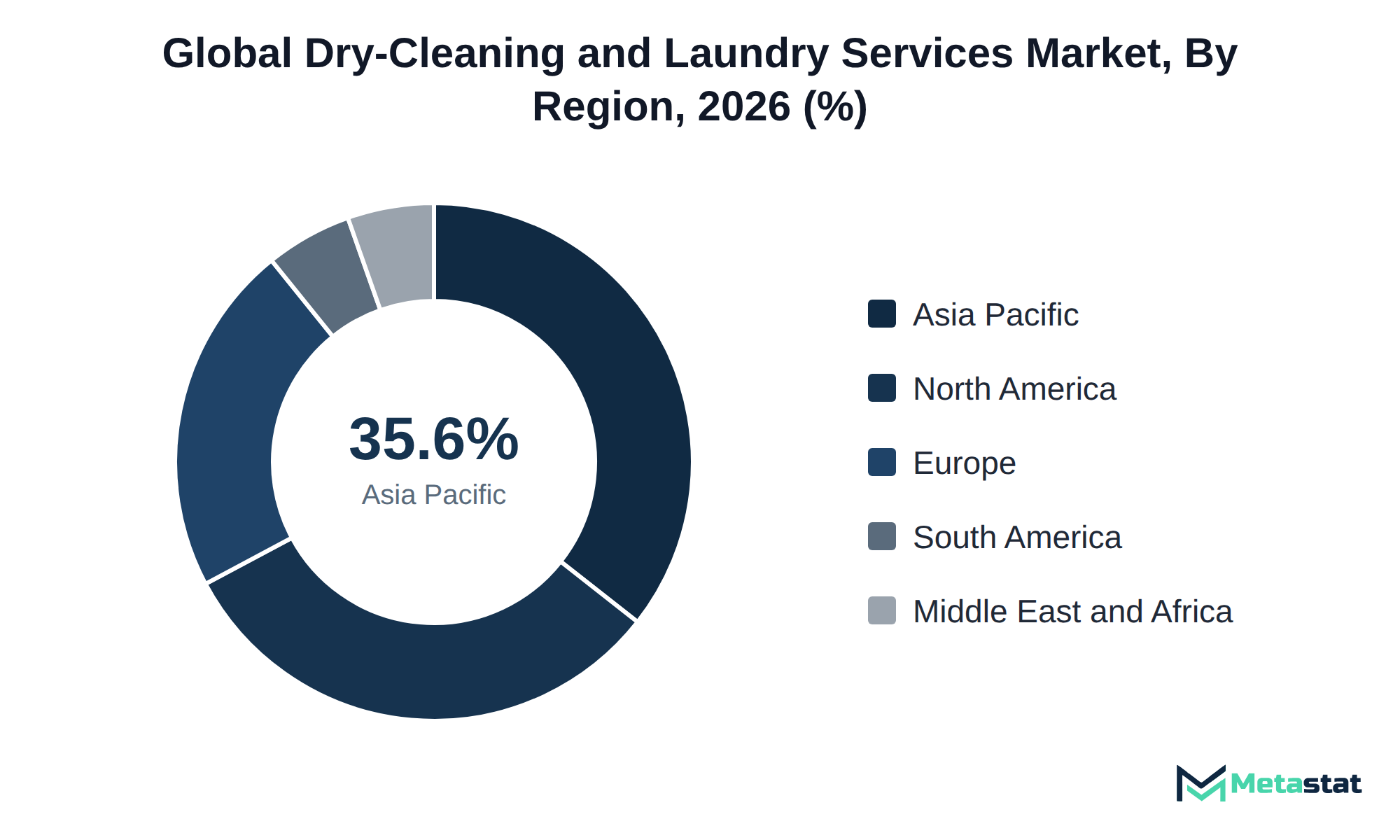
Geographic Lead: Asia Pacific holds the largest market share, accounting for 35.6% in 2025, fueled by urbanization and rising disposable incomes. This region is expected to continue leading in growth due to its expanding middle class and demand for quality laundry services.
What's Inside: The report provides a comprehensive analysis of the Dry-Cleaning and Laundry Services market, including competitive coverage, segment breakdowns, and forecasts through 2033. It explores trends, consumer behavior, and market dynamics across various service types and regions.
Emerging Trends: The rise of on-demand pickup and delivery services is reshaping consumer expectations, with this segment projected to grow at a CAGR of 11.9%. This trend highlights the increasing emphasis on convenience and technology-driven solutions in urban settings.
Challenges Ahead: Rising labor costs and price sensitivity among consumers pose significant challenges for market players. These factors are influencing service pricing and adoption rates, particularly in the residential segment, which is more susceptible to economic fluctuations.
Choose Your License
Global Dry-Cleaning and Laundry Services Market
The global Dry-Cleaning and Laundry Services market was valued at USD 80.9 billion in 2025 and is projected to reach USD 142.1 billion by 2033, growing at a CAGR of 7.3% over the forecast period.
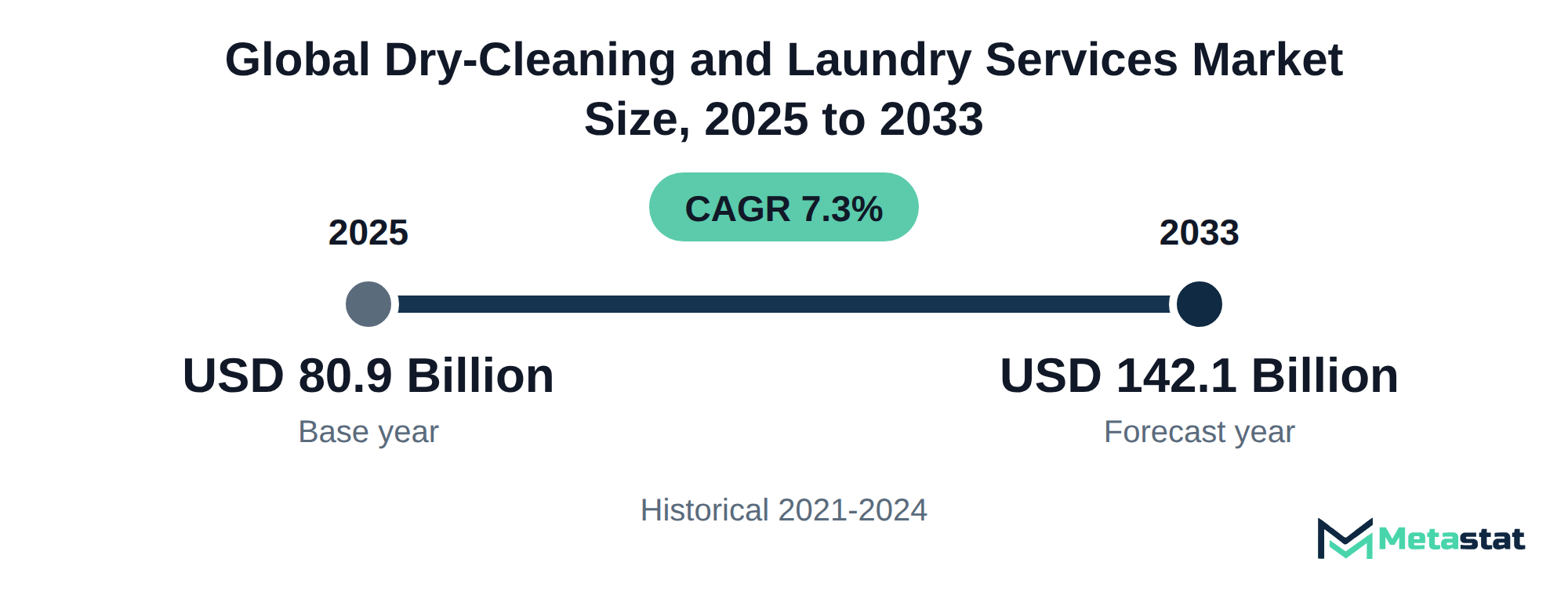
The Dry-Cleaning and Laundry Services market covers the cleaning and maintenance of garments and textiles for varied consumer needs. Buyers invest in these services primarily to ensure the longevity and cleanliness of their clothing and household items. The market serves residential customers, hospitality sectors, and healthcare facilities, reflecting demand driven by lifestyle changes, increased disposable income, and a growing emphasis on convenience and quality care for fabrics.
The growing trend of outsourcing laundry services is a major driver of growth in the dry-cleaning and laundry services market. Among the various service types, Laundry and Wash & Fold commands the highest market value. In terms of regional distribution, Asia Pacific holds the largest market share, accounting for 35.6% in 2025. North America holds 31.6% of the market in 2025, with the US leading in 2026.
While consumers seek high-quality cleaning services, demand for specialized offerings continues to rise. This trend reflects a broader shift towards premium laundry services, where customers prioritize service quality and efficiency. The market's expansion reflects ongoing changes in consumer behavior and the growing preference for professional cleaning solutions over traditional methods.
The Dry-Cleaning and Laundry Services market encompasses services that cater to the cleaning needs of various fabrics and textiles. Buyers invest in these services due to the demand for high-quality garment care, convenience, and time-saving solutions. The growing trend of outsourcing laundry needs, particularly among residential users and businesses, fuels spending in the sector, reflecting a shift in consumer behavior towards specialized cleaning services.
An increasing preference for on-demand services, especially in convenience-driven urban areas, drives growth in the dry-cleaning and laundry services market. The segment of Laundry and Wash & Fold holds the most value, exhibiting a strong growth trajectory. Asia Pacific comprises 35.6% of the market, showing substantial potential for expansion in the coming years.
Technological advancements in laundry processes and the rise of eco-friendly cleaning solutions enhance market appeal. Consumers increasingly seek out services that offer sustainable options, thereby influencing purchasing decisions. The Dry-Cleaning and Laundry Services market is poised for continued growth, driven by changing consumer preferences and the expansion of service channels.
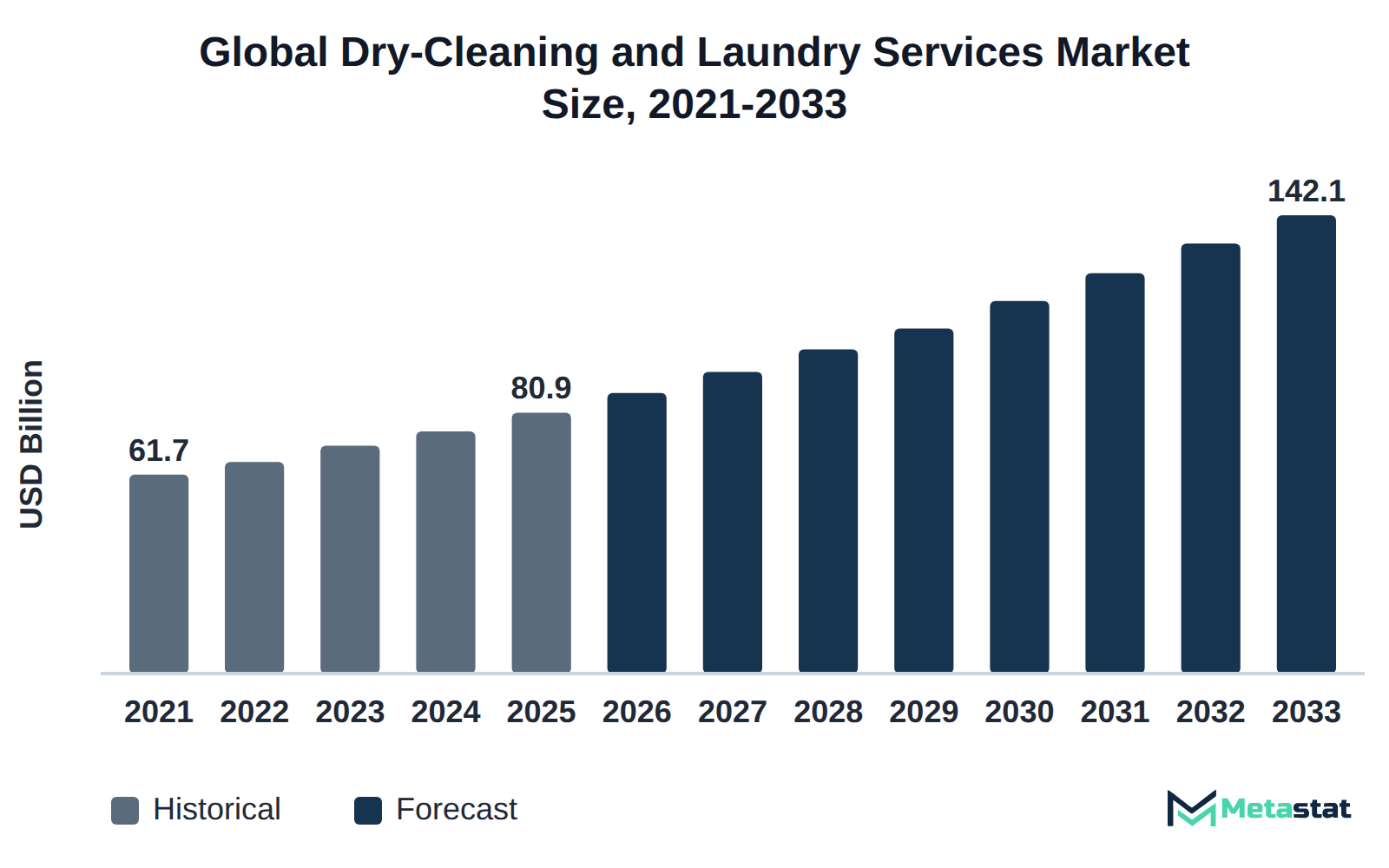
Services focused on leather, suede, and alterations increase revenue per dry-cleaning ticket significantly. This trend reflects increasing consumer demand for specialized garment care that extends the lifespan and appearance of high-value items. In 2033, the leather, suede, and alteration services segment will continue to contribute to the overall growth of the Dry-Cleaning and Laundry Services market.
Projections indicate that the value from alteration and repair services, including leather and suede care, will grow alongside rising demand for personalized and high-quality garment maintenance. The segment of alterations and garment repairs is set to experience a compound annual growth rate (CAGR) of 6.7%. This growth signals an expanding market opportunity for businesses that incorporate these services into their offerings.
Investing in specialized services satisfies consumer needs and improves profitability. Revenue from dry-cleaning tickets increases, and operators leverage this growth by optimizing their service portfolios to include leather, suede, and alteration options. Such strategies result in increased customer loyalty and greater overall market share within the competitive landscape.
Increasing regulations on the use of perchloroethylene (Perc) in the Dry-Cleaning and Laundry Services market influence the industry's shift toward alternative cleaning methods. The phase-out of Perc arises from environmental and health concerns, prompting many cleaners to adopt wet cleaning and silicone solvents. The segment focusing on Laundry and Wash & Fold is expected to expand from USD 33.8 billion in 2026 to USD 57 billion by 2033, reflecting a compound annual growth rate (CAGR) of 7.8%. This growth indicates a strong market trend toward more sustainable cleaning solutions.
Buyers opting for these eco-friendly services experience different pricing structures influenced by the adoption of innovative technologies. Traditional dry cleaning typically involves higher operational costs due to the use of Perc, which carries regulatory fees and disposal costs. In contrast, wet cleaning and silicone solvent methods often present a more cost-effective solution over time, appealing to environmentally conscious consumers and businesses. This transition changes consumer behavior and pushes sellers to adapt their pricing and contract models to stay competitive while meeting demand for greener alternatives.
The emergence of on-demand pickup and delivery apps and smart lockers significantly transforms urban laundry demand, catering to the needs of busy professionals and urban dwellers. This demographic prioritizes convenience and efficiency, driving the adoption of innovative laundry solutions. In 2033, the revenue from the On-Demand Pickup and Delivery service channel is projected to reach USD 30.4 billion, reflecting a compound annual growth rate of 11.9%. This growth stems from urbanization trends and an increasing preference for time-saving services.
Residential users and the hotels and hospitality sector increasingly rely on technology-driven solutions to streamline their laundry processes. On-demand pickup apps facilitate efficient scheduling and timely service, while smart lockers provide secure access to laundry services without the need for staff interaction. For operators in the Dry-Cleaning and Laundry Services market, embracing these technologies positions them favorably against competitors who offer traditional service models.
Investing in app-based platforms and smart locker systems enhances customer satisfaction and optimizes operational efficiency. While the market evolves, companies that adapt to these trends are likely to capture a larger market share, meeting the specific demands of a digitally-savvy consumer base.
Franchise dry-cleaning chains are increasingly capturing market share from independent operators. In the competitive landscape of the Dry-Cleaning and Laundry Services market, franchise networks represent a growing segment, expected to reach USD 30.4 billion by 2033, reflecting a compound annual growth rate of 8.7%. This expansion highlights the appeal of established brand recognition and operational efficiencies associated with franchises, which attract customers seeking reliable and consistent service.
Independent operators currently dominate the market, with a significant presence of USD 55.6 billion projected in 2026, expanding to USD 85.9 billion by 2033. However, the trend toward franchising illustrates shifting consumer preferences toward convenience and standardized service quality. Franchise chains use marketing strategies and economies of scale to offer competitive pricing and specialized services that appeal to a wider audience.
The growth of franchise networks in the dry-cleaning sector presents both challenges and opportunities for independent operators. While these chains capture a larger market share, independent businesses that adapt to evolving consumer preferences and enhance service offerings remain competitive. This dynamic highlights the importance of innovation and customer engagement in sustaining market relevance within the Dry-Cleaning and Laundry Services market.
Increasing disposable income among younger generations significantly influences spending in the residential sector. Young professionals and families prioritize convenience and quality in laundry services, leading to a transition to premium offerings. This demographic shift drives higher demand for services including laundry and wash & fold, which is projected to grow at a compound annual growth rate (CAGR) of 7.8% from 2026 to 2033. The residential segment is expected to expand from USD 42.1 billion in 2026 to USD 68.1 billion by 2033, reflecting a strong preference for outsourced laundry solutions. This pattern of increased spending highlights a broader trend toward convenience-driven consumer behavior. The market responds to this demand shift by enhancing service quality and variety, catering to evolving consumer preferences.
Growing interest in eco-friendly practices further supports this trend. Consumers increasingly seek services that align with sustainability goals, prompting providers to adopt greener cleaning methods. The integration of environmentally friendly practices attracts a broader customer base and positions the market favorably within the global push for sustainability.
Emerging technologies in the Dry-Cleaning and Laundry Services market drive significant operational efficiencies. Innovations including automated sorting systems and eco-friendly cleaning solutions streamline processes, reducing time and labor costs. Advanced equipment allows for faster cycle times, enabling facilities to handle higher volumes, which supports increased revenue potential. The integration of smart technology facilitates real-time tracking of garments, enhancing customer satisfaction and loyalty.
Investment in these technologies has led to improved overall service quality, attracting a broader customer base. For instance, the rise of on-demand services and mobile applications enhances convenience for residential and corporate clients, boosting demand for these offerings. High-quality, sustainable cleaning methods appeal to environmentally conscious consumers, influencing purchasing decisions and encouraging repeat business. The combination of efficiency, customer-centric solutions, and sustainability positions the market for growth through 2033.
Price sensitivity significantly affects adoption rates among residential customers in the Dry-Cleaning and Laundry Services market. Fluctuating costs related to service fees and material inputs often lead to cautious purchasing decisions, particularly in economically vulnerable demographics. The impact manifests in slower uptake of premium services, including on-demand delivery and specialized textile cleaning. These factors contribute to smaller order volumes and delayed reliance on laundry services, hindering overall growth. The reluctance to invest in higher-priced alternatives, driven by budget constraints, results in limited service diversification among consumers. Consequently, businesses targeting residential customers work to strengthen their value propositions amid these economic challenges and a competitive environment.
Rising labor costs present a significant challenge for suppliers within the market. Increased wages and benefits for staff reduce profit margins, making it difficult for operators to maintain competitive pricing while ensuring quality service. The emphasis on skilled labor in dry-cleaning and laundry services creates pressure on businesses to attract and retain qualified workers, driving up operational costs. This challenge particularly affects independent operators, who lack the resources of larger franchise networks.
In response, suppliers explore automation and technology integration to streamline operations, aiming to reduce dependency on manual labor. Implementing self-service laundromats and on-demand pickup services enhances efficiency and customer convenience, allowing businesses to balance rising labor expenses. The adoption of these solutions reflects a strategic pivot to sustain profitability amid an evolving market. Continuous investment in technology and employee training remains critical for maintaining service quality as labor costs rise.
The growth of on-demand pickup and delivery services presents a significant opportunity within the market. This segment is projected to experience a compound annual growth rate (CAGR) of 11.9% through 2033, reflecting rising consumer preferences for convenience and time-saving solutions. Urban dwellers and busy professionals frequently seek these services, driving demand in metropolitan areas where traditional laundry options do not suffice. The increasing emphasis on convenience aligns with the broader trend toward digitalization in service industries, enhancing customer satisfaction and retention. Expansion in this segment is expected to contribute substantially to revenue growth, positioning operators to capture a larger share of the evolving market. The integration of technology in logistics further supports operational efficiency and customer engagement, essential for meeting the dynamic needs of modern consumers. Innovations in app-based platforms and tracking systems enhance service delivery, allowing businesses to adapt quickly to changing consumer behaviors.
The Global Dry-Cleaning and Laundry Services market is segmented based on Service Type, End User, Service Channel, and Business Type.
This segment serves residential consumers and businesses, providing convenient solutions for cleaning everyday clothing and linens. Increasing urbanization and busy lifestyles drive demand for efficient laundry services, particularly among working professionals and families. Compared to other segments like Dry Cleaning, which has a lower CAGR of 6.1%, Laundry and Wash & Fold exhibits faster growth, reflecting changing consumer preferences toward more accessible and affordable options. Price sensitivity influences customer choices, making this segment more competitive as providers strive to offer cost-effective services that meet evolving market needs. The emphasis on convenience in laundry services aligns with broader consumer trends, further reinforcing the segment's role in the Dry-Cleaning and Laundry Services market.
Dry Cleaning segment is estimated to reach USD 31.8 billion by 2033, at a CAGR of 6.1% during the forecast period. This service focuses on cleaning delicate fabrics that require special treatment, attracting consumers who prioritize garment care. The residential sector represents a significant user group, benefiting from the convenience and quality of dry cleaning services. A primary force influencing this segment involves the increasing demand for professional cleaning solutions that maintain garment integrity, particularly among busy professionals and households. Compared to other service types, Dry Cleaning exhibits a slower growth rate, driven by higher operational costs and specific consumer needs for specialized fabric care. This segment faces competition from alternatives including laundry and wash & fold services, which tend to be more cost-effective and accessible, attracting price-sensitive customers.
Household Textile Cleaning (Duvets, Bedding, Curtains) segment is expected to reach USD 20 billion by 2033. This segment caters to residential customers seeking maintenance and cleaning for household textiles, including duvets, bedding, and curtains. A growing trend towards maintaining clean and hygienic living spaces drives demand from households. Rising consumer awareness regarding the importance of cleanliness and hygiene in home textiles supports this growth. Compared to other service types, this segment exhibits a higher focus on residential use, differentiating it from commercial services, which target sectors including hospitality and healthcare. Consumer preferences shift towards outsourcing cleaning tasks, and the projected compound annual growth rate (CAGR) of 6.1% reflects steady expansion of this segment, contributing positively to overall market dynamics.
Ironing and Pressing segment is projected to grow at a CAGR of 6.7% during the forecast period. This segment involves the smoothing and finishing of garments and textiles, primarily aimed at residential customers, hotels, and healthcare facilities. Demand derives from the need for well-presented clothing and linens, with hotels and healthcare operators prioritizing cleanliness and presentation. Unlike other segments, Ironing and Pressing tends to have slower growth compared to Laundry and Wash & Fold, driven by lower consumer engagement and the prevalence of self-service options. Home pressing with a steam iron is one example of these self-service options. While the segment targets both individual and commercial users, the emphasis on quality and presentation distinguishes it from others, presenting opportunities for premium pricing strategies in the market.
Alterations and Garment Repairs encompass services focused on adjusting clothing to achieve a better fit and overall appearance. These services appeal primarily to individuals seeking customized solutions for their garments, ensuring longevity and satisfaction. Key demand drivers include the growing trend of personalized fashion and the desire for enhanced garment longevity. Consumers increasingly value tailored experiences that reflect personal style, contributing to growth in this segment. This segment tends to experience steadier demand compared to other service categories, particularly in regions with a strong emphasis on fashion and quality. Factors including changing consumer preferences toward sustainable practices and the need for garment repair over disposal contribute to its resilience against market fluctuations. Increased focus on sustainable fashion encourages consumers to choose alterations instead of discarding clothing, positioning this segment uniquely within the market.
Leather, suede, and fur care involves specialized cleaning services tailored for high-value garments and accessories. This segment appeals to consumers seeking to maintain the quality and appearance of luxury goods, often necessitating expert handling due to the delicate nature of these materials. Demand for leather, suede, and fur care services is driven by an increasing awareness of garment longevity among consumers, along with the rising trend of sustainable fashion, which emphasizes the importance of preserving existing products. Compared to other service types, this segment requires specialized expertise and commands higher prices, affecting its overall adoption rate. While growth in this segment does not match the faster expansion observed in laundry and wash & fold services, it remains essential for niche markets, particularly among customers prioritizing quality over convenience.
This sub-segment encompasses services including wedding gown preservation, shoe and handbag care, rug cleaning, and garment storage. Wedding gown preservation in particular sits close to the wider wedding services industry. These specialized offerings cater to clients seeking to maintain the quality and longevity of their valuable items, often requiring careful attention and expertise. Demand for these services is driven by consumers' desire to protect high-value garments and accessories, particularly in markets where fashion and personal presentation hold significant importance. The unique needs of this clientele lead to a differentiated pricing structure compared to standard laundry services, resulting in higher service costs. The market dynamics reflect a growing trend toward premium and personalized care, positioning this sub-segment as distinct within the overall service type segmentation. This specialization in careful handling and preservation differentiates it from more common offerings within the market.
The residential segment is valued at USD 42.1 billion in 2026 and is projected to reach USD 68.1 billion by 2033, at a CAGR of 7.1% during the forecast period. This segment primarily serves households requiring laundry and dry-cleaning services for everyday clothing and household textiles. Increasing urbanization and a growing trend toward convenience drive demand within this segment. Consumers increasingly seek efficient solutions that save time, enhancing the appeal of on-demand pickup and delivery services. Compared to other segments, the residential sector exhibits significant growth, positioning it as a leading contributor to the overall expansion of the market. The steady increase in disposable income among consumers further supports this growth trajectory, highlighting a contrast with more price-sensitive segments, including corporate offices and businesses.
Hotels and Hospitality segment is estimated to reach USD 31.9 billion by 2033, at a CAGR of 7.8% during the forecast period. This segment serves hotels, resorts, and other hospitality establishments, focusing on laundering bed linens, towels, and uniforms. The increasing demand for quality services in the hospitality industry drives growth, reflecting rising customer expectations for cleanliness and presentation. Higher occupancy rates in hotels contribute to increased laundry volumes. Compared to other segments, this area exhibits faster growth due to the constant need for laundry services in hospitality settings. The market supports various service channels, with an emphasis on on-demand pickup and delivery, allowing hotels to efficiently manage their laundry needs while maintaining high standards of service. The dynamics of the hospitality sector, driven by its unique requirements and operational scale, set it apart from residential and corporate laundry services.
The Healthcare Facilities segment is expected to reach USD 18 billion by 2033. This segment provides medical laundry services and related cleaning to hospitals, clinics, and other medical institutions, ensuring adherence to health and hygiene standards. Demand in this segment is driven by the increasing need for cleanliness and sanitation in healthcare settings, which directly impacts patient safety and satisfaction. Compared to other segments, this category experiences higher operational costs due to stringent regulations and specialized cleaning protocols, which influence pricing. The expected growth rate in this segment is significant, projected at a CAGR of 7.8%, contrasting with the growth of other end-user segments, including Corporate Offices and Businesses, which shows a lower CAGR of 6.7%. These factors highlight the unique position of the Healthcare Facilities segment in the Dry-Cleaning and Laundry Services market, emphasizing its critical role in maintaining hygiene in sensitive environments.
Corporate Offices and Businesses segment is projected to grow at a CAGR of 6.7% during the forecast period. This sector primarily employs dry-cleaning and laundry services for the maintenance of professional workwear, linens, and other textiles essential for business operations. Demand from this segment stems from the increasing focus on employee presentation and hygiene in corporate settings. Increased emphasis on sustainability and environmentally friendly practices influences purchasing behavior, with businesses seeking service providers that align with these values. This segment demonstrates slower growth compared to other end-user categories, including Hotels and Hospitality, where growth is expected at a CAGR of 7.8%. The growing importance of convenience and quality in service offerings makes the Corporate Offices and Businesses segment an important part of the market, supporting corporate image and operational efficiency.
This sub-segment encompasses services provided to educational institutions, fitness clubs, spas, airlines, and cruise lines. These services include laundry for uniforms, bed linens, towels, and other textiles critical for maintaining cleanliness and hygiene in various settings. Demand from these sectors reflects the growing emphasis on high standards of cleanliness, particularly in hospitality and health-related facilities. Increased attention to customer satisfaction drives these end users to seek reliable laundry solutions. This sub-segment differs from others by focusing on contractual relationships with businesses rather than individual consumers, which often leads to different pricing structures and service requirements. The necessity for prompt and efficient service in these industries influences the adoption of innovative laundry solutions, setting this market segment apart from residential and hospitality-focused service types. In a competitive landscape, meeting the specific needs of these end users shapes the evolution of the market.
Walk-in Stores and Drop-off Counters segment is valued at USD 34.9 billion in 2026 and is projected to reach USD 49.8 billion by 2033, at a CAGR of 5.2% during the forecast period. This segment serves individuals seeking convenient laundry services, including households and busy professionals. Growth is driven by increasing demand for convenient laundry solutions, particularly in urban areas where time constraints are more pronounced. Compared to the On-Demand Pickup and Delivery segment, which grows at a projected CAGR of 11.9%, Walk-in Stores and Drop-off Counters exhibit slower growth. The pricing dynamics in this segment remain competitive, appealing to price-sensitive consumers while providing a reliable option for laundry needs. This segment's focus on physical locations and direct customer interaction differentiates it from others that leverage technology for service delivery, reflecting diverse consumer preferences within the market.
This segment caters to consumers seeking convenient and time-saving laundry solutions, particularly busy individuals and families. The increasing demand for convenience drives the growth of this segment, with customers appreciating the ability to have their laundry picked up and delivered to their doorstep. This segment exhibits faster growth compared to traditional service channels due to its alignment with changing consumer preferences for on-demand services. The rise of mobile applications and technology platforms has facilitated easy booking and payment processes, further enhancing customer experiences. This segment's growth trajectory contrasts with walk-in stores and drop-off counters, which are projected to grow at a CAGR of 5.2% during the same period, indicating a shift in consumer behavior within the market.
The Self-Service Laundromats segment is expected to reach USD 24 billion by 2033. This segment provides self-service laundry facilities where customers operate washing machines and dryers at their convenience. Frequent users include individuals living in urban areas without personal washing machines and businesses that require bulk laundry services. The strong growth in this segment, with an anticipated CAGR of 11.9%, reflects increasing consumer preference for cost-effective and time-efficient laundry solutions. The rise of convenience-driven lifestyles boosts demand for self-service options, distinguishing this segment from other service channels including on-demand pickup and delivery, which focuses on added convenience. In contrast, the market for self-service laundromats experiences a higher growth rate compared to traditional walk-in stores, which are projected to grow at a CAGR of 5.2%. Such dynamics illustrate evolving consumer preferences in the Dry-Cleaning and Laundry Services market.
Commercial Contract Laundry segment is projected to grow at a CAGR of 7.2% during the forecast period. This segment serves businesses requiring large-scale laundry services, including hotels and healthcare facilities, which rely on timely and efficient cleaning of linens and uniforms. Increasing focus on hygiene and cleanliness in commercial environments significantly drives demand for these services. Unlike other service channels, including On-Demand Pickup and Delivery, which exhibits faster growth at a CAGR of 11.9%, Commercial Contract Laundry provides a more stable revenue base, appealing to businesses seeking long-term partnerships. The need for consistent quality and reliability in service delivery enhances customer loyalty, contributing to the segment's anticipated growth within the Dry-Cleaning and Laundry Services market.
This sub-segment focuses on innovative solutions including smart lockers and kiosks, along with hotel valet desks, facilitating convenient access to laundry services. Predominantly used by urban residents and hospitality businesses, these services cater to a clientele seeking efficiency and time savings. The increasing demand for on-the-go services significantly drives growth in this segment. Rising urbanization leads to limited space for traditional laundry options, pushing consumers toward alternatives like smart lockers. Compared to other service channels, this sub-segment experiences faster adoption due to technological advancements and the growing preference for convenience. Unlike traditional service channels including walk-in stores, this segment emphasizes automation and accessibility, aligning with modern consumer trends. Enhanced user experiences and operational efficiencies contribute to the competitive dynamics seen in the Dry-Cleaning and Laundry Services market.
This segment provides laundry services primarily to individual consumers, small businesses, and various sectors requiring specialized garment care. Rising consumer preference for convenience and quality drives demand in this segment, distinguishing it from others that cater primarily to larger corporate clients or bulk requirements. The Independent Operators segment is expected to expand in response to increasing disposable incomes and lifestyle changes, which enhance spending on personal laundry services. Compared to franchise networks, which achieve a higher projected CAGR of 8.7%, the growth of independent operators remains robust yet comparatively slower, reflecting a different market dynamic and customer engagement approach. Such factors contribute to shaping the competitive landscape in the Dry-Cleaning and Laundry Services market.
This segment primarily serves businesses seeking to expand their presence in the dry-cleaning and laundry services market through a franchise model, allowing for rapid scalability and brand recognition. A significant driver for this segment involves increasing demand for reputable laundry service brands among consumers. Franchise Networks differ from Independent Operators and Company-Owned Multi-Unit Chains, which experience slower growth and face different operational challenges. The franchise model provides a structured business approach, ensuring consistency in services, which appeals to both new investors and customers. This unique positioning provides a competitive edge in a growing market.
Company-Owned Multi-Unit Chains segment is expected to reach USD 25.8 billion by 2033. This segment includes large-scale operators that manage multiple laundry service locations, catering primarily to residential customers and businesses seeking consistent and reliable cleaning solutions. A significant driver for this segment is the growing demand for convenience in laundry services, particularly among busy professionals and urban dwellers. The segment's growth aligns with the rising trend of outsourcing laundry tasks to specialized services, resulting in increased market penetration. Compared to other business types, this segment experiences steady growth driven by its scalability and established brand presence, with a projected CAGR of 6.4%. It stands out from franchise networks, which have a higher growth trajectory due to expansive marketing strategies and brand recognition. Market dynamics reflect the need for effective branding and customer loyalty in enhancing service offerings.
Based on geography, the Global Dry-Cleaning and Laundry Services market is divided into North America, Europe, Asia-Pacific, South America, Middle East, and Africa.
Demand in North America is primarily driven by the residential sector, which sees significant growth due to increasing consumer awareness regarding hygiene and convenience. The region has well-developed infrastructure that supports multiple service channels, including walk-in stores and on-demand pickup and delivery services. The Dry-Cleaning and Laundry Services market in North America is characterized by a variety of independent operators, which promotes competition and innovation in service offerings. Specific regulations aimed at environmental sustainability support the adoption of eco-friendly cleaning methods, enhancing operational efficiencies. Growth in this market indicates ongoing investment in advanced technologies and expanding service capabilities tailored to consumer preferences.
In Europe, the dry-cleaning and laundry services market benefits from a strong presence in countries including Germany, France, the UK, Italy, and Spain. This region shows a growing emphasis on sustainability, with increasing consumer demand for eco-friendly cleaning solutions. Regulations promoting environmentally responsible practices influence service offerings, pushing providers to adopt greener technologies. The hospitality sector in Europe, particularly hotels, drives substantial demand for laundry services, ensuring consistent revenue streams. Infrastructure improvements, including advanced laundry equipment and efficient logistics, further enhance service delivery across the region. By 2025, Europe holds a 22.00% share of the global market, reflecting its significant role in shaping industry trends and consumer preferences.
Asia Pacific accounts for 35.6% of the Dry-Cleaning and Laundry Services market in 2025. The growing urban population in countries like China and India drives demand through increased disposable income and changing lifestyles. The rapid expansion of the hospitality sector in Japan and South Korea increases the need for full-service laundry, particularly in higher-end establishments. Investment in infrastructure, including advanced laundry technology and efficient service channels, supports operational efficiency. The market experiences growth while businesses adapt to evolving consumer preferences for convenience and quality, particularly through on-demand services. The forecast indicates steady growth, with increasing competition among key players aiming to capture a larger market share.
Brazil and Argentina represent key markets in South America, contributing significantly to the Dry-Cleaning and Laundry Services market. The residential sector drives demand, fueled by rising urbanization and a growing preference for convenience in household chores. In addition, the hospitality industry, particularly hotels, seeks reliable cleaning services, enhancing overall market growth. The market's share within the region stands at 5.4% in 2025, reflecting the challenges and opportunities unique to this area. Infrastructure developments and increasing disposable income among consumers support the expansion of services. Regulatory environments, while varied, encourage investment in eco-friendly practices, aligning with shifting consumer preferences towards sustainability. The Dry-Cleaning and Laundry Services market in South America is projected to grow through 2033, driven by these demand factors and regional dynamics.
In the Middle East and Africa, the Dry-Cleaning and Laundry Services market experiences influence from a growing residential customer base, particularly in countries like Saudi Arabia and the UAE. An increasing focus on hygiene, especially post-pandemic, drives demand for laundry services in households. The hospitality sector, including hotels, contributes significantly, emphasizing quality and timely linen services. South Africa’s expanding middle class supports this demand, leading to enhanced laundry services in urban areas. The market faces a shortage of advanced laundry technologies, resulting in higher operational costs for providers. This gap represents an opportunity for investment in innovative solutions and advanced equipment to improve service efficiency and reduce expenses in the long term.
In the Dry-Cleaning and Laundry Services market, companies employ various strategies to attract customers. Pricing strongly influences buyer decisions, alongside service quality and customization options. Businesses seek providers that offer certifications ensuring high standards, particularly in segments including healthcare facilities.
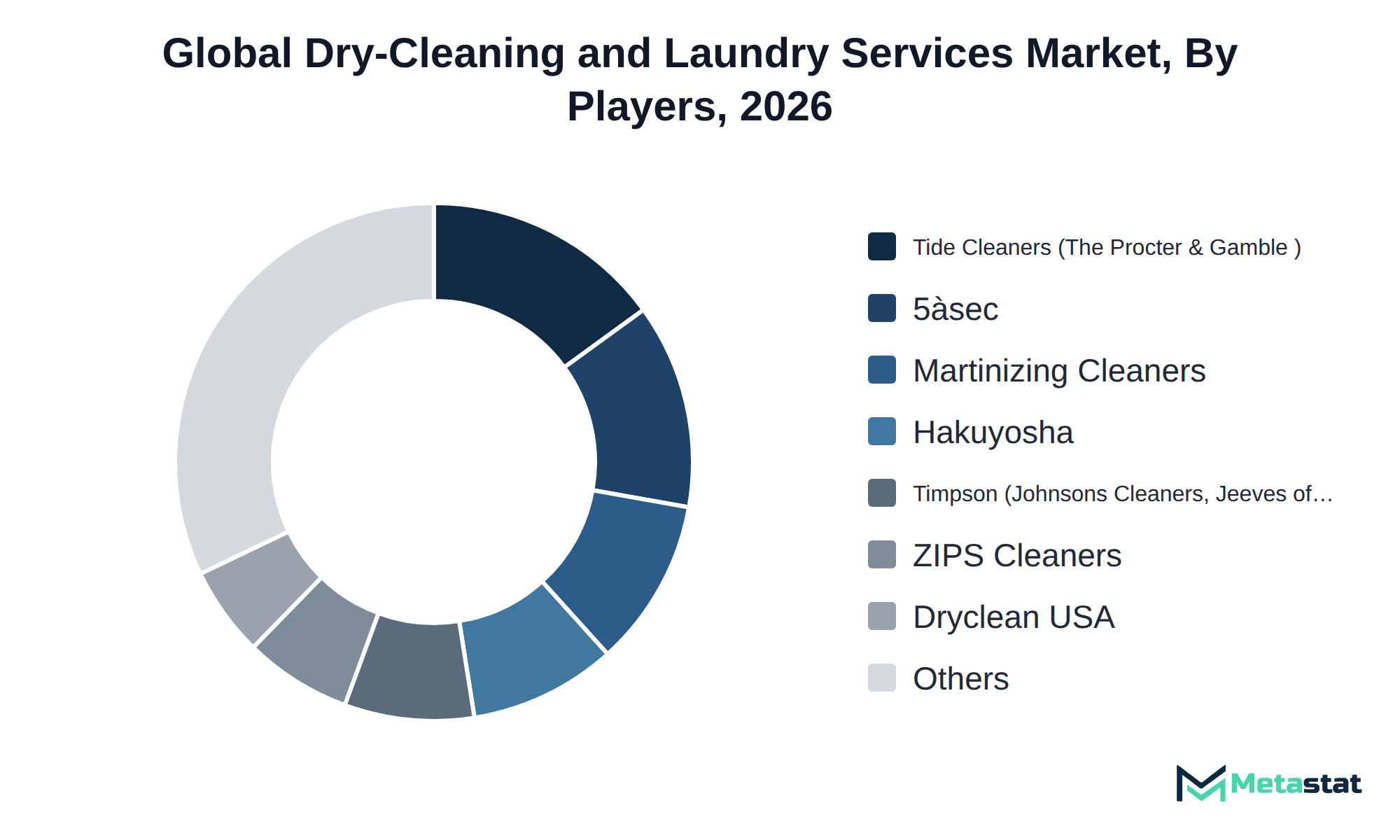
Independent operators, including 5àsec Group and ZIPS Cleaners, focus on personalizing services to meet local demands. Franchise networks, like Tide Cleaners, leverage brand recognition while maintaining consistent service quality across locations. Meanwhile, company-owned multi-unit chains, including CSC ServiceWorks, Inc., emphasize operational efficiency and scalability, allowing them to cater to both residential and commercial clients effectively.
Companies differentiate themselves by their service type offerings. For instance, Martinizing Cleaners specializes in dry cleaning, while Cleantopia Co., Ltd. provides a broad range of laundry services, including wash and fold options. Players including Rinse, Inc. embrace on-demand pickup and delivery models, aligning their service channels with changing consumer preferences.
In this competitive environment, adaptation to evolving consumer needs drives market growth. Emerging players, like Oxwash Ltd, integrate sustainability into their operations, appealing to environmentally conscious consumers and enhancing their market presence.
Growth in the Dry-Cleaning and Laundry Services market depends on several key developments. First, the increasing demand for Laundry and Wash & Fold services is expected to drive revenue, particularly in residential and hospitality sectors, where convenience and time-saving solutions become essential. This segment anticipates a CAGR of 7.8%, reflecting strong consumer preference for outsourced laundry solutions.
Second, the expansion of On-Demand Pickup and Delivery services significantly enhances customer access to laundry solutions, particularly in urban areas. This segment is projected to grow at an 11.9% CAGR, appealing to busy professionals and families seeking efficient laundry options.
However, potential economic downturns or rising operational costs could negatively impact growth. A slowdown in consumer spending leads to reduced demand for premium services, particularly in discretionary sectors, including household textile cleaning. Together, these factors will shape the market's path toward the forecast of USD 142.1 billion by 2033.
By Service Type: Laundry and Wash & Fold, Dry Cleaning, Household Textile Cleaning (Duvets, Bedding, Curtains), Ironing and Pressing, Alterations and Garment Repairs, Leather, Suede and Fur Care, Others (Wedding Gown Preservation, Shoe and Handbag Care, Rug Cleaning, Garment Storage)
By End User: Residential, Hotels and Hospitality, Healthcare Facilities, Corporate Offices and Businesses, Others (Educational Institutions, Fitness Clubs and Spas, Airlines and Cruise Lines)
By Service Channel: Walk-in Stores and Drop-off Counters, On-Demand Pickup and Delivery, Self-Service Laundromats, Commercial Contract Laundry, Others (Smart Lockers and Kiosks, Hotel Valet Desks)
By Business Type: Independent Operators, Franchise Networks, Company-Owned Multi-Unit Chains
The report strategically identifies and profiles the key market players and analyses their core competencies in each sub-segment of the Dry-Cleaning and Laundry Services market.
Report Attributes | Details |
Study Period | 2021-2033 |
Base Year | 2025 |
Estimated Year | 2026 |
Forecast Period | 2026-2033 |
Historical Period | 2021-2025 |
Growth Rate | CAGR 7.3% from 2026 to 2033 |
Revenue Unit | USD billion |
Segmentation | By Service Type, End User, Service Channel, Business Type, and Region |
By Region | North America (By Service Type, End User, Service Channel, Business Type, and Country)
|
Europe (By Service Type, End User, Service Channel, Business Type, and Country)
| |
Asia Pacific (By Service Type, End User, Service Channel, Business Type, and Country)
| |
South America (By Service Type, End User, Service Channel, Business Type, and Country)
| |
Middle East and Africa (By Service Type, End User, Service Channel, Business Type, and Country)
|
Find answers to common questions about this report
The Dry-Cleaning and Laundry Services market size was valued at USD 80.9 billion in 2025.
The market is projected to grow at a CAGR of 7.3% during the forecast period from 2026 to 2033.
The North America Dry-Cleaning and Laundry Services market size is estimated to reach USD 42.1 billion by 2033.
Laundry and Wash & Fold leads the market with a projected value of USD 57 billion by 2033, reflecting the highest growth rate among service types at a CAGR of 7.8%.
Increasing disposable income among younger generations significantly influences spending in the residential sector, driving demand for premium laundry services. The growth of on-demand pickup and delivery services is projected to experience a compound annual growth rate of 11.9% through 2033, reflecting rising consumer preferences for convenience and time-saving solutions.
Asia Pacific holds the dominant share of the Dry-Cleaning and Laundry Services market, accounting for 35.6 percent. This position reflects its leading status compared to North America and Europe.
Price sensitivity significantly affects adoption rates among residential customers, leading to cautious purchasing decisions. Rising labor costs present a challenge for suppliers, reducing profit margins and making it difficult to maintain competitive pricing while ensuring quality service.
The growth of on-demand pickup and delivery services significantly influences adoption, with a projected compound annual growth rate (CAGR) of 11.9% through 2033. This trend aligns with consumer preferences for convenience and time-saving solutions, particularly among urban dwellers and busy professionals seeking efficient laundry options.
The Dry-Cleaning and Laundry Services market is estimated to reach a valuation of USD 142.1 billion by 2033.
Key players operating in the Dry-Cleaning and Laundry Services market include 5àsec Group, Tide Cleaners (The Procter & Gamble Company), Martinizing Cleaners, Hakuyosha Co., Ltd., ZIPS Cleaners, and Oxwash Ltd.
The analysts below cover Professional Services research at Metastat Insights.
LEAD ANALYST
Utkarsh Khirodkar is a Lead Market Research Analyst at MetaStat Insight, specializing in market intelligence, technology sector assessments, and competitive strategy.

PRINCIPAL CONSULTANT - ENTERPRISE AI & EMERGING TECHNOLOGIES
Banking & Finance · Electronics and Semiconductor · Energy and Power · Healthcare IT · Information & Technology · Professional Services
Vijay Gunti is a Principal Consultant at MetaStat Insight, bringing over two decades of experience across enterprise digital transformation, technology strategy, and intelligent systems.

PRINCIPAL CONSULTANT - QUALITY SYSTEMS & COMPLIANCE
Electronics and Semiconductor · Machinery & Equipment · Professional Services
Omkar Phadtare is an Industry Consultant at MetaStat Insight, specializing in quality systems, regulatory compliance, and standards benchmarking to drive data-driven market intelligence and strategic industry research.

LEAD CONSULTANT - COMMUNICATION, TELECOM, AND IT
Electronics and Semiconductor · Information & Technology · Machinery & Equipment · Professional Services
Ravindra Sathe Consultants for Communication, Telecom, and IT at MetaStat Insight. He leads the firm's industry research initiatives across telecommunications infrastructure, digital connectivity, enterprise networking, and emerging information technology domains.
Floating offshore wind feasibility relies heavily on specialized installation vessel availability and port crane limits, which most broad renewable energy forecasts ignore. The report delivered a thorough analysis of dry dock capacity, mooring chain supply constraints, and raw material pricing trends for deepwater anchor installations. It served as a solid independent sanity check for our offshore project capital expenditure assumptions.
Assessing commercial microgrid software adoption requires looking past top-level installation numbers and examining utility interconnection queues. The research provided verifiable data on average permitting timelines, tariff structures, and battery storage integration costs across regional utility territories. That grounded perspective was valuable for our team when building five-year demand projections for industrial microgrid controllers.
Ambulatory surgical centers have very different purchasing cycles for robotic-assisted surgery platforms than major hospital networks. The MetaStat Insight study focused squarely on capital expenditure depreciation, procedural reimbursement pathways, and surgeon training overhead. That operational clarity made it much simpler to validate multi-year procedure growth forecasts against actual ambulatory center adoption patterns.
Explore related market intelligence reports worth reading alongside this one.
Starting from
$2950