
LEAD ANALYST
Utkarsh Khirodkar is a Lead Market Research Analyst at MetaStat Insight, specializing in market intelligence, technology sector assessments, and competitive strategy.

Global Electrostatic Precipitator Market Size, Share, By Product Type (Dry Electrostatic Precipitators, Wet Electrostatic Precipitators, Hybrid Electrostatic Precipitator-Fabric Filter Systems), By Design (Plate ESP, Tubular ESP), By Offering (Complete ESP Systems, ESP Components and Spare Parts, ESP Services), By Application (Power Generation, Cement and Lime, Iron and Steel, Non-Ferrous Metals, Pulp and Paper, Chemicals and Fertilizers, Petroleum Refining and Petrochemicals, Waste Treatment and Incineration, Wood Products, Others (Glass, Ceramics, Food Processing)), Industry Analysis, Growth, Trends, and Forecast, 2026-2033
Report ID
MSI-5551
Published
October, 2026
Pages
267 Pages
Format
Historical
Base year
Forecast
Forecast period
Report Details
Market Valuation: Valued at $8,696.8 Million in 2025, projected to reach $13,050.4 Million by 2033 at a 5.2% CAGR.
Dominant Segment: Dry Electrostatic Precipitators lead the market, driven by their widespread adoption across various applications due to cost-effectiveness and reliability.
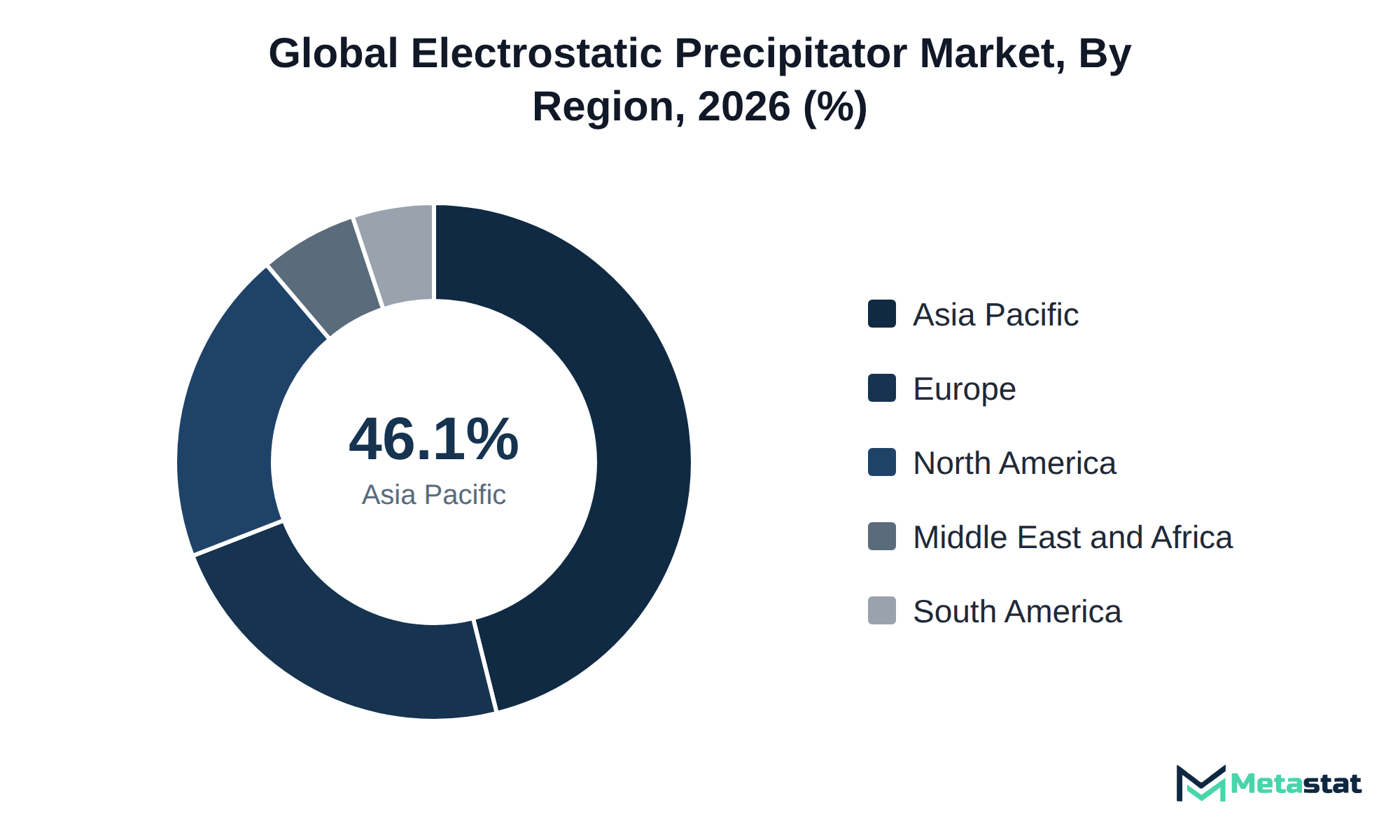
Geographic Lead: Asia Pacific dominates the market, accounting for 46.1% of the total share, fueled by rapid industrialization and stringent environmental regulations.
What's Inside: The report provides in-depth competitive coverage, market analyses, and forecasts from 2026 to 2033, detailing segment performance and growth drivers.
Emerging Trends: The adoption of high-frequency power supply technology is enhancing operational efficiency in electrostatic precipitators, particularly in the power generation sector.
Regulatory Impact: Increasing regulatory pressures on emissions are driving demand for Wet Electrostatic Precipitators, particularly in industries such as power generation and cement manufacturing.
Choose Your License
Global Electrostatic Precipitator Market
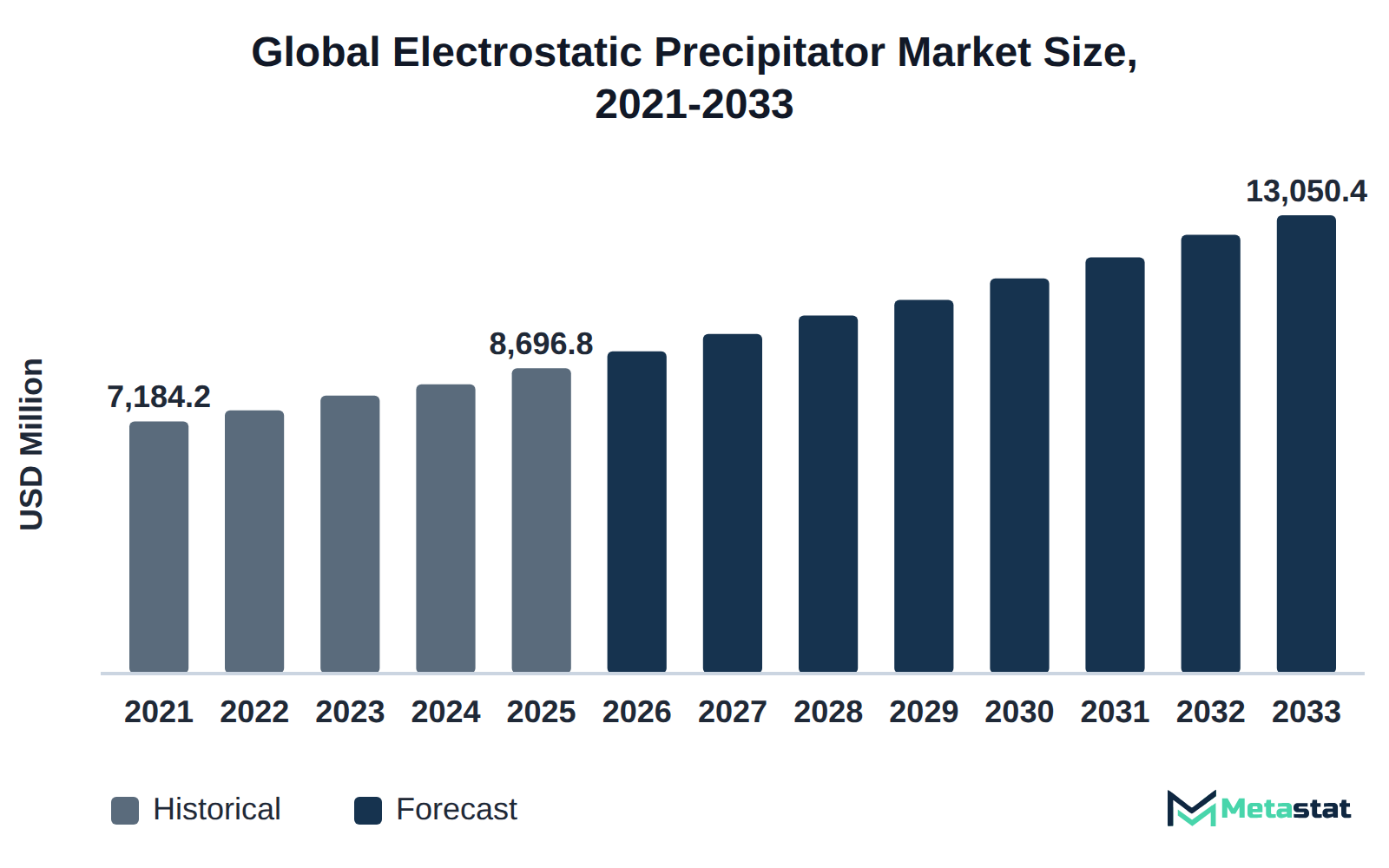
The global Electrostatic Precipitator market was valued at USD 8,696.8 million in 2025 and is projected to reach USD 13,050.4 million by 2033, growing at a CAGR of 5.2% over the forecast period.
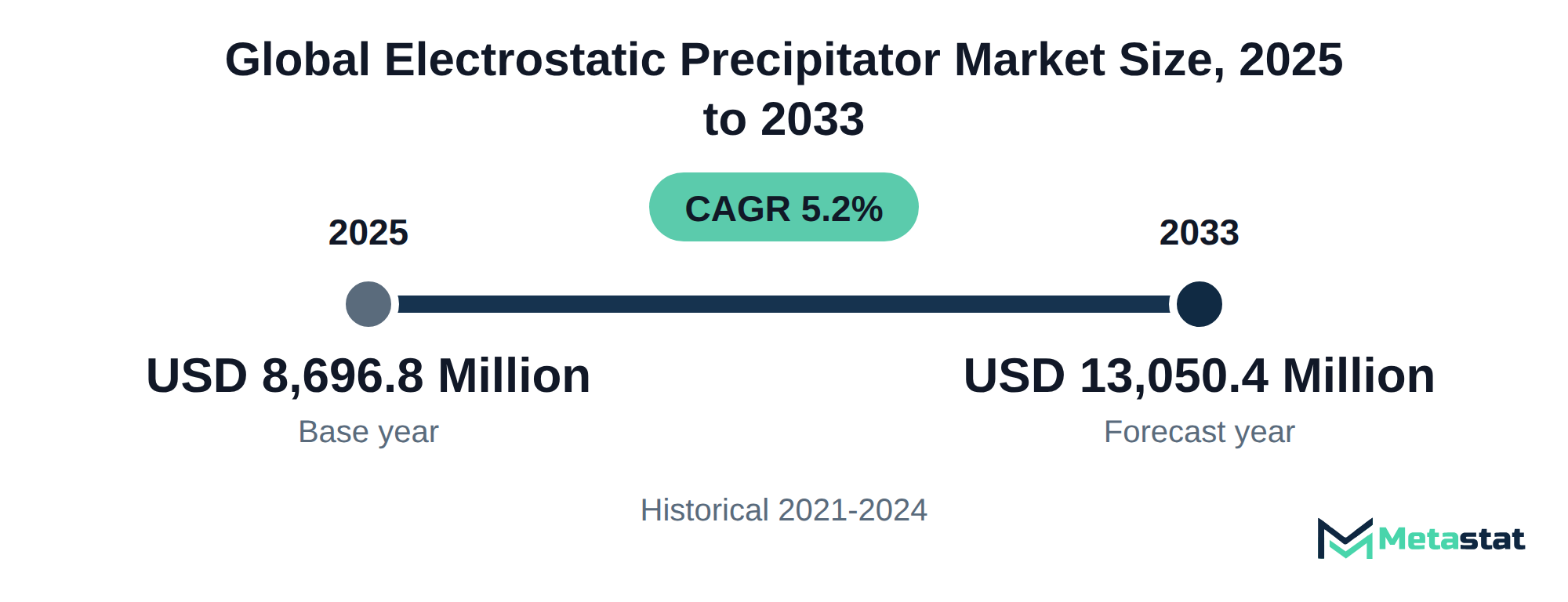
The Electrostatic Precipitator market encompasses a range of technologies designed to capture and remove particulate matter from industrial emissions. Buyers invest in these systems primarily to comply with stringent environmental regulations and enhance operational efficiency. Industries including power generation, cement, and steel manufacturing represent significant segments employing these systems. The ongoing push towards sustainability increases spending on electrostatic precipitators, ensuring cleaner air and reduced environmental impact.
Strong growth in the electrostatic precipitator market is driven by increasing industrialization and rising awareness of air quality issues. Among the various segments, Dry Electrostatic Precipitators hold the most value, reflecting their widespread adoption across numerous applications. Asia Pacific dominates the market, accounting for 46.1% of the total share, while North America holds 19.7% in 2025 and the US leads in 2026. The demand for innovative and efficient pollution control technologies significantly contributes to this expansion.
Investments in upgrading existing systems and implementing new technologies are vital for meeting evolving emission standards. The need for cleaner production processes encourages manufacturers to adopt advanced solutions, further boosting market growth. Environmental regulations tighten globally, intensifying the focus on high-performance electrostatic precipitators and placing emphasis on efficiency and reliability in emission control.
The Electrostatic Precipitator market serves industries by providing solutions that enhance air quality through the removal of harmful particulate matter from emissions. The need for cleaner air and sustainable practices drives demand for electrostatic precipitators, particularly in sectors including power generation, cement, and steel manufacturing.
Growth in the market is supported by increasing industrial activity, especially in the Asia Pacific region, which holds the largest share at 46.1%. Dry Electrostatic Precipitators generate the most substantial revenue, driven by their efficiency and adaptability in various applications. The rising focus on environmental sustainability and emissions reduction will further increase uptake of these technologies.
Investment in advanced filtering technologies, including Wet Electrostatic Precipitators, continues to rise due to their higher efficiency rates. Industries increasingly seek solutions that meet regulatory requirements and improve operational performance. This trend signals a positive outlook for the Electrostatic Precipitator market, encouraging manufacturers to innovate and expand their offerings.
The adoption of high-frequency power supply technology in electrostatic precipitators significantly enhances operational efficiency. This technology offers improvements in dust collection and overall performance, leading to reduced emissions. The adoption rate is growing, driven by increasing regulatory pressure on industries to meet stringent environmental standards. High-frequency power supplies enable electrostatic precipitators to operate at higher voltages, resulting in increased particle collection efficiency. This shift is particularly evident in the power generation sector, where the adoption of high-frequency technology significantly increases collection efficiency.
By 2033, the electrostatic precipitator market anticipates reaching USD 13,050.4 million in value, reflecting a compound annual growth rate (CAGR) of 5.2%. Industries prioritizing environmental compliance show a strong interest in retrofitting existing systems with high-frequency power supplies. This retrofitting process lowers operational costs and increases the lifespan of electrostatic precipitators. The transition to high-frequency systems positions companies to enhance competitiveness while adhering to the evolving regulatory landscape.
Wet electrostatic precipitators are crucial for industries requiring effective control of submicron particles and acid mist. These systems excel at removing fine particulates from industrial emissions, with a projected value of USD 2,620.5 million by 2033. This demand arises from regulatory pressures aimed at reducing environmental pollution, prompting various industries to seek efficient solutions for compliance. The ability of wet electrostatic precipitators to capture submicron particles enhances their appeal, particularly in sectors including power generation and cement manufacturing.
Pricing structures for wet electrostatic precipitators vary significantly based on project specifications, installation requirements, and ongoing service contracts. Many buyers opt for contracts that cover both equipment purchase and long-term maintenance services, supporting performance over the system's lifecycle. This approach spreads capital expenditures and addresses operational concerns through preventive maintenance, minimizing downtime. Such financial strategies allow industries to manage budgets efficiently while investing in technology that supports stringent emission standards.
While the electrostatic precipitator market evolves, focus on wet systems intensifies, driven by their effectiveness in meeting air quality regulations. The projected value of USD 2,620.5 million signals significant growth potential, indicating substantial investment opportunities for manufacturers. Increased adoption of wet electrostatic precipitators will help industries achieve compliance and enhance environmental performance, ultimately strengthening their market position.
The adoption of Hybrid Electrostatic Precipitator-Fabric Filter Systems in cement and steel plants has gained significant traction due to regulatory pressures and operational efficiency requirements. In cement production, stringent emissions regulations drive the need for advanced filtration technologies that ensure compliance while maintaining productivity. The market for these hybrid systems is projected to reach USD 751.7 million by 2033, reflecting a growing preference for integrated solutions that enhance particulate matter removal.
Steel plants face challenges related to emissions and environmental impact. The implementation of Hybrid ESP-Fabric Filter Systems supports regulatory compliance and contributes to operational improvements by reducing maintenance costs associated with traditional filtration methods. By integrating these hybrid systems, cement and steel manufacturers enhance their sustainability profiles and long-term profitability.
Rising adoption of hybrid systems points to a shift toward more efficient, environmentally friendly production processes, positioning these manufacturers competitively while responding to evolving industry standards and consumer expectations.
Dry electrostatic precipitators (ESPs) offer a cost-effective solution for many applications, providing significant advantages in terms of operational efficiency and maintenance. The market anticipates revenue growth from USD 7,115.2 million in 2026 to USD 9,678.2 million by 2033, reflecting a compound annual growth rate (CAGR) of 4.5%. This segment has gained traction among industries that prioritize low operational costs and reliability.
In contrast, wet electrostatic precipitators present a different performance profile, excelling in environments with high humidity or where large particulate matter is present. The market expects wet ESPs to reach USD 2,620.5 million by 2033, growing at a CAGR of 6.9%. Applications that involve challenging emissions drive this segment's growth, with the technology effectively capturing pollutants that dry systems struggle to handle.
Investors and buyers find that while dry ESPs present lower upfront costs and lower energy consumption, wet ESPs deliver superior efficiency in specific applications. A thorough analysis of operational environments and emission requirements determines the optimal choice between the two systems in the electrostatic precipitator market.
Increased regulatory pressure on emissions fuels demand for Wet Electrostatic Precipitators (ESPs), particularly within the power generation, cement, and steel industries. Regulatory bodies enforce stringent standards aimed at reducing air pollution, prompting companies to invest in advanced filtration systems capable of capturing fine particulate matter and acidic pollutants. This shift towards improved emission control results in heightened spending on Wet ESPs, which provide effective solutions to meet compliance requirements. Industries prioritize investments in these technologies to enhance sustainability and reduce the risk of non-compliance penalties, driving increased adoption and expanding the overall market. Compliance with these standards is typically documented through emission monitoring systems. The emphasis on environmental responsibility drives companies to upgrade existing systems, contributing to a strong growth trajectory for the market.
Ongoing advancements in filtration technologies significantly enhance the efficacy of electrostatic precipitators. Innovations including advanced high-voltage power supplies and improved electrode designs contribute to higher capture efficiencies and reduced maintenance costs. Manufacturers increasingly focus on integrating these enhancements into their offerings, enabling industries to meet stringent emission standards while optimizing operational performance.
Industries including power generation and cement production benefit from these technological upgrades, resulting in reduced particulate emissions and improved compliance. Enhanced performance translates into lower operational costs and an extended lifespan for equipment, driving further adoption within the Electrostatic Precipitator market. Suppliers embracing these innovations position themselves competitively, expanding their market reach and enhancing customer satisfaction through superior product offerings.
Increasing costs related to the installation and maintenance of electrostatic precipitators significantly restrict industry adoption. Power generation companies, among the largest buyers, face challenges associated with tight capital budgets, leading to slower uptake of these systems. Cement and steel manufacturers encounter similar financial constraints, resulting in smaller orders and delayed replacement of aging equipment. The transition to advanced systems often requires substantial upfront investment, deterring potential buyers from pursuing upgrades. This financial barrier hinders the overall growth of the electrostatic precipitator market. Companies operating in emerging markets experience heightened difficulty in achieving adequate financing for such capital-intensive projects. Ongoing price pressures create hesitancy that impacts demand across several sectors reliant on electrostatic precipitators.
Compliance costs present a significant challenge for suppliers in the market, affecting profitability and operational efficiency. The need for adherence to stringent environmental regulations increases the expenses associated with research, development, and implementation of advanced technologies. This impact is felt across various industries that rely on electrostatic precipitators for effective emission control. Suppliers face rising costs in delivering updated systems that meet these evolving compliance standards.
In response, suppliers focus on enhancing operational efficiency through innovative design and technology integration. Investments in industrial automation software and digital solutions help streamline processes, reducing overall compliance burdens. Collaborative efforts among industry players enable knowledge sharing and resource pooling to mitigate the financial impact of compliance costs. By adopting these strategies, suppliers can maintain competitiveness despite the rising compliance costs in the electrostatic precipitator market.
Wet Electrostatic Precipitators are expected to experience a significant growth trajectory, primarily driven by their effectiveness in capturing submicron particles and acid mists in various applications. This segment holds a projected compound annual growth rate of 6.9% through to 2033, indicating strong demand from industries including power generation and cement production. The increasing focus on stringent environmental regulations and emission control measures increases the necessity for advanced filtration systems. These systems effectively address the dual challenges of compliance and operational efficiency while enhancing air quality.
The market's expansion in the wet electrostatic precipitator segment aligns with the growing recognition of its capability to manage particulate matter and other harmful emissions. Industries seeking sustainable solutions favor this technology due to its efficiency and adaptability. The ability of wet electrostatic precipitators to operate effectively in diverse environments positions them as a preferred choice for industrial applications focused on minimizing environmental impacts.
The Global Electrostatic Precipitator market is segmented based on Product Type, Design, Offering, and Application.
Dry Electrostatic Precipitators segment is valued at USD 7,115.2 million in 2026 and is projected to reach USD 9,678.2 million by 2033, at a CAGR of 4.5% during the forecast period. These systems are widely applied across various industries, including power generation and cement manufacturing, for effective particulate matter control. The segment's growth is driven by increasing regulatory requirements regarding emissions, compelling industries to invest in advanced filtration technologies. Compared to Wet Electrostatic Precipitators, which achieve higher growth rates, Dry Electrostatic Precipitators offer a more cost-effective solution, particularly for applications where moisture control is not critical. This positions them favorably within the market, attracting several buyers seeking efficient and economically viable emissions solutions.
Wet electrostatic precipitators serve industries that require advanced filtration solutions for capturing fine particulate matter and acid mists, particularly in sectors including power generation and chemicals. The expanding regulatory environment surrounding emissions serves as a driving force behind the adoption of wet electrostatic precipitators, with companies seeking to comply with stringent environmental standards. This segment experiences faster growth compared to Dry Electrostatic Precipitators, which are projected to grow at a CAGR of 4.5%. The unique design of wet systems allows for enhanced collection efficiency of submicron particles, setting it apart from other product types in the market and appealing to industries aiming to meet increasingly rigorous air quality regulations.
Hybrid Electrostatic Precipitator-Fabric Filter Systems segment is expected to reach USD 751.7 million by 2033. This technology integrates the principles of both electrostatic precipitation and fabric filtering, providing effective particulate control across various industrial applications. Industries involved in cement production and steel manufacturing frequently adopt this system to enhance air quality and meet stringent emission regulations. The segment experiences growth driven by increasing environmental regulations enforcing emission control measures. With a compound annual growth rate (CAGR) of 6.9%, this segment outpaces others in the product type category, reflecting a rising preference among buyers for systems that deliver higher filtration efficiency. The unique combination of electrostatic and fabric filter technologies differentiates this segment, providing operational advantages that appeal particularly to industries engaged in high particulate emissions.
Plate ESP segment is valued at USD 7,614.8 million in 2026 and is projected to reach USD 10,495.1 million by 2033, at a CAGR of 4.7% during the forecast period. This technology is widely applied in industrial applications, particularly within power generation and manufacturing settings, where effective particulate control is crucial. Demand for Plate ESP systems is driven by stringent environmental regulations aimed at reducing emissions. Compared to other designs, this segment experiences steady growth due to its established presence and reliability in various industrial processes. The pricing for Plate ESP systems tends to be higher than that of wet alternatives, reflecting the advanced technology and efficiency they offer. Industries seeking to maintain compliance with evolving regulations contribute to the adoption of Plate ESP technology, reinforcing its importance in the overall market.
Tubular ESP segment is estimated to reach USD 2,555.3 million by 2033, at a CAGR of 7.3% during the forecast period. This segment is primarily applied in industries including power generation and non-ferrous metals, where effective air pollution control technologies are essential. The increasing demand for cleaner emissions drives the adoption of Tubular ESP technologies, particularly in regions with stringent environmental regulations. Compared to the Dry Electrostatic Precipitators segment, which grows at a slower rate of 4.5%, the Tubular ESP segment demonstrates a stronger growth trajectory. This growth is supported by advancements in design and technology, enhancing the efficiency of particulate removal and lowering operational costs. The focus on sustainability and emissions reduction in various sectors fuels investment in this segment, reinforcing its position in the market.
Complete ESP Systems segment is valued at USD 5,562.2 million in 2026 and is projected to reach USD 7,548.3 million by 2033, at a CAGR of 4.5% during the forecast period. This segment serves various industries by providing comprehensive solutions for effective particulate matter control in emissions. Key sectors including power generation and cement manufacturing employ these systems to comply with stringent emissions regulations, driving growth. The Complete ESP Systems segment experiences moderate growth compared to other offerings, including ESP Components and Spare Parts and ESP Services. The latter segments show faster growth rates, but Complete ESP Systems offer integrated solutions that cater to specific operational needs of industries, reflecting a steady demand pattern. Innovations in design and efficiency enhancements contribute positively to its market positioning, ensuring its relevance in the evolving landscape of electrostatic precipitators.
ESP Components and Spare Parts segment is estimated to reach USD 3,026.4 million by 2033, at a CAGR of 5.5% during the forecast period. This segment includes replacement parts and components vital for the maintenance and operation of electrostatic precipitators, serving various industries including power generation, cement, and steel manufacturing. Demand for these components remains strong due to the necessity for ongoing system maintenance and upgrades, ensuring optimal performance and compliance with environmental regulations. The growth of this segment is supported by a steady rise in industrial activity, which drives the need for consistent equipment upkeep. Compared to Complete ESP Systems, this segment experiences slower growth but caters to a wide range of buyers, including operators who prioritize cost-effective solutions for their existing systems. This focus on maintenance and efficiency highlights the necessity for components that meet evolving regulatory standards, influencing purchasing decisions across the market.
ESP Services segment is expected to reach USD 2,475.7 million by 2033. This segment provides support and maintenance for electrostatic precipitators, ensuring optimal performance across various industries, including power generation, cement, and steel. A growing emphasis on operational efficiency drives demand for these services, with companies seeking to maximize the longevity and effectiveness of their systems. Compared to other offerings, the ESP Services segment exhibits a steadier growth trajectory, influenced by the ongoing need for regulatory compliance and maintenance. The segment offers distinct value through tailored service agreements, which differ from the product sales focus of other segments. This focus on services enables greater customer retention and builds long-term relationships, enhancing competitive positioning in the market.
Power Generation segment is valued at USD 3,442.4 million in 2026 and is projected to reach USD 4,458 million by 2033, at a CAGR of 3.8% during the forecast period. This segment serves crucial functions in controlling emissions from power plants, ensuring compliance with environmental regulations. A significant driver of growth in this segment is the ongoing focus on reducing air pollution, prompting power generation facilities to adopt advanced filtration technologies. Unlike other segments including Cement and Lime, which experience a CAGR of 5.7%, the Power Generation segment reflects slower growth due to high initial investment costs associated with upgrading existing equipment. The increasing emphasis on sustainability in energy production enhances the importance of electrostatic precipitators, influencing demand within the market and highlighting the need for ongoing technological advancements.
The Cement and Lime segment is estimated to reach USD 2,281.2 million by 2033, at a CAGR of 5.7% during the forecast period. This segment primarily serves industries involved in cement production and lime manufacturing, where effective air pollution control remains critical. The growing emphasis on environmental compliance drives demand for electrostatic precipitators, particularly due to stricter regulations surrounding emissions in these sectors. Compared to other applications, the Cement and Lime segment experiences moderate growth, influenced by steady demand for construction materials. Ongoing investments in advanced filtration technologies support the segment's growth. These systems form part of the broader cement plant equipment installed at production sites. The cost-efficiency of electrostatic precipitators in capturing particulate matter enhances their appeal over alternative technologies, reinforcing their role in the broader Electrostatic Precipitator market.
The Iron and Steel segment is expected to reach USD 1,767 million by 2033. This segment serves the metallurgy sector, focusing on the removal of particulate matter from emissions generated during smelting and processing. Smelting also yields iron and steel slag, which forms a separate by-product stream from these emissions. Demand for electrostatic precipitators in this area is driven by increasing environmental regulations targeting pollution control in manufacturing processes. Compared to other segments, including Power Generation, the Iron and Steel segment exhibits a slower growth rate, with a CAGR of 3.8%. The unique challenges of high-temperature operations in steel production necessitate specific technologies that cater to these conditions, differentiating this segment from those serving more general applications. These dynamics position the Iron and Steel segment within the broader context of the Electrostatic Precipitator market, highlighting its distinct role and operational requirements.
Non-Ferrous Metals segment is projected to grow at a CAGR of 5.9% during the forecast period. This segment finds application in industries involved in the processing of metals that do not contain significant amounts of iron, including copper, aluminum, and zinc. Manufacturers in this space rely on electrostatic precipitators to reduce particulate emissions and meet stricter environmental regulations. Demand for advanced pollution control technologies drives growth in this segment, particularly as industries strive for improved compliance with emissions standards. Compared to other applications, the Non-Ferrous Metals segment experiences a higher growth rate than Power Generation, which grows at a CAGR of 3.8%. This difference in growth rates highlights the increasing focus on sustainable practices in metal processing, where effective pollution control remains a priority for manufacturers.
The Pulp and Paper sub-segment primarily focuses on the removal of particulate matter from emissions generated during the production process. This application serves industries involved in paper manufacturing, ensuring compliance with environmental standards while maintaining operational efficiency. Demand for effective emissions control has risen due to increasing regulatory pressures aimed at reducing environmental impact. The segment stands out because paper production needs filtration technologies suited to its unique challenges, unlike other industrial applications that prioritize factors such as energy efficiency or cost. Regulatory compliance acts as a significant driver, pushing manufacturers to invest in advanced electrostatic precipitators to meet stringent emissions standards.
Chemicals and Fertilizers serve vital roles in various processes, including the production of pesticides and fertilizers essential for agriculture. The adoption of electrostatic precipitators in this application aims to control emissions and improve air quality in manufacturing plants, which often deal with high levels of particulate matter and harmful pollutants. Increasing regulation regarding environmental standards drives demand for more efficient filtration technologies. This segment shows a different growth trajectory compared to others, influenced by the ongoing shift toward sustainable practices in the chemical industry. Companies focus on optimizing their processes to meet regulatory requirements and market demands, ensuring competitiveness while investing in advanced technologies. The market for electrostatic precipitators highlights the need for innovative solutions that address performance and compliance in the Chemicals and Fertilizers sector.
This segment focuses on petroleum refining and petrochemicals, where electrostatic precipitators control emissions and support compliance with environmental regulations. Industries engaged in refining petroleum products and producing petrochemicals apply these systems to remove particulate matter and harmful pollutants from exhaust gases. A rising emphasis on environmental standards in this sector acts as a driving force, pushing companies to adopt advanced technologies for air pollution control. Compared to other segments, including power generation, this segment experiences different dynamics. While power generation sees growth driven by energy demand, petroleum refining's expansion hinges on regulatory pressures and the ongoing transition toward cleaner energy solutions. This regulatory landscape shapes investments in technologies that enhance efficiency and sustainability. The market evolves continuously, reflecting these complexities and challenges faced by stakeholders in the petroleum refining and petrochemicals sector.
Waste Treatment and Incineration involves processes aimed at managing and disposing of waste materials, ensuring the reduction of harmful emissions. This segment primarily serves municipalities and industries focused on waste management and supports environmental compliance. Increasing regulatory pressure to reduce emissions drives demand for efficient electrostatic precipitators in this area. Unlike other applications, Waste Treatment and Incineration experiences unique challenges related to the variability of waste composition, which influences the performance of electrostatic precipitators. This segment's growth trajectory aligns differently compared to others, reflecting various factors that impact operational costs and technology investments in waste handling. The Electrostatic Precipitator market sees a significant focus on enhancing efficiency and reliability in this segment, distinguishing it from sectors like Power Generation, where energy requirements dictate a different set of priorities.
Wood Products encompass various applications involving timber, plywood, and other wood-based panel materials, used extensively in construction, furniture manufacturing, and consumer goods. Manufacturers in this sector rely on electrostatic precipitators to control emissions produced during processing, ensuring compliance with environmental regulations. Key drivers for this segment include increasing demand for eco-friendly products and stringent regulations regarding particulate matter emissions. While growth in this segment is steady, it generally lags behind other applications like Power Generation and Cement and Lime, which experience more rapid expansion. The market benefits from technological advancements that enhance the efficiency of electrostatic precipitators, providing a competitive edge. These innovations cater to the specific needs of wood processing facilities, differentiating this segment from others due to unique operational requirements and regulatory compliance challenges.
This segment encompasses various applications including glass, ceramics, and food processing. Industries involved in these sectors employ electrostatic precipitators to control emissions and improve air quality. Demand for advanced air pollution control technologies, shaped by stringent environmental regulations, drives the adoption of these systems. The segment is characterized by specific operational requirements distinct from other applications, including the need for customization to handle varying types of particulate matter. Consequently, companies supplying solutions for this segment focus on developing specialized technologies that cater to these unique needs. Compared to other application segments, the operational complexities and material properties necessitate tailored solutions, influencing pricing and adoption dynamics. Factors including fluctuating raw material costs and evolving regulatory standards play significant roles in shaping the market landscape for these applications.
Based on geography, the Global Electrostatic Precipitator market is divided into North America, Europe, Asia-Pacific, South America, Middle East, and Africa.
Demand for the Electrostatic Precipitator market in North America is influenced significantly by the power generation and industrial sectors. The region's commitment to reducing emissions from energy production drives the adoption of electrostatic precipitators. The established regulatory framework in the United States, Canada, and Mexico supports environmental standards that necessitate effective air pollution control technologies. North America is projected to reach USD 2,351.7 million by the end of 2033. The market's share in 2025 stands at 19.7%, indicating a stable demand trajectory. Key players in this space apply technology advances to improve efficiency and performance, aligning with the growing emphasis on sustainability and regulatory compliance.
The electrostatic precipitator market in Europe benefits from strong demand driven by stringent environmental regulations and the need for effective emission control technologies. Key industries including power generation and cement manufacturing significantly contribute to this demand. Countries like Germany and France focus on advancing clean technology initiatives, which directly influences the adoption of electrostatic precipitators. Investment in infrastructure upgrades across the region aims to enhance air quality and reduce pollution levels. Air quality monitoring helps regulators track the effect of these upgrades on pollution levels. The market share for Europe is projected to reach 23.0% in 2025, reflecting the region's commitment to sustainability and emission reduction. This focus on environmental compliance supports growth opportunities for manufacturers and suppliers operating in the market.
Asia Pacific represents a significant portion of the Electrostatic Precipitator market, holding a 46.1% share in 2025. Industries including power generation and cement production drive demand for electrostatic precipitators, with a growing emphasis on environmental regulations and sustainable practices. Countries including China, Japan, and India invest heavily in infrastructure upgrades to meet stricter emission standards, which enhances the market outlook. The expansion of industrial activities in Southeast Asia contributes positively to market growth, further supported by rising awareness of air pollution control. While the region prioritizes clean air initiatives, the adoption of advanced technologies in electrostatic precipitators increases, resulting in heightened competition among key players.
Brazil and Argentina exhibit significant activity within the Electrostatic Precipitator market, driven primarily by the industrial sectors, particularly in power generation and cement production. The ongoing push for environmental compliance drives investment in emission control technologies. A focus on sustainable practices, combined with government initiatives to enhance air quality, increases demand for electrostatic precipitators. The market in South America, holding a share of 5.1% in 2025, reflects a growing recognition of the need for effective emission management solutions across various industries. Infrastructure improvements across these countries support advancements in technology adoption, creating a competitive environment for electrostatic precipitator suppliers.
The presence of various industrial sectors, including power generation and cement production, drives demand in the Middle East and Africa for the Electrostatic Precipitator market. Countries including Saudi Arabia and the UAE focus on infrastructure development and industrial modernization, creating significant opportunities for market expansion. Regulatory pressures regarding emissions control further enhance the need for efficient filtration technologies. South Africa, with its growing industrial base, contributes to market dynamics while implementing stringent environmental standards. The region’s share of the global market is projected at 6.1% in 2025, highlighting its emerging significance in the overall market. Increasing investments in environmental management systems by industries enhance the role of electrostatic precipitators in maintaining compliance and promoting sustainable practices.
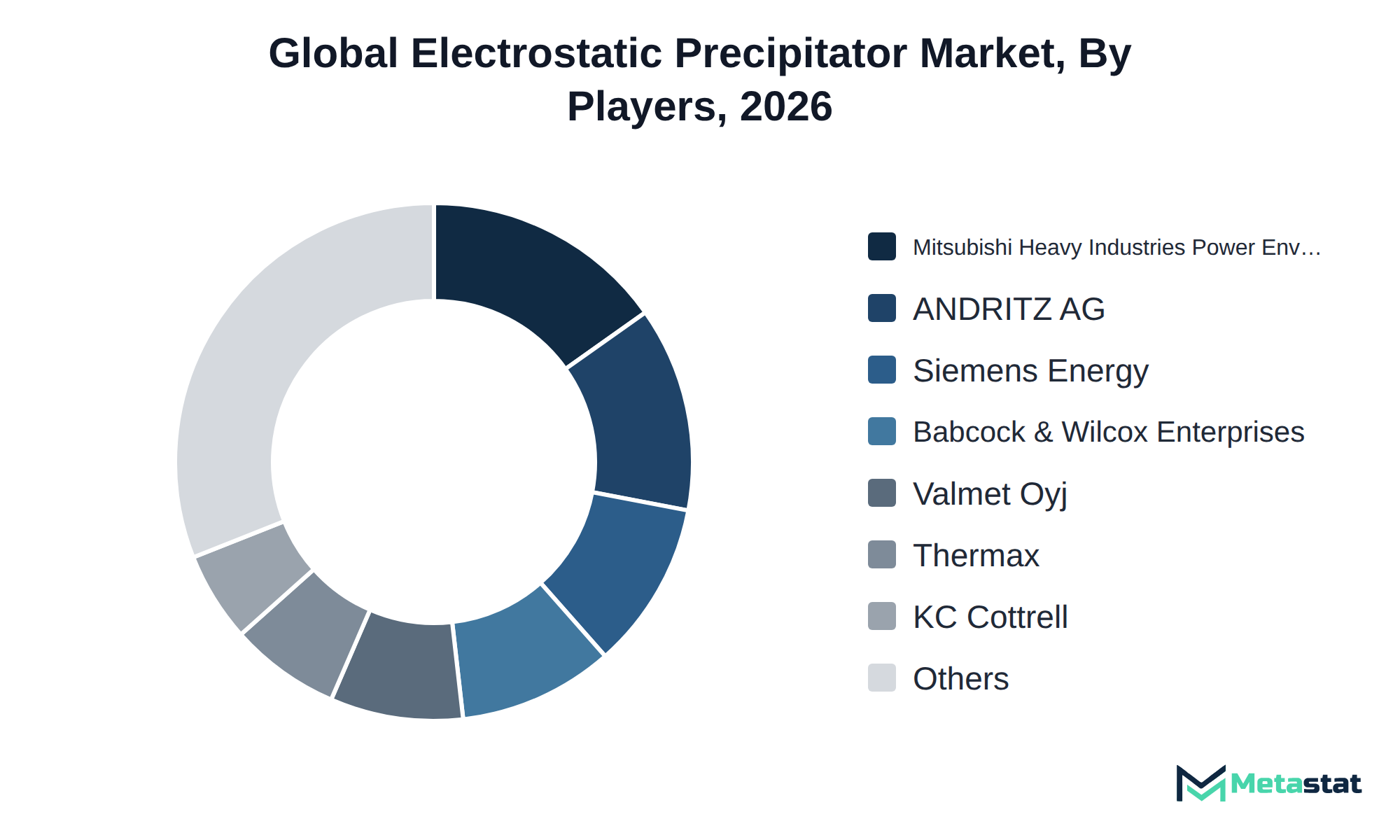
Companies operating in the Electrostatic Precipitator market employ various strategies to differentiate their offerings. The field segments along lines including product type, design, and application. Buyers select solutions based on factors including price, certification, customization, service, and the overall ecosystem offered by the suppliers. For instance, ANDRITZ AG focuses on complete ESP systems, while Babcock & Wilcox Enterprises, Inc. emphasizes components and spare parts. This strategic diversity enables firms to cater to specific customer needs and project requirements.
Mitsubishi Heavy Industries Power Environmental Solutions, Ltd. prioritizes innovation in wet electrostatic precipitators, positioning itself to meet environmental regulations effectively. Valmet Oyj concentrates on hybrid electrostatic precipitator-fabric filter systems, appealing to industries requiring integrated solutions. Such targeted approaches within the market enhance competitive positioning and drive growth opportunities.
Achieving the projected market size requires several developments, particularly in the Asia Pacific region, which maintains the largest share at 46.1%. The adoption of Wet Electrostatic Precipitators expands at a CAGR of 6.9%, contributing to overall market demand. Another vital factor is increasing regulatory pressure toward emissions control, particularly in North America and Europe. Potential risks include fluctuations in raw material costs and supply chain disruptions, which hinder investment levels and slow market expansion. Addressing these challenges remains essential for the Electrostatic Precipitator market to effectively reach its growth targets.
By Product Type: Dry Electrostatic Precipitators, Wet Electrostatic Precipitators, Hybrid Electrostatic Precipitator-Fabric Filter Systems
By Design: Plate ESP, Tubular ESP
By Application: Power Generation, Cement and Lime, Iron and Steel, Non-Ferrous Metals, Pulp and Paper, Chemicals and Fertilizers, Petroleum Refining and Petrochemicals, Waste Treatment and Incineration, Wood Products, Others (Glass, Ceramics, Food Processing)
The report strategically identifies and profiles the key market players and analyses their core competencies in each sub-segment of the Electrostatic Precipitator market.
Report Attributes | Details |
Study Period | 2021-2033 |
Base Year | 2025 |
Estimated Year | 2026 |
Forecast Period | 2026-2033 |
Historical Period | 2021-2025 |
Growth Rate | CAGR 5.2% from 2026 to 2033 |
Revenue Unit | USD million |
Segmentation | By Product Type, Design, Offering, Application, and Region |
By Region | North America (By Product Type, Design, Offering, Application, and Country)
|
Europe (By Product Type, Design, Offering, Application, and Country)
| |
Asia Pacific (By Product Type, Design, Offering, Application, and Country)
| |
South America (By Product Type, Design, Offering, Application, and Country)
| |
Middle East and Africa (By Product Type, Design, Offering, Application, and Country)
|
Find answers to common questions about this report
The Electrostatic Precipitator market size was valued at USD 8,696.8 million in 2025.
The market is projected to grow at a CAGR of 5.2% during the forecast period from 2026 to 2033.
The North America Electrostatic Precipitator market size is estimated to reach USD 2,351.7 million by 2033.
Dry Electrostatic Precipitators lead the market with a projected value of USD 9,678.2 million by 2033, surpassing other segments in the Product Type category.
Increased regulatory pressure on emissions fuels demand, particularly within the power generation, cement, and steel industries. Ongoing advancements in filtration technologies enhance the efficacy of electrostatic precipitators, driving further adoption within the market.
Increasing costs related to the installation and maintenance of electrostatic precipitators significantly restrict industry adoption. Power generation companies face challenges associated with tight capital budgets, leading to slower uptake of these systems.
Increased regulatory pressure on emissions and ongoing advancements in filtration technologies favor adoption within the electrostatic precipitator industry. The effectiveness of Wet Electrostatic Precipitators in capturing fine particulate matter and acidic pollutants enhances compliance and operational efficiency, driving demand across various sectors.
The Electrostatic Precipitator market is estimated to reach a valuation of USD 13,050.4 million by 2033.
Key players operating in the Electrostatic Precipitator market include ANDRITZ AG, Babcock & Wilcox Enterprises, Inc., Mitsubishi Heavy Industries Power Environmental Solutions, Ltd., GEA Group Aktiengesellschaft, Valmet Oyj, Thermax Limited, Siemens Energy, and Zhejiang Feida Environmental Science & Technology Co., Ltd.
The market for Wet Electrostatic Precipitators is projected to reach USD 2,620.5 million by 2033, reflecting a compound annual growth rate of 6.9 percent.
The analysts below cover Chemicals and Materials research at Metastat Insights.
LEAD ANALYST
Utkarsh Khirodkar is a Lead Market Research Analyst at MetaStat Insight, specializing in market intelligence, technology sector assessments, and competitive strategy.

INDUSTRY CONSULTANT - CHEMICALS & ADVANCED MATERIALS
Chemicals and Materials · Machinery & Equipment · Packaging
Amit Gadhekar Consultant for Chemicals and Materials at MetaStat Insight, directing sector-specific intelligence, research, and strategic consulting across global chemical and processing markets.
Floating offshore wind feasibility relies heavily on specialized installation vessel availability and port crane limits, which most broad renewable energy forecasts ignore. The report delivered a thorough analysis of dry dock capacity, mooring chain supply constraints, and raw material pricing trends for deepwater anchor installations. It served as a solid independent sanity check for our offshore project capital expenditure assumptions.
Assessing commercial microgrid software adoption requires looking past top-level installation numbers and examining utility interconnection queues. The research provided verifiable data on average permitting timelines, tariff structures, and battery storage integration costs across regional utility territories. That grounded perspective was valuable for our team when building five-year demand projections for industrial microgrid controllers.
Ambulatory surgical centers have very different purchasing cycles for robotic-assisted surgery platforms than major hospital networks. The MetaStat Insight study focused squarely on capital expenditure depreciation, procedural reimbursement pathways, and surgeon training overhead. That operational clarity made it much simpler to validate multi-year procedure growth forecasts against actual ambulatory center adoption patterns.
Explore related market intelligence reports worth reading alongside this one.