
LEAD ANALYST
Utkarsh Khirodkar is a Lead Market Research Analyst at MetaStat Insight, specializing in market intelligence, technology sector assessments, and competitive strategy.

Europe Industrial Mezzanines Market Size, Share, By Support Structure (Freestanding, Rack-Supported, Shelving-Supported and Building-Supported), By Floor Levels (Single-Level and Multi-Level), By Application (Industrial Warehousing, Distribution & Fulfilment Centers, Manufacturing & Assembly Areas, Processing Plants, Office Areas, Retail Areas and Others), By Region (Germany, France, UK, Italy, Spain, Russia and Rest of Europe), Industry Analysis, Growth, Trends, and Forecast, 2026-2033
Report ID
MSI-5624
Published
October, 2026
Pages
303 Pages
Format
Historical
Base year
Forecast
Forecast period
Report Details
Market Valuation: Valued at $1,729.6 Million in 2025, projected to reach $2,675.5 Million by 2033 at a 5.6% CAGR.
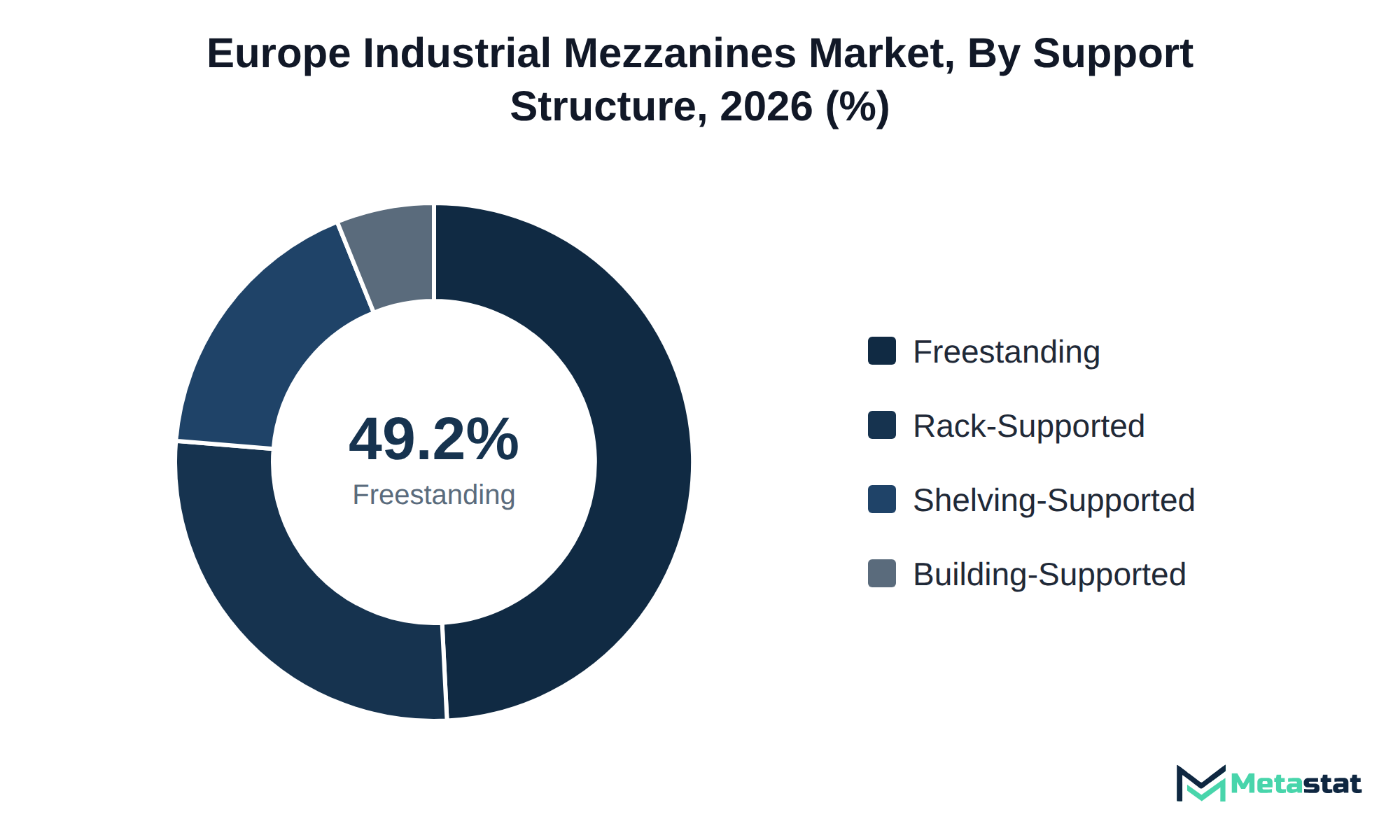
Dominant Segment: The freestanding support structure segment leads the market, driven by its flexibility and ease of installation, catering to diverse industrial applications.
Geographic Lead: Germany dominates the market, benefiting from a strong industrial base and significant investments in logistics and warehousing solutions.
What's Inside: The report provides comprehensive coverage of market dynamics, competitive analysis, and forecasts from 2026 to 2033, detailing various support structures and applications.
Growth in Distribution and Fulfilment Ce: This segment is projected to grow at a CAGR of 7.1%, fueled by rising e-commerce demands and the need for efficient inventory management solutions.
Increased Demand for Warehouse Space: The Industrial Warehousing application segment is expected to grow from USD 583.8 million in 2026 to USD 791.1 million by 2033, reflecting a CAGR of 4.4% driven by e-commerce growth.
Choose Your License
Europe Industrial Mezzanines Market
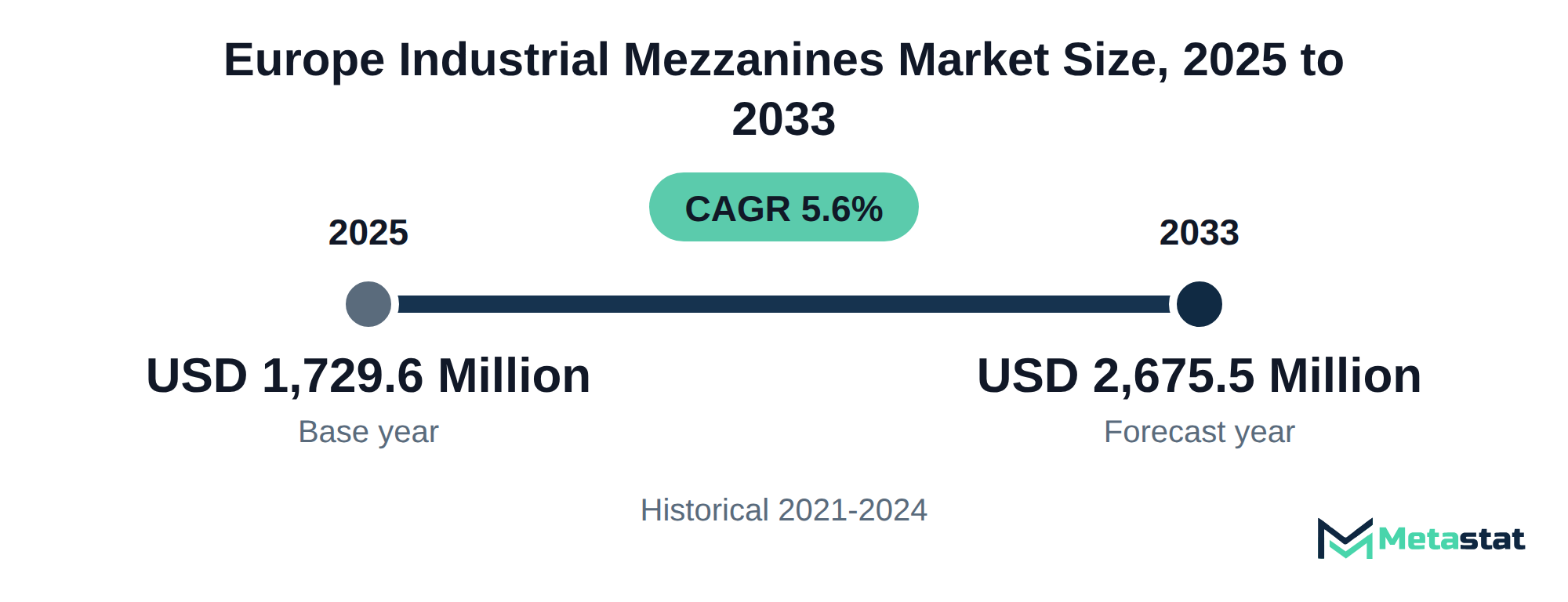
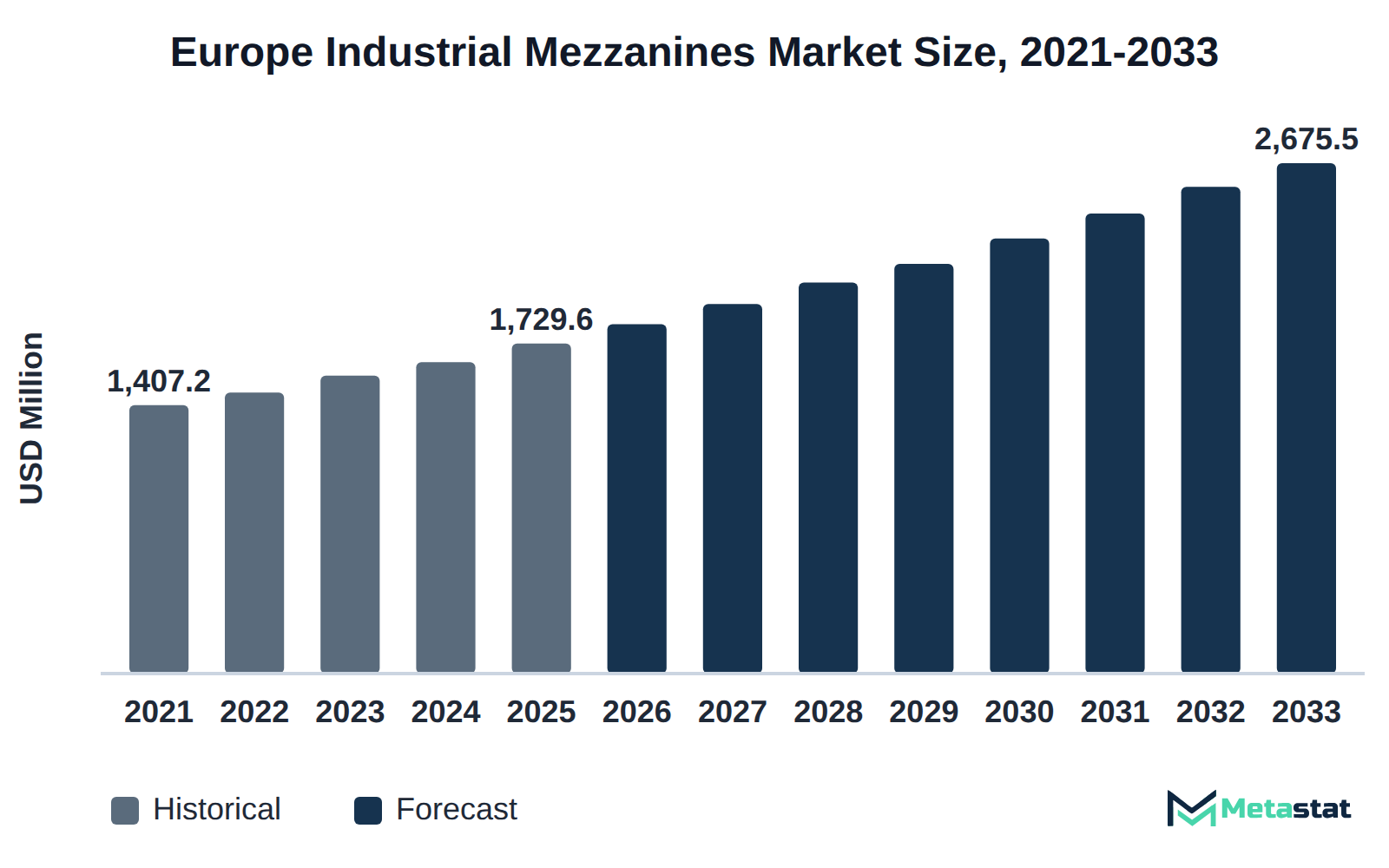
The Europe Industrial Mezzanines market was valued at USD 1,729.6 million in 2025 and is projected to reach USD 2,675.5 million by 2033, growing at a CAGR of 5.6% over the forecast period.
The Europe Industrial Mezzanines market encompasses various types of mezzanine systems that provide additional flooring and storage solutions within industrial facilities. Buyers invest in these structures primarily to optimize space utilization, enhance operational efficiency, and support increasing inventory demands. The market serves diverse applications, including warehousing, distribution, and manufacturing, reflecting the growing need for adaptable and scalable storage solutions in the industrial sector.
Growth in the market is driven by rising demand for efficient space management solutions among various industries. The freestanding support structure segment emerges as the most valuable within the market, offering flexibility and ease of installation. Germany holds the largest share of the market, reflecting solid industrial activity and a strong focus on logistics and warehousing solutions.
One significant factor contributing to market expansion is increasing investment in automation and technology within warehouses and distribution centers. Facilities seeking to integrate advanced systems drive demand for industrial mezzanines, facilitating effective use of vertical space and improving overall productivity.
The Europe Industrial Mezzanines market covers a variety of mezzanine systems that enhance space utilization within industrial settings. Buyers invest in these solutions to optimize vertical space, improve operational efficiency, and facilitate better inventory management. Industries including warehousing, manufacturing, and distribution increasingly recognize the advantages offered by mezzanine structures, driving overall expenditure in this segment.
Growth in the market is propelled by the rising demand for efficient storage solutions, particularly in industrial warehousing applications. Among the segments, freestanding support structures generate the highest revenue, reflecting their versatility and adaptability to different operational needs. Germany stands out as the region with the largest share, benefiting from a strong manufacturing base and solid logistics infrastructure, which contribute to higher demand for mezzanine systems.
Market participants experience positive momentum due to the ongoing expansion of e-commerce and the necessity for effective distribution strategies. The same e-commerce expansion also shapes the courier, express and parcel industry in Europe. Investments in distribution and fulfillment centers lead to increased adoption of mezzanine solutions. The Europe Industrial Mezzanines market is expected to sustain growth as businesses prioritize innovative storage alternatives to meet evolving operational demands.
Warehouse automation significantly influences mezzanine load capacity and decking specifications, reflecting the increasing demand for efficiency and scalability. Advanced automated systems require strong mezzanine structures that carry higher loads, since they integrate heavy machinery and storage solutions. The Europe Industrial Mezzanines market is experiencing notable shifts, driven by this automation trend. For instance, the freestanding support structure segment is expected to grow from USD 897.6 million in 2026 to USD 1,273.8 million by 2033, representing a compound annual growth rate (CAGR) of 5.1%. This growth highlights the need for stronger, more adaptable mezzanine solutions to accommodate the complexities of automated warehousing.
Manufacturers are responding to these requirements by enhancing their product designs, ensuring that decking materials and load capacities align with the specifications demanded by automated systems. This alignment allows businesses to optimize space utilization while improving operational efficiency. A tailored approach to mezzanine design that incorporates automation-ready features promotes competitiveness within the market, attracting buyers who prioritize functionality and resilience in their warehousing solutions.
Multi-level fulfilment platforms represent a strategic investment for buyers in the Europe Industrial Mezzanines market, enabling efficient use of vertical space in warehouses. The growing demand for space-efficient solutions drives interest toward these platforms, which provide additional storage capacity without the need for extensive renovations. In 2026, the market for multi-level mezzanines is valued at USD 1,119.4 million, reflecting their increasing adoption in various applications.
The pricing structure for these mezzanine systems typically involves initial capital expenditure and ongoing maintenance costs. Buyers generally enter long-term contracts, which facilitate financing through leasing or purchase agreements. Contracts include options for site assessments, installation services, and post-installation support, ensuring optimal usage of the mezzanine systems.
Investing in multi-level fulfilment platforms allows companies to maximize their existing warehouse footprint, ultimately translating into enhanced operational efficiency. This expansion reduces the need for new facilities, resulting in significant cost savings. Consequently, businesses experience improved capacity management and operational flexibility, positioning them favorably within the competitive environment of the Europe Industrial Mezzanines market.
Cold-formed and hybrid steel designs significantly influence the economics of mezzanine installation in the Europe Industrial Mezzanines market. These innovations provide increased strength while reducing material costs and installation time. The use of cold-formed steel minimizes the weight of structures and allows for greater flexibility in design, which is essential for businesses looking to optimize space and efficiency. Cold-formed steel sections are also used in light gauge steel framing for buildings.
This growth reflects ongoing demand for adaptable and cost-effective solutions in various industries, including warehousing and manufacturing. The transition toward cold-formed and hybrid designs allows businesses to allocate capital more effectively while enhancing operational functionality.
Firms adopting these innovative designs experience a competitive edge in the market. Enhanced structural integrity combined with efficient installation translates to lower overall project costs and improved return on investment. Consequently, the rise of cold-formed and hybrid steel designs supports sustained growth in the Europe Industrial Mezzanines market.
When evaluating options for an industrial mezzanine, buyers should prioritize the support structure, which significantly impacts both functionality and cost. In the Europe Industrial Mezzanines market, the primary types of support structures include freestanding, rack-supported, shelving-supported, and building-supported designs. This growth signals strong demand for independent mezzanines that enhance space utilization without relying on existing infrastructure.
On the other hand, rack-supported mezzanines, which use existing storage systems to add vertical space, are anticipated to reach a total value of USD 773.7 million by 2033, with a CAGR of 6.4%. Buyers should consider operational needs, including the weight load and accessibility requirements of their specific applications. By selecting the appropriate support structure, organizations optimize their investments, enhancing operational efficiency and creating scalable solutions for future growth.
Growing e-commerce activity drives significant investment in industrial warehousing. Buyers, including logistics companies and retailers, require additional space to accommodate increasing inventory levels and meet customer expectations for rapid delivery. This change in purchasing behavior contributes to heightened demand for industrial mezzanines, particularly in fulfillment centers, where organizations seek to optimize storage efficiency. The Industrial Warehousing application segment reflects this trend, with growth expected from USD 583.8 million in 2026 to USD 791.1 million by 2033, demonstrating a compound annual growth rate of 4.4%. Such demand patterns enhance the market's overall growth trajectory, pushing suppliers to innovate and expand their offerings to meet evolving customer needs. Demand for warehouse space also shapes the industrial and logistics real estate industry.
Sustainability remains a critical factor influencing the demand for industrial mezzanines. Suppliers increasingly adopt eco-friendly materials and practices in response to heightened environmental awareness among buyers. This shift reflects a broader trend towards sustainable construction, where mezzanine systems incorporate recycled steel and other sustainable components. Such materials lower the carbon footprint and enhance the market's appeal to environmentally conscious companies looking to improve their sustainability metrics. Steel is a core input for mezzanine systems, which links this shift to the green steel industry.
The Europe Industrial Mezzanines market benefits from this transformation, as industries strive to meet sustainability goals. Companies in sectors including warehousing, distribution, and manufacturing prioritize environmentally responsible solutions, driving demand for innovative mezzanine designs. This trend is expected to continue, contributing to the market's growth and attracting investments focused on sustainable technology. Suppliers that integrate these materials effectively position themselves competitively within the evolving market.
Higher installation costs present a significant barrier to growth within the Europe Industrial Mezzanines market. Buyers in sectors including industrial warehousing and manufacturing face substantial initial investment requirements for mezzanine systems, which deter adoption. This restraint often manifests through slower uptake of new installations and smaller orders, as companies evaluate the financial implications of implementing such solutions. The challenge of managing upfront costs prompts delayed replacement of aging infrastructure, hindering operational efficiency and overall productivity. While several buyers recognize the long-term benefits of mezzanine systems, the immediate financial outlay limits broader acceptance across various industries. Addressing these cost concerns requires strategic financial planning or enhanced incentives to encourage investment in mezzanine solutions.
In the Europe Industrial Mezzanines market, rising input costs significantly challenge suppliers' ability to maintain profitability. The escalation of raw material prices, particularly steel, affects overall production costs, limiting margins for producers. Suppliers face pressure to balance quality and pricing while meeting the evolving needs of buyers across various industries.
In response to these challenges, many suppliers implement cost-reduction strategies, including optimizing supply chains and enhancing operational efficiencies. By using advanced manufacturing techniques and investing in technology, producers improve productivity and reduce waste, which mitigates cost pressures. Maintaining price competitiveness is essential for securing contracts in a crowded market. Managing these costs remains vital for suppliers seeking to thrive in the industrial sector.
Rapid expansion in distribution and fulfilment centers presents a significant opportunity within the market. This segment is projected to achieve a compound annual growth rate (CAGR) of 7.1%, highlighting increasing investments in logistics infrastructure driven by rising e-commerce demand. Expansion in this area necessitates efficient space utilization solutions to accommodate inventory and streamline operations. Industrial mezzanines provide an effective means to optimize storage while enhancing operational workflows. Facilities that successfully implement these solutions experience improved productivity and reduced operational costs. Overall, the increasing focus on developing distribution capabilities will drive considerable growth opportunities for suppliers in the Europe Industrial Mezzanines market.
The Europe Industrial Mezzanines market is segmented based on Support Structure, Floor Levels, Application, and Region.
Freestanding mezzanines offer flexibility and ease of installation, making them ideal for various applications, including industrial warehousing and retail environments. Industries like logistics and manufacturing frequently adopt this type of mezzanine due to its adaptability in maximizing vertical space. Growing demand for efficient storage solutions drives the expansion of this segment. Compared to rack-supported or shelving-supported options, freestanding structures typically allow for a broader range of customization. The segment's growth rate reflects a moderate pace relative to others, emphasizing steady demand without the intensive investments required for more complex support systems. The market anticipates continued interest from sectors requiring versatile and cost-effective solutions for space challenges.
This sub-segment provides structural support for mezzanines, allowing for the efficient utilization of vertical space in facilities. Primarily employed in warehouses and distribution centers, rack-supported mezzanines enable users to maximize storage while maintaining easy access to inventory. Demand for this segment is driven by growth in e-commerce and the corresponding need for improved storage solutions. Compared to other support structures, rack-supported mezzanines exhibit faster growth, reflecting a CAGR of 6.4%, surpassing the 5.1% CAGR of freestanding options. Its structural strength and cost-effective installation appeal to buyers in sectors including retail and logistics. The market continues to experience innovation in design and materials, aligning with evolving requirements of modern industrial operations.
The Shelving-Supported segment is expected to reach USD 486.4 million by 2033. This structure provides an efficient solution for maximizing storage space in warehouses and distribution centers. Typically used by industries including retail and logistics, shelving-supported mezzanines facilitate better organization and accessibility of products. Demand for these systems is driven by the growing need for efficient inventory management, particularly in sectors prioritizing rapid order fulfillment. This segment exhibits a compound annual growth rate (CAGR) of 6.4%, positioning it as a faster-growing option compared to other support structures, including building-supported systems, which have a lower growth rate. The distinct advantages of shelving-supported designs include flexibility and adaptability to various warehouse layouts, allowing for customized configurations that meet specific operational needs. Such characteristics set this segment apart, appealing to businesses focused on enhancing storage efficiency while maintaining operational effectiveness.
Building-Supported segment is projected to grow at a CAGR of 3.6% during the forecast period. This segment provides a critical solution for integrating mezzanines within existing building structures, offering efficient use of vertical space. Industries including retail and manufacturing frequently employ this segment to enhance capacity without the need for extensive construction. The inherent structural support provided by existing buildings reduces installation complexity and costs. Demand for Building-Supported mezzanines is driven by the increasing need for flexible space solutions, particularly within urban environments where space is limited. Compared to other support structures, this segment exhibits a lower growth rate while focusing on cost-effective solutions, appealing to budget-conscious buyers. In contrast, the Rack-Supported segment is anticipated to grow faster, reaching USD 773.7 million by 2033, creating a competitive landscape in the market.
Single-Level segment is valued at USD 1,126.8 million in 2026 and is projected to reach USD 1,556 million by 2033, at a CAGR of 4.7% during the forecast period. This segment provides essential flooring solutions in warehouses and industrial facilities, catering to sectors including retail, manufacturing, and logistics. The ongoing demand for efficient space utilization influences growth, driven by the expansion of e-commerce and the need for streamlined operations. Compared to Multi-Level systems, Single-Level solutions typically offer lower installation costs, which appeals to budget-conscious buyers; however, they experience slower growth. In contrast, the Multi-Level segment is projected to achieve a CAGR of 6.8%, indicating a shift towards more complex structures. Such dynamics highlight the distinctive position of the Single-Level segment and keep it relevant in the Europe Industrial Mezzanines market.
Multi-Level segment is estimated to reach USD 1,119.4 million by 2033, at a CAGR of 6.8% during the forecast period. This segment provides enhanced vertical storage solutions, appealing to industries including logistics and manufacturing where optimizing space becomes essential. Increasing demand for efficient warehousing in e-commerce drives growth in this segment, leading to higher adoption rates of multi-level systems compared to other configurations. The multi-level approach allows businesses to maximize their operational footprint while reducing rental costs associated with larger facilities. Compared to the Single-Level segment, which has a CAGR of 4.7%, Multi-Level systems exhibit a faster growth trajectory, reflecting evolving preferences of buyers who prioritize flexibility and scalability. The market sees multi-level solutions particularly favored for distribution and fulfillment centers, where maximizing storage capacity is crucial.
Industrial warehousing mezzanines serve logistics and storage sectors, where maximizing space efficiency is crucial. Growing e-commerce activities significantly fuel demand for improved warehousing solutions, allowing companies to accommodate increasing inventory levels. Unlike other segments, Industrial Warehousing experiences moderate growth compared to Distribution & Fulfilment Centers, which is projected to expand at a CAGR of 7.1%. The rising demand for rapid order fulfillment creates distinct opportunities within the market, positioning Industrial Warehousing as a key component of modern supply chain management. Buyers prioritize systems optimizing space utilization while maintaining cost efficiency, contributing to overall growth dynamics in the market.
Distribution & Fulfilment Centers segment is estimated to reach USD 852.7 million by 2033, at a CAGR of 7.1% during the forecast period. This segment serves e-commerce businesses and logistics providers requiring efficient space solutions for inventory management. The rapid growth stems from surging online shopping trends and increasing demand for swift order fulfillment, driving investments in warehouse infrastructure. Compared to other application segments, this segment exhibits a higher growth rate, reflecting a stronger market focus on logistics efficiency. Organizations prioritizing speed and capacity in their distribution operations increasingly adopt mezzanine solutions that maximize vertical space utilization. The ongoing shift toward automation in warehouses influences technology adoption, enhancing operational efficiency and reducing labor costs. Automated storage and retrieval systems are one example of this technology.
Manufacturing & Assembly Areas segment is expected to reach USD 466.1 million by 2033. This segment serves industries that require efficient production and assembly processes, enabling effective use of floor space. Demand for mezzanines within manufacturing facilities is driven by the need for increased operational efficiency and flexibility in layout design. Unlike other segments, including Distribution & Fulfilment Centers, which exhibit a CAGR of 7.1%, this segment experiences a slower growth rate, showing a CAGR of 6.4%. The focus on enhancing productivity and optimizing workflow significantly influences investment decisions, positioning this segment uniquely among its peers in the market. Companies in manufacturing prioritize durable and modular solutions that adapt to changing needs and workflows, ensuring sustained operational effectiveness over time. Adaptable production layouts are also the focus of the flexible manufacturing system industry.
Processing Plants segment is projected to grow at a CAGR of 6.4% during the forecast period. This segment serves industries involved in food production, chemicals, and pharmaceuticals, which need durable mezzanine solutions to optimize workflow and increase storage capacity. Key drivers include rising demand for processed goods and the need for efficient space utilization in production environments. Food and beverage process plants are one example of these production environments. Compared to other segments, Processing Plants experience relatively rapid growth, driven by a focus on automation and operational efficiency. The anticipated growth aligns with the broader trends of modernization in manufacturing, leading to increased investments in technologies that enhance production capabilities. The market continues to experience shifts toward customization and modular designs, allowing manufacturers to adapt quickly to changing operational needs.
Office areas serve various functions within commercial and industrial spaces, catering to businesses seeking efficient use of vertical real estate. Corporations, small enterprises, and startups employ these mezzanines to establish additional workspace without expanding their footprint. The segment is impacted by the growing trend of flexible work environments, driving demand for adaptable office solutions. This need for space optimization contrasts with other applications in the market, including industrial warehousing, where inventory storage remains a primary focus. Higher customization requirements for office areas often lead to increased project costs, distinguishing this segment from others with more standardized designs. The evolving nature of workplace design and the emphasis on collaborative environments significantly influence the growth trajectory of office areas in the Europe Industrial Mezzanines market. The flexible office space industry reflects a related shift toward adaptable workplace layouts.
Retail areas serve essential spaces for displaying products and facilitating customer interactions. Retailers use mezzanine systems to maximize floor space, enhance product visibility, and improve customer experiences. A key driver within this segment involves the increasing need for adaptive retail environments, particularly while e-commerce influences consumer behavior. This segment distinguishes itself from others in the market through its focus on customer experience and aesthetic appeal, often leading to higher investments compared to segments including industrial warehousing. Retail areas prioritize flexibility and design, catering primarily to retail chains and boutique stores seeking to stand out in competitive markets. The significance of presentation and accessibility influences investment decisions, making this segment particularly dynamic in a constantly evolving retail environment.
Maintenance areas and training facilities serve critical functions in various industries, providing essential spaces for operational training and equipment maintenance. Users typically include manufacturing firms, logistics companies, and educational institutions that require robust infrastructure to maximize productivity. Demand for such mezzanines is influenced by companies focusing on workforce development and efficient maintenance practices, driving investments in these areas. Compared to other applications, this segment experiences moderate growth due to its specific use cases, which differ from broader applications including industrial warehousing or fulfillment centers. The need for effective training environments and maintenance areas will continue to shape this segment, reflecting its strategic importance in enhancing operational efficiency within the Europe Industrial Mezzanines market.
Germany segment is valued at USD 466.4 million in 2026 and is projected to reach USD 657.6 million by 2033, at a CAGR of 5% during the forecast period. This segment addresses the requirements of various industries including logistics, manufacturing, and retail, which use mezzanines to optimize storage and workspace. Key factors driving this segment include increasing demand for efficient space use in warehouses and fulfillment centers. Germany's growth rate reflects a moderate pace, influenced by a strong manufacturing sector and ongoing investments in logistics infrastructure, which contributes to its distinct positioning compared to higher-growth segments like Distribution & Fulfilment Centers. This positioning adds to the dynamics of the Europe Industrial Mezzanines market and highlights the segment's significance within industrial shelving solutions.
France segment is estimated to reach USD 387.1 million by 2033, at a CAGR of 5.3% during the forecast period. This segment primarily caters to industries requiring additional storage and operational efficiency, including logistics, warehousing, and retail. Demand for industrial mezzanines in France is driven by the growth of e-commerce, necessitating expanded storage capabilities to accommodate increasing inventory levels. Unlike other segments, this region exhibits moderate growth compared to the Distribution & Fulfilment Centers segment, which is projected to grow at a CAGR of 7.1%. The market faces challenges related to regulatory compliance and safety standards, pushing companies to prioritize investments in high-quality mezzanine solutions. Fluctuations in raw material costs impact pricing, influencing purchasing decisions among buyers in France.
The UK segment is expected to reach USD 515.3 million by 2033. This segment finds extensive use in various applications, particularly in industrial warehousing and distribution centers, where efficient space utilization is crucial. Demand stems from the rapid growth of e-commerce, which drives the need for storage solutions that maximize vertical space. Compared to other segments, the UK segment displays a moderate growth rate, influenced by rising operational costs and evolving logistics requirements. The adoption of industrial mezzanines in this region reflects changing consumer behavior, which places a premium on efficiency and responsiveness in supply chain operations. The market benefits from a diverse range of suppliers that cater to specific needs, further enhancing its competitive landscape.
Italy segment is projected to grow at a CAGR of 5.2% during the forecast period. This segment primarily finds application in industrial warehousing and distribution, where maximization of vertical space is essential. Companies implement mezzanines to enhance storage capacity and improve operational efficiency. Demand is driven by the increasing need for efficient storage solutions in various sectors, particularly in logistics and retail. Italy's freight and logistics industry is one of the sectors behind this demand. This segment provides a cost-effective approach to expanding existing facilities compared to new construction. While the overall market experiences significant growth, this segment's performance is slightly slower than the Distribution & Fulfilment Centers segment, which benefits from higher growth rates. The focus on optimizing storage solutions emphasizes the significance of this segment in the Europe Industrial Mezzanines market, catering to diverse industries seeking space-efficient solutions.
Spain's industrial mezzanine segment optimizes space utilization within various industries, particularly in warehousing and manufacturing settings. This segment caters to businesses seeking to enhance operational efficiency by maximizing vertical storage capacity. The demand for mezzanines in Spain experiences growth driven by increasing logistics and distribution activities, reflecting the country's expanding e-commerce sector. Unlike other segments, Spain's market focuses on adaptable solutions customized to suit specific operational needs. This distinct approach supports businesses aiming for flexibility and scalability in their operations, aligning with broader trends in the Europe Industrial Mezzanines market. While companies strive to improve supply chain efficiency, the demand for innovative mezzanine solutions in Spain continues to rise.
Russia's involvement in the industrial mezzanines landscape reflects a growing demand for efficient space utilization in various sectors. Industries including warehousing and distribution increasingly adopt mezzanine solutions to maximize vertical space and streamline operations. The push for modernization in logistics and manufacturing fuels this trend, with urbanization and the expansion of industrial facilities driving the need for innovative storage and operational solutions. Compared to other regions, the segment in Russia experiences unique challenges, including fluctuating economic conditions and regulatory changes that impact investment decisions. The growth trajectory in Russia differs from markets like Germany or France, where more stable economic environments exist. The Europe Industrial Mezzanines market displays diverse developments across regions, emphasizing the importance of localized demand dynamics in shaping overall market performance.
This segment encompasses various countries not specifically listed in other regional segments, contributing to the overall dynamics of the Europe Industrial Mezzanines market. The segment primarily finds applications in sectors including manufacturing, retail, and logistics, where businesses seek to maximize vertical space and improve operational efficiency. Growth is driven by increasing demand for flexible storage solutions and the need for space optimization. Unlike the German and UK segments, which exhibit more pronounced growth trajectories, this sub-segment experiences stable yet moderate expansion, appealing to diverse industries seeking cost-effective mezzanine solutions. The focus on local manufacturers and suppliers facilitates tailored solutions that cater to regional requirements, enhancing customer satisfaction and loyalty.
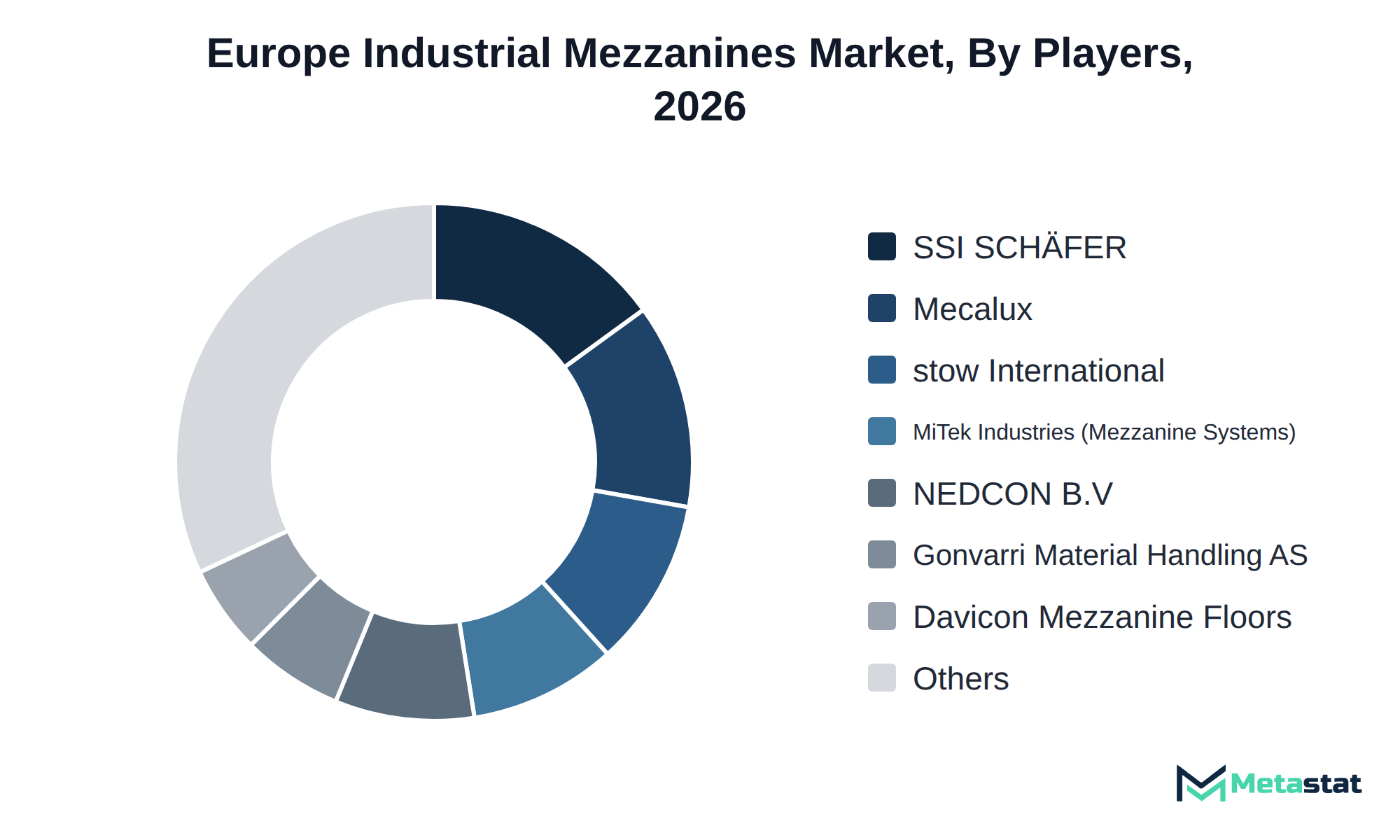
Competition in the Europe Industrial Mezzanines market occurs across various segments, including Support Structure and Application. Key players focus on specific customer needs, with offerings ranging from freestanding systems to rack-supported solutions. Different companies emphasize price, customization, and service quality to attract buyers, which influences their market share and competitive strategies.
Mecalux, S.A. specializes in providing comprehensive storage solutions, including innovative mezzanine designs that enhance warehouse efficiency. SSI SCHÄFER Group emphasizes automation capabilities in its mezzanine offerings, catering to high-demand distribution and fulfillment environments. Profielnorm B.V. (PRN-Group) focuses on customizable mezzanine structures, allowing clients to adapt solutions to unique operational requirements, thereby increasing their appeal in diverse industrial applications.
To achieve this growth, several key developments will drive the expansion of the Europe Industrial Mezzanines market. Increased demand in the distribution and fulfillment centers segment, projected to reach USD 852.7 million by 2033, will significantly contribute to revenue growth. However, risks exist that could impede this growth trajectory, including potential supply chain disruptions arising from geopolitical tensions or economic downturns. Such disruptions could affect the timely delivery of materials and equipment, leading to delays in project completions across key regions like Germany and France, where substantial investments are occurring. Addressing these challenges while capitalizing on the growth opportunities in both the distribution sector and the support structures segment will be crucial for reaching the forecasted market size.
By Floor Levels: Single-Level, Multi-Level
By Application: Industrial Warehousing, Distribution & Fulfilment Centers, Manufacturing & Assembly Areas, Processing Plants, Office Areas, Retail Areas, Others (Maintenance Areas, Training Facilities)
By Region: Germany, France, UK, Italy, Spain, Russia, Rest of the Europe
The report strategically identifies and profiles the key market players and analyses their core competencies in each sub-segment of the Industrial Mezzanines market.
Report Attributes | Details |
Study Period | 2021-2033 |
Base Year | 2025 |
Estimated Year | 2026 |
Forecast Period | 2026-2033 |
Historical Period | 2021-2025 |
Growth Rate | CAGR 5.6% from 2026 to 2033 |
Revenue Unit | USD million |
Segmentation | By Support Structure, Floor Levels, Application, Region, and Region |
Find answers to common questions about this report
The Industrial Mezzanines market size was valued at USD 1,729.6 million in 2025.
The market is projected to grow at a CAGR of 5.6% during the forecast period from 2026 to 2033.
Freestanding support structures lead the Industrial Mezzanines market, with a projected value of USD 1,273.8 million by 2033. This segment demonstrates the highest growth potential compared to other support structure types.
Rapid expansion in distribution and fulfillment centers drives significant growth in the market. Increasing e-commerce activity necessitates additional space for inventory, enhancing demand for industrial mezzanines.
Higher installation costs present a significant barrier to growth, deterring adoption among buyers in industrial warehousing and manufacturing. Rising input costs, particularly for raw materials like steel, challenge suppliers' ability to maintain profitability while balancing quality and pricing.
Several factors favor adoption in the Europe Industrial Mezzanines market. Rapid expansion in distribution and fulfillment centers drives demand for efficient space utilization solutions, reflecting a projected compound annual growth rate of 7.1%. heightened environmental awareness prompts suppliers to adopt sustainable materials, further enhancing market appeal.
The Industrial Mezzanines market is estimated to reach a valuation of USD 2,675.5 million by 2033.
Key players operating in the Industrial Mezzanines market include Mecalux, S.A., MiTek Industries Ltd. (Mezzanine Systems), Davicon Mezzanine Floors Limited, Profielnorm B.V. (PRN-Group), stow International nv, SSI SCHÄFER Group, and STILL GmbH.
The Industrial Warehousing application segment is projected to grow from USD 583.8 million in 2026 to USD 791.1 million by 2033, reflecting a compound annual growth rate of 4.4%.
Germany and the UK lead regional demand, driven by advanced logistics and automation, while Poland and Spain present higher-growth opportunities linked to logistics investment and manufacturing expansion.
The analysts below cover Machinery & Equipment research at Metastat Insights.
LEAD ANALYST
Utkarsh Khirodkar is a Lead Market Research Analyst at MetaStat Insight, specializing in market intelligence, technology sector assessments, and competitive strategy.

INDUSTRY CONSULTANT - CHEMICALS & ADVANCED MATERIALS
Chemicals and Materials · Machinery & Equipment · Packaging
Amit Gadhekar Consultant for Chemicals and Materials at MetaStat Insight, directing sector-specific intelligence, research, and strategic consulting across global chemical and processing markets.

PRINCIPAL CONSULTANT - QUALITY SYSTEMS & COMPLIANCE
Electronics and Semiconductor · Machinery & Equipment · Professional Services
Omkar Phadtare is an Industry Consultant at MetaStat Insight, specializing in quality systems, regulatory compliance, and standards benchmarking to drive data-driven market intelligence and strategic industry research.

ENERGY & INFRASTRUCTURE INDUSTRY CONSULTANT
Automotive and Transportation · Electronics and Semiconductor · Energy and Power · Machinery & Equipment
Saurabh Vasant Ganvir consults for Energy & Infrastructure Industry at MetaStat Insight, specializing in renewable energy, solar EPC, and electric vehicle (EV) infrastructure markets.

LEAD CONSULTANT - COMMUNICATION, TELECOM, AND IT
Electronics and Semiconductor · Information & Technology · Machinery & Equipment · Professional Services
Ravindra Sathe Consultants for Communication, Telecom, and IT at MetaStat Insight. He leads the firm's industry research initiatives across telecommunications infrastructure, digital connectivity, enterprise networking, and emerging information technology domains.
Tracking capacity expansion in single-use bioprocessing requires dependable data on raw material availability and cleanroom-grade polymer supply chains. The competitive landscape chapter gave a grounded evaluation of secondary component suppliers across North America and Asia-Pacific rather than simply reprinting press releases. Having that level of supplier benchmarking helped clarify dual-sourcing considerations for our clinical pipeline planning.
When evaluating distributed energy resource management systems, standard research summaries tend to gloss over the operational differences between front-of-the-meter utility deployments and behind-the-meter industrial sites. The MetaStat Insight report addressed those distinctions directly, especially regarding software interoperability standards and grid interconnection backlogs. The five-year market sizing across regional transmission organizations provided actionable context for our grid modernization strategy.
Most industry reports on warehouse automation bundle autonomous mobile robots and fixed conveyor installations into the same top-level numbers, which complicates advisory work. This study split the market cleanly by payload tiers, navigation technology, and fleet management software layers. The regional forecast for Western Europe gave our team defensible adoption benchmarks when evaluating capital allocation for logistics clients, saving us days of secondary data scrubbing.
Explore related market intelligence reports worth reading alongside this one.