
LEAD ANALYST
Utkarsh Khirodkar is a Lead Market Research Analyst at MetaStat Insight, specializing in market intelligence, technology sector assessments, and competitive strategy.

Europe Tyre Market Size, Share, By Vehicle Type (Passenger Cars and SUVs, Light Commercial Vehicles, Heavy Trucks and Buses, Two-Wheelers, Agricultural Vehicles and Construction, Mining and Industrial Vehicles), By Tyre Construction (Radial, Bias-Ply and Solid), By Demand Category (Replacement and Original Equipment), By Region (Germany, France, UK, Italy, Spain and Russia), Industry Analysis, Growth, Trends, and Forecast, 2026-2033
Report ID
MSI-5555
Published
October, 2026
Pages
264 Pages
Format
Historical
Base year
Forecast
Forecast period
Report Details
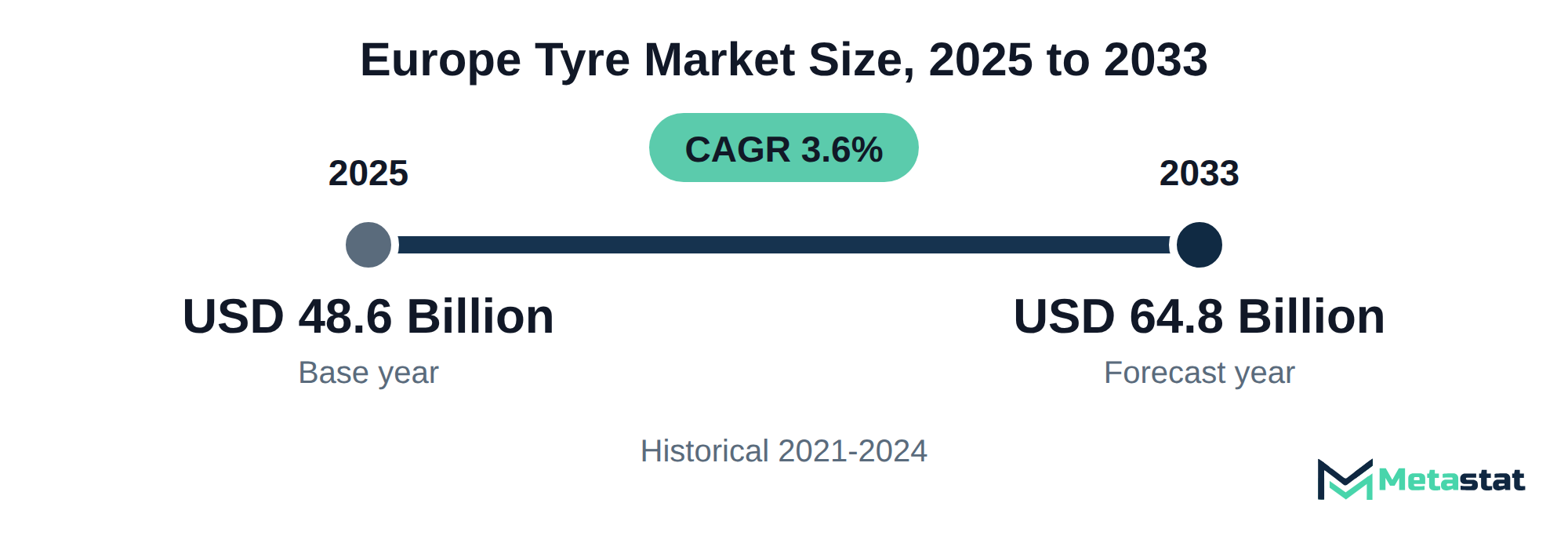
Market Valuation: Valued at $48.6 Billion in 2025, projected to reach $64.8 Billion by 2033 at a 3.6% CAGR.
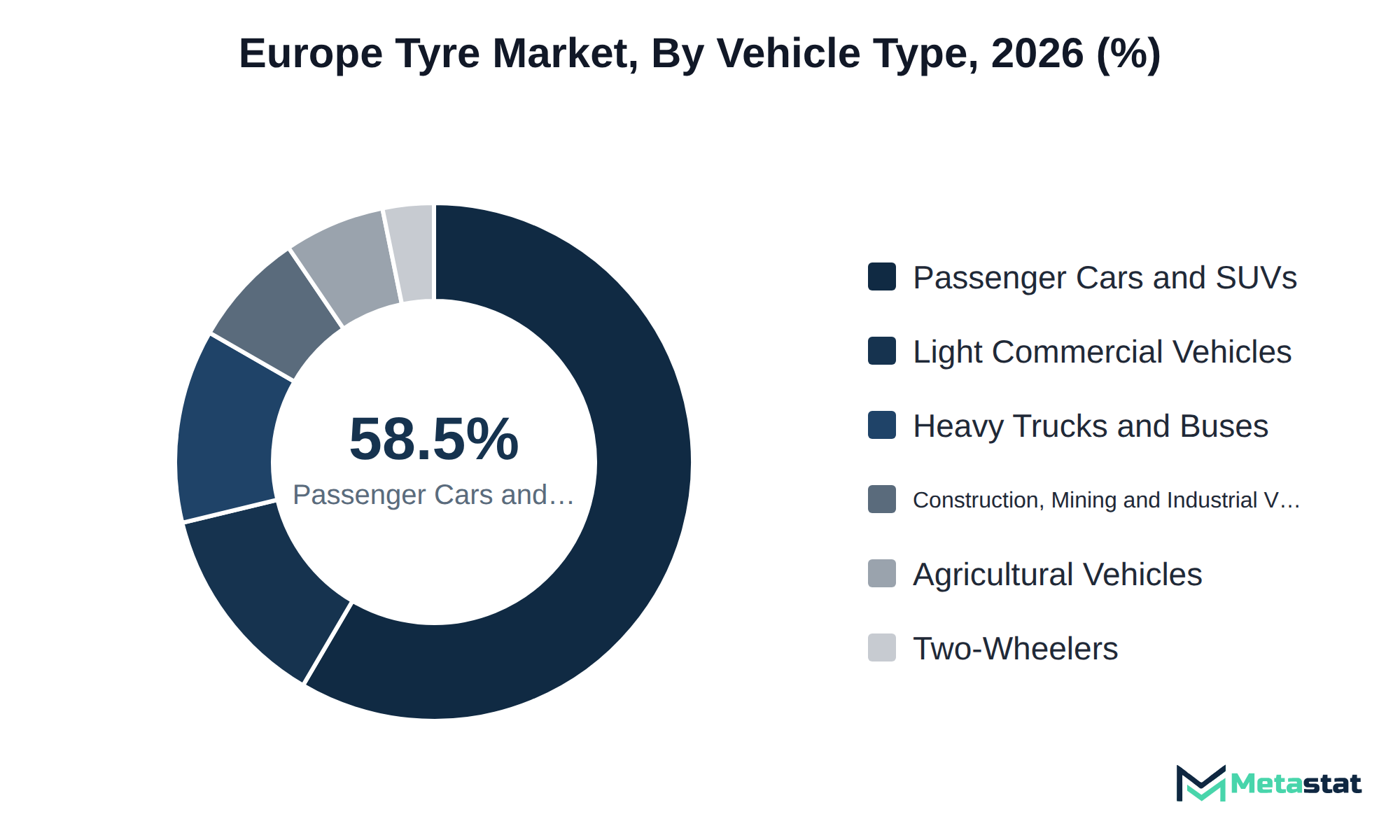
Dominant Segment: Passenger cars and SUVs lead the Europe Tyre market, driven by rising consumer preferences for personal mobility and comfort. This segment is projected to maintain a steady growth rate, reflecting the increasing demand for high-quality and performance-oriented tyres.
Geographic Lead: Germany is the leading region in tyre consumption, supported by a robust automotive industry and high purchasing power. The country's strong regulations on vehicle safety and emissions further bolster the demand for quality tyres.
What's Inside: The report provides a comprehensive analysis of the Europe Tyre market, including competitive coverage, insights into various vehicle types, and detailed forecasts from 2026 to 2033. It explores market dynamics, technological advancements, and consumer trends shaping the industry.
Emerging Trends: The adoption of all-season tyres is increasing, driven by consumer demand for convenience and lower CO2 emissions. This trend reflects a broader shift towards sustainable practices and innovative tyre solutions in the market.
Growth Potential: The light commercial vehicles segment is poised for significant growth, with a projected CAGR of 4.1% through 2033. This growth is fueled by the rising demand for efficient transportation solutions in logistics and delivery services.
Choose Your License
Europe Tyre Market
The Europe Tyre market was valued at USD 48.6 billion in 2025 and is projected to reach USD 64.8 billion by 2033, growing at a CAGR of 3.6% over the forecast period.
The Europe Tyre market encompasses the production and distribution of tyres for various vehicle types, including passenger cars, light commercial vehicles, heavy trucks, and two-wheelers. Buyers invest in tyres because they directly affect vehicle performance, safety, and fuel efficiency. The demand for high-quality tyres reflects the increasing emphasis on vehicle safety and performance, particularly in regions with stringent regulations regarding vehicle emissions and safety standards.
Growth in the market is driven by rising vehicle ownership and increasing demand for replacement tyres. Among the segments, passenger cars and SUVs represent the largest share, reflecting consumer preferences for personal vehicles. Germany leads regional tyre consumption, supported by a strong automotive industry and high purchasing power. The market is projected to expand, driven by the evolving automotive landscape, including the shift toward electric and hybrid vehicles.
The growth of the market is further supported by advancements in tyre technology, which enhance durability and performance. Innovations including fuel-efficient tyres and improved tread designs contribute to market growth. The emphasis on sustainability influences purchasing decisions, leading to increased demand for eco-friendly tyre options. These factors position the Europe Tyre market for steady growth in the coming years.
Purchases in the Europe Tyre market reflect a combination of durability, performance, and safety, essential for various vehicle types. Buyers prioritize high-quality tyres that enhance driving comfort and vehicle handling. The increasing focus on sustainability influences customer decisions, leading to a demand for eco-friendly tyre options. Manufacturers innovate and develop products that align with environmental standards, thereby enhancing market appeal.
Rising demand for passenger cars and SUVs, the segment with the largest value, is the primary driver of market growth. This segment is expected to maintain a steady growth rate, supported by changing consumer preferences towards personal mobility and comfort. Among the regions, Germany stands out with the largest share, reflecting strong automotive production and a well-established retail network, which significantly contribute to the overall market expansion.
Investment in advanced tyre technologies and materials represents a key growth driver. Manufacturers increasingly allocate resources to research and development, focusing on enhancing tyre performance and longevity. This commitment helps companies meet consumer expectations and regulatory requirements, supporting sustained demand in the European market.
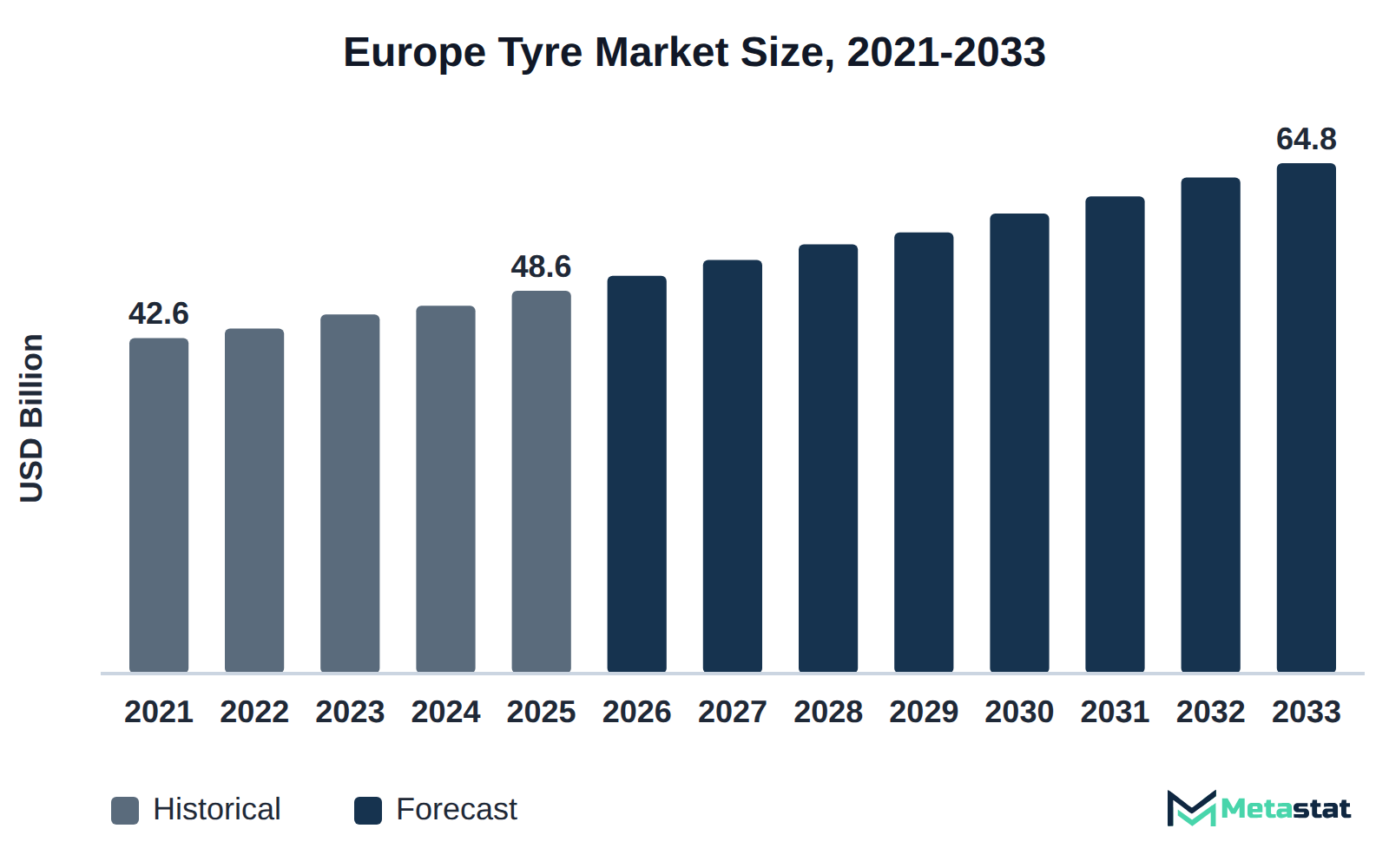
The adoption of all-season tyres is gaining traction among consumers in the Europe Tyre market due to their versatility and convenience. This shift arises from changing consumer preferences, where buyers seek products that reduce the hassle of seasonal tyre changes. In 2026, the market for replacement tyres is expected to reach USD 35.3 billion, indicating significant demand for these versatile solutions.
The increasing awareness of environmental factors influences this trend, with all-season tyres contributing to lower CO2 emissions compared to traditional seasonal options. Consequently, manufacturers are adjusting their production strategies to emphasize the development of high-quality all-season products. This strategic focus supports sustainable practices and appeals to a broader consumer base.
The competition among tyre manufacturers intensifies, driving innovation and technology advancements in tyre construction. The shift towards all-season tyres enhances market dynamics, reflecting a commercial opportunity for suppliers who align their offerings with these evolving consumer needs. The growing preference for all-season tyres is shaping future product lines and influencing purchasing decisions across various demographics.
The Europe Tyre market observes a distinct trend in the pricing of electric vehicle (EV) tyres, reflecting the advanced technology and specifications required for optimal performance. Premium EV tyres incorporate specialized materials and design features that enhance energy efficiency and reduce rolling resistance, ultimately extending the vehicle's range. These specifications contribute to a higher price point, catering to consumers willing to invest in performance and sustainability. For example, the segment for passenger cars and SUVs is projected to grow from USD 29.6 billion in 2026 to USD 38.5 billion by 2033, indicating a significant demand increase for advanced tyre solutions.
Buyers in the market engage in long-term contracts with manufacturers to secure competitive pricing and ensure consistent supply. These contracts typically provide fixed pricing for an agreed period, allowing fleet operators and individual consumers to manage their budgets effectively. The premium pricing associated with EV tyres reflects the investment in research and development focused on sustainability and innovation. While the market continues to evolve, the emphasis on high-quality products and reliable pricing strategies will shape purchasing decisions within the growing electric vehicle segment.
Online tyre sales have gained significant traction in recent years, reshaping the distribution landscape within the Europe Tyre market. E-commerce platforms offer convenience for consumers, allowing them to compare prices and find suitable options efficiently. In 2025, the total market value reached USD 48.6 billion, reflecting the growing trend towards digital purchasing channels. The increase in online sales is driven by changing consumer preferences, with an increasing number of buyers seeking easy access to product information and competitive pricing.
The fitment network is essential in this process. Consumers purchasing tyres online require reliable installation services, leading to partnerships between online retailers and local fitment centers. These fitment centers also form part of the wider automotive aftermarket, which serves vehicles already on the road. This collaboration enhances customer satisfaction while ensuring proper tyre installation, which is vital for safety and performance. Combining online sales with reliable fitment networks supports an efficient purchasing experience for consumers who prioritize convenience.
While the market evolves, investment in logistics and distribution systems becomes vital for companies aiming to capitalize on this trend. Delivery of tyres ordered online also depends on Europe's courier, express and parcel networks. Efficient supply chains and strategic partnerships with fitment networks directly impact the competitive positioning of tyre manufacturers and retailers in the Europe Tyre market. The pursuit of operational efficiencies and improved customer service is expected to drive further growth in online tyre sales, creating new opportunities for both established players and emerging entrants in the market.
The evolving composition of European vehicle fleets significantly influences replacement tyre demand. The passenger cars and SUVs category is projected to expand from USD 29.6 billion in 2026 to USD 38.5 billion by 2033, reflecting a compound annual growth rate (CAGR) of 3.8%. This growth results from increasing ownership of personal vehicles and a rising preference for SUVs, which typically require higher-quality tyres.
Light commercial vehicles will see a noteworthy increase, with an anticipated value of USD 8.6 billion by 2033, driven by growth in e-commerce and delivery services that necessitate a dependable fleet. The combined rise in these segments indicates a shift in consumer preferences and operational needs, creating a direct impact on the demand for replacement tyres. Fleet management software can help operators track tyre wear and replacement costs across their vehicles.
This shift presents opportunities for suppliers in the Europe Tyre market to enhance their product offerings, focusing on improved durability and performance to meet the evolving demands of modern vehicle fleets. Operational costs for tyre maintenance and replacement shape purchasing decisions, so aligning product strategies with market trends is essential for success.
The increasing age of vehicles across Europe stimulates higher replacement demand among consumers. Many vehicle owners recognize the importance of maintaining tyre performance and safety, leading to an uptick in tyre purchases. This trend is particularly evident among passenger cars and SUVs, where the average vehicle age continues to rise. The aging vehicle population necessitates timely tyre replacements, influencing overall market dynamics. With heightened awareness regarding safety and performance, consumers increasingly prioritize quality, driving higher spending within the market.
Demand for replacement tyres is further supported by changing consumer preferences toward premium products that enhance driving experience and safety. This shift in buyer behavior contributes significantly to market growth, with consumers investing in higher quality options for their vehicles.
Innovations in tyre construction technologies significantly influence the Europe Tyre market. Advances in materials science and manufacturing processes enhance performance characteristics, promoting durability and fuel efficiency. Improved compounds reduce rolling resistance, directly impacting fuel economy for vehicles, particularly in passenger cars and light commercial vehicles. The shift towards high-performance and eco-friendly tyres aligns with growing consumer preferences for sustainability, driving demand for products that contribute to lower emissions.
The integration of smart tyre technologies, including pressure monitoring systems and sensors, broadens the scope for user engagement and safety. These technologies provide real-time data, enabling proactive maintenance and performance optimization, which increases consumer confidence in product reliability. The innovation cycle within the market creates opportunities for premium pricing strategies, benefiting manufacturers who invest in advanced development. Such advancements are expected to enhance competitive dynamics, influencing market growth patterns throughout the forecast period.
Price sensitivity significantly impacts demand for tyres in the Europe Tyre market, particularly among consumers purchasing replacement tyres. Rising production costs and inflationary pressures contribute to heightened scrutiny on price points, leading buyers to delay purchases or consider lower-cost alternatives. This cautious approach results in slower uptake of premium tyre options, particularly in segments including passenger cars and SUVs, where budget-conscious consumers dominate. The focus on cost-effectiveness restricts the growth of the original equipment segment, while automakers face challenges in passing increased tyre costs onto end-users. The emphasis on price restricts market expansion, influencing overall sales volumes and affecting manufacturers’ revenue growth. Price sensitivity particularly influences consumers' willingness to invest in advanced tyre technologies that enhance performance and safety. The overall consequence of this restraint shapes competitive dynamics within the market, encouraging manufacturers to innovate while remaining price competitive.
Rising input costs challenge suppliers within the Europe Tyre market, limiting profit margins and forcing adjustments in pricing strategies. Increased prices for raw materials, driven by fluctuations in global commodity markets, create significant cost pressures. Rubber is a core input in tyre compounds, so commodity price swings feed directly into production costs. Suppliers have begun to implement cost-control measures, including optimizing production processes and sourcing alternative materials to mitigate these impacts. Innovations in tyre manufacturing processes improve efficiency and lower operational costs. Strategic partnerships with raw material providers enable better negotiation terms and potential cost reductions, promoting stability in supply chains.
Despite these strategies, maintaining competitive pricing while addressing rising costs remains a significant challenge. Suppliers balance quality and affordability, ensuring that customer satisfaction does not decline. The competitive landscape necessitates continuous adaptation, with companies striving to protect market share without sacrificing profit margins while maintaining a focus on sustainable practices and product innovation. These dynamics shape the profitability outlook, pushing suppliers toward cost reduction and greater efficiency.
The light commercial vehicles segment within the Europe Tyre market presents significant growth potential with a projected compound annual growth rate (CAGR) of 4.1% through 2033. This segment caters to various industries, including logistics and delivery services, which increasingly rely on efficient transportation solutions. The growing demand for e-commerce and enhanced urban logistics strategies contributes to an expanding fleet of light commercial vehicles, thereby increasing tyre replacement rates. Market participants have opportunities to introduce high-performance, fuel-efficient tyre options tailored for these vehicles, addressing the specific needs of operators focused on cost-effectiveness and sustainability. With the forecast value reaching USD 8.6 billion by 2033, investment in this segment is anticipated to yield strong returns, enhancing competitive positions for tyre manufacturers. This segment warrants strategic focus because it influences overall market growth.
The Europe Tyre market is segmented based on Vehicle Type, Tyre Construction, Demand Category, and Region.
This segment primarily serves individual consumers and families, who require reliable and high-performance tyres for everyday travel and leisure activities. Demand derives mainly from the increasing preference for SUVs due to their versatility and perceived safety advantages compared to traditional cars. This segment distinguishes itself within the market through its higher growth rate compared to other vehicle types, including Heavy Trucks and Buses, which experience comparatively slower growth. In turn, the focus on enhancing fuel efficiency and reducing emissions drives innovations in tyre technology, further influencing consumer purchasing decisions in this segment. Tyre sizing in this segment is also tied to wheel specifications, including the alloy wheels fitted to many passenger vehicles.
Light Commercial Vehicles segment is estimated to reach USD 8.6 billion by 2033, at a CAGR of 4.1% during the forecast period. This segment primarily serves businesses requiring transportation solutions for goods, including logistics firms and small to medium-sized enterprises. Growth in this segment is driven by increasing demand for efficient urban delivery services, influenced by the expansion of e-commerce. Compared to other vehicle types, the Light Commercial Vehicles segment experiences faster growth due to rising preferences for flexible and responsive delivery solutions. Unlike passenger cars, which focus heavily on comfort and performance, light commercial vehicles emphasize utility and operational efficiency, making them more appealing to commercial users. The differentiation in growth rate highlights the unique demands of commercial buyers who prioritize reliability and cost-effectiveness.
Heavy Trucks and Buses segment is expected to reach USD 7.5 billion by 2033. Heavy trucks and buses support freight transportation and public transit, serving logistics companies and municipalities. This segment experiences growth driven by rising demand for efficient goods movement and increased urbanization, which enhances the need for public transport solutions. With a projected compound annual growth rate (CAGR) of 4.1%, this segment outpaces other vehicle types in the market. In comparison, passenger cars and SUVs show a CAGR of 3.8%, reflecting different purchasing motivations and operational requirements. The focus on durability and performance in heavy-duty tyres leads to higher cost ranges, distinguishing it from lighter vehicle segments. While the logistics sector adapts to evolving consumer habits, strategic investments in technology and infrastructure support sustained growth in this segment.
The Two-Wheelers segment is projected to grow at a CAGR of 3.1% during the forecast period. This segment includes motorcycle tyres and tyres for scooters and similar vehicles, primarily used for personal transportation and recreational purposes. Increased urbanization and the rising popularity of two-wheeled vehicles among commuters drive demand in this segment. Compared to other vehicle types, the Two-Wheelers segment experiences lower average prices, making it an attractive option for budget-conscious consumers. While demand for tyres in this segment is growing steadily, it does not match the faster growth rate of light commercial vehicles, projected at a CAGR of 4.1%. The distinct consumer base and varying price points define the unique characteristics of this segment within the broader Europe Tyre market.
Agricultural vehicles support the cultivation and management of land, helping farmers and agribusinesses raise productivity across agricultural processes. These vehicles require specialised tyres that withstand diverse terrains and heavy loads, ensuring efficient operations in fields and farms across Europe. Demand for agricultural vehicle tyres is influenced by factors including advancements in agricultural machinery and increasing mechanisation in farming practices. This segment generally experiences slower growth compared to others like passenger cars and SUVs. However, these tyres remain essential due to their specific applications, which differ from the more versatile needs of light commercial vehicles and heavy trucks. Farmers and agricultural businesses prioritise durability and performance in their tyre choices, leading to higher price points compared to other vehicle segments. The market continues to adapt to evolving agricultural practices, driving innovation in tyre design and technology.
Construction, Mining and Industrial Vehicles are used across construction, mining, and heavy industry. Construction equipment and other vehicles in this segment require durable tyres to withstand demanding conditions, including rough terrains and heavy loads. Demand for tyres in this segment primarily originates from businesses engaged in infrastructure development and resource extraction. Investment in infrastructure projects drives growth within this sub-segment. Compared to other vehicle types, the pricing for tyres in this category reflects higher performance characteristics tailored for demanding environments. This segment experiences distinct dynamics, focusing on durability rather than the rapid growth seen in lighter vehicle categories. Overall, the construction, mining, and industrial vehicles segment serves specialized needs, contributing significantly to the overall dynamics of the Europe Tyre market.
Radial segment is valued at USD 47.6 billion in 2026 and is projected to reach USD 61.3 billion by 2033, at a CAGR of 3.7% during the forecast period. This segment serves a variety of vehicles, including passenger cars, light commercial vehicles, and heavy trucks. Growth in this segment actively responds to heightened demand for fuel efficiency and performance, attracting manufacturers focused on technological advancements in tyre design. Radial tyres typically command higher prices compared to bias-ply alternatives, reflecting a distinct preference among consumers who prioritize durability and safety. In contrast, bias-ply tyres experience slower growth, influenced by their application in niche markets. The unique positioning of radial tyres provides manufacturers with opportunities to address evolving consumer preferences, further shaping the dynamics of the Europe Tyre market.
Bias-Ply segment is estimated to reach USD 2.6 billion by 2033, at a CAGR of 1.6% during the forecast period. This segment is commonly used in light-duty vehicles, agricultural applications, and industrial vehicles, catering to buyers seeking cost-effective solutions for specific operational needs. Demand for Bias-Ply tyres is influenced by the preference for traditional construction types among established markets, where buyers value durability over performance. Compared to other segments, including Radial tyres, which exhibit a higher CAGR of 3.7%, Bias-Ply growth remains slower. This slower adoption is driven by the increasing popularity of radial technology, known for enhanced fuel efficiency and performance. The market for Bias-Ply tyres, while stable, adjusts to evolving consumer preferences and technological advancements favouring radial alternatives.
Solid and Non-Pneumatic segment is expected to reach USD 0.9 billion by 2033. This segment finds application in specific industrial and agricultural vehicles, serving needs for durability and reliability in challenging environments. Forklift trucks are a common example of an industrial vehicle that runs on solid tyres. The growth trajectory of this segment is driven by increasing demand for specialized vehicles that require non-pneumatic solutions, offering advantages in maintenance and operational efficiency. Compared to other segments, Solid and Non-Pneumatic tyres experience slower growth rates, influenced by a more limited customer base and specific use cases. With a CAGR of 1.6%, this segment lags behind Radial tyres, which grow at 3.7%. The targeted use of Solid and Non-Pneumatic tyres in niche markets distinguishes it from broader applications including Passenger Cars and SUVs, focusing on unique performance requirements rather than general consumer demand. The market presents clear differentiation in applications and pricing strategies between these segments.
Replacement segment is valued at USD 35.3 billion in 2026 and is projected to reach USD 47.1 billion by 2033, at a CAGR of 4.2% during the forecast period. This segment caters to vehicle owners seeking to replace worn-out tyres, primarily targeting individual consumers and fleet operators. The rising age of the vehicle population drives demand for replacements, influencing buying patterns across various regions. Compared to the original equipment segment, which exhibits a slower growth rate of 2.2% CAGR, the replacement segment benefits from higher price sensitivity among consumers. Increasing awareness of tyre performance and safety standards influences consumer preference for high-quality replacement tyres, further differentiating this segment within the market. Innovations in tyre technology and materials enhance performance, contributing to overall demand for replacement tyres.
Original Equipment segment is estimated to reach USD 17.7 billion by 2033, at a CAGR of 2.2% during the forecast period. This segment includes tyres supplied directly to vehicle manufacturers, ensuring optimal performance and compliance with original specifications. Demand arises from automotive manufacturers that seek reliability and quality for their vehicles. A notable force influencing this segment involves the increasing production of vehicles, which drives the demand for new tyres. Compared to the Replacement segment, Original Equipment experiences slower growth due to its dependency on the automotive industry’s production rates, while Replacement tyres face higher demand driven by vehicle maintenance and ageing. Despite a lower CAGR than the Replacement segment, projected at 4.2%, Original Equipment represents a crucial component of the Europe Tyre market, supporting vehicle assembly lines and enhancing overall performance.
Germany segment is valued at USD 10.7 billion in 2026 and is projected to reach USD 13.3 billion by 2033, at a CAGR of 3.2% during the forecast period. This segment primarily serves consumers seeking replacement tyres for personal and commercial vehicles, reflecting structured demand driven by vehicle maintenance and safety standards. Factors influencing this segment include robust regulations aimed at reducing emissions and enhancing road safety, which support the adoption of high-quality tyres. Compared to other segments, Germany's segment exhibits moderate growth, highlighted by a relatively stable market environment. This stability contrasts with the more dynamic light commercial vehicle segment, which is expected to achieve a CAGR of 4.1%. The unique characteristics of the German market, including a strong automotive sector and consumer expectations for high-performance products, emphasize the importance of innovation and quality in tyre offerings.
France segment is estimated to reach USD 8.1 billion by 2033, at a CAGR of 3.3% during the forecast period. This segment primarily serves passenger vehicles, focusing on both consumer and commercial applications. Strong demand for replacement tyres drives growth in this segment, reflecting an increase in vehicle ownership and usage. Compared to other segments, including Germany, which shows a CAGR of 3.2%, France exhibits slightly higher growth. However, the average price point for tyres in this region remains competitive, influencing buyer choices. Regulatory factors, including environmental standards, increasingly impact tyre production and design, pushing manufacturers to innovate. Changes in consumer preferences toward sustainable products contribute to the evolving strategies of tyre suppliers in the Europe Tyre market.
UK segment is projected to reach USD 8.2 billion by 2033. This segment serves the replacement demand for tyres in vehicles, including passenger cars and light commercial vehicles. The segment experiences growth driven by an increase in vehicle ownership and rising consumer spending on vehicle maintenance. Compared to other vehicle types, the growth rate in the UK segment remains moderate, with a compound annual growth rate (CAGR) of 3.3%. The need for high-quality, durable tyres due to varying driving conditions across the UK influences purchasing decisions, differentiating this segment from others with higher growth trajectories, including light commercial vehicles, which are projected to grow at a CAGR of 4.1%. Maintaining a focus on performance and safety in tyre products remains essential in this region, contributing to the evolving dynamics of the Europe Tyre market.
Italy is projected to grow at a CAGR of 3.2% during the forecast period. The segment serves a diverse range of consumers, including individual vehicle owners and commercial fleet operators seeking reliable performance. The increasing demand for passenger cars and light commercial vehicles drives this segment, reflecting a robust automotive industry in Italy. Competition among tyre manufacturers intensifies, with companies focusing on innovative technologies and sustainable materials to differentiate their products. The segment's growth rate aligns closely with the overall market, presenting opportunities for companies aiming to expand their footprints in the region. Price sensitivity among consumers influences purchasing decisions, encouraging manufacturers to offer competitive pricing strategies alongside quality assurance. These dynamics highlight a unique blend of factors, setting this segment apart from others in the market.
Spain is an emerging region within the Europe Tyre market, characterized by a growing demand for tyres across various vehicle types. The segment serves a diverse clientele, including passenger vehicles, light commercial vehicles, and two-wheelers. One significant demand driver is the increasing urbanization in Spain, leading to higher vehicle ownership and usage rates. This trend supports the demand for replacement tyres, which tends to grow at a faster rate than original equipment tyres. Compared to other regions, Spain experiences unique growth dynamics due to its distinct automotive market structure and consumer preferences, distinguishing it from larger markets like Germany and France.
The Russia segment is an important part of the Europe Tyre market. This segment caters primarily to consumers and businesses requiring various tyre solutions for passenger vehicles, commercial fleets, and industrial applications. Demand for tyres in Russia is influenced by fluctuating economic conditions and regulatory frameworks impacting vehicle ownership and operation. Price sensitivity is higher in this region due to economic volatility, which affects purchasing decisions compared to other segments, including Germany or the UK. Consequently, this situation leads to a different competitive landscape, where local manufacturers and international brands vie for market share, focusing on cost-effective solutions tailored to the needs of Russian consumers. Overall, regional dynamics shape the strategies of players in the market, driving innovations and adaptations to the specific demands of Russian buyers.
The Rest of the Europe segment encompasses various countries not specifically categorized, contributing to the broader dynamics of the Europe Tyre market. This segment serves a diverse range of buyers, including individual consumers and commercial enterprises across several vehicle types. Demand within this segment is influenced by economic growth, which drives increased vehicle usage and, consequently, tyre replacement needs. Regional differences in consumer preferences and purchasing power shape the market landscape. Compared to more established segments, the Rest of the Europe segment exhibits slower growth patterns due to varying levels of industrialization and infrastructure development across countries, impacting overall demand for tyres.
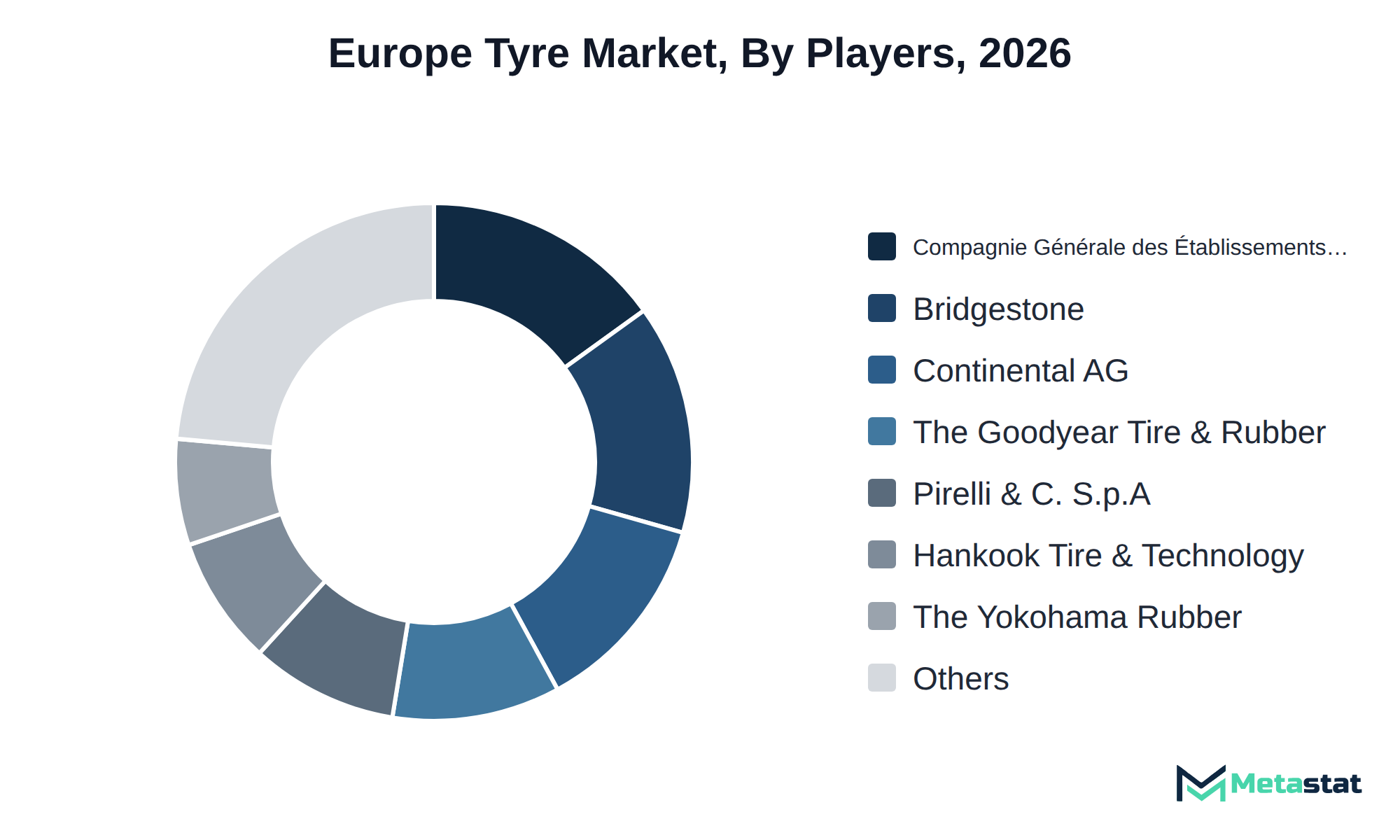
In the Europe Tyre market, companies adopt various strategies to capture market share. Major players like Compagnie Générale des Établissements Michelin, Bridgestone Corporation, and Continental AG focus on high-performance tyres, targeting both passenger and commercial vehicle segments. Their emphasis lies on innovation, safety, and sustainability, appealing to environmentally conscious consumers and fleet operators.
Buyers in the market prioritize factors including price, certification, customization, and service when making purchasing decisions. Pirelli & C. S.p.A. specializes in premium tyres, leveraging its reputation for performance and quality to attract high-end consumers. Meanwhile, companies like Hankook Tire & Technology Co., Ltd. and Nokian Tyres plc focus on providing value through reliable performance and competitive pricing, catering to a broad audience seeking cost-effective solutions.
This growth relies on several key developments within the Europe Tyre market. The increasing demand for passenger cars and SUVs, driven by a shift towards personal mobility, significantly contributes to market expansion. The rise in replacement tyre demand is essential for achieving the forecasted market size. The growth of light commercial vehicles, with a compound annual growth rate of 4.1%, further supports this upward trajectory.
Potential risks exist that could hinder progress. A slowdown in economic growth across major regions, particularly Germany and France, negatively impacts consumer spending on tyres. If manufacturers face delays in adopting innovative tyre technologies or encounter supply chain disruptions, these factors limit market growth. Navigating these challenges will play a critical role in determining whether the market reaches USD 64.8 billion by 2033.
By Vehicle Type: Passenger Cars and SUVs, Light Commercial Vehicles, Heavy Trucks and Buses, Two-Wheelers, Agricultural Vehicles, Construction, Mining and Industrial Vehicles
By Tyre Construction: Radial, Bias-Ply, Solid and Non-Pneumatic
By Demand Category: Replacement, Original Equipment
By Region: Germany, France, UK, Italy, Spain, Russia, Rest of the Europe
The report strategically identifies and profiles the key market players and analyses their core competencies in each sub-segment of the Tyre market.
Report Attributes | Details |
Study Period | 2021-2033 |
Base Year | 2025 |
Estimated Year | 2026 |
Forecast Period | 2026-2033 |
Historical Period | 2021-2025 |
Growth Rate | CAGR 3.6% from 2026 to 2033 |
Revenue Unit | USD billion |
Segmentation | By Vehicle Type, Tyre Construction, Demand Category, Region, and Region |
Find answers to common questions about this report
The Tyre market size was valued at USD 48.6 billion in 2025.
The market is projected to grow at a CAGR of 3.6% during the forecast period from 2026 to 2033.
The leading segment in the Tyre market is Passenger Cars and SUVs, with a projected value of USD 38.5 billion by 2033. This segment shows a compound annual growth rate of 3.8 percent from 2026 to 2033.
The increasing age of vehicles across Europe stimulates higher replacement demand among consumers. Innovations in tyre construction technologies enhance performance characteristics, promoting durability and fuel efficiency.
Price sensitivity restrains growth in the Tyre market, leading consumers to delay purchases or consider lower-cost alternatives. Rising input costs challenge suppliers, limiting profit margins and forcing adjustments in pricing strategies.
The increasing age of vehicles across Europe drives higher replacement demand, particularly among passenger cars and SUVs. innovations in tyre construction technologies and the integration of smart tyre technologies enhance performance and safety, further stimulating consumer interest and adoption.
The Tyre market is estimated to reach a valuation of USD 64.8 billion by 2033.
Key players operating in the Tyre industry include Compagnie Générale des Établissements Michelin, Bridgestone Corporation, Continental AG, The Goodyear Tire & Rubber Company, Pirelli & C. S.p.A., Hankook Tire & Technology Co., Ltd., and Sumitomo Rubber Industries, Ltd.
Passenger cars and SUVs are projected to grow from USD 29.6 billion in 2026 to USD 38.5 billion by 2033, reflecting a compound annual growth rate (CAGR) of 3.8%.
The light commercial vehicles segment has the highest growth rate, with a projected CAGR of 4.1% through 2033, reaching a forecast value of USD 8.6 billion.
The analysts below cover Automotive and Transportation research at Metastat Insights.
LEAD ANALYST
Utkarsh Khirodkar is a Lead Market Research Analyst at MetaStat Insight, specializing in market intelligence, technology sector assessments, and competitive strategy.

ENERGY & INFRASTRUCTURE INDUSTRY CONSULTANT
Automotive and Transportation · Electronics and Semiconductor · Energy and Power · Machinery & Equipment
Saurabh Vasant Ganvir consults for Energy & Infrastructure Industry at MetaStat Insight, specializing in renewable energy, solar EPC, and electric vehicle (EV) infrastructure markets.
Our team was tracking whether regional recycling infrastructure could realistically absorb the growing volume of lithium iron phosphate batteries over the next decade. The report did a solid job separating announced hydrometallurgical plant capacity from active, permitted operational throughput. That distinction made the feedstock availability projections and regional recovery rate models far more credible than standard commercial overviews.
Tracking capacity expansion in single-use bioprocessing requires dependable data on raw material availability and cleanroom-grade polymer supply chains. The competitive landscape chapter gave a grounded evaluation of secondary component suppliers across North America and Asia-Pacific rather than simply reprinting press releases. Having that level of supplier benchmarking helped clarify dual-sourcing considerations for our clinical pipeline planning.
When evaluating distributed energy resource management systems, standard research summaries tend to gloss over the operational differences between front-of-the-meter utility deployments and behind-the-meter industrial sites. The MetaStat Insight report addressed those distinctions directly, especially regarding software interoperability standards and grid interconnection backlogs. The five-year market sizing across regional transmission organizations provided actionable context for our grid modernization strategy.
Explore related market intelligence reports worth reading alongside this one.
Starting from
$2950