
LEAD ANALYST
Utkarsh Khirodkar is a Lead Market Research Analyst at MetaStat Insight, specializing in market intelligence, technology sector assessments, and competitive strategy.

Global Heat Exchanger Design Services Market Size, Share, By Service Type (Thermal Design and Rating Services, Hydraulic Design and Pressure Drop Analysis, Mechanical Design and Code Compliance Services, CFD, FEA and Structural Analysis Services, Detailed Engineering, Drafting and 3D Modelling, Design Verification, Re-rating and Optimization Services, Heat Exchanger Network Design and Pinch Analysis), By Heat Exchanger Type (Shell-and-Tube Heat Exchangers, Plate Heat Exchangers, Air-Cooled Heat Exchangers, Finned-Tube Heat Exchangers, Plate-Fin Heat Exchangers, Double-Pipe Heat Exchangers, Spiral Heat Exchangers, Others (Printed Circuit, Scraped-Surface and Specialty Heat Exchangers)), By End-Use Industry (Oil and Gas, Chemical and Petrochemical, Power Generation, HVAC and Refrigeration, Food and Beverage, Pharmaceuticals and Biotechnology, Pulp and Paper, Metals and Mining, Water and Wastewater Treatment, Others (Marine, Automotive and Aerospace)), Industry Analysis, Growth, Trends, and Forecast, 2026-2033
Report ID
MSI-5714
Published
November, 2026
Pages
277 Pages
Format
Historical
Base year
Forecast
Forecast period
Report Details
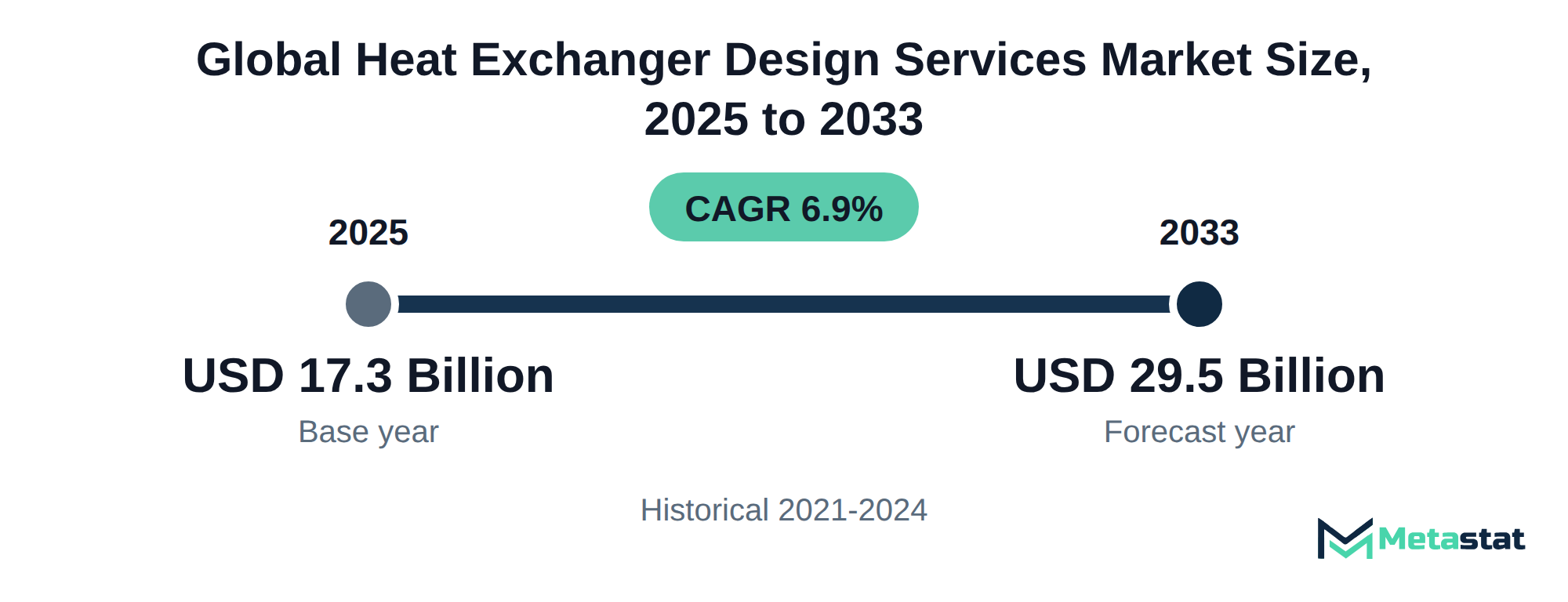
Market Valuation: Valued at $17.3 Billion in 2025, projected to reach $29.5 Billion by 2033 at a 6.9% CAGR.
Dominant Segment: Thermal Design and Rating Services leads the market, driven by the critical need for optimizing heat transfer efficiency across various industries.
Geographic Lead: North America is the leading region, with the US projected to maintain significant market share due to its focus on technological advancements and energy conservation initiatives.
What's Inside: This report provides a comprehensive analysis of market dynamics, competitive coverage, and detailed insights into service types, heat exchanger types, and end-use industries, along with forecasts up to 2033.
Emerging Demand: The Thermal Design and Rating Services segment is expected to grow significantly, reflecting the increasing emphasis on energy efficiency and regulatory compliance in industrial operations.
Technological Advancements: The integration of digital engineering tools, such as CFD and FEA, is transforming design capabilities, enhancing efficiency and accuracy in heat exchanger design services.
Choose Your License
Global Heat Exchanger Design Services Market
The global Heat Exchanger Design Services market was valued at USD 17.3 billion in 2025 and is projected to reach USD 29.5 billion by 2033, growing at a CAGR of 6.9% over the forecast period.
The Heat Exchanger Design Services market encompasses various services aimed at designing and optimizing heat exchangers used across multiple industries. Buyers invest in these services to enhance operational efficiency, reduce energy consumption, and comply with regulatory standards. The demand for specialized design services that ensure optimal performance and safety in heat exchanger applications is driven by these factors.
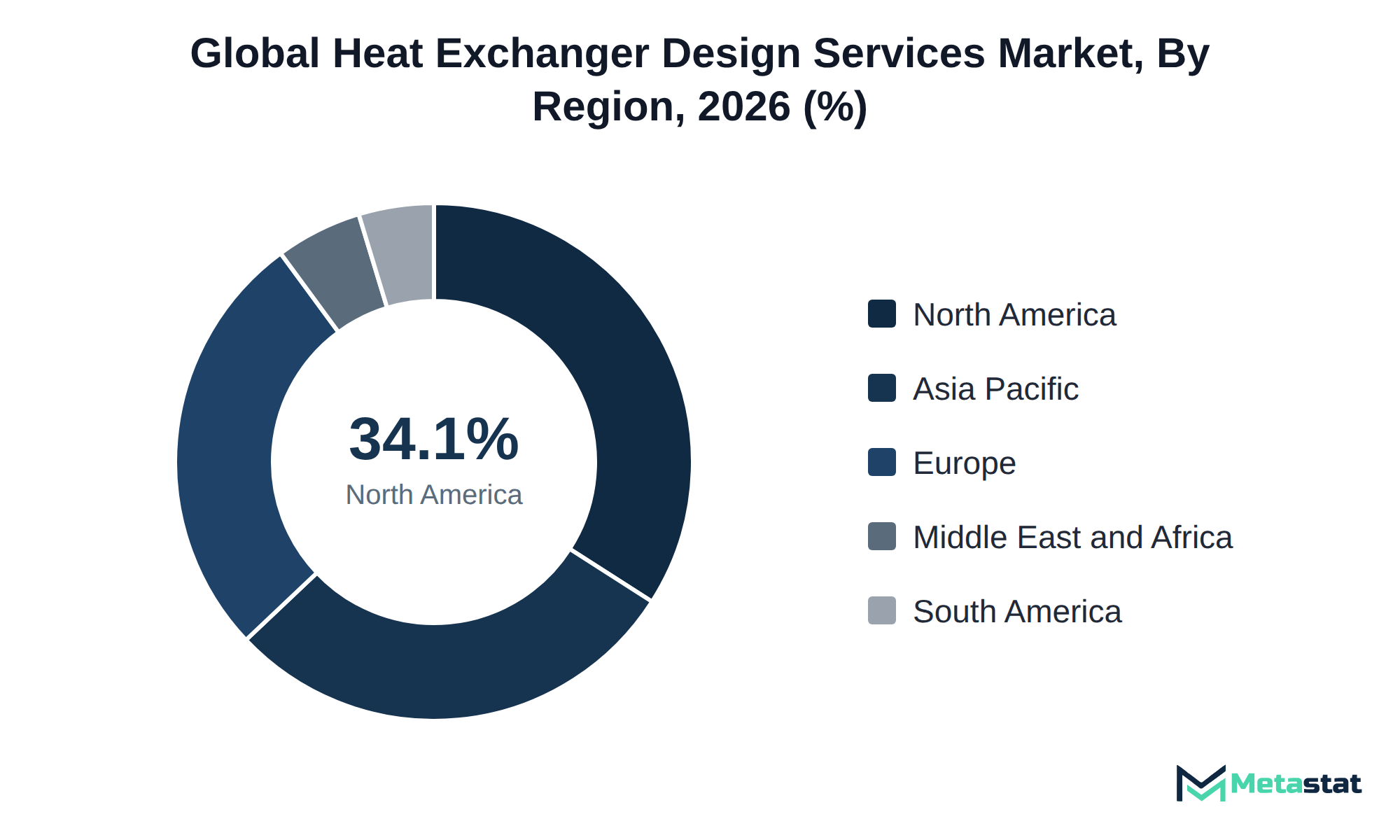
Growth in the market is fueled by the increasing need for energy-efficient solutions in industrial processes. Among the segments, Thermal Design and Rating Services represent the highest value, reflecting their role in optimizing heat transfer efficiency. North America holds 34.1% of the market in 2025, with the US leading in 2026. This region benefits from a strong focus on technological advancements and energy conservation initiatives.
Another growth driver is the rising demand for heat exchangers in the oil and gas sector, which calls for reliable and efficient thermal management solutions. The market's expansion is supported by ongoing investments in infrastructure and the development of new technologies, particularly in emerging economies. These trends point to a strong outlook for the Heat Exchanger Design Services market.
The Heat Exchanger Design Services market addresses the complexities of designing and optimizing heat exchangers, which improve energy efficiency across various sectors. Buyers invest in these services due to the growing emphasis on sustainability and operational efficiency. Increased regulatory pressures and market competition drive organizations to seek advanced design solutions that reduce energy consumption and improve process reliability.
Growth in the market is propelled by rising demand for energy-efficient solutions, particularly in the oil and gas industry. This sector represents the largest segment in terms of value, reflecting the extensive applications of heat exchangers in extraction, refining, and processing activities. The focus on reducing carbon emissions and optimizing production processes contributes to the heightened need for innovative heat exchanger designs. North America is projected to account for a significant share of the market in 2025, driven by robust demand from the US.
Technological advancements, including the integration of computational fluid dynamics (CFD) and structural analysis, enhance the design capabilities within the market. These innovations improve the accuracy and efficiency of heat exchanger systems, attracting investments from industries seeking to modernize their infrastructure. The demand for these advanced design services is expected to continue its upward trajectory, reflecting ongoing commitment to sustainability and operational excellence across various sectors.
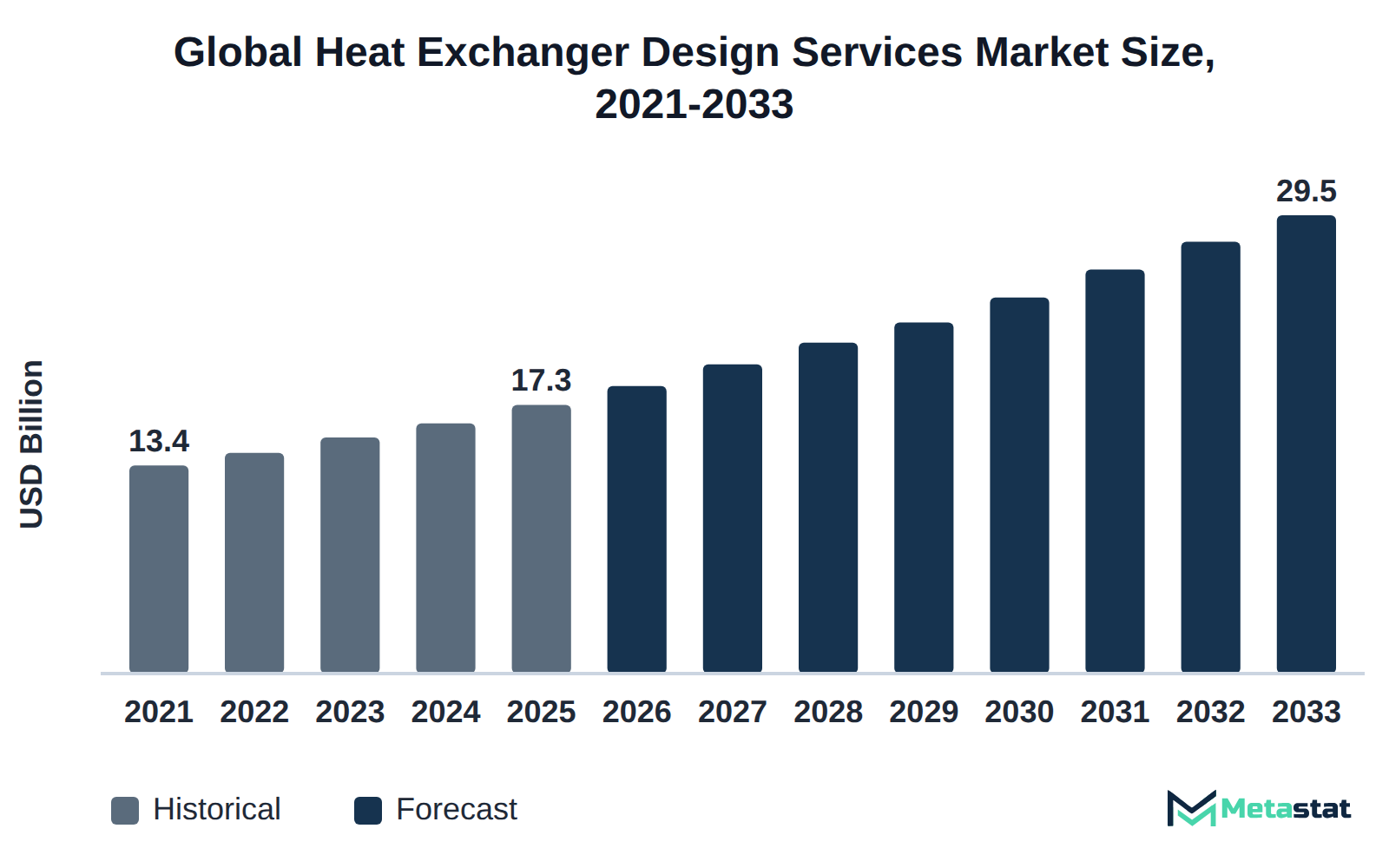
Advances in thermal and mechanical design optimization strongly influence heat exchanger efficiency and shape the direction of the Heat Exchanger Design Services market. The segment for Thermal Design and Rating Services, projected to grow from USD 4.5 billion in 2026 to USD 6.8 billion by 2033, reflects this trend. Enhanced design methodologies, including Computational Fluid Dynamics (CFD) and Finite Element Analysis (FEA), facilitate the development of more efficient and reliable heat exchangers. These technologies enable precise modeling of thermal and hydraulic performance, resulting in optimized designs that meet specific operational requirements.
Firms that invest in advanced design optimization benefit from reduced operational costs and improved energy efficiency. The focus on energy conservation and sustainable practices among industries including Oil and Gas and Chemical and Petrochemical drives this trend further. The increasing demand for efficient heat exchange solutions reflects the market's evolution toward integrating innovative technologies and engineering practices. Enhanced design capabilities are essential for meeting regulatory standards and client expectations, advancing competitiveness in the Heat Exchanger Design Services market.
The approach to pricing and contract models in the Heat Exchanger Design Services market significantly influences buyer purchasing decisions. Typically, service providers offer various pricing structures, including fixed-price contracts and time-and-materials arrangements. Fixed-price contracts present a clear budget for clients, securing a defined scope of work for a predetermined fee, which often appeals to industries with stringent financial constraints. In contrast, time-and-materials contracts allow flexibility in project scope, permitting adjustments when requirements evolve. Such models are prevalent in industries like oil and gas, where project complexity increases during execution.
This growth highlights the importance of competitive pricing strategies among service providers. Buyers seek long-term partnerships with firms that offer transparent pricing and demonstrate value through technical expertise and innovative solutions. Therefore, adopting flexible pricing models facilitates deeper client relationships and enhances market share in a competitive landscape.
The oil and gas industry demonstrates a growing demand for specialized heat exchanger design and performance upgrades. Investments in innovative solutions enhance system efficiency and reduce operational costs. In 2026, the oil and gas segment contributes USD 4.5 billion to the Heat Exchanger Design Services market, expanding to USD 6.7 billion by 2033, reflecting a compound annual growth rate of 6%.
Operators in this sector prioritize reliability and efficiency, leading to increased adoption of advanced heat exchanger technologies. Upgrading existing systems with tailored designs enables facilities to maximize thermal performance and comply with evolving regulatory standards. Enhanced thermal efficiency results in significant cost savings and improved environmental sustainability.
While the market progresses, the emphasis on performance upgrades drives competition among service providers, prompting continued innovation in design methodologies. Optimizing heat exchanger systems benefits individual operations and supports overall market growth.
Digital engineering tools are enhancing the Heat Exchanger Design Services market by improving design accuracy and efficiency. These tools facilitate complex simulations and analyses, allowing engineers to optimize designs before physical prototypes are created. This capability reduces development time and costs linked to traditional methods.
The implementation of computational fluid dynamics (CFD) and finite element analysis (FEA) within the design process supports detailed assessments of heat exchanger performance under various operational conditions. The services related to CFD, FEA, and structural analysis exhibit an annual growth rate of 8.1%. This technological advancement attracts various sectors, including oil and gas, chemicals, and power generation, which increasingly require high-performance heat exchangers. The shift toward digital tools streamlines the engineering process and improves overall product reliability and compliance with industry standards.
The growing emphasis on energy efficiency drives increased investment in heat exchanger design services, particularly from industries including oil and gas, chemical and petrochemical, and power generation. These buyers seek advanced solutions to reduce operational costs and comply with stringent environmental regulations. Enhanced energy efficiency lowers utility expenses and contributes to sustainability goals, making these services more attractive. The market is expected to reach USD 29.5 billion by 2033, reflecting a compound annual growth rate (CAGR) of 6.9%. The ongoing transition towards cleaner energy sources and processes necessitates specialized heat exchanger designs that improve thermal performance and reliability. Industries adapting to evolving demands will experience significant growth in the heat exchanger design services market, driven by the need for customized solutions that support operational excellence and compliance with industry standards.
Specialized heat exchanger design services are increasingly sought after across various sectors, reinforcing the market's expansion. Industry players invest in innovative design and optimization techniques to enhance system performance and reduce energy consumption.
Advanced digital engineering tools significantly enhance design capabilities in the heat exchanger sector. The introduction of simulation-driven technologies, including computational fluid dynamics (CFD) and finite element analysis (FEA), supports precise modeling and analysis of heat transfer processes. This technology adoption streamlines design processes, reduces time-to-market, and lowers development costs for suppliers. Increased accuracy in simulations leads to optimized designs that fulfill diverse industry requirements, particularly in energy-intensive sectors including oil and gas, chemicals, and power generation.
The integration of these digital tools drives innovation within the Heat Exchanger Design Services market, allowing suppliers to meet growing demand for customized solutions. Enhanced design capabilities attract investments aimed at improving product offerings and operational efficiencies. Consequently, the market is projected to experience steady growth, driven by ongoing advancements in digital engineering technologies, which will play a vital role in shaping future design standards and competitive strategies.
Access to modern infrastructure significantly impacts the Heat Exchanger Design Services market, particularly affecting industries reliant on specialized heat exchangers for performance optimization. In regions with underdeveloped industrial frameworks, companies experience delays in adopting advanced design services, leading to slower uptake and smaller orders. The lack of sufficient facilities for manufacturing and implementing heat exchangers contributes to inefficiencies, causing buyers to postpone projects or seek alternatives that do not meet their performance needs. This situation proves detrimental for sectors including oil and gas, where precision in heat exchange design remains critical. The result is a constrained market environment, limiting growth potential and affecting overall demand within the heat exchanger design services sector. Companies face challenges in upgrading existing systems, thereby impacting their operational efficiency and competitiveness in the global market.
Talent costs represent a significant challenge for suppliers in the Heat Exchanger Design Services market. The increasing demand for skilled professionals in engineering and design roles drives salary expectations, impacting overall project costs. Suppliers experience pressure to maintain competitive pricing while ensuring high-quality service delivery. In response, many firms implement targeted training programs to enhance the skills of existing staff, thereby reducing reliance on external talent. Several companies invest in automation tools that streamline design processes, reducing time and labor costs. This strategic focus on workforce optimization and technological investments enables suppliers to mitigate rising talent costs while striving to maintain profitability. Effective management of these dynamics contributes to sustaining competitive advantages within the market.
Rapid growth in the Thermal Design and Rating Services segment indicates significant opportunity within the Heat Exchanger Design Services market. This segment is projected to reach USD 6.8 billion by 2033, reflecting a compound annual growth rate (CAGR) of 6.2%. Various industries, particularly oil and gas, increasingly prioritize thermal efficiency in their operations, driving demand for specialized design services. Suppliers that offer innovative thermal design solutions benefit from this trend, enhancing their market positioning and revenue potential. The ability to provide accurate thermal modeling and performance assessments represents a critical advantage for service providers, facilitating the optimization of heat exchangers across diverse applications. Investment in advanced analytical tools and methodologies supports firms in meeting the growing expectations of clients focused on efficiency and sustainability. This increasing emphasis on thermal design services illustrates the evolving dynamics within the market and highlights the potential for growth in addressing specific industrial needs.
The Global Heat Exchanger Design Services market is segmented based on Service Type, Heat Exchanger Type, and End-Use Industry.
This segment focuses on optimizing the thermal performance of heat exchangers, serving industries including oil and gas, chemical, and power generation. Rapid advancements in technology and heightened focus on energy efficiency drive demand, compelling firms to invest in these services for improved operational efficiency. Compared to other service segments, Thermal Design and Rating Services exhibits steady growth, influenced by stringent regulatory requirements for energy conservation. In particular, its growth rate is slower than that of CFD, FEA, and Structural Analysis Services, which achieve a CAGR of 8.1%. Suppliers in this segment face challenges related to specialized skill requirements; however, the increasing emphasis on energy efficiency fuels expansion opportunities in the market.
Hydraulic Design and Pressure Drop Analysis segment is estimated to reach USD 3.8 billion by 2033, at a CAGR of 6.5% during the forecast period. This segment provides essential services for ensuring efficient fluid flow and minimizing pressure loss in heat exchangers, benefiting industries including oil and gas, chemical processing, and power generation. The demand for these services arises from the optimize system performance and enhance energy efficiency. Compared to other service types, this segment experiences a steady growth rate, influenced by advancements in hydraulic design technologies. The focus on improving system reliability and reducing operational costs drives investment in this area. The market increasingly recognizes the importance of precise hydraulic analysis, leading to a growing emphasis on detailed evaluations and simulations for effective design implementation.
Mechanical Design and Code Compliance Services segment is expected to reach USD 5.5 billion by 2033. This segment ensures that heat exchangers meet industry standards and safety regulations, primarily serving industries including oil and gas, power generation, and chemical processing. Compliance with stringent regulations drives demand for these services, pushing companies to invest in robust design processes. Unlike segments focusing on thermal or hydraulic design, this segment emphasizes regulatory adherence and structural integrity, appealing to clients who prioritize safety and compliance over rapid growth. The expected growth rate for this segment is aligned with the overall market growth of 6.9%, demonstrating its importance in maintaining operational standards while contributing to sustainable practices across various industries.
CFD, FEA and Structural Analysis Services segment is projected to grow at a CAGR of 8.1% during the forecast period. This segment focuses on computational fluid dynamics and finite element analysis, providing critical insights into the structural integrity and performance of heat exchangers. Industries including oil and gas, chemical processing, and power generation apply these services to enhance the reliability and efficiency of their systems. Continuous advancements in simulation technologies drive demand, enabling more precise modeling and optimization. Compared to other segments, this segment experiences higher growth due to the increasing complexity of heat exchanger applications and a growing emphasis on predictive maintenance. With an evolving technological landscape, firms in the market actively seek innovative solutions that improve performance while minimizing operational risks.
Detailed Engineering, Drafting and 3D Modelling involves the creation of precise engineering drawings and models that support the design and analysis of heat exchangers. This service is essential for engineers and designers in various industries, ensuring that specifications and compliance with codes are met. The segment sees significant activity from sectors including oil and gas, where complex designs necessitate detailed documentation and modeling to optimize performance and safety. The integration of advanced technologies into the design process contributes to efficiency gains, positioning this segment for growth. Unlike other service types, this segment focuses heavily on digital tools for visualization and simulation, differentiating it from simpler design services that do not require extensive modeling. The increasing complexity of heat exchanger systems drives demand for sophisticated engineering services, resulting in heightened investments in this area. Over time, the trend toward automation and precision in engineering contexts enhances the demand for these specialized services in the market.
Design Verification, Re-rating and Optimization Services focus on ensuring that existing heat exchanger systems operate efficiently and meet updated performance standards. Industries including oil and gas, chemicals, and power generation apply these services to enhance system reliability and optimize energy consumption. Increasing regulatory pressure for compliance with environmental standards significantly drives demand for these services. Unlike other segments, this service category experiences slower growth due to the time-intensive nature of verification processes compared to the more dynamic Thermal Design and Rating Services segment. Potential upgrades from evolving technology standards add to the value of these verification services, which support operational efficiency across various sectors. Ongoing optimization remains critical to ensuring competitive advantage and sustainability in the market.
Heat exchanger network design and pinch analysis optimizes thermal performance by minimizing energy consumption and maximizing heat recovery in systems. This service is employed predominantly by industries including oil and gas, chemical processing, and power generation, where efficient heat management significantly influences overall operational costs. The focus on sustainability and energy efficiency stimulates demand for these services, compelling organizations to invest in advanced analytical tools for effective thermal design. Unlike other service types, this segment benefits from a heightened emphasis on reducing energy costs, driving a strong growth trajectory. A shift toward stricter environmental regulations further increases the adoption of these design services, creating opportunities for suppliers to differentiate themselves through innovative solutions. Overall, the segment supports system efficiency for an environmentally conscious market.
Shell-and-Tube Heat Exchangers segment is valued at USD 6.3 billion in 2026 and is projected to reach USD 9.7 billion by 2033, at a CAGR of 6.3% during the forecast period. This type of heat exchanger plays a critical role in various industries, including oil and gas, chemical processing, and power generation, where efficient thermal exchange is essential for operational safety and productivity. Rising demand for energy efficiency drives significant investments in this segment, alongside regulatory pressures that require enhanced performance standards. Compared to other heat exchanger types, Shell-and-Tube Heat Exchangers experience steady growth, supported by their established applications and reliability. This ensures consistent demand from industrial clients, contrasting with faster-growing segments like Plate Heat Exchangers, which appeal to niche markets for compact designs and specialized applications. The market for Shell-and-Tube Heat Exchangers remains robust, reflecting ongoing investments in infrastructure and technology upgrades.
Plate Heat Exchangers segment is estimated to reach USD 5.7 billion by 2033, at a CAGR of 7.3% during the forecast period. This type of heat exchanger is widely applied in various industries including chemical processing, food and beverage, and HVAC applications, where efficient heat transfer is crucial. The growth driving this segment stems from the increasing need for energy efficiency and environmental sustainability, prompting industries to adopt advanced technologies. Compared to other heat exchanger types, Plate Heat Exchangers exhibit a higher growth rate, supported by their compact design and enhanced thermal efficiency. This sub-segment stands out due to its ability to provide effective heat transfer at lower pressures, making it a preferred choice for industries focused on optimizing thermal management systems. Ongoing innovations in design and materials further contribute to the expansion of this segment within the Heat Exchanger Design Services market.
Air-Cooled Heat Exchangers segment is expected to reach USD 4.2 billion by 2033. This type of heat exchanger finds applications primarily in industries including power generation, oil and gas, and chemical processing, where effective heat management is essential for operational efficiency. Factors driving growth in this segment include increasing demand for energy-efficient solutions and the adoption of advanced cooling technologies that improve performance. Compared to other segments, Air-Cooled Heat Exchangers experience moderate growth, with a CAGR that reflects their important role in industries focused on reducing operational costs and enhancing sustainability. The market for heat exchanger design services aligns with these trends, reflecting a commitment to integrating innovative cooling solutions to meet evolving industry requirements.
The Finned-Tube Heat Exchangers segment is projected to grow at a CAGR of 7.6% during the forecast period. This type of heat exchanger is employed in various industries, including oil and gas, chemical processing, and HVAC applications, where efficient heat transfer is critical. The increasing focus on thermal efficiency and sustainability within these sectors significantly enhances demand for Finned-Tube Heat Exchangers. This segment stands out due to its specialized design, which facilitates better thermal performance compared to other heat exchanger types. Ongoing advancements in design technologies further contribute to its appeal, prompting industries to adopt Finned-Tube configurations over traditional options. Overall, the heat exchanger design services market experiences strong momentum driven by this segment's unique capabilities and industry demands.
Plate-Fin Heat Exchangers feature a series of thin plates to create a compact design, enabling efficient heat transfer in various applications. Frequently employed in HVAC systems and refrigeration, these exchangers serve industries seeking improved thermal performance in limited space. The growth of this segment aligns with increasing demand for energy-efficient solutions and compact designs in applications including chemical processing and power generation. Competition from other heat exchanger types, particularly shell-and-tube configurations, poses challenges due to differences in pricing and design complexity. While the market shows significant growth potential, regulatory pressures for enhanced efficiency standards drive innovation in Plate-Fin Heat Exchangers, promoting advancements in materials and design methodologies. The Heat Exchanger Design Services market emphasizes this sub-segment's importance in meeting modern efficiency expectations.
Double-Pipe Heat Exchangers are characterized by a simple design that consists of one pipe inside another. This configuration allows for efficient heat transfer between the two fluids flowing through the pipes. Industries employing these exchangers include oil and gas, chemical processing, and HVAC sectors, where temperature regulation and energy efficiency play crucial roles. Demand for Double-Pipe Heat Exchangers is influenced by increasing energy efficiency requirements and advancements in thermal technology. Compared to other heat exchanger types, this sub-segment experiences slower growth due to its specific applications and limitations in handling large volumes. While other segments like Plate Heat Exchangers exhibit higher growth rates driven by versatility, Double-Pipe Heat Exchangers maintain a steady presence in the market due to their reliability and cost-effectiveness in suitable applications.
Spiral heat exchangers provide an efficient solution for heat transfer in applications where space is limited. These exchangers excel in various industries, including chemical processing and oil refining, where compact designs are crucial for system integration. Demand in this sub-segment is driven by the need for high efficiency and reliability while maintaining a smaller footprint compared to other heat exchanger types. In contrast to shell-and-tube and plate heat exchangers, spiral heat exchangers offer improved thermal performance for specific applications, including handling viscous fluids. This unique characteristic distinguishes them from other segments in the heat exchanger type category, resulting in increased interest from engineering firms and process industries seeking innovative thermal solutions. The market for heat exchanger design services experiences a growing shift toward advanced technologies that accommodate tighter process requirements, positioning spiral heat exchangers favorably for buyers.
Specialty heat exchangers, including printed circuit and scraped-surface types, focus on unique applications requiring customized thermal management solutions. These heat exchangers cater primarily to industries including pharmaceuticals, food processing, and biotechnology, where precise temperature control and efficiency are vital. Demand for these solutions stems from ongoing emphasis on energy efficiency and sustainability, leading to increased investment in technologies that enhance performance. Compared to other heat exchanger types, specialty heat exchangers often command higher prices due to their complex design and specific application requirements. Their growth trajectory differs, influenced by niche market dynamics and the need for specialized expertise in design and implementation. The Heat Exchanger Design Services market reflects increasing trends toward tailored solutions, driven by technological advancements and industry-specific demands.
This segment is essential in energy production, supplying heat exchangers for refining processes, oil extraction, and transportation. Demand is driven by the need for efficient thermal management solutions to improve energy recovery and minimize emissions. Compared to other segments, the Oil and Gas sector experiences steady growth due to ongoing investments in upgrading existing infrastructure and enhancing productivity, despite fluctuating global oil prices. The growth rate of 6% reflects the unique challenges and opportunities facing this industry, distinguishing it from segments like Chemical and Petrochemical, which is projected to grow at a higher CAGR of 7.1% during the same period. The Heat Exchanger Design Services market remains important for supporting the evolving needs of the oil and gas industry.
Chemical and Petrochemical segment is estimated to reach USD 5.8 billion by 2033, at a CAGR of 7.1% during the forecast period. This segment serves industries involved in the production of chemicals and petrochemicals, including refining, polymers, and specialty chemicals. The increasing demand for energy-efficient and sustainable processes drives significant investment in advanced heat exchanger design services. Regulatory pressures related to emissions and energy consumption compel companies to optimize their processes, enhancing the demand for specialized design services. Compared to other segments, including Oil and Gas, which reaches USD 6.7 billion by 2033, the Chemical and Petrochemical sector demonstrates a slightly faster growth trajectory, reflecting evolving market dynamics and technological advancements. This growing emphasis on sustainability and efficiency positions the Chemical and Petrochemical segment favorably within the overall market.
Power Generation segment is expected to reach USD 4.4 billion by 2033. This segment primarily serves energy production facilities requiring efficient thermal management solutions. The growing emphasis on sustainable energy sources significantly influences this segment. Increased investment in renewable energy technologies drives demand for advanced heat exchanger designs, reflecting a broader trend toward greener energy solutions. Compared to other segments, Power Generation exhibits moderate growth, with a projected CAGR of 6% through 2033. This growth rate contrasts with the Chemical and Petrochemical segment, which is anticipated to grow at a CAGR of 7.1%. The higher demand for innovative solutions in the Power Generation segment creates unique opportunities for service providers, distinguishing it from other segments in the Heat Exchanger Design Services market.
HVAC and Refrigeration segment is projected to grow at a CAGR of 7.9% during the forecast period. This segment serves industries focused on heating, ventilation, air conditioning, and refrigeration, providing essential services for thermal management and energy efficiency. Demand for advanced HVAC systems increases due to rising energy costs and regulatory pressures for sustainability. Companies and facilities prioritize reliable thermal solutions, contributing to market growth. Compared to other sub-segments, HVAC and Refrigeration experiences more rapid expansion, driven by technological advancements in energy-efficient designs. The market reflects heightened investment in sustainable infrastructure and green technologies, highlighting a shift toward the adoption of innovative heat exchanger solutions tailored for HVAC applications. The growth trajectory within the HVAC and Refrigeration segment emphasizes its significance in the broader Heat Exchanger Design Services market.
Food and Beverage applications rely on efficient heat transfer solutions to maintain product quality and ensure safety during processing. This segment serves industries that require precise thermal management, including dairy, beverage, and food processing sectors. The rise in health-conscious consumer behavior drives demand for advanced food processing technologies, influencing companies to adopt innovative heat exchanger designs. Regulations regarding food safety and energy efficiency further support the segment's growth. Compared to other segments, including Oil and Gas or Power Generation, the Food and Beverage segment experiences a distinct focus on operational reliability and compliance with stringent safety standards. The market emphasizes customization to meet specific processing requirements, which differentiates it from more standardized applications in other industries. Consequently, players within this sector prioritize specialized design services tailored for diverse food and beverage production processes.
Pharmaceuticals and biotechnology rely on advanced heat exchanger design services to support critical processes including drug manufacturing and bioprocessing. These services ensure optimal thermal management in applications that demand stringent regulatory compliance and precision. Pharmaceutical companies and biotechnology firms use these services to enhance production efficiency and product quality. Demand in this segment is driven by the increasing focus on innovative therapies and biopharmaceuticals, which require efficient thermal systems for processes like fermentation and chemical reactions. This segment experiences faster growth compared to others, reflecting the necessity for specialized, high-standard systems to meet the industry's evolving needs. Regulatory compliance and the push for energy-efficient solutions contribute to the segment's dynamics, differentiating it from other end-use industries that face different levels of requirements.
Pulp and Paper processes require precise heat exchanger design services to ensure efficient thermal management during production. Industries within this sector rely on effective heat transfer solutions to maintain product quality and energy efficiency. Demand in this segment is driven by increasing requirements for sustainable practices and environmental regulations, compelling manufacturers to optimize energy consumption. Pulp and Paper experiences lower growth rates due to market saturation and high operational costs associated with upgrading existing systems. This sub-segment serves specific buyers focused on energy efficiency and sustainable production practices, contrasting with other end-use industries that prioritize different operational factors. Heat exchanger design services tailored for this sector enhance productivity while meeting regulatory standards.
Metals and Mining focus on the extraction and processing of minerals and metals, employing heat exchangers for various thermal management applications. Companies in this sector use heat exchangers to regulate temperatures during processes including smelting and mineral processing, ensuring efficient energy use and maintaining operational safety. The rising demand for metals driven by infrastructure development and technological advancements supports growth in this segment. This sector differs from others due to its specialized applications and the need for robust equipment capable of withstanding extreme conditions. While segments including Oil and Gas and Chemicals experience rapid expansion, the Metals and Mining segment operates within a more stable growth trajectory. The tailored requirements for heat exchangers in this industry often involve higher costs compared to standard solutions, reflecting the complex nature of processes involved. Consequently, the market presents unique challenges and opportunities for service providers focused on meeting these specialized demands.
Water and Wastewater Treatment represents a crucial domain focused on improving the quality of water through various treatment processes. This segment finds application in municipal and industrial settings where the need for effective water management is critical. Increasing regulations concerning water quality and environmental protection drive demand within this segment. Industries including pharmaceuticals, food processing, and chemicals require specialized heat exchanger design services to ensure compliance and operational efficiency. Compared to other segments, the Water and Wastewater Treatment sector typically experiences slower growth due to the complexity and regulatory nature of projects. However, the emphasis on sustainable practices and innovative technologies continues to shape its trajectory in the Heat Exchanger Design Services market.
This sub-segment encompasses applications in marine, automotive, and aerospace industries, focusing on specialized heat exchanger design services. These sectors employ advanced thermal management solutions for efficient heat transfer in processes including engine cooling, propulsion systems, and climate control. The primary drivers of growth in this area stem from increasing demands for performance optimization and regulatory requirements emphasizing energy efficiency. Compared to other segments, this sub-segment experiences relatively slower growth due to the integration of complex technologies and longer development cycles. However, innovations in lightweight materials and design methodologies enhance capabilities, thus encouraging adoption. The Heat Exchanger Design Services market evolves, accommodating these specialized needs.
Primarily focused on industries concentrating on thermal management, this segment serves the needs of various sectors including food processing, pharmaceuticals, and chemical manufacturing. Demand for advanced heat exchanger solutions grows due to increasing emphasis on energy efficiency and regulatory requirements around emissions control. This segment distinguishes itself with a steady growth trajectory compared to others, reflecting the importance of precise thermal management in critical processes. While the overall market experiences broader shifts, this segment maintains consistent demand driven by technological advancements and the ongoing need for optimization in thermal processes.
Based on geography, the Global Heat Exchanger Design Services market is divided into North America, Europe, Asia-Pacific, South America, Middle East, and Africa.
High demand for heat exchanger design services in North America stems from the region's robust oil and gas, chemical, and power generation industries. Regulatory frameworks focusing on energy efficiency and emission reductions drive investment in advanced heat exchanger solutions. The United States, Canada, and Mexico exhibit significant infrastructure supporting these sectors, enhancing growth opportunities. The market is projected to reach USD 9.5 billion by the end of 2033, reflecting a strong commitment to enhancing thermal management technologies. North America remains a key player in the heat exchanger design services market, demonstrating continued expansion across various applications and end-use industries.
Germany, France, the UK, Italy, and Spain drive substantial demand for heat exchanger design services due to their robust industrial base and stringent regulatory standards. The market experiences significant growth, supported by investments in energy efficiency and sustainability initiatives across several sectors. Countries including Russia present unique opportunities, with ongoing developments in the oil and gas industry further fueling demand for advanced heat exchangers. The European market benefits from a strong focus on technological innovation, particularly in thermal design and hydraulic analysis services. By 2025, Europe is anticipated to account for 27% of the global market, reflecting its critical role in shaping industry standards and practices. The emphasis on regulatory compliance and efficiency in energy management continues to drive demand among buyers within the region.
Significant investment in infrastructure and energy sectors drives demand for Heat Exchanger Design Services in the Asia-Pacific region. Countries including China and India prioritize rapid industrial development alongside growing energy needs, creating a favorable environment for service adoption. The market encounters strong growth potential due to increasing focus on thermal efficiency and regulatory compliance in the oil and gas, chemical, and power generation industries. The rise of renewable energy projects in Australia and Southeast Asia further accelerates demand for advanced heat exchanger solutions. With a projected share of 28.9% of the global market by 2025, the region's robust economic growth and emphasis on technological advancements highlight its importance in the overall market.
Brazil and Argentina drive demand in South America for the Heat Exchanger Design Services market, primarily through their oil and gas, chemical, and power generation sectors. The region's market share in 2025 is 4.7%, reflecting a growing interest in advanced thermal management technologies. Significant challenges include varying regulatory environments and infrastructure limitations, which impact the adoption of efficient heat exchanger solutions. Companies in Brazil and Argentina prioritize enhanced efficiency and compliance with international standards, influencing their purchasing decisions. This context supports an anticipated growth trajectory for the market, driven by rising investments in energy and infrastructure through 2033.
Growth in the Heat Exchanger Design Services market within the Middle East and Africa reflects increased demand from the oil and gas sector. Countries like Saudi Arabia and the UAE invest heavily in energy infrastructure, driving the need for efficient heat transfer solutions. South Africa's industrial activities further contribute to market expansion, particularly in energy-intensive processes. The region's unique challenges include varying regulatory frameworks and investment capacities, which influence service delivery and project timelines. The market share for this region is estimated at 5.4% in 2025, with significant opportunities for growth identified in HVAC and refrigeration applications. Expansion initiatives and technological advancements are expected to enhance competitive positioning in the market.
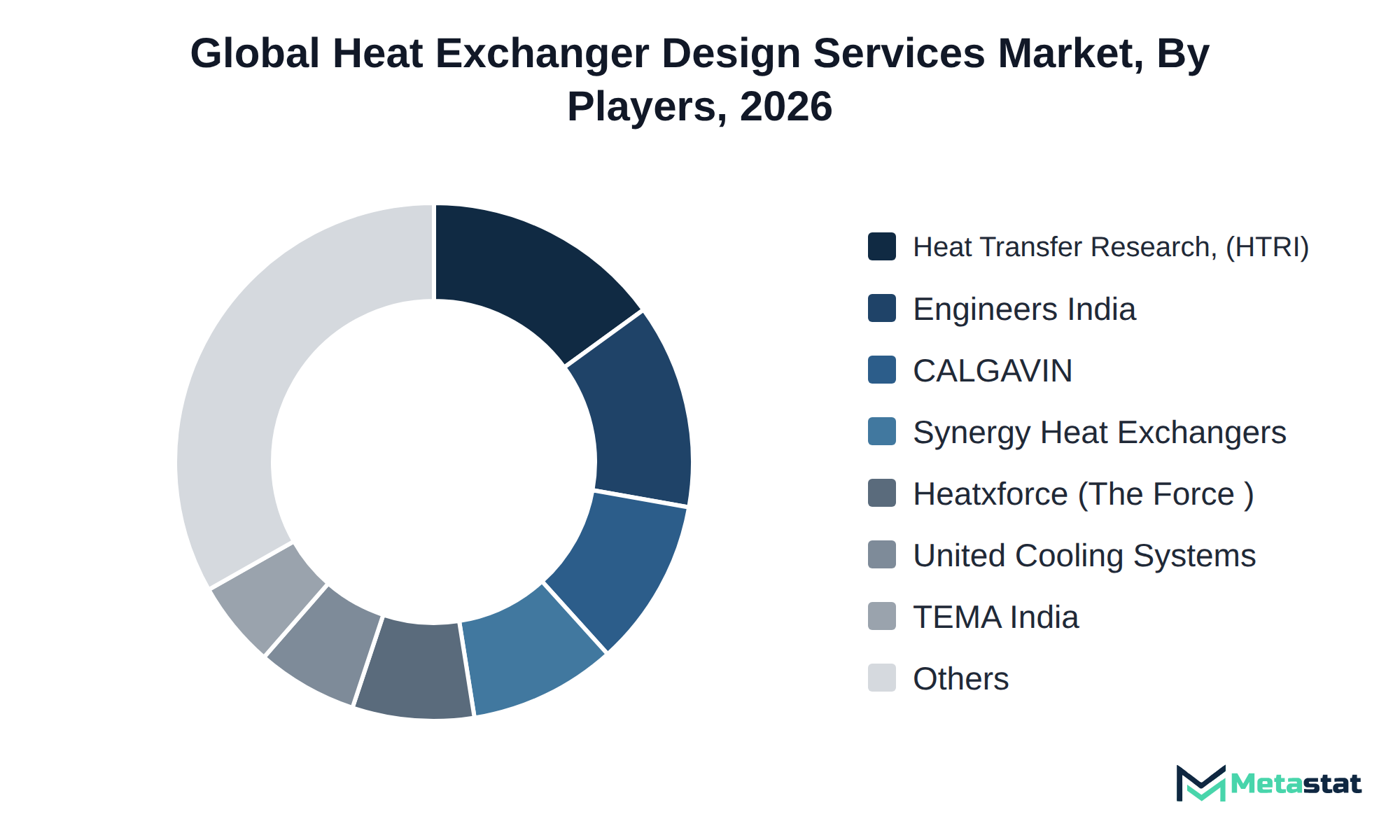
The competitive environment within the Heat Exchanger Design Services market divides based on service type, with companies specializing in various aspects of design and analysis. Key service types include thermal design and rating services, hydraulic design and pressure drop analysis, and mechanical design and code compliance services. Buyers prioritize factors including price, customization, certification, and the overall ecosystem when selecting service providers.
Heat Transfer Research, Inc. (HTRI) focuses on thermal design and rating services, emphasizing rigorous analysis and compliance with industry standards. CALGAVIN specializes in CFD, FEA, and structural analysis services, providing advanced computational capabilities to enhance system efficiency. United Cooling Systems offers mechanical design and code compliance services, ensuring adherence to regulations while optimizing performance across various applications.
The growth trajectory relies on several key developments. The Thermal Design and Rating Services segment is anticipated to expand, contributing significantly to the overall market size. A corresponding increase in demand from the Oil and Gas and Chemical and Petrochemical sectors will further enhance market prospects. Rising adoption of advanced technologies, including Computational Fluid Dynamics (CFD) and Finite Element Analysis (FEA), will drive growth across various service types in the Heat Exchanger Design Services market.
However, challenges exist that could impede progress. Regulatory hurdles and fluctuating raw material prices represent potential risks that could slow expansion. Changes in environmental regulations necessitate costly adjustments for providers. Overall, achieving the forecasted market size will depend on effectively navigating these challenges while capitalizing on growth opportunities within the industry.
By Service Type: Thermal Design and Rating Services, Hydraulic Design and Pressure Drop Analysis, Mechanical Design and Code Compliance Services, CFD, FEA and Structural Analysis Services, Detailed Engineering, Drafting and 3D Modelling, Design Verification, Re-rating and Optimization Services, Heat Exchanger Network Design and Pinch Analysis
By Heat Exchanger Type: Shell-and-Tube Heat Exchangers, Plate Heat Exchangers, Air-Cooled Heat Exchangers, Finned-Tube Heat Exchangers, Plate-Fin Heat Exchangers, Double-Pipe Heat Exchangers, Spiral Heat Exchangers, Others (Printed Circuit, Scraped-Surface and Specialty Heat Exchangers)
By End-Use Industry: Oil and Gas, Chemical and Petrochemical, Power Generation, HVAC and Refrigeration, Food and Beverage, Pharmaceuticals and Biotechnology, Pulp and Paper, Metals and Mining, Water and Wastewater Treatment, Others (Marine, Automotive and Aerospace), By
The report strategically identifies and profiles the key market players and analyses their core competencies in each sub-segment of the Heat Exchanger Design Services market.
Report Attributes | Details |
Study Period | 2021-2033 |
Base Year | 2025 |
Estimated Year | 2026 |
Forecast Period | 2026-2033 |
Historical Period | 2021-2025 |
Growth Rate | CAGR 6.9% from 2026 to 2033 |
Revenue Unit | USD billion |
Segmentation | By Service Type, Heat Exchanger Type, End-Use Industry, and Region |
By Region | North America (By Service Type, Heat Exchanger Type, End-Use Industry, and Country)
|
Europe (By Service Type, Heat Exchanger Type, End-Use Industry, and Country)
| |
Asia Pacific (By Service Type, Heat Exchanger Type, End-Use Industry, and Country)
| |
South America (By Service Type, Heat Exchanger Type, End-Use Industry, and Country)
| |
Middle East and Africa (By Service Type, Heat Exchanger Type, End-Use Industry, and Country)
|
Find answers to common questions about this report
The Heat Exchanger Design Services market size was valued at USD 17.3 billion in 2025.
The market is projected to grow at a CAGR of 6.9% during the forecast period from 2026 to 2033.
The North America Heat Exchanger Design Services market size is estimated to reach USD 9.5 billion by 2033.
Thermal Design and Rating Services leads the Heat Exchanger Design Services market with a projected value of USD 6.8 billion by 2033. This segment demonstrates significant growth potential, driven by increasing demand across various industries.
The growing emphasis on energy efficiency drives increased investment in heat exchanger design services. The ongoing transition towards cleaner energy sources necessitates specialized designs that improve thermal performance and reliability.
North America holds the dominant share of the Heat Exchanger Design Services market, with a value of USD 9.5 billion projected for 2033, representing 34.1 percent of the total market.
Access to modern infrastructure significantly impacts market growth, particularly for industries reliant on specialized heat exchangers. rising talent costs present a challenge for suppliers, as increased demand for skilled professionals drives up salary expectations and project costs.
Several factors favor adoption in the heat exchanger design services industry. The emphasis on energy efficiency drives demand, particularly in the oil and gas sector, where thermal efficiency is critical. compliance with stringent environmental regulations encourages industries to seek specialized design solutions that enhance operational performance.
The Heat Exchanger Design Services market is estimated to reach a valuation of USD 29.5 billion by 2033.
Key players operating in the Heat Exchanger Design Services market include Heat Transfer Research, Inc. (HTRI), CALGAVIN, Heatxforce (The Force Group), Synergy Heat Exchangers, United Cooling Systems, TEMA India, and Engineers India Limited.
The analysts below cover Packaging research at Metastat Insights.
LEAD ANALYST
Utkarsh Khirodkar is a Lead Market Research Analyst at MetaStat Insight, specializing in market intelligence, technology sector assessments, and competitive strategy.

SENIOR RESEARCH ANALYST
Biotechnology · Food and Beverages · Medical Devices · Packaging
Snehal Pasalkar is a Research Analyst at MetaStat Insight, operating at the intersection of life sciences research, competitive strategy, and market intelligence.

INDUSTRY CONSULTANT - CHEMICALS & ADVANCED MATERIALS
Chemicals and Materials · Machinery & Equipment · Packaging
Amit Gadhekar Consultant for Chemicals and Materials at MetaStat Insight, directing sector-specific intelligence, research, and strategic consulting across global chemical and processing markets.
Our group needed clearer visibility into out-of-autoclave processing timelines for high-temperature thermoplastic composites. MetaStat Insight delivered an objective assessment that contrasted automated fiber placement scrap rates with traditional thermoset prepreg layup cycles. The supplier landscape mapped out primary resin suppliers and tape slitting capacity across France, Germany, and Japan with solid technical accuracy. Their analyst handled our questions on precursor supply risks during an unscheduled inquiry call, providing clear, unembellished context.
Evaluating sensor fusion reliability across harsh operating environments can be tricky without field-validated data. The study on agricultural autonomous guidance systems clearly separated stereo vision setups from automotive-grade solid-state LiDAR. We appreciated the regional infrastructure analysis, specifically around RTK network density across North America and South America. During our follow-up consultation, the MetaStat Insight team walked through tier-two perception software partnerships, giving our engineering leads a practical basis for vendor shortlisting.
Analyzing the transition from natural gas to green hydrogen in iron ore reduction requires realistic infrastructure timelines. Meta stat insight supplied a detailed regional assessment of DRI plant conversion costs and scrap metal availability in North America and Western Europe. Their report carefully examined pellet quality specs and electrical grid access constraints without making oversimplified market assumptions. The research material served as a practical reference during internal technology roadmap discussions.
Explore related market intelligence reports worth reading alongside this one.