
LEAD ANALYST
Utkarsh Khirodkar is a Lead Market Research Analyst at MetaStat Insight, specializing in market intelligence, technology sector assessments, and competitive strategy.

Global R290 Refrigerant Market Size, Share, By Application (Commercial Refrigeration, Domestic Refrigeration, Industrial Refrigeration, Heat Pumps, Air Conditioning and Others), By Packaging Type (Refillable Cylinders, Disposable Cylinders and Bulk Tanks), By Demand Type (OEM First Fill and Servicing), By Sales Channel (Direct Sales and Distributors), Industry Analysis, Growth, Trends, and Forecast, 2026-2033
Report ID
MSI-5563
Published
October, 2026
Pages
292 Pages
Format
Historical
Base year
Forecast
Forecast period
Report Details
Market Valuation: Valued at $138.8 Million in 2025, projected to reach $247.1 Million by 2033 at a 7.4% CAGR.
Dominant Segment: Commercial refrigeration leads the R290 Refrigerant market, driven by substantial demand for energy-efficient cooling solutions across various industries.
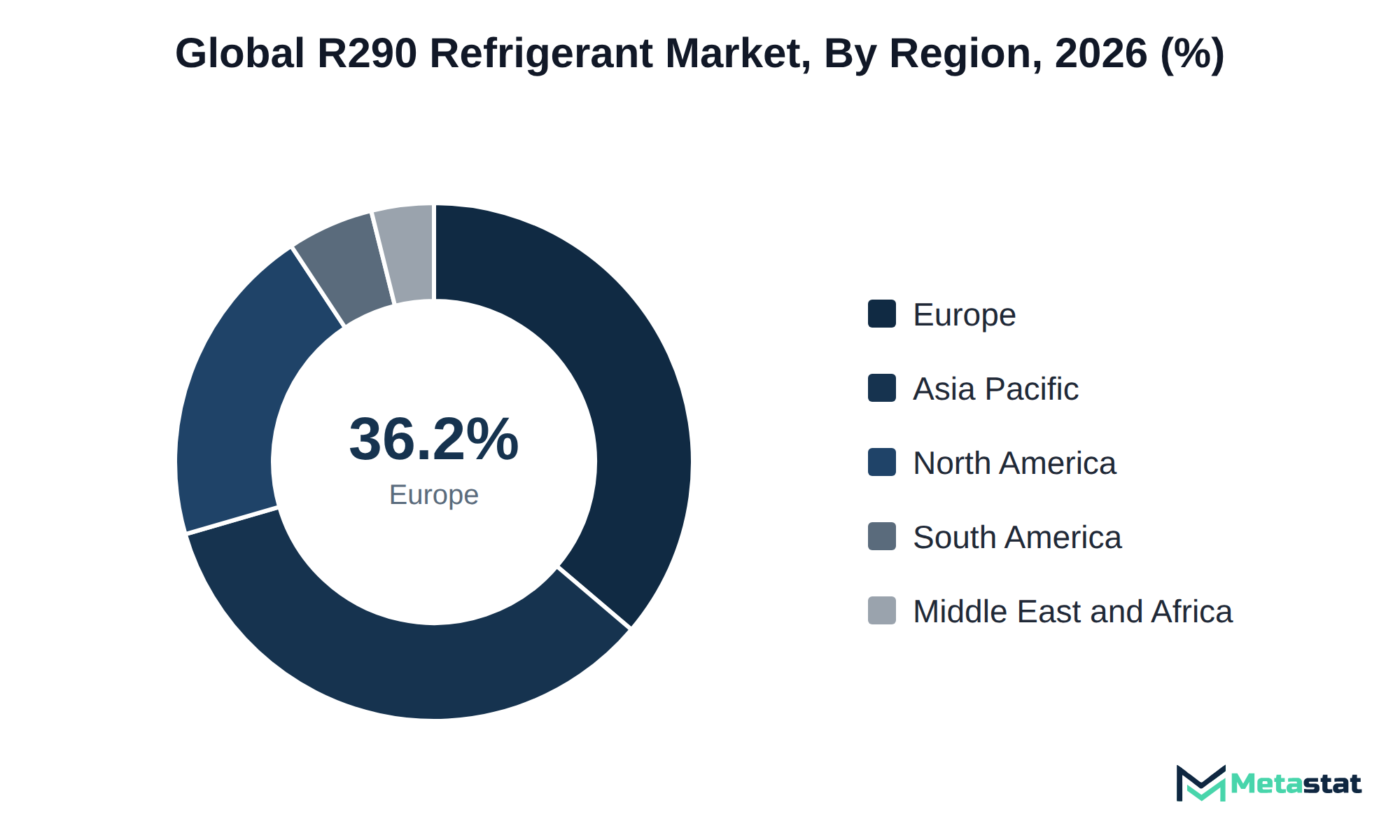
Geographic Lead: Europe holds the largest market share at 36.2% in 2025, with significant growth also expected in the Asia Pacific region, projected to account for 34.3%.
What's Inside: The report provides comprehensive coverage of market dynamics, including competitive analysis, segment breakdowns, and forecasts from 2026 to 2033.
Emerging Trends: The adoption of heat pumps is projected to grow at a CAGR of 12.4%, reflecting increasing consumer preference for energy-efficient and sustainable solutions.
Quality and Compliance: High purity levels and moisture control in R290 refrigerants are crucial, with the OEM first fill segment expected to reach USD 196.3 million by 2033, growing at a CAGR of 8.3%.
Choose Your License
Global R290 Refrigerant Market
The global R290 Refrigerant market was valued at USD 138.8 million in 2025 and is projected to reach USD 247.1 million by 2033, growing at a CAGR of 7.4% over the forecast period.
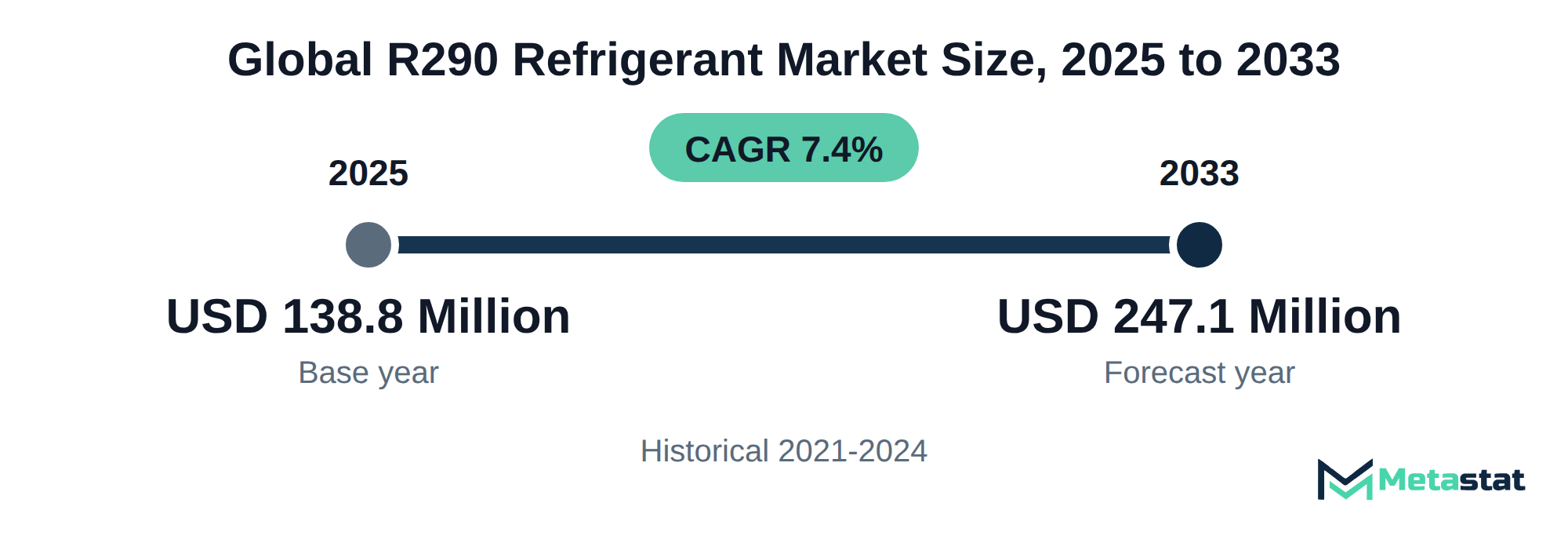
The R290 Refrigerant market encompasses various applications, including commercial, domestic, and industrial refrigeration, along with heat pumps and air conditioning. Buyers invest in R290 refrigerant due to its environmentally friendly properties and effectiveness in enhancing energy efficiency in cooling systems. Significant spending occurs as industries adopt this refrigerant to comply with evolving environmental regulations and meet consumer demand for sustainable solutions.
Growth in the market is driven by the increasing adoption of environmentally friendly refrigerants worldwide. Among the segments, commercial refrigeration holds the highest value, reflecting substantial demand for refrigeration solutions across various industries. Europe represents the largest share of the market, accounting for 36.2% in 2025. North America holds 20.2% of the market in 2025, with the US leading in 2026.
The ongoing transition towards sustainable refrigerants presents a significant opportunity for market expansion. This shift aligns with global efforts to reduce greenhouse gas emissions and enhance energy efficiency. Tightening regulations and growing awareness of environmental issues drive investment in R290 refrigerants, further fueling market growth.
The R290 Refrigerant market addresses the growing demand for environmentally friendly alternatives in refrigeration and air conditioning. Buyers invest in R290 refrigerant due to its low global warming potential and efficiency advantages in various applications. This refrigerant is a preferred choice in commercial refrigeration, which holds the largest value among the segments, driven by increasing regulations promoting energy-efficient solutions.
Forecasts indicate that the Asia Pacific region dominates the market, accounting for 34.3% of the total share in 2025. The substantial adoption of R290 in industrial refrigeration applications contributes significantly to the growth trajectory, reflecting the trend towards sustainable practices across industries.
Growth in the R290 Refrigerant market is primarily supported by the rising awareness of environmental issues and the need for sustainable refrigerants. This trend aligns with strict regulations aimed at reducing greenhouse gas emissions, creating opportunities for manufacturers to innovate and expand their offerings. The market's evolution will continue to influence technological advancements and changing consumer preferences.
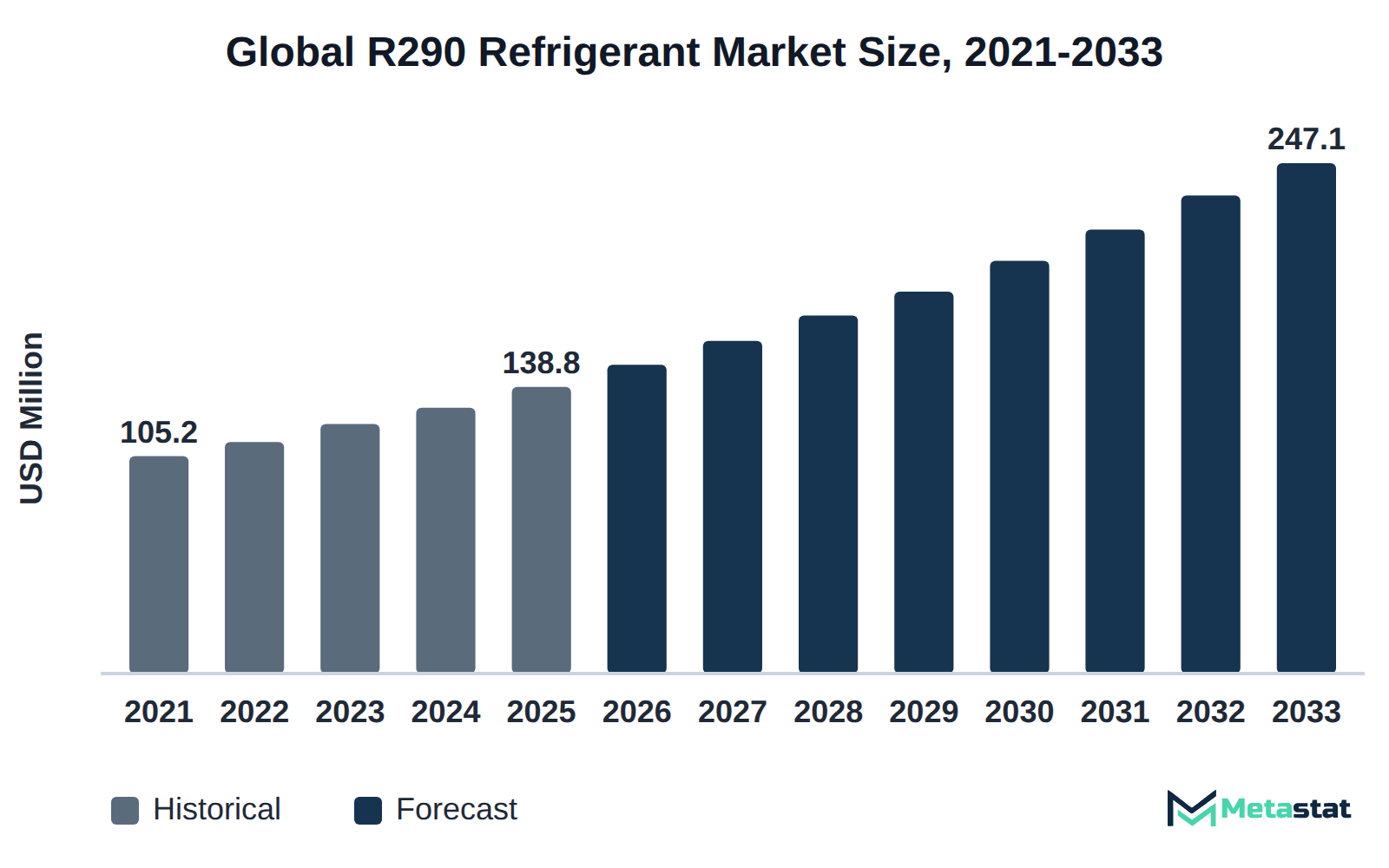
Adoption of heat pumps is increasing due to their energy efficiency and environmental benefits. R290, or propane, is a natural hydrocarbon refrigerant choice with a low global warming potential, aligning with growing regulatory pressures to reduce greenhouse gas emissions. In the market, heat pumps are expected to reflect a compound annual growth rate (CAGR) of 12.4%, indicating strong demand in this sector.
Heat pumps use R290 refrigerants, which require specific charge levels for optimal performance. The charge requirements depend on the system's design and application, with manufacturers focusing on ensuring compliance with safety standards while maximizing efficiency. Precise charge management affects operational costs for manufacturers, leading to enhanced efficiency and reduced energy consumption.
The R290 Refrigerant market stands to benefit significantly from the rise in heat pump adoption. Increased demand for energy-efficient systems will drive the market forward, creating opportunities for suppliers and manufacturers to expand their offerings in the natural refrigerant sector. While consumers shift toward sustainable options, investment in R290 solutions will facilitate market growth.
R290 refrigerant purity and moisture control significantly impact purchasing decisions within the market. High purity levels ensure optimal performance in refrigeration systems, while adequate moisture control prevents operational issues. The increasing demand for high-quality R290 refrigerant is evident, with the OEM first fill segment projected to reach USD 196.3 million by 2033, reflecting a CAGR of 8.3%. This growth highlights the necessity for buyers to prioritize suppliers who meet rigorous quality standards.
Pricing structures within the R290 refrigerant market vary, often depending on purity levels and packaging types. Suppliers offering refillable cylinders typically enjoy higher margins due to their ability to provide consistently high purity products. The expected growth in the refillable cylinder segment, from USD 96.6 million in 2026 to USD 151.4 million by 2033 at a CAGR of 6.6%, points to a preference for established suppliers with strong reputations for quality. This trend encourages buyers to establish long-term contracts, ensuring a reliable supply of high-purity R290 refrigerant at competitive prices.
Emphasis on purity and moisture control shapes buyer behavior, prompting a shift toward strategic partnerships with reputable suppliers. Access to high-quality R290 refrigerant improves operational efficiency and supports compliance with industry regulations, which promotes long-term market growth.
Bulk supply of R290 refrigerant helps meet rising demand from various sectors, particularly commercial refrigeration. The commercial refrigeration application segment is projected to expand from USD 73.6 million in 2026 to USD 104.2 million by 2033, reflecting a compound annual growth rate (CAGR) of 5.1%. This growth is driven by heightened consumer demand for energy-efficient and environmentally friendly refrigeration solutions.
Logistics and procurement costs associated with R290 refrigerant cylinders directly impact the overall economics of operations for businesses in the market. Because propane is flammable, cylinder shipments typically fall under dangerous goods logistics requirements. Efficient logistics strategies, including optimized distribution channels and proximity to refill stations, significantly reduce transportation expenses. The direct sales channel, which is anticipated to grow from USD 95.5 million in 2026 to USD 166.1 million in 2033 at a CAGR of 8.2%, highlights the potential for enhancing supply chain efficiency.
Investments in bulk storage facilities and improved cylinder management practices mitigate procurement costs while ensuring timely availability of the refrigerant. Demand for R290 refrigerant continues to rise, so businesses seeking a competitive advantage benefit from understanding bulk supply and logistics management.
Adoption of R290 refrigerant significantly influences commercial refrigeration design by promoting eco-friendly solutions. The increasing emphasis on sustainability drives manufacturers to integrate natural refrigerants including R290 into their systems, which helps reduce greenhouse gas emissions compared to traditional refrigerants.
The transition towards R290 refrigerant aligns with regulatory pressures aimed at minimizing environmental impact. Manufacturers adopting R290 use its eco-friendly attributes to enhance their brand image and fulfill sustainability goals. Consequently, companies that effectively implement R290 technology in commercial refrigeration capture a competitive advantage within the market.
This shift in design supports environmental objectives and addresses rising consumer demand for sustainable products. By prioritizing R290 refrigerant, businesses position themselves favorably within the market, aligning operational practices with growing preferences for eco-conscious solutions. The integration of R290 in commercial refrigeration systems facilitates a sustainable future in the industry.
Significant growth in energy efficiency standards influences the purchasing behavior of commercial refrigeration buyers. These buyers increasingly prioritize R290 Refrigerant due to its favorable performance characteristics compared to conventional refrigerants. The transition towards energy-efficient systems aligns with a broader environmental awareness trend, prompting investments in technologies that reduce energy consumption and greenhouse gas emissions. This shift improves operational efficiency and offers a strategic response to rising energy costs, which increases demand for R290 refrigerant.
Growing concerns regarding climate change and environmental impact drive industries to adopt low global warming potential (GWP) refrigerants. Stricter emissions regulations compel manufacturers to transition from high-GWP refrigerants such as R134A to alternatives like R290. This shift aligns with global initiatives aimed at reducing greenhouse gas emissions. Industries including commercial refrigeration and air conditioning experience heightened demand for eco-friendly solutions, incentivizing stakeholders to seek compliant products that meet these regulatory requirements.
In response to tightening emission limits, investments in R290 technology advance, enhancing operational efficiency and sustainability. The advantages of R290 include its natural composition and effective cooling properties, making it a preferred choice among manufacturers striving to meet regulatory standards. Increased adoption of R290 within the market reflects a broader trend toward environmentally responsible practices, positioning businesses that embrace these changes more favorably in the eyes of consumers. This trend highlights the urgency for industries to adapt to changing environmental expectations.
Price fluctuations in the R290 Refrigerant market influence buying patterns, particularly among commercial refrigeration buyers. Increases in raw material costs lead to higher prices for end users, prompting several buyers to delay purchasing decisions or explore alternative refrigerants. This situation creates hesitation in adopting R290, especially for smaller businesses that prioritize cost-effectiveness. The unpredictability of prices disrupts long-term planning and budgeting, resulting in smaller orders or reduced investments in refrigeration systems. Financial implications of these decisions hinder overall market growth, as buyers weigh the costs of switching to R290 against potential savings from energy efficiency. Sustained price stability remains essential for building confidence among commercial refrigeration buyers and encouraging broader adoption of R290. Establishing reliable pricing mechanisms is important for market stability and for encouraging investment.
Suppliers in the R290 Refrigerant market face significant compliance cost pressures stemming from evolving environmental regulations. These regulations necessitate investment in advanced technologies and processes to meet stringent standards, raising operating expenses. Many suppliers respond by investing in innovative production techniques and enhancing operational efficiencies to mitigate compliance burdens. By adopting automation and streamlining manufacturing processes, these companies aim to maintain profit margins despite rising costs. Several suppliers explore partnerships with regulatory agencies to ensure alignment with compliance requirements, reducing the risk of penalties. This approach strengthens operational resilience and positions suppliers favorably in a competitive market environment. The focus on compliance and cost management shapes the overall dynamics of the market, influencing pricing strategies and competitive positioning among key players.
The segment of heat pumps demonstrates the highest compound annual growth rate (CAGR) of 12.4% within the R290 Refrigerant market. Increased awareness regarding energy efficiency and sustainability fuels this trend, with consumers and businesses pursuing alternatives that minimize environmental impact and operating costs. Manufacturers focus on developing efficient heat pump systems that emphasize R290 refrigerants, responding to this growing demand.
Tightening energy efficiency standards make the adoption of heat pumps a primary strategy for both residential and commercial sectors. The integration of R290 refrigerant into heat pumps aligns with the industry's shift towards low global warming potential (GWP) solutions. Manufacturers prioritizing R290 in heat pump applications are positioned to capture significant market share, enhancing their competitive edge amid evolving consumer preferences.
This growth in the heat pump segment creates opportunities for manufacturers and suppliers to innovate and expand their offerings. The anticipated increase in demand is expected to further drive investment and development within the market, enhancing profitability for stakeholders aiming to capitalize on this trend.
The Global R290 Refrigerant market is segmented based on Application, Packaging Type, Demand Type, and Sales Channel.
This segment serves various commercial establishments, including supermarkets, restaurants, and convenience stores, which rely on effective cooling solutions for preserving perishable goods. Increasing energy efficiency standards and heightened awareness of environmental impacts drive growth in this sector. Compared to Domestic Refrigeration, which exhibits a slower growth rate of 4.2%, Commercial Refrigeration benefits from more stringent operational requirements, necessitating advanced technologies. The segment's commitment to reducing global warming potential fuels its expansion, reinforcing its role in the R290 Refrigerant market. The adoption of R290 as a refrigerant aligns with regulatory pressures for eco-friendly alternatives, enhancing its appeal among commercial buyers.
Domestic Refrigeration segment is estimated to reach USD 12.9 million by 2033, at a CAGR of 4.2% during the forecast period. This segment primarily serves residential users, enhancing the efficiency of household cooling appliances including refrigerators and freezers. Demand for domestic refrigeration is driven by increasing emphasis on energy efficiency and environmental sustainability. Compared to commercial refrigeration, this segment exhibits slower growth due to a more mature market and established technologies. The segment's growth is further supported by consumer preferences for eco-friendly refrigerants, aligning with broader trends in the R290 Refrigerant market. Higher adoption rates of low GWP refrigerants in domestic applications reflect a shift towards sustainable practices, demonstrating a significant opportunity for growth. The market dynamics contribute to gradual but steady expansion in the domestic refrigeration segment, distinguishing it from the more dynamic commercial sector.
Industrial Refrigeration segment is expected to reach USD 30.7 million by 2033. This segment serves various industries including food processing, chemical production, and pharmaceuticals, where precise temperature control is essential. The demand for R290 Refrigerant in this area is driven by a shift towards sustainable refrigerants due to stringent environmental regulations impacting industrial operations. Ammonia refrigerant is another natural refrigerant used in large industrial refrigeration systems. Compared to other segments, including Commercial Refrigeration which has a CAGR of 5.1%, Industrial Refrigeration exhibits a more stable growth trajectory influenced by established compliance measures and technological advancements. The adoption of energy-efficient systems further supports demand, reflecting significant investment in modernizing equipment across various industrial applications. Buyers in this segment prioritize reliability and adherence to environmental standards, differentiating their purchasing strategies from those in faster-growing segments.
Heat Pumps segment is projected to grow at a CAGR of 12.4% during the forecast period. This segment serves energy-efficient heating and cooling solutions, appealing to residential and commercial users focused on reducing energy consumption. The rising demand for sustainable energy options drives this segment, especially in regions emphasizing energy efficiency standards. The effectiveness of heat pumps in harnessing renewable energy sources distinguishes this segment from others, including commercial or domestic refrigeration, which experience slower growth rates and face different regulatory pressures. The market supports innovation in heat pump technology, making it integral for manufacturers aiming to meet both performance and environmental standards, thereby driving further investment and adoption in the sector.
Air conditioning systems use R290 Refrigerant to provide efficient cooling solutions in residential, commercial, and industrial settings. This segment serves HVAC equipment manufacturers and service providers, focusing on energy efficiency and environmental performance. The market experiences growth driven by stringent environmental regulations mandating the transition to low-global warming potential refrigerants. Compared to other segments, air conditioning typically features a slower growth trajectory. Ongoing demand for advanced cooling systems and rising adoption of energy-efficient technologies contribute to market dynamics while presenting opportunities for suppliers. The R290 Refrigerant market continues to evolve, aligning with global sustainability initiatives and promoting responsible refrigerant usage.
Applications categorized under Others include dehumidifiers, heat pump dryers, and transport refrigeration. This sub-segment serves various industries requiring efficient moisture management and temperature regulation. Dehumidifiers use R290 to maintain optimal humidity levels, benefiting sectors including food storage and pharmaceuticals. In the transport sector, R290 finds use in transport refrigeration units, ensuring perishable goods remain viable during transit. Demand for dehumidifiers and transport refrigeration has risen, reflecting increased awareness of energy efficiency and environmental impacts. Unlike the heat pump segment, which demonstrates the highest growth rate, this sub-segment experiences steady demand driven by consistent needs in industries relying on humidity control. The evolving regulatory landscape surrounding environmental sustainability further supports adoption, compelling manufacturers to seek refrigerants with lower global warming potential. While this segment does not exhibit the rapid growth seen in heat pumps, it remains integral to diverse refrigeration applications.
This packaging type serves various applications in industries including commercial refrigeration and domestic appliances, supplying R290 refrigerant for efficient cooling solutions. Demand primarily stems from manufacturers requiring reliable and easily transportable refrigerant options. Increasing environmental regulations encourage the transition toward refillable solutions, which often offer lower lifecycle costs. Compared to disposable cylinders, refillable options display higher growth potential due to their sustainability benefits, aligning with evolving industry standards. In terms of growth, refillable cylinders outperform disposable cylinders, which are projected to reach USD 40.4 million by 2033 with a lower CAGR of 6%. The market for refillable cylinders supports the broader goal of reducing refrigerant waste and improving resource efficiency.
This segment serves various industries that require efficient refrigerant solutions, including commercial refrigeration and HVAC systems. Several factors drive the demand for disposable cylinders, including the convenience they offer and their suitability for applications where refilling is impractical. Compared to refillable cylinders, disposable cylinders present a lower initial cost, attracting buyers who prefer easy-to-use alternatives. The growth rate for this segment is steady, slower than the Refillable Cylinders segment, which is expected to grow at a CAGR of 6.6%. This distinction emphasizes the varied preferences among users, reflecting differences in application needs and cost considerations. The R290 Refrigerant market continues to evolve, with industries adapting to changing refrigerant regulations, influencing purchasing behavior across multiple segments.
Bulk Tanks and ISO Containers segment is expected to reach USD 55.3 million by 2033. This segment primarily serves large-scale applications requiring substantial quantities of R290 refrigerant, catering to industries including commercial refrigeration and industrial processes. Demand in this segment is driven by the need for efficient and safe refrigerant storage in bulk tanks and ISO tank containers. The growth rate for this segment differs from others, reflecting a slower pace compared to categories like heat pumps, which is projected to grow at a CAGR of 12.4%. Suppliers in this segment face unique challenges regarding compliance with environmental regulations, influencing operational costs and pricing strategies. Overall, the Bulk Tanks and ISO Containers segment contributes to the broader R290 Refrigerant market by ensuring reliable supply and meeting the escalating demand for environmentally friendly refrigerants.
This segment caters primarily to manufacturers of refrigeration and air conditioning systems that require initial refrigerant filling during production. Demand increases due to a growing emphasis on energy-efficient solutions, driving purchases from original equipment manufacturers (OEMs). Compared to other segments, OEM First Fill experiences faster growth, underpinned by a higher compound annual growth rate. The ongoing push for low global warming potential (GWP) refrigerants supports the segment's expansion, with manufacturers adopting R290 to comply with environmental regulations. This aligns with broader trends influencing the R290 refrigerant market, where sustainability and efficiency play crucial roles in shaping purchasing decisions.
Servicing and Recharging segment is estimated to reach USD 50.8 million by 2033, at a CAGR of 4.5% during the forecast period. This segment primarily caters to the maintenance and support of refrigeration and air conditioning systems, used by technicians and service providers in various sectors. An increase in the number of installed systems drives demand for servicing and recharging, with regular maintenance ensuring operational efficiency. The segment differs from OEM First Fill, which experiences higher growth at a CAGR of 8.3%, reflecting initial system installations. Servicing and Recharging relies on consistent customer engagement to sustain revenue, while OEM First Fill benefits from new equipment sales. Overall, the ongoing trend toward energy-efficient systems supports a stable market presence for the Servicing and Recharging segment.
This segment targets manufacturers and service providers who require R290 refrigerant for various applications, including commercial and industrial refrigeration systems. An increasing demand for efficient cooling solutions drives this segment, particularly in regions with stringent environmental regulations supporting the adoption of low-GWP refrigerants. Compared to other packaging types, the Direct Sales segment exhibits a higher growth rate, reflecting a preference among large-scale users for acquiring refrigerants directly from suppliers rather than through distributors. This operational approach enhances supply chain efficiency and allows for tailored service offerings, reflecting the growing trend towards sustainability in the market.
Distributors and Wholesalers segment is estimated to reach USD 80.9 million by 2033, at a CAGR of 5.9% during the forecast period. This segment involves channels that supply R290 Refrigerant to various end-users, including manufacturers and service providers. Growth in this segment is driven by increasing demand for R290 in diverse applications, particularly in commercial refrigeration and HVAC systems. Compared to other segments, the growth rate for Distributors and Wholesalers is moderate, allowing for steady market penetration. Adoption of R290 is propelled by its environmentally friendly properties, which appeal to businesses aiming to meet stringent regulatory standards. Unlike OEM First Fill, which reflects a higher growth potential due to a CAGR of 8.3%, Distributors and Wholesalers benefit from a well-established infrastructure, ensuring reliability and accessibility for end-users seeking efficient refrigerant solutions. The market expands consistently, reflecting a growing preference for sustainable refrigerants.
Based on geography, the Global R290 Refrigerant market is divided into North America, Europe, Asia-Pacific, South America, Middle East, and Africa.
Demand within the R290 Refrigerant market in North America experiences significant growth, driven primarily by commercial refrigeration applications across the United States, Canada, and Mexico. By 2033, this region is projected to reach USD 46.7 million. Regulatory initiatives supporting environmentally friendly refrigerants further enhance market conditions, facilitating the transition from traditional refrigerants to R290. The high efficiency and low global warming potential of R290 attract manufacturers seeking compliance with stricter environmental standards. The market share in North America is estimated at 20.2% in 2025, reflecting strong adoption of this refrigerant across the region. Investment in infrastructure and technology advancements contributes to the expansion of R290's application in various sectors. By addressing the growing demand for sustainable solutions, the market positions itself for continued growth during the forecast period.
Demand for R290 Refrigerant in Europe benefits from a strong industrial base, particularly in countries like Germany, France, and the UK. The emphasis on energy efficiency and environmental sustainability drives the adoption of refrigerants with lower global warming potential. Regulations surrounding refrigerant use in refrigeration and air conditioning systems contribute to a favorable market environment. The market's share of 36.2% in 2025 reflects strong performance and growth potential across various applications. In Spain and Italy, commercial refrigeration remains a significant driver, supporting growth in this segment. In Russia, increased investments in infrastructure and industrial activities enhance demand for R290, further strengthening the market's position in the region. Evolving regulations and shifting consumer preferences in Europe support the expansion of R290 Refrigerant.
Demand for the R290 Refrigerant market in Asia-Pacific reflects strong growth driven by various industries, particularly in commercial refrigeration and heat pump applications. Significant investments in energy-efficient technologies across countries including China, Japan, and India contribute to this increasing demand. Sustainable practices and a shift towards environmentally friendly refrigerants support the adoption of R290, aligning with global trends toward reducing greenhouse gas emissions. China's expanding industrial base and Japan's advanced technology sectors enhance regional competitiveness. In Australia, regulatory frameworks promoting energy efficiency further stimulate market growth. The share of the Asia-Pacific region in the global market stands at 34.3% in 2025, emphasizing its vital role in the overall expansion of the R290 Refrigerant market.
R290 Refrigerant demand in South America is driven primarily by the commercial refrigeration and domestic sectors, particularly in Brazil and Argentina. An increasing focus on energy-efficient cooling solutions encourages adoption among manufacturers and end-users. Ongoing economic development in these countries influences investments in infrastructure and industrial growth, creating favorable conditions for the market. By 2025, South America is expected to account for 5.4% of the global market share. Growth opportunities exist within the industrial refrigeration segment, benefiting from a growing industrial base and rising food storage needs. Regulatory initiatives aimed at reducing environmental impact support the trend toward using low-GWP refrigerants like R290. The transition to this eco-friendly alternative reflects a commitment to sustainability, favoring long-term growth in the region.
Demand within the R290 Refrigerant market in the Middle East and Africa is shaped by the growing industrial refrigeration sector, particularly in Saudi Arabia and the UAE. The rising need for efficient cooling solutions drives purchases across various applications. South Africa presents opportunities for expansion, especially in compliance with environmental regulations promoting the use of eco-friendly refrigerants. The market share for this region represents a significant portion of the global total in 2025. The focus on sustainable practices and energy efficiency aligns with the market's growth trajectory, enabling suppliers to capitalize on the increasing demand for R290 refrigerant in commercial and industrial applications.
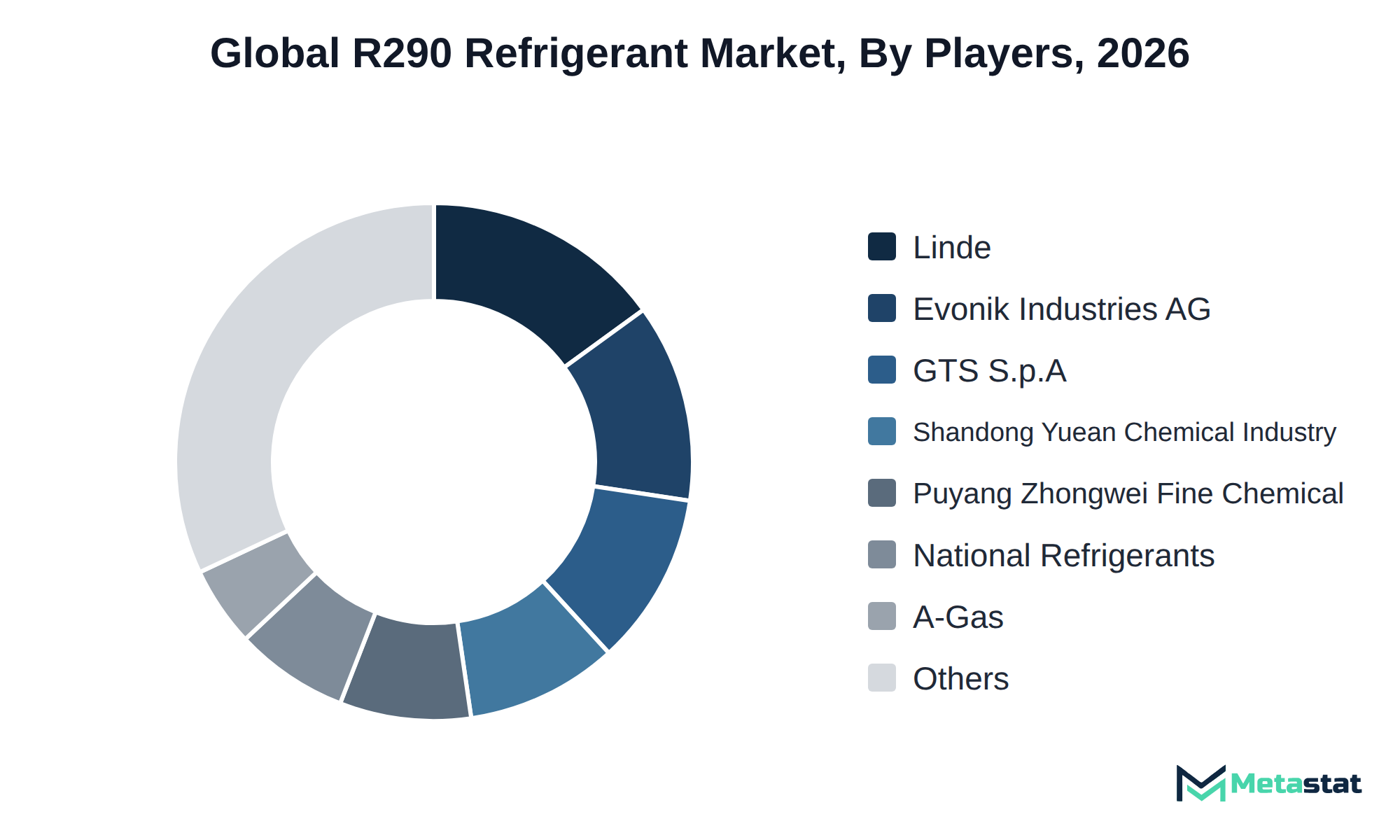
The R290 Refrigerant market features various companies employing distinct strategies to compete effectively. Companies focus on product differentiation, with offerings emphasizing quality and sustainability. Buyers prioritize factors including price, certification, and customization when selecting suppliers. Strong service support and established ecosystems enhance competitive positioning.
Evonik Industries AG and Linde plc concentrate on high-quality production and innovative applications, ensuring compliance with the latest environmental standards. GTS S.p.A. and Shandong Yuean Chemical Industry Co., Ltd. use their production capabilities to attract OEMs, while National Refrigerants, Inc. and Air Liquide S.A. emphasize customer support and strong distribution networks to enhance their market presence.
Reaching the 2033 forecast requires several developments within the R290 Refrigerant market. Adoption of refillable cylinders, forecast to rise from USD 96.6 million in 2026 to USD 151.4 million by 2033, is another factor supporting this upward trajectory. The OEM first fill market, anticipated to grow from USD 112.2 million in 2026 to USD 196.3 million by 2033, is crucial for sustaining demand across various sectors.
However, risks remain that could impede market progress. Fluctuations in raw material costs and potential regulatory changes affecting refrigerant usage slow adoption rates in key regions including North America and Europe. Monitoring these factors will be essential for understanding the future dynamics of the R290 Refrigerant market and its growth potential through 2033.
By Application: Commercial Refrigeration, Domestic Refrigeration, Industrial Refrigeration, Heat Pumps, Air Conditioning, Others (Dehumidifiers, Heat Pump Dryers, Transport)
By Packaging Type: Refillable Cylinders, Disposable Cylinders, Bulk Tanks and ISO Containers
By Demand Type: OEM First Fill, Servicing and Recharging
By Sales Channel: Direct Sales, Distributors and Wholesalers
The report strategically identifies and profiles the key market players and analyses their core competencies in each sub-segment of the R290 Refrigerant market.
Report Attributes | Details |
Study Period | 2021-2033 |
Base Year | 2025 |
Estimated Year | 2026 |
Forecast Period | 2026-2033 |
Historical Period | 2021-2025 |
Growth Rate | CAGR 7.4% from 2026 to 2033 |
Revenue Unit | USD million |
Segmentation | By Application, Packaging Type, Demand Type, Sales Channel, and Region |
By Region | North America (By Application, Packaging Type, Demand Type, Sales Channel, and Country)
|
Europe (By Application, Packaging Type, Demand Type, Sales Channel, and Country)
| |
Asia Pacific (By Application, Packaging Type, Demand Type, Sales Channel, and Country)
| |
South America (By Application, Packaging Type, Demand Type, Sales Channel, and Country)
| |
Middle East and Africa (By Application, Packaging Type, Demand Type, Sales Channel, and Country)
|
Find answers to common questions about this report
The R290 Refrigerant market size was valued at USD 138.8 million in 2025.
The market is projected to grow at a CAGR of 7.4% during the forecast period from 2026 to 2033.
The North America R290 Refrigerant market size is estimated to reach USD 46.7 million by 2033.
Commercial Refrigeration leads the R290 Refrigerant market with a value of USD 73.6 million in 2026. This segment's growth reflects its significant demand compared to other applications.
Significant growth in energy efficiency standards drives the purchasing behavior of commercial refrigeration buyers, who prioritize R290 due to its favorable performance characteristics. Stricter emissions regulations compel manufacturers to transition from high-GWP refrigerants to alternatives like R290, aligning with global initiatives aimed at reducing greenhouse gas emissions.
Europe holds the dominant share of the R290 Refrigerant market, accounting for 36.2% in 2025. This figure surpasses the shares of other regions, including Asia Pacific at 34.3% and North America at 20.2%.
Price fluctuations in the R290 Refrigerant market create hesitation among buyers, particularly smaller businesses that prioritize cost-effectiveness. compliance cost pressures from evolving environmental regulations raise operating expenses for suppliers, influencing pricing strategies and competitive positioning.
Significant growth in energy efficiency standards and heightened environmental awareness drive the adoption of R290 Refrigerant. The transition towards low global warming potential solutions aligns with stricter emissions regulations, prompting industries to seek compliant products that enhance operational efficiency and sustainability.
The R290 Refrigerant market is estimated to reach a valuation of USD 247.1 million by 2033.
Key players operating in the R290 Refrigerant market include Evonik Industries AG, GTS S.p.A., Shandong Yuean Chemical Industry Co., Ltd., Linde plc, TEGA - Technische Gase und Gasetechnik GmbH, Air Liquide S.A., and Dynatemp International, Inc.
The analysts below cover Chemicals and Materials research at Metastat Insights.
LEAD ANALYST
Utkarsh Khirodkar is a Lead Market Research Analyst at MetaStat Insight, specializing in market intelligence, technology sector assessments, and competitive strategy.

INDUSTRY CONSULTANT - CHEMICALS & ADVANCED MATERIALS
Chemicals and Materials · Machinery & Equipment · Packaging
Amit Gadhekar Consultant for Chemicals and Materials at MetaStat Insight, directing sector-specific intelligence, research, and strategic consulting across global chemical and processing markets.
Tracking maintenance cycle demand for secondary flight display units and terrain collision avoidance systems across regional jet fleets involves complex aftermarket dynamics. MetaStat Insight provided practical analysis separating airline retrofit programs from OEM forward-fit production schedules in North America and Southeast Asia. The supplier matrix highlighted component obsolescence timelines without resorting to vague generalizations. The dataset served as a dependable reference during our annual program review meetings.
Evaluating secondary resin quality across post-consumer packaging streams requires reliable technical segmentation. MetaStat Insight delivered an objective assessment that distinguished between extrusion-grade flake pricing and optical sorting throughput limitations across Western Europe. The competitive positioning breakdown for licensed depolymerization technology providers answered several questions during our feedstock feasibility audit. Their team clarified regional trade restrictions on mixed plastic scrap quickly when our team submitted follow-up requests.
Evaluating sovereign cloud deployments for core banking platforms demands a clear view of data residency regulations and migration exit strategies. MetaStat Insight delivered an exhaustive review of regional latency tolerances, mainframe decommission milestones, and third-party vendor concentration risk. The regulatory compliance mapping across European and Asian financial jurisdictions gave our team a dependable baseline for multi-cloud infrastructure discussions.
Explore related market intelligence reports worth reading alongside this one.
Starting from
$2950