
LEAD ANALYST
Utkarsh Khirodkar is a Lead Market Research Analyst at MetaStat Insight, specializing in market intelligence, technology sector assessments, and competitive strategy.

Global Residential Furniture Market Size, Share, By Type (Living Room Furniture, Bedroom Furniture, Dining Room Furniture, Kitchen Furniture, Home Office Furniture, Outdoor Furniture, Children's Furniture and Others), By Primary Material (Wood, Metal, Plastic, Glass, Rattan and Wicker), By Price Positioning (Economy, Mid-Range, Premium and Luxury), By Distribution Channel (Brand-Owned Stores and Showrooms, Independent Furniture Specialty Stores and Dealers, Department Stores and Mass Merchandisers, Home Improvement and DIY Retailers, Brand-Owned E-commerce and Third-Party E-commerce Marketplaces), Industry Analysis, Growth, Trends, and Forecast, 2026-2033
Report ID
MSI-5456
Published
October, 2026
Pages
252 Pages
Format
Historical
Base year
Forecast
Forecast period
Report Details
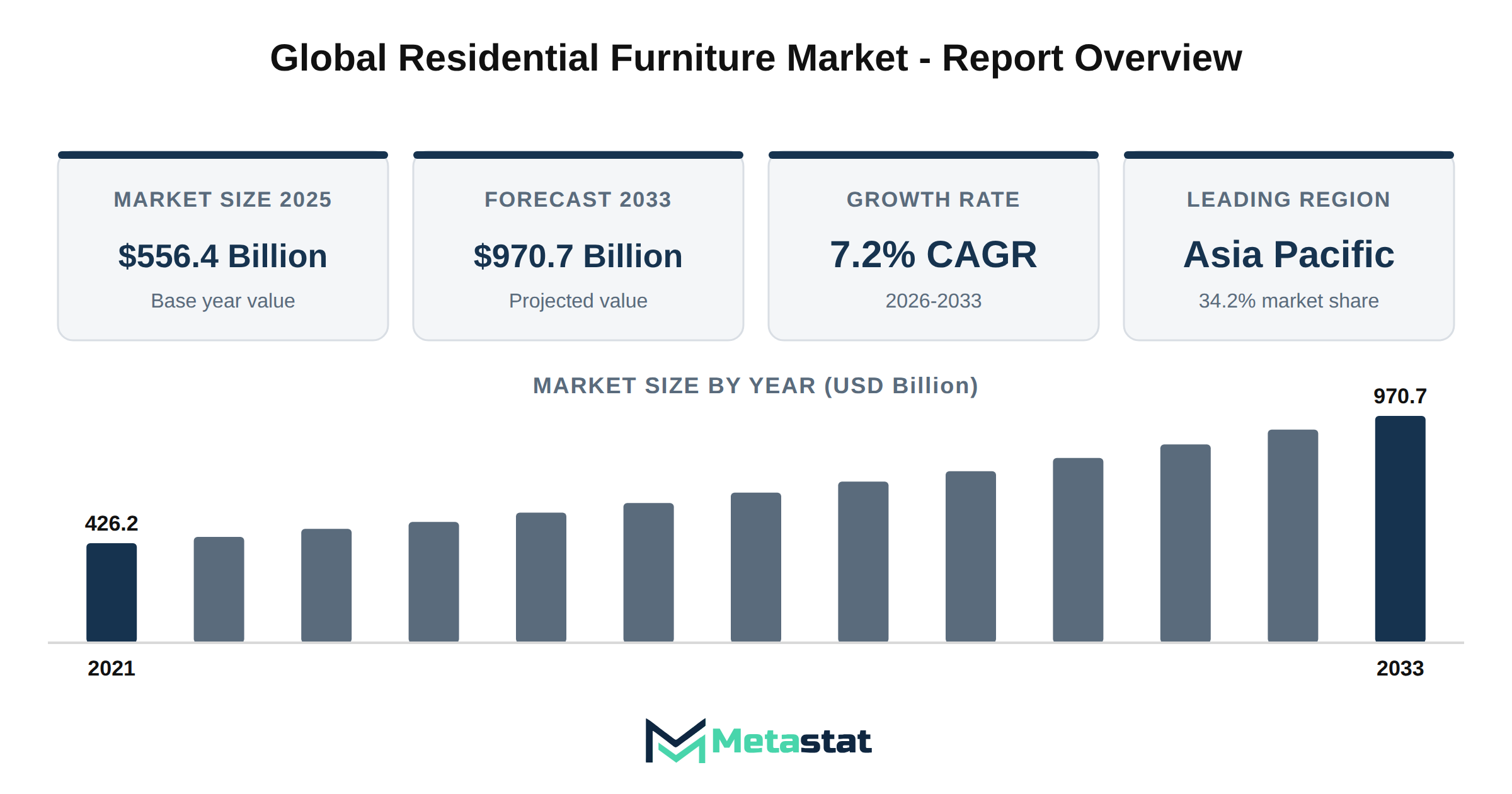
Market Valuation: Valued at $556.4 Billion in 2025, projected to reach $970.7 Billion by 2033 at a 7.2% CAGR.
Dominant Segment: Living Room Furniture leads the market, driven by consumer preferences for comfort and design, reflecting a strong demand for stylish and functional pieces.
Geographic Lead: North America is the leading region in 2025, capturing 30.7% of the market, supported by a robust housing market and evolving consumer tastes.
What's Inside: The report provides comprehensive coverage of the competitive landscape, detailed segment analyses, and a forecast window extending from 2026 to 2033.
High-Growth Segment: The Kitchen Furniture segment is expected to grow significantly, with a CAGR of 7.8%, as consumers increasingly invest in stylish and functional kitchen solutions.
Sustainable Materials: The wood segment is projected to grow from USD 342.7 billion in 2026 to USD 535.9 billion by 2033, driven by rising demand for eco-friendly furniture options.
Choose Your License
Global Residential Furniture Market
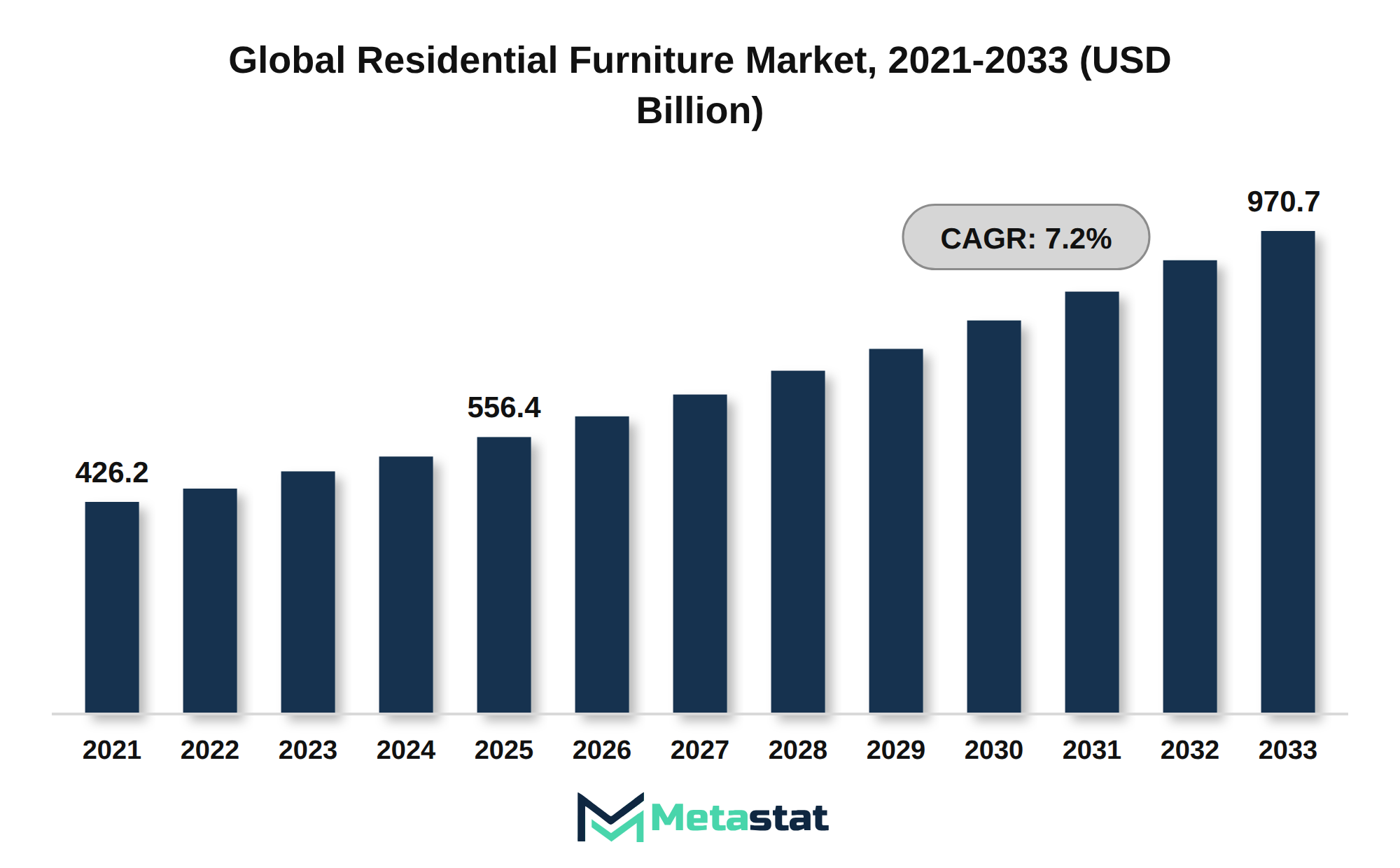
The global Residential Furniture market was valued at USD 556.4 billion in 2025 and is projected to reach USD 970.7 billion by 2033, growing at a CAGR of 7.2% over the forecast period.
The market encompasses a wide range of furniture products used in residential settings, serving various functional and aesthetic needs. Buyers invest in this market due to factors including home renovation, demographic shifts, and increased disposable income, driving demand for diverse furniture styles and materials. Growth in urbanization and a shift towards modern living spaces contribute to spending patterns, highlighting the importance of furniture in enhancing living environments as part of broader interior fit out projects.
Among the segments, Living Room Furniture stands out as the most valuable category, reflecting consumer preferences for comfort and design. North America holds 30.7% of the market in 2025, with the US leading in 2026. This region benefits from a robust housing market and evolving consumer tastes, which significantly influence purchasing decisions.
The anticipated growth in the Residential Furniture market is primarily driven by rising demand for sustainable and eco-friendly materials. Increasing awareness regarding environmental impact shapes consumer choices, promoting the use of materials including wood and metal. This trend indicates a shift towards more responsible consumption patterns, ultimately affecting market dynamics. In parallel, the maintenance and production of wooden pieces rely on specialized wood fillers to repair defects and extend product lifespans.
The Residential Furniture market includes various types of furniture designed for living spaces, including living room, bedroom solutions such as bed frames and mattresses, and dining room furniture. Purchases are driven by several factors, including demographic shifts and consumer preferences for comfort and functionality. Homeowners invest in furniture to enhance their living environments and reflect personal style, contributing to increased spending in the market.
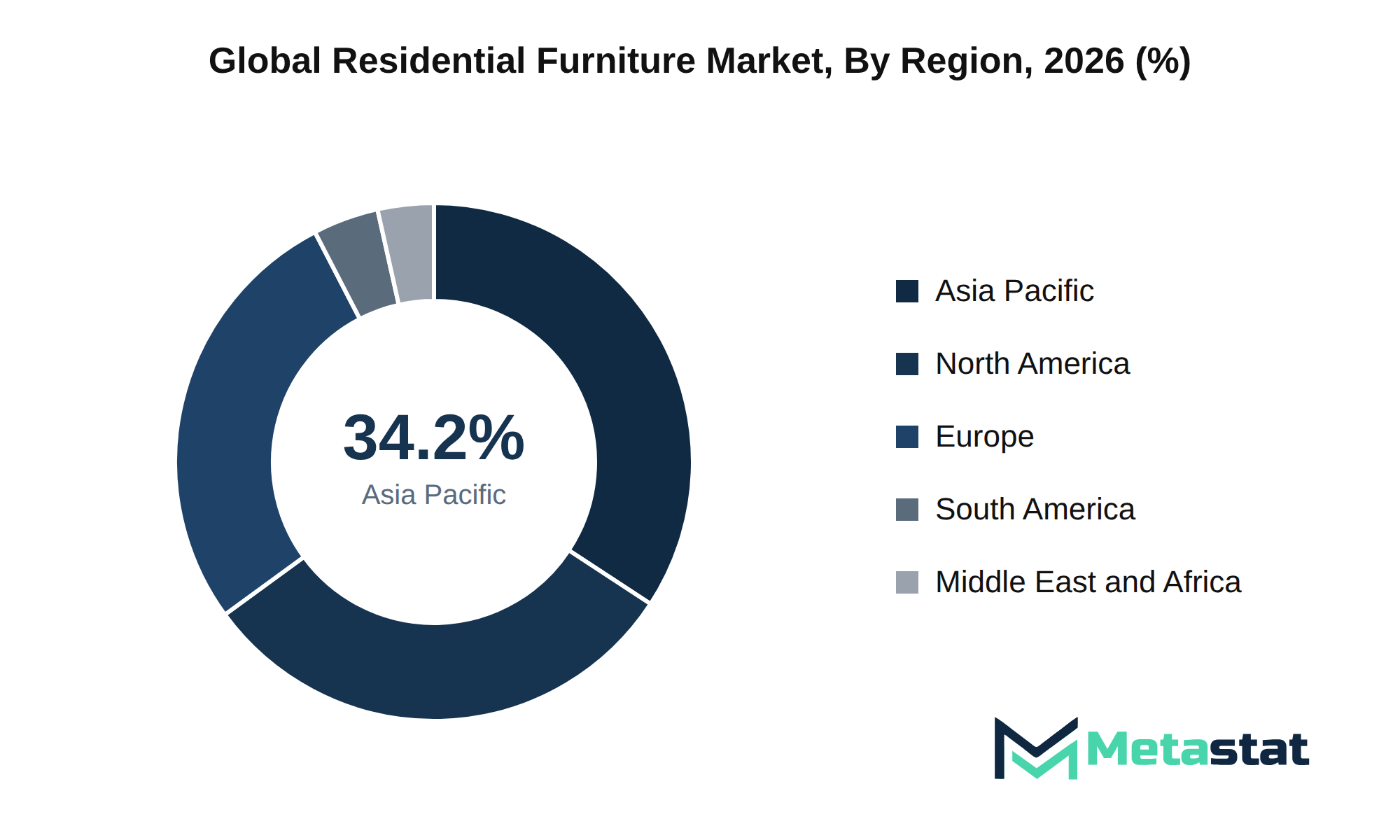
Growth in the market is propelled by rising disposable incomes and urbanization, leading to greater demand for residential furniture. Wood furniture dominates in terms of value, driven by its durability and aesthetic appeal. The Asia Pacific region captures 34.2% of the market share, highlighting its growing importance in the global landscape.
One significant driver of expansion within the market is the increasing trend toward home improvement and renovation. Consumers prioritize stylish and functional furniture that meets their evolving needs. This trend enhances demand for innovative designs and high-quality materials, reinforcing the competitive nature of the Residential Furniture market. To visualize these layouts before purchasing, homeowners frequently utilize digital room planner tools.
Smart and modular furniture is transforming urban home interiors by offering flexibility, functionality, and advanced technology integration. Consumers increasingly prefer furniture that adapts to their dynamic lifestyles and smaller living spaces. Many brands source assets from a 3D model marketplace to demonstrate these reconfigurable units through augmented reality and interactive online catalogs. This shift is driven by the growing trend of urbanization and the need for efficient use of limited square footage. The Residential Furniture market reflects these changes, with the living room furniture segment projected to increase from USD 170 billion in 2026 to USD 263.6 billion by 2033, demonstrating a compound annual growth rate of 6.5%.
The rise in smart furniture incorporates technology including wireless charging, built-in speakers, and app connectivity, enhancing user convenience and engagement. Modular designs allow for easy reconfiguration, enabling homeowners to customize layouts for various activities, including entertaining or relaxing. This innovation attracts younger demographics, particularly millennials and Gen Z, who emphasize aesthetics and functionality in their purchasing decisions.
By aligning product offerings with these evolving preferences, manufacturers tap into lucrative market opportunities. Enhanced consumer engagement through smart features drives sales and strengthens brand loyalty. Similar functional and weather-resistant adaptations are expanding across the outdoor furniture and parasols sector as homeowners invest in exterior living areas. The ongoing demand for adaptable solutions positions the Residential Furniture market for significant growth, reflecting broader lifestyle shifts in urban environments.
E-commerce and direct-to-consumer channels significantly transform purchasing behaviors in the Residential Furniture market. The rise of online platforms has reshaped how consumers engage with brands, allowing for effective transactions and enhanced accessibility to diverse product offerings. In 2026, the market for brand-owned e-commerce is projected to reach USD 146.8 billion, highlighting the growing importance of digital sales channels in consumer purchasing decisions. This transition results in a more competitive landscape, as brands streamline their operations to offer attractive pricing models and promotions.
The adaptation of pricing strategies across online platforms influences consumer engagement in the residential furniture sector. Direct-to-consumer models eliminate intermediaries, allowing brands to establish more favorable pricing structures. This change encourages consumers to explore a wider range of options without the constraints of traditional retail settings. For instance, the economy segment is expected to grow from USD 204.7 billion in 2026 to USD 307.5 billion by 2033, reflecting increased consumer preference for cost-effective solutions.
These evolving sales channels enable brands to collect valuable consumer data, providing insights into pricing preferences and purchasing behavior. The ability to analyze customer interactions online allows brands to tailor their offerings and enhance the overall shopping experience. Brands in the market increasingly focus on optimizing their online presence to attract and retain customers, building long-term relationships that contribute to sustained revenue growth.
Increasing consumer awareness regarding environmental issues significantly impacts purchasing decisions in the Residential Furniture market. Shoppers prioritize sustainable materials and circular design principles, reflecting a shift towards eco-friendly products. This trend aligns with a broader societal movement advocating for responsible consumption and waste reduction. The preference for sustainable options influences manufacturers to adopt environmentally friendly practices, thus enhancing their appeal to conscious consumers.
For instance, the wood segment, which accounts for substantial market share, is projected to grow from USD 342.7 billion in 2026 to USD 535.9 billion by 2033, demonstrating the rising demand for furniture crafted from responsibly sourced materials. The integration of recycled materials and biodegradable alternatives in product lines strengthens brand loyalty among eco-conscious buyers. This behavior not only shapes consumer preferences but drives innovation among manufacturers striving to meet these expectations.
Sustainability becomes a distinguishing factor in the market, and brands leveraging sustainable practices enhance their competitive edge. Companies that invest in sustainable materials and circular design principles benefit from increased customer loyalty, opening opportunities for growth in an evolving market.
Urbanization in the Asia Pacific region significantly influences the demand for home furniture. The rapid growth of urban populations drives an increase in housing construction and renovation, leading to heightened demand for residential furniture. By 2033, the Asia Pacific region is anticipated to account for 34.2% of the global market share, reflecting its dominance in this sector.
This dynamic arises from the expansion of cities and the corresponding shift in lifestyle preferences among consumers. While more individuals move to urban areas, they seek to optimize limited living spaces, leading to a preference for compact and multifunctional furniture solutions. For instance, living room furniture is projected to experience a compound annual growth rate of 6.5% from 2026 to 2033, highlighting the growing emphasis on stylish and functional designs that cater to urban living.
The increasing purchasing power of consumers in these urban settings further supports the demand for higher-quality furniture. Urbanization fuels a trend towards more sophisticated living environments, and the residential furniture market is expected to see sustained growth. This trend creates opportunities for manufacturers and retailers to innovate and expand their offerings tailored to the evolving needs of urban dwellers.
Rising interest in home improvement significantly influences consumer spending in the Residential Furniture market. A shift in consumer behavior is evident, with many homeowners focusing on creating comfortable and aesthetically pleasing living spaces. The pandemic prompted individuals to invest in their homes, contributing to an uptick in furniture purchases. Homeowners prioritize upgrading their existing furnishings or acquiring new items, which boosts demand across various furniture segments.
This momentum reflects a broader trend where consumers seek to enhance their living environments. Increased spending on furniture enhances overall market growth, creating a favorable landscape for furniture manufacturers and retailers.
Increased prices for materials and production directly affect consumer purchasing behavior. Factors including inflation and supply chain disruptions contribute to higher costs, making furniture items less affordable for buyers. Middle-income households, particularly, face challenges in maintaining their budgets for home furnishings. This price sensitivity results in smaller orders and delayed replacements, influencing overall market demand. The residential furniture market experiences slower adoption rates for new products, with consumers prioritizing essential expenditures over discretionary items. Price increases have a notable impact on the economy segment, where buyers seek to balance quality and affordability. Consequently, businesses in the market navigate these economic pressures while striving to attract customers without compromising margins.
Suppliers face significant challenges related to fluctuating input costs, which directly impact profitability in the Residential Furniture market. Rising prices of raw materials including wood and metal contribute to this margin pressure, prompting suppliers to explore alternative sourcing strategies and cost management practices. Manufacturers increasingly seek to optimize their supply chains, negotiate better terms with suppliers, and invest in technology that enhances production efficiency. This approach not only mitigates the impact of rising costs but enables suppliers to maintain competitive pricing for consumers.
In addition, several companies focus on developing partnerships with local suppliers to reduce transportation costs and improve supply chain reliability. Innovations in material usage, including the adoption of sustainable and recycled materials, provide avenues for cost reduction while appealing to environmentally conscious consumers. Overall, navigating input cost challenges remains critical for suppliers striving to ensure profitability in an evolving market.
The kitchen furniture segment presents a notable growth opportunity within the market. With a compound annual growth rate of 7.8%, this segment is positioned to expand significantly from USD 0 billion in 2026. Changing lifestyles and an increasing focus on home cooking have prompted consumers to invest in their kitchen spaces. Rising interest in stylish and functional kitchen designs drives this trend, with buyers seeking innovative solutions that enhance usability and aesthetics. This shift in consumer behavior encourages manufacturers to develop products that cater to modern needs, including modular designs and space-saving solutions. The expanding kitchen furniture segment reflects a broader trend where functionality and design converge, attracting a diverse customer base. Growth in this segment contributes to the overall performance of the market, enhancing prospects for manufacturers who adapt to these evolving demands.
The Global Residential Furniture market is segmented based on Type, Primary Material, Price Positioning, and Distribution Channel.
This segment serves a fundamental role in home settings, providing essential pieces for relaxation and entertainment. Households seek various styles and functionalities in living room furniture, driving demand from consumers focused on comfort and aesthetics. Rising urbanization and changing lifestyles contribute significantly to this growth, with many individuals prioritizing their living spaces. In comparison to other segments, this category experiences a moderate growth rate, influenced by price positioning and preferences for multifunctional designs. Unlike dining or bedroom furniture, living room pieces often demand a more substantial investment due to their visibility and importance in daily life. The market sees robust competition, with several players offering innovative designs to meet evolving customer expectations in the market.
Bedroom Furniture segment is estimated to reach USD 226.8 billion by 2033, at a CAGR of 6.8% during the forecast period. This segment includes essential items including beds, nightstands, dressers, and wardrobes, catering primarily to homeowners and renters seeking comfort and functionality in their sleeping areas. The growing trend towards home personalization drives demand for diverse styles and designs that reflect individual tastes. Rising disposable incomes enable consumers to invest in higher-quality bedroom furniture, further enhancing their living spaces. Bedroom Furniture differs from other segments in the market by exhibiting a stronger growth rate compared to Dining Room Furniture, which has a slower expansion rate. The need for innovative designs and sustainable materials motivates manufacturers to adapt their offerings to meet evolving consumer preferences.
Dining Room Furniture segment is expected to reach USD 121.4 billion by 2033. This segment provides essential furnishings including dining tables, chairs, and storage solutions, catering to households seeking to enhance their dining spaces. The growth of this segment is driven by increasing home renovation activities and shifts in consumer preferences towards multifunctional furniture. Compared to other segments, this category demonstrates a moderate growth trajectory, with a CAGR of 6.5%, reflecting changing family dynamics and a heightened focus on aesthetic appeal. In addition, rising disposable income among consumers contributes to increased spending on dining room furnishings, positioning this segment uniquely within the broader context of the Residential Furniture market. Higher price positioning in this segment attracts buyers looking for quality and design, differentiating it from others offering more economical options.
Kitchen furniture is projected to grow at a CAGR of 7.8% during the forecast period. This segment includes essential items including cabinets, countertops, and kitchen islands, serving homeowners and renters who prioritize both functionality and aesthetics in their cooking spaces. Increasing urbanization drives demand for efficient and stylish kitchen solutions, with consumers investing in home improvement. Unlike other segments, kitchen furniture features a unique combination of practical design and increasing customization options, appealing to diverse buyer preferences. The focus on maximizing space in smaller living areas positions this segment for rapid growth compared to others. Innovative materials and ergonomic designs enhance user experience, further boosting adoption rates among consumers looking to enhance their culinary environments.
Home Office Furniture serves both functional and aesthetic needs for individuals working from home. This segment sees significant use among professionals seeking dedicated workspace within their residences. Growing remote work trends create demand for efficient and stylish office solutions, driven by an increase in telecommuting practices. Unlike other segments, this category emphasizes ergonomics and space optimization, appealing to consumers looking for comfort and productivity. The rising need for functional home environments enhances its relevance, distinguishing it from categories like Living Room or Bedroom Furniture, which focus on leisure and relaxation. The emergence of innovative designs tailored for small spaces supports the segment's growth trajectory. Home Office Furniture reflects a shift in consumer preferences towards multi-functional spaces, catering to the evolving landscape of work and lifestyle integration.
Outdoor furniture consists of furniture specifically designed for outdoor settings, including patios, gardens, and balconies. This segment caters to homeowners and businesses looking to enhance outdoor spaces for relaxation and entertainment. Increasing interest in outdoor living spaces drives demand, with consumers seeking durable and weather-resistant products. Unique materials and design trends differentiate outdoor furniture from other segments, focusing on aesthetics along with functionality. Growth in home improvement activities significantly influences this segment, attracting buyers looking to invest in outdoor enhancements. Unlike living room or bedroom furniture, outdoor furniture often experiences seasonal demand fluctuations, affecting purchasing patterns throughout the year. The market sees a diverse range of products, with aesthetics being a key consideration for buyers seeking to complement their outdoor environments.
Children's furniture encompasses items specifically designed for the needs and preferences of children. This segment finds use in homes, schools, and play areas, catering primarily to families with young children. Increasing emphasis on child safety and ergonomic design drives demand for furniture that ensures comfort and security. Unique features, including scalable designs that accommodate growing children, differentiate this segment from others, enabling families to make long-term investments. The segment experiences slower growth compared to living room and bedroom furniture due to more limited target demographics, resulting in a narrower buyer base. In this context, the market adapts by offering customizable solutions that meet specific needs, enhancing its appeal to parents seeking functional and aesthetically pleasing options. Trends involving eco-friendly materials further influence purchasing decisions, aligning with the broader emphasis on sustainability observed in the market.
This segment includes furniture designed for entryways, bathrooms, and utility spaces. It serves practical purposes, including providing storage solutions and enhancing organization in residential settings. Homeowners and renters frequently seek these items to maximize functionality in smaller or otherwise underutilized areas of their homes. Growing consumer interest in multifunctional spaces drives demand for this segment, particularly in urban environments where space is limited. The uniqueness of this segment lies in its focus on practicality, often resulting in lower price points compared to segments including luxury bedroom or living room furniture. Buyers prioritize functionality and affordability over aesthetics in this category, differentiating it from other segments in the market. Trends toward minimalism and efficient living spaces contribute to its relevance, with consumers favoring designs that blend into their existing decor while providing essential utility.
This material is preferred for furniture due to its durability, aesthetic appeal, and versatility, appealing to consumers looking for quality and style in their home settings. The demand for wood furniture is driven by increasing purchasing power among consumers and the trend of sustainable living. Compared to other materials, wood tends to attract a higher price point, enhancing its revenue potential. The growth rate of the wood segment, at 6.6%, positions it favorably against other segments, particularly in comparison to the metal segment, which grows at a CAGR of 7.6%. This dynamic suggests a stable market presence for wood furniture, maintaining its significance in the broader Residential Furniture market.
Metal segment is estimated to reach USD 178 billion by 2033, at a CAGR of 7.6% during the forecast period. This segment finds applications in various furniture types, including office and contemporary home designs, appealing to consumers prioritizing durability and modern aesthetics. Growth in this segment is driven by the increasing preference for low-maintenance materials in furniture production, which appeals to busy households and professionals. In comparison to the wood segment, which is projected to grow at a CAGR of 6.6%, metal exhibits a faster growth trajectory due to its lightweight and versatile properties. Metal furniture caters to a distinct buyer demographic that values contemporary and industrial designs, setting it apart from traditional wood furniture consumers in the Residential Furniture market.
The plastic segment is expected to reach USD 106.4 billion by 2033. This segment consists of furniture pieces made primarily from plastic materials, appealing to budget-conscious consumers due to their affordability and versatility. Plastic furniture finds extensive use in various settings, including homes, offices, and outdoor spaces, catering to a diverse range of buyers who prioritize functionality and ease of maintenance. The segment experiences significant growth driven by trends towards lightweight and durable materials, with a CAGR of 6.5%. Compared to wood, which is valued for its aesthetic appeal but reflects slower growth at 6.6%, plastic offers a competitive advantage in price and adaptability, attracting a broader market segment. Increased consumer preferences for eco-friendly and recyclable materials support growth in this area, positioning the segment favorably within evolving market dynamics.
Glass is projected to grow at a CAGR of 6.5% during the forecast period. This material finds application in various furniture pieces, enhancing both aesthetics and functionality. High-end buyers often prefer glass components for dining tables, coffee tables, and shelving units due to their elegant appearance and the perception of luxury. The growth is driven by increasing consumer interest in modern and minimalist design styles. In comparison to other materials, glass offers a unique visual appeal but typically comes at a higher price point. Its use often requires additional considerations regarding maintenance and durability, impacting adoption among more budget-conscious consumers. In contrast, the wood segment is expected to experience a CAGR of 6.6%, reflecting slightly slower growth and a broader appeal across different price segments in the market.
Rattan and Wicker consist of versatile materials known for their lightweight and natural aesthetic appeal. This segment serves various applications, particularly in outdoor and casual living environments, appealing to consumers seeking sustainable and eco-friendly furniture options. The growing preference for environmentally conscious products drives demand in this segment. Compared to other materials, Rattan and Wicker furniture typically presents a unique blend of affordability and style, attracting a diverse demographic that includes younger buyers and those in search of trendy home furnishings. This segment distinguishes itself through its emphasis on artisanal craftsmanship, often commanding a premium compared to mass-produced alternatives. Its growth contrasts with segments like metal and wood, which are seeing rapid expansion due to technological advancements and changing consumer preferences, especially within the broader Residential Furniture market.
Bamboo, stone, and composite materials play an integral role in modern furniture design, appealing to environmentally conscious consumers. These materials find use in crafting unique furniture pieces that emphasize sustainability and aesthetics. The demand for eco-friendly products drives growth in this segment, attracting buyers who prioritize environmental impact alongside style.
Designers and manufacturers apply these materials to create innovative solutions that align with evolving consumer preferences. The segment distinguishes itself through niche market positioning, often commanding higher prices due to its sustainable nature and aesthetic appeal. While other segments like wood and metal experience strong growth, this sub-segment sees a slower pace as buyers weigh options between eco-friendliness and cost considerations. Growing awareness of sustainability trends supports ongoing interest, contributing to the overall dynamics of the market.
Economy segment is valued at USD 204.7 billion in 2026 and is projected to reach USD 307.5 billion by 2033, at a CAGR of 6% during the forecast period. This segment targets budget-conscious consumers seeking affordable yet functional furniture options for their homes. The growth of the Economy segment is driven by increasing urbanization and rising disposable incomes, particularly in emerging markets. Consumers prioritize value for money, contributing to the segment's appeal compared to higher-priced segments like Luxury and Premium, which attract more affluent buyers. The Economy segment's growth rate of 6% remains lower than the Luxury segment's CAGR of 9.8%, highlighting a distinction in consumer preferences and purchasing power. In the competitive landscape, brands focusing on cost-effective solutions differentiate themselves through affordability and accessibility, enhancing their market position.
Mid-Range segment is estimated to reach USD 373.9 billion by 2033, at a CAGR of 6.9% during the forecast period. This segment appeals to consumers seeking a balance between quality and affordability, often used in varied residential settings. Growing disposable incomes and an increasing emphasis on home aesthetics drive demand for mid-range furniture. This segment stands out through its pricing strategy, benefiting buyers looking for durable and stylish options without the premium price tag associated with luxury offerings. This positioning leads to a wider customer base, including young professionals and families seeking value-driven purchases. Compared to the economy segment, the mid-range segment enjoys a higher growth rate, reflecting a shift in consumer preferences towards enhanced quality and design in home furnishing solutions.
Premium segment is expected to reach USD 199.4 billion by 2033. This segment includes high-quality furniture designed for consumers seeking luxury and durability in their home environments. Buyers typically include affluent households and design-conscious individuals who prioritize aesthetics and functionality. The growing trend of home renovation and increasing disposable income among consumers significantly influences this segment's growth. With a compound annual growth rate (CAGR) of 9.8%, the premium segment demonstrates faster growth compared to other categories, including the economy segment, which grows at a CAGR of 6%. The price positioning reflects the superior materials and craftsmanship associated with premium furniture, appealing to consumers willing to invest in quality products. Enhanced marketing strategies and innovative designs further support demand for premium offerings in the market.
Luxury furniture is projected to grow at a CAGR of 9.8% during the forecast period. This segment appeals to affluent consumers seeking high-quality and aesthetically pleasing furnishings for their homes. The demand for luxury furniture stems from increasing disposable incomes and a growing preference for personalized, exclusive designs. Buyers in this segment typically prioritize craftsmanship and premium materials, distinguishing it from more affordable segments, including Economy and Mid-Range, which experience slower growth rates. Luxury furniture often incorporates innovative technology and bespoke designs, enhancing its appeal in the competitive landscape. While the market evolves, manufacturers focus on sustainability and ethical sourcing, aligning with consumer values. The growth trajectory of the luxury segment reflects a shift towards prioritizing quality and uniqueness in residential furniture choices.
Brand-Owned Stores and Showrooms segment is valued at USD 146.8 billion in 2026 and is projected to reach USD 214.6 billion by 2033, at a CAGR of 5.6% during the forecast period. This segment functions as a crucial sales channel for consumers seeking a hands-on experience when purchasing residential furniture. Typically, individuals visit these stores to engage with various styles, materials, and designs before making a purchase decision. The growth of this segment is driven by increasing consumer preference for personalized shopping experiences and the opportunity to explore products in a physical environment. Compared to other distribution channels, this segment exhibits slower growth, influenced by the rise of e-commerce alternatives. Market dynamics reflect a shift where consumers weigh the benefits of in-store shopping against the convenience of online purchases, highlighting the evolving landscape of consumer behavior in the market.
Independent Furniture Specialty Stores and Dealers segment is estimated to reach USD 192.6 billion by 2033, at a CAGR of 5.2% during the forecast period. These stores focus on providing a curated selection of residential furniture, appealing to customers seeking specialized products and personalized service. The growing emphasis on quality, unique design, and customer experience drives demand for this segment, attracting discerning buyers who prioritize craftsmanship over mass-produced alternatives. This segment experiences slower growth compared to other channels, partly due to higher price points associated with the specialized offerings. In contrast to mass merchandisers and online platforms, this segment emphasizes in-person consultations and tailored solutions, enhancing the consumer's shopping experience. The market evolves, reflecting changing consumer preferences and trends in home décor.
Department Stores and Mass Merchandisers segment is expected to reach USD 132.2 billion by 2033. This segment caters to a broad consumer base, offering various furniture products suitable for diverse living spaces. Buyers in this category include families, young professionals, and individuals seeking affordable options. The driving force behind the growth of this segment stems from increasing demand for convenient shopping experiences, with consumers gravitating towards one-stop shopping destinations. Compared to other segments, including Brand-Owned Stores and Showrooms, this sub-segment operates at a lower price point, making it more accessible to a wider audience. The market's reliance on trends in consumer behavior and pricing strategies influences its performance, differentiating it from segments targeting premium or luxury consumers.
The Home Improvement and DIY Retailers segment is projected to grow at a CAGR of 6.4% during the forecast period. This segment caters to consumers seeking furniture solutions for home improvement projects, emphasizing accessibility and affordability. The demand for cost-effective furniture options drives growth, primarily among homeowners and renters looking to enhance their living spaces. Unlike other distribution channels, this segment benefits from a wide range of price points, appealing to budget-conscious buyers. Consumer interest in DIY projects and home renovations fuels activity in this sector. Retailers in this segment leverage seasonal trends and promotions to attract customers, differentiating themselves from brand-owned stores and independent specialty dealers. This distinct focus on home improvement and DIY initiatives positions the segment uniquely within the Residential Furniture market, contributing to its rising trajectory.
Brand-Owned E-commerce encompasses online platforms owned by furniture brands to facilitate direct sales to consumers. This distribution channel caters to tech-savvy buyers seeking convenience and accessibility. Shifts in consumer purchasing behavior, driven by the desire for convenient online shopping experiences, are driving the growth of this segment. Customers increasingly prefer the ease of browsing and purchasing furniture from the comfort of their homes. Unlike traditional retail channels, Brand-Owned E-commerce allows brands to maintain control over pricing, promotional strategies, and customer engagement. This channel appeals to younger demographics, who exhibit a preference for online shopping, contrasting with other segments that rely on in-store experiences. The growing emphasis on digital engagement reflects wider trends within the Residential Furniture market, with brands investing in online platforms to enhance customer interaction and drive sales.
Third-Party E-commerce Marketplaces serve a vital channel for consumers seeking residential furniture online. This segment caters to a diverse audience, including individuals and families who prefer the convenience of shopping from home. A key driver for this segment involves the increasing trend of online shopping, which aligns with evolving consumer preferences for accessibility and variety. Competitive pricing strategies employed by various platforms enhance attractiveness to buyers, differentiating it from traditional retail segments characterized by higher operational costs. The growth trajectory of this segment is anticipated to be influenced by advancements in technology, including augmented reality and improved logistics, which enhance the online shopping experience. Compared to other distribution channels, Third-Party E-commerce Marketplaces experience a more rapid adoption rate due to these technological enhancements, driving significant engagement among digital-savvy consumers in the residential furniture market.
Direct project sales and interior design studios play a crucial role in the distribution of residential furniture, catering to consumers seeking personalized and tailored solutions. Designers and architects frequently apply this segment to create unique living spaces that reflect individual tastes and preferences. The increasing trend toward customization drives demand, with more consumers opting for bespoke furniture solutions that align with their specific requirements. This segment differs from others due to its higher price point, reflecting the bespoke nature of the products and the specialized services provided. Unlike mass-market retailers, interior design studios focus on quality and craftsmanship, appealing to clients who prioritize aesthetics and exclusivity. This sub-segment contributes to the overall growth of the market by offering unique products that enhance the consumer experience.
Based on geography, the Global Residential Furniture market is divided into North America, Europe, Asia-Pacific, South America, Middle East, and Africa.
Strong demand in North America stems from a growing focus on home improvement and interior design among consumers. This shift drives significant spending on furniture, particularly in the United States, where a robust housing market contributes to increased purchases. North America holds a 30.7% share of the global market in 2025, indicating its vital role in overall growth. Rising disposable incomes and changing consumer preferences lead to higher investments in quality and stylish residential furniture. North America is projected to reach USD 281 billion by the end of 2033. This growth reflects a combination of factors, including an evolving consumer base prioritizing aesthetic value and functionality in their furniture choices. The market adapts to these trends, enabling suppliers to innovate and expand their offerings to meet increasing demand.
In Europe, the residential furniture market experiences notable growth driven by increasing consumer spending on home renovation and interior design. Germany, France, the UK, Italy, and Spain contribute significantly to this trend, with strong demand from both residential and commercial buyers seeking quality furnishings. The premium segment sees particular interest due to rising disposable incomes and a focus on aesthetic appeal. Regulatory conditions emphasize sustainability, influencing consumer preferences toward eco-friendly materials. The market demonstrates a projected share of 27.4% in 2025, reflecting its robust position within the global landscape. This dynamic environment encourages competition among local and international manufacturers, promoting innovation and diverse product offerings.
China, India, and Japan drive significant demand in the Residential Furniture market, supported by rising disposable incomes and urbanization trends. Consumers increasingly prioritize modern design and functionality, resulting in heightened spending on both new and replacement furniture items. South Korea and Australia contribute to this trend, focusing on high-quality materials and innovative designs. The region's share of the global market reached 34.2% in 2025, reflecting the growing importance of Asia-Pacific in shaping global consumption patterns. The region benefits from a robust supply chain infrastructure that enables efficient distribution channels, particularly through e-commerce platforms. These factors combine to create a favorable environment for growth in the residential furniture segment, with projected expansions expected to continue through 2033.
The Residential Furniture market in South America currently holds a share of 4.1% in 2025. Key countries driving demand include Brazil and Argentina, where rising urbanization and a growing middle class influence purchasing behaviors. Increased investment in residential development projects, particularly in urban areas, drives the demand for furniture while households seek to enhance their living spaces. Changing consumer preferences toward modern and stylish furniture options contribute positively to market dynamics. Local manufacturers capitalize on these trends, focusing on affordability and design to attract consumers. The market experiences challenges related to import costs and supply chain issues, impacting pricing strategies. Nevertheless, opportunities exist for growth, particularly through e-commerce platforms, enabling wider access to furniture products across the region.
Demand for residential furniture in the Middle East and Africa stems from increasing urbanization and population growth. Countries including Saudi Arabia and the UAE exhibit a growing interest in modern interior design, driven by rising disposable incomes and a youthful demographic. Infrastructure development projects in these nations support the expansion of the residential sector, contributing to market growth. South Africa, with its diverse consumer base, reflects a demand for a variety of furniture styles and materials. The market in this region is projected to account for 3.5% of the global market share in 2025, with expectations of continued growth driven by these regional dynamics. Increasing access to e-commerce platforms further enhances availability for consumers, facilitating the purchase of residential furniture across urban and suburban areas.
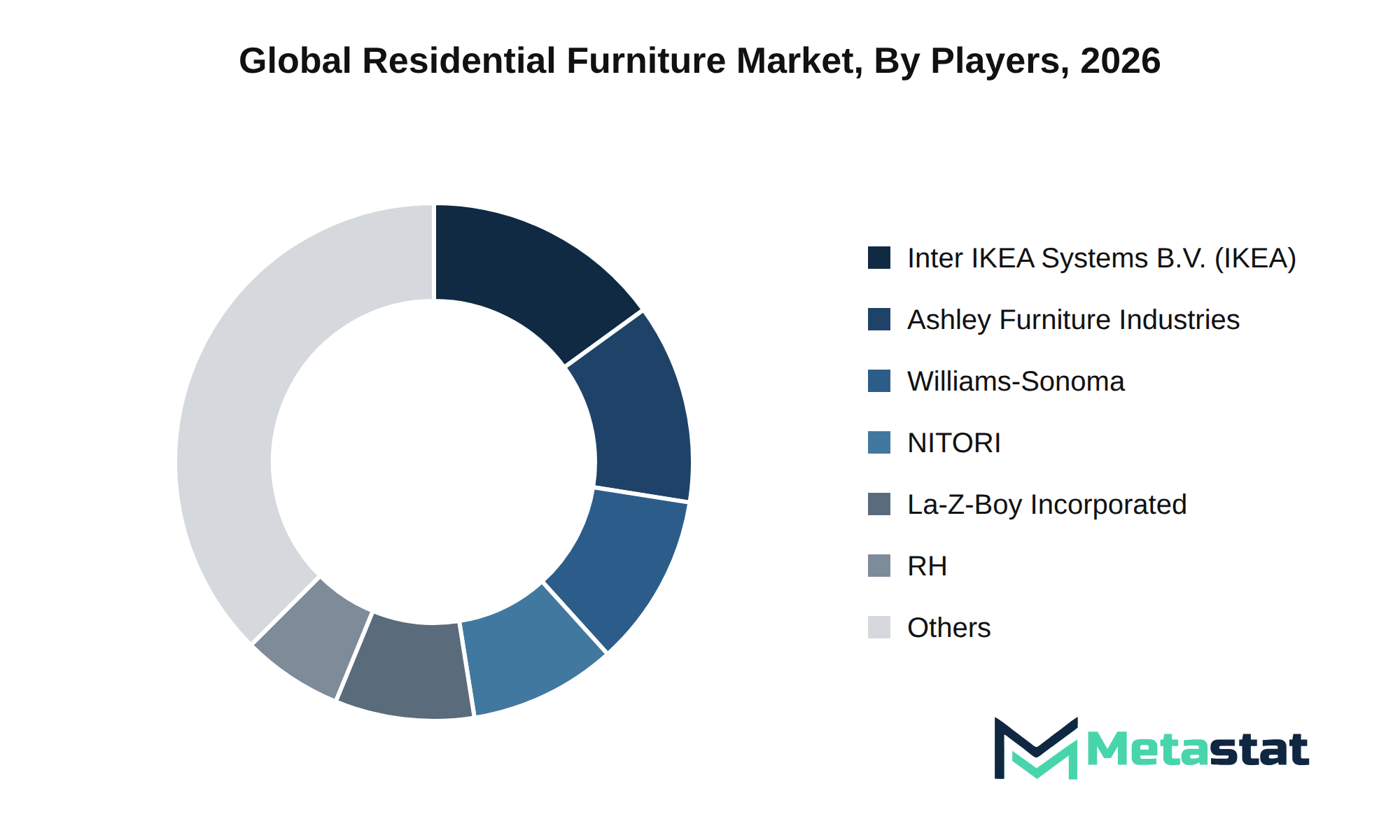
Companies in the Residential Furniture market compete through various strategies, emphasizing different aspects including price positioning, product quality, and customer service. Buyers prioritize factors including pricing, customization options, and brand reputation when selecting among competitors. For instance, Inter IKEA Systems B.V. (IKEA) focuses on affordable pricing and wide accessibility, appealing to cost-conscious consumers. In contrast, brands like Williams-Sonoma, Inc. emphasize high-quality materials and design, attracting buyers seeking premium products.
Strategic positioning within the Residential Furniture market reflects a mix of traditional and innovative approaches. Ashley Furniture Industries, LLC leverages a broad distribution network to enhance availability, while NITORI Co., Ltd. emphasizes a unique blend of Western and Japanese design philosophies. Companies like La-Z-Boy Incorporated focus on comfort and customization, providing tailored solutions that appeal to diverse consumer preferences.
Achieving this growth hinges on several key developments. The expansion of the wood segment, with anticipated growth from USD 342.7 billion to USD 535.9 billion in the same period, supports the market's upward trajectory. Another contributing factor involves the rising popularity of luxury furniture, which is expected to see accelerated growth due to shifting consumer preferences toward premium products. However, potential economic downturns or supply chain disruptions could pose risks to this forecast, particularly affecting the Asia Pacific region where demand remains robust. Overall, the market is poised for substantial expansion, contingent on these developments and a stable economic environment.
By Type: Living Room Furniture, Bedroom Furniture, Dining Room Furniture, Kitchen Furniture, Home Office Furniture, Outdoor Furniture, Children's Furniture, Others (Entryway, Bathroom and Utility Furniture)
By Primary Material: Wood, Metal, Plastic, Glass, Rattan and Wicker, Others (Bamboo, Stone and Composite Materials)
By Price Positioning: Economy, Mid-Range, Premium, Luxury
By Distribution Channel: Brand-Owned Stores and Showrooms, Independent Furniture Specialty Stores and Dealers, Department Stores and Mass Merchandisers, Home Improvement and DIY Retailers, Brand-Owned E-commerce, Third-Party E-commerce Marketplaces, Others (Interior Design Studios and Direct Project Sales)
The report strategically identifies and profiles the key market players and analyses their core competencies in each sub-segment of the Residential Furniture market.
|
Report Attributes |
Details |
|
Study Period |
2021-2033 |
|
Base Year |
2025 |
|
Estimated Year |
2026 |
|
Forecast Period |
2026-2033 |
|
Historical Period |
2021-2025 |
|
Growth Rate |
CAGR 7.2% from 2026 to 2033 |
|
Revenue Unit |
USD billion |
|
Segmentation |
Type, Primary Material, Price Positioning, Distribution Channel |
|
By Region |
North America (By Type, Primary Material, Price Positioning, Distribution Channel, and Country)
|
|
Europe (By Type, Primary Material, Price Positioning, Distribution Channel, and Country)Germany
|
|
|
Asia Pacific (By Type, Primary Material, Price Positioning, Distribution Channel, and Country)
|
|
|
South America (By Type, Primary Material, Price Positioning, Distribution Channel, and Country)
|
|
|
Middle East and Africa (By Type, Primary Material, Price Positioning, Distribution Channel, and Country)
|
Find answers to common questions about this report
The Residential Furniture market size was valued at USD 556.4 billion in 2025.
The market is projected to grow at a CAGR of 7.2% during the forecast period from 2026 to 2033.
The North America Residential Furniture market size is estimated to reach USD 281 billion by 2033.
Living Room Furniture leads the segment with a projected value of USD 263.6 billion by 2033. This segment outpaces others in growth potential within the Residential Furniture market.
Rising interest in home improvement significantly influences consumer spending as homeowners prioritize creating comfortable living spaces. The kitchen furniture segment presents a notable growth opportunity, driven by changing lifestyles and an increasing focus on home cooking.
Asia Pacific holds the dominant share of the Residential Furniture market, accounting for 34.2% in 2025. This region surpasses others, including North America at 30.7% and Europe at 27.4%.
Rising prices for materials and production directly affect consumer purchasing behavior, making furniture items less affordable for buyers. Middle-income households face challenges in maintaining their budgets for home furnishings, resulting in smaller orders and delayed replacements.
The kitchen furniture segment is positioned for significant growth, driven by changing lifestyles and an increasing focus on home cooking. This evolving consumer interest encourages manufacturers to develop innovative, functional designs that enhance usability and aesthetics, contributing to broader market adoption.
The Residential Furniture market is estimated to reach a valuation of USD 970.7 billion by 2033.
Key players operating in the Residential Furniture industry include Inter IKEA Systems B.V. (IKEA), Ashley Furniture Industries, LLC, Williams-Sonoma, Inc., RH, NITORI Co., Ltd., KUKA HOME, and La-Z-Boy Incorporated.
The analysts below cover Consumer Goods research at Metastat Insights.
LEAD ANALYST
Utkarsh Khirodkar is a Lead Market Research Analyst at MetaStat Insight, specializing in market intelligence, technology sector assessments, and competitive strategy.
Standard industry briefs frequently blur the operational distinctions between isobaric pressure exchangers and centrifugal turbines. In this study, MetaStat Insight categorized mega-scale desalination tenders across the GCC and Mediterranean basins by membrane replacement frequencies and salinity tolerances. Their primary research helped us evaluate local content requirements in Saudi Arabia and the UAE without relying on marketing literature. We found the segment-level equipment replacement estimates grounded and well-reasoned throughout.
The technical breakdown of ISO 20022 migration readiness across correspondent banking corridors was remarkably thorough. Rather than treating cross-border corporate payments as a single block, the report drew a useful distinction between multilateral netting platforms and domestic instant payment rails across ASEAN economies. MetaStat Insight highlighted regulatory constraints on foreign exchange liquidity management that many publications gloss over. The research material offered practical clarity for our platform development roadmap.
Our group needed clearer visibility into out-of-autoclave processing timelines for high-temperature thermoplastic composites. MetaStat Insight delivered an objective assessment that contrasted automated fiber placement scrap rates with traditional thermoset prepreg layup cycles. The supplier landscape mapped out primary resin suppliers and tape slitting capacity across France, Germany, and Japan with solid technical accuracy. Their analyst handled our questions on precursor supply risks during an unscheduled inquiry call, providing clear, unembellished context.
Explore related market intelligence reports worth reading alongside this one.