
LEAD ANALYST
Utkarsh Khirodkar is a Lead Market Research Analyst at MetaStat Insight, specializing in market intelligence, technology sector assessments, and competitive strategy.

South Africa Hospitality Market Size, Share, By Type (Chain Hotels and Independent Hotels), By Accommodation Class (Luxury, Mid & Upper-Mid-scale, Budget & Economy and Service Apartments), By Foodservice Outlet Type (Full-Service Restaurants, Quick-Service Restaurants, Cafés and Bars, and Street Stalls and Kiosks), By Booking Channel (Direct Digital, Online Travel Agencies (OTAs), Corporate and MICE Contracts, Travel Management Companies and Traditional Travel Agents, and Wholesalers and Tour Operators), Industry Analysis, Growth, Trends, and Forecast, 2026-2033
Report ID
MSI-5495
Published
October, 2026
Pages
288 Pages
Format
Historical
Base year
Forecast
Forecast period
Report Details
Market Valuation: Valued at $8,468 Million in 2025, projected to reach $14,883.9 Million by 2033 at a 7.3% CAGR.
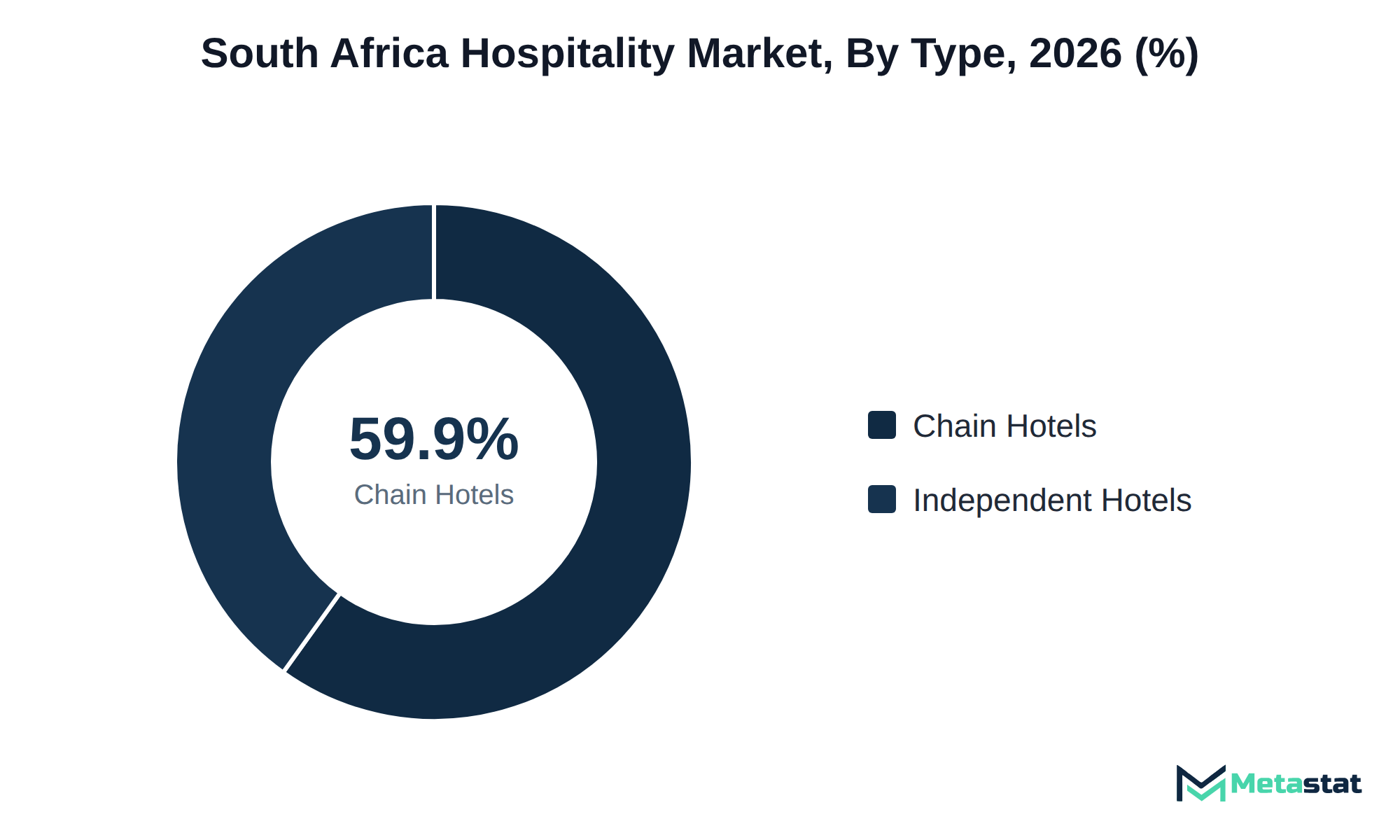
Dominant Segment: Chain Hotels lead the South Africa Hospitality market, driven by their appeal to business travelers seeking consistent quality and service standards. This segment is projected to grow from USD 5,442.8 million in 2026 to USD 8,687.7 million by 2033.
Geographic Lead: The South Africa Hospitality market is experiencing growth fueled by a surge in domestic and international tourism, particularly in major cities that host corporate and MICE events. This trend enhances demand for various accommodation types.
What's Inside: The report provides a comprehensive analysis of market dynamics, competitive landscape, and segmentation by type, accommodation class, foodservice outlet type, and booking channel. It includes forecasts from 2026 to 2033.
Emerging Demand for Serviced Apartments: Serviced apartments are gaining traction, with a projected CAGR of 10.5% as travelers seek flexible, home-like accommodations for extended stays. This trend reflects changing preferences among both business and leisure travelers.
Increased Demand for Luxury Accommodatio: The Luxury accommodation segment is projected to grow from USD 2,067.4 million in 2026 to USD 3,450.1 million by 2033, driven by affluent travelers seeking premium experiences and high-quality service.
Choose Your License
South Africa Hospitality Market
The South Africa Hospitality market was valued at USD 8,468 million in 2025 and is projected to reach USD 14,883.9 million by 2033, growing at a CAGR of 7.3% over the forecast period.
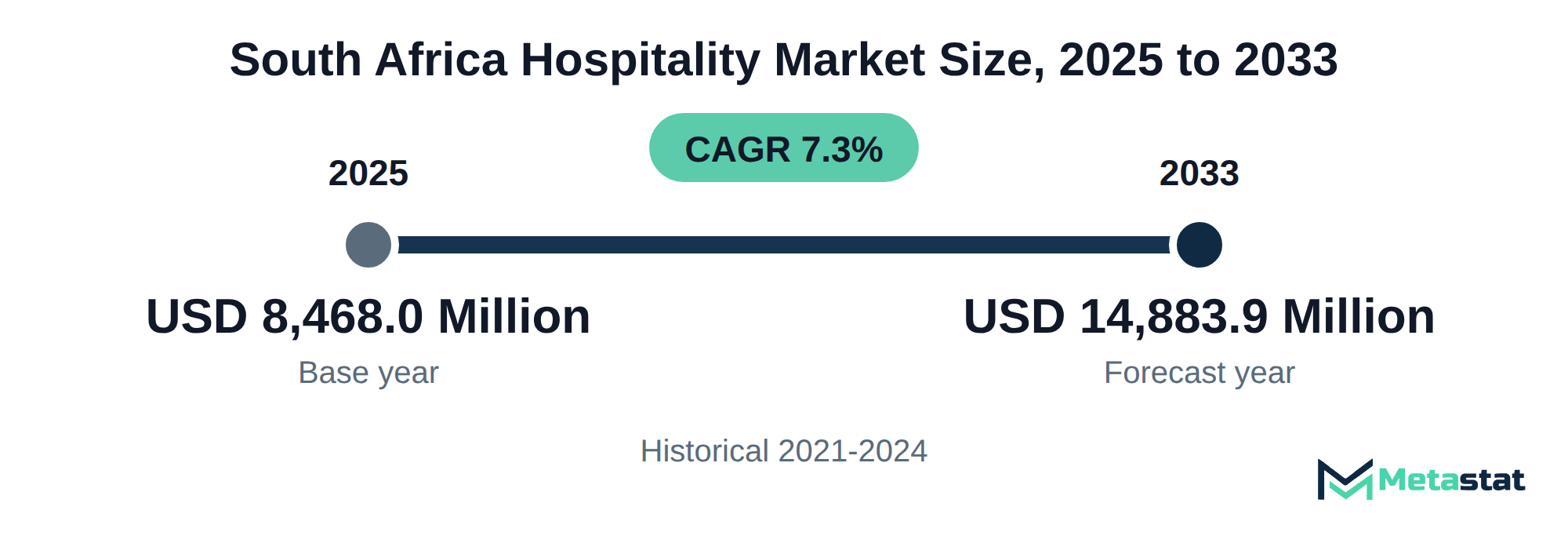
The South Africa Hospitality market encompasses a diverse range of services, including accommodation, foodservice, and leisure activities, attracting consumers for both business and leisure travel. Buyers invest in this market due to the growing demand for quality experiences, which aligns with increasing disposable income and changing consumer preferences. The need for enhanced amenities and services drives spending across various sectors within the market.
Growth in the South Africa Hospitality market is influenced by several factors, including a surge in domestic and international tourism. Among the various segments, Chain Hotels represent the largest share of revenue within the accommodation category. The Luxury accommodation class demonstrates significant demand, appealing to affluent travelers seeking premium experiences and superior service quality.
Increasing accessibility to travel, driven by improved infrastructure and connectivity, acts as a primary driver for market expansion. The market's growth trajectory reflects a robust forecast, with investments directed toward enhancing service offerings and facilities. This strategic focus positions the market well to accommodate evolving consumer expectations and support long-term demand.
The South Africa Hospitality market provides various accommodations and foodservice options that cater to both leisure and business travelers. Buyers invest in this market due to the growing demand for diverse experiences and quality services. These spending patterns reflect a shift toward enhancing guest experiences and meeting the expectations of both local and international visitors.
Growth in the market is driven by the increasing popularity of travel destinations within South Africa, with Chain Hotels representing the largest segment by value. Independent Hotels follow closely behind, reflecting a competitive landscape. The Mid & Upper-Mid-scale accommodation class has a significant presence, appealing to a broad range of consumers across various demographics, which supports sustained revenue growth.
Direct Digital booking channels have emerged as a primary method for consumers to secure accommodations and dining experiences. This trend highlights the importance of technology in enhancing customer engagement and streamlining the reservation process. The South Africa Hospitality market is projected to expand, driven by evolving consumer preferences and the continuous improvement of service offerings.
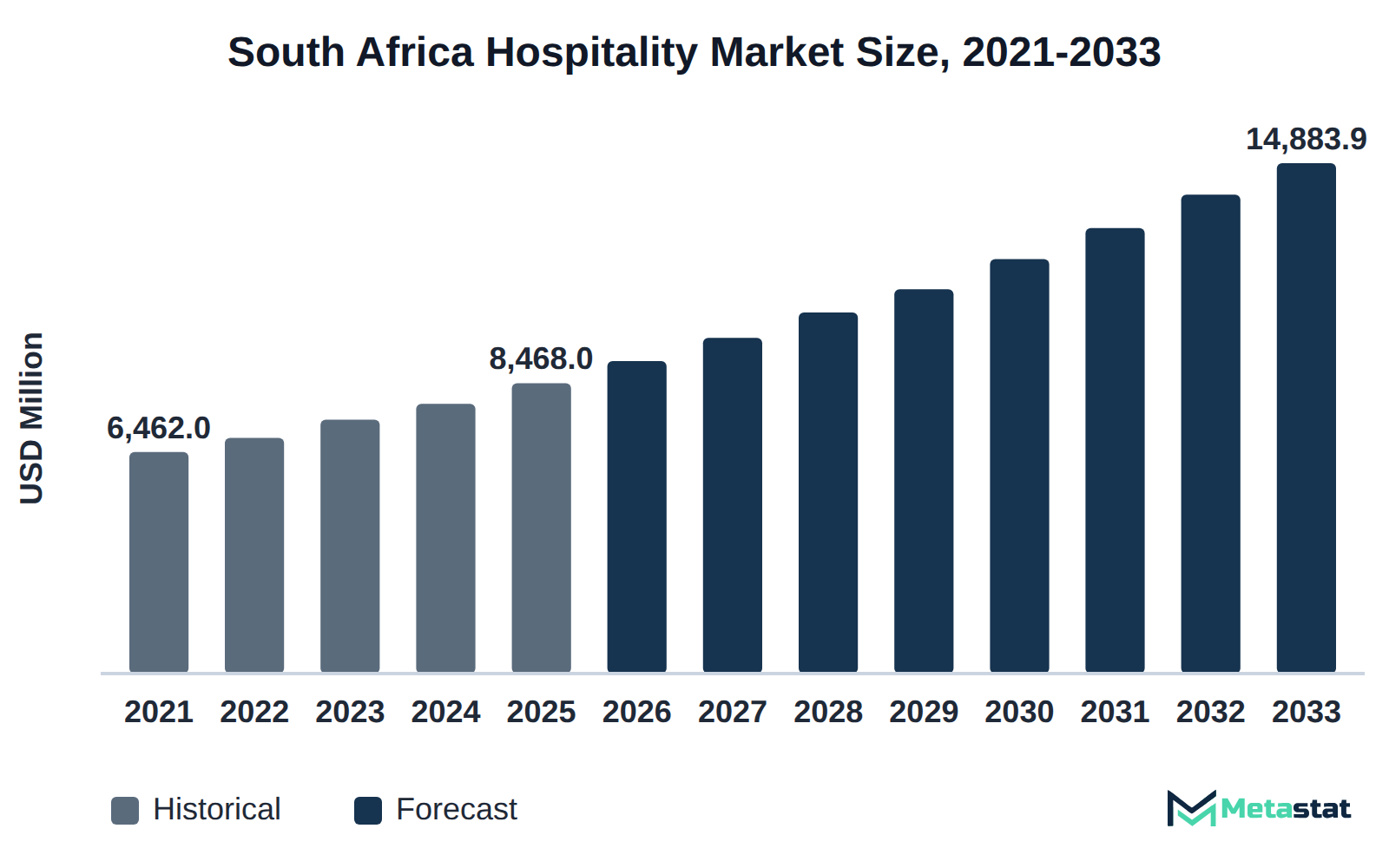
Direct bookings through hotel websites are gaining prominence in the South Africa Hospitality market, driven by the financial implications of relying on online travel agencies (OTAs). The shift towards direct bookings helps hotels retain a larger portion of revenue, minimizing the commission fees typically associated with OTA usage. In 2026, the Direct Digital booking channel is projected to generate USD 2,496.1 million, expanding to USD 4,831.3 million by 2033, reflecting a compound annual growth rate (CAGR) of 9.9%. This transition enhances profitability for hotels while improving guest loyalty and experience.
Hotels investing in technology to optimize their direct booking functionalities report significant revenue gains. By enhancing their websites with user-friendly interfaces, personalized booking experiences, and loyalty programs, hotels better compete with OTAs. The focus on direct bookings aligns with the trend of consumers seeking more personalized experiences and better deals, positioning hotels to capture a growing market share. The expected growth in the Direct Digital booking channel highlights the commercial advantage and strategic importance of prioritizing direct booking strategies in the South Africa Hospitality market.
The rise in demand for serviced apartments reflects changing preferences among travelers in the South Africa Hospitality market. Extended-stay facilities offer flexibility and convenience, appealing to both business and leisure travelers seeking home-like accommodations. This segment has attracted attention, with a projected compound annual growth rate (CAGR) of 10.5% indicating significant growth for serviced apartments within the market.
Pricing strategies for serviced apartments typically involve a combination of nightly rates and long-term stay discounts. Operators frequently implement tiered pricing models that adjust rates based on length of stay, booking channel, and seasonal demand. For instance, direct digital bookings offer competitive pricing compared to traditional travel management companies, incentivizing guests to secure accommodations online. This approach enhances revenue predictability while attracting a diverse range of guests.
While more travelers opt for extended stays, the commercial landscape for serviced apartments evolves. Companies investing in this segment recognize the importance of adapting pricing models to meet consumer expectations. By offering tailored packages and convenient payment options, operators enhance their competitive edge in the rapidly expanding South Africa Hospitality market.
Investment in energy and water resilience has become a critical focus for hotels in the South Africa Hospitality market. The demand for reliable and sustainable energy sources drives this trend, reflecting a growing recognition of climate-related challenges. Rising operational costs due to fluctuating energy prices prompt hotels to prioritize infrastructure that supports efficient energy consumption.
For instance, direct digital booking channels present a projected growth from USD 2,496.1 million in 2026 to USD 4,831.3 million by 2033, highlighting a shift in consumer behavior towards sustainability-conscious hotels. This financial commitment aligns with the market's goal of enhancing operational efficiency and reducing environmental impact.
Hotels investing in renewable energy solutions and water conservation technologies stand to differentiate themselves in a competitive landscape, attracting environmentally aware travelers while achieving long-term cost savings. This alignment with sustainability enhances brand reputation and positions establishments favorably in the evolving market dynamics.
Corporate and MICE (Meetings, Incentives, Conferences, and Exhibitions) travel significantly influences hotel demand in the South Africa Hospitality market. Many organizations coordinate this travel through corporate travel management programs. This segment represents a critical source of revenue, with substantial investments in events and business travel contributing to occupancy rates. In 2023, the total revenue from hotels catering to corporate and MICE segments increased, highlighting the growing importance of this market segment.
The rise in corporate activities, along with a surge in international conferences held in major cities, drives demand for hotel accommodations specifically tailored for business travelers. For example, the Corporate and MICE Contracts booking channel is projected to reach USD 2,362.1 million by 2033. This growth reflects the increasing reliance on hotels to provide facilities for meetings and events, which enhances their operational revenue.
With improving economic conditions and a focus on attracting international business events, South African hotels that invest in appropriate amenities and services for corporate travelers stand to benefit considerably. Heightened demand for such accommodations reinforces the competitive dynamics of the market, compelling hotels to enhance their offerings to capture a larger share of this lucrative segment.
Affluent travelers increasingly seek luxury hotel accommodations, driving a significant rise in expenditure within the South Africa Hospitality market. This demographic shift reflects a growing preference for premium experiences, resulting in heightened occupancy rates and increased average daily rates. Luxury hotels, including chain and independent establishments, benefit from this trend, attracting both domestic and international tourists. The luxury accommodation segment is projected to expand from USD 2,067.4 million in 2026 to USD 3,450.1 million by 2033, reflecting a compound annual growth rate of 7.6%. This growth indicates a shift in consumer behavior, emphasizing the importance of personalized services and unique offerings in enhancing traveler satisfaction. The demand for high-end facilities contributes positively to the market's overall performance, stimulating further investment in luxury services and amenities.
The rise of experiential tourism significantly influences spending patterns, with travelers prioritizing memorable experiences over cost considerations. This behavioral change encourages hotels to innovate and diversify their offerings, ensuring they remain competitive in a dynamic environment.
Innovation in digital booking channels drives significant changes in the hospitality sector. The rise of direct digital platforms facilitates transactions, enhancing customer experience and streamlining operations. This shift responds to increased consumer preference for online transactions, where guests prioritize convenience and speed. The market observes a growing trend toward using mobile applications and websites, allowing consumers to explore accommodations and foodservice options.
Direct digital bookings are projected to experience substantial growth, reflecting a shift in consumer purchasing behavior. The transition from traditional booking methods to digital channels results in heightened competition among providers, compelling hotels and restaurants to enhance their online presence. This competitive pressure stimulates investment in technology and marketing strategies, further driving market growth. In the South Africa Hospitality market, these evolving digital channels contribute significantly to revenue expansion, reflecting the importance of adapting to changing consumer preferences.
Price sensitivity among travelers significantly limits demand within the South Africa Hospitality market. Many potential customers, especially budget-conscious segments, experience hesitation when considering accommodations and dining options, leading to slower uptake in various hospitality services. Budget and economy travelers often face constraints related to their spending capabilities, resulting in smaller orders or a preference for lower-cost alternatives. Independent hotels and budget accommodations experience this limitation acutely, restricting their ability to compete effectively against chain hotels offering promotional rates. The necessity for competitive pricing strategies drives operational adjustments that impact service quality and availability. Consequently, this price sensitivity shapes purchasing behaviors, delaying decisions for vacation plans and business trips alike, ultimately affecting overall revenue growth within the market.
Rising operational costs exert significant pressure on margins in the hospitality sector. Factors including escalating labor costs and increasing supplier prices contribute to the financial strain faced by service providers. In response, many suppliers implement cost-control measures, streamlining operations to enhance efficiency and reduce unnecessary expenditures.
For instance, hotels embrace technology-driven solutions, including smart hospitality technology, to automate routine tasks, ultimately lowering labor demands and reallocating resources toward enhancing guest experiences. Restaurants adjust menus based on ingredient costs, focusing on local sourcing to mitigate supply chain disruptions.
Such strategic adaptations aim to sustain profit margins while maintaining service quality in a competitive environment. The challenges presented by margin pressure highlight the need for continuous innovation within the South Africa Hospitality market, ensuring suppliers remain resilient during fluctuating operational conditions.
The growing interest in serviced apartments reflects changing traveler preferences within the South Africa Hospitality market. This segment, projected to expand at a compound annual growth rate (CAGR) of 10.5%, appeals to both business and leisure travelers seeking flexible accommodation options. Factors driving this demand include extended stays and the need for amenities that cater to longer-term guests. Serviced apartments provide a competitive alternative to traditional hotel offerings through their home-like environments and integrated facilities.
This shift towards blending work and leisure travel supports the growth of serviced apartments, making them a popular choice among corporate travelers and families alike. The trend presents a significant opportunity for market players to invest in and enhance their serviced apartment offerings. Expanding capacity in this segment allows for greater penetration into an underserved market, ultimately contributing to the overall growth expected in the South Africa Hospitality market.
The South Africa Hospitality market is segmented based on Type, Accommodation Class, Foodservice Outlet Type, and Booking Channel.
Chain Hotels segment is valued at USD 5,442.8 million in 2026 and is projected to reach USD 8,687.7 million by 2033, at a CAGR of 6.9% during the forecast period. This segment caters primarily to business and leisure travelers seeking consistent quality and service standards. The demand for Chain Hotels is supported by corporate travel, which often requires reliable accommodations. Compared to Independent Hotels, Chain Hotels typically offer more standardized services and facilities, which appeal to larger groups and organizations. While Independent Hotels provide unique local experiences, Chain Hotels focus on brand recognition and loyalty programs, attracting travelers who prioritize familiarity and comfort. The anticipated growth rate of 6.9% highlights the segment's strong performance relative to other types, indicating robust investment opportunities and sustained demand within the market.
Independent Hotels segment is estimated to reach USD 6196.2 million by 2033, at a CAGR of 7.8% during the forecast period. This segment serves a wide range of travelers, including tourists seeking unique experiences and business travelers looking for personalized services. A notable demand driver for independent hotels stems from the growing trend of travelers preferring locally inspired accommodations that reflect the culture of their destinations. Unlike chain hotels, which typically offer standardized experiences, independent hotels provide distinctive environments that appeal to individuals seeking authenticity. This segment differentiates itself through higher price points and unique offerings, resulting in a less price-sensitive customer base compared to budget and economy segments. The market exhibits strong potential for growth, particularly with travelers prioritizing unique experiences that independent hotels deliver.
This segment appeals mainly to affluent travelers on leisure and business trips, seeking high-end experiences and high-quality service. The increasing demand for luxury stays is driven by a rising number of high-income individuals and international tourists. Compared to other accommodation classes, including Budget & Economy, which target price-sensitive customers, Luxury accommodations attract a clientele willing to invest significantly in superior comfort and exclusivity. The Luxury segment's growth reflects a broader trend in the market, indicating a shift toward personalized and premium offerings that differentiate it from midscale and budget options, which exhibit slower growth rates.
Mid & Upper-Mid-scale segment is estimated to reach USD 7,257.4 million by 2033, at a CAGR of 6.8% during the forecast period. This segment appeals primarily to business travelers and families seeking comfortable yet affordable accommodations. Increased disposable income among middle-class consumers drives demand for this segment, making it an attractive option for hotel operators. Compared to the Luxury segment, which targets affluent travelers, the Mid & Upper-Mid-scale accommodations provide a balance of quality and price, resulting in a broader market appeal. The rise of digital booking platforms facilitates easier access to these accommodations, further enhancing demand. The segment's growth trajectory stands out, reflecting a stronger performance compared to the Budget & Economy segment, which features lower pricing but limited amenities and services.
The Budget & Economy segment is expected to reach USD 2,749.1 million by 2033. This segment caters primarily to cost-conscious travelers seeking affordable lodging options. Popular among domestic tourists, backpackers, and young professionals, budget accommodations offer essential amenities at competitive prices. Demand for this segment experiences growth driven by increasing local tourism and a focus on value for money. Compared to luxury and mid-scale accommodations, budget options attract a broader audience due to lower pricing and accessibility. The anticipated CAGR for this segment indicates a steady rise in preference for economical lodging solutions, differentiating it from higher-end segments that cater to affluent clientele.
Service Apartments segment is projected to grow at a CAGR of 10.5% during the forecast period. These accommodations serve both business and leisure travelers seeking a blend of hotel-like services and home-like amenities, making them appealing for extended stays. Increasing demand from corporate travelers seeking flexible living arrangements during business assignments drives this trend. Compared to traditional hotels, service apartments offer lower prices and a more comfortable environment, enhancing their attractiveness for longer durations. This segment stands out with its growth rate, exceeding that of luxury accommodations and independent hotels, which exhibit CAGRs of 7.6% and 7.8%, respectively. The rising popularity of remote work contributes to sustained demand for service apartments, with professionals preferring living in comfortably appointed spaces while balancing work and leisure.
Full-Service Restaurants segment is valued at USD 2,824.4 million in 2026 and is projected to reach USD 4,380.3 million by 2033, at a CAGR of 6.5% during the forecast period. Full-service restaurants serve diners seeking a sit-down meal experience, often offering a diverse menu and table service. This segment attracts families, tourists, and business customers who prefer a more leisurely dining environment. Increasing consumer preference for dining out, driven by lifestyle changes and urbanization, supports growth in this segment. Compared to Quick-Service Restaurants, which target convenience and speed, full-service establishments provide a unique dining experience that commands higher average check sizes. The forecasted growth rate of 6.5% indicates a steady increase in demand, reflecting an evolving consumer trend towards enhanced dining experiences within the South Africa Hospitality market.
Quick-Service Restaurants segment is estimated to reach USD 7,400.3 million by 2033, at a CAGR of 7.6% during the forecast period. This segment caters to consumers seeking prompt meal options, including fast food and casual dining experiences. Growth is driven by a shift in consumer preferences toward convenience and efficiency, particularly among younger demographics and urban dwellers. The increasing reliance on digital ordering platforms further enhances accessibility for customers. Unlike Full-Service Restaurants, which typically require more time and a higher budget, Quick-Service Restaurants present a more affordable dining option, appealing to cost-conscious customers. Consequently, this segment's growth rate is anticipated to surpass that of Full-Service Restaurants, projected at a CAGR of 6.5%. The South Africa Hospitality market reflects a robust expansion trend in the Quick-Service Restaurants segment, fueled by ongoing innovations and evolving consumer habits.
The Cafés and Bars segment is expected to reach USD 2,036.1 million by 2033. This segment caters to consumers seeking social experiences, quick meals, and beverages, often frequented by millennials and urban dwellers. Growth in this sector is driven by increasing preference for casual dining and socializing outside the home. The convenience and affordability of cafés and bars differentiate them from full-service restaurants, which typically command higher prices and offer more extensive menus. The segment's projected growth reflects a CAGR of 5.3%, indicating robust consumer interest. The market's adaptability to trends including delivery services and outdoor dining enhances its appeal, contributing to revenue growth. The South Africa Hospitality market continues to evolve, with cafés and bars playing a significant role in shaping dining preferences and social interactions.
Street Stalls and Kiosks segment is projected to grow at a CAGR of 5.3% during the forecast period. This segment primarily serves on-the-go consumers seeking affordable, quick meal options, appealing to budget-conscious individuals and those looking for local flavors. Factors including the rising urban population and changing consumer habits drive demand for this segment, supporting its growth. Unlike Full-Service and Quick-Service Restaurants, Street Stalls and Kiosks maintain lower operational costs, allowing for competitive pricing. The simplicity of operations in this segment contrasts with the more complex structures of chain establishments, appealing to a different customer base seeking convenience and speed while enjoying a lively street food culture. This segment's unique positioning enhances its resilience and adaptability, contributing to its ongoing expansion in the South Africa Hospitality market.
Delivery-Only Kitchens focus on providing food exclusively through delivery channels such as delivery apps, eliminating the need for a physical dining space. This segment addresses consumer preferences for convenience and immediate access to diverse cuisines, catering predominantly to urban dwellers and busy professionals seeking quick meal options. One notable force affecting this segment is the increasing adoption of online food delivery platforms, enhancing consumer access to various dining choices without the visit to a restaurant. Compared to traditional foodservice outlets, Delivery-Only Kitchens operate with lower overhead costs, allowing for competitive pricing. This segment differentiates itself from Full-Service and Quick-Service Restaurants, which require physical seating and dining experiences, thus appealing to a different customer base that prioritizes speed and convenience over dining ambiance. Overall, the growing trend of food delivery services supports the expansion of this segment within the South Africa Hospitality market.
This segment primarily serves travelers seeking convenience in booking accommodations and services online, employing various digital platforms for efficient transactions. A significant driving force behind growth includes the increasing adoption of technology among consumers, enhancing the user experience in the booking process. This segment differentiates itself from others through its higher growth rate compared to traditional booking channels, which exhibit slower expansion. Digital channels provide cost-effectiveness and accessibility, appealing to tech-savvy consumers who prioritize efficiency. The shift toward mobile and online reservations has changed consumer behavior, influencing travel patterns and preferences within the South Africa Hospitality market.
Online Travel Agencies (OTAs) segment is estimated to reach USD 6,297.4 million by 2033, at a CAGR of 6.3% during the forecast period. This segment facilitates the booking of travel services, primarily focusing on accommodations, through digital platforms. Business and leisure travelers frequently use OTAs for their convenience and competitive pricing. The growing shift towards digitalization drives demand, allowing consumers to compare options easily. Unlike other booking channels, OTAs often present a broader range of choices and user-friendly interfaces, which appeal to tech-savvy travelers. In contrast, segments like Direct Digital and Corporate Contracts show different growth trajectories, with Direct Digital anticipated to grow at a CAGR of 9.9%, highlighting varied preferences among different buyer demographics. The market reflects a dynamic environment where consumer behavior significantly influences adoption trends.
Corporate and MICE Contracts segment is expected to reach USD 2,362.1 million by 2033. This segment focuses on providing accommodation and services for corporate events, meetings, and incentive travel, targeting business professionals and organizations. Demand for this segment is driven by an increase in corporate travel and the necessity for effective meeting spaces, particularly in urban centers. Compared to other booking channels, Corporate and MICE Contracts generally feature higher pricing due to the inclusion of specialized services and amenities, reflecting their tailored approach to meet corporate needs. In contrast to Direct Digital channels, which cater to individual travelers, this segment emphasizes bulk bookings and negotiated rates, often resulting in a slower growth rate than the more dynamic direct digital segment. Growth in this segment highlights the ongoing recovery of the South Africa Hospitality market post-pandemic and the continued importance of business interactions and events.
Travel Management Companies and Traditional Travel Agents segment is projected to grow at a CAGR of 3.8% during the forecast period. This segment serves corporate clients and individual travelers by providing professional assistance in organizing travel arrangements, including accommodation and transportation. Demand for expert guidance influences growth in this segment, particularly among businesses seeking streamlined travel solutions. Unlike other booking channels, including Direct Digital, which is projected to grow at a CAGR of 9.9%, this segment exhibits slower growth, reflecting a trend toward self-service options among travelers. The rising preference for online booking platforms shifts demand away from traditional agents, impacting service pricing and client engagement. While the market faces challenges, demand from corporate clients for personalized service sustains a steady revenue stream.
Wholesalers and Tour Operators facilitate travel arrangements for clients, connecting them with various accommodation options and experiences. These entities primarily serve leisure and business travelers, acting as intermediaries to enhance customer convenience. A significant driving force in this segment involves the increasing demand for customized travel packages, allowing travelers to access unique experiences tailored to their preferences. This trend contrasts with other booking channels, including Direct Digital or Online Travel Agencies, which focus more on self-service and price comparison rather than personalized service. The South Africa Hospitality market benefits from this segment, with wholesalers and tour operators contributing to higher occupancy rates at various accommodations while offering a range of services that appeal to several customer segments.
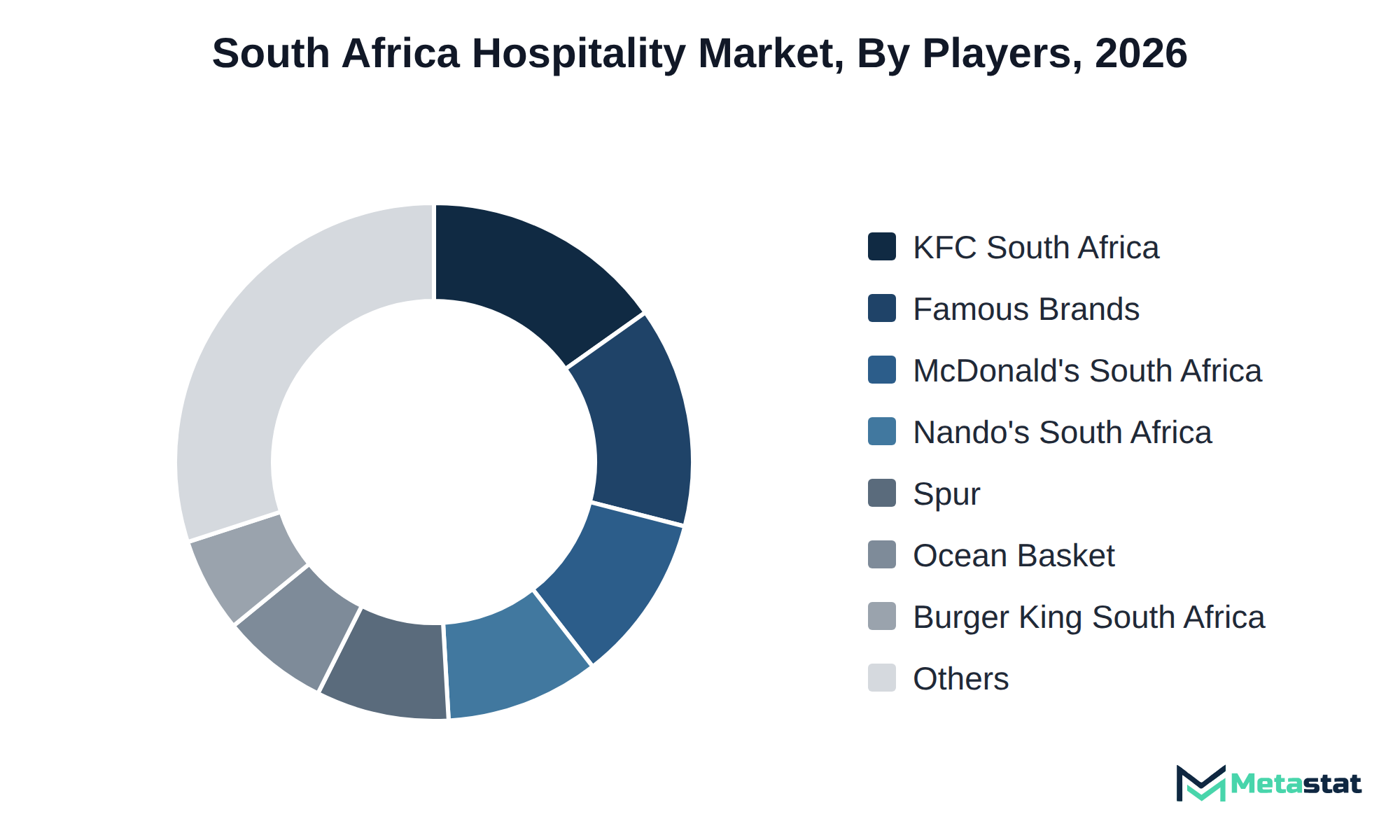
The South Africa Hospitality market features diverse competitive strategies among various players. Companies including Famous Brands Limited and Spur Corporation Limited emphasize distinct culinary offerings to attract diners. For instance, Nando's South Africa focuses on its flame-grilled chicken, while McDonald's South Africa leverages fast-food convenience and constant innovation in menu items.
Buyers prioritize factors including price, service quality, and brand reputation when choosing hospitality providers. Quick-Service Restaurants like KFC South Africa and Burger King South Africa compete primarily on price and convenience, ensuring quick service to meet consumer demand. In the hotel sector, Marriott International (Protea Hotels) and Tsogo Sun Hotels prioritize customer loyalty programs and personalized services, catering to guests seeking quality accommodations during their travels.
Achieving this growth requires key developments in the market, particularly in the accommodation and foodservice segments. This shift reflects changing consumer preferences towards online reservations and convenience.
However, potential risks exist that could impede progress. Economic downturns or fluctuations in consumer spending restrict growth, particularly affecting the luxury accommodation class, which is sensitive to economic conditions. If consumer confidence declines, it could significantly impact hotel bookings, especially in higher-end segments. Overall, the South Africa Hospitality market stands at a critical juncture, with opportunities for expansion tempered by external economic factors.
By Type: Chain Hotels, Independent Hotels
By Accommodation Class: Luxury, Mid & Upper-Mid-scale, Budget & Economy, Service Apartments
By Foodservice Outlet Type: Full-Service Restaurants, Quick-Service Restaurants, Cafés and Bars, Street Stalls and Kiosks, Delivery-Only Kitchens
By Booking Channel: Direct Digital, Online Travel Agencies (OTAs), Corporate and MICE Contracts, Travel Management Companies and Traditional Travel Agents, Wholesalers and Tour Operators
The report strategically identifies and profiles the key market players and analyses their core competencies in each sub-segment of the Hospitality market.
Report Attributes | Details |
Study Period | 2021-2033 |
Base Year | 2025 |
Estimated Year | 2026 |
Forecast Period | 2026-2033 |
Historical Period | 2021-2025 |
Growth Rate | CAGR 7.3% from 2026 to 2033 |
Revenue Unit | USD million |
Segmentation | By Type, Accommodation Class, Foodservice Outlet Type, Booking Channel, and Region |
Find answers to common questions about this report
The Hospitality market size was valued at USD 8,468 million in 2025.
The market is projected to grow at a CAGR of 7.3% during the forecast period from 2026 to 2033.
Chain Hotels lead the Hospitality market with a projected value of USD 8,687.7 million by 2033. This segment outpaces Independent Hotels, which is expected to reach USD 6,196.2 million in the same year.
Key drivers for the South Africa Hospitality market include the increasing demand for luxury accommodations, which leads to significant expenditure growth. The rising interest in serviced apartments reflects changing preferences, appealing to business and leisure travelers seeking flexible options.
Factors favoring adoption in the South Africa Hospitality market include a growing interest in serviced apartments, which is projected to expand at a compound annual growth rate of 10.5%. This segment appeals to business and leisure travelers seeking flexible accommodation options, presenting an opportunity for market players to enhance their offerings.
The Hospitality market is estimated to reach a valuation of USD 14,883.9 million by 2033.
Key players operating in the Hospitality market include Famous Brands Limited, Spur Corporation Limited, KFC South Africa, McDonald's South Africa, Nando's South Africa, and AHA Hotels & Lodges.
The luxury accommodation segment is projected to expand from USD 2,067.4 million in 2026 to USD 3,450.1 million by 2033, reflecting a compound annual growth rate of 7.6 percent.
Direct digital bookings are expected to grow significantly, driven by consumer preference for online transactions and convenience.
Price sensitivity among travelers limits demand, particularly affecting budget and economy accommodations, which struggle to compete with chain hotels offering promotional rates.
The analysts below cover Consumer Goods research at Metastat Insights.
LEAD ANALYST
Utkarsh Khirodkar is a Lead Market Research Analyst at MetaStat Insight, specializing in market intelligence, technology sector assessments, and competitive strategy.
Evaluating secondary resin quality across post-consumer packaging streams requires reliable technical segmentation. MetaStat Insight delivered an objective assessment that distinguished between extrusion-grade flake pricing and optical sorting throughput limitations across Western Europe. The competitive positioning breakdown for licensed depolymerization technology providers answered several questions during our feedstock feasibility audit. Their team clarified regional trade restrictions on mixed plastic scrap quickly when our team submitted follow-up requests.
Evaluating sovereign cloud deployments for core banking platforms demands a clear view of data residency regulations and migration exit strategies. MetaStat Insight delivered an exhaustive review of regional latency tolerances, mainframe decommission milestones, and third-party vendor concentration risk. The regulatory compliance mapping across European and Asian financial jurisdictions gave our team a dependable baseline for multi-cloud infrastructure discussions.
Replacing petrochemical surfactants with bio-based alternatives requires realistic timelines on industrial precision fermentation scaling. The market research broke down commercialization timelines, feedstock sugar price sensitivities, and regional cosmetic ingredient regulatory approvals in Europe and East Asia. That supplier readiness mapping gave our formulations team reliable context when comparing renewable chemical sourcing roadmaps.
Explore related market intelligence reports worth reading alongside this one.