
LEAD ANALYST
Utkarsh Khirodkar is a Lead Market Research Analyst at MetaStat Insight, specializing in market intelligence, technology sector assessments, and competitive strategy.

UK Hedge Funds Market Size, Share, By Investment Strategy (Equity Long/Short, Global Macro, Event-Driven, Relative Value, Credit Long/Short, Managed Futures, Multi-Strategy and Others), By Investor Type (Pension Funds, Insurance Companies, Sovereign Wealth Funds, Endowments and Foundations, Family Offices, High-Net-Worth Individuals, Funds of Hedge Funds and Others), By Fund Domicile (UK-Onshore (Ltd / LLP / AIF), Offshore (Channel Islands, Cayman), EU Onshore (Ireland, Luxembourg) and UCITS-Compliant Hedge Funds), By Region (London, South East England, Scotland and North West England), Industry Analysis, Growth, Trends, and Forecast, 2026-2033
Report ID
MSI-5558
Published
October, 2026
Pages
274 Pages
Format
Historical
Base year
Forecast
Forecast period
Report Details
Market Valuation: Valued at $504.3 Billion in 2025, projected to reach $710.9 Billion by 2033 at a 4.3% CAGR.
Dominant Segment: The equity long/short segment leads the UK Hedge Funds market, driven by its appeal to investors seeking to capitalize on both rising and falling stock prices.
Geographic Lead: London commands the largest share of the market, reflecting its status as a global financial hub and the concentration of hedge fund activities.
What's Inside: The report provides comprehensive coverage of investment strategies, investor types, fund domiciles, and regional insights, along with detailed analyses and forecasts from 2026 to 2033.
Increased Pension Fund Allocations: Pension funds are increasingly allocating capital to hedge funds, motivated by the pursuit of higher returns and diversification opportunities.
Increased Adoption of Quantitative Strat: The integration of quantitative strategies enhances investment decision-making, appealing to sophisticated investors seeking to exploit market inefficiencies.
Choose Your License
UK Hedge Funds Market
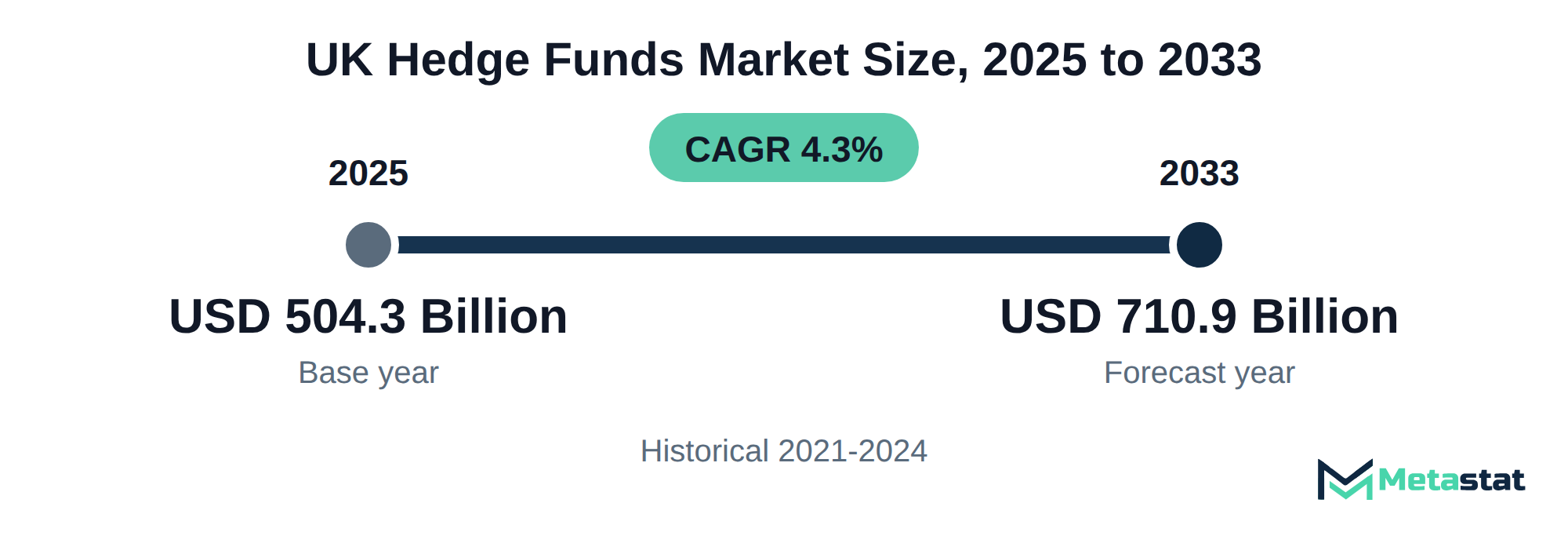
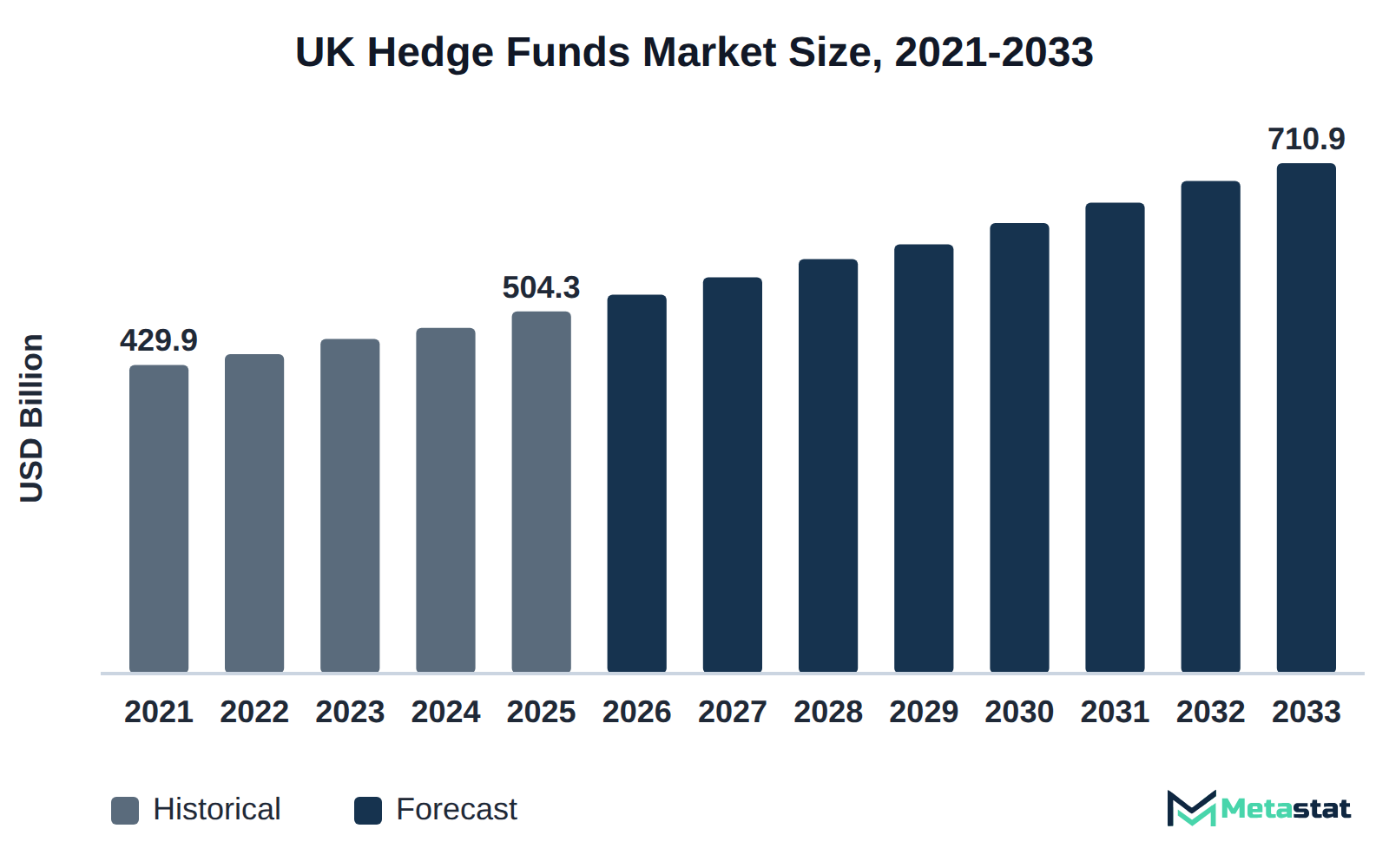
The UK Hedge Funds market was valued at USD 504.3 billion in 2025 and is projected to reach USD 710.9 billion by 2033, growing at a CAGR of 4.3% over the forecast period.
The UK Hedge Funds market encompasses a variety of investment strategies aimed at maximizing returns for investors through pooled funds. Institutional investors, including pension funds and insurance companies, allocate substantial resources to hedge funds driven by the pursuit of higher returns and portfolio diversification. The demand for alternative investment strategies continues to gain traction, as these funds offer unique opportunities to mitigate risks associated with traditional investments.
Growth in the market is influenced by several factors, including the increasing allocation of assets from pension funds. The equity long/short segment stands out as the largest in terms of value, appealing to investors seeking to capitalize on both rising and falling stock prices. London commands the largest share of the market, reflecting its prominence as a financial hub for hedge fund activities.
Market expansion is further supported by rising interest from institutional investors looking to enhance portfolio performance. The strong performance of hedge funds during fluctuating market conditions attracts attention and increases investment inflows. This trend is expected to continue, creating a dynamic environment for hedge fund operations in the UK.
The UK Hedge Funds market comprises various investment strategies designed to optimize returns through pooled investments. Key buyers include pension funds, insurance companies, and sovereign wealth funds, each pursuing distinct objectives while allocating capital to hedge funds. The demand for these investment vehicles stems from the need for diversification and risk management in an increasingly complex financial landscape.
Growth in the market is driven by the strong performance of the equity long/short segment, which represents the largest portion of total investments. London stands out as the region with the highest share, reflecting its status as a global financial hub. This concentration of investment activity supports competitive positioning and enhances investor confidence in the market's potential for returns.
One principal factor contributing to this market expansion involves the increasing allocation of assets by pension funds. These institutions seek to enhance their investment strategies by incorporating hedge funds, which offer opportunities for higher yields and risk mitigation. The ongoing evolution of investor preferences drives the market's trajectory toward sustained growth.
The emergence of systematic and multi-strategy hedge funds in the UK Hedge Funds market significantly influences trading execution and financing requirements. These funds employ complex algorithms and diverse strategies to optimize investment outcomes, leading to enhanced efficiency in capital allocation. For instance, the Equity Long/Short strategy holds a substantial market share, accounting for 33.8% of overall hedge fund strategies, illustrating strong demand for multifaceted approaches in investment management.
This shift towards systematic strategies allows fund managers to respond rapidly to market fluctuations, providing a competitive edge in volatile environments. The integration of technology, particularly in data analysis and risk management, is essential in the operation of these funds. Such capabilities enable hedge funds to analyze vast datasets and execute trades at high speeds, ultimately improving returns for investors.
The growing inclination towards systematic and multi-strategy hedge funds reflects an evolution in investor expectations, prompting a transition towards more complex, data-driven investment solutions. This transformation reshapes demand in the market and encourages innovation and investment in technology-driven solutions, reinforcing the UK's position as a leader in the hedge fund industry.
Offshore fund domiciles significantly influence the operational framework and custody arrangements within the UK Hedge Funds market. The presence of offshore jurisdictions, particularly those like the Channel Islands and the Cayman Islands, facilitates investment flexibility and tax efficiency. These regions serve as preferred domiciles for many hedge funds, allowing fund managers to attract a wider pool of international investors seeking favorable regulatory environments.
In 2025, the offshore segment of the UK Hedge Funds market accounted for USD 467.6 billion, with a projected growth rate of 3.6% through 2033. This substantial figure highlights the appeal of offshore fund structures to institutional and high-net-worth investors. The operational models adopted by hedge funds in offshore domiciles often feature unique pricing strategies, including performance fees, management fees, and incentive structures that align the interests of fund managers and investors. This alignment creates a competitive edge, driving investment inflows into these funds.
The strategic use of offshore structures enhances liquidity and access to global capital, and it optimizes fund performance. Consequently, hedge funds operating within these domiciles experience increased investor confidence, leading to heightened market demand for their offerings within the UK Hedge Funds market.
Institutional investors, particularly pension funds, exhibit specific liquidity preferences and allocation strategies that significantly shape the product design within the UK Hedge Funds market. These investors prioritize stable returns and risk management, which drives fund managers to create tailored products that address these distinct needs. In 2026, pension funds are projected to allocate USD 208.8 billion, expanding to USD 265 billion by 2033, reflecting a compound annual growth rate of 3.5%. This growth shows a strong commitment to hedge fund investments, supported by rising demand for diversified and liquid strategies.
The focus on liquidity affects various aspects of fund structure, including redemption terms, fee structures, and investment horizons. Hedge funds adapt their offerings to align with the preferences of institutional investors, ensuring sufficient liquidity while pursuing high returns. This demand for liquidity often leads to a preference for strategies including Equity Long/Short, which provide a balance between risk and return while offering the ability to manage capital effectively. Understanding these preferences enables fund managers to design products that attract institutional capital and sustain long-term relationships within the market.
Effective prime broker selection strongly supports the operational success of UK hedge funds. This decision significantly influences trading efficiency, cost management, and access to capital. Prime brokers also provide securities lending, which supports the short positions taken in strategies such as Equity Long/Short. In the UK Hedge Funds market, the increasing complexity of financial instruments and market conditions heightens the need for robust counterparty risk management strategies. Hedge funds prioritize brokers with strong credit ratings and a proven track record in risk management to ensure financial stability and reliability.
This substantial investment by pension funds reinforces the importance of selecting trustworthy prime brokers, as their choices directly impact fund performance and investor confidence. Establishing relationships with reputable brokers enhances hedge funds' ability to navigate market volatility, ultimately driving operational efficiency and investor satisfaction.
Pension funds increasingly allocate capital to hedge funds, driven by a search for higher returns and diversification opportunities. This shift reflects a broader trend where institutional investors seek alternative assets to enhance portfolio performance. With the UK experiencing a growing emphasis on alternative investments, pension funds optimize their strategies by increasing exposure to hedge funds. This significant investment enhances overall demand in the UK Hedge Funds market, contributing to increased asset volumes and potential price appreciation within this sector.
The integration of quantitative strategies into the investment processes of UK hedge funds drives significant growth. Technological advancements in big data analytics and machine learning enhance the ability to analyze vast amounts of market data, allowing funds to make informed investment decisions. This trend appeals particularly to sophisticated investors seeking to exploit market inefficiencies and optimize portfolio performance. The UK Hedge Funds market experiences a rise in demand for funds employing quantitative methodologies, which align with evolving investor expectations for transparency and performance metrics. Enhanced algorithmic trading capabilities contribute to better execution strategies, further improving the competitiveness of hedge funds in the market. By embracing these quantitative approaches, hedge funds attract investments from institutional players and promote a culture of innovation within the sector. While the pursuit of higher returns continues, this technological shift strengthens the position of quantitative strategies among UK hedge funds.
Regulatory frameworks influence investor behavior within the UK Hedge Funds market. Compliance requirements often result in increased operational costs for fund managers, particularly affecting pension funds and insurance companies. These costs lead to slower uptake of new investment strategies and smaller order sizes, with institutional investors prioritizing risk management and regulatory adherence over aggressive capital deployment.
The complexity of navigating these regulations delays decision-making processes, impacting the overall growth rate in the market. Regulatory technology tools can help fund managers monitor and document compliance obligations. Limited flexibility in investment choices hampers the ability of funds to respond quickly to market opportunities, affecting their competitive positioning. This situation creates challenges in maintaining investor interest, with potential returns appearing less attractive relative to other investment vehicles that face fewer regulatory burdens. The impact of regulatory constraints reflects directly on the market growth trajectory and investor engagement.
Rising operational costs present a significant challenge for suppliers within the UK Hedge Funds market. Increased competition drives wage inflation and demands for skilled talent across various functions, including trading and risk management. These factors escalate operational expenses, directly impacting profit margins for hedge fund managers. Consequently, many suppliers adopt advanced technology solutions that enhance efficiency and reduce reliance on manual processes. Automation of trading strategies and portfolio management assists in managing costs effectively while maintaining competitive performance levels. Firms explore partnerships and outsourcing strategies to mitigate the financial burden of talent acquisition. By using external expertise, suppliers improve their service offerings and address client needs without incurring prohibitive internal costs. Such strategies help sustain profitability in a tightening market while driving innovation and operational agility. The ongoing focus on cost control and efficiency shapes the competitive dynamics of the market.
Growing interest in global macro strategies presents a significant opportunity within the UK Hedge Funds market. This investment approach, which focuses on global economic trends, is projected to expand at a compound annual growth rate (CAGR) of 5.8% through 2033. Institutional investors, particularly pension funds, increasingly seek diversification and potential high returns, contributing to this growth. The shift towards global macro strategies aligns with a broader trend of using economic indicators to position portfolios strategically. This approach attracts investors looking for alternatives to traditional equity and fixed-income investments. The global macro segment offers a framework for navigating volatile markets while targeting returns driven by macroeconomic shifts. This segment's anticipated growth reflects changing investor preferences and highlights increasing confidence in macroeconomic-driven investment strategies.
The UK Hedge Funds market is segmented based on Investment Strategy, Investor Type, Fund Domicile, and Region.
Equity Long/Short segment is valued at USD 176.7 billion in 2026 and is projected to reach USD 219.4 billion by 2033, at a CAGR of 3.1% during the forecast period. This strategy allows investors to take both long and short positions in equities, effectively seeking to profit from the price fluctuations of stocks. Institutional investors, including pension funds and insurance companies, adopt this strategy for its flexibility and risk management capabilities. Demand in this segment is driven by market volatility, with investors looking for ways to hedge against downturns while capitalizing on upward trends. Compared to other strategies, including Global Macro, which experiences a CAGR of 5.8%, Equity Long/Short presents a slower growth trajectory, reflecting a more conservative approach favored by certain investors.
Global Macro segment is estimated to reach USD 123.8 billion by 2033, at a CAGR of 5.8% during the forecast period. This strategy primarily focuses on macroeconomic trends, employing diverse assets to capitalize on global economic conditions. Institutional investors, including pension funds and insurance companies, frequently allocate capital to this segment due to its diversification benefits and potential for strong returns. Increasing volatility in global markets drives demand for Global Macro strategies, reflecting the need for adaptive investment approaches. Compared to other strategies, including Equity Long/Short, which grows at a CAGR of 3.1%, Global Macro demonstrates a more significant growth trajectory. This distinction highlights the segment's appeal in uncertain economic climates and strengthens its position within the UK Hedge Funds market.
Event-Driven segment is expected to reach USD 72 billion by 2033. This investment strategy focuses on opportunities created by corporate events including mergers, acquisitions, restructurings, and other significant developments that affect the value of a security. Investors, including hedge funds and institutional players, pursue these strategies to capitalize on price inefficiencies that arise from these events. The segment experiences a compound annual growth rate (CAGR) of 4.1%, slightly slower compared to the Global Macro segment, which enjoys a CAGR of 5.8%. Demand for Event-Driven strategies has increased due to the rising number of corporate activities and strategic initiatives. Competition among funds employing such strategies intensifies, reflecting growing interest among sophisticated investors seeking to enhance their portfolios with event-driven opportunities. The unique nature of the events targeted distinguishes this segment from others, providing distinct risk-return profiles and investment opportunities.
Relative Value segment is projected to grow at a CAGR of 3.8% during the forecast period. This strategy involves identifying mispriced securities and taking advantage of price discrepancies between related assets. Investment firms apply this approach to generate consistent returns regardless of market conditions, appealing to institutional investors including pension funds and insurance companies. Demand for this segment is driven by market volatility, which creates more opportunities for value extraction. Compared to other segments, Relative Value offers slower growth, with the Equity Long/Short segment exhibiting a higher CAGR of 3.1%. The distinct focus on inefficiencies in pricing differentiates Relative Value from strategies that rely on directional market movements, contributing to its unique position in the UK hedge funds market.
Credit Long/Short strategies engage in a dynamic investment approach, allowing managers to take long positions in undervalued securities while simultaneously shorting overvalued ones. This segment attracts institutional investors, including pension funds and insurance companies, seeking to hedge risks and enhance returns. Demand for these strategies is driven by market volatility, prompting investors to adopt a more defensive posture. Compared to other segments, including Equity Long/Short, Credit Long/Short strategies typically exhibit slower growth patterns, appealing to a specific clientele focused on risk management rather than aggressive returns. This strategic focus differentiates it from segments experiencing more rapid expansion, reflecting varying risk appetites across the investor spectrum. A tailored approach in selecting credit opportunities helps these funds operate effectively in complex market conditions.
Managed Futures involve investment strategies that apply a systematic approach to trading various financial instruments, including commodities, currencies, and equities. The futures contracts traded under these strategies belong to the broader exchange-traded and OTC derivatives industry. Investors employing this strategy include institutional clients seeking diversification and risk management in their portfolios. Growing demand for innovative trading strategies, along with increasing volatility in global markets, drives interest in Managed Futures. This segment differs from others due to its reliance on quantitative models and algorithmic trading, which results in unique performance characteristics compared to traditional strategies like Equity Long/Short and Event-Driven. Unlike the Equity Long/Short segment, which focuses more on equity markets and stock selection, Managed Futures strategies aim to capture trends across a broader range of asset classes. This flexibility allows for potential returns in various market conditions, further appealing to sophisticated investors in the UK Hedge Funds market.
Multi-Strategy involves investment approaches that employ a combination of various strategies to achieve returns. This investment strategy appeals to a diverse range of investors, including institutional investors seeking to diversify their portfolios. The segment benefits from the flexibility it offers in adjusting to market conditions, allowing managers to exploit multiple opportunities. Factors influencing this segment include the demand for diversified investment options and the increasing sophistication of institutional investors. Compared to other strategies including Equity Long/Short or Global Macro, Multi-Strategy stands out due to its ability to mitigate risks while pursuing returns across different market environments. This adaptability positions it uniquely within the UK Hedge Funds market, catering to clients who prioritize risk management alongside growth.
Investment strategies classified under Others (Volatility, Specialist Strategies) provide unique methods for managing investments, often incorporating distinct approaches to market volatility and specialized financial instruments. Institutional investors, including pension funds and insurance companies, apply these strategies to diversify their portfolios and mitigate risks associated with market fluctuations. A significant factor influencing this segment involves the ability to adapt to changing market conditions, which attracts sophisticated investors seeking innovative solutions. Compared to other segments, including Equity Long/Short, this sub-segment experiences slower growth rates due to its specialized nature, appealing primarily to a niche audience that requires tailored investment strategies. The emphasis on volatility management sets this segment apart, attracting investors willing to explore alternative investment avenues, contributing to the overall dynamics of the UK hedge funds market.
Institutional investors, including pension funds, allocate capital into hedge funds primarily for diversification and yield enhancement. This segment benefits from growing interest in alternative investments, with rising allocations reflecting an ongoing search for higher returns amid fluctuating traditional markets. Compared to other investor types, pension funds represent a significant source of stable capital, exhibiting slower growth relative to sovereign wealth funds and insurance companies, which experience CAGRs of 4% and 4.1%, respectively. The unique regulatory and risk management frameworks governing pension funds further distinguish them, influencing their investment strategies and risk tolerance in the market.
Insurance Companies segment is estimated to reach USD 77.2 billion by 2033, at a CAGR of 4% during the forecast period. Insurance companies use hedge funds to enhance portfolio returns, manage risk, and achieve diversification. The demand for alternative investments, including hedge funds, arises due to the necessity for better yield in a low-interest-rate environment. This segment experiences growth propelled by the increasing allocation of assets toward hedge funds by insurance companies seeking higher returns. Compared to other investor types, including pension funds, which are projected to grow at a CAGR of 3.5%, the Insurance Companies segment demonstrates a slightly higher growth trajectory. Unique regulatory requirements and risk management strategies involved in insurance often lead firms to favor hedge funds that align with these frameworks, influencing their investment choices within the market.
Sovereign Wealth Funds segment is expected to reach USD 93.9 billion by 2033. These funds typically manage the assets of national governments, investing in a variety of financial instruments to generate returns for future generations or to stabilize the economy. The demand for higher returns and diversification drives Sovereign Wealth Funds to allocate significant capital into hedge funds, enhancing their investment strategies. Increased appetite for alternative investments acts as a catalyst for growth. Compared to other segments, Sovereign Wealth Funds have a relatively steady growth rate, reflecting a CAGR of 4.1%, which positions it differently against segments including Pension Funds, which exhibit a faster growth trajectory. The unique characteristics of Sovereign Wealth Funds, including their long-term investment horizons and the backing of governmental resources, differentiate them from other investor types in the market.
Endowments and Foundations segment is projected to grow at a CAGR of 4.1% during the forecast period. This segment primarily serves educational institutions, cultural organizations, and charitable foundations that invest funds to generate returns for long-term sustainability. A significant factor influencing this segment involves the increasing trend of these entities seeking higher returns to support their missions and operations. Compared to other investor types, including Pension Funds, which are valued at USD 208.8 billion in 2026, this segment exhibits slower growth. Endowments and Foundations often focus on diversified investments, which helps mitigate risks associated with market volatility. While several investor types gravitate toward more aggressive strategies, Endowments and Foundations adopt a more cautious approach, balancing risk and return to preserve capital for future generations. The UK Hedge Funds market sees this segment adapting to changing financial landscapes to meet its unique investment objectives.
Family Offices engage in wealth management for high-net-worth individuals or families, focusing on preserving and growing capital through diverse investment strategies. These entities often allocate resources across a range of hedge funds to meet specific investment goals and risk profiles. Family Offices prioritize long-term stability over short-term gains, distinguishing them from institutional investors like pension funds or sovereign wealth funds, which exhibit different risk appetites and investment horizons. Demand for tailored investment solutions drives this segment, with families seeking personalized strategies that align with their unique financial situations and values. More complex investment markets create opportunities and challenges for Family Offices and require strong asset management capabilities across diverse market conditions. While Family Offices share several characteristics with other investor types, their focus on individual family dynamics and long-term objectives sets them apart within the market.
High-Net-Worth Individuals represent a distinct group of investors within the UK Hedge Funds market. This segment seeks investment opportunities that align with their financial goals, often looking for strategies that offer diversification and potential for higher returns. Strong demand for alternative investments drives growth, owing to these individuals seeking to enhance their portfolios amid fluctuating market conditions. Compared to other investor types, including pension funds and insurance companies, High-Net-Worth Individuals pursue more tailored investment strategies, leading to higher fees and a more personalized service. This segment typically exhibits different growth dynamics, influenced by wealth accumulation trends among affluent individuals. Family offices pursue related goals of preserving and growing capital for affluent families.
Funds of Hedge Funds involve pooled investments in various hedge fund strategies, enabling investors to diversify their portfolios while mitigating risk. These funds attract a variety of institutional investors, including endowments and foundations, seeking access to a broader range of investment strategies. Demand for this segment is driven by a growing preference among investors for diversified exposure to hedge funds and enhanced risk management strategies. Compared to other investor types, including pension funds, Funds of Hedge Funds often command higher fees due to their multi-manager approach, resulting in higher operational costs. This segment typically experiences different growth dynamics due to its complex fee structures and the necessity of rigorous due diligence, distinguishing it from more straightforward investment options within the UK Hedge Funds market.
Investors classified under the Others (Corporate Treasuries, Other Allocators) segment engage in various strategies that reflect unique financial goals and risk profiles. This group includes institutional investors including corporate treasuries and other allocators seeking to diversify their portfolios and optimize returns. Investment decisions in this segment typically follow trends in market liquidity and interest rates, influencing the allocation of funds toward hedge strategies. Compared to other segments, including Pension Funds, which focus on long-term liabilities, this segment prioritizes flexible investment tactics. This distinction leads to different risk appetites and investment horizons, contributing to the dynamics of the UK Hedge Funds market. The market benefits from the distinct needs and preferences of these investors, shaping the overall investment landscape.
Valued at USD 2.6 billion in 2026, this segment is projected to reach USD 3 billion by 2033, with a CAGR of 1.8% during the forecast period. UK-Onshore (Ltd / LLP / AIF) caters primarily to institutional investors including pension funds and insurance companies, offering a compliant investment structure that adheres to UK regulations. The growing focus on transparency and regulatory compliance drives demand for this segment, particularly among institutional investors seeking secure and regulated investment vehicles. Compared to offshore hedge funds, which are projected to reach USD 467.6 billion by 2033, UK-Onshore strategies exhibit slower growth due to the stricter regulatory environment. This segment supports a stable investment framework but grows more slowly than the offshore avenues, which provide broader operational flexibility. The gap highlights a significant divergence in the investment strategies available to various buyer types in the UK Hedge Funds market.
Offshore (Channel Islands, Cayman) segment is estimated to reach USD 467.6 billion by 2033, at a CAGR of 3.6% during the forecast period. This segment attracts a range of international investors, including high-net-worth individuals and institutional funds seeking tax efficiencies and regulatory advantages. Growth in this segment is driven by increasing interest in alternative investment strategies, particularly from regions with stringent financial regulations. Unlike other fund domiciles, including UK-Onshore, this segment provides a more flexible regulatory environment, appealing to investors seeking enhanced investment opportunities. Offshore funds typically offer differentiated tax treatments and privacy, distinguishing them from onshore counterparts. The market is evolving, with investors increasingly shifting toward these offshore options to optimize returns while managing risks associated with market volatility.
Valued at USD 125.3 billion by 2033, the EU Onshore (Ireland, Luxembourg) segment focuses on hedge funds domiciled in EU jurisdictions, appealing primarily to institutional and high-net-worth investors seeking compliance with European regulations. This segment attracts various investor types, including insurance companies and pension funds, who prioritize regulatory safeguards and operational transparency. The adoption of EU-compliant structures enhances investor confidence, driving demand within this segment. Growth in the EU Onshore segment is influenced by increasing regulatory clarity and a rising preference for sustainable investment strategies among institutions. Compared to the Offshore (Channel Islands, Cayman) segment, which is projected to reach USD 467.6 billion by 2033, the EU Onshore segment experiences relatively slower growth, reflecting the more rigorous regulatory frameworks and associated costs that deter several investors. The market continues to evolve, shaped by investor demand for compliance and performance.
UCITS-Compliant Hedge Funds segment is projected to grow at a CAGR of 7.5% during the forecast period. These funds adhere to the European Union's UCITS directive, which provides a regulatory framework ensuring high investor protection standards. Primarily used by institutional investors and high-net-worth individuals seeking a regulated investment avenue, this segment appeals due to its transparency and liquidity. A driving force behind this segment's growth stems from increasing demand for compliant investment products amid regulatory shifts. Compared to other fund domiciles, UCITS-Compliant Hedge Funds are positioned for faster growth, reflecting a preference for regulated structures that mitigate risk while maximizing returns. In contrast, the Offshore (Channel Islands, Cayman) segment, while substantial, is expected to experience slower growth, partly due to varying regulatory environments. The UCITS-Compliant Hedge Funds segment thus stands out within the UK Hedge Funds market for its strong growth prospects.
Valued at USD 441.2 billion in 2026, this segment is projected to reach USD 602.5 billion by 2033, at a CAGR of 4.6% during the forecast period. London acts as a central hub for hedge fund activities, attracting various institutional investors, including pension funds and insurance companies. The strategic advantages of London, including its regulatory framework and access to diverse investment opportunities, drive demand. Compared to other segments, this region's growth rate surpasses that of UK-Onshore (Ltd / LLP / AIF), which has a CAGR of 1.8%. Institutional investors increasingly seek to capitalize on the sophistication and innovation present in London, differentiating it from other regions in the UK Hedge Funds market.
South East England segment is estimated to reach USD 63.1 billion by 2033, at a CAGR of 3.6% during the forecast period. Investment strategies in this region attract diverse buyers, including pension funds and insurance companies, seeking to enhance portfolio returns. The main drivers of growth include an increasing focus on alternative investments and favorable market conditions that encourage institutional investors to explore hedge fund options. Compared to the London segment, which exhibits a higher CAGR of 4.6%, the South East England segment shows slower growth, influenced by a more cautious investment approach among its buyers. Regulatory frameworks in this region create a stable environment for hedge fund operations, differentiating it from other areas that face more volatility in investment climates. The UK Hedge Funds market continues to evolve, reflecting shifts in investment preferences and strategies across various regions.
Scotland segment is expected to reach USD 29.2 billion by 2033. This segment attracts various investors seeking exposure to hedge fund strategies that incorporate local market insights. Factors influencing growth include rising interest among regional investors and increasing awareness of alternative investment opportunities. Compared to other regions, Scotland experiences relatively slower growth, particularly when contrasted with London, which has a higher CAGR of 4.6%. Investors in this segment typically focus on strategies that emphasize equities, credit, and multi-strategy approaches, catering to the specific financial goals of local institutions. Unique market conditions in Scotland help differentiate this segment, aligning with broader trends within the UK Hedge Funds market.
North West England segment is projected to grow at a CAGR of 2.3% during the forecast period. This region hosts various hedge fund strategies employed by institutional investors, including pension funds, insurance companies, and sovereign wealth funds. Key demand drivers include the ongoing search for yield and diversification opportunities, with local managers adapting to investor preferences. Compared to larger regions including London, North West England presents a slower growth trajectory, attributed to its smaller market size and less competitive landscape. While London draws significant capital and attention, North West England's appeal lies in its established investment networks and solid performance record, which continues to attract local and regional investors in the UK hedge funds market.
Companies within the UK Hedge Funds market compete through various strategies, focusing on specific investment approaches and targeting different investor types. Investment strategies including Equity Long/Short, Global Macro, and Event-Driven attract diverse buyers seeking tailored solutions to meet their investment objectives. As part of the wider asset management industry, these firms compete for allocations from institutional investors.
Buyers prioritize factors including performance, risk management, and investment strategy when selecting hedge fund managers. This variety in strategies allows firms to cater to specific needs, influencing overall market dynamics.
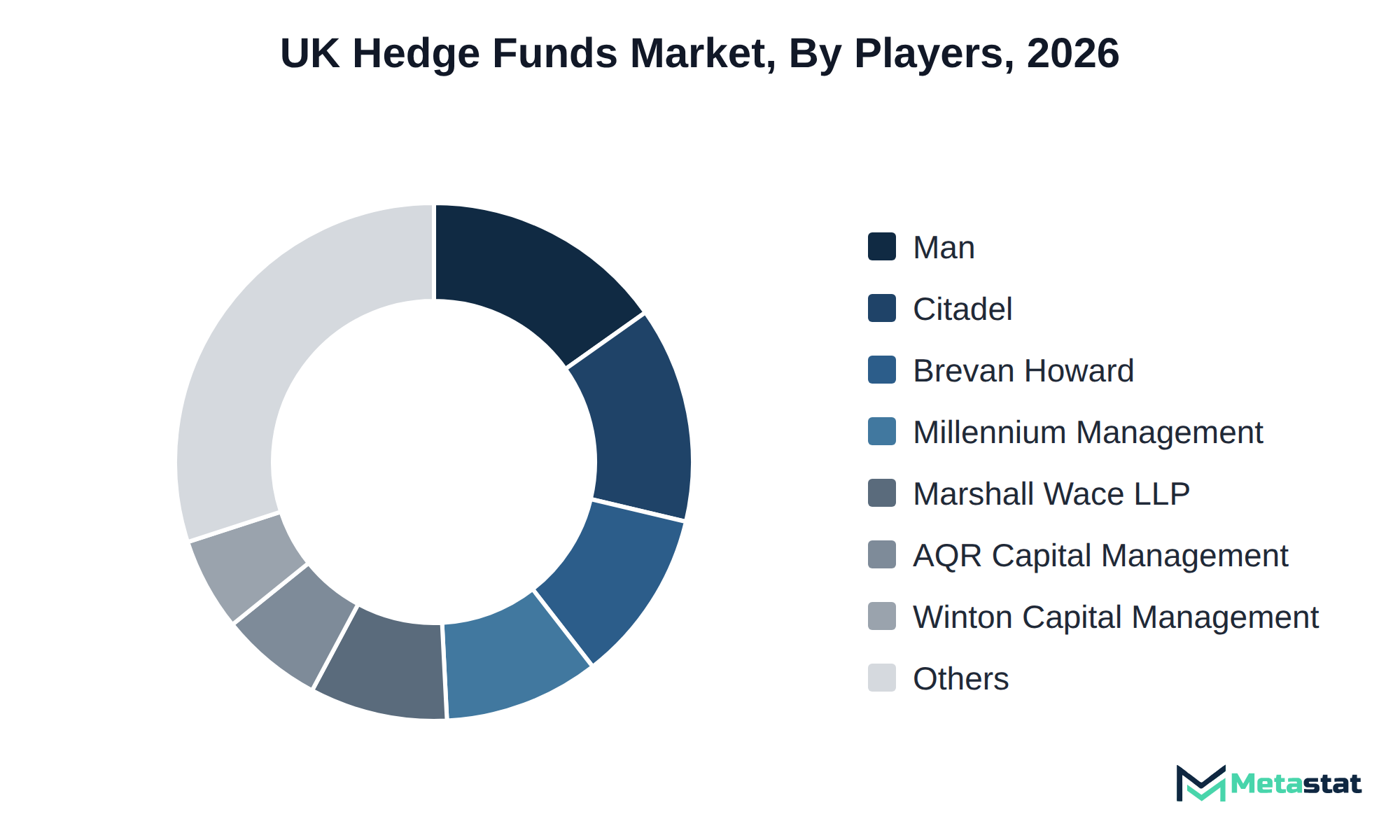
Man Group emphasizes a multi-strategy approach, enabling adaptation to varying market conditions and investor demands. Brevan Howard is known for its macroeconomic strategies, appealing to investors seeking exposure to broader economic trends. Capula Investment Management LLP focuses on credit strategies, addressing the increasing interest in fixed income investments.
Winton Capital Management Limited uses quantitative strategies to attract tech-savvy investors, while AQR Capital Management pursues a systematic investment approach, appealing to those favoring data-driven decisions. These strategies illustrate the competitive landscape and the diverse approaches firms employ to secure positions within the market.
Achieving this growth rate of 4.3% CAGR requires several key developments in the UK Hedge Funds market. First, increasing investments from pension funds, which are expected to grow from USD 208.8 billion in 2026 to USD 265 billion by 2033, will significantly contribute to market expansion. This growth reflects a shift in investment strategies, where pension funds increasingly allocate resources to hedge funds to enhance returns.
Second, the offshore fund domicile segment, particularly in the Channel Islands and Cayman Islands, is anticipated to see substantial growth, reaching USD 467.6 billion by 2033. This increase will be driven by regulatory environments that favor offshore investments, attracting institutional and high-net-worth investors seeking tax efficiencies.
The primary risk to achieving the forecasted market size involves economic instability, which could impact investor confidence and lead to a reduction in allocations to hedge funds. A downturn in global markets, particularly affecting the London region, poses a significant challenge to growth, necessitating a careful approach to fund management and investor relations.
By Investment Strategy: Equity Long/Short, Global Macro, Event-Driven, Relative Value, Credit Long/Short, Managed Futures, Multi-Strategy, Others (Volatility, Specialist Strategies)
By Investor Type: Pension Funds, Insurance Companies, Sovereign Wealth Funds, Endowments and Foundations, Family Offices, High-Net-Worth Individuals, Funds of Hedge Funds, Others (Corporate Treasuries, Other Allocators)
By Fund Domicile: UK-Onshore (Ltd / LLP / AIF), Offshore (Channel Islands, Cayman), EU Onshore (Ireland, Luxembourg), UCITS-Compliant Hedge Funds
By Region: London, South East England, Scotland, North West England
The report strategically identifies and profiles the key market players and analyses their core competencies in each sub-segment of the Hedge Funds market.
Report Attributes | Details |
Study Period | 2021-2033 |
Base Year | 2025 |
Estimated Year | 2026 |
Forecast Period | 2026-2033 |
Historical Period | 2021-2025 |
Growth Rate | CAGR 4.3% from 2026 to 2033 |
Revenue Unit | USD billion |
Segmentation | By Investment Strategy, Investor Type, Fund Domicile, Region, and Region |
Find answers to common questions about this report
The Hedge Funds market size was valued at USD 504.3 billion in 2025.
The market is projected to grow at a CAGR of 4.3% during the forecast period from 2026 to 2033.
Equity Long/Short leads the Hedge Funds market with a value of USD 176.7 billion in 2026. This segment represents the largest share compared to other investment strategies.
Pension funds increasingly allocate capital to hedge funds, driven by a search for higher returns and diversification opportunities. Growing interest in global macro strategies presents a significant opportunity, with this investment approach projected to expand at a compound annual growth rate of 5.8% through 2033.
Regulatory frameworks increase operational costs for fund managers, particularly affecting pension funds and insurance companies. Rising operational costs challenge suppliers by driving wage inflation and demands for skilled talent, which directly impact profit margins for hedge fund managers.
Growing interest in global macro strategies significantly favors adoption within the UK Hedge Funds market. This approach, projected to expand at a compound annual growth rate of 5.8% through 2033, attracts institutional investors seeking diversification and high returns by leveraging macroeconomic trends.
The Hedge Funds market is estimated to reach a valuation of USD 710.9 billion by 2033.
Key players operating in the Hedge Funds market include Man Group, Citadel, Millennium Management, Brevan Howard, Winton Capital Management Limited, AQR Capital Management, Point72, and Selwood Asset Management.
The global macro segment is projected to reach USD 123.8 billion by 2033, reflecting a compound annual growth rate of 5.8 percent.
Pension fund allocations to hedge funds are expected to reach USD 265 billion by 2033, with a compound annual growth rate of 3.5 percent.
The analysts below cover Banking & Finance research at Metastat Insights.
LEAD ANALYST
Utkarsh Khirodkar is a Lead Market Research Analyst at MetaStat Insight, specializing in market intelligence, technology sector assessments, and competitive strategy.

PRINCIPAL CONSULTANT - ENTERPRISE AI & EMERGING TECHNOLOGIES
Banking & Finance · Electronics and Semiconductor · Energy and Power · Healthcare IT · Information & Technology · Professional Services
Vijay Gunti is a Principal Consultant at MetaStat Insight, bringing over two decades of experience across enterprise digital transformation, technology strategy, and intelligent systems.
Most industry reports on warehouse automation bundle autonomous mobile robots and fixed conveyor installations into the same top-level numbers, which complicates advisory work. This study split the market cleanly by payload tiers, navigation technology, and fleet management software layers. The regional forecast for Western Europe gave our team defensible adoption benchmarks when evaluating capital allocation for logistics clients, saving us days of secondary data scrubbing.
Analyzing the transition from natural gas to green hydrogen in iron ore reduction requires realistic infrastructure timelines. Meta stat insight supplied a detailed regional assessment of DRI plant conversion costs and scrap metal availability in North America and Western Europe. Their report carefully examined pellet quality specs and electrical grid access constraints without making oversimplified market assumptions. The research material served as a practical reference during internal technology roadmap discussions.
Integrating zero-trust access controls across legacy electronic health record systems involves complex compliance overhead. Team produced an analysis that clearly separated identity governance and administration tools from privileged access management platforms. Their evaluation of HIPAA and GDPR compliance features across cloud native solutions gave our architecture group clear baseline criteria. The custom data request regarding biometric authentication adoption in hospital networks was returned promptly with clear documentation.
Explore related market intelligence reports worth reading alongside this one.