
LEAD ANALYST
Utkarsh Khirodkar is a Lead Market Research Analyst at MetaStat Insight, specializing in market intelligence, technology sector assessments, and competitive strategy.

U.S. Portable Ice Maker Market Size, Share, By Ice Type (Bullet Ice, Nugget/Pebble Ice, Cube/Square Ice, Crescent Ice, Sphere/Ball Ice and Specialty Clear), By Daily Ice Production Capacity (Up to 25 lbs/day, Above 25-30 lbs/day, Above 30-40 lbs/day, Above 40-50 lbs/day and Above 50 lbs/day), By Application (Household and Commercial), By Retail Channel (Mass Merchandisers, Warehouse Clubs, Home Improvement Retailers, Consumer Electronics Retailers and E-commerce Marketplaces), Industry Analysis, Growth, Trends, and Forecast, 2026-2033
Report ID
MSI-5546
Published
October, 2026
Pages
288 Pages
Format
Historical
Base year
Forecast
Forecast period
Report Details
Market Valuation: Valued at $174.1 Million in 2025, projected to reach $233.6 Million by 2033 at a 3.7% CAGR.
Dominant Segment: The household application segment leads the U.S. Portable Ice Maker market, driven by consumer interest in convenient ice production for home entertainment and gatherings.
Geographic Lead: North America dominates the market, supported by strong retail infrastructure and a cultural preference for convenience in food and beverage preparation.
What's Inside: The report provides a comprehensive analysis of market dynamics, competitive coverage, and detailed forecasts for the U.S. Portable Ice Maker market from 2026 to 2033.
Growth Drivers: Key growth drivers include rising consumer preferences for convenience, increasing outdoor activities, and technological advancements in ice-making efficiency.
Emerging Trends: Nugget/Pebble Ice is projected to exhibit the highest growth potential, reflecting a shift in consumer preferences towards softer ice types for beverages.
Choose Your License
U.S. Portable Ice Maker Market
The U.S. Portable Ice Maker market was valued at USD 174.1 million in 2025 and is projected to reach USD 233.6 million by 2033, growing at a CAGR of 3.7% over the forecast period.
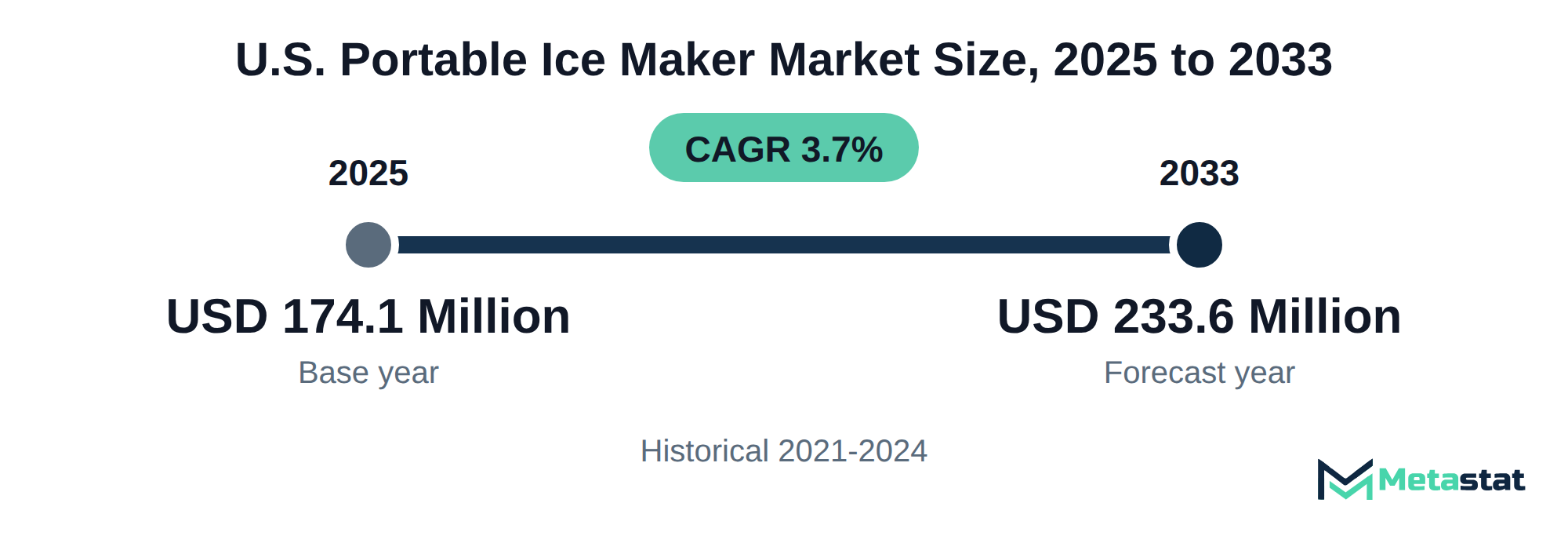
The U.S. Portable Ice Maker market encompasses a variety of products designed to produce ice for both household and commercial applications. Buyers invest in these machines to meet their demand for convenient ice production, enhancing the overall experience of events, gatherings, and everyday use. The market appeals to homeowners seeking to improve their beverage service and to businesses needing reliable ice solutions.
Growth in the market is fueled by increasing consumer preferences for convenience and the rising popularity of outdoor activities, driving demand for portable ice solutions. Portable cooling products such as cooler bags serve many of the same outdoor occasions. Among the various segments, the household application stands out as the most valuable, reflecting strong consumer interest in home entertainment and dining experiences. North America commands the largest share of the market, supported by a well-developed retail infrastructure and a culture that prioritizes convenience in food and beverage preparation.
One significant growth driver is the rising trend of home improvement and outdoor living, where consumers seek to enhance their residential spaces. This trend encourages investment in appliances that contribute to leisure and entertainment, leading to higher sales of portable ice makers. The outdoor kitchen industry reflects the same interest in upgrading residential spaces for entertaining. Lifestyle changes and evolving consumer expectations continue to drive the market forward.
Portable ice makers in this market serve various consumer needs, including household and commercial applications. Buyers invest in these appliances to enhance convenience while catering to events, gatherings, and everyday cooling needs. This event focus connects portable ice makers to the wider event services industry. The versatility of these products allows for tailored solutions that fit different lifestyles, driving continued consumer interest and spending.
Increasing demand for portable ice solutions fuels market growth, particularly in the household segment, which holds the largest value among application categories. The Nugget/Pebble Ice segment shows the highest growth potential, with interest from consumers seeking softer ice types for beverages and food service applications. This trend reflects evolving consumer preferences for specific ice types that enhance the overall experience.
North America holds a substantial share of the market, supported by strong consumer spending and high adoption rates of portable ice makers. The need for convenience and versatility in food and beverage preparation acts as a primary driver for market expansion. Consumers increasingly seek efficient solutions that meet their ice production requirements, thus contributing to the overall growth trajectory of the U.S. Portable Ice Maker market.
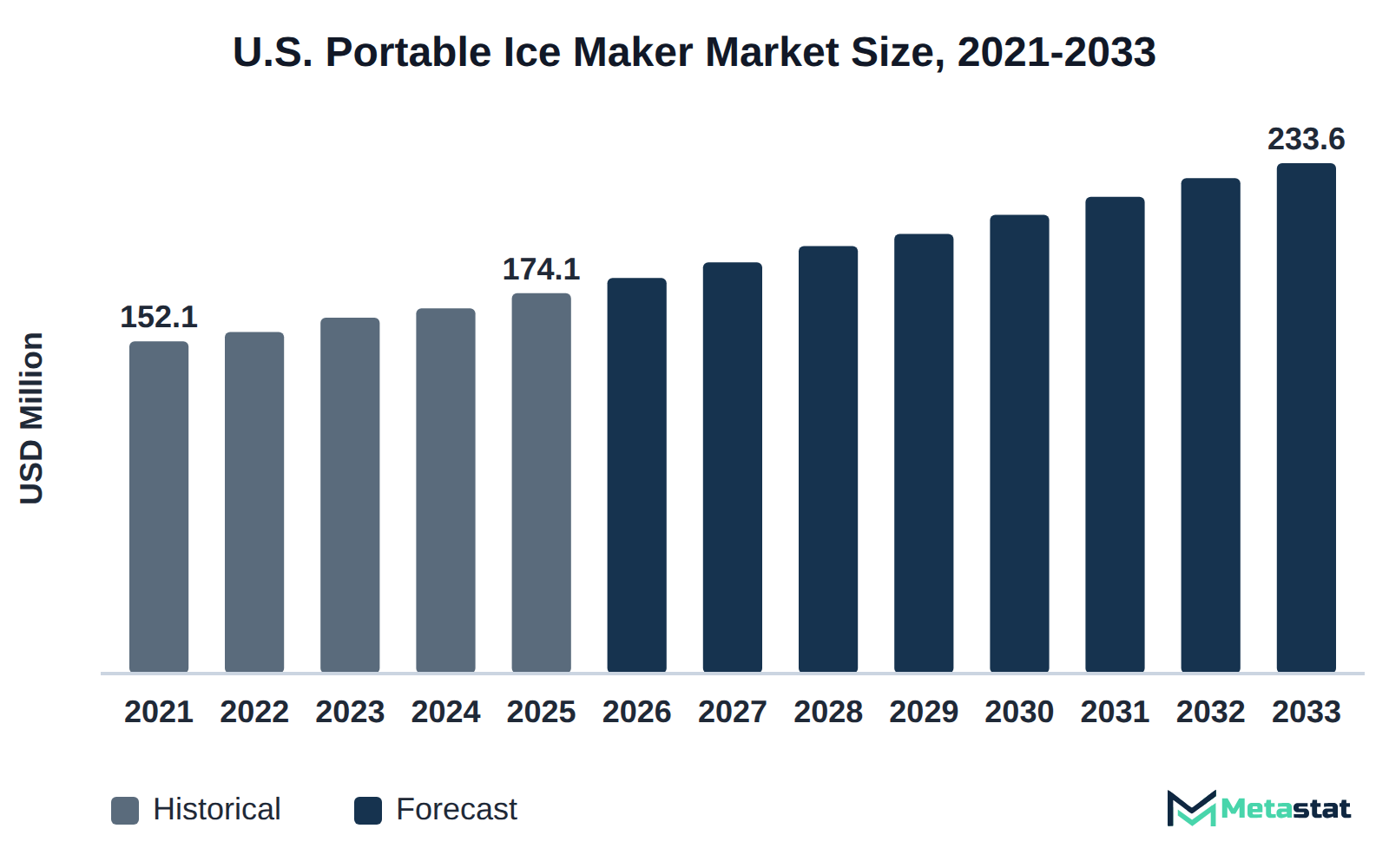
The increasing popularity of Nugget, Bullet, and Clear ice formats significantly influences buyer preferences in the U.S. Portable Ice Maker market. Nugget ice, known for its chewable texture, highlights a shift in consumer demand toward softer ice options, particularly among households and commercial establishments that prioritize user experience. This segment is projected to achieve a compound annual growth rate of 5.9% through 2033, reflecting the growing inclination toward this ice type.
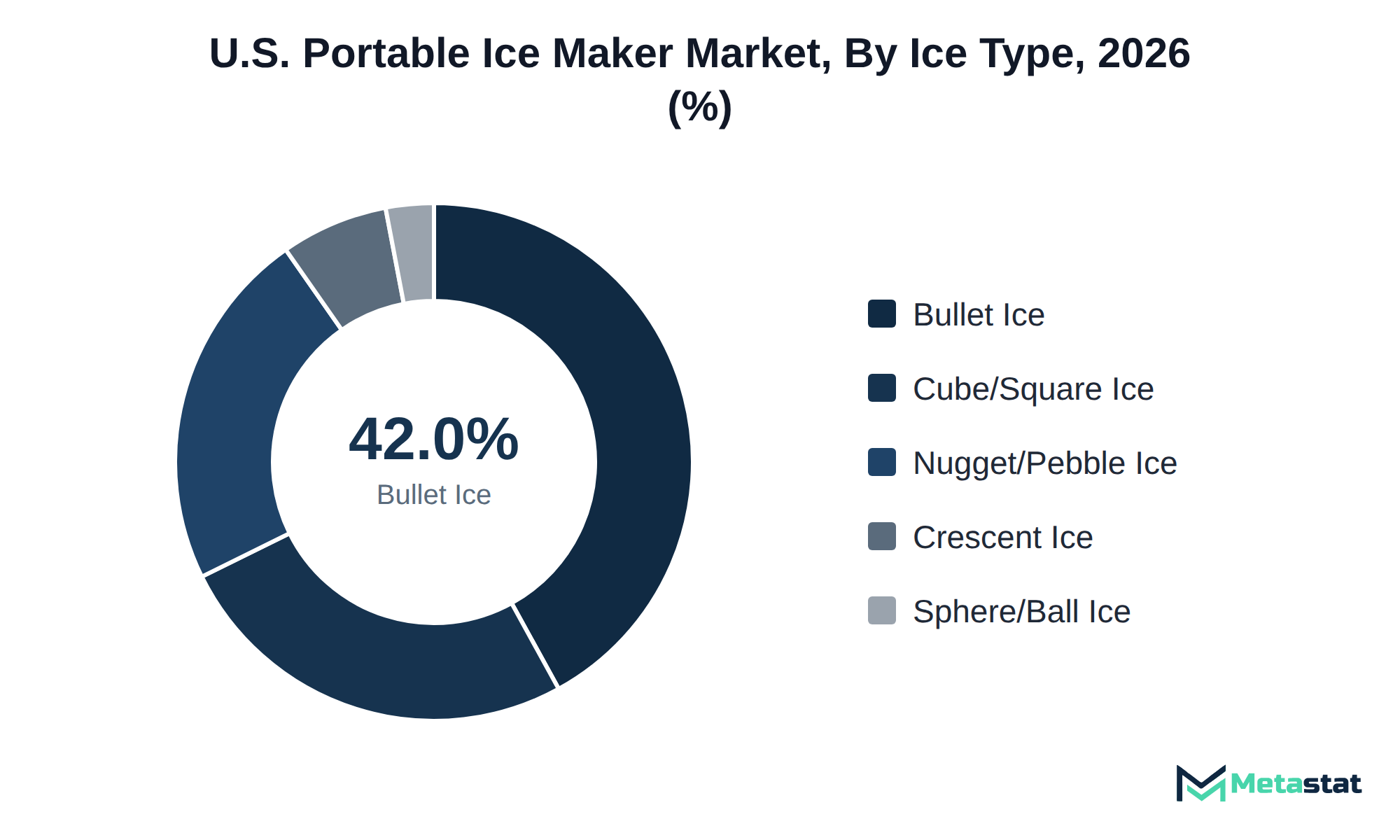
Bullet ice has established itself as a staple for many, offering a versatile solution that aligns with various applications in homes and businesses. This ice type is expected to grow from USD 75.5 million in 2026 to USD 90.9 million in 2033, marking a compound annual growth rate of 2.7%. Such figures indicate strong demand, prompting manufacturers to innovate and refine their product offerings to capture market share.
Clear ice, often associated with premium beverages, appeals to discerning consumers and establishments aiming for aesthetic presentations in drinks. The increased focus on quality and presentation in the beverage industry drives demand for machines producing clear ice. Buyers seek portable solutions catering to these formats, which pressures suppliers to enhance product features and efficiency to remain competitive. This shift shapes industry dynamics and the long-term strategies of manufacturers and retailers alike.
The pricing structure for compact countertop ice makers varies significantly across different buyer segments, including households, RV owners, and small businesses. In 2026, the household application segment is projected to reach USD 148.2 million, reflecting strong demand for personal and recreational ice-making solutions. Buyers in this market typically encounter a range of pricing options, influenced by factors including ice type, daily production capacity, and brand reputation.
The commercial segment, while smaller at USD 47.5 million by 2033, significantly influences pricing strategies. Businesses often opt for bulk purchases or contractual agreements with suppliers, leading to cost savings compared to retail pricing for individual units. This trend highlights a distinct difference in purchasing behavior between individual consumers and business entities.
The variety of retail channels, including mass merchandisers and e-commerce marketplaces, further enhances access to these products at competitive prices. Understanding these purchasing options helps buyers make informed decisions, which supports growth within the market.
The rising trend of e-commerce significantly influences purchasing behavior among consumers of portable ice makers. A shift toward online shopping reflects changing preferences, particularly among younger demographics who favor convenience and immediate access to various products. In the U.S. Portable Ice Maker market, sales through e-commerce platforms are expected to gain traction, driven by the increasing availability of diversified options and competitive pricing.
Retail channels like mass merchandisers reach a broad customer base. For instance, mass merchandisers are projected to grow from USD 56 million in 2026 to USD 67.5 million by 2033, representing a compound annual growth rate of 2.7%. This growth indicates a steady demand for portable ice makers through retail outlets, emphasizing the importance of brick-and-mortar stores in conjunction with online sales.
Direct-to-consumer sales present unique opportunities for brands. Companies utilize their online presence to communicate directly with buyers, enhancing customer engagement and building brand loyalty. While the market evolves, focusing on both e-commerce and traditional sales channels is essential for manufacturers aiming to maximize reach and profitability in the U.S. Portable Ice Maker market.
Buyers seeking a portable ice maker should consider their daily ice production needs to ensure adequate supply. The segment categorized "Up to 25 lbs/day" shows significant relevance, with a projected value increase from USD 94.6 million in 2026 to USD 111.7 million by 2033, reflecting a compound annual growth rate (CAGR) of 2.4%. This capacity appeals particularly to households and small gatherings where moderate ice production suffices.
In contrast, the segment "Above 25-30 lbs/day" is noteworthy, with an anticipated value of USD 45.8 million by 2033, supported by a CAGR of 3.4%. This capacity caters to larger households or those hosting frequent events, indicating a rising preference for ice makers that enhance convenience. The demand for higher capacity models signals a trend toward more robust options in the U.S. Portable Ice Maker market.
Choosing the right production capacity directly impacts customer satisfaction and repeat purchases. Buyers aligning their needs with the appropriate ice production capacity contribute to a more efficient market, driving growth and innovation in product offerings.
A notable shift in consumer purchasing behaviors drives growing demand from households for portable ice makers. Recent trends indicate that more consumers prioritize convenience and quality in ice production, leading to increased interest in these devices for home use. Households seek efficient and versatile ice solutions, resulting in higher sales volumes within the segment. Portable ice makers also belong to the broader small kitchen appliances industry, where convenience drives household purchasing. The market reflects this demand, with projections estimating household-related revenue to rise from USD 148.2 million in 2026 to USD 186.1 million by 2033, marking a compound annual growth rate of 3.3%. The U.S. Portable Ice Maker market benefits from this trend, with buyers investing in solutions that enhance their home entertainment experiences, thereby improving overall market performance.
Changing lifestyles and preferences among consumers further contribute to this growth trajectory. Increased at-home gatherings and outdoor activities promote the need for sufficient ice production capacity, compelling households to adopt portable units that align with their evolving needs. This demand shift strengthens the market's position, with product innovations and enhanced features continuing to attract a wider consumer base.
Recent innovations in ice-making technology drive growth in the U.S. Portable Ice Maker market. Manufacturers increasingly incorporate advanced features that improve efficiency and user experience. New designs focus on energy efficiency, ensuring lower operational costs for consumers and businesses. This reduction in energy consumption significantly attracts environmentally conscious buyers and supports their purchasing decisions. The introduction of smart ice makers, which join the wider smart devices category through their connectivity features, offers heightened convenience, appealing particularly to tech-savvy consumers. These advancements help portable ice makers gain traction across both household and commercial applications. Market players benefit from increased demand driven by evolving consumer preferences and technological integration. Ongoing improvements in ice production methods help offerings remain competitive and support further expansion in the market.
Price sensitivity acts as a significant constraint within the U.S. Portable Ice Maker market. Consumers frequently exhibit caution when considering purchases, particularly in the household segment. Many buyers prioritize affordable options, resulting in slower uptake of higher-end models. This preference for lower-priced alternatives impacts the average selling price across various segments, limiting revenue opportunities for manufacturers. Commercial buyers, including restaurants and bars, face budget constraints that result in smaller orders. The competitive landscape intensifies price competition, leading to challenges for firms that focus on premium offerings. Overall, this price sensitivity contributes to delayed replacement cycles and hampers growth potential across the market.
Rising input costs exert significant pressure on profitability within the U.S. Portable Ice Maker market. Factors including increased prices of raw materials and supply chain disruptions contribute to escalating expenses for manufacturers. Suppliers face challenges in managing these costs while maintaining competitive pricing for consumers. In response, many manufacturers have implemented cost-reduction strategies, including optimizing production processes and exploring alternative sourcing options. Several companies are investing in automation and advanced production technologies to enhance efficiency and reduce reliance on expensive labor. These initiatives aim to mitigate profit margin pressures while ensuring product availability in the market. Suppliers must keep streamlining operations as economic conditions fluctuate.
Nugget/Pebble Ice is projected to exhibit a significant growth trajectory within the U.S. Portable Ice Maker market, with a compound annual growth rate (CAGR) of 5.9% through to 2033. This specific segment appeals to consumers seeking a softer ice texture, commonly favored in beverages, contributing to an increase in household consumption. The surge in health-conscious consumers prioritizing hydration and the demand for versatile drink options drives this trend. Consumers seek convenient and compact solutions, prompting manufacturers to develop portable ice makers with enhanced Nugget ice production capabilities that address this rising demand. This focus gives manufacturers an opportunity to capture more market share and meet evolving consumer preferences.
The anticipated growth in this segment indicates potential increased revenue generation for stakeholders within the market. Innovations that enhance the efficiency and output of Nugget ice models will attract more buyers from both household and commercial applications. Consequently, firms focusing on this niche use expanding market dynamics to improve competitive positioning and financial performance.
The U.S. Portable Ice Maker market is segmented based on Ice Type, Daily Ice Production Capacity, Application, and Retail Channel.
Bullet Ice segment is valued at USD 75.5 million in 2026 and is projected to reach USD 90.9 million by 2033, at a CAGR of 2.7% during the forecast period. Bullet Ice serves primarily in household applications, used by consumers who prefer its distinctive texture and faster chilling properties. Demand for Bullet Ice experiences growth driven by increasing consumer preference for specific ice types in beverages and food presentation. Compared to other ice types, Bullet Ice maintains a competitive price point while offering a unique user experience. This segment's growth lags behind Nugget/Pebble Ice, which is projected to grow at a CAGR of 5.9%, highlighting varying consumer preferences in ice format across the U.S. Portable Ice Maker market. The market adapts to these shifts, enhancing the diversity and appeal of portable ice maker offerings.
Nugget/Pebble Ice segment is estimated to reach USD 62.7 million by 2033, at a CAGR of 5.9% during the forecast period. This type of ice is favored in both household and commercial applications, widely used in beverages due to its chewable texture and ability to chill drinks quickly. The growing consumer preference for nugget ice in restaurants and home settings contributes to the segment's expansion. Increasing demand for this ice type arises from the hospitality industry and residential users seeking convenience and quality. Compared to other ice types, Nugget/Pebble Ice demonstrates a faster growth trajectory, with a notable CAGR of 5.9%, outperforming cube/square ice, which has a slower growth rate. Enhanced consumer preferences for this texture stimulate investment and innovation in the U.S. Portable Ice Maker market, driving manufacturers to focus on improving production capabilities and product offerings.
Cube/Square Ice segment is expected to reach USD 56.7 million by 2033. This type of ice is widely used in households and commercial applications, particularly in beverages, where it enhances presentation and maintains temperature. Rising consumer preferences for visually appealing drinks drive demand for this segment. The Cube/Square Ice segment exhibits a lower growth rate compared to Nugget/Pebble Ice, with a projected CAGR that reflects changing consumer tastes, with Nugget/Pebble Ice capping at 5.9%. While the Cube/Square Ice segment appeals to a traditional market, its growth trajectory is slower, leading customers to explore alternatives in the portable ice maker market, including Nugget/Pebble Ice, which caters to evolving preferences. Overall, this segment's consistent demand ensures its presence in the market, even amid a backdrop of competition from other ice types.
Crescent Ice is projected to grow at a CAGR of 2.8% during the forecast period. This ice type finds application primarily in household settings, where it enhances beverages and food presentations. Demand for Crescent Ice stems from consumers seeking versatile and visually appealing ice forms. This segment distinguishes itself from others, including Nugget and Bullet Ice, by offering a unique shape that enhances consumer experiences. The expected growth is driven by increasing interest in at-home entertaining and cocktail culture, creating a desire for aesthetically pleasing ice options. This trend contrasts with Nugget/Pebble Ice, which anticipates a higher CAGR of 5.9%, indicating a more rapid expansion in that segment. In the U.S. Portable Ice Maker market, Crescent Ice caters to a niche market while reflecting broader consumer preferences for enhanced presentation in food and beverage consumption.
Sphere/Ball Ice is a unique type of ice used frequently in specialty beverages and upscale cocktails. This segment appeals primarily to high-end restaurants, bars, and consumers seeking a premium presentation for their drinks. The growing trend of craft cocktails and a focus on aesthetic presentation increases demand for Sphere/Ball Ice, particularly among establishments aiming to differentiate their offerings. While other ice types, including Cube or Nugget Ice, dominate the market due to their versatility and cost-effectiveness, Sphere/Ball Ice attracts a niche market willing to invest in premium ice solutions. This segment's growth trajectory remains distinct in comparison to the general market, driven by consumer preferences for visual appeal and enhanced drinking experiences. The U.S. Portable Ice Maker market continues to evolve, with segments like Sphere/Ball Ice shaping the overall market by catering to specific consumer desires.
Specialty Clear and Shaved-Ice Configurations encompass unique ice types tailored for specific uses, including gourmet beverages and desserts. These configurations appeal primarily to specialty coffee shops, restaurants, and home users seeking high-quality ice that enhances presentation and user experience. Demand for these specialty ice types arises from trends in food and beverage presentations, where aesthetics hold significance. Unlike Nugget or Bullet Ice, this sub-segment targets niche markets, often resulting in higher price points due to the premium quality of ice produced. Catering to discerning consumers, the segment faces distinct challenges, including limited production capabilities and higher operational costs compared to more conventional ice types. The focus on specialty configurations emphasizes unique consumer preferences and a willingness to invest in high-quality ice, contributing to the segmentation of the broader U.S. Portable Ice Maker market.
This segment serves primarily household consumers who require portable ice makers for everyday use, including parties and gatherings. The segment's appeal stems from its ability to deliver sufficient ice production for average daily needs without excessive capacity. Demand for this segment is influenced by growing consumer preference for convenience and the increasing popularity of home entertaining. Compared to other segments, including those producing above 25 lbs/day, this segment experiences slower growth, reflecting a more stable and established market presence. The lower price point attracts budget-conscious buyers, making it a common choice for households while higher-capacity models cater to commercial applications and larger gatherings. The U.S. Portable Ice Maker market continues to adapt to these shifting consumer needs.
This capacity category serves both household and small commercial applications, meeting the needs of users requiring moderate ice production for gatherings and events. Demand within this segment grows due to increasing consumer interest in home entertainment and outdoor activities, where ice availability enhances experiences. Compared to other segments, the Above 25-30 lbs/day segment exhibits slower growth than the Above 40-50 lbs/day segment, which has a projected CAGR of 6.7%. However, it provides a more affordable entry point for buyers compared to larger capacity models, appealing to budget-conscious consumers. The ongoing trend toward compact, efficient ice-making solutions supports demand, positioning this segment favorably within the U.S. Portable Ice Maker market.
The Above 30-40 lbs/day segment is expected to reach USD 42.9 million by 2033. This capacity appeals primarily to commercial users who require larger quantities of ice for high-demand environments, including restaurants and catering services. The growing trend of outdoor and event catering significantly contributes to demand in this segment. These units typically offer faster ice production compared to smaller capacities, reflecting their crucial role in meeting immediate consumption needs. The segment's growth rate is projected to be 3.4%, distinguishing it from lower-capacity segments that experience slower growth trajectories. Innovations in ice-making technology improve efficiency and output, further driving commercial adoption. Competitive pricing strategies in the market encourage buyers to invest in higher-capacity models, leading to a stronger market presence for this segment over the forecast period.
This segment primarily serves commercial establishments, including restaurants and bars, requiring higher ice production to meet customer demand. Ice production in these settings forms part of core kitchen and bar equipment, alongside the commercial refrigeration industry. A push for efficient and rapid ice production significantly influences the segment, aligning with ongoing trends in the food and beverage industry that emphasize speed and quality. Compared to other segments, this one targets a higher-end buyer base willing to invest in machines that deliver substantial ice quantities quickly. Such machines are typically at a premium price point, reflecting their operational advantages compared to segments like Up to 25 lbs/day, which experiences slower growth at a CAGR of 2.4%. The U.S. Portable Ice Maker market indicates that demand for higher-capacity machines will continue to rise due to commercial operations expanding and seeking efficiency in their service offerings.
Above 50 lbs/day represents a high-capacity segment within the Daily Ice Production Capacity category. It serves primarily commercial buyers, including restaurants, bars, and catering services, requiring substantial ice for their operations. The growing trend towards on-demand ice production fuels demand in this segment, reflecting an increasing preference for efficient and reliable solutions among these businesses. Unlike lower-capacity segments, this segment aligns with higher price points due to increased operational efficiency and output capabilities. This segment distinguishes itself with a unique focus on industrial use, attracting various commercial establishments that prioritize high-volume ice production. In contrast, segments producing lower quantities cater to residential needs. Such differences highlight the varying requirements among buyers throughout the market.
Household applications are valued at USD 148.2 million in 2026 and are projected to reach USD 186.1 million by 2033, at a CAGR of 3.3% during the forecast period. This segment caters primarily to residential users who seek convenient ice production for personal consumption, parties, and gatherings. These occasions also generate demand for party supplies, a related household category. The growing trend towards home entertainment and cooking at home drives demand for household portable ice makers. Compared to commercial applications, which focus on higher volume and specialized usage, the household segment emphasizes affordability and ease of use. Commercial applications are expected to grow at a higher CAGR of 5.4%, highlighting a distinct consumer preference for efficiency over convenience in professional settings. The market for portable ice makers reflects a broader consumer shift towards ensuring adequate supply for personal leisure and hospitality needs.
Commercial applications are estimated to reach USD 47.5 million by 2033, at a CAGR of 5.4% during the forecast period. This segment serves businesses including restaurants, bars, and other food service operations that require a consistent supply of ice for beverages and food preservation. Demand in this segment is driven by the growing trend of dining out and the increasing popularity of craft cocktails, which necessitate ice production capabilities. Compared to the Household segment, which is projected to grow at a CAGR of 3.3%, the Commercial segment exhibits a faster growth rate, reflecting a distinct consumer base with higher volume requirements. The market's focus on efficiency and quality in ice production further distinguishes this segment, with operators seeking reliable machines to enhance service quality.
This segment primarily serves consumers seeking convenient access to portable ice makers through large retail chains. Steady demand from household consumers and commercial establishments drives growth in this channel, with ice makers enhancing beverage experiences and food preparation. Unlike other retail channels, Mass Merchandisers experience slower growth compared to online sales, influenced by consumer preferences shifting towards e-commerce. Nonetheless, the stable price point and product availability in physical stores attract buyers, ensuring consistent sales within the U.S. Portable Ice Maker market. The segment's performance reflects broader trends within retail, where convenience and accessibility remain significant. Market players leverage this channel to effectively reach a wider audience.
Warehouse Clubs segment is estimated to reach USD 40.2 million by 2033, at a CAGR of 2.8% during the forecast period. This segment serves consumers looking for bulk purchasing options, often providing significant savings compared to traditional retail channels. Demand within this segment is strengthened by the growing trend of bulk buying, particularly among families and businesses seeking cost efficiencies. Unlike Mass Merchandisers, which cater to a broader audience, Warehouse Clubs focus on a membership model, appealing to price-sensitive buyers. The segment’s growth trajectory remains slower than that of Household applications, which exhibit a CAGR of 3.3%. Warehouse Clubs face unique challenges related to the initial membership fee and limited product selection, but their lower price points attract a steady stream of customers. The market evolves, driven by consumer preferences for convenience and value.
The Home Improvement Retailers segment is expected to reach USD 27.4 million by 2033. This segment serves customers seeking portable ice makers for home improvement projects and outdoor activities. Increased consumer interest in home entertainment and outdoor gatherings drives demand within this segment. Compared to other retail channels, Home Improvement Retailers typically cater to a more specialized audience that prioritizes product performance and convenience. The segment experiences a CAGR of 2.8%, reflecting slower growth relative to the overall market dynamics. A stronger emphasis on product features and customer service distinguishes this segment from others, including Mass Merchandisers, which focus on broader consumer bases and lower price points. The U.S. Portable Ice Maker market continues to evolve, influenced by shifts in consumer preferences toward quality and dependability in home appliances.
Consumer Electronics Retailers segment is projected to grow at a CAGR of 1.6% during the forecast period. This segment caters primarily to consumers seeking portable ice makers for personal use, enhancing home entertaining and beverage enjoyment. The ongoing trend toward smart home integration drives demand for advanced appliances, including those available through consumer electronics retailers. Pricing dynamics and competitive promotions within this channel significantly influence purchasing decisions, differentiating it from other retail channels. In contrast to segments including Mass Merchandisers, where larger volumes often dictate sales, Consumer Electronics Retailers focus on providing specialized product features and advanced technology to attract consumers seeking premium options. The market for portable ice makers is well-positioned to leverage this trend, contributing to sustained growth and innovation in consumer offerings.
E-commerce Marketplaces encompass online platforms where consumers purchase portable ice makers directly from various retailers. This segment serves buyers seeking convenience and competitive pricing, appealing primarily to households and commercial users seeking efficient cooling solutions. Growth in online shopping, driven by technological advancements and changing consumer preferences, supports this segment's expansion. Unlike other retail channels, E-commerce Marketplaces offer a broad selection and often lower prices, enhancing their attractiveness. Comparative data indicates that distinct purchasing behaviors in this segment lead to different purchasing decisions compared to traditional retail methods. This shift in purchasing patterns impacts overall sales dynamics in the U.S. Portable Ice Maker market.
Brand Direct-to-Consumer involves direct sales from manufacturers to end consumers, offering convenience and often competitive pricing. This approach is popular among consumers seeking to purchase portable ice makers without intermediaries, ensuring access to diverse product selections and potential savings. Growth in this segment aligns with the increasing trend of online shopping, driven by consumer preference for hassle-free purchasing experiences. Compared to other retail channels, this segment exhibits different pricing strategies and promotional efforts, catering to a specific buyer demographic focused on value and direct access to brands. The U.S. Portable Ice Maker market reflects a strong shift toward direct engagement between manufacturers and consumers, highlighting the significance of brand loyalty and customer relationship management in this retail segment. This direct relationship creates a unique consumer experience, differentiating it from traditional retail approaches.
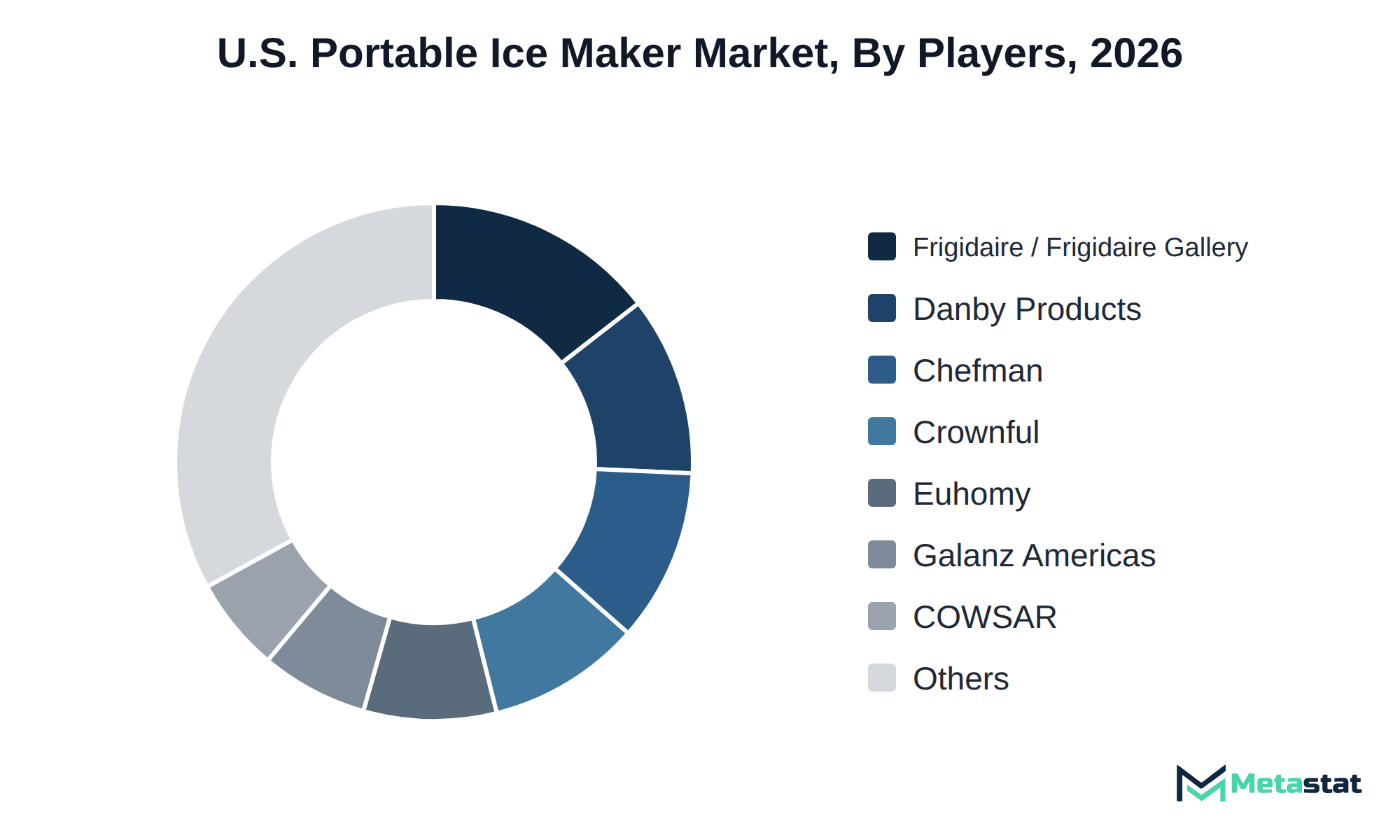
Companies in the U.S. Portable Ice Maker market compete through diverse strategies, including product differentiation and pricing approaches. Buyers select products based on factors including price, certification, customization, and service quality. For instance, brands like Frigidaire / Frigidaire Gallery emphasize reliability and performance, appealing to consumers prioritizing trusted household appliances. Meanwhile, companies like COWSAR and ecozy focus on innovative designs and features that enhance usability, targeting tech-savvy customers seeking advanced functionalities.
Pricing strategies play a significant role in this market, with brands like Chefman and Kismile offering competitively priced models to attract budget-conscious consumers. On the other hand, premium brands including Whynter LLC and VIVOHOME capitalize on high-end features and aesthetics, appealing to consumers seeking quality and style. This segmentation allows companies to address specific buyer needs effectively, driving competition across various segments of the market.
This growth relies on several key developments. First, increasing demand for various ice types, particularly Nugget/Pebble Ice, reflects consumer preferences for specific applications, including household use and commercial beverage services. The segment is projected to grow at a CAGR of 5.9%, supporting overall market expansion. Second, shifts in retail channels, particularly the rise of mass merchandisers and warehouse clubs, enhance market accessibility, enabling consumers to purchase portable ice makers more conveniently. These channels are expected to contribute to a CAGR of 2.7% from 2026 to 2033. Potential risks pose challenges to achieving the forecast figures. Fluctuations in material costs could impact production expenses, leading manufacturers to increase prices or limit supply. Such constraints threaten to dampen consumer purchasing activity across the U.S. Portable Ice Maker market. Collectively, these factors will shape the trajectory of growth, emphasizing the need for adaptability among manufacturers and retailers to navigate these dynamics.
By Ice Type: Bullet Ice, Nugget/Pebble Ice, Cube/Square Ice, Crescent Ice, Sphere/Ball Ice, Others (Specialty Clear and Shaved-Ice Configurations)
By Application: Household, Commercial
By Retail Channel: Mass Merchandisers, Warehouse Clubs, Home Improvement Retailers, Consumer Electronics Retailers, E-commerce Marketplaces, Brand Direct-to-Consumer
The report strategically identifies and profiles the key market players and analyses their core competencies in each sub-segment of the Portable Ice Maker market.
|
Report Attributes |
Details |
|
Study Period |
2021-2033 |
|
Base Year |
2025 |
|
Estimated Year |
2026 |
|
Forecast Period |
2026-2033 |
|
Historical Period |
2021-2025 |
|
Growth Rate |
CAGR 3.7% from 2026 to 2033 |
|
Revenue Unit |
USD million |
|
Segmentation |
By Ice Type, Daily Ice Production Capacity, Application, Retail Channel, and Region |
Find answers to common questions about this report
The Portable Ice Maker market size was valued at USD 174.1 million in 2025.
The market is projected to grow at a CAGR of 3.7% during the forecast period from 2026 to 2033.
Nugget/Pebble Ice leads the Portable Ice Maker market with a projected value of USD 62.7 million by 2033. This segment shows the highest growth potential compared to others in the Ice Type category.
A notable shift in consumer purchasing behaviors drives growing demand from households for portable ice makers. Recent innovations in ice-making technology enhance efficiency and user experience, attracting a wider consumer base.
Price sensitivity acts as a significant constraint within the market, as consumers prioritize affordable options, leading to slower uptake of higher-end models. Rising input costs exert pressure on profitability, forcing manufacturers to manage expenses while maintaining competitive pricing.
The increasing preference for Nugget/Pebble ice, driven by health-conscious consumers and the demand for versatile drink options, supports adoption in the portable ice maker market. Innovations enhancing Nugget ice production capabilities present manufacturers with opportunities to capture market share and cater to evolving consumer needs.
The Portable Ice Maker market is estimated to reach a valuation of USD 233.6 million by 2033.
Key players operating in the Portable Ice Maker market include Antarctic Star, Chefman, Danby Products, Euhomy, Frigidaire / Frigidaire Gallery, Newair, Whynter LLC, and VIVOHOME.
Nugget/Pebble Ice is projected to grow at a compound annual growth rate of 5.9 percent through to 2033, driven by consumer preference for softer ice textures in beverages.
Revenue from household applications is expected to rise from USD 148.2 million in 2026 to USD 186.1 million by 2033, reflecting a compound annual growth rate of 3.3 percent.
The analysts below cover Consumer Goods research at Metastat Insights.
LEAD ANALYST
Utkarsh Khirodkar is a Lead Market Research Analyst at MetaStat Insight, specializing in market intelligence, technology sector assessments, and competitive strategy.
Replacing petrochemical surfactants with bio-based alternatives requires realistic timelines on industrial precision fermentation scaling. The market research broke down commercialization timelines, feedstock sugar price sensitivities, and regional cosmetic ingredient regulatory approvals in Europe and East Asia. That supplier readiness mapping gave our formulations team reliable context when comparing renewable chemical sourcing roadmaps.
Tracking ceramic matrix composite adoption in high-bypass aero engines requires strict attention to material qualification cycles and FAA airworthiness testing milestones. The MetaStat Insight team provided a detailed timeline of silicon carbide fiber manufacturing capacity and commercial foundry lead times. Having clear visibility into upstream thermal barrier coating supply helped us stress-test our long-term component procurement strategy.
Transitioning ultra-class mining haul trucks to alternative power requires concrete data on remote hydrogen refueling infrastructure economics. The report evaluated megawatt-scale electrolyzer installation expenses, onsite storage safety mandates, and heavy-duty fuel cell stack degradation under continuous duty cycles. That technical rigor helped our engineers benchmark realistic total operating cost horizons for off-highway fleet decarbonization.
Explore related market intelligence reports worth reading alongside this one.