
LEAD ANALYST
Utkarsh Khirodkar is a Lead Market Research Analyst at MetaStat Insight, specializing in market intelligence, technology sector assessments, and competitive strategy.

US Sports Flooring Market Size, Share, By Product Type (Wood Flooring, Rubber Flooring, PVC Flooring, Polyurethane Flooring, Polypropylene Flooring, Acrylic Flooring, Artificial Turf, Foam Sports Flooring and Others), By Application (Indoor and Outdoor), By End User (K-12 Schools, Colleges and Universities, Health and Fitness Clubs, Municipal and Community Facilities, Professional Sports Organizations, Private Sports Academies and Clubs and Households), By Project Type (New Construction and Renovation and Replacement), Industry Analysis, Growth, Trends, and Forecast, 2026-2033
Report ID
MSI-5556
Published
October, 2026
Pages
253 Pages
Format
Historical
Base year
Forecast
Forecast period
Report Details
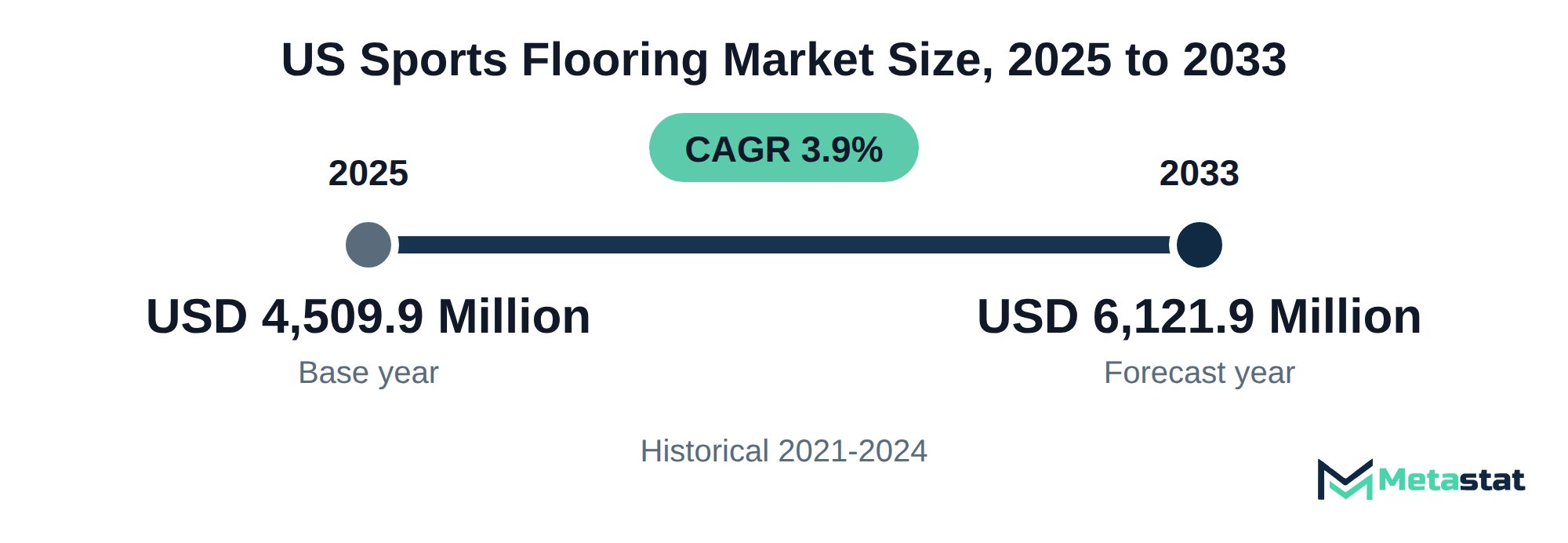
Market Valuation: Valued at $4,509.9 Million in 2025, projected to reach $6,121.9 Million by 2033 at a 3.9% CAGR.
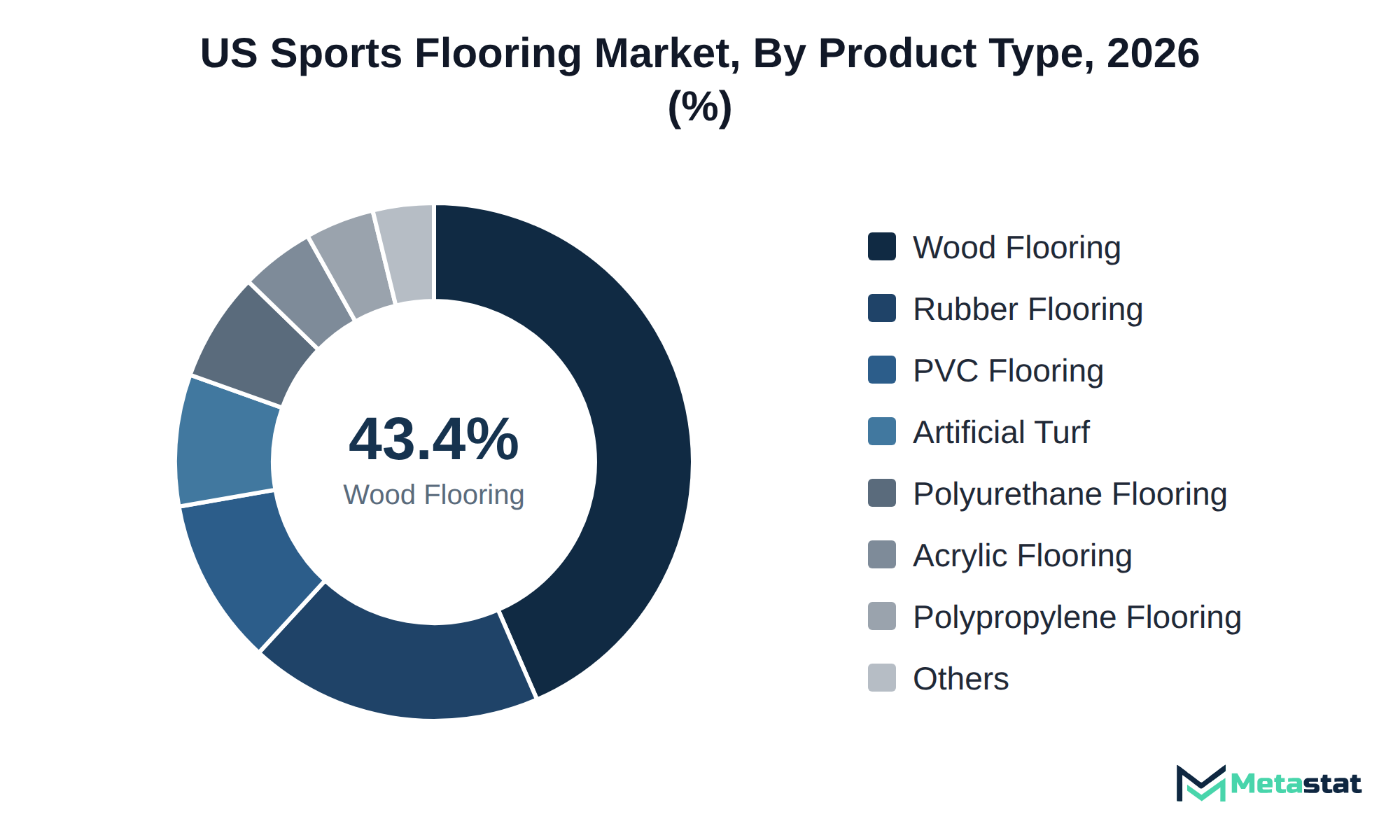
Dominant Segment: Wood flooring leads the US Sports Flooring market, driven by its traditional aesthetic appeal and high durability, making it the preferred choice for educational institutions and health clubs.
Geographic Lead: North America holds the largest share of the market, supported by a strong infrastructure for sports and recreation, alongside increasing investments in educational and community facilities.
What's Inside: This report provides a comprehensive analysis of the US Sports Flooring market, covering product types, applications, end users, and project types, along with competitive insights and growth forecasts through 2033.
Outdoor Growth: The outdoor flooring segment is projected to grow significantly, reaching USD 2,008.6 million by 2033, fueled by rising investments in outdoor sports facilities and a growing emphasis on physical activity among K-12 schools.
Choose Your License
US Sports Flooring Market
The US Sports Flooring market was valued at USD 4,509.9 million in 2025 and is projected to reach USD 6,121.9 million by 2033, growing at a CAGR of 3.9% over the forecast period.
The US Sports Flooring market encompasses a variety of flooring solutions designed specifically for sports-related applications, catering to buyers in educational institutions, fitness centers, and municipal facilities. Investments in this market stem from the demand for durable, safe, and high-performance surfaces that enhance athletic performance and reduce the risk of injuries. The emphasis on quality and functionality drives buyers to select specific products that meet their needs for both aesthetic appeal and resilience.
Growth within the market is influenced by factors including increasing participation in sports and fitness activities, leading to higher demand for specialized flooring solutions. Among the product types, wood flooring represents the largest segment, reflecting a preference for traditional aesthetics combined with high durability. Outdoor applications are anticipated to experience substantial growth due to expanding interest in outdoor sports facilities across various regions.
North America holds a substantial share of the market, driven by a strong infrastructure for sports and recreation. The emphasis on health and physical education in schools and communities drives investments in appropriate flooring solutions. A primary growth driver includes the rising focus on creating safe and engaging environments for physical activity, which encourages educational and recreational institutions to prioritize improvements to their facilities.
The US Sports Flooring market includes various flooring materials that serve the specific requirements of different end users. Key buyers include educational institutions, health and fitness clubs, and municipal facilities, which invest in durable and high-performance flooring solutions. The need for flooring that ensures safety, enhances performance, and withstands heavy usage drives spending in this sector. Many buyers prioritize quality and long-term value, resulting in higher initial costs that lead to savings on maintenance and replacement.
Growth in the market is fueled by increased participation in sports and fitness activities, along with a rising focus on health and wellness. Among product types, wood flooring represents the largest segment, attributed to its aesthetic appeal and performance characteristics. The North American region holds the largest share of the market, reflecting strong demand for high-quality sports flooring solutions across applications.
Investments in new construction and renovation projects contribute significantly to market expansion. These projects form part of wider US construction spending. The ongoing trend toward improved facilities in educational and recreational sectors highlights the importance of quality flooring. This focus on better sports environments supports market growth and continued investment in innovative flooring solutions.
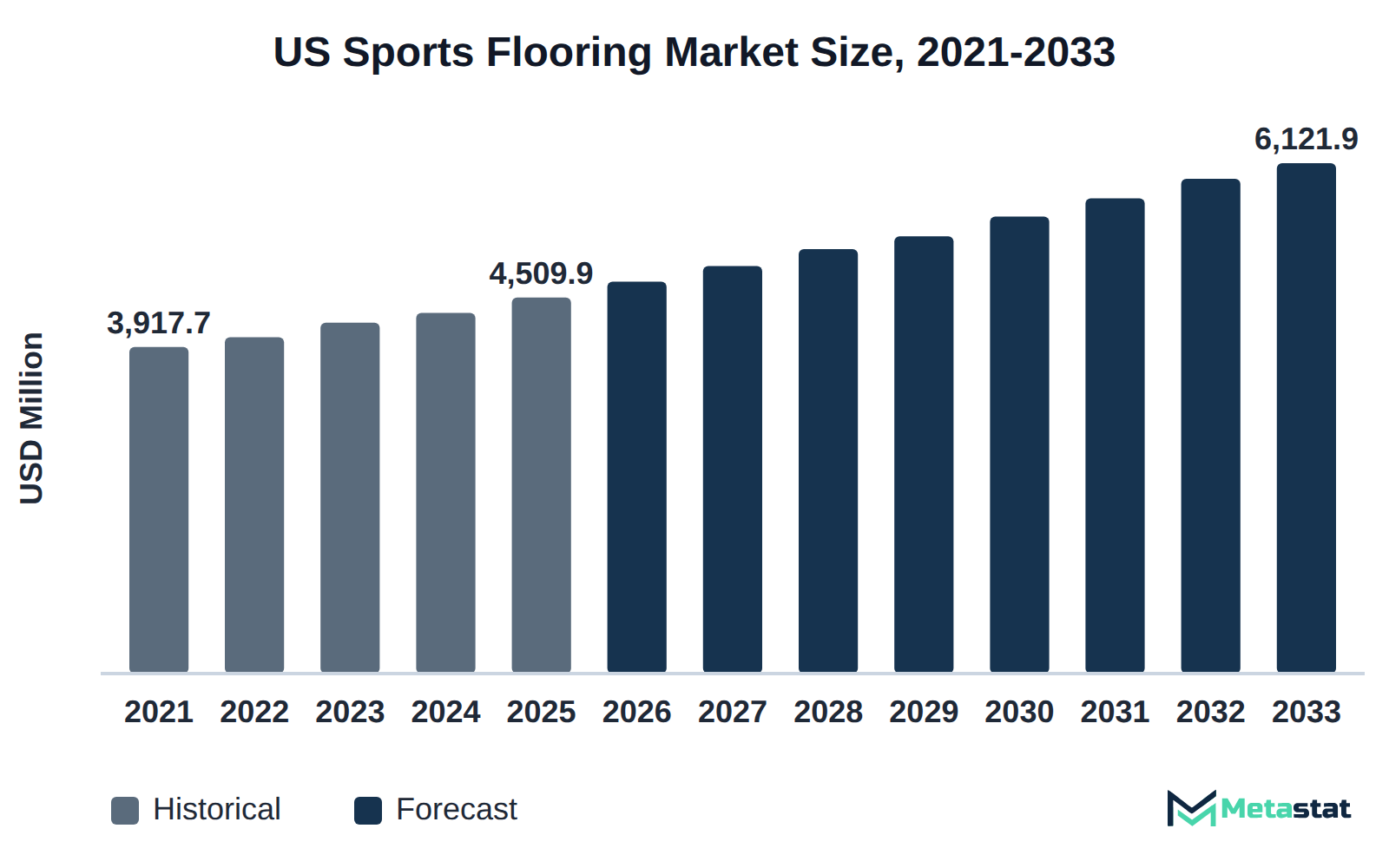
Significant investments in replacing hardwood sports flooring in U.S. schools and colleges reflect the growing emphasis on safety and performance standards. Schools and educational institutions increasingly recognize the importance of maintaining optimal playing surfaces to enhance athletic performance and prevent injuries. The U.S. Sports Flooring market is expected to grow, driven by demand for high-performance materials that meet rigorous safety regulations.
For instance, wood flooring is projected to expand from USD 2,028.8 million in 2026 to USD 2,533.8 million by 2033, demonstrating a compound annual growth rate of 3.2%. This upward trend indicates an ongoing commitment to providing quality athletic environments. Many institutions are responding to advancements in flooring technology that enhance durability while providing the desired aesthetic appeal. Upgraded wood flooring systems incorporate modern finishes that improve slip resistance, impact absorption, and overall maintenance.
The shift toward replacing aging hardwood floors not only supports athletic development but affects the financial aspects of educational institutions. Budget allocations for renovations and replacements are expected to increase, leading to a healthier market environment for suppliers. Such investments make quality sports flooring central to athletic excellence and student safety across educational facilities, which supports the broader U.S. Sports Flooring market.
Rubber flooring stands out in the US Sports Flooring market due to its durability and versatility, particularly for strength and functional training environments. Buyers typically encounter a range of pricing structures based on the product's specifications and installation requirements. The average price for rubber flooring in the market indicates a competitive landscape, which influences purchasing decisions significantly. For example, the projected revenue for rubber flooring is USD 1,191.9 million by 2033, reflecting strong demand and a growing trend among fitness centers and high-performance training facilities.
The purchasing process often involves negotiating contracts that include upfront costs, maintenance agreements, and warranties. Multiple suppliers offer customized solutions tailored to specific training needs. These arrangements lead to cost savings over time, making rubber flooring a financially viable choice for schools, colleges, and fitness organizations that emphasize high-traffic usage and impact resistance.
While the market evolves, the flexibility in payment options and contractual terms will likely enhance buyer engagement. Suppliers focusing on user-friendly financing options and complete service packages strengthen their competitive position, allowing buyers to make informed decisions that align with their budgetary constraints. Such factors contribute to the overall growth and adoption of rubber flooring across various end-user segments.
Fieldhouse investment is a significant trend in the US Sports Flooring market, particularly in the Midwest, where educational institutions and community organizations prioritize versatile spaces for sports activities. The rise in popularity of indoor sports facilities drives demand for durable flooring solutions specifically designed to accommodate high-impact sports. In this context, the indoor application segment shows a projected growth from USD 3,202.5 million in 2026 to USD 4,113.3 million by 2033, reflecting a compound annual growth rate of 3.6%.
Within this segment, specialty track specifications emerge as a distinct requirement for various end users including K-12 schools, colleges, and health and fitness clubs. These buyers seek flooring that meets safety standards while enhancing athletic performance. The demand for rubber and polyurethane flooring types arises from their resilience and shock-absorbent properties, reducing injury risks among athletes. With the market's focus on creating safe and performance-oriented environments, investment in quality flooring solutions becomes essential, ensuring that facilities attract and retain users.
The costs associated with installed sports flooring for facilities in the Midwest depend significantly on the type of flooring selected. For example, rubber flooring projects exhibit a projected value of USD 1,191.9 million by 2033, reflecting a competitive and expanding market segment. This type of flooring is often preferred in health and fitness clubs and schools due to its durability, safety, and ease of maintenance, influencing the decision-making process for facility operators.
The choice between new construction and renovation projects largely determines costs. New construction projects are expected to grow from USD 1,776.7 million in 2026 to USD 2,215.5 million by 2033, indicating strong investment in building new facilities. Conversely, renovation and replacement projects are anticipated to reach USD 3,906.4 million by 2033, emphasizing a strong focus on upgrading existing sports facilities.
These factors help buyers budget and invest in line with their operational goals in the US Sports Flooring market.
The recent rise in investment directed toward K-12 schools significantly influences spending patterns within the US Sports Flooring market. Educational institutions prioritize enhanced facilities, reflecting a shift in focus toward modernized environments that encourage physical activity and engagement. This trend arises from increased recognition of the importance of physical education and recreational spaces in promoting student well-being. The market shows a notable increase in demand for indoor flooring solutions, particularly for gymnasiums and multi-purpose spaces, which aligns with the trend in school renovations and new constructions. From 2026 to 2033, revenue from K-12 schools is expected to grow from USD 1,423.5 million to USD 1,823.7 million, demonstrating a compound annual growth rate of 3.6%. This growth in spending among educational buyers enhances market dynamics, resulting in greater competition among suppliers to meet evolving requirements.
The development of innovative materials significantly impacts the US Sports Flooring market by improving performance characteristics including durability, shock absorption, and maintenance. The introduction of advanced polymers and composite materials facilitates enhanced user experience, particularly in high-traffic environments. Suppliers focusing on research and development align their products with evolving consumer expectations, ensuring flooring solutions meet the demands of diverse applications including indoor sports halls and fitness centers.
The integration of eco-friendly materials aligns with sustainability trends among institutional buyers. This shift supports a preference for flooring that reduces environmental impact while maintaining high performance standards. Increased availability of these materials allows manufacturers to cater to both public and private sectors, driving growth in the market. The ongoing emphasis on innovation translates into competitive advantages for suppliers, enabling them to capture a larger share of the market while appealing to environmentally conscious consumers.
Price sensitivity among buyers, particularly in K-12 schools and municipal facilities, restricts the adoption of sports flooring. Increasing costs associated with high-quality materials, installation, and maintenance impact budget allocations. Educational institutions often face strict funding constraints, leading to slower uptake of new flooring solutions. Limited budgets result in smaller orders or delays in replacement projects, hindering opportunities for growth within the market. This challenge is particularly pronounced in less affluent areas, where the focus shifts toward maintaining existing flooring rather than investing in updates. The market experiences reduced demand in segments that rely heavily on public funding and budget approval processes, limiting overall growth potential and innovation in flooring solutions targeted at these buyers.
Rising input costs for materials have emerged as a significant challenge for suppliers within the market. Increased prices for key raw materials, driven by supply chain disruptions and inflationary trends, have raised production expenses. Suppliers face margin pressure, making it difficult to maintain profitability while offering competitive pricing to buyers, particularly in price-sensitive segments. The K-12 schools sector, a primary end user, experiences heightened scrutiny over budgets, intensifying the pressure on suppliers to control costs.
In response, several suppliers are exploring alternative sourcing strategies and enhancing operational efficiencies to mitigate these challenges. Innovations in materials and manufacturing processes contribute to reducing reliance on expensive inputs, enabling suppliers to sustain competitive pricing. Collaborations between manufacturers and raw material producers aim to stabilize costs, creating a more predictable pricing environment. These adaptations help maintain supplier relevance within the US Sports Flooring market while addressing ongoing cost pressures effectively.
Outdoor sports flooring for K-12 schools represents a significant growth opportunity within the US Sports Flooring market. The expected increase in investment in outdoor sports facilities highlights this segment’s potential, with a projected value of USD 2,008.6 million by 2033, reflecting a compound annual growth rate (CAGR) of 4.3%. The trend toward enhancing outdoor athletic environments leads educational institutions to seek durable, high-performance flooring solutions. This shift aligns with a broader movement toward maximizing student engagement and participation in physical activities. Key product types suitable for outdoor applications include rubber and polyurethane flooring, known for their resilience and safety features. Suppliers can expand their market reach in this segment by offering innovative solutions tailored for outdoor use. Emphasizing sustainability and performance characteristics further enhances appeal among educational buyers.
The US Sports Flooring market is segmented based on Product Type, Application, End User, and Project Type.
This category features solid wood surfaces, widely used in gyms, schools, and recreational facilities due to their aesthetic appeal and performance characteristics. Key buyers include educational institutions and health clubs, which prioritize durability and maintenance ease. The demand for wood flooring experiences growth driven by increasing investments in new construction and renovation projects across K-12 schools, contributing to a rise in overall market demand. This segment exhibits a slower growth rate compared to the Rubber Flooring segment, which benefits from a higher CAGR of 4.6%. With its natural properties, wood flooring offers unique advantages, yet it faces competition from synthetic alternatives that provide enhanced durability and lower maintenance costs.
Rubber flooring is estimated to reach USD 1,191.9 million by 2033, at a CAGR of 4.6% during the forecast period. This flooring type finds extensive applications in various settings, including K-12 schools, health and fitness clubs, and municipal facilities. The segment's growth is driven by notable demand for durable, safe, and easy-to-maintain surfaces. The increasing focus on health and safety within sports environments further supports the segment. Compared to other product types, rubber flooring experiences a higher growth rate, with a CAGR surpassing that of wood flooring, which stands at 3.2%. The need for sustainable and resilient materials drives its adoption, appealing particularly to commercial buyers seeking cost-effective and long-lasting solutions. Effective pricing strategies enhance market competitiveness, positioning rubber flooring as a preferred choice for several end users.
PVC Flooring segment is expected to reach USD 666.7 million by 2033. This type of flooring is commonly found in various sports and recreational facilities, offering a durable and low-maintenance solution for both indoor and outdoor applications. Key end users include educational institutions, health clubs, and community centers. Demand for PVC flooring grows due to its affordability and versatility, with a projected CAGR of 4.1%. This segment experiences faster growth compared to wood flooring, which has a CAGR of 3.2%. The lower price point of PVC flooring attracts a diverse range of buyers, including those in budget-sensitive environments. Competitive advantages are evident in its resistance to wear and tear, making it suitable for high-traffic areas. Innovations in PVC technology further enhance performance characteristics, driving adoption among cost-conscious buyers in the U.S. Sports Flooring market.
Polyurethane Flooring segment is projected to grow at a CAGR of 4.1% during the forecast period. This flooring type is commonly used in various indoor applications, especially in health and fitness clubs, where durability and ease of maintenance are crucial. The increasing emphasis on creating safe and comfortable environments for athletes and fitness enthusiasts drives demand for this segment. Compared to other flooring types, polyurethane flooring features a higher price point due to its superior performance characteristics, including enhanced shock absorption and resilience. This segment's growth pattern is distinct from rubber flooring, which is anticipated to achieve a CAGR of 4.6%, positioning polyurethane flooring as a slower-growing alternative in the market. Continued innovation in material technology further influences purchasing decisions, positioning polyurethane flooring as an attractive option for buyers focused on long-term value.
Polypropylene flooring offers a lightweight and flexible alternative for various sports applications, featuring properties that enhance shock absorption and reduce injury risk during play. This type of flooring finds use in fitness centers, community sports facilities, and other recreational spaces where durability and performance are essential. One driving force behind the adoption of polypropylene flooring is its competitive pricing compared to other materials like wood and rubber, attracting budget-conscious buyers, particularly in municipal and community facilities. Unlike rubber or wood options, polypropylene flooring benefits from rapid installation processes, which appeal to project timelines in new constructions and renovations. Investment in this segment reflects a broader trend prioritizing cost-effective and efficient solutions in the US Sports Flooring market.
Acrylic flooring is a versatile option in sports environments, suitable for both indoor and outdoor applications. This type of flooring finds extensive use in facilities including gymnasiums, fitness centers, and recreational spaces, catering to a wide range of activities including basketball, volleyball, and multi-purpose events. A significant driver for the acrylic flooring segment stems from the growing demand for durable, low-maintenance surfaces that provide good traction and comfort during physical activities. Compared to other segments, acrylic flooring offers a lower price point, attracting a diverse clientele, including educational institutions and community centers. The market emphasizes affordability and ease of installation, positioning acrylic flooring as a practical choice for various end users, particularly in budget-sensitive environments. Acrylic flooring combines performance with cost-effectiveness, which sets it apart from higher-priced alternatives in the market.
Artificial turf is a synthetic surface designed for various sporting activities, providing a durable and consistent playing experience. This material finds applications in schools, colleges, and professional sports organizations where high-performance surfaces are essential. Increased demand arises from factors including the need for low-maintenance options and the ability to withstand diverse weather conditions, appealing to facility managers and sports program directors. Compared to other flooring options, artificial turf tends to offer a longer lifespan, resulting in lower long-term costs for end users. The ongoing trend toward outdoor sports facilities enhances its appeal, differentiating it from segments like wood or rubber flooring, which exhibit different maintenance requirements and performance characteristics. This segment contributes to the overall growth of the US Sports Flooring market, reflecting shifting preferences among buyers focused on sustainability and performance.
Foam sports flooring consists of soft, cushioned materials designed for sports and recreational environments, providing shock absorption and comfort during physical activities. This type of flooring is frequently used in health and fitness clubs, private sports academies, and recreational facilities, where safety and performance are prioritized. One driving force for this segment is the increasing focus on injury prevention, leading facility managers to select flooring that enhances athlete safety. Foam sports flooring distinguishes itself through its lower price point compared to other materials, making it appealing to a broader range of buyers, particularly in budget-conscious segments. The growing trend of fitness and wellness continues to increase demand for such flooring, contributing to its relevance within the US Sports Flooring market. Users value the comfort and support provided by foam, which enhances overall performance and experience during various sports activities.
Linoleum and cork flooring provide sustainable options for sports environments, offering unique aesthetic and functional advantages. These materials find application in various settings, including schools, community facilities, and recreational spaces. Environmental consciousness drives demand for linoleum and cork flooring, appealing to buyers focused on sustainability and eco-friendliness. This segment's growth trajectory differs from that of rubber and wood flooring, which exhibit higher projected growth rates. Linoleum and cork flooring generally present lower initial costs compared to more specialized materials, resulting in adoption among budget-conscious buyers. Performance characteristics do not entirely match those of other flooring types, influencing preference trends within the market.
This segment finds application primarily in environments including gyms, schools, and community centers, where safety and durability are critical. Increasing investment in educational facilities significantly drives demand within this segment, particularly from K-12 schools. The focus on enhancing user experience and safety during physical activities sets this segment apart from others, including outdoor applications, which are projected to grow at a faster rate of 4.3% CAGR. The market trend reflects a clear preference for materials that combine performance with sustainability, influencing purchasing decisions across various end-user categories. This emphasis on material quality directly affects market dynamics and competitive positioning among suppliers.
This segment finds application in various environments, including parks, sports complexes, and recreational facilities, catering to diverse users including municipalities, sports organizations, and community centers. Playground equipment is a related product category in many of these public recreation settings. Increasing interest in outdoor sports and activities drives demand for durable and versatile flooring options, enhancing user experience. Compared to other segments, outdoor flooring exhibits a higher growth rate due to its suitability for diverse weather conditions and the growing emphasis on outdoor physical activities. The segment's growth reflects changing consumer preferences toward healthier lifestyles, encouraging investment in outdoor facilities. Such dynamics contribute to the evolving nature of the US Sports Flooring market, which is adapting to meet the needs of active communities.
This segment serves educational institutions focused on providing safe and reliable flooring for athletic activities, gymnasiums, and multipurpose spaces. Increased investment in educational facilities and the emphasis on physical education drive demand for high-quality sports flooring solutions. Compared to other segments, K-12 schools exhibit a moderate growth rate, influenced by budget constraints and price sensitivity. The focus on durable and low-maintenance materials aligns with trends in educational infrastructure, positioning the K-12 schools segment as a vital part of the US Sports Flooring market. The commitment to enhancing student physical activity through upgraded facilities further supports growth in this segment, differentiating it from others that cater to professional sports organizations or higher education institutions.
Colleges and Universities segment is estimated to reach USD 1,146.6 million by 2033, at a CAGR of 3.5% during the forecast period. This segment focuses on providing durable and high-performance flooring solutions for educational institutions, including gymnasiums and multi-purpose areas. The rising emphasis on health and fitness among college students drives demand for quality sports flooring, promoting active lifestyles and enhancing athletic performance. Compared to K-12 schools, which are projected to grow at a CAGR of 3.6%, the Colleges and Universities segment experiences slightly slower growth, indicating a different focus on facility upgrades and renovations. Suppliers in this segment address specific requirements, including maintaining safety standards and ensuring longevity of the flooring material, which influences purchasing decisions and overall costs. The market reflects a growing trend toward investing in advanced flooring technologies that support various athletic activities, aligning with the strategic objectives of educational institutions.
Health and Fitness Clubs segment is expected to reach USD 1,124.6 million by 2033. This segment supports various fitness activities, catering to individuals seeking to improve their health and physical performance. The growing emphasis on health and wellness among consumers drives demand for specialized flooring designed to enhance safety and comfort in fitness environments. With a projected CAGR of 3.5%, the segment experiences steady growth, although it remains slower than other segments like Outdoor flooring, which grows at a CAGR of 4.3%. The specific requirements for durability and shock absorption differentiate this segment from others, influencing product choices and purchasing decisions. Facilities invest in high-quality flooring solutions, intensifying competition among suppliers to provide innovative products that meet the evolving needs of health and fitness clubs.
Municipal and Community Facilities segment is projected to grow at a CAGR of 4.3% during the forecast period. This segment encompasses various venues designed for public use, including sports complexes, community centers, and recreational facilities. These spaces frequently require durable and safe flooring solutions to accommodate a range of activities, serving schools, local governments, and community organizations. Increased community investment in infrastructure drives demand for enhanced sports flooring, ensuring venues meet safety and performance standards. Compared to other end-user segments, this segment exhibits a moderate growth rate, influenced by the rising emphasis on community wellness and recreational activities. With a projected value reaching USD 1,124.6 million by 2033, Municipal and Community Facilities differentiate themselves by focusing on multi-functional usage, which contrasts with the more specialized needs of institutions including K-12 schools or colleges and universities.
Professional Sports Organizations focus on high-performance flooring solutions tailored for elite athletic activities. Facilities used by professional sports teams prioritize durability, safety, and performance, driving the demand for specialized sports flooring. Factors influencing this segment include the growing emphasis on athlete safety and injury prevention, alongside advancements in flooring technology that enhance performance. Compared to other segments, this market segment often commands higher pricing due to the advanced materials and technology required. The need for premium flooring solutions leads to significant investment from professional organizations, differentiating it from other end-user segments that prioritize cost-effectiveness over performance. Steady demand results from the ongoing commitment of professional sports organizations to maintain competitive performance standards.
Private Sports Academies and Clubs involve specialized facilities that cater to athletes seeking advanced training and skill development. These establishments employ high-quality flooring systems to create safe and effective environments for a variety of sports activities. Demand for flooring solutions in this segment is driven by an increasing emphasis on sports performance and youth sports participation. Enhanced safety features and performance optimization are critical aspects influencing purchasing decisions. Compared to other end-user segments, this category prioritizes premium flooring options that support rigorous training requirements. Academies seek innovative, high-quality materials that enhance athletic performance and durability, which sets them apart from other buyers including schools or community facilities. The market continues to evolve, responding to trends in athletic training and sports participation.
Households represent a segment focused on residential applications for sports flooring solutions. These products serve various purposes, including home gyms that house home fitness equipment, game rooms, and recreational spaces. The increase in home fitness trends drives demand for durable and aesthetically pleasing flooring options among homeowners. The rise of DIY projects encourages consumers to invest in home improvements, which includes upgrading flooring. This segment differs from others in the market due to varied purchasing motivations, with households prioritizing cost-effectiveness and style over performance specifications found in commercial environments. Compared to institutional buyers, households typically seek flooring solutions that balance quality with affordability, leading to unique market dynamics.
This sub-segment encompasses varied applications, including corporate settings, military installations, and rehabilitation facilities. Flooring solutions in this category cater to diverse needs, from enhancing athletic performance in rehabilitation centers to providing safe and durable surfaces in corporate environments. Increasing demand for multifunctional spaces drives growth in this segment, particularly in facilities aiming to promote health and fitness activities among employees or service members. Compared to other segments, this sub-segment experiences slower growth due to budget constraints faced by corporate buyers and regulatory challenges in military installations. Different priorities regarding functionality and safety standards influence purchasing decisions, making this sub-segment distinct from others in the market.
This segment primarily includes flooring solutions installed in newly constructed sports facilities and venues, targeting a variety of users including educational institutions, fitness centers, and municipal projects. Demand within this segment is driven by increasing investment in sports infrastructure at both local and state levels. Compared to renovation projects, the new construction segment experiences steady growth due to consistent demand from both public and private sectors focused on establishing modern athletic facilities. The expected growth rate for new construction is lower than that of renovation and replacement projects, which are expected to achieve a CAGR of 4.2% during the same period. This distinction highlights the ongoing trend toward upgrading existing facilities rather than solely building new ones.
Renovation and Replacement segment is estimated to reach USD 3,906.4 million by 2033, at a CAGR of 4.2% during the forecast period. This segment encompasses projects focused on updating or replacing existing sports flooring in various facilities, including schools, gyms, and community centers. Buyers typically include educational institutions and fitness centers looking to enhance their facilities' safety and aesthetics. Driving factors include increasing emphasis on maintaining high-quality surfaces that meet safety standards and provide optimal performance for athletes. Compared to New Construction, this segment generates a higher frequency of smaller-scale projects, reflecting ongoing investments in existing facilities rather than new builds. The market's growth in Renovation and Replacement signifies a commitment to improving user experience and safety in sports environments.
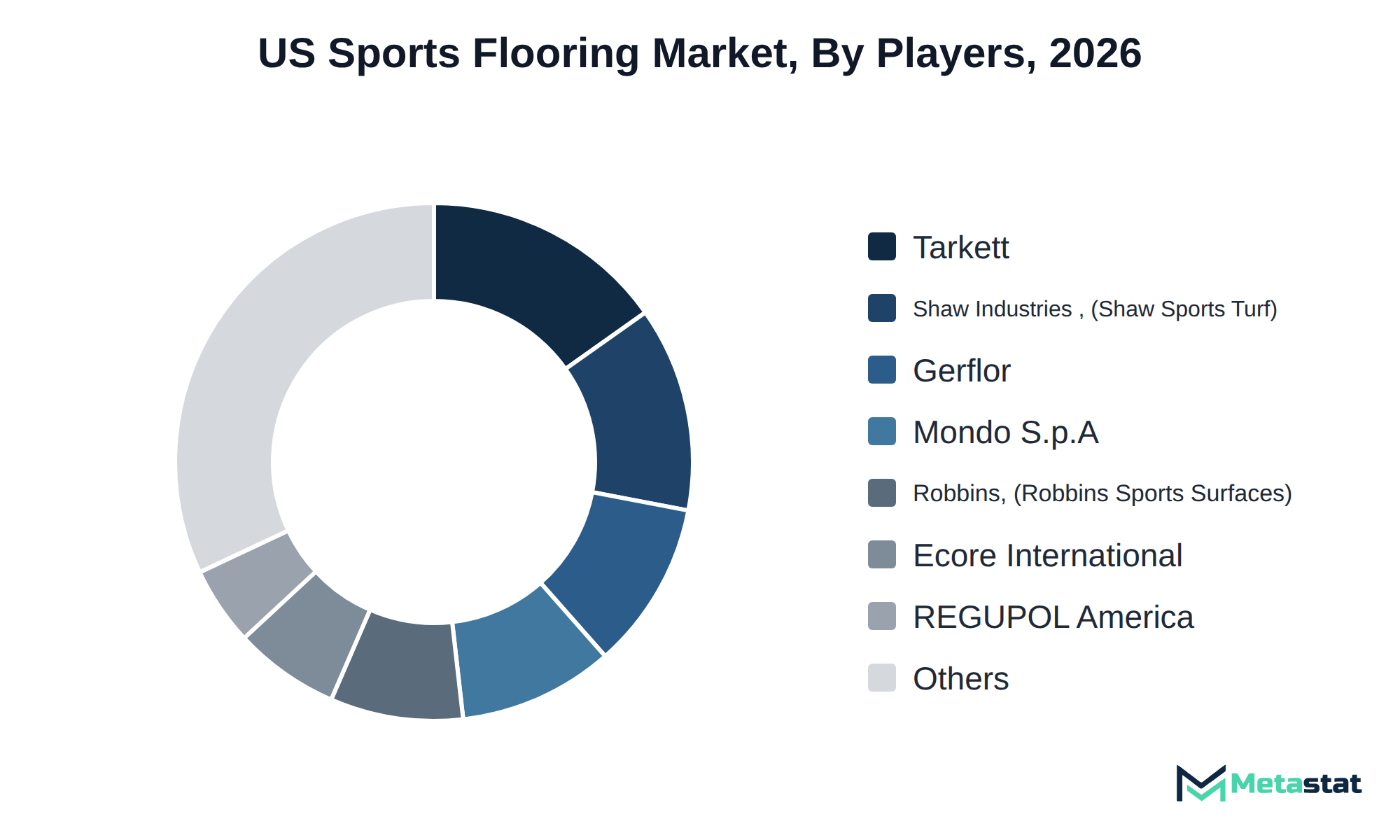
The US Sports Flooring market features a diverse array of players, each targeting specific segments and buyer needs. Companies position themselves based on product type, application, and end-user categories, with distinct focuses ranging from sustainability to performance. Buyers prioritize factors including price, certification, customization, and service when selecting flooring solutions. For instance, Ecore International, Inc. emphasizes sustainable materials, appealing to environmentally conscious consumers, while Tarkett S.A. focuses on customizable flooring options for various applications.
Competition within the market intensifies through product differentiation and brand loyalty. Companies including Shaw Industries Group, Inc. specialize in high-performance solutions for sports turf, ensuring they meet the rigorous demands of athletes. In contrast, Harlequin Floors (American Harlequin Corporation) highlights its expertise in flooring tailored for performing arts, catering to a unique subset of end users. This strategic focus enables companies to carve out niche markets while strengthening their service offerings.
The expansion relies on several key developments within the US Sports Flooring market. A significant increase in demand for indoor flooring, particularly in K-12 schools and health and fitness clubs, will drive revenue growth, projected at a CAGR of 3.6% from 2026 to 2033. The renewed focus on outdoor applications, with a CAGR of 4.3%, will contribute positively, particularly in municipal and community facilities. The growing preference for rubber flooring, projected to reach USD 1,191.9 million by 2033, supports overall market growth due to its sustainable and durable attributes. However, uncertainties regarding raw material prices and supply chain disruptions present risks that could hinder market progress. If these challenges affect production costs, demand from buyers, particularly in the renovation and replacement project type, declines. Consequently, this could result in slower growth than anticipated in the forecasted period.
By Product Type: Wood Flooring, Rubber Flooring, PVC Flooring, Polyurethane Flooring, Polypropylene Flooring, Acrylic Flooring, Artificial Turf, Foam Sports Flooring, Others (Linoleum, Cork)
By Application: Indoor, Outdoor
By End User: K-12 Schools, Colleges and Universities, Health and Fitness Clubs, Municipal and Community Facilities, Professional Sports Organizations, Private Sports Academies and Clubs, Households, Others (Corporate, Military, Rehabilitation)
By Project Type: New Construction, Renovation and Replacement
The report strategically identifies and profiles the key market players and analyses their core competencies in each sub-segment of the Sports Flooring market.
Report Attributes | Details |
Study Period | 2021-2033 |
Base Year | 2025 |
Estimated Year | 2026 |
Forecast Period | 2026-2033 |
Historical Period | 2021-2025 |
Growth Rate | CAGR 3.9% from 2026 to 2033 |
Revenue Unit | USD million |
Segmentation | By Product Type, Application, End User, Project Type, and Region |
Find answers to common questions about this report
The Sports Flooring market size was valued at USD 4,509.9 million in 2025.
The market is projected to grow at a CAGR of 3.9% during the forecast period from 2026 to 2033.
Wood Flooring leads the Sports Flooring market with a value of USD 2,028.8 million in 2026. This segment surpasses others in terms of revenue generation.
Increased investment in K-12 schools drives demand for modernized sports flooring solutions that enhance physical activity and engagement. The development of innovative materials improves performance characteristics, appealing to educational buyers and supporting market growth.
Price sensitivity among buyers, particularly in K-12 schools and municipal facilities, restricts the adoption of sports flooring. Rising input costs for materials represent a significant challenge for suppliers, increasing production expenses and intensifying margin pressure.
The anticipated increase in investment in outdoor sports facilities and the growing emphasis on sustainability favor adoption in the US Sports Flooring market. Educational institutions seek durable, high-performance flooring solutions that enhance student engagement and participation in physical activities.
The Sports Flooring market is estimated to reach a valuation of USD 6,121.9 million by 2033.
Key players operating in the Sports Flooring market include Tarkett S.A., Gerflor Group, Mondo S.p.A., Robbins, Inc. (Robbins Sports Surfaces), Ecore International, Inc., Shaw Industries Group, Inc. (Shaw Sports Turf), and Harlequin Floors (American Harlequin Corporation).
The expected revenue from K-12 schools is projected to reach USD 1,823.7 million by 2033.
The increase in investment in outdoor sports facilities drives demand for outdoor sports flooring, projected to reach USD 2,008.6 million by 2033.
The analysts below cover Consumer Goods research at Metastat Insights.
LEAD ANALYST
Utkarsh Khirodkar is a Lead Market Research Analyst at MetaStat Insight, specializing in market intelligence, technology sector assessments, and competitive strategy.
Tracking capacity expansion in single-use bioprocessing requires dependable data on raw material availability and cleanroom-grade polymer supply chains. The competitive landscape chapter gave a grounded evaluation of secondary component suppliers across North America and Asia-Pacific rather than simply reprinting press releases. Having that level of supplier benchmarking helped clarify dual-sourcing considerations for our clinical pipeline planning.
When evaluating distributed energy resource management systems, standard research summaries tend to gloss over the operational differences between front-of-the-meter utility deployments and behind-the-meter industrial sites. The MetaStat Insight report addressed those distinctions directly, especially regarding software interoperability standards and grid interconnection backlogs. The five-year market sizing across regional transmission organizations provided actionable context for our grid modernization strategy.
Most industry reports on warehouse automation bundle autonomous mobile robots and fixed conveyor installations into the same top-level numbers, which complicates advisory work. This study split the market cleanly by payload tiers, navigation technology, and fleet management software layers. The regional forecast for Western Europe gave our team defensible adoption benchmarks when evaluating capital allocation for logistics clients, saving us days of secondary data scrubbing.
Explore related market intelligence reports worth reading alongside this one.