
LEAD ANALYST
Utkarsh Khirodkar is a Lead Market Research Analyst at MetaStat Insight, specializing in market intelligence, technology sector assessments, and competitive strategy.

Global Video Content Protection and DRM Market Size, Share, By Type (Conditional Access Systems (CAS), Digital Rights Management (DRM) Systems, Forensic Watermarking, Encryption Solutions, Authentication Services, Anti-Piracy Solutions, License Management Platforms, Secure Content Delivery Platforms, Token-Based Access Control), By End User (Live Entertainment, Sports, PPV Streaming, Medical Video, Government/Defense), By Medical Video (Telemedicine Consultations, Remote Surgical Streaming & Tele-Mentoring, Medical Training & CME/CPD Streams, Medical Congresses & Grand Rounds), By Government/Defense (Secure Video Communications, Command & Control Briefings, Agency Portals / Ops Centers, Classified Streaming), Industry Analysis, Growth, Trends, and Forecast, 2026-2033
Report ID
MSI-4568
Published
November, 2026
Pages
308 Pages
Format
Historical
Base year
Forecast
Forecast period
Report Details
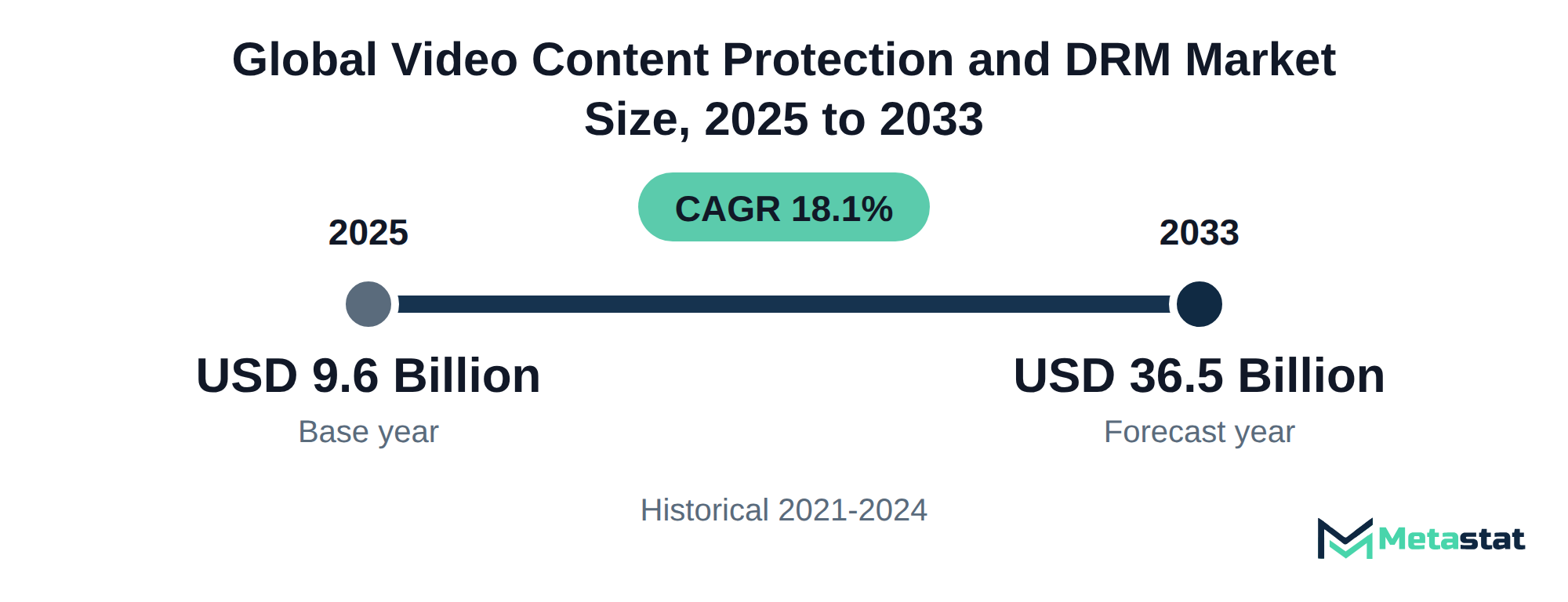
Market Valuation: Valued at $9.6 Billion in 2025, projected to reach $36.5 Billion by 2033 at a 18.1% CAGR.
Dominant Segment: Digital Rights Management (DRM) Systems lead the market, driven by the increasing need for robust content protection mechanisms as digital consumption rises.
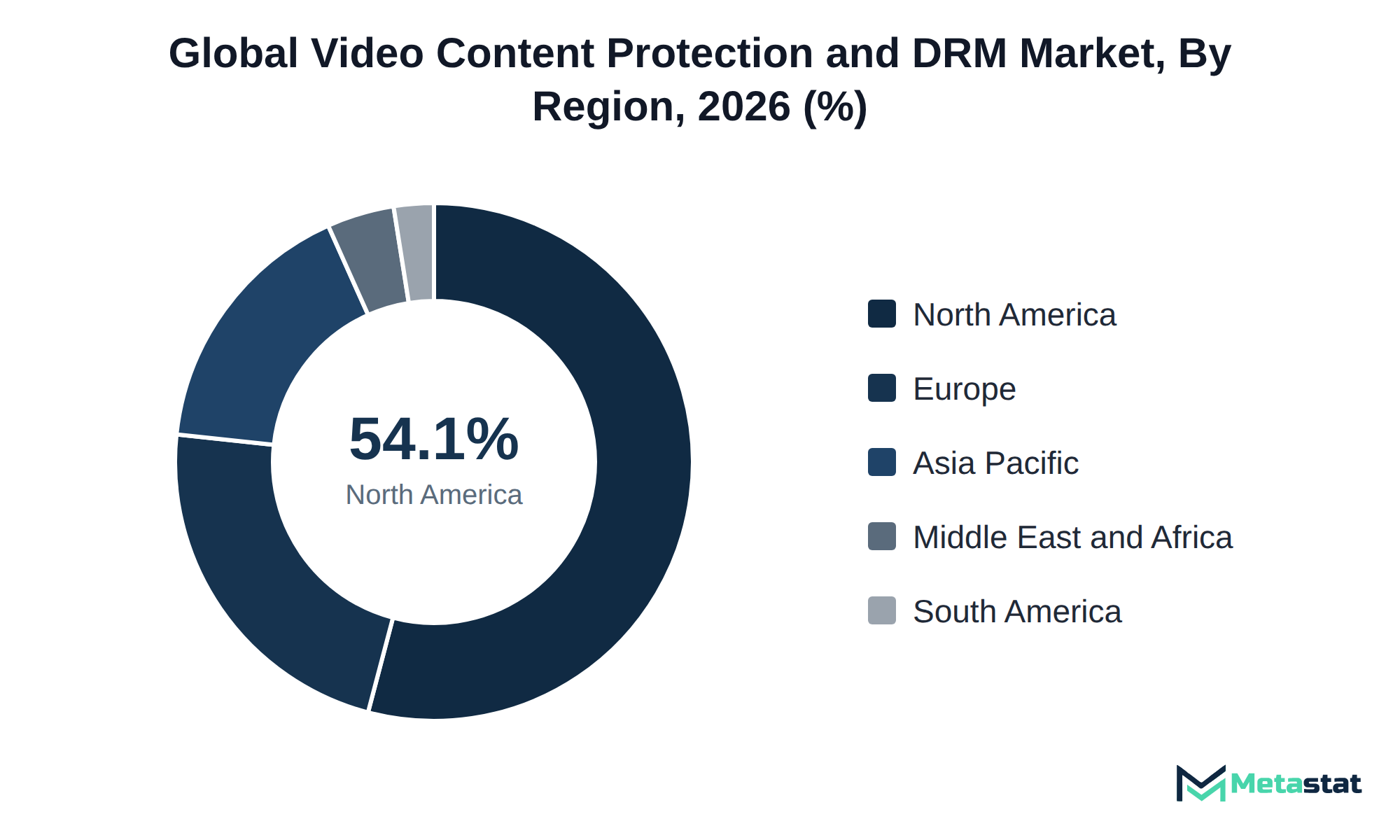
Geographic Lead: North America dominates the market with a 54.1% share in 2025, supported by strong infrastructure and high demand for secure streaming services.
What's Inside: The report includes a comprehensive analysis of market segments, competitive landscape, and forecasts from 2026 to 2033, providing insights into growth drivers and challenges.
Increased adoption of live entertainment: The live entertainment segment is projected to grow significantly, with a CAGR of 18.7%, fueled by rising investments in live streaming technologies.
Growing demand for medical video applica: The medical video segment is expected to grow at a CAGR of 20.4%, driven by increased telemedicine consultations and remote surgical streaming.
Choose Your License
Global Video Content Protection and DRM Market
The global Video Content Protection and DRM market was valued at USD 9.6 billion in 2025 and is projected to reach USD 36.5 billion by 2033, growing at a CAGR of 18.1% over the forecast period.
The Video Content Protection and DRM market encompasses technologies and solutions that secure digital content from unauthorized access and usage. Buyers invest in these systems to safeguard valuable media assets, ensure compliance with licensing agreements, and maintain revenue streams. Organizations across various sectors, including entertainment, healthcare, and government, rely on these solutions to protect their intellectual property and deliver secure content to consumers and clients.
Growth in the market is driven by increasing threats from piracy and unauthorized distribution of digital content. The segment of Digital Rights Management (DRM) Systems represents the largest share, contributing significantly to overall market revenues. North America holds 54.1% of the market in 2025, with the US leading in 2026. This region's robust adoption of advanced technologies and high demand for secure streaming services support growth in the Video Content Protection and DRM market.
Streaming services expand and new content formats emerge, intensifying the requirement for effective content protection. The Live Entertainment segment is projected to experience substantial growth, fueled by rising investments in live streaming technologies. Organizations strive to enhance viewer experiences while ensuring that content remains protected from unauthorized access and distribution.
The Video Content Protection and DRM market addresses the necessity for securing content across various platforms, ensuring protection against piracy and unauthorized access. Buyers invest in these solutions to safeguard intellectual property and maintain revenue streams while delivering quality content to consumers. Industries including entertainment, healthcare, and government require reliable systems to manage and protect their digital assets effectively, resulting in heightened spending in this sector.
Growth in the market is driven by increasing digital content consumption and the rising threat of piracy. Conditional Access Systems (CAS) represent the segment with the highest value, reflecting robust demand for tailored access control solutions that facilitate secure content delivery. This regional dominance stems from strong infrastructure supporting digital services and a high concentration of content creators and distributors.
Technological advancements in encryption and digital rights management significantly influence market expansion. The need for stronger security measures that match changing digital requirements drives investment in new solutions. Companies in the Video Content Protection and DRM market continuously adapt to changing consumer behaviors and regulatory pressures, ensuring competitiveness amid rapid technological evolution.
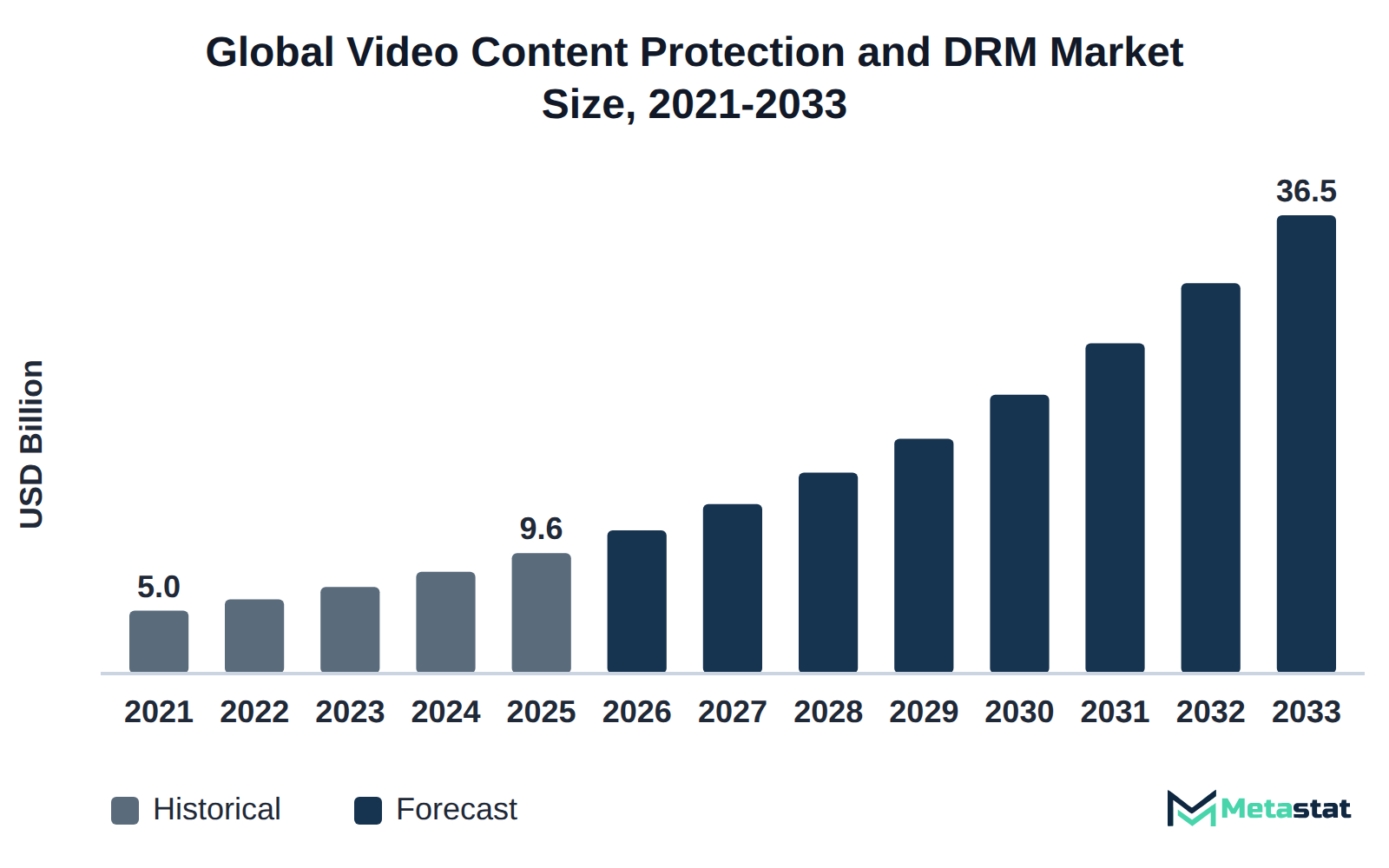
Adoption of cloud-native multi-DRM architecture significantly transforms the Video Content Protection and DRM market, enhancing the flexibility and scalability of content delivery systems. This architecture facilitates integration of different DRM technologies, streamlining the workflow for content providers. By 2033, Digital Rights Management (DRM) Systems alone are projected to reach a value of USD 11.1 billion, reflecting a growing emphasis on unified streaming solutions.
The shift toward cloud-native environments allows content distributors to manage licensing and access controls from a central platform delivered through cloud services, reducing operational complexities and associated costs. This transition supports a more agile response to market demands, accommodating varied end-user requirements across live entertainment, sports, and medical video sectors. For instance, the Live Entertainment segment is anticipated to grow from USD 2.1 billion in 2026 to USD 6.8 billion in 2033, indicating increasing investments in advanced DRM solutions.
Cloud-native multi-DRM architecture also optimizes resource management and improves the overall user experience by keeping content consistently available across different platforms and devices. These advancements help content providers maintain competitive advantages and capture greater market share.
Dynamic watermarking and real-time token authentication represent critical strategies in combating low-latency sports piracy. The demand for secure broadcast solutions stems from the rapid growth in the sports streaming sector, where unauthorized access leads to substantial revenue losses. This market anticipates a significant increase, with the Digital Rights Management (DRM) Systems segment projected to reach USD 11.1 billion by 2033, reflecting a compound annual growth rate (CAGR) of 18.3%.
Buyers in the Video Content Protection and DRM market prioritize solutions that deliver strong security while maintaining high-quality user experiences. Contract models often include subscription-based arrangements or one-time licensing fees, tailored to accommodate varying scales of operation. For instance, live entertainment companies typically favor flexible payment structures that align with their dynamic revenue streams from events. Sports organizations partner with providers to secure protection across multiple platforms, enhancing content accessibility without compromising security.
The strategic implementation of dynamic watermarking provides effective tracking of content usage, enabling organizations to identify and mitigate piracy swiftly. This proactive approach supports revenue protection, enhancing the overall value proposition of content offerings. Competition intensifies within the sports streaming domain. Investing in advanced security technologies, including those in the Video Content Protection and DRM market, is essential for organizations aiming to safeguard their intellectual property and ensure sustainable growth.
Hollywood’s stringent security requirements are driving a notable increase in hardware-based Digital Rights Management (DRM) solutions. Studio licensing mandates necessitate robust security measures to protect intellectual property during content creation and distribution. This heightened focus on security aligns with the anticipated growth in hardware-based DRM solutions, which are projected to expand significantly within the Video Content Protection and DRM market.
For instance, the segment of Conditional Access Systems (CAS) is expected to grow from USD 1.8 billion in 2026 to USD 6.4 billion by 2033, reflecting a Compound Annual Growth Rate (CAGR) of 19.3%. The demand among studios for higher security standards drives investment in hardware solutions that enhance content safety against piracy and unauthorized access. As their operational strategies evolve, content producers and distributors must invest in advanced technologies that meet these requirements.
Companies supplying hardware-based DRM solutions stand to benefit significantly. This growing demand creates opportunities for revenue expansion and strengthens competitive positions within the market. Studio licensing requirements and hardware-based DRM advances are closely aligned, and the emphasis on security in content delivery supports sustained growth in this segment.
Over-the-top (OTT) platforms, including audio and video on-demand streaming services, increasingly prioritize multi-device DRM interoperability to enhance user experience while maintaining high-fidelity playback performance. The growing demand for consistent content consumption across various devices and operating systems necessitates a comprehensive approach to content protection in the Video Content Protection and DRM market. In 2025, the market reached USD 9.6 billion, highlighting the significance of robust solutions that address both interoperability and performance.
For example, Digital Rights Management (DRM) Systems keep content secure while allowing access across devices. This growth illustrates how OTT platforms invest in advanced DRM technologies to safeguard intellectual property while providing high-quality viewing experiences for users.
The successful integration of multi-device DRM solutions directly impacts user satisfaction and retention rates on OTT platforms. When users experience consistent playback quality and device compatibility, their likelihood of engagement with the platform increases. Thus, prioritizing DRM interoperability safeguards content and strengthens viewer loyalty, which drives revenue growth in the competitive Video Content Protection and DRM market.
Growth in the live entertainment sector significantly boosts demand for video content protection solutions. Event organizers and streaming platforms invest in strong security measures to safeguard content from piracy and unauthorized access. The proliferation of virtual events and live streaming services has heightened the necessity for enhanced digital rights management. Recent trends show that the live entertainment end user segment is projected to increase from USD 2.1 billion in 2026 to USD 6.8 billion by 2033, reflecting a compound annual growth rate of 18.7%. Such growth generates heightened competition among service providers, driving innovations in video content protection technologies. This dynamic leads to expanded offerings and improved user experiences across various platforms. Overall, the rising prominence of live events stimulates significant investment in the market for video content protection and DRM, positioning it for sustained expansion.
The rapid development of Digital Rights Management (DRM) systems drives significant growth in the Video Content Protection and DRM market. These advancements enhance the ability to secure digital content across various platforms, ensuring compliance with licensing agreements and protection against unauthorized access. The integration of more sophisticated encryption protocols and license management platforms strengthens security measures for content distributors. Content owners, including those in the entertainment and media sectors, increasingly demand effective DRM solutions to protect sensitive intellectual property. This trend results from heightened piracy concerns and the evolving digital landscape, which necessitate advanced protection strategies. The market benefits from innovations that facilitate smoother user experiences while maintaining high levels of security, allowing content creators to monetize their work effectively. The market is projected to experience substantial growth in revenue and adoption rates, reflecting the importance of advanced DRM solutions in securing digital content.
High costs associated with Video Content Protection and DRM solutions restrict adoption among various buyer groups, particularly in the live entertainment sector. The investment required for advanced systems and infrastructure leads to slower uptake, with organizations evaluating budget allocations for new technology. Smaller companies, in particular, face financial constraints that limit their ability to implement comprehensive protections, resulting in smaller orders and delayed replacement of outdated systems. The high initial expenditure on both hardware and software solutions hampers efforts to enhance content security, complicating the competitive landscape. This financial barrier has significant implications for growth, with organizations within the market experiencing challenges in justifying the cost against potential returns. Consequently, the market expansion is moderated, affecting overall revenue potential and delaying the transition to more secure content delivery methods.
Compliance costs pose a significant challenge for suppliers in the Video Content Protection and DRM market. Regulations regarding intellectual property and digital rights management create an environment where adherence is crucial. This situation necessitates investments in technology and processes to maintain compliance, increasing operational costs. Suppliers experience pressure on profit margins due to these rising expenses, resulting in a need for improved efficiency and innovation. To address these compliance challenges, suppliers invest in automated solutions that streamline compliance processes and reduce associated costs. Such investments include adopting advanced technologies that enhance tracking and management of digital rights. The emphasis on compliance influences operating costs and shapes market strategies and product development. Suppliers optimize their offerings to meet regulatory demands, enhancing their competitive positions while striving to maintain profitability.
The medical video segment presents a significant opportunity within the market. This segment is expected to experience a compound annual growth rate (CAGR) of 20.4% from 2026 to 2033, driven by increased telemedicine consultations and remote surgical streaming. The rising prevalence of telehealth services and the ongoing expansion of medical training programs highlight the necessity for robust video content protection solutions. Telemedicine consultations are expected to grow from USD 0.2 billion in 2026 to USD 0.8 billion by 2033, while remote surgical streaming and tele-mentoring are projected to reach USD 0.6 billion during the same period. These developments indicate a shift in healthcare delivery models, emphasizing the importance of secure and reliable video communication. Medical institutions and professionals actively seek advanced DRM systems and encryption solutions to protect sensitive patient data while ensuring compliance with industry standards. This focus on security underpins growth potential in the medical video sector.
The Global Video Content Protection and DRM market is segmented based on Type, End User, Medical Video, and Government/Defense.
This segment is essential for enabling service providers to restrict access to premium content, primarily by cable operators and streaming platforms. Demand for CAS is driven by the growing need for content security due to rising piracy threats. Compared to other types, CAS experiences faster growth due to the increasing reliance on subscription-based models for accessing digital content. The CAGR for CAS surpasses that of encryption solutions, which has a CAGR of 16.2%. This rapid expansion highlights the segment's significance in addressing the evolving landscape of content distribution and monetization.
This segment encompasses technologies that protect intellectual property rights for digital media through licensing and access controls. Industries including entertainment and publishing employ DRM systems to prevent unauthorized reproduction and distribution of their content. Demand grows with the increasing prevalence of online content consumption, driven by platforms that require effective protection mechanisms to secure their offerings. Compared to other segments, DRM systems experience significant demand due to their critical role in safeguarding digital assets, while the Conditional Access Systems (CAS) segment, with a CAGR of 19.3%, exhibits faster growth due to its focus on subscription-based models and real-time access control. The market benefits from ongoing advancements in encryption and authentication technologies, positioning it for sustained growth.
Forensic Watermarking segment is projected to reach USD 4.3 billion by 2033. This technology embeds unique identifiers into video content, enabling tracing of illegal distribution. Content owners, including studios and broadcasters, apply forensic watermarking to protect intellectual property and combat piracy effectively. Demand for this segment is driven by increasing digital content consumption and the need for enhanced security measures. Unlike other segments, forensic watermarking experiences significant growth, with a projected CAGR of 20.4%. The rising prevalence of streaming platforms and the increasing value of premium content contribute to its expansion. This segment differs from others, including Conditional Access Systems and Digital Rights Management, which face higher competition and potentially slower growth rates. The market increasingly recognizes forensic watermarking as an essential component in securing digital assets.
Encryption Solutions, projected to grow at a CAGR of 16.2% during the forecast period, is essential for protecting sensitive digital content. This segment finds extensive use across various industries, including entertainment and corporate environments, to secure data from unauthorized access and cyber threats. The increasing prevalence of cyberattacks drives demand for strong encryption methods that protect the confidentiality and integrity of valuable intellectual property. Compared to other segments, including Conditional Access Systems, which have a CAGR of 19.3%, Encryption Solutions experience more measured growth. The emphasis on compliance with evolving data protection regulations further influences this segment's dynamics, compelling organizations to invest in effective encryption technologies to safeguard their content and maintain consumer trust. This segment's steady growth trajectory highlights its significance within the overall Video Content Protection and DRM market.
Authentication Services involve measures that verify user identities to ensure secure access to digital content. This segment serves various industries, including entertainment and media, where protecting sensitive content against unauthorized access is critical. A driving force for this segment involves increasing incidents of content piracy, driving demand for robust authentication methods. Unlike segments including Conditional Access Systems, which focus on subscription-based access, Authentication Services emphasize identity verification. This distinction results in unique buyer needs, including heightened security protocols that adapt to evolving threats. Industries focusing on high-value content, including live entertainment and sports, exhibit a particular inclination toward implementing these services to maintain control over their intellectual property.
Anti-Piracy Solutions focus on preventing unauthorized access and distribution of digital content, which plays a critical role for content creators and distributors. These solutions are particularly important for sectors including live entertainment and sports, where revenue loss due to piracy is significant. One driving force for this segment is the increasing sophistication of piracy methods, which pushes companies to enhance their protection strategies continually. Unlike other sub-segments, Anti-Piracy Solutions often face a higher cost structure, reflecting the need for advanced technologies and continuous updates to combat evolving threats. This segment does not experience the same growth rates as Digital Rights Management (DRM) Systems, which benefit from broader applications in various digital content scenarios. Emphasis on compliance with regulations further contributes to ongoing investment in these solutions, ensuring that creators and distributors maintain revenue integrity.
License Management Platforms provide essential tools for managing and enforcing licensing agreements related to digital content distribution. These platforms are used by content creators, distributors, and service providers to ensure compliance with licensing terms while maximizing revenue opportunities. Key drivers for this segment include the increasing complexity of content distribution rights and the necessity for robust tracking of usage across various platforms. Unlike other segments, including Digital Rights Management (DRM) Systems, which focus on broader content protection, License Management Platforms emphasize detailed licensing control. This specific focus leads to a unique buyer profile, often attracting organizations with complex licensing needs. The market experiences significant momentum; demand for precise and adaptable licensing solutions is expected to grow, reflecting the evolving landscape of digital media consumption.
Secure Content Delivery Platforms provide mechanisms for the secure transmission of digital content to end users, including across a content delivery network, ensuring that sensitive media is delivered without unauthorized access or tampering. This segment serves various industries, particularly entertainment and education, where content security is critical. Increasing demand for high-quality streaming experiences drives the growth of Secure Content Delivery Platforms. Enhanced security protocols and advancements in technology facilitate greater adoption, particularly among those seeking to protect proprietary content. Compared to other segments, including Conditional Access Systems, Secure Content Delivery Platforms encounter different market dynamics, focusing on ensuring content integrity during distribution rather than access control. This segment's unique role in the overall Video Content Protection and DRM market highlights its importance in the digital landscape.
Token-Based Access Control involves mechanisms that regulate access to digital content through the issuance of tokens, which serve as digital keys for authentication. This methodology finds application primarily in sectors including entertainment, where it enables secure transactions and user access management. Significant growth in this segment is driven by the increasing need for robust security measures against unauthorized access and content piracy. Businesses are adopting these solutions to safeguard their assets and enhance user experience. Compared to other segments including Conditional Access Systems, Token-Based Access Control typically features a more flexible pricing model but exhibits slower growth due to varying adoption rates across different industries. The market experiences upward pressure from the expanding digital economy, compelling content providers to implement advanced security measures to protect proprietary content.
This segment encompasses Subscriber Identity Modules and related technologies that facilitate secure access to digital content. Typically used by telecommunication operators and service providers, these modules perform critical functions in managing user identities and access rights to video content. Demand is increasing due to the rising need for secure and efficient access management solutions. Industry players focus on enhancing security features to protect against unauthorized access. Compared to other segments, this segment experiences different growth dynamics due to specific operational requirements and unique buyer groups involved. While several segments see rapid expansion, this sub-segment caters primarily to telecommunications and service sectors, distinguishing it from broader video content protection solutions.
This segment serves various stakeholders including event organizers, streaming platforms, and content creators who require effective protection against piracy and unauthorized access to live events. The growing demand for high-quality live streaming experiences drives investment in advanced video content protection technologies. Compared to other segments in the market, Live Entertainment experiences faster growth due to the increasing popularity of online events and virtual concerts. The segment's focus on real-time protection and immediate accessibility distinguishes it from the Medical Video and Government/Defense segments, which prioritize regulatory compliance and security over speed. The integration of innovative DRM solutions specifically tailored for live broadcasts enhances the overall viewer experience while addressing the unique challenges associated with live content delivery.
Sports segment is estimated to reach USD 7.6 billion by 2033, at a CAGR of 18.4% during the forecast period. This segment encompasses video content protection solutions tailored for live sports events and broadcasts, primarily used by sports organizations, broadcasters, and streaming services to secure their digital content. The rising trend of digital sports media consumption drives significant demand for effective protection measures against piracy and unauthorized access. Unlike other segments, the sports segment experiences accelerated growth, buoyed by increasing investments in streaming technology and a growing audience base. The demand for high-quality, secure streaming solutions reflects the competitive nature of the sports industry, where protecting content rights remains critical. In this context, the market presents unique challenges and opportunities, ensuring that stakeholders remain vigilant in their efforts to safeguard valuable assets.
PPV Streaming segment is expected to reach USD 7.6 billion by 2033. This segment caters to online users of transactional video on demand services who seek pay-per-view access to content including live events, sports, and exclusive shows. Growth in this segment is driven by increasing demand for convenient access to premium content, with consumers willing to pay for it. The adoption of advanced streaming technologies further enhances viewer experiences, leading to greater user engagement. Compared to other segments, PPV Streaming exhibits a strong growth trajectory, with a CAGR of 18.4%, indicating stronger performance relative to segments including Live Entertainment. High demand from sports events and exclusive entertainment content positions this segment uniquely within the market, attracting significant investment and innovation.
Medical video is projected to grow at a CAGR of 20.4% during the forecast period. This segment encompasses applications including telemedicine consultations, remote surgical streaming, and medical training, used extensively by healthcare providers and institutions. The increasing demand for telehealth services drives this growth, highlighting the importance of secure video communications to protect sensitive patient information. Adoption of advanced technologies in medical video significantly differentiates it from other segments, offering higher growth potential compared to traditional entertainment sectors. The market recognizes the unique requirements of healthcare professionals, contributing to a competitive landscape focused on delivering secure and reliable video content protection solutions.
Secure Video Communications, Command & Control Briefings, Agency Portals, and Classified Streaming define the Government/Defense segment, catering to military and governmental entities that require stringent security protocols for video content. This segment focuses on protecting sensitive information transmitted through video, ensuring integrity and confidentiality. Increasing global security concerns drive demand for secure communication solutions, propelling growth in the market. Unlike other segments including Live Entertainment, which seeks broader audience engagement, Government/Defense emphasizes high-stakes applications where data breaches have severe consequences. The complexity of compliance with regulatory standards adds to the operational costs, influencing pricing strategies for high-security video solutions. The market is expanding due to technological advancements that enhance encryption methods and secure streaming capabilities tailored for defense needs.
This segment encompasses Subscription Video on Demand (VoD) platforms, e-learning video, and corporate video applications. These services cater to a range of industries, including education, corporate training, and entertainment, providing secure access to digital content. A key force driving demand in this segment involves the expansion of online learning and remote work environments, prompting organizations to seek effective video content protection solutions. Compared to other segments, this area experiences slower growth, reflecting the broader adoption timeline associated with educational and corporate training technologies. Pricing strategies in this segment remain competitive due to the diverse range of available platforms, requiring constant innovation and adaptation to changing consumer preferences. The market continues to evolve, necessitating robust security measures to protect valuable intellectual property and maintain trust among users.
This segment focuses on delivering telehealth and telemedicine services remotely through secure video communication, primarily used by healthcare providers and patients during consultations. The increasing demand for efficient healthcare solutions during the COVID-19 pandemic drives this segment strongly. Unlike other medical video segments, Telemedicine Consultations experience higher growth rates due to the urgency for remote healthcare solutions. Regulatory support for telehealth services enhances adoption across various healthcare systems. This segment's growth trajectory differentiates it, positioning it prominently within the Video Content Protection and DRM market due to its unique application and urgency in meeting healthcare needs.
Remote Surgical Streaming & Tele-Mentoring is estimated to reach USD 0.6 billion by 2033, at a CAGR of 21.2% during the forecast period. This segment primarily serves healthcare providers and educational institutions, facilitating real-time guidance and training during surgical procedures. The growing emphasis on telemedicine and remote learning significantly drives demand for this service, enabling surgeons to collaborate and enhance their skills from various locations. The segment exhibits a faster growth trajectory compared to other medical video applications, including Medical Training & CME/CPD Streams, which have lower CAGRs. Increased investments in telehealth technologies and the need for efficient knowledge transfer during surgeries contribute to the segment's expansion. The market for video content protection and DRM supports the secure streaming of sensitive medical content, ensuring compliance with data privacy regulations while enhancing access to expertise in the medical field.
Medical Training & Cme/Cpd Streams segment is expected to reach USD 0.4 billion by 2033. This segment serves healthcare professionals by delivering training and continuing medical education (CME) through secure video formats. The rise in telemedicine and remote learning drives demand, with regulatory bodies emphasizing ongoing education for medical practitioners. Growth within this segment is particularly robust, with a CAGR of 20.7%, making it one of the fastest-growing areas of the market. This contrasts with other segments, including Remote Surgical Streaming & Tele-Mentoring, which, while growing rapidly, target different user needs and applications. The focus on secure delivery of sensitive medical information highlights the importance of robust video content protection, ensuring compliance with regulatory standards while supporting the advancement of medical education.
Medical Congresses & Grand Rounds segment is projected to grow at a CAGR of 19.9% during the forecast period. This segment serves healthcare professionals and organizations by facilitating secure video communications during important medical events and educational sessions. The increasing adoption of digital platforms for remote conferences and training sessions drives demand for robust video content protection solutions. Compared to other medical video segments, it experiences faster growth, reflecting heightened interest in telemedicine and digital healthcare innovation. Unique challenges related to compliance with healthcare regulations affect video delivery methods, illustrating the critical need for specialized protection measures. Overall, this segment supports secure and effective knowledge sharing among medical practitioners, contributing to broader trends observed in the Video Content Protection and DRM market.
This segment encompasses various applications including corporate video and educational video content. Typically used by organizations for training purposes and internal communications, this segment serves unique needs in the market. Demand for high-quality video solutions continues to rise due to increasing reliance on digital training and communication methods. Distinct from other medical video segments, this category often experiences different pricing structures and longer adoption timelines due to the need for specialized technologies. Competition from conventional training methods and the ongoing shift toward remote work further influence this segment's growth trajectory. With a focus on enhancing viewer engagement and ensuring the security of sensitive content, the market experiences continuous innovations centered around user experience and content delivery.
Secure Video Communications segment is valued at USD 0.2 billion in 2026 and is projected to reach USD 0.5 billion by 2033, at a CAGR of 17.2% during the forecast period. This segment serves military and governmental entities that require secure video transmission for critical communications and operations. Growing cybersecurity threats and the increasing necessity for secure communications among government agencies drive demand in this area. Unlike other segments, including Live Entertainment, which experience substantial growth rates, Secure Video Communications maintains a more steady growth trajectory. The relatively lower scale of investment and specific technological requirements distinguish this segment, positioning it as a key area within the Video Content Protection and DRM market while not expanding at the same pace as segments focused on consumer entertainment.
Command & Control Briefings segment is estimated to reach USD 0.4 billion by 2033, at a CAGR of 17.6% during the forecast period. This segment focuses on secure communications for military and governmental entities, facilitating critical briefings and operational updates that require stringent security measures. Increasing investments in defense technologies drive demand within this segment, reflecting the emphasis on secure information sharing in defense operations. Unlike other segments, Command & Control Briefings experiences slower growth compared to segments including Live Entertainment, which reaches a CAGR of 18.7%. The distinct security requirements and specialized use cases associated with this segment pose unique challenges, influencing its adoption trajectory. Overall, the dynamics of the Government/Defense segment shape the broader Video Content Protection and DRM market.
Agency Portals / Ops Centers segment is expected to reach USD 0.2 billion by 2033. This segment supports governmental and military operations, facilitating secure communication and efficient information sharing among agencies. The increasing emphasis on national security and the rapid advancement of technology drive demand for robust video content protection solutions. This segment differs from others in the Government/Defense category by focusing on secure operations rather than live event broadcasting or telemedicine applications. While segments like Secure Video Communications demonstrate a strong growth trajectory, the Agency Portals / Ops Centers segment experiences more moderate expansion due to its specialized nature. Overall, the market reflects a diversified landscape, with various segments catering to distinct operational needs.
Classified Streaming segment is projected to grow at a CAGR of 16.4% during the forecast period. This segment facilitates secure video transmissions for sensitive government and military operations, ensuring that classified information remains protected during communications. Demand stems from the increasing need for secure channels in defense strategies and intelligence operations, where breaches have significant repercussions. This segment differentiates itself from others in the Government/Defense category by specifically addressing the high-security requirements of classified information, thus commanding a higher price point. The emphasis on advanced encryption technologies and stringent compliance regulations drives innovation, enhancing the capabilities of classified streaming solutions. Compared to segments like Secure Video Communications, which target broader governmental needs, Classified Streaming focuses exclusively on high-stakes scenarios, necessitating a more robust technical infrastructure to safeguard vital information.
This sub-segment focuses on applications within the Government/Defense sector not classified elsewhere, including various secure communication methods. Government agencies employ these solutions for high-security operations, emphasizing the importance of confidentiality and protection against unauthorized access. Demand for such services is driven by increasing cybersecurity threats and the need for secure communication channels in sensitive environments. Compared to other segments, this sub-segment experiences differing growth dynamics, often influenced by government budgets and evolving security regulations. While several segments, including Secure Video Communications, have established growth trajectories, this sub-segment faces more fluctuating demand patterns due to periodic government funding cycles and project-specific needs. The Video Content Protection and DRM market recognizes the critical role of these solutions in maintaining national security and operational integrity.
Based on geography, the Global Video Content Protection and DRM market is divided into North America, Europe, Asia-Pacific, South America, Middle East, and Africa.
Demand for content protection solutions in North America is driven by various sectors including live entertainment, sports, and medical video. The region benefits from significant technological advancements in digital rights management systems and conditional access systems, enhancing security and user experiences. Regulatory frameworks promote robust content protection measures, ensuring compliance across industries. North America holds a dominant share of 54.1% in the global market in 2025, reflecting the increasing value placed on secure content delivery. By 2033, the region is projected to reach USD 18.3 billion, emphasizing the strong growth trajectory within the Video Content Protection and DRM market. Continued focus on cybersecurity and the rise of streaming services contribute to the expansion of market opportunities in this region.
Demand in Europe for the Video Content Protection and DRM market arises predominantly from the entertainment and sports sectors. Countries including Germany, the UK, and France invest in advanced technologies for content security, driven by the increasing prevalence of digital piracy. The regulatory landscape in Europe emphasizes strict compliance with copyright laws, prompting businesses to deploy robust protection solutions. Enhanced security measures for live streaming events and on-demand content significantly influence purchasing decisions. European players are positioned to leverage local market knowledge and address the specific needs of industries requiring effective content protection. By 2025, the region is expected to hold a 22.6% share of the global market, reflecting a strong focus on safeguarding intellectual property and ensuring secure distribution channels.
The Asia-Pacific region, accounting for a significant 16.6% share of the global market in 2025, experiences notable demand for video content protection driven by the rapid expansion of digital media consumption. Industries including live entertainment and sports play critical roles, with increasing investments in streaming services and events driving the need for effective DRM solutions. Countries like China and India are emerging as key markets, supported by their growing populations and improving internet infrastructure. Regulatory frameworks promoting digital content security enhance the region's attractiveness for investment in the market. Projections indicate substantial growth, with anticipated shifts in technology adoption, ensuring that Asia-Pacific remains a focal point for development in video content protection and DRM.
Demand for video content protection solutions in South America is influenced by the growth of streaming services and live events, particularly in Brazil and Argentina. The entertainment sector experiences increased investment in content protection due to rising concerns over piracy and securing intellectual property rights. The market share of this region represents 2.5% of the global market in 2025. Infrastructure improvements, including enhanced internet connectivity and digital platforms, further drive the adoption of these solutions. The video content protection and DRM market in South America reflects a growing recognition of the importance of securing digital content across various applications, including live sports and entertainment. Regional players focus on addressing local challenges while offering innovative solutions tailored to the specific needs of the market.
Demand for content protection solutions in the Middle East and Africa is driven by increasing digital content consumption across sectors including entertainment and healthcare. Rapidly growing telemedicine initiatives in countries like Saudi Arabia and the UAE contribute to this demand, reflecting a shift towards secure video communications in medical applications. The market share for this region stands at 4.2% in 2025, indicating an expanding interest in video content protection and DRM solutions. Challenges involving varying levels of technological infrastructure and regulatory environments across countries impact market dynamics. Investment in secure content delivery platforms emerges as a priority for organizations focusing on safeguarding intellectual property and user data. Growth in the market aligns with broader trends in digital transformation and secure content distribution, positioning the region for increased adoption of advanced protection technologies.
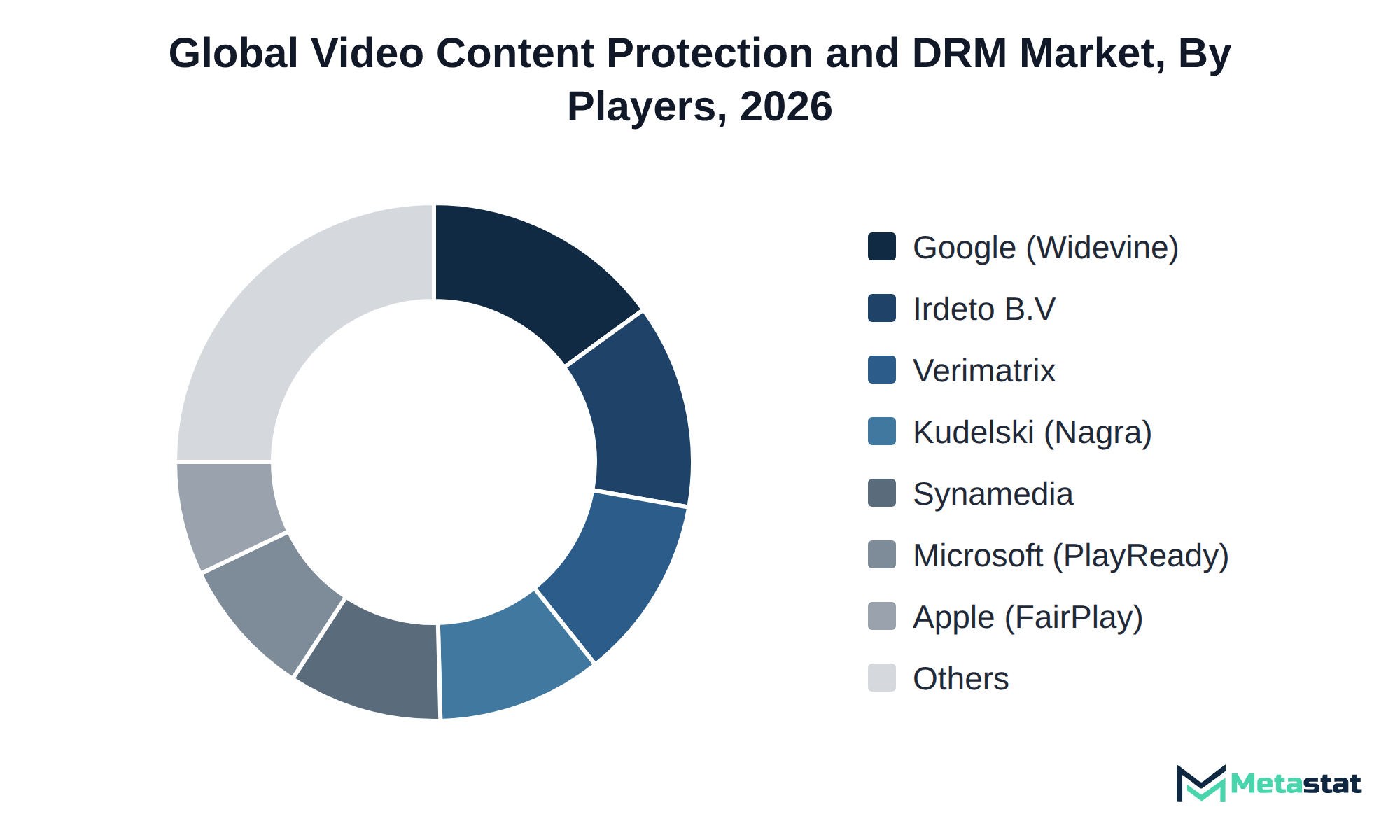
Competition in the Video Content Protection and DRM market involves diverse strategies aimed at addressing the varying needs of buyers. Providers of conditional access systems, digital rights management systems, and encryption solutions position themselves based on service quality, pricing, and the ability to customize offerings. Buyers prioritize factors including certification, service efficiency, and the robustness of the supporting ecosystem when making purchasing decisions.
Verimatrix, Inc. focuses on delivering comprehensive solutions for content security, enabling clients to safeguard their video delivery systems effectively. Irdeto B.V. emphasizes robust anti-piracy technology and operational resilience across its product offerings. Kudelski Group (Nagra) enhances content protection through innovative digital rights management strategies, targeting industries requiring stringent security measures.
Google LLC (Widevine) and Microsoft (PlayReady) leverage their extensive software ecosystems to provide effective integration and operational efficiency, appealing to content providers seeking reliable DRM solutions. Synamedia Holdings Limited aims to enhance user experience through advanced analytics and personalized content strategies, ensuring that clients benefit from tailored content protection mechanisms.
This growth hinges on several key developments. First, the expansion of Digital Rights Management (DRM) systems, expected to reach USD 11.1 billion by 2033, supports content protection across multiple platforms, including streaming services and live events. However, a significant risk exists due to the evolving threat landscape, with increased piracy and unauthorized access potentially hindering growth. North America, representing 54.1% of the market share, faces intense competition from emerging technologies that could disrupt existing security frameworks. The combination of these factors will determine whether the video content protection and DRM market achieves its forecasted value.
By Type: Conditional Access Systems (CAS), Digital Rights Management (DRM) Systems, Forensic Watermarking, Encryption Solutions, Authentication Services, Anti-Piracy Solutions, License Management Platforms, Secure Content Delivery Platforms, Token-Based Access Control, Others (Subscriber Identity Modules, etc.)
By End User: Live Entertainment, Sports, PPV Streaming, Medical Video, Government/Defense, Others (Subscription VoD (On-demand Streaming Platforms), e-learning Video, Corporate Video)
By Medical Video: Telemedicine Consultations, Remote Surgical Streaming & Tele-Mentoring, Medical Training & Cme/Cpd Streams, Medical Congresses & Grand Rounds, Others
By Government/Defense: Secure Video Communications, Command & Control Briefings, Agency Portals / Ops Centers, Classified Streaming, Others
The report strategically identifies and profiles the key market players and analyses their core competencies in each sub-segment of the Video Content Protection and DRM market.
|
Report Attributes |
Details |
|
Study Period |
2021-2033 |
|
Base Year |
2025 |
|
Estimated Year |
2026 |
|
Forecast Period |
2026-2033 |
|
Historical Period |
2021-2025 |
|
Growth Rate |
CAGR 18.1% from 2026 to 2033 |
|
Revenue Unit |
USD billion |
|
Segmentation |
By Type, End User, Medical Video, Government/Defense, and Region |
|
By Region |
North America (By Type, End User, Medical Video, Government/Defense, and Country)
|
|
Europe (By Type, End User, Medical Video, Government/Defense, and Country)
|
|
|
Asia Pacific (By Type, End User, Medical Video, Government/Defense, and Country)
|
|
|
South America (By Type, End User, Medical Video, Government/Defense, and Country)
|
|
|
Middle East and Africa (By Type, End User, Medical Video, Government/Defense, and Country)
|
Find answers to common questions about this report
The Video Content Protection and DRM market size was valued at USD 9.6 billion in 2025.
The market is projected to grow at a CAGR of 18.1% during the forecast period from 2026 to 2033.
The North America Video Content Protection and DRM market size is estimated to reach USD 18.3 billion by 2033.
Digital Rights Management (DRM) Systems lead the Video Content Protection and DRM market with a projected value of USD 11.1 billion by 2033. This segment surpasses others in terms of revenue potential within the market.
Growth in the live entertainment sector significantly boosts demand for video content protection solutions, driven by increased investments in security measures to safeguard content from piracy. The rapid development of Digital Rights Management (DRM) systems enhances the ability to secure digital content across various platforms, ensuring compliance with licensing agreements and protection against unauthorized access.
North America holds the dominant share of the Video Content Protection and DRM market, with a projected value of USD 18.3 billion in 2033, representing 54.1 percent of the total market. This significant share highlights the region's leading position compared to others.
High costs associated with Video Content Protection and DRM solutions restrict adoption among various buyer groups, particularly in the live entertainment sector. Compliance costs pose a significant challenge for suppliers, necessitating investments in technology and processes to maintain adherence to regulations.
Several factors favor adoption in the Video Content Protection and DRM industry. The medical video segment experiences a compound annual growth rate of 20.4% from 2026 to 2033, driven by increased telemedicine consultations and remote surgical streaming. This growth generates demand for robust solutions to secure sensitive patient data and ensure compliance with industry standards.
The Video Content Protection and DRM market is estimated to reach a valuation of USD 36.5 billion by 2033.
Key players operating in the Video Content Protection and DRM market include Verimatrix, Inc., Irdeto B.V., Kudelski Group (Nagra), Synamedia Holdings Limited, Intertrust Technologies Corporation, Google LLC (Widevine), Apple Inc. (FairPlay), Microsoft (PlayReady), NFA Group Inc. (BuyDRM), Axinom, castLabs GmbH, EZDRM, Inc., Viaccess SA (Viaccess-Orca), and Friend MTS Limited.
The analysts below cover Information & Technology research at Metastat Insights.
LEAD ANALYST
Utkarsh Khirodkar is a Lead Market Research Analyst at MetaStat Insight, specializing in market intelligence, technology sector assessments, and competitive strategy.

PRINCIPAL CONSULTANT - ENTERPRISE AI & EMERGING TECHNOLOGIES
Banking & Finance · Electronics and Semiconductor · Energy and Power · Healthcare IT · Information & Technology · Professional Services
Vijay Gunti is a Principal Consultant at MetaStat Insight, bringing over two decades of experience across enterprise digital transformation, technology strategy, and intelligent systems.

LEAD CONSULTANT - COMMUNICATION, TELECOM, AND IT
Electronics and Semiconductor · Information & Technology · Machinery & Equipment · Professional Services
Ravindra Sathe Consultants for Communication, Telecom, and IT at MetaStat Insight. He leads the firm's industry research initiatives across telecommunications infrastructure, digital connectivity, enterprise networking, and emerging information technology domains.
When evaluating distributed energy resource management systems, standard research summaries tend to gloss over the operational differences between front-of-the-meter utility deployments and behind-the-meter industrial sites. The MetaStat Insight report addressed those distinctions directly, especially regarding software interoperability standards and grid interconnection backlogs. The five-year market sizing across regional transmission organizations provided actionable context for our grid modernization strategy.
Most industry reports on warehouse automation bundle autonomous mobile robots and fixed conveyor installations into the same top-level numbers, which complicates advisory work. This study split the market cleanly by payload tiers, navigation technology, and fleet management software layers. The regional forecast for Western Europe gave our team defensible adoption benchmarks when evaluating capital allocation for logistics clients, saving us days of secondary data scrubbing.
Standard industry briefs frequently blur the operational distinctions between isobaric pressure exchangers and centrifugal turbines. In this study, MetaStat Insight categorized mega-scale desalination tenders across the GCC and Mediterranean basins by membrane replacement frequencies and salinity tolerances. Their primary research helped us evaluate local content requirements in Saudi Arabia and the UAE without relying on marketing literature. We found the segment-level equipment replacement estimates grounded and well-reasoned throughout.
Explore related market intelligence reports worth reading alongside this one.