
LEAD ANALYST
Utkarsh Khirodkar is a Lead Market Research Analyst at MetaStat Insight, specializing in market intelligence, technology sector assessments, and competitive strategy.

Indonesia Illipe Butter Market Size, Share, By Type (Organic and Conventional), By Application (Cosmetics and Personal Care, Food Industry, Pharmaceuticals and Others), Industry Analysis, Growth, Trends, and Forecast, 2026-2033
Report ID
MSI-4766
Published
November, 2026
Pages
295 Pages
Format
Historical
Base year
Forecast
Forecast period
Report Details
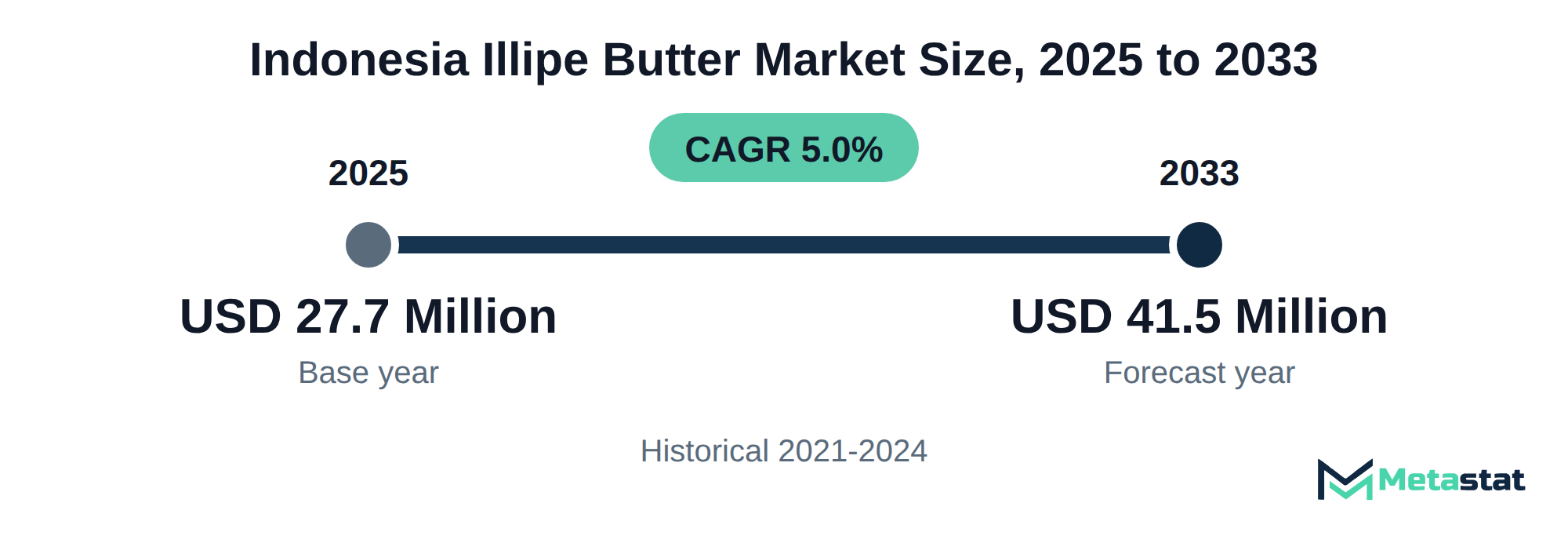
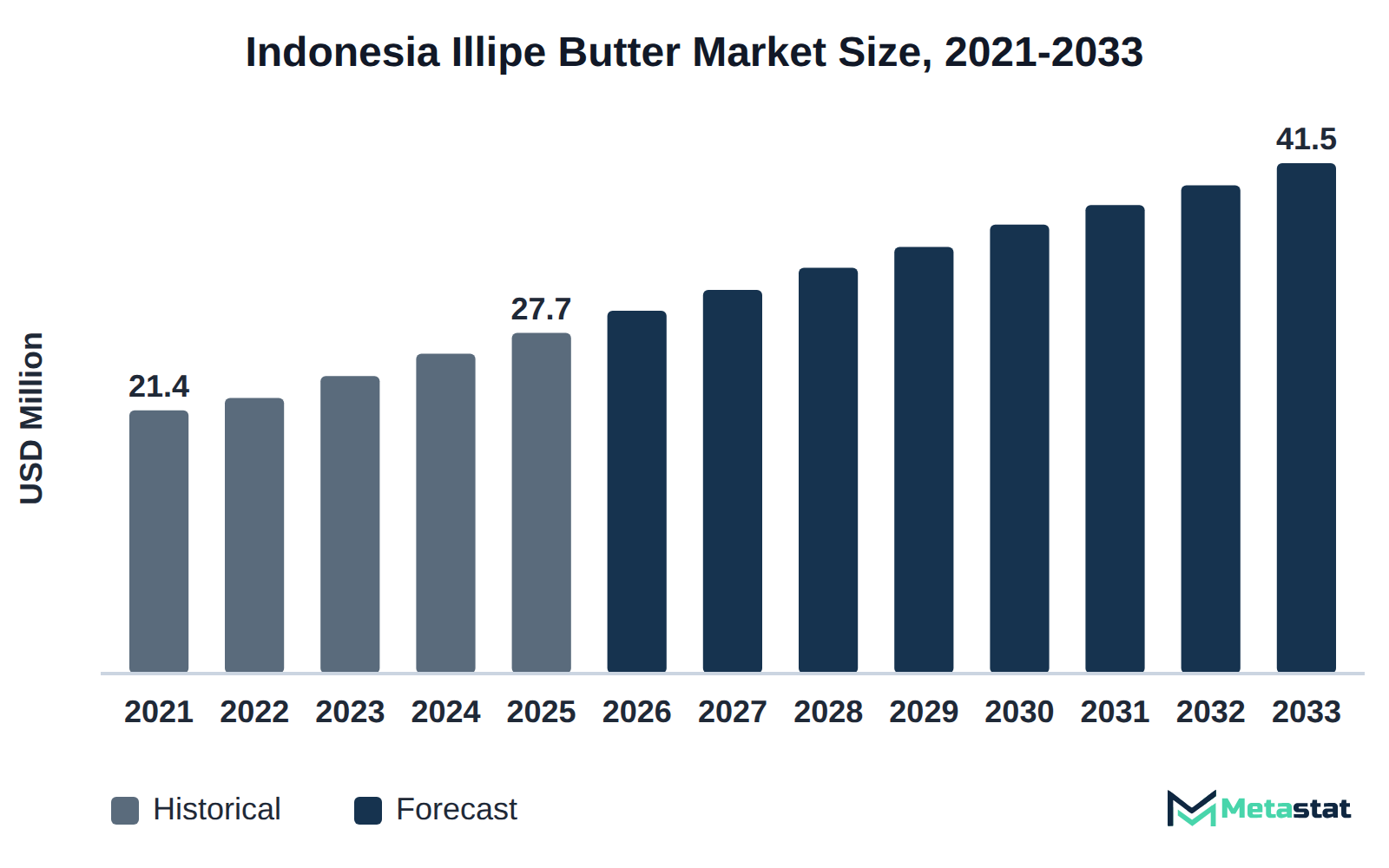
Market Valuation: Valued at $27.7 Million in 2025, projected to reach $41.5 Million by 2033 at a 5.0% CAGR.
Dominant Segment: The cosmetics and personal care segment leads the market, driven by increasing consumer interest in natural and organic ingredients.
Geographic Lead: Indonesia stands out as a key supplier in the global market, enhancing its competitive edge through sustainable sourcing practices.
What's Inside: The report includes a comprehensive analysis of market dynamics, competitive landscape, and detailed segmentation by type and application.
High Demand for Organic Illipe Butter: The organic segment is experiencing significant growth, fueled by rising consumer preferences for natural and sustainably sourced ingredients.
Technological Advancements in Processing: Recent improvements in processing techniques have enhanced the quality and yield of illipe butter, making it more appealing to buyers.
Choose Your License
Indonesia Illipe Butter Market
The Indonesia Illipe Butter market was valued at USD 27.7 million in 2025 and is projected to reach USD 41.5 million by 2033, growing at a CAGR of 5.0% over the forecast period.
The Indonesia Illipe Butter market encompasses a range of products derived from the nuts of the Shorea stenoptera tree, primarily used in cosmetics, food, and pharmaceuticals. Buyers invest in this market to gain the benefits of illipe butter, which offers unique properties including moisturization and emollience, vital for various applications. Increased consumer awareness regarding natural and organic products drives demand, with the cosmetics and personal care segment representing the largest share of market value.
Rising demand for organic and natural ingredients across multiple industries drives market growth. The organic segment is poised for significant expansion, driven by changing consumer preferences that favor sustainable and eco-friendly products. The cosmetics and personal care sector remains the most valuable application area, benefiting from heightened consumer focus on skin health and natural formulations.
The market is expected to grow at a notable compound annual growth rate through the forecast period. The increasing inclination towards organic products significantly influences purchasing decisions, reflecting a broader trend within the health and wellness sectors. Indonesia's role as a key supplier in the global market strengthens its competitive edge.
The Indonesia Illipe Butter market includes various segments including organic and conventional types, catering to diverse applications in cosmetics, food, and pharmaceuticals. Buyers invest in this market driven by the growing consumer preference for natural ingredients, particularly in personal care products. This shift toward sustainability and health consciousness prompts an increase in demand, reflected in the market's expansion.
The organic segment stands out with the highest value, with a compound annual growth rate of 6.8% from 2026 to 2033. The conventional segment, while significant, follows with a lower growth rate of 4.7%. Within the market, the cosmetics and personal care application leads in revenue, supported by rising awareness of the benefits associated with using natural ingredients in beauty products.
Market growth is significantly influenced by the demand for organic options, reflecting a broader trend toward sustainability in consumer behavior. This shift supports the overall expansion of the market, attracting new suppliers and investment opportunities. Stakeholders who track these dynamics can benefit from the growth potential in the Indonesia Illipe Butter market.
Traceability remains a critical aspect of the supply chain for the Indonesia Illipe Butter market. The demand for sustainably sourced ingredients increases, prompting manufacturers to establish robust traceability systems. These systems assure buyers of the origin of illipe nuts, particularly those sourced from wild-harvested environments within Indonesian rainforests. Strong traceability efforts mitigate risks associated with illegal harvesting and environmental degradation, aligning with growing consumer preferences for ethical products.
Currently, the organic segment of the market is projected to grow from USD 4.2 million in 2026 to USD 6.6 million by 2033, reflecting a compound annual growth rate (CAGR) of 6.8%. This growth indicates an increasing interest in organic illipe butter, which requires rigorous traceability protocols to certify the absence of contaminants and adherence to sustainable harvesting practices. Ensuring traceability builds consumer trust and opens new market opportunities for premium pricing.
Advanced technologies, including blockchain, enable real-time tracking of illipe butter from harvest to market. Such innovation enhances transparency and promotes accountability among suppliers. Brands that invest in these technologies gain a competitive edge, appeal to environmentally conscious consumers, and strengthen product differentiation in the Indonesia Illipe Butter market.
The purchasing structure for illipe butter in the Indonesia Illipe Butter market reflects unique trends influenced by both product type and application. Buyers increasingly seek tailored pricing and contracting models that align with their specific needs. This growth stems from heightened demand in sectors including cosmetics and personal care, where quality and sourcing transparency play critical roles in purchasing decisions.
Buyers negotiate contracts based on volume commitments, which lead to favorable pricing structures. This approach supports long-term relationships between suppliers and buyers, further embedding illipe butter within product formulations. In the food industry, for instance, the application of illipe butter is expected to reach USD 8.2 million by 2033, driven by its functional properties that replace cocoa butter in various formulations. Stable pricing and reliability of supply contribute to increased confidence among buyers, ensuring continued investment in illipe butter as a preferred ingredient. Overall, these dynamics position the market for sustained growth and reinforce its role in confectionery and food formulation.
Demand for clean-label cosmetics in the Indonesia Illipe Butter market is rising significantly. Consumers increasingly seek transparency regarding ingredient sourcing, formulation, and production methods. The trend drives cosmetic manufacturers to adopt high-quality, ethically sourced ingredients, including cold-pressed Shorea stenoptera seed butter, known for its nourishing properties. The segment of cosmetics and personal care is projected to grow from USD 20.8 million in 2026 to USD 30 million by 2033, reflecting a compound annual growth rate of 5.4%. This demand signals a shift toward premium product offerings.
Manufacturers focusing on clean-label products benefit from aligning with consumer preferences for natural and sustainable ingredients. This trend enhances brand perception and supports higher profit margins. Cold-pressed Shorea stenoptera seed butter’s rich content in fatty acids and vitamins enhances its appeal in formulations targeting hydration and skin health. Brands sourcing botanical ingredients can also review the plant extracts market. This positioning enables manufacturers to differentiate their products within a competitive landscape, addressing the specific needs of health-conscious consumers. Growing emphasis on clean-label formulations will shape purchasing decisions in the market.
West Kalimantan significantly influences the production cycles of Illipe nuts, affecting the export pricing of Indonesia Illipe Butter. The harvesting cycles in this region determine the availability and quality of Illipe nuts, which directly affects pricing in the global market.
The timing and yield of harvests in West Kalimantan create fluctuations in supply, impacting pricing structures for exporters. When harvests peak, higher volumes of Illipe nuts flood the market, potentially leading to lower prices for buyers. Conversely, during off-peak seasons, reduced availability drives prices upwards, affecting the overall cost structure for companies relying on these imports. Such price volatility encourages producers to adapt their sourcing strategies to optimize costs, highlighting the significance of understanding local harvesting dynamics.
This relationship between harvested supply in West Kalimantan and export pricing in the Indonesia Illipe Butter market highlights the need for strategic planning among buyers. Companies should consider these cycles when negotiating contracts and forecasting expenses, with timing greatly affecting procurement costs and impacting profit margins.
Growth in consumer awareness regarding health and wellness drives demand for organic products, particularly among the cosmetics and personal care sectors. Buyers increasingly prefer natural ingredients, aligning with a broader trend toward sustainability and clean labeling. The organic formulation trend leads to heightened competition among suppliers, encouraging innovation and quality improvements. Consequently, manufacturers adapt their offerings to meet changing consumer preferences, enhancing their competitiveness within the market.
Growing interest in wellness products further emphasizes this trend, with consumers actively seeking high-quality, natural alternatives in their purchasing decisions. Ingredient buyers serving the wider nutraceuticals sector can also review that market. The market for organic illipe butter thrives as manufacturers capitalize on this evolving demand.
Recent technological advancements in processing techniques enhance the quality and yield of illipe butter, contributing to increased market efficiency. Improved extraction methods, including cold pressing, optimize oil recovery while maintaining the nutritional and sensory properties of the product. These innovations attract producers seeking to differentiate their offerings in a competitive landscape.
Higher extraction efficiency lowers production costs, benefiting suppliers and enabling them to offer more competitive pricing in the Indonesia Illipe Butter market. Enhanced processing technologies support compliance with evolving quality standards, making products more appealing to buyers in the cosmetics and food industries. Producers adopting these advanced methods experience a boost in market share.
Advancements in processing techniques respond to growing consumer preferences for sustainable and high-quality ingredients, driving demand across various applications. The market sees a notable increase in interest from manufacturers looking to incorporate illipe butter into their formulations, further fueling growth and expanding consumer access to this valuable ingredient.
Pricing pressure influences buyer flexibility in the Indonesia Illipe Butter market, affecting smaller businesses within the cosmetics and personal care sectors. High costs associated with sourcing illipe butter create challenges, leading to slower uptake and smaller orders among these buyers. The premium price point for organic options restricts adoption, particularly among companies prioritizing cost control. This situation results in delayed product launches and limited capacity to explore new formulations that incorporate illipe butter. Consequently, the market experiences a slower growth trajectory than anticipated, particularly in segments where budget constraints are prevalent. Buyers seeking affordable alternatives shift toward substitutes, impacting overall demand for illipe butter. This tension between quality and cost places added pressure on suppliers to justify their pricing amid competition.
Rising costs of raw materials present a significant challenge for suppliers in the Indonesia Illipe Butter market. Inputs for production, including labor and sourcing, continue to increase, constraining profit margins. Suppliers face difficulties in passing these costs onto buyers, resulting in reduced profitability. In response, many suppliers implement cost-cutting measures, including optimizing production processes and seeking alternative sources for materials. These adjustments aim to improve operational efficiency while maintaining product quality. Suppliers explore partnerships and collaborations to enhance supply chain resilience, leading to greater stability in pricing. Continued margin pressure requires strategic planning to ensure long-term sustainability.
Growth in the organic segment of the Indonesia Illipe Butter market presents a significant opportunity. This increase is driven by rising consumer demand for natural and sustainably sourced ingredients, particularly within the cosmetics and personal care industries. Buyers increasingly prioritize organic certifications and traceability, influencing their purchasing decisions. Suppliers focusing on organic illipe butter production capture a more significant market share, enhancing their competitive positions. The shift towards organic products aligns with broader trends in health and wellness, further fueling market expansion. Growing interest in clean-label cosmetics reinforces this trajectory, creating a favorable environment for organic illipe butter offerings.
The Indonesia Illipe Butter market is segmented based on Type, Application.
This segment primarily finds its applications in the cosmetics and personal care industries, catering to consumers who prioritize natural ingredients. Increased consumer preference for organic products drives demand, particularly among environmentally conscious buyers. The organic segment demonstrates higher growth compared to the conventional segment, which has a CAGR of 4.7%. The price point of organic illipe butter typically exceeds that of conventional options, attracting a distinct customer base willing to invest in premium products. Regulatory advancements surrounding organic certification further influence the segment's expansion, enhancing consumer confidence in product quality. Overall, the organic segment's growth trajectory aligns with the broader trend toward sustainable and health-focused consumer choices.
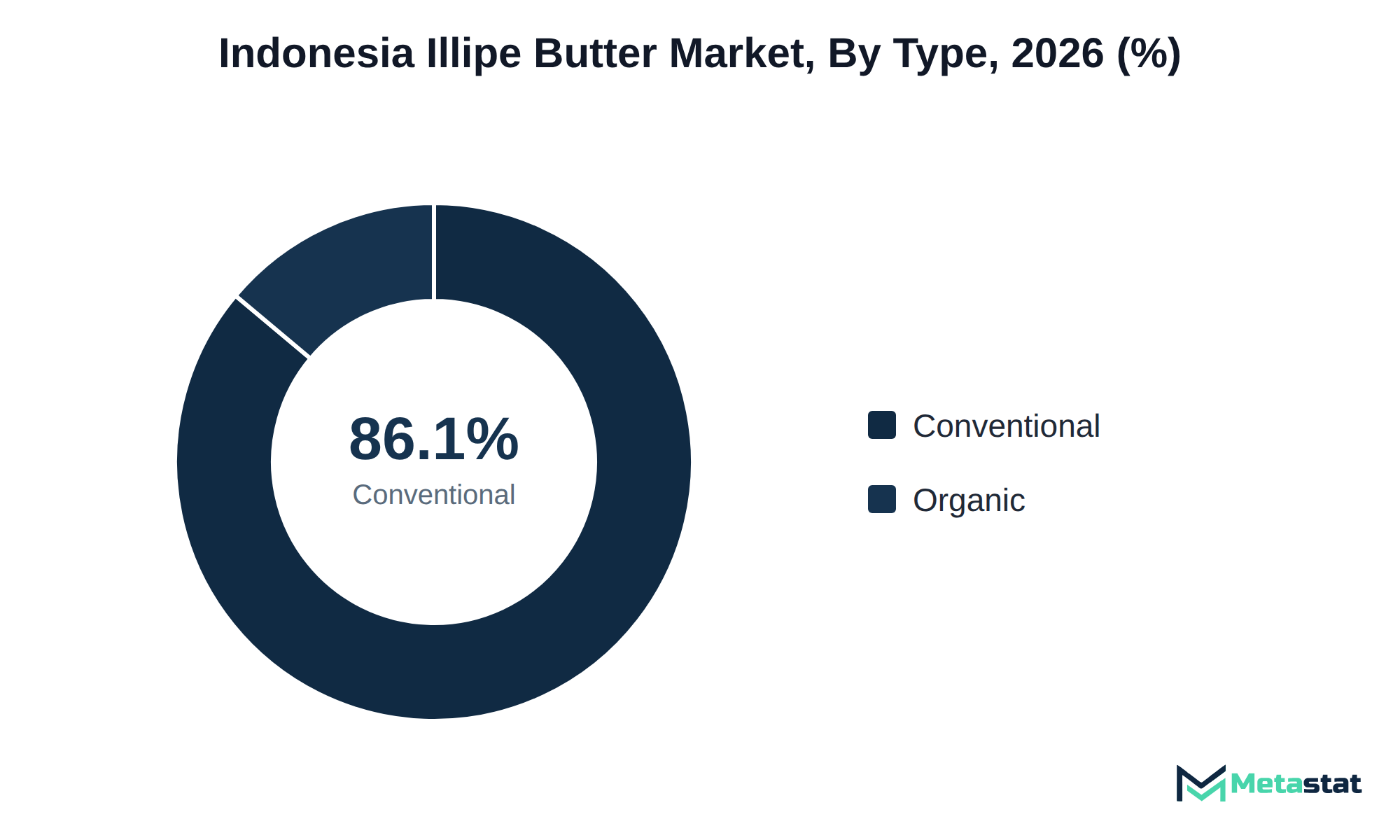
Conventional segment is estimated to reach USD 34.9 million by 2033, at a CAGR of 4.7% during the forecast period. This segment finds application across various industries, particularly in the food and cosmetics sectors. Manufacturers apply conventional illipe butter for its functional properties, including emollience and moisture retention. The driving force behind this segment includes the growing demand for cost-effective ingredients, appealing to a broad range of buyers. Compared to the organic segment, which is projected to grow at a CAGR of 6.8%, the conventional segment experiences slower growth rates. The price point for conventional illipe butter aligns with broader market trends, allowing it to serve diverse applications, especially where budget constraints are significant. The market benefits from established supply chains that support the production and distribution of conventional ingredients, offering competitive pricing to users.
Utilization occurs primarily in skincare and cosmetic formulations, appealing to manufacturers targeting health-conscious consumers. Growth in this segment is driven by increasing interest in natural and organic ingredients, pushing brands to seek high-quality raw materials like illipe butter. The Cosmetics and Personal Care segment expands at a more rapid rate than the Food Industry segment, which shows a CAGR of 4.4%. This heightened demand for innovative and premium products influences pricing structures, allowing suppliers to position illipe butter as a premium ingredient. The market experiences dynamic shifts driven by changing consumer preferences and rising production costs, presenting a unique scenario for brands aiming to differentiate their offerings.
Estimated to reach USD 8.2 million by 2033, this segment exhibits a CAGR of 4.4% during the forecast period. The food industry employs illipe butter primarily for its emulsifying properties and its role as a natural fat in formulations. Food manufacturers, including those in the confectionery and bakery sectors, show significant interest in illipe butter due to its functional benefits and clean-label appeal. The segment's growth is driven by increasing consumer demand for natural and healthier food options, prompting manufacturers to seek high-quality ingredients. Compared to the cosmetics and personal care segment, which achieves a higher CAGR of 5.4%, the food industry segment grows at a slower pace. This difference stems from varying consumer trends and regulatory influences impacting food formulations, influencing overall dynamics within the Indonesia Illipe Butter market.
Valued at USD 2.1 million by 2033, this segment serves specific roles in the pharmaceutical industry, primarily in the formulation of various products. Pharmaceutical companies apply illipe butter for its emulsifying and stabilizing properties, enhancing product performance and consumer appeal. Formulators sourcing pharmaceutical excipients can compare these functional roles across supplier options. Demand for natural ingredients continues to rise, driven by increasing consumer preference for clean-label products. This trend positions the pharmaceuticals segment as a crucial player in the overall landscape. Unlike other segments, including cosmetics and personal care, which exhibit more rapid growth rates, the pharmaceuticals segment is expected to show steady growth, reflecting a CAGR that aligns with market maturity. This stability contrasts with the cosmetics and personal care sector's higher CAGR of 5.4%. Regulatory compliance and quality assurance remain essential factors influencing this segment, ensuring that products meet safety and efficacy standards. Gradual increases in demand signal a positive outlook for the pharmaceuticals application of illipe butter.
Valued at USD 2.1 million in 2026, the Others segment is projected to grow at a CAGR of 4.7% during the forecast period. This segment finds application in various niche industries and products, appealing to manufacturers seeking specialized ingredients. Buyers in this category include several smaller cosmetic brands, artisanal food producers, and pharmaceutical companies looking for unique formulations. Growth in this segment derives from increasing consumer interest in natural and unique ingredients. Unlike the Cosmetics and Personal Care segment, this category experiences slower growth due to its specialized nature and lower market demand overall. Higher price points in niche markets limit broader adoption compared to the more mainstream applications seen in the Cosmetics and Personal Care segment, which is projected to reach USD 30 million by 2033.
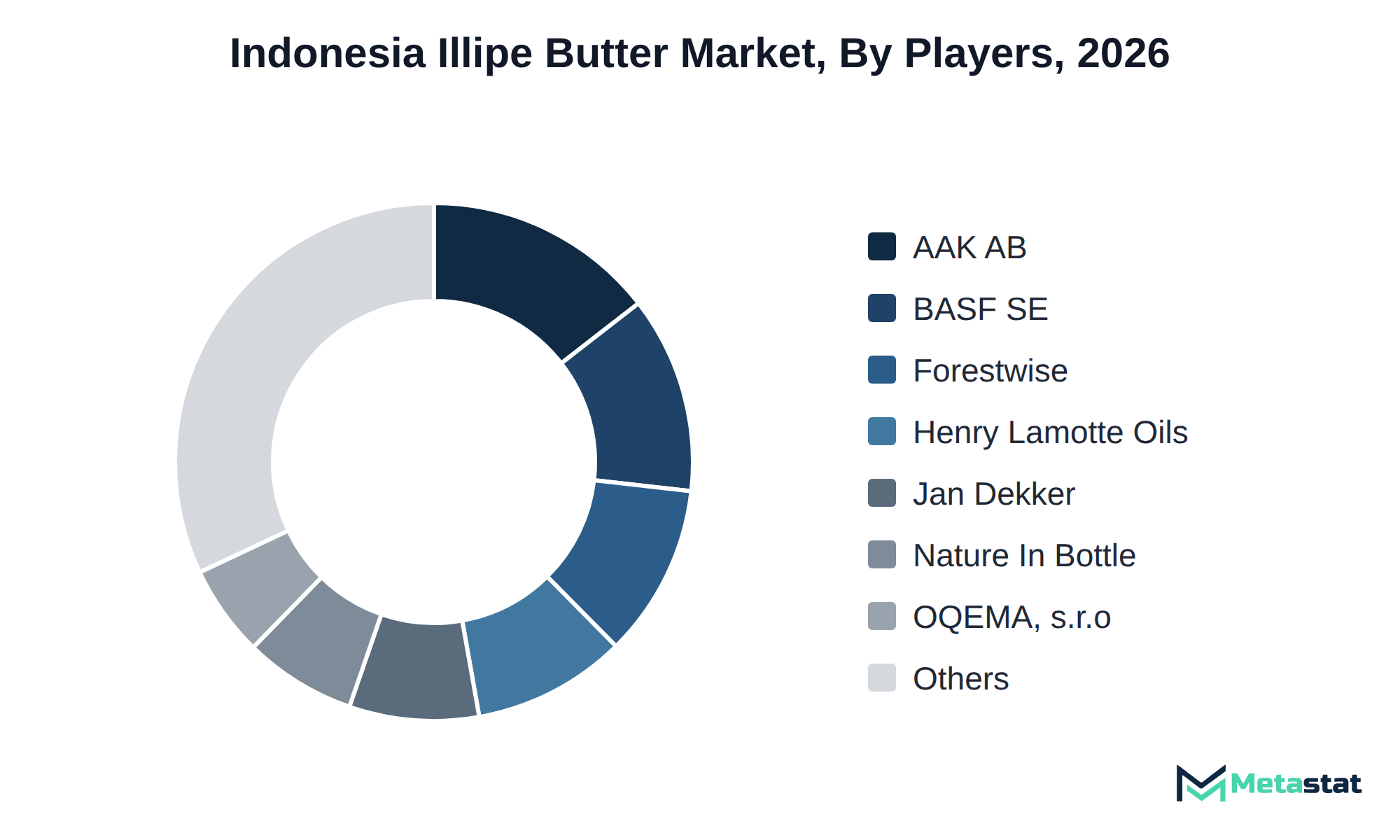
Competition within the Indonesia Illipe Butter market features a mix of established players and specialty formulators. Companies differentiate themselves through the types of products offered, including organic and conventional options, catering to varying consumer preferences. Buyers select suppliers based on factors including price, certification, customization, and service quality.
Forestwise, a notable player, emphasizes sustainable sourcing and eco-friendly practices, appealing to environmentally conscious consumers. BASF SE focuses on extensive formulation capabilities, providing tailored solutions for the cosmetics and personal care sectors. AAK AB specializes in high-quality ingredients for food and personal care applications, leveraging experience to meet specific industry needs.
Growth in the Indonesia Illipe Butter market depends on several key developments. Increased demand from the cosmetics and personal care sector is expected to drive revenue, with a significant increase anticipated from USD 20.8 million in 2026 to USD 30 million by 2033, reflecting a CAGR of 5.4%. The organic segment demonstrates potential, with anticipated growth from USD 4.2 million in 2026 to USD 6.6 million by 2033, supported by rising consumer preferences for natural products. However, risks associated with fluctuating supply costs and potential regulatory challenges could hinder growth. Conventional butter, while remaining a substantial contributor with a forecast value reaching USD 34.9 million by 2033, faces competition from organic offerings. Balancing these factors will be critical for achieving the projected market expansion.
By Type: Organic, Conventional
By Application: Cosmetics and Personal Care, Food Industry, Pharmaceuticals, Others
The report strategically identifies and profiles the key market players and analyses their core competencies in each sub-segment of the Illipe Butter market.
|
Report Attributes |
Details |
|
Study Period |
2021-2033 |
|
Base Year |
2025 |
|
Estimated Year |
2026 |
|
Forecast Period |
2026-2033 |
|
Historical Period |
2021-2025 |
|
Growth Rate |
CAGR 5.0% from 2026 to 2033 |
|
Revenue Unit |
USD million |
|
Segmentation |
By Type, Application, and Region |
Find answers to common questions about this report
The Illipe Butter market size was valued at USD 27.7 million in 2025.
The market is projected to grow at a CAGR of 5.0% during the forecast period from 2026 to 2033.
The leading type segment in the Illipe Butter market is Conventional, with a projected value of USD 34.9 million by 2033. This segment surpasses the Organic segment, which is expected to reach USD 6.6 million in the same year.
Growth in consumer awareness regarding health and wellness drives demand for organic products, particularly in the cosmetics and personal care sectors. Recent technological advancements in processing techniques enhance the quality and yield of illipe butter, contributing to increased market efficiency.
Factors favoring adoption in the Indonesia Illipe Butter market include rising consumer demand for natural and sustainably sourced ingredients, particularly in cosmetics and personal care. Buyers prioritize organic certifications and traceability, enhancing the competitive position of suppliers focusing on organic illipe butter production.
The Illipe Butter market is estimated to reach a valuation of USD 41.5 million by 2033.
Key players operating in the Illipe Butter industry include Forestwise, OQEMA, s.r.o., BASF SE, AAK AB, Nature In Bottle, Jan Dekker, Henry Lamotte Oils GmbH, and A&A Fratelli Parodi S.p.A.
Illipe Butter primarily finds applications in cosmetics and personal care, the food industry, and pharmaceuticals. The cosmetics and personal care segment dominates, driven by demand for natural emollients and skin care products.
The organic Illipe Butter segment is projected to grow from USD 4.2 million in 2026 to USD 6.6 million by 2033, reflecting a compound annual growth rate of 6.8 percent.
Suppliers encounter challenges including rising raw material costs and sourcing difficulties. These factors constrain profit margins and can lead to reduced profitability in a competitive environment.
The analysts below cover Food and Beverages research at Metastat Insights.
LEAD ANALYST
Utkarsh Khirodkar is a Lead Market Research Analyst at MetaStat Insight, specializing in market intelligence, technology sector assessments, and competitive strategy.

LEAD PRINCIPAL ANALYST, PHARMA AND HEALTHCARE
Food and Beverages · Healthcare · Healthcare IT · Medical Devices
Ajay Devgire is the Lead Healthcare Analyst at MetaStat Insight, leading strategic research and market intelligence initiatives across the global healthcare domain.

SENIOR RESEARCH ANALYST
Biotechnology · Food and Beverages · Medical Devices · Packaging
Snehal Pasalkar is a Research Analyst at MetaStat Insight, operating at the intersection of life sciences research, competitive strategy, and market intelligence.
Evaluating calorific value requirements and air permit compliance across municipal waste facilities requires localized data. Metastat Insight structured their analysis around operational throughput capacity and feedstock composition variations in Latin America and Eastern Europe. Their competitive mapping of sorting equipment vendors helped clarify technology differences between optical separators and heavy media systems. The study provided an objective baseline during our capital expenditure reviews.
Decarbonizing industrial thermal processes hinges on refrigerant regulations and compressor efficiency limits. Metastat Insights delivered a thorough market analysis that evaluated natural refrigerants like CO2 and hydrocarbons against synthetic low-GWP alternatives. The breakdown of utility incentives and grid capacity constraints across key European manufacturing hubs offered valuable perspective. The follow-up conversation with their sector analysts addressed our specific questions on mechanical vapor recompression systems efficiently.
Assessing 200mm wafer transition schedules and substrate supply bottlenecks requires precise technical intelligence. MetaStat Insight supplied an actionable breakdown comparing planar and trench MOSFET architectures across automotive and industrial drive markets. The regional capacity estimates for Asia-Pacific foundries helped clarify lead-time uncertainties during our strategic planning session. When we needed additional clarification on high-purity raw material sourcing, their analyst team responded with helpful context within twenty-four hours.
Explore related market intelligence reports worth reading alongside this one.