
LEAD ANALYST
Utkarsh Khirodkar is a Lead Market Research Analyst at MetaStat Insight, specializing in market intelligence, technology sector assessments, and competitive strategy.

Global Nutraceuticals Market Size, Share, By Product Type (Dietary Supplements, Functional Food, Functional Beverages, Infant Formula), By Application (General Health and Wellness, Digestive Health, Immune Health, Cardiovascular Health, Bone and Joint Health, Cognitive Health, Weight Management, Sports Performance and Recovery, Beauty and Skin Health, Others (Eye Health, Sleep Support, Women's Health)), By Physical Form (Solid Forms, Powder Forms, Liquid Forms, Semi-Solid Forms), By Distribution Channel (Supermarkets and Hypermarkets, Pharmacies and Drugstores, Health and Nutrition Specialty Stores, Online Retail, Direct Selling, Others (Convenience Stores, Practitioner Dispensing)), Industry Analysis, Growth, Trends, and Forecast, 2026-2033
Report ID
MSI-3992
Published
October, 2026
Pages
276 Pages
Format
Historical
Base year
Forecast
Forecast period
Report Details
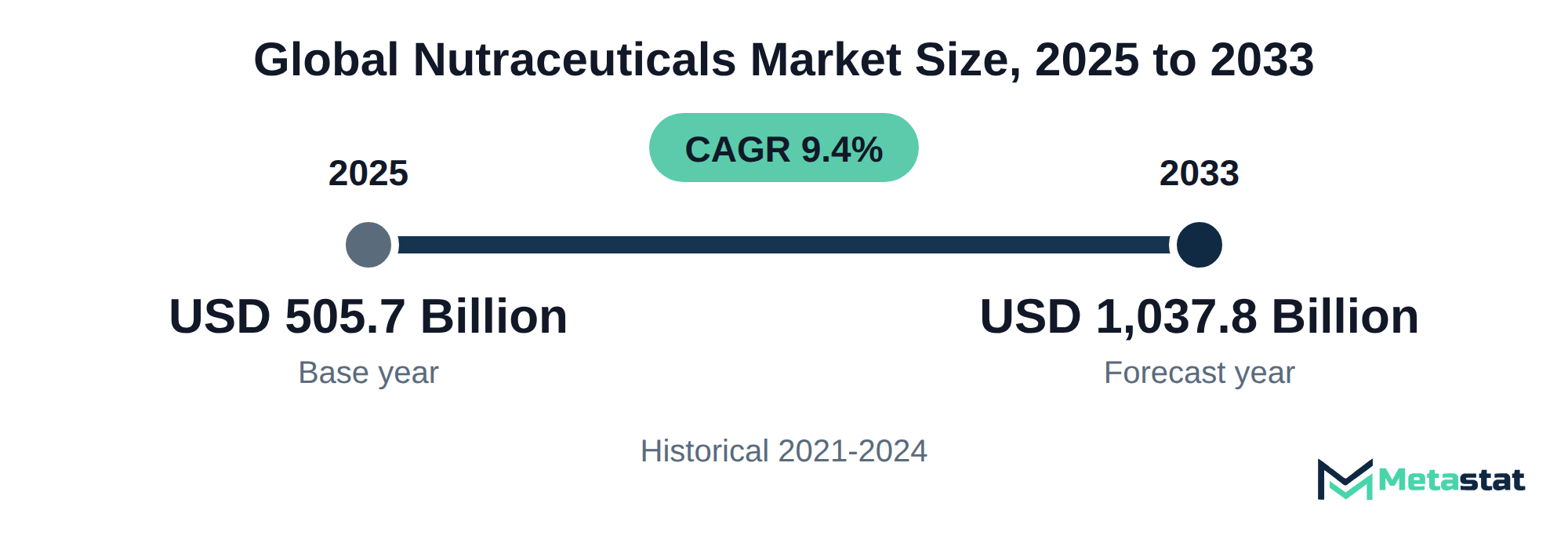
Market Valuation: Valued at $505.7 Billion in 2025, projected to reach $1,037.8 Billion by 2033 at a 9.4% CAGR.
Dominant Segment: The Dietary Supplements segment leads the market, driven by increasing consumer awareness of health benefits and a preference for convenient, effective products.
Geographic Lead: North America is the leading region, accounting for 24.6% of the market in 2025, supported by a strong healthcare infrastructure and consumer readiness to invest in health products.
What's Inside: The report provides a comprehensive analysis of market dynamics, competitive landscape, and detailed forecasts from 2026 to 2033, covering various product types and applications.
Emerging Opportunities: Growing consumer focus on preventive health solutions presents significant opportunities, particularly in the dietary supplements sector, appealing to health-conscious millennials and Generation Z.
Consumer Trends: There is a rising demand for ingredient transparency and clinical evidence, influencing purchasing decisions and enhancing brand loyalty among health-conscious consumers.
Choose Your License
Global Nutraceuticals Market
The global Nutraceuticals market was valued at USD 505.7 billion in 2025 and is projected to reach USD 1,037.8 billion by 2033, growing at a CAGR of 9.4% over the forecast period.
The Nutraceuticals market encompasses products designed to support health and wellness through dietary supplements, functional foods, functional beverages, and infant formulas. Buyers invest in these products due to increasing awareness of health benefits and the desire for preventive care. This shift towards proactive health management drives consumer spending, leading to growing demand for effective nutraceutical solutions.
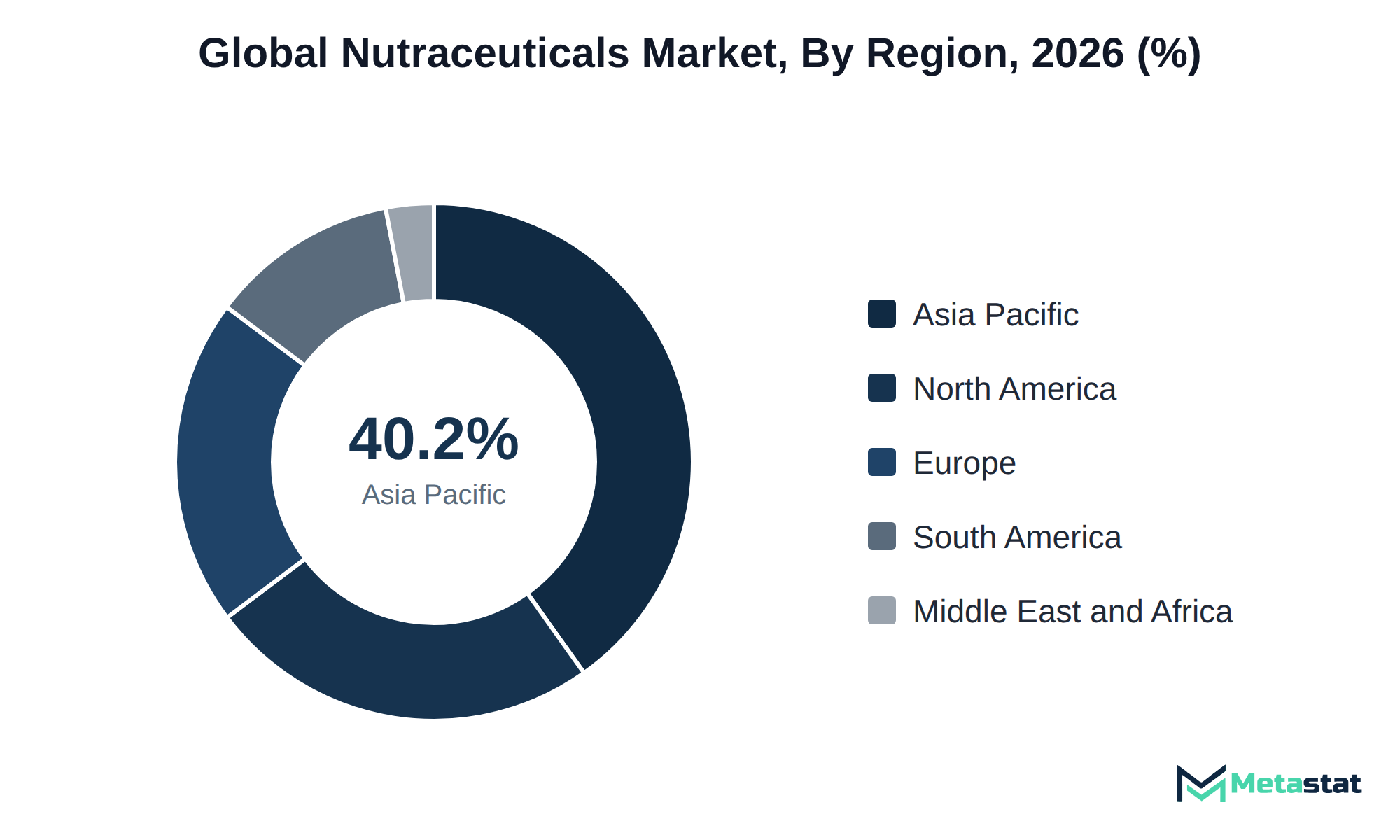
Growth within the market is influenced by various factors, including the rising prevalence of health-related issues and the demand for natural ingredients. Among the product types, dietary supplements hold the most significant value, reflecting consumer preferences for convenience and efficacy. North America holds 24.6% of the market in 2025, with the US leading in 2026. The region’s established healthcare infrastructure and consumer readiness to invest in health products further support market expansion.
One primary growth driver stems from the increasing focus on preventive healthcare, leading consumers to seek products that enhance their well-being. This trend is evident across various demographics, with individuals prioritizing health maintenance over addressing issues after they arise. The market is expected to respond to these changing consumer behaviors, creating more opportunities and revenue.
The Nutraceuticals market addresses the growing consumer demand for health-promoting products. Buyers invest in these offerings due to increasing awareness of health and wellness, driven by lifestyle changes and a focus on preventive care. This market features a variety of segments, including dietary supplements and functional foods, catering to diverse health needs and preferences.
Growth in the market is propelled by rising interest in preventive health measures and self-care among consumers. The dietary supplements segment leads in value, reflecting strong consumer preference for products that enhance overall well-being. This region benefits from high disposable income and a well-established retail infrastructure, which supports growth of nutraceutical products.
Investments in research and development contribute significantly to innovation within the market, leading to the introduction of new and improved products. Consumers increasingly seek products that offer functional benefits, which drives demand for advancements in formulation and delivery methods. The growing acceptance of nutraceuticals in mainstream health practices highlights the market's evolving role in the broader healthcare landscape.

The rising popularity of probiotics and prebiotics in the Nutraceuticals market reflects a significant shift in consumer preferences, extending beyond traditional digestive health applications. Probiotics, known for promoting gut health, are now increasingly recognized for their potential benefits in areas including immune support, mental health, and even skin health. This diversification in application enhances market opportunities, allowing brands to target a wider audience.
The Dietary Supplements segment is expected to grow from USD 186.1 billion in 2026 to USD 370.3 billion by 2033, reflecting a compound annual growth rate (CAGR) of 10.3%. This growth highlights the expanding consumer interest in products that incorporate probiotics and prebiotics, leading to innovative formulations that address various health concerns. Brands are responding by developing products that blend these ingredients with other health-focused components, increasing consumer engagement and building brand loyalty.
While the market expands, companies investing in research and development are likely to gain a competitive edge by offering differentiated products. Enhanced marketing strategies that educate consumers about the broader benefits of probiotics and prebiotics drive demand. This proactive approach strengthens brand positioning and contributes to the overall growth of the Nutraceuticals market.
Growing consumer preference for convenient and enjoyable delivery formats has driven significant shifts in the Nutraceuticals market. Among these formats, gummies and functional beverages have gained notable traction, particularly due to their palatability and ease of use. In 2026, the market for functional beverages is projected to reach USD 268.5 billion by 2033. This trend reflects a broader movement towards innovative product offerings that cater to health-conscious consumers seeking effective yet enjoyable methods to enhance their wellness.
Pricing strategies for these delivery formats often vary based on factors including ingredient quality and brand positioning. The competitive landscape encourages brands to adopt flexible pricing models, including subscription services and bulk purchase discounts, which enhance customer loyalty and drive repeat purchases. For example, consumers increasingly respond to promotional offers on gummies and functional beverages that emphasize health benefits while maintaining affordability. This dynamic influences how buyers approach purchasing decisions, leading to a heightened focus on value for money in the market.
Brands that strategically use pricing models to enhance perceived value could experience substantial growth. The shift towards gummies and functional beverages positions participants within the market to capitalize on emerging trends and gain a competitive edge. The integration of these delivery formats into broader health and wellness strategies supports sustained demand, ensuring that companies remain relevant and attractive to consumers.
Purchasing decisions in the nutraceuticals market increasingly rely on clinical evidence and ingredient traceability. Consumers prioritize products backed by scientific research that demonstrates efficacy for health benefits. This trend reflects a broader shift towards informed choices, with buyers seeking transparency in product formulations.
Ingredient traceability is essential in building consumer trust. Buyers expect detailed information regarding sourcing and manufacturing practices for the nutraceuticals they purchase. Documentation of this kind can be supported by traceability as a service platforms. This aspect becomes particularly significant for health-conscious consumers concerned about product integrity and safety. The emphasis on traceable ingredients enhances brand loyalty and improves market competitiveness. Brands that successfully communicate their commitment to quality and transparency position themselves effectively within the market, ultimately driving growth in consumer sales.
Bioavailability and formulation significantly influence product selection in the Nutraceuticals market. Effective bioavailability ensures that nutrients are readily absorbed by the body, enhancing the overall efficacy of the product. For instance, dietary supplements, projected to reach USD 370.3 billion by 2033, benefit substantially from formulations that optimize nutrient absorption. Factors including particle size, delivery mechanism, and the presence of bioenhancers strongly influence how well nutrients are absorbed.
Formulation impacts consumer choices in the Nutraceuticals market, influencing buyer preferences based on health goals and desired outcomes. For example, solid forms of nutraceuticals, anticipated to grow from USD 233.9 billion in 2026 to USD 416.8 billion by 2033, offer convenience and longer shelf life, appealing to a broad range of consumers. In contrast, liquid forms, including liquid dietary supplements, cater to individuals seeking faster absorption rates, particularly for products targeting digestive and immune health. Such considerations make formulation a vital aspect of addressing specific health needs and enhancing competitive positioning among suppliers.
Increased consumer focus on health and wellness significantly impacts the volume of dietary supplements purchased. Health-conscious individuals prioritize preventive healthcare, contributing to a sustained rise in demand. The demographic shift towards an aging population further accelerates this trend, with older consumers seeking longevity supplements and other products that support overall wellness. Growing acceptance of dietary supplements leads to increased purchasing frequency, enhancing market dynamics. Education about health benefits becomes widespread, prompting consumers to invest in products that support their health goals, thereby reinforcing the dietary supplement sector's expansion within the nutraceuticals market.
The growing emphasis on preventive health solutions positions dietary supplements as a critical component of consumers' daily health regimens. This trend highlights the evolving landscape of health and wellness, with dietary supplements driving consumer spending in the market.
Increased consumer awareness regarding health and nutrition significantly drives the demand for ingredient transparency in the Nutraceuticals market. Shoppers seek products with clearly defined ingredients, sourcing information, and evidence of efficacy. This trend primarily impacts suppliers, who invest in higher-quality raw materials and rigorous testing protocols to meet these expectations. The push for transparency leads to enhanced product labeling, allowing consumers to make informed choices, which builds loyalty and trust in brands. By focusing on transparency, suppliers differentiate their offerings in a competitive landscape, enhancing market share and operational viability. Emphasizing ingredient integrity increases sales, particularly among health-conscious consumers prioritizing quality and safety. The heightened demand for transparency contributes to overall market growth, shaping product development and marketing strategies in the Nutraceuticals sector.
High price sensitivity influences buyer engagement within the market, particularly among price-conscious consumers. Nutraceuticals often command premium pricing due to their perceived health benefits and sourcing complexities, leading to slower uptake among budget-restricted buyer groups, including lower-income households. This impacts purchasing frequency and overall market revenue, creating a barrier to accessing a wider consumer base.
In this competitive landscape, buyers delay replacing existing products with higher-priced alternatives, contributing to stagnation in growth for specific segments. Such constraints hinder the expansion of the market, particularly in regions where economic disparities affect purchasing power. Consequently, manufacturers face challenges in achieving optimal sales volumes while meeting consumer expectations for affordability, ultimately shaping the market trajectory.
Rising input costs present a significant challenge for suppliers in the Nutraceuticals market. Increased prices for raw materials, coupled with supply chain disruptions, drive up production expenses, directly impacting profit margins. Suppliers face pressure to maintain competitive pricing while ensuring product quality, leading to reduced profitability. In response, many companies explore innovative sourcing strategies and invest in sustainable practices to mitigate costs and enhance operational efficiency. Several suppliers reformulate products to use alternative ingredients that provide cost savings without compromising quality. Emphasis on cost-effective solutions helps suppliers manage market challenges while positioning themselves favorably for growth. This dynamic affects the market's overall structure, leading to heightened competition among suppliers seeking to secure their market share while facing rising costs.
Dietary supplements represent a significant growth opportunity within the Nutraceuticals market, driven by increasing consumer focus on health and wellness. The health-conscious demographic, particularly millennials and Generation Z, contributes to the rising demand for personalized nutrition solutions and natural ingredients. These buyers prioritize products that support overall well-being, leading to a shift in purchasing behavior. The expanding online retail distribution channel further facilitates access to these products, enhancing market penetration. Evolving consumer preferences towards preventive health measures make innovation in formulation and delivery methods within dietary supplements essential for companies aiming to capture this demand. The growth trajectory of dietary supplements highlights their potential to reshape the market significantly.
The Global Nutraceuticals market is segmented based on Product Type, Application, Physical Form, and Distribution Channel.
The dietary supplements segment primarily supports consumers in maintaining overall health and wellness, targeting various demographics, including fitness enthusiasts, aging populations, and those seeking preventive healthcare. A significant driver of growth stems from increasing awareness of health benefits associated with dietary supplements, particularly among millennials and health-conscious individuals. In contrast to other segments, including functional foods, dietary supplements exhibit a higher growth rate, supported by robust demand for personalized nutrition solutions. This category offers diverse options, including vitamins, minerals, herbal products, and amino acids, catering to specific health needs and preferences.
Functional Food segment is estimated to reach USD 281.5 billion by 2033, at a CAGR of 8.8% during the forecast period. This category includes foods fortified with additional nutrients or health benefits designed to enhance overall wellness. Consumers seeking improved health outcomes often turn to functional foods, with applications in general health, digestive health, and immune support. The growing trend towards preventive healthcare drives demand for these products, distinguishing them from other segments. While Dietary Supplements and Functional Beverages experience growth rates of 10.3% and varying rates respectively, Functional Food's steady growth highlights solid consumer interest. Pricing strategies in this segment reflect a balance between health benefits and affordability, impacting purchasing decisions. The rising emphasis on clean labels and transparency in ingredients shapes the competitive landscape, creating opportunities for brands that prioritize quality and innovation.
The Functional Beverages segment is expected to reach USD 268.5 billion by 2033. These products enhance hydration and promote overall health, appealing to consumers seeking both functional benefits and refreshing flavors. The segment attracts health-conscious individuals who prioritize convenience in their nutritional intake. Growing interest in wellness and fitness drives demand, aligning with the increasing consumer shift towards healthier lifestyle choices. This segment exhibits a slightly slower growth rate than Dietary Supplements, projected to grow at a CAGR of 10.3%, compared to 8.8% for Functional Beverages. The variety of flavors and formulations available in this segment differentiates it from others, attracting a diverse consumer base that includes young adults and busy professionals. Innovations in flavor and packaging are set to gain traction among consumers who value both taste and health benefits.
Infant Formula segment is projected to grow at a CAGR of 7.5% during the forecast period. This segment serves infants and young children who require nutritional support during critical developmental stages. Rising birth rates in several regions contribute to increased demand for high-quality infant nutrition products. Parents prioritize infant formulas that provide essential nutrients, reflecting a shift toward more health-conscious purchasing behavior. Unlike other segments, including Dietary Supplements which is projected to grow at a faster CAGR of 10.3%, the Infant Formula segment emphasizes safety and nutritional adequacy, often leading to higher pricing structures. The focus on organic and non-GMO formulations influences purchasing decisions, differentiating it from other product types that cater to older demographics. The market for infant nutrition continues to expand while awareness regarding the importance of early nutrition gains traction among consumers.
The General Health and Wellness segment is valued at USD 121.7 billion in 2026 and is projected to reach USD 209 billion by 2033, at a CAGR of 8% during the forecast period. This segment focuses on supporting overall health and wellness, appealing to consumers aiming to enhance their day-to-day vitality and longevity. Growing awareness of preventive health benefits drives demand, particularly among health-conscious individuals. In comparison to other segments, this area experiences steady growth, influenced by a rising trend towards comprehensive health management. Demand in this segment is primarily supported by the increasing inclination of consumers to maintain a balanced lifestyle, contrasting with the more pronounced growth rates observed in specific dietary supplements, which are projected to reach USD 370.3 billion by 2033 at a CAGR of 10.3%. The market shows diversification in its offerings, catering to a broad demographic interested in health maintenance rather than targeted health solutions.
Digestive Health segment is estimated to reach USD 151.2 billion by 2033, at a CAGR of 10.3% during the forecast period. This segment focuses on products that support digestive function, targeting consumers seeking relief from digestive issues, including bloating, gas, and irregular bowel movements. The rising prevalence of digestive disorders drives demand, particularly among health-conscious consumers and individuals increasingly aware of gut health's impact on overall well-being. This segment exhibits a faster growth trajectory compared to other applications, reflecting a growing consumer inclination towards proactive health management. Innovations in formulations, including probiotics and dietary fibers, significantly enhance product effectiveness and appeal. These advancements contribute to the competitive positioning of the segment, setting it apart from others that do not experience similar growth or consumer engagement.
The Immune Health segment is expected to reach USD 113.4 billion by 2033. This segment focuses on enhancing the body's defense mechanisms, appealing to health-conscious individuals seeking to improve their immune systems. Growing awareness about personal health has escalated demand among consumers, with particular interest from older adults and those with pre-existing health conditions. Demand of this kind also shapes the immune health supplements industry. A significant driver for this segment stems from increased consumer focus on preventive health measures. Unlike other segments, including Digestive Health, which is projected to grow at a CAGR of 10.3%, the Immune Health segment experiences steady growth without the same level of rapid expansion. The market's ongoing development hinges on innovations in ingredients and formulations that enhance product efficacy, ultimately influencing consumer preferences and purchasing decisions.
The Cardiovascular Health segment is projected to grow at a CAGR of 8.6% during the forecast period. This segment focuses on products designed to support heart health, appealing to health-conscious consumers and individuals managing cardiovascular conditions. The rising prevalence of heart-related issues drives demand for effective solutions, particularly among older adults. Distinct from other segments, this category features a more targeted consumer base seeking specialized products, resulting in higher price points compared to broader health applications. The growing emphasis on preventive healthcare encourages consumers to actively seek out supplements that promote cardiovascular well-being, contributing to revenue growth. These dynamics position the segment favorably within the Nutraceuticals market, catering to an audience willing to invest in health preservation.
Bone and Joint Health focuses on nutritional solutions aimed at enhancing musculoskeletal health and providing relief from joint discomfort. This segment is commonly used by older adults and individuals engaged in high-impact sports, addressing the increasing prevalence of arthritis and joint-related ailments. Demand for such products is driven by a growing awareness of preventive healthcare and the need for effective alternatives to traditional medications. Unlike other segments, Bone and Joint Health typically attracts health-conscious consumers who prioritize long-term wellness. This niche within the market demonstrates slower growth compared to more dynamic segments, reflecting challenges in consumer engagement and market penetration associated with specialized health needs.
Cognitive health products enhance mental functions and improve overall brain wellness. These solutions appeal to a diverse group, including students, professionals, and the elderly who seek to maintain cognitive sharpness. Increasing awareness of mental health and the impact of cognitive decline drives demand within this segment. This segment stands out for its focus on targeted formulations that address specific cognitive challenges, differentiating it from other applications that target broader health concerns. Compared to the Digestive Health segment, which is anticipated to grow at a rate of 10.3%, Cognitive Health experiences a slower growth trajectory. Consumer interest in innovative ingredients and formulations influences adoption, highlighting the significance of product differentiation in a competitive landscape. This focus contributes to the overall growth of the Nutraceuticals market, emphasizing the segment's relevance amid evolving consumer preferences.
Weight Management focuses on nutritional solutions aimed at supporting individuals in achieving and maintaining a healthy weight. This segment predominantly serves health-conscious consumers seeking effective methods to control body weight and improve overall wellness. Increased awareness of obesity-related health risks drives demand for products in this area. Factors including the growing prevalence of sedentary lifestyles and evolving dietary habits further increase market interest. Compared to other segments, Weight Management features unique characteristics, including a specific target audience focused on weight control. This differs from segments including General Health and Wellness, which address broader health concerns. Weight Management products often command higher prices due to their specialized formulation and targeted benefits, appealing to consumers prioritizing personal health improvement.
Sports Performance and Recovery focuses on enhancing athletic performance and facilitating recovery post-exercise. Products for this application overlap with the sports nutrition industry. This segment caters to athletes, fitness enthusiasts, and individuals engaging in physical activities, seeking to improve endurance, strength, and overall physical condition. Key drivers include a growing emphasis on fitness and wellness, which fuels demand for products that aid in performance enhancement. Innovations in formulation and product technology lead to the development of advanced recovery solutions, appealing to a diverse consumer base. Compared to other segments, this area is characterized by a narrower target demographic that prioritizes efficacy and performance outcomes, often leading to higher price points for premium products. The segment's focus on specific health benefits differentiates it from broader applications, aligning closely with consumer trends toward specialized nutrition solutions. The Nutraceuticals market evolves in response to these dynamics, creating a competitive environment among suppliers focused on performance-driven offerings.
Beauty and Skin Health focuses on products aimed at enhancing skin appearance and overall beauty. Ingestible products in this application also fall within the nutricosmetics industry. Consumers, particularly women, increasingly seek these solutions to address issues including aging, dryness, and skin health. The demand for natural and organic ingredients significantly influences this segment, reflecting broader wellness trends. Consumers prioritize products that emphasize clean labels and sustainable sourcing, differentiating this segment from others that rely on synthetic additives. Growth in e-commerce channels further supports accessibility, enabling customers to explore a wider range of options. Beauty and Skin Health experiences unique dynamics, with trends changing based on consumer preferences, which sets it apart from more established segments in the market.
Nutrition products targeting eye health, sleep support, and women's health address specific health concerns and promote overall well-being. Consumers seeking to enhance their quality of life increasingly turn to these solutions. Demand in this segment is driven by growing awareness of the importance of preventative health measures, particularly among health-conscious individuals. This segment distinguishes itself from others through its specialized focus on niche health issues, resulting in higher product prices and unique marketing approaches. Unlike more general health segments, products in this category cater to dedicated consumer bases with particular health goals. The Nutraceuticals market continues to evolve, with innovations in formulations and delivery methods enhancing product effectiveness and consumer engagement.
Solid Forms segment is valued at USD 233.9 billion in 2026 and is projected to reach USD 416.8 billion by 2033, at a CAGR of 8.6% during the forecast period. This segment includes products including tablets, capsules, and soft gels, primarily used for dietary supplementation and health management. Consumers seeking convenient and precise dosages favor solid forms due to their established efficacy and familiarity. The growth of this segment is driven by increasing health consciousness among consumers and the demand for convenient consumption methods. Compared to Functional Beverages and Functional Food, which grow at CAGRs of 8.8% and 7.7% respectively, Solid Forms exhibit significant growth attributed to widespread acceptance and the variety of formulations available. This segment's focus on consumer preferences and product development enhances its competitive edge in the market.
The Powder Forms segment is estimated to reach USD 274.3 billion by 2033, at a CAGR of 10.1% during the forecast period. This segment serves various health-conscious consumers seeking convenient nutritional solutions, particularly due to its ease of use and versatility in application. Increasing awareness regarding the benefits of nutritional supplements drives demand for powder forms, particularly among fitness enthusiasts and individuals focused on specific health goals. Compared to other segments, including Solid Forms, which holds a larger market share, Powder Forms demonstrates a faster growth trajectory, reflecting a rising preference for on-the-go products. This segment's appeal lies in its adaptability, allowing for incorporation into various recipes or beverages, thus catering to diverse consumer preferences. Innovations in flavoring and formulation techniques are likely to enhance product attractiveness and contribute to sustained growth.
Liquid Forms segment is expected to reach USD 266.4 billion by 2033. This segment includes various liquid nutritional products consumed for health benefits, including juices, smoothies, and liquid supplements. Target users primarily include health-conscious individuals seeking convenient and easy-to-consume options. Growth in this segment is driven by increasing consumer preference for liquid nutrients, offering faster absorption rates compared to solid forms. The segment exhibits a higher growth trajectory compared to others, projected at a CAGR of 10.2%. This growth reflects a shift in consumer behavior towards more accessible health solutions. The segment typically features higher pricing compared to solid forms, driven by the costs associated with liquid formulation and packaging processes. The Nutraceuticals market benefits from this shift, with liquid forms catering to diverse dietary needs and preferences.
Semi-Solid Forms segment is projected to grow at a CAGR of 10.2% during the forecast period. This segment primarily includes products like gels, creams, and emulsions, which serve various health and wellness applications. Users frequently include individuals seeking convenient nutrition solutions that are easy to consume and digest. A significant driver of growth stems from the rising consumer preference for products that offer functional benefits, including improved nutrient absorption. This category stands out from others by providing unique texture and usability, appealing to different buyer demographics. Compared to Solid Forms, which focus on tablets and capsules, Semi-Solid Forms cater to consumers desiring an alternative delivery method, thereby expanding the overall market reach.
The Supermarkets and Hypermarkets segment is valued at USD 154.7 billion in 2026 and is projected to reach USD 260.9 billion by 2033, at a CAGR of 7.7% during the forecast period. Products in this segment cater to a broad consumer base seeking convenient access to nutraceutical options. The rising trend towards preventive healthcare drives demand, with health-conscious consumers increasingly choosing supplements and functional foods available in physical retail outlets. This segment’s growth is slower compared to that of online retail channels, which shows a CAGR of 13.2%. The tangible shopping experience and immediate availability of products in supermarkets and hypermarkets attract consumers, differentiating it from other distribution methods. The market recognizes this channel's significance for reaching diverse customer demographics, further enhancing the role of physical retailers in the overall nutraceuticals market.
The Pharmacies and Drugstores segment is estimated to reach USD 221.9 billion by 2033, at a CAGR of 8.2% during the forecast period. This segment primarily serves consumers seeking convenient access to nutraceutical products, including vitamins, minerals, and dietary supplements. Demand is driven by increasing health consciousness among consumers and growing reliance on pharmacies for health management solutions. Compared to other distribution channels, including Supermarkets and Hypermarkets, this segment offers a more specialized selection of health-related products. The market for this segment stands out with a focus on personalized healthcare offerings, enhancing its appeal to specific consumer demographics. Growth in this segment reflects broader trends in the nutraceuticals market, emphasizing the importance of accessible health solutions in everyday life.
The Health and Nutrition Specialty Stores segment is expected to reach USD 131.5 billion by 2033. This segment caters to consumers seeking specialized nutritional products that promote health and wellness. These stores attract health-conscious individuals, fitness enthusiasts, and consumers seeking guidance on dietary supplements and functional foods. Growing awareness of health issues and the increasing prevalence of lifestyle-related diseases drive demand for tailored nutritional solutions. This segment distinguishes itself through a higher degree of personalized service compared to supermarkets, which contributes to its appeal. The CAGR of this sub-segment reflects an anticipated growth rate of 13.2%, outpacing other distribution channels. Competitive pricing and the availability of expert advice enhance its attractiveness to consumers, reinforcing its role in the overall Nutraceuticals market.
The Online Retail segment is projected to grow at a CAGR of 13.2% during the forecast period. This segment serves consumers seeking convenient access to nutraceutical products through digital platforms. Health-conscious individuals and busy professionals primarily use online retailing, which enables easy comparison of products and prices. Strong growth in this channel occurs due to increasing internet penetration and a shift towards e-commerce shopping habits. Unlike traditional retail segments, Online Retail offers flexibility in purchasing and access to a wider range of products, often at competitive prices. The convenience of home delivery and the ability to easily research product information enhance its appeal. The market for Online Retail reflects a notable increase in consumer demand for health supplements and functional foods, positioning this segment for continued expansion.
Direct selling involves the distribution of nutraceutical products through personal interactions, using relationships and networks to reach consumers. This approach targets health-conscious individuals seeking personalized advice and recommendations. Demand within this segment is driven by the growing consumer preference for tailored health solutions and convenience, particularly among those valuing direct engagement with sellers. Compared to other distribution channels, direct selling typically offers higher margins due to reduced overhead costs associated with physical retail spaces. The market sees unique dynamics, with brands focusing on building trust and loyalty among their clientele, which sets this channel apart from traditional retail methods.
Convenience Stores and Practitioner Dispensing serve vital distribution channels for various health-related products, enabling direct interaction between consumers and health professionals. These channels cater to health-conscious consumers seeking immediate access to nutraceutical products, often guided by recommendations from healthcare practitioners. Demand for personalized health solutions drives the growth of this segment, with consumers increasingly preferring tailored advice and access to specialized products. Unlike larger retail channels, this sub-segment offers a more curated selection of products, focusing on specific health needs and professional recommendations. The trend toward preventive healthcare and personalized nutrition significantly influences purchasing decisions, creating a unique market dynamic compared to broader distribution channels. The focus on professional guidance distinguishes this segment, enhancing consumer trust and loyalty while creating opportunities for growth within the nutraceuticals market.
Based on geography, the Global Nutraceuticals market is divided into North America, Europe, Asia-Pacific, South America, Middle East, and Africa.
In North America, a significant focus on health awareness among consumers drives demand for the nutraceuticals market. The increasing prevalence of chronic health conditions leads to a growing interest in preventive health measures. The United States, Canada, and Mexico are key players in this landscape, with various health and wellness industries propelling market growth. The market is projected to reach USD 241.9 billion by the end of 2033. Favorable regulations surrounding dietary supplements promote innovation and ensure consumer safety, enhancing market dynamics. This regulatory environment supports companies in meeting consumer expectations while increasing competition. The market experiences strong growth, with various segments expanding to cater to evolving consumer preferences.
Germany, France, the UK, Italy, Spain, and Russia drive significant demand in the Nutraceuticals market, with consumers increasingly prioritizing health and wellness products. The focus on preventive healthcare and self-medication fuels growth in dietary supplements and functional foods. Regulatory frameworks in Europe emphasize safety and efficacy, influencing product development and consumer choice. Innovations in product formulation and packaging enhance market offerings, while increasing disposable incomes contribute to higher spending on health-enhancing products. The market's share within Europe is projected to hold 20.5% in 2025, reflecting strong consumer engagement and a shift towards healthier lifestyles.
Asia Pacific accounts for 40.2% of global share in 2025 in the Nutraceuticals market. Key drivers include rising health consciousness among consumers and increasing disposable incomes, particularly in countries like China, India, and Japan. The growing demand for dietary supplements, functional foods, and beverages supports this trend, with a notable emphasis on products aimed at general health and digestive health. Regulatory frameworks in these countries focus on safety and efficacy, enhancing consumer trust and supporting market growth. A robust distribution infrastructure, including supermarkets, online retail, and pharmacies, facilitates product accessibility, contributing to sustained demand. This region's commitment to health and wellness continues to shape the dynamics of the market.
Consumer interest in health and wellness products drives growth within the nutraceuticals market in South America. Brazil and Argentina stand out as the primary markets, influenced by rising health awareness and an increasing preference for preventive health measures. The region’s growing importance in the global market reflects its expanding role. Distribution channels including supermarkets and hypermarkets play a crucial role, facilitating wider access to these products. Local manufacturers prioritize the development of functional foods and dietary supplements tailored to regional preferences and health concerns, further supporting market expansion. The connection between lifestyle choices and health outcomes significantly shapes consumer purchasing behavior in South America, enhancing demand for various nutraceutical offerings.
Growing health awareness in the Middle East and Africa stimulates demand for the nutraceuticals market. Countries including Saudi Arabia, UAE, and South Africa prioritize health and wellness products, reflecting a shift in consumer preferences towards preventive healthcare. The market benefits from increasing distribution infrastructure, particularly through pharmacies and drugstores, with a projected value of USD 221.9 billion by 2033. The region's share of the global market stands at 3.00% in 2025, highlighting its emerging significance in the global nutraceuticals market. Consumer interests in dietary supplements and functional foods drive growth across various market segments, focusing on general health, immune health, and digestive health. Current trends indicate strong potential for market expansion in the Middle East and Africa.
Companies in the Nutraceuticals market segment their offerings based on product types, applications, physical forms, and distribution channels. This segmentation allows buyers to select products based on specific health needs, preferences for physical forms, and purchasing habits. For instance, dietary supplements and functional foods have distinct consumer bases, with dietary supplements focusing on individual health and wellness needs, while functional foods cater to a broader audience seeking integrated health benefits.
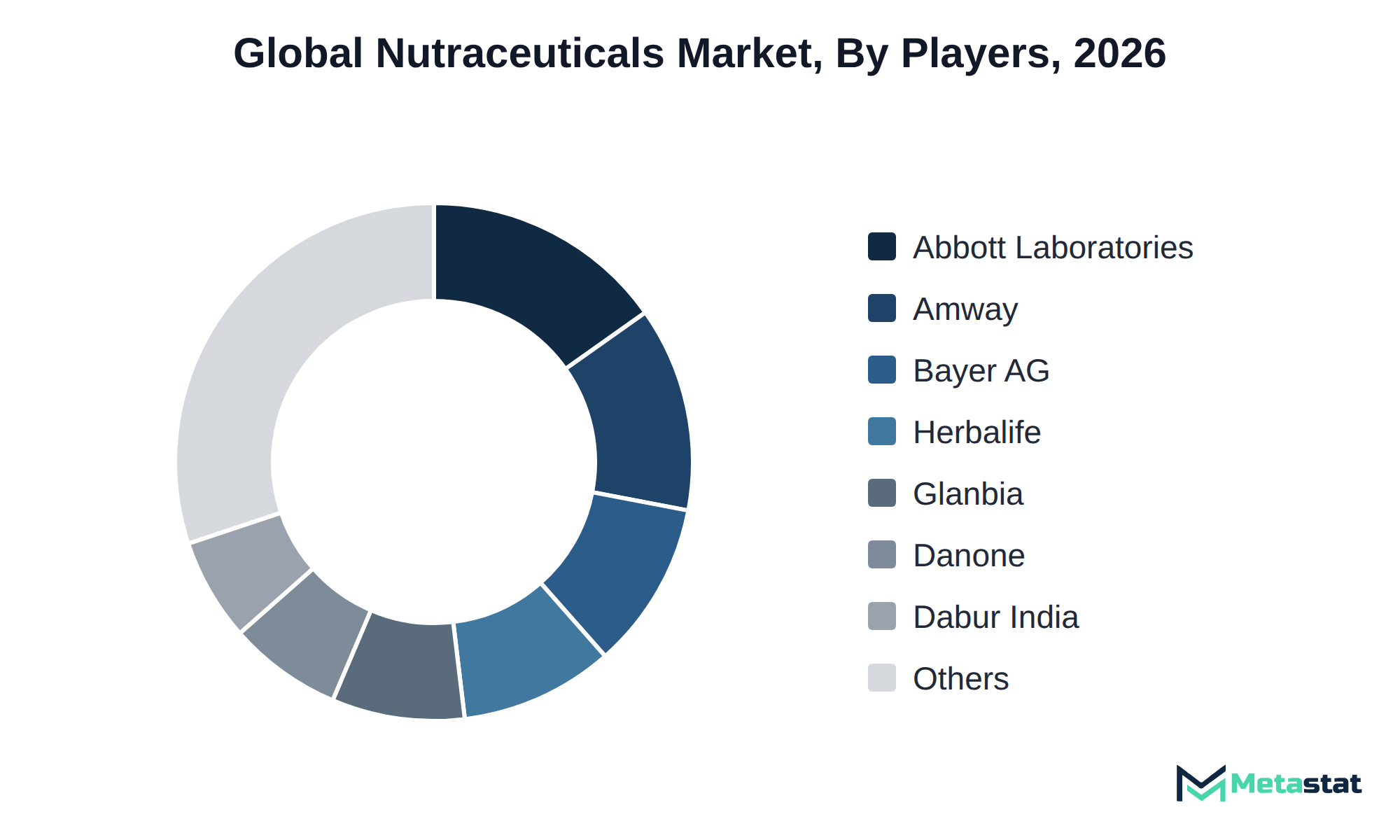
Buyers prioritize factors including price, certification, customization, and service when selecting products within the market. For example, Amway Corporation emphasizes a strong focus on health and wellness through dietary supplements, appealing to consumers seeking trusted options. In contrast, Nestlé S.A. leverages its expertise in functional foods to provide products that address diverse health concerns, while Herbalife Ltd. specializes in customized nutrition solutions tailored to individual lifestyle needs.
Key developments are necessary for the market to achieve this forecast. This segment appeals to consumers seeking wellness and preventive health solutions. The functional food segment, anticipated to reach USD 281.5 billion by 2033, will support the market's upward trajectory, driven by increasing consumer interest in health-promoting products. Risks including regulatory challenges could impede growth. In regions like North America, stringent regulations on product labeling and safety could delay new product launches, negatively impacting market advancement. Competition among players in the nutraceuticals market intensifies, potentially leading to price wars that affect profitability. While the outlook remains positive, these factors will shape the market's path to reaching USD 1,037.8 billion by 2033.
By Product Type: Dietary Supplements, Functional Food, Functional Beverages, Infant Formula
By Application: General Health and Wellness, Digestive Health, Immune Health, Cardiovascular Health, Bone and Joint Health, Cognitive Health, Weight Management, Sports Performance and Recovery, Beauty and Skin Health, Others (Eye Health, Sleep Support, Women's Health)
By Physical Form: Solid Forms, Powder Forms, Liquid Forms, Semi-Solid Forms
By Distribution Channel: Supermarkets and Hypermarkets, Pharmacies and Drugstores, Health and Nutrition Specialty Stores, Online Retail, Direct Selling, Others (Convenience Stores, Practitioner Dispensing)
The report strategically identifies and profiles the key market players and analyses their core competencies in each sub-segment of the Nutraceuticals market.
|
Report Attributes |
Details |
|
Study Period |
2021-2033 |
|
Base Year |
2025 |
|
Estimated Year |
2026 |
|
Forecast Period |
2026-2033 |
|
Historical Period |
2021-2025 |
|
Growth Rate |
CAGR 9.4% from 2026 to 2033 |
|
Revenue Unit |
USD billion |
|
Segmentation |
By Product Type, Application, Physical Form, Distribution Channel, and Region |
|
By Region |
North America (By Product Type, Application, Physical Form, Distribution Channel, and Country)
|
|
Europe (By Product Type, Application, Physical Form, Distribution Channel, and Country)
|
|
|
Asia Pacific (By Product Type, Application, Physical Form, Distribution Channel, and Country)
|
|
|
South America (By Product Type, Application, Physical Form, Distribution Channel, and Country)
|
|
|
Middle East and Africa (By Product Type, Application, Physical Form, Distribution Channel, and Country)
|
Find answers to common questions about this report
The Nutraceuticals market size was valued at USD 505.7 billion in 2025.
The market is projected to grow at a CAGR of 9.4% during the forecast period from 2026 to 2033.
The North America Nutraceuticals market size is estimated to reach USD 241.9 billion by 2033.
Dietary Supplements lead the Nutraceuticals market with a projected value of USD 370.3 billion by 2033, reflecting the highest growth among product types.
Key drivers for the Nutraceuticals market include increased consumer focus on health and wellness, which significantly boosts demand for dietary supplements. the growing emphasis on ingredient transparency influences purchasing decisions, with consumers seeking products that feature clearly defined ingredients and evidence of efficacy.
High price sensitivity among consumers, particularly those with budget constraints, restrains growth in the Nutraceuticals market by limiting purchasing frequency and overall revenue. Rising input costs challenge suppliers, increasing production expenses and impacting profit margins.
Increasing consumer focus on health and wellness drives adoption in the nutraceuticals industry, particularly in dietary supplements. The rising demand for personalized nutrition solutions and natural ingredients among health-conscious demographics, including millennials and Generation Z, creates a favorable environment for market expansion.
The Nutraceuticals market is estimated to reach a valuation of USD 1,037.8 billion by 2033.
Key players operating in the Nutraceuticals market include Amway Corporation, Abbott Laboratories, Bayer AG, Dabur India Limited, Danone S.A., Herbalife Ltd., Nestlé S.A., and The Kraft Heinz Company.
The dietary supplements segment is projected to grow from USD 186.1 billion in 2026 to USD 370.3 billion by 2033, reflecting a compound annual growth rate (CAGR) of 10.3%.
The analysts below cover Food and Beverages research at Metastat Insights.
LEAD ANALYST
Utkarsh Khirodkar is a Lead Market Research Analyst at MetaStat Insight, specializing in market intelligence, technology sector assessments, and competitive strategy.

LEAD PRINCIPAL ANALYST, PHARMA AND HEALTHCARE
Food and Beverages · Healthcare · Healthcare IT · Medical Devices
Ajay Devgire is the Lead Healthcare Analyst at MetaStat Insight, leading strategic research and market intelligence initiatives across the global healthcare domain.

SENIOR RESEARCH ANALYST
Biotechnology · Food and Beverages · Medical Devices · Packaging
Snehal Pasalkar is a Research Analyst at MetaStat Insight, operating at the intersection of life sciences research, competitive strategy, and market intelligence.
Analyzing the transition from natural gas to green hydrogen in iron ore reduction requires realistic infrastructure timelines. Meta stat insight supplied a detailed regional assessment of DRI plant conversion costs and scrap metal availability in North America and Western Europe. Their report carefully examined pellet quality specs and electrical grid access constraints without making oversimplified market assumptions. The research material served as a practical reference during internal technology roadmap discussions.
Integrating zero-trust access controls across legacy electronic health record systems involves complex compliance overhead. Team produced an analysis that clearly separated identity governance and administration tools from privileged access management platforms. Their evaluation of HIPAA and GDPR compliance features across cloud native solutions gave our architecture group clear baseline criteria. The custom data request regarding biometric authentication adoption in hospital networks was returned promptly with clear documentation.
Evaluating calorific value requirements and air permit compliance across municipal waste facilities requires localized data. Metastat Insight structured their analysis around operational throughput capacity and feedstock composition variations in Latin America and Eastern Europe. Their competitive mapping of sorting equipment vendors helped clarify technology differences between optical separators and heavy media systems. The study provided an objective baseline during our capital expenditure reviews.
Explore related market intelligence reports worth reading alongside this one.