
LEAD ANALYST
Utkarsh Khirodkar is a Lead Market Research Analyst at MetaStat Insight, specializing in market intelligence, technology sector assessments, and competitive strategy.

Global Electronic Data Interchange (EDI) Market Size, Share, By Component (Software and Services), By Deployment Model (Cloud-Based, On-Premises and Hybrid), By Organization Size (Large Enterprises and Small and Medium-Sized Enterprises), By End-Use Industry (Retail and Consumer Goods, Manufacturing (Excluding Automotive), Healthcare and Life Sciences, Automotive, Transportation and Logistics, Banking and Financial Services, IT and Telecommunications), Industry Analysis, Growth, Trends, and Forecast, 2026-2033
Report ID
MSI-5688
Published
November, 2026
Pages
268 Pages
Format
Historical
Base year
Forecast
Forecast period
Report Details
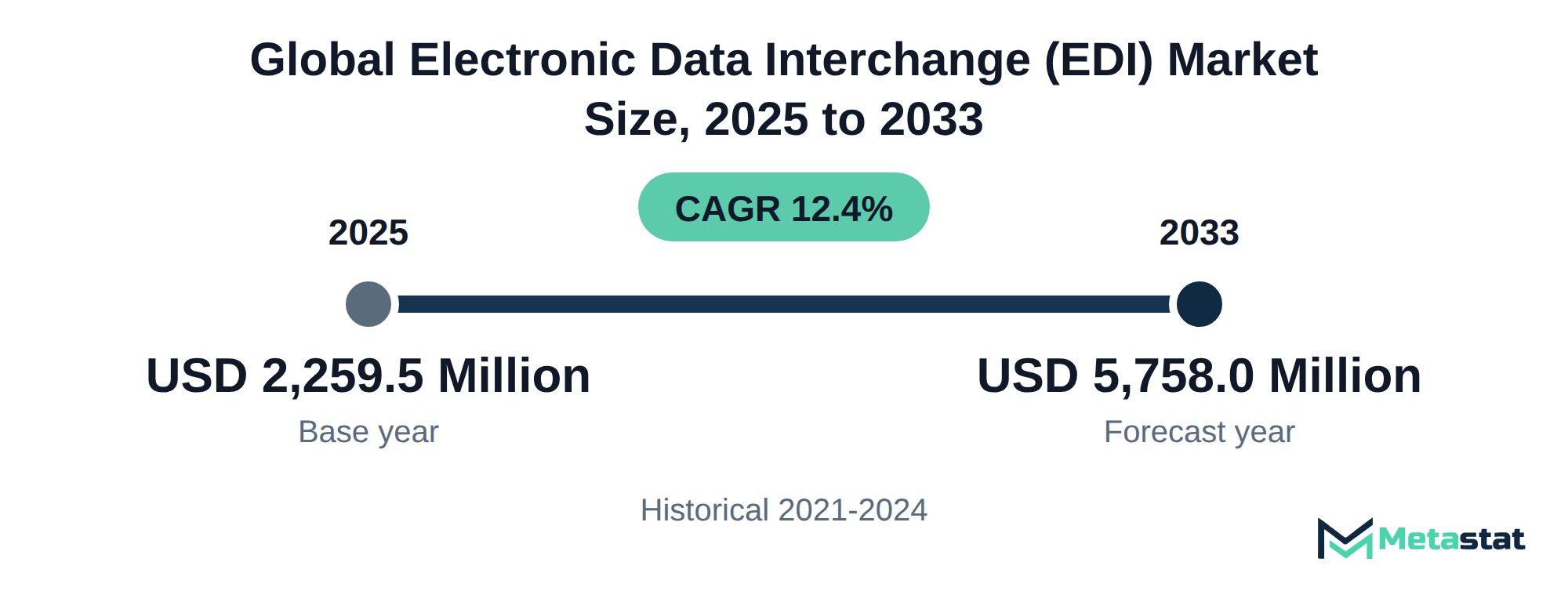
Market Valuation: Valued at $2,259.5 Million in 2025, projected to reach $5,758 Million by 2033 at a 12.4% CAGR.
Dominant Segment: The software segment leads the Electronic Data Interchange (EDI) market, driven by increasing adoption among large enterprises seeking efficient electronic document exchanges.
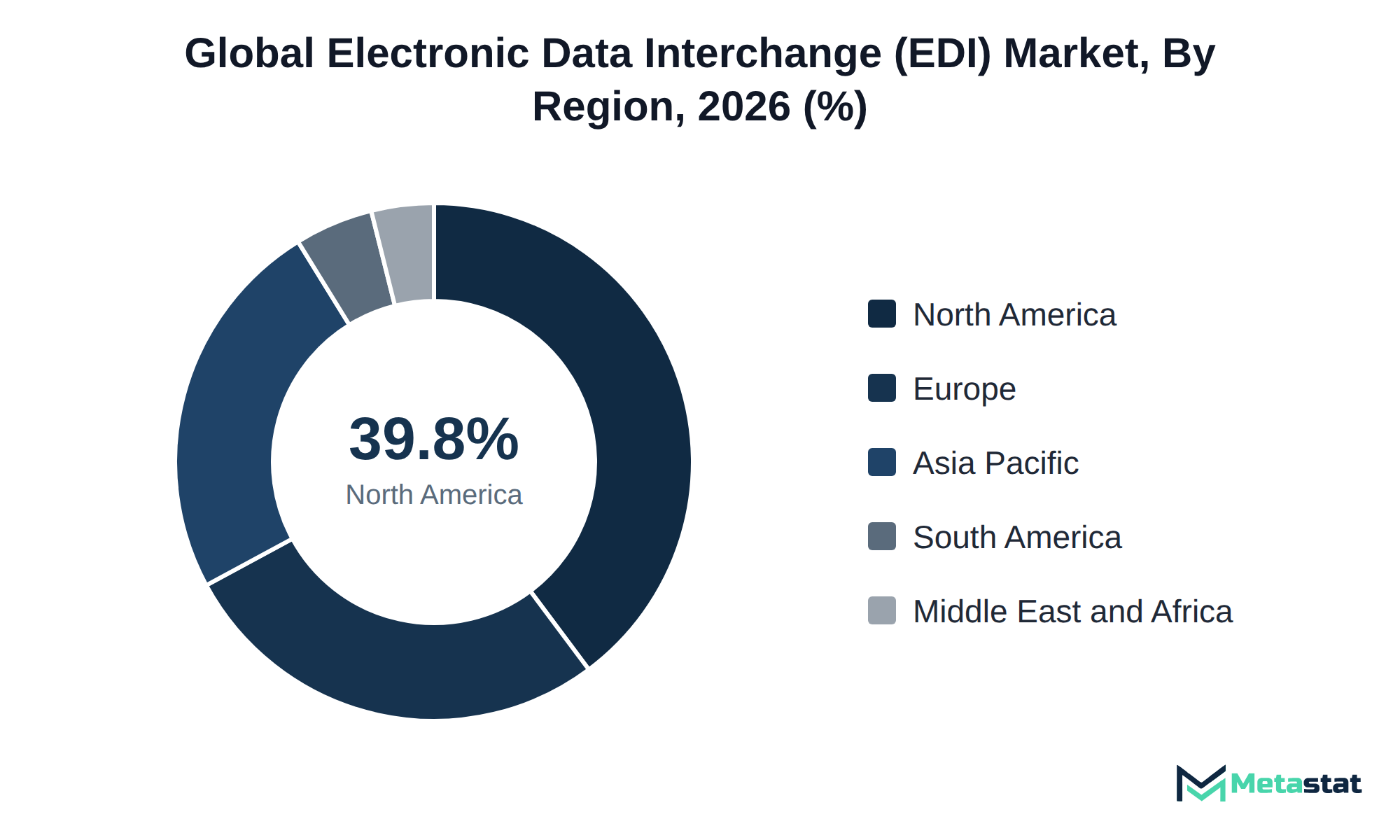
Geographic Lead: North America is the leading region, accounting for 39.8% of the market in 2025, bolstered by a strong technological infrastructure and a focus on digital transformation.
What's Inside: The report provides a comprehensive analysis of market dynamics, competitive landscape, and detailed forecasts across various segments, including software, services, and deployment models.
Retail and Consumer Goods Growth: The retail and consumer goods segment is projected to grow significantly, from USD 706.5 million in 2026 to USD 1,506.9 million by 2033, reflecting a strong demand for efficient supply chain operations.
Cloud-Based Solutions Expansion: Cloud-based EDI solutions are expected to see substantial growth, with a projected market value increase from USD 1,237 million in 2026 to USD 3,240.6 million by 2033, driven by the need for flexibility and scalability.
Choose Your License
Global Electronic Data Interchange (EDI) Market
The global Electronic Data Interchange (EDI) market was valued at USD 2,259.5 million in 2025 and is projected to reach USD 5,758 million by 2033, growing at a CAGR of 12.4% over the forecast period.
The Electronic Data Interchange (EDI) market encompasses the electronic communication of business documents in a standardized format, replacing traditional paper-based methods. Buyers invest in this technology to enhance operational efficiency, reduce errors, and streamline supply chain processes. The need for accurate and timely data exchange drives demand across various sectors, including retail, healthcare, and manufacturing.
Growth in the market is fueled by advancements in cloud-based solutions, which provide scalability and flexibility for organizations. The software segment holds the largest share of the market, with increasing adoption of EDI solutions among large enterprises. North America holds 39.8% of the market in 2025, with the US leading in 2026. This region benefits from advanced technological infrastructure and a clear emphasis on digital transformation.
The rising demand for integration of business processes contributes significantly to the market's expansion. Organizations seek to improve collaboration with trading partners and enhance visibility across their supply chains. This trend is evident as businesses increasingly recognize the strategic advantages of adopting electronic data interchange solutions, which ultimately support their competitive positioning.
The Electronic Data Interchange (EDI) market involves the automated exchange of business documents between organizations, enhancing efficiency and accuracy in transactions. Organizations invest in this technology to streamline their supply chain processes, reduce operational costs, and improve data accuracy. The growth of e-commerce and the increasing demand for real-time data exchange among businesses drive investments in EDI solutions.
Among the segments, software holds the largest value, reflecting the growing preference for integrated solutions that optimize data handling. The region's strong technological infrastructure and high adoption rate of digital solutions contribute to its dominance in the market.
The primary growth driver for the Electronic Data Interchange (EDI) market is the rising demand for automation in business processes. Organizations are increasingly looking to enhance their operational efficiency through digital transformation initiatives, which include adopting EDI systems. This trend facilitates effective communication and data exchange, supporting market expansion.
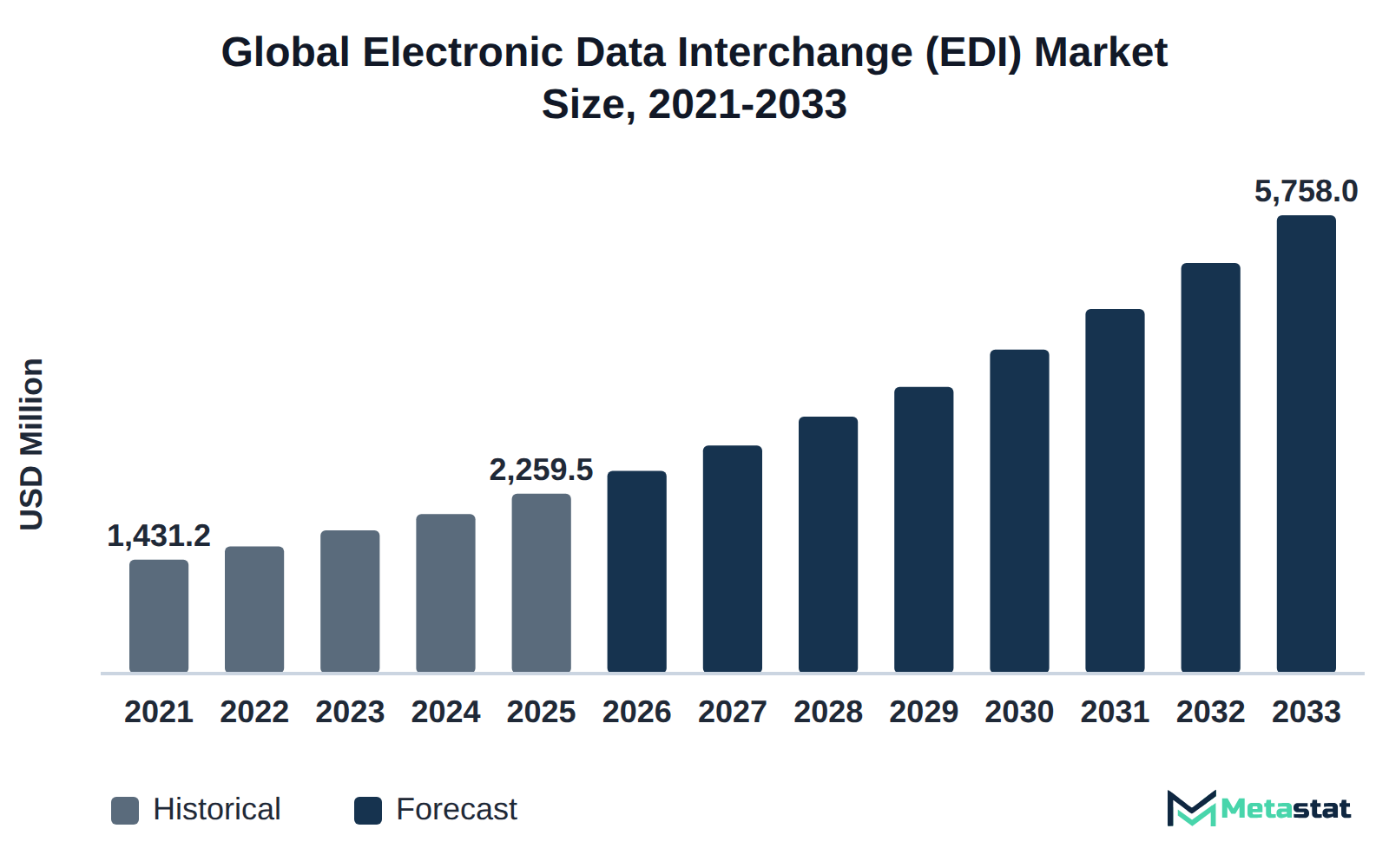
Cloud-based Electronic Data Interchange (EDI) modernization enhances the efficiency of trading partner networks by enabling integration with Enterprise Resource Planning (ERP) systems. This shift allows organizations to streamline their processes and improve data accuracy. The cloud-based deployment model is projected to grow from USD 1,237 million in 2026 to USD 3,240.6 million by 2033, reflecting a compound annual growth rate (CAGR) of 14.7%. This growth signifies a strong trend towards cloud adoption, driven by demand for flexibility and accessibility in data management.
Integration of EDI with ERP systems enables businesses to automate key functions including order processing, invoicing, and inventory management. Companies experience improved operational efficiency, reduced errors, and faster transaction times. The expanding reliance on cloud-based EDI solutions supports a more agile response to market demands, strengthening relationships among trading partners. This strategic shift positions organizations to better adapt to evolving business environments while enhancing collaboration across supply chains. Cloud technology is reshaping traditional approaches to data exchange and integration as the market evolves.
Small and medium-sized suppliers increasingly adopt managed Electronic Data Interchange (EDI) solutions to enhance operational efficiency and reduce costs. In 2026, these enterprises are projected to achieve a market value of USD 1,616.9 million, with expected growth reaching USD 3,470.9 million by 2033. This growth stems from the increasing emphasis on streamlined supply chain processes and demand for real-time data exchange.
Pricing models for managed EDI services typically encompass subscription-based agreements or usage-based fees. These models offer flexibility for small and medium-sized suppliers, allowing them to scale their EDI usage based on business requirements. Contract terms often range from annual agreements to more flexible month-to-month options, providing suppliers with a clear understanding of their financial commitments. The ability to integrate with existing systems without incurring significant upfront costs enhances accessibility for smaller players in the market.
Moving to managed EDI solutions simplifies transaction processes and improves supplier visibility across the supply chain. Enhanced visibility leads to better inventory management and reduced errors, ultimately driving competitive advantages. While more small and medium-sized suppliers adopt these solutions, the overall market for Electronic Data Interchange (EDI) continues to strengthen, signaling significant growth opportunities for providers and users alike.
Healthcare transaction automation in the Electronic Data Interchange (EDI) market improves the efficiency of healthcare operations. The rising demand for streamlined communication between healthcare providers, payers, and patients drives this trend. By 2026, the healthcare sector's adoption of EDI processes is expected to reach a significant level, transforming the exchange of sensitive patient information into a more efficient process. This transformation leads to reduced administrative burdens and improved accuracy in data handling.
In conjunction with the healthcare sector, retail order fulfillment requirements evolve to meet customer expectations for speed and transparency. The integration of EDI solutions into retail systems supports effective order processing and inventory management. Retailers employing EDI systems experience faster order fulfillment rates, which directly contributes to customer satisfaction and loyalty. The anticipated growth in the retail and consumer goods segment, projected to reach USD 1,506.9 million by 2033, highlights the importance of adopting EDI solutions to remain competitive in a rapidly changing market.
Investments in EDI technology within the healthcare and retail sectors enhance operational efficiency, reduce costs, and improve accuracy, positioning organizations for long-term growth. The evolving requirements of these industries call for tailored EDI solutions that address their unique challenges.
API-enabled Electronic Data Interchange (EDI) streamlines the trading partner onboarding process, significantly reducing the required time for integration. Traditional EDI systems often involve complex setups, but API-driven solutions enhance connectivity and communication between businesses. This enhancement leads to quicker exchanges of information, establishing relationships with new partners faster.
This growth illustrates rising investments in cloud technology, supporting the need for more efficient ways to onboard trading partners.
Faster onboarding improves operational efficiency and enhances collaboration between partners. Businesses operating in the Electronic Data Interchange (EDI) market benefit from reduced time-to-value, enabling them to focus on strategic initiatives rather than prolonged integration processes. Consequently, companies achieving quicker integrations gain a competitive edge in their respective sectors.
Several organizations are shifting toward cloud-based Electronic Data Interchange (EDI) solutions, driven by the need for enhanced agility and scalability in operations. This trend is particularly evident among large enterprises that seek to streamline their supply chain processes and improve data management. The transition to cloud-based platforms enables companies to reduce operational costs while increasing transaction speed and efficiency. The volume of electronic transactions is rising significantly. This growth supports organizations in achieving operational efficiency and better integrating with trading partners across various industries.
The significant rise in demand for cloud-based EDI solutions emphasizes the ongoing digital transformation across sectors. Organizations that adopt these technologies strengthen their competitive edge and support further growth in this market.
Integration of automated workflows significantly enhances the efficiency of business processes across various sectors. This shift is driven by increasing demand for real-time data exchange and streamlined operations. Organizations recognize the value of integrating Electronic Data Interchange (EDI) solutions with existing systems to optimize productivity and reduce errors. Automation reduces manual data entry, allowing businesses to allocate resources more effectively. Industries including retail, healthcare, and manufacturing benefit from these advancements, experiencing improved accuracy in order processing and inventory management. The ability to connect multiple systems through automation supports faster decision-making and boosts overall operational efficiency. Enhanced automated workflows create a competitive advantage by enabling companies to respond swiftly to market demands, leading to substantial growth within the market. This evolution reflects a broader shift toward digital transformation across sectors, where automated integration drives future success.
High costs associated with the implementation of Electronic Data Interchange (EDI) solutions restrict adoption among small and medium-sized enterprises (SMEs). Budget constraints lead to slower uptake of these solutions, resulting in smaller orders and delayed technology upgrades. This financial barrier impacts the ability of SMEs to compete effectively in the market, especially when larger enterprises leverage advanced EDI capabilities to streamline operations and enhance efficiency.
The initial investment required for hardware, software, and training deters SMEs from transitioning to EDI systems. Many SMEs continue to rely on traditional methods, which limits operational efficiency and growth potential. The reluctance to adopt EDI solutions among this segment perpetuates a cycle of inefficiency, hindering overall market expansion.
Talent shortages pose a significant challenge for suppliers in the Electronic Data Interchange (EDI) market, impacting the ability to deliver quality services. The demand for skilled professionals in EDI software development and implementation increases operational costs, reducing profit margins. Suppliers respond by investing in training programs to upskill existing staff and attract new talent through competitive compensation packages. This focus on human resource development enables organizations to maintain service quality while managing expenses. Consequently, this investment in talent development supports sustained growth in the sector, allowing suppliers to remain competitive in a changing technology environment. Suppliers are expanding their capabilities to meet growing demand for sophisticated EDI solutions.
The retail and consumer goods segment presents a significant growth opportunity within the Electronic Data Interchange (EDI) market, driven by increasing demand for streamlined supply chain operations. This segment is projected to expand from USD 706.5 million in 2026 to USD 1,506.9 million by 2033, reflecting a compound annual growth rate (CAGR) of 11.4%. Retailers and consumer goods companies pursue EDI solutions to enhance transaction efficiency and reduce order processing times. The transition toward digital trade practices, coupled with the growing emphasis on data accuracy, creates an environment ripe for EDI adoption. Enhanced interoperability between systems further supports integration, enabling businesses to respond swiftly to market changes. This trend highlights the importance of EDI in optimizing retail operations and meeting consumer expectations.
The Global Electronic Data Interchange (EDI) market is segmented based on Component, Deployment Model, Organization Size, and End-Use Industry.
Software is valued at USD 1,477.1 million in 2026 and is projected to reach USD 3,188.8 million by 2033, at a CAGR of 11.6% during the forecast period. This segment serves organizations seeking efficient methods for exchanging business documents electronically, streamlining operations across various industries including retail, healthcare, and manufacturing. The growing demand for automation and real-time data exchange significantly drives this segment's growth. Adoption of software solutions in the Electronic Data Interchange (EDI) market tends to occur faster than in the services segment, which is projected to reach USD 2,569.2 million by 2033 with a CAGR of 13.3%. Companies that use software solutions achieve better transaction accuracy and shorter processing times. Organizations need stronger digital capabilities to adapt to changing market demands.
This segment encompasses a range of professional offerings, including consulting, support, and implementation services, employed by organizations to enhance their Electronic Data Interchange (EDI) capabilities. Retailers and manufacturers frequently engage these services to improve transaction efficiency and ensure compliance with industry standards. Rising demand for operational efficiency drives strong growth in this segment, which outpaces Software's CAGR of 11.6%. Organizations seek full support to integrate EDI effectively and maximize its benefits, which makes services central to successful electronic transactions.
This deployment model uses cloud infrastructure to facilitate the electronic exchange of business documents, offering flexibility and scalability for organizations in various industries, including retail and healthcare. One primary demand driver for this segment stems from the increasing need for organizations to enhance operational agility, which encourages the adoption of cloud-based solutions over traditional on-premises options. With a higher projected growth rate compared to on-premises models, which has a CAGR of 6.8%, the cloud-based approach distinguishes itself by catering to organizations seeking efficient, adaptable, and cost-effective solutions in the Electronic Data Interchange (EDI) market.
On-Premises segment is estimated to reach USD 1,334.7 million by 2033, at a CAGR of 6.8% during the forecast period. This deployment model serves organizations requiring control over their data and IT infrastructure, often preferred by sectors with stringent regulatory compliance needs. Companies in industries including healthcare and finance adopt on-premises solutions to ensure data security and maintain control over sensitive information. The slower growth of this segment compared to cloud-based EDI, which is projected to grow at a CAGR of 14.7%, reflects the rising adoption of more flexible cloud solutions. While on-premises solutions incur significant upfront costs, they provide long-term savings and customization options, appealing to larger enterprises that prioritize data sovereignty. In contrast to the cloud segment, on-premises solutions target organizations with specific operational needs and risk management strategies, reflecting a preference for stability over scalability.
Hybrid deployment in the Electronic Data Interchange (EDI) market is expected to reach USD 1,182.7 million by 2033. This model combines on-premises infrastructure with cloud solutions, appealing to organizations seeking flexibility in their operations. Hybrid systems serve various sectors, including retail, healthcare, and manufacturing, allowing for customized integration of EDI solutions with existing systems. Demand for hybrid deployment is driven by the increasing need for businesses to balance control over data with the scalability offered by cloud solutions. Compared to other deployment models, this segment experiences moderate growth, with a CAGR of 6.8%, falling behind the cloud-based segment, which enjoys a CAGR of 14.7%. Organizations that prefer hybrid solutions often do so to address specific compliance requirements or legacy system integration challenges, differentiating their strategies from those opting solely for cloud-based or on-premises systems.
This segment serves large organizations seeking efficient electronic document exchanges and streamlined operations. Demand for advanced integration capabilities drives growth in this segment, reflecting the greater technological investments made by larger firms compared to their smaller counterparts. Larger enterprises require more complex solutions that accommodate extensive transaction volumes, differing from small and medium-sized enterprises that prioritize cost-effective options. Organizational size influences the choice of EDI solutions, impacting growth trajectories across segments. With an anticipated increase in technology adoption among large enterprises, this segment is expected to maintain a competitive edge within the market.
Small and Medium-Sized Enterprises segment is estimated to reach USD 2,287.1 million by 2033, at a CAGR of 13.7% during the forecast period. This segment focuses on providing EDI solutions tailored to the specific needs of smaller organizations seeking to enhance operational efficiency and streamline communication with trading partners. Demand for EDI among small and medium-sized enterprises is driven by the increasing need for automation in supply chain processes and improved data accuracy. Compared to the Large Enterprises segment, which has a slower growth trajectory with a CAGR of 11.5%, this segment shows a higher growth rate, reflecting its significant potential for adoption. The relatively lower cost of entry for cloud-based EDI solutions makes it accessible for smaller firms, further accelerating adoption within the market. This segment shows strong interest in EDI, which points to demand for scalable solutions that fit specific operational constraints.
This segment caters primarily to retailers and consumer goods companies, focusing on the automation of transactions, order processing, and inventory management. The increasing demand for efficiency and accuracy in transaction processing drives growth in this segment, differentiating it from others with higher or lower growth rates. Compared to the Manufacturing segment, which is expected to grow at a CAGR of 12%, the Retail and Consumer Goods segment experiences slightly slower growth. The need for streamlined operations and enhanced customer experience drives investment in Electronic Data Interchange (EDI) solutions, making this segment essential for companies striving to remain competitive in a changing market.
The Manufacturing (Excluding Automotive) segment is estimated to reach USD 1,048.5 million by 2033, at a CAGR of 12% during the forecast period. This segment primarily serves manufacturers who rely on efficient data exchange to optimize their supply chains and streamline operations. Adoption of Electronic Data Interchange (EDI) in this area is driven by increasing demand for real-time data sharing and improved collaboration among trading partners. Compared to other segments, including Retail and Consumer Goods, this segment experiences relatively slower growth, reflecting a more cautious approach toward technology adoption within traditional manufacturing settings. Organizations in this sector face unique challenges, including the need for skilled personnel to implement and manage EDI solutions, which affects the pace of adoption.
The Healthcare and Life Sciences segment is expected to reach USD 1,112.4 million by 2033. This segment is essential for managing patient data, billing, and communication between healthcare providers and insurers. The demand for streamlined information exchange within hospitals and medical facilities drives growth, reflecting increasing healthcare costs and the need for operational efficiency. Unlike the retail and consumer goods segment, which has a CAGR of 11.4%, the Healthcare and Life Sciences segment's growth focuses on compliance with regulatory requirements and the integration of advanced technologies. Cost pressures and regulatory compliance influence adoption within this segment, impacting decision-making for healthcare organizations. Investment in Electronic Data Interchange (EDI) solutions aligns with efforts to improve patient care and reduce administrative burdens, positioning this segment as a crucial player in the evolving healthcare landscape.
Automotive segment is projected to grow at a CAGR of 11.6% during the forecast period. This segment serves automotive manufacturers and ancillary suppliers, providing streamlined communication and integration of supply chain operations. Rising demand for enhanced data exchange capabilities drives this growth, with companies requiring more efficient collaboration with partners and suppliers. Compared to other segments, the automotive segment experiences significant growth driven by the sector's increasing focus on digital transformation and connectivity within supply chains. Regulatory requirements surrounding data sharing and compliance add pressure, ensuring that businesses invest in Electronic Data Interchange (EDI) solutions to maintain competitiveness. The segment stands out due to its emphasis on real-time data access, which is crucial for managing inventory and logistics efficiently, differing from industries that do not prioritize such immediacy.
Transportation and logistics encompasses the movement and management of goods, services, and information across various channels. This segment serves industries including shipping, freight forwarding, and warehousing, where timely and accurate data exchange is crucial for operational efficiency. The rising demand for real-time tracking systems and enhanced supply chain visibility drives growth in this segment. Unlike the retail and consumer goods segment, which experiences faster expansion, transportation and logistics faces unique challenges related to infrastructure and regulatory compliance. The ongoing digital transformation in logistics emphasizes the adoption of Electronic Data Interchange (EDI) solutions to streamline operations and reduce errors, providing a competitive edge among firms. Integration of advanced technologies, including IoT and AI, further influences the evolution of this segment, enabling companies to optimize logistics processes effectively. Overall, the Transportation and Logistics segment presents significant opportunities within the Electronic Data Interchange (EDI) market, driven by the continuous push for efficiency and accuracy in complex supply chains.
The Banking and Financial Services segment focuses on facilitating secure and efficient transactions through the integration of Electronic Data Interchange (EDI) systems. Financial institutions leverage these systems to streamline communication with clients and vendors, automate processes, and minimize errors in transaction management. Demand for enhanced security protocols and compliance with regulatory standards drives the adoption of EDI solutions in this sector. This segment experiences significant growth due to the increasing digitization of financial services and the shift towards real-time data exchanges. Compared to other segments, the Banking and Financial Services segment encounters stricter regulatory scrutiny, necessitating advanced technology to ensure compliance and maintain operational integrity. This dynamic environment encourages investment in innovative EDI solutions tailored to address the unique challenges faced by financial institutions.
This segment serves businesses in the IT and telecommunications sector, leveraging Electronic Data Interchange (EDI) systems to facilitate data exchange, improve operational efficiency, and enhance communication with partners and suppliers. Organizations in this segment employ EDI to automate transactions, reduce errors, and speed up processes, which is vital for maintaining competitiveness. Demand for innovative technologies drives growth in this segment, reflecting ongoing digital transformations within the industry. Compared to other segments, this sub-segment experiences a shift toward cloud-based solutions, appealing to enterprises seeking scalable and cost-effective options. The IT and telecommunications segment stands out due to its focus on real-time data sharing and integration capabilities, aligning closely with rapid advancements in connectivity and data analytics.
This sub-segment encompasses sectors including energy, utilities, and public administration, characterized by the integration of Electronic Data Interchange (EDI) to enhance operational efficiency and communication. Key users include governmental agencies and utility providers, leveraging EDI for streamlined transactions and improved data management. Growth in this segment is propelled by increasing regulatory requirements for data transparency and efficiency in public services. The adoption of advanced technologies further supports this trend, enabling organizations to improve service delivery and reduce operational costs. Compared to other segments, this group experiences slower growth due to budget constraints in public administration and the complexity of implementing EDI systems in traditional settings. The Electronic Data Interchange (EDI) market continues to evolve, catering to the unique needs of these sectors, which face distinct challenges and regulatory pressures.
Based on geography, the Global Electronic Data Interchange (EDI) market is divided into North America, Europe, Asia-Pacific, South America, Middle East, and Africa.
Demand in North America reflects strong growth in the Electronic Data Interchange (EDI) market, driven by the high concentration of large enterprises in the region. The United States, Canada, and Mexico represent key markets, with significant investments in technology infrastructure and a shift towards digital transformation across various industries. The region accounts for 39.8% of the global market in 2025, indicating robust adoption rates of EDI solutions among businesses. North America is projected to reach USD 2,082.7 million by the end of 2033, fueled by the increasing need for efficient supply chain management and improved business communication. The manufacturing and retail sectors, in particular, show substantial demand for EDI implementation, enhancing operational efficiencies and minimizing transaction costs.
Strong manufacturing and retail industries in Europe drive significant demand for Electronic Data Interchange (EDI) systems. Countries including Germany, France, and the UK are key players, leveraging advanced technological infrastructure to enhance operational efficiency and streamline supply chain processes. The increasing focus on digital transformation within these sectors fuels the adoption of EDI solutions, leading to improved data exchange and accuracy. In 2025, Europe is projected to hold a 27.3% share of the global market, reflecting the region's commitment to enhancing trade and business operations. European regulations aimed at promoting digital standards further support the growth of the market, enabling organizations to respond effectively to evolving customer needs and market dynamics.
The Asia-Pacific region exhibits significant growth potential in the Electronic Data Interchange (EDI) market, driven primarily by rapid digital transformation across various industries. Countries including China, Japan, and India increasingly adopt EDI solutions to enhance operational efficiency and streamline supply chains. The region's robust manufacturing base, particularly in technology and consumer goods, necessitates efficient data exchange to remain competitive. Infrastructure investments in digital technology further support this trend, with governments promoting initiatives that enhance digital trade and connectivity. The market is projected to capture a share of 24.1% in 2025, underlining the importance of this region in the global landscape. Emerging markets within Southeast Asia experience a rise in EDI adoption as businesses seek to improve processes and customer engagement.
In South America, the market experiences unique demand driven by key industries including retail and healthcare. Brazil and Argentina feature prominently among the countries contributing to market growth, with retail firms increasingly adopting Electronic Data Interchange (EDI) solutions to streamline operations and enhance customer engagement. Regulatory initiatives focused on digital transformation in these nations encourage businesses to invest in technological infrastructure and data management capabilities. The share of the global market in 2025 stands at 4.9%, reflecting the region's potential within the overall Electronic Data Interchange (EDI) market. The developing digital landscape in South America supports the rise of EDI adoption, creating competitive advantages for enterprises leveraging these systems.
Growth in the Electronic Data Interchange (EDI) market across the Middle East and Africa is influenced by emerging industrial sectors, particularly in Saudi Arabia and the UAE. Increased digitization initiatives within these countries drive demand for efficient data exchange solutions. Infrastructure development in logistics and healthcare ensures that businesses leverage EDI systems to streamline operations. South Africa's rising focus on digital transformation and regulatory compliance enhances the adoption of EDI technologies, further contributing to the market's expansion. The region holds a share of 3.9% of the global market in 2025, reflecting potential for increased investment and innovation in data interchange systems. The market is projected to present significant opportunities as organizations prioritize operational efficiency and cost reduction.
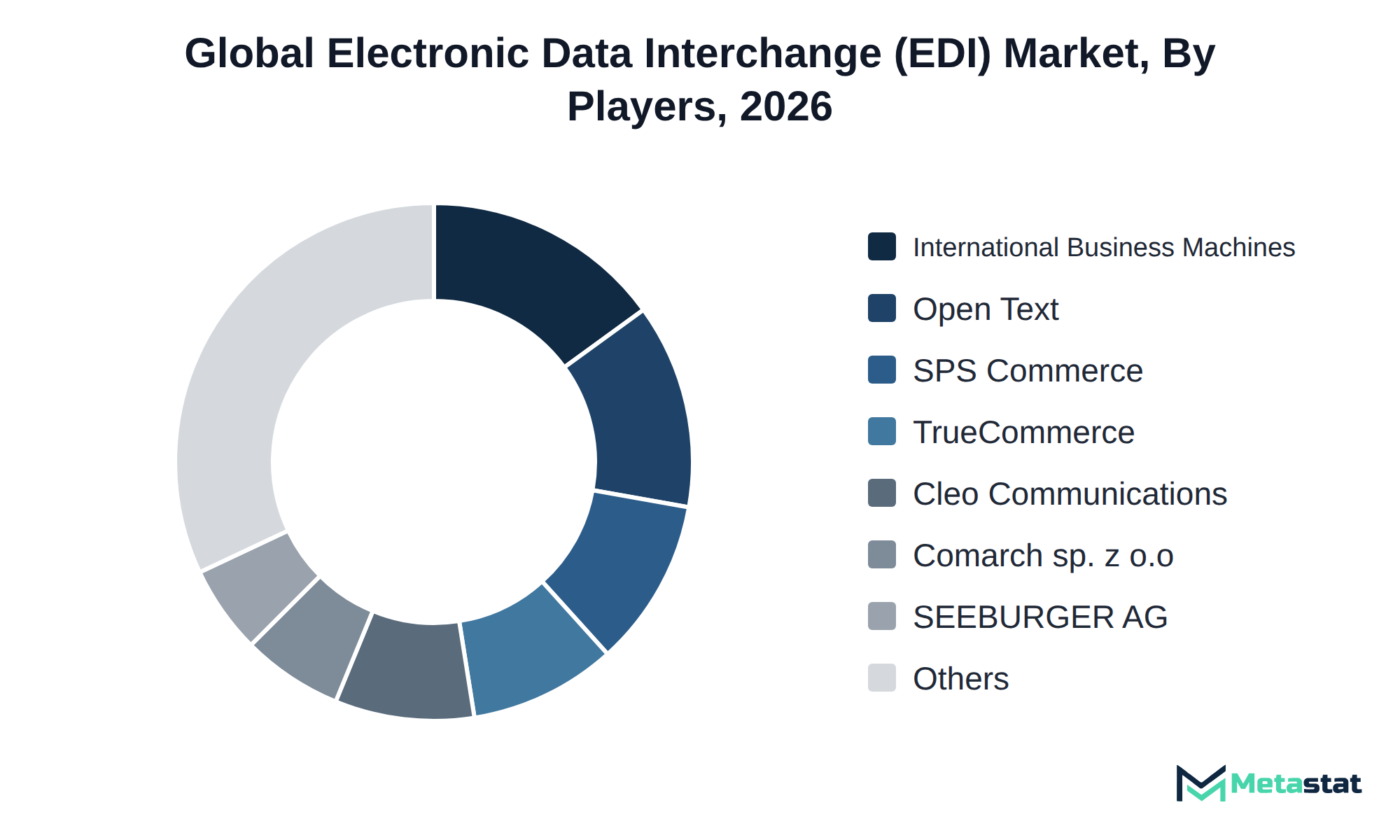
Competition within the Electronic Data Interchange (EDI) market spans various dimensions, including service type and deployment model. Companies differentiate themselves by offering tailored solutions that meet specific buyer requirements, including price, customization, service quality, and ecosystem integration.
Organizations including International Business Machines Corporation and Oracle Corporation focus on providing robust software solutions, while firms like TrueCommerce, Inc. and Cleo Communications, Inc. emphasize comprehensive service offerings. Cloud-based deployment has gained traction, with companies like Boomi, LP and SEEBURGER AG leading this segment through scalable solutions that support diverse organizational needs.
Buyers in the market prioritize factors including service reliability, cost-effectiveness, and integration capabilities when selecting EDI solutions. Salesforce, Inc. and Epicor Software Corporation focus on enhancing user experiences by offering customized solutions that align closely with specific industry requirements, improving operational efficiency for clients.
The growth of the Electronic Data Interchange (EDI) market depends on several key developments. First, the increasing adoption of cloud-based deployment models is expected to drive demand, particularly among small and medium-sized enterprises looking to streamline operations. This segment anticipates significant growth, influenced by the agility and flexibility offered by cloud solutions. Second, a focus on enhancing services, including integration and support, is projected to push the market forward, particularly in North America, where businesses seek comprehensive EDI solutions to meet evolving requirements. However, the primary risk that could hinder market expansion involves potential regulatory challenges, particularly in industries including healthcare and life sciences, where compliance with strict standards remains crucial. These factors will shape the market's path and determine whether it reaches its projected value by 2033.
By Component: Software, Services
By Deployment Model: Cloud-Based, On-Premises, Hybrid
By Organization Size: Large Enterprises, Small and Medium-Sized Enterprises
By End-Use Industry: Retail and Consumer Goods, Manufacturing (Excluding Automotive), Healthcare and Life Sciences, Automotive, Transportation and Logistics, Banking and Financial Services, IT and Telecommunications, Others (Energy, Utilities and Public Administration)
The report strategically identifies and profiles the key market players and analyses their core competencies in each sub-segment of the Electronic Data Interchange (EDI) market.
Report Attributes | Details |
Study Period | 2021-2033 |
Base Year | 2025 |
Estimated Year | 2026 |
Forecast Period | 2026-2033 |
Historical Period | 2021-2025 |
Growth Rate | CAGR 12.4% from 2026 to 2033 |
Revenue Unit | USD million |
Segmentation | By Component, Deployment Model, Organization Size, End-Use Industry, and Region |
By Region | North America (By Component, Deployment Model, Organization Size, End-Use Industry, and Country)
|
Europe (By Component, Deployment Model, Organization Size, End-Use Industry, and Country)
| |
Asia Pacific (By Component, Deployment Model, Organization Size, End-Use Industry, and Country)
| |
South America (By Component, Deployment Model, Organization Size, End-Use Industry, and Country)
| |
Middle East and Africa (By Component, Deployment Model, Organization Size, End-Use Industry, and Country)
|
Find answers to common questions about this report
The Electronic Data Interchange (EDI) market size was valued at USD 2,259.5 million in 2025.
The market is projected to grow at a CAGR of 12.4% during the forecast period from 2026 to 2033.
The North America Electronic Data Interchange (EDI) market size is estimated to reach USD 2,082.7 million by 2033.
The leading segment in the Electronic Data Interchange (EDI) market is Software, with a projected value of USD 3,188.8 million by 2033. This segment surpasses Services, which is expected to reach USD 2,569.2 million in the same year.
The shift toward cloud-based solutions enhances agility and scalability in operations, particularly among large enterprises seeking to streamline supply chain processes. High costs associated with implementation restrict adoption among small and medium-sized enterprises, impacting their competitiveness in the market.
North America holds the dominant share of the Electronic Data Interchange market, accounting for 39.8 percent of the total market in 2025. This region is projected to reach USD 2,082.7 million by 2033.
High costs associated with the implementation of EDI solutions restrict adoption among small and medium-sized enterprises (SMEs). Talent shortages pose a significant challenge for suppliers, impacting their ability to deliver quality services and increasing operational costs.
The retail and consumer goods segment is experiencing significant growth due to increasing demand for streamlined supply chain operations and enhanced transaction efficiency. This environment encourages the adoption of Electronic Data Interchange (EDI) solutions, as businesses prioritize data accuracy and interoperability to meet consumer expectations.
The Electronic Data Interchange (EDI) market is estimated to reach a valuation of USD 5,758 million by 2033.
Key players operating in the Electronic Data Interchange (EDI) market include International Business Machines Corporation, Open Text Corporation, SPS Commerce, Inc., TrueCommerce, Inc., Cleo Communications, Inc., and Oracle Corporation.
The analysts below cover Information & Technology research at Metastat Insights.
LEAD ANALYST
Utkarsh Khirodkar is a Lead Market Research Analyst at MetaStat Insight, specializing in market intelligence, technology sector assessments, and competitive strategy.

PRINCIPAL CONSULTANT - ENTERPRISE AI & EMERGING TECHNOLOGIES
Banking & Finance · Electronics and Semiconductor · Energy and Power · Healthcare IT · Information & Technology · Professional Services
Vijay Gunti is a Principal Consultant at MetaStat Insight, bringing over two decades of experience across enterprise digital transformation, technology strategy, and intelligent systems.

LEAD CONSULTANT - COMMUNICATION, TELECOM, AND IT
Electronics and Semiconductor · Information & Technology · Machinery & Equipment · Professional Services
Ravindra Sathe Consultants for Communication, Telecom, and IT at MetaStat Insight. He leads the firm's industry research initiatives across telecommunications infrastructure, digital connectivity, enterprise networking, and emerging information technology domains.
Standard industry briefs frequently blur the operational distinctions between isobaric pressure exchangers and centrifugal turbines. In this study, MetaStat Insight categorized mega-scale desalination tenders across the GCC and Mediterranean basins by membrane replacement frequencies and salinity tolerances. Their primary research helped us evaluate local content requirements in Saudi Arabia and the UAE without relying on marketing literature. We found the segment-level equipment replacement estimates grounded and well-reasoned throughout.
The technical breakdown of ISO 20022 migration readiness across correspondent banking corridors was remarkably thorough. Rather than treating cross-border corporate payments as a single block, the report drew a useful distinction between multilateral netting platforms and domestic instant payment rails across ASEAN economies. MetaStat Insight highlighted regulatory constraints on foreign exchange liquidity management that many publications gloss over. The research material offered practical clarity for our platform development roadmap.
Our group needed clearer visibility into out-of-autoclave processing timelines for high-temperature thermoplastic composites. MetaStat Insight delivered an objective assessment that contrasted automated fiber placement scrap rates with traditional thermoset prepreg layup cycles. The supplier landscape mapped out primary resin suppliers and tape slitting capacity across France, Germany, and Japan with solid technical accuracy. Their analyst handled our questions on precursor supply risks during an unscheduled inquiry call, providing clear, unembellished context.
Explore related market intelligence reports worth reading alongside this one.