
LEAD ANALYST
Utkarsh Khirodkar is a Lead Market Research Analyst at MetaStat Insight, specializing in market intelligence, technology sector assessments, and competitive strategy.

Global Ethnic Street Food Retail Market Size, Share, By Cuisine Origin (Chinese, Indian, Southeast Asian, Mexican, Middle Eastern, Japanese, Korean, European and Others), By Product Type (Filled Breads, Wraps and Tacos, Noodle and Rice Dishes, Dumplings and Filled Pastries, Fried and Grilled Snacks, Sweet Snacks and Desserts, Traditional Beverages and Others), By Retail Format (Permanent Stalls and Kiosks, Counter-Service Shops, Food Trucks and Vans, Pushcarts and Mobile Stands), By Order Channel (In-Person Orders, Third-Party Delivery Platforms, Operator Websites and Apps), Industry Analysis, Growth, Trends, and Forecast, 2026-2033
Report ID
MSI-5658
Published
November, 2026
Pages
299 Pages
Format
Historical
Base year
Forecast
Forecast period
Report Details
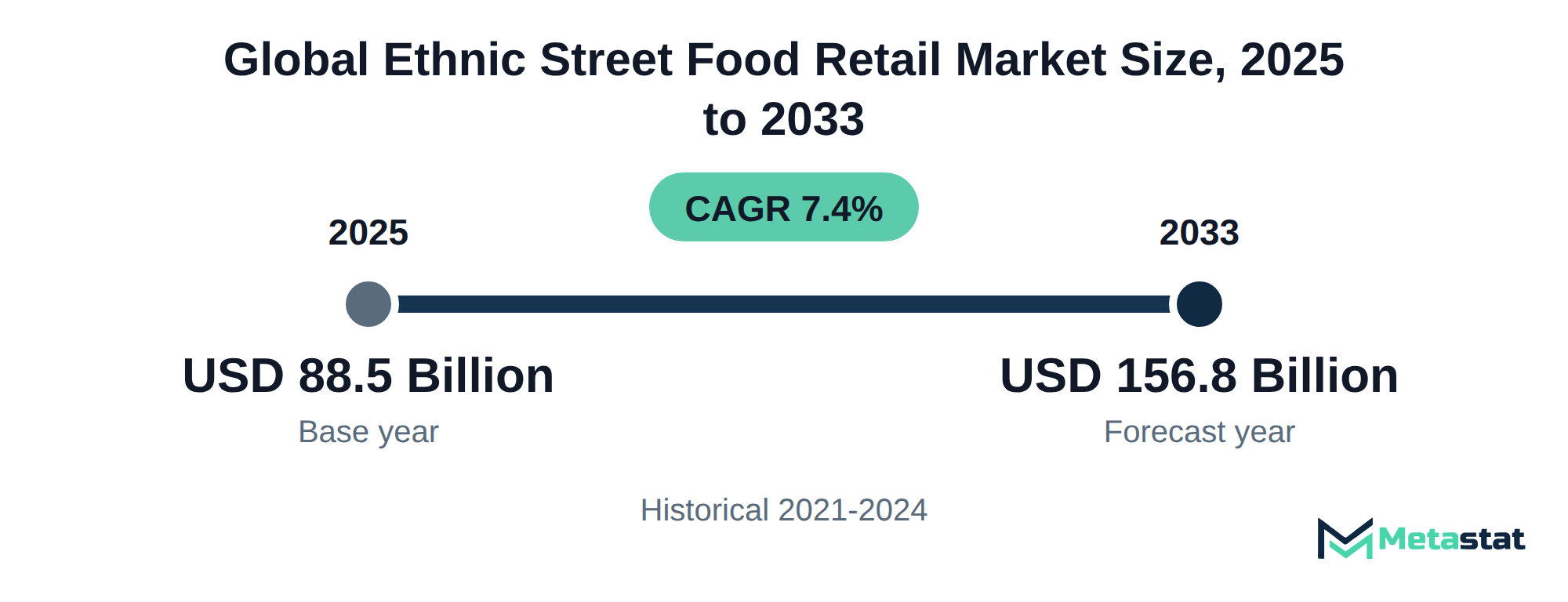
Market Valuation: Valued at $88.5 Billion in 2025, projected to reach $156.8 Billion by 2033 at a 7.4% CAGR.
Dominant Segment: The Chinese cuisine segment leads the market, driven by strong consumer preferences for its diverse offerings and flavors. This segment's substantial market value reflects the increasing demand for convenient and authentic dining experiences.
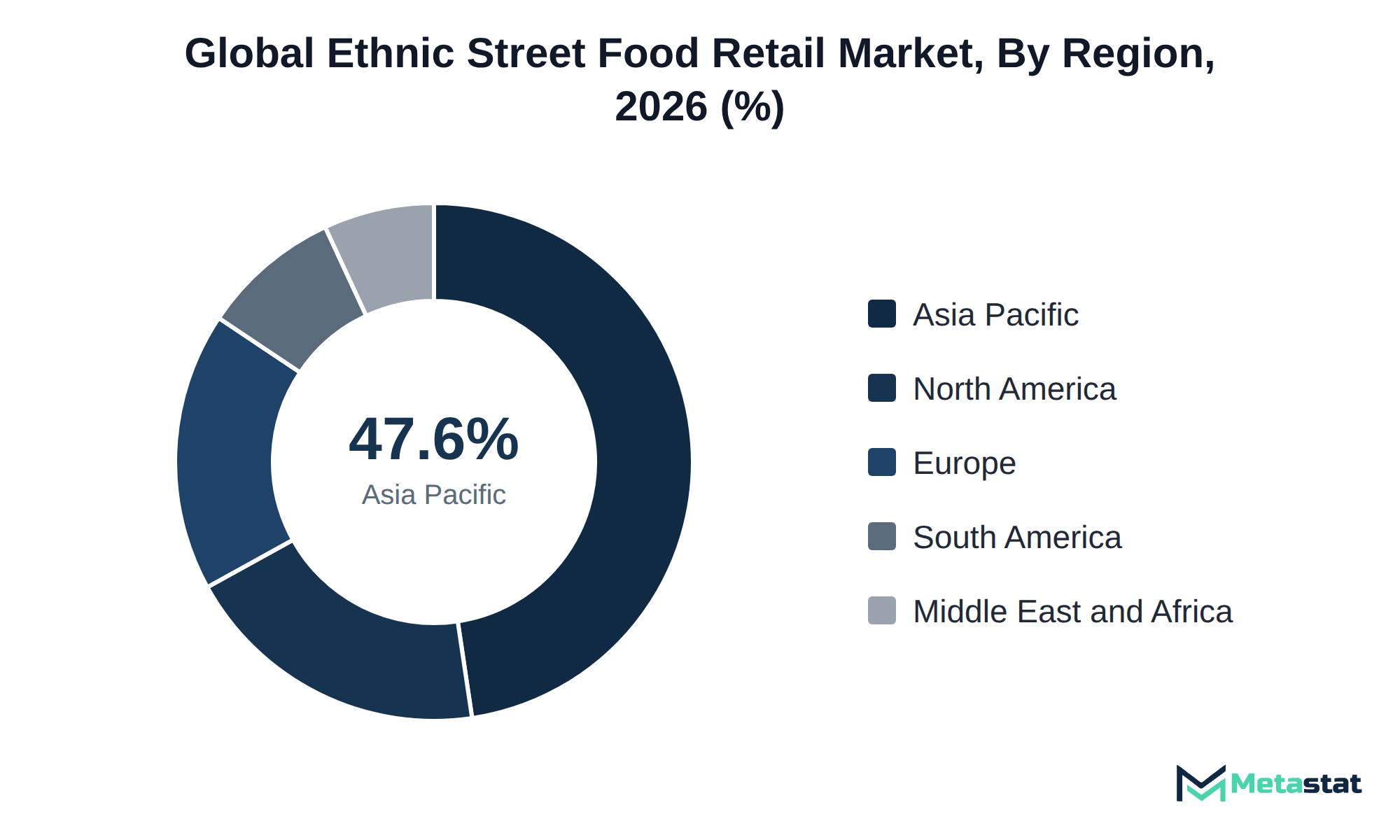
Geographic Lead: Asia Pacific dominates the Ethnic Street Food Retail market, accounting for 47.6% in 2025 due to its rich culinary heritage and vibrant street food culture. The region's cultural diversity and urbanization contribute significantly to its market growth.
What's Inside: The report provides a comprehensive analysis of the Ethnic Street Food Retail market, covering various segments by cuisine origin, product type, retail format, and order channel. It includes competitive coverage, industry trends, and a forecast window extending to 2033.
Emerging Growth in Delivery Platforms: The third-party delivery channel is projected to grow at a CAGR of 11.7% through 2033, reflecting a shift in consumer behavior toward online ordering. This trend highlights the increasing demand for convenience and diverse culinary options among consumers.
Choose Your License
Global Ethnic Street Food Retail Market
The global Ethnic Street Food Retail market was valued at USD 88.5 billion in 2025 and is projected to reach USD 156.8 billion by 2033, growing at a CAGR of 7.4% over the forecast period.
The Ethnic Street Food Retail market covers dishes from many cultures and appeals to consumers seeking authentic, convenient dining experiences. Buyers invest in this market due to the increasing popularity of ethnic cuisines and the desire for unique flavor profiles. This trend is evident across urban areas, where consumers prioritize diverse food options that reflect global culinary influences.
Growth in the market is driven primarily by the rising demand for convenient, ready-to-eat meals that align with busy lifestyles. The Chinese cuisine segment stands out with significant market value, reflecting a strong consumer preference for its diverse offerings and flavors. In terms of regional share, Asia Pacific dominates the market with 47.6%, highlighting the region's cultural richness and culinary diversity. North America holds 19.3% of the market in 2025, with the US leading in 2026.
Expanding urban populations drive the demand for ethnic street food, enabling new opportunities for food vendors and retailers across the foodservice industry. Consumers increasingly seek authentic experiences that connect them with different cultures, further driving growth in this sector. The combination of evolving consumer preferences and an expanding market landscape positions the Ethnic Street Food Retail market for continued momentum in the coming years.
The Ethnic Street Food Retail market offers a variety of culinary experiences that cater to consumers seeking diverse and authentic food options. Growing demand for quick, flavorful meals that reflect global cuisines draws buyers to this market. The increasing trend of urbanization and a busy lifestyle drives consumers toward convenient food solutions, making ethnic street food an attractive choice for time-conscious diners.
Growth in the market is influenced by the rising popularity of international cuisines, particularly the Chinese segment, which holds substantial value. Asia Pacific stands out with the largest market share, accounting for 47.6% in 2025. This region benefits from a rich culinary heritage and a strong street food culture, contributing to its dominance in the sector.
The increasing acceptance of ethnic foods among diverse consumer demographics acts as a significant growth driver. This trend reflects a broader willingness to explore new flavors and dishes, enhancing the overall appeal of ethnic street food within various markets.
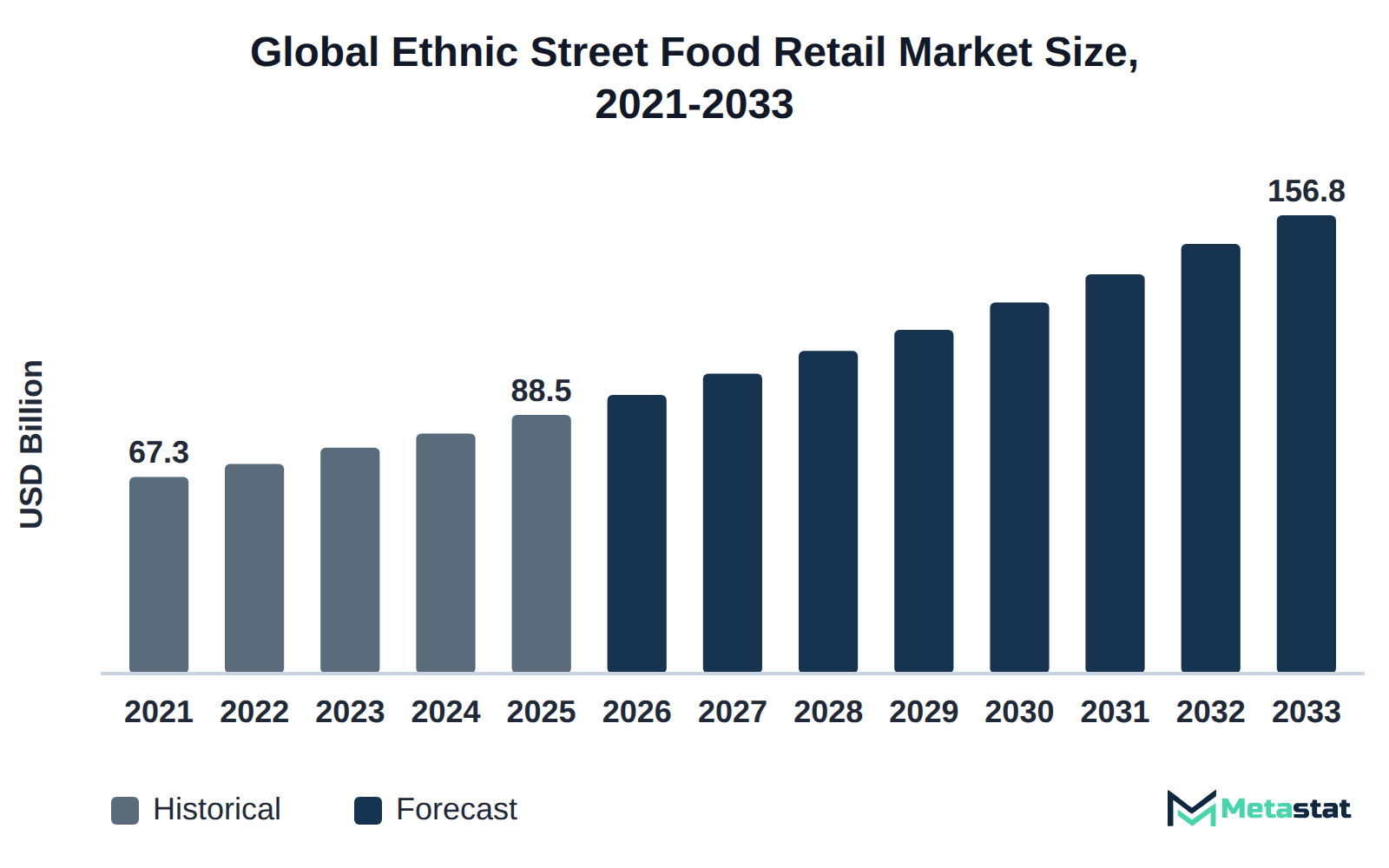
Kiosk franchises increasingly use technology to replicate and scale authentic street food recipes, widening consumer access to diverse culinary experiences. The Ethnic Street Food Retail market benefits from this trend, particularly through the integration of food preparation equipment that maintains traditional flavors while streamlining operations. The market is projected to reach USD 156.8 billion by 2033, reflecting a compound annual growth rate (CAGR) of 7.4%.
Franchises have adopted specialized cooking appliances designed to optimize the preparation of filled breads, wraps, and tacos, contributing to an expected revenue increase in this product type. From 2026 to 2033, revenue is anticipated to rise from USD 25.3 billion to USD 42.2 billion, demonstrating a CAGR of 7.6%. This technological shift allows franchises to deliver authentic tastes efficiently, meeting growing consumer demand for quality ethnic food.
The use of mobile ordering and digital payment systems enhances convenience for customers, driving sales through kiosks and food trucks. The integration of such technologies positions market players to respond swiftly to trends, ensuring that they capture a growing share of the expanding Ethnic Street Food Retail market.
Effective delivery packaging maintains the quality of ethnic street food, particularly dumplings and fried snacks. These products often rely on specific textures that enhance the eating experience. The influence of food packaging on texture preservation directly impacts customer satisfaction and repeat purchases.
In the Ethnic Street Food Retail market, the segment for dumplings and filled pastries shows significant potential, with a projected market value of USD 27.6 billion by 2033. This figure highlights the importance of ensuring that delivery methods align with customer expectations regarding texture and freshness. Moisture-control packaging and insulation techniques help keep fried snacks crisp, so consumers receive a high-quality product.
Investing in advanced packaging technologies leads to reduced food waste and improved delivery efficiency. By ensuring that products arrive in optimal condition, vendors enhance their reputations and increase customer loyalty. For businesses focusing on expansion within the ethnic street food sector, effective delivery packaging provides a strategic advantage that promotes higher sales and strengthens market presence.
International expansion of ethnic street food businesses requires careful adaptation of menus to maintain regional cuisine identity while catering to local tastes. Businesses including The Halal Guys and Chaiiwala demonstrate the importance of this balance, successfully merging traditional offerings with localized preferences. In the Ethnic Street Food Retail market, demand for Chinese cuisine is projected to grow from USD 21.1 billion in 2026 to USD 33.1 billion by 2033. Operators therefore need to adapt their menus to attract diverse consumer bases. This growth is driven by the increasing popularity of Asian flavors and dining experiences.
Adapting menus involves integrating regional ingredients and flavors without losing authenticity. For instance, Indian street food vendors expanding into Western markets often include locally sourced ingredients while retaining core recipes. Such strategies help to establish brand identity and build customer loyalty by aligning with local consumer preferences. The market remains competitive, with operators that effectively adapt their offerings able to capture a larger share and drive sales growth. Overall, understanding regional cuisine identity and implementing strategic menu adaptations significantly influences long-term success in the ethnic street food sector.
Counter-service retail formats thrive with specific ethnic street foods that cater to quick dining preferences. Among these, noodle and rice dishes emerge as a leading choice. The demand for this category in the Ethnic Street Food Retail market is projected to reach USD 34.8 billion by 2033, reflecting a growing trend toward convenient, flavorful options for consumers seeking quick meals.
The appeal of noodle and rice dishes lies in their versatility and broad consumer base, spanning various age groups and cultural backgrounds. This adaptability enhances their suitability for counter-service setups, where speed and efficiency are essential. Restaurants and shops that focus on these dishes attract diverse clientele, driving traffic and boosting revenue.
The trend toward healthier eating habits influences the rising popularity of these dishes. Many consumers opt for meals that combine nutrition with flavor, making noodle and rice dishes an excellent fit for counter-service formats. Vendors that prioritize fresh ingredients and customizable options tap into this demand, positioning themselves favorably in the evolving Ethnic Street Food Retail market.
Growing consumer preference for convenient dining options drives increased spending in the ethnic street food sector. Busy lifestyles, particularly among urban populations, create a demand for quick, authentic meal choices that fit into tight schedules. This trend is evident among millennials and Gen Z consumers, who prioritize on-the-go dining experiences that reflect their cultural tastes. The convenience factor influences purchasing behavior and allows for premium pricing on ethnic street food offerings. The market experiences a compound annual growth rate (CAGR) of 7.4% from 2025 to 2033, reflecting strong consumer interest and spending growth.
This surge in demand presents opportunities for businesses to innovate their service formats and enhance offerings. Retail formats including food trucks and kiosks increasingly cater to this preference, leading to higher volumes in sales. By adapting to evolving consumer habits, players in the ethnic street food retail sector position themselves for sustained growth in a competitive environment.
Innovative cooking techniques and equipment significantly enhance the efficiency and quality of ethnic street food offerings. Advances in food preparation technology streamline processes, enabling vendors to produce meals quickly while maintaining authentic flavors. This efficiency supports the growing demand for high-quality, ready-to-eat meals among urban populations, particularly in busy metropolitan areas where convenience remains crucial.
The rise of digital platforms facilitates better engagement with consumers. Vendors use social media and mobile applications to promote their offerings and reach a broader audience. This trend leads to increased foot traffic at physical locations while boosting online orders through third-party delivery platforms. The integration of technology into operational strategies drives growth in the Ethnic Street Food Retail market, allowing businesses to adapt to shifting consumer preferences and enhance the overall customer experience.
Price sensitivity among consumers represents a significant restraint in the Ethnic Street Food Retail market. Many buyers, particularly in price-sensitive segments, exhibit hesitation when faced with high pricing, leading to slower uptake and smaller order sizes. The increasing cost of ingredients and operational expenses contributes to higher menu prices, limiting frequency of purchases among budget-conscious consumers. This trend is especially pronounced in regions where disposable income remains low, impacting overall market growth. Competition from inexpensive alternatives, including quick service restaurants and casual dining, further exacerbates this challenge. To stimulate engagement, operators in the market balance quality with pricing, ensuring that offerings remain attractive to consumers while maintaining profitability. Without strategic pricing approaches, the market experiences delayed adoption and reduced revenue potential, affecting long-term expansion initiatives.
Increasing ingredient costs challenge suppliers in the Ethnic Street Food Retail market. Fluctuations in prices for key ingredients, driven by supply chain disruptions and agricultural conditions, significantly affect profit margins. Suppliers face pressure to maintain pricing while ensuring product quality, resulting in operational challenges. Adaptation strategies include negotiating long-term contracts with suppliers to stabilize costs and exploring local sourcing options to reduce dependence on global supply chains. Several businesses diversify their ingredient base to mitigate risks associated with price volatility. Suppliers implementing these strategies focus on maintaining quality, ensuring customer satisfaction and loyalty. The impact of rising ingredient costs extends beyond immediate profitability, influencing pricing strategies and competitive positioning within the market.
The third-party delivery channel for ethnic street food presents significant growth potential, driven by a shift in consumer behavior toward online ordering. This segment is projected to exhibit a compound annual growth rate (CAGR) of 11.7% through 2033, indicating a strong preference for convenience among consumers. The increasing adoption of smartphones and mobile applications enables easier access to a wider variety of ethnic cuisines, appealing particularly to younger demographics seeking unique dining experiences.
Retailers focusing on enhancing their presence on third-party platforms capture a larger share of the market. By optimizing menus and ensuring efficient delivery practices, businesses address consumer demand for quick and convenient meal options while maintaining authenticity. Growth in this area encourages innovation in menu offerings, ultimately leading to increased market penetration during the forecast period.
The Global Ethnic Street Food Retail market is segmented based on Cuisine Origin, Product Type, Retail Format, and Order Channel.
This segment appeals to various consumer groups, including those seeking quick, flavorful meals and traditional favorites. The rise in popularity of Chinese cuisine stems from its rich flavors and variety, attracting a wide demographic base, particularly in urban environments. Growth is primarily supported by increasing demand for convenient dining options. The Chinese segment is set for steady expansion and stands out for its strong presence in food trucks and kiosks, which makes it more accessible than other ethnic cuisines. While the Mexican and Indian segments exhibit faster growth rates, the Chinese segment maintains a strong consumer base, ensuring sustained interest in its diverse offerings. The market remains competitive, with numerous players enhancing their menus to cater to evolving taste preferences.
Indian street food offerings are estimated to reach USD 29.9 billion by 2033, at a CAGR of 7.7% during the forecast period. This segment appeals to consumers craving rich flavors and diverse culinary experiences, often enjoyed in casual dining settings or quick snacks. The growing interest in Indian cuisine among a wide demographic contributes to increased demand, particularly among younger consumers seeking authentic dining experiences. This segment differs from others in the Cuisine Origin category, including Chinese and Mexican, which experience slower growth rates. The distinct spices and cooking methods prevalent in Indian cuisine create unique flavor profiles, enhancing its popularity and driving sales. The market expands amid increasing numbers of food trucks and kiosks specializing in Indian dishes, facilitating broader access to these offerings.
The Southeast Asian segment is expected to reach USD 28.1 billion by 2033. This segment encompasses a variety of dishes, including noodles, rice dishes, and dumplings, appealing to consumers seeking flavorful and diverse food options. Growing urbanization and an increasing interest in global cuisines drive demand from food enthusiasts and everyday consumers. This segment differentiates itself from others through its focus on unique flavor profiles and preparation methods. The anticipated compound annual growth rate (CAGR) stands at 7.0%, highlighting a significant growth trajectory compared to other cuisine origins. The Southeast Asian segment attracts younger demographics eager for authentic and innovative culinary experiences, setting it apart from more traditional cuisine offerings. The market benefits from rising disposable incomes, enabling consumers to indulge in diverse dining experiences.
Mexican street food is projected to grow at a CAGR of 6.8% during the forecast period. This segment caters to consumers seeking flavorful and diverse culinary experiences, attracting a broad audience that includes both locals and tourists. The rising popularity of Mexican cuisine, driven by increased interest in authentic and distinctive flavors, significantly influences this segment. Mexican fast casual restaurants serve the same interest in authentic flavors. The Mexican segment experiences strong growth relative to other cuisine origins, although it does not match the pace of Indian street food offerings, which are expected to reach USD 29.9 billion by 2033. Accessibility through various retail formats, including food trucks and kiosks, enhances consumer engagement. The market for Mexican street food benefits from adapting traditional recipes to local tastes while retaining authentic elements, ensuring continued demand and exploration of new flavors among consumers.
Middle Eastern cuisine offers a rich variety of dishes that emphasize bold flavors and aromatic spices. Patrons seek out dishes such as kebabs, falafel, and shawarma for their distinctive taste profiles. Growing interest in diverse culinary experiences fuels demand for this segment. Increased cultural awareness promotes the consumption of Middle Eastern street food among consumers seeking authentic dining options. This segment differs from others in its group in terms of pricing and cultural significance. While other cuisines like Indian and Chinese experience faster growth rates, Middle Eastern dishes maintain a strong presence through cultural festivals and food fairs. These factors contribute to the segment's resilience and sustained popularity among food enthusiasts, aiding growth in the Ethnic Street Food Retail market.
Japanese cuisine features a unique array of street food offerings, known for their delicate flavors and presentation. Popular items within this segment include takoyaki, okonomiyaki, and yakitori, appealing to consumers who value fresh, high-quality ingredients. The segment attracts a diverse demographic, including young urban professionals and families seeking convenient and tasty meal options. Increasing interest in Japanese culinary experiences influences growth, driven by the rising global popularity of Japanese culture and cuisine. This segment experiences moderate growth relative to other ethnic cuisines, reflecting a distinct consumer preference for authenticity and quality. The market's focus on premium ingredients often results in higher price points, distinguishing it from more price-sensitive segments, including Mexican and Indian street food.
Korean cuisine encompasses a diverse range of street food offerings cherished for their rich flavors and unique cooking styles. Popular dishes such as tteokbokki, mandu, and hotteok attract many consumers, including young adults and families seeking affordable, flavorful meals. Growing interest in Korean culture and cuisine, driven by media exposure and globalization, stimulates demand for Korean street food. The rise in health consciousness leads consumers to favor fresh ingredients and less processed foods, further enhancing the appeal of this segment. Compared to other ethnic cuisines, Korean street food stands out with its distinctive flavor profiles and emphasis on communal dining experiences, promoting social interaction among consumers. The Ethnic Street Food Retail market benefits from these trends, reflecting a growing preference for unique dining experiences that Korean street food provides.
European street food encompasses a diverse range of culinary offerings, reflecting the continent's rich cultural heritage. This segment attracts consumers seeking authentic flavors, often in urban settings where quick, convenient meals are in demand. A key driver for this segment involves evolving consumer preferences favoring fresh and locally sourced ingredients, enhancing the overall dining experience. Compared to other ethnic food segments, European street food demonstrates unique pricing strategies, appealing to both budget-conscious consumers and those willing to spend more for premium experiences. While growth remains steady, the European segment's pace does not match the rapid expansion observed in the Indian or Southeast Asian segments. Consequently, the market shows a balanced consumer interest between traditional favorites and modern interpretations of street food cuisine.
The Others (African, Caribbean, Other Latin American) segment encompasses a diverse range of street food options that appeal to consumers seeking unique culinary experiences. Demand for these offerings arises from urban centers with multicultural populations, where food enthusiasts seek authentic and innovative flavors. The segment benefits from a growing interest in global cuisine, which drives exploration and consumption of less mainstream food options. This category features a mix of distinct spices and fresh ingredients, attracting customers looking for novel tastes. Compared to other segments, this sub-segment experiences slower growth due to its niche appeal, which differs from the broader popularity of options like Indian or Chinese street food. The Ethnic Street Food Retail market reflects a shifting environment, where the integration of these diverse cuisines enhances overall culinary diversity and innovation.
Filled Breads, Wraps and Tacos segment is valued at USD 25.3 billion in 2026 and is projected to reach USD 42.2 billion by 2033, at a CAGR of 7.6% during the forecast period. This segment appeals to consumers seeking convenient and portable meal options, commonly enjoyed during casual outings or events. Increasing urbanization and busy lifestyles drive demand for these products, which offer quick and satisfying dining solutions. Compared to other segments, including Noodle and Rice Dishes, which is projected to reach USD 34.8 billion by 2033, Filled Breads, Wraps and Tacos display a slightly lower growth rate. The market observes notable price variations, with Filled Breads, Wraps and Tacos often being more affordable than gourmet options available in more specialized offerings. This affordability contributes to broad consumer acceptance and market penetration, highlighting its importance in the overall Ethnic Street Food Retail market.
Noodle and Rice Dishes segment is estimated to reach USD 34.8 billion by 2033, at a CAGR of 6.7% during the forecast period. Popular among consumers seeking quick and satisfying meal options, this segment appeals to diverse demographics looking for flavorful and filling dishes. The increasing demand for authentic ethnic flavors drives the growth of this segment, with many consumers favoring traditional recipes that reflect cultural heritage. Compared to other product types, Noodle and Rice Dishes display a strong growth trajectory, influenced by rising interest in Asian cuisine. Chinese noodles and traditional food form a closely related category within this trend. The segment stands out with a wide variety of offerings, enabling vendors to cater to different tastes and preferences. This adaptability supports its competitive edge within the market, distinguishing it from other segments that experience slower growth or face higher price sensitivity.
Dumplings and Filled Pastries segment is expected to reach USD 27.6 billion by 2033. This segment appeals to consumers seeking flavorful and satisfying meal options, often enjoyed as quick snacks or light meals. Increased urbanization and busy lifestyles support demand, with consumers gravitating toward convenient meal solutions. The segment's significant growth is driven by a distinct consumer preference for the variety and taste of dumplings and pastries. The segment distinguishes itself from others, including Noodle and Rice Dishes, which is projected to reach USD 34.8 billion by 2033, due to its unique appeal and culinary heritage. The market remains competitive, with diverse offerings catering to evolving consumer tastes.
The Fried and Grilled Snacks segment is projected to grow at a CAGR of 6.5% during the forecast period. This product type appeals to consumers seeking flavorful, portable meals enjoyed on-the-go. Street vendors and food trucks frequently serve these items, attracting busy professionals and families seeking quick meal options. Demand is driven by the increasing popularity of fusion cuisines that incorporate various culinary traditions. This segment shows a steady rise but grows more slowly than Noodle and Rice Dishes. The latter is anticipated to reach USD 34.8 billion by 2033, at a CAGR of 6.7%. The market for Fried and Grilled Snacks remains competitive due to the diverse range of offerings that cater to varying consumer preferences.
Sweet Snacks and Desserts encompass a variety of delectable offerings appealing to consumers seeking indulgent treats. These products attract a wide range of customers, including families, young adults, and food enthusiasts seeking unique taste experiences. Increased consumer interest in diverse culinary options drives growth within this segment, with a notable shift towards dessert offerings incorporating traditional flavors and innovative presentations. Compared to other product types, Sweet Snacks and Desserts often carry premium pricing due to the quality of ingredients and preparation methods used. This segment engages a different demographic, targeting those who prioritize flavor variety and presentation over convenience, distinguishing it from traditional savory offerings in the market. These factors contribute to a changing environment in the Ethnic Street Food Retail market, enhancing the appeal and growth potential of this segment.
Traditional beverages include a variety of drinks that complement ethnic street food offerings, enhancing the overall dining experience. These beverages attract consumers seeking authentic culinary experiences, often served alongside popular street food items. Factors driving growth in this segment include increasing interest in diverse beverage options and a rise in consumer preferences for natural ingredients. Traditional beverages differ from other product types in the market due to their unique flavors, rooted in cultural practices. While segments like filled breads and wraps experience rapid growth, traditional beverages maintain steady demand, appealing to customers seeking complementary pairings with their meals. This segment presents opportunities for suppliers to innovate with new flavors and ingredients appealing to health-conscious consumers, further expanding market potential.
Savory pancakes and porridges represent a unique category within the market, offering diverse culinary experiences. This segment appeals to consumers seeking comfort food with ethnic roots, often enjoyed in casual dining or street food settings. Key drivers for this segment include the growing interest in authentic ethnic cuisines and the rising demand for convenient, ready-to-eat meals. Distinctly, this segment stands out from others through its emphasis on traditional preparation methods, often featuring locally sourced ingredients that enhance flavor and authenticity. Unlike segments including filled breads or noodle dishes, savory pancakes and porridges offer a more niche appeal, catering to specific preferences for texture and taste. Consumers drawn to these offerings prioritize flavor diversity and nutritional value, influencing their purchasing decisions in the Ethnic Street Food Retail market.
The Permanent Stalls and Kiosks segment is valued at USD 38 billion in 2026 and is projected to reach USD 59.4 billion by 2033, at a CAGR of 6.6% during the forecast period. This format serves consumers seeking convenient and accessible dining options, often located in high-traffic areas. Increasing urbanization and changing consumer lifestyles drive demand for quick meal solutions, contributing to growth in this segment. The Permanent Stalls and Kiosks segment exhibits a slower growth trajectory than Counter-Service Shops, which is projected to achieve a higher value of USD 49.3 billion by 2033. The focus on affordability and convenience sets this segment apart, appealing to budget-conscious consumers who prefer immediate consumption rather than delivery or elaborate dining experiences. Overall, the dynamics within this segment reflect broader trends within the market.
Counter-Service Shops segment is estimated to reach USD 49.3 billion by 2033, at a CAGR of 8.3% during the forecast period. This segment serves consumers seeking quick and convenient dining options, often located in urban areas and catering to busy lifestyles. The growing demand for fast, flavorful meals drives increased investment in this format, appealing to a wide range of buyers including young professionals and families. Compared to other retail formats, Counter-Service Shops experience faster growth, supported by the trend of on-the-go eating and the rising popularity of international cuisines. Competitive pricing strategies enhance the segment's attractiveness relative to more traditional dining options. The emphasis on efficient service delivery and diverse menu offerings further distinguishes this segment within the Ethnic Street Food Retail market, positioning it for robust expansion.
Food Trucks and Vans segment is expected to reach USD 21.7 billion by 2033. This segment serves a diverse range of consumers seeking quick and convenient meal options that reflect various ethnic cuisines. A rising trend towards mobile dining experiences drives the popularity of food trucks, appealing to younger demographics and urban populations. The segment experiences a faster growth trajectory compared to other retail formats, with heightened demand fueled by increasing preference for outdoor dining and food festivals. This segment typically offers a unique culinary experience at competitive prices, drawing in customers who prioritize both quality and convenience. The market's focus on innovative food offerings positions food trucks distinctively against permanent stalls and kiosks, which offer more traditional dining experiences. Amid growing emphasis on convenience and variety, the Food Trucks and Vans segment shows significant potential in food retail.
Pushcarts and Mobile Stands segment is projected to grow at a CAGR of 4.9% during the forecast period. This format includes mobile units that offer a variety of ethnic street food options, enabling quick and convenient access for consumers. Such setups appeal to on-the-go customers, particularly in urban areas where traditional dining options are limited. Demand arises from changing consumer preferences for accessible and diverse culinary experiences. The relatively lower investment in infrastructure compared to other retail formats supports growth in this segment. Unlike Counter-Service Shops, which are expected to experience a higher CAGR of 8.3%, Pushcarts and Mobile Stands provide a unique experience at a lower price point, making them appealing to budget-conscious consumers. This segment's flexibility and adaptability to different locations further enhance its appeal, contributing positively to the overall dynamics of the market.
Temporary pop-ups and festival stalls provide an engaging avenue for consumers to experience ethnic street food in dynamic settings. These formats cater to people seeking quick, flavorful meals and unique culinary experiences during special events or festivals. Trends in experiential dining and consumer interest in international cuisines drive this segment, with festival organizers increasingly incorporating diverse food options to attract attendees. Unlike permanent stalls or counter-service shops, these setups operate for limited periods, appealing to adventurous eaters seeking novelty. This segment differs from others by focusing on transient engagement and the excitement surrounding cultural festivities, creating a unique atmosphere that enhances the overall dining experience.
In-Person Orders segment is valued at USD 71.1 billion in 2026 and is projected to reach USD 104.7 billion by 2033, at a CAGR of 5.7% during the forecast period. This segment caters to consumers seeking immediate access to ethnic street food, typically in vibrant urban environments or at markets and festivals. The growing preference for fresh, quickly prepared meals drives demand for in-person purchases, particularly among younger demographics and urban dwellers. Compared to other order channels, including Third-Party Delivery Platforms, which exhibit a higher CAGR of 11.7%, In-Person Orders display more stable growth. This stability stems from the traditional dining experience and the social interaction inherent in purchasing food on-site. The Ethnic Street Food Retail market benefits from this direct consumer engagement, enhancing customer loyalty and brand recognition.
Third-Party Delivery Platforms segment is estimated to reach USD 32.2 billion by 2033, at a CAGR of 11.7% during the forecast period. This segment appeals to consumers seeking convenience through digital ordering options for ethnic street food. Increasing smartphone penetration and the growing popularity of food delivery apps drive demand for this segment, enhancing accessibility for customers. Unlike in-person orders, which are projected to grow at a CAGR of 5.7%, Third-Party Delivery Platforms experience a significantly faster growth rate, attracting a broader audience, including busy professionals and younger consumers. This shift towards online ordering reflects changing consumer preferences, contributing to the expansion observed in the market.
Operator Websites and Apps segment is expected to reach USD 16.8 billion by 2033. This segment facilitates direct online ordering for consumers seeking convenience and efficiency in purchasing ethnic street food. The rise in smartphone usage and mobile applications enhances accessibility for consumers, promoting growth in this channel. The increasing trend of digital engagement drives businesses to optimize their online platforms, catering to tech-savvy customers. Compared to other order channels, Operator Websites and Apps exhibit a higher projected growth rate, with a CAGR of 11.7%. This growth reflects the shift towards digital solutions, contrasting with In-Person Orders, which show a lower CAGR of 5.7%. The market reflects a significant transformation towards a more digital-centric approach, aligning with consumer preferences for immediate access to diverse culinary offerings.
Segment Others (Telephone Orders, Messaging Orders) is projected to grow at a CAGR of 5.1% during the forecast period. This segment serves consumers seeking convenience, enabling them to place orders via phone or messaging apps, appealing to those who prefer ease of access over in-person interactions. Increasing smartphone penetration and a growing preference for digital communication drive the adoption of this segment among younger demographics. Compared to other order channels, this segment experiences slower growth, with a total value expected to reach USD 16.8 billion by 2033. Demand for this service benefits from the increasing trend in on-the-go consumption, where quick meal access remains a priority. The emphasis on convenience allows this segment to cater primarily to busy professionals, students, and families, differentiating it from in-person orders characterized by a more traditional purchasing approach in the Ethnic Street Food Retail market.
Based on geography, the Global Ethnic Street Food Retail market is divided into North America, Europe, Asia-Pacific, South America, Middle East, and Africa.
The appeal of ethnic street food in North America derives from a growing consumer preference for diverse culinary experiences. This region embraces unique flavors from various cultures, with heightened interest in offerings from countries including Mexico, India, and China. The presence of lively food festivals and street fairs enhances access to ethnic street food, creating opportunities for vendors to reach wider audiences. North America is projected to reach USD 31 billion by the end of 2033. The market benefits from a strong food culture, driven by increasing urbanization and changing lifestyles. Evolving dining habits among millennials and Gen Z consumers contribute significantly to the demand for convenient and authentic food options. The market in this region is characterized by a mix of established brands and emerging players, all competing to capture the interest of discerning customers seeking quality ethnic street food.
Europe represents a significant portion of the Ethnic Street Food Retail market, accounting for 17.4% of global value in 2025. The region's diverse culinary landscape, characterized by countries including Germany, France, the UK, Italy, Spain, and Russia, drives varying consumer preferences and demand for ethnic street food. Increasing urbanization supports the growth of food trucks and kiosks, catering to busy city dwellers seeking convenient dining options. In addition, growing interest in international cuisines among consumers enhances market appeal. Evolving food trends and the popularity of food festivals contribute to expanding opportunities for vendors. The market exhibits strong potential for growth, driven by innovations and shifting consumer behaviors across various segments.
Rapid growth in the Asia-Pacific region significantly influences the Ethnic Street Food Retail market, driven by diverse culinary preferences and a rising middle class with disposable income. Countries like China, India, and Southeast Asia demonstrate strong demand for various ethnic cuisines, enhancing consumer experiences. Infrastructure development, particularly in urban centers, supports the expansion of food stalls and mobile vendors, thus increasing accessibility. Increased investment in food delivery platforms further enhances market reach, catering to a tech-savvy consumer base. Continued growth is anticipated, supported by evolving consumer trends and a desire for authentic culinary experiences.
Growing interest in ethnic cuisines drives demand within the Ethnic Street Food Retail market in South America. Brazil and Argentina significantly contribute to this growth, reflecting diverse culinary traditions and increasing consumer willingness to explore global flavors. Urbanization in these countries enhances street food culture, with more consumers seeking convenient meal options. Infrastructure improvements support food stalls and vendors, facilitating access to a wider audience. The region's market share stands at 8.7% in 2025, indicating a solid position within the global context. While consumers prioritize unique dining experiences, the market is expected to see sustained growth, particularly in popular segments like Filled Breads, Wraps, and Tacos, which align with local tastes.
In the Middle East and Africa, a growing interest in diverse ethnic cuisines drives significant demand for the Ethnic Street Food Retail market. Countries including Saudi Arabia, UAE, and South Africa feature an increasing number of food trucks, kiosks, and stalls offering various culinary experiences. Urbanization and a rising middle-class population enhance the appeal of street food, which serves as an accessible dining option. Unique cultural preferences in these regions contribute to the adoption of specific dishes, with Indian and Middle Eastern flavors gaining popularity. The market represents a 6.9% share of the global value in 2025. Consumers in this region often seek convenience through in-person orders and mobile applications, reflecting a shift in purchasing behavior that influences growth opportunities for vendors. Investment in food infrastructure supports the expansion of street food offerings, attracting both local and international operators.
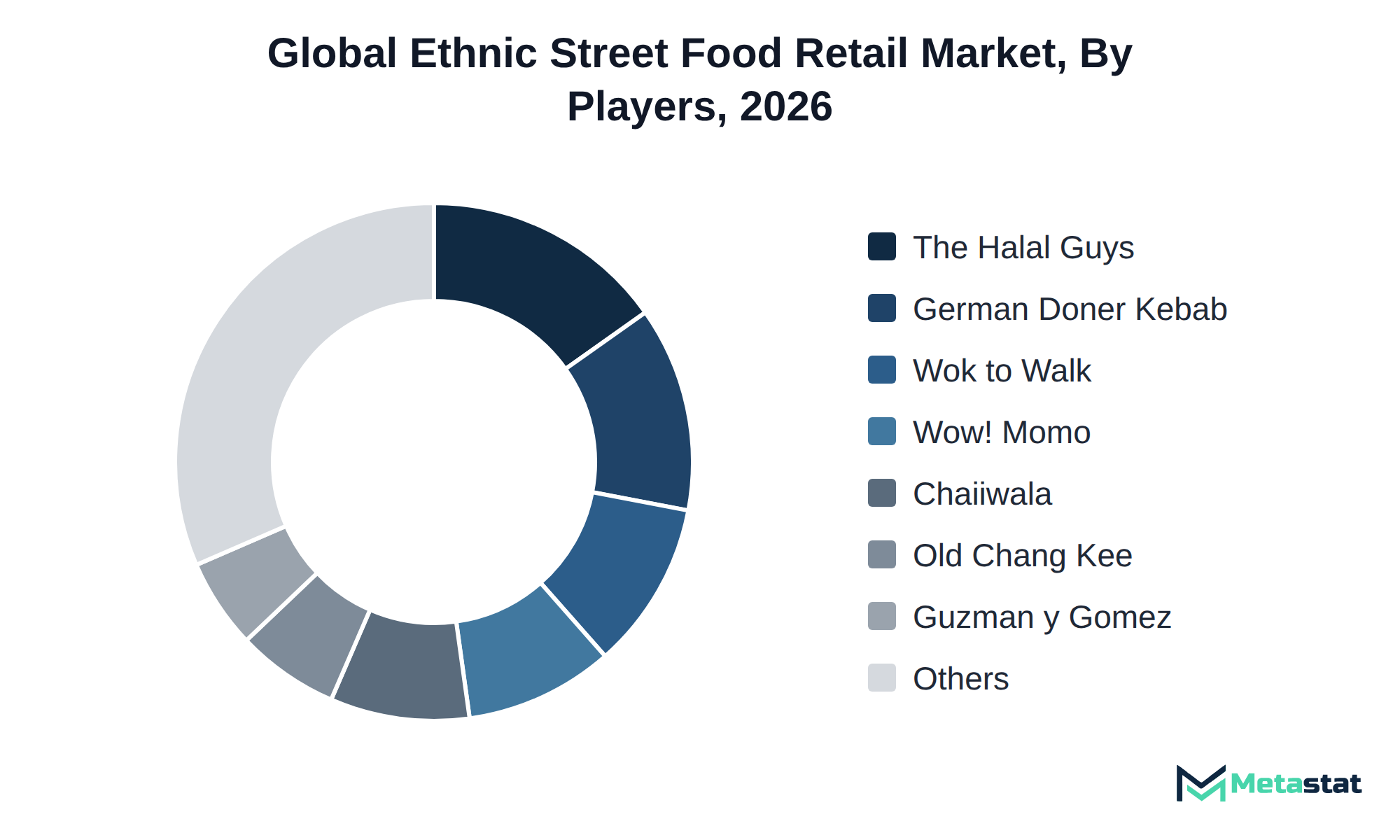
Companies within the Ethnic Street Food Retail market compete by focusing on diverse cuisine offerings, product types, and retail formats. The Halal Guys emphasizes the growing demand for Halal food while maintaining a strong presence in the United States. German Doner Kebab focuses on a fast-casual dining experience, appealing to consumers seeking quick yet quality meals, while Wok to Walk targets health-conscious buyers through customizable noodle dishes.
Buyers select vendors based on several criteria, including price, product quality, and service. Chaiiwala stands out for its unique beverage offerings, appealing to consumers seeking authentic experiences. Meanwhile, Old Chang Kee Ltd. prioritizes convenience through its permanent stalls, catering to shoppers seeking accessible and quick meal options. These examples show how companies differentiate their offerings to compete in the market.
The market's growth relies on several key developments. This growth aligns with rising demand for convenient dining options in regions with high consumer engagement, including North America and Europe.
Second, the growth of the ethnic street food segment, particularly Chinese and Indian cuisines, is expected to create additional revenue streams. This highlights increasing acceptance and preference for ethnic foods across diverse demographics.
However, potential risks include supply chain disruptions exacerbated by geopolitical tensions and fluctuating ingredient prices. Such challenges could hinder growth, especially in regions reliant on imports, impacting overall market performance. Continued adaptation and innovation will be needed to maintain momentum in the ethnic street food retail market.
By Cuisine Origin: Chinese, Indian, Southeast Asian, Mexican, Middle Eastern, Japanese, Korean, European, Others (African, Caribbean, Other Latin American)
By Product Type: Filled Breads, Wraps and Tacos, Noodle and Rice Dishes, Dumplings and Filled Pastries, Fried and Grilled Snacks, Sweet Snacks and Desserts, Traditional Beverages, Others (Savory Pancakes, Porridges)
By Retail Format: Permanent Stalls and Kiosks, Counter-Service Shops, Food Trucks and Vans, Pushcarts and Mobile Stands, Others (Temporary Pop-Ups, Festival Stalls)
By Order Channel: In-Person Orders, Third-Party Delivery Platforms, Operator Websites and Apps, Others (Telephone Orders, Messaging Orders)
The report strategically identifies and profiles the key market players and analyses their core competencies in each sub-segment of the Ethnic Street Food Retail market.
Report Attributes | Details |
Study Period | 2021-2033 |
Base Year | 2025 |
Estimated Year | 2026 |
Forecast Period | 2026-2033 |
Historical Period | 2021-2025 |
Growth Rate | CAGR 7.4% from 2026 to 2033 |
Revenue Unit | USD billion |
Segmentation | By Cuisine Origin, Product Type, Retail Format, Order Channel, and Region |
By Region | North America (By Cuisine Origin, Product Type, Retail Format, Order Channel, and Country)
|
Europe (By Cuisine Origin, Product Type, Retail Format, Order Channel, and Country)
| |
Asia Pacific (By Cuisine Origin, Product Type, Retail Format, Order Channel, and Country)
| |
South America (By Cuisine Origin, Product Type, Retail Format, Order Channel, and Country)
| |
Middle East and Africa (By Cuisine Origin, Product Type, Retail Format, Order Channel, and Country)
|
Find answers to common questions about this report
The Ethnic Street Food Retail market size was valued at USD 88.5 billion in 2025.
The market is projected to grow at a CAGR of 7.4% during the forecast period from 2026 to 2033.
The North America Ethnic Street Food Retail market size is estimated to reach USD 31 billion by 2033.
The leading segment in the Ethnic Street Food Retail market is Filled Breads, Wraps and Tacos, with a projected value of USD 42.2 billion by 2033. This segment demonstrates significant growth potential, driven by increasing consumer demand for diverse and convenient food options.
Growing consumer preference for convenient dining options drives increased spending in the ethnic street food sector. The rise of digital platforms facilitates better engagement with consumers, allowing vendors to reach a broader audience and boost sales through online orders.
Asia Pacific holds the dominant share of the Ethnic Street Food Retail market, accounting for 47.6 percent in 2025. This region significantly surpasses others, including North America at 19.3 percent and Europe at 17.4 percent.
Price sensitivity among consumers restrains growth in the Ethnic Street Food Retail market. Many buyers hesitate when faced with higher pricing, leading to slower uptake and smaller order sizes. Increasing ingredient costs challenge suppliers, affecting profit margins and resulting in operational difficulties.
Increasing consumer preference for convenient dining options supports adoption in the ethnic street food sector. The rise of digital platforms enhances vendor engagement and promotes offerings, leading to greater foot traffic and online orders.
The Ethnic Street Food Retail market is estimated to reach a valuation of USD 156.8 billion by 2033.
Key players operating in the Ethnic Street Food Retail market include The Halal Guys, German Doner Kebab, Wok to Walk, Wow! Momo, Chaiiwala, Old Chang Kee Ltd., and Guzman y Gomez Limited.
The analysts below cover Food and Beverages research at Metastat Insights.
LEAD ANALYST
Utkarsh Khirodkar is a Lead Market Research Analyst at MetaStat Insight, specializing in market intelligence, technology sector assessments, and competitive strategy.

LEAD PRINCIPAL ANALYST, PHARMA AND HEALTHCARE
Food and Beverages · Healthcare · Healthcare IT · Medical Devices
Ajay Devgire is the Lead Healthcare Analyst at MetaStat Insight, leading strategic research and market intelligence initiatives across the global healthcare domain.

SENIOR RESEARCH ANALYST
Biotechnology · Food and Beverages · Medical Devices · Packaging
Snehal Pasalkar is a Research Analyst at MetaStat Insight, operating at the intersection of life sciences research, competitive strategy, and market intelligence.
Tracking ceramic matrix composite adoption in high-bypass aero engines requires strict attention to material qualification cycles and FAA airworthiness testing milestones. The MetaStat Insight team provided a detailed timeline of silicon carbide fiber manufacturing capacity and commercial foundry lead times. Having clear visibility into upstream thermal barrier coating supply helped us stress-test our long-term component procurement strategy.
Transitioning ultra-class mining haul trucks to alternative power requires concrete data on remote hydrogen refueling infrastructure economics. The report evaluated megawatt-scale electrolyzer installation expenses, onsite storage safety mandates, and heavy-duty fuel cell stack degradation under continuous duty cycles. That technical rigor helped our engineers benchmark realistic total operating cost horizons for off-highway fleet decarbonization.
Enterprise zero-trust network rollouts are often slowed down by multi-cloud transit latency and proprietary hardware retirement schedules. This study provided realistic total cost of ownership models comparing cloud-delivered security edge solutions against traditional hardware refreshes. The analysis of contract renewal lengths and software maintenance fees gave us clear visibility into enterprise replacement cycles over the next three to five years.
Explore related market intelligence reports worth reading alongside this one.
Starting from
$2950