
LEAD ANALYST
Utkarsh Khirodkar is a Lead Market Research Analyst at MetaStat Insight, specializing in market intelligence, technology sector assessments, and competitive strategy.

India Financial Analytics Software Market Size, Share, By Deployment Model (Cloud, On-Premises, Hybrid), By Analytics Type (Descriptive Analytics, Diagnostic Analytics, Predictive Analytics, Prescriptive Analytics), By Application (Credit Risk Assessment and Underwriting, Fraud Detection and Financial Crime Analytics, Treasury, Liquidity and Asset Liability Management, Investment Portfolio and Market Risk Analytics, Insurance Underwriting and Actuarial Analytics, Collections and Recovery Analytics, Customer and Revenue Analytics, Financial Planning and Performance Analytics, Others), By End User (Banks, Non-Banking Financial Companies, Insurance Companies, Asset and Wealth Management Companies, Securities Brokers and Capital Markets Intermediaries, Payment Service Providers, Others), Industry Analysis, Growth, Trends, and Forecast, 2026-2033
Report ID
MSI-5516
Published
October, 2026
Pages
264 Pages
Format
Historical
Base year
Forecast
Forecast period
Report Details
Market Valuation: Valued at $464.1 Million in 2025, projected to reach $1,054.6 Million by 2033 at a 10.8% CAGR.
Dominant Segment: The predictive analytics segment leads the India Financial Analytics Software market, driven by the growing demand for advanced forecasting capabilities among financial institutions.
Geographic Lead: The Asia Pacific region commands the largest share of the market, fueled by ongoing digital transformation initiatives and a changing financial landscape.
What's Inside: This report provides a comprehensive analysis of market dynamics, competitive coverage, and forecasts spanning from 2026 to 2033, focusing on various deployment models, analytics types, and applications.
Increased Investment: Financial institutions are significantly increasing their investments in predictive analytics, reflecting a strategic shift towards data-driven decision-making to enhance operational efficiency and risk management.
Price Sensitivity: High implementation costs pose challenges for software adoption, particularly among banks and non-banking financial companies, impacting their ability to invest in advanced analytics solutions.
Choose Your License
India Financial Analytics Software Market
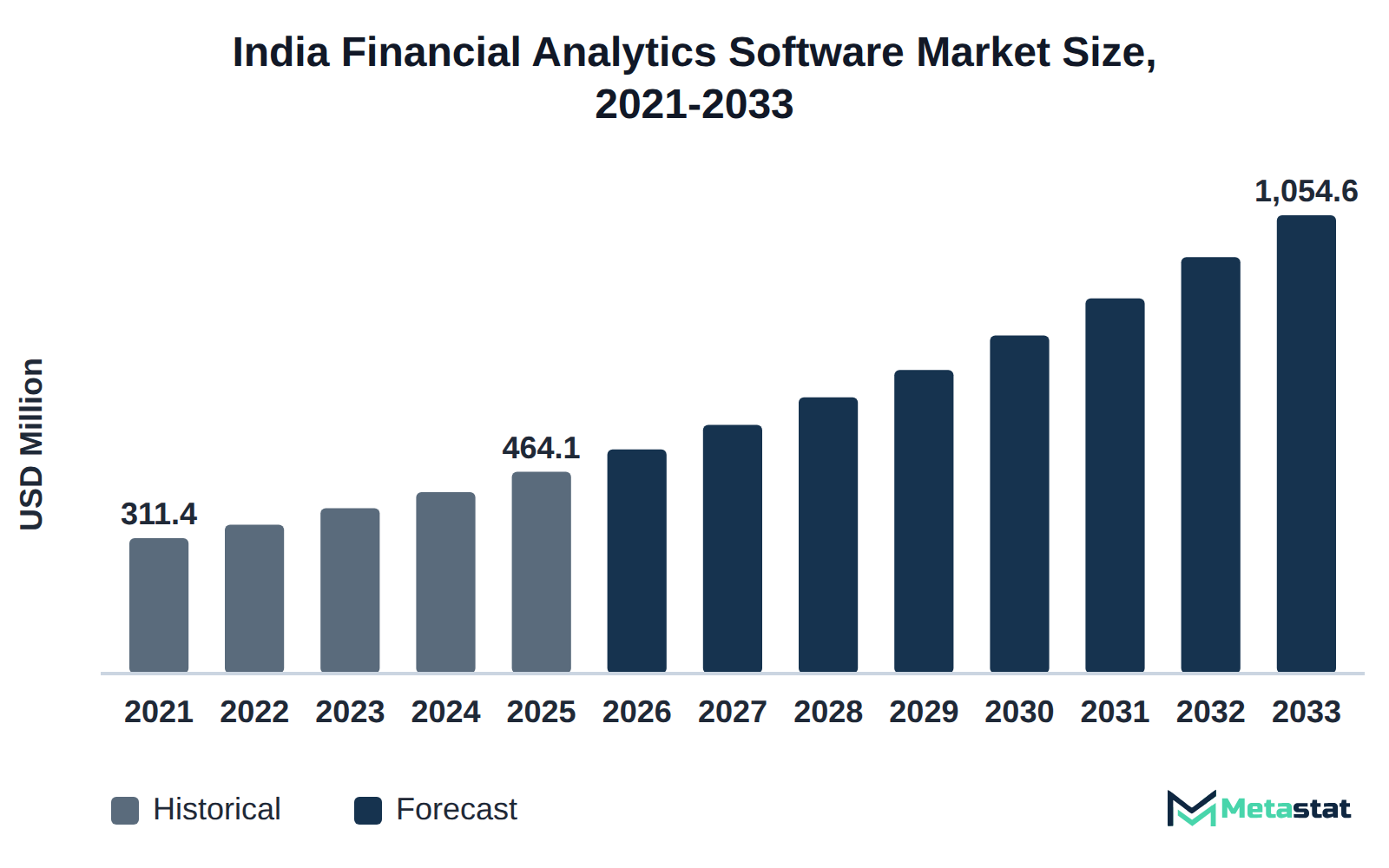
The India Financial Analytics Software market was valued at USD 464.1 million in 2025 and is projected to reach USD 1,054.6 million by 2033, growing at a CAGR of 10.8% over the forecast period.
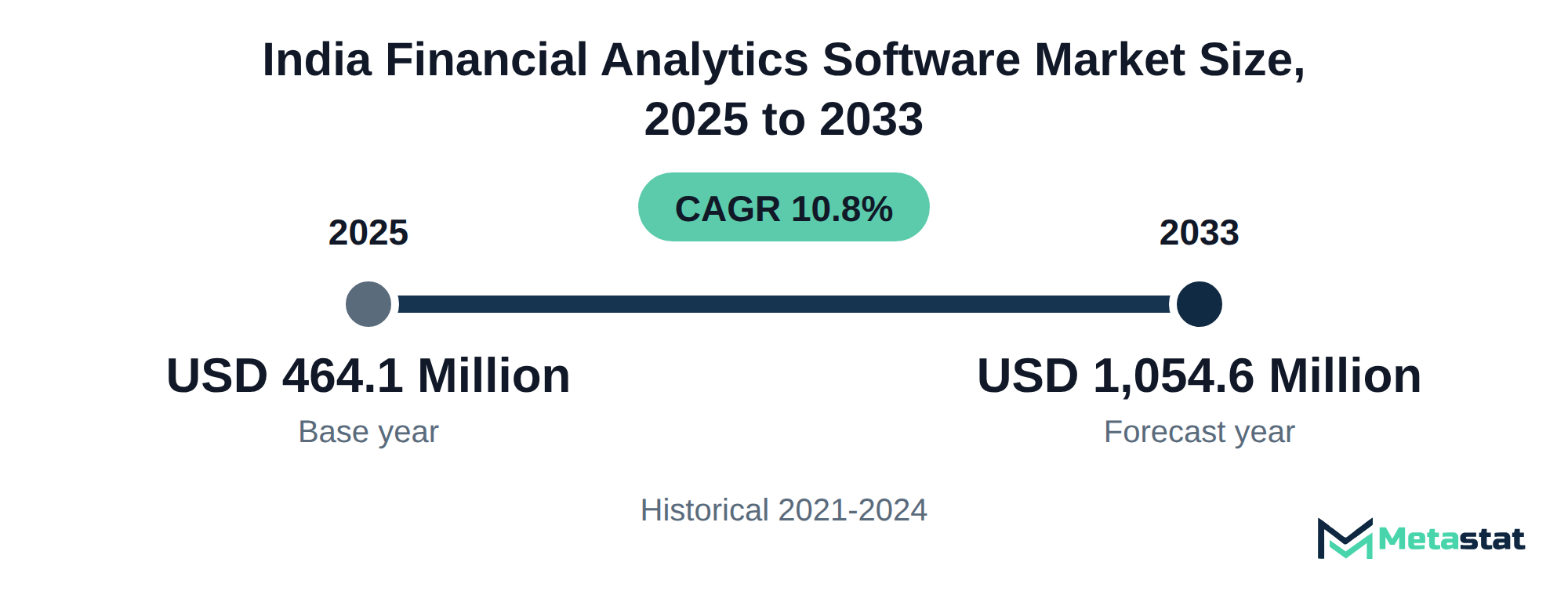
The India Financial Analytics Software market encompasses a variety of solutions designed to enhance decision-making processes within financial institutions. These tools support functions including risk assessment, fraud detection, and liquidity management. Buyers invest in these solutions to improve operational efficiency, ensure regulatory compliance, and gain a competitive advantage in the financial services sector.
Growth in this market is driven by the increasing adoption of cloud-based solutions, which provide scalability and cost-effectiveness. Among the various segments, the predictive analytics segment holds the largest value, reflecting the demand for advanced forecasting and analytical capabilities. The banking sector remains a primary consumer, leveraging financial analytics to mitigate risks and optimize performance.
Forecasts indicate a robust compound annual growth rate (CAGR) of 10.8% from 2026 to 2033, reflecting the expanding reliance on sophisticated financial analytics tools. The market's expansion correlates with the ongoing digital transformation within financial institutions, propelling investments in innovative solutions to address emerging challenges in the industry.
The market includes various deployment models, analytics types, applications, and end users, which collectively support financial decision-making across sectors. Buyers invest in these solutions to enhance operational efficiency, improve risk management, and drive profitability. The comprehensive nature of these tools allows institutions to analyze data accurately, leading to more informed decisions that align with their strategic goals.
Growth within the market is significantly driven by the increasing adoption of cloud-based solutions. Among the various segments, predictive analytics stands out as the most valuable, offering advanced insights into future trends and behaviors. The demand for such analytics is particularly pronounced in banks, which rely on these tools for effective risk assessment and management.
The Asia Pacific region commands the largest share of the market, driven by a changing financial landscape and increasing digital transformation initiatives. Financial institutions in this region actively seek innovative solutions that enhance their competitive edge and build customer loyalty. This ongoing shift toward digitalization facilitates continuous investment in analytics software, underlining its critical role in shaping the future of financial services.
Account aggregator data integration transforms credit risk analytics within the India Financial Analytics Software market. This technology enables institutions to aggregate and analyze financial data from multiple sources seamlessly. By 2026, the segment focusing on credit risk assessment and underwriting is projected to reach USD 134.3 million, highlighting the growing significance of effective data integration in credit evaluations.
Financial institutions leverage account aggregators to gain a comprehensive view of an individual's financial behavior, which enhances decision-making. The integration facilitates improved risk profiling and more accurate assessments, driving operational efficiency. Adoption of this technology supports compliance with regulatory requirements, ensuring that institutions maintain up-to-date insights into their clients' financial health.
Advancement of account aggregator data integration significantly impacts the competitive landscape. Institutions that adopt this technology position themselves as leaders in the market, attracting more clients seeking reliable credit assessments. The overall market for credit risk analytics is expected to experience accelerated growth in the coming years, supporting broader financial services innovation.
Predictive fraud analytics is emerging as a crucial tool for Indian banks and payment providers, enhancing their ability to detect and prevent financial crimes. The market for predictive analytics within the India Financial Analytics Software market includes significant growth opportunities, particularly in areas including Fraud Detection and Financial Crime Analytics. This segment is projected to reach USD 218.4 million by 2033, reflecting a robust compound annual growth rate (CAGR) of 12.2%. Such financial metrics highlight the increasing reliance on advanced analytics to mitigate risks associated with fraudulent activities.
Buyers in the India Financial Analytics Software market typically engage in diverse purchasing models, including subscription-based and perpetual licensing agreements. These models allow banks and payment providers to select options that align with their operational requirements and financial capabilities. Subscription-based models offer flexibility, allowing firms to scale their usage based on evolving needs, while perpetual licenses provide long-term ownership benefits. The choice of model influences the overall cost structure, affecting budget allocation for technology investments.
Financial institutions are increasingly inclined toward contracts that incorporate performance metrics, ensuring that service providers deliver measurable outcomes related to fraud prevention and detection. Such contracts often include clauses for regular updates and maintenance, ensuring that the analytics solutions remain effective against emerging fraud threats. This focus on performance-oriented contracts creates a competitive environment, driving innovation and enhancing the effectiveness of predictive fraud analytics solutions in the market.
Prescriptive financial analytics significantly enhances collections optimization for non-banking financial companies (NBFCs). This technology allows NBFCs to analyze vast amounts of data, enabling them to predict customer behavior and identify the most effective collection strategies. The market for prescriptive analytics in financial applications is projected to experience a compound annual growth rate (CAGR) of 15.4%. This growth reflects the increasing recognition of data-driven decision-making within the financial sector.
In 2026, the value of credit risk assessment and underwriting applications is estimated at USD 134.3 million, with expectations of reaching USD 293.5 million by 2033, growing at an 11.8% CAGR. This growth demonstrates the rising importance of advanced analytics in managing credit risk, informing collections processes, and enhancing overall financial performance. By implementing prescriptive analytics, NBFCs tailor their collections strategies to individual customer profiles, ultimately improving recovery rates and reducing operational costs.
The India Financial Analytics Software market continues to evolve, driven by the demand for innovative solutions that address the unique challenges faced by NBFCs. Optimizing collections through prescriptive analytics strengthens financial performance and enhances customer relationships, improving loyalty and retention. The integration of advanced analytics into collections processes serves as a key differentiator in a competitive environment, positioning NBFCs for sustainable growth.
Choosing the right financial analytics software requires a clear understanding of the specific applications within the Banking, Financial Services, and Insurance (BFSI) sector. The primary applications include credit risk assessment and underwriting, fraud detection, and liquidity management. Each application serves unique business functions and has distinct analytical requirements. This growth signals a heightened need for robust risk management solutions among BFSI firms.
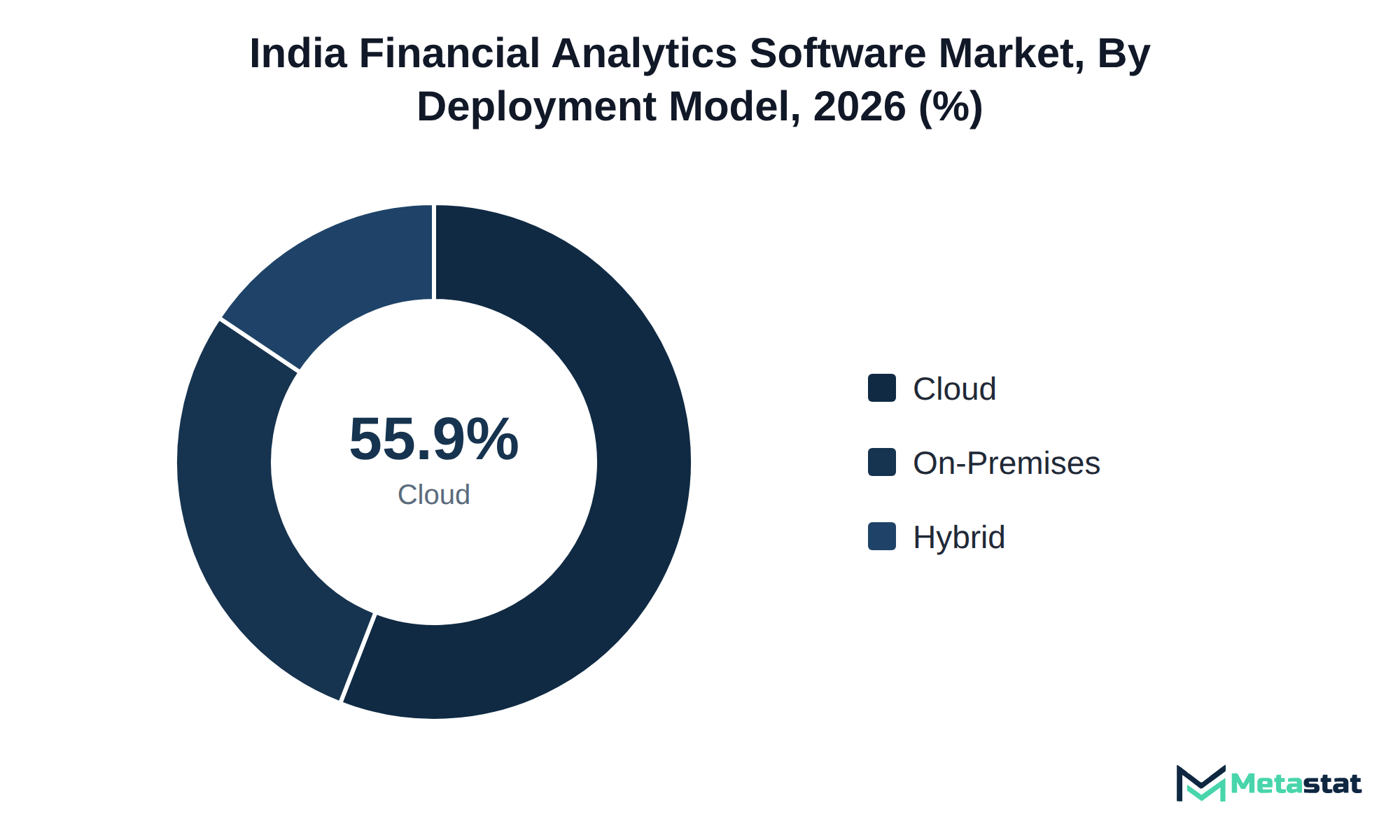
When selecting software, firms should evaluate the deployment model that best fits their operational framework. The cloud deployment segment is anticipated to expand significantly, from USD 295.8 million in 2026 to USD 683.7 million by 2033, yielding a CAGR of 12.7%. This trend highlights the increasing preference for scalable and flexible solutions that cloud-based systems offer. In contrast, on-premises solutions remain essential for firms seeking tighter control over their data.
The India Financial Analytics Software market continues to evolve, and selecting the appropriate software enhances operational efficiency and supports compliance with regulatory requirements. Ultimately, the chosen solution plays a critical role in improving decision-making processes and financial performance in the competitive BFSI environment.
Financial institutions in India have increased spending on predictive analytics to enhance decision-making and improve risk management. This increased investment results from a shift in focus toward data-driven strategies among banks and non-banking financial companies (NBFCs). While these institutions recognize the value of predictive insights, demand for advanced analytical tools grows. Consequently, the market for India Financial Analytics Software experiences a notable uptick in volume and pricing. The predictive analytics segment is projected to reach USD 418.9 million by 2033, reflecting a growing commitment to leveraging data for strategic advantage. This trend enables financial institutions to optimize operational efficiency and reduce potential losses, reinforcing the overall market growth trajectory.
Recent advancements in prescriptive analytics significantly transform decision-making processes within financial institutions. This type of analytics enables organizations to analyze data and recommend actions tailored to specific business scenarios. Adoption of prescriptive analytics supports banks and non-banking financial companies (NBFCs) in optimizing operations, improving risk management, and enhancing customer experiences. The growing demand for data-driven decision-making fuels investment in prescriptive analytics tools and platforms.
Financial institutions in India increasingly leverage prescriptive analytics to address complex challenges in credit risk assessment and fraud detection. The ability to evaluate various outcomes and recommend optimal strategies enhances operational efficiency across different applications. With the India Financial Analytics Software market projected to expand over the coming years, the integration of prescriptive analytics into financial practices strengthens competitiveness and drives demand among end users.
High costs associated with implementing financial analytics software hinder adoption among various financial institutions, particularly banks and non-banking financial companies. The need for substantial investment in technology infrastructure and skilled personnel poses a challenge for these entities, often resulting in slower uptake of innovative solutions. Budgetary constraints lead to smaller orders or delays in replacing outdated systems, limiting potential enhancements in operational efficiency and risk management capabilities. Price sensitivity influences decision-making processes, causing several buyers to hesitate or prioritize lower-cost alternatives that do not provide the same level of analytical power. This phenomenon directly impacts the growth trajectory of the India Financial Analytics Software market, creating a gap between the demand for advanced analytics and the willingness of institutions to invest in comprehensive solutions. Strategies that address cost concerns could significantly enhance market penetration and overall adoption rates.
The India Financial Analytics Software market experiences significant margin pressure, primarily stemming from intense competition and rising operational costs. Suppliers face challenges in maintaining profitability while delivering advanced software solutions. Increased competition among providers leads to aggressive pricing strategies, limiting the ability to pass on costs to clients. Rising expenses related to talent recruitment and retention exacerbate this issue, particularly in a market demanding skilled data analysts and software developers.
In response, suppliers have adopted several strategies to mitigate margin pressure. Streamlining internal processes and leveraging automation tools increases operational efficiency. Strategic partnerships with educational institutions enhance talent pipelines, ensuring a steady influx of qualified professionals. Such initiatives allow suppliers to maintain service standards while keeping costs manageable. The focus on optimizing operational efficiencies ultimately supports the sustainability of profit margins within this competitive market environment.
Investment portfolio and market risk analytics represent a significant growth opportunity within the India Financial Analytics Software market. This segment is projected to experience a compound annual growth rate (CAGR) of 9.2% during the forecast period, reflecting increasing demand from various financial institutions. The growing complexity of investment strategies and the heightened focus on market volatility drive the need for sophisticated analytics tools that enable better risk assessment and management.
Financial institutions, including banks and non-banking financial companies, prioritize these analytics solutions to optimize their investment portfolios and mitigate potential losses. The ability to analyze vast datasets enhances decision-making, leading to improved financial outcomes. Indian financial players invest in advanced analytics capabilities, positioning the market for significant growth while addressing the evolving needs of stakeholders in a dynamic economic environment.
The India Financial Analytics Software market is segmented based on Deployment Model, Analytics Type, Application, and End User.
This deployment model facilitates the delivery of analytics capabilities over the internet, enabling organizations to access advanced tools without heavy infrastructure investments. Banks and non-banking financial companies leverage cloud solutions for real-time data processing and analytics, enhancing their operational efficiency and decision-making capabilities. The increasing trend of digital transformation within the financial sector drives demand for cloud-based solutions. This segment exhibits faster growth compared to on-premises models, which face limitations due to higher costs and longer implementation times. The flexibility and scalability offered by cloud solutions contribute to their attractiveness for organizations aiming to optimize financial analysis processes.
On-Premises solutions are estimated to reach USD 183.7 million by 2033, at a CAGR of 4.2% during the forecast period. This deployment model is used primarily by financial institutions requiring control over their data and systems, often due to regulatory compliance and security considerations. Banks and non-banking financial companies (NBFCs) typically prefer on-premises systems for sensitive financial operations. The slower growth of this segment compared to cloud solutions stems from the higher initial investment and maintenance costs associated with on-premises software. Financial institutions face challenges regarding scalability, impacting their ability to adapt quickly to changing market conditions. In contrast, the cloud deployment model offers more flexibility and lower upfront costs, contributing to its faster growth trajectory in the market.
Hybrid deployment in financial analytics software is expected to reach USD 187.2 million by 2033. This model combines cloud-based solutions with on-premises infrastructure, providing flexibility and scalability. Organizations adopt hybrid deployment for its adaptability, meeting diverse operational and compliance needs. Banking institutions and non-banking financial companies typically adopt this approach to balance data control with the benefits of cloud technology. The increasing demand for real-time analytics drives growth in this segment, with financial institutions seeking improved decision-making capabilities. Compared to other deployment models, hybrid solutions experience a stable growth trajectory. The market anticipates that the hybrid segment will continue to expand due to its capacity to cater to both traditional and innovative analytical requirements across the India Financial Analytics Software market.
Descriptive analytics is valued at USD 139.7 million in 2026 and is projected to reach USD 223.3 million by 2033, at a CAGR of 6.9% during the forecast period. This type of analytics provides valuable insights into historical data, enabling organizations to understand trends and patterns in their financial performance. Financial institutions, including banks and non-banking financial companies, apply descriptive analytics for various applications, including credit risk assessment and performance analysis. The increasing emphasis on data-driven decision-making drives demand for this segment. Compared to other analytics types, descriptive analytics experiences slower growth, with a CAGR lower than predictive analytics at 8.8%. The need for robust data management solutions positions descriptive analytics as a foundational element, enhancing overall financial performance in the India Financial Analytics Software market.
Diagnostic Analytics segment is estimated to reach USD 172.8 million by 2033, at a CAGR of 8.8% during the forecast period. This analytics type focuses on understanding the reasons behind past results, allowing financial institutions to identify patterns and draw insights from historical data. Banks and non-banking financial companies employ diagnostic analytics to enhance decision-making processes, manage risks, and improve operational efficiency. Demand for diagnostic analytics continues to grow, driven by increased regulatory scrutiny and a focus on compliance. Compared to other analytics types, it demonstrates a slower growth rate, with a CAGR of 8.8%, contrasting with predictive analytics, which outpaces it significantly. This distinction highlights the evolving priorities of financial institutions, with increasing emphasis on understanding past performance to inform future strategies.
This segment focuses on analyzing historical data to make forecasts about future trends, enabling financial institutions to make informed decisions. Predominantly used by banks and investment firms, this analytics type aids in risk assessment and market predictions. Growth in this segment is driven by increasing demand for data-driven insights to enhance operational efficiency and competitiveness. Unlike other analytics types, Predictive Analytics offers a growth rate of 15.4%, outpacing both Descriptive Analytics and Diagnostic Analytics, which grow at 6.9% and 8.8% respectively. Such expansion reflects the strategic shift among financial institutions towards integrating advanced analytical capabilities into their operations, optimizing resource allocation and improving customer services. This proactive approach distinguishes Predictive Analytics as a key player in the evolving environment of the India Financial Analytics Software market.
Prescriptive analytics is projected to grow at a CAGR of 15.4% during the forecast period. This analytical approach supports organizations in making informed decisions by providing recommendations based on data analysis. Financial institutions leverage prescriptive analytics to optimize their operations, enhance risk management, and improve customer engagement. The rise in data complexity and the increasing demand for insights drive the growth of this segment. Compared to other analytics types, prescriptive analytics experiences faster growth due to its ability to provide strategic recommendations. This segment distinguishes itself from others, including diagnostic and descriptive analytics, which focus primarily on analyzing past data trends without offering specific guidance on future actions. The anticipated market value for prescriptive analytics remains significant, creating opportunities for suppliers to innovate and expand their offerings.
This segment focuses on assessing the creditworthiness of borrowers and determining lending risks, primarily used by banks and non-banking financial companies. The increasing demand for accurate risk evaluation and management drives growth in this segment, supporting financial institutions in making informed lending decisions. Compared to other segments, this category exhibits a faster growth rate due to its critical role in financial operations and risk mitigation. Expectations for enhanced efficiency and accuracy in credit evaluations influence investment in advanced analytics solutions tailored for this application, positioning it as an important area within the market.
Fraud Detection and Financial Crime Analytics segment is estimated to reach USD 218.4 million by 2033, at a CAGR of 12.2% during the forecast period. This segment serves financial institutions, including banks and non-banking financial companies, by enabling them to identify and mitigate fraudulent activities effectively. Increasing regulatory scrutiny on financial transactions acts as a driving force for this segment, compelling institutions to invest in advanced analytics solutions. Compared to other segments, including Credit Risk Assessment and Underwriting, this segment exhibits faster growth driven by escalating financial crimes and the adoption of digital banking services. The financial sector's shift towards real-time data analysis enhances the demand for sophisticated fraud detection tools, reinforcing its position in the evolving landscape of the India Financial Analytics Software market.
Treasury, Liquidity and Asset Liability Management segment is expected to reach USD 128.2 million by 2033. This segment is essential for financial institutions, allowing them to manage cash flow, liquidity risks, and asset liabilities effectively. Banks and non-banking financial companies apply these analytics to enhance operational efficiency and comply with regulatory requirements. The increasing focus on risk management and regulatory adherence drives the growth of this segment, differentiating it from others that do not experience such regulatory pressure. Compared to other applications, this segment grows at a moderate rate, with a CAGR reflecting the ongoing need for robust financial management solutions. The market emphasizes the importance of advanced analytics in maintaining financial stability in the rapidly changing economic environment.
Investment Portfolio and Market Risk Analytics segment is projected to grow at a CAGR of 9.2% during the forecast period. This segment focuses on analyzing investment portfolios and managing associated risks, which is particularly important for financial institutions, including banks and asset management companies. The increasing complexity of financial markets necessitates advanced analytics to optimize investment strategies and ensure compliance with regulatory requirements. Factors driving this segment include the growing emphasis on effective risk management practices and enhanced portfolio performance. This segment differs from others, experiencing moderate growth compared to faster-growing segments including Fraud Detection and Financial Crime Analytics. The market anticipates substantial growth in this area, with financial institutions increasingly relying on these analytics to make informed investment decisions, ultimately contributing to the overall growth of the India Financial Analytics Software market.
Insurance underwriting and actuarial analytics focus on assessing risk and determining the terms of insurance policies. This segment is used by insurance companies to evaluate potential losses and set premiums accordingly. Growing regulatory requirements drive demand for sophisticated analytics tools, enabling accurate risk assessment and pricing strategies. The segment distinguishes itself from others in the application category, reflecting its specific focus on the unique needs of insurance firms. Unlike fraud detection, which experiences higher growth due to immediate market concerns, insurance underwriting and actuarial analytics involves longer-term strategies and investment. Continued advancements in data analytics technologies enhance the capabilities of these tools, allowing insurers to refine their models and improve profitability. The India Financial Analytics Software market integrates these analytics, supporting companies in navigating complex regulatory environments and optimizing their underwriting processes.
Collections and Recovery Analytics involves the processes that businesses use to track down debts and recover outstanding amounts from customers. This application serves primarily banks and non-banking financial companies that require effective solutions for managing delinquent accounts and maximizing cash flow. An increasing focus on improving collection efficiency drives demand for advanced analytics in this segment, enabling organizations to leverage data for better decision-making. The segment distinguishes itself from others by addressing the specific challenges of debt recovery, which requires tailored strategies and tools unique to financial institutions. While other segments experience faster growth due to emerging technologies, Collections and Recovery Analytics maintains steady relevance, reflecting the continuous need for effective debt management solutions in the India Financial Analytics Software market.
Customer and Revenue Analytics focuses on understanding customer behavior and optimizing revenue streams for financial institutions. This segment serves various users, including banks and non-banking financial companies, who leverage insights to enhance customer relationships and financial performance. Demand for advanced analytical tools drives this segment, with organizations increasingly seeking to tailor offerings to meet customer expectations and improve retention rates. The need for data-driven decision-making significantly supports growth in this area, distinguishing it from other analytics types that focus primarily on risk assessment or compliance. Technological advancements in machine learning and artificial intelligence facilitate deeper insights into customer trends, enhancing competitive advantage. In contrast to segments including Credit Risk Assessment, which emphasize risk evaluation, Customer and Revenue Analytics prioritizes revenue generation and customer engagement strategies.
Financial Planning and Performance Analytics plays a critical role in helping organizations assess their financial health and performance metrics. This segment caters primarily to finance and accounting departments in various industries, enabling them to optimize budgeting, forecasting, and financial strategy. Demand for these analytics is driven by the increasing complexity of financial environments, requiring companies to adopt more sophisticated analytical tools for better decision-making. In contrast to other segments, this area focuses specifically on strategic financial insights rather than transactional data, leading to a differentiated value proposition. While segments including Credit Risk Assessment and Underwriting show faster growth rates, Financial Planning and Performance Analytics remains essential for long-term financial stability. Its unique emphasis on performance metrics sets it apart from other analytics segments in the market.
This sub-segment encompasses Operational Risk Analytics and Regulatory Compliance Analytics, essential for managing potential risks and ensuring adherence to financial regulations. Organizations apply these analytics to enhance their risk management frameworks, enabling them to identify and mitigate operational risks effectively. Banks and Non-Banking Financial Companies represent significant users of this sub-segment, seeking robust solutions to navigate the complexities of regulatory requirements.
Demand for these analytics is driven by the increasing emphasis on regulatory compliance and the need for organizations to maintain operational resilience. This sub-segment differs from others by focusing primarily on risk assessment and compliance, rather than performance optimization or revenue generation. While other segments, including Credit Risk Assessment and Underwriting, experience higher growth rates, the market for Operational Risk Analytics and Regulatory Compliance Analytics remains crucial for maintaining stability in the evolving regulatory environment.
Banks segment is valued at USD 219.5 million in 2026 and is projected to reach USD 420.2 million by 2033, at a CAGR of 9.7% during the forecast period. Financial institutions leverage financial analytics software to assess credit risk, optimize lending processes, and enhance overall operational efficiency. A significant driver for this segment includes increasing regulatory requirements that demand more sophisticated risk management solutions. Compared to the Non-Banking Financial Companies segment, which has a projected CAGR of 12.5%, the Banks segment demonstrates slower growth due to established operational frameworks and the complexity of integrating new technologies. The market for financial analytics software continues to evolve, with financial institutions prioritizing tools that improve decision-making capabilities and enhance customer service.
Non-Banking Financial Companies segment is estimated to reach USD 260.8 million by 2033, at a CAGR of 12.5% during the forecast period. This segment focuses on providing financial services to customers who do not hold a banking license, including activities including loans, asset management, and investment services. The growing demand for alternative financing options drives this segment's expansion. These companies leverage financial analytics software to assess credit risks and manage operational efficiency. Compared to other end-user segments, Non-Banking Financial Companies experience faster growth due to their increasing reliance on technology-driven solutions that enhance customer service and streamline operations. Adoption of advanced analytics capabilities positions them favorably against traditional banks, resulting in a dynamic competitive environment within the India Financial Analytics Software market.
Insurance Companies segment is expected to reach USD 142.1 million by 2033. This segment involves the utilization of financial analytics software for risk assessment, performance monitoring, and regulatory compliance by insurance providers. A significant driver for demand in this segment arises from the need for enhanced risk management strategies, particularly due to the evolving regulatory landscape. The segment exhibits a slower growth rate compared to other end-user categories, influenced by specific pricing structures and regulatory requirements. While banks experience a projected CAGR of 9.7%, the insurance sector focuses on integrating advanced analytics tools to streamline operations and mitigate financial risks. Investment in financial analytics technology supports insurers in navigating challenges and improving overall service delivery. The market highlights a shift towards adopting more sophisticated analytics to enhance decision-making and operational efficiency.
Asset and Wealth Management Companies segment is projected to grow at a CAGR of 9.9% during the forecast period. This segment focuses on managing clients' investments and assets, ensuring optimal returns and risk management strategies. Financial analytics software supports these companies in making informed decisions through various applications, including investment portfolio and market risk analytics. The increasing complexity of financial markets drives demand for advanced analytical tools, enabling firms to assess market conditions and adapt strategies accordingly. Compared to other segments, this sub-segment exhibits a steady growth trajectory, largely attributed to a growing clientele seeking personalized investment solutions. The emphasis on regulatory compliance and risk management further enhances the adoption of sophisticated analytics solutions. In the India Financial Analytics Software market, the distinction between Asset and Wealth Management Companies and other financial service providers reflects differing operational focuses and client needs, highlighting the importance of tailored analytics tools.
Securities brokers and capital markets intermediaries play a vital role in facilitating transactions within financial markets. These entities require analytical software to assess market conditions, manage risks, and optimize trading strategies. Such insights lead to informed decision-making, enhancing transaction efficiency and profitability. One notable force influencing this segment involves the increasing complexity of market regulations, which necessitates robust compliance and risk management solutions. Unlike other segments, securities brokers and capital markets intermediaries prioritize advanced predictive analytics tools to anticipate market fluctuations and execute trades effectively. This focus on predictive capabilities differentiates this sub-segment from others, aligning with broader trends observed in the India Financial Analytics Software market.
Payment Service Providers enhance financial analytics software to improve transaction processing, risk assessment, and customer insights. These providers analyze data to optimize payment systems, detect potential fraud, and improve customer experiences. Increased digital payments and a shift towards e-commerce drive demand for sophisticated analytics solutions in this segment. Unlike traditional banking institutions, Payment Service Providers experience different growth dynamics, influenced by rapid technological advancements and evolving regulatory environments. The adoption of advanced analytics technologies enables these providers to gain insights and make informed decisions swiftly. The market is expected to evolve, offering opportunities for Payment Service Providers to leverage analytics for competitive advantage.
This sub-segment encompasses Credit Information Companies and Financial Market Infrastructure Operators, which play essential roles in ensuring accurate data management and reporting within the financial sector. These entities employ financial analytics software to enhance their decision-making processes and risk assessments. Demand for advanced analytics arises from the increasing complexity of financial regulations and the necessity for improved data accuracy and reporting capabilities. Unlike other segments, this sub-segment targets niche players with unique requirements, focusing on compliance and operational efficiency rather than broad customer engagement or risk management. Its growth trajectory differs, influenced by regulatory changes and technological advancements, necessitating a tailored approach to analytics solutions within the India Financial Analytics Software market. By integrating innovative analytics tools, these organizations streamline operations and strengthen their positioning in the competitive landscape.
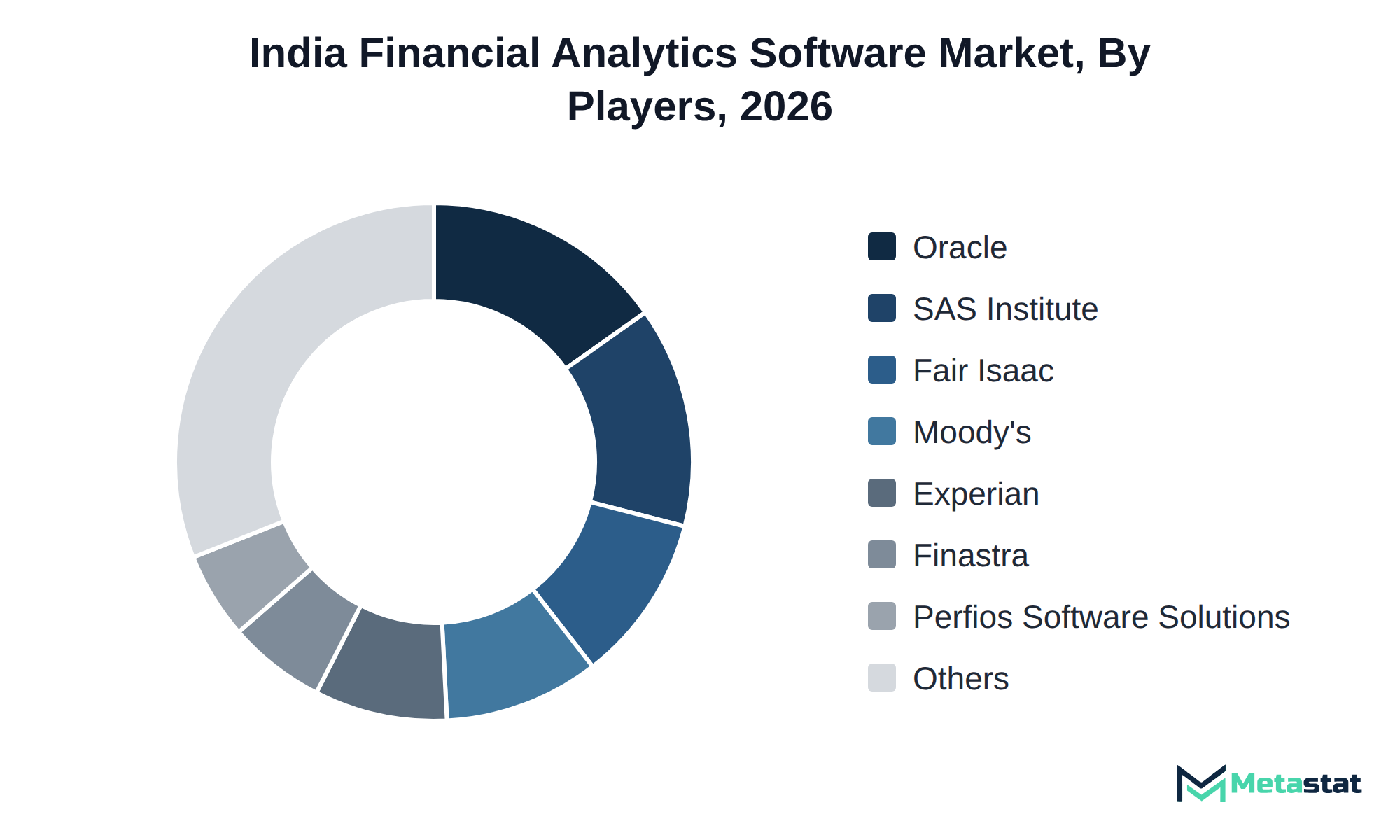
Competition within the India Financial Analytics Software market occurs across multiple dimensions, including deployment models, analytics types, and application areas. Companies differentiate their offerings based on factors including pricing strategies, service quality, customization options, and integration within existing ecosystems.
Firms like SAS Institute Inc. and Oracle Corporation focus on delivering comprehensive solutions that encompass a wide range of analytics types, including predictive and prescriptive analytics. These companies emphasize advanced capabilities and integration features that appeal to large financial institutions, including banks and insurance companies.
Players including Experian plc and Fair Isaac Corporation specialize in fraud detection and credit risk assessment applications, leveraging their expertise to meet specific buyer needs. The emphasis on regulatory compliance and risk management drives demand for these specialized services within the market.
Local firms like Perfios Software Solutions Private Limited and Lentra AI Private Limited target niche segments within the market, offering tailored solutions for asset and wealth management. This localized approach allows them to compete effectively against larger enterprises by providing specialized services that address unique regional requirements.
Overall, competitive dynamics in the India Financial Analytics Software market revolve around a blend of specialized services, advanced analytical capabilities, and strategic alignment with buyer needs, positioning various players to capture market share effectively.
Growth in the India Financial Analytics Software market depends on several key developments. First, the increasing adoption of cloud-based solutions, projected to expand from USD 295.8 million in 2026 to USD 683.7 million by 2033 at a CAGR of 12.7%, drives overall market growth. Second, the demand for predictive analytics, expected to reach USD 418.9 million by 2033, reflects the need for organizations to leverage data for foresight into market trends and customer behavior. Third, growth in credit risk assessment and underwriting applications, anticipated to rise from USD 134.3 million in 2026 to USD 293.5 million by 2033, signifies a focus on ensuring financial stability.
On the other hand, risks exist that could hinder this trajectory, particularly relating to regulatory uncertainties and the pace of digital transformation across different sectors. The ability of financial institutions to effectively integrate advanced analytics remains crucial for sustaining momentum in the market.
By Deployment Model: Cloud, On-Premises, Hybrid
By Analytics Type: Descriptive Analytics, Diagnostic Analytics, Predictive Analytics, Prescriptive Analytics
By Application: Credit Risk Assessment and Underwriting, Fraud Detection and Financial Crime Analytics, Treasury, Liquidity and Asset Liability Management, Investment Portfolio and Market Risk Analytics, Insurance Underwriting and Actuarial Analytics, Collections and Recovery Analytics, Customer and Revenue Analytics, Financial Planning and Performance Analytics, Others (Operational Risk Analytics, Regulatory Compliance Analytics)
By End User: Banks, Non-Banking Financial Companies, Insurance Companies, Asset and Wealth Management Companies, Securities Brokers and Capital Markets Intermediaries, Payment Service Providers, Others (Credit Information Companies, Financial Market Infrastructure Operators)
The report strategically identifies and profiles the key market players and analyses their core competencies in each sub-segment of the Financial Analytics Software market.
Report Attributes | Details |
Study Period | 2021-2033 |
Base Year | 2025 |
Estimated Year | 2026 |
Forecast Period | 2026-2033 |
Historical Period | 2021-2025 |
Growth Rate | CAGR 10.8% from 2026 to 2033 |
Revenue Unit | USD million |
Segmentation | By Deployment Model, Analytics Type, Application, End User, and Region |
Find answers to common questions about this report
The Financial Analytics Software market size was valued at USD 464.1 million in 2025.
The market is projected to grow at a CAGR of 10.8% during the forecast period from 2026 to 2033.
Predictive Analytics leads the Financial Analytics Software market with a projected value of USD 418.9 million by 2033. This segment surpasses others in terms of anticipated revenue growth.
Increased investment in predictive analytics enhances decision-making and risk management among financial institutions. The growing complexity of investment strategies and focus on market volatility drive demand for sophisticated analytics tools.
High costs associated with implementing financial analytics software hinder adoption among various financial institutions. The need for substantial investment in technology infrastructure and skilled personnel poses a challenge, often resulting in slower uptake of innovative solutions.
Investment portfolio and market risk analytics present significant growth opportunities, projected to achieve a compound annual growth rate (CAGR) of 9.2 percent during the forecast period. The increasing demand for sophisticated analytics tools to optimize investment strategies and manage market volatility drives adoption among financial institutions in India.
The Financial Analytics Software market is estimated to reach a valuation of USD 1,054.6 million by 2033.
Key players operating in the Financial Analytics Software market include SAS Institute Inc., Oracle Corporation, Fair Isaac Corporation, Moody's Corporation, Experian plc, and Tata Consultancy Services Limited.
The predictive analytics segment is projected to reach USD 418.9 million by 2033, reflecting a commitment to leveraging data for strategic advantage.
Prescriptive analytics enhances decision-making processes by analyzing data and recommending actions tailored to specific business scenarios, optimizing operations and improving risk management.
The analysts below cover Banking & Finance research at Metastat Insights.
LEAD ANALYST
Utkarsh Khirodkar is a Lead Market Research Analyst at MetaStat Insight, specializing in market intelligence, technology sector assessments, and competitive strategy.

PRINCIPAL CONSULTANT - ENTERPRISE AI & EMERGING TECHNOLOGIES
Banking & Finance · Electronics and Semiconductor · Energy and Power · Healthcare IT · Information & Technology · Professional Services
Vijay Gunti is a Principal Consultant at MetaStat Insight, bringing over two decades of experience across enterprise digital transformation, technology strategy, and intelligent systems.
Enterprise zero-trust network rollouts are often slowed down by multi-cloud transit latency and proprietary hardware retirement schedules. This study provided realistic total cost of ownership models comparing cloud-delivered security edge solutions against traditional hardware refreshes. The analysis of contract renewal lengths and software maintenance fees gave us clear visibility into enterprise replacement cycles over the next three to five years.
Scaling antibody-drug conjugate manufacturing hinges on contract manufacturing availability for high-potency active ingredients. The MetaStat Insight analysis looked closely at global cleanroom slot constraints, bioconjugation batch failure rates, and supply chain redundancies between the US, Europe, and India. The supplier capability matrix proved genuinely useful for our team when mapping secondary source options across our clinical pipeline.
Floating offshore wind feasibility relies heavily on specialized installation vessel availability and port crane limits, which most broad renewable energy forecasts ignore. The report delivered a thorough analysis of dry dock capacity, mooring chain supply constraints, and raw material pricing trends for deepwater anchor installations. It served as a solid independent sanity check for our offshore project capital expenditure assumptions.
Explore related market intelligence reports worth reading alongside this one.