
LEAD ANALYST
Utkarsh Khirodkar is a Lead Market Research Analyst at MetaStat Insight, specializing in market intelligence, technology sector assessments, and competitive strategy.

Global Magazine Publishing Market Size, Share, By Publishing Format (Print Magazines and Digital Magazines), By Revenue Source (Subscriptions, Single-Copy Sales, Advertising and Content Licensing), By Readership Type (Consumer Magazines and Business and Trade Magazines), By Content Genre (Lifestyle, Fashion and Beauty, News and Current Affairs, Business, Finance and Industry, Home, Garden and Food, Entertainment, Arts and Culture, Health, Wellness and Fitness, Science and Technology, Sports, Motoring and Travel, Children, Comics and Education and Others), Industry Analysis, Growth, Trends, and Forecast, 2026-2033
Report ID
MSI-4359
Published
October, 2026
Pages
256 Pages
Format
Historical
Base year
Forecast
Forecast period
Report Details
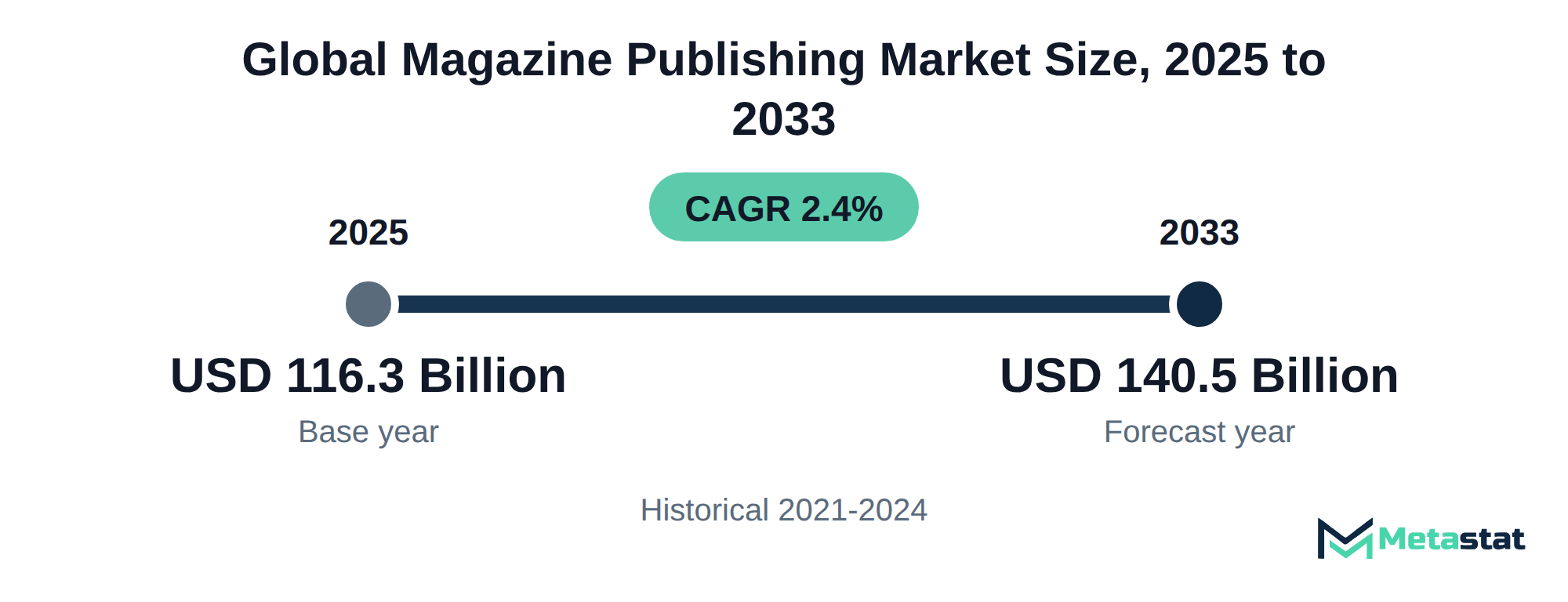
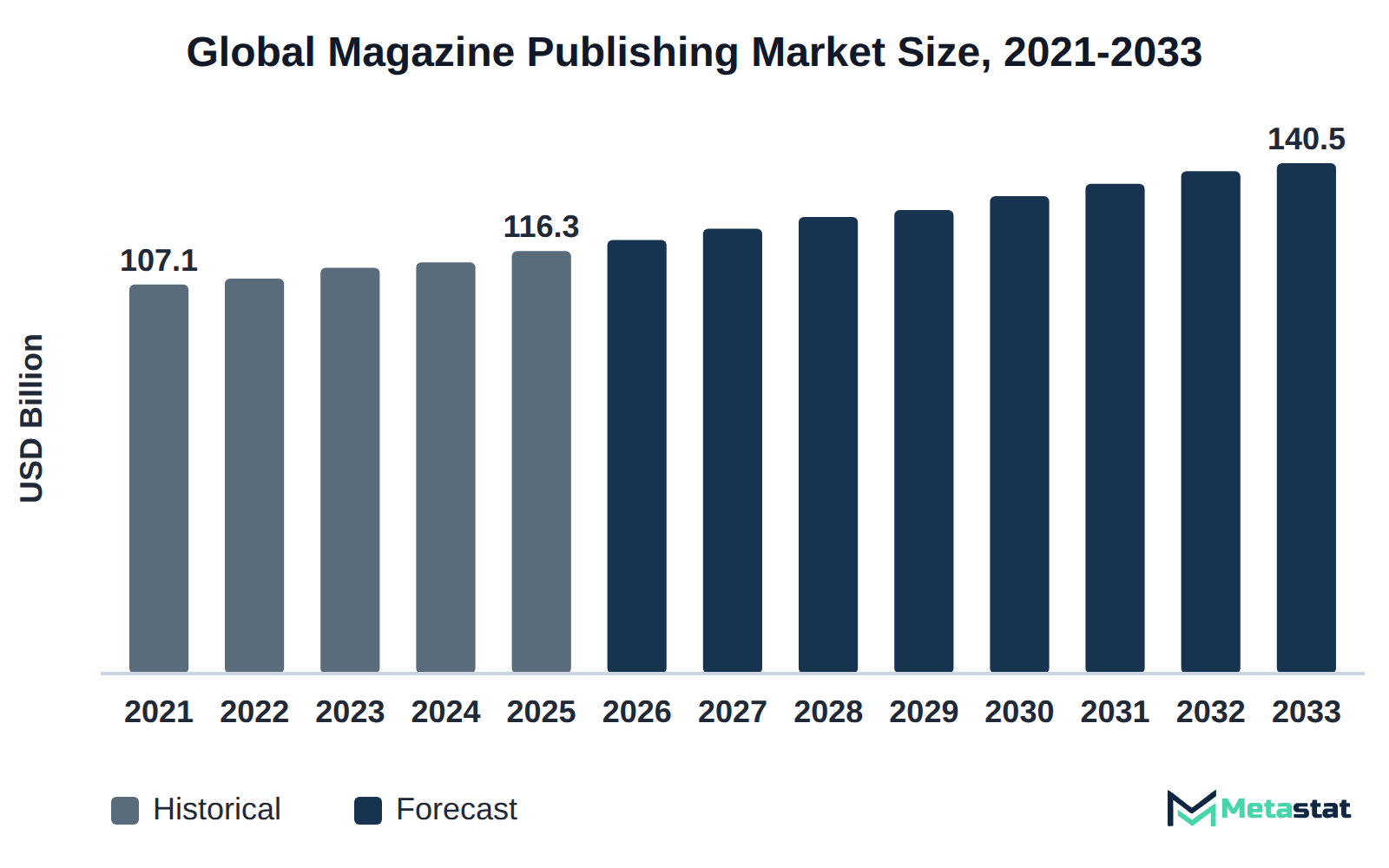
Market Valuation: Valued at $116.3 Billion in 2025, projected to reach $140.5 Billion by 2033 at a 2.4% CAGR.
Dominant Segment: Print magazines currently lead the market, driven by a loyal readership seeking traditional media experiences, despite a gradual decline due to the rise of digital alternatives.
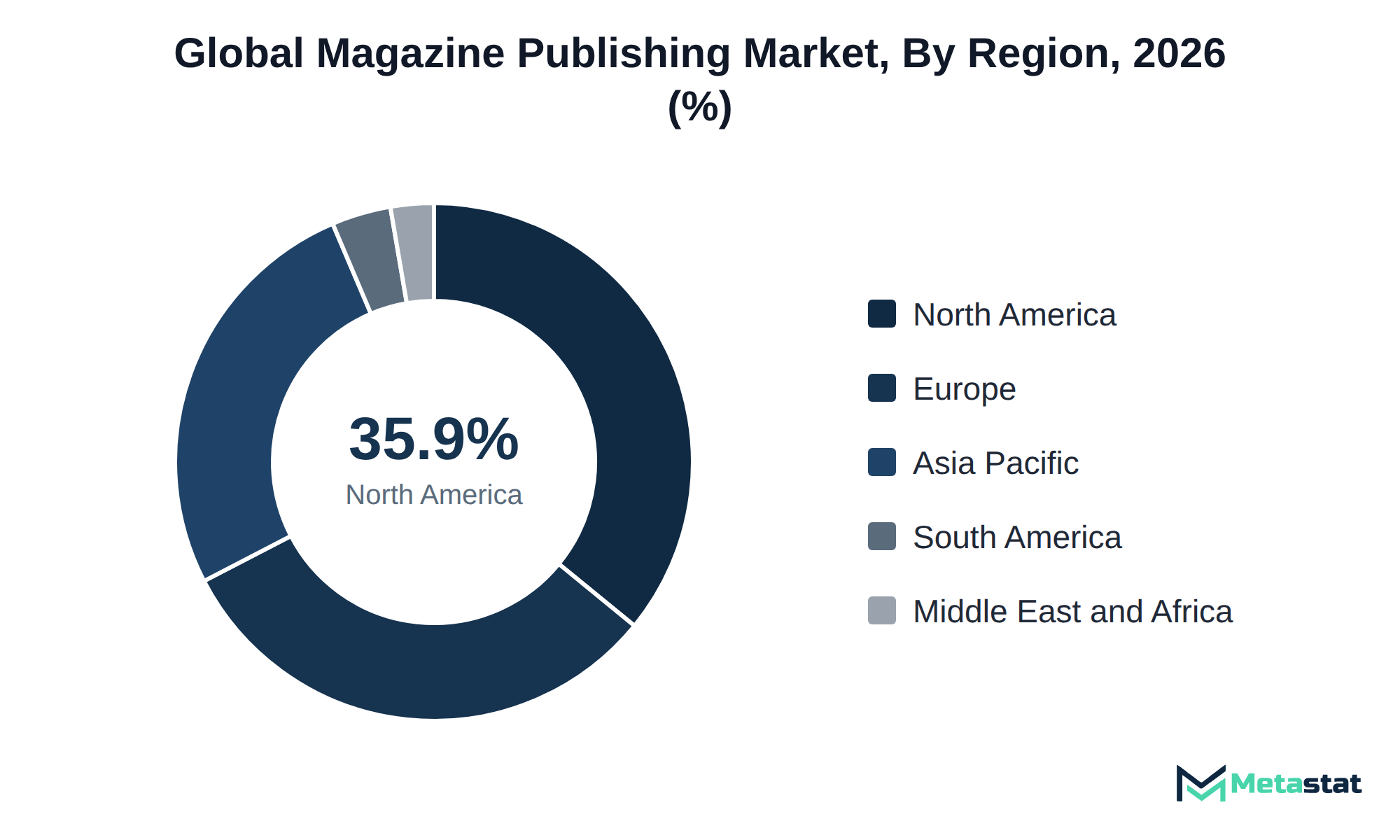
Geographic Lead: North America is the leading region, holding 35.9% of the market in 2025, benefiting from high disposable income and a robust advertising ecosystem.
What's Inside: The report provides comprehensive coverage of market dynamics, competitive analysis, and detailed forecasts from 2026 to 2033, focusing on various segments and revenue sources.
Emerging Trends: The increasing demand for digital magazines, projected to grow at a CAGR of 6.5%, reflects changing consumer preferences and highlights the importance of adapting to digital consumption.
Revenue Sources: Subscriptions represent the largest revenue source, with a projected growth from USD 60.8 billion in 2026 to USD 73.3 billion by 2033, indicating a shift towards customer loyalty and engagement.
Choose Your License
Global Magazine Publishing Market
The global Magazine Publishing market was valued at USD 116.3 billion in 2025 and is projected to reach USD 140.5 billion by 2033, growing at a CAGR of 2.4% over the forecast period.
The magazine publishing market encompasses the production and distribution of print and digital magazines, catering to diverse readerships across various genres. Buyers invest in this market to access content that informs, entertains, and engages audiences, while advertisers use magazines to reach targeted demographics. The continuous evolution of consumer preferences drives demand for innovative formats and content delivery methods, resulting in sustained investment across the sector.
Growth in the market is largely fueled by the increasing popularity of digital magazines, which attract a younger audience and offer interactive features. The digital segment is projected to experience significant expansion, reflecting changing reading habits and technological advancements. North America holds 35.9% of the market in 2025, with the US leading in 2026. High disposable income levels and a strong advertising ecosystem support the region's position in the global market.
Among the segments, print magazines account for the largest share, although a gradual decline is observable due to the rise of digital alternatives. The demand for subscriptions continues to grow, driven by the need for reliable content and exclusive access to publications. This trend indicates a shift in consumer behavior, where readers increasingly seek personalized experiences and value-added offerings from their favorite magazine brands.
The Magazine Publishing market is significant in the information and entertainment sectors, serving audiences with content across many genres. Buyers spend on this market due to the demand for engaging material that informs, entertains, and connects with readers. The availability of both print and digital formats meets the preferences of diverse readerships, further driving spending and engagement across platforms.
Growth in the market is primarily driven by the rising demand for digital formats, which allows publishers to reach a broader audience and enhance their distribution channels. Digital magazines, in particular, have seen significant uptake, with their value projected to rise noticeably. Europe and Asia Pacific follow closely, reflecting strong readership and varied content preferences in these regions.
Among the segments, subscriptions represent the largest revenue source, highlighting the importance of customer loyalty and ongoing engagement. This trend illustrates the evolving nature of consumer habits in the digital age, where readers increasingly prefer subscription models for convenience and access to premium content. The market continues to adapt, responding to these shifts while exploring new avenues for revenue generation and audience growth.
First-party audience data significantly enhances the effectiveness of magazine advertising. This data, collected directly from readers, enables publishers to offer advertisers precise insights into consumer preferences and behaviors. This information allows for highly targeted advertising strategies, leading to improved engagement rates. For example, revenue from advertising in the magazine publishing market is projected to reach USD 54.1 billion by 2033, highlighting the increasing importance of effective advertising strategies driven by audience data.
The shift toward leveraging first-party data reflects a broader industry trend where advertisers prioritize measurable results. Advertisers increasingly seek platforms that provide detailed analytics and insights, so campaigns reach the right audience. This demand for accuracy in targeting increases the perceived value of magazine advertising and attracts advertisers from diverse sectors, including lifestyle and business. The ability to demonstrate a direct correlation between targeted advertising and consumer response enhances negotiation power, ultimately benefiting publishers through increased advertising revenue.
Pricing models in the Magazine Publishing market have undergone significant transformation, driven by the demand for premium print editions and a shift towards reduced publication frequency. Publishers increasingly adopt strategies that focus on higher-quality content and exclusive features, which support higher pricing for their print editions. For instance, the revenue from subscriptions in the market is projected to rise from USD 60.8 billion in 2026 to USD 73.3 billion by 2033, reflecting a compound annual growth rate of 2.7%. This change indicates a strategic pivot towards premium offerings that command higher price points.
Publishers structure contracts to emphasize annual or semi-annual subscriptions rather than traditional monthly or weekly releases. This approach aligns with changing consumer preferences for quality over quantity, allowing publishers to enhance profitability while maintaining consumer interest. The current landscape shows that consumers appreciate curated content delivered less frequently, thus enabling publishers to allocate resources more effectively. This evolution supports overall growth and contributes to long-term market stability.
AI content licensing offers magazine publishers a new way to grow revenue streams. The rapid adoption of digital platforms has led to a heightened demand for licensed content, with a projected compound annual growth rate (CAGR) of 7.5% in this sector. This trend is driven by the increasing need for diverse content that engages audiences across various platforms. Publishers leverage AI to streamline content creation and distribution, enabling them to provide tailored content solutions for different readerships.
Consumer magazines, a significant segment within the Magazine Publishing market, are expected to see revenue growth from USD 93.2 billion in 2026 to USD 106.6 billion by 2033, reflecting a CAGR of 1.9%. This upward trajectory indicates strong market demand for content that connects with consumers. By focusing on AI-driven content licensing, publishers develop more personalized and relevant offerings, enhancing reader engagement and satisfaction.
Through effective AI content licensing strategies, magazine publishers expand their market presence and improve profitability. Investing in technology and partnerships for content licensing lets publishers capitalize on emerging digital trends and strengthen their competitive position.
Reducing subscriber churn across print and digital bundles represents a significant challenge for magazine publishers. In the changing Magazine Publishing market, the shift towards digital subscriptions highlights the necessity for publishers to adapt their strategies. Digital magazines are projected to reach a value of USD 71.9 billion by 2033, reflecting a compound annual growth rate of 6.5%. This growth emphasizes the importance of retaining subscribers, with attrition significantly impacting revenue streams.
To effectively minimize subscriber churn, publishers focus on enhancing customer engagement through personalized content and targeted marketing strategies. Providing tailored content increases the likelihood of subscribers finding value in their subscriptions, ultimately leading to higher retention rates. Utilizing data analytics to understand subscriber preferences allows publishers to adjust their offerings in real time, addressing any potential issues that lead to cancellations.
Investing in user experience across both print and digital platforms further strengthens subscriber loyalty. Publishers can also manage retention programs through customer loyalty and retention software. Ensuring that digital interfaces are intuitive and visually appealing encourages frequent usage, reducing the chances of disengagement. Publishers that prioritize these aspects demonstrate a commitment to their audience, creating a sense of community. Such initiatives lead to improved retention rates, which directly correlate to sustained revenue growth in the market.
A shift in consumer behavior drives increased spending on digital magazines, particularly among younger demographics. This group exhibits a preference for accessible and engaging content delivered through digital platforms. The rise of smartphones and tablets facilitates easy access to magazine content, leading to higher subscription rates and single-copy sales. Digital magazines attract a growing audience, resulting in a projected revenue increase from USD 71.9 billion by 2033. This growth reflects a change in how consumers engage with content across digital platforms. The Magazine Publishing market sees this transformation as a critical driver of revenue growth, influencing overall market dynamics.
The demand for engaging digital content expands opportunities for publishers to diversify their offerings and enhance reader engagement. The increasing importance of digital formats encourages publishers to invest in innovative content delivery methods while expanding their readership base.
Technological advancements in digital marketing are transforming engagement strategies within the magazine publishing sector. Publishers increasingly leverage social media platforms and targeted advertising to reach niche audiences, enhancing visibility and reader interaction. This shift benefits publishers by expanding their reach and creating stronger reader relationships, which supports long-term demand.
Investment in big data analytics technologies allows publishers to gather insights on reader preferences and behavior. Such information enables the development of personalized content strategies, aligning with reader interests while driving subscription growth. The introduction of these digital marketing strategies enhances revenue opportunities and positions the market for sustained growth, resulting in increased competition among publishers.
Readership becomes more fragmented, and the emphasis on tailored content experiences will define success in the magazine publishing landscape. Digital marketing efforts support revenue generation through subscriptions and advertising. They mark a significant change in how publishers connect with audiences and increase investment across the value chain.
Price sensitivity significantly impacts purchasing decisions in the magazine publishing market, particularly among consumers. Many readers exhibit reluctance to subscribe to print editions due to rising subscription costs, resulting in slower uptake and smaller orders. The increased prices of physical magazines, alongside the growing availability of free digital content, create a challenging environment for publishers aiming to maintain subscriber bases. Consequently, many publishers experience delayed replacement of print editions with digital formats, limiting growth potential. This dynamic reflects a broader trend where cost-conscious consumers prioritize affordable alternatives, affecting overall revenue streams. Publishers face challenges in pricing digital subscriptions competitively while delivering value to readers. Price sensitivity calls for strategic pricing models and content offerings, which shape how companies engage with audiences and develop revenue strategies.
Increasing production costs pose significant challenges for suppliers within the magazine publishing market. Rising prices for raw materials and distribution logistics exert pressure on margins, impacting profitability. Suppliers respond by optimizing their supply chains, negotiating long-term contracts to lock in lower prices, and seeking alternative materials that provide cost benefits without sacrificing quality. This focus on efficiency enhances operational resilience against fluctuating market conditions. Several suppliers invest in digital transformation to reduce reliance on commercial printing, which further mitigates input cost impacts. Innovations in technology streamline operations and contribute to cost savings. This strategic approach facilitates competitiveness and supports sustained revenue growth within the market.
Digital magazines represent a significant growth opportunity within the Magazine Publishing market, characterized by a compound annual growth rate (CAGR) of 6.5% through 2033. This segment caters to changing consumer preferences, particularly among younger demographics who increasingly favor digital content over traditional print formats.
This shift toward digital consumption aligns with broader trends in media consumption, where convenience and accessibility play essential roles. Audio and video on-demand streaming services reflect a similar move toward digital consumption. While more consumers engage with digital platforms, magazine publishers leverage innovative content delivery models to enhance reader experiences and strengthen loyalty. This transition is crucial for sustained growth, providing avenues for advertisers to reach targeted audiences more effectively. The anticipated rise in subscriptions highlights the need for publishers to adapt their business models to capitalize on this evolving landscape.
The Global Magazine Publishing market is segmented based on Publishing Format, Revenue Source, Readership Type, and Content Genre.
Print Magazines segment is valued at USD 73.1 billion in 2026 and is projected to reach USD 68.6 billion by 2033, at a CAGR of -0.9% during the forecast period. This segment primarily serves consumers seeking traditional print media experiences, including lifestyle, fashion, and news. A gradual decline in readership poses challenges, driven by an increasing preference for digital formats, which impacts traditional print's audience base. Unlike digital magazines, which exhibit a CAGR of 6.5%, print magazines experience a negative growth trajectory, emphasizing the shifting consumer preferences toward digital media consumption. Advertising revenue remains important, although it faces pressure from lower print circulation figures. Transitioning consumer behavior signifies a fundamental change in how content is consumed, reinforcing the need for print magazines to adapt to competitive market dynamics.
Increasingly, consumers engage with digital content through various devices, leading to a shift in how magazines distribute their material. This segment primarily serves tech-savvy audiences who prefer on-demand access to their favorite titles. The growth of digital magazines is propelled by advancements in digital technology and the rising popularity of mobile devices. Compared to print magazines, which are expected to decline to USD 68.6 billion by 2033, digital magazines demonstrate faster growth and align more closely with consumer preferences for convenience and instant access to information. This trend highlights a significant shift in the market, emphasizing the need for publishers to adapt their strategies to maximize digital engagement and revenue potential.
This segment primarily serves consumers and businesses seeking consistent access to content across various genres. Driving forces include the increasing preference for convenience and the growing digital landscape, which enhances accessibility and engagement. Compared to single-copy sales and advertising revenue, subscriptions present a steadier revenue stream, appealing to publishers focused on long-term relationships with their audiences. The segment shows slower growth relative to other revenue sources including content licensing and syndication, which is projected to grow at a CAGR of 7.5%. This difference highlights a shift in how different types of readership interact with content in the Magazine Publishing market.
Single-Copy Sales segment is estimated to reach USD 7.4 billion by 2033, at a CAGR of -1.2% during the forecast period. This segment primarily caters to consumers who prefer purchasing individual magazine issues rather than committing to subscriptions. Factors influencing this segment include changing consumer preferences toward digital formats and the convenience of purchasing physical copies on an ad-hoc basis. With the rise of digital content, single-copy sales experience slower growth compared to subscriptions and digital magazine purchases, which are valued at USD 60.8 billion and USD 71.9 billion, respectively. The market sees a shift in purchasing habits, with consumers gravitating toward digital media, further impacting the sales of print magazines. In this context, the magazine publishing market faces challenges in maintaining single-copy sales volume due to a growing preference for digital consumption.
Advertising segment is expected to reach USD 54.1 billion by 2033. This revenue source serves as a primary means for companies to monetize their publications by offering promotional space to businesses seeking to reach specific audiences. Advertisers engage consumers through targeted campaigns, leveraging demographic insights. The shift toward digital platforms significantly influences this segment, with advertisers increasingly investing in digital advertising strategies, reflecting changing consumer habits. Demand within this segment is driven by the growth of digital advertising, which experiences a compound annual growth rate (CAGR) of 7.5%, offering higher engagement potential compared to print. In contrast, other segments, including subscriptions, exhibit slower growth at a CAGR of 2.7%, highlighting a distinct trend in revenue generation within the market.
Content Licensing and Syndication segment is projected to grow at a CAGR of 7.5% during the forecast period. This segment facilitates the distribution and monetization of content, allowing publishers to license their materials to various platforms and outlets, frequently used by businesses, advertisers, and media organizations. The increasing demand for diverse content types, particularly in digital formats, drives growth in this segment, attracting investments from publishers seeking new revenue sources. Unlike other segments, Content Licensing and Syndication benefits from a higher growth trajectory, distinguishing itself with a more dynamic pricing strategy. Compared to traditional advertising or subscription models, this segment offers flexibility and adaptability, appealing to a broader audience and enhancing overall market penetration. This adaptability positions the segment strategically within the evolving dynamics of the Magazine Publishing market.
This segment caters primarily to individual readers seeking entertainment, lifestyle, and information. A growing interest in specialized content that aligns with personal interests drives demand for consumer magazines. Unlike Business and Trade Magazines, which target a professional audience, this segment appeals more broadly, engaging diverse demographics. Enhanced digital accessibility provides a significant advantage, enabling wider distribution and readership engagement. Increased competition from digital formats necessitates innovation in content and delivery, influencing pricing strategies and subscription models. Consequently, the market experiences a gradual shift with an emphasis on digital integration while maintaining a loyal consumer base.
Business and Trade Magazines segment is estimated to reach USD 34 billion by 2033, at a CAGR of 3.8% during the forecast period. This segment caters primarily to professionals seeking in-depth knowledge on industry trends and company insights. Business and trade publications serve sectors including finance, technology, and healthcare, providing critical information that drives decision-making. A notable force influencing this segment includes the growing demand for specialized content tailored to niche markets, which contrasts with the broader appeal often associated with consumer magazines. This segment features a slower growth rate compared to consumer magazines, reflecting the higher price point associated with business-focused content, which affects circulation numbers. The market experiences significant changes, shaped by evolving industry needs and the increasing importance of digital platforms for content distribution.
The Lifestyle, Fashion and Beauty segment is valued at USD 29.7 billion in 2026 and is projected to reach USD 32.6 billion by 2033, at a CAGR of 1.3% during the forecast period. This segment caters to readers interested in trends, personal style, and beauty tips, primarily targeting consumers seeking inspiration and guidance on fashion-related choices. The ongoing shift towards digital platforms drives heightened engagement, while print editions continue to attract a loyal readership. Compared to other segments, including Business and Trade Magazines, which exhibit a CAGR of 3.8%, the Lifestyle, Fashion and Beauty segment reflects slower growth. The appeal of visual content further enhances its market position, attracting both consumers and advertisers prioritizing aesthetic-driven narratives. Revenue growth hinges on effective content strategies and collaborations with brands aligning with lifestyle themes, ultimately influencing purchasing decisions and advertising expenditures in the market.
The News and Current Affairs segment is estimated to reach USD 14.5 billion by 2033, at a CAGR of 1.1% during the forecast period. This segment provides timely and relevant information to consumers, journalists, and industry professionals, facilitating informed decision-making. Newspaper publishing serves the same need for news coverage in a different format. The primary demand driver for this segment is the growing need for accurate and up-to-date news coverage, particularly in rapidly changing environments. This sub-segment is characterized by a slower growth rate compared to others, reflecting a shift in consumer preference towards digital formats across the market. Other content genres, including Lifestyle, Fashion and Beauty, experience higher growth rates, demonstrating changing audience interests and engagement patterns. The distinct nature of the News and Current Affairs segment lies in its focus on delivering real-time updates, setting it apart from lifestyle or business-oriented content genres that do not require immediate delivery.
Business, Finance and Industry segment is expected to reach USD 30.2 billion by 2033. This segment serves professionals and businesses seeking insights into market trends, investment opportunities, and economic developments. Demand is driven by the need for timely information to guide financial decisions and business strategies. Unlike other segments, including Consumer Magazines, the Business, Finance and Industry segment experiences a moderate growth rate, with a compound annual growth rate (CAGR) of 3.8%. This growth trajectory reflects the ongoing relevance of financial insights in a changing economic environment. The segment's appeal to a professional audience often results in higher subscription rates compared to other genres, highlighting its unique position in the market.
The Home, Garden and Food segment is projected to grow at a CAGR of 1.6% during the forecast period. This segment serves readers interested in gardening, home improvement, and culinary topics. It attracts consumers seeking inspiration and practical advice on enhancing their living spaces and cooking skills. Steady demand is driven by a growing interest in home-based activities and sustainability practices among readers. Compared to the Lifestyle, Fashion and Beauty segment, which is expected to grow at a CAGR of 1.3%, the Home, Garden and Food segment shows a slightly stronger growth trajectory. Consumers engaging with this segment often seek specific solutions tailored to their needs, differentiating it from broader lifestyle publications. The market continues to adapt, focusing on digital content delivery to meet evolving consumer preferences.
The segment focuses on Entertainment, Arts and Culture, appealing to a diverse audience that values creative content. This genre attracts readers interested in cultural trends, artistic expressions, and entertainment insights. Growth in digital platforms drives engagement, particularly among younger demographics seeking instant access to artistic content. The rise of digital consumption influences purchasing behavior, reflecting a shift from traditional print to online formats. Differentiation from other segments lies in its unique content focus, which often leads to higher engagement rates. This segment captures attention through engaging storytelling and the promotion of artistic activities, enhancing its appeal to advertisers. In contrast to segments including Business, Finance, and Industry, which emphasize information and analysis, Entertainment, Arts and Culture prioritizes emotional connection and personal experience, influencing advertising strategies and revenue potential in the market.
Health, Wellness and Fitness serves a diverse readership focused on physical and mental well-being. This segment attracts consumers seeking information on nutrition, exercise, and healthy living, reflecting a societal shift towards health-conscious lifestyles. Demand for content related to personal fitness and wellness continues to rise, driven by increasing awareness of health issues and the desire for improved quality of life. Compared to other content genres, this segment features a dynamic range of contributors, including fitness experts, nutritionists, and lifestyle coaches, providing authoritative and engaging material. Health, Wellness and Fitness typically sees strong reader engagement compared to segments like News and Current Affairs, which fluctuate with current events. The ongoing trend towards preventive healthcare is expected to support the segment's relevance in the market, ensuring sustained interest and readership growth.
Science and Technology encompasses various publications focusing on advancements, innovations, and applications in scientific and technological fields. These magazines serve a diverse audience, including professionals, academics, and enthusiasts seeking in-depth knowledge about emerging trends and research findings. Key drivers influencing this segment include the increasing demand for updated information in evolving fields and the growing interest in STEM education and careers. Compared to other content genres, including Lifestyle, Fashion and Beauty, this segment typically attracts a more specialized readership willing to invest in subscription-based models for exclusive content. The market experiences varying growth dynamics, driven by technological advancements that shape content delivery and reader engagement strategies.
Sports, Motoring and Travel covers publications for enthusiasts of sports, vehicles, and travel experiences. Readers include individuals seeking insights into sports events, automotive innovations, and travel destinations. This segment thrives on consumer interest driven by a desire for adventure and exploration. Travel and leisure activities grow in popularity, driving demand for related content and contributing to market expansion. Compared to other segments, Sports, Motoring and Travel experiences varied growth rates, influenced by consumer trends and economic conditions. This segment attracts a distinct audience willing to invest in specialized content. The Magazine Publishing market benefits from diverse readership preferences, allowing publishers to tailor their offerings to meet specific interests and engage a dedicated audience.
Children, Comics and Education encompasses publications designed for young readers, supporting learning and entertainment. This segment appeals to parents, educators, and children, providing educational material alongside fun stories and illustrations. Manga publishing and distribution covers a closely related comics category. Rising awareness of literacy and early education drives demand, pushing parents to seek engaging resources that stimulate children's interest in reading. A distinct focus on younger demographics differentiates this segment from others, contributing to its unique market position. Unlike the Lifestyle, Fashion and Beauty segment, which caters to adult interests, the Children, Comics and Education segment emphasizes developmental benefits, targeting a specific audience with tailored content. The Magazine Publishing market reflects varied consumer preferences, with this segment influencing literacy and creativity among children.
This sub-segment encompasses various publications focusing on topics including history, religion, and general interest. Readers, including those seeking knowledge and entertainment, engage with these materials for personal enrichment and educational purposes. Book publishing serves overlapping reader interests in history, religion, and general interest topics. A significant driver impacting this segment involves the increasing consumer appetite for diverse and niche content, which caters to specific interests that mainstream publications overlook. This segment typically attracts a different buyer profile than others, featuring lower prices compared to specialized genres like business or finance. The market's growth dynamics reflect a unique interaction between consumer preferences and the evolving media landscape, differentiating it from higher-priced segments targeting more affluent demographics.
Based on geography, the Global Magazine Publishing market is divided into North America, Europe, Asia-Pacific, South America, Middle East, and Africa.
Projected growth in North America highlights significant demand for the Magazine Publishing market, reaching USD 48.4 billion by the end of 2033. The region comprises key players and a strong readership base, particularly in the United States, Canada, and Mexico. Consumer preferences shift towards digital formats, driving the popularity of digital magazines, which grow at a CAGR of 6.5%. The region's established infrastructure supports various publishing formats while allowing for innovative advertising strategies. Regulatory frameworks further influence market dynamics, creating a competitive environment that shapes the future of the Magazine Publishing market.
In Europe, the Magazine Publishing market has a strong presence, accounting for 31.5% of the global share in 2025. Countries including Germany, France, and the UK contribute significantly to demand, driven by a strong readership base and diverse content genres. The region's publishing landscape benefits from established distribution channels and a well-developed retail network, supporting the delivery of print and digital magazines. Consumer preferences lean towards lifestyle and business-related content, with notable growth in digital formats. Regulatory frameworks in various countries create a competitive environment, encouraging innovation and adaptation within the market. Such dynamics position Europe as a critical player, influencing trends and consumer behavior in the magazine publishing market.
The Asia-Pacific region holds a share of the Magazine Publishing market, accounting for 26.2% in 2025. Countries including China, Japan, and India drive demand through a growing middle class and increased disposable income, leading to higher consumption of digital publications. The rise in smartphone penetration and internet accessibility further supports the transition towards digital magazines, with the segment projected to grow at a CAGR of 6.5% through 2033. Australia and South Korea demonstrate a strong market presence, with diverse readership preferences spanning consumer and business magazines. Regional publishers focus on localized content, enhancing engagement and loyalty among readers. Investment in innovative content delivery methods and marketing strategies influences competition, positioning the Asia-Pacific market for sustained growth in the coming years.
In South America, a notable share of the Magazine Publishing market comes from Brazil and Argentina, contributing significantly to the regional landscape. The market reflects an increasing focus on digital magazine formats, aligning with global trends toward online consumption. Economic factors, including varying levels of disposable income and a growing middle class, drive demand for consumer magazines, appealing to readers seeking lifestyle and entertainment content. The region's market benefits from expanding internet access, enhancing the reach of digital publications. By 2025, South America will represent 3.7% of global market share, signaling growth opportunities amid evolving consumer preferences and technological advancements.
The magazine industry in the Middle East and Africa represents a niche segment within the global market. Growth drivers include a rising middle class and increasing internet penetration, particularly among younger demographics, which fuels demand for digital magazines. Saudi Arabia and the UAE have made significant investments in media infrastructure, enhancing the accessibility of various publications. South Africa remains a key player, focusing on both consumer and business publications that reflect local interests and trends. The market is characterized by a competitive environment that includes prominent local and international players, stimulating innovation and content diversification across genres.
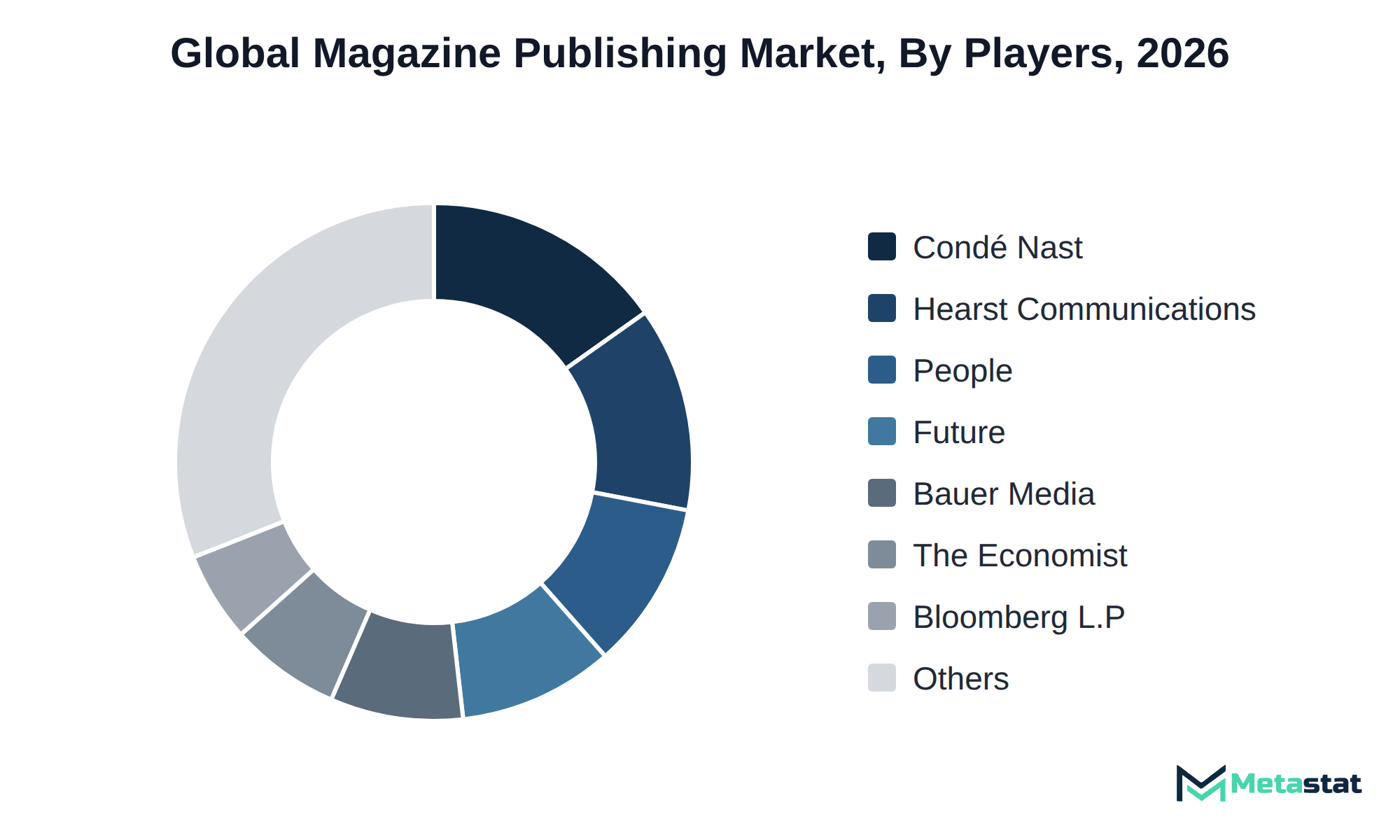
The Magazine Publishing market features a diverse competitive landscape where companies differentiate through various strategies. Players in this sector focus on distinct publishing formats, revenue sources, readership types, and content genres to cater to specific consumer demands.
Companies including Hearst Communications, Inc. and Condé Nast focus on both print and digital magazines, adapting their offerings to shifting consumer preferences. Revenue sources vary among players, with subscriptions gaining traction, especially for digital formats. Companies like Bauer Media Group emphasize subscription models while maintaining a strong presence in advertising.
In terms of readership types, Consumer Magazines dominate the market, with firms like People Inc. targeting wider audiences through lifestyle content. Business and Trade Magazines attract a more niche clientele, highlighted by The Economist Group's focus on financial and industry reporting. Content genres including Lifestyle, Fashion and Beauty show growth, driven by player engagement with current trends and reader interests.
The expected growth relies on several key developments across various segments. First, the increase in digital magazine adoption, projected at a CAGR of 6.5%, will significantly contribute to the overall market expansion. Digital magazines attract a broader readership, particularly among younger audiences who prefer online content. Second, revenue from subscriptions trends positively, growing from USD 60.8 billion in 2026 to USD 73.3 billion by 2033, driven by a shift toward more sustainable business models within consumer magazines. This trend aligns with the increasing preference for curated content that meets specific consumer interests. Lastly, content licensing and syndication services, with a projected CAGR of 7.5%, present additional revenue opportunities for publishers. However, a notable risk exists in the form of fluctuating advertising revenues, which could hinder growth if economic conditions deteriorate. Such volatility particularly affects print magazines, which face declining revenues in a competitive landscape dominated by digital alternatives.
By Publishing Format: Print Magazines, Digital Magazines
By Revenue Source: Subscriptions, Single-Copy Sales, Advertising, Content Licensing and Syndication
By Readership Type: Consumer Magazines, Business and Trade Magazines
By Content Genre: Lifestyle, Fashion and Beauty, News and Current Affairs, Business, Finance and Industry, Home, Garden and Food, Entertainment, Arts and Culture, Health, Wellness and Fitness, Science and Technology, Sports, Motoring and Travel, Children, Comics and Education, Others (History, Religion, General Interest)
The report strategically identifies and profiles the key market players and analyses their core competencies in each sub-segment of the Magazine Publishing market.
|
Report Attributes |
Details |
|
Study Period |
2021-2033 |
|
Base Year |
2025 |
|
Estimated Year |
2026 |
|
Forecast Period |
2026-2033 |
|
Historical Period |
2021-2025 |
|
Growth Rate |
CAGR 2.4% from 2026 to 2033 |
|
Revenue Unit |
USD billion |
|
Segmentation |
By Publishing Format, Revenue Source, Readership Type, Content Genre, and Region |
|
By Region |
North America (By Publishing Format, Revenue Source, Readership Type, Content Genre, and Country)
|
|
Europe (By Publishing Format, Revenue Source, Readership Type, Content Genre, and Country)
|
|
|
Asia Pacific (By Publishing Format, Revenue Source, Readership Type, Content Genre, and Country)
|
|
|
South America (By Publishing Format, Revenue Source, Readership Type, Content Genre, and Country)
|
|
|
Middle East and Africa (By Publishing Format, Revenue Source, Readership Type, Content Genre, and Country)
|
Find answers to common questions about this report
The Magazine Publishing market size was valued at USD 116.3 billion in 2025.
The market is projected to grow at a CAGR of 2.4% during the forecast period from 2026 to 2033.
The North America Magazine Publishing market size is projected to reach USD 48.4 billion by 2033.
Digital Magazines lead the Magazine Publishing market with a projected value of USD 71.9 billion by 2033. This segment's growth reflects a shift in consumer preferences towards digital content consumption.
A shift in consumer behavior drives increased spending on digital magazines, particularly among younger demographics who prefer accessible and engaging content. Price sensitivity significantly impacts purchasing decisions, as many readers are reluctant to subscribe to print editions due to rising costs, affecting overall revenue streams.
North America holds the dominant share of the Magazine Publishing market, with a value of USD 48.4 billion projected for 2033, representing 35.9 percent of the total market.
Price sensitivity restrains growth in the Magazine Publishing market, with readers reluctant to subscribe to print editions due to rising costs. Increasing production costs for raw materials and logistics pressure margins, impacting profitability and limiting overall market expansion.
A significant growth opportunity arises from the increasing demand for digital magazines, particularly among younger demographics favoring accessible content. This trend encourages publishers to enhance their offerings and invest in innovative delivery methods, aligning with evolving consumer preferences.
The Magazine Publishing market is estimated to reach a valuation of USD 140.5 billion by 2033.
Key players operating in the Magazine Publishing market include Hearst Communications, Inc., Condé Nast, Future plc, Bauer Media Group, The Economist Group, Bloomberg L.P., and The Atlantic Monthly Group LLC.
The analysts below cover Consumer Goods research at Metastat Insights.
LEAD ANALYST
Utkarsh Khirodkar is a Lead Market Research Analyst at MetaStat Insight, specializing in market intelligence, technology sector assessments, and competitive strategy.
When evaluating distributed energy resource management systems, standard research summaries tend to gloss over the operational differences between front-of-the-meter utility deployments and behind-the-meter industrial sites. The MetaStat Insight report addressed those distinctions directly, especially regarding software interoperability standards and grid interconnection backlogs. The five-year market sizing across regional transmission organizations provided actionable context for our grid modernization strategy.
Most industry reports on warehouse automation bundle autonomous mobile robots and fixed conveyor installations into the same top-level numbers, which complicates advisory work. This study split the market cleanly by payload tiers, navigation technology, and fleet management software layers. The regional forecast for Western Europe gave our team defensible adoption benchmarks when evaluating capital allocation for logistics clients, saving us days of secondary data scrubbing.
Standard industry briefs frequently blur the operational distinctions between isobaric pressure exchangers and centrifugal turbines. In this study, MetaStat Insight categorized mega-scale desalination tenders across the GCC and Mediterranean basins by membrane replacement frequencies and salinity tolerances. Their primary research helped us evaluate local content requirements in Saudi Arabia and the UAE without relying on marketing literature. We found the segment-level equipment replacement estimates grounded and well-reasoned throughout.
Explore related market intelligence reports worth reading alongside this one.