
LEAD ANALYST
Utkarsh Khirodkar is a Lead Market Research Analyst at MetaStat Insight, specializing in market intelligence, technology sector assessments, and competitive strategy.

Global Retail Loss Prevention Solutions Market Size, Share, By Solution Type (Video Surveillance and Analytics, Electronic Article Surveillance, RFID Inventory and Loss Tracking, POS and Returns Fraud Analytics, Incident and Investigation Management, Physical Merchandise Protection, Access Control and Intrusion Detection and Others), By Component (Hardware, Software and Services), By Deployment Model (On-premises, Cloud-based and Hybrid), By Retailer Type (Department and Off-Price Multi-Category Retailers, Food and Grocery Retailers, Apparel and Footwear Specialists, Electronics and Appliance Specialists, Health and Beauty Specialists, Home Improvement and Homewares Specialists, Jewellery and Watch Specialists and Others), Industry Analysis, Growth, Trends, and Forecast, 2026-2033
Report ID
MSI-5559
Published
October, 2026
Pages
298 Pages
Format
Historical
Base year
Forecast
Forecast period
Report Details
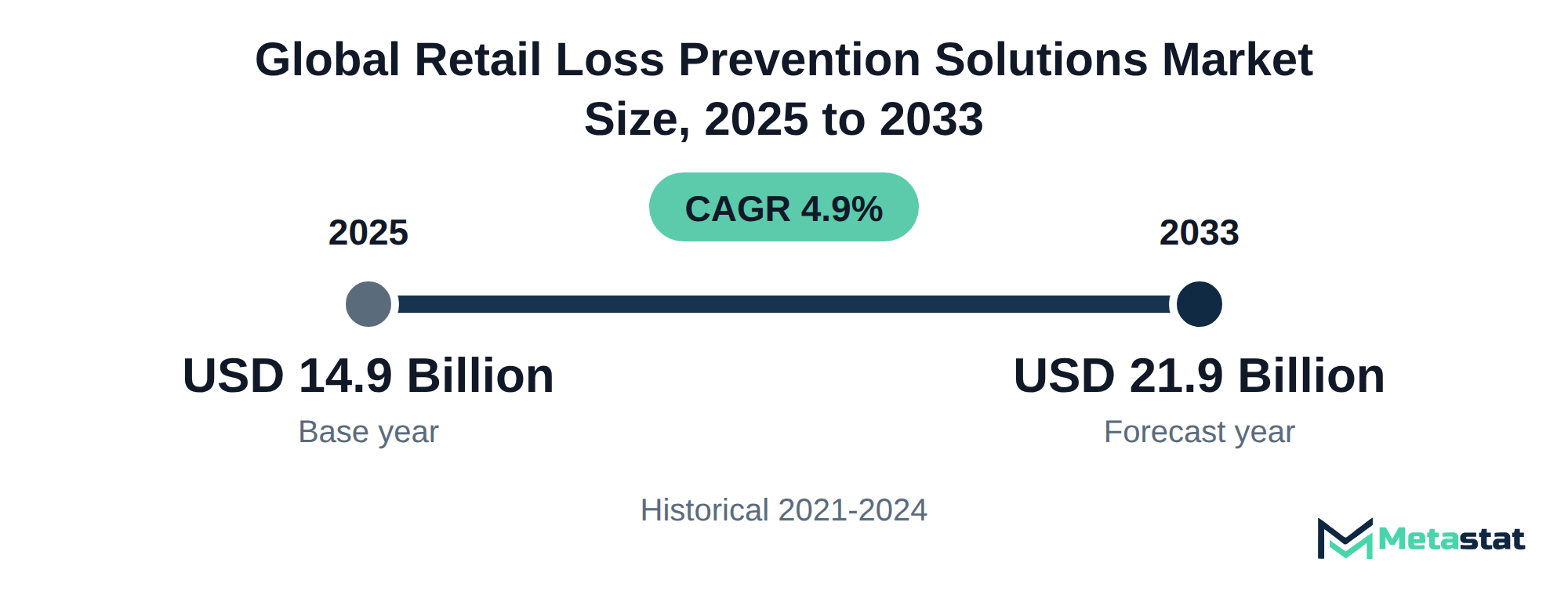
Market Valuation: Valued at $14.9 Billion in 2025, projected to reach $21.9 Billion by 2033 at a 4.9% CAGR.
Dominant Segment: Video Surveillance and Analytics leads the market, driven by the increasing frequency of retail theft and the growing emphasis on security investments.
Geographic Lead: North America is the leading region, holding 38.2% of the market in 2025, with the US expected to maintain this position due to strong security infrastructure investments.
What's Inside: The report provides a comprehensive analysis of the competitive landscape, market segmentation by solution type, component, deployment model, and retailer type, along with growth trends and forecasts.
Emerging Trends: The adoption of cloud-based solutions is projected to grow at a CAGR of 9.1%, reflecting a shift towards digital transformation and enhanced operational efficiency in retail loss prevention.
Investment Drivers: Retailers are increasingly investing in advanced technologies to combat rising theft rates and improve inventory management, highlighting the critical need for effective loss prevention strategies.
Choose Your License
Global Retail Loss Prevention Solutions Market
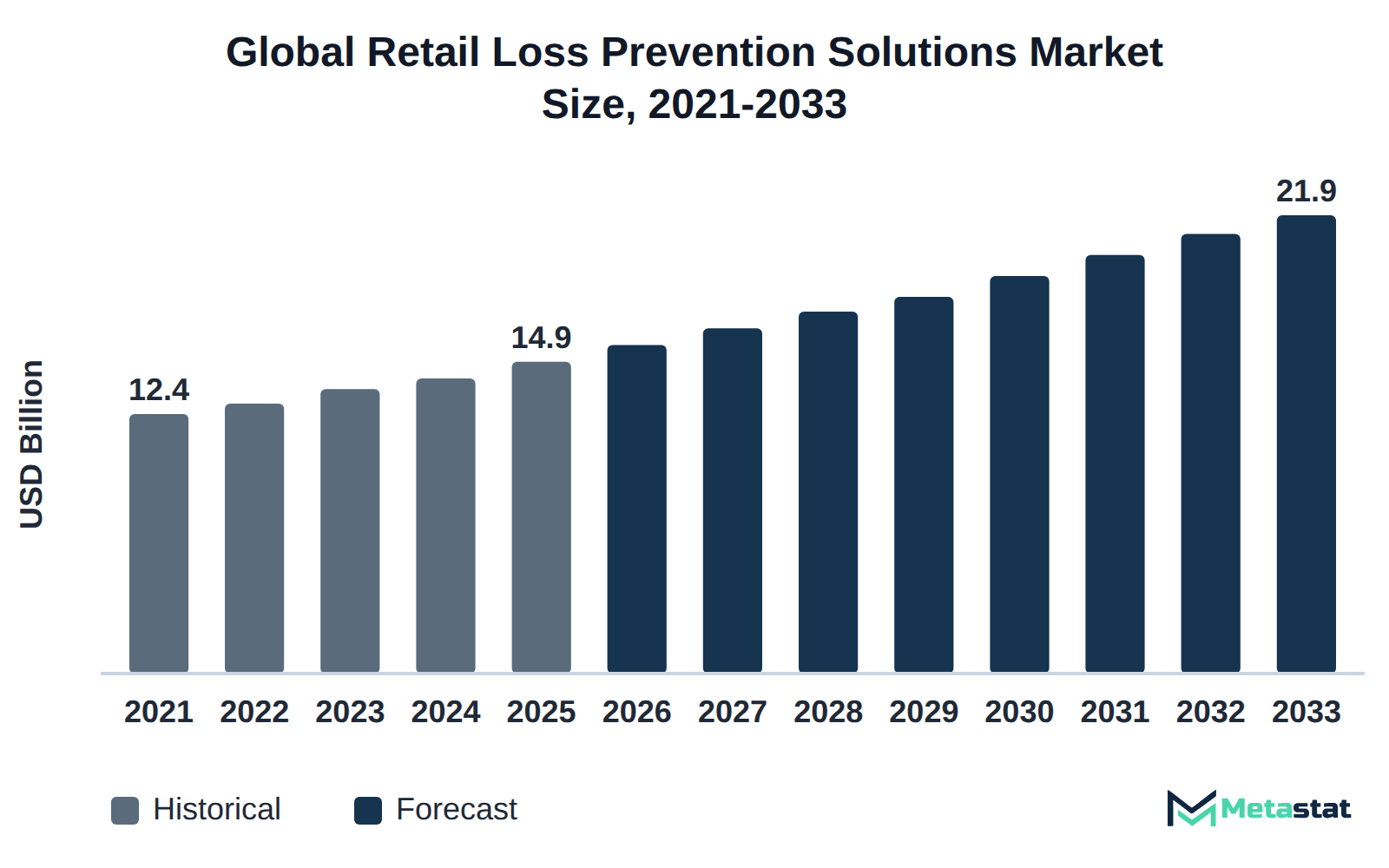
The global Retail Loss Prevention Solutions market was valued at USD 14.9 billion in 2025 and is projected to reach USD 21.9 billion by 2033, growing at a CAGR of 4.9% over the forecast period.
The Retail Loss Prevention Solutions market encompasses technologies and services designed to protect retail businesses from theft and loss. Buyers invest in these solutions to enhance security measures, improve inventory management, and safeguard revenue. The need for effective loss prevention strategies has grown significantly, driven by rising theft rates and the increasing complexity of retail environments.
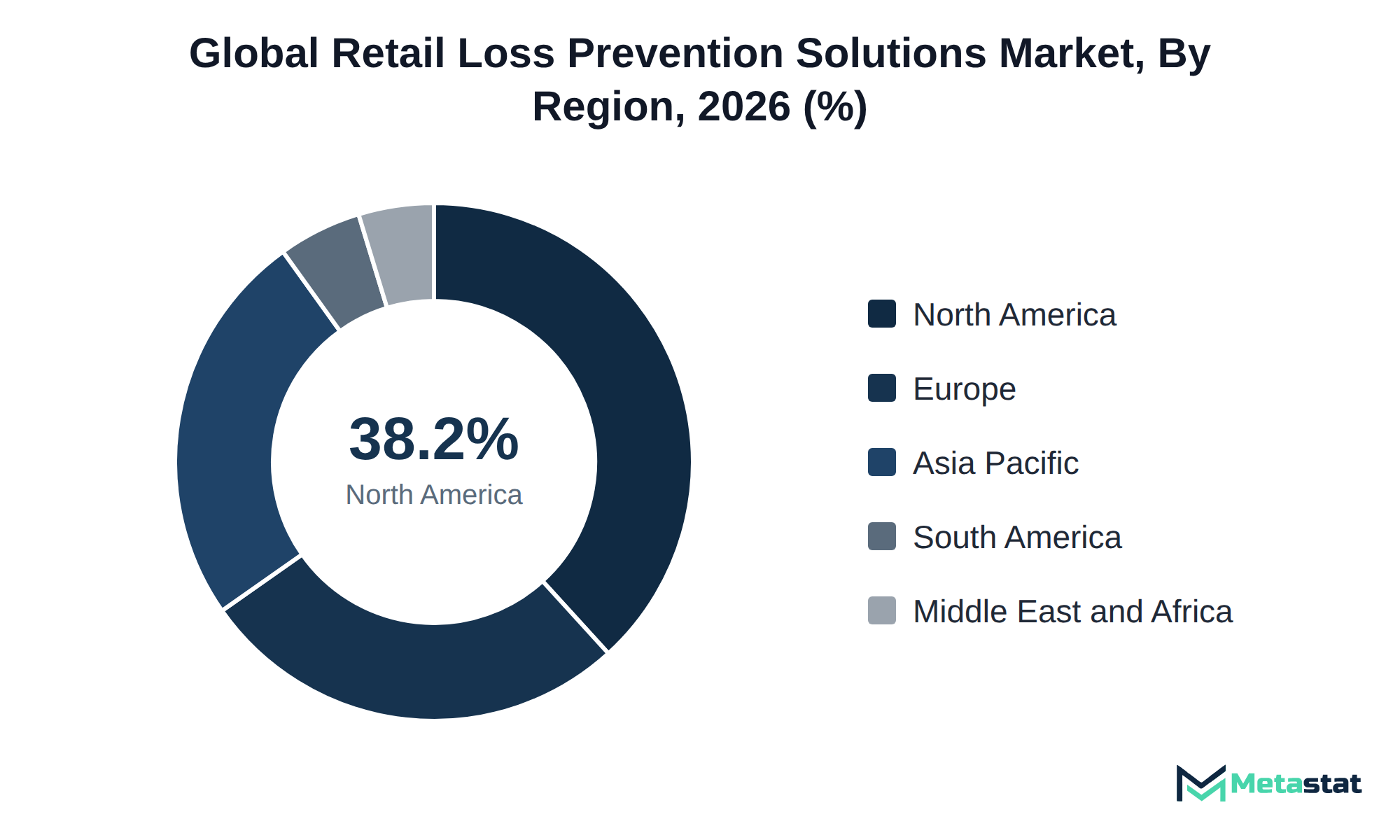
Growth in the market is primarily fueled by advancements in technology, particularly in video surveillance and analytics, which account for the largest value within the solution segments. North America holds 38.2% of the market in 2025, with the US leading in 2026. The region's strong emphasis on security and infrastructure investments contributes to its significant market share compared to Europe and Asia Pacific.
The market is projected to expand due to the growing adoption of cloud-based solutions, which enhance operational efficiency and offer scalable options for retailers. This trend reflects a broader shift toward digital transformation within the retail sector, allowing businesses to leverage data and analytics for improved decision-making. These developments suggest potential for sustained growth in retail loss prevention solutions.
The Retail Loss Prevention Solutions market includes various technologies and services that safeguard retail businesses from losses. Buyers invest in these solutions to enhance security measures, improve inventory management, and reduce theft, which directly impacts profitability. Increasingly sophisticated theft methods and rising operational costs drive demand for effective loss prevention strategies, compelling retailers to allocate resources to these essential solutions.
Video Surveillance and Analytics emerges as the most valuable segment within the market, with significant contributions to overall revenue growth. The growing emphasis on data analytics and real-time monitoring in retail environments supports the expansion of this segment, allowing businesses to respond swiftly to potential security breaches.
The ongoing integration of advanced technologies, including artificial intelligence and machine learning, significantly influences market growth. Retailers prioritize cloud-based deployment models, which enhance accessibility and scalability of solutions. This trend is particularly relevant in North America, where technological advancements facilitate innovation in loss prevention strategies, ensuring retailers remain competitive in a challenging environment.
RFID technology improves traceability throughout retail operations, particularly during receiving, distribution, and store transfers. This advancement significantly improves the accuracy and efficiency of inventory management processes. In the Retail Loss Prevention Solutions market, RFID inventory and loss tracking is projected to reach USD 3.9 billion by 2033, reflecting the growing emphasis on maintaining accurate stock levels and minimizing losses. The integration of RFID systems streamlines the tracking of merchandise, enabling retailers to quickly identify discrepancies and respond to inventory challenges.
The adoption of RFID technology is driven by the need for accurate information on stock movements, ensuring that retailers reduce shrinkage and optimize their supply chains. With improved visibility into inventory levels, retailers experience enhanced operational efficiency, ultimately contributing to better customer satisfaction through accurate product availability. In an environment where competition is fierce, the implementation of RFID traceability facilitates smarter decision-making and promotes cost savings. Retailers using RFID gain a competitive advantage by managing their products effectively.
The integration of AI video analytics with point-of-sale (POS) systems provides retailers with significant advantages in detecting and preventing losses. This combination enhances the ability to identify suspicious activities in real-time, allowing for immediate intervention. The POS and returns fraud analytics segment is growing at a compound annual growth rate (CAGR) of 6.8%. This figure highlights the increasing focus on leveraging technology for fraud detection.
Retailers typically engage in subscription-based pricing models for these integrated solutions, facilitating predictable budgeting for loss prevention technologies. Initial setup costs vary based on the complexity of the system and the size of the retail operation, but ongoing subscription fees often include software updates and maintenance. This pricing structure encourages several retailers to adopt advanced solutions, particularly small to medium-sized enterprises that have limited budgets.
The shift toward AI-based systems reflects a broader trend in retail toward data-driven decision-making. By integrating AI video analytics with retail POS terminals, retailers increase operational efficiency and enhance loss prevention strategies. This evolution supports overall market growth as firms allocate more resources to technologies that protect their revenues.
Off-price retailers prioritize security spending to address unique challenges related to theft and loss. These challenges reflect a broader increase in security budgets, particularly in the off-price retail segment, which is anticipated to grow from USD 2.8 billion in 2026 to USD 4 billion by 2033. This growth represents a compound annual growth rate (CAGR) of 5.2%. Off-price retailers, known for offering discounted products, often face higher rates of merchandise loss, necessitating enhanced protective measures.
Investments in Video Surveillance and Analytics serve as a crucial strategy for these retailers. This solution type is expected to evolve from USD 5.5 billion in 2026 to USD 7.5 billion by 2033, marking a CAGR of 4.4%. The integration of advanced surveillance technologies supports real-time monitoring and analysis, allowing retailers to respond promptly to theft incidents. Enhanced security measures safeguard inventory and enhance consumer confidence, leading to increased foot traffic and sales.
With the growing adoption of these solutions, off-price retailers in the Retail Loss Prevention Solutions market position themselves to mitigate losses effectively. A strategic focus on security spending protects merchandise and enhances overall operational efficiency, driving sustainable growth in a competitive environment.
The apprehension of shoplifters significantly reduces shrinkage in retail environments, particularly within the Retail Loss Prevention Solutions market. A focus on shoplifter apprehensions has led to a more strategic approach to loss prevention, where retailers implement comprehensive measures to deter theft. In 2026, the Video Surveillance and Analytics segment is projected to reach USD 5.5 billion, reflecting increasing investment in technologies aimed at minimizing theft-related losses.
Implementing effective loss prevention strategies allows retailers to experience enhanced safety and security, which directly contributes to reduced shrink. The increasing emphasis on CCTV and other video surveillance systems enables real-time monitoring and quicker responses to theft incidents. By boosting confidence among employees and customers alike, retailers create an environment where theft is less likely to occur, thereby enhancing overall operational efficiency.
Retailers operating within environments where shoplifting is prevalent benefit from these enhanced loss prevention tactics. Ongoing investment in technology and staff training addresses safety risks and translates into significant cost savings. With a projected compound annual growth rate of 4.4% for the Video Surveillance and Analytics segment, the market shows a strong commitment to creating environments that mitigate theft while boosting profitability.
Department and off-price multi-category retailers increase technology investments to enhance security measures. Rising concerns over theft and loss drive these companies to adopt more effective retail loss prevention solutions. This shift results in higher demand for innovative security technologies, including video surveillance and analytics, which support proactive loss prevention strategies. This demand stems from retailers protecting assets and maintaining profitability, directly influencing their operational costs and pricing strategies. The growing reliance on advanced solutions enables these retailers to mitigate losses and improve overall store performance.
Growing adoption of cloud-based deployment models enhances retail loss prevention capabilities by allowing retailers to access real-time analytics and insights. This technology provides flexibility and scalability, enabling retailers to quickly adjust their security measures in response to emerging threats. Retailers benefit from reduced operational costs associated with hardware management while ensuring data security through cloud services. This shift attracts interest from various retail segments, including food and grocery retailers, which prioritize efficient loss prevention strategies. The Retail Loss Prevention Solutions market experiences significant growth driven by increased reliance on cloud-based systems that support integration with existing technologies.
Enhanced data management and analytics capabilities create a more proactive approach to loss prevention, allowing retailers to identify patterns and trends that contribute to theft and shrinkage. Retailers using cloud-based solutions apply advanced analytical tools that deliver insights and improve decision-making. The growing preference for cloud adoption within the Retail Loss Prevention Solutions market positions this segment for sustained expansion. Retailers increasingly recognize the value of real-time data in mitigating risks and enhancing their overall security framework.
Rising costs of implementing advanced Retail Loss Prevention Solutions present a significant restraint for various retail sectors, particularly affecting smaller retailers and independent operators. These businesses experience slower uptake of technological solutions due to budget constraints, leading to smaller orders and delayed upgrades of existing systems. High initial investments in hardware and software deter many potential adopters, who prioritize short-term financial stability over long-term security enhancements. The market's growth trajectory encounters challenges when smaller retailers face a competitive disadvantage, unable to invest in the latest technologies for loss prevention. This situation creates a gap in security measures, making these retailers more susceptible to theft and loss. The outcome is a fragmented market where only larger corporations fully leverage innovative loss prevention strategies, limiting overall market expansion and adoption rates across the sector.
Rising operational costs create margin pressure within the Retail Loss Prevention Solutions market. Increased expenses related to technology acquisition, maintenance, and skilled labor contribute to this challenge, particularly affecting smaller retailers with tighter budgets. The demand for software solutions, especially those leveraging AI and cloud-based models, drives competition, pushing suppliers to offer more cost-effective options. To address margin pressure, companies explore partnerships and alternative pricing models that enhance affordability without sacrificing quality or functionality. Investment in research and development focuses on creating innovative solutions that streamline offerings, reducing costs for end users. Suppliers adapt by providing scalable solutions that cater to various retailer sizes, ensuring broader market reach while maintaining competitive pricing. This strategic focus on cost management and innovation is essential for sustaining growth and maximizing profitability within a challenging economic environment.
Cloud-based deployment models emerge as a significant opportunity within the Retail Loss Prevention Solutions market, exhibiting a compound annual growth rate (CAGR) of 9.1%. This segment appeals to retailers seeking scalable and flexible solutions that enhance operational efficiency. The shift toward digital transformation in retail facilitates the adoption of cloud-based solutions, allowing businesses to access real-time analytics and insights for improved loss prevention strategies. With these solutions, retailers gain the capability to monitor inventory and transactions efficiently, thus significantly reducing theft and loss incidents.
The demand for cloud-based systems is concentrated among food and grocery retailers, projected to reach USD 6.8 billion by 2033. This sector actively seeks advanced technologies to protect assets while facing rising operational challenges. The Retail Loss Prevention Solutions market stands to benefit from this growing trend, as retailers increasingly recognize the value of cloud-based systems in enhancing loss prevention capabilities.
The Global Retail Loss Prevention Solutions market is segmented based on Solution Type, Component, Deployment Model, and Retailer Type.
Video Surveillance and Analytics segment is valued at USD 5.5 billion in 2026 and is projected to reach USD 7.5 billion by 2033, at a CAGR of 4.4% during the forecast period. This segment enhances security for retail environments, enabling businesses to monitor activities in real time and analyze footage for suspicious behavior. Primarily used by retailers of various sizes, it addresses the significant need for effective theft prevention and loss mitigation. Demand for advanced video surveillance solutions is driven by the increasing frequency of retail theft and a growing emphasis on security investments. Compared to other segments, Video Surveillance and Analytics demonstrates a moderate growth rate, distinguishing itself with a steady demand for hardware and software investments that support overall market expansion. The focus on integrating analytics into surveillance systems further sets this segment apart from others and adds value for retailers seeking complete security solutions.
Electronic Article Surveillance segment is estimated to reach USD 4.1 billion by 2033, at a CAGR of 2.8% during the forecast period. This technology is primarily employed to prevent theft in retail environments by using tags attached to merchandise that trigger alarms if removed without deactivation. Retailers in department stores and apparel outlets predominantly adopt this solution to safeguard their inventory. The segment experiences steady growth due to rising concerns over shoplifting and inventory shrinkage. Compared to other solutions like Video Surveillance and Analytics, which exhibit a CAGR of 4.4%, Electronic Article Surveillance demonstrates slower growth. Its price point is generally lower, making it an accessible investment for many retailers. This differentiation influences purchasing decisions, particularly among smaller retailers prioritizing cost-effective solutions to enhance their security measures.
RFID Inventory and Loss Tracking segment is expected to reach USD 3.9 billion by 2033. This segment enhances inventory management and loss prevention for retailers by providing real-time visibility into inventory levels and locations. Retailers, particularly in the apparel and electronics sectors, apply RFID technology to mitigate shrinkage and improve operational efficiency. The demand for RFID solutions grows due to increasing concerns over theft and inaccuracies in inventory management, driving adoption across various retail formats. Compared to other segments, RFID Inventory and Loss Tracking exhibits a strong growth trajectory, supported by advancements in RFID technology and integration with existing systems. The segment's focus on real-time data analytics differentiates it from traditional loss prevention methods, allowing retailers to respond proactively to inventory challenges. The market is anticipated to experience a compound annual growth rate (CAGR) of 4.4% in this segment, reflecting its significance in modern retail operations.
The POS and Returns Fraud Analytics segment is projected to grow at a CAGR of 6.8% during the forecast period. This segment focuses on identifying and preventing fraudulent transactions at points of sale and during product returns. Retailers apply these analytics to detect patterns of fraud, helping reduce losses associated with deceptive return practices. The increasing complexity of fraudulent schemes drives demand for advanced analytics solutions. Compared to other segments, this sub-segment experiences faster growth due to the heightened focus on enhancing customer experiences while mitigating risks. Retailers across various sectors, including apparel and electronics, prioritize investments in this technology to safeguard their revenue streams. Enhanced data analytics capabilities support retailers in making informed decisions, reinforcing operational integrity.
Incident and Investigation Management focuses on tracking, documenting, and analyzing incidents in retail environments to prevent future occurrences. This process proves essential for retailers aiming to enhance their security measures and reduce shrinkage. Retailers in various sectors engage this segment, including department stores and electronics specialists, to improve their operational responses to theft and fraud. Demand for such solutions is driven by increasing incidents of retail crime, necessitating advanced systems for investigating and managing these events. Compared to other segments, this area experiences moderate growth due to its specific application; however, pricing strategies vary based on the technology and services implemented. Enhanced analytics and real-time reporting capabilities differentiate this segment from others, positioning it favorably within the Retail Loss Prevention Solutions market.
Physical merchandise protection involves strategies and technologies designed to safeguard tangible retail assets from theft and damage. Retailers employ these solutions to minimize losses associated with shoplifting, employee theft, and other forms of shrinkage. Department stores and specialty retailers often rely on physical merchandise protection solutions to enhance security across various categories of goods. Demand for these solutions derives from the ongoing need to protect inventory and maintain profitability. Unlike other segments, including video surveillance and analytics, which exhibit a compound annual growth rate (CAGR) of 4.4%, physical merchandise protection typically faces slower growth rates. This segment distinguishes itself by focusing on physical security products such as barriers and deterrents rather than advanced surveillance technologies. Factors driving adoption include heightened awareness of loss prevention strategies and increasing sophistication of theft methods. The Retail Loss Prevention Solutions market evolves, responding to changing retail landscapes and security challenges.
Access Control and Intrusion Detection focuses on safeguarding physical entrances and monitoring unauthorized access within retail environments. This solution is vital for retailers aiming to protect sensitive areas, manage customer flow, and mitigate theft. Various retailers, including department and grocery chains, prioritize these systems to maintain security. The segment benefits from rising concerns over workplace safety and the increasing prevalence of theft-related incidents. Technological advancements enhance the effectiveness of access control systems, differentiating this segment by offering higher levels of customization and integration with other security systems compared to the other segments in this group. The Retail Loss Prevention Solutions market reflects a growing emphasis on integrated security solutions, driving demand for sophisticated access control mechanisms that support wider safety strategies.
Forensic marking and shelf sensors represent advanced technologies designed to enhance retail security and loss prevention efforts. These solutions enable retailers to monitor inventory more effectively and deter theft through visible or covert markings. Retailers, particularly in sectors like apparel and electronics, apply these technologies to mitigate risks and enhance customer experience by ensuring product availability. The continuous evolution of retail theft methods drives demand for innovative solutions like these. Compared to video surveillance and electronic article surveillance, this segment typically experiences slower growth rates, driven by technological adoption that varies among retailers. The need for effective theft deterrence motivates investment in such solutions, although initial costs and integration challenges influence adoption rates. This segment supports retailers in their ongoing battle against theft and loss within the broader context of the Retail Loss Prevention Solutions market.
Hardware segment is valued at USD 9.3 billion in 2026 and is projected to reach USD 11.5 billion by 2033, at a CAGR of 3.1% during the forecast period. This segment involves physical equipment and devices essential for implementing retail loss prevention strategies, primarily by retailers across various sectors. Increasing investments in security technologies among department and off-price multi-category retailers drive demand for hardware solutions, while the rising emphasis on enhancing asset protection contributes to its growth. Compared to software solutions which exhibit a higher CAGR of 8.2%, the hardware segment experiences slower growth, reflecting retailers' cautious approach toward capital expenditures. Despite this, the essential role that hardware plays in creating effective retail environments ensures its continued relevance in the Retail Loss Prevention Solutions market. Integration with advanced analytics and surveillance technologies enhances the value proposition for buyers seeking comprehensive security measures.
The software segment is estimated to reach USD 7 billion by 2033, at a CAGR of 8.2% during the forecast period. This segment provides advanced analytical tools and processing capabilities to retail organizations, enabling them to manage and analyze data related to theft, fraud, and inventory discrepancies. Retailers, particularly in sectors including apparel, electronics, and grocery, employ software solutions to enhance their loss prevention strategies. A significant driver for the growth of this segment stems from the increasing focus on data-driven decision-making in retail operations. Software differs from other components, particularly hardware, by offering higher growth potential, reflected in its CAGR of 8.2% compared to hardware's 3.1%. This difference highlights the growing importance of software solutions in optimizing loss prevention efforts and improving operational efficiencies within the market.
Services segment is expected to reach USD 3.4 billion by 2033. This segment encompasses a range of support functions aimed at enhancing retail security measures, primarily targeting retailers seeking to mitigate losses from theft and fraud. Increased investment in advanced analytics and monitoring systems drives growth within this segment, with retail chains focusing on comprehensive service offerings to improve security. Compared to hardware and software components, services exhibit a different growth trajectory. While hardware is projected to grow at a CAGR of 3.1%, services experience a higher growth potential driven by a CAGR of 8.2%. This indicates a significant demand for integrated solutions, presenting opportunities for providers who deliver tailored service packages that meet specific retail needs. The Retail Loss Prevention Solutions market benefits from ongoing advancements in service technologies, which enhance overall security capabilities.
The on-premises segment is valued at USD 8 billion in 2026 and is projected to reach USD 8.4 billion by 2033, at a CAGR of 0.7% during the forecast period. This deployment model delivers retail loss prevention solutions directly within the physical space of a retail operation, primarily used by larger retailers who favor maintaining control over their security systems. Demand for this segment stems from the requirement for immediate accessibility and complete oversight of security measures. Competitive pressure from cloud-based solutions, which offer rapid scalability and flexibility, hinders faster growth for the on-premises segment compared to cloud-based alternatives exhibiting a CAGR of 9.1%. Despite slower growth, on-premises solutions maintain a strong market presence, appealing to retailers seeking comprehensive control over their loss prevention strategies.
Cloud-based deployment models are estimated to reach USD 9.2 billion by 2033, at a CAGR of 9.1% during the forecast period. This model primarily serves retailers seeking scalable solutions that offer flexibility and cost savings compared to traditional systems. Increased demand for remote monitoring and management drives this segment’s growth, particularly among small to medium-sized retailers prioritizing cost-effective loss prevention strategies. Compared to on-premises systems, which are projected to grow at a slower rate of 0.7%, cloud-based solutions present an attractive alternative due to their lower upfront costs and ease of implementation. Retailers in various sectors, including food and grocery, increasingly adopt cloud-based solutions to enhance operational efficiency and security, reflecting a substantial shift in the retail landscape toward digital transformation.
Hybrid deployment model is expected to reach USD 4.2 billion by 2033. This model enables retailers to leverage both on-premises and cloud-based solutions, providing scalability and flexibility. Retailers, especially those in dynamic environments, benefit from the dual capabilities of hybrid systems. Driving forces include increasing demand for scalable solutions that adapt to varying operational needs. Compared to other deployment models, hybrid solutions exhibit significant growth, driven by technological advancements in cloud computing and the necessity for consistent security measures. With a compound annual growth rate (CAGR) of 9.1% for cloud-based solutions, the hybrid segment stands out for its ability to cater to diverse retailer requirements, differing from the slower growth of on-premises solutions in the Retail Loss Prevention Solutions market.
Department and Off-Price Multi-Category Retailers segment is valued at USD 2.8 billion in 2026 and is projected to reach USD 4 billion by 2033, at a CAGR of 5.2% during the forecast period. This segment caters to retailers selling a wide range of products under one roof, including apparel, home goods, and electronics. Demand for loss prevention solutions in this segment is driven by increasing concerns over theft and fraud, compelling retailers to adopt advanced technologies for safeguarding their assets. Compared to other segments, this category experiences a faster growth rate, with a CAGR of 5.2%, indicating robust investment in loss prevention measures. The segment's unique focus on multi-category offerings sets it apart from specialized retailers, highlighting the broader application of loss prevention solutions in diverse retail environments. The Retail Loss Prevention Solutions market reflects the critical need for effective strategies to mitigate losses across varied product categories.
Food and Grocery Retailers segment is estimated to reach USD 6.8 billion by 2033, at a CAGR of 4.3% during the forecast period. This segment focuses on implementing loss prevention strategies tailored for supermarkets, grocery stores, and convenience stores. The rising incidence of theft and fraud in these retail environments drives the demand for effective loss prevention solutions. A significant factor influencing this segment involves the increasing shift towards technology-based solutions, including video surveillance and analytics, which enhance security measures. Food and grocery retailers experience a slower growth rate compared to others, including department stores, reflecting the unique challenges they face, including higher product turnover and perishability, which necessitate specialized loss prevention tactics. The Retail Loss Prevention Solutions market is expected to evolve to meet these distinct needs, ensuring tailored approaches for various retailer types.
The Apparel and Footwear Specialists segment is expected to reach USD 4 billion by 2033. This segment focuses on retailers that specialize in clothing and footwear products, employing advanced loss prevention solutions to combat theft and inventory shrinkage. The growing trend of online shopping increases the urgency for these retailers to invest in robust security measures. Rising concerns over shoplifting and return fraud further drive investments in sophisticated analytics tools, enhancing operational efficiency and customer experience. Compared to other retailer types, Apparel and Footwear Specialists exhibit a moderate growth trajectory with a CAGR of 4.2%. This figure highlights the segment's unique challenges and the necessity for tailored solutions, differentiating it within the broader Retail Loss Prevention Solutions market.
The Electronics and Appliance Specialists segment is projected to grow at a CAGR of 4.2% during the forecast period. This segment serves retailers focused on selling consumer electronics and household appliances, employing advanced loss prevention solutions to mitigate theft and shrinkage. The rise in online shopping and the demand for secure transactions drive the adoption of these solutions. The competitive nature of electronics retailing compels retailers to enhance security measures, differentiating this segment with a greater emphasis on technology integration compared to other segments. While other segments experience varying growth rates, the Electronics and Appliance Specialists segment maintains a steady trajectory, reflecting the ongoing need for robust loss prevention strategies in a challenging retail environment. In the Retail Loss Prevention Solutions market, the integration of innovative technologies remains essential for maintaining profitability and customer trust.
Health and Beauty Specialists encompass retailers focused on beauty products, personal care items, and health-related goods. These retailers employ loss prevention solutions to safeguard inventory and minimize shrinkage, which is crucial for maintaining profit margins in a highly competitive market. Key drivers of demand in this segment include rising concerns about retail theft and the adoption of advanced technologies for inventory management. The segment distinguishes itself from others through its emphasis on premium products, resulting in potentially higher per-unit loss than categories with lower-priced goods. The Retail Loss Prevention Solutions market experiences a strong push towards innovative systems in this segment, ensuring enhanced security measures are implemented to protect valuable merchandise.
Home Improvement and Homewares Specialists focus on the retailing of products for home enhancement and maintenance. These retailers employ various loss prevention solutions to ensure the protection of their merchandise and minimize shrinkage. A key driver influencing this segment involves the rising instances of theft, which compels retailers to invest in advanced security technologies. Compared to other retailer types, this segment experiences slower growth due to specific market dynamics, including price sensitivity among consumers and competition from online platforms. Retail Loss Prevention Solutions market participants tailor their offerings to meet the unique challenges faced by Home Improvement and Homewares Specialists, emphasizing innovations that improve inventory management and reduce operational losses. The sector's reliance on seasonal sales leads to fluctuating demands for loss prevention technologies throughout the year, further distinguishing it from more stable segments.
Jewellery and Watch Specialists focus on retail environments that sell high-value accessories and timepieces. This segment employs various loss prevention technologies to safeguard assets from theft and fraud, which is critical for maintaining profitability and brand reputation. Demand for advanced security solutions in this segment is driven by increasing incidents of theft and the high value of merchandise. Compared to other retail types, Jewellery and Watch Specialists face unique challenges due to the specialized nature of their products, leading to a heightened emphasis on security measures. The segment's growth trajectory is influenced by rising investment in integrated retail security systems that combine physical and digital safeguards, setting it apart from other segments in terms of both pricing and technology adoption. These factors highlight the segment's specific needs within the Retail Loss Prevention Solutions market.
This sub-segment focuses on specialty retailers including sporting goods stores, bookstores, and pet product retailers. These retailers face unique challenges in loss prevention, requiring tailored solutions to address specific types of theft and inventory management issues. The demand for sophisticated loss prevention technologies is influenced by the increasing prevalence of retail theft and the need to protect inventory effectively. Unlike larger retail types, including department stores, this segment experiences varied growth dynamics. Retailers in this sub-segment typically invest in solutions that cater to their specific product portfolios, affecting pricing and technology adoption rates. Enhanced customer engagement strategies and personalized shopping experiences drive the necessity for integrated loss prevention measures. Within the Retail Loss Prevention Solutions market, this sub-segment evolves while retailers seek innovative approaches to safeguard their assets without compromising customer experience.
Based on geography, the Global Retail Loss Prevention Solutions market is divided into North America, Europe, Asia-Pacific, South America, Middle East, and Africa.
Demand for retail loss prevention solutions surges in North America, driven by the need for advanced security measures among retailers. The increasing prevalence of theft and fraud in retail environments compels businesses to invest in sophisticated technologies. The region's strong market presence is evident, with a projected value of USD 7.9 billion by the end of 2033. The market in North America accounted for 38.2% of the global share in 2025, highlighting its critical role in shaping industry trends. In the United States, Canada, and Mexico, the focus on adopting cloud-based solutions reflects a shift toward more flexible and scalable systems. This transition enhances operational efficiency and strengthens the overall security framework, positioning the market for sustained growth.
Europe represents a significant portion of the Retail Loss Prevention Solutions market, accounting for 27.00% of the global share in 2025. The retail landscape in this region is characterized by a diverse array of industries, including department stores, grocery chains, and apparel retailers, all prioritizing loss prevention measures. Countries including Germany, France, and the UK are leading adopters of advanced video surveillance and analytics technologies to combat theft and fraud. Regulatory frameworks and consumer protection laws in these nations drive investments in sophisticated loss prevention solutions, ensuring compliance and enhancing security protocols. The market is projected to exhibit steady growth, reflecting continuous demand for improved security measures across various retail segments.
Significant growth in the Retail Loss Prevention Solutions market occurs in the Asia-Pacific region, driven by an increasing focus on security among various retail sectors. Countries including China, Japan, and India display heightened demand for advanced solutions, particularly due to rising incidents of theft and fraud. The rapid development of e-commerce in these nations further necessitates robust loss prevention strategies. Australia and South Korea demonstrate a growing adoption of cloud-based solutions, enhancing operational efficiency and scalability for retailers. The Asia-Pacific market's share in 2025 reflects the region's importance in global trends. This expansion creates opportunities for local and international suppliers to innovate and compete effectively.
Brazil and Argentina represent two primary markets within the Retail Loss Prevention Solutions market in South America. The retail landscape in these countries faces unique challenges, including high rates of retail theft and fraud, driving demand for enhanced loss prevention measures. Increasing awareness of the significance of security systems among retailers fuels growth in video surveillance and electronic article surveillance segments. Investments in technology and infrastructure improvements are vital for retailers aiming to reduce losses and improve operational efficiency. South America accounts for a notable share of the global market, reflecting a growing acknowledgment of the value of loss prevention solutions among retailers in the region.
The Retail Loss Prevention Solutions market in the Middle East and Africa remains influenced by the growing emphasis on security and theft prevention among retailers. Countries like Saudi Arabia and the UAE demonstrate increasing investment in advanced technologies, including video surveillance and analytics, to safeguard assets. The cost of security breaches significantly impacts profit margins, driving businesses to prioritize effective loss prevention solutions. South Africa exhibits notable demand for these technologies, with retailers striving to enhance security and operational efficiency. With a market share of 4.7% in 2025, growth opportunities exist for providers of retail loss prevention solutions that address the unique needs of this region.
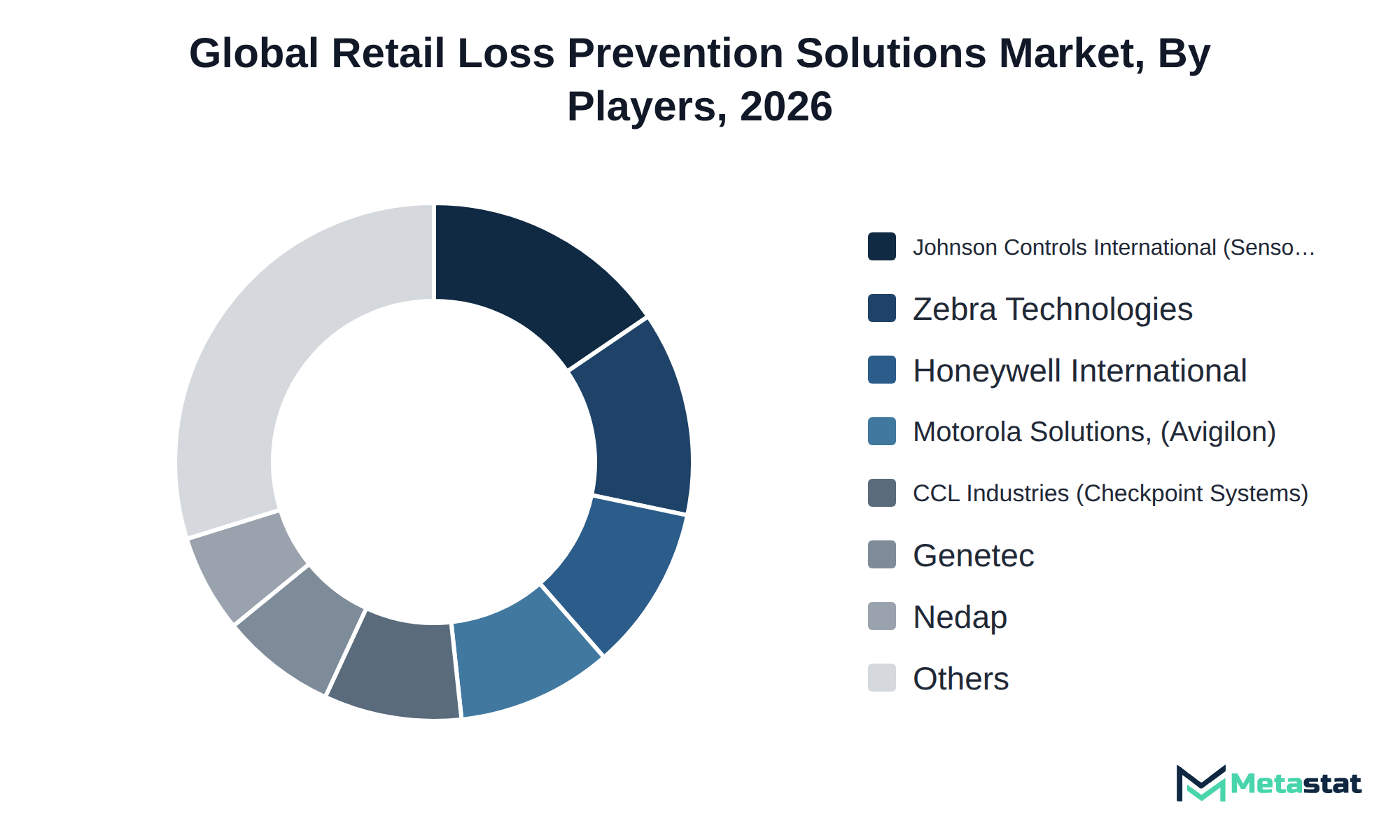
Competition in the Retail Loss Prevention Solutions market primarily revolves around technology offerings, service customization, and pricing strategies. Companies differentiate their solutions across various segments, including video surveillance, electronic article surveillance, and RFID inventory tracking. Buyers often choose based on factors including certification credentials and the ability to tailor solutions to specific retail environments, which influences their operational efficiency and overall profitability.
Johnson Controls International plc (Sensormatic Solutions) emphasizes advanced video surveillance and analytics, catering to clients requiring comprehensive monitoring solutions that enhance asset protection. Motorola Solutions, Inc. (Avigilon) focuses on integrating artificial intelligence within their surveillance systems, which improves operational efficiency for retailers by enabling real-time threat detection. Everseen Limited specializes in fraud detection software, targeting the needs of retailers looking to mitigate losses from returns and point-of-sale fraud through advanced analytics.
Achieving this target relies on several critical developments. First, the growth in video surveillance and analytics, projecting an increase from USD 5.5 billion in 2026 to USD 7.5 billion by 2033, plays a significant role in enhancing security measures across retail environments. This segment's expansion indicates a growing demand for advanced analytics solutions that improve loss prevention strategies. Second, cloud-based solutions are expected to see significant growth, reaching USD 9.2 billion by 2033, driven by retailers transitioning to more scalable and efficient operational models. This trend reflects the increasing reliance on technology to manage inventory and mitigate losses effectively.
However, a primary risk to this forecast involves economic uncertainty, which leads to cautious spending among retailers. Such economic challenges could hinder investment in advanced retail loss prevention technologies, impacting overall market growth. The Retail Loss Prevention Solutions market is expected to experience substantial expansion, contingent upon these developments and the mitigation of potential economic setbacks.
By Solution Type: Video Surveillance and Analytics, Electronic Article Surveillance, RFID Inventory and Loss Tracking, POS and Returns Fraud Analytics, Incident and Investigation Management, Physical Merchandise Protection, Access Control and Intrusion Detection, Others (shelf sensors, forensic marking)
By Component: Hardware, Software, Services
By Deployment Model: On-premises, Cloud-based, Hybrid
By Retailer Type: Department and Off-Price Multi-Category Retailers, Food and Grocery Retailers, Apparel and Footwear Specialists, Electronics and Appliance Specialists, Health and Beauty Specialists, Home Improvement and Homewares Specialists, Jewellery and Watch Specialists, Others (sporting goods, books, pet products)
The report strategically identifies and profiles the key market players and analyses their core competencies in each sub-segment of the Retail Loss Prevention Solutions market.
Report Attributes | Details |
Study Period | 2021-2033 |
Base Year | 2025 |
Estimated Year | 2026 |
Forecast Period | 2026-2033 |
Historical Period | 2021-2025 |
Growth Rate | CAGR 4.9% from 2026 to 2033 |
Revenue Unit | USD billion |
Segmentation | By Solution Type, Component, Deployment Model, Retailer Type, and Region |
By Region | North America (By Solution Type, Component, Deployment Model, Retailer Type, and Country)
|
Europe (By Solution Type, Component, Deployment Model, Retailer Type, and Country)
| |
Asia Pacific (By Solution Type, Component, Deployment Model, Retailer Type, and Country)
| |
South America (By Solution Type, Component, Deployment Model, Retailer Type, and Country)
| |
Middle East and Africa (By Solution Type, Component, Deployment Model, Retailer Type, and Country)
|
Find answers to common questions about this report
The Retail Loss Prevention Solutions market size was valued at USD 14.9 billion in 2025.
The market is projected to grow at a CAGR of 4.9% during the forecast period from 2026 to 2033.
The North America Retail Loss Prevention Solutions market size is estimated to reach USD 7.9 billion by 2033.
Video Surveillance and Analytics leads the Retail Loss Prevention Solutions market with a projected value of USD 7.5 billion by 2033. This segment demonstrates the highest growth potential compared to others in the market.
Rising concerns over theft and loss drive retailers to adopt more effective loss prevention solutions. Increased reliance on cloud-based deployment models enhances capabilities by providing real-time analytics and insights, improving operational efficiency.
North America holds the dominant share of the Retail Loss Prevention Solutions market, with a value of USD 7.9 billion projected for 2033, representing 38.2 percent of the total market. This region surpasses others in market share, reflecting its significant investment in loss prevention technologies.
Rising costs of implementing advanced solutions present a significant restraint, particularly affecting smaller retailers and independent operators. Increased expenses related to technology acquisition, maintenance, and skilled labor create margin pressure within the market.
Growing adoption of cloud-based deployment models significantly enhances operational efficiency for retailers. This trend supports scalable solutions that provide real-time analytics, enabling effective loss prevention strategies and reducing theft incidents.
The Retail Loss Prevention Solutions market is estimated to reach a valuation of USD 21.9 billion by 2033.
Key players operating in the Retail Loss Prevention Solutions market include Johnson Controls International plc (Sensormatic Solutions), CCL Industries Inc. (Checkpoint Systems), Zebra Technologies Corporation, Nedap N.V., Canon Inc. (Axis Communications and Milestone Systems), and Prosegur Compañía de Seguridad, S.A..
The analysts below cover Consumer Goods research at Metastat Insights.
LEAD ANALYST
Utkarsh Khirodkar is a Lead Market Research Analyst at MetaStat Insight, specializing in market intelligence, technology sector assessments, and competitive strategy.
Analyzing the transition from natural gas to green hydrogen in iron ore reduction requires realistic infrastructure timelines. Meta stat insight supplied a detailed regional assessment of DRI plant conversion costs and scrap metal availability in North America and Western Europe. Their report carefully examined pellet quality specs and electrical grid access constraints without making oversimplified market assumptions. The research material served as a practical reference during internal technology roadmap discussions.
Integrating zero-trust access controls across legacy electronic health record systems involves complex compliance overhead. Team produced an analysis that clearly separated identity governance and administration tools from privileged access management platforms. Their evaluation of HIPAA and GDPR compliance features across cloud native solutions gave our architecture group clear baseline criteria. The custom data request regarding biometric authentication adoption in hospital networks was returned promptly with clear documentation.
Evaluating calorific value requirements and air permit compliance across municipal waste facilities requires localized data. Metastat Insight structured their analysis around operational throughput capacity and feedstock composition variations in Latin America and Eastern Europe. Their competitive mapping of sorting equipment vendors helped clarify technology differences between optical separators and heavy media systems. The study provided an objective baseline during our capital expenditure reviews.
Explore related market intelligence reports worth reading alongside this one.